What others do re discrim: unequal customer treatment

mytest

Hi Blog. Here’s another section on what other societies do regarding unfair or unequal treatment: The local government’s human rights protection organs investigate and make the issue public.

In this case, the New York City Human Rights Commission was notified that a Chinese restaurant was offering two separate menus, where the same items were cheaper for readers of Chinese only.

This made the front page of the NY Daily Post, with a photo of the restaurant and the facts of case in splash headlines.

Unlike Japan, where the similar human rights organ, the Bureau of Human Rights (jinken yougo bu) is all but utterly ineffectual.

Sources:
Japan Times July 8, 2003 Community Page column:
http://www.debito.org/japantimes070803.html
http://www.debito.org/policeapology.html

Not to mention the press in Japan, if they even reported on it, would not even bother to mention the name of the restaurant, in the name of “protecting the business’s privacy”. (For example, in a recent case, the press refused to name ER English School in Kofu, which was hiring people to teach English depending on the color of the applicant’s hair and eyes. Not quite the same example of discrimination, but a good example of press treatment nonetheless.)

Thanks to Dave Spector for passing this information on. Debito in Kurohime, Nagano

////////////////////////////////////////////////////////

ChineseRestRipOffcov.jpg

ChineseRestRipOffp3.jpg

Click on the thumbnails to see a larger image)

Asahi Column: Tokyo JH school refuses education to NJ child

mytest

Hi Blog. What a shock for the parents, not to mention the child who is being refused Secondary Education in Tokyo just because she is foreign. Not to worry, as friend Matt noted elsewhere–I’m sure our Education Minister Mr Ibuki is hard at work on it, given his melting concern with human rights, bullying, etc. Thanks to the Asahi for providing a venue for exposure. Debito in Kurohime, Nagano.

////////////////////////////

POINT OF VIEW/ Daisuke Onuki: Fundamental flaw remains in education law
02/12/2007 SPECIAL TO THE ASAHI SHIMBUN
http://www.asahi.com/english/Herald-asahi/TKY200702120089.html

The people shall all be given equal opportunities of receiving education according to their ability, and they shall not be subject to educational discrimination on account of race, creed, sex, social status, economic position, or family origin. Thus, the Fundamental Law of Education guarantees the equal opportunity of education to all people of Japan.

However, it is necessary to note that the word “people” is the translation of the word “kokumin,” which literally means “nationals.”

Currently, the most important law on education in Japan, as well as the very Constitution, does not guarantee the right to education for children with foreign nationalities.

Our eldest daughter, who has only Brazilian nationality, was once denied entrance to a public junior high school in Setagaya Ward, Tokyo, when trying to transfer from a school in Brazil at the age 15 in the ninth grade.

Officials said our daughter was a year older than the proper age for obligatory education. They explained that exceptions cannot be made because the obligatory education system does not apply to a child without Japanese nationality.

Our daughter started primary school at the age of 7 due to her special needs of having to learn both her mother’s and father’s tongues, rather than at 6, which is the usual age for Japanese children. She went to Brazil after attending school for three years in Japan and returned here at the age of 15.

“If the child is a Japanese who had reasons to be enrolled in a grade lower than the appropriate one, obviously he or she needs extra year(s) to finish his or her ‘obligatory education’ and will be granted an exception. However, obligatory education does not apply to you,” they said.

I certainly hope that such an outright denial to school is rare in this country. There are already too many children of foreign nationalities, perhaps numbering in the tens of thousands, who are dropping out or are not attending school.

Legally, the blame for foreign children staying out of school does not fall on any officials or on the parents for that matter. That is because there even does not exist credible statistics concerning the problem.

Both the prime minister and the education minister clarified in the Diet last spring that while the proposed revision of the Fundamental Law of Education does not refer specifically to foreigners, those who wish so will continue to be treated in the same way as Japanese concerning the right to obligatory education.

I understand those words as meaning that when the guardians do not seek education for a child with foreign nationality, it is not the government’s problem and that, when they do seek education for their children, the government will not take the responsibility to treat them according to their special needs.

The Diet approved the revised version of the Fundamental Law of Education on Dec. 15. The use of the word “kokumin” continues in the revised law.

I find it a “fundamental flaw” of the Fundamental Law of Education not to guarantee the right to education of all children residing in Japan.

Issue overshadowed

The Japanese don’t notice the difference unless it is pointed out by those who suffer from it. For myself, I needed a family member without Japanese nationality to notice this flaw.

The problem has not been sufficiently raised by either the conservatives or the liberals. The argument has been overshadowed by the heated debate over the inclusion of “nurturing patriotic attitudes” as a purpose of education in the revised law.

Two years ago, when the population of Japan started to decrease, the number of foreign nationals registered here surpassed 2 million. More than half are so-called newcomers who stay in Japan for the purpose of work. The number of people from Brazil, the country of origin of my wife and daughters, now exceeds 300,000.

They started coming to Japan when the immigration law was revised in 1990 to allow Japanese descendents to visit and live in Japan without restriction in the activities they may engage in. While the government, and society, of Japan are undecided about whether to accept unskilled foreign workers, Brazilians are the ones “experimentally” filling the needs for manpower in all corners of Japan.

Brazilians coming to Japan for work are called “seasonal workers” both in Japan and in Brazil. Quite contrary to the image of the term, and possibly contrary to their original intentions, Brazilian workers often end up staying for 10 or more years in Japan, bringing their families and bearing children here.

Those people are usually called “immigrants” in other countries–a word hardly used here. The immigrant children in Japan, at least those with Brazilian nationality, tend to suffer from difficulties at school.

A survey six years ago estimated that 3,000 Brazilian children between 6 and 15 in Japan had never been enrolled in school. More recent estimates indicate that more than 10,000 Brazilian children never entered school or dropped out.

Somewhere between 20 and 40 percent of Brazilian children are currently out of primary education. These figures do not include the 25 percent of children who go to expensive Brazilian schools that are not officially recognized as “schools” by the Japanese government.

Japan has enough problems with Japanese children dropping out. Official figures show that 3.3 percent of all ninth-grade students refuse to go to school.

Efforts to care for the dropouts and recluses in special programs, or “free schools,” are playing an increasingly important role. Some free schools have become officially recognized as “private schools” and have received government funding since 2005.

However, the 48 Brazilian schools in Japan that are officially recognized by the Brazilian government, and 50 or so that are not recognized, do not receive any private-school funding from the Japanese government.

The situation in which possibly tens of thousands of foreign children are out of school, mostly watching TV at home alone or roaming shopping malls with friends, must be recognized as “child neglect” on the part of society.

Neglecting the child’s right to education is one of the most aggressive threats to the physical, mental and social integrity of the individual. Children with Brazilian nationality have been three to five times more likely to be put in detention centers than the general population over the past six years. This situation has the making of a new form of “ethnic crisis” taking place right in front of our eyes.

In the bicultural family where our children grew up, the refusal to let our eldest daughter attend school was a blow to the effort to “nurture love” of the children for the Japanese culture and country.

I decided not to fight Setagaya Ward, and possibly worsen the situation, and instead chose to live in another city where our child was accepted at school.

How many Brazilian families would know how to handle a similar situation so that their children could continue to study in and to like this country?

A first step

In recent years, many European countries have seen a rise in extreme rightist movements. Our country should not wait for that to happen before taking serious actions.

Guaranteeing foreign children’s right to education in other education-related laws to be revised in the following years will be important steps to take. It has been 16 years since this problem started in Japan’s Brazilian community.

Another year lost in the childhoods of tens of thousands of immigrant children will require an incredible amount of work in the future to undo the damage done to the children, society–and the hopes to build a healthy internationalist Japan.

* * *

The author is an associate professor of international relations at Tokai University and a member of the Alliance for Multiculture Childhood.(IHT/Asahi: February 12,2007)
ENDS

Ibuki & Abe on human rights & butter, plus reactions from media and UN

mytest

Hi All. Sorry to be slow on this issue, but for the record, let me blog a few articles and reactions on this issue without much time right now for comment (will include comments from others). Debito in Youga, Tokyo

////////////////////////////////////////////////////////////////

Ibuki: Japan ‘extremely homogenous’
The Japan Times Feb 26, 2007

http://www.japantimes.co.jp/cgi-bin/nn20070226a6.html

NAGASAKI (Kyodo) Education minister Bunmei Ibuki said Sunday that
Japan is an “extremely homogenous” country, a type of comment that in
the past has drawn criticism.

In 1986, Prime Minister Yasuhiro Nakasone described Japan as a
“homogenous race” nation and faced strong criticism, mainly from Ainu
indigenous people.

Speaking at a convention of the ruling Liberal Democratic Party’s
chapter in Nagasaki Prefecture, Ibuki said, “Japan has been
historically governed by the Yamato (Japanese) race. Japan is an
extremely homogenous country.

“In its long, multifaceted history, Japan has been governed by the
Japanese all the way,” Ibuki said in a 40-minute speech on education
reform. Ibuki is minister of education, culture, sports, science and
technology.
////////////////////////////////////////////////////////////////
ENDS

QUICK COMMENT FROM DEBITO: Just like, “In it’s long, multifaceted history, America has been governed by the Americans all the way.”?

Or how about Japan’s postwar SCAP? Oh, that doesn’t count, I guess. The issue is too silly to dwell upon any further. Let’s get to what makes this more problematic:

////////////////////////////////////////////////////////////////

Abe sees no problem in education minister calling
Japan ‘homogeneous’
TOKYO, Feb. 26 KYODO

Prime Minister Shinzo Abe on Monday downplayed
criticisms over his education minister’s remarks a day
earlier and said there was nothing wrong with the
minister calling Japan an ”extremely homogenous”
country.
”I think he was referring to the fact that we
(the Japanese public) have gotten along with each
other fairly well so far,” Abe said when asked to
comment on the remarks by education minister Bummei
Ibuki. ”I don’t see any specific problem with that.”
Abe, who has been hit by a series of gaffes by
members of his Cabinet recently, added, ”Of course
there have been battles in our history, as in the
Sengoku (warring states) era, but it was rare that one
side would completely wipe out their opponents, so I
believe we’ve cooperated well with each other through
history.”
Chief Cabinet Secretary Yasuhisa Shiozaki, the
top government spokesman, also said he did not find
the remarks ”specifically problematic” but warned
that ”Cabinet ministers must be responsible for their
own words.”
Ibuki said Sunday at a convention of the ruling
Liberal Democratic Party’s chapter in Nagasaki
Prefecture that ”Japan has been historically governed
by the Yamato (Japanese) race. Japan is an extremely
homogenous country.”
Remarks regarding homogeneity have drawn
criticisms in the past, such as in 1986 when then
Prime Minister Yasuhiro Nakasone described Japan as a
nation with a ”homogenous race.” He faced strong
criticism mainly from Ainu indigenous people.
In his 40-minute speech on education reforms,
Ibuki, who is minister of education, culture, sports,
science and technology, also said, ”In its long,
multifaceted history, Japan has been governed by the
Japanese all the way.”
Ibuki also issued a warning about paying too much
respect to human rights, illustrating his remark by
pointing out what happens if one eats too much butter.
”No matter how nutritious it is, if one ate only
butter every single day, one would get metabolic
syndrome,” he said. ”Human rights are important, but
if we respect them too much, Japanese society will end
up having human rights metabolic syndrome.”
==Kyodo

//////////////////////////////////////////////////////////////

Abe fine with ‘homogeneous’ remark
The Japan Times Feb 27, 2007
http://www.japantimes.co.jp/cgi-bin/nn20070227a9.html

Prime Minister Shinzo Abe on Monday downplayed criticism of remarks
by his education minister the day before and said there was nothing
wrong with Bunmei Ibuki calling Japan an “extremely homogenous” country.

“I think he was referring to the fact that we (the Japanese public)
have gotten along with each other fairly well so far,” Abe said. “I
don’t see any specific problem with that.”

Ibuki said Sunday at a convention of the Liberal Democratic Party’s
chapter in Nagasaki Prefecture that “Japan has been historically
governed by the Yamato (Japanese) race. Japan is an extremely
homogenous country.”

Remarks regarding homogeneity have drawn criticism in the past. For
instance, Prime Minister Yasuhiro Nakasone faced a strong backlash,
mainly from Ainu indigenous people, when in 1986 he described Japan
as a nation with a “homogenous race.”
ENDS

/////////////////////////////////////////////////////////////////

COMMENTS FROM AMNESTY INTERNATIONAL AND THE UNITED NATIONS (earlier blog post on debito.org):
http://www.debito.org/?p=239

COMMENTS FROM MATT DIOGUARDI:

/////////////////////////////////////////////////////////////////

Bunmei Ibuki’s comments were *worse* than I realized. If this isn’t
big news, in my opinion, it *should* be. If I have time I will blog
on this tomorrow. I hope others do as well.

The Japan Times articles did *not* report on other comments that
*did* get reported in the Japanese press. Searching around I did find
that some of these comments got reported in at least one English
newspaper, the Telegraph.

Ibuki makes comments that show on a fundamental basis he
misunderstands constitutional government.

He seems to view rights as entitlements sort of handed out by the
government. However, these rights can be overemphasized and to the
detriment of the minzoku.

Minzoku translates as folk, but it’s code words for *race*, as in
Yamato Minzoku.

Ibuki’s opinion is that rights should not be overemphasized at the
expense of the minzoku. And he explicitly identifies the Yamato Minzoku.

This is the *same* minzoku that so many Japanese lost their lives
over during WWII.

This is sort of like saying, yes, it’s nice to have rights, but don’t
forget that the heart and soul of Japan is the Yamato minzoku, our
homogenous race heritage.

This is really unbelievable and stunning. The fact that Abe does not
see a problem with these comments is also political miscalculation he
hopefully will suffer for.

Ibuki should resign and Abe should profusely apologize.

Because of the importance with which I see this issue, I’m posting
the entire Telegraph article:

==================================
Minister’s human rights rant shocks Japan
By Colin Joyce in Tokyo
Last Updated: 6:39am GMT 27/02/2007

Japan’s education minister has stunned the country with a gaffe-
strewn speech in which he claimed that too much emphasis has been
put on human rights.

Bunmei Ibuki, 69, also said that Western-style individualism is
damaging Japan, while he praised Japan’s racial homogeneity and
appeared to denigrate minorities.

Japanese newspapers reported yesterday that Mr Ibuki, a veteran
politician who worked at the Japanese embassy in London for four
years in the 1960s, implied in his speech in Nagasaki that problems
with Japan’s education policy stemmed from the fact that it was
imposed by the US occupation authorities after the Second World War.

“Japan has stressed the individual point of view too much,” he
said. He also argued that a society gorged on human rights was like
a person with an obesity-related illness.

“If you eat butter everyday you get metabolic syndrome. Human
rights are important but a society that over indulges in them will
get ‘human rights metabolic syndrome’,” he said.

The speech raises questions about Tokyo’s commitment to concepts
such as human rights and democracy, which Japanese commentators
note were brought to Japan by defeat in the war rather than created
independently by domestic reforms.

It is unclear whether Mr Ibuki’s choice of the word “butter” was
intentional or unfortunate, but it echoes an old disparaging
Japanese expression for Western ideas: “stinking of butter”.

The term came about because Westerners traditionally had a far
higher dairy content in their diet than Japanese and hence were
thought to smell of butter.

Link: http://www.telegraph.co.uk/news/main.jhtml?xml=/news/2007/02/27/wjapan27.xml

==================================

Here is a link to his comments in Japanese:
http://headlines.yahoo.co.jp/hl?a=20070226-00000022-mai-pol

Some of his comments:
1. 人権だけを食べ過ぎれば、日本社会は人権メタボ
リック症候群になる
ningendake wo tabesugireba, nihonshakai wa ninken metaborikku shoukougun
“If we (eat) partake too much of human rights, our society will
degrade as the human body does when it partakes of unhealthy food.”

2. 権利と自由だけを振り回している社会はいずれだ
めになる。これが今回の教育基本法改正の一番のポ
イント
kenri to jiyuu dake wo furimawashite iru shakai wa irzure dame ni
naru. kore ga konnkai no kyouiku kihonn houkaisei no ichiban no pointo
“If we only brandish our desire for freedom and rights, then society
becomes useless. That is the number one point of our educational
reforms.”

The idea that there is some kind of trade off between rights and a
“good” society is completely misconstrued. A good society is one
where people have rights and those rights are protected, period.

If we allow that rights can be curbed at the needs of *society* we
introduce a random variable that can be interpreted however one wants
to interpret it. We *all* have different views on what a *good*
society would be. This is why we have democracy.

Moreover, Ibuki doesn’t seem to grasp that freedom in a political
sense *only* means freedom from (physical) coercion. The government
cannot grant freedom in any other sense of the word. We accept that
the government will have to use a limited amount of (physical)
coercion to carry out its job, this is why we recognized the
fundamental danger inherent in governmental power.

Shall we allow more government physical coercion in in order to
support the Yamato minzoku. This is absurd. And its coming from the
minister of education!

The primary function of government is not to create a utopian
society, be it the Yamato minzoku, or some extreme form of Islam or
Christianity. The *fundamental* function of government is to
*protect* our rights. Through the exercise of those rights, we might
be able to help society, physical coercion should not shape those
decisions.

I’ll note that at least one politician has a nice come back to Ibuki.
Kiyomi Tsujimoto stated:
「日本は人権意識が足りない国だと国際的に見られ
ている。メタボリックどころか栄養不足だ」
nihon wa ninken ishiki ga tarinai kuni da to kokusaiteki ni mirarete
iru. metaborikku dokoro ka eiyou busoku da.

“As from an international perspective Japan does not have enough of a
human rights sense of consciousness, I’d say as far as human rights
rather than having a human rights syndrome, we’re undernourished.”

http://headlines.yahoo.co.jp/hl?a=20070227-00000046-mai-pol

COMMENTS FROM MATT DIOGUARDI END

////////////////////////////////////////////////////////////////

EDITORIAL
Beating the Yamato drum
The Japan Times March 1, 2007

http://search.japantimes.co.jp/cgi-bin/ed20070301a1.html

With health minister Hakuo Yanagisawa’s gaffe remark that women are “childbearing machines” still fresh in people’s memory, yet another Cabinet member has put his foot in his mouth. This time, education minister Bunmei Ibuki has voiced objectionable ideas on the general character of the Japanese state and human rights issues.

In his speech about “education resuscitation” in a meeting of a Liberal Democratic Party chapter in Nagasaki Prefecture, Mr. Ibuki said the Yamato race has ruled Japan throughout history and that Japan is an extremely homogeneous country. He also expressed the idea that there should be limits to the enhancement of human rights. Likening human rights to butter, he said, “However nutritious butter is, if one eats only butter every day, one acquires metabolic syndrome. Human rights are important. But if they are respected too much, Japanese society will end up with human rights metabolic syndrome.”

Mr. Ibuki’s comment is ideological. It is known that Japan’s ancient culture, the foundation of Japan’s present culture, was an amalgamation of various roots. No one single race formed Japanese culture. Referring to Prime Minister Yasuhiro Nakasone’s remark in 1986 that Japan is a nation with a “homogeneous race,” Mr. Ibuki said, “I did not say homogeneous race.” Even so, his mentioning the homogeneous character of Japan shows he does not altogether accept Japanese society as a composite also of Korean, Chinese and other foreign residents as well as Japanese nationals who do not identify themselves as members of the Yamato race — Ainu people, for example.

His human rights comment is also troublesome. It is clear that Japan has many human rights problems that must be addressed. Mr. Ibuki should remember that various rights and freedoms guaranteed by the Constitution are the basis of a healthy democracy. Strangely, Prime Minister Shinzo Abe defended Mr. Ibuki, saying his statements are not problematic. Such words will only fuel doubts about Mr. Abe’s integrity as a national leader.
////////////////////////////////////////////////////////////////
ENDS

ASAHI SHINBUN EDITORIAL, ENGLISH FIRST, THEN JAPANESE ORIGINAL

EDITORIAL/ Ibuki in the dark on rights
Asahi Shinbun 02/28/2007
http://www.asahi.com/english/Herald-asahi/TKY200702280167.html

Addressing at a convention of the Liberal Democratic Party’s chapter in Nagasaki Prefecture on Sunday, education minister Bunmei Ibuki said: “If you eat only butter every day, you develop metabolic syndrome. If Japanese overindulge themselves on human rights, the nation will develop what I’d call ‘human rights metabolic syndrome.'”

Metabolic syndrome’s telltale symptom is abdominal obesity, which could cause strokes and other diseases. Ibuki used this medical case to voice his view that society will become “diseased” if human rights are overemphasized.

Speaking on the present and future of educational revival, he also asserted: “Any society that goes hog-wild for rights and freedoms is bound to fail eventually. For every right, there is obligation.”

Perhaps Ibuki wanted to point out the mistake of asserting one’s rights without accepting the obligations that go with them.

However, although “rights” and “human rights” can overlap each other in some areas, they are not completely interchangeable concepts.

The very fact that Ibuki coined the expression “human rights metabolic syndrome” revealed his insensitivity to human rights issues. Is there truly a glut of human rights in Japan today?

In the education world in which Ibuki has the top administrative responsibilities, suicides among bullied children continue because they are unable to cope with the torment.

Elderly people are increasingly becoming victims of abuse. There are also endless cases of domestic violence and threats from spouses. Foreigners and people with disabilities continue to face discrimination.

Last week, a Kagoshima District Court ruling condemned the persistent police practice of using heavy-handed interrogation tactics to force “confessions” out of crime suspects and making up investigation reports.

The situation in Japan is alarming not because of human rights excesses, but rather because there are too many human rights issues that are being ignored by our society.

The abduction of Japanese citizens by North Korean agents constituted a grave violation of human rights. Therefore, the Japanese government submitted a United Nations resolution condemning Pyongyang’s violations of human rights. The resolution was adopted by the world body.

Prime Minister Shinzo Abe stated in his policy speech last month that he would work closer with nations that share such basic values as freedom, democracy, fundamental human rights and the rule of law. But what we don’t understand is that the same Abe sees “nothing wrong” with Ibuki’s comment.

Human rights issues are among the primary concerns of the world today. It is surely Japan’s role to continue upholding democracy and human rights in the fast-evolving international community and situation in Asia. Japan will be held in higher esteem only if it strives to become a “human rights nation” where every individual is respected as a person.

It is all the more regrettable that Ibuki, the very minister in charge of Japanese education and culture, has uttered remarks that revealed his lack of respect for human rights. The last thing we want the education minister to do is give the rest of the world the wrong message–that the Japanese people are quite satisfied with the present state of human rights.

Where human rights are concerned, Japan is nowhere near developing any disease from overindulging. It is still undernourished.

–The Asahi Shimbun, Feb. 27(IHT/Asahi: February 28,2007)

////////////////////////////////////////////////////////////////
人権メタボ 文科相のひどい誤診だ
http://www.asahi.com/paper/editorial20070227.html

 「毎日バターばかり食べていれば、皆さんはメタボリック症候群(内臓脂肪症候群)になる。人権だけを食べ過ぎれば、日本社会は人権メタボリック症候群になるんですね」

 伊吹文部科学相は長崎県での自民党支部大会でこう語った。

 内臓に脂肪がつきすぎると心筋梗(こう)塞(そく)など様々な病気を起こしやすくなる。そんな医学的な症状に例えて、人権をあまり重んじすぎると、社会がおかしくなる、と言ったのだ。

 講演のテーマは「教育再生の現状と展望」だった。伊吹文科相は「権利と自由だけを振り回している社会はいずれ駄目になる。権利には義務が伴う」とも語っている。

 人権を振りかざして義務を果たさずに権利ばかりを主張するのはおかしい。そう言いたかったのかもしれない。

 しかし、「権利」と「人権」は重なり合うが、同じではない。

 「人権メタボリック症候群」という言葉から伝わってくるのは、人権に対する文科相の感性の乏しさだろう。

 本当に「人権過多」の状況がいまの日本社会にあるのだろうか。周りを見渡してみよう。

 文科相の足元では、いじめに耐えられずに自殺する子どもが絶えない。子どもだけでなく、お年寄りへの虐待も頻発している。配偶者らからの暴力や脅迫の被害も数え切れない。障害者や外国人などへの差別もなくならない。

 先週には、強圧的な取り調べで自白を迫り、事実をでっちあげる捜査がいまだに行われていることが、裁判所で断罪されたばかりだ。

 社会が取り組まなければならない人権問題の多さに戸惑いこそすれ、行き過ぎではないかと心配するような状況ではまったくない。

 北朝鮮による拉致問題も重大な人権侵害だ。そう日本政府も考えて、北朝鮮に対する人権非難決議を国連に提出し、採択されたのではなかったか。

 この問題の解決のためにも、自由、民主主義、基本的人権、法の支配といった基本的価値を共有する国々との連携を強化する。安倍首相は1月の施政方針演説でそう述べていた。

 その首相が伊吹発言を「問題ない」と言うのも、おかしな話だ。

 「人権」はいまや世界のキーワードだ。大きく変動する国際社会、アジア情勢の中にあって、民主主義と人権を掲げ続けることが日本の役割だろう。一人ひとりが尊重される「人権立国」をめざす姿勢こそが国際的な評価を高める。

 それだけに、日本の教育や文化を担う大臣が人権をないがしろにするような発言をしたのはとても残念だ。日本人は今の人権状況で十分だと思っている。そんな間違ったメッセージを世界に発してほしくはない。

 メタボリック症候群になるどころか、人権はまだまだ栄養が足りない。

J Times quotes UN’s Doudou Diene re Ibuki comments

mytest

Hi Blog. Writing this between speeches. Got Eric Johnston of the Japan Times on the phone yesterday to UN Special Rapporteur Doudou Diene for some exclusive responses about Education Minister Ibuki’s quotes (and PM Abe’s defense of them). Ibuki compared paying (too much?) attention to human rights to Metabolic Syndrome, like ingesting too much butter. Huh?

I’ve been slow on the uptake recently (I have averaged about two speeches a day this week), but I’ll add Ibuki’s comments later for the record to this blog with a link from here.

Anyway, glad we got Diene on the record giving this administration the criticism it deserves. I made sure to get Kyodo and Japan Times articles on Ibuki and Abe into his hands. (As well as the Gaijin Hanzai Mag, of course, which he promised will go into his next report.) Great timing by these fools in the Abe Administration all around.

Got a speech in an hour to the Roppongi Bar Association, so signing off here. Sorry to be so slow recently. Debito in Roppongi Hills.

//////////////////////////////////////////////////////////

U.N. special rapporteur challenges Ibuki’s ‘homogenous’ claim
By ERIC JOHNSTON Staff writer

http://search.japantimes.co.jp/cgi-bin/nn20070228a5.html

The U.N. special rapporteur on racism countered Education Minister Bunmei Ibuki’s claim over the weekend that Japan is a homogenous country.

“There is no such thing as pure blooded or a pure race. Where do the Ainu fit in to Japanese society? Or the Chinese and Koreans?” Doudou Diene, the United Nations special rapporteur on contemporary forms of racism, racial discrimination and xenophobia, said Tuesday in a telephone interview with The Japan Times.

“I am absolutely shocked at his remark. Here is the education minister, the person who in charge of educating Japan’s children about their history, saying something that is so outdated.”

Diene is in Tokyo to follow up on last year’s U.N. report on racial discrimination in Japan.

On Sunday, Ibuki told the Liberal Democratic Party’s Nagasaki chapter that Japan has been historically governed by the Yamato — Japanese — race and that Japan is an extremely homogenous country.

Prime Minister Shinzo Abe on Tuesday defended Ibuki’s comments, which have also drawn criticism from human rights groups.

Abe said he thought there was no problem with Ibuki’s remarks as he believed the education minister was referring to the fact that Japanese have gotten along with each other well so far.

The special rapporteur said Japanese, South Korean, and Chinese history scholars should work together through the United Nations to resolve historical issues.

By doing this, he said, not only historical tensions but also the deeper racism in East Asia that has led to those tensions can be addressed in an atmosphere free from domestic politics.

Diene said Ibuki’s remarks and Abe’s comments about them will likely be included in the new report he will submit to the U.N. later this year.

///////////////////////////////////////

Amnesty lashes out
Kyodo News

Amnesty International Japan on Tuesday harshly attacked education minister Bunmei Ibuki for saying too much respect for human rights would give Japan “human rights metabolic syndrome.”

In a letter sent to Ibuki, Amnesty demanded he retract his remarks, saying they “ignore the human rights of citizens.”

“It is true that exercising rights carries with it obligations,” the human rights group said. “But it is states and governments which undertake obligations to guarantee citizens their rights.”

Through the remark, Ibuki has neglected his obligations and is trying to restrict human rights, Amnesty said.

The Japan Times: Wednesday, Feb. 28, 2007
ENDS

Transcript of FCCJ luncheon w. UN’s Doudou Diene, Feb 26, 2007 (UPDATED)

mytest

Transcript of Press Conference with United Nations Special Rapporteur Doudou Diene and Debito Arudou at Foreign Correspondents Club of Japan
Feb. 26th, 2007, 12:30 to 2PM

(photo with Doudou Diene and Kevin Dobbs courtesy Kevin)
dienedobbsdebito.jpg

Note: This is an unofficial transcript with some minor editing for repetition, taken from a recording of the event. It is not an official FCCJ transcript.

PIO: Good afternoon ladies and gentlemen. Welcome to the Foreign Correspondents Club of Japan. My name is Pio d’E,millia, and I’m moderating today. Let me introduce our guests for today’s professional luncheon.

On my right, are the uyoku, Debito Arudou, probably the first time in his life he has been called uyoku…

DEBITO: I’ve been called worse.

PIO: . . . but I’m sorry for this discrimination. And then Doudou Diene, who is the UN Rapporteur on Racism, Xenophobia and Racial Discrimination. I think it’s a good idea that we organized this without knowing that, because today, as some of you may have noticed from the wires, we have another, probably historical statement by the minister of the government, of Education, Mr. Ibuki, who stated in Nagasaki that, thanks to the homogeneous society, Japan “has always been governed by the same race.’’
Now, I think this is a good starting point for today’s debate, because I was going to ask Mr. Diene, who has a very hectic schedule this week. He’s under the invitation of several groups in Japan, namely IMADR, the bar association of Japan, the University of Osaka, and excuse me if I’ve forgotten any others. Anyway, he’s on a lecture tour. He has been invited as Rapporteur to talk on racism in Japan. But, he’s also back from two other reports that he just finished. One is about Italy, and the other is about Switzerland. So, since I see other Italian press here, I’m sure Mr. Diene will be happy to answer questions on the other side of Europe. I’m sure that we will find out we’re far from being an innocent society.

Anyway, without further ado, I will leave microphone to Arudou Debito, the very famous initiator of a historical suit called Otaru Onsen suit. I asked him to be very, very brief because, by now, everybody knows that issue and you can take nice bath in Otaru. Please update recent us on not only the issues of the onsens but that of the “Gaijin Hanzai Ura Files.’’ It’s a magazine I’ve here. It’s become a collector’s item, and is selling on E-bay for 40,000 yen. So, I’m sorry, if you didn’t get by now, you won’t get it any more, and I’m sure Arudou can explain what is behind this. Just for the record, the FCCJ Professional Activities Chairman did try to contact both the publisher and editor of this magazine. The editor seemed to be interested in coming here to make his case. He did an interview with Japan Today, but he was stopped from coming by the omnipotent publishers in Japan. So, he’s not here. Arudou, please try to fill in both sides and be very objective.

DEBITO: Hello everyone. It’s a pleasure to be back here. It’s always a pleasure. Thank you very much. First of all, I have a handout for everybody.
[DOWNLOAD THE WHOLE FCCJ HANDOUT AT http://www.debito.org/dienefccjhandout022607.doc]

It’s three pages, starting with the report to Special Rapporteur Dr. Doudou Diene, on his third trip to Japan, February 2007. These are the contents of a folder I’m going to be giving him, along with several articles and several books, including the Gaijin Hanzai file, of course. I’m not going to be focusing on this. This is for you to take home. There’s lots of information, too much to get into within 10 minutes.

So, let me go over the visuals. Take a look at the screen.
[DOWNLOAD THE WHOLE FCCJ POWERPOINT PRESENTATION AT http://www.debito.org/fccj022607.ppt]

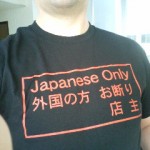
Is anything changing? That’s what I was asked and I’m going to fill you in on a few things that might interest you. This is, for example, a Japanese Only sign in 2000. These things still exist in Japan. In fact, they’re spreading. And that’s what I’m going to make the case to you today.

All right, moving on. First of all, why does this matter? For one thing, 40,000 international marriages in Japan. In 2000, it was 30,000 marriages. It’s going up, and quite dramatically. And, children of these registered marriages do not show up as foreigners. Because they’re not foreigners, they’re Japanese citizens. Therefore, children of these marriages are coming into our society as Japanese, even though they might not necessarily look Japanese. That will make for a sea change in Japan’s future.

And, you’ll never see where they are because they are invisible statistically. Japan’s census bureau does not measure for ethnicity. If you write down your nationality, in my case “Japanese’’, there is no way for me to write that I am a Japanese with American roots. That’s a problem. You have to show ethnicity because Japan is diversifying. It is a fact, and one reason is international marriages.

And Japan needs foreigners. They are not here by accident. One reason: record low birthrates and record high lifetime expectancy. The United Nations now says Japan will soon have the largest percentage of elderly in the world. That’s old news. As of 2006, the Health Ministry says Japan’s population is actually decreasing, and will fall to 100 million in 50 years, actually 43 years. So, that means the number of foreigners who came in 2005 actually plugged the hole. We have a net annual of 50,000 foreigners per year influx. Now keep in mind that 50,000 for a minute because it’s important. Both the United Nations and the Obuchi Cabinet in 2000 said that Japan must import 600,000 workers per year.

How many are we now importing? 50,000, or less than 1/10th of what we need in order to maintain our current standard of living. That is a fact. Even our government acknowledges that. Japan is already importing workers to make up for the labor shortage and alleviate the hollowing out of domestic industries. We’re not going to let our factories go overseas. We’ll hire cheap workers, and give them trainee and researcher visas. One result of that is, between 1990 and 2007, we now have more than 300,000 Brazilians. They are now the third largest minority, and the numbers are increasing.

Given that there is this many foreigners here, more than 2 million total, without legal protections against discrimination, will foreigners want to stay in Japan and contribute? Japan’s government says we need them. So, help make it easy for them to stay. Well, let’s talk about problems with that. For example, and this isn’t a problem per say. This is Newsweek Japan from September of last year. All of these three people in the picture? They’re Japanese citizens, just like me. We are the future. Japan’s media is also talking about this as well. Look at that. Imin Rettou Nippon. Without foreigners, the Toyota system won’t work. This is the cover of Shukan Diamond, June 5th, 2004. Why is Toyota at number two in the world now? Foreigners. Cheap labor. Working for half the pay of their Japanese counterparts and no social benefits. However, Japan is the only major industrialized nation without any form of a law against racial discrimination.

And it shows. For example, the Otaru Onsens case. Pio said we all know it, so I’m going to skip it. Well, if you want information on it, here are my books, in English and in Japanese. And you can go to my website at debito.org for all the information you’ll ever need.

Let’s take a look at one case study. Who are these two here? Can I have a little bit of reaction here? An “awwww” Those are my kids, 10 years ago, maybe a little more. They were born and raised in Japan and are native speakers of Japanese and are Japanese citizens. Now look at this. They’re actually a little bit different-looking, aren’t they, even though they have the same parents –as far as I know! We went to one particular onsen in Otaru. What do you think happened? They said, “This one can’t come in.’’ Ha-ha-ha. Your daughter looks foreign. We’ll have to refuse her entry, even though she’s a Japanese citizen.

I’m summarizing the case to the bare fingertips, all the way down to the cuticles. That’s the best I can do in 10 minutes. We have another case here where I got Japanese citizenship in 2000. And there I am in front of the onsen. A nice big onsen, not a mom-and-pop place. I went back there on October 31st, and what do you think they said? Not “Take off your mask.’’ They said, “We accept that you have citizenship (I showed them proof)’’. But they said, “You don’t look Japanese, therefore in order to avoid misunderstandings, we’ll have to refuse you entry.’’

So, it’s no longer a matter of foreigner discrimination. It’s a matter of racial discrimination. They refused one of my daughters and they refused me. There’s a couple of signs there saying `Japanese Only’. Also, in Mombetsu, Wakkanai, there are signs, including in the middle of the mountains, where people say, “Russian sailors, this. . .’’ There are no Russian sailors in the middle of the mountains. Even in Sapporo. There are signs up in every language but Japanese for the 2002 World Cup. Those signs are still up today, except for the ones in Otaru. The moral of this tale is if you don’t have the legal means to stop this sort of thing, it spreads nationwide. Misawa. Akita. Tokyo. Saitama. . . here’s a few signs. Is the point becoming clear? Nagoya. Kyoto. Hamamatsu. Kurashiki. Hiroshima. Kitakyushu. Fukuoka. Okinawa. All of this information in on the website.

It’s getting worse, it’s nationwide. “Japanese Only’’ signs have been found at bathhouses, discos, stores, hotels, restaurants, karaoke lounges, pachinko parlors, ramen shops, barber shops, swimming pools, an eyeglass store, a sports store, and woman’s footbath establishment. Huh? “Japanese Women Only’’ They said they would not allow foreign women in because their feet are too big. (sounds of audience laughter) That is quote. “Because their feet are too big.’’ Give them a call, ask them.

Conclusions? It’s difficult to establish who is Japanese and who is not just by looking at their face. Which, as for “Japanese Only’’ signs, means let’s get out of the exclusivity thing. Things that happen to foreigners only affect foreigners? You’re wrong. Because of Japan’s internationalization, we’re going to have situations where even Japanese citizens get refused. A more profound conclusion is that “Japanese Only’’ signs are unconstitutional. They also violate international treaties, which Japan affected in 1996. They promised over 10 years ago to pass a law, but they never did.

These “Japanese Only’’ establishments are unconstitutional, but they are not illegal because there is no law to enforce the constitution. We took it to the streets and did what we could. The Hokkaido Shimbun agreed that refusing bathing was racial discrimination. We also took it to the courts. To summarize it, even the Supreme Court dismissed the case against the city of Otaru, saying it’s not involving any constitutional issues, which is ludicrous. It touches on article 14.

Here’s what everybody wants to know. We still have no form of law against racial discrimination in Japan. “Japanese Only’’ signs are still legal. We have official policy pushes against foreigners, and shadowy propaganda campaigns against any bill protecting their rights. For example, Shizuoka’ policy agency had a crime pamphlet in 2001. “Characteristics of Foreign Crime’’. It was put out by the police and distributed to shopkeepers. There were also NPA notices against foreign bag-snatchers and knifers. You can find such signs at bank ATMs and subways. You have a darkie guy speaking in katakana to a pure white Japanese, speaking in Japanese. So, the message is that foreigners are off-color and carry knives. These are put out by police.

Also, the NPA decided to deputize every hotel in Japan. How? If you take a look here. “Japanese legislation makes it mandatory that you, as a non-resident foreign guest, present your passport and have it photocopied. It says that all non-resident foreigners must show their passport. But the notice that the customers see is this one: “Japanese law requires that we ask every foreign guest for a passport.’’ That’s willful misinterpretation of the law. I’ve been asked for my passport even though I’m a Japanese citizen.

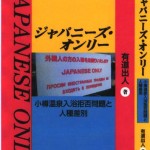
Now, we talked about this a minute ago. Here’s the Gaijin Underground Crime Files. It says on the cover that “everyone will be a target of foreign crime in 2007.’’ It further says, “Will we let gaijin lay waste to Japan?’’ That’s how foreigners are portrayed in this magazine. It is by Eichi Shuppan. Cheap. No advertising. The publisher is Mr. Joey H. Washington. Who is Joey H. Washington? I’ve asked, but have not gotten an answer. No advertising at all.

Who is funding this? We don’t know. There’s been no answer. Sold it in convenience stores nationwide. You can see the whole thing on-line for free at this address. Now, Pio is giving me the time thing. Gotta go. As far as the United Nations is concerned, it says that in the ICERD that “all dissemination of ideas on racial superiority, hatred, and incitement to racial discrimination shall be a declared offense punishable by law, including the financing thereof’’. A little bit more succinct is the International Convention on Civil and Political Rights which Japan affected in 1979. “Any advocacy, etc. etc.’

Moving on, let’s talk about incitement to hatred. . . “You bitches! Are gaijin really that good?’’ This is from the crime magazine. Is this a crime? Groping might be a crime, stalking might be a crime. But kissing on the street? It’s not crime. And here, they’re talking about male member size. This is not exactly friendly stuff. “Hey, nigger! Get your hands off that Japanese girl’s ass!’’ Then there is the manga, where a Chinese drowns a Japanese wife, and says, “right, that’s put paid to one of them. I wonder where they got the evidence that he smiled as he drowned this person? And to conclude it, the manga says, “Can they kill people this way, in a way that is unthinkable to Japanese? Is it just because they’re Chinese?’’ Is this encouraging brotherly love? How we doing on time, Pio? Let me cut it off there.

PIO: If you lose your job as a professor, you can go around the world and do presentations. You’re really good at presentations. Doudou Diene has been waiting for a long time. Thank you for your patience and please go ahead.

DIENE: Thank you very much. I will be brief. I very much enjoyed this encounter. Anytime I come to Tokyo, and I would like to share with you two points. One, my main observation worldwide and after my visit to Japan and my follow up visit, on the world scene, there are three points that are strongly indicated in my report. One is the increase of violence, violent acts and killings due to racism. . .[garbled] In Russia, I was there to investigate racism. People had been killed in the streets of Moscow. Second, and more serious, is what I call the democratization or legislation of racism which is expressed by two things. One, is the way the racist political platforms are slowly but deeply infiltrating the democratic system and political parties under the guise of debating illegal immigration, asylum seekers, and now terrorism. When you analyze the program of political parties in many countries, you will see the rhetorical concepts, views being banalized. But more serious than the concept of banalization, is that you’re now seeing more and more governments composed of democratic parties and extreme right parties. You have it in Denmark, Switzerland, and we’ll know by May if we have it in France.

But when you analyze it more carefully, you see that extreme right party leaders were getting into government, to the center of power, and occupying strategic posts like the Minister of Justice. They are then in a position to implement their agenda. We are witnessing this development. It is a very serious one.

More serious, but in the same dynamic, is the fact that extreme right parties are advocating a xenophobic agenda, and they are being elected because of this agenda, especially in regional parliaments. Berlin elected seven representatives of extreme right parties. In the European Parliament, the extreme right has enough seats to constitute a parliamentary group.

So, the point is democratization and banalization of racism and xenophobia. Third point is the emergence of development of the racism of the elites, especially the upper class, intellectual and political. We are seeing now more and more books and studies being published by intellectuals, like Samuel Huntingdon’s “Who are We?’’ The central point of the book was that the increasing presence of Latinos was a threat to America’s identity. You’re seeing more and more crude expressions of racism in publications by university publishers. But the racism of the elites is also expressed by the birth of uncontrolled sensitivities? One French author said Africans were undeveloped because of their penis size. He added that they should be sterilized. So, he has crossed two red lines. One is an old racial stereotype about Africans and sex, and bestiality of Africans. It was largely forgotten, but is being revived by people like this man. Why did he call for sterilization? Historically, this has been the first step to advocating genocide, because sterilization means elimination of a group. This opinion was expressed by a key member of the French public on television.

Another example, also in France, [garbled] a local politician said there were too many black people on the French national soccer team, and that there should be more white people. It was a member of the Socialist Party, not an extreme right-wing party that said this. I provide these examples to show that we are seeing these statements by a growing number of elites.

You may ask why. I think that from this racism of the elites, which is coming strongly. . . because of the banalization, the opening of the door, anti-Semitism and racism are now coming back, being legitimized, despite very strong opposition in Europe. My role is not to denounce or to only present a dark picture of racism worldwide but also to share with the international community and the UN General Assembly the attempts to understand why it is happening internationally. Here, I’m trying to get something more positive. Postive in the sense that I really believe it, behind the increase of violence and killings due to racism, this verbal increase in racism by the so-called elites, I think we are witnessing something deeper, which is one of the causes of what I call a crisis of identity. The fact that in Europe, Africa, and Japan, the national identity, as it was framed by the elites, as it was put into the Constitution, disseminated through education, appeared in literature, and then in the minds and psyche of people, the national identity in the form of a nation-state is no longer conformed to the multi-cultural dynamic of societies.

The societies are becoming more pluralistic, multicultural. This trend contradicts the national identity as it was once defined, and still being promoted. It is precisely this clash which is being politically used by extreme right wing groups, penetrating the programs of political parties, whenever the issue of foreigners is concerned, especially in the debates on immigration and asylum seekers and their integration.
Indeed, if you take the debates on immigration in many countries, it’s what I call and “integration strip-tease’’. It’s a strip-tease in the sense that what governments are asking is for foreign immigrants to “undress’’ at the border. To undress their cultural, religious, and ethnic specificity. This discourse is being discussed and put into law. One discussion we here in the EU is on Turkey. Fundamentally, the issue of identity is at the core of the development of racism. The way the elites and, indeed, societies themselves, are facing their multiculturalization. The refusal to accept this reality is one of the sources of racism. It expressed by the elites because they are the ones who construct national identities, and they feel threatened. Now, what is the dynamic behind it? This means that the combat against racism and violent acts associated with racism has to be linked to the construction of truly multicultural societies, democratic, interactive, multicultural, and equal.

This point leads me to Japan. As you know, my report was submitted to the Human Rights Council and to the UN General Assembly last November. Three points on this report. One, I think there were many interesting developments after my report. The issue of racism is now a key issue here in Japan. It has been for a while. But my report has contributed in a way to help the issue be discussed. Second, my report had a very important consequence, which I’ve been advocating in all countries I visited. This is the mobilization of civil society and human rights organizations on the issue of racism. Japan has been advancing the issue, I must say. Japan’s civil society has organized around my report and created a network of minority communities and human rights organizations, and are acting by helping victims of discrimination, publishing reports, and drawing the attention of the media.

For me, this is central. Combating racism is not the exclusive domain of government. Civil society has to be involved and a key actor. This is happening now in Japan. The last consequence of last November’s report on Japan is that the way my report was received by the Japanese government. As you know, the initial reaction was very negative. Indeed, the Foreign Ministry told me they were not happy.
One key point the Japanese government made to the Human Rights Council in Geneva was to say that I had gone beyond my mandate in touching upon the role of history in racism. I put it as one sample point. Racism does not come from the cosmos. Racism is a historical construction. You can retrace how racism was born and developed, and how it manifests itself. This means that history is a sin for which communities have been demonized and discriminated. So, I did make that point in my report, referring to both the internal discrimination in referring to Japanese communities like the buraku community and the Ainu, and it is indeed linked to Japanese history and society. And the racism against Koreans and Chinese is part of the history of Japan from which all this racism eminated.

One of my conclusions was, beyond calling for the adoption of national legislation against racism and all forms of discrimination, I did invite the Japanese government to cooperate with regional governments like China to start cooperating on a general history of the region. And I did propose in my report, and we’ve done this elsewhere, a group of international historians to develop a report. I said that by drafting this history, it will help touch on the deeper issue of racism and discrimination against Koreans, Chinese here. Japanese may also be discriminated elsewhere. The process may lead to a more profound re-encounter and reassessment of the old linkages and legacies. I pointed out that if you read Japanese history books, the picture given of the history of Japan, China, and Korea is that of the short-term. I did say that if the Japanese government decides to teach the longer-term histories of the relations of these countries, Japanese will remember that Korea and China are the mother and father of Japan, for language and religion, and whatever else. The Japanese make it original, something Japanese. But the deeper source is more profound and comes from China and Korea, but this is forgotten. I did say that if you teach this clearly, Japanese will realize this, and realize that discrimination is occurring against Koreans and Chinese.

There is something going on in the Japanese government, I think the fact that the accepted my visit was an indication that they place the human rights issue of some importance. It is never pleasant for a government to invite a special Rapporteur. You are considered a nuisance. But, they did invite me to come, so I came. This means that, somehow, they recognize there is an issue here. I take it that sense. So, on the historical issue, after having negatively reacted in Geneva last summer to my conclusions by saying I’d gone beyond my mandate with regards to bringing up historical issues, in November, at the UN, the Japanese delegates informed the UN that the process has started of contacts between Japanese, Chinese, and Korean historians. I say excellent. But my recommendation was that this process of drafting historical revisions to get to the deep root causes of these issues should be coordinated by UNESCO, as UNESCO has done it in the past. They can give it a more objective framework, and can eliminate the political tensions which may come from this process.

So, I think this is a demonstration that something is going on. Now, in conclusion, my visit to Japan is not a one-time, final act. It is a beginning of a process for which Japanese racism will be monitored as we monitor it other countries: Russia, or my own country, Senegal. Each and every year, I will come back to the situation in Japan as follow-up. I will inform the international community of whatever developments occur, negative or positive, to bring the issue to the attention of the United Nations where it can be discussed. Tonight, there is a debate at the Japanese Bar Association from 6 p.m. to 9 p.m. on racism. So, the mobilization of legal establishment to engage in the combat against racism is a fantastic step. I am now ready to answer any questions you might have. Thank you.

PIO: Thank you, and the next time you come to Japan, I hope you can meet with the Education minister, Ibuki.

DIENE: I do hope so. But I will quote him in my next report.

Q: Stefano XXXX, Italian Daily News [garbled] What were your findings in Europe and Italy, especially compared to Japan? For Debito, I have a question. There is no way to raise the interest of my foreign desk editor in the magazine you mentioned (Gaijin Hanzai File) because they will say, “Well, it’s not on the front page of the Yomiuri Shimbun’’. Why is it important to raise this issue, even if there are, in other countries, garbage press saying some bad things, especially in Europe?

DIENE: On Italy, I visited Italy in October. My demand to visit Italy dated from a year and a half ago when Berlisconi was Prime Minister. I was concerned of the policies I’d been informed of and wanted to check the reality with the new government. In my report, I formulated three recommendations and conclusions. One, racism is not a profound reality in Italy.

But, my second conclusion was that there was a dynamic of racism and xenophobia. There is no deeply-rooted racism. At least I did not find it in my investigations. But there is dynamic of racism caused by two developments. One is the legacy of the previous government. The government was composed of democratic parties and extreme right parties.

This agenda influenced the previous government’s policies towards immigration and was translated into law. That government, by their policies and programs, have created this dynamic. The second reason was that Italy was confronted in the past few years with a very dramatic migration and immigration process. You know, all of these boats coming from Africa, north and south. The dying of hundreds on the sea, and camps being established in Italy and Sicily, and these were shown in the media every day. Certainly, showing this in the media every day had an impact. Lastly, the political manipulation by the extreme right parties and Italy was also facing an identity crisis because the national identity of Italy is no longer framed to the process of multiculturalization. This created a tension. There is a dynamic. If it is not checked, racism will become rooted in Italy. So these are my main conclusions.

DEBITO: All right. I think the root of your question is, what is the peg for the Italian press? If it’s not on the cover of the Yomiuri, who cares? Well, why should you let the Yomiuri decide what you report in Italy? That seems illogical to me to begin with.

You’re looking for a peg? Here’s your peg: we got the book off the shelves. That book right there is a screed. You think it’s only going to affect non-Japanese? Well, it’s going to affect Japanese, too. We’re talking about the incipient racist reaction to Japan’s internationalizing society. That is news, and it’s not reported on enough. Look, the fact that we got the book off the shelves is pretty remarkable. I mean, as I wrote in my rebuttal to Mr. Saka when he said, “Hey, we just published this because it’s freedom of speech about a taboo subject’’. Wrong.

As I wrote here, it’s not like this is a fair fight. We don’t have an entire publishing house at our disposal with access to every convenience store in Japan so we can publish a rebuttal side-by-side. And the fact that the Japanese press has completely ignored this issue is indicative of how stacked the domestic debate is against us. You think the domestic press is going to go to bat for us and naturally restore balance to the national debate on foreign crime and on internationalization? The domestic press completely ignored this. There’s a reason for that. Real, naked racism is not something that people want to discuss. The fact that we actually stood up for ourselves and said, “Look, we might be foreigners but we do count. We do have money.’’ Myself, I said that, OK, I’m not a foreigner but this kind of thing is going to affect me, too.

And we’re going to exercise the only invaluable right we have in this country: the right where to spend our money. If you sell it at this place, we’re not going to buy anything at this place. Take it off your shelves. We actually took the book off the shelves, and said, “Look, it says `nigger’ here. Look, it shows Chinese killing people and smiling about it. This is gutter press. Do you really want to sell this sort of thing?’’ And they said, “No, we don’t really.’’ And every single place eventually took it off the shelves. This happened only because the strength of our conviction. The press didn’t shame anybody into doing that. We did that. That’s news, because we count now. We are not going to be ignored. We’re going to stand up for ourselves. And that, I think, is a peg.

PIO: The problem is the peg is now sold on e-bay for 40,000 yen. But, OK.

Q: My name is {garbled} I’m from the economic and political weekly of India. I have two questions, one for Dr. Diene and one for Mr. Arudou. For Dr. Diene: do you think your report will have any reprocussions on Japan entering the Security Council? Or should it have any reprocussions on Japan’s entry? Can a nation that practices racism so avidly be a member of the Security Council? For Mr. Arudou, I’ve followed your efforts. I believe the legal route is one route to go in attacking this problem. The other way is hitting them in the pocketbook. Japanese are great exporters of their tourist sites, and there is nothing like the Japanese tourist industry. How should we hit them there?

DEBITO: We meaning who?

Q: Us, and the press. Because I think that once you have frontally faced them through the press. There are a lot of cyberworkers from India who come here. I think we can do something by petitioning the Indian government through our journals and writings.

DIENE: On the first question. It was raised the last time I was here. I did say it was a very dangerous question for me to answer. The Japanese government is going to monitor my answer very closely. But I will give you my reading of it. I don’t think that the existence and the relative presence of racism should be one of the criteria for a country to get to the Security Council when racism is not an official policy or position of the government in question. Indeed, I did not say anywhere in my report that racism is the official policy of the [Japanese] government. This is contrary to South African apartheid. If the simple existence of racism was one of the criteria, the Security Council would be emptied. No country would be there. What should be part of the criteria is they way the Japanese government accepts the international rules of human rights and accepts the international instruments it has signed.

And I do think, indeed, that they are doing so because they accepted my visit. Some governments don’t. For example, I’m still waiting for the Indian government to accept my visit. I’ve been waiting for two years. They told me, “come’’ but don’t touch on the [garbled]. So, the fact that the Japanese government has accepted my visit is a very positive sign. And I do think that in the coming years they are going to implement some of my recommendations. I have no guns, armies or weapons of mass destructions to make them oblige.

But my reports keep going to Human Rights Council and General Assembly. I do think we are in the process of change. I don’t want to isolate, punish, or condemn any government. Racism is a deeply rooted reality in whatever form, whatever society. It exists everywhere. My role is to contribute to its recognition and the way it is being fought. I’m interested in cooperating with Japanese government and Japanese society in helping face these deeply rooted issues. Now, just before Arudou, you touch on something that is often forgotten when combating racism, the role of tourism. People don’t realize that tourism is the most fantastic dynamic of human encounter. Tourism, the way it is practiced now, is only on the economic dimension. It’s not helping promoting a deeper human encounter and interaction. I’ve been launching a program in UNESCO, my Silk Road. We are trying to develop a new concept of intercultural tourism. Tourism should promote a more profound knowledge.

DEBITO: Thank you. I almost got what I was looking for here right now on the Internet, but the connection in this room is a little slow. To answer the question about tourism. Why is the Japanese government doing the `Yokoso Japan’ tourism campaign? Because our exports aren’t doing so hot, and our imports aren’t doing so hot and we ought to do something about our economy. So, let’s bring in more tourists. Well, what are you doing to make it a bit more welcoming? That’s what they want. Well, what about those “Japanese Only’’ signs that are up? What about the fact that every time you check into a hotel you’re going to be treated like a criminal?

The Japanese embassy in Washington is telling foreigners they’ll have their passports checked when the check into a hotel for “effective control of infectious diseases and terrorism”(audience laughter). Now, infectious diseases? Japanese don’t carry infectious diseases, do they? Of course not. And terrorism? The biggest terrorist attacks we’ve had in this country have all been carried out by Japanese. There’s an air of hypocrisy in saying “come here, we’ll take your money. But we’re not going to welcome you in the same standard you’d be welcomed overseas.

DIENE: Just to contradict a little bit my friend Arudou. On the issue of passports and checking in at hotels. As an African, I travel quite a bit and in most of the countries I visited, I’ve been asked the same question. Not only at the border but also at the hotel. Since 9/11, it has become a general reality that a foreigner is suspect. When the foreigner is ethnically or religiously different, he is more suspect. This is the reality.

DEBITO: Just a caveat, though. As I said earlier, they are corrupting the law to say all foreigners must show their passports. That is against the law and should be pointed out. It’s happening in Japan to all foreigners.

PIO: I sympathize with you. Because even Italy checks with Italian citizens in hotels.

Q: My name is Lewis Carlet from the National Union of General Workers and I’d like to follow up on the gentleman from the Italian press about his comment that it’s not front-page news on the Yomiuri. I’d like to point out that, between January 30th and Feb. 6th, Asahi Shimbun ran a series called “Africans of Kabuki-cho’’. Several articles, though not quite as vicious as the magazine we saw up on the screen, portrayed stereotypical images of Africans as criminals, that they only marry Japanese for a visa, that they force young Japanese women into their bars. I’d like to give these articles to Doudou Diene and Debito for your reference.

Q: Yuri Nagano, freelance. I have a question for Dr. Diene. You’ve seen racism all around the world. How would you compare Japan against the United States? There’s a lot of hate crimes in the U.S., so if you could give me, in a nutshell, an idea of the differences. On a scale of 1 to 10, how bad is Japan’s racism compared to other countries, especially compared to countries with genocide, where they are killing off people?

DIENE: My position is to avoid any comparisons. Because I learned that I am mandated on something that is very complex and each country has its own specificities. There is no possibility, now, when racism is not an official policy of any government, but it is a practice that is culturally rooted.

My reports have three purposes. One, it is a contribution to society. I put what I’m told by the governments and civil societies I meet with in my report and the governments are welcome to correct the report with regard to laws I got wrong. So, my report’s first objective is to mirror society, to say that this is what I’ve seen. Is it true? That’s for you to decide. The second dimension of my report in which we try to describe the policies of the government, what kind of laws have been approved and what kinds of mechanisms have been put in place to combat racism and to describe them as precisely as possible. And to describe what the communities told me.

Internationally, my reports are a comparison between governments. When a government elsewhere reads my report on Japan, they may find a practice that interests them. They are trying to frame their policy against racism. Internally, most of my reports are part of the public debate once they are published. Like in Brazil, I issued a critical report. Racism is deeply rooted in Brazil. I expressed the strong political will of the Brazilian government to combat the problem. So, I want to help the different countries share their practices. I cannot give a scale. I try to take each case on its own reality and complexity.

Q: [garbled] Sato, a stringer for German television. I have a question for Arudou-san. According to the front page of the magazine “Gaijin Hanzai Ura File’’, it seems to rather target Korean, Chinese, maybe Arabs and those faces. I can’t see any Caucasian, so-called “gaijin’’ in Japanese. I’m interested in learning who funded the magazine and if you’re investigation uncovered them. Who are they? Also, you are American and Caucasian. . .

DEBITO: No, I’m not. I’m Japanese.

PIO: Don’t give me more information for Mr. Diene! (nervous laughter from Sato)

Q: In appearance. You enjoy kind of reverse discrimination. Do you take it as discrimination also, or do you enjoy it?

DEBITO: I’m not sure what you mean. I’m sorry. I don’t know what you mean by reverse discrimination in this situation.

Q: Well, Japanese people, I think, generally speaking, like Caucasians, so-called gaijin people.

DEBITO: Not the publishers of this magazine.

Q: Well, they have something of an inferiority complex, all very complex feelings. Sometimes, you are treated very specially. So, how do you deal with it?

PIO: She’s talking about two different types of approaches. One is against the sankokujin, as Ishihara Shintaro would say, and then the trendy gaijin.

DEBITO: Well, let’s start with “Gaijin Hanzai’’ There’s plenty of stuff in there about the so-called gaijin, or white people. That’s your definition. I don’t buy it, but even on the cover, you can see a white-looking guy. Before you comment on the contents, look at the contents please.

Now, about me getting special treatment as a Caucasian, I’m not really sure that’s the case. I generally live my life like anybody else in this society. I don’t pay attention to my own race except when it’s pointed out to me. And it is, of course, often pointed out to me. It happened yesterday when I was asked yesterday what country I was from. I said “Japan’’. That’s generally where the conversation stops because they think I’m a weirdo. But the point is still that I don’t really pay much attention to it and I don’t consider my status to be anything special, except that I’m a rare citizen. That’s the best way I can answer your question.

[ADDENDUM FROM DEBITO: In hindsight, I would have answered that even if there is differing treatment based upon race in Japan, there shouldn’t be. Race shouldn’t be an issue at all in human interaction. Also, the conversations I have about nationality with people do continue to flesh out that I am naturalized, and after that, we communicate as normal, with race or former nationality becoming a non-issue.]

Q: Bloomberg News. Mr. Diene, when you were talking about criteria for Japan entering the Security Council, you did make the distinction as to whether or not Japan has a policy of racism in the government or whether it just exists. But, just a question. How do you distinguish a pamphlet from the National Police Agency or the lack of a law outlawing discrimination, how can you distinguish that state of affairs with the government’s policy on racism? And just as a clarification. When you said that in Europe the racism comes in some way from immigration or globalization, does that also apply to Japan based on what you’ve seen?

DIENE: It’s a good question. What I meant by distinguishing government policy and social and cultural deep reality of racism in the society is to compare with the situation of South Africa’s apartheid when racism was officially advocated. Japan does not have that policy. It is true that in my work I have found institutions practicing racism. I denounce this in my reports. But whenever this reality is identified, the governments either deny it or recognize it and take steps to settle the issue. I have to look at my mandate in a long-term perspective. Getting out of racism is the permanent work of all governments.
Even the most democratic institutions have the reality of racism. Often, you find silence and invisibility contributing to racism. The invisibility factor is important to remember. In Sweden, you have five members of Parliament from immigrant community. The realities are different. I have not found any official policy of racism from the Japanese government. I’ve found many practices and manifestations, deep rooted in the history and culture of the country. It’s deep within the psyche of Japan.

Q: Edwin Karmol, Freelance. I don’t know if there are any Japanese journalists representing Japanese media here, but there weren’t any questions asked. It’s even more surprising that you don’t get front-page coverage.

DIENE: I must say that the issue was raised when I came, just a few months ago. I would have liked to have been invited by the Japanese press. But, at the end of my visit, I did meet the Japanese press at a university. There was a press conference and they came. Indeed, I had an interview from the Asahi Shimbun. But, certainly, I profoundly regret. I am not just down from the cosmos. I come based on the international convents a country has signed. Indeed, my work is ineffective if the society is not informed of my visit. If the media is not reflecting on my visit known. . . In other countries, the first thing I do –I did not do this in Japan –but I organize a press conference to say I’m here for this and this. So, the public will not. At the end of my visit, I have a press conference. And I do regret that here in Japan such coverage didn’t come. But I think it may come.

PIO: Have you ever asked, formally, the Nihon Shimbun Kyokai for a press conference?

DIENE: No, I usually don’t ask. I usually don’t ask. I let the media freely decide if they want to invite me.

PIO: Well, we can do a swap with the Kyokai. We’ll give them Diene and we can get Bush or Chirac. Thank you very much.

dienedobbsdebito.jpg

(photo with Doudou Diene and Kevin Dobbs courtesy Kevin–click on image to see whole photo, not just me. Sorry, could not create thumbnail)

[ends]

Upcoming Tokyo Speeches: FCCJ, Tokyo Bar, Amnesty…

mytest

Hello All. Am pretty fried getting prepared for next week’s speeches, so will keep this short in lieu of a real newsletter.

Just finished roughing out my powerpoint presentation and my handout for the Foreign Correspondent’s Club of Japan (FCCJ) speech on Monday on Racial Discrimination in Japan, with UN’s Special Rapporteur Doudou Diene. Download details below Only two more to really get ready for. Details as follows:

///////////////////////////////////////////////////
SUN FEB 25 Attending Amnesty International Group 78 Film Night in Shimokitazawa.
See http://www.aig78.org/ for what’s playing.
Anyone want to join me for a beer?

MON FEB 26 NOON
Luncheon at FCCJ with UN Special Rapporteur Doudou Diene
“Racial Discrimination in Japan: Is Anything Changing?”

See http://www.fccj.or.jp/~fccjyod2/node/1945
Download rough powerpoint presentation at
http://www.debito.org/fccj022607.ppt
Download press handout of what I will be submitting to Dr Diene at
http://www.debito.org/dienefccjhandout022607.doc
Writeup on event included below.

TUES FEB 27 7PM
Speech for Amnesty International Group 78
“2 Channel and Freedom of Speech” Kanda Koen Kuminkan

See http://www.aig78.org/
Writeup on event included below.

WEDS FEB 28
Speech 1:30-3PM at New International School. Grades 8 & 9, 1 hour
http://newinternationalschool.com

Speech 7:30-9;30 PM for Roppongi Bar Association
“Foreign Residents and the Japanese Legal System”. More information at
http://www.rbalaw.org/meetingsevents.asp
Writeup on event included below.

FRI MARCH 2 Afternoon interview TransPacific Radio
http://nambufwc.org/march-in-march/

Gotta sleep. Here are the writeups from the sponsors: Arudou Debito in Sapporo

///////////////////////////////////////////////////

SPEECH WRITEUPS:

///////////////////////////////////////////////////////

THE FOREIGN CORRESPONDENTS CLUB OF JAPAN PRESENTS:
“Racism In Japan – Is Anything Changing?”
Time: 2007 Feb 26 12:00 – 14:00
Professional Luncheon

Language:
The speech and Q & A will be in English.

Description:
Two years ago Doudou Diene, a UN special rapporteur on racism and xenophobia, submitted a report in which he said that racism in Japan is deep and profound, and that government did not recognize the depth of the problem.

In a speech at the FCCJ he suggested Japan introduce new legislation to combat discrimination. Has anything changed since then? How has Japan reacted to the fast-growing “multicultural dawn”? There are already 2 million foreign residents officially registered and some reports say that for Japan to survive, it must look to what was once — and to many still is — unthinkable: mass immigration.

Judging from a recent event, not much has changed. A couple of weeks ago, many convenience stores and bookstores were selling a magazine by Eichi Publishing called “Gaijin Hanzai Ura Fairu,” which contained what many considered racist content.

We contacted the editor and the publisher of the magazine, but while the editor believed discussion was necessary, his proposed appearance at the club was vetoed by the publisher.

While the magazine has sold out — and apparently became a collector’s item — the issue is still there. Is Japan a racist country? Is Japanese “racism” somehow “different”?

We will hear from Doudou Diene, who is back in Japan on a lecture tour hosted by the International Movement Against All Forms of Discrimination and Racism (IMADR), the Japan Federation of Bar Associations, and the Centre for Asia Pacific Partnership (CAPP) of Osaka University of Economics and Law. He will be joined by human rights and anti-discrimination campaigner Debito Arudou.

FCCJ members and their guests please reserve in advance: at the Front Desk (3211-3161) or online.
http://www.fccj.or.jp/

///////////////////////////////////////////////////////

AMNESTY INTERNATIONAL GROUP 78 TOKYO PRESENTS
2-Channel BBS and Freedom of Speech
7PM Kanda Koen Kuminkan, Kanda, Tokyo

Arudou Debito will be talking on the subject “2-Channel BBS and Freedom of Speech” at the Kanda Koen Kuminkan. Note that under the terms of use of this venue, the meeting is technically open to Amnesty members and their guests only.

2-Channel is the world’s largest Internet Bulletin Board (BBS). After losing several lawsuits for libel, 2ch’s administrator, Nishimura Hiroyuki, has made headlines for his refusal to acknowledge any legal problem or follow any court rulings. Arudou, plaintiff in one successful lawsuit against 2ch, will discuss what happened in his case, and what Nishimura’s actions mean vis-a-vis freedom of speech in this era of instantaneous, anonymous electronic media.

More information on the case at http://www.debito.org/2channelsojou.html

Directions to Kanda Koen Kuminkan at http://www.aig78.org/

///////////////////////////////////////////////////////

The Roppongi Bar Association proudly presents a discussion on
FOREIGN RESIDENTS AND THE JAPANESE LEGAL SYSTEM
Notes from the author and Human Rights activist, Debito Arudou

Wednesday, February 28, 2007
7:30 p.m. – 9:30 p.m. @ WDI’s Private Club – Century Court

JPY 3,000 for RBA Members
JPY 4,000 for non-members
(Buffet dinner included, cash bar)

ROI Building, 10th Floor
5-5-1 Roppongi, Minato-Ku, Tokyo 106-8522
Telephone: 03-3478-4100
(Five minute walk from Roppongi Station on the Hibiya and Oedo lines)
Map: http://www.century-court.com/e/map.html

The RBA Executive Board is very pleased to host the prolific author and noted human rights activist Debito Arudou at our February speaker event! Debito, an Associate Professor at a private university in Hokkaido, came to the notice of many in Japan as a plaintiff in the renowned “Otaru Onsen Discrimination Case”, instituted in 2001, in which Debito, German Olaf Karthaus and American Ken Sutherland took an onsen (hot spring) in Otaru and the City of Otaru to court for, respectively, racial discrimination, and negligence under the Constitution and UN treaty due to the onsen’s banning of foreign persons in violation of their Human Rights. In the ensuing years, Debito and his fellow plaintiffs continued the case and raising the awareness of racial discrimination issues in Japan, in particular Japan’s status, in his words, as “the only developed country without any form of law banning racial discrimination”.

Debito is a naturalized Japanese citizen and is very familiar with immigration laws and naturalization issues for non-citizens in Japan as well as the Japanese legal and regulatory system. During the meeting, he will provide his unique insights into the Japanese laws and regulations that particularly impact non-Japanese and non-citizen residents here in Japan, the current status of human rights and related legislation in Japan, individual’s rights when interacting with the Japanese legal system (or the police!) as well as his personal experiences here in Japan.

*THIS EVENT QUALIFIES FOR 1 HOUR OF CLE CREDIT!
CLE is available through the kind cooperation of our friends at Temple University School of Law, Japan Campus. Please direct any CLE inquiries to the RBA Board when you RSVP.

Please RSVP to events@rbalaw.org by Friday, Feb. 23rd.
///////////////////////////////////////////////////////

ENDS

J Times on GAIJIN HANZAI, finally

mytest

Hi Blog. Japan Times finally got to doing a story on the GAIJIN HANZAI Magazine. Fortunately, it’s probably the best article I’ve seen on it. Includes actual statistics of magazines sold and sent back (Family Mart, interestingly enough, was entrusted with about half the copies printed), and crime statistics debunking the book’s claims. Thanks Masami. Debito in Sapporo

////////////////////////////////////////

[photo caption]
This is the cover of Kyogaku no Gaijin Hanzai Ura Fairu (Shocking Foreigner
Crime: the Underground File), a special-edition magazine published by
Tokyo-based Eichi that has triggered public outrage and caused Family Mart
to call it discriminatory and pull it off the shelves.

FAMILY MART CANS SALES
Mag on foreigner crimes not racist: editor
By MASAMI ITO Staff writer
The Japan Times: Friday, Feb. 23, 2007

http://search.japantimes.co.jp/cgi-bin/nn20070223f1.html

“Now!! Bad foreigners are devouring Japan,” screams the warning, surrounded
by gruesome caricatures of foreigners who look like savages, with blood red
eyes and evil faces.

The subtitle along the bottom of special edition magazine Kyogaku no Gaijin
Hanzai Ura Fairu (Shocking Foreigner Crime: the Underground File) asks, “Are
we allowing foreigners to devastate Japan?” with a tiny qualifier “some” on
the first kanji.

The 125-page single edition is about crimes committed by non-Japanese.

The pages are filled with crime stories and photographs of alleged crimes
being committed, drug deals, stabbings, gang fights and arrests — all of
them involving people from a wide range of countries. Some of the
nationalities named are Iranian, Chinese, South Korean, Brazilian and
Nigerian.

A spokesman for Family Mart, the main distributor, said that two days after
the magazine was released at the end of January, it began receiving e-mail
complaints.

According to a leaflet circulated by a group of protesters, the magazine
“gives discriminatory statements and images about non-Japanese residents of
Japan.”

After receiving more than 10 complaints, Family Mart took a closer look at
the magazine.

“When we read it, we found some expressions to be discriminatory and decided
to stop selling the book,” said the spokesman, who spoke on condition of
anonymity.

On Feb. 5, the firm ordered all its 6,800 outlets nationwide to remove the
magazine from the shelves and shipped them back to Eichi. It said that of
the 15,000 copies in stock — of the 20,000 to 30,000 that had been printed
— 1,000 were sold.

Shigeki Saka, editor of the magazine, claimed Eichi did not intend to
discriminate against foreigners but wanted to provide an opportunity for
“discussion” about the issue.

“This book was not originally published for foreign readers,” Saka said. “It
was to raise the issue (of crimes committed by foreigners) in Japanese
society. . . . But I believe the foreigners have the fear that they will be
viewed in the same way” as criminals.

Carlo La Porta, whole holds British and Italian citizenship and has lived in
Tokyo for 16 years, said he thought the magazine painted foreigners as
criminals.

The magazine “brings a problem into focus without adding perspective to it,
and as such implies that foreigners at large commit a lot of crimes,” La
Porta said.

Although the headline of a feature interview with a former Metropolitan
Police Department investigator, on the magazine cover, says, “In 2007,
anyone could be [sic–the Japanese says “ni naru”, will be, not “ni nareru” could be]
the target of foreigner crime!!” the number of crimes
committed by non-Japanese has actually fallen recently.

According to a report on organized crime to the National Police Agency,
18,895 foreigners were arrested in 2006, a decline of 2,283 from 2005.

In 2005, the number of foreigners arrested for serious crimes — murder,
robbery, arson and rape — fell to 396 from 421 arrests the previous year.

The 21,178 foreigners arrested in 2005 constituted only 5.5 percent of the
386,955 arrests that year.

Eichi’s Saka said he published the book despite the recent decline in
crimes, a point the magazine briefly mentions.

“The content (of the magazine) really is not intended to get rid of
foreigners nor is it extreme in tone. It is based only on facts,” Saka
claimed.

“I wanted to talk about the economic situation and environment in Japan that
has caused foreigners to commit crimes. But it does contain a little bit of
extreme expressions, for commercial purposes.”

The magazine contains several articles about the bad conditions many
foreigners work under, linking that to criminal activity.

One feature article says poor working conditions in Japan “have caused
(foreigners) to build resentment toward Japanese society and, one after
another, more people are getting involved in crimes because of the hardships
in their lives.”

On what are called “entertainment” pages, there are photographs of
foreigners and Japanese women embracing on Tokyo streets. One photo of a
black man and a Japanese woman has the caption, “Hey nigger!! Don’t touch
that Japanese woman’s ass!!”

Saka said that while he knew the term “nigger” is racist, he reckoned it
would have a different nuance written in Japanese. “We used it as street
slang, writing it in katakana. But if we had known that we would get such a
huge reaction from foreigners, we might have refrained from using it,” he
figured.

Saka said that although the book had been pulled from Family Mart, it is
still available at some bookstores and on the Internet.

Hideki Morihara, secretary general of International Movement Against All
Forms of Discrimination and Racism, said the magazine is only part of a
wider problem for which the government is partially responsible.

He said the government frequently links foreigners with the growing threat
of crimes in Japan and is creating the image that all foreigners are
potential criminals.

He cited how in 2003, the Tokyo Metropolitan Government, along with the
Immigration Bureau and the NPA, launched a campaign to cut the number of
illegal foreign residents in Japan by half within five years.

A joint statement released at the start of the campaign says “immediate
action must be taken to resolve the issue of illegal overstayers for the
safety of our country” because “the existence of some illegal overstayers
(is the source) of foreign organized crime that occurs frequently.”

Morihara also said that last year’s legislation to revise the immigration
law to enable photographing and fingerprinting of every foreigner entering
Japan gives the impression that foreigners are potential terrorists.

“It is a big mistake to think that by categorizing foreigners as dangerous,
Japan will be protected,” Morihara said.

The Japan Times: Friday, Feb. 23, 2007
ENDS

Updating “What To Do If…” Site: Getting your “shikikin” rental deposit returned

mytest

Hi Blog. Updated a section of my “What do do if…” artery site, where people can troubleshoot for some problems which may arise for them while living in Japan.

The most recent addition as follows: Debito

http://www.debito.org/whattodoif.html#deposit

/////////////////////////////////////////////////////

WHAT TO DO IF…
…you want to get your deposit (shikikin) back from your landlord when moving out.

Adapted from mails by Kirk Masden and Joe Tomei:
http://groups.yahoo.com/group/kumamoto-i/message/4899

========================
Tokyo to clean act of dirty landlords
The Asahi Shimbun
http://www.asahi.com/english/politics/TKY200402070165.html

For tenants tired of kissing their maintenance deposits goodbye, the Tokyo metropolitan government plans sweeping changes to the shabby system exploited by greedy landlords. There are no clear rules on how much of the costs to clean or repair apartments should be covered by tenants’ deposits.
========================

“Actually, the last sentence is not exactly right. The government has published guidelines:
http://www.mlit.go.jp/jutakukentiku/house/torikumi/genzyokaifukugaido.pdf

but the pdf file is 118 pages long. Here’s a couple more in Japanese, from a quick google
http://www.heyasagase.com/guide/trouble/sikikin/k_02.html
http://hccweb5.bai.ne.jp/~hea14901/library/link.htm
http://www.zentaku.or.jp/223/index.htm (issues 12-14, I think)

“The guidelines (in Japanese) focus on the concept of “genjo kaifuku” (restoration to original condition). According to the guidelines, you are NOT responsible for normal wear and tear. You are only responsible for damage that you did to the apartment beyond normal wear and tear. The guidelines help you figure out what should be considered to be normal wear and tear.

“When our family left our apartment a few years ago we were asked to pay a lot of money to, among other things, replace all the wallpaper in the apartment to make it as nice as it was when we first moved in (restoration to original condition) — even though we had been in the same apartment for 10 years! After I did a little research, the government guidelines enabled me to get a more reasonable agreement from the landlord. We had been asked to pay a significant amount of money in addition to the deposit (shikikin) we had paid. Instead, we received a good chunk of the deposit back.

“Sometimes you have to be firm with landlords, who are used to intimidating people and taking more than they deserve. I told the landlord that if we could not work this out between ourselves that I was prepared to have the matter settled in small claims court (kan’i saibansho–see section below). In this respect, the goverment guidelines were a big plus. I also sent explanations about the guidelines and the reasons why we found the landlords claims to be unreasonable by certified mail so there could not be any dispute about what we had or had not told the landlord.

“In the end, we accepted an agreement that was not perfect (we had to pay to replace the tatami — even though this should not be our responsibility according to the guidelines), but much, much better than what were almost forced to accept. What we did required a lot of Japanese. Still, even if your Japanese is not good enough for you to fight on your own, it may be worth your while to get someone to help you so that you can know your rights and tell the landlord about the government guidelines.

“Here’s another related site (in Japanese):
http://www.heyasagase.com/sitelist/joho/sikikin.html

“The idea of taking the landlord to small claims court, especially with the backing of goverment guidelines, is a good one. Take digital pics of everything, making sure the camera’s date function is on. You can also take a picture of the ‘problem points’ with a newspaper to verify the date. Retain everything and keep records of when you spoke to people, who you spoke to and what they said. I have found that when bullying from the landlord occurs (and this is clearly what it is), the bully is generally strong on the standard fronts, but with something like this, especially when it comes to documenting in meticulous detail in your favor, they never see it coming. Don’t look for the knockout punch–just calmly get all your ducks in a row and be ready to use official channels.”

/////////////////////////////////////////////////////

UPDATE ENDS

Petition for visas for Vu Family

mytest

Hi Blog. Am just getting started with these sorts of issues (am aware there is another visa case out there, of the Kahlil Family of Iran: ref: Japan Times Saturday, Jan. 13, 2007: “DAUGHTER CAN SEEK RESIDENCY: Iran family wins new stay — till Feb. 16”, with no update in the JT as of yet.). So for the time being please have a look at this fine write up from friend Michael Fox, who specializes in the Japanese judiciary. Debito in Sapporo

/////////////////////////////////////////////////////////////

Vufamily.jpg

PETITION FOR VISAS FOR THE VU FAMILY OF KOBE CITY.
Written by Michael H. Fox of Hyogo (http://www.jjforum.org)

Quite often, the little things in life can solve severe problems. Yes, little things like a stamp in a passport. Asian immigrants to Japan know this too well.

February 2001 was a good time for Saigon resident VU Van Thang. The previously divorced father of two, remarried. His new wife had permanent residency in Japan, and he looked forward to visiting the country, and settling down with his kids. His dream materialized ten months later. In November, Vu arrived in Kobe with his daughter Thi Thuy (aged 16) and son Viet Coung (aged 15).

The family began work in the city’s shoe manufacturing industry in Nagata ward, Kobe, which was savaged by the 1995 great Hanshin earthquake. Despite the restored vitality of the city, Nagata has not completely recovered. Shoe manufacturing was traditionally an occupation associated with the lower class, shunned by most Japanese. Overseas manufacturing, with its cheaper labor, continues to injure local production. The working conditions in this sector are stringent: hours are long and the pay is mediocre.

The Vu family, no stranger to hardship, welcomed the challenge. Papa Thang and his son heartily accepted full time work. Daughter Thuy worked half a day, and took on the colossal task of learning the Japanese language, while at the same time enrolling at a special middle school in the evening. She graduated from mile school and the 21 year old is now attending high school, continuing to work half a day and studying in the evenings.

Her brother Coung is also a success. Having worked continuously at the same company full time for four years, he is now a skilled craftsmen and factory foreman. His employer desperately wants him to stay. Despite a heavy workload, his family’s strong education values have propelled him to enrol in the evening midle school. The twenty year old hopes to attend college in the future.

Three years after coming to Japan, in October of 2004, Vu’s relationship with his wife soured, and she left the home. Her present whereabouts are unknown. In March of 2005, without his wife’s support, immigration authorities refused to renew the family’s visas and ordered their return to Vietnam. The family decided to take their chances with the immigration police, and continue to live and work in Japan one day at a time. In January of 2006, the visa-less famiy were granted provisional release (kari-houmen), and spared the hardships immigration detention. Their passports are stamped “zairyu shikaku nashi” (visa status: none) which spares the danger of arrest for illegal overstay-a felony according to the criminal code. The family exist in a kind of legal limbo: they are without visas, are not supposed to work, and must seek permission to leave Hyogo prefecture even for short visits.

If ordered out of the country, the lives which they have diligently chiseled will be washed away. The Vu’s now have a support group, collecting petitions addressed to the Minister of Justice. The group is being lead by a teacher at the evening junior high school, Mr. Fumio Kurosaka, who has had Thuy and Coung in the classroom. “It is amazing how hard these young people have worked at self-sustenance and assimilation,” Kurosaka relates, “Japan needs these people to foster economic recovery, and construct a healthy multicultural society.” Journalist and social activist Arudo Debito agrees. “This is an important case. It will prove whether Japan’s policy about opening doors to Asian neighbors is the hard truth or soft talk.”

One voice can always make a difference! Please sign and send in the following petition to

fmikros@hi-net.zaq.ne.jp
////////////////////////////////////////////////////

Honourable Jinen Nagase

Minister of Justice of Japan

Tokyo

A Request for Visa Extensions for the VU Family

In March of 2005, after overstaying their visas, the family of VU VAN THANG applied for special permission to remain in Japan. Their applications are currently being reviewed by the Kobe branch of the Department of Immigration.

The family has a complex history. In February of 2001, Vu, a divorced father with two children married a Vietnamese permanent resident of Japan. Later that year, in November of 2001, he came to Japan with his daughter THI THUY (aged 16) and son VIET COUNG (aged 15). The entire family has worked in a shoe manufacturing plant in the Nagata ward of Kobe city. Daughter Thuy is now a student at Minatogawa Prefectural High School. Her brother Coung, who has worked continuously at the same company for four years, has enrolled in junior high school. He hopes to attend college in the future.

Three years after coming to Japan, in October of 2004, Than’s relationship with his wife fell into discord, and she left the home. In March of 2005, without his wife’s support, immigration authorities refused to renew the family’s visas and ordered their return to Vietnam. In January of 2006, the family received provisional visas sparing the confines of immigration detention. If ordered out of the country, the lives which they have diligently chiseled out will be washed away.

I strongly urge you to grant visas to these fine people, and allow them to continue to dwell in Japan and contribute to a healthy multicultural society.

Yours Respectfully

(Name)

(Partial Address)

(Date)

ENDS

J Times media roundup re Africans in Japan

mytest

Handbook for Newcomers, Migrants, and Immigrants to Japan\Foreign Residents and Naturalized Citizens Association forming NGO\「ジャパニーズ・オンリー 小樽入浴拒否問題と人種差別」(明石書店)JAPANESE ONLY:  The Otaru Hot Springs Case and Racial Discrimination in Japansourstrawberriesavatardebitopodcastthumb
UPDATES ON TWITTER: arudoudebito
DEBITO.ORG PODCASTS on iTunes, subscribe free

Hi Blog. An interesting media roundup of how people are viewing Africans in Japan. I’ve been hearing from several quarters about a recent series of articles on them in the Asahi (was on the road, slow on the uptake)… Here’s a taste. Debito in Sapporo

======================================

‘Africans in Japan’…not from the quill of Ishihara, thank God

Jinichi Matsumoto’s series of articles about Africans in Japan transcends stereotypes often perpetuated by the Japanese media, says Philip Brasor

The Japan Times

Sunday, February 18, 2007

By Philip Brasor

Courtesy Asia Media http://www.asiamedia.ucla.edu/article.asp?parentid=64040

Last week, The Japan Times ran a Bloomberg interview with Shintaro Ishihara in which the proudly provocative Tokyo governor followed up his contention that foreigners were behind the city’s rising crime rate. He challenged his interviewers to go to Roppongi and see for themselves. “Africans — and I don’t mean African-Americans — who don’t speak English are there doing who knows what,” he said.

You expect such careless bluster from Ishihara, but his statement deserves scrutiny. One explanation for the governor’s popularity is the way he is seen to reflect what his supporters think is common sense. What are non-American black people doing in Japan? It must be something bad.

It wouldn’t be difficult to believe that Japanese people have a negative image of Africans, given what they see and hear through the media. As far as Roppongi goes, newspapers and magazines often run articles about how Africans, especially Nigerians, have become increasingly involved in Tokyo’s bar and nightclub business and use credit-card fraud and bill-padding practices to milk customers.

Tarento Bobby Ologun, who’s from Nigeria, may represent the only favorable image many people have of Africans living in Japan. Having emerged in 2001 on the variety show “Karakuri Terebi,” earning laughs as he learned Japanese, Bobby’s childlike appeal remains the same, despite his being blackballed from TV for a while over an alleged assault last year. With his sweet, deep voice and awkward command of the language he comes across as an innocent.

Bobby is not the first or only African tarento — in the 1990s, Guinea Embassy employee Osuman Sankhon was everywhere — but he appears on TV much more than either John Muwete Muruaka, the former secretary of politician Muneo Suzuki, or the multilingual Baudouin Adogony, two Africa-born tarento who have a more worldly image (and who belong to the same talent agency as Bobby).

Though university-educated, Bobby comes across as someone who doesn’t understand the world and doesn’t realize it when comedians poke fun at his skin color or lack of sophistication. He represents the perceived backwardness of Africa, which makes him the perfect topical tarento. By my count, at least seven feature films about Africa are opening in Japan this spring, but, except for South Africa’s “Tsotsi,” whose viewpoint is African, these films were made by white people who acknowledge the tragedy of the continent and even the West’s hand in creating that tragedy, but nevertheless approach it as outsiders. Regardless of the filmmakers’ intentions, these movies erect a wall, a feeling that the region’s problems are so huge that nothing can be done about them. As film critic Manohla Dargis recently wrote in the New York Times, “Watching Leonardo DiCaprio share the screen with genuine handless black Africans . . . doesn’t rouse me to action; it stirs horror, pity, sometimes repulsion, sentiments that linger uneasily until the action starts up again.”

Without the proper context, Africans become objects of fear or pity. One of the saddest developments of the last two decades is the diminishment of history as a scholastic pursuit. In America, history has become an option in compulsory education, and in Japan it is a tool for inculcating nationalism.

History provides the context with which we make judgments, but now we rely on the kind of “common sense” that Shintaro Ishihara prizes so highly, and which is shaped by the narrow parameters set by the media: What will get your attention? What will evoke fear and pity the best?

Jinichi Matsumoto’s ongoing series of articles in the Asahi Shimbun, “The Africans of Kabukicho,” provides this context. Using statistics and interviews, and then providing history as background, Matsumoto answers Ishihara’s question and explains exactly what those Africans are doing in Japan.

He focuses on a Nigerian named Austin who was recently released from jail. Austin came to Japan in 2001 on a tourist visa, hoping to buy used auto parts for export back to Nigeria. It was more difficult than he thought, and he eventually started working for Nigerian-owned bars in Roppongi as a street solicitor.

During the 2002 police crackdown of illegal immigrants, many of the Chinese and Korean-owned drinking establishments in Kabukicho closed, and rents plummeted. Nigerians who fled Roppongi’s crackdown opened their own bars in the ensuing vacuum, including Austin, who had married a Japanese woman. He was eventually arrested for fraud. He denies cheating anyone and never confessed to anything, but in Matsumoto’s retelling he does not come off as an innocent. “I think we should try to cultivate regular customers,” Austin’s wife says about the bar, “but he wants to make as much money as he can right now.” It’s this sort of detail that makes Austin a real person, and his situation comprehensible.

The series elaborates on Austin’s upbringing in the city of Port Harcourt, and in turn describes the history of Biafra, the southeastern region that tried to break away from Nigeria in the early 1960s and failed. Nigeria is controlled by the Muslim Hausa, but Biafra is populated by the Ibo, who are Christian and discriminated against by the government. It is on Ibo land where most of Nigeria’s oil is being drilled, though the Ibo don’t benefit at all.

Matsumoto estimates that 70 percent of the 2,400 legally registered Nigerians in Japan are Ibo (Bobby belongs to a third major ethnic group, Yoruba), and describes how Japan became a last hope for those who had the grit and money to make the long journey. It’s an amazing story, and while it doesn’t pardon any crimes that may have been committed by people who made that journey, it should at least make readers understand them better. As human beings, they deserve more than fear and pity.

Date Posted: 2/18/2007

ENDS

FCCJ Luncheon Feb 26 2007, with UN’s Doudou Diene and Arudou Debito

mytest

Hi Blog. Side by side with the United Nations. It’s like a dream. Wish me luck. Hope I do well. Debito

============================

THE FOREIGN CORRESPONDENTS CLUB OF JAPAN (FCCJ) PRESENTS:
Professional Luncheon
Debito Arudou & Doudou Diene
Racism In Japan – Is Anything Changing?

12:00-14:00 Monday, February 26, 2007
(The speech and Q & A will be in English)
http://www.fccj.or.jp/~fccjyod2/node/1945

Two years ago Doudou Diene, a UN special rapporteur on racism and
xenophobia, submitted a report
in which he said that racism in Japan is
deep and profound, and that government did not recognize the depth of
the problem.

In a speech at the FCCJ he suggested Japan introduce new legislation to
combat discrimination. Has anything changed since then? How has Japan
reacted to the fast-growing “multicultural dawn”? There are already 2
million foreign residents officially registered and some reports say
that for Japan to survive, it must look to what was once — and to many
still is — unthinkable: mass immigration.

Judging from a recent event, not much has changed. A couple of weeks
ago, many convenience stores and bookstores were selling a magazine by
Eichi Publishing called “Gaijin Hanzai Ura Fairu,” which contained what
many considered racist content.

We contacted the editor and the publisher of the magazine, but while the
editor believed discussion was necessary, his proposed appearance at the
club was vetoed by the publisher.

While the magazine has sold out — and apparently became a collector’s
item — the issue is still there. Is Japan a racist country? Is Japanese
“racism” somehow “different”?

We will hear from Doudou Diene, who is back in Japan on a lecture tour
organized by the International Movement Against All Forms of
Discrimination (IMADR). He will be joined by human rights and
anti-discrimination campaigner Debito Arudou.

To help us plan properly, please reserve in advance at the Front Desk
(3211-3161) or online (http://www.fccj.or.jp – please log in to
reserve). The charge for members/guests is 1,260 yen/2,200 yen for the
sandwich option, and 1,575 yen/2,500 yen for the hot lunch option, tax
included. Reservations canceled less than 24 hours in advance will be
charged in full. If you do not make a reservation or reserve late, your
meal may vary from the scheduled menu.

Professional Activities Committee
FCCJ
ends

Japan Times column on govt and media-generated foreign crime myth webbed

mytest

Hi Blog. I just put up my 34th column for the Japan Times on debito.org, as I mentioned I would in my last newsletter.

====================================
Japan Times Community Page Column:

“UPPING THE FEAR FACTOR: There is a disturbing gap between actual crime in Japan and public worry over it”
published February 20, 2007

and available at http://search.japantimes.co.jp/cgi-bin/fl20070220zg.html
====================================

However, here is a link to the “Director’s Cut”, the essay as originally submitted to the editor, with links to sources for claims made within the article:

====================================
THE MYTHOLOGICAL CRIME WAVE
Public perceptions of crime and reality do not match
By Arudou Debito

http://www.debito.org/japantimes022007.html
====================================

Didn’t want to post the same article twice on debito.org. Have a read! Debito

Fukuoka Now mag on Police Bike Checkpoints

mytest

Hi Blog. Yet another article on what it’s like to cycle while foreign in Japan. My first Japan Times Community Page column was on this very topic all the way back in 2002! Lightweight fare with a serious center, particularly when it comes to the cops’ apparent attitude. Courtesy of free local magazine FUKUOKA NOW. Thanks to Bert for sending a copy to me. Debito in Sapporo

=================================
GOOD COP, BORED COP? DODESHO COLUMN
FUKUOKA NOW MAGAZINE, FEBRUARY 2007

By Max
American, Radio DJ and Suspicious Bicycle Rider
http://www.fukuoka-now.com/features/article_display.php?fn_code=482112

One of the great advantages of life in Japan is the safety we come to take for granted. I learned recently that the downside of this appears to be a police force bored enough to look for trouble where it does not lie. Allow me to be specific; I was waiting on my bicycle at a red light in Tenjin recently when I was stopped by three cops. They asked me where I got the mama-chari (grandma-style bicycle – a friend’s old one bought at a recycle shop), took my gaijin card, asked me to get off, and radioed in the bike’s details. Apparently, either the bike or the gaijin was suspicious, and I was asked to accompany them to the police station on Oyafuko-dori. There, we were met by two older cops, twice as heavy-set and three times as surly as their subordinates.

I was questioned for a further half an hour as they took down all my information (including work and cell phone numbers) and asked me such hard-hitting and revealing questions as “Well, what will you do if we find the real owner of this bike?” Eventually, they let both this dodgy gaijin and his suspect wheels go, with the caveat that they “would be in touch.”

I asked around and a significant percent – anecdotally, it seems the majority – of Fukuoka’s foreigners have had a run in with the bicycle cops: the man asked to come out of the crowd of similarly bike-riding Japanese to be questioned; the woman stopped at a checkpoint whose bike was obviously her own but was asked nonetheless to step aside and give her information; or the fellow whose bike was checked but whose Japanese girlfriend’s bike, right next to him, was not. All true and recent stories. The police, it seems, have a tacit policy of checking foreigners’ bikes, which is to say they have a policy of checking on foreigners and using bikes as the excuse. As I waited at the light, my only fault was being foreign, and therefore suspicious. I realized that I had no idea what my rights were as a foreign resident here, and did a little research. My internet search on police policy took me to the homepage of one Arudou Debito, an American-born, Japanese-naturalized self-styled human-rights activist. Born David Aldwinckle, he had to change his name to kanji to become a Japanese citizen. According to Arudou, in May 1999 the National Police Agency founded the Kokusaika Taisaku Iinkai (Policy-making Committee Against Internationalization), specifically designed to root out “foreign crime” as a consequence of internationalization. It seems its policies, combined with the mythical foreign crime wave, have led to a more aggressive checking of gaikokujin.

The increase in foreign crime is fact; in 2003 it topped the 40,000 mark for the first time in history – an increase of 16.9% from the previous year. Those figures, combined with the horrific murder of a Fukuoka family by foreigners, galvanized public opinion about foreign crime. A closer look at the statistics reveals that considering the increasing size of the foreign community and increasing indigenous crime rate, Westerners are about 10 times less likely to commit a crime than Japanese. See www.jref.com/society for more. According to Debito’s homepage, cops aren’t allowed to question you unless you’re directly suspected of criminal activity, or are a suspicious person (Kyodou Fushin Sha). You are, however, required to carry your foreign resident’s card at all times, and the police can ask to see it. If you feel that you are being treated unfairly, however, it is legal to ask to see, and take down, the officer’s ID before giving your information. Also, the police can’t actually make you go to the station without officially arresting you. Don’t give them cause to do so though; after they do all bets are off (Japan has no habeas corpus statute). While Debito’s views are often criticized as being counterproductive or inflammatory, he makes some interesting points which you can check out for yourself at www.debito.org.

As a long term resident you get used to brushing off comments about how well you use chopsticks or how small your head is, but being stopped by the police, taken to the station and questioned was an unpleasant experience. Many of us come from countries with a history (or present problem) of racism, human rights abuses, or racial profiling. Being stopped over a bicycle is about as minor an abuse of civil liberties as you can imagine, but I didn’t like the feeling of being suspect because of my ethnicity. That was interesting, and a lesson that I can take home. Japan is an amazing country, and it’s great to live in a place where you feel safe all the time… I just wish the cops weren’t so bored.

ENDS

Asahi column on “Broadening definition of ‘Japanese'”

mytest

Hi Blog. Watashi no Shiten column on what to do about immigration–offering the inclusive view and how to make people accepted as Japanese. Article starts off slow, but builds up to conclusions I agree with. Hope to see these views become more common currency in the policymaking arena. Thanks to Colin and LIJ for notification. Debito in Sapporo

=============================

POINT OF VIEW/ Takashi Miyajima: Time to broaden the definition of ‘Japanese’
02/20/2007 THE ASAHI SHIMBUN

http://www.asahi.com/english/Herald-asahi/TKY200702200138.html

Some people say Japan keeps its doors closed to foreign labor. But that is not an accurate description. Excluding foreigners staying in Japan illegally, there are already about 600,000 foreign nationals working in this country. Japan’s doors are not closed to foreign labor.

The problem, however, lies in the gap between the government’s official policy and the reality of accepting foreign laborers. The Japanese government has been sticking to the principle of not accepting unskilled foreign workers mainly out of concerns that a sharp increase in the number of foreigners could cause cultural conflict and a deterioration of public safety.

But, in the face of an increasingly acute labor shortage in manufacturing and some other industries, the government in the 1990s created schemes to bypass immigration laws and allow unskilled foreign workers into the country. A system was established to allow South American nationals of Japanese descent to work in Japan without imposing any restrictions on the types of jobs they could do.

A special on-the-job training program was created to enable companies to hire foreign workers as “trainees.” These schemes should be criticized as disguised ways to accept low-skilled foreign laborers.

The foreign nationals of Japanese ancestry who come to Japan through these backdoor channels tend to have children and stay for the long term. Despite being aware of the situation, the government has been making no serious effort to establish a system to accept immigrants under an official national policy. The decision to ignore these immigrants has been made on the grounds that there is no national consensus on becoming a country of immigration. The government’s inaction is now beginning to produce serious consequences.

The most serious problem is that the children of these foreign workers are not receiving a proper education. About 30 to 40 percent of the children of foreign workers of Japanese descent are not attending Japanese schools due to a number of problems but mainly because of the learning difficulties they face. Our survey shows many of these children give up the idea of going on to high school during the second half of their second year in junior high school. Consequently, they begin to feel unsure about their future.

One factor that is often behind this situation is their parents’ vagueness on how long they are going to stay in Japan. But most of the blame rests on the government’s failure to take specific steps to provide detailed assistance for these children–such as reducing the number of students per class and adjusting school curricula to the new international environment.

Accepting a larger number of foreign workers, including unskilled laborers, would be a realistic way to deal with the problem of labor shortage due to the nation’s aging population. Even if they are allowed to work in Japan only for a limited period of time, however, many of them would develop a desire to settle down in this country as they get used to their workplaces here and establish strong ties with the communities.

It would be better if Japan decides to become an immigration society that accepts foreign workers as new members and starts developing necessary systems to deal with this. For instance, the government should consider granting foreign nationals born and raised in Japan the right to obtain Japanese nationality on the grounds of jus soli, the principle that a person’s citizenship is determined by the place of birth rather than by the citizenship of one’s parents.

But systems alone would not solve the problems. We can draw some important lessons from the riots that broke out in Paris and other parts of France in 2005.

The youths who torched vehicles were mostly the children of immigrants of north African origin. Many of these second-generation immigrants face discrimination in employment even after they become adults with French nationality.

The widespread unrest underscored the fact that children of immigrants are treated as second-class citizens in French society, which takes pride in its egalitarianism. Frustration among these youngsters with foreign roots over the gap between what they were taught at school–there is no discrimination–and the reality, ignited the violent acts of protest.

In Japan, the children of the foreign workers of Japanese ancestry will soon start to come of age. The nation must undergo some social changes to prevent them from becoming isolated.

One inevitable change is broadening of the concept of “Japanese.”

In the United States, there are various hyphenated terms for citizens of foreign origin, such as Italian-Americans or Chinese-Americans. But there are no corresponding terms in Japan. There are a number of criteria that narrow the generally accepted definition of “Japanese,” from the color of hair and eyes to the ability to speak Japanese without accent or with proper use of honorifics.

People who don’t fulfill these criteria are alienated, classified as “foreigners” even if they have Japanese nationality. As a result, they feel a strong sense of discrimination.

Japan should now create a society where people with various cultural backgrounds are accepted as Japanese, called “Chinese-Japanese,” for instance, without any discriminatory connotations and be treated fairly as equal and important members of society.

* * *

The author is a professor of sociology at Hosei University.(IHT/Asahi: February 20, 2007)
ENDS

DEBITO.ORG NEWSLETTER FEB 20, 2007

mytest

Hi Blog. Contents of this latest newsletter as follows:

////////////////////////////////////////////////////////////////////////////
1) NEW JAPAN TIMES ARTICLE OUT TODAY ON “MYTH OF JAPAN’S CRIME WAVE”
2) UN’S DOUDOU DIENE BACK IN TOKYO NEXT WEEK
–ANYTHING YOU’D LIKE ME TO SUBMIT TO HIM? BY NOON FRIDAY
3) UPCOMING SPEECHES IN TOKYO, ONE WITH DIENE RE GAIJIN HANZAI MAGAZINE
4) ECONOMIST ON J POLICE INTERROGATIONS AND NEW SUO MOVIE
5) J TIMES: PREFECTURES RANKED RE SUPPORT FOR FOREIGN RESIDENTS

////////////////////////////////////////////////////////////////////////////

By Arudou Debito (debito@debito.org, http://www.debito.org)
February 20, 2007, freely forwardable
Updates in real time with RSS subscriptions at http://www.debito.org/index.php

////////////////////////////////////////////////////////////////////////////

1) NEW JAPAN TIMES ARTICLE OUT TODAY ON “MYTH OF JAPAN’S CRIME WAVE”

This is the reason I’m putting out this newsletter early: Today (Tuesday, Feb 20) is Community Page day in the Japan Times, with its weekly column of hard-hitting expose journalism by itself worth that day’s price of the paper…

My first column for them this year (only did seven last year, slowing down a bit, sorry) talks about crime in Japan–or rather the exaggeration of crime and the quantifiable fear factor. Here’s what I submitted to the editor on Sunday (headlines and sidebars may vary):

============================================
THE MYTHOLOGICAL CRIME WAVE
Public perceptions of crime and reality do not match
By Arudou Debito. Column 34 for the Japan Times Community Page

“We must bring back ‘Japan, the safest county in the world’ through better anti-crime measures.” (Former PM Koizumi Oct. 12, 2004)

“Everyone will be a target of gaijin crime [sic] in 2007.” “Will we let the gaijin [sic] devastate Japan?” (Cover, Gaijin Crime Underground Files, Eichi Publishing Inc.)

The government and media would have you believe that Japan has lost its mantle as a safe country. Apparently we live amidst a spree of heinous crime.

Accurate? Not very, according to a new academic study…
============================================

Pick up a copy from the newsstand. Should have an annotated version with links to sources up within 48 hours or so at
http://www.debito.org/publications.html#JOURNALISTIC

The academic study I’m referring to is linked from
http://www.debito.org/?p=221

////////////////////////////////////////////////////////////////////////////

2) UN’S DOUDOU DIENE BACK IN TOKYO NEXT WEEK
–ANYTHING YOU’D LIKE ME TO SUBMIT TO HIM? BY NOON FRIDAY

Dr Diene, the United Nations’ Special Rapporteur for the Human Rights Council, is visiting for the third time in as many years to investigate and talk about human rights in Japan. More on Diene’s previous trips at
http://www.debito.org/rapporteur.html

Japan has a surprisingly lousy record on human rights, as I keep pointing out. It is in violation of various treaties (what with no law against racial discrimination, safe refuge for child abductors, periodic reports filed late or not at all…), and Diene’s visits cause a very low-volume stir in the policymaking halls and media. Not to mention snubs from Prime Ministers and Tokyo Governors. More on the stirs at
http://www.debito.org/japantimes062706.html

More on Japan’s human rights record at
http://www.debito.org/japantimes110706.html
http://www.debito.org/japanvsun.html

Any sinecured bureaucrat just through the motions would probably have taken the hint by now, and given up on Japan. But Diene is not one of those types of people, and his assiduousness and tenacious research is the very reason we have a United Nations–to keep shaming people into keeping their international promises regarding promoting human welfare and dignity. Sorry to gush, but I think this situation warrants great praise.

Anyway, as far as I know, this trip Diene will be speaking at least three times in Tokyo:

1) Foreign Correspondents Club of Japan (FCCJ) luncheon, Monday, Feb 26, noon
2) Tokyo Bengoshi Kaikan, Chiyoda-ku, Monday, Feb 26, 6PM to 9PM
3) Matsumoto Kinen Kaikan Tuesday Feb 27 6:30 to 8:30
Last two speeches sponsored in part by IMADR, see their website at
http://www.imadr.org

I will be meeting with Dr Diene to present him with information regarding hate speech and recent publications (such as the GAIJIN HANZAI Magazine), in order to document the targeting of foreigners as official government policy, and the consequent public expressions of xenophobia this is encouraging.

If readers out there would like to send me a human rights issue (a personal experience is fine) to submit to Diene, please do so BY NOON FRIDAY FEB 23 via debito@debito.org. Please entitle your email “Submission to Dr Doudou Diene” to avoid my spam filters. I will print things up (include your name and contact details if comfortable) and place them in a special folder for his perusal. Please keep it succinct and nonhyperbolic for the sake of legibility and credibility.

Speaking of the GAIJIN HANZAI Magazine…

////////////////////////////////////////////////////////////////////////////

3) UPCOMING SPEECHES IN TOKYO, ONE WITH DIENE RE GAIJIN HANZAI MAGAZINE

Just found out yesterday that one of the topics for discussion at next Monday’s FCCJ luncheon above was GAIJIN HANZAI Magazine and issues of hate speech. The editor of said magazine propagandizing foreign crime (background on that issue at http://www.debito.org/?p=214, with several more articles in the right-hand “Recent Posts” column), a Mr SAKA Shigeki, was due to appear to defend his company’s, Eichi Publishing, decision to put magazines on convenience stores nationwide depicting the destruction of Japan through foreign criminality.

Mr Saka’s written defense (published on Japan Today) is available here, with my rebuttal:
http://www.debito.org/?p=224

However, according to a source at the FCCJ, Mr Saka’s publisher, the mysterious “Joey H. Washington”, has nixed Mr Saka’s participation. So I was asked today by the FCCJ if I would take his place for a ten-minute presentation next to Dr Diene. Pinch me. Side by side with the United Nations? I can’t tell you what an honor this is. Wish me luck.

Meanwhile, the unsellable GAIJIN HANZAI has become a collector’s item. Even the last holdout, Amazon Japan, has “sold out” of the magazine. And for a couple of days, somebody was offering a used copy there for 20,000 yen! (Somebody seems to have snatched it up.)

Let’s shift gears:

////////////////////////////////////////////////////////////////////////////

4) ECONOMIST ON J POLICE INTERROGATIONS AND NEW SUO MOVIE

My friend Chris at Amnesty International has told me that Director SUO Masayuki’s new film “I Just Didn’t Do it” (sore de mo boku wa yatteinai) (http://en.wikipedia.org/wiki/Masayuki_Suo) is well worth seeing. Here’s the Economist (London) to put it in context:

============ ECONOMIST ARTICLE EXCERPT BEGINS ===========

JAPANESE JUSTICE: CONFESS AND BE DONE WITH IT
The Economist, Feb 8th 2007

A TAXI driver in Toyama prefecture is arrested for rape and attempted rape, confesses to both crimes, is convicted after a brief trial and serves his three years in prison. Meanwhile, another man, arrested on rape charges, also confesses to the two crimes the first man was convicted for. He, too, goes to jail and serves his time. Is this a story by Jorge Luis Borges, a case of trumped-up charges from the annals of Stalinist Russia, a trick question in a Cambridge tripos? None of the above. It is a recent instance, and not an uncommon one, of the Japanese judicial system at work.

On January 26th Jinen Nagase, Japanユs justice minister, apologised for the wrongful arrest of the taxi driver and declared that an investigation would take place. After all, the suspect had an alibi, evidence that he could not have committed the crime and had denied vociferously having done so. But after the third day in detention without access to the outside world, he was persuaded to sign a confession.

With too many instances of wrongful arrest and conviction, few expect anything to come from the justice ministry’s investigation. But the spotlight has begun to shine on the practices of police interrogation as well as on the court’s presumption of guilt. More and more innocent victims of Japan’s judicial zeal are going public with grim accounts of their experiences at the hands of the police and the court system.

Now a new film about wrongful arrest by one of Japan’s most respected directors, Masayuki Suo, has just opened to critical acclaim. The movie, entitled “I Just Didn’t Do It”, is based on a true story about a young man who was accused of molesting a schoolgirl on a crowded train–and refused adamantly to sign a confession. Thanks to support from friends and family, the real-life victim finally won a retrial after two years of protesting his innocence, and is today a free man.

The film, which was premiered in America and Britain before opening in Japan, depicts how suspects, whether guilty or innocent, are brutalised by the Japanese police, and how the judges side with the prosecutors. Mr Suo argues that suspects are presumed guilty until proven innocent, and that the odds are stacked massively against them being so proven.

The statistics would seem to bear him out. Japan is unique among democratic countries in that confessions are obtained from 95% of all people arrested, and that its courts convict 99.9% of all the suspects brought before them. Prosecutors are ashamed of being involved in an acquittal and fear that losing a case will destroy their careers. Judges get promotion for the speed with which they process their case-loads. And juries do not exist, though there is talk of introducing a watered-down system called saiban-in for open-and-shut cases. Apparently, members of the public are not to be trusted with cases that might involve special knowledge. Those will still be heard and ruled on–as are all cases in Japan today–by judges alone…J

============ ECONOMIST ARTICLE EXCERPT ENDS ============
http://www.debito.org/?p=217
http://www.economist.com/world/asia/displaystory.cfm?story_id=8680941

Two Referential Links:

Japan Times Oct. 13, 2005: An excellent summary from the Japan Times on what’s wrong with Japan’s criminal justice system:
http://www.debito.org/japantimes102305detentions.html

What to do if you are arrested by the Japanese police:
http://www.debito.org/whattodoif.html#arrested

Given the honne in Japanese Criminal Justice System of using the Napoleonic system (presuming guilt and having the defendant to prove his innocence–which is why the Right to Remain Silent (mokuhi ken) doesn’t work in Japan), and the special investigative and interrogative powers given the Japanese police, this movie brings up a serious social problem.

Moreover, although this is something which affects everyone, with the climate of Japanese police targeting foreigners, this is more likely to happen to you as a non-Japanese resident if you get taken in for questioning.

According to Chris, who heard Mr Suo talk about his movie at the FCCJ press conference, the best thing to do is have a lawyer (get one, like a family doctor) contactable before you get taken into custody. Put one on your cellphone. You will need the support, because otherwise with the interrogative process in Japan, you will wink out from contact with the outside world for weeks at a time with nobody the wiser about what’s going on, as the Suo movie demonstrates so powerfully.

And NEVER EVER sign a police confession if you are innocent. Or you will go to jail, no matter what your interrogators promise. The end. Capische?

Finally, speaking of support:

////////////////////////////////////////////////////////////////////////////

5) J TIMES: PREFECTURES RANKED RE SUPPORT FOR FOREIGN RESIDENTS

Thanks to Olaf for telling me about this:

============ JAPAN TIMES ARTICLE EXCERPT BEGINS ============

KANAGAWA RANKS HIGH, OKINAWA LOW
Wide disparities found in local support for foreign residents
The Japan Times: Thursday, Feb. 15, 2007

OSAKA (Kyodo) Large gaps exist in how well local governments provide useful information and linguistic and other assistance to non-Japanese residents, according to a recent study by a nongovernmental organization.

Some of the disparities are quite dramatic, the Osaka-based Center for Multicultural Information and Assistance said in a report on the study conducted between October 2005 and last August.

The center assessed 61 prefectural and large city governments, using a scale of zero to five for 16 categories related to foreign residents for a possible high score of 80. The categories included children’s education, language assistance and civil-servant recruitment.

Scoring more than 60 points were Kanagawa and Hyogo prefectures and the cities of Kawasaki, Yokohama and Osaka.

On the lowest side with scores of less than 19 were Aomori, Ehime, Saga, Nagasaki and Okinawa prefectures.

Hiroshima, Fukuoka, Oita, Kagoshima, Kochi and Ibaraki prefectures earned scores in the 20s.

The overall average score came to 41 points; the 47 prefectures averaged 38 and the 14 major cities averaged 50…

============ JAPAN TIMES ARTICLE EXCERPT BEGINS ============
Rest at http://www.debito.org/?p=223
http://search.japantimes.co.jp/mail/nn20070215f4.html

The entire study blogged at
http://whatjapanthinks.com/tag/kobe+shimbun

As fellow Dosanko Olaf notes, Hokkaido is below average…

////////////////////////////////////////////////////////////////////////////

All for today. Thanks for reading!
Arudou Debito
Sapporo, Japan
debito@debito.org, http://www.debito.org
FEB 20 2007 NEWSLETTER ENDS

GAIJIN HANZAI editor Saka responds on Japan Today, with my rebuttal

mytest

Hi Blog. Here we have an interesting development: The editor of the GAIJIN HANZAI URA FILES responds to his critics. A fascinating and relatively rare glimpse into the mindset of a person with a “thing” about gaijin. I post his response below, then I offer up some comment after each paragraph:

=================================
CRIME
Why I published ‘Foreigner Underground Crime File:’ Editor makes his case and responds to critics
By Shigeki Saka, Editor, Eichi Shuppan Inc

Japan Today
Friday, February 16, 2007 at 07:03 EST
Courtesy http://www.japantoday.com/jp/news/399166/all

TOKYO — Ever since publishing a magazine called “Gaijin Hanzai Ura Fairu” (Foreigner Underground Crime File) last month, I have been subject to a campaign of harassment. In particular, some emails I’ve received have been quite vicious — and have included threats to my life. I have to admit that, although the ferocity of this reaction has surprised me, the basic emotions have not.

The topic of foreigner crime is taboo in Japan, with people on both sides of the issue distorting the facts and letting their feelings get the better of them.

On the Japanese side, the “foreign criminal” is a beast who lurks everywhere and wants nothing more than to destroy Japanese people and their way of life. Whether it’s a North Korean agent kidnapping our daughters or a Chinese thief invading our homes, many Japanese are convinced that foreigners should be treated with suspicion and fear.

This attitude makes it impossible to have an informed conversation about where real foreign criminals come from, or the reason they commit their crimes. In fact, one of my goals in publishing “Gaijin Hanzai Ura Fairu” was to help begin a frank discussion of the issue.

On the other side, many foreigners consider any suggestion that they engage in lewd or criminal behavior to be an unacceptable insult. This can be seen quite clearly in the reaction our magazine elicited in the Western media, and especially in the online community. The army of bloggers who bullied FamilyMart convenience stores into removing “Gaijin Hanzai Ura Fairu” from their shelves have decided for everyone else that this book is so dangerous that it cannot be read.

Yet I wonder how many of these “puroshimin,” or “professional civilians,” have read — or even seen — the magazine. I suppose the same right to free speech they claim for themselves should not extend to those who might want to buy and read our publication.

What these people are ignoring is a simple truth: there are no lies, distortions or racist sentiments expressed in “Gaijin Hanzai Ura Fairu.” All the statistics about rising crime rates are accurate, and all the photographs show incidents that actually occurred.

For instance, it is true that on June 19, 2003, three Chinese nationals murdered a Japanese family — a mother, father and two children aged 8 and 11 — and dumped their bodies into a canal in Fukushima. It’s true that Brazilians and Chinese account for over half of the crimes committed by foreigners in Japan. It’s true that American guys grope their Japanese girlfriends daily on the streets of Tokyo.

That’s not to say that some of the criticism leveled at “Gaijin Hanzai Ura Fairu” is unreasonable. Bloggers have called attention to a few of our crime scene photographs, in which we have blurred the faces of Japanese people but not those of foreigners. Let me respond by saying that, if we had covered up the foreigners’ faces, the reader wouldn’t be able to recognize them as foreign, and the illustrative power of the image would be lost.

Use of ‘niga’ doesn’t have emotive power of English word

Another criticism I have heard involves our use of the term “niga,” which appears in the caption of a photo showing a black man feeling up his Japanese girlfriend on the street. I would like to stress that this term has none of the emotive power in Japanese that the N-word does in English — and to translate it as such is unfair. Instead, “niga” is Japanese street slang, just like the language used in the other captions on the same page.

Finally, some critics point to the absence of advertisements in “Gaijin Hanzai Ura Fairu” as evidence that we are financed by a powerful and rich organization. Nothing could be further from the truth. The reason there are no ads in the magazine is because we couldn’t find any sponsors who wanted to be part of such a controversial project. However, in one way I wish we did have the backing of such an influential group: I would feel a lot safer if I could count on them for security!

Having been given this opportunity to share a message with Tokyo’s foreign community, I would like to stress three points. First, before foreigners rush to accuse me and my staff of racism, or to label our publication a typical example of Japanese xenophobia, I would ask that they consider how quick their own culture is to view the Japanese as subhuman. In World War II you labeled us “monkeys,” and in the bubble economy years, you considered us “economic predators.”

Second, as our country becomes increasingly globalized and more foreigners come here to live and work, the Japanese will be forced to confront the challenges of a pluralistic society. Only by honestly discussing this issue and all it entails can we prepare our culture for this radical change.

Finally, if we can manage to openly discuss the issue of foreign crime in Japan, we will have the opportunity to address our own problems as well. Sure, we could continue to run away from the topic and remove books from shelves, but in doing so we are losing the chance to become more self-aware. What we need to understand is that by having a conversation about violent and illegal behavior, we’re really talking about ourselves — not as “Japanese” or “foreigners,” but as human beings.

Shigeki Saka is an editor at Eichi Publishing Company in Tokyo.

============================

Now let me reprint the entire article and offer comments below each paragraph:

============================

Why I published ‘Foreigner Underground Crime File:’ Editor makes his case and responds to critics

First of all, let me thank Mr Saka for taking the trouble to respond. Most people of his ilk do not come forward with their views and hold them up to scrutiny. (The publisher himself hides behind the name “Joey H. Washington”, which is legally questionable) So I offer these comments hopefully in the same spirit with a bit less defensiveness, and hope that a constructive dialogue, which Mr Saka indicates he wants, will ensue in future.

Ever since publishing a magazine called “Gaijin Hanzai Ura Fairu” (Foreigner Underground Crime File) last month, I have been subject to a campaign of harassment. In particular, some emails I’ve received have been quite vicious — and have included threats to my life. I have to admit that, although the ferocity of this reaction has surprised me, the basic emotions have not.

Right from the start we get the underlying current of the mindset behind the response: A perpetual feeling of victimization on the part of people who threw the first stone. As if the critics are the bad guys guilty of “harassment”. Agreed, there are limits to how far criticism can go, and once there is a threat of violence the line has been crossed. But ye shall reap. You wilfully create an inflammatory book and put it on bookshelves nationwide, you will get inflammatory reactions. As an editor in the publishing world, Mr Saka should by now be used to criticism. But to cry about his own treatment in the media, after publishing something this distorted, shows a definite lack of self-reflection that will do him little good as a professional in future.

The topic of foreigner crime is taboo in Japan, with people on both sides of the issue distorting the facts and letting their feelings get the better of them.

The meaning of “taboo”, even in Japanese, means something that cannot be discussed. However, there has been much discussion about foreign crime since 2000, from Ishihara to the NPA to the tabloids to the Wide Shows to the respectable press. Not taboo at all, and for an editor to get this word so wrong in even a formal debate calls into question his qualifications as an editor and wordsmith.

As for distorting the facts, GAIJIN HANZAI does a respectable job of doing it all on it’s own (starting from the very cover, where “gaijin” are going to “devastate” Japan if we let them, and where “everyone” will be a target of “gaijin crime” this year). Saying that people on both sides are getting it wrong (even if true) is no defense, and no license to do it yourself.

On the Japanese side, the “foreign criminal” is a beast who lurks everywhere and wants nothing more than to destroy Japanese people and their way of life. Whether it’s a North Korean agent kidnapping our daughters or a Chinese thief invading our homes, many Japanese are convinced that foreigners should be treated with suspicion and fear.

I don’t want to get hung up on semantics here (as I have not seen the original interview in Japanese), but here we have the victim complex combined with the editor clearly admitting which side he’s on. “Our” side. “Our” daughters. “Our” homes. As opposed to crime affecting everybody badly, which it does. You can’t do “us” and “them” when criminals are indiscriminate sharks who treat everybody as food. Especially since almost all criminals in Japan are Japanese no matter how you fudge the “facts”.

Whether or not the foreign criminal is out to “destroy Japan” (as opposed to take advantage of it for profit motive like any other criminal regardless of nationality) feels more like a figment of Mr Saka’s active imagination. Last I heard, there are no real anti-government anarchic groups out there run by foreigners; that’s usually the domain of the Japanese radicals.

This attitude makes it impossible to have an informed conversation about where real foreign criminals come from, or the reason they commit their crimes. In fact, one of my goals in publishing “Gaijin Hanzai Ura Fairu” was to help begin a frank discussion of the issue.

This “attitude” being referred to here is not the fault of the critics, but the fault of the instigator, in this case the people who funded Mr Saka and Eichi Shuppan. By all means, let’s have an informed discussion about where crime and criminality comes from. But putting it in terms of racial and nationality paradigms certainly does not inform the discussion. Given how blunt these tools of analysis are as social science, this book generates far more heat than light.

Criminality is completely unrelated to nationality anyway. By offering no comparison to Japanese crime, there is no chance for informed conversation whatsoever since it is not grounded in any context. Which means the entire premise of your book is flawed and not on any search for the truth.

What you are getting, however, IS frank discussion. But you pass that off as “harassment”. Your positioning yourself as the victim switches off so many intellectual avenues.

On the other side, many foreigners consider any suggestion that they engage in lewd or criminal behavior to be an unacceptable insult. This can be seen quite clearly in the reaction our magazine elicited in the Western media, and especially in the online community. The army of bloggers who bullied FamilyMart convenience stores into removing “Gaijin Hanzai Ura Fairu” from their shelves have decided for everyone else that this book is so dangerous that it cannot be read.

Here we go with the victim mentality again, where an “army” of bloggers (I’m amazed the translator didn’t use the word “horde”) “bullied” innocent victim convenience stores into submission. This odd world-view assumes a) non-Japanese are that organized (Believe you me, they’re not! Unless you get their dander up like your magazine so effectively did.), and b) the convenience stores were powerless to stop them (No, the shopkeeps–and EVERY other Japanese I have shown this magazine to–reacted to your rhetoric, particularly when one showed them the pages with the interracial public displays of affection–with shame and revulsion. One didn’t even need fluency in Japanese to inform the discussion. You made our job incredibly easy for us.)

No, the shopkeeps and distributors, who apologized not out of fear or compulsion, decided for themselves that this book was offensive and not worthy of their racks. As did your advertisers, as you admit below.

Yet I wonder how many of these “puroshimin,” or “professional civilians,” have read — or even seen — the magazine. I suppose the same right to free speech they claim for themselves should not extend to those who might want to buy and read our publication.

Let’s walk through this Trojan Horse of logic. You deliberately put out a book that will aggravate a section of the Japanese population. If anyone successfully protests, you say we are censoring you. Drop the tatemae, already, and stop hiding behind pat and half-baked ideas of “free speech” when the honne is that all you want to do is sell books. And it was after people actually SAW the mook that shopkeeps followed through with sending them back.

(And for those who haven’t seen the mook, here’s the whole thing, scanned, and available for free:
http://www.flickr.com/photos/ultraneo/sets/72157594531953574/)

What these people are ignoring is a simple truth: there are no lies, distortions or racist sentiments expressed in “Gaijin Hanzai Ura Fairu.” All the statistics about rising crime rates are accurate, and all the photographs show incidents that actually occurred.

No lies, such as talking about Japanese penis size? Or that a Mr. “Joey H. Washington” published this book…? Anyway…

You fill the book with statistics, yes. But three tests of telling the truth is telling the truth, the whole truth, and nothing but the truth. By leaving out any mention of Japanese crime, which is, if anything, more likely to target Japanese and devastate the Japanese way of life, you leave out the whole truth. This is a distortion, which is inaccurate.

So are the statistics about rising crime rates. Many crime rates in certain sectors (and in general, according to recent news) have fallen. So have the numbers of visa overstayers EVERY YEAR since 1993. Maybe you didn’t get all that in before press time. Or maybe you just did not feel that these “facts” were convenient enough for inclusion.

For instance, it is true that on June 19, 2003, three Chinese nationals murdered a Japanese family — a mother, father and two children aged 8 and 11 — and dumped their bodies into a canal in Fukushima [SIC–It was Fukuoka]. It’s true that Brazilians and Chinese account for over half of the crimes committed by foreigners in Japan. It’s true that American guys grope their Japanese girlfriends daily on the streets of Tokyo.

For instance, it is true that a woman in Wakayama fed her neighbors poisoned curry rice. It is true that a Tokyo woman killed her husband with a wine bottle, cut him into little pieces, and threw him away with the nama gomi. It is true that a man killed a British hostess for his own sexual predilections. It is true a man killed his Dutch partner in Paris and ate her. It is true that a prostitute strangled her patron, dismembered him, and walked around town with his penis around her neck… Need I go on?

All of these criminals were Japanese. How would it feel if I were to write a book and publish it overseas saying you should never eat curry in Wakayama because Wakayama people might poison you. Or that one should never marry a Japanese woman because she might bludgeon you with a bottle and cut your prick off?

Or that a Japanese robber posing as a doctor poisoning everyone in a bank shows that Japanese are more devious than Westerners because they have to kill everyone in the building in order to get at the money? I bet there would be howls from the media and even the Japanese embassy.

And the groping thing? The Japanese government has to take measures to segregate public transportation because the “chikan” problem is so bad here. The differences between this and that is that it’s harder to photograph the same acts happening in a crowded train. And that it is consensual. Which means it is not a crime, and beyond the scope of this book.

That’s not to say that some of the criticism leveled at “Gaijin Hanzai Ura Fairu” is unreasonable. Bloggers have called attention to a few of our crime scene photographs, in which we have blurred the faces of Japanese people but not those of foreigners. Let me respond by saying that, if we had covered up the foreigners’ faces, the reader wouldn’t be able to recognize them as foreign, and the illustrative power of the image would be lost.

Another Trojan Horse of logic. No, Eichi Shuppan didn’t block out the gaijin faces because they didn’t think there would be any trouble from them, especially legally. Why not leave in the Japanese faces for more illustrative power that the situation is Japanese vs gaijin? Because you’d be slapped with a lawsuit for invasion of privacy, that’s why. Again, lose the tatemae.

Use of ‘niga’ doesn’t have emotive power of English wordAnother criticism I have heard involves our use of the term “niga,” which appears in the caption of a photo showing a black man feeling up his Japanese girlfriend on the street. I would like to stress that this term has none of the emotive power in Japanese that the N-word does in English — and to translate it as such is unfair. Instead, “niga” is Japanese street slang, just like the language used in the other captions on the same page.

You are seriously trying to argue that nigaa is not derived from the English epithet, that the Japanese streets just spontaneously came up with it to describe people with high melanin skin, or that it has no emotive connection to its root? 

I wonder who elected Mr Saka representative of all Japanese when it comes to interpreting how we feel about epithets. Every Japanese I have shown this book to (and I have shown it to thousands) has recoiled at the word (and one display to the shopkeeps gets it quickly removed from the shelves). Try saying it on Japanese television or using it in the respectable press. And try being the target of “jappu”, “nippu”, “yellow monkey”, “yellow cab” etc. anywhere in the world and see if that “street slang” defense works.

Same with the word “gaijin”, used in every situation in the book (even the title) except when citing police statistics (where the official word is “gaikokujin”, of course). Even here we translate it as “foreigner”, which is not the same word with the same emotive power either. But interpretation of epithets is less the property of the speaker, more the person being addressed. And Mr Saka’s attempt in an earlier explanation to say “this book is for a Japanese audience” (which he does not make in this essay) is a facile attempt to exclude or deligitimize the non-Japanese resident’s voice from the free and open debate he so highly prizes.

Finally, some critics point to the absence of advertisements in “Gaijin Hanzai Ura Fairu” as evidence that we are financed by a powerful and rich organization. Nothing could be further from the truth. The reason there are no ads in the magazine is because we couldn’t find any sponsors who wanted to be part of such a controversial project. However, in one way I wish we did have the backing of such an influential group: I would feel a lot safer if I could count on them for security!

I am looking forward to your next expose on the Yakuza and their methods of crime. Then I think you would have some real security concerns. A few angry letters in your email box does not a similarly life-threatening harrassment campaign make.

You still haven’t answered the question of where your funding came from. And the fact that advertisers had more sense than to be associated with your mook (and shopkeeps and distributors, once notified of the contents, also quickly washed their hands of you) should be some cause for self-reflection on your part.

Having been given this opportunity to share a message with Tokyo’s foreign community, I would like to stress three points. First, before foreigners rush to accuse me and my staff of racism, or to label our publication a typical example of Japanese xenophobia, I would ask that they consider how quick their own culture is to view the Japanese as subhuman. In World War II you labeled us “monkeys,” and in the bubble economy years, you considered us “economic predators.”

Cue victim complex again. We Japanese been done wrong (one or two generations ago, when Japanese were likewise contemporarily calling gaijin “devils”, “barbarians”, “lazy illiterates”…). So it justifies our doing wrong right back. How far back do we have to go here to justify the use of historically hateful and insulting epithets in the present day? And does Eichi Shuppan really want to sink to the level of the bigots (found in every society) who use those terms of debate?

Second, as our country becomes increasingly globalized and more foreigners come here to live and work, the Japanese will be forced to confront the challenges of a pluralistic society. Only by honestly discussing this issue and all it entails can we prepare our culture for this radical change.

Cue the possession complex again. “Our country” belongs to us too. We live here, and pay taxes and contribute to Japanese society the same as everyone else. Only by honestly dealing with the fact that Japanese social problems are not so easily blamed on foreigners, or on an internationalizing society, can we prepare “our culture” for the challenges of Japan’s future.

The operative word here is “honestly”. But thanks to books like GAIJIN HANZAI, which conflates criminality with nationality, I think that is beyond the likes of Mr Saka, Eichi Shuppan, or their anonymous patrons.

Finally, if we can manage to openly discuss the issue of foreign crime in Japan, we will have the opportunity to address our own problems as well. Sure, we could continue to run away from the topic and remove books from shelves, but in doing so we are losing the chance to become more self-aware. What we need to understand is that by having a conversation about violent and illegal behavior, we’re really talking about ourselves — not as “Japanese” or “foreigners,” but as human beings.

So why isn’t the book entitled “NINGEN HANZAI”? Because it’s not about talking about violent and illegal behavior “as human beings”. Nor about our “own problems”, but rather about “gaijin” and the evils that they do because they are gaijin. And how in some places in the book they should not be here in the first place and how we must defend ourselves from them. The problem being pointed at is not “ourselves”. It is about “them” and how they hurt “us”.

=======================

In conclusion, the reason why the mook should not go back on the shelves:

In my view, when one publishes something, there are of course limits to freedom of speech. Although Japanese laws are grey on this, the rules of thumb for most societies are you must not libel individuals with lies, maliciously promote hate and spread innuendo and fear against a people, and not wilfully incite people to panic and violence. The classic example is thou must not lie and shout “fire” in a crowded theater. But my general rule is that you must not make the debate arena inconducive to free and calm, reasoned debate.

GAIJIN HANZAI fails the test because it a) wilfully spreads hate, fear, and innuendo against a segment of the population, b) fortifies that by lacking any sort of balance in data or presentation, and c) offers sensationalized propaganda in the name of “constructive debate” (when I don’t think Mr Saka has any intention of doing anything more than selling magazines; he is on no search for the truth–only wishes to hawk wares for wareware nipponjin). Dialog is not promoted by fearmongering.

Even then, we as demonstrators never asked for the law, such as it is, to get involved. We just notified distributors of the qualms we had with this book, and they agreed that this was inappropriate material for their sales outlets. We backed that up by proposing a boycott, which is our inviolable right (probably the non-Japanese residents’ only inviolable right) to choose where to spend our money as consumers. We proposed no violence. Only the strength of our argument and conviction.

It’s not like this is a fair fight here–we do not have an entire publishing house at our disposal, with access to every convenience store in Japan, so we can publish a rebuttal side by side.  And the fact that the Japanese press has completely ignored this issue is indicative of how stacked the domestic debate arena is against us. You think the domestic press is going to go to bat for us and naturally restore balance to the national debate on foreign crime?

We did what we could, and it worked.  Especially since the tone of GAIJIN HANZAI did our work for us. You should be kicking yourself for making our job so easy.

========================

Again, I thank Mr Saka for making his ideology so plain. Ultimately, he comes off as a crybaby who sees other people going about their business, gets angry because the people there remind him of someone who teased him in grade school, then puts up posters accusing those people of ruining his neighborhood. Then wonders why people get angry at him, and accuse them of violating his freedom of expression when they pull those posters down. If this is the best argument the bigots in Japan can muster, then Japan’s imminent transition to an international, multicultural society will go smoother than expected.

Arudou Debito
Japanese citizen and full member of “our society”
Miyazaki, Kyushu
February 16, 2007
ENDS

=======================================

ADDENDUM FEB 20, 2007

Just got this from a friend. Seems like migration of labor is causing some problems with “foreign crime” in China too. So much for GAIJIN HANZAI’S speculation that Chinese somehow have more criminal tendencies. Anyway, FYI. Debito in Sapporo

South China Morning Post
Thursday, February 15, 2007
Crime-plagued Guangzhou considers foreigner database
AGENCE FRANCE-PRESSE in Beijing

Updated at 11.47am:
Legislators in crime-ridden Guangzhou wanted to set up an information
database to track the activities of foreigners blamed for some of the
lawlessness, state media said on Thursday.

The proposal by 13 legislators was based on data showing a 40 per cent
increase in illegal activities by foreigners in the southern city in
2001-05, the China Daily reported.

“[Foreigners] without legal permission to live and do business in
Guangdong, and especially those who commit crimes, pose a great threat
to the province’s social security,” Yan Xiangrong, a deputy in the
Guangdong Provincial People’s Congress, told the paper.

The scheme would involve “all related governmental organisations,
including departments of foreign affairs, public security, health,
labour and social security, industry and commercial and civil affairs”,
Mr Yan said.

No other details on the plan, which was put to the Congress last week,
were given.

Guangzhou is plagued by purse-snatching motorcycle gangs and other crime
linked to its spectacular export-fuelled boom.

The crime is typically blamed on the more than three million migrant
workers drawn to the booming city but a rising number of foreigners also
have set up residence or businesses in the province.

There were 40,000 foreigners living in the province, most of them in
Guangzhou, the paper said.

Recent cases involving foreigners have included smuggling and
drug-trafficking offences, it added.

Last month, Guangzhou announced it would more than triple the number of
surveillance cameras around the city to 340,000 to help stem the crime.
ENDS

JT/Kyodo: NGO ranks pref support for foreign residents

mytest

Hi Blog. Good article on local govt support for non-Japanese residents. Thanks to Olaf for notifying. Debito in Miyazaki

KANAGAWA RANKS HIGH, OKINAWA LOW
Wide disparities found in local support for foreign residents

The Japan Times: Thursday, Feb. 15, 2007
http://search.japantimes.co.jp/mail/nn20070215f4.html

OSAKA (Kyodo) Large gaps exist in how well local governments provide useful information and linguistic and other assistance to non-Japanese residents, according to a recent study by a nongovernmental organization.

Some of the disparities are quite dramatic, the Osaka-based Center for Multicultural Information and Assistance said in a report on the study conducted between October 2005 and last August.

The center assessed 61 prefectural and large city governments, using a scale of zero to five for 16 categories related to foreign residents for a possible high score of 80. The categories included children’s education, language assistance and civil-servant recruitment.

Scoring more than 60 points were Kanagawa and Hyogo prefectures and the cities of Kawasaki, Yokohama and Osaka.

On the lowest side with scores of less than 19 were Aomori, Ehime, Saga, Nagasaki and Okinawa prefectures.

Hiroshima, Fukuoka, Oita, Kagoshima, Kochi and Ibaraki prefectures earned scores in the 20s.

The overall average score came to 41 points; the 47 prefectures averaged 38 and the 14 major cities averaged 50.

“Enabling harmonious coexistence among residents of different nationalities and cultural backgrounds is a goal that local governments nationwide should strive to meet, but there are large differences depending on districts and categories,” said Taro Tamura, who heads the center.

“There are problems even in some local governments with high total scores, so we want local governments to take appropriate measures by taking advantage of our findings,” he said.

The center examined whether a local government has allowed non-Japanese to take part in formulating measures to aid such residents, whether it has helped foreign residents’ children get a proper education and whether it has helped residents get linguistic training in Japanese.

Another category was whether local governments bar non-Japanese from certain public-duty professions, such as police officer and firefighter.

The center said it gave five points to local governments that have no hiring limits based on Japanese nationality, while assigning three points to governments that impose limits only when hiring for the police and fire departments and one point if they limit foreigners to specific, limited fields.

The Japan Times: Thursday, Feb. 15, 2007
ENDS

More on this blogged here:

http://whatjapanthinks.com/tag/kobe+shimbun

DEBITO.ORG NEWSLETTER FEBRUARY 14, 2007

mytest

Hello all. On the road again (cue music), but so much has happened recently that I’m pregnant with another

DEBITO.ORG NEWSLETTER
FEBRUARY 14, 2007

This Valentine is a special on the media in Japan, and structured thusly:

//////////////////////////////////////////////////
1) THE RISE AND FALL OF THE “GAIJIN HANZAI MOOK”
2) KYODO ON THE ACTUAL FALL OF FOREIGN CRIME
(WHILE MAINICHI IN JAPANESE PORTRAYS IT AS A RISE)
3) THE RISE AND RISE OF THE “BLOND BLUE-EYED” EIKAIWA JOB AD

//////////////////////////////////////////////////

By Arudou Debito (debito@debito.org, http://www.debito.org)
Updates in real time with RSS at http://www.debito.org/index.php

1) THE RISE AND FALL OF THE GAIJIN HANZAI MOOK

I’ve mentioned this before in a previous newsletter (archived at http://www.debito.org/?p=197), but it’s become such a case study of how to effectively campaign in Japan that it warrants a roundup of its own.

A PARAGRAPH OF BACKGROUND for those who need it: On January 31, a middle-tier publisher named Eichi Shuppan in Tokyo (which publishes pop-culture books, see its lineup at http://www.eichi.co.jp) released for sale a “magazine book” (or “mook” in Japanese) on foreign crime. Provocatively titled “GAIJIN HANZAI URA FILES”, or “Underground Files of Foreign Crime”, starting from its very cover it offered the image of rabid foreigners who were going to “devastate Japan”, where “everyone would be a target of foreign crime in 2007”. Inside was even worse (see a full synopsis and review at http://www.debito.org/?p=214), with profanities, lewdness, racial epithets, compromising photos, illustrated recreations of heinous crimes, and even reports of things that were *not* crimes (such as interracial public displays of affection) wrapped in very high quality paper and priced at a mere 657 yen plus tax.

There were several odd things about the mook. One was that it has no advertising whatsoever. According to a friend of mine formerly in the publishing trade, a book of this quality and distribution would cost somewhere in the vicinity of a quarter million dollars US. The second odd thing was how the mook escaped the underground press–it was available on major bookstore outlets (such as Kinokuniya and Amazon Japan) and in convenience stores (such as FamilyMart) nationwide. Third was how they managed to get so much information (even passport photo mug shots of suspects, typically the domain of the police, no?) without very accessible National Police Agency cooperation). Finally was how the creators really thought that foreign residents would not be able to read this (there is a segment of the population utterly convinced that Japanese is absolutely impenetrable to foreigners), or be willing to make a stink about it. Boy were they wrong.

Within days of distribution, friend Steve had scanned pages and offered bilingual bulletins to internet mailing lists (such as Big Daikon and Debito.org) outlining what exactly was going on. Then the blogosphere got to work. Japan Probe called for a boycott of distributors (particularly FamilyMart and its US subsidiary Familia!), while Debito.org created a bilingual letter to give to local shopkeeps spelling out what is wrong with the mag and why it should come off the shelves (with the statement that if it did not immediately, the petitioner would no longer shop there). Others made their feelings known by emailing outlets and distributors, even threatening to return all their previous purchases (in the case of Amazon Japan) and demanding a refund.

It worked–better than anticipated. Individuals (including your correspondent) were very successful in getting local store managers to take the mook off the shelves (just showing them the nasty page on interracial PDA was shocking enough). Familia! USA was the first to respond officially, saying that GH would be off the shelves in a week (which angered some even further, as a week is probably when most of the sales are going to happen anyway). The overseas press then got involved (Guardian, Times London, Reuters, South China Morning Post, Japan Today, Metropolis (Tokyo), IPC), and calls were made to the publisher asking for an explanation.

Fanning the flames further was Eichi Shuppan’s Sata Shigeki, who protested (http://www.debito.org/?p=215) that he wanted to “expand the debate in Japan”, and that this book was meant for a Japanese audience (which means the foreign-resident voice is not part of the debate?). He also argued that the word “n*gg*r” published within was “not offensive” to a Japanese audience (imagine how the local ethnic anti-defamation leagues and the Japanese Embassy would have pounced if this defense had been made by a publisher abroad regarding something similar about the crimes “Japs” commit). He also insinuated that foreigners were making a fuss about the photos (since gaijin apparently, again, cannot read the Japanese), as if this was all one big understanding. Ultimately, he claimed the book was not racist as it was “based on fact” (even if portrayed sensationalistically in epithet and innuendo, moreover not grounded in any comparison with Japanese crime). Few bought it.

And the books flew off the shelves–back to the publisher. Despite reports of a few copies left behind in some convenience stores, the major distributors (except for Amazon.co.jp, which defends the sales of the mook under pat statutes of freedom of speech, akin to selling Mein Kampf; even though the “customer review” sections under its wares are frequently censored). On February 10, Eichi Shinbun’s website said the book was “sold out”. As of February 12, it is no longer even listed as ever being on offer.

The conclusion to this case for me is that the creators of this rag simply thought gaijin don’t count. They were not intended, as Sata insisted, to be part of the debate. One of the inviolate rights (probably the only inviolate right) a non-Japanese resident has in Japan is where to spend his or her money. Banding together as consumers and threatening a boycott was a very effective strategy (especially given the competitiveness of the convenience store market in Japan), and in less than two weeks, they forced the investors of the GAIJIN HANZAI mook to take a real bath in returned books (i.e. the convenience stores lose nothing–they don’t pay for delivery or for the return of unsold books anyway). The success of this campaign should make bigots like these, whoever they are, think twice before doing something like this again. Well done, everyone.

Let’s hope the Japanese press start digging around and finding out who the patrons of this mook are. Their silence on this issue (I have of course informed my Japanese lists, including hundreds of reporters, about this issue) may be only temporary, given what happened in the third item in this newsletter…

But before we get to that, let’s question the role of the media in all this. The underlying presumption in all this is that foreign crime is rising. Is it? Not if you read media other than the Mainichi:

//////////////////////////////////////////////////

2) KYODO ON THE ACTUAL FALL OF FOREIGN CRIME
(WHILE MAINICHI IN JAPANESE PORTRAYS IT AS A RISE)

Here’s a surprise. According to the major media (Kyodo via Japan Times), foreign crime is dropping. Witness the following article (courtesy of Japan Probe, http://www.japanprobe.com/?p=1124)

=============== EXCERPT BEGINS =================
Number of crime cases involving foreign suspects down in ヤ06: NPA
Kyodo News/Japan Times Feb 9, 2007

Police took action in 40,126 criminal cases in which the perpetrator
was believed to have been a foreigner, excluding permanent residents
and members of the U.S. military, down 16.2 percent from the record
high logged the previous year, the National Police Agency said Thursday…
=============== EXCERPT ENDS ==================
Rest at http://search.japantimes.co.jp/print/nn20070209a5.html
Or http://www.debito.org/?p=218

This is similarly reflected in the English-language version of the Mainichi Daily News:

=============== EXCERPT BEGINS =================
Number of crimes committed by nonpermanent foreigners declines in Tokyo

The number of crimes committed by nonpermanent foreign nationals in 2006 declined in Tokyo, the National Police Agency (NPA) said on Thursday….
=============== EXCERPT ENDS ==================
Rest at http://mdn.mainichi-msn.co.jp/national/news/20070208p2a00m0na007000c.html
Or http://www.debito.org/?p=218
But not if you read the Japanese version of it. Same article, different headline, different focus. Translation mine:

=============== EXCERPT BEGINS =================
FOREIGN CRIME: INCREASES IN THE PROVINCES. IN CHUUBU REGION, INCREASES BY 35 TIMES COMPARED TO 15 YEARS AGO
(gaikokujin hanzai: Chihou de zouka chuubu wa 15 nen mae no 35 bai ni)
=============== EXCERPT ENDS ==================
Japanese original at
http://www.mainichi-msn.co.jp/shakai/jiken/news/20070208k0000e040032000c.html
Or http://www.debito.org/?p=218

Actually, this is not such a surprise. For this is not the only time the media has sweetened up the reports for gaijin eyes. Witness when Koizumi’s second cabinet came in in September 2003, and their first steps when offering up new proposals was to focus once again on foreign crime. (Full archive and grounding in context, with quotes from other foreign crime-exaggerating or -fabricating GOJ politicians and officials, and how crime stats are being cooked in general, at http://www.debito.org/foreigncrimeputsch.html)

On September 22, the Yomiuri offered up two quite different profiles of incoming cabinet members and policy statements. The Japanese version offered up this headline (translation mine):

=============== EXCERPT BEGINS =================
“OLYMPIC LAUREATE, NATIONAL PUBLIC SECURITY AGENCY COMMISSION CHAIRMAN KIYOKO ONO DESIRES POLICY AGAINST FOREIGN CRIME”
=============== EXCERPT ENDS ==================

while the English version, which eschewed a headline, offered up only this tidbit, buried in the text and made more palatable by blurring the targeting (English original):

=============== EXCERPT BEGINS =================
(Third paragraph): At a press conference Monday, Ono said that she would strive to make Japan the world’s safest nation again, by fighting various crimes–particularly those committed by juveniles and foreign residents.
=============== EXCERPT ENDS ==================

Even though the original Japanese doesn’t even mention “juvenile” or even “various” crimes (“gaikokujin hanzai no taisaku kouka ya shoku no anzen, shoushika taisaku nado ni zenryoku o agetai”). Nice bit of distracting garnish for the gaijin–a bit of “gaijin handling” by the respectable press to make government directives sound less controversial to those being targeted.

———————————

Then again, this shirking of media responsibility for accurate reportage does not seem terribly unusual. Especially when it seems to happen not infrequently in Japanese too. According to my friends on some of the Japanese human rights lists I subscribe to (erd-net, ijuuren-net, s-watch), there have been other instances of the Mainichi in particular serving up odd reportage particularly re foreign crime. Pity. I’m a big fan of the Mainichi, and think their human rights’ coverage is the best of the big five national newspapers.

Back to the recent exposure of the Mainichi on Japan Probe. The Chief Editor of the Mainichi Daily News, Ryann Connell, answered the charges thusly:

=============== EDITOR’S COMMENT BEGINS =================
February 12th, 2007 at 8:06 am
A few points:

1) Thanks to all for having so much interest in the Mainichi and for Japan Probe’s regular support of our stories. Please keep it up!

2) The headlines are different because the original Japanese headline has missed the point of the story. The English translation is not a good one, but read the text of the Japanese story and it’s main point is clearly more along the lines of the English headline. Though we work together closely, the Japanese and English versions of the Mainichi are different, with the Mainichi Daily News (English) an independent publication in its own right (even though highly dependant on translations). But discrepencies [sic] between the languages will exist with nearly every story, mainly because news articles are written differently in English and Japanese.

3) The Mainichi abhors any allegation of racism or bias and totally rejects any such claim.

4) I have seen every article of correspondence that has come through official channels to the Mainichi Daily News since April 2005 and we have not received “a lot of flak from human rights group about misleading headlines.” This claim is simply untrue, unfounded and irresponsible.

Ryann Connell
Chief Editor
Mainichi Daily News
=============== EDITOR’S COMMENT ENDS ==================
Originally posted at http://www.japanprobe.com/?p=1124

I appreciate Mr Connell’s taking his time from his schedule to answer a bunch of bloggers (I know his translations from the Waiwai Page, and am a big fan), but I’m not surprised he hasn’t heard anything from the English-language lists. The discussion has been taking place in Japanese, and any letters of complaint to the Mainichi have probably taken that route. (Sorry. Will forward future discussions to him if he wants if he sends me his email address.) But would hope he knows I have credibility to maintain, and would trust me enough after a decade at debito.org to know I would take care before making unsubstantiated or irresponsible claims. In any case, there is still no getting around the fact that the headlines have polar opposite readings.

What’s the incentive behind sexing up headlines? During my recent travels and speeches, I met with a Mainichi reporter who offered up an interesting insider tidbit:

A crime occurred involving a gang of two Japanese and one Chinese. The Mainichi did a story on it. The Mainichi editor deciding the headline rendered it as “Chinese etc. commit crime” (chuugokujin ra ga…). When asked if this might be be a bit inaccurate, as the majority of miscreants were in fact Japanese, the editor apparently said:

“The impact is different.” (inpakuto ga chigau kara).

I agree, the impact IS different. But altering a story thusly to “make an impact” isn’t quite within the mandate of the respectable press. It blurs the line between them and the abovementioned GAIJIN HANZAI magazine.

And this “impact” drives the entire debate haywire. According to a recent article at JAPAN FOCUS (an academic website run out of Cornell University by Professor Mark Selden et al), Thomas Ellis and Hamai Koichi had this to say:

=============== EXCERPT BEGINS =================
Crime and Punishment in Japan: From Re-integrative Shaming to Popular Punitivism
By Thomas Ellis & Koichi HAMAI

…As with most comparable nations, the Japanese public’s fear of crime is not in proportion to the likelihood of being victimized. What is different is the scale of this mismatch. While Japan has one of the lowest victimization rates, the International Crime Victim Surveys (ICVS) indicate that it has among the highest levels of fear of crime. The Japanese moral panic about crime has been extremely durable in the new millennium. Some now claim that the panic perspective has become institutionalized in Japan and that there has been collapse of the pre-existing psychological boundary dividing experience of the ordinary personal world where crime is rare, and another hyper-real world where crime is common…

However, rather than the rise in relatively trivial crimes, the press focused on homicide and violent crime, which are the types of stories with HIGH “NEWS VALUE” in Japan and elsewhere. [emphasis mine]
=============== EXCERPT ENDS ==================
Rest at http://www.japanfocus.org/products/details/2340

So as this article demonstrates, the perception gap between real and imagined crime in Japan is one of the highest in the world, and the media has been helping it along. Meanwhile, the National Police Agency zeroes in on foreign crime, since it is a softer target. The public perception there (cf. GAIJIN HANZAI mag re Fukuoka Chinese murder) is that it is more diabolical (i.e. something Japanese would never do as heinously), more organized and terroristic (cf. Embassy of Japan in Washington DC’s website on this at http://www.us.emb-japan.go.jp/english/html/033005b.htm –also includes mention of infectious diseases, of course exclusive to foreigners…).

And just plain unnecessary from a sociological standpoint. For if Japanese commit crime and the rates go up, the NPA will come under fire for not doing their job. But if foreigners commit it (in their unpredictable ways, so lay off our poor boys in blue), they shouldn’t be coming to Japan in the first place now, should they? Zeroing in on foreign crime is a great way to open the budgetary purse strings while deflecting criticism.

Pity the Japanese media has to play along with it too for the sake of “impact”. (cf http://www.debito.org/?p=218) As you can see, it reassures nobody and far divorces the debate from reality.

REFERENTIAL LINKS:
POLITICAL OPPORTUNISM AND FOREIGN CRIME IN JAPAN
http://www.debito.org/opportunism.html
IHT/ASAHI DEC 14-15 2002 ON EXAGGERATIONS OF FOREIGN CRIME
http://www.debito.org/TheCommunity/ihtasahi121502.html
JAPAN TIMES JAN 13 2004 ON RACISM (genetic racial profiling) IN NPA POLICE FORENSIC SCIENCE
http://www.debito.org/japantimes011304.html
MEDIA GAIJIN HANDLING (i.e. significantly different headlines and reportage depending on which side of the linguistic fence you report to) DURING KOIZUMI’S 2003 FOREIGN CRIME PUTSCH
http://www.debito.org/foreigncrimeputsch.html
JAPAN TIMES MAY 24, 2005 ON THE “ANTI-TERRORIST” CRIME BILL (which did get passed)
http://www.debito.org/japantimes052405.html

//////////////////////////////////////////////////

Finally, what happens when stories finally taken up by the media really catch fire:

3) THE RISE AND RISE OF THE “BLOND BLUE-EYED” EIKAIWA JOB AD

I reported all the way back in mid-November about the Eikaiwa English-language school in Kofu, Yamanashi-ken, which posted a want ad for “blonde hair blue or green eyes and brightly [sic] character” at the government-sponsored Yamanashi International Center (issue archived at http://www.debito.org/?p=92). I contacted the school, the YIC, and the local Bureau of Human Rights. The BOHR typically ignored the letter I sent, the YIC in December sent a letter of apology (thanks, see http://www.debito.org/yamanashiintlctr121206.jpg), and the ER English school manager Mr Sata (no relation to the Eichi Shuppan person of the same name, no doubt) essentially justified the practice of choosing staff by racial characteristics as part of Japanese culture and customer demand. (Our conversation fully archived at the above link.)

I thought the case was closed, but in late January, a reporter at Kyodo News decided to have a look into it and uncovered a lot. The very day he called the local Bureau of Human Rights, they suddenly decided to investigate the matter for themselves. Suddenly the boss of ER English, a Mr Iwashita, was calling me more than two months after my initial phone call to wonder if I hadn’t misunderstood anything.

“I don’t think I’m misunderstanding anything, Mr Iwashita. You didn’t pay any attention to this issue. Until you got a call from a reporter and the BOHR,” was amongst my replies.

The news hit the Kyodo Wire services on Sunday night, February 11. On February 12, I found out during my speeches in Okayama (when I started getting calls from other news agencies, including Fuji Terebi and TBS) that they had or had plans to broadcast the issue and wanted a quote. And Mr Iwashita made a number of calls to me as well to try to get me to remove their name and phone number from the job advertisement that had stayed up in the YIC as public information between May and November 2006 without comment. “This will have an impact on our business,” he said.

I said it was time for his company finally to take responsibility for their actions, consider their role as educators in this society, and not create social damage by promoting stereotypes. Especially when they refuse to release the name of the company (a local kindergarten) that asked them to do the headhunting for a prototypical gaijin “in order to get their children used to gaijin” as English speakers, said Mr Sata during our November phone conversation. The enchou of that Kindergarten (called “Shirayuri”, a little bird told me), should have to answer for their actions as well.

Anyhow, here’s how the issue came out in the media:

=============== ARTICLE BEGINS =================
English school condemned for limiting teachers to blond hair, blue eyes
Monday, February 12, 2007 at 07:16 EST Courtesy Kyodo News
http://www.japantoday.com/jp/news/398818

KOFU An English-language school in Kofu, Yamanashi Prefecture, had publicly posted a recruitment poster limiting instructors to those with “blond hair, blue or green eyes,” leading activists to file complaints, people involved said Sunday.

The poster for recruiting instructors the school sends to kindergartens was posted at the Yamanashi International Center for six months until November, when the center removed it after receiving the complaints and apologizing for its “lack of consideration.”

“Linking appearance and qualifications of English educators is questionable. It encourages discrimination on appearance and race,” according to the complaints filed with the center by the activists, including American-born Japanese citizen Debito Arudou.

Arudou, associate professor at Hokkaido Information University, who is working on human rights for foreign residents in Japan, also filed written requests with the school, kindergartens and the Kofu Regional Legal Affairs to promote human rights.

According to people related to the school, several kindergartens in Kofu have asked it to send English instructors so their children can get accustomed to “foreigners,” attaching such conditions as “blond hair” and “blue eyes.”

The school “was aware that it was an old discriminatory idea, but couldn’t resist customers’ needs,” one related person said, noting that the school now regrets it.
=============== ARTICLE ENDS ==================

It also appeared on several TV networks, including JNN, Fuji, and TBS. For example:
http://news.tbs.co.jp/headline/tbs_headline3491780.html
Video link to broadcast segment for windows media:
http://news.tbs.co.jp/asx/news3491780_12.asx
Kyodo article in Japanese here:

共同と毎日:甲府市「金髪碧眼」求人募集について報道


——————————————————

Finally, your moment of Zen: When I kept on giving my audience updates about this issue in real time during my speech for JALT Okayama, some of them shrugged their shoulders.

“This sort of thing goes on all the time. Glad that they took this up, but why hasn’t the media paid any attention before?” was the feeling. Touche.

Then again, maybe we ARE being listened to more nowadays than before by the Japanese media. Good. About time.

Arudou Debito
Miyazaki, Kyushu
debito@debito.org
http://www.debito.org
February 14, 2007
ENDS

Japan Focus on public perceptions of crime in Japan

mytest

Hello Blog. Trapped in Miyazaki at the moment with a newsletter to mail out but no emailability.  Meanwhile, let me cite a marvellous article dealing with crime and crime perception in Japan.  From Japan Focus (an academic site run out of Cornell University in the US, thanks to Mark for the notification), some selective quotes:

—————————————————-

Crime and Punishment in Japan: From Re-integrative Shaming to Popular Punitivism    

By Thomas Ellis & Koichi HAMAI

http://www.japanfocus.org/products/details/2340 


SUMMARY: In the late 1990s, press coverage of police scandals in Japan provoked policy reactions so that more ‘trivial’ offences were reported, and overall crime figures rocketed. The resulting ‘myth of the collapse of secure society’ appears, in turn, to have contributed to increasingly punitive public views about offenders and sentencing in Japan.

The NPA policy shift since 2000, toward encouraging greater reporting of minor offences has produced a large increase in overall recorded violent crimes that are virtually unsolvable and this has devastated the police clear up rate. In reality, International Crime Victims Surveys show that the risk of becoming a victim (including of violent crime) between 2000 and 2004 was generally reduced, but the proportion reported to and recorded by the police increased. These surveys also show that Japan has the lowest victimization rates for robbery, sexual assault and assault with force. Further, the homicide rate, which is one of the most reliable crime statistics, shows a downward trend since the 1980s, and the clear up rate has remained consistently above 90%. However, like the public elsewhere, the Japanese public rely more on media sources for opinions on crime than they do on objective sources. As Figure 4. shows, there is no clear relationship between the trends in homicide rates and the number of press articles relating to them, again supporting a notion of moral panic.

As with most comparable nations, the Japanese public’s fear of crime is not in proportion to the likelihood of being victimized. What is different is the scale of this mismatch. While Japan has one of the lowest victimization rates, the International Crime Victim Surveys (ICVS) indicate that it has among the highest levels of fear of crime. The Japanese moral panic about crime has been extremely durable in the new millennium. Some now claim that the panic perspective has become institutionalized in Japan and that there has been collapse of the pre-existing psychological boundary dividing experience of the ordinary personal world where crime is rare, and another hyper-real world where crime is common….

However, rather than the rise in relatively trivial crimes, the press focused on homicide and violent crime, which are the types of stories with high “news value” in Japan and elsewhere.

—————————————————-

Rest at http://www.japanfocus.org/products/details/2340

The full version of this article was published in International Journal of the Sociology of Law (2006, Vol. 34 (3) pp.157-178.) Posted on Japan Focus on January 29, 2007.

=====================================

COMMENT:  So as this article demonstrates, the perception gap between real and imagined crime in Japan is one of the highest in the world, and the media has been helping it along.  Meanwhile, the National Police Agency zeroes in on foreign crime, since it is a softer target.  The public perception there (cf. GAIJIN HANZAI mag re Fukuoka Chinese murder) is that it is more diabolical (i.e. something Japanese would never do as heinously), more organized and terroristic (cf. Embassy of Japan in Washington DC’s website on this at http://www.us.emb-japan.go.jp/english/html/033005b.htm  –also includes mention of infectious diseases, of course exclusive to foreigners…).

And just plain unnecessary from a sociological standpoint.  For if Japanese commit crime and the rates go up, the NPA will come under fire for not doing their job.  But if foreigners commit it (in their unpredictable ways, so lay off our poor boys in blue), they shouldn’t be coming to Japan in the first place now, should they?  Zeroing in on foreign crime is a great way to open the budgetary purse strings while deflecting criticism. 

Pity the Japanese media has to play along with it too for the sake of “impact”. (cf http://www.debito.org/?p=218)  As you can see, it reassures nobody and far divorces the debate from reality.

Arudou Debito in Miyazaki

=====================================

REFERENTIAL LINKS:

POLITICAL OPPORTUNISM AND FOREIGN CRIME IN JAPAN

http://www.debito.org/opportunism.html

IHT/ASAHI DEC 14-15 2002 ON EXAGGERATIONS OF FOREIGN CRIME

http://www.debito.org/TheCommunity/ihtasahi121502.html

JAPAN TIMES JAN 13 2004 ON RACISM (genetic racial profiling) IN NPA POLICE FORENSIC SCIENCE

http://www.debito.org/japantimes011304.html

MEDIA GAIJIN HANDLING (i.e. significantly different headlines and reportage depending on which side of the linguistic fence you report to) DURING KOIZUMI’S 2003 FOREIGN CRIME PUTSCH

http://www.debito.org/foreigncrimeputsch.html

JAPAN TIMES MAY 24, 2005 ON THE “ANTI-TERRORIST” CRIME BILL (which did get passed)

http://www.debito.org/japantimes052405.html

ENDS

Japan Today: “Blond Hair Blue Eyes” Eikaiwa job ad

mytest

Hi Blog. The issue I was notified of and posted about last November has finally hit the national press. Background on that issue here:

http://www.debito.org/?p=92

Japan Today reports the following:
===========================================
English school condemned for limiting teachers to blond hair, blue eyes
Monday, February 12, 2007 at 07:16 EST Courtesy Kyodo News
http://www.japantoday.com/jp/news/398818

KOFU — An English-language school in Kofu, Yamanashi Prefecture, had publicly posted a recruitment poster limiting instructors to those with “blond hair, blue or green eyes,” leading activists to file complaints, people involved said Sunday.

The poster for recruiting instructors the school sends to kindergartens was posted at the Yamanashi International Center for six months until November, when the center removed it after receiving the complaints and apologizing for its “lack of consideration.”

“Linking appearance and qualifications of English educators is questionable. It encourages discrimination on appearance and race,” according to the complaints filed with the center by the activists, including American-born Japanese citizen Debito Arudou.

Arudou, associate professor at Hokkaido Information University, who is working on human rights for foreign residents in Japan, also filed written requests with the school, kindergartens and the Kofu Regional Legal Affairs to promote human rights.

According to people related to the school, several kindergartens in Kofu have asked it to send English instructors so their children can get accustomed to “foreigners,” attaching such conditions as “blond hair” and “blue eyes.”

The school “was aware that it was an old discriminatory idea, but couldn’t resist customers’ needs,” one related person said, noting that the school now regrets it.
===========================================

It’s pretty late, and I’m too tired right now to comment meaningfully at the moment; will do so later on today. Watch this space. Debito in Kurashiki

共同と毎日:甲府市「金髪碧眼」求人募集について報道

mytest

 ブロクの皆様こんばんは。倉敷市内にて宿泊している有道 出人です。いつもお世話になっております。

 さて、昨年11月に報告した件ですが、きのうはようやく報道となりました。当日、岡山市内で人権問題についてスピーチをする最中だったから全然視聴ができませんでしたが、友人から新聞とテレビのリンクを転送してくれました。ありがとうございました。

========================

◎教師「金髪、碧眼が条件」
 英会話学校が求人ポスター
共同通信2007年2月12日

 甲府市の英会話学校が、幼稚園に派遣するための教師の条件を「金髪、目は青
か緑色」と限定した求人ポスターを作成、山梨県国際交流センターが約半年間に
わたって、館内に掲示していたことが●日、分かった。

 外国人の人権問題に取り組む米国系日本人で、北海道情報大助教授の有道出人
(あるどう・でびと)さんらが「外見と英語教育者の資格を結び付けるのは疑問。
外見、人種による差別を助長する」とセンターに抗議、センターは「配慮を欠い
た」と謝罪した。

 有道さんはまた、甲府地方法務局に、同校や幼稚園に人権啓発するように文書
で要望。同法務局は同日までに、関係者から事情を聴くなど、事実関係の把握に
乗り出した。

 関係者によると、ポスターは同校が昨年五月、センターに掲示するよう依頼、
センターが掲示した。ポスターには条件として英語で「Blonde hair
 blue or green eyes」などと書かれていた。

 同校によると、市内の複数の幼稚園から「子供を”外人”に慣れさせたいので
教師を派遣してほしい」との依頼を受けた際「金髪」「青い目」などの条件が付
いていたという。同校は「古い、差別的な考え方だと思ったが、客のニーズには
逆らえなかった」と反省している。

 センターは昨年十一月、抗議を受けた直後にポスターを撤去。「今後は、差別
につながるような表現については十分配慮して対応する」としている。

===========================

この事件のいきさつはこちらです:
http://www.debito.org/?p=127
http://www.debito.org/?p=93

そして、新聞のみではなく、TBSテレビでもきのう放送されました:
—————————————-

求人広告に「条件」、甲府の英会話学校
http://www.debito.org/?p=92#comment-1434
 山梨県甲府市の英会話学校が、外国人教師を募集したポスターに、「金髪で青か緑の目」という条件をつけていたことが分かり、人種差別につながるという批判が集まっています。

 このポスターは、山梨県甲府市の県国際交流センターに去年5月から11月まで貼り出されていたもので、外国人教師の募集条件として、「ブロンドヘア、ブルー・オア・グリーン・アイズ」などと書かれていました。

 外国人の人権問題に取り組む大学の助教授から、外見や人種による差別につながるという抗議を受けて取り外されましたが、県国際交流センターでは、これまで、求人などのポスターは自由に貼られていて、ほとんどチェックしていなかったということです。

 センターでは、「今後は差別につながるような表現については十分配慮して対応する」とコメントしています。(2007年2月12日11:43)
—————————————-

http://news.tbs.co.jp/headline/tbs_headline3491780.html

Video link for windows media:
http://news.tbs.co.jp/asx/news3491780_12.asx

ありがとうございました!有道 出人

============================

追伸

英会話講師求人ポスター:「差別助長」指摘で撤去−−甲府 /山梨
2月14日12時1分配信 毎日新聞

http://headlines.yahoo.co.jp/hl?a=20070214-00000095-mailo-l19

 甲府市内の英会話学校が、幼稚園に派遣する英語講師の求人ポスターで「金髪で青か緑色の目」と限定、「差別を助長する」との指摘を受け、同市飯田2の県国際交流センターの掲示板から撤去されていたことが分かった。同校の経営者の男性(38)は取材に「考慮が足りなかった」と話している。
 同校が昨年5月に掲示を希望し、センターを管理する財団法人県国際交流協会が許可。指摘を受けた同11月まで張り出され、ポスターには「Blonde hair blue or green eyes」などと採用条件が明記されていた。同協会も「今後は差別につながる表現は掲載しないようしっかりチェックしていく」と話した。
 問題を指摘したのは、外国人の人権問題に取り組む米国出身で日本国籍の北海道情報大助教授、有道出人(あるどうでびと)さん。昨年11月に甲府市内の友人から連絡を受け、「外見と英語教育者の資格は結び付ける必要はなく、明らかな差別」と同協会と甲府地方法務局に抗議文を送った。
 経営する男性によると、幼稚園の英語講師紹介の営業をしたところ、複数の幼稚園から「(日本人と)髪の毛や目の色が違う人」を求められた。男性は「日本には英語といえば西洋人という風土があり、幼稚園のニーズも理解できた」と釈明した。【吉見裕都】
ENDS

JT/Kyodo on foreign crime *decrease*, yet Mainichi focusses on increase

mytest

Hi Blog. So much for those (like the NPA and the GAIJIN HANZAI rags) that assert that foreign crime is on the increase. Not this time around:

==============================

Number of crime cases involving foreign suspects down in ’06: NPA
Kyodo News/Japan Times Feb 9, 2007


http://search.japantimes.co.jp/print/nn20070209a5.html

Police took action in 40,126 criminal cases in which the perpetrator
was believed to have been a foreigner, excluding permanent residents
and members of the U.S. military, down 16.2 percent from the record
high logged the previous year, the National Police Agency said Thursday.

There was a large drop in cases of suspected theft from cars and
vending machines, which contributed to the overall decline, the NPA
said, adding that police and volunteer groups have increased street
patrols and crime-prevention programs.

The number of foreigners who are suspected of committing crimes in
Japan but have left the country reached 656 as of the end of 2006,
according to NPA statistics, which have been kept since 1980 and do
not cover permanent residents or U.S. military personnel here.

The NPA said 38 of the people who left Japan have been charged by the
authorities of their home countries at the request of Japan since
1999, including 19 Chinese, 14 South Koreans and one Japanese-Brazilian.

The number of cases of foreigners charged under the Penal Code fell
16.9 percent to 27,459 last year. , while those under other laws,
mostly related to illegal drugs, dropped 14.6 percent to 12,667 cases
and involved 18,895 suspects, down 10.8 percent.

Money-laundering up Kyodo News A record 137 cases of money-laundering
were uncovered last year, up 25 from the previous year, with the
underworld accounting for some 40 percent, the National Police Agency
said Thursday.

The NPA attributed the uptrend over the past few years to stepped-up
efforts by police to investigate mob-related money flows.

In 90 cases, suspects attempted to disguise or conceal criminal
proceeds by using the bank accounts of others, and similar means. In
46 cases, money was knowingly received from crime suspects, the agency said.

The Japan Times: Friday, Feb. 9, 2007
=============================

Yet, as Japan Probe reports, the Japanese press (the Mainichi Shinbun, at least, notorious these days for this sort of thing) has to bend over backwards to make a sensation about foreign crime:

=============================
http://www.japanprobe.com/?p=1124

Earlier this week, I posted a link to an article that cited statistics that showed a 16.2% decrease in crime by foreigners in the last year. Here’s how Mainichi Shinbun covered the story, as pointed out by From the inside, looking in:

For a taste of Japanese journalism, I point you to the reporting of the statistics by the Mainichi newspaper.

The Japanese version.
http://www.mainichi-msn.co.jp/shakai/jiken/news/20070208k0000e040032000c.html

——————————————————-
外国人犯罪:地方で増加 中部は15年前の35倍に

 昨年の来日外国人の刑法犯の検挙件数は、15年前の91年に比べ、東京都内では減少する一方で、中部地方では35.4倍、四国では21.5倍に増え、地方に拡散する傾向にあることが8日、警察庁のまとめで分かった。同庁は「東京での取り締まりが強化され、外国人の犯罪集団が地方に活動の場を求めるようになった」と分析している。

 同庁によると、昨年の来日外国人刑法犯の検挙件数は2万7459件で、全体では前年同期に比べ16.9%減少した。都道府県別の検挙件数を91年と比較すると、東京都は3802件で0.9倍と、やや減少。一方、中部地方は7716件で35.4倍に増加。四国も279件で21.5倍に増えた。このほか、北海道9.1倍▽関東地方(東京都除く)7.4倍▽東北地方6.8倍▽中国地方5.0倍▽近畿地方4.1倍▽九州1.6倍で、東京都を除いていずれも増加した。

 検挙された刑法犯のうち67.9%は2人組以上の共犯で、日本人による共犯の比率(17.5%)の約4倍になり、集団での組織的な犯罪が目立っている。また、国内で罪を犯し、昨年国外に逃亡した外国人容疑者は40人で、昨年末までに逃亡している外国人容疑者の総数は656人になった。逃亡中の容疑者の出身国別では中国291人▽ブラジル92人▽韓国、北朝鮮50人▽ペルー19人−−などだった。【遠山和彦】

毎日新聞 2007年2月8日 10時53分
——————————————————-

The English version.
http://mdn.mainichi-msn.co.jp/national/news/20070208p2a00m0na007000c.html

——————————————————-

Number of crimes committed by nonpermanent foreigners declines in Tokyo

The number of crimes committed by nonpermanent foreign nationals in 2006 declined in Tokyo, the National Police Agency (NPA) said on Thursday.
Police investigated 27,459 cases nationwide of suspected crimes allegedly committed by nonpermanent foreign nationals in 2006. The number is 16.9 percent down from the previous year.

By region, Tokyo’s figure, 3,802 cases, was 10 percent less than in 1991. But in the Chubu region of central Japan, the number stood at 7,716, a staggering 35.4 times the number of 1991.

The 279 cases in the Shikoku region shows a rise of 21.5 times that of 1991. The number for other regions such as Hokkaido, Tohoku, Chugoku, Kinki and Kyushu, all increased from 15 years ago. The number for the Kanto region actually rose if Tokyo’s figure was excluded.

The figures reflect the surge in foreigners living in areas outside of Tokyo.
“We have beefed up our efforts in Tokyo, forcing foreign criminal groups to flee to other regions,” an NPA official said.

Of the 27,459 suspected crimes, 67.9 percent were committed by groups of at least two foreigners.

In 2006, 40 foreign nationals left Japan after allegedly committing crimes, the NPA said. The number of foreign nationals who have been accused of committing crimes in Japan and of fleeing totaled 656 by the end of 2006. (Mainichi, February 8, 2007)
——————————————————-

JAPAN PROBE COMMENTS:

The Japanese headline reads: Foreigner Crime: Increasing in the regions (ie outside Tokyo) – Up 35-fold in the Chubu Region in 15 years

The English headline: Number of crimes committed by nonpermanent foreigners declines in Tokyo (I see they can’t even concede that it decreased on a national aggregate level)

Hmm…interesting how a sensationalist headline about rising crime by foreigners can magically “translated” into a less offensive English headline about a decrease in crime!
——————————————————-

I commented on Japan Probe shortly afterwards:

——————————————————-

Arudou Debito Says:
February 10th, 2007 at 1:09 pm

Heard this from a Mainichi reporter during my travels (he came to one of my speeches, took me out for dinner afterwards):

There was a recent crime involving two Japanese, one Chinese.

The headline (assigned by a different person than the reporter) was “Chuugokujin ra ga…” commit the crime.

When he asked the editor why this misleading headline was being created, he said the editor said:

“Inpakuto ga chigau kara”
(The impact is different.)

Yes, it certainly is. Mainichi has been receiving a lot of flak from human rights groups for its misleading headlines. Thanks for pointing them out. Debito in Wakayama
——————————————————-

Foreigners just can’t win, I guess. Even when the crime rate goes down… Shame that this is even happening in the most liberal of the national newspapers, the Mainichi. Debito in Kurashiki

Economist: Police Confessions & J justice

mytest

Getting back to business as usual on the blog… Thanks to David for the notification.

Given the honne in Japanese Criminal Justice System of using the Napoleonic system (presuming guilt and having the defendant to prove his innocence–which is why the Right to Remain Silent (mokuhi ken) doesn’t work in Japan), and the special investigative and interrogative powers given the Japanese police, this Economist article about the Suo movie talks about a serious social problem.

Moreover, although this is something which affects everyone, with the climate of Japanese police targeting foreigners, this is more likely to happen to you if you get taken in for questioning… Referential links also follow. Debito in Wakayama

==============================

Japanese justice

Confess and be done with it
Feb 8th 2007 | TOKYO
From The Economist print edition
http://www.economist.com/world/asia/displaystory.cfm?story_id=8680941

PHOTO: Almost everyone accused of a crime in Japan signs a confession, guilty or not. Credit: Altamira Film

A TAXI driver in Toyama prefecture is arrested for rape and attempted rape, confesses to both crimes, is convicted after a brief trial and serves his three years in prison. Meanwhile, another man, arrested on rape charges, also confesses to the two crimes the first man was convicted for. He, too, goes to jail and serves his time. Is this a story by Jorge Luis Borges, a case of trumped-up charges from the annals of Stalinist Russia, a trick question in a Cambridge tripos? None of the above. It is a recent instance, and not an uncommon one, of the Japanese judicial system at work.

On January 26th Jinen Nagase, Japan’s justice minister, apologised for the wrongful arrest of the taxi driver and declared that an investigation would take place. After all, the suspect had an alibi, evidence that he could not have committed the crime and had denied vociferously having done so. But after the third day in detention without access to the outside world, he was persuaded to sign a confession.

With too many instances of wrongful arrest and conviction, few expect anything to come from the justice ministry’s investigation. But the spotlight has begun to shine on the practices of police interrogation as well as on the court’s presumption of guilt. More and more innocent victims of Japan’s judicial zeal are going public with grim accounts of their experiences at the hands of the police and the court system.

Now a new film about wrongful arrest by one of Japan’s most respected directors, Masayuki Suo, has just opened to critical acclaim. The movie, entitled “I Just Didn’t Do It”, is based on a true story about a young man who was accused of molesting a schoolgirl on a crowded train—and refused adamantly to sign a confession. Thanks to support from friends and family, the real-life victim finally won a retrial after two years of protesting his innocence, and is today a free man.

The film, which was premièred in America and Britain before opening in Japan, depicts how suspects, whether guilty or innocent, are brutalised by the Japanese police, and how the judges side with the prosecutors. Mr Suo argues that suspects are presumed guilty until proven innocent, and that the odds are stacked massively against them being so proven.

The statistics would seem to bear him out. Japan is unique among democratic countries in that confessions are obtained from 95% of all people arrested, and that its courts convict 99.9% of all the suspects brought before them. Prosecutors are ashamed of being involved in an acquittal and fear that losing a case will destroy their careers. Judges get promotion for the speed with which they process their case-loads. And juries do not exist, though there is talk of introducing a watered-down system called saiban-in for open-and-shut cases. Apparently, members of the public are not to be trusted with cases that might involve special knowledge. Those will still be heard and ruled on—as are all cases in Japan today—by judges alone.

Despite Article 38 of the Japanese constitution, which guarantees an accused person’s right to remain silent, the police and the prosecutors put maximum emphasis on obtaining a confession rather than building a case based on evidence. The official view is that confession is an essential first step in rehabilitating offenders. Japanese judges tend to hand down lighter sentences when confessions are accompanied by demonstrations of remorse. Even more important, prosecutors have the right to ask for lenient sentences when the accused has been especially co-operative.

It is how the police obtain these confessions that troubles human-rights activists. A suspect can be held for 48 hours without legal counsel or contact with the outside world. After that, he or she is turned over to the public prosecutor for another 24 hours of grilling. A judge can then grant a further ten days of detention, which can be renewed for another ten days.

Japan’s constitution also states that confessions obtained under compulsion, torture or threat, or after prolonged periods of detention, cannot be admitted as evidence. Yet threats and even torture are reckoned to be used widely in detention centres—especially as interrogators are not required to record their interviews. Accidental death during custody happens suspiciously often. Facing up to a possible 23 days of continuous browbeating, or worse, could persuade many wrongfully arrested people to accept their fate and sign a confession as the quickest way to put the whole sorry mess behind them.
ENDS
=======================

REFERENTIAL LINKS:

Japan Times Oct. 13, 2005: An excellent summary from the Japan Times on what’s wrong with Japan’s criminal justice system. To wit: presumption of guilt, extreme police powers of detention, jurisprudential incentives for using them, lack of transparency, records or accountability during investigation, and a successful outcome of a case hinging on arrest and conviction, not necessarily on proving guilt or innocence. This has long since reached an extreme: almost anything that goes to trial in a Japanese criminal court results in a conviction.
http://www.debito.org/japantimes102305detentions.html

What to do if you are arrested by the Japanese police:
http://www.debito.org/whattodoif.html#arrested

THE MORAL:
DO NOT CONFESS IF YOU DID NOT DO IT
OR YOU WILL GO TO JAIL
YOU GOT ME?
THE END

GAIJIN HANZAI mag endgame: “out of stock”

mytest

Hi Blog. Just a quick update. I’ve just come out of my last speech in Japanese this trip (I wanted the information to be fresh, so I left it until last night to get to it, and wound up working on my Powerpoint presentation in Japanese until 2:30 this morning), and have spent some time this afternoon unwinding along the rather pretty white beaches of Shirahama-Cho (hence the name), in Wakayama. Rich resort area, don’t see myself getting down here on my own dime anytime soon…

Anyhow, I was part of a panel discussion sponsored by the Buraku Liberation League on what the local governments can do to secure the rights of foreigners. Of course I had a lot to say (you can see the Powerpoint presentation in Japanese at http://www.debito.org/jinkenkeihatsushuukai020907.ppt) and wound up speaking a bit longer than my allotted 30 minutes (visuals invite stories and anecdotes, after all). Went very well.

One of the reasons it went so well was because of you bloggers. I want to thank you all for keeping us updated in the comments sections, with your letters to and from sellers and publishers. I was able to cite them in real time (the conference room had internet access, and as other people also suffered from logorhhea, I was able to read back mail, prune spam, and cut and paste your data onto projectable flips). When closing comments came up, I projected the letter from mag publisher Eichi Shuppan (thanks Simon) saying that they are no longer selling the magazine, and would be recalling it from stores. (http://www.debito.org/?p=215#comment-1147) Even Eichi’s website confirms that it’s “sold out”.

Sure enough, I have stopped by every convenience store I’ve come across on this trip (there are two FamilyMarts here in Shirahama alone), and the book is not in stock. Haven’t found it since I left Hokkaido. Other comments from you bloggers (see related blog entries) say that there are some stray issues floating around, but that other sellers are giving answers to your letters that are proactive and cooperative. Amazon remains the lone holdout (I have a feeling they would sell asbestos if it wasn’t illegal), but that shouldn’t matter as long as Eichi is suspending sales. Bravo, everybody. Well done.

One issue raised in our panel discussion today was whether boycotts are effective or the right course of action. I of course argued in the affirmative. Clearly, according to publisher Mr Sata, the creators of this trash did not expect us to be able to read it, and Sata was forced to fall back on the basic typical intellectual chauvinism of “our language, our rules” to demean and exclude “foreign comment” or feeling from the nationwide debate he apparently so highly prizes. What he didn’t count on was that non-Japanese residents, as customers, have the power of the pocketbook.

This is where a boycott comes in. If we don’t do something, anything, especially through our fundamental (and basically only) inviolable right in Japan to choose as customers where to spend our money, we as international residents are going to be walked all over again and again because the perception (held even by many within our ranks) that we are guests or we simply don’t count. Wrong. And we proved that conclusively in less than two weeks.

Given that this magazine cost probably a quarter-million dollars US to produce, I have the feeling somebody really took a bath on this issue. Should think they’ll think twice before publishing hateful crap like this again.

Somosomo, we aren’t going to make ourselves count if we don’t stand up for ourselves. We did, admirably. I want to thank James at JAPAN PROBE for spearheading this movement, and Steve for making it so easy for us to get the information promptly and right before I started travelling. Everywhere I have shown this magazine there have been gasps of disgust. And that’s the Japanese audiences. Good. That’s how it should be.

Treat yourselves to a nice dinner tonight, everyone. You’ve earned it.

Arudou Debito in Shirahama, Wakayama-ken

Japan Probe: GAIJIN HANZAI publisher Saka responds

mytest

Briefly:

JAPAN PROBE reports the overseas press is calling the publisher of GAIJIN HANZAI Mook, and cracks are starting to show in the logic:

http://www.japanprobe.com/?p=1109

Very good excerpts from two news media:

==============================

Bloomberg has published a story on the Foreigner Crime File, in which they mention Debito and Japan Probe:

Feb. 7 (Bloomberg) — FamilyMart Co., Japan’s third-largest convenience store chain, yesterday pulled a magazine on crimes committed by foreigners from store shelves, citing the publication’s “inappropriate racial expressions.’’
FamilyMart withdrew copies of “Gaijin Hanzai Ura Fairu,’’ or “Secret Foreigner Crime Files,’’ after receiving at least 10 complaints from customers since Feb. 3, Takehiko Kigure, a spokesman for Tokyo-based FamilyMart Co., said in a telephone interview yesterday. About 1000 copies of the magazine, which costs 690 yen ($5.74), were sold.

“We decided to remove it from our shelves because inappropriate racial expressions were found in the magazine,’’ Kigure said. The company removed the book from 7,500 stores in Japan yesterday.

[…]

Secret Foreigner Crime Files featured widely in Japanese blogs and other Internet forums after it appeared on FamilyMart’s shelves.

Debito Arudou, a naturalized Japanese citizen and author of “Japanese Only,’’ posted a bilingual letter for readers to take to FamilyMart stores protesting against “discriminatory statements and images about non-Japanese residents of Japan.’’

====================

Another blog, Japan Probe, asked readers to check that FamilyMart is complying with its pledge to remove the publication.

The Spanish Media has also picked up on the story, and they have published an interview with the publisher of the magazine. Here is an English translation by Julián Ortega Martínez:

====================

Publishing date: 7/2/2007 14:11:16
Magazine [editorial] director: “I feel I am in danger”
Shigeki Saka, director of a xenophobic magazine, receives a wave of complaints and threatening mails. Interview.
Tokyo – IPCJAPAN/Shiho Kohinata

Shigeki Saka, Eichi Shuppan’s editorial director, which published Gaijin Hanzai Ura File, a magazine accused of being xenophobic and racist, told ipcdigital.com he was conscious the magazine could arise criticism from foreigners, but he claims his intention was to lead Japanese people to discuss the increase of crimes by foreigners and the country’s internationalization.

He denied the magazine has any xenophobic sentences, claimed he’s not a racist and refused to apologize. During the dialogue with ipcdigital.com he received threatening e-mails whose content he did not want to disclose.

ipcdigital.com: What is your opinion on the reaction of the public about your magazine?

Shigeki Saka: I don’t understand it yet well. There are a lot of questions from foreign press [outlets] as Reuters or Bloomberg. I know there are a lot of complaints. But that depends on how you receive this stuff. In principle it is a magazine written in Japanese and sold in Japan. Then, it’s for Japanese people to read it. Besides, on the magazine there are not any discriminatory claims, though I imagine that foreigners who are always discriminated are a little bit more sensitive.

ipcdigital.com: What did you wanted with the approach given to the magazine?

SS: Currently Japan is facing a lot of offences starred by foreigners. There must be a why. I wanted to find that “why”. I can’t act as if nothing was actually happening. Today there are some Japanese afraid of foreigners and I wanted to survey these people’s psychology. I want you to read the magazine. You’ll see.

ipcdigital.com: And what have you discovered so far?

SS: Foreigners’ crimes in Japan have a profile which changes depending on the country and this is what I also wanted to know. For example, about Chinese and Koreans. Japan welcomes them as kenshusei and that system is officially intended to they to learn Japanese working techniques and that they take them back to their countries. But it happens that they are put to work as common employees, but with low salaries and some of them cause minor offences. The kenshushei system is the problem that has been generated by Japan. It is a problem from here.

ipcdigital.com: What are you based on to give an opinion about the crimes?

SS: We have spoken with Japanese police in order to write each article. For them this issue is serious and they have provided the data. I have also spoken with Japanese specialists, as university professors devoted to this issue. This magazine is a summary of these data and focused on the foreigners’ issue.

ipcdigital.com: Don’t you think the way the photographs are used is tendentious?

SS: If you read the magazine you will understand it. Maybe foreigners can’t read the articles in there and they only see the pictures of the discriminated. The magazine has a lot more than photographs, which is 1/4 of the total. I wanted the magazine to be read by a lot of people, so many people bought it we put shocking pictures, to call everyone’s attentiona. But I don’t want they think it’s a discriminating magazine only because of the pictures. Besides, I’m not a racist. In Japan there are a lot of contradictions and, in order to have a coexistence between different cultures we have to erase those contradictions. To solve those contradictions is one of the goals of this magazine.

ipcdigital.com: How did you get the photographs you published?

SS: There is a very special photographer. He walks the commercial districts as Roppongi, Shinjuku, Ikebukuro, and Shibuya. He’s around the city all day. He’s a freelancer. I did not ask him to take pictures of the foreigners, but he offered the ones he had to us. In the city there are a lot of foreigners, but he doesn’t go only after them.

ipcdigital.com: What do you think about Familymart’s withdrawal of the magazine?

SS: I’m sad about that. We can’t say anything else about the withdrawal of the magazine at the combini because Familymart has not communicated anything yet, they withdrew it without asking us. Normally distributors are more powerful. We can’t do anything, but I think that withdrawing it is a way to reject the debate. The magazine raises an issue to discuss. Why there are so many crimes by foreigners? What can we do? Without a magazine of that kind we can’t know the positive or negative opinion from the people. I want a discussion and I want to find the way to solve this problem. This is my other objective. But I see that the foreigners who are angry, but that’s because they’re afraid to be discriminated, that’s why they overreact. At the internet blogs I see they’re only putting the pictures and they discuss from that, I confess I’m discouraged about that. I want a discussion. Else, we will never be able to internationalize this country

ipcdigital.com: Will you apologize?

SS: Look. First, I’m receiving a lot of e-mails which seem like a joke.

ipcdigital.com: What do they say?

SS: I can’t tell you, but I feel I’m in danger. I want opinions, but most of the ones I receive are overreactions from the foreigners. Most complaints come from foreigners. I want to know the reactions of the Japanese. I must say I’m a little worried. I know there are some people bothered but if you read the magazine, you’ll see there’s no single discriminatory phrase, so I don’t know why should I apologize.
================================
EXCERPTS END

You can see what the problem is in my full review of the magazine, available at
http://www.debito.org/?p=214 No single discriminatory phrase? Makes me wonder if HE actually read the book.

One more article, while I’m at it. From the South China Morning Post:

================================

JAPAN: Magazine’s focus on crimes by foreigners sparks outrage
Graphic collage of foreigners’ crimes touches on Japanese xenophobia, say rights groups

South China Morning Post
Wednesday, February 7, 2007
By Julian Ryall
http://www.asiamedia.ucla.edu/article-eastasia.asp?parentid=63195

A lurid “true-crime” magazine that depicts foreigners as red-eyed criminals bent on causing mayhem in Japan has been criticised by a rights group as “ignorant propaganda” which will increase intolerance towards people from other countries.

Secret Files of Foreigners’ Crimes went on sale across Japan on January 31, according to Eichi Publishing, but quickly caused outrage with its garish depictions of Chinese, Koreans, Iranians and US military personnel.

Eichi is an otherwise unremarkable publisher which also publishes mainstream magazines, including hobby and movie magazines, as well as some soft-core pornography.

The one-off, glossy 128-page magazine, which sells for 690 yen (HK$45), includes graphic, manga-style comic strips retelling the story of the murder of a family of four by three Chinese nationals in 2003, grainy pictures of a police raid on a brothel, images of off-duty American soldiers in a street scuffle, and shots of foreigners holding hands with Japanese women under the headline, “Yellow cab real street photo”.

One is captioned “Hey nigger! Get your f****** hands off that Japanese lady’s ass!” Another reads: “This is Japan! Go back to your own f****** country and do that!”

“It’s disgusting,” said US-born Debito Arudou, a naturalised Japanese who campaigns for foreigners’ rights. “It’s fallacious, baiting, ignorant propaganda from cover to cover.

“It focuses exclusively on the bad things that some foreigners do, but has absolutely nothing about crimes committed by Japanese,” he said. “Crime is not a nationality issue and they are simply equating evil crimes with evil foreigners.”

A spokeswoman for the publisher declined to comment.

The publication is on sale in bookshops and convenience stores throughout Japan, as well as through Amazon Japan, although Mr Arudou said the FamilyMart chain, with nearly 7,000 stores, had removed it yesterday morning.

Mr Arudou said conservative politicians and media were edging Japanese society to the right and heightening fear of foreigners, and a magazine such as Eichi’s bordered on incitement to racial hatred and would not be tolerated in most other societies.

One chapter of the magazine reveals the alleged tricks that foreign sex industry workers use to take advantage of drunk Japanese men – adding a dig about Korean women smelling of kimchee.

Another article is titled “City of violent degenerate foreigners”, while a map of the world gives a “danger rating” for countries, with China top of the pile, followed by Korea and Brazil.

“The publication feels like a sales pitch for keeping foreigners out of Japan, and that’s a campaign that the Japanese police began in 2000 when they began to get tougher on people from overseas,” Mr Arudou said. He pointed out that the magazine contained an interview with a former police officer and mugshots of suspects. “I get the impression the police have been co-operating with the publishers.”

According to the National Police Agency, 47,865 cases involving foreigners were solved in 2005, an increase of 737 cases from the previous year. Some 21,178 foreign suspects were arrested, down 664 in the same period.

Date Posted: 2/7/2007
===========================

Still waiting for this to catch fire domestically… here’s hoping. Will cite this in my speech tomorrow to human rights groups here in Wakayama. Bests, Debito in Shirahama

///////////////////////////////////////////////////

UPDATE MARCH 15, 2007

Here’s an article I tracked down this morning while doing research for an academic piece on this subject. Was on the road, missed it, sorry. From China’s PEOPLE’S DAILY. Surprisingly, the issue of how evil Chinese criminality was portrayed in the book was completely ignored in the article. Hm. Debito

World
Japan stores withdraw ‘foreigner crime’ book
UPDATED: 16:55, February 06, 2007
PEOPLE’S DAILY, CHINA

http://english.people.com.cn/200702/06/eng20070206_347955.html

Japanese convenience store chain FamilyMart and other retailers are pulling copies of a book on “foreigner crime” from their shelves after a wave of complaints, the stores said yesterday.

The front cover of Shocking Foreigner Crime: The Undercover File, published in Japanese, features caricatures of non-Japanese, alongside the question: “Is it all right to let foreigners devastate Japan?”

“We are removing the book from our shelves today,” said Takehiko Kigure of FamilyMart Co’s public relations department. “We had complaints from customers, and when we checked the content of the magazine, we found that it contained some inappropriate language,” he added.

Inside the glossy magazine-style book, photographs and illustrations show what the editors say are non-Japanese engaged in criminal or reprehensible behaviour.

“We wanted to take this up as a contemporary problem,” said Shigeki Saka of Tokyo-based publishers Eichi, which also publishes magazines on popular US and South Korean television dramas. “I think it would be good if this becomes a chance to broaden the debate,” he added.

One caption in the magazine refers to a black man as “nigger”. “This is not a racist book, because it is based on established fact,” Saka said. “If we wanted to be racist, we could write it in a much more racist way,” he added, saying that the word “nigger” was not considered offensive in Japan.

Details of well-known past crimes committed by foreigners are also given, such as last year’s kidnapping of the daughter of a wealthy plastic surgeon by a foreign group.

Source: China Daily/Agencies
ENDS

Review of GAIJIN HANZAI Mag: what’s wrong with it?

mytest

Hi Blog. Had some time in train transit between Kashihara and Kyoto, so I decided to take care of some outstanding business:

GAIJIN HANZAI URA FAIRU 2007
WHAT’S WRONG WITH THE BOOK?
A VERY QUICK REVIEW
By Arudou Debito, Hirakata, Japan

To deflect the cultural relativists and naybobs who make a sport of poking holes in any argument or social movement, it’s probably a good idea to give a review of the “GAIJIN HANZAI UNDERGROUND FILES” publication. and why it’s symptomatic of so much of what is wrong about a media which has insufficient safeguards against hate speech and defamation of ethnic groups.

(And for those who haven’t seen the mook, here’s the whole thing, scanned, and available for free:
http://www.flickr.com/photos/ultraneo/sets/72157594531953574/)

The review is organized thusly:
////////////////////////////////////////////////////////
COVER
OPENING SECTION
FURTHER SECTIONS
WHY THIS BOOK IS MYSTERIOUS
WHY THIS BOOK IS SYMPTOMATIC
THE REACTIONS

////////////////////////////////////////////////////////

LET’S START WITH THE COVER

gaijinhanzaifile2007.jpg

The first impression is one which hardly needs explanation. Crazed faces of killers putting bullet holes in the cover, with classic ethnic profiles (center stage is what appears to be a slitty-eyed member of the Chinese Mafia), with a Jihadist, generic white and black people, and caricatures of both N and S Korean leadership in the very back–all coming to get you, the reader. Along with a listing of the countries covered inside (complete with flags), it advertises interviews with the National Police Agency (NPA–who will be “thoroughly” chasing down “gaijin crime”) and ex-cop and “crime expert” Kitashiba Ken (who is quoted as saying that “everyone will become a target of ‘gaijin crime’ in 2007”).

The take-home message at the bottom: “SHOULD WE LET THE GAIJIN LAY WASTE (juurin) TO JAPAN?”. As if “gaijin crime” is the main element of crime in Japan (it is not), and alarm towards hordes of gaijin is warranted.

Of course, the use of the word gaijin (a housou kinshi kotoba, or word not permitted for broadcast in the media) already shapes the debate. Whenever official stats are quoted within, they use the official word for it–“gaikokujin hanzai”. But whenever there is any analysis, “gaijin” becomes the rhetorical currency. Conclusion: From the start, there is no attempt to strike a balance or avoid targeting, alarmism, or sensationalism. The rest of the book will bear this out.

////////////////////////////////////////////////////////

OPENING SECTION: GLOSSIES OF BLOOD AND VIOLENCE ORGANIZED BY NATIONALITY

This is no exaggeration. The very first page asks the questions in the “Why do you beat your wife?” genre: “Why is gaijin crime frightening? Why is it rising? Why is it happening?…” with a collared gaijin splayed out on the sidewalk by police with the headline in blood-red, “GOKUAKU GAIJIN” (evil foreigner). “WE CANNOT ALLOW THIS TO HAPPEN!” reads the final departing thought.

The next pages develop their case for Tokyo as a “Lawless Zone” (fuhou chitai, or “dangerous zone” in katakana, just in case you missed the point), listing up the obviously anarchic areas of Shibuya, Shinjuku, and Roppongi. Often categorized by country (China, South Korea, Iran, Brazil, Philippines, black people…) and crime (stabbing, smuggling, kidnapping, attempted murder, assault, petty theft, gangland whacks, youth gangs…), it liberally interprets the scenes in an unfavorable light: A stabbing of an exchange students is questioned as a “battle between Chinese groups?”, a person found unconscious in the bar district of Roppongi, receiving medical attention from officials while gaijin and Japanese rubberneck, is interpreted as “the surrounding gaijin look as though they have no concern whatsoever”. After all, Roppongi is apparently “a city without nationality” (mukokuseki toshi–as opposed to, say, more accurately, “multicultural”?) where, as the article portrays, only the fittest survive.

One would get the impression from reading all this that the Yakuza don’t exist in Japan, and that they also do not have a long history of committing the same crimes in the same areas (if you doubt that, take a crime tour of Kabukichou with friend Mark S, who has been here for as long as I’ve been alive and has written books on Japanese crime). Ah, but you see, that would fall outside the purview of this book. This is about *FOREIGN* crime, after all. So no need to ground this in any context or give comparative statistics at any time with Japanese crime… (They don’t, in case you were wondering.)

Bonus points for the editorial tendency throughout the magazine to mosaic-over Japanese faces to mask their identity, but leave the gaijin faces intact. Gaijin are, after all, not entitled to the same rights of privacy in our country. Photo credits, by the way, are given to what looks to be a Chinese name. He must be everywhere at once, or at least as patient as Ansel Adams…

////////////////////////////////////////////////////////

FURTHER SECTIONS

give us profiles and motivations of perps based upon nationality (since naturally, their premise is that crime is committed by nationalities, not individuals).

We have an interview with an Instructor at Nihon University School of International Relations named O-izumi Youichi (who shares his insights into the general gaijin criminal mind through his studies of criminality in Spain), included to demonstrate that Japanese police and soft Japanese society don’t have the mettle to deal with more hardened foreign criminals.

A section depicting China as a breeding ground for hardened criminality (and South Korea as the same but bolstered by an extra booster of hatred for Japan). A more sympathetic section about Nikkei Brazilians (who given their hardships overseas would understandably want to re-emigrate back to the homeland–pity they’re corrupted by foreign criminality).

Something on the US military, whose crimes are “too small” (bag snatching, shoplifting, petty theft, bilking taxi drivers…) yet still cast doubt on their real ability to “keep peace in the Far East”. Something on foreign laborers in general (now 700,000 souls), with some background on their situation, but with a focus more on the apparent social damage than on their possible benefit to Japan (such as making Toyota the world’s number two automaker, for example).

Finally, the NPA are selectively quoted to make the case, naturally, that they are understaffed and need more money (which is quite possibly one major motivation for cooperating with this publication in the first place).

The bulk of the remainder of this book is devoted to developing stories beyond the visual, and into the graphic storytelling. Written by the same small number of authors (who demonstrate a clear voyeuristic tendency found in people with an extraordinary taste for the macabre), the next section leads off with a Top Ten of Foreign Crime Cases (subtitled in English, “ALIEN CRIMINAL WORST 10”–Chilean Anita, who landed her J husband in jail in Aomori for 13 years on corruption charges, is merely Number 4), and each gets a full page. The majority are murders.

Naturally, North Korea then gets its due, over six pages, where they make the case that “FOR THE DPRK, CRIME IS BUSINESS”. Then it finishes off with a lovely screed about how Japanese criminals may be taking refuge in the cruelty of foreign crime. As if foreigners are raising the bar.

============================

But the coup de grace surely belongs to a six-page manga recreating the 2003 murders of a Fukuoka family suspected of being rich by Chinese “exchange students”. After they break into the premises, they drown the wife (who is a state of undress and drawn titillatingly), then smile (and say, “Good, that’s put paid to one”) and strangle her nearby sleeping child. Then the father returns home and finds the Chinese threatening to knife his other daughter in the genkan, then strangles her in front of him. Then, when the father is unable to produce the riches they killed everyone for, he gets strangled by two Chinese pulling a rope between them taut (one puts his foot on his head for leverage). How these actions, conversations and thoughts were recreated when there were no witnesses is unclear. Finally, they are dumped in a Fukuoka harbor, weighed down with weights.

Pretty nasty stuff. But the jewel in the manga’s crown is the final caption: “Nihonjin ni wa kangaerarenai kono rifujinsa. koumo kantan ni hito ga korosareru no wa chuugokujin da kara na no ka?” “The unreasonable of this is unthinkable to Japanese. Does killing come so easily because these people are Chinese?” I guess thiis assumes that killings of this sort don’t happen between Japanese. History begs to differ.

(Then again, the editors have that base covered–if heinous crimes of this ilk occur, they are inspired by or encouraged by gaijin all over again, according to that previous essay about raising the bar. Wareware nipponjin can do no similar wrong, right?)

============================

Then we get into crime profiles of wanted criminals–two pages of gaijin killers, thieves, drug runners, smugglers, etc. All with photos, ages, body measurements, descriptions for the crimes, and phone numbers of the local police stations in charge. Like TV show America’s Most Wanted.

Two more manga follow–one with the botched kidnapping last June of a rich plastic surgeon’s daughter by two Chinese and one Japanese (only the Japanese perp is drawn with “normal” non-slitty eyes, of course). Of course, the narration only allows us to hear what goes on inside the Japanese’s head, and how he was a rather hesitant accomplice (even though at the end he’s the one with the gun to the kidnapped girl’s head, and who pulls the trigger on a jammed gun).

The other manga is about a Chinese “research” laborer working on a pig farm, and this time, for a change, we hear about the plight of the worker being exploited by nasty Japanese bosses (who are drawn like the pigs the Chinese keeps feeding at all hours of the day). It’s the most sympathetic story in the book, but the Chinese still ends up knifing his bosses. It’s an oasis with some sympathy, if anything.

But in between them is an interview with an ex-cop, Kitashiba Ken, famous for his pronouncements about law enforcement in Japan. His points (in headline): Stop illegals, Understand that “the age of internationalization” also means “the age of internationalized crime”, and that this spring there will be “an unimaginable planned organized event”–a Tet Offensive of foreign criminality, if you will?

There is another article speculating on whether Japanese society is creating foreign crime, another on crime by foreign cults (like Asahara’s, perchance?), more pages on smuggling, another on the CIA’s involvement in all this, another on foreign prostitution (focussing on the supply, not the demand, naturally), underground hospitals dealing with foreign abortions…

============================

But then we go off the scale with the most famous pages iin the book–showing gaijin and Japanese women engaging in public displays of affection and heavy petting on the street. The headlines are full of vitriol: “OI, N*****R, GET YOUR HAND OFF THAT J GIRL’S ASS!!”, “YOU B*TCH*S THINK GAIJIN ARE THAT GREAT?!!” (with subtitles about comparative size and hardness), “HEY HEY HEY, NONE OF THAT T*T RUBBING ON THE STREET!!”, and, of course, the prize-winner: “HEY HEY HEY, GET YOUR HAND OUT OF THAT GIRL’S P***Y IN PUBLIC!”

The problem here is that, given that this is all apparently consensual, none of this qualifies as a crime. It’s just an eyesore to the editors who wish they could switch places.

Next up (superimposed over a photo of a naked woman’s backside) is a story about prostitution servicing US servicemen. Then another bit on foreign copyright violators (as if Japanese industry doesn’t have a long history of engaging in widespread copying and innovation of foreign goods). And then a long section on the foreigner sex industry in Japan (again, focussing on supply, not demand). In the interest of full disclosure, the magazine provides great detail on how to deal with foreign hookers, particularly how to procure them (even market prices). And a Q&A section on “Delivery Health” Korean pros, including speculation on how their nether regions smell.

The book closes with a calendar of crime–187 cases over 2006 organized by month stretched over 12 pages. (Good thing they didn’t include Japanese crimes, since that would have made the book a lot thicker!) And a back page that says that “Gaijin Crime in Japan–47,000 cases per year. (Again, good thing they didn’t include Japanese crime…), with a world map surrounded by guns, knives, syringes, and skull-and-crossbones danger ratings for 14 countries that are “targeting Japan” (and, not mentioned, giving the overwhelming majority of domestic criminal elements some competition…)

////////////////////////////////////////////////////////

WHY THIS BOOK IS MYSTERIOUS

1) It is unclear who published it, and how it got so much shelf space in national chains. The name given, “Joey H. Washington”, is clearly a pseudonym, and books by law are apparently not allowed to be published anonymously like this. But in this current media culture, where outlets like 2-Channel can say whatever they like to a huge audience (even if it’s not true and it maliciously hurts people) with impunity.

2) There is no advertising whatsoever in the magazine. This is extremely odd because the book is printed often in full color on very fine quality paper, and runs for 130 pages. A friend who worked in the trade estimated this would run about a quarter-million dollars US for a nationwide press run. Yet it sells for 657 yen–a steal. Who is behind this? Smells like a rich and powerful patron…

3) They editors apparently thought nobody would notice. Foreigners, particularly those most often targeted for exposure, don’t read Japanese, of course. Wrong. And that’s why the reaction has been so interesting overseas. More on that in a sec.

4) This book is very well researched. The photos are incredible. It’s hard to believe that this came about without police cooperation. In fact, I don’t believe it. There is information in it that only the police are generally privy to (such as passport photos of suspects)! Another great method for the police to increase budgetary outlay–by inspiring fear in the public…?

////////////////////////////////////////////////////////

WHY THIS BOOK IS SYMPTOMATIC

Because it falls into the old fallacies that “we Japanese” rubric and faulty Japanese social science has for generations promoted. Attributing behavior to nationality, as if Chinese kill because they are Chinese (cf Gov. Ishihara’s Ethnic DNA speech to explain Chinese Crime). As if foreigners lead the way into harder crime (hardly). As if foreigners and Japanese are innately different (if foreigners are criminals, logically Japanese must not be–after all, who needs proper comparison?). And those aberrant exceptions are the results of foreign influences, not possibly sui generis…

It is a distressing tendency, not the least because it falls into a very common pattern in Japan of avoiding responsibility, and pinning the blame for your own problems (such as the general upward trend in domestic crime) on other people.

////////////////////////////////////////////////////////

THE REACTION

has been one of general revulsion all around. Blog Japan Probe led the charge for a boycott of the sellers of this mag, and some, particularly FamilyMart, have quickly decided to withdraw it from their stands (although several friends nationwide report that it is still on the shelves). Amazon.com defends the sale of the book with pat slogans of freedom of speech. The issue and developments have made AFAIK the Times London, the Guardian, IHT/Asahi, Bloomberg, Metropolis, and dozens of major blogs on Japan in the Blogosphere. I have mentioned this issue in my recent speeches (even projected some scanned images), and people have said they will be on the lookout. Meanwhile, the publisher, Eichi Shuppan, has said that this book is not racist because it is “based on established fact” (never mind interpretation or invective), and that “n****r is not an offensive word in Japan” anyway (sez who?). http://www.japantoday.com/jp/quote/2077

No doubt there will be more interesting ripples to come, particularly if the overseas press coverage boomerangs into the domestic. Let’s hope the real media watchdogs ferret out who’s really behind this and why. Meanwhile, I offer this quick review of the publication as a primer to those who cannot procure the book or read it. In haste, so sorry for any errors.

Arudou Debito
Hirakata, Japan
February 8, 2007
debito@debito.org
http://www.debito.org

REFERENTIAL LINK:
HOW THE JAPANESE POLICE AND POLICYMAKERS DISTORT FOREIGN CRIME

http://www.debito.org/foreigncrimeputsch.html
ENDS

UPCOMING SPEECHES IN THE KANSAI

mytest

Repeating this, as it was buried in a newsletter: 

MY SPEECHES NEXT WEEK IN KANSAI…
AND “JAPANESE ONLY” T-SHIRTS SELLING OUT. STOP ME AND BUY ONE

I will be on the road next week for ten days, travelling between Nara, Hikone, Wakayama, Kurashiki, Okayama, and Miyazaki. I will be making speeches (schedule follows), so attend if you like.

But before I give the schedule, please let me say thank you to the people out there who bought a “JAPANESE ONLY”T-shirt (details and ordering information at http://www.debito.org/tshirts.html A friend in Tokyo is also stocking them, so if you want details where, please contact me). The response has been overwhelming, and I’ve already sold out of some stock and will have to order more.

I will, however, be carrying along with me my remaining inventory (as well as my JAPANESE ONLY books in English and Japanese) as I travel around the Kansai. If you’d like a shirt, please stop me and buy one, and I’ll knock off 500 yen from the list price of 2500 yen (which means the price is 2000 yen), since this way I don’t need postage. My luggage just seems to keep growing and growing, so feel free also to lighten my load of books as well…!

Anyway, my speech schedule:

TUES FEB 6 2PM-5PM
Nara Gaikokujin Kyouiku Kenkyuukai sponsors speech on Otaru Onsens Case and Racial Discrimination in Japan
Speaking to 350 primary and secondary educators in Nara Prefecture (Japanese)
Venue: Nara-Ken Shakai Fukushi Sougou Center

THURS FEB 8 1PM to 4:30PM
Annual speech to exchange students at Shiga University, Hikone (English)

FRI FEB 9 9:30AM to 3 PM
Panelist on 21st Annual Jinken Keihatsu Kenkyuu Shuukai in Shirayama-cho, Wakayama Pref
Speaking on what local governments can do to help their local foreign population (Japanese)
Conference sponsored by the Burakumin Liberation and Human Rights Research Institute (http://www.blhrri.org)

SAT FEB 10 3PM to 5PM
Speech for JALT Wakayama on Onsens Case etc. (English)
More at http://www.eltcalendar.com/events/details/3443

MON FEB 12 1PM to 3PM
Speech for JALT Okayama on what you can do to improve your life and work in Japan. (English)
More at http://www.eltcalendar.com/events/details/3458

That’s all for this trek. I will be in Tokyo again at the end of February for more speeches, sponsored by the Roppongi Bar Association, Amnesty International, and the National Union of General Workers. Also a meeting with UN Special Rapporteur Doudou Diene. I’ll send you that schedule later.  Bests, Debito

GAIJIN HANZAI off shelves, apologies begin

mytest

Hi Blog.  Writing remotely, and have a speech to 350 people (not on this, but I might find a way to squeeze it in) coming up in a few hours, so I`ll be brief:

Looking at the crop of comments this morning (thanks very much for that–I had no internet access last night, so apologies for the delay in approving them), people forwarded us letters from retailers like Family Mart offering apologies and stating they would be pulling GAIJIN HANZAI from the shelves.  Well and good. 

(I’m not used to this computer, and don’t have time to figure out how to copy and paste links, so please tool around the comments sections of the GAIJIN HANZAI posts and find them? Some here: http://www.debito.org/?p=205#comments”>http://www.debito.org/?p=205#comments)

Also, overseas press, according to JAPAN PROBE (http://www.japanprobe.com/?p=1095), have also been reporting on the situation, and Eichi Shuppan publishers have been quoted as saying that “nigger is not an offensive word in Japan”.  Kinda like the word “gaijin”, huh?

Lastly, I finally found time last night on the plane and train to give GAIJIN HANZAI a good going-over. My initial reactions are that the magazine, despite a few sections where the authors are trying to show gaijin in a somewhat favorable light, this becomes faux given the invective.  Examples:

After showing the murders of the Fukuoka family by Chinese thieves, they conclude by saying, “Did they do this because they are Chinese?”  (No, they did this because they were murderous individuals.)  They also depict one of the killers as laughing and saying, after murdering the wife in the shower in a titillatingly-drawn scene, “That’s put paid to one of them.”  (What possible evidence could there be that he actually said that?)

In the photos of the crime scenes, all the Japanese faces are covered up.  The foreigners faces are rarely covered up.  One scene in Roppongi shows the authorities helping a downed person on the street.  The caption reads, “And the foreigners seem to show diffidence”, deliberately not covering up their faces to show how carefree they are in this “lawless zone”.  That’s completely unwarranted attribution.

Finally, I’m amazed at how good the photos are of the crime scenes.  The magazine even has a passport photo of a suspect.  These things should be hard to get.  I’m beginning to wonder whether they had any police cooperation in the production of this magazine. They have an interview with an ex-cop…

Anyway, I said I’d keep this brief. Gotta clear my head for the speech, so I’ll hopefully write a more detailed analysis of the magazine later, if this topic isn’t passe by then.

Arudou Debito
Kashihara

UPDATE EVE FEB 6 9PMJust got back from speech:  More attended than expected (about 380), sold ten books and two t-shirts.  Lovely enkai afterwards.  A bit tipsy, so excuse candor.Got calls from two reporters (South China Morning Post, for one) regarding the GAIJIN HANZAI mag before the speech.  Should be 500 words somewhere, keep an eye out.

Managed to copy four pages from the mag (hadn’t time to scan it in Hokkaido.  Friend took digital photos) and project it up for the audience today.  Lots of shockwaves.  Summary thoughts pointed out FYI:

1) THERE IS NO ADVERTISING IN THE MAGAZINE.  Given the fact that this is a very high-quality publication selling for the very reasonable price of 657 yen, it is very clear that these people have some very rich patrons financing them.

2) IT FEELS TO SOME OF THE HUMAN RIGHTS PEOPLE THAT THERE IS SOME OFFICIALDOM INVOLVED BEHIND THIS.  They have seen the likes of this before.

3) PHOTO CREDITS FROM KYODO TSUUSHIN AND THE MYSTERIOUS NITCHUU KEIZAI SHINBUN, not to mention AFP and PANA.  Curiouser and curiouser.

PHOTO CREDITS FROM KYODO TSUUSHIN AND THE MYSTERIOUS NITCHUU KEIZAI SHINBUN, not to mention AFP and PANA.  Curiouser and curiouser.Also got a call from a domestic rights activist, but was in speech mode and couldn’t answer.

PHOTO CREDITS FROM KYODO TSUUSHIN AND THE MYSTERIOUS NITCHUU KEIZAI SHINBUN, not to mention AFP and PANA.  Curiouser and curiouser.Also got a call from a domestic rights activist, but was in speech mode and couldn’t answer.Anyway, next stop Kyoto tomorrow.  Then Shiga the next day.  Keep us posted, everyone.  Thanks.  Debito in Kashihara

====================

UPDATE FEB 7 FROM HIRAKATA, KANSAI

Finally back online after two days in the wilderness, sorry. Just found out that the International Herald Tribune/Asahi Evening News had a brief blurb from the Reuters Wire (page 3, Feb 6) saying that FamilyMart is removing the books from its shelves.

Meanwhile, I stop by every convenience store I see. Haven’t seen the mag yet in the Kansai. Good. Debito in Hirakata

GAIJIN HANZAI Mag publisher “Joey Washington” a penname, not allowed

mytest

Hi Blog. According to a friend, whenever you publish something in Japan, you must put down the publisher’s name. On the GAIJIN HANZAI Mag, it is listed as “Joey H. Washington”, which is clearly a pseudonym, given the information below.

This is apparently not permitted under Japanese publishing laws. I’m in transit down south, and don’t have time to do research on this at the moment (so I’ll throw it out to the blogosphere for somebody else). Anyone want to do some research on the laws or the people involved here?

Information from a friend follows. Debito

============================
I’m given to understand that ISBN registration requires use of real
names, and “Joey H. Washington” does not appear on the Mook’s registration,
which is as follows.

http://www.isbn-center.jp/cgi-bin/isbndb/isbn.cgi

Notice publisher number at top is 7542.

ISBN of the mook is 9784754256180.

This parses as 978-4-7542-56180.

978 is general classification for book.

4 means Japan.

7542 is Eichi code.

56180 is the specific ISBN the published has assigned for the book for a list of purchased valid numbers.

Company website has more information on company.

http://www.eichi.co.jp/information/outline.html

代表取締役社長 is 上野文明.

Someone should telephone to 03-6419-2750 (or number given in magazine) and ask to speak to the person named in the mook as its publisher — or to Ueno if that doesn’t get the response you want.

ENDS

The Times (London) Weblog on GAIJIN HANZAI Mag Issue

mytest

Hi Blog. GAIJIN HANZAI Magazine issue now in another British publication: The Times London. Have a look. Thanks to Mr Parry. Debito

You’re not big, you’re not clever
By Richard Lloyd Parry, The Times Online Weblog
February 04, 2007
http://timesonline.typepad.com/times_tokyo_weblog/2007/02/ill_keep_this_b.html
(REPORTER BIO: Richard Lloyd Parry is the Asia Editor for The Times and has lived in Japan since 1995. He is also Foreign correspondent of the year.)

I’ll keep this brief because the tale is recounted in detail on other blogs – but there is an illuminating flap in progress over a magazine which appeared a few days ago in Japanese convenience stores. It is entitled Gaijin Hanzai Ura Fairu (‘Foreigners Underground Crime File’). I don’t yet have a copy myself, but a number of pages are scanned in at the pages indicated below. From these it is clear that it is a work of scrabrous racism of a kind which, in the west, you would not find outside the publications of the dedicated ultra-right. But this magazine was on sale in Family Mart, a chain convenience store with branches every few hundred years across Japan.

The magazine (or mook – Japanese for a hybrid of a magazine and a book) gives explicit expression to a notion which peeps between the lines of a lot of crime reporting – that crime in Japan is simply and straighforwardly the fault of foreigners. Not Caucasians or Europeans/North Americans (one and the same in this kind of thinking), but Africans, South Americans, South Asians and people of the Middle East.

There is an article about the state of Tokyo entitled:

City of violent, degenerate foreigners!

Another piece is headlined:

Catch the Iranian!

But the giveaway is a series of photographs, sneakily shot with a telephoto lens, of Japanese women canoodling with gaijin men (reminiscent of those old Ku Klux Klan publications showing pictures of mixed race couples guilty of “miscegenation”.)

Profanity and racist invective follow.

You sluts really think foreign guys are so great, huh!!

and

Oi Nigger!! Get your fuckin’ hands off that Japanese lady’s ass!!

and

This is Japan! Go back to your own fuckin’ country and do that!

And then the clincher:

We know Japanese guys are small, but . . .

Oh no. How sad. How disappointingly obvious. There was I, hoping to identify a complicated racial paradigm shift, or a radical rippling of the zeitgeist (or at the least a dangerous breach in the space-time continuum). But it turns out to be all about a little bloke somewhere who, in the words of Lily Allen, is “small in the game” . . .

A Google Blog Search for Gaijin Hanzai Ura File or Gaijin Hanzai Ura File or 外人犯罪裏ファイル will lead you to the latest webchat. The most comprehensive blogging on the subject so far is by that tireless campaigner for gaijin rights, Arudou Debito. He’s updating with new posts, so start from the top of the page, but the original post, including images from the mook, is here. The later posts contain the text of a letter to Family Mart (which ahs outlets in the US) demanding the removal of the offensive publication. Apparently they have agreed to do so within a week – which doesn’t strike me as particularly prompt or effective action.

If you want to buy it for yourself, it’s here on Japanese Amazon.

Posted by Richard Lloyd Parry on February 04, 2007 at 11:06 PM |
ENDS

「外人犯罪裏ファイル」雑誌コンビニ等で発売中

mytest

皆様こんばんは。有道 出人です。いつもお世話になっております。
gaijinhanzaifile2007.jpg

さて、近日から外国人住民コミュニティーで物議を醸し出したことですが、「外人[まま]犯罪裏ファイル」という雑誌はコンビニ(特にファミリマート)等とアマゾンで発売中です。内容はこれです:

=========================================
タイトル:
驚愕の外人犯罪裏ファイル2007

■発売日:2007/01/31
■定価:¥690-(税込)
■分類:エンターテイメント
■ページ(分):128p
■ISBN(雑誌コード):9784754256180

衝撃のフォトスクープ!新宿・渋谷・六本木。徹底検証、なぜ日本が狙われる?日本を震撼させた外国人犯罪10大事件!警察庁、元警視庁刑事インタビュー。外国人犯罪データベース2006等。ビジュアルと読み応え満足の1冊。
http://www.eichi.co.jp/esp.cgi?_file=detail1709&_page2=detail&_global_cg=magazine&_global_md=entertainer&_global_dt=others&sys_id=1709&
=========================================
詳しく内容;
http://www.debito.org/wp-content/uploads/2007/02/gaijinhanzaifile2007.jpg

表紙:
http://www.amazon.co.jp/gp/product/images/4754256182/ref=dp_image_0/503-2008728-9595969?ie=UTF8&n=465392&s=books
今!!外国のワルどもがニッポンを食い尽くすーー
2007年は誰もが外人犯罪の目的になる
日中韓のワルが手を組んだ!!
北朝鮮国家ぐるみ悪行三昧!!
凶悪中国人犯罪者の手口!!
外人どもに日本を蹂躙(じゅうりん)させていいのか!!

中身(それぞれの記事の見出し):
日本における外人犯罪件数年間47000件!!
各国の危険度:
China: 14 Russia: 5 Korea: 9 Brazil: 8 Colombia: 3
(日本人の犯罪は含まれていない)
「イラン人を捕まえ!!」
「不良外人暴力都市!!」
「毟られる日本人。『シャチョサン、ATMコッチデス』」
「YELLOW CAB REAL STREET PHOTO お前らそんなに外人がイイのかよ!!」
「そりゃあ日本人は小さいけど」
「おいニガー!!日本婦女子のケツさわってんじゃねえ!!」
「ここは日本なんだよ!てめえの国に帰ってやりな!」
「チョット、チョット、チョット!路上で手マンはやめてくれる?」

参考のページスキャン:
http://i44.photobucket.com/albums/f40/mrscuzzbucket/img037.jpg
http://i44.photobucket.com/albums/f40/mrscuzzbucket/img036.jpg
http://i44.photobucket.com/albums/f40/mrscuzzbucket/img033-1.jpg
http://i44.photobucket.com/albums/f40/mrscuzzbucket/img034.jpg
http://i44.photobucket.com/albums/f40/mrscuzzbucket/img032.jpg
http://i44.photobucket.com/albums/f40/mrscuzzbucket/img031.jpg
http://i44.photobucket.com/albums/f40/mrscuzzbucket/img030.jpg

出版社: 
=========================================
英知出版株式会社 (英文社名 Eichi Publishing co.,ltd.)
所在地 東京都渋谷区神宮前五丁目38番地4号
URL http://www.eichi.co.jp
代表者 代表取締役社長 上野 文明
従業員数
51名(正社員のみ)
参加団体 日本雑誌協会 雑誌公正取引協議会 出版文化産業振興財団
事業内容
書籍及び雑誌の出版・販売・編集受託業務
インターネットホームページの企画・制作
国内および国際付加価値通信網による情報提供サービス
映像ソフトの企画・製作・販売
http://www.eichi.co.jp/information/outline.html
=========================================

 そこで、英字のブログ世界では憤慨が多く、抗議文キャンペーンが打ち上げられ、それぞれの販売先(特にアマゾン・ジャパンの社長は香港生まれの中国系カナダ人のようなので、中国人の描写はどう思うでしょうか)にを送ったが、FAMIMA(アメリカのファミリーマート系列)のみからこの返事が来ました:

(前略)「7日間以内にこの雑誌を下げさせていただきます。」(後略)
担当者:
++++++++++++++++++++++++++++++++
FAMIMA CORPORATION HIDENARI SATO
20000 Mariner Ave, Suite 100, Torrance, CA 90503
Tel:310-214-1001 Fax:310-214-7200

e-mail: hsato@famima-usa.com
URL: http://www.famima-usa.com
++++++++++++++++++++++++++++++++
原文(英語)は
http://www.debito.org/?p=199

 しかし、その後、これに対して他者からのブログのコメント:

「どうせこの雑誌の賞味期限は1〜2週間にすぎないから、そんなに発売の予定は変更されていないんじゃない?なぜ『すみません、いますぐ撤去する』と言えない?誠意を感じない。」
http://www.debito.org/?p=199#comments

 更に波紋がすぐ広がりました。今朝、英国の英字新聞「The Guardian」は既に「日本のゼノフォービア(外人恐怖症)」について記事を載せました(英語):
http://www.guardian.co.uk/international/story/0,,2004645,00.html

 そして、Japan Probeというブログが「ファミリーマートに対して不買運動をしよう」と勧めてきました。
http://www.japanprobe.com/

 そのために、私は和英の抗議文を自分のブロクに載せました:
boycott-familymart.jpg
==========================================
Dear Family Mart Management:

I have always enjoyed being a customer of yours. However, I am gravely disappointed that you have decided to stock and sell a magazine entitled GAIJIN HANZAI URA FAIRU, which in my view offers discriminatory statements and images about non-Japanese residents of Japan.

Please remove this magazine from your shelves immediately and return them to the publisher. Please take care not to sell magazines of this type ever again in your stores.

Until you do, I will not shop in your store, and will tell my friends overseas and nationwide to boycott your stores. Non-Japanese are important customers too, and in this competitive market it will be no trouble for us to take our business elsewhere.

Sincerely,

冠省 いつもファミリーマートで日常品を購入させていただいております。

 しかし、最近貴社が雑誌「外人犯罪裏ファイル」を販売に対し、大変絶望しております。当雑誌のなか、「おいニガー!!日本婦女子のケツさわってんじゃねえ!!」「路上で手マンはやめてくれる?」「お前らそんなに外人がイイのかよ!!」「ここは日本なんだよ!てめえの国に帰ってやりな!」等という発言が載り、意図的に外国人住民のイメージ・ダウンを図っており、差別意識を助長しています。貴社が当雑誌を取り扱っていることに非常に憤りを感じております。

 よって、この雑誌をいますぐ棚から撤去し、販売を取り止め、出版社に返却して下さい。そして、二度とこのような雑誌を取り扱わないで下さい。

 このままですと、私は当分の間、他のコンビニで買い物をします。そして、私は友人にも連絡して、ファミリーマートの国内かつ海外店舗(米国でモFamima!モ社など)にも不買運動を促進します。宜しくお願いします。草々
==========================================

ダウンロードはできます。コンビニに持ち込んで抗議する人が多いようです。

http://www.debito.org/?p=205

 皆様、このような雑誌があってはいけないと思うなら、感想をそれぞれの販売先にお伝え下さい。

Family Mart Japan:
http://www.family.co.jp/
http://famima-usa.com/contactus/index.html

Seven and Y Holdings (7-Eleven):
http://www.7andy.jp/books/detail?accd=07179548

英知出版株式会社:
URL http://www.eichi.co.jp

Amazon.co.jp:
https://www.amazon.co.jp/gp/help/contact-us/english-speaking-customer.html/503-2008728-9595969?ie=UTF8&nodeId=

 宜しくお願い致します。有道 出人

“BOYCOTT FAMILY MART”; Letter in E and J for you to download

mytest

Here you go, Bloggers. Download this letter in English and Japanese and take it to your Family Mart. It’s self explanatory.

familymartboycottletter.pdf

(PDF Format)

familymartboycottletter.doc

(Word Format)

How it reads:

(I can’t get PDF, Word, or .htm saved from Word to display on this page, so let me put the text and graphics below for you to read. Download from links above for a printable formatted copy, one page. Debito)

==========================================

boycott-familymart.jpggaijinhanzaifile2007.jpg

Dear Family Mart Management:

I have always enjoyed being a customer of yours. However, I am gravely disappointed that you have decided to stock and sell a magazine entitled GAIJIN HANZAI URA FAIRU, which in my view offers discriminatory statements and images about non-Japanese residents of Japan.

Please remove this magazine from your shelves immediately and return them to the publisher. Please take care not to sell magazines of this type ever again in your stores.

Until you do, I will not shop in your store, and will tell my friends overseas and nationwide to boycott your stores. Non-Japanese are important customers too, and in this competitive market it will be no trouble for us to take our business elsewhere.

Sincerely,

冠省 いつもファミリーマートで日常品を購入させていただいております。

 しかし、近日貴社が雑誌「外人犯罪裏ファイル」を販売に対し、大変絶望しております。当雑誌のなか、「おいニガー!!日本婦女子のケツさわってんじゃねえ!!」「路上で手マンはやめてくれる?」「お前らそんなに外人がイイのかよ!!」「ここは日本なんだよ!てめえの国に帰ってやりな!」等という発言が載り、意図的に外国人住民のイメージ・ダウンを図っており、差別意識を助長しています。貴社が当雑誌を取り扱っていることに非常に憤りを感じております。

 よって、この雑誌をいますぐ棚から撤去し、販売を取り止め、出版社に返却して下さい。そして、二度とこのような雑誌を取り扱わないで下さい。

 このままですと、私は当分の間、他のコンビニで買い物をします。そして、私は友人にも連絡して、ファミリーマートの国内かつ海外店舗(米国で”Famima!”社など)にも不買運動を促進します。宜しくお願いします。草々

==========================================

LETTER ENDS

////////////////////////////////////////

UPDATE FEB 4:

Just got back from an excursion to two FAMILY MART stores in Sapporo (Kita 2 Nishi 14 and Minami 12 Nishi 10). They just opened in Hokkaido a few months ago, and are pretty concerned about their image as a newcomer in this competitive market.

They had the magazine in stock. They don’t now. They were very nice about it, and took it off the shelves immediately.

It’s pretty easy to do:

1) Check to see if the magazine is on the racks.

2) Ask for the manager (kakari in or tenchou)

3) Ask him or her to accompany you to the racks, and indicate that this is the book in question.

4) Give him or her the letter and let them read it. Meanwhile, thumb to a couple of pages (you’ll see that in the Japanese version I include quotes of the problematic language in red font–particularly the bit about the n****r clause and on-street fingering; this has nothing to do with foreign crime anyway). Should cause a shock, appropriately.

5) Ask them to take it off the rack and send it back (the letter does too).

6) BE POLITE ABOUT IT.

In both cases, the manager was very apologetic and cooperative, and away went the mags to the back room. Should think this will happen elsewhere too, as the company is neither charged for the delivery nor the return of any publications they don’t sell.

I’ll be heading south tomorrow. Think I’ll print up a number of these letters and stop by any FAMILY MART I see….

Guardian UK on GAIJIN HANZAI Mag

mytest

Hi Blog. Fruition. Debito

=====================================

Magazine plays to Japanese xenophobia

Available in mainstream bookstores, magazine targets Iranians, Chinese, Koreans and US servicemen

Justin McCurry in Tokyo

Friday February 2, 2007

Guardian Unlimited (UK) newspaper online

http://www.guardian.co.uk/international/story/0,,2004645,00.html

PHOTO:Human rights activists say the magazine is indicative of the climate of fear of foreigners created by conservative newspapers and politicians

The recent release of a glossy magazine devoted to the foreign-led crime wave supposedly gripping Japan has raised fears of a backlash against the country’s foreign community, just as experts are calling for a relaxation of immigration laws to counter rapid population decline.

Secret Files of Foreigners’ Crimes, published by Eichi, contains more than 100 pages of photographs, animation and articles that, if taken at face value, would make most people think twice about venturing out into the mean streets of Tokyo.

The magazine, which is available in mainstream bookstores and from Amazon Japan, makes liberal use of racial epithets and provocative headlines directed mainly at favourite targets of Japanese xenophobes: Iranians, Chinese, Koreans and US servicemen.

Human rights activists said the magazine was indicative of the climate of fear of foreigners created by conservative newspapers and politicians, notably the governor of Tokyo, Shintaro Ishihara.

“It goes beyond being puerile and into the realm of encouraging hatred of foreigners,” Debito Arudou, a naturalised Japanese citizen, told the Guardian. “The fact that this is available in major bookstores is a definite cause of concern. It would be tantamount to hate speech in some societies.”

One section is devoted to the alleged tricks foreign-run brothels use to fleece inebriated Japanese salarymen, while another features a comic strip retelling, in graphic detail, the murders of four members of a Japanese family by three Chinese men in 2003.

An “Alien Criminal Worst 10” lists notorious crimes involving foreigners from recent years, including the case of Anita Alvarado, the “Chilean geisha” blamed by some for forcing her bureaucrat husband, Yuji Chida, to embezzle an estimated 800m yen from a local government. Mr Chida, who is Japanese, is serving a 13-year prison sentence.

The magazine’s writers are equally disturbed by the apparent success foreign men have with Japanese women: hence a double-page spread of long-lens photographs of multinational couples in mildly compromising, but apparently consensual, positions.

Mr Arudou accused the mainstream press of exploiting the supposed rise in foreign crime by failing to challenge official police figures. Although the actual number of crimes has risen, he said, so has the size of the foreign population.

“The portrayal [of foreign criminals] is not one of a neutral tone,” he said. “They don’t put any of the statistics into perspective and they don’t report drops in certain crimes.”

The magazine’s publication coincides with warnings more foreigners should be encouraged to live and work in Japan to counter the economic effects of population decline and the greying society.

The current population of 127 million is expected to drop to below 100 million by 2050, when more than a third of Japanese will be aged over 64.

“I think we are entering an age of revolutionary change,” Hidenori Sakanaka, director of the Japan Immigration Policy Institute and an advocate of greater immigration, said in a recent interview.

“Our views on how the nation should be and our views on foreigners need to change in order to maintain our society.”

ENDS

Family Mart replies: GAIJIN HANZAI off shelves “within 7 days”

mytest

Just got this reply from a friend named Tom who wrote Family Mart management. –Debito

Hello Debito—

Really quick—I wrote the Family Mart folks a very polite note in Japanese asking them to reconsider stocking the Gaijin Hanzai mag—haven’t received a reply yet. Wrote Famina a similar note and got the belowmentioned reply in less than 10 hours. Glad to see that some folks in Japan are occasionally willing to listen.

Thanks, Tom

======================================
Dear Tom,

Thank you very much for sending e-mail to our ‘info@’
and bringing this matter to our attention.

FamilyMart Japan will have this publication off their shelves
within 7days.

Once again, thank you so much for contacting us
and will continually strive to improve the quality of our
store to meet up to your expectation of Famima!!
as your local community store.

If you have any further questions, please feel free to let us know.

Respectfully,
Hidenari Sato
++++++++++++++++++++++++++++++++
FAMIMA CORPORATION
HIDENARI SATO (I¡$B%O%3%(%K(I£¡¡$B%”%`%?%g(I¡$B%R(B
20000 Mariner Ave, Suite 100, Torrance, CA 90503
Tel:310-214-1001
Fax:310-214-7200
e-mail:hsato@famima-usa.com
URL:www.famima-usa.com
++++++++++++++++++++++++++++++++
ENDS

Blogosphere: Boycott Family Mart (for selling GAIJIN HANZAI mag)

mytest

excerpted from Japan Probe blog–Debito
Courtesy http://www.japanprobe.com/?p=1072
boycott.gif

The magazine [GAIJIN HANZAI URA FILES] is disgusting, and I don’t think it would be out of line to use the word racist when referring to it. We here at Japan Probe are not going to let a mainstream convenience store like Family Mart get away with selling such offensive material. We would like to call for an international boycott of FamilyMart-affiliated convenience stores.

What exactly do we mean by “international boycott of FamilyMart-affiliated convenience stores”?

FamilyMart has 12,000 stores worldwide, in countries including South Korea, China, Canada, and the United States. We ask that you not shop at any of these stores.

Please write letters or e-mails to FamilyMart corporation, letting them know your displeasure with their decision to sell racist literature. [See the list below]

Spread the word about this to everyone you know. The foreign community in Japan is very small, so we will need every person we can get. If you have friends in one of the other countries FamilyMart operates, let them know about the boycott. If you have a website or blog, please write about this and spread the news [feel free to use the above image to show your support to the boycott]. If anyone has contacts in the media, please let them know about this!

We also support any other peaceful and legal method of getting the word out about this issue.
What do we want from Family Mart?

FamilyMart must issue an official apology and remove all copies of the magazine from its stores.

FamilyMart must stop selling publications from the company responsibile for the magazine in question. [Unless the publisher issues an apology and halts sales of the book.]

FamilyMart must make assurances that it will not sell similar racist literature in the future.

Charitible donations by FamilyMart Co. to organizations that promote international understanding would also be desirable.
If you’re planning to contact FamilyMart and complain, please use the following contact information:

FamilyMart Japan
FamilyMart Co., Ltd.
Head office
26-10,Higashi-Ikebukuro 4-chome,
Toshima-ku,Tokyo 170-8404,Japan
Telephone:(81)3-3989-6600

Family Mart USA
Tel: 310-214-1001
Fax: 310-214-7200
Email: info@famima-usa.com

As part of this campaign, we would like to compile a list of known store locations that have sold the magazine in question. If possible, take pictures of the magazines on their display rack, so we can post them here. If you buy a copy as a reference, scan your receipt as proof that it was purchased at FamilyMart. [It’s also rumored that Daily Yamazaki convenience stores are also selling the magazine, and if we get enough reports regarding Daily Yamazaki, we will add them to the boycott.]

List of online retailers currently selling Gaijin Hanzai Ura File

Amazon.co.jp
7&Y [Part of the Seven Eleven Group]
E-hon
Kinokuniya BookWeb
JBook
Boople
Rakuten Books
Honya Town

boycott.gif
more at http://www.japanprobe.com/?p=1072

DEBITO.ORG NEWSLETTER FEBRUARY 3, 2007

mytest

Hello everyone. Arudou Debito back in Sapporo brings you another:

DEBITO.ORG NEWSLETTER
FEBRUARY 3, 2007

Contents:
//////////////////////////////////////////////////////////////////////
1) “GAIJIN CRIME” TABLOID MAGAZINE ON SALE IN CONVENIENCE STORES
2) UPDATE ON “WANTED: BLUE-EYED GAIJIN TEACHER” EIKAIWA WANT AD
3) TRIP TO TOKYO: NEW BOOKS, SABBATICAL, UNHCR MEETING, VICTIM OF VIOLENCE
4) UNIVERSITY GREENLIST UPDATE, AND BLOWBACK FROM BLACKLIST
and finally…

MY SPEECHES NEXT WEEK IN KANSAI…
PLUS “JAPANESE ONLY” T-SHIRTS SELLING OUT. STOP ME AND BUY ONE
//////////////////////////////////////////////////////////////////////

Updates in real time and RSS at http://www.debito.org/index.php

1) “GAIJIN CRIME” TABLOID MAGAZINE ON SALE IN CONVENIENCE STORES

To many devotees of the blogosphere, this is already old news. But just in case readers have lives outside of cyberspace:

A major publisher has just released a scandal-style magazine entitled “GAIJIN HANZAI URA FAIRU” (Gaijin [sic] Crime Underground Files), which would draw howls from many an anti-defamation league if this were on sale in most other developed countries.

Given that it is being sold on Amazon and in major Japanese convenience stores (Family Mart, for one), it is in my view worth making a fuss about. More on what you can do in my comments below.

But what’s the fuss? Let me turn the keyboard to the person who initially notified me two days ago, Steve. I made some edits to his post (and Romanized the Japanese–original available at ) so that this newsletter doesn’t get snagged by your profanity filters. Sorry for the language, but it is germane:

============= STEVE’S REPORT BEGINS ====================
My curiosity got the better of me [and I bought this awful book.]
I’ve scanned some pages as links at the bottom of this email:

“GAIJIN HANZAI URA FAIRU”
Publisher: Eichi Shuppan 150-001 Tokyo-to, Shibuya-ku, Jingumae 5-38-4
Publisher-in-Chief: Joey H. Washington (I wonder who this guy is?)

Available online at
http://www.eichi.co.jp/esp.cgi?_file=detail1709&_page2=detail&_global_cg=magazine&_global_md=entertainer&_global_dt=others&sys_id=1709&
Or at Amazon.co.jp at
http://www.amazon.co.jp/gp/switch-language/product/4754256182/ref=dp_change_lang/503-2008728-9595969?ie=UTF8&language=en%5FJP

Here are some “highlights”:
Back Page:
47,000 crimes by foreigners each year!!
There then follows a “danger rating” (kikendo) of each country, scattered on a world map surrounded by knives, guns and syringes:
China: 14 Russia: 5 Korea: 9 Brazil: 8 Colombia: 3 Etc.
None for the USA, Canada, Australia or the whole of Europe.
[And of course no stats for Japanese criminals for comparison.]

=========================

Article about crimes by Iranians:
iranjin o tsukamae!!
Catch the Iranian!!

Article lamenting Tokyo’s demise into lawlessness:
furyou gaijin bouryoku toshi!!
City of Violent Degenerate Foreigners!!

Article about foreigners scamming Japanese for money:
mushirareru nihonjin. (katakana for accented Japanese): “shachousan, ATM kotchi desu”
Japanese getting conned. “Theesaway to ze ATM, Meester Managing Director”

=========================

Feature of foreign guys picking up Japanese women (What this has to do with “crime” is unclear)
YELLOW CAB REAL STREET PHOTO
[NB: “Yellow Cab” is Japanese slang directed at Japanese women who will let any Non-J man, ahem, ride them.]

omaera sonna ni gaijin ga ii no ka yo!!
You sl*ts really think foreign guys are so great, huh!!

soryaa nihonjin wa chiisai kedo…
We know Japanese guys are small, but..

=========================

Picture of black guy touching a J.girl’s ass in Shibuya (obviously consensual too)
oi nigaa!! nipponfu joshi no ketsu sawatten ja nee!!
Oi N****r!! Get your f****n’ hands off that Japanese lady’s ass!!
(yes. It really does say “nigaa”)

Picture of dark-haired [White?] foreigner kissing J.girl in Shibuya (again, obviously consensual)
koko wa nippon nan da yo! temee no kuni ni kaette yari na!
This is Japan! Go back to your own f****n’ country and do that!

=========================

Picture of foreigner with hands down a J.girl’s knickers in Shibuya (definitely consensual)
chotto chotto chotto! rojou de teman wa yamete kureru?
Woah! Woah! Woah! Stop with the f*ng*r*ng a girl’s p***y in the street, huh?

Links to scanned images referred to above:
http://i44.photobucket.com/albums/f40/mrscuzzbucket/img037.jpg
http://i44.photobucket.com/albums/f40/mrscuzzbucket/img036.jpg
http://i44.photobucket.com/albums/f40/mrscuzzbucket/img033-1.jpg
http://i44.photobucket.com/albums/f40/mrscuzzbucket/img034.jpg
http://i44.photobucket.com/albums/f40/mrscuzzbucket/img032.jpg
http://i44.photobucket.com/albums/f40/mrscuzzbucket/img031.jpg
http://i44.photobucket.com/albums/f40/mrscuzzbucket/img030.jpg
============= STEVE’S REPORT ENDS ====================

One more report from another blogger in Tokyo:

============= BLOG COMMENT BEGINS ===================
There’s also an extremely puerile article about Korean “Delivery Health”
pr*st*t*t*on services, which give the lowdown on some of the “myths” that
surround them, entitled “Korean Delivery Health: True or Lie?”

Myth number 6 or 7 is “Is it true that Korean wh*res’ v*g*n*s smell of
kimchii?”. This is discussed at length, the basic conclusions being that no,
Korean wh*res’ v*g*n*s do not especially smell of kimchii but you can expect
a general aroma of kimchii on her body.

Debito, this is one of the most irresponsible and mean-spirited pieces of
journalism and publishing I have ever had the misfortune to come across. It
truly is at least as bad, if not worse, than any underground right-wing
literature you’d find in Austria, France, Germany or the UK. But this isn’t
“underground”–it’s sold in Family Mart convenience stores apparently
nationwide and published by a firm that by all accounts sees itself as being
part of the mainstream.
http://www.debito.org/?p=192#comment-685
============= BLOG COMMENT BEGINS ===================

COMMENT: The magazine is already making waves overseas (I just got called tonight by The Guardian (UK) for a quote), as it should. And the blogosphere is suggesting creative ways to sabotage the sales (such as sticking chewing gum in the copies on the newsstand).

You can also exercise your power as consumer by letting the stores in your area which stock this magazine know how you feel (be polite about it). Or if you’d like to head for the source, try these outlets (thanks Craig):

Family Mart Japan:
http://www.family.co.jp/english/company/index.html (has postal address)

Family Mart USA (known as “Famima!” in the USA):
http://famima-usa.com/contactus/index.html

Comments to Amazon.com USA can be made via
https://www.amazon.com/gp/help/contact-us/placing-order.html/105-9838904-9950035?ie=UTF8&nodeId=

And to Amazon.co.jp:
https://www.amazon.co.jp/gp/help/contact-us/english-speaking-customer.html/503-2008728-9595969?ie=UTF8&nodeId=

I will make sure the United Nations gets a copy of this report by email, and a hard copy of this magazine when I meet Rapporteur Doudou Diene later on this month…

//////////////////////////////////////////////////////////////////////

2) UPDATE ON “WANTED: BLUE-EYED GAIJIN TEACHER” EIKAIWA WANT AD

I reported to you last November about that Eikaiwa “E R English School” in Kofu, Yamanashi Prefecture
http://www.debito.org/?p=92

which had a Want Ad posted on bulletin boards in the Yamanashi International Association (http://www.yia.or.jp) saying:
===================================
WANTED IMMEDIETLY [sic] NATIVE SPEAKER
E R English School needs a native speaker. Blonde hair
blue or green eyes and brightly character. [sic]
Please contact E R English School immedietly. [sic]
Ph: 055-241-4070
Yuji and Jocelyn Iwashita

===================================
http://www.debito.org/wp-content/uploads/2006/11/EREnglishsign.jpg

I reported then that I called the school, where a manager (a Mr. Sata) there tried to justify the policy as just giving the customer the service he wants (i.e. some Kindergarten boss wanted to “acclimatize” his young ‘uns to real bonafide “gaijin”–see Sata’s arguments at http://www.debito.org/?p=92). Thus their hands were tied.

I then sent a letter on November 30 to the Yamanashi International Association, and to the local Bureau of Human Rights (jinken yougobu–Japanese text of that letter at http://www.debito.org/?p=93), asking for some assistance in this matter.

I did get an answer from the YIA on December 12. Letter (Japanese) scanned at:
http://www.debito.org/wp-content/uploads/2006/12/yamanashiintlctr121206sm.jpg
They said sorry, and would be more careful to not let this happen again on their bulletin boards.

Okay, so I called it a day there. But the story doesn’t end yet.

Yesterday, I got a call from Kyodo Tsuushin (Japan’s powerful wire service) who wanted some quotes from me for an article about this issue. They also wanted to know if I had heard from the Bureau of Human Rights on this. I hadn’t, so the reporter said he would start making a few inquiries.

Hours later, I received a call from E R English School’s Mr Iwashita, who asked who I was, what I was after, and if I now understood the company’s true intention behind their advertisement. He hoped there would be no further misunderstandings.

I replied that I felt it interesting that more than two months had gone by before he felt the need to explain his company policies further, and that it seems very conveniently timed with him getting a call from a Kyodo reporter. He agreed that it was indeed so.

But it wasn’t just Kyodo. It turned out (I saw a draft of the article last night, should have gone out today–anyone find it?) that E R English School had also been contacted by the Bureau of Human Rights that very day too, after the latter had been phoned for some quotes by Kyodo.

Nothing like a little press attention to finally set some wheels in motion….

Mr Iwashita said that he understood my feelings about this. I then mentioned that as educators we have a responsibility not to perpetuate stereotypes and prejudices, particularly in this internationalizing society. He agreed and we left it at that.

This afternoon I got another call from E R’s Jocelyn this time, who left a message on my cellphone and didn’t call back… Wonder what’s cooking. Anyway, if anything more comes of this, I’ll let you know.

//////////////////////////////////////////////////////////////////////

3) TRIP TO TOKYO: NEW BOOKS, SABBATICAL, UNHCR MEETING, VICTIM OF VIOLENCE

My trips down south these days are turning into very heady affairs, with full schedules and fascinating conversations. Some updates:

I mentioned last week that our newest book “GUIDEBOOK FOR NEWCOMERS” to help people immigrate and settle down in Japan,
http://www.debito.org/?p=189
will be out this summer, with a contract signed last Friday.

Well, something I didn’t mention is that I’m planning on helping out with another book, on naturalized Japanese, co-written with a naturalized former Chinese professor friend of mine. Tentatively titled “KIKASHA NO KOE” (Voices of the Naturalized), we have proposed some essays for Japanese-language readership on the views of people who take out Japanese citizenship. I have contacted a few naturalized friends I know to contribute writings, but if anyone out there can refer me to a few more, that would be very helpful, thanks. debito@debito.org

=========================

I also met for several hours with a non-Japanese long-term resident who suffered a severe beating and head trauma after an altercation in a Tokyo crosswalk, with him on foot and his assailant in a car. After the victim showed me the police report and medical records, I became convinced that the local police did a very lousy (if not deliberate) job of covering up the finer details of the case, so that the assailant got off with a relatively light fine, while the victim received not a penny in damages or medical costs. Over the years I have heard plenty of opposite cases, where non-Japanese assailants are hit with heavy fines and jail time (one example at http://www.debito.org/?p=83) for public spats, many of which don’t result in the Japanese side getting hurt much or at all. I am trying to build a case that non-Japanese do not enjoy equal protections of criminal law in Japan, but that’s going to take a lot more cases for me to plot points and draw conclusions. Meanwhile, my interviewee suffers from wounds both physical and mental. I hope someday he will let me make his case public on debito.org.

=========================

I also met with United Nations representatives in Japan (in Aoyama Doori, Tokyo), particularly Ms Nathalie Karsenty, Senior Legal Officer for the Tokyo Office of the UN High Commissioner for Refugees (UNHCR, see http://www.unhcr.org) and her staff. She invited me for tea and discussion in her office about issues brought up on debito.org and this newsletter. Inter alia, she wanted to know if any refugees in or coming to Japan were getting in touch with me. I said no (although I get about 3 to 5 emailed requests for information on average daily). If I do get any, I’m to refer them to her from now on (so let me know).

I also gave her my opinions on the chances of Japan as a country being more receptive to outsiders and the dispossessed (low), and the probability of Japan becoming an international society (high). She got copies of JAPANESE ONLY in English and Japanese (http://www.debito.org/japaneseonly.html) as well as some Hokkaido chocolates (natch). Let’s hope she and her staff enjoy both.

=========================

Finally, this also came to pass last week: I will probably be down in Tokyo for a full year (2008-2009) for a research sabbatical at a Tokyo university. Lobbying and researching politicians in the Japanese national Diet (Parliament). More on that later, but toriaezu, hurrah!!

If life in Tokyo will be anything as whirlwind as last week, I have the feeling I’m going to be exhausted long before the sabbatical ends. My publisher has expressed an interest in publishing my research findings as well (which will mean book #5 with them). So now it’s time to start looking for funding and scholarships. Would welcome suggestions from people in the know. debito@debito.org

//////////////////////////////////////////////////////////////////////

4) UNIVERSITY GREENLIST UPDATE, AND BLOWBACK FROM BLACKLIST

The Japanese University Greenlist is a list of institutions of higher education in Japan which hire non-Japanese faculty on the same permanently-tenured terms as Japanese faculty. These are the places you oughta look at if you’re looking for a stable, secure job in Japanese education.
http://www.debito.org/greenlist.html

Joining the 32 universities currently on board is Hirosaki University
http://www.debito.org/greenlist.html#Hirosaki
with primary-source testimony from faculty member a Dr James Westerhoven. Thanks!

Meanwhile, I realized just how much impact the opposite list, the Blacklist of Japanese Universities (places you probably wouldn’t want to work), has in the field.
http://www.debito.org/blacklist.html

A friend of mine tried to get me a speaking opportunity this month at a university I recently blacklisted: Asia Pacific University in Beppu, Kyushu.
http://www.debito.org/blacklist.html#apu
Turns out the (tenured, of course) faculty knew who I was and decided I was not a desirable speaker. Ah well.

But I have a feeling the same thing happened with another school in the Kansai area, which was recommended to me by friends as a legit tenured job in the field of human rights. My job application there was summarily rejected, with no follow-up interview despite all the credentials, activism, and publications.

Then–of course! I remembered that I have Blacklisted them too…! Such is the blowback from speaking out.

//////////////////////////////////////////////////////////////////////

and finally…

5) MY SPEECHES NEXT WEEK IN KANSAI…
AND “JAPANESE ONLY” T-SHIRTS SELLING OUT. STOP ME AND BUY ONE

I will be on the road next week for ten days, travelling between Nara, Hikone, Wakayama, Kurashiki, Okayama, and Miyazaki. I will be making speeches (schedule follows), so attend if you like.

But before I give the schedule, please let me say thank you to the people out there who bought a “JAPANESE ONLY”T-shirt (details and ordering information at http://www.debito.org/tshirts.html A friend in Tokyo is also stocking them, so if you want details where, please contact me). The response has been overwhelming, and I’ve already sold out of some stock and will have to order more.

I will, however, be carrying along with me my remaining inventory (as well as my JAPANESE ONLY books in English and Japanese) as I travel around the Kansai. If you’d like a shirt, please stop me and buy one, and I’ll knock off 500 yen from the list price of 2500 yen (which means the price is 2000 yen), since this way I don’t need postage. My luggage just seems to keep growing and growing, so feel free also to lighten my load of books as well…!

Anyway, my speech schedule:

TUES FEB 6 2PM-5PM
Nara Gaikokujin Kyouiku Kenkyuukai sponsors speech on Otaru Onsens Case and Racial Discrimination in Japan
Speaking to 350 primary and secondary educators in Nara Prefecture (Japanese)
Venue: Nara-Ken Shakai Fukushi Sougou Center

THURS FEB 8 1PM to 4:30PM
Annual speech to exchange students at Shiga University, Hikone (English)

FRI FEB 9 9:30AM to 3 PM
Panelist on 21st Annual Jinken Keihatsu Kenkyuu Shuukai in Shirayama-cho, Wakayama Pref
Speaking on what local governments can do to help their local foreign population (Japanese)
Conference sponsored by the Burakumin Liberation and Human Rights Research Institute (http://www.blhrri.org)

SAT FEB 10 3PM to 5PM
Speech for JALT Wakayama on Onsens Case etc. (English)
More at http://www.eltcalendar.com/events/details/3443

MON FEB 12 1PM to 3PM
Speech for JALT Okayama on what you can do to improve your life and work in Japan. (English)
More at http://www.eltcalendar.com/events/details/3458

That’s all for this trek. I will be in Tokyo again at the end of February for more speeches, sponsored by the Roppongi Bar Association, Amnesty International, and the National Union of General Workers. Also a meeting with UN Special Rapporteur Doudou Diene. I’ll send you that schedule later.
//////////////////////////////////////////////////////////////////////

Thanks very much for reading, and maybe I’ll see some of you next week on the road!

Arudou Debito in Sapporo
debito@debito.org
http://www.debito.org
DEBITO.ORG NEWSLETTER FEBRUARY 3, 2007 ENDS

Protest against Child Abductions in Portland, Oregon, Feb 2007

mytest

From Mark Smith at the Children’s Rights Network Japan–Debito

There is another “Protest Against Japanese Abductions” coming up in Portland

Oregon this Saturday, Sunday and the following week. (Feb 3,4,10,11). This is

the FOURTH event so far, and promises to be the biggest yet. There are over 20

left behind parents, friends, and family known to be attending this time. One

of the four parent organizers has already been interviewed on the radio about

this. You can listen to an MP3 of the radio interview here:

http://www.scaredmonkeys.com/radio/2007/01/31/129/

You can see more information about past events as well as this one on a new

webpage that documents all the events:

http://www.crnjapan.com/megumiprotest

If you know anyone in Portland, please tell them that this Saturday would be a

great time to go out and see this moving film as well as show support for

left-behind parents of children abducted to Japan. Details are here:

http://www.crnjapan.com/events/megumiyokota/en/protest_portland_advisory.html

There are plans for another video too!! Mark

ENDS

Zakzak:2ch マルサ動く…国税局職員の父親を直撃

mytest

2ちゃんねる、マルサ動く…国税局職員の父親を直撃
http://www.zakzak.co.jp/top/2007_02/t2007020127.html

 日本最大の掲示板「2ちゃんねる(2Ch)」の管理人、西村博之氏(30、写真)に対し、東京国税局査察部(通称・マルサ)が調査を開始したことが1日、分かった。現役国税職員を父に持ち、「年収1億円以上」と公言する西村氏だが、税金の納付が滞っており、このままでは差し押さえも時間の問題。2Chをめぐる金の流れの解明は、マルサの手に委ねられた。

 夕刊フジが入手した東京国税局の内部資料によると、西村氏個人や自身が経営する会社に課された税金の一部は延滞が続いている。これまでは西村氏の住所、会社の所在地など所轄の各税務署が督促手続きをしてきたが、先月下旬になって東京国税局徴収部の中でも徴収困難な案件を扱う特別整理部門にまとめられ、西村氏には「徴収の引受通知書」が送付された。

 国税局関係者は「所得税の7月分の予納が遅れて課された延滞税を、西村氏がまだ払っていない。半年たったということで、他の延滞分も合わせて特別整理に回った」と内情を明かす。夕刊フジが把握した分だけで、延滞分は300万円以上だ。

 前年に一定以上の所得を申告した場合、所得税の納期は7月、11月の予定納税と、3月の確定申告時の3回に分かれる。税額は前年の所得を基準に決まるため、西村氏の年収が自己申告通り約1億円超ならば、1回の予納額も1000万円以上になる。前出の国税局関係者によれば「西村氏は昨年11月分の支払いができていない」という。

 金融業界関係者は「西村氏は銀行口座よりも差し押さえされにくい先物口座に数千万円を預けていたが、かぎつけられて10月ごろ、差し押さえられてしまったようだ。大口の口座が凍結され、納税も苦しくなったのではないか」と指摘する。

 29日、民事訴訟の被告として東京地裁に出廷してきた西村氏は、夕刊フジの直撃に対して「税金は払ってますよ」と応じた。郵便物をダミーの住所に転送しているため、通知書を受け取れていない可能性もある。

 ある税理士は「特別整理に回った時点で崖っぷち。通知書が出た後も対応がなければ、早い段階で国が差し押さえに動くことになる」と指摘する。

 これまで夕刊フジでも報じてきた通り、西村氏の父親は現役の東京国税局職員。定年を間近に控え、関東のある税務署で税務相談室長を務める。

 先月30日に直撃したところ、頭髪こそ薄いが目元や唇は西村氏そっくりの父親は「はい」と応じたものの、「息子さんの滞納の件で」と言い終わらないうちに「そのことだったらもういい」と遮った。なおも「成人とはいえ、お父さんの仕事上、問題では」と食い下がると、「いいから。息子は関係ない」と記者を制して歩き去った。

 西村氏の個人会社2社は本店を両親が住む実家に置いており、両社の延滞分の通知は実家に届いているとみられる。

 ずさんな納税の一方、西村氏の懐事情は巧みに覆い隠されている。2Chに出される広告の代金は、西村氏の個人会社、2Chの実務を仕切る“黒幕”とされる「ゼロ」(札幌市)、「マリオネットコーポレーション」(東京都新宿区)などの広告代理店に入り、2Chのデータを送受信するサーバーの使用料として直接、米サンフランシスコの「PIE」など国内外の会社に振り込まれる仕組みだ。

 西村氏自身が「自分が居ようが居まいが(2Chは)回る」と説明するサイクルの中、どの経路から西村氏に億単位の金が流れ込むかは謎に包まれ、債権者の差し押さえを困難にしている。

 このため、国税では徴収部とは別立てで、「マルサも金の流れに関する情報を集め始めた」(前出の国税関係者)とされる。西村氏が取締役を務める「未来検索ブラジル」(東京都渋谷区)、「ニワンゴ」(中央区)などの関係会社も含め、今後、調査の手を広げていくとみられる。  
ENDS

“GAIJIN HANZAI FILE” pubs spectre of evil foreign crime

mytest

Hello Blog. Here’s a lovely little publication, apparently available at convenience stores, courtesy of friend Steve (who took the trouble to purchase, scan, and help publicize this issue). Entitled “GAIJIN [sic] HANZAI URA FILE”, it publicizes all the underground evils that gaijin in Japan do, including seducing our women on the street…

Here’s a scan of the cover, with all manner of caricature which would be deemed offensive in any other developed country. And to give you an example of the hate speech within, some excerpts (Steve’s translation), and links to scanned images follow. Please excuse the language.

gaijinhanzaifile2007.jpg

Turning the keyboard over to Steve, as he has portrayed the goods most effectively. I’ve made sure the UN has gotten word. Debito in Sapporo

===================================================

OK,OK, I caved in and my curiosity got the better of me. I’ve scanned some pages at the bottom of this email:

Publisher: Eichi Shuppan 150-001 Tokyo-to, Shibuya-ku, Jingumae 5-38-4
Publisher-in-Chief: Joey H. Washington (I wonder who this guy is?)

Available online at
http://www.eichi.co.jp/esp.cgi?_file=detail1709&_page2=detail&_global_cg=magazine&_global_md=entertainer&_global_dt=others&sys_id=1709&

Here are some ‘highlights’:

Back Page:
日本における外人犯罪件数年間47000件!!
47,000 crimes by foreigners each year!!
There then follows a ‘danger rating’ (危険度) of each country, scattered on a world map surrounded by knives, guns and syringes:
China: 14
Russia: 5
Korea: 9
Brazil: 8
Colombia: 3
Etc.
None for the USA, Canada, Australia or the whole of Europe…

Article about crimes by Iranians:
イラン人を捕まえ!!
Catch the Iranian!!

Article lamenting Tokyo’s demise into lawlessness:
不良外人暴力都市!!
City of Violent Degenerate Foreigners!!

Article about foreigners scamming Japanese for money:
毟られる日本人。『シャチョサン、ATMコッチデス』
Japanese getting conned. “Theesaway to ze ATM, Meester Managing Director”

Feature of foreign guys picking up Japanese women (What this has to do with ‘crime’ is unclear)
YELLOW CAB REAL STREET PHOTO
お前らそんなに外人がイイのかよ!!
You sluts really think foreign guys are so great, huh!!
そりゃあ日本人は小さいけど。。
We know Japanese guys are small, but..

Picture of black guy touching a J.girls ass in Shibuya (obviously consensual too)
おいニガー!!日本婦女子のケツさわってんじゃねえ!!
Oi Nigger!! Get your fuckin’ hands off that Japanese lady’s ass!!
(… yes. It really does say ニガー)

Picture of dark-haired foreigner kissing J.girl in Shibuya (again, obviously consensual)
ここは日本なんだよ!てめえの国に帰ってやりな!
This is Japan! Go back to your own fuckin’ country and do that!

Picture of foreigner with hands down a J.girls knickers in Shibuya (definitely consensual)
チョット、チョットチョット!路上で手マンはやめてくれる?
Woah! Woah! Woah! Would you stop fingering a girls pussy in the street, OK?

Links to scanned images:

http://i44.photobucket.com/albums/f40/mrscuzzbucket/img037.jpg

http://i44.photobucket.com/albums/f40/mrscuzzbucket/img036.jpg

http://i44.photobucket.com/albums/f40/mrscuzzbucket/img033-1.jpg

http://i44.photobucket.com/albums/f40/mrscuzzbucket/img034.jpg

http://i44.photobucket.com/albums/f40/mrscuzzbucket/img032.jpg

http://i44.photobucket.com/albums/f40/mrscuzzbucket/img031.jpg

http://i44.photobucket.com/albums/f40/mrscuzzbucket/img030.jpg
===================================================

ENDS

「ニューカマーのための実用ガイドブック」単行本出版決定!

mytest

皆様おはようございます。有道 出人です。いつもお世話になっております。

さてさて、きょうのいいニュースがあります。「ジャパニーズ・オンリー」和英版 (http://www.debito.org/japaneseonly.html) に相次ぎ、人権に関する日本一の出版社明石書店は私たちの新しい単行本を出版するのを決定しました!

///////////////////////////////////////////
「ニューカマーのための実用ガイドブック
日本に定着するには 」
樋口 彰 と 有道 出人 共著
英語/日本語の対訳で、ほぼ200ページ
2007年夏期頃発売予定

///////////////////////////////////////////

この本の目的など、詳しくはどうぞ前書きと目次をご覧下さい。送り仮名も付いているのは申し訳ございません。この本は日本語が堪能でない読者のためにも計画しています。

宜しくお願い致します!有道 出人
debito@debito.org
http://www.debito.org

///////////////////////////////////////////

まえがき
「ニューカマー(にゅーかまー)のための実用(じつよう)ガイドブック(がいどぶっく)」
日本(にほん)に定着(ていちゃく)するには
(和訳(わやく)第1版(だい1はん))

労働者(ろうどうしゃ)の移住(いじゅう)はグローバル化(ぐろーばるか)する世界(せかい)では無視(むし)できない現実(げんじつ)だ。日本(にほん)も例外(れいがい)ではなく、近年(きんねん)の日本(にほん)の外国人(がいこくじん)登録者数(とうろくしゃすう)、国際(こくさい)結婚数(けっこんかず)、永住権(えいじゅうけん)取得(しゅとく)外国人(がいこくじん)は記録的(きろくてき)な数(かず)となっている。本書(ほんしょ)は、日本人(にほんじん)でない人(ひと)たちが日本(にほん)に定着し、安定した生活を送り、日本社会にも貢献できるようなるためのガイドブックである。

日本(にほん)は、世界(せかい)有数(ゆうすう)の裕福(ゆうふく)国(こく)であるだけでなく、生活(せいかつ)水準(すいじゅん)も非常(ひじょう)に高い(たかい)。日本(にほん)に来たいと思う(おもう)人(ひと)はたくさんいる。実際(じっさい)に多く(おおく)の人(ひと)がそうしている。一方(いっぽう)で日本(にほん)も外国人(がいこくじん)に来て(きて)もらいたいと思って(おもって)いる。内閣府(ないかくふ)のレポート(れぽーと)、経済(けいざい)団体、そして国連も日本が高齢化、少子化、納税者層の縮小(しゅくしょう)に対応(たいおう)するには、さらに外国人(がいこくじん)が必要(ひつよう)だと提言(ていげん)している。しかし、残念(ざんねん)なことに移住(いじゅう)に関する(かんする)政府(せいふ)の対応(たいおう)は十分とはいえない。ニューカマー(にゅーかまー)たちが、日本(にほん)に定着(ていちゃく)し、住民(じゅうみん)として安定(あんてい)した仕事(しごと)と生活(せいかつ)を送る(おくる)ために必要(ひつよう)となる施策(しさく)・情報(じょうほう)提供(ていきょう)がまだ十分(じゅうぶん)とはいえない。私たち(わたしたち)は、この実用(じつよう)ガイドブック(がいどぶっく)がその一助(いちじょ)になれば良い(よい)と考えて(かんがえて)いる。

この実用(じつよう)ガイドブック(がいどぶっく)は、どのような社会(しゃかい)に溶け込む(とけこむ)ためにも必要(ひつよう)となるそれぞれのステージ(すてーじ)に対応(たいおう)した7つの章(しょう)から構成(こうせい)されており、1)入国(にゅうこく)の手続(てつづき)、2)雇用(こよう)の確保(かくほ)・安定(あんてい)、3)起業(きぎょう)、4)諸問題への対処、5)将来・定年への備え(そなえ)、6)シビルソサエティー(しびるそさえてぃー)の発展(はってん)への寄与(きよ)という流れ(ながれ)になっている。多く(おおく)の読者(どくしゃ)に読んで(よんで)もらえるように、簡単(かんたん)な英語(えいご)(英語(えいご)を第二(だいに)言語(げんご)とする読者(どくしゃ)のため)とふりがなつきの日本語(にほんご)からなる見開き(みひらき)構成(こうせい)となっている。

この実用(じつよう)ガイドブック(がいどぶっく)は全て(すべて)の情報(じょうほう)を網羅的(もうらてき)に提供(ていきょう)するものではない。むしろ、効率よく(こうりつよく)必要(ひつよう)な情報(じょうほう)を捜す(さがす)ことができる簡潔(かんけつ)で手ごろ(てごろ)な価格(かかく)の参考書(さんこうしょ)としてつくられている。他(ほか)に詳しい(くわしい)情報(じょうほう)を載せた(のせた)「生活(せいかつ)マニュアル(まにゅある)」やホームページ(ほーむぺーじ)(役所(やくしょ)の電話番号(でんわばんごう)一覧(いちらん)などについて)がある場合(ばあい)には、情報(じょうほう)の重複(じゅうふく)をさけるため参照先(さんしょうさき)を記載(きさい)するのみに留めて(とめて)ある。又(また)、この本(ほん)は日本(にほん)の法令(ほうれい)を遵守(じゅんしゅ)する読者向け(どくしゃむけ)のものである(そのつもりのない方(ほう)はおことわり!)。この本(ほん)が、日本(にほん)の制度(せいど)に精通(せいつう)した者(もの)からのアドバイス(あどばいす)として、皆さん(みなさん)の時間(じかん)を節約(せつやく)し、無用(むよう)のトラブル(とらぶる)を避け(さけ)、日本(にほん)で生活(せいかつ)していく上での選択肢を探す上で、役に立つことを願っている。

この2007年度版(2007ねんどばん)は、実用(じつよう)ガイドブック(がいどぶっく)の初版(しょはん)である。本書(ほんしょ)でのアドバイス(あどばいす)は全て(すべて)、著者(ちょしゃ)の意見(いけん)に基づく(もとづく)ものであり、最初(さいしょ)から全て(すべて)の点(てん)について一番(いちばん)良い(よい)アドバイス(あどばいす)をできるとは考えて(かんがえて)いない。将来(しょうらい)の改訂(かいてい)にむけて、皆さん(みなさん)からの情報(じょうほう)提供(ていきょう)を頂き(いただき)、より皆さん(みなさん)のニーズ(にーず)にあったないように改良(かいりょう)を加えて(くわえて)いければ幸い(さいわい)である。皆様(みなさま)のご意見(ごいけん)・ご感想(ごかんそう)は大歓迎(だいかんげい)であり、さらに将来(しょうらい)中国語(ちゅうごくご)、ポルトガル語(ぽるとがるご)、スペイン語(すぺいんご)、タガログ語(たがろぐご)、ヒンディー語(ひんでぃーご)、ウルドゥー語(うるどぅーご)等(など)の他言語(たげんご)への翻訳(ほんやく)を協力(きょうりょく)して頂ける(いただける)方(ほう)がでてくることを期待(きたい)している。

皆さん(みなさん)が、この素晴らしい(すばらしい)国(くに)で豊か(ゆたか)な暮らし(くらし)を送る(おくる)ことを願って(ねがって)。

–(ーー) 樋口(ひぐち) 彰(あきら)、行政(ぎょうせい)書士(しょし)
–(ーー) 有(あり)道(みち) 出人(でじん)、JAPANESE ONLY著者(ちょしゃ) 
(www.debito.org, debito@debito.org)

日本(にほん) 札幌市(さっぽろし) において 2006年(ねん)12月(がつ)

///////////////////////////////////////////

目  次

まえがき

第1章(だい1しょう) 日本(にほん)にやってくる
1 - 日本(にほん)のビザ(びざ)制度(せいど)を理解(りかい)する(ビザ(びざ)、在留(ざいりゅう)資格(しかく)(SOR)、在留(ざいりゅう)資格(しかく)認定(にんてい)証明書(しょうめいしょ)(COE))の違い(ちがい)   
2 -(−) 日本(にほん)に来る(くる)ための手続(てつづき)
  -(−) 在留(ざいりゅう)資格(しかく)認定(にんてい)証明書(しょうめいしょ)を国外(こくがい)から取得(しゅとく)する
  -(−) 在留(ざいりゅう)資格(しかく)を日本(にほん)国内(こくない)で取得(しゅとく)・変更(へんこう)する
  -(−) ビザ(びざ)、在留(ざいりゅう)資格(しかく)、在留(ざいりゅう)資格(しかく)認定(にんてい)証明書(しょうめいしょ)のまとめ
3 -(−) 日本(にほん)に来て(きて)からの手続(てつづき)
  -(−) 家族(かぞく)を呼び寄せる(よびよせる)
  -(−) 一時(いちじ)出国(しゅっこく)する
  -(−) 滞在(たいざい)期間(きかん)を延長(えんちょう)する
  -(−) 転職(てんしょく)する
  -(−) 就職(しゅうしょく)のため在留(ざいりゅう)資格(しかく)を変更(へんこう)する
  -(−) 入国(にゅうこく)管理局(かんりきょく)での手続(てつづき)のまとめ
4 -(−)  どんな在留(ざいりゅう)資格(しかく)があるのか?
  -(−) 全27(ぜん27)種類(しゅるい)の在留(ざいりゅう)資格(しかく)の一覧(いちらん)
  -(−) 職種(しょくしゅ)にあわせた在留(ざいりゅう)資格(しかく)の例(れい)
  -(−) 在留(ざいりゅう)資格(しかく)をとるための条件(じょうけん)の例(れい)
5 -  オーバーステイ(おーばーすてい)や資格外(しかくがい)の活動(かつどう)をすると?
 -(−) 最近(さいきん)の入管法(にゅうかんほう)の改正(かいせい)
  -(−) 知らず(しらず)に違反(いはん)してしまう例(れい)
  -(−) オーバーステイ(おーばーすてい)した場合(ばあい)のアドバイス(あどばいす)
6 -(−) 永住(えいじゅう)許可(きょか)と日本(にほん)国籍(こくせき)
  -(−) 違い(ちがい)と取得(しゅとく)のための条件(じょうけん)
7 -(−)  まとめと安定(あんてい)した在留(ざいりゅう)資格(しかく)に向けて(むけて)のアドバイス(あどばいす)

第2章(だい2しょう) 安定(あんてい)した仕事(しごと)と生活(せいかつ)のために
1 - 日本(にほん)の労働(ろうどう)環境(かんきょう)の特徴(とくちょう)
2 -(−) 労働(ろうどう)に関する(かんする)法律(ほうりつ)
3 - 労働(ろうどう)契約(けいやく)
4 -(−) 給料(きゅうりょう)の制度(せいど)
5 -(−) 源泉(げんせん)徴収(ちょうしゅう)と税金(ぜいきん)
6 -(−) 労働者(ろうどうしゃ)のための労働(ろうどう)保険(ほけん)と社会保険
7 - まとめ
8 - 労働(ろうどう)に関する(かんする)用語(ようご)

第3章(だい3しょう) 事業(じぎょう)を始める(はじめる)
1 – なぜ起業(きぎょう)か
2 – 個人(こじん)事業(じぎょう)か法人(ほうじん)事業(じぎょう)か?
3 – 会社(かいしゃ)の種類(しゅるい)
4 – その他(そのた)の事業(じぎょう)形態(けいたい)(NPO、LLP)
5 – 株式(かぶしき)会社(がいしゃ)を設立(せつりつ)して事業(じぎょう)を開始(かいし)する方法(ほうほう)
6 – 事業(じぎょう)の許可(きょか)
  7 – 事業(じぎょう)を続けて(つづけて)いくために必要(ひつよう)な定期的(ていきてき)な手続(てつづき)
  8 – 事業(じぎょう)を成功(せいこう)させるためのアドバイス(あどばいす)
  9 – 用語集(ようごしゅう)

第4章(だい4しょう) こんなときはどうするか? トラブル(とらぶる)への対処法(たいしょほう)
警(けい) 察(さつ):
(オーバーステイ(おーばーすてい)、外国人(がいこくじん)登録証(とうろくしょう)やその他(そのた)の入管(にゅうかん)に関する(かんする)ことは第1章(だい1しょう)を参照(さんしょう))
   警察官(けいさつかん)からパスポート(ぱすぽーと)や身分(みぶん)証明書(しょうめいしょ)(「外国人(がいこくじん)カード(かーど)」)のチェックを受けたとき
   警察官(けいさつかん)以外(いがい)からパスポート(ぱすぽーと)や外国人(がいこくじん)カード(かーど)のチェック(ちぇっく)を受けた(うけた)とき
   警察(けいさつ)に逮捕(たいほ)や拘留(こうりゅう)されたとき
   交通(こうつう)事故(じこ)にあったとき
   犯罪(はんざい)の被害者(ひがいしゃ)になったとき

差(さ) 別(べつ):
(差別(さべつ)の定義(ていぎ)については、 )
   商業(しょうぎょう)施設(しせつ)への入場(にゅうじょう)を断られた(ことわられた)とき
   ホテル(ほてる)の利用(りよう)を断られた(ことわられた)とき
   アパート(あぱーと)への入居(にゅうきょ)を断られた(ことわられた)とき
   貸主(かしぬし)と問題(もんだい)があったとき、退去(たいきょ)するよういわれたとき
   ローン(ろーん)利用(りよう)を拒否(きょひ)されたとき
   差別(さべつ)と感じる(かんじる)ことについて抗議(こうぎ)したいとき

裁(さい) 判(はん):
(日本(にほん)の裁判(さいばん)制度(せいど)については、 )
   法律的(ほうりつてき)アドバイス(あどばいす)が必要(ひつよう)なとき、弁護士(べんごし)が必要(ひつよう)なとき
   裁判(さいばん)を起こしたい(おこしたい)とき
   少額(しょうがく)訴訟(そしょう)(詐欺(さぎ)、契約(けいやく)違反(いはん)等(など))を起こしたい(おこしたい)とき

職場(しょくば)での問題(もんだい):
(労働(ろうどう)に関係(かんけい)する法律(ほうりつ)、労働(ろうどう)条件(じょうけん)その他(そのた)の職場(しょくば)についての内容(ないよう)で、一般的(いっぱんてき)なことは第2章(だい2しょう)参照(さんしょう))
   労使(ろうし)問題(もんだい)で行政(ぎょうせい)機関(きかん)からの支援が必要なとき
   労働(ろうどう)組合(くみあい)に参加(さんか)したり、労働(ろうどう)組合(くみあい)を設立(せつりつ)したいとき
   転職(てんしょく)したいとき

家族(かぞく)に関する(かんする)問題(もんだい):
(家族(かぞく)について、結婚(けっこん)や子供(こども)の入学(にゅうがく)といった一般的(いっぱんてき)なことは、  章(しょう)参照(さんしょう))
   日本人(にほんじん)の子(こ)に、外国人(がいこくじん)親の氏をつけるには
   子供(こども)が学校(がっこう)での問題(もんだい)(イジメ(いじめ))にあったときは
   子供(こども)の学校(がっこう)をかえるには
   家(か)庭内(ていない)暴力(ぼうりょく)(ドメスティックバイオレンス(どめすてぃっくばいおれんす))にあったら
   離(り)婚したいときは
   子供(こども)との面会(めんかい)、親権(しんけん)、監護(かんご)に関する(かんする)問題(もんだい)があるときは
   未婚(みこん)で日本人(にっぽんじん)男性(だんせい)の子(こ)を妊娠(にんしん)したら

生活(せいかつ)一般(いっぱん):
(日本(にほん)で生活(せいかつ)するうえで障害(しょうがい)克服(こくふく)や生活(せいかつ)改善(かいぜん)についてよくある質問(しつもん)。銀行(ぎんこう)口座(こうざ)開設(かいせつ)などの一般的(いっぱんてき)な内容(ないよう)は  章(しょう)参照)
   日本語(にほんご)を勉強(べんきょう)したいとき
   クレジットカード(くれじっとかーど)を取得(しゅとく)したいとき
   保険(ほけん)に加入(かにゅう)したいとき(自動車(じどうしゃ)保険(ほけん)、生命(せいめい)保険(ほけん)、損害(そんがい)保険(ほけん))
   運転(うんてん)免許証(めんきょしょう)を取得(しゅとく)したいとき
   永住権(えいじゅうけん)を取得(しゅとく)したいとき
   家(いえ)やマンション(まんしょん)を購入(こうにゅう)したいとき
   自分(じぶん)で事業(じぎょう)を始めたい(はじめたい)とき
   カウンセリング(かうんせりんぐ)や精神的(せいしんてき)な支援(しえん)が必要(ひつよう)なとき
   日本(にほん)国籍(こくせき)を取得(しゅとく)したいとき
   公職(こうしょく)選挙(せんきょ)にでたいとき

未来(みらい)、定年(ていねん)、死(し)に備える(そなえる):
(年金(ねんきん)、長期(ちょうき)投資(とうし)等(など)については、第6章(だい6しょう)参照(さんしょう))
   遺言(ゆいごん)の書き方(かきかた)
   相続(そうぞく)に関する(かんする)日本(にほん)のルール(るーる)
   母国(ぼこく)の文化(ぶんか)にあわせた葬式(そうしき)をするには
   母国(ぼこく)で葬式(そうしき)をするために遺体(いたい)を送還(そうかん)するには
   墓地(ぼち)を確保(かくほ)するには

第5章(だい5しょう) こんなときはどうするか? トラブル(とらぶる)への対処法(たいしょほう)
  1-(−)経済的(けいざいてき)な備え(そなえ)
     -(−)退職(たいしょく)金(きん)制度(せいど)
-年金制度
-(−)民間(みんかん)の保険(ほけん)制度(せいど)
-(−)その他(そのた)の長期的(ちょうきてき)投資(とうし)
  2-(−)生活(せいかつ)・医療(いりょう)についての備え(そなえ)
     -(−)介護(かいご)
     -(−)老人(ろうじん)保健(ほけん)
-(−)成年(せいねん)後見
  3-(−)遺言(ゆいごん)・相続(そうぞく)について
     -(−)相続(そうぞく)と税金(ぜいきん)
-(−)遺言書(ゆいごんしょ)

第6章(だい6しょう) 社会(しゃかい)へ還元(かんげん)する: シビルソサエティー(しびるそさえてぃー)の発展(はってん)
1. 団体(だんたい)を探す(さがす)
2. 新た(あらた)に自分(じぶん)で団体(だんたい)を設立(せつりつ)する
3. 団体(だんたい)を正式(せいしき)なものにする
4. 行動(こうどう)から主義(しゅぎ)・主張(しゅちょう)へ
5. 「日本(にほん)は決して(けっして)変わらない(かわらない)」という主張(しゅちょう)を前向き(まえむき)にとらえる
6. 結論(けつろん)

第7章(だい7しょう) まとめとアドバイス(あどばいす)

用語集(ようごしゅう)
索引(さくいん)

ENDS

“HANDBOOK FOR NEWCOMERS” to be published March 2008

mytest

Hello Blog. Japan’s biggest human rights publisher Akashi Shoten will publish my third book (first two are here), coauthored with Akira Higuchi. Details follow after quick notice of the book tour:

===================================
“HANDBOOK FOR NEWCOMERS” BOOK TOUR
Arudou Debito will be traveling around Japan during the latter half of March 2008 to promote his co-authored new book. If you’d like him to drop by your area for a speech, please be in touch with him at debito@debito.org. (This way travel expenses are minimalized for everyone.)

Tentative schedule follows, subject to change with notice on this blog entry.

March 17-23, Tokyo/Tohoku area.
Applied for speaking engagements at Good Day Books and the FCCJ.

March 24-30, Kansai/Chubu area.
March 27, Speech at Shiga University (FIXED)
March 28-29 Speech in Kyoto and/or Kobe
March 29, evening, Speech for JALT Osaka (FIXED)
March 30, Speech at JALT Okayama (FIXED)

Due back in Sapporo by April 2, so three weeks on the road. Interested? Please drop him a line at debito@debito.org
===================================

===================================
“HANDBOOK FOR NEWCOMERS” (tentative title)

Authors: HIGUCHI Akira and ARUDOU Debito
Languages: English and Japanese
Publisher: Akashi Shoten Inc., Tokyo
Due out: March 2008

Goal: To help non-Japanese entrants become residents and immigrants

Topics: Securing stable visas, Establishing businesses and secure jobs, Resolving legal problems, Planning for the future through to death…
===================================

To give you an idea of what this book is about and is trying to achieve, let me enclose a draft English Introduction and Table of Contents from the manuscript:

////////////////////////////////

PREFACE
“WORKING HANDBOOK FOR NEWCOMERS”
Setting Down Roots in Japan

(Draft Seven, dated September 25, 2006)

Migration of labor is an unignorable reality in this globalizing world. Japan is no exception. In recent years, Japan has had record numbers of registered foreigners, international marriages, and people receiving permanent residency. This guidebook is designed to help non-Japanese settle in Japan, and become more secure residents and contributors to Japanese society.

Japan is one of the richest societies in the world, with an extremely high standard of living. People will want to come here. They are doing so. Japan, by the way, wants foreigners too. Prime Ministerial cabinet reports, business federations, and the United Nations have advised more immigration to Japan to offset its aging society, low birthrate, labor shortages, and shrinking tax base. Unfortunately, the attitude of the Japanese government towards immigration has generally been one of neglect. Newcomers are not given sufficient guidance to help them settle down in Japan as residents with stable jobs and lifestyles. WORKING HANDBOOK wishes to fill that gap.

Divided into seven chapters closely reflecting the stages of assimilation into any society, WORKING HANDBOOK takes the reader through 1) entry procedures, 2) securing employment, 3) establishing one’s own business, 4) addressing possible problems, 5) planning for the future and retirement, and 6) participating in the development of civil society. We offer the information in easy grammatical English (for readers of English as a second language) and furigana Japanese on opposing pages. We hope this will serve a wide readership.

WORKING HANDBOOK is not an exhaustive fount of information. It is meant to be a concise and affordable reference book to help people find information efficiently. If there is more thorough data in other “Survival Manuals” or websites (such as lists of government phone numbers), we point you to them instead of duplicating the information here. We also assume that readers are not breaking any Japanese laws (if you are, then sorry, we cannot help you). We wish to provide everyone concise advice as veterans of the system, to save readers time and trouble, and help them find out their options for living in Japan.

The 2007 edition is the first version of WORKING HANDBOOK. All advice within it is based on the opinions of the authors. We doubt we got everything right the first time, so we hope to have your input on how to make future editions more attuned to your needs. We welcome feedback, and hope that readers can assist us in creating future editions in other languages, including Chinese, Portuguese, Spanish, Tagalog, Hindi, and Urdu.

May you make a good life for yourself in this fine country.

HIGUCHI Akira, Administrative Solicitor
ARUDOU Debito, author, JAPANESE ONLY
Sapporo, Japan

===========================================
TABLE OF CONTENTS
(draft)

Chapter One: ARRIVING IN JAPAN
1 – Understanding the structure of the Japanese Visa System (the difference between “Visa”, “Status of Residence” (SOR) and “Certificate of Eligibility” (COE)) (page ##)
2 – Procedures for coming to Japan (from page ##)
– Acquiring SOR from outside Japan
– Changing or acquiring SOR from inside Japan
– Chart summarizing Visa, COE, and SOR
3 – Procedures after you came to Japan (from page ##)
– Bringing your family over to Japan
– Leaving Japan temporarily
– Extending your stay in Japan
– Changing jobs in Japan
– Changing SOR so you can work
– Chart summarizing Immigration procedures (page ##)
4 – What kinds of Status of Residence are there? (from page ##)
– Chart outlining all 27 possible SOR
– Recommendations for specific jobs
– Requirements for select Statuses of Residence (from page ##)
5 – What if you overstay or work without proper status? (from page ##)
– Recent changes to Immigration law
– Examples of unintended violations (page ##)
– Our advice if you overstay your SOR
6 – Getting Permanent Residency and Japanese Nationality (page ##)
– Chart summarizing the requirements and differences between the two
7 – Conclusions and final advice on how to make your SOR stable

Chapter Two: STABILIZING EMPLOYMENT AND LIFESTYLES
1 – Characteristics of Japanese labor environment (see page ##)
2 – Labor law (see page ##)
3 – Labor contract (see page ##)
4 – Salary system (see page ##)
5 – Deduction and Taxes (see page ##)
6 – Labor insurance and Social Insurance for workers (see page ##)
7 – Summary (see page ##)
8 – Labor related terminology (see page ##)

Chapter Three: STARTING A BUSINESS
1 – Why start a business? (page ##)
2 — Sole Proprietorship (kojin jigyou) or Corporation (houjin jigyou)? (page ##)
3 – Type of corporations (page ##)
4 – Other forms of business (NPO, LLP) (page ##)
5 – Procedures for starting a business by setting up a kabushiki gaisha (page ##)
6 – Business license (page ##)
  7 – Periodical procedures to keep your business going (page ##)
  8 – Advice for a successful business (page ##)
  9 – Terminology (page ##)

Chapter Four: WHAT TO DO IF… RESOLVING PROBLEMS
LIFESTYLE:
(These are frequently asked questions about overcoming obstacles and improving your lifestyle in Japan.)
…if you want to study Japanese (pg ##)
…if you want to open a bank account (and get an inkan seal) (pg ##)
…if you want a credit card (pg ##)
…if you want insurance (auto, life, property) (pg ##)
…if you want a driver license (pg ##)
…if you want to buy a car (pg ##)
…if you are involved in a traffic accident (pg ##)
…if you want Permanent Residency (eijuuken) (pg ##)
…if you want to buy property (pg ##)
…if you want to sell your property, apartment or house (pg ##)
…if you want to start your own business (see Ch 3 pg ##)
…if you need counseling or psychiatric help (pg ##)
…if you want to take Japanese citizenship (kika) (pg ##)
…if you want to run for public office (see Ch 7 pg ##)

POLICING:
(For visa overstay and other Immigration issues, see Ch 1. pg ##)
…if you are asked for a passport or ID (“Gaijin Card”) check by police (pg ##)
…if you are asked for a passport or Gaijin Card check by anyone else (pg ##)
…if you are arrested or taken into custody by the police (pg ##)
…if you are a victim of a crime (pg ##)

DISCRIMINATION:
(What we mean by “discrimination”, pg ##)
…if you are refused entry to a business (pg ##)
…if you are refused entry to a hotel (pg ##)
…if you are refused an apartment (pg ##)
…if you have a problem with your landlord, or are threatened with eviction (pg ##)
…if you are refused a loan (pg ##)
…if you want to protest something you feel is discriminatory (pg ##)

GOING TO COURT:
(Types of courts in Japan, pg ##)
…if you want legal advice, or need to find a lawyer (pg ##)
…if you want to go to court (pg ##)
…if you want to go to small-claims court (for fraud, broken business contracts, etc.) (pg ##)

WORKPLACE DISPUTES:
(For labor laws, legal working conditions, and other workplace issues that are not specifically problems, see Ch 1 pg ##)
…if you want government support for labor dispute negotiations (pg ##)
…if you want to join or form a labor union (pg ##)
…if you want to find another job (pg ##)

FAMILY MATTERS:
…if you want to get married (pg ##)
…if you want to register your children in Japanese schools (pg ##)
…if you want to register your newborn Japanese children with non-Japanese names (pg ##)
…if you have a problem (such as ijime bullying) in your children’s schools (pg ##)
…if you want to change your children’s schools (pg ##)
…if you suffer from Domestic Violence (pg ##)
…if you want to get divorced (pg ##)
…if you are having visitation, child custody, or child support problems (pg ##)
…if you are a pregnant out of wedlock by a Japanese man (pg ##)

Chapter Five: RETIREMENT AND PLANNING FOR THE FUTURE
1 – FINANCIALLY PREPARING FOR OLD AGE
– Corporate Retirement Benefits (taishokukin) (pg ##)
– Pension (nenkin) (pg ##)
– Private annuity (kojin nenkin) (pg ##)
– Long-term investment (pg ##)
2 – LIFESTYLE AND HEALTHCARE
– Elderly care and Nursing Care Insurance (kaigo hoken) (pg ##)
– Medical care and Medical services for the aged (roujin hoken) (pg ##)
– Guardian for adults (seinen kouken) (pg ##)
3 – INHERITANCE AND WILL
– Inheritance (souzoku) and taxes (pg ##)
– Last Will and Testament (yuigon, igon) (pg ##)
– Japanese rules regarding family inheritance (pg ##)
4- POSTHUMOUS CARE
– Culturally-sensitive funerals (osoushiki) (pg ##)
– Japanese cremation rules (pg ##)
– Repatriating a body for ceremonies overseas (pg ##)
– Maintaining a funeral plot in Japan (pg ##)

Chapter Six: GIVING SOMETHING BACK: DEVELOPING THE CIVIL SOCIETY
1. How to find a group
2. Starting your own group
3. Formalizing your group (NGOs etc.)
4. Making activism more than just a hobby.
5. Running for elected office
6. Staying positive when people claim “Japan will never change”
7. Conclusions

Chapter Seven: CONCLUSIONS: SUMMARIZING WHAT WE THINK YOU SHOULD DO TO CREATE STRONGER ROOTS IN JAPANESE SOCIETY
==============================
ENDS

I hope you will consider getting a copy of this book when it comes out.
Thanks for your support! Arudou Debito in Sapporo

Yomiuri Jan 24 07 on foreigners “filling” J prisons

mytest

Hi Blog. Interesting article on the foreign population in prison. Pretty light fare (a heckuva lot of details about food, naturally), but some decent stats. Comment from friend Steve (who forwarded me the article) follows. Debito in Sapporo

//////////////////////////////////////////////
Foreigners filling nation’s jails / Prisons bulging, struggling to cope with nonnatives’ needs
The Yomiuri Shimbun January 24, 2007

http://www.yomiuri.co.jp/dy/national/20070124TDY03004.htm

(PHOTO: Instructions for taking a bath are written in 13 languages, including Japanese, Chinese and Spanish, at a changing room in Fuchu Prison in Tokyo.)

The number of prison inmates across the country is rising, and there is no sign the trend will reverse.

As of the end of November, the nation’s jails held about 71,500 inmates. To run efficiently, prisons should operate at no more than 80 percent of capacity, but the current level is 117 percent.

Fuchu Prison, the nation’s largest, is a 260,000 square meter facility that includes a three-story residential building used only to house foreign inmates.

In the evening, inmates finish working at the prison’s factories and return to the building. Each cell has a sign on its door indicating the type and size of meal the inmate should be served. A “special meal” sign indicates that an inmate requires special consideration concerning meals because, for example, he is a vegetarian. A sign reading ‘190,’ for example, indicates the height of a tall inmate, to ensure extra food is served to him.

At 5 o’clock, dinner is served at each cell. Bread instead of rice is served to most of the foreign inmates. A typical day might see the inmates served grilled salmon in sweet sake with boiled bamboo shoots. Deep-fried vegetables would be served instead of salmon for vegetarians. Beef or chicken dishes are served to Muslims when pork is served to other inmates.

About 3,200 inmates, 360 more than the capacity, are held at Fuchu Prison. Among them, about 550 are foreigners. The number is 1.3 times more than were incarcerated 10 years ago.

Most of them do not understand Japanese. Research officer of the prison Kenji Sawada said, “It’s difficult to understand their languages and cultural differences such as those pertaining to food.”

Religious beliefs are taken into account. Three meals are served at one time in the evening for Muslims during the fasting month of Ramadan when they do not eat during daylight hours.

Masatsugu Yazawa, who specializes in the needs of foreign inmates said, “There are inmates who talk about religious holidays I’ve never heard of. It’s difficult to check whether the events really exist.”

An inmate who had been held as a prisoner of war during Iran-Iraq War grew frenzied in his cell as he recalled his wartime experience. Yazawa said there are quite a few inmates who become unstable as they cannot understand Japanese and have other stresses besides their sentences.

In a building in the center of the facility, signs detailing the nationalities of each foreign inmate line a white board in a room for officials who tend to the needs of foreign inmates.

The board showed that the prison houses inmates from 46 countries who speak 35 languages. The figure has increased from 22 countries in 1986, and 39 in 1996.

The number of inmates from Southeast Asia, Eastern Europe, Africa and Central America has increased in the past 20 years.

Some inmates speak languages unfamiliar to their warders, such as Wolof of Senegal and Luganda of Uganda. Prison officials managed to find interpreters for such inmates through embassies, universities and other organizations.

“We couldn’t find an interpreter for a Chinese inmate who spoke the Wenzhou language of southern China. We eventually had to communicate through writing,” Masayuki Fukuyoshi from the international affairs section said.

Seventy-six volunteers are registered with the prison as translators of about 40 languages to check letters addressed to the inmates.About 10 of the volunteers work alongside officials who know a foreign language to translate about 300 letters every day.

As of Nov. 30, 2006, the number of foreign inmates nationwide was 5,312–2.6 times more than a decade ago. Most of them face deportation when they are released.

Although 61 countries have signed an agreement to mutually deport inmates, including Japan, South Korea, some European nations and the United States, no such agreement exists with Brazil, China, and Iran, from where many foreign inmates come.

“Since we can only deport inmates when they agree to deportation, the effect of signing the agreement is uncertain,” a Justice Ministry senior official said. (Daily Yomiuri, Jan. 24, 2007)

//////////////////////////////////////////////
ENDS

COMMENT FROM FRIEND STEVE

Today, Wed. Jan. 24th, a highly misleading article appeared in the Daily Yomiuri catchily headlined “Foreigners filling nation’s jails” (page 3).

It noted that as of the end of November there are about 71,500 inmates in Japan, 117 percent of capacity, whereas the prisons are supposed to operate at 81% capacity. Not until the end of the article does it say that the number of foreign inmates was 5,312 as of Nov.30, 2006–2.6 times more than a decade ago. No statistics are given of what the whole prison population was a decade ago and I couldn’t find out through an internet search, though some of you may have the statistics.

Of course, impoverished, linguistically “handicapped,” and disenfranchised people in any country are generally more likely to commit crimes that would get them imprisoned than people who are better off, but it is fun and more interesting to speak in ethnic terms. Unfortunately, it seems like so many people here (and perhaps everywhere) stop at the headlines. But worse, even the mainstream papers don’t hesitate to post highly misleading ones.

5,312 sounds like a pittance to me–a mere 7.43 percent. Which of the suplus numbers of inmates can be said to be doing the filling? One could quite arbitrarily site any segment of the prison population if one wanted to mislead. The short ones? The tall ones? The old ones?

A much more significant article appeared in the Washington Post. Check out the following link:
http://www.washingtonpost.com/wp-dyn/content/article/2006/04/16/AR2006041600852.html

Below is a quote from it:

“Japanese over 60 now represent the country’s fastest-growing group of lawbreakers, with the soaring rate of senior delinquents far exceeding their growth in the general population. The number of those age 70 and older who have been charged has increased the most — doubling in just four years to a record 21,324 in 2004, the most recent year for which statistics are available. By comparison, juvenile arrests edged up only 2.2 percent during the same period, according to the National Police Agency.”

It doesn’t say how many of them have been imprisoned, only arrested (almost the same thing in Japan or is detention not counted as imprisonment?), but that is interesting, nonetheless. The DY for some reason doesn’t go after the elderly. Foreigners are an easy target. The two categories may inspire quite different emotional responses in the readers. ELDERLY??! Kawaisou. FOREIGNERS??! Naruhodo…

Letters to the editor of DY would be warranted, if anyone feels inspired.
Feel free to repeat or improve on anything in this message.

Steve in Tokyo
ENDS

“JAPANESE ONLY” T-SHIRTS ON SALE AGAIN AT DEBITO.ORG

mytest

Don’t want this to be buried at the end of a newsletter, so…

“JAPANESE ONLY” T-SHIRTS ON SALE AGAIN AT DEBITO.ORG

Back by popular demand…

joshirtblack2.JPG

T-shirts with an authentic “JAPANESE ONLY” sign emblazoned on their chest.

Perfect for night wear, street wear, underjacket wear, and bar conversation starters!

Shirt is high-quality heavy cotton and comes in American sizes L and XL, in Blue and Black.

See photos of the shirt (guess who’s modelling it?), prices, and ordering details (bank transfer or Paypal) at
http://www.debito.org/tshirts.html

Why am I doing this? Because many people would rather pretend these JAPANESE ONLY signs do not exist. Too bad. They do.
http://www.debito.org/roguesgallery.html

Show your support. Help spread awareness of the problem in the best of satirical traditions, by wearing your heart on your sleeve, and the issue on your chest!

http://www.debito.org/tshirts.html
Price: 2500 yen including postage anywhere.
Buy one from me directly at one of my upcoming speeches and it’s 2000 yen (i.e. sans the price of postage).

Thanks! Debito on the road in Tokyo

DEBITO.ORG NEWSLETTER JAN 25 07

mytest

Hello folks. On the road in Tokyo. But that’s no excuse to avoid sending a

DEBITO.ORG NEWSLETTER
JANUARY 25, 2007

This week’s topics:
/////////////////////////////////////////////////////////////
1) IVAN HALL NOV 3 2006 JALT SPEECH ON DEBITO.ORG
2) ENDGAME FOR JAPAN’S QUEST FOR UNSC SEAT?
3) METROPOLIS ON INTERNATIONAL CHILD ABDUCTIONS
4) AP PRIMER ON J IMMIGRATION ISSUES
5) HUMOR…
a) How to deal with Japanese police ID checkpoints: have personalities.
b) Amorously noisy bathers cause trouble at onsen. Ban them too?
c) Yunohana’s “Japanese Only” sign copied into online video game.
d) First Debito.org Dejima Award: Town approves university only if no foreign students allowed

and finally…

“JAPANESE ONLY” T-SHIRTS ON SALE AGAIN AT DEBITO.ORG
/////////////////////////////////////////////////////////////
Collated by Arudou Debito (debito@debito.org)

Updates in real time on my blog at http://www.debito.org/index.php
(accessible when it’s not being inundated with hits
from cyberelements allegedly defending “freedom of speech”)

/////////////////////////////////////////////////////////////

1) IVAN HALL NOV 3 2006 JALT SPEECH ON DEBITO.ORG

Dr. Ivan P. Hall is author of seminal work CARTELS OF THE MIND (Norton 1997), which described the systematic ways Japanese “intellectual cartels” in influential sectors of thought transfer (the mass media, researchers, academia, cultural exchange, and law) shut out foreign influences as a matter of course.

It was he who coined the important phrase “academic apartheid”, he who inspired a whole generation of activists (myself included) to take up the banner against imbedded “guestism” in the gaijin community, and he who has been a great personal friend and encourager in many a dark hour when all seemed hopeless in the human rights arena.

Now in his seventies and entitled to rest on his laurels, we at JALT PALE proudly invited him to speak and bask in the glow of the next generation of activists.

He gave a marvellous speech in Kitakyushu on November 3, 2006. It is my pleasure to premiere the full text to the general public on debito.org:

http://www.debito.org/ivanhallPALE110306.htm

—————EXCERPTS BEGIN———————–
=========================
[By writing CARTELS] I wanted to advertise the striking parallel to Japan’s much better known market barriers. In an era of incessant trade disputes, the foreign parties seeking to open Japan’s closed market were for the most part unaware of this complementary set of “softer” intellectual barriers that powerfully reinforce those “harder” economic barriers. They do so by impeding the free flow of dialogue and disputation with the outside world, and through their encouragement of a defensive, insularist attitude on the Japanese side

=========================
What about the attitude involved here? The way of thinking behind the exclusionary system of 1893 was best stated by Inoue Testujiro, the well-known Tokyo University philosopher and Dean of the Faculty of Letters in the 1890s, reflecting back on that time:

“In principle, professors at Japanese universities should all be Japanese. Accordingly, we managed to dismiss the foreign instructors from the Faculties of Medicine, Law, and Science, so that there was not one of them left. Every field should be taught exclusively by Japanese staff–the number of foreigners should gradually be reduced and ultimately eliminated altogether.” [Cartels of the Mind, p. 102]

Foreigners, Inoue continued, were to be hired only for the one thing they presumably could do better than the Japanese–to teach their own native languages.

=========================
One university trend clearly in sync with Japan’s rightward ideological swing is the now well-advanced barring of native speakers from the decades-long practice in many places of having them–as enrichment to their language instruction–convey some substantive knowledge about their own countries and cultures as well.

One of the leaders of university English language instruction in Japan is the Komaba campus at Todai, where there is great distress about the way PhD-holding foreign scholars are now strictly forbidden to digress from the new textbook. I have a copy here–it’s called On Campus–and it’s full of lessons on subjects like “Walking off Your Fat,” “Coffee and Globalization,” or “Why is Mauna Kea Sacred to Native Hawaiian People?” Not only are these teachers being forced to serve up something close to intellectual pap, but, more significantly, a pap that is devoid of any reference to the history, society, or culture of the English-speaking countries themselves–matters which I understand are deliberately downplayed if not off limits.

=========================
There is one area, however, where those of us fighting these issues are constrained only by our own lack of intellectual resourcefulness, honesty, and courage–and that is precisely this crucial arena of ideas and public persuasion. This means, more than anything else, writing–and, above all, the writing of books, for the simple reason that only books can be so thorough, so long-lasting, and so widely disseminated and reviewed (as long as you and/or your publisher work hard to promote it).

=========================
In a word, what I am urging here is a much more active “protesting against the protest against protest”– if you follow me! That is to say, a much more active counter-attack on the apologia for continued discrimination– including all those special pleadings, culturalist copouts, and wacky non-sequiturs (some of them even from the judicial bench) that have gone without challenge for so long as to have gained the status of common wisdom– thereby inflicting real damage to the cause.

—————EXCERPTS END————————-

Read it all to see how the history of thought unfolded towards the foreign community in Japan, afresh from a world-class scholar and an eyewitness.
http://www.debito.org/ivanhallPALE110306.htm

/////////////////////////////////////////////////////////////

2) ENDGAME FOR JAPAN’S QUEST FOR UNSC SEAT?

I have the feeling that Japan may be approaching checkmate on getting its permanent seat on the UN Security Council.

Using the appointment of Ban Ki Moon as the new UN Secretary General as an opportunity to put some wind behind their sails, the GOJ has gotten their ducks lined up: the major world powers (sans China) are falling for Japan’s arguments of quid pro quo.

Opening with a primer article from Drini at Inter Press. Then Japan Times on Europe’s and Bolton’s support. Comment from me follows.

—————EXCERPT BEGINS———————–
Japan’s eyes still on UN seat
Asia Times January 3, 2007
By Suvendrini Kakuchi

http://www.atimes.com/atimes/Japan/IA03Dh01.html

…Analysts contend that the resumption of the drive for Security Council reform this year, which follows the disastrous rejection in 2005, reflects several important developments in Japanese diplomacy after the election of former leader Junichiro Koizumi and Abe, both conservatives…

Indeed, Abe, along with conservative policymakers, argue that Japanese contributions to the UN are almost 20% of the annual budget, second only to the United States, which should make a permanent seat in the Security Council along with the United Kingdom, France, Russia and China, which pay lower fees, totally natural.

In addition, wrote the Yomiuri newspaper, Japan’s largest daily, Japan has also contributed in the way of calling for arms reduction, improvement of the UN Secretariat’s functioning, and a fair calculation of contribution of ratios for member fees.

“But,” noted the newspaper pointedly, “such sensible recommendations have never been implemented. The Security Council’s special privilege, the UN’s unique structure and the difficulty of multinational diplomacy are behind Japan’s inability to get its voice heard.”
—————EXCERPT ENDS————————-

—————EXCERPT BEGINS———————–
GENERAL ASSEMBLY SUPPORT “OVERWHELMING”
Japan deserves permanent UNSC seat, Bolton says
Japan Times January 17, 2007
By ERIC PRIDEAUX Staff writer
http://search.japantimes.co.jp/cgi-bin/nn20070117a5.html

Japan should be granted a permanent seat on the U.N. Security Council, as more than two-thirds of General Assembly states would support this despite expected opposition from China, former U.S. Ambassador to the U.N. John Bolton said Tuesday.

“I think Japan still has overwhelming support in the General Assembly,” said Bolton, an outspoken foreign-policy conservative and advocate of the U.S. invasion of Iraq who stepped down as ambassador in December..

Bolton argued that as the second-largest contributor to U.N. finances after the U.S., and as a participant in peacekeeping operations around the world, Japan possesses more than enough clout to ask the General Assembly to vote for the charter revision needed to give it a permanent Security Council seat.

As one of five countries currently holding permanent seats, China–which has misgivings about Japan having a permanent UNSC seat–can veto Japan’s bid, a fact Bolton readily acknowledged. That, however, should not be a deterrent, he added…
—————EXCERPT ENDS————————-

—————EXCERPT BEGINS———————–
EDITORIAL
Mr. Abe’s bold security agenda
The Japan Times Tuesday, Jan. 16, 2007
http://search.japantimes.co.jp/cgi-bin/ed20070116a1.html

…The new thinking underlying Mr. Abe’s trip was signaled on the day of his departure with the elevation of the Japan Defense Agency to become the Ministry of Defense. That move sets the stage for a shift in defense planning as Japan attempts to take on new international responsibilities. Central to that new role is permanent membership on the U.N. Security Council:

Mr. Abe made that case in meetings with British Prime Minister Tony Blair, German Chancellor Angela Merkel, French President Jacques Chirac and European Commission President Jose Manuel Barroso, and won support from them all…
—————EXCERPT ENDS————————-

COMMENT FROM ARUDOU DEBITO:

Why do I oppose Japan’s bid for the UNSC? It’s not just because I find all this talk of financial contribution as some legitimization of Japan’s standpoint rather odd (should UNSC seats be up for sale?).

It’s more because Japan has a nasty habit of signing treaties and not following them.

Two shining examples: The Convention on Civil and Political Rights and The Convention on the Elimination of Racial Discrimination.

Or not signing treaties at all, such as the Hague Convention on Child Abduction (more on this at the CRN Website, at http://crnjapan.com/issues/en/japannotsignedhagueconvention.html

The UN CCPR Committee and the UN in general (http://www.debito.org/japanvsun.html), most recently UN HRC Special Rapporteur Doudou Diene in 2005 and 2006 (http://www.debito.org/rapporteur.html), has cautioned Japan about this for well over a decade. Yet Japan continues to ignore the findings or do anything significant to change the situation (such as pass a law against racial discrimination, now eleven years overdue).

The ace in the hole for the human rights activists is the UNSC seat, which is all the GOJ really cares about here. Its sense of entitlement is to me more due to a matter of national pride and purchasing power. Less about acting like a developed country keeping its promises as a matter of course.

Give this seat to Japan, and there is no incentive for the GOJ do anything at all regarding its human rights record (quite the opposite–the GOJ will probably feel further justified in continuing doing nothing since it got this far anyway).

Probably should send the leadership of the supporting countries some germane newspaper articles, for what they are worth. Any citizens out there willing to contact their embassy or national offices overseas? Help yourself to these links to pertinent articles at the bottom of my blog entry on this subject:
http://www.debito.org/?p=173

/////////////////////////////////////////////////////////////

3) METROPOLIS ON INTERNATIONAL CHILD ABDUCTIONS

An update (thanks to Metropolis for defying the general trend of the media, which usually takes up an issue and then drops it without conclusion because it is no longer “fresh news”) on Japan’s record regarding child abductions after the breakup of international marriages.

—————EXCERPT BEGINS———————–
Remember the Children
One year on, has anything changed in the fight against international child abduction?
Metropolis Magazine, January 19, 2007
http://metropolis.co.jp/tokyo/recent/globalvillage.asp
http://metropolis.co.jp/tokyo/669/globalvillage.asp

Last January, Metropolis publicized the plight of parents fighting for access to children abducted by Japanese spouses (http://metropolis.co.jp/tokyo/618/feature.asp). A year on, few can report any progress…

As we reported 12 months ago, no Japanese court has ever caused a child abducted to Japan by a Japanese parent to be returned to the child’s habitual residence outside Japan. Part of the problem is that Japan is not a signatory to the 1980 Hague Convention on the Civil Aspects of International Child Abduction, which works to ensure the prompt return of abducted children to their country of habitual residence.

There is no reason to hope for change any time soon: Japan’s Ministry of Foreign Affairs says it is still studying the document, more than 25 years after its inception. “Japan continues to be a haven for international child abduction, and I see no sign of any improvement,” says Jeremy D. Morley, a New York attorney who specializes in international child custody cases. The problem, he says, goes much deeper than simply the ratification of a document.

“The Hague Convention requires that each signatory country have effective courts that can issue prompt, fair and non-discriminatory orders that are then promptly enforced,” Morley explains. “For this reason, Japan would likely be in default of the convention shortly after its effective date.”

“In custody matters, the Japanese system merely rubberstamps the status quo,” Morley says. That means the parent that has physical possession of the children is guaranteed legal custody, and since parental child abduction is not a crime in Japan, the result is a system that indirectly encourages abduction. “It is ‘finders keepers, losers weepers’ in its rawest and most cruel form,” Morley says.
—————EXCERPT ENDS————————-

I will say that there is a documentary movie in the works on the Murray Wood Case, mentioned in the opening of the Metropolis article. I can’t give you more details at this time, but I will when the directors are good and ready.

More on Murray case at the Children’s Rights Network website at http://www.crnjapan.com/people/wom/en/. Kudos to the Canadian Government for doing their job–actually helping out their citizens overseas!

/////////////////////////////////////////////////////////////

4) AP PRIMER ON J IMMIGRATION ISSUES

Pretty good article rounding up what we’ve been saying so far about the issues of Japanese immigration, particularly that of guest workers-cum-immigrants from South America reaching double-digit percentages of the population of some Japanese towns.

The article says few things which readers of this and other mailing lists don’t already know. But I’m glad to see this issue receiving wider attention overseas. Quite often it takes “gaiatsu” (overseas pressure) from exposure before the GOJ is ever shamed into doing something about its own social problems. For what do the policymaking elites care about these people? They care more about how it tarnishes Japan’s reputation overseas.

—————EXCERPT BEGINS———————–
Japan Mulls Importing Foreign Workers
Associated press, courtesy of Salon.com
By JOSEPH COLEMAN Associated Press Writer
http://www.salon.com/wire/ap/archive.html?wire=D8MP5VG00.html

…”We want people to study Japanese and learn our rules before coming here,” Oizumi Mayor Hiroshi Hasegawa, whose business card is in Portuguese. “Until the national government decides on an immigration system, it’s going to be really tough.”…

For the government to increase those numbers would be groundbreaking in a nation conditioned to see itself as racially homogeneous and culturally unique, and to equate “foreign” with crime and social disorder….

[Oizumi] City Hall officials are clearly overwhelmed trying to plug the holes in a social system that seems to assume that everyone living in Japan is Japanese….

Schooling is compulsory in Japan until age 16, but only for citizens. So foreign kids can skip school with impunity. Arrangements such as special Japanese classes for newcomers are ad hoc and understaffed. Many of the foreigners aren’t entitled to pensions or the same health benefits as Japanese workers because they’re hired through special job brokers…

Corporate leaders are prime movers. “We can create high-value and unique services and products by combining the diversity of foreigners and the teamwork of the Japanese,” said Hiroshi Tachibana, senior managing director of Japan’s top business federation, Keidanren.

But government officials are so touchy about the subject that they deny the country has an immigration policy at all, and insist on speaking of “foreign workers” rather than “immigrants” who might one day demand citizenship….
—————EXCERPT ENDS————————-

/////////////////////////////////////////////////////////////

Now for a change of pace, for sanity’s sake:

5) HUMOR SECTION

First up are two hilarious articles from the Mainichi WAIWAI page, with translations and reports of articles from Japan’s wild Shuukanshi weekly magazines. Shuukanshi are a significant and wildly influential sector of Japan’s media which cannot be overlooked. Truth be told, the WAIWAI page a guilty pleasure, especially given the excellent writing skills of the translators.

a) HOW TO DEAL WITH J POLICE INSTANT ID CHECKPOINTS: HAVE PERSONALITIES

—————EXCERPT BEGINS———————–
Busty babe puts pushy policemen in their place
Mainichi Daily News Waiwai Page January 11, 2007
http://mdn.mainichi-msn.co.jp/waiwai/news/20070111p2g00m0dm022000c.html

A chance encounter on a Tokyo street gave a spunky half-American model a chance to make sure the capital’s uncouth law enforcers copped a blast, according to Shukan Asahi (1/19).

DJ-cum-model Yurika Amari … was making up for some rough handling she received from the long arm of the law after they suspected she was up to no good apparently because her big bust and lanky looks made her stand out from the crowded streets of Tokyo’s Shibuya district.

Amari, whose father is an American, was walking along the streets in late December when a couple of uniformed cops came up and grabbed her from behind. They whirled her around and demanded she tell them whether she was a foreigner and if she could speak Japanese.

One of the cops reached for Amari’s handbag. When she refused to give it to him, he snatched it away from her and began rifling through it. When the fuzz failed to find anything untoward, they began walking away, but Amari wasn’t letting them off so easily after what they’d just put her through. She asked their names and they simply flashed their police notebooks (the Japanese equivalent of a Western cop showing their badge) and sauntered off.

Amari filed a complaint with the MPD over the way the cops had handled her. She demanded a meeting with the officers who had accosted her and an apology. She ended up speaking to their boss, who refused to apologize for their behavior. With police refusing to express any regret, Amari asked for–and was given–the opportunity to educate the police on boorish behavior.

Amari spoke for about 1 hour to around 80 police officers, most of them men in their 40s and 50s…

—————EXCERPT ENDS————————-

Quite a tactic to get your points across–be eye candy for a buncha slavering cops. Now, why haven’t I ever thought of that?!

What the rest of us shomin can do at
http://www.debito.org/activistspage.html#checkpoints

=====================================

b) AMOROUSLY NOISY BATHERS CAUSE TROUBLE AT ONSEN? SHALL WE BAN THEM TOO?

This is an old article, which I’ve sat on until now–I was advised by the translator not to take this seriously, as this is, after all, a Weekly. The story is probably apocryphal. But it’s hilarious enough to pass on to you, with a little comment at the end.

—————EXCERPT BEGINS———————–
Randy young couples play scrub-a-dub at rural hot springs
Mainichi Waiwai Page, October 6, 2005
http://mdn.mainichi-msn.co.jp/waiwai/archive/news/2005/10/20051006p2g00m0dm003000c.html

“Our inn has a large common bath, plus four smaller private spas that can be rented by guests,” says the “kami” female proprietor at a ryokan (Japanese-style inn) in Shizuoka’s Atagawa Onsen. “The private baths are available for rental on a round-the-clock basis. Of late, they’ve been taken over by young couples, who are quite… noisy, if you know what I mean.”…

“We certainly want couples who come here to be able to enjoy a romantic interlude,” the kami at another rural spa tells Shukan Jitsuwa. “But they get pretty messy in their lovemaking. Employees have told me when they go into the bathing areas to clean up, they can see obvious traces that sex took place. Since other people use the baths too, they should at least be considerate enough to wipe up after they finish.

“Japan’s traditional hot spring culture regards this kind of behavior as absolutely disgraceful!” she complains.

Japan’s ryokan industry, unfortunately, is in the throes of an unprecedented recession, and as such is hardly in the position to turn away business. But still…
—————EXCERPT ENDS————————-

But still… (and not to pour cold water on the humors here, but), assuming truthiness, I await the onsen notice saying “No amorously moist couples allowed!” next to the JAPANESE ONLY sign.
http://www.debito.org/roguesgallery.html

/////////////////////////////////////////////////////////////

c) FIRST DEBITO.ORG DEJIMA AWARD: SETAKA TOWN

This Letter to the Editor appeared in the Japan Times. Thanks to G for the tip. Comment from me follows:

====================================
READERS IN COUNCIL
Town opts for isolation policy
The Japan Times, Wednesday, Jan. 17, 2007
By CHRIS FLYNN in Fukuoka
http://search.japantimes.co.jp/cgi-bin/rc20070117a1.html

As the new year begins, we are approaching the “awards” season: the Academy Awards, Grammies and my favorite, the Darwin awards (given to people who improve the human-gene pool as part of the natural-selection process by accidentally killing or sterilizing themselves during a foolish or careless mistake). I would like to propose a new award: the “Dejima Awards,” given to those in Japan who actively try to shield themselves from foreigners and foreign influence, culture and ideas.

I would like to nominate the Setaka Town Assembly (Fukuoka Prefecture) for this year’s award. The town was trying to attract a university to establish a campus in town, and in the process asked for comments from the townsfolk.

A group of residents submitted a deposition opposing a campus that did not reject foreign students. They were worried about the crime such students would bring. That’s right–the residents wanted a university as long as there were no foreign students. The town assembly voted to accept the proposal without debate.
====================================

COMMENT: I assume the Japan Times checks its facts before publication, and Chris Flynn is somebody I know and trust from his days at radio station Love FM in Fukuoka. So I doubt the story is bogus. More substantiation and comment at http://www.debito.org/?p=170

Anyway, I like his idea of creating this kind of award as a form of raspberry. Too many times these stupidities and rustic paranoia seize the zeitgeist and create idiotic policy. The option of exposure for what this action clearly constitutes–xenophobia–is a viable one.

Thus may I award (if that would be alright with Chris) the first Debito.org Dejima Award to the Setaka Town Assembly for its foresight in anticipating the criminal element in all foreign students.

/////////////////////////////////////////////////////////////

d) YUNOHANA’S “JAPANESE ONLY” SIGN COPIED ONTO ONLINE VIDEO GAME

Well, here’s another a surprise. Incorporated into one of the world’s most popular online video games (a first-person shoot ヤem up called “Counter Strike, Condition Zero” (http://en.wikipedia.org/wiki/Counter-Strike), with customizable characters, weapons, and backgrounds), there is a scene where our hero gunman faces a door with a JAPANESE ONLY sign!

Screen captures at:
http://www.debito.org/?p=181

Believe it or not, that is sign a copy and paste from the Otaru Yunohana Onsen sign (up between 1998 and 2000), defendant in a lawsuit for racial discrimination between 2001 and 2004 (which it lost). More on that at http://www.debito.org/otarulawsuit.html (I was one plaintiff in that case.)

Amazing to think how far this case and lawsuit has entered the popular culture. Not only has it been featured on entrance and final exams for law degrees in Japan (not to mention overseas textbooks studying Japanese law), I’m told it also has been cited as one of the twenty most influential postwar law cases in a Waseda University law publication!

Now it’s been slipped into a video game? I wonder if as the gunman character I could have used the gun to shoot the sign up. Oh, well, I can dream, can’t I?

Thanks to Dan for notifying me. Hmm… wonder what’s on the other side of that doorway? Not a screen capture of me wearing a T-shirt with a target on it, I hope.

Speaking of T-shirts:

/////////////////////////////////////////////////////////////

“JAPANESE ONLY” T-SHIRTS ON SALE AGAIN AT DEBITO.ORG

Back by popular demand…

T-shirts with an authentic “JAPANESE ONLY” sign emblazoned on their chest.

Perfect for night wear, street wear, underjacket wear, and bar conversation starters!

Shirt is high-quality heavy cotton and comes in American sizes L and XL, in Blue and Black.

See photos of the shirt (guess who’s modelling it?), prices, and ordering details (bank transfer or Paypal) at
http://www.debito.org/tshirts.html

Why am I doing this? Because many people would rather pretend these JAPANESE ONLY signs do not exist. Too bad. They do.
http://www.debito.org/roguesgallery.html

Show your support. Help spread awareness of the problem in the best of satirical traditions, by wearing your heart on your sleeve, and the issue on your chest!

http://www.debito.org/tshirts.html
Price: 2500 yen including postage anywhere.
Buy one from me directly at one of my upcoming speeches and it’s 2000 yen (i.e. sans the price of postage).

/////////////////////////////////////////////////////////////

All for today. Thanks for reading!
Arudou Debito in Tokyo
debito@debito.org
http://www.debito.org
JANUARY 25, 2007 DEBITO.ORG NEWSLETTER ENDS

Ivan Hall Speech text JALT Nov 3 06

mytest

Hi Blog. Dr. Ivan P. Hall is author of seminal work CARTELS OF THE MIND (Norton 1997), which described the systematic ways Japanese “intellectual cartels” in influential sectors of thought transfer (the mass media, researchers, academia, cultural exchange, and law) shut out foreign influences as a matter of course.

It was he who coined the important phrase “academic apartheid”, he who inspired a whole generation of activists (myself included) to take up the banner against imbedded “guestism” in the gaijin community, and he who has been a great personal friend and encourager in many a dark hour when all seemed hopeless in the human rights arena.

Now in his seventies and entitled to rest on his laurels, we at JALT PALE proudly invited him to speak and bask in the glow of the next generation of activists.

He gave a marvellous speech in Kitakyushu on November 3, 2006. It is my pleasure to premiere the full text to the general public on debito.org:

http://www.debito.org/ivanhallPALE110306.htm

Choice excerpts:
=========================
[By writing CARTELS] I wanted to advertise the striking parallel to Japan’s much better known market barriers. In an era of incessant trade disputes, the foreign parties seeking to open Japan’s closed market were for the most part unaware of this complementary set of “softer” intellectual barriers that powerfully reinforce those ‘harder’ economic barriers. They do so by impeding the free flow of dialogue and disputation with the outside world, and through their encouragement of a defensive, insularist attitude on the Japanese side…
=========================

What about the attitude involved here? The way of thinking behind the exclusionary system of 1893 was best stated by Inoue Testujiro, the well-known Tokyo University philosopher and Dean of the Faculty of Letters in the 1890s, reflecting back on that time:

“In principle…professors at Japanese universities should all be Japanese. Accordingly, we managed to dismiss the foreign instructors from the Faculties of Medicine, Law, and Science, so that there was not one of them left.” “…every field should be taught exclusively by Japanese staff…the number of foreigners should gradually be reduced and ultimately eliminated altogether.” [Cartels of the Mind, p. 102]

Foreigners, Inoue continued, were to be hired only for the one thing they presumably could do better than the Japanese – to teach their own native languages…
=========================

One university trend clearly in sync with Japan’s rightward ideological swing is the now well-advanced barring of native speakers from the decades-long practice in many places of having them — as enrichment to their language instruction — convey some substantive knowledge about their own countries and cultures as well.

One of the leaders of university English language instruction in Japan is the Komaba campus at Todai, where there is great distress about the way PhD-holding foreign scholars are now strictly forbidden to digress from the new textbook. I have a copy here — it’s called On Campus — and it’s full of lessons on subjects like “Walking off Your Fat,” “Coffee and Globalization,” or “Why is Mauna Kea Sacred to Native Hawaiian People?” Not only are these teachers being forced to serve up something close to intellectual pap, but, more significantly, a pap that is devoid of any reference to the history, society, or culture of the English-speaking countries themselves– matters which I understand are deliberately downplayed if not off limits…
=========================

There is one area, however, where those of us fighting these issues are constrained only by our own lack of intellectual resourcefulness, honesty, and courage—and that is precisely this crucial arena of ideas and public persuasion. This means, more than anything else, writing – and, above all, the writing of books, for the simple reason that only books can be so thorough, so long-lasting, and so widely disseminated and reviewed (as long as you and/or your publisher work hard to promote it)…
=========================

In a word, what I am urging here is a much more active “protesting against the protest against protest” – if you follow me! That is to say, a much more active counter-attack on the apologia for continued discrimination – including all those special pleadings, culturalist copouts, and wacky non-sequiturs (some of them even from the judicial bench) that have gone without challenge for so long as to have gained the status of common wisdom – thereby inflicting real damage to the cause….

=========================

Read it all to see how the history of thought unfolded towards the foreign community in Japan, afresh from a world-class scholar and an eyewitness. Arudou Debito in Sapporo

Otaru Onsens “Japanese Only” sign incorporated into video game

mytest

Well, here’s a surprise. Incorporated into an online video game (a first-person shoot ’em up called “Counter Strike, Condition Zero”, one of the most popular, with customizable characters, weapons, and backgrounds), here is a scene where our hero gunman faces a door with a “JAPANESE ONLY” sign.

Believe it or not, that is a copy and paste from the Otaru Yunohana Onsen sign (up between 1998 and 2000), defendant in a lawsuit for racial discrimination between 2001 and 2004 (which it lost). More on that here. (I was one plaintiff in that case.)

Here’s a screen capture of the scene (click thumbnail for larger image):
gamejosign.jpg

Here’s a picture of the original Japanese Only sign, for comparison’s sake:
onsenyunohanasign.jpg

BTW, the scene apparently didn’t make the final cut.
http://www.geocities.jp/palaceofdune/cscz2/list1.html
(Japanese text)

Amazing to think how far this case and lawsuit has entered the popular culture. Not only has it been featured on entrance and final exams for law degrees in Japan, I’m told it also has been cited as one of the twenty most influential postwar law cases in a Waseda University law publication, not to mention overseas textbooks studying Japanese law.

Now it’s been slipped into a video game? I wonder if as the gunman character I could have used the gun to shoot the sign up. Oh, well, I can dream, can’t I?

Thanks to Dan for notifying me. I wonder what’s on the other side of that doorway… Not me I hope. 🙂 Debito in Sapporo

Metropolis on J int’l child abductions

mytest

Hi Blog. An update (thanks to Metropolis for defying the general trend of the media, which usually takes up an issue and then drops it without conclusion because it is no longer “fresh news”) on Japan’s record regarding child abductions after the breakup of international marriages. One year later, pretty scant progress.

I will say that there is a documentary movie in the works on this case. I can’t give you more details at this time, but I will when the directors are good and ready.

More on Murray Wood’s Case at the Children’s Rights Network website at http://www.crnjapan.com/people/wom/en/. Kudos to the Canadian Government for doing their job–actually helping out their citizens overseas. Debito in Sapporo

=============================
Remember the Children
One year on, has anything changed in the fight against international child abduction?
Metropolis Magazine, January 19, 2007

http://metropolis.co.jp/tokyo/recent/globalvillage.asp
http://metropolis.co.jp/tokyo/669/globalvillage.asp

Last January, Metropolis publicized the plight of parents fighting for access to children abducted by Japanese spouses. A year on, few can report any progress.

It’s been more than two years since Canadian Murray Wood’s children were abducted to Japan by his ex-wife, Ayako Maniwa-Wood. Any hope for the quick return of son Takara, now 12, and daughter Manami, 9, faded last January after a year-long battle in the Japanese courts ended in failure.

“The first year was a mad frenzy of documentation and court proceedings,” Wood says. “The second year was quieter. My family and I were exhausted and still emotionally drained.”

Not a day goes by that Wood doesn’t think of his kids, and worry about how they are coping with life separated from one half of their family. But it’s only recently that he’s started to realize that Takara and Manami are not the same children he kissed goodbye at Vancouver International Airport in November 2004.

“Now that it has been two years I find myself confronting the fact that we have been excluded from each other’s lives for a really long time,” Wood says. “It breaks my heart to think about how much they must have changed since the last time we were together.”

However, the passing of time has served to harden Wood’s resolve, not weaken it. “The harm this situation is inflicting on the children is increasing with time,” he says. “We cannot, and we will not, give up.”

Wood’s is just one of the 31 active cases of child custody and family distress that the Canadian Embassy is currently dealing with in Japan, a sharp increase from the 21 active cases a year earlier.

“With increasing globalization, the issue of parental child abduction is becoming more prevalent and problematic as the number of international marriages and divorces rises,” said an embassy spokesperson. Canadian officials are discussing ways to address the issue with Japanese authorities, but progress has been limited.

As we reported 12 months ago, no Japanese court has ever caused a child abducted to Japan by a Japanese parent to be returned to the child’s habitual residence outside Japan. Part of the problem is that Japan is not a signatory to the 1980 Hague Convention on the Civil Aspects of International Child Abduction, which works to ensure the prompt return of abducted children to their country of habitual residence.

There is no reason to hope for change any time soon: Japan’s Ministry of Foreign Affairs says it is still studying the document, more than 25 years after its inception. “Japan continues to be a haven for international child abduction, and I see no sign of any improvement,” says Jeremy D. Morley, a New York attorney who specializes in international child custody cases. The problem, he says, goes much deeper than simply the ratification of a document.

“The Hague Convention requires that each signatory country have effective courts that can issue prompt, fair and non-discriminatory orders that are then promptly enforced,” Morley explains. “For this reason, Japan would likely be in default of the convention shortly after its effective date.”

In addition, Japanese custody laws differ substantially from those of other developed countries—another reason that consideration of the document is taking so long, according to the Ministry of Foreign Affairs.

“In custody matters, the Japanese system merely rubberstamps the status quo,” Morley says. That means the parent that has physical possession of the children is guaranteed legal custody, and since parental child abduction is not a crime in Japan, the result is a system that indirectly encourages abduction. “It is ‘finders keepers, losers weepers’ in its rawest and most cruel form,” Morley says.

“The concept of dual custody is totally alien to them,” adds Briton David Brian Thomas, co-founder of the Children’s Rights Council of Japan, a volunteer child advocacy organization whose motto is “the best parent is both parents.”

Thomas’ Japanese wife abducted their two-year-old son, Graham Hajime, in November 1992 from their home in Saitama. Although Thomas is still legally married to the woman, something that should give him access to the child, the reality has been quite different: he hasn’t seen him in almost 15 years.

The boy turns 16 this month, an age when psychologists say children ask more and more questions about missing parents. “That’s why I stay in Japan,” Thomas says. “Some people ask me why I don’t just go back to Great Britain and start over, but then how could he access me?”

Although Thomas knows where his son lives and goes to school, he hasn’t tried to approach him, as that could hurt things more than help them. “It would defeat the whole purpose of what I’m trying to do by staying here,” he says.

Wood also knows his children’s whereabouts, and while desperation has sometimes driven him to think of going to Japan to take them back, he knows that is not an option. “Re-abducting the children would do even more damage to them,” he says. “Who would they be able to trust then?”

Instead, Wood and his family send letters, cards and gifts, and post messages to the children on the internet. They also try via email to encourage Wood’s ex-wife to allow Takara and Manami to get back in touch with them.

“Ayako has a responsibility to help the children re-establish contact with their Canadian family, and I will ensure that she and everyone around her is aware of that responsibility,” Wood says. While he doubts his struggle to access his kids will be over any time soon, he remains optimistic that as they get older, they will come to understand what has happened to them and eventually find a way back to him.

“The children will find out the truth,” he says. “And when they do, I hope they will know that we are here for them.”

==================

Support the Cause

The International Rights of Children Society http://www.irocs.org
Children’s Rights Council of Japan http://www.crcjapan.com
Children’s Rights Network Japan http://www.crnjapan.com
Original Metropolis article: http://metropolis.co.jp/tokyo/618/feature.asp
ENDS

AP primer on Japanese Immigration issues

mytest

Hi Blog. Pretty good article rounding up what we’ve been saying so far about the issues of Japanese immigration, particularly that of guest workers-cum-immigrants from South America reaching double-digit percentages of the population of some Japanese towns. Courtesy of Steve at The Community.

The article says few things which readers of this and other mailing lists don’t already know. But I’m glad to see this issue receiving wider attention overseas. Quite often it takes “gaiatsu” (overseas pressure) from exposure before the GOJ is ever shamed into doing something about its own social problems. For what do the policymaking elites care about these people? They care more about how it tarnishes Japan’s reputation overseas. Debito in Sapporo

////////////////////////////////////////

Japan Mulls Importing Foreign Workers

Associated press, courtesy of Salon.com

By JOSEPH COLEMAN Associated Press Writer

http://www.salon.com/wire/ap/archive.html?wire=D8MP5VG00.html

January 20,2007 | OIZUMI, Japan — At the Brazil Plaza shopping center, Carlos Watanabe thinks back on 12 lonely years as a factory worker in Japan — and can’t find a single thing to praise except the cold mug of Kirin lager in his hand.

He and his bar mates, all Japanese-Brazilian, have plenty of work and steady incomes, but they also have many complaints about their adopted home: that they’re isolated, looked down upon, cold-shouldered by City Hall.

“I want to go back to Brazil every day, but I don’t go because I don’t have the money,” says Watanabe, 28. “Sometimes I think I should go home, sometimes stay here, sometimes just go to another country.”

The administrators of Oizumi, 50 miles north of Tokyo, are also dissatisfied: The outsiders don’t speak enough Japanese. They don’t recycle their trash properly. Their kids don’t get along with their Japanese classmates.

“We want people to study Japanese and learn our rules before coming here,” Oizumi Mayor Hiroshi Hasegawa, whose business card is in Portuguese. “Until the national government decides on an immigration system, it’s going to be really tough.”

As a town of 42,000 with a 15 percent foreign population, the highest in Japan, Oizumi’s troubles are getting nationwide attention as the country wakes up to a demographic time bomb: In 2005, it became the world’s first leading economy to suffer a decline in population, with 21,408 more deaths than births — the feared onset of what may become a crippling labor shortage at mid-century.

The prospect of a shrinking, rapidly aging population is spurring a debate about whether Japan — so insular that it once barred foreigners from its shores for two centuries — should open up to more foreign workers.

Japan’s 2 million registered foreigners, 1.57 percent of the population, are at a record high but minuscule compared with the United States’ 12 percent.

For the government to increase those numbers would be groundbreaking in a nation conditioned to see itself as racially homogeneous and culturally unique, and to equate “foreign” with crime and social disorder.

“I think we are entering an age of revolutionary change,” said Hidenori Sakanaka, director of the Japan Immigration Policy Institute and a vocal proponent of accepting more outsiders. “Our views on how the nation should be and our views on foreigners need to change in order to maintain our society.”

Oizumi’s more than 6,500 foreigners, mostly Brazilian, provide a glimpse into what that change might look like.

Walk down the main drag and it’s obvious this is no typical Japanese town. Among the convenience stores and coffee shops are tattoo parlors and evangelical Christian churches. At the Canta Galo grocery, people line up at an international phone to call family 10,000 miles away.

The only reason these foreigners are able to be here is their Japanese descent, which entitles them by law to come here as guest workers.

Watanabe’s grandparents emigrated to Brazil decades ago, and he and his friends stand out in Japan with their non-Japanese features, booming voices and backslapping manners. At 2 a.m., after a night out with friends, his manner becomes even less Japanese — shirt off to expose a hefty belly, howling farewells as he drives off in a beat-up car.

Not everyone feels as isolated as he does. Another Brazilian, Claudinei Naruishi, has a Japanese wife and two kids, and wants to buy a house. “I like it here,” he says.

Still, City Hall officials are clearly overwhelmed trying to plug the holes in a social system that seems to assume that everyone living in Japan is Japanese.

“We’re kind of an experimental region,” said Hiroe Kato, of the town’s international section. “Japanese people want immigrants to come here and live just like us. But foreigners are different.”

Speaking poor Japanese, they tend to be cut off from their neighbors, unable to — or critics say, unwilling to — communicate with policemen, file tax returns or understand notices to separate plastic garbage from burnables.

Schooling is compulsory in Japan until age 16, but only for citizens. So foreign kids can skip school with impunity. Arrangements such as special Japanese classes for newcomers are ad hoc and understaffed. Many of the foreigners aren’t entitled to pensions or the same health benefits as Japanese workers because they’re hired through special job brokers.

Above all, the differences are cultural and rife with stereotypes: Latinos playing music late on weekends; teenagers congregating in the streets at night, alarming police.

“We have people who don’t follow the rules,” said Mayor Hasegawa. “So then we have a lot of cultural friction.”

All the same, demographics suggest Japan has little choice but to open the doors a little further.

The population is 127 million and is forecast to plunge to about 100 million by 2050, when more than a third of Japanese will be 65 or older and drawing health and pension benefits. Less than half of Japanese, meanwhile, will be of working age of 15-64.

Fearing disastrous drops in consumption, production and tax revenues, Japan’s bureaucrats are scrambling to boost the birthrate and get more women and elderly into the work force. But many Japanese are realizing that foreigners must be part of the equation.

Few support throwing the doors wide open. Instead, they want educated workers, engineers, educators and health professionals, preferably arriving with Japanese-language skills.

Corporate leaders are prime movers. “We can create high-value and unique services and products by combining the diversity of foreigners and the teamwork of the Japanese,” said Hiroshi Tachibana, senior managing director of Japan’s top business federation, Keidanren.

But government officials are so touchy about the subject that they deny the country has an immigration policy at all, and insist on speaking of “foreign workers” rather than “immigrants” who might one day demand citizenship.

Immigration in Japan does not have a happy history. The first wave in modern times came a century or more ago from conquered lands in Korea and China, sometimes in chains as slaves. Those still here — the largest group being Koreans and their descendants — still suffer discrimination and isolation.

Even today, the policy seems to lack coherent patterns. In 2005, for instance, about 5,000 engineers entered Japan, along with 100,000 “entertainers” — even after that vaguely defined status was tightened because it was being used as a cover for the sex trade and human trafficking.

Since taking office in September, Prime Minister Shinzo Abe has spoken vaguely of opening Japan to the world, but authorities acknowledge they are nowhere near a consensus on how to proceed.

They don’t want to emulate the U.S. and admit sustained and large-scale immigration, and are wary of France’s recent riots and Germany’s problems with guest workers who were welcomed when jobs were plentiful and now suffer from unemployment.

“Everybody, I think, is agreed on one thing: We want to attract the `good’ foreigners, and keep out the `bad’ ones,” said Hisashi Toshioka, of the Justice Ministry’s Immigration Bureau.

Today, Japan’s 302,000 Brazilians are its third-largest foreign minority after Koreans and Chinese. Watanabe and the other foreigners of Oizumi are the human legacy of that policy.

Instead of a chain of schools to absorb the newcomers into Japan, the reverse seems to be happening.

In 1999 the Brazilian education company Pitagoras opened a school in Ota, a town neighboring Oizumi, to improve the foreign children’s Portuguese and prepare them for a possible return to Brazil. Japan now has six Pitagoras outlets.

Maria Lucia Graciano Franca, a teacher at the Ota school, said many of the workers’ children speak neither Portuguese nor Japanese well and have trouble fully adjusting to life in Brazil or Japan.

“They go back to Brazil, they stay for a while, and they come back here,” she said as children practiced dance moves for a school concert. “And the ones who stay in Japan follow the same route as their parents — they work in the factories.”

The grown-ups are torn too.

At the bar at Brazil Plaza on a Saturday afternoon, Watanabe and friends were in a heated debate about whether they could live on Brazil’s minimum wage.

Opinion was divided between those like Naruishi who feel they’re making it in Japan, and those like Watanabe who long for their homeland.

Naruishi started out in Japan 13 years ago making tofu and now works in car sales. “Live in Brazil? No,” he said. “The salaries there are too low.”

But all agreed on one point: Japan is a tough society to break into.

“The Japanese don’t like foreigners,” said Cleber Parra, 30, who concedes he shares the blame because he doesn’t speak much Japanese. “We’re noisy and lazy — they don’t like that.”

The group moved onto another bar in the afternoon and evening, then gathered at around 11 p.m. at a club where a live band played “forra,” a type of Brazilian country music.

After hours of shimmying on the packed dance floor, they spilled into the dark, quiet streets of Oizumi, laughing and chatting. A police car on the watch silently circled the block, red lights flashing.

ARTICLE ENDS

Salon provides breaking news articles from the Associated Press as a service to its readers, but does not edit the AP articles it publishes.

UPDATE: Visiting Immigration re Spouse Visa questionnaire

mytest

Hi Blog:

UPDATE TO SPOUSE VISA QUESTIONNAIRE ISSUE
IMMIGRATION’S STANDPOINT

By Arudou Debito, January 20, 2007

Background to the issue at
http://www.debito.org/?p=158

I visited Sapporo’s very friendly Immigration Bureau (Nyuukoku Kanrikyoku) yesterday to find out more about the Questionnaire (shitumonsho) for people marrying Japanese and applying for the appropriate visa. I talked with an avuncular Mr Yamamoto, Chief of the Inspection Division (shinsa bumon), and one of his associates for about an hour regarding the requirements for certain types of visas based upon conjugal status.

When I showed him the requirements, as outlined on the Ministry of Justice homepage (http://www.moj.go.jp/ONLINE/IMMIGRATION/16-1.html), he professed to never having seen them before, and found it an interesting read (he in fact asked to copy my printout, since the computers in his office are not connected to the Internet!–for fear of, he said, viruses). Likewise with the Shitumonsho (http://www.moj.go.jp/ONLINE/IMMIGRATION/16-1-25.pdf), which he said was not to his knowledge required in all Immigration offices. His associate later corrected him to say that it was now required nationwide, but nobody was sure from when. They are finding out for me.

============================

Anyhoo, first some facts about the applicability of the form, which, as we noted before and will discuss below, is quite intrusive. It does not apply to every Spouse Visa (haiguusha biza). It only applies to those wishing to come to Japan as a married J-F couple FROM OVERSEAS. It also applies, they admitted, to some cases where people who get married in Japan, or have been married in Japan for some time but wish to switch their visas to a status involving marriage. Which means they will also have to fill out this questionnaire on a case-by-case basis. It is of course meant to sniff out fake marriages (i.e. people who have arranged or brokered marriages with Japanese merely in order to live in Japan). So in the eyes of Immigration, it is just a procedural matter, not meant to be intrusive.

We went through each section of the Shitsumonsho, where I asked them why this particular question was raised, and what they would do with the information. I also raised some reactions from the non-Japanese community, to hear how Immigration would respond:

============================

SECTION ONE: THE COUPLE’S NAMES, ADDRESSES, NATIONALITIES, AND CONTACT DETAILS

This section we skipped because this needs no justification. Except the bit about telling Immigration about the size of your apartment and the amount of rent you pay.

JUSTIFICATION: “We need this to square away your lifestyle details. If we find that they’re living in an apartment that seems beyond their means, or is too cheap to be realistic based upon the size, or too small for the indicated number of occupants, we can get an idea if this marriage is genuine or not.”

When I asked them whether or not Japanese would be bothered by this question, or whether the size of your apartment really was essential information, they said probably and probably not. So we moved on.

============================

SECTION TWO: THE COUPLE’S LOVE LIFE–THE STORY OF HOW THEY CAME TOGETHER AND GOT MARRIED

JUSTIFICATION: “We need this story because it’s the best way to judge the marriage’s authenticity (shin pyou sei). We can generally tell from this whether or not this is the real thing. Too many stories match each other, we know which are artificial or group-generated. Same with photos–sometimes these marriages of convenience have the same background in them. The more details and individuality, the better. It’s not unlike those checks you see for Green Cards overseas.”

REACTIONS: I then raised some questions about how Japanese would feel if asked to justify their love life to bureaucrats. After all, said some people sardonically, are bureaucrats so bored or voyeuristic that they need a love story put down on paper for them, to brighten their day or justify their kleenex use either above or below? What if the couple objected to this intrusion and said this was a private matter? And if this really is a story that needs credibility checking, what of the lack of cross-checking when one story passes for the two of them?

THEIR REACTIONS: “You can skip filling out this section if you like. There’s nothing in this document which says you must fill out EVERY section. We have to have this document ready for all occasions, so just don’t fill out the sections you feel don’t apply to you. Those who do everything in great detail will be more quickly judged, is all. Those who don’t will need more deliberation and questioning later. We’re trying to consolidate this all into one step.

“Look, we have to judge this marriage somehow, as you know–we can’t just let in everyone who says they’re married, when we know plenty of them aren’t really. But those who really object to this section are probably genuine marriages anyway.”

They had no real answer regarding the lack of cross-checking. And they admitted that Japanese would probably find having to justify their love to the State offensive. “It’s just a different situation when you’re dealing with Immigration issues.”

============================

SECTION TWO POINT TWO: WHO INTRODUCED YOU? NAMES, ADDRESSES, AND RELATIONSHIPS PLEASE

JUSTIFICATION: “There’s plenty of brokers, fake and real, who arrange marriages both for love or convenience. If you don’t have any particular marriage broker (say, you met at a party), then don’t fill out this section; it doesn’t apply to you. But if there is a broker involved, we want to know who and where he is. There are criminal brokers out there we need to keep track of.”

============================

SECTION THREE: YOUR LANGUAGE AND MUTUAL COMMUNICATION ABILITY

JUSTIFICATION: “We need to know if they can communicate with each other because real married couples have to communicate somehow, right? If they can’t, or if it turns out their professed communication abilities are not what we discover later in conversation, red flags.”

REACTIONS: I pointed out how questions like this would sit with some non-Japanese residents: In Japan, there is a preternatural curiosity with communications and conflicts in international relationships, even at an official level (see passim http://www.debito.org/enoughisenough.html#footnote7) What language do they speak together, what do they fight about, how do they resolve conflicts? There is a near-lecherous fascination with how Johnny Foreigner and Junko Japanese duke it out, and it’s none of anyone’s business.

There is also a question in this section about how the foreigner got so good in Japanese. Is a high degree of language ability a reason for suspicion?

Moreover, there are plenty of Japanese couples who cannot communicate properly even though they share the same language. Are their marriages suspect too?

THEIR REACTIONS: “Questionnaires like these overseas also ask about language ability, and we think it’s only natural that we do some sort of survey.” I did get a laugh about the noncommunicating Japanese couples as well, which helped our meeting coast to the end. (Rule of thumb: Make a bureaucrat laugh, magic happens.)

============================

SECTIONS FOUR AND FIVE: WHO WITNESSED YOUR MARRIAGE, WHO CAME TO YOUR WEDDING?

JUSTIFICATION: “If it’s a real wedding, then there will be a real ceremony with the family involved, right? Shouldn’t be any stretch to give details if the wedding is genuine, right?”

REACTIONS: Not in my case. And not in many other cases, I’m sure. Neither my or her family attended our my first marriage, so there. Come to think of it, my naturalization procedure was less intrusive than this.
(http://www.debito.org/residentspage.html#naturalization)

THEIR REACTIONS: “Well, okay.”

============================

SECTION SIX: YOUR MARRIAGE RECORD–YOU BEEN MARRIED BEFORE?

JUSTIFICATION: “We ask this because there are ‘marriage launderers’ out there, who go overseas, get married, bring back a foreign spouse, then divorce. Repeat process. It’s lucrative. And no, the repeat marriages won’t necessarily show up on the Japanese’s koseki if they move their koseki around.”

REACTIONS: Well, okay.

============================

SECTIONS SEVEN AND EIGHT: HOW MANY TIMES HAVE YOU BOTH CROSSED THE BORDER TO EACH OTHER’S COUNTRIES?

JUSTIFICATION: “Helps us see if they’ve got an extended relationship. If you met and have been here in Japan the whole time, this is irrelevant, so skip.”

REACTIONS: Does this data really mean anything?

THEIR REACTIONS: “Not really. We generally just give it a glance.”

============================

SECTIONS NINE AND TEN: HAVE YOU EVER BEEN DEPORTED, AND WHY?

We skipped over this bit, because I can certainly see why this information is necessary.

============================

SECTION ELEVEN: YOUR FAMILY TREE

JUSTIFICATION: “We need to know who’s with you and who’s connected to you. And who to contact to check on certain details.”

REACTIONS: You need names, addresses, and phone numbers of people overseas too? You going to contact them too?

THEIR REACTIONS: “Probably not.”

============================

SECTION TWELVE: DO YOUR RELATIVES KNOW ABOUT YOUR MARRIAGE?

JUSTIFICATION: “It’s only natural that they would know about your marriage if it’s for real, right?”

REACTIONS: Not in my case. Or in other eloping cases. Is this really necessary?

THEIR REACTIONS: “Well, even if you elope, they eventually know, right? Helps us if and when we call the relatives.”

============================

CONCLUDING JUSTIFICATIONS: “This document is basically to make things easier for us and faster for you. If we have all the information in one place, such as in this document, then we can approve your application easier. If we don’t then we’re going to have to ask more questions. We need a procedure for checking on couples in this age of fake marriages of convenience–surely you understand that?”

REACTION: I do. But the image I get from the tone of this form is of an old patriarch of a family, trying to put the suitor through hell to get them to justify their love, and show how committed they really are to marrying their child. To some people, a few of these questions feel like ijime bullying.

THEIR REACTION: (laughter). “That’s a bit of a stretch, and not our intention. Again, just fill in the bits you want and skip the ones that are inapplicable or you consider too invasive.”

REACTION: Yeah, but given the threatening tone of the warning at the top and bottom (“Yeah, that is a bit shitsukoi, isn’t it.”), skipping bits does not feel like an option. And the discretion your agency enjoys, what’s to stop an arbitrary denial of your visa with no reason given just because we protest the intrusiveness?

THEIR REACTION: “People do file complaints and lawsuits against us for arbitrary refusals. It’s not as though there isn’t a check and balance.”

REACTION: The MOJ application site says here that there is no avenue for complaint or appeal.

THEIR REACTION: “Huh? That’s odd. Here, here’s the document containing the language you can file to appeal– “zairyuu shikaku ninteisho fukoufu ni taishite wa torikeshi soshou”). Immigration is obligated to tell you about this option. Dunno why it says you cannot appeal when people do.

(Scanned image of that form here. Click on thumbnail for larger image)
Japanese
appealimmigsoshou001.jpg
English
appealimmigsoshou002.jpg

“Anyway, we are in charge of our borders. That’s our job. Whenever there’s foreign crime or something faked to get a foreigner in Japan here illegally, people point fingers at us for letting them in in the first place. We do have discretionary power here, but that’s necessary. It’s an inevitable tool for us to do our job, and it’s something used by INS bureaus everywhere in the world.”

============================

There you go. Fascinating discussion. Hope this gives applicants some idea how to deal with this questionnaire.

Arudou Debito
Sapporo
debiito@debito.org
http://www.debito.org
January 20, 2007
ENDS