NEWSFLASH: 2chan Comments in Wake-Up Plus TV and Sunday Mainichi

mytest

Hi Blog. Quick notice on two upcoming media events you might want to keep an eye on, as the 2-Channel media attention steps up a few more rungs:

==================================
“WAKE UP PLUS”, Yomiuri TV, Saturday January 20 8AM
If you can get up in time, there will be a report on 2-Channel, and comments from me.

If you can’t get up in time, my comments which were aired January 16 are visible at YouTube
http://www.youtube.com/watch?v=SpRfhR02T6k
Comments should be the same. NTV asked for my permission yesterday to recycle them. I said sure, and added there’s a lot more where they came from.
==================================

==================================
SUNDAY MAINICHI Weekly
Called this morning, got some comments, should be in their issue on sale Tuesday, January 23.
==================================

More to come. Debito

2ちゃんねる:読売テレビとサンデー毎日報道

mytest

NEWS FLASH
ブロクの皆様、取り急ぎ載せますが、NEWS FLASH 1/20(土)の読売テレビ(NTV)の「ウェクアッププラス」(午前8時から放送)とサンデー毎日(1/23)をご覧下さい。2ちゃんねるの件についてコメントが報道されるようです。

宜しくお願い致します。有道 出人

関連記事
2ちゃんねるが注目を集めている、サイバーテロがdebito.orgを標的する、16日NTV放送 (youtubeへリンク)
http://www.debito.org/?p=169

東京スポーツ:「2ちゃん閉鎖騒動・逆手に大儲け」
http://www.debito.org/?p=172

毎日:2ちゃんねる:書き込み者を名誉棄損で告訴 神奈川の学校
http://www.debito.org/?p=167

ZAKZAK: 2ch管理人に破産申し立て…35歳被害者が手続き
http://www.debito.org/?p=168

ENDS

Endgame on GOJ push for UNSC seat?

mytest

Hi Blog. I have the feeling that Japan may be approaching checkmate on getting its permanent seat on the UN Security Council. Using the appointment of Ban Ki Moon as the new UN Secretary General as an opportunity to put some wind behind their sails, the GOJ has gotten their ducks lined up: the major world powers (sans China) are falling for Japan’s arguments of quid pro quo.

Opening with a primer article from Drini at Inter Press. Then Japan Times on Europe’s and Bolton’s support. Comment from me follows.

======================================

Japan’s eyes still on UN seat
Asia Times January 3, 2007

By Suvendrini Kakuchi
http://www.atimes.com/atimes/Japan/IA03Dh01.html

TOKYO – Half a century ago, Japan, defeated by Western Allied forces at the end of World War II in 1945, was admitted to the United Nations, marking an end to its violent past and beginning anew in world politics with a clean slate.

Since then, Japan has not disappointed the world. The country now boasts a record of working hard to rise from the ashes of war to become the world’s second-largest economy and international aid donor.

But in December, as Japan celebrated the 50th anniversary of its admission to the United Nations, top policymakers and politicians were reiterating a deep-rooted national desire to gain a permanent place in the UN Security Council with the coveted veto power.

“Japan, for its part, is determined to take up its full responsibilities through gaining membership in the Security Council,” said Prime Minister Shinzo Abe at a solemn ceremony at United Nations University in Tokyo, attended by the Japanese emperor and empress as well as international diplomats and top academics.

Analysts contend that the resumption of the drive for Security Council reform this year, which follows the disastrous rejection in 2005, reflects several important developments in Japanese diplomacy after the election of former leader Junichiro Koizumi and Abe, both conservatives.

“Abe and Koizumi represent a generation of postwar politicians in Japan who want an active role in global politics. They believe this position is long overdue for Japan that is now rich and confident and totally different to country that was defeated in World War II,” explained Professor Akihiko Tanaka, an expert on UN diplomacy.

Indeed, Abe, along with conservative policymakers, argue that Japanese contributions to the UN are almost 20% of the annual budget, second only to the United States, which should make a permanent seat in the Security Council along with the United Kingdom, France, Russia and China, which pay lower fees, totally natural.

In addition, wrote the Yomiuri newspaper, Japan’s largest daily, Japan has also contributed in the way of calling for arms reduction, improvement of the UN Secretariat’s functioning, and a fair calculation of contribution of ratios for member fees.

“But,” noted the newspaper pointedly, “such sensible recommendations have never been implemented. The Security Council’s special privilege, the UN’s unique structure and the difficulty of multinational diplomacy are behind Japan’s inability to get its voice heard.”

The statement also refers to Japan’s failed Security Council aspirations, a hurdle the government has called as difficult as “getting a camel through the eye of a needle”.

Japan forged an alliance with aspirants India, Brazil and Germany in 2005 to gain a permanent position in the Security Council, but was unsuccessful. Yet other experts do not agree with the stance that Japan is not influential in the UN.

Professor Ichiro Kawabe, a UN expert at Aichi University, based in Nagoya, points out that Japan’s economic clout has certainly allowed the country to yield strong influence in the UN, such as in last July when the Security Council adopted a resolution under the direction of Tokyo protesting North Korea’s missile launches.

“Moreover, Japan has won the position in the Security Council on a revolving basis nine times in the past, allowing its participation and vote in several crucial debates,” Kawabe said. He added that such chances were never seized by Japanese diplomats to spotlight a unique global vision.

One reason for the inability of Japan to achieve its Security Council aspirations is the complexity of developing a multilateral diplomacy that demands dealing with issues such as human rights and racism along with the organization’s 109 members.

Those intricacies are not easy for Japan, the experts say, explaining that Tokyo has been content to develop its postwar foreign relations under the umbrella of the US-Japan Security Pact that has only gotten stronger these past few years.

Under Koizumi and Abe, this pro-US foreign policy has gained a stronger standing, with beefed-up new agreements such as a joint missile-defense plan last July.

“While Japan remains a trusted UN member and a leader in development issues, there is still the notion of the country bowing to US interests rather than having its own world vision,” said Professor Monzurul Huq, a Bangladeshi national teaching international relations at Yokohama University.

Yet another trend of thought among some academics is the use of a permanent position in the Security Council by Abe to foster narrow domestic interests.

“Under the new thrust of promoting human security in the world, the UN peacekeeping forces, for example, and with its image of building peace in conflict zones, Abe is promoting the changing of Japan’s peace constitution to have a military,” said Kawabe.
(Inter Press Service)
ARTICLE ENDS
==================================

GENERAL ASSEMBLY SUPPORT ‘OVERWHELMING’
Japan deserves permanent UNSC seat, Bolton says
Japan Times January 17, 2007

By ERIC PRIDEAUX Staff writer
http://search.japantimes.co.jp/cgi-bin/nn20070117a5.html

Japan should be granted a permanent seat on the U.N. Security Council, as more than two-thirds of General Assembly states would support this despite expected opposition from China, former U.S. Ambassador to the U.N. John Bolton said Tuesday.

“I think Japan still has overwhelming support in the General Assembly,” said Bolton, an outspoken foreign-policy conservative and advocate of the U.S. invasion of Iraq who stepped down as ambassador in December amid accusations from liberals, and some conservatives, that his approach to foreign policy was heavy-handed.

But as someone with the ear of many conservatives in Washington, Bolton remains closely watched by analysts.

A guest of the government, Bolton arrived Saturday for a weeklong visit during which he is meeting with officials and the public to share his views on U.S. policy.

Speaking to students and others at the University of Tokyo, Bolton said Japan’s strategy of allying with fellow UNSC aspirants Brazil, Germany and India — collectively known as the Group of Four — ultimately failed because each country met resistance from neighboring rivals.

“I think many of the other members of the G4 felt that if Japan became a permanent member and the U.N. went through this lengthy exercise of amending the charter, then there would never be another chance,” he said. “I don’t see why you can’t amend the charter — because Japan clearly qualifies as a permanent member — and then take each subsequent case on an individual basis.”

Bolton argued that as the second-largest contributor to U.N. finances after the U.S., and as a participant in peacekeeping operations around the world, Japan possesses more than enough clout to ask the General Assembly to vote for the charter revision needed to give it a permanent Security Council seat.

As one of five countries currently holding permanent seats, China — which has misgivings about Japan having a permanent UNSC seat — can veto Japan’s bid, a fact Bolton readily acknowledged. That, however, should not be a deterrent, he added.

“(Japan) needs to put that case to China and see if China is really prepared to stand in the way,” he said.

Separately, Bolton also hailed the appointment of South Korean diplomat Ban Ki Moon as the new U.N. secretary general and successor to Kofi Annan. “We find ourselves now in a situation where the United States has, we all have, a secretary general who is a former foreign minister of a treaty ally of the United States — something that would have been unthinkable during the Cold War, to be sure, and that is really quite remarkable even in the circumstances that we face today,” Bolton said.

The Japan Times: Wednesday, Jan. 17, 2007
==================================
ARTICLE ENDS

COMMENT FROM DEBITO:

Well, given this editorial in the JT (which gives the information we need but surprisingly doesn’t give an opinion on it), I think we’ve just about lost the battle on this issue.

============EXCERPT BEGINS==================
EDITORIAL
Mr. Abe’s bold security agenda
The Japan Times Tuesday, Jan. 16, 2007

…The new thinking underlying Mr. Abe’s trip was signaled on the day of his departure with the elevation of the Japan Defense Agency to become the Ministry of Defense. That move sets the stage for a shift in defense planning as Japan attempts to take on new international responsibilities. Central to that new role is permanent membership on the U.N. Security Council: Mr. Abe made that case in meetings with British Prime Minister Tony Blair, German Chancellor Angela Merkel, French President Jacques Chirac and European Commission President Jose Manuel Barroso, and won support from them all. Of course, much remains to be done before that goal can be realized — meaningful U.N. reform encompasses much more than just expanding the size of the Security Council. Mr. Abe focused his efforts on building a coalition that supports Japanese ambitions.
============EXCERPT ENDS==================
Rest at http://search.japantimes.co.jp/cgi-bin/ed20070116a1.html

Why do I oppose Japan’s bid for the UNSC? Because Japan has a nasty habit of signing treaties and not following them: Two shining examples: The Convention on Civil and Political Rights and The Convention on the Elimination of Racial Discrimination.

Or not signing treaties at all, such as the Hague Convention on Child Abduction (more on this at the CRN Website).

The UN CCPR Committee and the UN in general, most recently UN HRC Special Rapporteur Doudou Diene in 2005 and 2006, has cautioned Japan about this for well over a decade. Yet Japan continues to ignore the findings or do anything significant to change the situation (such as pass a law against racial discrimination, now eleven years overdue).

The ace in the hole for the human rights activists is the UNSC seat, which is all the GOJ really cares about here. Its sense of entitlement is to me more due to a matter of national pride and purchasing power. Less about acting like a developed country keeping its promises as a matter of course. Give this seat to Japan, and there is no incentive for the GOJ do anything at all regarding its human rights record (quite the opposite–the GOJ will probably feel further justified in continuing doing nothing since it got this far anyway).

Probably should send the leadership of the supporting countries some of these newspaper articles, for what they’re worth. Any citizens out there willing to contact their embassy or national offices overseas? Help yourself to these links. Arudou Debito in Sapporo

———————————————

Japan Times column: “PULLING THE WOOL: Japan’s pitch for the UN Human Rights Council was disingenuous at best” (November 7, 2006)
http://www.debito.org/japantimes110706.html

Japan Times column: “RIGHTING A WRONG: United Nations representative Doudou Diene’s trip to Japan has caused a stir” (June 27, 2006)
http://www.debito.org/japantimes062706.html

Japan Times column: “HOW TO KILL A BILL: Tottori’s Human Rights Ordinance is a case study in alarmism” (May 2, 2006)
http://www.debito.org/japantimes050206.html

Japan Times column: “TWISTED LEGAL LOGIC DEALS RIGHTS BLOW TO FOREIGNERS: McGowan ruling has set a very dangerous precedent” (February 7, 2006)
http://www.debito.org/mcgowanhanketsu.html#japantimesfeb7

Japan Times column: “TAKING THE ‘GAI’ OUT OF ‘GAIJIN’: Immigration influx is inevitable, but can assimilation occur?” (January 24, 2006) (Adapted from a longer Japan Focus academic article of January 12, 2006)
http://www.debito.org/japantimes012406.html

Japan Times column: “THE “IC YOU CARD”: Computer-chip card proposals for foreigners have big potential for abuse” (November 22, 2005)
http://www.debito.org/japantimes112205.html

Japan Times column: “MINISTRY MISSIVE WRECKS RECEPTION: MHLW asks hotels to enforce nonexistent law” (October 18, 2005)
http://www.debito.org/japantimes101805.html

Japan Times column: “HERE COMES THE FEAR: Antiterrorist law creates legal conundrums for foreign residents” (May 24, 2005)–with UPDATE including Mainichi Shinbun article of February 8, 2006, demonstrating that the article’s claims are indeed coming true.
http://www.debito.org/japantimes052405.html

Japan Times column: “CREATING LAWS OUT OF THIN AIR: Revisions to hotel laws stretched by police to target foreigners” (March 8, 2005)
http://www.debito.org/japantimes030805.html

Japan Times column: “RACISM IS BAD BUSINESS: Overseas execs tired of rejection, ‘Japanese Only’ policies are turning international business away from Japan” (January 4, 2005)
http://www.debito.org/japantimes010405.html

Japan Times column: “VISA VILLAINS: Japan’s new Immigration law overdoes enforcement and penalties” (June 29, 2004)
http://www.debito.org/japantimes062904.html

Japan Times column: “DOWNLOADABLE DISCRIMINATION: The Immigration Bureau’s new snitching Web site is both short-sighted and wide open to all manner of abuses.” (March 30, 2004)
http://www.debito.org/japantimes033004.html

Japan Times column: “FORENSIC SCIENCE FICTION: Bad science and racism underpin police policy” (January 13, 2004)
http://www.debito.org/japantimes011304.html

Asahi Shinbun English-language POINT OF VIEW Column, “IF CARTOON KIDS HAVE IT, WHY NOT FOREIGNERS?” (Dec 29, 2003) A translation of my Nov 8 2003 Asahi “Watashi no Shiten” column.
http://www.debito.org/asahi110803.html#english

Japan Times column: “Time To Come Clean on Foreign Crime: Rising crime rate is a problem for Japan, but pinning blame on foreigners not the solution” (Oct 7, 2003).
http://search.japantimes.co.jp/member/member.html?fl20031007zg.htm

Japan Times column on Japanese police abuse of authority: “WATCHING THE DETECTIVES: Japan’s human rights bureau falls woefully short of meeting its own job specifications” (July 8, 2003)
http://www.debito.org/japantimes070803.html

ENDS

Dejima Award: Setaka Town approves foreigner-free university

mytest

Hi Blog. This Letter to the Editor appeared in today’s Japan Times. Thanks to G for the tip. Comment from me follows:

====================================
READERS IN COUNCIL
Town opts for isolation policy
The Japan Times, Wednesday, Jan. 17, 2007

By CHRIS FLYNN in Fukuoka
http://search.japantimes.co.jp/cgi-bin/rc20070117a1.html

As the new year begins, we are approaching the “awards” season: the Academy Awards, Grammies and my favorite, the Darwin awards (given to people who improve the human-gene pool as part of the natural-selection process by accidentally killing or sterilizing themselves during a foolish or careless mistake). I would like to propose a new award: the “Dejima Awards,” given to those in Japan who actively try to shield themselves from foreigners and foreign influence, culture and ideas.

I would like to nominate the Setaka Town Assembly (Fukuoka Prefecture) for this year’s award. The town was trying to attract a university to establish a campus in town, and in the process asked for comments from the townsfolk.

A group of residents submitted a deposition opposing a campus that did not reject foreign students. They were worried about the crime such students would bring. That’s right — the residents wanted a university as long as there were no foreign students. The town assembly voted to accept the proposal without debate.
====================================

COMMENT: I assume the Japan Times checks its facts before publication, and Chris Flynn is somebody I know and trust from his days at radio station Love FM in Fukuoka. So I doubt the story is bogus.

Anyway, I like his idea of creating this kind of award as a form of raspberry. Too many times these stupidities and rustic paranoia seize the zeitgeist and create idiotic policy. The option of exposure for what this action clearly constitutes–xenophobia–is a viable one.

Thus may I award (if that would be alright with Chris) the first Debito.org Dejima Award to the Setaka Town Assembly for its foresight in anticipating the criminal element in all foreign students.

Debito in Sapporo

2ちゃんねる:16日NTV放送(youtube), debito.orgがサイバーテロ標的

mytest

(ブログの皆様、取り急いた日本語のメーリングリストへのお知らせを載せます。日本語が乱れてすみません。有道 出人)

From: Arudou Debito
Subject: NEWS FLASH:2ちゃんねるが注目を集めている、今夜NTV放送

皆様こんばんは。有道 出人です。このメールは普通のdebito.orgのメールではなく、debito.orgは不通になってしまいました。なぜなら、サイバー・テロでやられて、ダウンになりました。そのことについて以下詳しく申し上げますが、取り急ぎのことを先に述べさせていただきます。早速書いてしまいますので、下手な日本語をお許し下さい。

///////////////////////////////////////////////////////////
1)今夜(16日)23:05より、NTV「ニュースゼロ」で
  2ちゃんねるについて有道 出人とのインタビューが放送
2)夕刊フジによって「2ちゃんねるのXデー」の噂によって
  違う裁判の原告の有道 出人はヘートメイルの標的となり
  サイトのdebito.orgがやられた
3)ちなみに、毎日新聞の2ちゃんねるについての元旦特集記事
///////////////////////////////////////////////////////////
January 16, 2006

///////////////////////////////////////////////////////////
1)今夜(16日)23:05より、NTV「ニュースゼロ」で
  2ちゃんねるについて有道 出人とのインタビューが放送

今晩さっき、STVとのインタビューを受けていただいて、当番組で私、2ちゃんねるの誹謗の標的になった原告としていきさつを指示します。youtubeでどうぞご視聴下さい。
http://www.youtube.com/watch?v=SpRfhR02T6k

詳しくは
http://www.debito.org/2channelsojou.html
このサイトがアクセスすることを祈っています。きゅう、サイバーテロ(cyber terrorism)の標的となって、ダウンになりました。

///////////////////////////////////////////////////////////

2)夕刊フジによって「2ちゃんねるのXデー」の噂によって
  違う裁判の原告の有道 出人はヘートメイルの標的となり
  サイトのdebito.orgがやられた

先週、この記事が載りました:

====================
ユーザーショックノ2ちゃんねる、再来週にも強制執行
昨年11月に早大で講演した「ひろゆき」。ついに追い込まれることにノ
http://www.zakzak.co.jp/top/2007_01/t2007011201.html”>http://www.zakzak.co.jp/top/2007_01/t2007011201.html
 ネット界激震!! 賠償命令を無視し続けてきた日本最大の掲示板「2ちゃんねる」(2Ch)の管理人、西村博之氏(30)の全財産が仮差し押さえされることが12日、分かった。債権者が東京地裁に申し立てたもので、対象となるのは西村氏の銀行口座、軽自動車、パソコン、さらにネット上の住所にあたる2Chのドメイン「2ch.net」にまで及ぶ見込み。執行されれば掲示板の機能が一時停止するのは必至だ。
 12日午前、仮差し押さえを申し立てたのは、西村氏に対して約500万円の債権を持つ東京都の会社員の男性(35)。
 男性は2Ch上で自身や家族の実名、住所を晒され、「人間の屑」「ネットストーカー」などと誹謗中傷されたため、昨年8月、管理人の西村氏を相手取り、東京地裁に書き込み者の情報開示を求める申し立てをした。
 西村氏が出廷してこないまま同9月に開示を命じる仮処分が出たが、何ら対応が得られないため、間接強制で1日5万円ずつ制裁金を科すこととなった。それでも西村氏の法廷無視は続き、決定から100日を経て債権は500万円に膨れあがった。
 夕刊フジ既報の通り、西村氏は一切の賠償命令を意識的に無視し続けている。昨年11月の講演会では「子供の養育費の踏み倒しと同じ。賠償金を払わせる方法はこれ以上ない。イヤなら法律をつくればいい」と強弁した。
 強気の背景には、何ら差し押さえられるはずがないという自信があるとされる。西村氏には固定資産がなく、給与の流れも不明なので、一般的な差し押さえは無理。弁護士が銀行口座を探り当てるなどしてきたが、西村氏も海外に資産を移すなど対抗策を講じてしまい、どの債権者も手をこまねいているのが現状だ。関係者によれば「(西村氏は)時効成立まで逃げ切るつもり」だという。
 男性も西村氏が所有する軽自動車の標識番号や銀行口座など、差し押さえられるものを何とか突き止めた。申し立てに際して周囲から「返り血を浴びる」「またネットでたたかれる」とたしなめられたが、「年収は1億円」とさまざまな媒体で放言する西村氏を見て意を決した。
 「被害者はみな、高い弁護士費用をかけながら賠償金を取ることもできない。当の西村氏は悠然と賠償命令を無視して億単位を稼ぎ、『賠償金が取れない法律に問題がある』と開き直っている。だから恨み言や批判を言うのはやめて、法律にのっとって被害者の痛みを少しでも知ってもらう」
 今後、西村氏の異議申立期間もあるが、これまでと同様に出廷しない場合、早ければ再来週にも強制執行が始まる。
 今回の仮差し押さえは、西村氏個人はもとより、1000万人ともされる2Chユーザーにも大きな影響を及ぼす公算が大きい。東京地裁の「値段がつくものは差し押さえ可能」との判断から、「日本国内では前代未聞」(ドメイン登録機関)とされるドメインの仮差し押さえも行われるからだ。
 手続きが進んでドメインの所有権が移り、2Chというサイトがネット上の住所を失ってしまうと、ユーザーが従来の「2ch.net」にアクセスしても、何ら閲覧できなくなる。
 運営側が掲示板の継続を望むなら、新たなドメインを取得して全システムを引っ越す必要があるが、「2Chはリスクを分散するため、50台ものサーバーが各自独立しており、全体を統括するサーバーがない。データの書き換えは容易でなく、引っ越しに2週間は必要だろう。さらに新ドメインを周知するのが大変だ」(IT業界関係者)。
 男性は「西村氏の収入源は2Ch上の広告なので、すぐに新しい掲示板をつくるだろうが、いたちごっこは望むところ。次は自分以外の債権者が同じ手段に訴えてくれるはず」と、泣き寝入り状態にある全国の債権者に共闘を呼びかける。
 元旦から全国紙に登場するなど注目度満点の西村氏だが、新春から手痛いしっぺ返しを食らうことになった。
====================

 しかし、2ちゃんねらーがこの35歳の原告と私のことを勘違いして、一昨日の夜、このような脅迫文は私のメールボックスに届け始めました:
「しねしねしね。。。」およそ500ページ
「ゲー、自殺しろ!」
「お前の安否は知らんぞ」
「痛みが好き?間もなくくるから」
などのヘートメイル(hate mail)があり、2ちゃんねるの英語版「4chan」(アメリカで2ちゃんねるをクロンしたようです)からの関連者がどうなるかを色々送りました。

そして、夕べから私のサイトdebito.orgのとブロクがヒットされて、何百万つで圧倒されてダウンになってしまいました。相手は機会で自動的でヒットができるので、ずっとサイトがダウンになる可能性です。(ところで、2ちゃんねるはダウンになりませんでした)。

(皮肉なのは、主なヘートメールは英語で、「お前は2ちゃんねるを奪って我々の言論の事由を放棄した」と主張しました。但し、それならなぜ私のサイトをダウンにするのか、矛盾を感じましたね。)

 このばを借りて申し上げたいのは、私は一切「2ちゃんねるを閉鎖しよう」と言っていません。かえって、何回も「非常にユースフルで活躍して下さい」と言っています。が、言論の事由はウソ、捏造、誹謗まで及ぼさないので、責任を取る措置が必要で、私の岩見沢地裁が下した判決を守りなさいを言っているだけです。なぜこういう風に脅迫しなければいけないのかは不明です。

 要は、これからこの4chanの法的グレイゾーンをどうやって役立って、海外でも誹謗の暗唱になって、アメリカでもどんなような措置を取るのかは大変興味をもっています。

最後に、

///////////////////////////////////////////////////////////

3)毎日新聞の2ちゃんねるについての元旦特集記事

このメールは既に長いので、リンク先のみお送りします。

ネット君臨:第1部・失われていくもの/1(その2) 「エサ」総がかりで暴露
http://www.mainichi-msn.co.jp/shakai/wadai/kunrin/archive/news/20070101ddm002040009000c.html

ネット君臨:第1部・失われていくもの/1(その3止) 2ch管理人に聞く
 ◇「これがネット、仕方ない」−−「2ちゃんねる」管理人・ひろゆき氏
http://www.mainichi-msn.co.jp/shakai/wadai/kunrin/news/20070101ddm003040021000c.html
///////////////////////////////////////////////////////////

以上です。取り急ぎお送りします。日本語が乱れて申し訳ございません。宜しくお願い致します。有道 出人
ENDS

Mainichi: Criminal complaint re slander of school on 2-Channel

mytest

School files criminal complaint over slandering on online bulletin board
Mainichi Shinbun, January 16, 2007
http://mdn.mainichi-msn.co.jp/national/news/20070116p2a00m0na002000c.html

ODAWARA, Kanagawa — The operator of a school where dozens of children who have dropped out of other schools are enrolled in has filed a criminal complaint with law enforcers over online bulletin board messages slandering the school, sources said.

In its complaint filed with Odawara Police Station, the Shonan Linus Gakuen corporation does not identify the suspects, who have withheld their names on the website.

The corporation accuses the unidentified suspects of placing more than 2,000 messages on the popular “Ni-Channeru” (“Channel 2”) bulletin board slandering the school and its operator between December 2005 and October 2006.

“The president of the corporation has mental problems,” one of the messages read.

“If you attend Linus, your academic ability will decline,” another message said.

Linus Gakuen charges that these messages damaged the public’s confidence in it and defamed it and its president.

Following the incident, some students quit the school while other children who were to join the school decided not to do so.

The school operator has asked Hiroyuki Nishimura, who manages the Ni-Channeru site, to delete the slandering messages, but he has not complied.

Currently, 43 students who have dropped out of other schools or are suffering from learning disorders are studying at Linus’ elementary, junior high and high schools that were opened in April 2005 with special permission from the government under its structural reform policies. (Mainichi)

Click here for the original Japanese story
January 16, 2007
ENDS

毎日:2ちゃんねる:書き込み者を名誉棄損で告訴 神奈川の学校

mytest

2ちゃんねる:書き込み者を名誉棄損で告訴 神奈川の学校
http://www.mainichi-msn.co.jp/shakai/jiken/news/20070116k0000m040145000c.html

 インターネット掲示板「2ちゃんねる」の書き込みで中傷されたとして、神奈川県小田原市で不登校の子供が通う学校を運営する学校法人「湘南ライナス学園」(吉崎真里学園長)が、書き込んだ人物を被疑者不詳のまま名誉棄損などで県警小田原署に刑事告訴していたことが分かった。

 告訴状は、05年12月〜06年10月、不特定多数が「学園長は精神異常者」「ライナスでは学力が低下する」などの中傷やうその書き込みをし、同学園の信用や吉崎学園長の名誉を損なった−−としている。同学園によると、中傷の書き込みは2000件以上に上り、退学者や入学予定者の辞退が相次いだという。同署は4日に告訴状を受理し、書き込み人物の特定を進めている。同学園は、2ちゃんねる運営者の西村博之氏に書き込みの削除を求めたが、削除されていない。吉崎学園長は「不登校など事情のある子供の居場所としてようやく設立された学園なのに、根拠のないことを書き込まれ運営に支障が出ている」という。

 同学園は、構造改革教育特区認定校に指定されたことを受け、05年4月に不登校やLD(学習障害)などの児童生徒向けに小・中・高一貫校として開校した。計43人が通っている。【堀智行】
英文を読む
毎日新聞 2007年1月16日 3時00分

ZAKZAK: 2ch管理人に破産申し立て…35歳被害者が手続き

mytest

2ch管理人に破産申し立て…35歳被害者が手続き
18:57 この記事についてのブログ(24)
http://www.iza.ne.jp/news/newsarticle/natnews/topics/35232/

 日本最大の掲示板「2ちゃんねる」(2ch)の管理人、西村博之氏(30)に対し、第三者破産が申し立てられていたことが16日、分かった。12日に東京都内の男性会社員(35)が西村氏の全財産仮差し押さえを申し立てたことから「2ch閉鎖」の憶測が広がる中、西村氏の包囲網は確実に狭まりつつあるようだ。

 東京地裁に15日、西村氏の第三者破産を申し立てたのは、埼玉県の男性会社員(35)。男性は「私の顔写真を勝手に使った侮辱的なアニメが公開されるなど、数年間にわたって2chで嫌がらせを受けてきた。いったんは沈静化したが、12日の仮差し押さえ報道後、2chで名指しで“犯人”扱いされ始めた。再び被害に遭う前に法的手段を取ることにした」と、申し立て理由を説明する。

 男性はかつて2chと類似した掲示板の運営に携わったことから目をつけられ、同僚らと共に平成13年から数年間、2chの掲示板で匿名者や2ch運営サイドの人間による攻撃を受けた。

 攻撃は執拗で、実家を密かに訪れた何者かが家の様子を2chに克明に書き込んだり、いたずら電話も来た。「自殺するしかない」とも書かれた。「いつも見張られているようで、不安と重圧感にさいなまれた」という。

 バッシングは男性が関わる掲示板が影響力を失い、2ch運営サイドにとって脅威でなくなるまで続いた。

 それから数年たった先週12日、本紙が西村氏の財産仮差し押さえ申し立てを報じると、2chでは申し立てた東京の男性への個人攻撃が始まった。
 「自分と同じ目に遭っていると感じた。2ch運営サイドは自分たちを脅かす人間に、相変わらずネット上で非合法な攻撃をしている。猛省を促す必要があると思った」

 これまで2chで被害にあった多くの人が、民事で西村氏の管理責任を問い、違法な書き込みをした投稿者の情報開示や損害賠償を求めてきた。西村氏は裁判に出ないで敗訴を重ねつつ、開示や賠償に一切応じていない。

 さらに自身の収入や財産が明らかでないのをいいことに、「債権とは債務者が支払えというものではなく、あくまで債権者の取り立ての権利」と居直る。賠償金が取れないのは、取り立てが甘いからと言わんばかりだ。 

 とはいえ、勝訴した誰1人として、西村氏から開示や賠償を得られていないのも事実。このため男性は、耐震偽装マンションを売ったヒューザーの小嶋進元社長(53)や投資詐欺が発覚した近未来通信に対して被害者らが行ったように、民事訴訟を起こす前に西村氏を破産させ、賠償金を確保することに決めた。

 男性は「仮差し押さえや差し押さえでは申立人にしかお金が入らない。これまで勝訴した全員に賠償金が配分される、第三者破産手続きのほうがいい」と説明する。

 司法には高度な判断が求められる。果たして東京地裁は、西村氏を債務超過と認めるのか。

 ある弁護士は「西村氏が最近、さかんに年収1億円と言っていたのは、第三者破産への牽制だろう。だが、数千万円もの賠償命令だけでなく、毎日全国で加算される間接強制の科料もある。今後も支払う意思がないと公言しているのも大きい。破産を認める可能性は十分ある」と分析する。

 破産手続きが始まれば、破産管財人には西村氏の帳簿や書類などを調査する権限があるため、これまで不透明だった2chなど西村氏周辺の金の流れが丸裸にされるのは間違いない。破産者は裁判所の許可なく居住地を離れることが禁じられ、海外への“高飛び”も不可能となる。

 本紙報道に端を発する“閉鎖騒動”の中、西村氏が取締役を務める会社「ニワンゴ」は、西村氏の「独占・緊急インタビュー」を15日にメール配信すると発表していたが、結局実現せず。ニワンゴはメールで「ひろゆきさん所有のパソコンが壊れていることが判明。残念ながらインタビュー実施には至りませんでした」と釈明したが、額面通り受け取るほど世間もおめでたくないだろう。

 年明けから次々と打たれるクサビ。1000万人ものユーザーを抱える巨大掲示板の管理人として、西村氏は重大な決断を迫られつつある。

debito.org website zapped by cyberelements

mytest

Hi Blog: One learns something new every day. Today’s lesson for me is how tenuous our connections with the Internet are, and how quickly the trappings of modern life one learns to take for granted can be taken away.

I’m referring to this website, debito.org, something I have been working on for nearly a decade to provide a valuable record on life and human rights in Japan. It got zapped today (January 16, 2007) by anonymous Cyberspace terrorists in the name of 2-Channel.

How this came about:

About a week ago, Yuukan Fuji (one of Japan’s most influential daily tabloids) reported that a 35-year-old guy sued 2-Channel (the world’s largest internet bbs) for libel and won. They also reported that he would be seizing the 2-Channel domain name within about a week (i.e. yesterday), and due to that 2-Channel would be closed down.

I also happen to have a libel lawsuit victory outstanding with 2-Channel (see, eventually, http://www.debito.org/2channelsojou.html). However, the Yuukan Fuji article wasn’t about me. I am not 35, and I have never advocated that 2-Channel be closed down. (Quite the opposite–I have said at various junctures that I think 2ch offers a very valuable service, and despite the bad eggs it should continue to exist.) I just wanted 2ch Administrator Nishimura Hiroyuki to honor the Iwamizawa District Court decision: pay damages, delete the libelous posts in question, and reveal the poster(s)’ IP addresses. (To this day, none of these things have been done.)

Unfortunately, the cyberspace terrorists out there (who are, according to my sources, becoming ever more sophisticated these days) do not have a great record regarding reading comprehension or research, and decided that I was the one to take revenge against.

From Monday morning Jan 15, the hate mail began trickling in. Then the death threats. Finally, according to my website domain admin today, debito.org has been zapped–i.e. people with large bandwidths have aimed internet guns and fired millions of page accesses onto my the debito.org server, overloading it and closing it down. Which means I am stuck without a site, or a blog, or email, until they get bored.

This is why, for the time being, debito.org will be inaccessible. Pity this had to happen. But given the fact that practically all the world’s major sites have had to face this kind of dilemma (apparently cyberterrorists have become cyber blackmailers, similarly crippling websites for major world corporations until a fee is paid), this is becoming an argument for policing the Internet better.

For if people like these can get away with hurting people, then decide to hurt those same people further if they try to defend themselves through legally-sanctioned means, then we have a culture of lawlessness that needs to be addressed.

In the end, it shows me that we as human beings have not evolved far from the apes and the wolf packs. Would have thought that developing a written language would have separated us. Instead, it, and its delivery vehicles, are enjoying knock-on effects as weapons.

It is things like these which have spoiled the Internet (once a more pleasant place to garner information and meet people) for the rest of us. Damned shame. Arudou Debito in Sapporo

———
PS: The most ironic thing about this whole issue is that most of the hate mail and death threats are in English. Native English, for the most part. Claiming responsibility for all this is some place called “4chan” which is apparently the overseas version of 2-Channel, with the same attitude towards information, anonymity, and personal responsibility. Replication imminent.

I keep saying this, but leave lawnessness alone and it spreads through copycatting. Copycats like any game of “monkey see, monkey do”, just so long as it suits their interests and they get off scot-free.

Meanwhile, 2-Channel did NOT go down. It was a hoax. And I had nothing to do with it. Yet these cyberelements just keep on plugging away to overwhelm the servers at debito.org.

So much for their claim to defense of freedom of speech.
ENDS

NEWSFLASH: NTV interviews Arudou Debito re 2-Channel Lawsuit

mytest

NEWS FLASH

I got interviewed earlier tonight with Nippon TV (Ch 5 in Sapporo, Ch 4 in Tokyo).
Details as follows:

/////////////////////////////////////////////
2-CHANNEL INTERNET BBS LIBEL ISSUE
INTERVIEW WITH ARUDOU DEBITO, PLAINTIFF
“NEWS ZERO” NEWS PROGRAM
STARTS FROM 11:05 PM
TONIGHT, JANUARY 16, 2007
/////////////////////////////////////////////

I’d send you a link for background on the issue (http://www.debito.org/2channelsojou.html) but my site has been zapped by cyberterrorists.

So much for these people who claim they are defending freedom of speech.

Arudou Debito
Sapporo, Japan
January 16, 2006

============================

UPDATE:

Watched the program. I got four soundbites: That I have never heard anything from 2-Channel before, during, or after. That I have never received a penny of court-mandated damages. That this case questions the very efficacy of having a court system. And that 2-Channel should take responsibility for its actions.

See it here at YouTube
http://www.youtube.com/watch?v=SpRfhR02T6k

Given that I had a day that would rival Jack Bauer’s: Eighteen 20-minute verbal interviews with individual students, the loss and return of debito.org, several calls to arrange affairs down south for events, and several calls from Japanese mass media regarding this case, I think I fared fairly well. Appearing on TV is not my strong suit anyway, so I think I did better than I expected.

Probably time to call it a day. Thanks to everyone out there for their letters of support! Debito

MDN Waiwai: J bad bath manners :-)

mytest

Another humorous diversion, while I’m at it…

Here’s another historical gem from the Waiwai page. The translator advised me not to take the article too seriously, so bring out the salt shakers.

Still (and not to pour cold water on the humors here, but), assuming truthiness, I await the onsen notice saying “No amorously moist couples allowed!” next to the “JAPANESE ONLY” sign… Ironies and hypocrisies indeed. Debito in Sapporo

===================================

Randy young couples play scrub-a-dub at rural hot springs
Mainichi Waiwai Page, October 6, 2005
http://mdn.mainichi-msn.co.jp/waiwai/archive/news/2005/10/20051006p2g00m0dm003000c.html

“Our inn has a large common bath, plus four smaller private spas that can be rented by guests,” says the ‘kami’ female proprietor at a ryokan (Japanese-style inn) in Shizuoka’s Atagawa Onsen. “The private baths are available for rental on a round-the-clock basis. Of late, they’ve been taken over by young couples, who are quite … noisy, if you know what I mean.”

Gracious old rural inns, traditionally, have been places where Japanese go to relax in natural surroundings while soaking away their aches and pains in mineral hot springs. But, reports Shukan Jitsuwa (10/13), inns’ clientele of late seem to have other ideas.

“The idea of 24-hour bathing was to let you get up early, and soak in the tub while watching the rising sun burn off the morning mist,” continues the kami. “Or, you could go late there at night and gaze at the starry sky. It made things all the more relaxing. But when you’ve got to worry about families bathing within hearing range of these noisy young couples, it’s really vexing.”

The inn’s proprietor describes such amorous sound effects as a staccato “picha-picha” of water sloshing in the tub, accompanied by a moaning female voice.

“Then you might hear a strained male voice muttering something like, ‘Keep it down, people can hear!’ followed by a woman saying, ‘Ahhhh this is too much!’ It sets off a chain reaction and inflames their passion even more.”

“We certainly want couples who come here to be able to enjoy a romantic interlude,” the kami at another rural spa tells Shukan Jitsuwa. “But they get pretty messy in their lovemaking. Employees have told me when they go into the bathing areas to clean up, they can see obvious traces that sex took place. Since other people use the baths too, they should at least be considerate enough to wipe up after they finish.

“Japan’s traditional hot spring culture regards this kind of behavior as absolutely disgraceful!” she complains.
Japan’s ryokan industry, unfortunately, is in the throes of an unprecedented recession, and as such is hardly in the position to turn away business. But still …

Take this story of three “office ladies” in their 20s employed at Tokyo trading company, who caroused over too many cups of sake with their evening meal and got completely plastered.

“They went lurching down the corridor towards the bath, the fronts of their robes hanging open, exposing their naked breasts, and completely oblivious to the other patrons,” complains the operator of a ryokan in Hakone, near Mt. Fuji. “Then they staggered naked into the men’s bath by mistake. There was just one old man in there alone, and when he saw these three completely naked young women walk in, he nearly freaked out. To make things worse, one of the drunk girls said to him, ‘Gyaaaa — what’re you doin’ in here? This is the women’s bath!” as if he were the guilty party. Outrageous!”

Each autumn, just before the beginning of the tourist season, hotels at the Kusatsu spa in Gumma Prefecture invite bus drivers and female bus guides to an orientation. These bus guides used to be fairly serious young women. But those days, sighs Shukan Jitsuwa, are long gone. According to one witness account, after the inn’s customers have turned in for the night, the drivers and bus guides head for the bath and engage in wild orgies.
Likewise, the notion that the custom of mixed bathing is an “innocent” practice with no sexual overtones is rapidly — no pun intended — being laid to rest.

“These days I’ve seen women, even those who come here with their husbands, pair off with other men,” says a kami at a bed & breakfast spa in Tochigi Prefecture. “What’s more, couples interested in swapping are using the Internet to seek other enthusiasts, and then meeting up at our place. They’re using mixed bathing for the kinds of things that go on in ‘happening bars,'” she says, referring to clubs in Tokyo and other major cities where patrons engage in intercourse on a stage while other customers look on.

“People living in rural areas don’t have those kind of opportunities, so spas like ours — which are the one type of place where nobody takes notice when men and women bathe together — are becoming the perfect venues for these kind of sensual encounters.”

The inns’ determination to preserve their country’s proud tradition of hot spring bathing, sighs Shukan Jitsuwa, may be a losing battle. (By Masuo Kamiyama, contributing writer.)
October 6, 2005
ENDS

MDN Waiwai on dealing with police checkpoints: have boobs.

mytest

Hi Blog. A little humorous diversion. Mainichi’s Waiwai Page (a guilty pleasure–it really captures one facet of Japan’s fascinating media) has a story on how one person dealt with one of those nasty random NPA Gaijin Card Checkpoints:

========================

Busty babe puts pushy policemen in their place
Mainichi Daily News Waiwai Page January 11, 2007
http://mdn.mainichi-msn.co.jp/waiwai/news/20070111p2g00m0dm022000c.html
(excerpt)

A chance encounter on a Tokyo street gave a spunky half-American model a chance to make sure the capital’s uncouth law enforcers copped a blast, according to Shukan Asahi (1/19).

DJ-cum-model Yurika Amari ended up giving some of the Metropolitan Police Department’s plods a lesson in good manners.

She was making up for some rough handling she received from the long arm of the law after they suspected she was up to no good apparently because her big bust and lanky looks made her stand out from the crowded streets of Tokyo’s Shibuya district.

Amari, whose father is an American, was walking along the streets in late December when a couple of uniformed cops came up and grabbed her from behind. They whirled her around and demanded she tell them whether she was a foreigner and if she could speak Japanese.

One of the cops reached for Amari’s handbag. When she refused to give it to him, he snatched it away from her and began rifling through it. When the fuzz failed to find anything untoward, they began walking away, but Amari wasn’t letting them off so easily after what they’d just put her through. She asked their names and they simply flashed their police notebooks (the Japanese equivalent of a Western cop showing their badge) and sauntered off…

Amari filed a complaint with the MPD over the way the cops had handled her. She demanded a meeting with the officers who had accosted her and an apology. She ended up speaking to their boss, who refused to apologize for their behavior. With police refusing to express any regret, Amari asked for — and was given — the opportunity to educate the police on boorish behavior.

Tokyo’s cops acknowledged Amari taught them some lessons.

“Among the opinions she expressed were some that could be useful when it comes to questioning people in the future. She also works as a teacher at schools and places. We thought she may be able to provide us with some interesting views, so asked her to give a speech for us,” an MPD spokesman tells the Weekly.

Amari spoke for about 1 hour to around 80 police officers, most of them men in their 40s and 50s. She was pleased with the results.

“I used the experiences I’d been through to tell people about the best way to deal with women and advised them not to come up from behind people and grab them by the shoulders,” Amari tells Shukan Asahi. “I said everything I wanted to. There’s no bitterness left now.” (By Ryann Connell)
==================

ARTICLE ENDS

(Now, if only more of us could be eye candy for slavering cops, we might get more of an audience…!)

ZAKZAK:2ちゃんねる、再来週にも強制執行

mytest

ブログの皆様おばんでございます。有道 出人です。新年おめでとうございます!

 早速転送しますが、ニュースフラッシュをどうぞお読み下さい。関連リンクは記事の後です。宜しくお願い致します。

======================

ユーザーショックノ2ちゃんねる、再来週にも強制執行

昨年11月に早大で講演した「ひろゆき」。ついに追い込まれることにノ
http://www.zakzak.co.jp/top/2007_01/t2007011201.html

 ネット界激震!! 賠償命令を無視し続けてきた日本最大の掲示板「2ちゃんねる」(2Ch)の管理人、西村博之氏(30)の全財産が仮差し押さえされることが12日、分かった。債権者が東京地裁に申し立てたもので、対象となるのは西村氏の銀行口座、軽自動車、パソコン、さらにネット上の住所にあたる2Chのドメイン「2ch.net」にまで及ぶ見込み。執行されれば掲示板の機能が一時停止するのは必至だ。
 12日午前、仮差し押さえを申し立てたのは、西村氏に対して約500万円の債権を持つ東京都の会社員の男性(35)。
 男性は2Ch上で自身や家族の実名、住所を晒され、「人間の屑」「ネットストーカー」などと誹謗中傷されたため、昨年8月、管理人の西村氏を相手取り、東京地裁に書き込み者の情報開示を求める申し立てをした。
 西村氏が出廷してこないまま同9月に開示を命じる仮処分が出たが、何ら対応が得られないため、間接強制で1日5万円ずつ制裁金を科すこととなった。それでも西村氏の法廷無視は続き、決定から100日を経て債権は500万円に膨れあがった。
 夕刊フジ既報の通り、西村氏は一切の賠償命令を意識的に無視し続けている。昨年11月の講演会では「子供の養育費の踏み倒しと同じ。賠償金を払わせる方法はこれ以上ない。イヤなら法律をつくればいい」と強弁した。
 強気の背景には、何ら差し押さえられるはずがないという自信があるとされる。西村氏には固定資産がなく、給与の流れも不明なので、一般的な差し押さえは無理。弁護士が銀行口座を探り当てるなどしてきたが、西村氏も海外に資産を移すなど対抗策を講じてしまい、どの債権者も手をこまねいているのが現状だ。関係者によれば「(西村氏は)時効成立まで逃げ切るつもり」だという。
 男性も西村氏が所有する軽自動車の標識番号や銀行口座など、差し押さえられるものを何とか突き止めた。申し立てに際して周囲から「返り血を浴びる」「またネットでたたかれる」とたしなめられたが、「年収は1億円」とさまざまな媒体で放言する西村氏を見て意を決した。
 「被害者はみな、高い弁護士費用をかけながら賠償金を取ることもできない。当の西村氏は悠然と賠償命令を無視して億単位を稼ぎ、『賠償金が取れない法律に問題がある』と開き直っている。だから恨み言や批判を言うのはやめて、法律にのっとって被害者の痛みを少しでも知ってもらう」
 今後、西村氏の異議申立期間もあるが、これまでと同様に出廷しない場合、早ければ再来週にも強制執行が始まる。
 今回の仮差し押さえは、西村氏個人はもとより、1000万人ともされる2Chユーザーにも大きな影響を及ぼす公算が大きい。東京地裁の「値段がつくものは差し押さえ可能」との判断から、「日本国内では前代未聞」(ドメイン登録機関)とされるドメインの仮差し押さえも行われるからだ。
 手続きが進んでドメインの所有権が移り、2Chというサイトがネット上の住所を失ってしまうと、ユーザーが従来の「2ch.net」にアクセスしても、何ら閲覧できなくなる。
 運営側が掲示板の継続を望むなら、新たなドメインを取得して全システムを引っ越す必要があるが、「2Chはリスクを分散するため、50台ものサーバーが各自独立しており、全体を統括するサーバーがない。データの書き換えは容易でなく、引っ越しに2週間は必要だろう。さらに新ドメインを周知するのが大変だ」(IT業界関係者)。
 男性は「西村氏の収入源は2Ch上の広告なので、すぐに新しい掲示板をつくるだろうが、いたちごっこは望むところ。次は自分以外の債権者が同じ手段に訴えてくれるはず」と、泣き寝入り状態にある全国の債権者に共闘を呼びかける。
 元旦から全国紙に登場するなど注目度満点の西村氏だが、新春から手痛いしっぺ返しを食らうことになった。
======================
以上

関連リンク
2ちゃんねる名誉毀損敗訴事件(有道 出人原告)
http://www.debito.org/2channelsojou.html

毎日新聞2ちゃんねると西村氏について本年元旦特集
http://www.mainichi-msn.co.jp/shakai/wadai/kunrin/news/20070101ddm003040021000c.html
http://www.mainichi-msn.co.jp/shakai/wadai/kunrin/archive/news/20070101ddm002040009000c.html

有道 出人のブロクにて2ちゃんねる関連記事
http://www.debito.org/?cat=21

【ZAKZAKにて2ちゃんねる関連記事】
●前日からサーバーにノ合格者ファイル漏れて2chで公開(2006/11/29)
●米、独からも「捕まえて」猫殺しネット掲載男の動機ノ(2006/11/21)
●「2chが唯一の楽しみ」の男、爆破予告書き込み逮捕(2006/11/18)
●「機密漏洩」漢検4字熟語問題、前日2ch書き込み(2006/11/02)
●2ちゃんねるの「ひろゆき」失踪ノ掲示板閉鎖も(2006/09/22)

http://www.zakzak.co.jp/top/2007_01/t2007011201.html
(ページダウン)
ends

DEBITO.ORG NEWSLETTER JAN 12, 2007

mytest

Hi Blog. Arudou Debito in Sapporo here. Going through two weeks of examination hell (mine–the biannual 20-minute oral examinations of 100 students), so my brain’s a bit fried. Still, this week’s installment:

//////////////////////////////////////////////////////////////////////////

1) IMMIGRATION BUREAU VIOLATES PRIVACY OF MARRIAGE,
IN QUESTIONING J SPOUSES FOR LONGER-TERM VISAS
2) ECONOMIST ON THE BASIC EDUCATION LAW’S REFORM
3) BUSINESS CONSORTIUM INTRODUCING IC CHIP SHOPPING DEVICES
4) MORE LABOR ABUSES OF FOREIGN “TRAINEES” COMING TO LIGHT

and finally…

DEBITO’S EXPANDED ITINERARY: UPDATED SCHEDULE WITH OPEN DAYS
GOING THROUGH TOKYO, KANSAI, AND KYUSHU, NEED ME TO SPEAK?

//////////////////////////////////////////////////////////////////////////

January 12, 2007, freely forwardable

Real-time blog updates at http://www.debito.org/index.html

//////////////////////////////////////////////////////////////////////////

1) IMMIGRATION BUREAU ASKS VERY PERSONAL QUESTIONS OF J SPOUSES FOR VISAS

Tokyo Immigration (Nyuukoku Kanri Kyoku)’s questionnaire for granting Spouse Visas (haiguusha biza) has since been adopted nationwide, as part of screening out fake marriages (gizou kekkon).

It’s available to the general public on the Nyuukan section of the Ministry of Justice Website:

http://www.moj.go.jp/ONLINE/IMMIGRATION/16-1.html

According to the site, application procedures for Status of Residence for many longer-term visas (i.e. anything over three months) now require three documents (section reading “shinseisho youshiki”):

1) An application for Certificate of Eligibility (zairyuu shikaku nintei shoumeisho koufu shinseisho)

(same as before, form contents depending on what kind of visa you want)

http://www.moj.go.jp/ONLINE/IMMIGRATION/16-1-1.html

2) A Guarantor, through a Letter of Guarantee (mimoto hoshousho)

http://www.moj.go.jp/ONLINE/IMMIGRATION/16-1-23.pdf (Japanese)

http://www.moj.go.jp/ONLINE/IMMIGRATION/16-1-24.pdf (laughably unprofessional English)

I don’t know how new this is, but I never had to have one of these forms signed (granted, this was more than ten years ago, when I was still a foreigner).

And, newest of all,

3) an eight-page “Shitsumon Sho” (Question Sheet) in Japanese only, given to the Japanese spouse of the foreign applicant.

http://www.moj.go.jp/ONLINE/IMMIGRATION/16-1-25.pdf

This Shitsumon Sho is now required (according to footnote four in the quadrant reading “shinseisho youshiki”) for 1) all Japanese spouses, 2) all Japanese spouses of Permanent Residents, and 3) all Japanese spouses of Nikkei who are applying for a visa.

Opening with a wavy-underlined statement (like an FBI warning before a video) stating (all translations mine), “Bear in mind that any part of this form adjudged as contravening the truth may incur disadvantages when being considered by officials,” this form in fascinating in its intrusiveness:

SECTION ONE asks that the applicant state his name and nationality, and the spouse do the same. Home address and home and work phone. Living together or not.

Fine. Then it asks whether you rent or own, the space of your abode (in LDK), and how much you pay in rent per month.

SECTION TWO asks for your love story, from meeting until marriage. It gives you nearly a page (attach more if you need) to write down the date you met, where you met, whether or not you were introduced, and your whole love life (kekkon ni itatta kei’i, ikisatsu) until you got married.

(It avoids asking about your favorite positions. Still, it specifically notes that anything else of reference, such as photos, letters, proof of international phone calls etc. are welcome.)

SECTION 2.2 is for those who were introduced by someone. It asks for the introducer’s name, nationality, birth date, address, phone number, alien registration number, date of introduction, place, and style of meeting (photo, phone, date, email, something else?). It also asks you to fill out a box on how deep each of your relationships go with the introducer. Be detailed, it demands.

But wait, there’s more…

SECTION THREE gets into the linguistics of your relationship. It asks what language you speak together, what your native tongues are, how well you understand each other (with four possible boxes to check), and how the foreigner learned his or her Japanese (again, be specific–there are four lines provided).

And there are four more lines provided to explain what you do when you don’t understand each other linguistically. If you use an interpreter, you are to give the interpreter’s name, nationality, and address.

SECTION FOUR asks about your marriage from a legal standpoint:

If you married in Japan, who were your witnesses? (You need two to sign the Kekkon Todoke in Japan). Give their name, sex, address, and phone numbers.

SECTION FIVE asks about the fanfare. If you held a wedding ceremony or a party (doesn’t indicate where–I guess that includes overseas bashes too), give the date and address. How many people attended–give a number. Who came? Choose from the appropriate seven types of family members: Father, mother, older brother, older sister…

SECTION SIX asks for your wedding histories. Is this your first marriage or a remarriage? If a remarriage, from when until when? Give dates. Two check boxes are provided to distinguish between dissolution through death or through divorce.

SECTION SEVEN asks how many times your foreign client, sorry, spouse, traveled to Japan and for how long. Give dates and reasons. SECTION EIGHT asks how many times you Japanese spouse went to the foreigner’s home country. Same data, please, except there are two specific sections devoted to how many times you’ve crossed the border since you met, then how many times since you married.

SECTIONS NINE and TEN the only sections I can see as really germane–if you’ve ever been expelled from Japan for a visa violation or some such. Give full details.

But we’re not done yet. SECTION ELEVEN wants you to fill out your entire family tree, with names, ages, addresses, and phone numbers in both Japan and the foreigner’s country. A separate chart is provided for the happy international couple to give the names, birth dates, and addresses of their children. Create for us an entire Koseki listing.

Finally, SECTION TWELVE asks who in both your families knew about your marriage. Again, circle the appropriate types of family members.

Sign and date. And we’ll reiterate the FBI warning just at the very bottom again just in case you would even think of lying.

——————————-

So much for the sanctity of the privacy of marriage. I think I’ll stop by Immigration and ask a few questions why they need this kind of information. After all–what matters what language they speak at home?

It goes beyond remembering the color of your spouse’s toothbrush… into voyeurism. I’m sure any Japanese couple would balk at having to reveal this much intimate detail, so why is it being demanded from international couples in Japan?

Because it can be, of course. We’re Immigration, so sod you. After all, we can take away any foreigner’s rights at will…

Again, see for yourself at http://www.moj.go.jp/ONLINE/IMMIGRATION/16-1-25.pdf

Perhaps now my naturalizing doesn’t seem so crazy after all. Too bad for all those long-suffering spouses who now have to provide the government with a pipeline into their private life just because they had the ill judgment to marry a foreigner. I smell an article here.

Where next falls the shadow:

//////////////////////////////////////////////////////////////////////////

2) ECONOMIST ON THE BASIC EDUCATION LAW’S REFORM

Launching a series on what I see as a very serious issue (training people to be “patriotic” at the early stages of education, with “love of country” tests already happening in Kyushu and Saitama grade schools), here is an introductory article from The Economist (London) on Japan’s reform of its Basic Education Law (Kyouiku Kihon Hou). It’s a decent primer.

Japanese education: The wrong answer

The Economist (London), Dec 19th 2006

=========EXCERPT BEGINS==================

The kind of [education] reforms the government has in mind, however, are not designed to help young people make critical judgments in a fast-changing, information-driven, global environment. Instead, the ruling Liberal Democratic Party and its coalition partner, the New Komeito, have rewritten Japan’s post-war education law with the aim of boosting patriotism among the young.

Parliament’s lower house has approved legislation which, besides stressing the importance of parental guidance, requires schools to instill “a love of one’s country” in children. The opposition parties boycotted the recent lower-house vote, but the ruling coalition’s majority in the upper chamber has allowed the bill to scrape through and become law.

Bunmei Ibuki, the education minister, also believes elementary schools have no place teaching foreign languages such as English. The first requirement, he insists, is that pupils acquire what he calls a “Japanese passport”–i.e, a thorough grasp of the country’s history and culture, and perfection in their own language.

=========EXCERPT ENDS==================

Rest of article at

http://economist.com/world/asia/displaystory.cfm?story_id=E1_RQVQTPP

http://www.debito.org/?p=157

(Pity perfection in language doesn’t mean perfection in personality. Ibuki himself, as of the Wide Shows of January 11, is in hot water–for having some shady bookkeeping in his political offices. He somehow declared about $400,000 of money as “rent”, for which he has no receipts. Back to cronyism as usual in PM Abe’s LDP…)

RELATED LINKS ON DEBITO.ORG

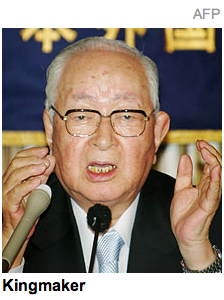
Attitudes of LDP Kingpin Machimura on Education Law’s reform

http://www.debito.org/?p=130

Witch hunts for educators who don’t follow patriotism directives

http://www.debito.org/?p=13

Enforced patriotism ruled unconstitutional:

http://www.debito.org/?p=39

Of particular interest are archives of two old Japan Times articles (2003 and 2002) showing the genesis of this issue from the times of PM Mori.

http://www.debito.org/?p=157

(They follow the full Economist article)

COMMENT: I’m sure I’ll be saying this many times in the course of analysis and argument from now on, but what of the international community and mixed-roots children getting their education in Japan? Will they have to make a choice about their national identity (one, not both?), or just be excluded altogether?

Moreover, given Japan’s history of so much emphasis on Yamatoism as part or national identity, what guarantees do we have that we will not fall back into old patterns which ultimately devastated our country a world war ago?

Might sound a bit alarmist at this stage, but public indifference is what permits policy creep.

Speaking of creepy policies:

//////////////////////////////////////////////////////////////////////////

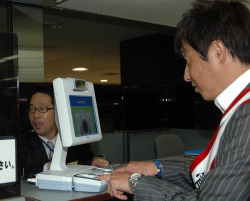
3) BUSINESS CONSORTIUM INTRODUCING IC CHIP SHOPPING DEVICES

If you thought the “smart shopping” computers in the movie MINORITY REPORT which scan retinas, access your purchasing preferences, and then tell you where to shop are science fiction, think again:

Tokyo to blanket Ginza with RFID tags

Tuesday 2nd January 2007

The Register (IT news site)

=========EXCERPT BEGINS==================

The Tokyo Ubiquitous Network Project has announced plans to blanket the Ginza region of Tokyo, the most popular shopping district, with 10,000 RFID tags and other wireless technologies to provide shopper-

assistance and location-based services…

The Tokyo Ubiquitous Network Project is a joint venture between the Japanese government and various high-tech companies including Fujitsu, Hitachi and NEC,…

=========EXCERPT ENDS==================

http://www.theregister.co.uk/2007/01/02/rfid_in_toyko/

http://www.debito.org/?p=151

…and you just know that once businesses start getting into it and making a profit, the technology will develop VERY fast. Especially in a gadget-phillic society like Japan.

Problem is, once this IC technology develops into economies of scale, it’s not too far of a stretch to start tracking foreigners though their Gaijin Cards. The shoppers above have optional hand-held devices. Gaijin Cards are to be carried 24/7, on pain of arrest and criminal charges.

My friends keep cautioning me to fear not: that a good zap in the microwave will neutralize the IC trackability. These are my friends speaking, just passing it along…

//////////////////////////////////////////////////////////////////////////

4) MORE LABOR ABUSES OF FOREIGN “TRAINEES” COMING TO LIGHT

Yet another article substantiating Japanese abuses of foreign labor. No wonder–even the article admits that foreign “trainees” and “researchers” are not protected by Japanese Labor Law, so what do you expect?

Foreign trainees facing chronic abuses

Firms refuse to stop exploiting interns as cheap labor, leading many to quit

Kyodo News/Japan Times Wednesday, Jan. 3, 2007

=========EXCERPT BEGINS==================

The programs have expanded year by year. In 2005 alone, as many as 80,000 young people came to Japan on the programs. However, those in the programs are left unprotected by labor law.

During the first year of training, monthly pay is limited to 60,000 yen–below the legally set minimum wage.

Although monthly pay rises to around 120,000 yen over the internship period, employers often deduct management and other fees to cut net pay by tens of thousands of yen. Some employers reportedly direct foreign interns to work late at night at an hourly rate of only 300 yen.

In such circumstances, more than 1,000 interns disappear from workplaces each year, apparently to find better paying–but unauthorized–employment.

=========EXCERPT ENDS==================

http://search.japantimes.co.jp/mail/nn20070103f4.html

http://www.debito.org/?p=153

(Previous blogged articles of similar substantiation at

http://www.debito.org/?p=105

http://www.debito.org/?p=99

http://www.debito.org/?p=107)

//////////////////////////////////////////////////////////////////////////

and finally…

DEBITO’S EXPANDED ITINERARY: UPDATED SCHEDULE WITH OPEN DAYS

GOING THROUGH TOKYO, KANSAI, AND KYUSHU, NEED ME TO SPEAK?

Invitations keep coming in (thanks), and I’m happy being pulled farther afield (like out to Kyushu).

If I’m in your neighborhood, want me to speak? Send me an email at debito@debito.org.

JANUARY TOKYO TRIP

WEDS JAN 24 Fly to Haneda Stay in Roppongi

THURS JAN 25 U Hoden Hearing Kawasaki District Court

FRI JAN 26 Meet with publisher

SAT JAN 27 Appointment, then SWET party

SUN JAN 28 Open

MON JAN 29 Open, probably returning to Sapporo

FEBRUARY KANSAI TO KYUSHU TRIP

MON FEB 5 Fly to Itami Stay in Ikoma

TUES FEB 6 Speech in Nara

WEDS FEB 7 Visit friend in Kyoto

THURS FEB 8 Speech at Shiga University Hikone Campus

FRI FEB 9 Speech for BLL in Wakayama

SAT FEB 10 Speech for JALT Wakayama

SUN FEB 11 Visit friends in Kurashiki

MON FEB 12 Speech in Okayama

TUES FEB 13 Train to Fukuoka, bus to Miyazaki?

WEDS FEB 14 Kyushu

THURS FEB 15 Kyushu

FRI FEB 16 Fly Fukuoka to Sapporo

(flexible plane ticket back; can extend trip through weekend if necessary)

MARCH TOKYO TRIP

SUN FEB 25 Fly to Haneda, stay ?

MON FEB 26 Doudou Diene

TUES FEB 27 Open

WEDS FEB 28 Speech for Roppongi Bar Association

THURS MAR 1 Open

FRI MARCH 2 Open

SAT MARCH 3 Open

SUN MARCH 4 NUGW March in March

MON MARCH 5 Return to Sapporo

//////////////////////////////////////////////////////////////////////////

All for now. Thanks for reading!

Arudou Debito in Sapporo

debito@debito.org

http://www.debito.org

JANUARY 12 2007 NEWSLETTER ENDS

MOJ Immigration Bureau violates privacy of marriage with new visa “shitsumon sho”

mytest

Hey Blog. This might make you think I wasn’t so crazy by naturalizing after all:

IHi Blog. Arudou Debito in Sapporo here. Going through two weeks of examination hell (mine–the biannual 20-minute oral examinations of 100 students), so my brain’s a bit fried. Still, this week’s installment:

//////////////////////////////////////////////////////////////////////////
1) IMMIGRATION BUREAU VIOLATES PRIVACY OF MARRIAGE,
IN QUESTIONING J SPOUSES FOR LONGER-TERM VISAS
2) ECONOMIST ON THE BASIC EDUCATION LAW’S REFORM
3) BUSINESS CONSORTIUM INTRODUCING IC CHIP SHOPPING DEVICES
4) MORE LABOR ABUSES OF FOREIGN “TRAINEES” COMING TO LIGHT

and finally…

DEBITO’S EXPANDED ITINERARY: UPDATED SCHEDULE WITH OPEN DAYS
GOING THROUGH TOKYO, KANSAI, AND KYUSHU, NEED ME TO SPEAK?

//////////////////////////////////////////////////////////////////////////

January 12, 2007, freely forwardable
Real-time blog updates at http://www.debito.org/index.html

//////////////////////////////////////////////////////////////////////////

1) IMMIGRATION BUREAU ASKS VERY PERSONAL QUESTIONS OF J SPOUSES FOR VISAS

Tokyo Immigration (Nyuukoku Kanri Kyoku)’s questionnaire for granting Spouse Visas (haiguusha biza) has since been adopted nationwide, as part of screening out fake marriages (gizou kekkon).

It’s available to the general public on the Nyuukan section of the Ministry of Justice Website:

http://www.moj.go.jp/ONLINE/IMMIGRATION/16-1.html

According to the site, application procedures for Status of Residence for many longer-term visas (i.e. anything over three months) now require three documents (section reading “shinseisho youshiki”):

1) An application for Certificate of Eligibility (zairyuu shikaku nintei shoumeisho koufu shinseisho)
(same as before, form contents depending on what kind of visa you want)
http://www.moj.go.jp/ONLINE/IMMIGRATION/16-1-1.html

2) A Guarantor, through a Letter of Guarantee (mimoto hoshousho)
http://www.moj.go.jp/ONLINE/IMMIGRATION/16-1-23.pdf (Japanese)
http://www.moj.go.jp/ONLINE/IMMIGRATION/16-1-24.pdf (laughably unprofessional English)
I don’t know how new this is, but I never had to have one of these forms signed (granted, this was more than ten years ago, when I was still a foreigner).

And, newest of all,
3) an eight-page “Shitsumon Sho” (Question Sheet) in Japanese only, given to the Japanese spouse of the foreign applicant.
http://www.moj.go.jp/ONLINE/IMMIGRATION/16-1-25.pdf

This Shitsumon Sho is now required (according to footnote four in the quadrant reading “shinseisho youshiki”) for 1) all Japanese spouses, 2) all Japanese spouses of Permanent Residents, and 3) all Japanese spouses of Nikkei who are applying for a visa.

Opening with a wavy-underlined statement (like an FBI warning before a video) stating (all translations mine), “Bear in mind that any part of this form adjudged as contravening the truth may incur disadvantages when being considered by officials,” this form in fascinating in its intrusiveness:

SECTION ONE asks that the applicant state his name and nationality, and the spouse do the same. Home address and home and work phone. Living together or not.

Fine. Then it asks whether you rent or own, the space of your abode (in LDK), and how much you pay in rent per month.

SECTION TWO asks for your love story, from meeting until marriage. It gives you nearly a page (attach more if you need) to write down the date you met, where you met, whether or not you were introduced, and your whole love life (kekkon ni itatta kei’i, ikisatsu) until you got married.

(It avoids asking about your favorite positions. Still, it specifically notes that anything else of reference, such as photos, letters, proof of international phone calls etc. are welcome.)

SECTION 2.2 is for those who were introduced by someone. It asks for the introducer’s name, nationality, birth date, address, phone number, alien registration number, date of introduction, place, and style of meeting (photo, phone, date, email, something else?). It also asks you to fill out a box on how deep each of your relationships go with the introducer. Be detailed, it demands.

But wait, there’s more…

SECTION THREE gets into the linguistics of your relationship. It asks what language you speak together, what your native tongues are, how well you understand each other (with four possible boxes to check), and how the foreigner learned his or her Japanese (again, be specific–there are four lines provided).

And there are four more lines provided to explain what you do when you don’t understand each other linguistically. If you use an interpreter, you are to give the interpreter’s name, nationality, and address.

SECTION FOUR asks about your marriage from a legal standpoint:

If you married in Japan, who were your witnesses? (You need two to sign the Kekkon Todoke in Japan). Give their name, sex, address, and phone numbers.

SECTION FIVE asks about the fanfare. If you held a wedding ceremony or a party (doesn’t indicate where–I guess that includes overseas bashes too), give the date and address. How many people attended–give a number. Who came? Choose from the appropriate seven types of family members: Father, mother, older brother, older sister…

SECTION SIX asks for your wedding histories. Is this your first marriage or a remarriage? If a remarriage, from when until when? Give dates. Two check boxes are provided to distinguish between dissolution through death or through divorce.

SECTION SEVEN asks how many times your foreign client, sorry, spouse, traveled to Japan and for how long. Give dates and reasons. SECTION EIGHT asks how many times you Japanese spouse went to the foreigner’s home country. Same data, please, except there are two specific sections devoted to how many times you’ve crossed the border since you met, then how many times since you married.

SECTIONS NINE and TEN the only sections I can see as really germane–if you’ve ever been expelled from Japan for a visa violation or some such. Give full details.

But we’re not done yet. SECTION ELEVEN wants you to fill out your entire family tree, with names, ages, addresses, and phone numbers in both Japan and the foreigner’s country. A separate chart is provided for the happy international couple to give the names, birth dates, and addresses of their children. Create for us an entire Koseki listing.

Finally, SECTION TWELVE asks who in both your families knew about your marriage. Again, circle the appropriate types of family members.

Sign and date. And we’ll reiterate the FBI warning just at the very bottom again just in case you would even think of lying.

——————————-

So much for the sanctity of the privacy of marriage. I think I’ll stop by Immigration and ask a few questions why they need this kind of information. After all–what matters what language they speak at home?

It goes beyond remembering the color of your spouse’s toothbrush… into voyeurism. I’m sure any Japanese couple would balk at having to reveal this much intimate detail, so why is it being demanded from international couples in Japan?

Because it can be, of course. We’re Immigration, so sod you. After all, we can take away any foreigner’s rights at will…

Again, see for yourself at http://www.moj.go.jp/ONLINE/IMMIGRATION/16-1-25.pdf

Too bad for all those long-suffering spouses who now have to provide the government with a pipeline into their private life just because they had the ill judgment to marry a foreigner. I smell an article here.

ENDS

Economist/Japan Times on J Basic Education Law reform

mytest

Hi Blog. Launching a series on what I see as a very serious issue (training people to be “patriotic” at the early stages of education, with “love of country” tests already happening in Kyushu and Saitama grade schools), here is an introductory article from The Economist (London) on Japan’s reform of its Basic Education Law (Kyouiku Kihon Hou).

I don’t quite share its analytical framework or its rosy conclusions, but it’s a decent primer on the issue. Further links to this issue on debito.org included after the article. Further links to this issue on debito.org included after the article.

Below that follow two more Japan Times articles showing the most recent policy push in its genesis, back in 2002 and 2003.

I’m sure I’ll be saying this many times in the course of analysis and argument from now on, but what of the international community and mixed-roots children getting their education in Japan? Will they have to make a choice about their national identity (one, not both?), or just be excluded altogether?

Moreover, given Japan’s history of so much emphasis on Yamatoism as part or national identity, what sorts of guarantees do we have that this will not fall back into old patterns which ultimately devastated this country a world war ago? Might sound a bit alarmist at this stage, but public indifference is what permits policy creep.

Debito in Sapporo

==============================
Japanese education
The wrong answer

Dec 19th 2006 | TOKYO
From The Economist print edition
http://economist.com/world/asia/displaystory.cfm?story_id=E1_RQVQTPP

Instilling love of country is not the main challenge for Japan’s schools

SOMETHING has gone terribly wrong with Japanese education—or so say the Japanese. They fret that Japan has slipped down the international rankings for high-school literacy, mathematics and science. In the OECD’s last assessment of 15-year-olds in 41 countries, Japan remained a healthy second in science, but had fallen from first to sixth in maths and from eighth to fourteenth in reading ability.

Parents are also worried about the resurgence of bullying and suicides among schoolchildren. Facing probable defeat in next summer’s upper-house election, the fledgling government of Shinzo Abe has been casting around desperately for something—anything—to prove that it really is listening to people’s concerns. Education is seen as a handy distraction.

The kind of reforms the government has in mind, however, are not designed to help young people make critical judgments in a fast-changing, information-driven, global environment. Instead, the ruling Liberal Democratic Party and its coalition partner, the New Komeito, have rewritten Japan’s post-war education law with the aim of boosting patriotism among the young.

Bunmei Ibuki, the education minister, also believes elementary schools have no place teaching foreign languages such as English. The first requirement, he insists, is that pupils acquire what he calls a “Japanese passport”—ie, a thorough grasp of the country’s history and culture, and perfection in their own language.

Parliament’s lower house has approved legislation which, besides stressing the importance of parental guidance, requires schools to instil “a love of one’s country” in children. The opposition parties boycotted the recent lower-house vote, but the ruling coalition’s majority in the upper chamber has allowed the bill to scrape through and become law.

Because it was used in the past to fan the flames of militarism, teaching patriotism has long been taboo in Japan. With its heavy emphasis on morality and nationalism, the new legislation bears some resemblance to the Imperial Rescript on Education of 1890. In the decades up to the end of the second world war, children were forced to memorise the rescript and recite it, word for word, before a portrait of the emperor. Following Japan’s surrender, the allied occupiers ended the practice, appalled by its demands for juvenile self-sacrifice in the name of the emperor.

The paradox is that Japan does need serious education reform. The school system and curriculum were designed 60 years ago, when a generation of children from farming communities were being trained for long, uncomplaining hours on production lines. In the intervening years the economy has changed out of all recognition. Yet the education system—with its continued emphasis on facts and figures and drilling of mental arithmetic—has remained stubbornly rooted in the past.

Its continued economic success suggests that Japan’s teenagers are paying less heed to all this, as they quietly master the creative skills needed to prosper in a modern world. In this context, perhaps those perplexing slippages in formal grades, mirrored in other post-industrial countries, ought actually to raise a cheer.
ENDS

==========================
RELATED LINKS ON DEBITO.ORG
Attitudes of LDP Kingpin Machimura on Education Law’s reform
http://www.debito.org/?p=130
Witch hunts for educators who don’t follow patriotism directives
http://www.debito.org/?p=13
Enforced patriotism ruled unconstitutional:
http://www.debito.org/?p=39

==========================

OLD JAPAN TIMES ARTICLES (2003 and 2002) AS HARBINGERS:

FEW SCHOOLS COMPLY
‘Love of country’ curriculum hit

By GARY SCHAEFER The Associated Press
The Japan Times: Tuesday, May 13, 2003
http://search.japantimes.co.jp/cgi-bin/nn20030513b5.html

Few schools in Japan are complying with government guidelines suggesting that students be graded on how patriotic they are — and those that have face opposition from teachers, parents and citizens’ groups.

“Fostering love of country” was added as a curriculum goal for sixth-grade social studies classes under guidelines first approved by the education ministry for the school year that ended last month.

Patriotism here is often associated with the jingoism trumpeted by Japan’s militarist government and forced upon students in the decades leading up to this country’s defeat in World War II.

The nonmandatory guidelines suggested that teaching patriotism would encourage children to take pride in their history and culture.

But according to a recent survey by a Japanese newspaper, less than 200 of Japan’s 24,000 public elementary schools are complying. Parents and citizens’ groups are protesting, and a spokesman for the nation’s largest teachers union said in an interview that he questioned the constitutionality of the guidelines.

“The freedom of belief is guaranteed by the Constitution and applies to children as well,” said Shinji Furukawa, a spokesman for the Japan Teachers’ Union. “We think it is very serious that this language has been included in the guidelines before the matter was debated by the Diet.”

Japan’s Asian neighbors, which bore the brunt of its past military adventures, have frequently criticized Tokyo for allowing wartime atrocities to be whitewashed in officially sanctioned textbooks.

Officials have defended the patriotism guidelines.

“The advisory council’s view was that it was important in international society for students to develop a sense of identity as Japanese,” education ministry official Yuiichi Sakashita said. “The idea is to teach kids to understand and appreciate their country and its history and traditions.”

The old curriculum for sixth graders called on teachers to foster a “love of Japan’s history and traditions.” The new version adds “love of country” to that list, Sakashita said.

A board of education official in the city of Fukuoka, where 51 elementary schools started giving grades for “love of country” in the last school year, said the decision had “nothing to do with nationalism.”

“We’re not grading students on how much they love their country,” Mamoru Shibata said. “It’s basically about how much interest they’re showing in their studies about Japanese history and culture.”

Such explanations have done little to placate critics.

“I think students are already taught enough about taking pride in their history and culture,” said Noriyoshi Mukoyama, principal of Tokyo’s Seisho Elementary School, one of the many schools that hasn’t added “love of country” to its report cards.

“I didn’t see any need to give a grade for that,” he said.

Schools implementing the grades have significant leeway in deciding what constitutes patriotism, since the ministry guidelines provide few specifics.

The very idea of having such classes is upsetting some parents.

“Who’s to say what patriotism is? How do you grade it?” asked Hiroaki Nakane, 49, whose daughter is a fifth-grader in Fukuoka. “The whole thing sounds like a return to the militaristic thinking in this country before the war.”

The matter is particularly complex for minorities, particularly the large Korean community. Korea was under Japanese colonial rule from 1910 to 1945, and many ethnic Koreans in Japan descended from workers brought here forcibly as laborers.

“How is a Japanese teacher supposed to grade a Korean on love for country?” said Lee Han Eun, 32, who runs a Korean citizens’ group. “We’re worried that this is part of a broader trend toward nationalism — not just a question of report cards.”

The Japan Times: Tuesday, May 13, 2003
ENDS
=============================

Contrived crisis in education
By KIROKU HANAI
The Japan Times: Monday, Dec. 23, 2002

http://search.japantimes.co.jp/cgi-bin/eo20021223kh.html

Educational reform is becoming a political issue in Japan. At the center of the controversy is the Education Basic Law, which took effect in 1947 when the Constitution was established. Earlier this year the Central Council for Education, an advisory panel to the education minister, published an interim report calling for a revision of the law.

The reform groundwork was laid last year when the National Conference on Educational Reform, a private advisory group to former Prime Minister Yoshiro Mori, released its final report saying the law should be rewritten. The central council is set to issue its own final report next spring. The education ministry plans to send a revision bill to the 150-day regular Diet session that opens in January.

The education charter, established during the U.S. Occupation, has been criticized by conservative politicians and educators as being out of touch with the “domestic situation.” This is the first time, however, that the government has moved toward amending it.

Conservatives say the fundamental education law, already more than 50 years old, should be updated. In my view, though, there is no need whatsoever to change it now or in the foreseeable future.

Revisionists include former Prime Minister Yasuhiro Nakasone, who told the Yomiuri Shimbun Sept. 10, 2000, that the law had been enacted integrally with the Constitution, noting that the Imperial Rescript on Education and the Meiji Constitution also had been closely intertwined.

The debate on constitutional revision has only just started. Rewriting the basic education act at this stage is like putting the cart before the horse. The argument that a revision to the act, unlike a constitutional amendment, is procedurally simple ignores the historical background.

The interim report stresses “love for one’s birthplace and country” and “voluntary participation in public affairs.” In terms of defining noble goals, these expressions pale in comparison with the preamble to the education law, which calls for the “development of people who respect individual dignity and desire truth and peace.”

The emphasis on individual dignity reflects Japan’s militaristic past when millions of young men were forced to sacrifice their lives for a reckless war. The education rescript urged the Japanese people to “come to the aid of the country in a time of crisis and promote the prosperity of the Imperial Throne.” Those men were taught to memorize every word of it.

After the end of World War II, Japan adopted the Western idea of respect for individuals, but this principle is not yet fully observed in this nation. Bureaucracy continues to wield potent power. Promotions are still based more on seniority than merit. Employees are transferred with little regard for their wishes. And they put in a lot of “service overtime” without pay. Neighbors are bound by old customs and rules that stress “group spirit.” The interim report, however, is oriented toward the state, not the individual.

In the early postwar years, there was, to my recollection, more individual freedom than now. In my high school days, when the education system was overhauled, voluntary student activity was encouraged. I enjoyed a pleasant campus life, although Japan at the time was a poor country. Students were free to organize various clubs as well as self-governing bodies. School trips were decided by vote. Few students attended cram school to enter college.

In subsequent years, however, the freewheeling mood on campus began to disappear. High schools appear to have become an “examination treadmill” with students cramming day and night to get into name universities. Vigor also seems lacking in college life, if what I observed during my three years as an instructor (till March 2001) at a newly established university is any indication.

Students there were unable, or unwilling, to set up a self-governing council. They couldn’t start up a campus festival without the help of a teacher appointed by the faculty for the occasion. Almost no students asked questions in class. They were lazy, I thought, compared with exchange students from Asia.

In recent years the government has been tightening its grip on education. In 1999, a law governing the showing of the national flag and the singing of the “Kimigayo” anthem went into effect. Since then the education ministry has been urging public schools to hoist the flag and sing the song at entrance and graduation ceremonies. According to a ministry survey, the flag and anthem guidelines were observed by public schools in 40 of the 47 prefectures at graduation ceremonies last spring. Teachers who have refused to comply have been punished.

“Patriotism” is a new item for grading in reports from an elementary school in Fukuoka City. Teachers there evaluate each student in terms of “affection for the country and identity as a Japanese.” This item, which was inserted beginning this fiscal year, has been criticized by Korean residents as a human rights violation.

School authorities say they are merely abiding by the ministry’s curriculum guidelines. But promoting patriotic education under these nonstatutory guidelines is going to an extreme because it is still undecided whether to include the idea of patriotism in the Education Basic Law.

Fanning nationalism in such a way goes against worldwide moves to expand activity across borders amid the globalization of national economies and enlargement of the European Union. There is no convincing reason why Japan should encourage hoisting the rising-sun flag and singing Kimigayo.

The interim report gives a range of reasons for educational reform, such as loss of self-confidence among students, erosion of moral values, violent crime among the young and lack of discipline in the classroom. In other words, the report sees Japanese society and education as facing a serious crisis.

The real crisis, however, lies in the government’s inability to pull the Japanese economy out of its protracted slump. It appears that politicians are trying to talk up a “crisis in education” as a way of easing the pent-up stresses of a recession-wary public. I think they are pursuing a nationalistic policy in order to deflect the public’s mistrust of politics.

People are also frustrated that the government and the ruling parties have not taken any effective action to prevent political corruption. In recent years quite a few politicians have been forced to resign over money scandals, including misuse of their public secretaries’ pay.

The interim report calls for an education that encourages students to develop a good sense of morality and ethics — a desire to observe the established norms of behavior. The urgent need, however, is to root out corruption in the political world and collusion in the public sector. That will have a far greater educational effect on the students.

Kiroku Hanai, a former editorial writer for a vernacular newspaper, writes on a wide range of issues, including international relations.
The Japan Times: Monday, Dec. 23, 2002
=====================

ENDS

サンデー毎日:「外国人・少年犯罪は増えていない?」

mytest

ブログの皆様、2006年12月23日付の週刊誌「サンデー毎日」は非常に大事な記事を載せました。このようなことは私たちは数年も指示しております。(2000年4月より本格的に始まりました。私の単行本「ジャパニーズ・オンリー」(明石書店出版)第三章をご参考に。)参考サイトはこちらです:

http://www.debito.org/NPAracialprofiling.html#nihongo
http://www.debito.org/ishiharahikokusaika.html
http://www.debito.org/hiyorimishugi.html
http://www.debito.org/futouhanzaitaisaku.html
http://www.debito.org/TheCommunity/nakanohittakuri.html#nihongo
http://www.debito.org/immigrationsnitchsite.html#nihongo
http://www.debito.org/japantimes101805j.html
http://www.debito.org/crimestats.html

では、記事(2ページ分)以降の通りです。久保さまに大感謝!有道 出人。

sundaymainichi1223061.jpg
sundaymainichi1223062.jpg

この記事の英訳は
http://www.debito.org/?p=135
ENDS

J Times Jan 3 07 on foreign “trainees” facing chronic abuses

mytest

Hi Blog. Yet another article substantiating Japanese abuses of foreign labor… No wonder–even the article admits that foreign “trainees” and “researchers” are not protected by Japanese Labor Law, so what do you expect?

(Previous blogged articles of similar substantiation at
http://www.debito.org/?p=105
http://www.debito.org/?p=99
http://www.debito.org/?p=107)
Debito

=======================

Foreign trainees facing chronic abuses
Firms refuse to stop exploiting interns as cheap labor, leading many to quit

Kyodo News/Japan Times Wednesday, Jan. 3, 2007
http://search.japantimes.co.jp/mail/nn20070103f4.html

Japan’s industrial training and technical internship programs, mainly
for young people from China and Southeast Asia, have been shaken by
revelations that some firms are exploiting the programs to save costs.

Some foreign interns have been underpaid or forced to take
unproductive jobs unconnected to training. A considerable number
refused to tolerate such treatment and have disappeared from workplaces.

The labor and trade ministries are trying to improve the programs,
but companies that accept foreign interns remain largely resistant to
change because many of them depend on the programs for cheap labor.

“I came to Japan to learn about farming but have been sent to a
construction site,” said a Chinese woman in her 30s at a meeting
sponsored by the Advocacy Network for Foreign Trainees.

“I have been forced to overwork with little time left for learning.”

Launched by the government in 1993, the training and internship
programs allow young foreigners to undergo language and other
training for one year and to serve as interns at companies in Japan
for up to two years.

Company associations in 62 industrial categories usually arrange the
internship programs at specific firms.

The programs have expanded year by year.

In 2005 alone, as many as 80,000 young people came to Japan on the
programs.

However, those in the programs are left unprotected by labor law.

During the first year of training, monthly pay is limited to 60,000
yen — below the legally set minimum wage.

Although monthly pay rises to around 120,000 yen over the internship
period, employers often deduct management and other fees to cut net
pay by tens of thousands of yen.

Some employers reportedly direct foreign interns to work late at
night at an hourly rate of only 300 yen.

In such circumstances, more than 1,000 interns disappear from
workplaces each year, apparently to find better paying — but
unauthorized — employment.

In the face of such serious problems, the Health, Labor and Welfare
Ministry has been reviewing the programs along with the Ministry of
Economy, Trade and Industry.

A labor ministry panel plans to correct wage levels and toughen
penalties for illegal practices while at the same time rewarding
companies that treat foreign interns well, ministry officials said.

Some companies for their part have requested longer internship
periods because of labor shortages, the officials said.

A METI study group is also calling for extended internship periods
and an expansion in the range of industries eligible to accept
foreign interns, they said.

Many of the companies that accept foreign interns are engaged in
sewing, metal-processing and other industries that depend on the
cheap labor of foreign interns to maintain international
competitiveness.

“The interns presumably understand their treatment,” said an official
at a sewing company in Gifu Prefecture, implying that foreign
trainees have given their consent before taking jobs under the programs.

An official at a metal-processing company said that while foreigners
are prohibited by law from entering Japan for menial jobs — to
protect employment opportunities for domestic workers — the
internship programs have allowed companies to employ foreign interns
for such jobs.

An expert on foreign labor in Japan characterized the programs as
“fraudulent.”

“It is unjustifiable to expand a fraudulent system that preys on
young foreigners,” said Hiroshi Komai, a professor at Chukyo Women’s
University in Aichi Prefecture.

The Japan Times
ENDS

J Times Jan 3 07 on J Immigration, toku ni Chinese Perm Resid

mytest

Hi Blog. Japan Times on how the foreign community, particularly the composition of its ethnicities, is changing. An interesting case study of one Chinese’s immigration to Japan. Debito

LABOR DYNAMICS
The Japan Times: Wednesday, Jan. 3, 2007
Foreign permanent residents on rise, filling gaps
http://search.japantimes.co.jp/print/nn20070103f1.html
By SETSUKO KAMIYA, Staff writer

PHOTO: Eika Ma, a Chinese permanent resident in Japan and president of Tokyo
Elevator Co., is interviewed last month at her office in Chuo Ward, Tokyo. SETSUKO KAMIYA PHOTO

Japan’s population started declining in 2005, but in contrast,
registered foreigners soared to a record high 2.01 million, a leap
from 1.36 million a decade ago and accounting for 1.57 percent of the
nation’s total population.

As baby boomers born between 1947 to 1949 start to retire this year,
getting more foreign nationals into the workforce and into
communities is increasingly becoming a hot topic for the government
and businesses.

Foreigners are becoming increasingly visible, particularly Chinese
people, the largest-growing ethnic segment.

They are not just part of the labor force but are also the brains
behind many new jobs, technologies and services. They also bridge the
two major trading partners, and more are increasingly considering
Japan their home and are finding opportunities to succeed here.

Koreans still comprise the largest ethnic minority in terms of
special permanent residency. In 2005, this group, including those in
Japan before the war and their descendants, numbered some 598,000.
Statistically, however, their numbers are declining yearly as the
elderly pass away and younger Koreans opt to become Japanese citizens.

Other ethnic groups are steadily on the rise, a flow that started
around the early 1990s when the country opened its doors to more
foreigners to cover a labor shortage. Prominent among them are
Brazilians and Peruvians of Japanese descent, but Chinese account for
the most, at 519,000, or 25 percent of all registered aliens.

In addition to being long-term residents, entertainers or spouses of
Japanese, Chinese like most Brazilians, Peruvians and Filipinos hold
status at various levels.

In 2005, some 89,000 were registered as exchange students, 14,700 as
engineers and 40,500 as trainees, while 2,500 came as university
professors and 1,380 as investors.

Many meanwhile work in industries that depend on them — students
employed as part-timers in restaurants, convenience stores and
supermarkets, and trainees providing labor in industries ranging from
textiles to fisheries to agriculture. An increasing number of small
companies also want foreign information technology engineers to run
their businesses.

The most notable demographic trend, though, is the rise in permanent
residents. This status is generally conferred on foreigners who have
“contributed to Japan” for at least five to 10 years. While the
number is up for most nationalities, Chinese top the list again. More
than 106,000 registered as permanent residents last year, nearly
twice the figure of five years ago.

The 1998 deregulation of permanent residency criteria helped expedite
the rise, the Justice Ministry said.

“Many of (the Chinese) came as exchange students, got hired in
Japanese companies, and as they get used to living here they like it
and decide to stay,” said Zhang Shi, a senior editor of Chinese
Review Weekly, which is circulated in Japan. He and many others
believe the trend will continue, as long as opportunity knocks.

Eika Ma, 41, from Dalian, China, came to Japan in 1988 as an exchange
student to study Japanese, and acquired permanent residency in 2004.
To her, the nation has opened up compared with when she first arrived.

“Japanese were very closed to foreigners, especially Asians,” Ma
said, recalling how difficult it was to land a part-time job just
because she was not Japanese.

She now runs an elevator maintenance company in Tokyo with 25
employees and annual turnover of 500 million yen. She is also a
practicing Chinese lawyer and consults with Japanese companies
looking to expand business in China.

Ma’s path highlights the changes Japan’s economy and society have
undergone over the last two decades. Her case may be unique, but it’s
an indication that foreigners now can reach the top.

After an unpleasant first year in Japan, Ma, who was a Japanese major
at Dalian University of Foreign Language, could have gone back to
China and secured a teaching job. But the Tiananmen Square crackdown
in 1989 prompted her to stay, and to find a way to survive.

She entered Waseda University and studied commercial law, a
discipline not then offered in China. She later got a master’s degree
and passed the Chinese bar exam.

While studying, Ma worked for an elevator maintenance firm to make
ends meet.

She started her own elevator business after working at a Chinese law
firm in Shanghai, where a local official asked her to find a Japanese
company to repair elevators.

The city was undergoing a building boom, and the structures’ Japanese-
made elevators required maintenance. Most were being serviced by
subsidiaries of the manufacturers that literally dominated the market.

Ma believed she could fill a niche by creating an independent firm to
do the work that could pose a challenge to the monopoly. She returned
to Japan and launched Tokyo Elevator Co. in 1996 with a few Japanese
partners. Their strategy: undercut the competition.

Ma initially struggled for customers because most wanted to stay with
the manufacturers’ subsidiaries. The makers also hesitated to sell
the necessary repair parts. Her firm hovered on bankruptcy.

Ma said she took advantage of every opportunity she could to promote
her business, showing up at friendly gatherings and distributing name
cards. “Eventually, people started introducing me to customers,” she
said. “I came to realize that even if you are a foreigner and a
woman, Japanese will accept you if you continue to make efforts to
meet your target.” She also feels that being a foreigner helped
because she was unshackled by old business traditions.

Her strategy eventually fit the needs of building owners as they
looked for ways to cut costs. The government ordered the elevator
industry to open up its business to independents, making it much
easier to compete, she said. The firm has served more than 500
clients, including those in Shanghai.

Ma also started bridging the two nations by providing legal advice to
Japanese businesses entering China.

“The fact that I know business in Japan also helps,” she said.

It won’t be just China and Japan anymore. Through her Swedish husband
she met in Japan, she is also starting to consult with Swedish
companies interested in doing business here.

“It’s really time for Japan to introduce more foreigners with skills
to support this country,” Ma said.

The couple are expecting their first child later this month. Ma says
the family will be based in Japan but will be moving around in China
and Sweden, integrating business and life in a multicultural way.

The Japan Times: Wednesday, Jan. 3, 2007
ENDS

Bus. consortium to track Ginza shoppers, then IC Gaijin Cards?

mytest

Hi Blog. Courtesy Mark at The Community. Comment is his. Debito in Sapporo

COMMENT
In partnership with Fujitsu, Hitachi and NEC. This trial is for the
expressed purpose to aid shoppers in locating stores and sales as
they pass retailers, but one has to wonder if the test’s application
and results might interest Japanese immigration regarding proposed
plans to put RFID chips [IC Chips] in gaikokujin touroku shoumeisho cards.

===============================
Published Tuesday 2nd January 2007
The Register (IT news site)
http://www.theregister.co.uk/2007/01/02/rfid_in_toyko/

The Tokyo Ubiquitous Network Project has announced plans to blanket
the Ginza region of Tokyo, the most popular shopping district, with
10,000 RFID tags and other wireless technologies to provide shopper-
assistance and location-based services.

The trial starts later this month, and will feature a specially-
designed handheld equipped with RFID, Bluetooth and Wi-Fi
connectivity. This handheld can rented by visitors, though the
vision is that the service should be available on compatible phone
handsets.

The thousands of RFID tags are used to identify where the user is;
each has a unique serial number which is sent to a central server
that responds with local information and directions if required.

The device will also automatically display special offers in nearby
shops, and give information about the various retailers in each of
the many buildings in the area.

The Tokyo Ubiquitous Network Project is a joint venture between the
Japanese government and various high-tech companies including
Fujitsu, Hitachi and NEC, and has run smaller trials elsewhere as
well as developing technologies and usage models. These trials will
run until March.

In these days of GPS, Galileo and triangulation systems it might
seem a retrograde step to simply place numbered tags around an area,
but the technology has the advantage of being accurate and reliable,
as well as being ideally suited for a pedestrian population, and the
visitors who are so frequently lost around Ginza.
===============================
ARTICLE ENDS

ADDITIONAL COMMENT FROM DEBITO:
Note how the trial uses an optional handheld device rented by visitors equipped with IC tracking technology. So how about future applications for nonoptional IC Gaijin Cards? Once business gets involved, this could develop very quickly indeed. Ends

DEBITO.ORG NEWSLETTER JAN 4 2007

mytest

Hi Blog. Arudou Debito here, opening 2007 with another large helping of information you might find interesting. Events don’t take much of a holiday, and an enormous amount of stuff keeps piling up on my blog. I’ll be brief, with excerpts and links. This week’s collation:

//////////////////////////////////////////////////////////////////////////
1) DEBITO’S WINTER SCHEDULE–ANYONE WANT ME TO SPEAK SOMEWHERE?
2) US EMBASSY: RANDOM GAIJIN CHECKPOINTS NOW OFFICIAL TOKYO NPA POLICY
3) MAINICHI: FOREIGN CRIME FEARMONGERING AS OFFICIAL GOVT POLICY
4) ASAHI DULLS ENGLISH TRANSLATION OF “GAIJIN IC CARD” ARTICLE
5) FUTURE PM?: LDP KINGPIN MACHIMURA SPEAKS AT MY UNIVERSITY
6) KYODO: GIFU FIRMS EMPLOY FOREIGN CHILDREN “AT PARENTS’ REQUEST”
7) YOMIURI: IMMIG’S “GAIJIN TANKS” VIOLATE U.N. DETENTION GUIDELINES
8) ASIA PACIFIC UNIVERSITY ADDED TO UNIVERSITY BLACKLIST
9) JAPAN IRONICALLY KVETCHES ABOUT FOREIGN CRIME EXTRADITION PROBLEMS
10) ECONOMIST: ALBERTO FUJIMORI UPDATE
11) GREG CLARK IRONICALLY KVETCHES ABOUT IDEOLOGICAL BULLY PULPITING
12) 2 CHANNEL: MAINICHI DOES GANTAN TOKUSHUU
13) “JAPANESE ONLY” SIGN ON OKAZAKI INTERNET CAFE
and finally… I AM NOW OFFICIALLY “ARUDOU DEBITO”

//////////////////////////////////////////////////////////////////////////

By Arudou Debito
Real-time blog at http://www.debito.org/index.php
January 4, 2007

//////////////////////////////////////////////////////////////////////////

1) DEBITO’S WINTER SCHEDULE–ANYONE WANT ME TO SPEAK SOMEWHERE?

I have some speeches in January and February in the Tokyo and Kansai areas, so if there is anyone out there who would like me to drop by and give a speech, give me a holler at debito@debito.org

JANUARY 24 TO 27: IN TOKYO
I can probably stretch the trip for a few days afterwards.
FEBRUARY 6 TO 14: IN KANSAI AND KYUSHU
Speeches in Nara, Shiga, and Wakayama, then trips to Okayama and Kyushu
FEBRUARY 24 TO MARCH 4: IN TOKYO
for NUGW March in March and Doudou Diene meeting

This way, nobody has to cover any travel expenses getting me out of Hokkaido. Any takers?

//////////////////////////////////////////////////////////////////////////

2) US EMBASSY: RANDOM GAIJIN CHECKPOINTS NOW OFFICIAL TOKYO NPA POLICY

Hear ye hear ye, all you goddamn farang guests:

We, the Tokyo Metropolitan Police, are going to conduct random Gaijin Card Searches of any Gaijin “visitor” (as opposed to “resident”?) that we see fit. And you’re going to lump it because we think you can’t do anything about it.

Just to make sure that the point gets across, we’ll have the embassies warn you:

===================================
Keep Those Immigration Documents Handy
http://japan.usembassy.gov/e/acs/tacs-newsletter20070101.html

The [American] Embassy has been advised that Japanese police and immigration officials are currently conducting random identification inspections in several different areas of Tokyo to ensure that all visitors to Japan possess the appropriate immigration documents. Most inspections occur at or near Tokyo metro stations, and the police are both uniformed and in plain clothes. To all of our customers in Tokyo and beyond, be sure to carry your key documentation with you at all times in the event that you are the subject of an inspection.
===================================

When is that Tokyo Governor’s election again?

PS: What you CAN do about it:
http://www.debito.org/whattodoif.html#gaijincard

Speaking of police policy:

//////////////////////////////////////////////////////////////////////////

3) MAINICHI: FOREIGN CRIME FEARMONGERING AS OFFICIAL GOVT POLICY

“SITYS”. See I told you so: As far back as 2000 when this whole thing started (Yes, really. Check out Chapter Three of my book JAPANESE ONLY), I was saying that fear about foreign crime was being artificially generated by policymakers in order to justify more budgetary outlay. A whistleblower agrees:

========= EXCERPT BEGINS ==================
Author dismisses government’s fear mongering myth of crime wave by foreigners
MAINICHI DAILY NEWS December 21, 2006
http://mdn.mainichi-msn.co.jp/waiwai/news/20061221p2g00m0dm003000c.html

For years, people like Tokyo Gov. Shintaro Ishihara have been up in arms about rising crime rates among foreigners and juveniles in Japan, but one of the Tokyo Metropolitan Government’s public safety experts has come out to say the claims are groundless, according to Sunday Mainichi (12/31).

Ishihara and his ilk have long laid the blame on foreigners for a perceived worsening of public safety standards that has allowed the powers that be to strengthen and crack down on non-Japanese and teens.

But Hiroshi Kubo, the former head of the Tokyo Metropolitan Government’s Emergency Public Safety Task Force, says… statistical data [is] being used to justify taking a hard line on foreigners and kids…

Kubo says authorities are merely fear mongering, taking statistics that work in their favor and molding them to suit their purposes. National Police Agency data is used the same way as authorities are doing in Tokyo, spreading fear nationwide…

“Say somebody comes out and says ‘foreigners’ violent crimes are all to blame’, then anxious people are going to go along with that. And the national government, prefectural governments, police and the media all jump on the bandwagon and believe what’s being said.”
========= EXCERPT ENDS ==================
Rest at http://www.debito.org/?p=135
SITYS at http://www.debito.org/crimestats.html and
http://www.debito.org/TheCommunity/communityissues.html#police

Speaking of media bandwagoning, especially against people who don’t really have the same means to defend themselves: Is it just me, or does the media in recent weeks look like it’s focussing on foreign crime again? That should cause worry in the foreign communities.

But not to worry–if they don’t read the Japanese-language media. The Asahi even helps make things a bit more palatable for the English-language arena:

//////////////////////////////////////////////////////////////////////////

4) ASAHI DULLS TRANSLATION OF “GAIJIN IC CARD” ARTICLE

The Asahi reported on December 19 about proposals to IC Chip all foreign workers. Funny thing is, the English version is entitled “IC cards planned to track ‘Nikkeijin'”.

========= EXCERPT BEGINS ==================
IC cards planned to track “nikkeijin”
12/20/2006 THE ASAHI SHIMBUN
http://www.asahi.com/english/Herald-asahi/TKY200612200163.html

The government plans to enhance its system of tracking foreign nationals of Japanese descent by issuing new IC cards containing information controlled by the Justice Ministry’s Immigration Bureau, sources said Tuesday.

The electronic information will include name, date of birth, nationality, address in Japan, family members, and duration and status of stay, the sources said.

The cards will be issued by immigration offices when they grant visas to the foreigners of Japanese ancestry, or nikkeijin.

With the information under its control, the Immigration Bureau will be able to follow changes in the foreign residents’ addresses when they present the IC cards to municipal governments in reporting that they are setting up residence there…
========= EXCERPT ENDS ==================
Rest at http://www.debito.org/?p=134

Meanwhile, the Japanese version is entitled “Gaikokujin ni IC kaado–touroku jouhou no ichigen kanri e seifu gen’an” (“IC Cards for Foreigners–a proposal before the Diet to unify all registered data for administrative purposes”). Sounds quite different, no? Especially in universality of application.

The Japanese version in fact focusses on how it’s going to affect “gaikokujin roudousha” (foreign workers), including any foreigner registered and/or working for a company in Japan. The Japanese version, however, doesn’t even mention “Nikkeijin” until well into the third paragraph, let alone the headline. Odd indeed.

What do you think is going on here? Selective translation to make it seem like this policy will only affect the off-white foreigners? Keep the members of the foreign elite that can’t read Japanese from raising uncomfortable questions when hobnobbing with the Japanese elite?

Both articles blogged on debito.org for your reference. Japanese version was at
http://www.asahi.com/national/update/1219/TKY200612190338.html

but it’s since been deep-sixed (after all, two weeks is dreadfully ancient news, n’est-ce pas?!).
So I blogged it at
http://www.debito.org/?p=133

How about another glimpse of the future:

//////////////////////////////////////////////////////////////////////////

5) FUTURE PM?: LDP KINGPIN MACHIMURA SPEAKS AT MY UNIVERSITY

Machimura Nobutaka is now a big cheese in the LDP and in the ruling cliques. Born into a rich family of farmers based in Ebetsu, Hokkaido, he has been elected to the Diet seven times, first from 1983 (albeit almost losing his last election in 2003–see http://www.debito.org/2003electionthoughts.html and page down to the end).

Machimura is a thoroughbred elite. Machimura’s grandfather is called the “Father of Japanese Dairy Farming”. His father was a Hokkaido Governor, a former Lower House Dietmember, and Speaker of the Upper House. Thus born into Kennedy/Rockefeller/Bush Silverspoondom, Nobutaka, a 1969 graduate of Todai’s Economics Department, has served stints at MITI, JETRO, Monbudaijin, Gaimudaijin, and of course many, many more places we were told (by Machimura himself) to take note of. Machimura now has his own faction–the largest in the LDP (http://search.japantimes.co.jp/cgi-bin/nn20061020a7.html), which he took over from his rugby buddy, former PM Mori Yoshiro, which means Machimura is in pole position to become PM himself one day

And he came to speak at my university on Monday, December 18, 2006, as one of its’ primary patrons, I realized I would probably sob if he actually got held the reins. My report on that speech at
http://www.debito.org/?p=130
Choice excerpts to whet your appetite:

========= EXCERPT BEGINS ==================
Machimura also talked about how proud he is that Japan has finally reformed its Basic Education Law–finally, after no revisions since the end of the war. When he first entered the Diet more than 20 years ago, he wondered why this document foisted upon us after defeat could go so long without changes to reflect our country’s current situations. Now, thanks to his efforts as Education Minister, he saw one of his life’s goals fulfilled two days ago when the Diet passed the bill. Now people can be properly educated about the beauty of and love for our country.

He also tossed out a few gems of advice for our students. My favorite: How we should know Japan’s history or else we won’t be able to talk to foreigners overseas. After all–thanks to his stint being traumatized by classes… at Wesleyan as an exchange student–he indicated his belief that once Japanese go overseas, they must represent Japan as cultural ambassadors. Anything less is “shameful” to our beautiful country.

He finished up with a riff on why Japan deserves a permanent seat on the UN Security Council. After all, Japan is the second-largest donor to the UN, and the Security Council is essentially a cabal of the victors of WWII. Fellow unfortunates Brazil, India, and Germany all banded together last time to try and remedy this situation. Alas, woe is us: Brazil was opposed by Argentina, India by Pakistan, and we Japanese were opposed by that anti-Japan campaigner China. But anyway, we shouldn’t just throw money at situations and expect to be respected. We must get our hands dirty on the world stage.
========= EXCERPT ENDS ==================

I tried to raise a few questions during the Q&A (my hand was the first one up), but I have a feeling the moderator knew who I was and avoided me… Softball questions from sakura (students who were asked in advance to prepare something, I found out later) kept everything nice and unaccountable.

BTW, I do have a DVD of the event. Anyone help me out YouTube-ing it?

//////////////////////////////////////////////////////////////////////////

6) KYODO: GIFU FIRMS EMPLOY FOREIGN CHILDREN “AT PARENTS’ REQUEST”

Here we have the ultimate exploitation of foreigners: their children:

========= EXCERPT BEGINS ==================
Gifu firms warned on Brazilian child labor
Kyodo News/The Japan Times
Saturday, Dec. 30, 2006
http://search.japantimes.co.jp/mail/nn20061230a1.html

Two temporary job-placement agencies in Gifu Prefecture hired 12 children of Brazilian immigrants of Japanese origin to work in factories in violation of labor laws, officials of the labor ministry’s Gifu bureau said Friday…

The two firms hired 12 boys and girls aged 13 to 15 beginning about February, with the lowest paid receiving 850 yen per hour. The placement companies sent them to factories operated by several Gifu companies, including manufacturers, the officials said…

The firms involved said they knew the ages of the children but hired them at the request of their parents, who were struggling to make a living.
========= EXCERPT ENDS ==================
Full article at http://www.debito.org/?p=140

Caused (if not indirectly justified) by parental guidance and lack of interest in school? How about the responsibility of the lawbreaking employers and headhunters? Not to mention the low wages that are not conducive to raising a family in the first place. The businesses get off easy once again, it seems.

Now let’s look at some more bending of the laws:

//////////////////////////////////////////////////////////////////////////

7) YOMIURI: IMMIGRATION’S “GAIJIN TANKS” VIOLATE U.N. DETENTION GUIDELINES

Daily Yomiuri of Dec 22, 2006 reports that two state-run immigration “Gaijin Tanks” (where overstayers await deportation) have no full-time doctor on staff, despite ministerial requirements. This is apparently happening because of “culture and language issues” and “lack of career advancement” (not to mention long hours and low pay).

Yet maintaining adequate medical and health services at detention facilities of any kind is required by the United Nations Body of Principles for the Protection of All Persons under Any Form of Detention or Imprisonment. Amnesty International called on the GOJ to cough up the cash for conditions if they’re going to detain people like this indefinitely.

Read on for more on the dynamic and the conditions that overstayers face if they get thrown in the Gaijin Tank at:
http://www.yomiuri.co.jp/dy/national/20061222TDY02004.htm
Blogged at http://www.debito.org/?p=137

//////////////////////////////////////////////////////////////////////////

8) ASIA PACIFIC UNIVERSITY ADDED TO UNIVERSITY BLACKLIST

Have just added the 99th university to the Blacklist of Japanese Universities, a website warning the public about limited employment opportunities in Japanese academia:
http://www.debito.org/blacklist.html#apu

===========================
NAME OF UNIVERSITY: Asia Pacific University
(a division of Ritsumeikan University, also blacklisted) (Private)
LOCATION: 1-1 Jumonjibaru, Beppu City, Oita Prefecture, 874-8755
EMPLOYMENT ABUSE: Contract employment with caps. And they will enforce them in court. Let’s quote the university:

“In relation to the demand for a preliminary injunction in order to preserve the position outlined in the employment contracts of former full-time Japanese language lecturers originally hired in April of 2002 and who had fulfilled their 4 year period of employment, the Oita District Court (presiding judge: KAMINO Taiichi) handed down its verdict on November 30th, unequivocally dismissing the suit launched by the former lecturers.

The Court in its ruling confirmed that Ritsumeikan, in its efforts to improve language education at APU, was both reasonable and had cause in abolishing the positions within the lecturer system in order to plan for the creation of a new lecturer organization. As to whether the decision to halt the employment of the lecturers was fair and just, the Court ruled that:

1. There was no truth to the allegation that Ritsumeikan, at a Japanese language workshop held in 1999, had indicated that it would endeavor to allow full-time Japanese language lecturers to extend their period of employment should they wish to do so.

2. That it was possible to infer that expectations for a continuation of employment stemmed from the 1999 Japanese language workshop, yet there was no reason for such expectations.

3. That the employment contracts in question (for full-time lecturers) outlined an employment period of 4 years (the period of guaranteed employment), that the contracts provided a period of employment of 1 year, and that although this touched upon Article 14 of the former labor standards law, it was appropriate in this case.

4. That in accordance with the completion of the period of employment, the decision to halt the employment of the former lecturers did not constitute abuse of the right to dismissal.

The Court acknowledged that the response of Ritsumeikan was fair, and thus summarily rejected the former lecturers’ demand.”
========================

SOURCE OF INFORMATION: Gloating announcement from the university Vice President on the APU website, dated December 25, 2006, indicating that they had vanquished the “former full-time” employees in court. Merry Christmas to you, too.
====================================

Original link here.
http://www.apu.ac.jp/home/modules/news/article.php?storyid=431

In case that disappears, downloadable webarchive here.
http://www.debito.org/APUinjunction010307.webarchive

More employment rights being chipped away as Japanese too get further gaijinized through contracted jobs year after year…

//////////////////////////////////////////////////////////////////////////

9) JAPAN IRONICALLY KVETCHES ABOUT FOREIGN CRIME EXTRADITION PROBLEMS

File this article under the “sauce for the goose is sauce for the gander” category.

Nikkan Gendai reports Japan grousing about a situation where foreigners committing crimes in Japan can apparently flee abroad and not be sent back to face justice. This is because Japan has extradition treaties with only two countries (the USA and South Korea):

========= EXCERPT BEGINS ==================
Lack of extradition agreements prompting more criminals to flee abroad
Japan Today, December 31, 2006
http://www.japantoday.com/jp/kuchikomi/446

The number of cases involving foreigners who commit crimes in Japan and flee the country to avoid arrest has been rapidly increasing, reports Nikkan Gendai (Dec 27). The most recent incident involved the murder of a 41-year-old Brazilian woman and her two sons, ages 10 and 15, in Yaizu City, Shizuoka Prefecture. The suspect in the murders, Brazilian Neves Edilson Donizeti, 43, departed from Narita soon after the slayings.

Japanese authorities have advised Interpol that Donizeti is wanted in connection with the crimes. Unfortunately, the chance of Donizeti being apprehended in Brazil and extradited to Japan is virtually nil…
========= EXCERPT ENDS ==================
Rest at http://www.debito.org/?p=146

The article concludes that, “Japan is not a place where foreign criminals typically flee in order to escape arrest for crimes they committed elsewhere.”

Quite. It’s only the Japanese crooks that can flee here and get away with it. The most famous “Japanese” absconder from overseas justice, former Peruvian President Alberto Fujimori, is a textbook example of how Japan protects its own–even after they turn a country upside down. Back then, the GOJ in its favor then cited the lack of an extradition treaty with Peru. (More on Fujimori in the section immediately below.)

But that’s still hyouzan no ikkaku. How about all the Japanese divorcees of international marriages who abduct children into the safe haven of Japan, even when convicted of crimes overseas? More on that at
http://www.debito.org/?s=Murray+Wood

Sorry, Japan, you can’t have it both ways–make it seem as if the kokutai is a victim of rapacious and sneaky foreigners, then allow exactly the same thing to go on for your own repatriating nationals.

Maybe this development will force Japan to make its own citizens accountable for crimes overseas as well. Then again, I kinda doubt it, given the precedents established by this creep:

//////////////////////////////////////////////////////////////////////////

10) ECONOMIST: ALBERTO FUJIMORI UPDATE

Fascinating article in the Dec 13, 2006 Economist (London) newsmagazine, about the emerging international accountability for leaders for crimes against humanity. It mentions Alberto Fujimori, former Peruvian dictator and refugee in Japan, in passing:

“Human-rights law Ending impunity: Pinochet’s involuntary legacy”
The Economist Dec 13th 2006
http://economist.com/world/la/displaystory.cfm?story_id=8418180
http://www.debito.org/?p=120

I have written at length about this horrible little man in the past. See
http://www.debito.org/japantodaycolumns10-12.html#12

Why do I have it in for Fujimori? Because after he became a source of pride for Japanese for reaching an overseas presidency as Yamato diaspora, the GOJ gave him a safe haven when he defected to Japan in 2000 (faxing his resignation from a Tokyo hotel room!) by instantly declaring him a Japanese citizen. Thus immune from Interpol arrest warrants and Peru’s demands for extradition for trial on murder charges, he lived for years not only the life of a free man, but even as an elite in Japan (he reputedly used Ishihara Shintaro’s beach house, and had an apartment coincidentally in the same complex as Dave Spector). Fujimori thus defied all GOJ conventions dealt the non-Yamatoites, who have to go through regular procedures for refugee or citizenship status (which take years, if ever granted at all). Sources:
http://search.japantimes.co.jp/cgi-bin/nn20051130a4.html
http://search.japantimes.co.jp/cgi-bin/nn20031119b7.html

Then, after being reissued a Peruvian passport (in violation of Japan’s laws against dual nationality), the fool in November 2005 re-defected back to Chile in a private jet (where one Wide Show reported that he wrote down his citizenship on Chilean Customs forms as “Peruvian”) to declare his candidacy for the April 2006 Peruvian election. He was promptly arrested by Chilean authorities. The Japanese press gave Fujimori some regular pro-Yamato coverage, until rumors surfaced that his newfound young wife, a Japanese “hotel magnate” in Peru running in his place, was actually a Zainichi Korean with underworld connections. Then they clammed up completely when he lost the election quite soundly. Sources:
http://search.japantimes.co.jp/cgi-bin/nn20051130a4.html
http://search.japantimes.co.jp/cgi-bin/nn20050915a2.html
http://search.japantimes.co.jp/cgi-bin/nn20051109a2.html
http://search.japantimes.co.jp/cgi-bin/nn20060314a2.html
http://search.japantimes.co.jp/cgi-bin/nn20051118a2.html
(No article on the JT site on Fujimori’s defeat, tellingly.)

The Economist, as I said, mentions Fujimori in passing–that Chile’s Supreme Court is considering Peru’s extradition request. Lumping him in with dictators and international crooks in this article is apt. Let’s hope he doesn’t get away with it.

His crony Vladimiro Montesinos was snagged overseas several years ago with help from the US government, and is currently doing time in Peruvian clink. Japan, in contrast, clearly “protects its own” no matter what–especially if the crook has friends in high places.

//////////////////////////////////////////////////////////////////////////

11) GREG CLARK IRONICALLY KVETCHES ABOUT IDEOLOGICAL BULLY PULPITING

Bit of a surprise to find this Letter to the Editor regarding old Gregory Clark and his ranting ways. Especially since I’ve been such a target of them in the past (as the letter alludes):

===========LETTER TO THE EDITOR BEGINS=================
Japan Times, Sunday, Dec. 3, 2006
READERS IN COUNCIL: As alike as they are different
http://search.japantimes.co.jp/cgi-bin/rc20061203a1.html
By A.E. LAMDON, Nishinomiya, Hyogo

Regarding Gregory Clark’s Nov. 20 article, “Ideological laundry unfurled”: While Yoshihisa Komori’s ideological bullying is deplorable, it is ironic that Clark complains about it. “Rightwing,” “right-leaning,” “besmirch,” “notorious,” “snide,” “sinister,” “fulminating,” “atrocities”–such flaming rhetoric lights up yet another Clark column as he rails against yet another target of his. Clark regularly uses his column (and letters to the editor) to verbally firebomb those targets, a good and ironic example being the case of Debito Arudou.

It is ironic because Clark’s fulminations about Arudou’s campaign against a “no-gaijin” bathhouse were noted by certain circles of Japanese society and resulted in unpleasant consequences for Arudou and his associates–the same sort of consequences that Clark claims he is the victim of now.

Although of opposite wings, Clark and Komori are essentially alike: They use their journalistic billets as bully pulpits to rant against those with whom they disagree. It was just a matter of time before they were exchanging fire.
===========================================
LETTER ENDS

I promise I had nothing to do whatsoever with this letter. Still, I’m glad somebody out there is ready with a critical eye to draw attention to the ironies and hypocrisies of Gregory Clark, a man who should have been retired long ago from writing any column for the Japan Times.

More on this mysterious and extremely stripey character:
http://www.debito.org/PALEspring2000.html
http://www.debito.org/onsensclarkjtimes122599.html

//////////////////////////////////////////////////////////////////////////

12) 2 CHANNEL: MAINICHI DOES GANTAN TOKUSHUU

The story about all the social damage done by the world’s largest internet BBS, 2-Channel, and the diffident ways of Administrator Nishimura Hiroyuki (background at http://www.debito.org/?p=66 ), still has legs.

The January 1st Mainichi Shinbun offered a huge special article on Nishimura and those who have suffered damage thanks to his negligence. I was interviewed for the article as well, so have a look. For the time being, it’s still only in Japanese, but FYI:
http://www.debito.org/?p=148
http://www.debito.org/?p=147

The more articles on this, the better. Clearly something needs to be done legislatively. People like Nishimura cannot just keep ignoring court decisions, or else what’s the point of a judiciary?

//////////////////////////////////////////////////////////////////////////

13) “JAPANESE ONLY” SIGN ON OKAZAKI INTERNET CAFE

I made a revision two weeks ago to the “Rogues’ Gallery” of Exclusionary Establishments–places nationwide which explicitly restrict or forbid foreign customers entry.
http://www.debito.org/roguesgallery.html

The 22nd municipality found yet so far is from Okazaki, Aichi Prefecture. An Internet cafe, of all things:

Internet Cafe “Dragon BOZ”
Aichi-shi Kakemachi Amigasa 5-1
Photo of the sign at http://www.debito.org/roguesgallery.html#Okazaki
Timeline of events blogged at http://www.debito.org/?p=117

I gave Dragon BOZ a call and got their justification: In early December, somebody (they don’t know who) used their computers to do some inappropriate accessing of mailing lists (fusei akusesu). The manager didn’t go into detail, and their conclusion that it involved a foreigner was based upon the fact the lists were in English, French, and Portuguese. Thanks to that miscreant, Dragon BOZ’s IP is blacklisted on that particular domain.

They instituted a “no-foreigners rule” for about a week, before they realized on their own that refusing foreigners a) affected their business from foreign patrons, and b) was unfair to all the other foreign customers, who had nothing to do with the actions of this particular person.

Then they rescinded the exclusionary rule, and instead instituted a membership system to register and keep accountable all customers, regardless of nationality.

That’s it. Case closed. I’m satisfied with the result. I told the manager that I was pleased that he came to these conclusions on his own, and thanked him for his conscientiousness.

//////////////////////////////////////////////////////////////////////////

and finally… I AM NOW OFFICIALLY “ARUDOU DEBITO”

My paperwork came through right at the end of the year: My koseki (Family Registry) has been changed, and I am now as of the start of 2007 officially “ARUDOU Debito”, sans “Sugawara”. That means I have in my life gone through an unusual FOUR name changes. I’ll tell you more about that in a special report coming up sometime in the next couple of weeks…
//////////////////////////////////////////////////////////////////////////

Thanks, as always, for reading!
Arudou Debito, Sapporo, Japan
debito@debito.org, http://www.debito.org
DEBITO. ORG NEWSLETTER JANUARY 4, 2007 ENDS

Asia Pacific University Blacklisted

mytest

Hi Blog. Have just updated the Blacklist of Japanese Universities, a website which warns the public about limited employment opportunities in Japanese academia. Joining the 99 universities up there is the following entry:
http://www.debito.org/blacklist.html#apu

===========================
NAME OF UNIVERSITY: Asia Pacific University (a division of Ritsumeikan University, also blacklisted) (Private)
LOCATION: 1-1 Jumonjibaru, Beppu City, Oita Prefecture, 874-8755
EMPLOYMENT ABUSE: Contract employment with caps. And they will enforce them in court. Let’s quote the university:

“In relation to the demand for a preliminary injunction in order to preserve the position outlined in the employment contracts of former full-time Japanese language lecturers originally hired in April of 2002 and who had fulfilled their 4 year period of employment, the Oita District Court (presiding judge: KAMINO Taiichi) handed down its verdict on November 30th, unequivocally dismissing the suit launched by the former lecturers.

The Court in its ruling confirmed that Ritsumeikan, in its efforts to improve language education at APU, was both reasonable and had cause in abolishing the positions within the lecturer system in order to plan for the creation of a new lecturer organization. As to whether the decision to halt the employment of the lecturers was fair and just, the Court ruled that:

1. There was no truth to the allegation that Ritsumeikan, at a Japanese language workshop held in 1999, had indicated that it would endeavor to allow full-time Japanese language lecturers to extend their period of employment should they wish to do so.
2. That it was possible to infer that expectations for a continuation of employment stemmed from the 1999 Japanese language workshop, yet there was no reason for such expectations.
3. That the employment contracts in question (for full-time lecturers) outlined an employment period of 4 years (the period of guaranteed employment), that the contracts provided a period of employment of 1 year, and that although this touched upon Article 14 of the former labor standards law, it was appropriate in this case.
4. That in accordance with the completion of the period of employment, the decision to halt the employment of the former lecturers did not constitute abuse of the right to dismissal.

The Court acknowledged that the response of Ritsumeikan was fair, and thus summarily rejected the former lecturers’ demand.”

========================
SOURCE OF INFORMATION: Gloating announcement from the university Vice President on the APU website, dated December 25, 2006, indicating that they had vanquished the “former full-time” employees in court. Merry Christmas to you, too. Original link here. In case that disappears, downloadable webarchive here.
http://www.debito.org/APUinjunction010307.webarchive

ENDS

ネット君臨:第1部・失われていくもの/1(その2) 「エサ」総がかりで暴露

mytest

ネット君臨:第1部・失われていくもの/1(その2) 「エサ」総がかりで暴露
毎日新聞2007年元旦特集
http://www.mainichi-msn.co.jp/shakai/wadai/kunrin/archive/news/20070101ddm002040009000c.html
<1面からつづく>

 ◇ブログに照準…氏名、住所、自宅写真、夫の勤務先まで特定
 ◇管理人「不在」、削除も執行不能
 記者が玄関をノックしても出て来ない。「本当に怖くて外も歩けませんでした」。電話越しに声の震えが伝わる。中部地方の主婦は半年前、ネットの掲示板「2ちゃんねる(2ch)」の「祭り」の被害に遭った。
 きっかけはブログの日記。内容が「非常識」と非難され、2chにスレッドが立った。「久々のエサなんだ。個人データを洗い出すんだ!」。日記には本名を出していない。なのにその日のうちに名字や夫の勤務先の電話番号が暴かれた。住所も特定され、自宅の写真がネットに流された。
 掲示板の書き込みをさかのぼると、2ちゃんねらーたちが主婦のブログの記述をヒントに、情報を積み重ねていったことが分かる。大まかな居住地域、近所の施設、自宅の窓から撮った風景……。掲示板には地元の住民からも情報が寄せられ、さらに電話帳や地図で住所を絞り込む。主婦の子供が載ったことがある育児雑誌まで見つけ出し、名字を突き止めた。
 攻撃はネット上にとどまらない。「電凸」(電話による突撃)が始まった。夫の勤務先に「奥さんの件はご存じですか」と尋ね、そのやりとりもスレッドに書いた。夫婦は警察や役所に相談し、住民票が入手されるのを防ぐため第三者への交付を止めた。しばらくの間、家を離れた。そして主婦はブログをやめた。
 「切込隊長」のハンドルネームで知られ、かつて2chの運営にもかかわった会社役員の山本一郎氏(33)は「欺まんと笑いがあると見られればネタにされる」と語る。たとえ事実が誤っていてもその二つの要素があれば、ネットで火が付く危険がある。
   @   @
 2chを裁判で訴える人も少なくない。
 北海道情報大助教授、有道出人(あるどうでびと)さん(41)は米国出身。人種差別撤廃を訴え、北海道小樽市の入浴施設が外国人の入浴を拒否していた問題では、施設や市に損害賠償を求める裁判の原告になった。
 ところが、2chで「白人至上主義者」と中傷が続く。管理人のひろゆき氏(30)=本名・西村博之=に削除を求めたが放置され、05年6月、札幌地裁岩見沢支部に提訴。同支部は昨年1月、名誉棄損を認め、賠償金110万円の支払いと削除、発信者情報の開示を命じた。
 しかし、判決の通りにはなっていない。裁判所がひろゆき氏の住所に通達書を送っても「不在」で届かず、手続きが進まない。「彼がずっと無視できるなら法治国家とは何なのか」。有道さんは昨年4月、ひろゆき氏が発信者情報の開示と内容の削除を実行しなければ1日20万円を支払うことを裁判所に申し立てて認められた。だが、この通達書も本人に届いていない。
 ひろゆき氏は毎日新聞の取材に「賠償命令は総額で四、五千万円くらいある」と語った。1億を超える年収があると認め、こう明かした。「役員報酬とかそういう形ではもらってない。どこかの会社から給料としてもらっている。それがどこか分かると差し押さえられるので(カネの流れを)常時動かしている」
   @   @
 掲示板の人権侵害をめぐっては04年、法務省が被害者に代わってインターネット接続業者や掲示板の管理人に削除要請できるガイドラインが定められた。
 同省によると、人権侵害の申し立て受理件数は04、05年で計471件。うち104件について要請したが、実際に削除されたのは昨年11月末時点で11件に過ぎない。業者に公印付きの文書を届ける必要があるためだ。担当者は「どこにいるか分からない掲示板の管理人もいる」と説明する。それ以外の多くは担当課が掲示板に書き込んで要請するが、実行されるとは限らない。
 ネット規制を強めれば「表現の自由」を侵すおそれもある。一方で、救う手だてのないまま被害者が増えていく。=つづく
==============
 ◇実態、ベールに覆われ−−2ちゃんねる
 2chは利用者が1000万人を突破した今もひろゆき氏が個人管理を続けている。
 ジャンルごとに「板」があり、各板に話題を議論する多数のスレッドがある。運営はボランティア任せ。利用者の要請を受けて書き込みを削除するかどうか判断する「削除人」が150人、特定のスレッドを立てる権限を持つ「記者」が二、三百人いるという。ユーザーのほとんどがネット上のハンドルネームや「名無し」を使う匿名掲示板だが、2ch側は書き込んだ人のIPアドレス(ネット上で各パソコンに割り振られた識別番号)などを記録し、保管する。
 「経営」の実態はベールに包まれている。システムを支える約60台のサーバーコンピューターは大半が米国の会社からのレンタルで、広告取りも外部の会社に委託している。ひろゆき氏は2chにかかわりのある複数の会社の取締役を務めるが、2ch自体は会社組織にはなっていない。絶頂期のライブドア社内では「広告力に目をつけて買収も議論された」(元役員)という。しかし「人権侵害や名誉棄損をめぐる訴訟リスクに耐えられない」(同)との理由で立ち消えになった。

連載の内容についてご意見をうかがっています。アンケートにご協力下さい
連載「ネット君臨」 過去の記事はこちら
取材班の特設ブログはこちら
ご感想のEメールはこちら
第1部・失われていくもの/1(その1) 難病児募金あざける「祭り」
第1部・失われていくもの/1(その3止) 2ch管理人に聞く
毎日新聞 2007年1月1日 東京朝刊

ネット君臨:第1部・失われていくもの/1(その3止) 2ch管理人に聞く

mytest

ネット君臨:第1部・失われていくもの/1(その3止) 2ch管理人に聞く
毎日新聞2007年元旦特集
http://www.mainichi-msn.co.jp/shakai/wadai/kunrin/news/20070101ddm003040021000c.html
インタビューに答える「2ちゃんねる」管理人の西村博之さん=山本晋写す

インターネットと2チャンネルの歩み
 ◇「これがネット、仕方ない」−−「2ちゃんねる」管理人・ひろゆき氏
 ネット上の掲示板に匿名で個人への中傷が書き込まれる問題を、管理する側はどう考えているのか。最大の掲示板2ちゃんねる(2ch)の管理人、ひろゆき氏(30)は毎日新聞の取材に「ネットの仕組みだから仕方がない」と答え、規制は難しいとする認識を示した。大学時代にネットの発展を体験し、IT(情報技術)の旗手を輩出する「ナナロク世代」の一人は掲示板を東京の歌舞伎町に例え、「きれいじゃない情報もあるから面白い」と語った。
 ◇情報いろいろあるから面白い/中傷は国民性の問題
 −−2chの匿名性をどう思うか。
 ◆匿名の良さもあるし実名でやりたい人もいる。書く人の選択の問題。
 −−匿名性の良さは。
 ◆例えば安倍首相が実名でネット掲示板に書き込んだら議論どころじゃなくなる。純粋に議論をするのなら、人格はないほうがしやすい。
 −−中傷や個人情報の暴露が行われている。
 ◆度を越したものは削除すればいいだけ。
 −−削除まで時間がかかり、ネットの他の場所に広がってしまう。
 ◆それはネットの仕組み。世の中に銃がなければ平和だよねっていうのと一緒で、あるから仕方がない。
 −−非がないのに中傷を受ける人もいる。
 ◆ネットのせいでなく、それが好きな国民性の問題。ネットがなくても内輪で楽しむはずだ。
 −−2chは内輪の話を表に出してトラブルになっている。
 ◆規模が大きいだけ。2chがなくてもネットがある限り、海外の掲示板などほかの場所に行く。
 −−「祭り」はネット上だけでなく対象者の家の撮影に行ったり、迷惑電話を掛けたりする。
 ◆2chの書き込みを削除する権限はあるが、それ以外の行動を僕には止めようがない。
 −−匿名掲示板は個人をつるし上げる大衆心理が働きやすいのでは。
 ◆(中傷を面白がる)人間の本質は変えるべきだと思うが、仕組みとしては無理。それが出来たらノーベル賞が取れる。
 −−誤った情報が独り歩きすることも多い。
 ◆既存のメディアが「冤罪(えんざい)報道」をした松本サリン事件と一緒。ただ(ネットの方が)間違う可能性は高いと思う。ネットはうさん臭いもので良い。大事なのは使い方を教育すること。
 −−法で規制すべきだとの意見もあるが。
 ◆海外とつながるネットを国内法で規制しても絵に描いた餅だ。
 −−あなたの管理責任は。
 ◆発言の妥当性を見極めてから載せるべきだとの意見もあるが、それはしなくてもいいのが今の法律。文句を言いたければ法律を作って下さいと国会議員に言うべきだ。
 −−2chは今後も「怪しい」情報が交じりつつ続くのか。
 ◆(危険なのに人が集まる)歌舞伎町と同じ。きれいな情報だけを集めることは難しい。いろいろな情報があるから面白いこともある。
 ◇奇抜な発想「ナナロク世代」
 ひろゆき氏は76年生まれ。その前後に生まれた通称「ナナロク世代」は次代のITベンチャーを担う。ネット交流サービス・SNS(ソーシャル・ネットワーキング・サービス)の最大手「ミクシィ」や検索サービス「はてな」の社長らだ。
 この世代が大学に入学した時期にOS(基本ソフト)のウィンドウズ95を搭載したパソコンが登場し、ネットの利用が本格的に始まる。卒業するころはデフレ不況で就職氷河期。笠原健治ミクシィ社長は「パソコンやネットに慣れ親しんだ年代。仕事は自分たちで何とかしなくちゃ、という意識が芽生えやすかった」と語る。
 ITベンチャーの歴史を振り返ると、孫正義ソフトバンク社長(49)らの第1世代、楽天の三木谷浩史社長(41)らの第2世代に続く第3世代に当たる。先輩に比べてカネもうけへの執着が薄いといわれ、笠原社長も「みんなが楽しむことができればいい。個人的に欲しいものはあまりない」と言う。第1世代でアスキー元社長の西和彦さん(50)は「我々にはない奇抜な発想を持っている」と分析する。
 彼らが生み出した2chやミクシィをのぞいてみると、ユーザーの間に既存のメディアへの強い不満もうかがえる。2ちゃんねらーにとってマスコミは格好の批判材料だ。ライブドアのフジテレビ乗っ取り騒動では、掲示板にライブドアを支持する声があふれた。
 社会への影響力も大きい。新潟県中越地震では被災者に携帯カイロを送る運動が盛り上がった。東芝社員の顧客への不適切な対応を告発した「東芝クレーマー事件」は副社長が謝罪会見に追い込まれた。「おたく青年」を2ちゃんねらーが掲示板の書き込みで応援するラブストーリー「電車男」は100万部を超えるベストセラーになった。
 一方で、2chの運営にもかかわったフリージャーナリスト、井上トシユキ氏(42)は「電車男以降、新しいユーザーが入り、書き込みのレベルが下がった。かつては『祭り』をやるにも義侠(ぎきょう)心や熟慮があったが、今は悪ふざけや単なる魔女狩りになっている」と指摘する。
==============
 ■ネット用語■
 ◇掲示板(電子掲示板)
 ネット上で利用者同士が意見や情報をやり取りするページ。画像を張り付けられるものもある。日本では「2ちゃんねる」が最も有名。
 ◇顔文字
 パソコンの文字を組み合わせて作った顔。感情を強調する時に使う。1面記事の「°∀°」の「°」は目、「∀」は開いた口。
 ◇ハンドルネーム(HN)
 ネット上で本名の代わりに名乗る仮名。
 ◇ブログ
 簡単にネット上で日々追加して書き込めるホームページ。日記に近い形式が多い。
 ◇スレッド
 掲示板内のある話題に対する意見や情報の集まり。書き込みに対して意見が寄せられ、さらにそれに誰かが書き込む形で議論が進む。
 ◇ソーシャル・ネットワーキング・サービス(SNS)
 広く情報を公開するほかのネット上のページと異なり、会員にならないと参加できない。日記を公開したり、共通の趣味を持つ仲間で情報交換をする。

Nikkan Gendai: foreign crooks fleeing Japan scot free. Just like J crooks fleeing here.

mytest

Hi Blog. File this article under the “sauce for the goose is sauce for the gander” category.

Nikkan Gendai reports on Japan grousing about a lack of extradition treaties, creating a situation where foreigners committing crimes in Japan can easily flee abroad and not be sent back to face justice. Then the article concludes that, “Japan is not a place where foreign criminals typically flee in order to escape arrest for crimes they committed elsewhere.”

Quite. It’s only the Japanese crooks that can flee here and get away with it. The most famous “Japanese” absconder from overseas justice, former Peruvian President Alberto Fujimori, is a textbook example of how Japan protects its own, even after they turn a country upside down. Note that the GOJ in its favor then cited the lack of an extradition treaty with Peru.
http://www.debito.org/japantodaycolumns10-12.html#12
Blog backlog to several articles and recent updates on Fujimori at
http://www.debito.org/?p=120

Then we get into all the Japanese divorcees of international marriages who abduct children into the safe haven of Japan, even when convicted of crimes overseas, and you can see how widespread the problem has gotten. More on that at
http://www.crnjapan.com

The clearest example being the Murray Wood Case:
http://www.crnjapan.com/people/wom/en/
http://www.debito.org/successstoriesjune2006.html
http://www.debito.org/?s=Murray+Wood

Sorry, Japan, you can’t have it both ways–make it seem as if the kokutai is a victim of rapacious and sneaky foreigners, then allow exactly the same thing to go on for your own repatriating nationals. Maybe this development will force Japan to make its own citizens accountable for crimes overseas as well… Anyway, the article:

Debito in Sapporo

========================================

Lack of extradition agreements prompting more criminals to flee abroad
Japan Today, December 31, 2006

http://www.japantoday.com/jp/kuchikomi/446
Courtesy of Matt at The Community. His comments follow below.

The number of cases involving foreigners who commit crimes in Japan
and flee the country to avoid arrest has been rapidly increasing,
reports Nikkan Gendai (Dec 27). The most recent incident involved the
murder of a 41-year-old Brazilian woman and her two sons, ages 10 and
15, in Yaizu City, Shizuoka Prefecture. The suspect in the murders,
Brazilian Neves Edilson Donizeti, 43, departed from Narita soon after
the slayings.

Japanese authorities have advised Interpol that Donizeti is wanted in
connection with the crimes. Unfortunately, the chance of Donizeti
being apprehended in Brazil and extradited to Japan is virtually nil.

According to the Ministry of Foreign Affairs, Japan has concluded
extradition agreements with just two countries, the United States and
South Korea. And Donizeti is particularly fortunate in that his own
country’s laws specifically forbid the extradition of its citizens,
except in drug-related offenses.

The approximately 188,000 Brazilians currently residing in Japan make
them the third largest foreign minority after Koreans (529,000) and
Chinese (253,000).

A spokesperson for the Ministry of Foreign Affairs tells Nikkan
Gendai that extradition is not the sole means of arranging for the
return of a wanted criminal to Japan. “It’s also possible to make a
request via diplomatic channels,” he explains.

However, diplomacy has not proved any more effective and currently
Brazil alone is said to harbor some 86 felons wanted for crimes in
Japan.

“The hijacking (by leftist radicals) of the JAL passenger jet Yodo to
North Korea in April 1970 is a typical example,” points out policeman
turned journalist Ken Kitashiba. “If the other country doesn’t regard
the act as a crime, it won’t turn them over. The international rules
simply don’t apply. This is the case not only for North Korea, but
African and Middle Eastern countries, which take an uncooperative
stance toward Japan. There’s nothing the Japanese police can do about
it.”

Well, remarks Nikkan Gendai tongue in cheek, at least it’s a good
thing that Japan is not a place where foreign criminals typically
flee in order to escape arrest for crimes they committed elsewhere.

==========================
ARTICLE ENDS

Additional comments from Matt at The Community:

—————————

There is a lack of extradition treaty between Brazil and Japan.
Apparently, some people are committing crimes in Japan and escaping
to Brazil.

Two problems:

1. Last year I had a talk with some middle-aged ladies about
immigration increasing in Japan. They all responded with “kowai,
kowai” (scary, scary). And when I asked them what was on their minds,
they said that foreigners can commit offenses in Japan then run away
to other countries. This was something new so I wasn’t prepared with
any kind of come back. Is this issue causing any (probably unfair)
problems with the perception of foreigners in Japan?

2. It’s a sore spot for Brazilians living in Japan, as they want
justice too. Often they are the ones who have been the recipients of
the crime. I’m not clear on this, but they *might* be the ones who
raised this issue.

There is a discussion of this on NBR’s Japan forum. If the following
link works, it should open an archive page for that forum, with the
search word, “extradition” already typed in, and the column sorted
according to date. Read the top five or six posts, especially Daniel
Sturgeon’s:
http://www.nbr.org/foraui/list.aspx?LID=5&sh=extradition&srt=EmailDate+DESC
—————————
ENDS

J Times Letter re Gregory Clark’s Ideological Laundry

mytest

Hi Blog. Bit of a surprise to find this Letter to the Editor regarding old Gregory Clark and his ranting ways. Especially since I’ve been such a target of them in the past (as the letter alludes). I promise I had nothing to do whatsoever with this letter. Still, glad somebody out there is ready with a critical eye to draw attention to the ironies and hypocrisies (see links below letter) of a man who should long have been retired from writing any column for the Japan Times. Debito in Sapporo

===========================================
Japan Times
Sunday, Dec. 3, 2006
READERS IN COUNCIL
As alike as they are different

http://search.japantimes.co.jp/cgi-bin/rc20061203a1.html
By A.E. LAMDON, Nishinomiya, Hyogo

Regarding Gregory Clark’s Nov. 20 article, “Ideological laundry unfurled“: While Yoshihisa Komori’s ideological bullying is deplorable, it is ironic that Clark complains about it. “Rightwing,” “right-leaning,” “besmirch,” “notorious,” “snide,” “sinister,” “fulminating,” “atrocities” — such flaming rhetoric lights up yet another Clark column as he rails against yet another target of his. Clark regularly uses his column (and letters to the editor) to verbally firebomb those targets, a good and ironic example being the case of Debito Arudou.

It is ironic because Clark’s fulminations about Arudou’s campaign against a “no-gaijin” bathhouse were noted by certain circles of Japanese society and resulted in unpleasant consequences for Arudou and his associates — the same sort of consequences that Clark claims he is the victim of now.

Although of opposite wings, Clark and Komori are essentially alike: They use their journalistic billets as bully pulpits to rant against those with whom they disagree. It was just a matter of time before they were exchanging fire.

===========================================
LETTER ENDS

More on this mysterious and extremely stripey character:
http://www.debito.org/PALEspring2000.html
http://www.debito.org/gregoryclarkfabricates.html
http://www.debito.org/onsensclarkjtimes122599.html
ENDS

イジメ本日TBS放送, ICカード,「外人お断り」カフェとレストラン, 「碧眼金髪外人募集」

mytest

ブログの皆様、こんにちは。有道 出人です。クリスマス・イブでメッセージを送ることはあれなんだけど、きょうTBSテレビ放送でイジメ特集で友人がインタビューされますので、それとブログに貯まったニュースを送信させていただきたいと思います。

/////////////////////////////////////////////////////////////////////////

1)12/24放送イジメ特集TBS番組:人種・民族による川崎いじめ事件も
2)読売:大村入管センターで常勤医不在2年に、確保のメド立たず
3)朝日:外国人にICカード 登録情報の一元管理へ政府原案(和英訳幾分異なる)
4)朝日:「外人の日本語は片言の方が」 久米さん10年後の謝罪
5)甲府市「碧眼金髪外人」英会話学校公募の件:掲示した山梨国際交流協会より返答
6)最後に、岡崎市のインタネット・カフェで「外国人お断り」、すぐに撤回

/////////////////////////////////////////////////////////////////////////

By Arudou Debito

December 24, 2006

和英参考資料をリアルタイムで私のブログで記載しております。

http://www.debito.org/index.php

/////////////////////////////////////////////////////////////////////////

1)12/24放送イジメ特集TBS番組:人種・民族による川崎いじめ事件も

(友人から転送いたします。全文は http://www.debito.org/?p=138

===========================

有道出人 先生

 (挨拶中略)有道出人先生もご存知のとおり、いじめによって自らの命を絶つという大変悲しい事件が続いており ます。数ヶ月ほど前から、「いじめ発生の背景は何か」、「きちんと対策を講じたのか」などの疑問が寄せられ、学校はもちろんのこと、加害者側の家庭教育への見直しが強く求められる中、川崎いじめ事件原告である私どものもとに、メディアからの取材要請が何件かございました。

 11月2日に行われた第9回公判の直後、TBSテレビから、娘への被害について特集番組を設け報道したいとの計画が提示されました。担当 の方と会い、事件に関する話しを交わす中で、「于さんが被った事件の全容を社会に 発信し、いじめの本質・残酷さを知ってもらい、さらにご両親が娘さんを救おうとし ている姿を紹介することで、いじめに苦しむ人々を元気づけたい」との方針を伺い、 報道に真剣に取り組もうとする信念を強く感じました。この事は、提訴を通じ、加害 者の責任を明確化する他、いじめは許されざる行為であることを証明したいと願う私 たち夫婦の気持ちと一致しており、番組制作に協力することにしました。

 取材は、娘をはじめ私たち家族と事件に関係した人た ち〔加害者被告、そして第三者である市教委、精神科医師、地域住民、弁護士、事件 の目撃者、転校先の元担任など〕に対して行われることとなりました。

 娘にとり、また私たち家族にとり、当時の一つひとつ の出来事を振り返り語ることは大変辛いものでした。一方、番組スタッフの方々に とっても、事件発生から6年もの歳月が経過しており、事の経緯を 遡りつつ、膨大な資料を整理する事は、大変な作業であったと思います。しかしこれ までの軌跡を再現しようとする精神力と報道に携わる上での優れた観察力に基づき、 着々と番組制作が行われていきました。

 事件の全貌を伝えるには、加害者側への取材が欠かせ ないことから担当の方が被告側に取材の要請をしましたが、メディアに対する加害者 被告の態度は、私たち原告や第三者の方とは全く対照的なものでした。加害者側は、 「理由」をつけて断ってきたそうです。

 取材班は、インタビュー予定者の中で加害者被告本人 を除く全ての関係者への収録を実現しました。なお、事件の全容を視聴者に知っても らう為、取材がかなわなかった加害者被告による主張内容も、番組の中に取り込む措 置をとるそうです。

 今、私たち家族と同じように、あるいは私たち以上に いじめを受けて悩む人々の為に何らかの助力になればと願うと共に、いじめは反社会 的犯罪行為であるというメッセージが、視聴者の方々のもとに必ずや届くものと信じ ております。

 放送日時は下記の通りです。ただし、他の事件との関 連、あるいは世の中に予想外の出来事が生じた場合には、放送日が年明けに延期にな る可能性もあるそうです。

放送局 TBSテレビ

放送日 12 月24日〔日曜日〕

時 間  17:30〜 18:24

番組名  『報道特集』

以上 ご報告申し上げます。(後略)

=======================

川崎いじめ事件の経緯は

http://www.debito.org/kawasakiminzokusabetsu.htm

どうぞ、ご視聴下さい!

/////////////////////////////////////////////////////////////////////////

2)読売:大村入管センターで常勤医不在2年に、確保のメド立たず

読売新聞 2006年12月21日

http://kyushu.yomiuri.co.jp/news/ne_06122153.htm

http://www.debito.org/?p=137#comment-115

 入管難民法違反の外国人を本国に送還するまで収容する法務省大村入国管理センター(長崎県大村市)と西日本入国管理センター(大阪府茨木市)で、収容外国人の診療と健康管理のため同省令で配置を義務付けられた常勤医が不在になっていることがわかった。

 不在期間は、大村センターが約2年間、西日本センターが約5か月間。入管側も不備を認め医師を緊急募集しているが、言葉や文化の違いなどがネックとなり、確保のメドは立っていない。

 同省入国管理局によると、同様の施設は全国に3か所あり、常勤医の定員はいずれも1人。東日本入国管理センター(茨城県牛久市)には常勤医がいるが、大村センターは2004年末に、西日本センターは8月初めにそれぞれ常勤医が退職して以降、後任が見つからない状態が続いている。

 不在の背景には、〈1〉言葉や生活習慣の違いから診療が困難〈2〉勤務経験が医者としての評価に結びつきにくい〈3〉給与が民間より低いムムなどの事情がある。

 収容者数は10月末現在、西日本センター254人、大村センター176人。収容される外国人の国籍は中国、韓国、ベトナムなどアジア諸国のほか、中東、中南米、アフリカなどに及んでいる。

 現在、両センターとも非常勤医を配置しているが、勤務時間はいずれも週2日計6時間。急患が発生し、外部の医療機関に搬送するケースが続発している。

 こうした収容施設での医療体制については、同省令で常勤医の配置が義務付けられているほか、1988年に採択された国連被拘禁者人権原則でも、各国政府が適切な医療体制を保障するよう求めている。

 両センターの現状について、大阪の外国人支援団体は「体調不良を訴えても診療を受けられず、症状を悪化させたケースがある」と指摘。アムネスティ日本の寺中誠事務局長は「政府は収容施設内の医療体制を充実させる責任を果たしていない。常勤医を2人体制にするなどの抜本的な改革が必要だ」と批判する。

 一方、入国管理局総務課は「非常勤医では十分な対応ができないのは事実。今後も常勤医確保に向け努力を続ける」とし、医師を同省のホームページなどで緊急募集し続けている。

以上

/////////////////////////////////////////////////////////////////////////

3)朝日:外国人にICカード 登録情報の一元管理へ政府原案

朝日新聞 2006年12月19日19時18分

http://www.asahi.com/national/update/1219/TKY200612190338.html

http://www.debito.org/?p=133

 外国人労働者らの居住地などを正確に把握するため、外国人登録情報を法務省入国管理局が一元管理する新制度の政府原案が19日、分かった。入管が氏名や国籍などを電子データとしてICに登録した「在留カード」を発行、外国人を雇う企業や市町村の情報も法務省が集約する。政府は、外国人労働者の受け入れ拡大に備えた体制整備の一環としている。

 原案は、首相が主宰する犯罪対策閣僚会議の作業部会がまとめ、19日午後に同会議に報告した。政府は、関連する外国人登録法や出入国管理法の改正案を08年度に国会に提出する方向だ。

 「在留カード」の対象者は、朝鮮半島を中心とした日本の旧植民地の出身者や子孫などの「特別永住者」や旅行などの短期滞在者を除き、主に80年代以降に来日した日系人やその家族。単純労働者を受け入れない政府方針の事実上の例外となっており、転居などのため居住地や滞在期間の把握が難しいとされる。

 原案によると、対象者を市町村での外国人登録制度から除外。一方で市町村を窓口に氏名や生年月日、国籍、居住地、家族、在留期間・資格を届け出る制度は残し、届け出に入管発行のICカードを使う。入管は転居情報も含め一元管理し、在留更新の判断材料などにする。ICカード発行は05年に自民党内の検討チームが携帯の義務化を含めて提案しているが、「管理強化につながる」と警戒する声もある。

 また、政府は来年の通常国会に提出予定の雇用対策法改正案で、外国人労働者の雇用状況報告を全企業に義務づける。内容も従来の人数や性別に加え氏名や年齢、国籍、在留期間・資格などに広げ、この情報も法務省が厚生労働省から得られるようにする方針だ。

=============================

有道 出人よりコメント:

 この朝日新聞の記事の和英訳はかなり異なります。英語は「IC cards planned to track “Nikkeijin”」(ICカードは日系人のトラッキングをする企画)、そして、「外国人労働者らの居住地などを正確に把握するため、外国人登録情報を法務省入国管理局が一元管理する新制度」のことは控えめに言っている。どうぞ英文と比較して下さい。

http://www.asahi.com/english/Herald-asahi/TKY200612200163.html

または

http://www.debito.org/?p=134

 決して対訳ではありません。なぜでしょうか。

=================

 最後にグッドニュース2点で終わりましょう:

/////////////////////////////////////////////////////////////////////////

4)朝日:「外人の日本語は片言の方が」 久米さん10年後の謝罪

朝日新聞 2006年12月21日16時59分

http://www.asahi.com/national/update/1221/TKY200612210282.html

 キャスターの久米宏氏が、テレビでの発言をめぐる在日外国人からの10年も前の抗議に対して今月1日、謝罪していたことがわかった。謝罪したのは、出演していたテレビ朝日「ニュースステーション」での「外人の日本語は片言の方がいいよね」との発言。久米氏は「今頃何をとお思いでしょうが、心からおわびします」としている。

 外国人の人権を守る活動をしている「ザ・コミュニティー」代表で米国出身の有道出人(あるどう・でびと)さん(41)によると、発言があったのは96年10月の同番組内。インドのルポの中で、インド人がよどみない日本語で話をする映像を見て、久米氏は「しかし、外人の日本語は片言の方がいいよね」と発言した。

 これに対して、有道さんらは同局に口頭やメールで、「日本語を必死に勉強し、日本社会に溶け込もうとしている外国人もいる。とても不快に感じた」などと抗議した。だが、当時、返事はなかったという。

 久米氏から有道さんに突然謝罪のメールが届いたのは、今年12月1日。発言を認めた上で、「よく考えてみると、これはかなり失礼な発言だと思います。いわゆる『島国根性』の視野の狭さ、と反省しています」などと書かれていた。

 久米氏は朝日新聞の取材に対し「最近、(抗議があったことを)ネット上でたまたま知りました。10年前は知りませんでした」とコメントした。

 有道さんは当時から、自身のホームページ(HP)にことの経緯を詳しく掲載していた。

 有道さんは「驚いたが、久米さんのように影響力のある人が過去の発言を放置せず、修正しようとしてくれてうれしい」と話している。

 テレビ朝日広報部は「当時の対応の内容はわからない。視聴者から毎日100件ほどの意見をいただいており、司会者らにすべて伝えるわけではない」としている。ENDS

=======================================

詳しくは

http://www.debito.org/nihongo.html#kume

http://www.debito.org/?p=106

 久米宏さま、このメーリングリストに載っていらっしゃいますので、この場を借りて再び感謝の気持ちを申し上げたいと思います。どうもありがとうございました!

/////////////////////////////////////////////////////////////////////////

5)「碧眼金髪外人」英会話学校公募の件:掲示した山梨国際交流協会より返答

 11月末、甲府市にあるER English School 英会話学校「碧眼金髪外人を求ム」公募の件ですが、掲示した(財)山梨県国際交流協会と甲府地方法務局人権擁護課に抗議文を郵送しました。文は

http://www.debito.org/?p=93

先日、山梨国際交流協会より返答をいただきました。ありがとうございました。スキャンした手紙はここです。

http://www.debito.org/?p=127

ご返答ありがとうございました。

 ちなみに、11月初めの「英語が怖いから外人お断り」と言った北九州のレストラン「ジャングル」の件ですが、いまだに福岡法務局人権擁護部の応対が大変遅うございます。ほぼ2ヶ月が経過しても今週金曜日、担当者の上原氏 (Ph. 093-561-3542) から再び電話が来て、「不明な点はまだあります。最初に断られた人から直接連絡が人権擁護部に行かなければ、当店には現実調べなどと問い合わせが出来かねます」のような返事をいただきました。「僕も断られたので、僕も証人になりませんか?」と聞いても、「元々断わられた人からも聞きたい」と言いました。なぜここまで来るのは2ヶ月もかかるのかは不明。やる気があるのは疑わしいです。経緯は

http://www.debito.org/roguesgallery.html#Kokura

http://www.debito.org/?p=81

/////////////////////////////////////////////////////////////////////////

6)最後に、岡崎市のインタネット・カフェで「外国人お断り」、すぐに撤回

 岡崎市在住のスェーデン人が12月10日に付近のインタネット・カフェでに訪れたが、外国人だから入場お断り、と当日お知らせが来ました。

http://www.debito.org/roguesgallery.html#Okazaki

 後日私は当店のマネジメントに連絡してみて、「以前顧客がある金融サイトに不正アクセスをして、当サイトでは当店のIPがブラックリストに載ったようです。」顧客が外国人だと確実?「名前は知らないが、英仏葡語でも記載があったようなので、確かに」と言いました。

 ところが、マネージャは「全ての外国人客を断るのは迷惑だし、外国人客からのお金もいただけないので」とすぐにこの排他的な看板を撤回して、国籍を問わず一律の会員制を実行しました。

良かったです。経緯は

http://www.debito.org/?p=117

間もなくTBSの番組が放送されるので、ここで失礼します。皆様、良いお年を!

宜しくお願い致します。有道 出人

debito@debito.org

http://www.debito.org

December 24, 2006

ENDS

DEBITO.ORG SPECIAL HOLIDAY NEWSLETTER DEC 31 06

mytest

Hi Blog. Arudou Debito here with a special edition of the debito.org newsletter for the holidays. This offers lighter fare, some personal musings, and other things to read during a festive occasion (much like the year-end holiday double issue of The Economist newsmagazine). Here goes:

////////////////////////////////////////////////

1) INTERVIEW WITH J-SELECT MAGAZINE
2) BECOMING A LAWYER IN JAPAN: THE BIFURCATED J BAR EXAM
3) JOEL DECHANT AND HIS GUIDED TOURS OF BEPPU
4) TEN THINGS WHICH CHANGED MY LIFE IN 2006
and finally… DEBITO.ORG A DECADE ON…

////////////////////////////////////////////////

By Arudou Debito (www.debito.org, debito@debito.org)

December 31, 2006

////////////////////////////////////////////////

1) INTERVIEW WITH J-SELECT MAGAZINE

What follows is an interview which took place a few months ago with Elliott at J-SELECT MAGAZINE (http://www.jselect.net), featured in their December-January issue currently on sale. Give the interview a try–we don’t even talk about onsens or lawsuits!

==========================================

“Twenty Questions”

Interview with J-Select’s “Back Chat–Life in Japan from a Different Perspective”

Japan Select Magazine, December 2006–January 2007, page 74.

Name: Arudou Debito

Age: 41

Nationality: Japanese

Occupation: Author, Columnist, University Prof

Likes: Compliments

Dislikes: Hypocrites

1. WHAT FIRST BROUGHT YOU TO JAPAN?

A woman. Hey, I was only 21.

2. WHAT’S KEEPING YOU HERE?

A woman. Kids. Steady job. And oh yeah, Japanese citizenship.

3. WHO IN JAPAN DO YOU MOST ADMIRE? WHY?

There are too many people to mention. And I cannot narrow it down to one person because none of them are saints. To be expected. Any decent study of history and biography reveals dark sides and shames in anyone. Guess the best thing to say is: I hope to become a composite of the best parts of people I admire.

4. WHY DID YOU DECIDE TO BASE YOURSELF IN HOKKAIDO AND NOT, SAY, CENTRAL TOKYO?

Again, cherche la femme. Hokkaido was the first place I visited in Japan, and it was summertime. Anyone who’s ever been up to Sapporo in summer will know what I mean. Inertia did the rest.

5. WHERE DO YOU GO TO ESCAPE HOKKAIDO? WHY?

Down south. Speeches, academic conferences, beers and homestays with friends. Japan is incredibly easy to travel around–if you have money and can read a map.

6. WHAT’S YOUR FAVORITE JAPANESE WORD OR PHRASE? WHY?

“Keizoku wa chikara nari”. “Continuation becomes its own strength.” It demonstrates the power of patience, precedence, and tenacity. Because the longer you keep on the path, fortifying a life’s work, the more likely that people are going to take you seriously. Then they will hopefully acquiesce, help out, or just plain get out of the way.

7. WHAT’S YOUR FAVORITE PHRASE IN ANY LANGUAGE? WHY?

“Somebody’s gotta do it. It might as well be me.” Think I’ll make that my epitaph.

8. WHAT MAKES YOU LAUGH?

The way the Japanese language uses onomatopoeia and twists foreign loanwords. Who says Japanese aren’t creative?!

9. WHAT MAKES YOU CRY?

The way I watch people around here treat every tree like it’s a bonsai. Chop them to shreds because branches might get tangled in phone lines, or poke somebody in the eye! I’m serious–that’s an actual reason once given me by zealous bureaucrats with pruning shears! It’s called tree growth, honey. It’s not something to stunt at the expense of shade and oxygen.

10. IF YOU HAD TO LIVE BY YOURSELF ON A DESERTED OKINAWAN ISLAND FOR A YEAR, WHAT THREE ITEMS WOULD YOU MAKE SURE YOU PACKED IN YOUR SUITCASE?

My computer with internet access, so I could keep sending out my newsletters.

If I have to be alone on the island, that one item should do, really. As long as I have my iPod and Skype as well. It’s kinda like my lifestyle anyway when I’m in the middle of writing a book.

11. WHAT’S THE MOST USEFUL PRODUCT/GADGET YOU HAVE BOUGHT IN JAPAN?

My Japanese electronic dictionary. Keeps me plugging away at kanji. Thanks to many a boring faculty meeting, I now even know the characters for metric units!

12. WHAT’S THE MOST EXCITING/OUTRAGEOUS THING YOU HAVE EVER DONE?

My summer cycle trips around Hokkaido are supremely exciting. Done three so far, last one August 2006 totalling 940 kms. The fact that I can still cycle more than 100 kms a day even at the age of forty is a confounding certification of health. 200 kms in one day is my best. People who see the size of my stomach are amazed I haven’t keeled over as roadkill yet.

Okay, something more outrageous and dishier, then. Out boozing one night with a friend from Finland. Overimbibed some evil 64-proof Suomi aniseed brew [salmiakki]. Wound up getting sick all over the front steps of Hokkaido Jingu, the capital of Shintoism up here. Er, on second thought, let’s keep that incident between you and me…

13. WHAT’S THE STRANGEST REQUEST YOU’VE EVER BEEN ASKED IN YOUR LINE OF WORK?

Probably the time I was asked to join in the okama-kon festival at my university. By that I mean, where all the guys dress up like girls and act feminine for prizes. Dressing in drag has got quite a history over here, thanks to Kabuki.

Anyway, my supervisor stuffed me into a dress and covered me in otherwise unusable make-up she bought in Russia. I went up on stage with my eight-month-old daughter sleeping in the crook of one arm, as proof of my obvious fertility. Nobody got the joke, and I didn’t even place in the top three. Surprisingly enough, this is NOT the most embarrassing thing I’ve ever done in Japan…

14. DESCRIBE YOUR MOST EMBARRASSING MOMENT IN JAPAN.

I was once asked to interpret at an international wedding, where a drunk old fart decided to go on a gabbing bender. Then he blabbed about the breezy day when he got lucky–an upskirt view of one of the women in the audience. Pity that woman happened to be the bride! I bunted and refused to translate it.

I later asked professional translators how they would have handled this situation. They said I should have compared her to Marilyn Monroe standing over a subway grating. Naruhodo. Interpreters deserve every penny.

15. WHEN YOU BECAME A NATURALIZED JAPANESE CITIZEN, WHY DID YOU CHOOSE THE NAME ARUDOU DEBITO AND NOT, SAY, WATANABE KEN OR ISHIHARA SHINTARO?

Wouldn’t want to be confused with them. Or with anyone else. I wish to be a Japanese on my own terms, and that starts with my name.

Anyway, my name was once Dave Aldwinckle, and that comes out as Arudouinkuru Debito in katakana. Shortened the last name and picked the kanji to fit.

16. WHAT IS THE BEST PART ABOUT BEING A NATURALIZED JAPANESE CITIZEN?

How surprisingly accepting people are of it. Seriously. It opens so many doors and settles so many arguments.

17. WHAT IS THE WORST PART ABOUT BEING A NATURALIZED JAPANESE CITIZEN?

The fact that you’d better speak Japanese pretty naturally before people accept you as one. Most people still equate nationality with face and race. And foreigners are the nastiest about it.

18. AS A LONG-TERM RESIDENT OF JAPAN, IF THERE’S ONE PIECE OF ADVICE YOU WOULD LIKE TO OFFER SOMEONE WHO HAS JUST STEPPED OFF THE PLANE AT NARITA, WHAT WOULD IT BE?

Learn Japanese. If you want to do anything at all with a degree of comfort and control in Japanese society, you must learn how to speak, read, and write. More advice in a “GUIDEBOOK TO LIVING IN JAPAN” a lawyer friend and I will be publishing next year.

19. WHAT’S THE BEST ACTION TO TAKE WHEN CONFRONTED WITH A SIGN THAT SAYS “JAPANESE ONLY”?

Take a photo of it with time and place and send it to me at debito@debito.org.

If you’re really daring, ask the management why they have that sign up. Then ask them calmly to take it down, since it invites misunderstandings–the biggest of all being that “foreigners” can be excluded with impunity. This situation must not be left alone, because it’ll only get worse.

20. IN YOUR OPINION, WHAT’S THE SINGLE BIGGEST MYTH THAT HAS BEEN PERPETUATED ABOUT JAPAN? BRIEFLY SET THE RECORD STRAIGHT?

The myth that Japanese laborers are workaholics. Leave the mania of Tokyo for a while and you’ll see just how laid back people get. Even in many Japanese companies, learning how to look busy is a fine art. Kinda like tax evasion. That said, the generally high commitment in Japan to a job well done more than makes up for any secret skiving…

22. WHAT DO YOU WANT TO BE WHEN YOU GROW UP?

A person who can make the best decision at all times. Hopefully sagacious without cynicism.

23. DO YOU HAVE ANY WORDS OF ADVICE FOR YOUNG PEOPLE?

Enjoy your youth for as long as possible, since you should have many twilight years to enjoy your age. Still, Japan is a society which largely wastes the energy of its youth. But the upside is that life gets easier as you get older in Japan. If you learn the rules of getting along, that is.

INTERVIEW ENDS

http://www.debito.org/jselectdec2006.html

(See, I told you this newsletter would have a different tone…)

////////////////////////////////////////////////

2) BECOMING A LAWYER IN JAPAN: THE BIFURCATED J BAR EXAM

A friend of mine studying to take the Japanese Bar wrote me a fascinating essay too good to be for my eyes only. It’s on the sea change in how lawyers are becoming qualified in Japan. There are currently two Bar exams to take (“New” and “Old”, with the Old being phased out by 2011), and the whats and whys (with copious comments from cyberspace) are available at http://www.debito.org/?p=101

Except follows:

=======================================

Japan’s bar exam (shihou shiken) is no longer called that–it’s called either the kyuu shihou shiken or the shin shihou shiken.

1. Kyuu Shihou Shiken–the “Old Bar”

Since the 1950s, Japan’s bar association has operated a very simple procedure for becoming a lawyer: pass the bar exam. That’s it. No law schools. No pre-exam training. Applicants did not even have to graduate from a university. After you passed you went and did [an internship] (shihou kenshuu), managed by the Supreme Court, and then you were a lawyer (or prosecutor, or judge). End of story.

While that might sound liberal, the results were not egalitarian… i.e. the opportunity was equal but the results were not. The pass rate was typically 1%, and half of all attorneys are from Japan’s top six universities (Todai, Kyodai, Keio, Chuo, Waseda, Hitotsubashi). More than 90% have undergraduate degrees in law, the average attorney passes the exam on the fifth try, and the average age of admittance to the bar is 28. That means many, many hopeful attorneys wasted years of their lives studying hard for the exam, many of whom had to give up in their 30s (or even 40s), having lost much of their young professional lives….

2. Shin Shihou Shiken–the “New Bar”

Japan took a major step towards revolutionizing its legal sector in 2004 when it opened American-style law schools. The standard course is three years (or two years for students with undergraduate degrees in law). The first “new bar exam” was held this past May, and the pass rate was 48% (for comparison purposes, that’s the same as California.)

However, the functional results are the same. I mean, 40,000 people applied for these new schools, 3,000 got in, only 2,000 sat for the exam, and 1,000 passed. So from 40,000 applicants to 1,000 lawyers means the bar is accomplishing the same result, in that many, many people who sit for the old bar will never pass it, and rejecting them from the get go is a more effective way of not getting the hopes up of people who will never become lawyers… [snip]

4. Reasons to change

A. A “quota” (i.e. we will admit 1,500 lawyers this year) as opposed to a score (everyone over 80% passes) means that the quality of lawyers varies by year in accordance with the respective competition…

C. Despite studying for five or more years or however many years, most lawyers aren’t very good! They’re trained in the theory of law, but not the practice, and are often bookworms or introverts, and not made to go out and reassure clients that they are representing them to the fullest.

D. The demand for lawyers had forced the pass rate up. Until 2000, the pass rate was 1%. By 2005 the pass rate was 3.8%, but lowering the bar pass rate given the incumbent exam regime just aggravated problem C.

E. The lack of competent business attorneys has meant a massive influx of foreign attorneys, who have maneuvered into a position where they come close to dominating the major transactions in the Tokyo legal world…

===============================

EXCERPT ENDS. Rest blogged at http://www.debito.org/?p=101

////////////////////////////////////////////////

3) JOEL DECHANT AND HIS GUIDED TOURS OF BEPPU

Friend Joel has become something of a celebrity down in Kyushu with the burgeoning onsens tourist trade. He sends word of government-sponsored ads for tours in part hosted by him. If you’re in the area, look him up. Turning the keyboard over to him:

==========BEGIN JOEL=====================

Friends and colleagues: My worldwide debut is now available for all to see in 6 different languages.

mms://ms2.primestage.net/mofajvt/1002/1002_en_256k.wmv

If this link gives you trouble, try accessing from the front page http://web-japan.org/jvt/en/index.html

(Or try YouTube http://www.youtube.com/watch?v=DvdQrIbyJv8 )

This was produced by NHK International for the Japanese Ministry of Foreign Affairs, who has distributed this to hundreds of Japanese embassies worldwide, in addition to providing the streaming link online.

It’s only 5 minutes long, so please have a look. Regards, Joel

==========END JOEL=====================

Joel has also been featured on TV several times, most accessibly here (TV Tokyo):

http://www.japanprobe.com/?p=630

Well done. Hope to see more of you.

////////////////////////////////////////////////

4) TEN THINGS THAT CHANGED MY LIFE IN 2006

Now we get into the realm of personal stuff. Here are ten things that changed my life in 2006, in ascending order:

TEN) AUDIBLE.COM. Since discovering this website, I have stopped listening to music in my car, and just stick the iPod in my ears every commute or cycle trip. I have downloaded hundreds of soundfiles, ranging from full books (Chomsky, Shakespeare, Malcolm Gladwell) to speeches, debates, and hearings (US presidential candidate debates, US Supreme Court oral arguments, Inaugural Addresses from every US president since FDR, Congressional Hearings on Iraq, WMD, Powell, Rice, Rumsfeld, and Bolton), and NPR radio broadcasts. Prices range from ten or so dollars US to completely free, and I have a full-year’s subscription to NPR’s Fresh Air with Terry Gross (which is quite, ahem, engrossing). Brain broccoli on a daily basis.

NINE) BASEBALL, BY KEN BURNS. This auteur and darling of the US TV network PBS crowd just keeps on doing it again and again. From his breakout series THE CIVIL WAR, Burns continues to crank out documentaries of incredible quality and accessible history. I own most of his movies already, but this year’s purchase of BASEBALL (which charts the origins and effects of the game on American society) was well worth the hefty price tag. Each installment (or “inning”) is well over two hours long, and there are ten innings. Is it compelling? Speaking as a non-baseball fan, I find them breathtakingly well-assembled and seamless in narrative, even touching upon issues such as gender and racial equality, labor unions, and immigration and assimilation. No, it’s not all baseball scores and people running rounders. Completely convincing as to why anyone should care about the game.

EIGHT) THE YAMATO DAMACY INTERVIEWS. I generally hate appearing before TV cameras–I freeze up and become all self-conscious, kinda like me on a dance floor. However, these podcasted interviews by Rahman and Jeshii are startlingly good: great fun while covering a lot of ground. I still enjoy watching them from time to time, and think, “Is that really how I come off when I’m in ‘The Zone’? Gee, even *I* like me!” See them for yourself here: Episode One: http://yamato.revecess.com/?episode=13 Episode Two: http://yamato.revecess.com/?lang=en&episode=15 Episode Three: http://yamato.revecess.com/?lang=en&episode=20 And the best one: Episode Four: http://yamato.revecess.com/?lang=en&episode=23

SEVEN) JUNIOR HIGH SCHOOL TEXTBOOKS. After perusing the textbooks my daughters will be reading in secondary education, I actually took the advice of friend Chris (who also mastered Japanese this way) by picking up a seventh-grade Kokugo textbook (“Tsutae Au Kotoba”, Kyouiku Shuppan, Monkashou Kokugo 709) for myself, and devoted time to doing at least two pages a night. Found that it was just about the right level–in that I could read it without having to refer to a dictionary at any time, but the topics and points covered were insightful as to what kids should understand about written language, both historical and current, as a means for expression and preserving the past. And no, it was not cold and militaristic, as I almost expected Jr High School education in Japan to be. It has a gentle yet persuasive tone that even I, a very skeptical person given PM Abe’s recent changes to the Basic Education Law, could buy into. For a reality check, I guess I’m going to have to pick up a history book once I work my way through HS Kokugo…

SIX) MANGA “KISEIJUU”, BY IWAAKI HITOSHI. This bestselling comic series (10 books, published by Kodansha 1990-1995 by Afternoon KC) was something I rediscovered in a treasure trove of my old books. Story is about space parasites which try to take over the earth, in the best traditions of “Invasion of the Body Snatchers”. Won’t develop further, as it already sounds hokey, but the story gets into issues of identity, life, and ecology, and has several different types of written tone in advanced Japanese. It is also well-rendered, with perfect line and facial characterization, mature enough to avoid pandering to silly comic exaggeration so common to Japanese manga. Why it made a difference to me is that for the first time in studying Japanese, I actually read something in Japanese for pure enjoyment, not merely because I need the information. That is very promising.

FIVE) THE “JAPANESE ONLY WORLD TOURS”. Last year, I gave speeches at 24 different university and educational institutions (thanks!). The most interesting were the 10 speeches I was asked to give in the US and Canada, in that I was addressing a fundamentally different audience, some of whom knew very little of Japan outside their manga, video games, and cursory social studies classes. Others (such as those at NYU Law and Columbia Law) asked questions from a legal perspective for which I had difficulty coming up with answers. Still others just wanted to know why the universality of human experience would allow for racial discrimination to remain unchallenged in a society as rich and developed as Japan’s–which to me was the hardest question of all. A wonderful way to keep my mind from going stale and the issue fresh and growing. Similarly:

FOUR) AL GORE’S “AN INCONVENIENT TRUTH”. I watched this movie three times in a row on the airplane going to Canada last October and twice going back. It is a wonderful documentary from the master of the slide show–former presidential candidate Al Gore making his well-rehearsed and utterly compelling speech on Global Warming. Al has nearly single-handedly changed the debate from prevaricating inertia to implausible deniability… and shown us how an intellectual may not convince the beer-drinking crowd that he is worthy of a presidential vote, but is certainly worth a respectful audience for his earnest work (when driving my rental car through Vancouver traffic, the radio advertised tickets to go see his slide show live; I had to pull over and recompose myself, I was laughing and clapping so hard with joy). Personally, it showed me that my slide shows (now Powerpoint presentations) on racism in Japan do have a future, and when enough of them happen (as they did for Susan B. Anthony in her decades of tours promoting woman suffrage in the 1800’s), it is possible to just keep on keeping on and reach a tipping point. Bravo, Al.

THREE) MY NEXT BOOK: “GUIDEBOOK FOR NEWCOMERS SETTING DOWN ROOTS IN JAPAN”. To be published next year, but written in 2006. This collaborative effort with a legal scrivener friend promises to put into print the advice that many long-termers have but haven’t collated. More and more people are immigrating to Japan. It’s time somebody told them how they can get a leg up in this society. The Japanese government has been complacent in its guidance, if not outright complicit (with, for example, its Trainee and Researcher Visa programs) in keeping foreigners as temporary and exploitable labor. On a personal note, it has demonstrated to me as well that I can write about more than just onsens and lawsuits…

TWO) MY THIRD CYCLETREK AROUND HOKKAIDO. This two-week trek, covering 940 kms from Sapporo to Abashiri via Wakkanai (alluded to at http://www.debito.org/?p=25) with friend Chris was again a wonderful expedition and vision quest. My first Cycletrek (1999, available at http://www.debito.org/residentspage.html#cycletreks) is still one of my favorite essays. This trek, travelling around with another person the whole time (a first, as I usually do these ordeals alone) proved to me that even a lone wolf by temperament and pace such as myself can keep up with another person more than ten years my junior both mentally and particularly physically. I intend to do this every August from now on (for why leave Hokkaido when the weather is so perfect and we’ve suffered so much snow waiting for it?), so anyone else is interested in joining me, let me know. I intend to break 1000 kms next summer.

ONE) MY DIVORCE. This has forced the largest recalibration of my life’s direction up to this point, my integrity as a person, and my preferences for the future. Lasting nearly three years, this experience is something I would never wish on anyone else. Enough said. I finally plucked up the courage to web my December essay on it at

http://www.debito.org/thedivorce.html

ZERO) And one more, just because I don’t want to end the list on a sad note: AERIAL, BY KATE BUSH. This bestselling musical album, in the era of where iTunes downloads of individual tracks are outdistancing CD purchases, reassured me that my upbringing as an aficionado of music in ALBUM form (i.e. two sides of a record or a cassette tape, midway taking you into a special musical zone that cannot be reached otherwise) is not dead. After nearly two decades waiting for Kate to come out with this, she does not disappoint in any way, and it’s one of those rare albums you can keep flipping over and over again. (And for what it’s worth, other albums you can do the same with: Genesis “Lamb Lies Down on Broadway”, Pink Floyd “Wish You Were Here”, Depeche Mode “Ultra”, Genesis “Trick of the Tail” back to back with “Wind and Wuthering”, The Police “Synchronicity”, Seal’s eponymous debut album, Sade “Stronger than Pride”, Djivan Gasparyan and MIchael Brook “Black Rock”, Abdelli’s eponymous debut album, Beatles “Sgt. Pepper” and “Abbey Road”, Duran Duran’s eponymous “Wedding Album” and Arcadia “So Red the Rose”, Tangerine Dream “Turn of the Tides”, Roller Coaster (South Korea) “Absolute”, Blur “13”, B-52’s “Bouncing Off the Satellites”, The Fixx “Phantoms”, Men at Work “Business as Usual”, Moody Blues “Days of Future Passed”, George Michael “Faith”, Sting “Dream of the Blue Turtles”, U2 “Joshua Tree” and “Unforgettable Fire”, Talking Heads “Buildings and Food”…) Made me feel like my overwhelming preference for the contained collection of songs as an essay, as an art form, still matters.

////////////////////////////////////////////////

AND FINALLY… DEBITO.ORG A DECADE ON…

2007 marks the tenth year of debito.org’s existence, and it has grown from a backlog of personal essays to an award-winning database of several thousand articles and documents about life in Japan. It has become something I add to practically every day (thanks to my Blog, opened last June, at http://www.debito.org/index.php, now with 116 posts already), and occasions comments from people around the world with an interest in Japan, and who want to know more before coming here and trying to make a go of it.

And it just keeps on growing. The number of visitors reached record levels this month, growing from an average of about 2000 hits and page views and 700 visits on average throughout 2006, to nearly 3000 hits and page views and 1300 visits PER DAY in December. This has never happened before, and being a writer who loves to be read, this is extremely satisfying.

A more accessible statistic is this: According to the Technorati website, which tracks blog links worldwide, as of today debito.org has 159 links from 70 blogs–making it (out of all the millions of blogs out there) the 46,809th ranked blog worldwide. (http://www.technorati.com/search/www.debito.org)

Being in the top 50,000 in the world for a personal website is I think pretty impressive, and I thank everyone for their support. I hope to continue being of service, and will start with a brand new information site on my 42nd birthday, January 13. Eyes peeled.

////////////////////////////////////////////////

Have a safe and prosperous 2007, everyone! Arudou Debito in Sapporo

debito@debito.org

http://www.debito.org

December 31, 2006

DEBITO.ORG HOLIDAY EDITION NEWSLETTER 2006 ENDS

US Embassy: Random Gaijin Checkpoints now official Tokyo policy

mytest

Hi Blog. Let’s keep one thing clear. We, the Tokyo Metropolitan Police, are going to conduct random Gaijin Card Searches of any Gaijin “visitor” (as opposed to “resident”?) we see fit. And you’re going to lump it because you can’t do anything about it. And just to make sure that the point gets across, we’re going to tell the embassies to warn you about it.

When is that Tokyo Governor’s election again? Debito in Sapporo

PS: What to do if this happens to you:
http://www.debito.org/whattodoif.html#gaijincard

===================================
Keep Those Immigration Documents Handy

http://japan.usembassy.gov/e/acs/tacs-newsletter20070101.html

The Embassy has been advised that Japanese police and immigration officials are currently conducting random identification inspections in several different areas of Tokyo to ensure that all visitors to Japan possess the appropriate immigration documents. Most inspections occur at or near Tokyo metro stations, and the police are both uniformed and in plain clothes. To all of our customers in Tokyo and beyond, be sure to carry your key documentation with you at all times in the event that you are the subject of an inspection.
===================================

ENDS Courtesy of Pat (thanks!)

Asia Pacific U gloats over its court injunction victory over dismissed workers

mytest

Hello Blog. Nice how the school is so up-front about how total the victory over its employees is. Sounds like a real pleasant place to work. Yet another case of labor rights being chipped away… Debito in Sapporo

From the Asia Pacific University website:
==================================
Notices : Dismissal verdict for the demand for a preliminary
injunction on the preservation of status launched by former full-time
Japanese language lecturers.:

2006/12/25 9:48:00 (325 reads)
http://www.apu.ac.jp/home/modules/news/article.php?storyid=431

In relation to the demand for a preliminary injunction in order to
preserve the positions outlined in the employment contracts of former
full-time Japanese language lecturers originally hired in April of
2002 and who had fulfilled their 4 year period of employment, the
Oita District Court (presiding judge: KAMINO Taiichi) handed down its
verdict on November 30th, unequivocally dismissing the suit launched
by the former lecturers.

The Court in its ruling confirmed that Ritsumeikan, in its efforts to
improve language education at APU, was both reasonable and had cause
in abolishing the positions within the lecturer system in order to
plan for the creation of a new lecturer organization. As to whether
the decision to halt the employment of the lecturers was fair and
just, the Court ruled that:

1. There was no truth to the allegation that Ritsumeikan, at a
Japanese language workshop held in 1999, had indicated that it would
endeavor to allow full-time Japanese language lecturers to extend
their period of employment should they wish to do so.

2. That it was possible to infer that expectations for a continuation
of employment stemmed from the 1999 Japanese language workshop, yet
there was no reason for such expectations.

3. That the employment contracts in question (for full-time
lecturers) outlined an employment period of 4 years (the period of
guaranteed employment), that the contracts provided a period of
employment of 1 year, and that although this touched upon Article 14
of the former labor standards law, it was appropriate in this case.

4. That in accordance with the completion of the period of
employment, the decision to halt the employment of the former
lecturers did not constitute abuse of the right to dismissal.

The Court acknowledged that the response of Ritsumeikan was fair, and
thus summarily rejected the former lecturers’ demand.

December 2006
Ritsumeikan Asia Pacific University Vice President
ENDS

Kyodo: Gifu firms employing Brazilian children

mytest

Courtesy of Matt at The Community. Here we have the ultimate exploitation of foreigners–their children, as child laborers.

According to the article, this was caused (if not indirectly justified) by parental guidance and lack of interest in school?

How about the responsibility of the lawbreaking employers and headhunters? Not to mention the low wages offered foreign labor that are not conducive to raising a family in the first place. The businesses get off easy once again, it seems. Comments from Matt follow article. Arudou Debito in Sapporo

///////////////////////////////

Gifu firms warned on Brazilian child labor
Kyodo News/The Japan Times
Saturday, Dec. 30, 2006
http://search.japantimes.co.jp/mail/nn20061230a1.html

Two temporary job-placement agencies in Gifu Prefecture hired 12
children of Brazilian immigrants of Japanese origin to work in
factories in violation of labor laws, officials of the labor
ministry’s Gifu bureau said Friday.

The discovery highlights a serious problem: An increasing number of
immigrants in Japan are sending their kids to work, rather than
school, due to language problems and economic hardship.

The local labor standards inspection office has already told the two
firms to stop hiring children and the 12 are no longer working,
officials at the Gifu Prefecture Labor Bureau said.

The two firms hired 12 boys and girls aged 13 to 15 beginning about
February, with the lowest paid receiving 850 yen per hour. The
placement companies sent them to factories operated by several Gifu
companies, including manufacturers, the officials said.

The Labor Standards Law bans the hiring of anyone under age 16.

Acting on a tip, the Gifu labor standards inspection office visited
the firms in November and determined that they had hired the
children, officials said.

They were supposed to be enrolled in junior high school but were not
attending. They told the officials they wanted to supplement their
families’ income rather than go to school because their classes,
which are taught in Japanese, are difficult to understand and boring.

The firms involved said they knew the ages of the children but hired
them at the request of their parents, who were struggling to make a
living.

In 1990, Japan began accepting immigrant workers of Japanese descent,
mostly Brazilians, whose numbers had swelled to around 350,000 by the
end of 2005. Many work in factories in central Japan.
=================================
ARTICLE ENDS

Comments from Matt:

1. The article states this is an increasing problem, but states no
statistics. Wonder how they know this is an increasing problem?

2. Interesting how the reporter places the brunt of the crime on the
parents’ shoulders. “The firms involved said they knew the ages of
the children but hired them at the request of their parents.” Come
again?
ENDS

SPECIAL REPORT: Issho Kikaku Deletion of the Historical Record

mytest

SPECIAL REPORT:
WHO IS KILLING THE GREAT MAILING LIST ARCHIVES OF JAPAN?

By Arudou Debito
December 23, 2006

(NB: The title is not meant to be sensational–merely a pun on the 1978 movie title, “Who is Killing the Great Chefs of Europe?” The movie was a comedy. This report is, unfortunately, deadly serious. It is an update of a Dec 7 report, archived at http://www.debito.org/?p=108, because yet another mailing list has since been deleted.)

/////////////////////////////////////////////////////////////////
1) GOOD NEWS: KUME HIROSHI’S APOLOGY MAKES ASAHI SHINBUN
THANKS TO DISCOVERY OF THE ISSUE ON INTERNET ARCHIVES
2) THE DEATH OF THE ISSHO KIKAKU, AND NOW THE SHAKAI ARCHIVES
3) THE GREAT HYPOCRISY UNDERLYING THIS CASE
4) CONCLUSIONS: FIVE YEARS LATER, WHY SPEAK OUT NOW?

/////////////////////////////////////////////////////////////////

1) THE GOOD NEWS FIRST:
KUME HIROSHI’S APOLOGY MAKES ASAHI SHINBUN

We open this report with a newspaper article:

========= ARTICLE BEGINS ================
Newscaster regrets anti-foreigner quip
December 21, 2006 BY MARIKO SUGIYAMA, THE ASAHI SHIMBUN

http://www.asahi.com/english/Herald-asahi/TKY200612210418.html
http://www.debito.org/?p=136

Atonement, it seems, can never come too late. Newscaster Hiroshi Kume has apologized for a disparaging remark he made 10 years ago about foreigners speaking Japanese.

The comment offended a number of foreign residents in Japan, prompting some people to formally complain to TV Asahi Corp. that aired the remark. At the time, Kume was a presenter on TV Asahi’s evening news program, then called News Station.

The program aired in October 1996 and featured a report on India in which an Indian spoke fluent Japanese, according to Debito Arudou, 41. Arudou, who was born in the United States as Dave Aldwinckle and is now a naturalized Japanese, is active in efforts to protect the rights of foreigners.

Kume blurted out on the program, “Isn’t it better to see a foreigner speaking in broken Japanese?”

Arudou and others complained to the TV station that many foreign nationals are studying Japanese and trying to integrate into society.

He posted details of the protest on his Web site. Kume did not respond at the time, according to Arudou.

But on Dec. 1, Kume sent an e-mail message to Arudou, saying, “Thinking deeply, I realize this was quite a rude remark and I regret this as being narrow-minded.”

Kume told The Asahi Shimbun: “I recently learned on the Internet about the protest. I didn’t know 10 years ago.”

Arudou, in turn, said, “I was surprised but happy that an influential individual such as Kume did not neglect what he said in the past and tried to make things right.”

========= ARTICLE ENDS ================
(See what Kume saw at http://www.debito.org/activistspage.html#kume)

Very happy to see this happening. As I said above, I’m elated when somebody in authority displays a conscience. And I’m also glad the media has taken this up to show that amends can be made.

But what this brings to light is the power of Internet archives. If I had not archived this on debito.org, Kume would never have seen it…. Which is why maintaining a record of the past is a serious matter.

/////////////////////////////////////////////////////////////////

2) THE DEATH OF THE ISSHO KIKAKU, AND NOW THE SHAKAI ARCHIVES

Information about the Kume Hiroshi Gaffe was also archived elsewhere–on a site called Issho Kikaku (http://www.issho.org). This domain is run and webmastered by Tony Laszlo, currently well-known as the star of the best-selling manga series “MY DARLING IS A FOREIGNER” (Daarin Wa Gaikokujin), created and rendered by wife Oguri Saori.

However, the Issho Kikaku archives, once open to the public, have been closed to the public since December 4, 2005, more than a year ago.

This is tragic. These archives contained the volunteer efforts of and reports from hundreds of researchers, essayists, and activists. These archives also had great historical value, as they charted the change in awareness in the mid-1990’s of the English-speaking foreign community in Japan. With the development of Japan’s Internet, foreigners went online, mobilized, and worked to change their status in Japan from “mere misunderstood guest who should shut up and behave” to “taxpaying resident with enforceable rights”.

Portions of this record can also be found in the archives of the seminal but now dead “Dead Fukuzawa Society”. (http://www.mail-archive.com/fukuzawa@ucsd.edu) Good thing these archives still exist.

However, the Issho Kikaku Mailing List archives, once a part of yahoogroups, were deleted several years ago. Information on and evidence of the list’s existence at http://www.debito.org/enoughisenough.html

When asked about moribund Issho.org in December of this year, Tony Laszlo said, in his final mail to the Shakai Mailing List (also an Issho Kikaku project), quote: “ISSHO Kikaku’s website is still in renewal… Tending to a new baby boy is keeping the webmaster busier than he had expected.” (December 10, 2006)

(That email–courtesy of a former Shakai member deeply troubled by these developments–is archived here:
http://www.debito.org/shakaiarchive121006.html
I archive it on debito.org because, since then, the Shakai Mailing List archive has also been deleted.)

Congratulations on the birth. But this is an unsatisfactory excuse. The average gestation period of a human being is a little over nine months, not a full year. And as a poster to the NBR mailing list pointed out:

———————————————–
“…Tony can take months, years, decades, whatever to work on a “revamp” of ISSHO.org if he wants to. But there is no reason to REMOVE ALL THE CONTENT that was previously there while doing this work. Keep the old site running until the work is done, and then make the switch by simply changing the URL of the top page. It’s a simple task, and something that just about any website does while working on improvements.”
———————————————–
http://nbr.org/foraui/message.aspx?LID=5&pg=4&MID=26526

What’s more, despite all the busyness (and a millionaire’s income from the manga, meaning financially he can devote all his time to househusbandry, if not webmastering), Tony Laszlo is finding time to write articles again for the Shukan ST, not to mention appear in public as “Representative, Issho Kikaku” at a November 26, 2006, meeting of new NGO “No-Borders”: (See http://www.zainichi.net Click under the left-hand heading “nettowaaku ni sanka suru soshiki, kojin” . If that archive has also mysteriously disappeared, refer to http://www.debito.org/noborders120706.webarchive)

So that means there have been three archives done away with: Shakai, Yahoogroups Issho, and Issho.org–all under the aegis of Issho Kikaku. What’s next–the older yahoogroups archive for Shakai (May 2000 to Oct 2003)? Go visit it while it’s still there:
http://groups.yahoo.com/group/shakai-archive/

What’s going on?

/////////////////////////////////////////////////////////////////

3) THE GREAT HYPOCRISY UNDERLYING THIS CASE

I worked in tandem for years with Tony Laszlo and Issho.org, particularly in a Issho subgroup called BENCI (I’d send you more information on it, but, again, the Issho.org files have disappeared). I created, wrote, and maintained the BENCI webarchive. We had a falling out. I left the group.

Meanwhile, I had long since been archiving the Otaru Onsens Lawsuit website on debito.org. (http://www.debito.org/otarulawsuit.html) To this day it is still up there, along with its Japanese equivalent, serving as a citeable record for academics, lawyers, media, activists, and other interested parties as consistently one of the top twenty (of thousands) of accessed sites on debito.org.

Laszlo then told me to take related materials on debito.org down due to “violation of copyright”. Even though I never signed a waiver of my copyright, nor agreed in any way to waive it, nor received any remuneration for my writings. Yet according to Issho Kikaku former Co-Moderator Bern Mulvey, an eyewitness to this case, Laszlo was considering a lawsuit against me for “appropriation and misuse of Issho documents”:

=======================================
December 13, 2006:

I was a member of ISSHO from the late 90s. Like Debito
and several other people, I was a also a member of the
Benci Project–the action group within ISSHO Kikaku which
took action against businesses with discriminatory
practices. Finally, I was co-moderator of the ISSHO
KIKAKU forum until June of 2001; hence, I have a pretty
good grasp of the details regarding Tony’s threatened
lawsuit (and other actions) against Debito.

Tony’s “issues” with Debito came out long before JAPANESE
ONLY was published first in Japanese (2003). Even when I
was co-moderator, there was a push from Tony to have
Debito removed from the ISSHO list because of his
“redundant” website and “misuse” of ISSHO documents. The
talk of suing Debito began then as well–ostensibly to
protect the accessibility and sanctity of the archived
materials, ironic given that said materials have
apparently been erased completely and permanently.

Much of the criticism directed at Debito from ISSHO and
Benci members was over how the collected documents and
other evidence–the fruits of a number of people’s
efforts–were being “appropriated” by Debito for his
supposedly “selfish” ends. The book was ostensibly just
another example of this–e.g., how dare Debito even
reference the ISSHO/Benci information?! (Note that there
was also a more legitimate anger over Debito’s use of
internal correspondence in the book.)

Of course, what Tony and others conveniently overlooked
was that much (80%?) of the archival information had been
gathered by Debito himself. I was one of Debito’s few
defenders when all this came down, and helped scuttle
Tony’s lawsuit (supposedly “on behalf of” BENCI members,
of which I was one). Indeed, I wonder, now that Tony has
taken down all documentation of 6 years of often
successful activism–almost all of it the results of
INTENSE effort he “ordered” but did not assist in–how his
former defenders live with themselves. Two of the most
vicious, at least, owe Debito a public apology.

For a long time, Tony justified his attacks on Debito
partly by asserting the need to ensure the archival
resources we created would remain open to everyone. Now,
they are gone, and I do not understand why. I am glad,
however, that Debito stood his ground and kept whatever
archives he could up at debito.org.
Bern Mulvey
=======================================
http://www.debito.org/?p=108#comment-14

We (Bern, Olaf Karthaus, Ken Sutherland, and myself) dispute the claims Laszlo made. Please see this historical website, written in 2001, and released for the first time today with updates for this report at:
http://www.debito.org/enoughisenough.html

It contains the remaining record of what went on in the Issho Kikaku Mailing list. It may also offer some insights on why these archives might want to disappear.

Then in 2004, my publisher was contacted by Laszlo’s lawyer. According to a letter dated August 13, 2004:
http://www.debito.org/letterlazlawyer.html

Laszlo, through a very famous TV lawyer named Kitamura Yukio, was formally threatening me with a lawsuit, claiming, quote, “violation of copyright, invasion of privacy, and libel” for the publication of my book “JAPANESE ONLY”.
http://www.debito.org/japaneseonly.html

In a face-to-face meeting we had at Kitamura’s offices in late August, he demanded that sales of the book cease.

What’s ironic, given Laszlo’s claims, is that Tony Laszlo, a journalist by byline, has himself taken materials verbatim from an Internet mailing list (Issho’s), without permission from or notification of the source. Then used them for personal remuneration in a Nihongo Journal article, dated December 1999. Archive at:
http://www.debito.org/enoughisenough.html#footnote7
http://www.debito.org/nihongojournal1299.jpg

He was also not above using his journalist byline in a published journal (Shuukan Kin’youbi, April 18, 2003) to put out a clarion call for help to deal with “a recent publication using copyrighted materials without permission”.
http://www.debito.org/letterlazlawyer.html#kinyoubi

Anyway, the lawsuit came to naught. And we got on with our lives. Until now.

/////////////////////////////////////////////////////

4) CONCLUSIONS: WHY SPEAK OUT NOW?

Note that I wrote the above “enoughisenough” website above more than five years ago. Why didn’t I release it then?

Because I was worried that this would just be construed as a personal squabble. Seen as a petty dispute between two alpha males who just can’t get along, or who are somehow jousting for the pole position of “Mr Kokusaika” etc. Or, as time went on and the DAARIN WA GAIKOKUJIN turned him into a media superstar, seen as sour grapes for him getting rich and famous on his wife’s talents.

So I let things go. I just thought that he could do his thing, I could do mine. Even after he threatened me with a lawsuit for me doing my thing and writing books. Let it go, life’s too short, I thought.

Unfortunately, once the above decisions were made to delete whole archives and begin a process of whitewashing over history, I realized that this was going too far.

The destruction of public records is verifiable public damage. First he threatens to sue people over information he claims is copyright Issho.org. Then that information becomes unavailable to the public anyway.

The sad thing is that, even if Webmaster Laszlo eventually decides to let the Issho.org archives come back to life, the yahoogroups Issho and Shakai mailing list archives are gone forever.

This is irreversible. It is unforgivable. And should be known about.

Arudou Debito
Sapporo, Japan
debito@debito.org
http://www.debito.org
December 23, 2006
SPECIAL REPORT ENDS

Previous report of this matter (Dec 7, 2006) available on this blog at
http://www.debito.org/?p=108

12/24放送イジメ特集TBS番組:人種・民族による川崎いじめ事件も

mytest

ブロクの皆様:友人から転送:

===========================
有道出人 先生
 日頃より、被害者人権擁護のた めにご尽力を賜り、心から敬服いたしております。

 さて、本日 は、新たなご報告があり、ご連絡させていただきました。

 有道出人先生もご存知のとおり、いじめによって自らの命を絶つという大変悲しい事件が続いており ます。数ヶ月ほど前から、「いじめ発生の背景は何か」、「きちんと対策を講じたのか」などの疑問が寄せられ、学校はもちろんのこと、加害者側の家庭教育への見直しが強く求められる中、川崎いじめ事件原告である私どものもとに、メディアからの取材要請が何件かございました。

 11月2日に行われた第9回公判の直後、TBSテレビから、娘への被害について特集番組を設け報道したいとの計画が提示されました。担当 の方と会い、事件に関する話しを交わす中で、「于さんが被った事件の全容を社会に 発信し、いじめの本質・残酷さを知ってもらい、さらにご両親が娘さんを救おうとし ている姿を紹介することで、いじめに苦しむ人々を元気づけたい」との方針を伺い、 報道に真剣に取り組もうとする信念を強く感じました。この事は、提訴を通じ、加害 者の責任を明確化する他、いじめは許されざる行為であることを証明したいと願う私 たち夫婦の気持ちと一致しており、番組制作に協力することにしました。

 取材は、娘をはじめ私たち家族と事件に関係した人た ち〔加害者被告、そして第三者である市教委、精神科医師、地域住民、弁護士、事件 の目撃者、転校先の元担任など〕に対して行われることとなりました。
娘にとり、また私たち家族にとり、当時の一つひとつ の出来事を振り返り語ることは大変辛いものでした。一方、番組スタッフの方々に とっても、事件発生から6年もの歳月が経過しており、事の経緯を 遡りつつ、膨大な資料を整理する事は、大変な作業であったと思います。しかしこれ までの軌跡を再現しようとする精神力と報道に携わる上での優れた観察力に基づき、 着々と番組制作が行われていきました。

 事件の全貌を伝えるには、加害者側への取材が欠かせ ないことから担当の方が被告側に取材の要請をしましたが、メディアに対する加害者 被告の態度は、私たち原告や第三者の方とは全く対照的なものでした。加害者側は、 「理由」をつけて断ってきたそうです。

 取材班は、インタビュー予定者の中で加害者被告本人 を除く全ての関係者への収録を実現しました。なお、事件の全容を視聴者に知っても らう為、取材がかなわなかった加害者被告による主張内容も、番組の中に取り込む措 置をとるそうです。

 今、私たち家族と同じように、あるいは私たち以上に いじめを受けて悩む人々の為に何らかの助力になればと願うと共に、いじめは反社会 的犯罪行為であるというメッセージが、視聴者の方々のもとに必ずや届くものと信じ ております。

 放送日時は下記の通りです。ただし、他の事件との関 連、あるいは世の中に予想外の出来事が生じた場合には、放送日が年明けに延期にな る可能性もあるそうです。

放送局 TBSテレビ
放送日 12 月24日〔日曜日〕
時 間  17:30〜 18:24
番組名  『報道特 集』
以上 ご報告申し上げます。
ご覧になられました後、ご見解ご意見など頂けました ら幸いです。
以上
=======================
この問題の経緯は
http://www.debito.org/kawasakiminzokusabetsu.htm

Yomiuri: Immigration’s “Gaijin Tanks” violate UN Principles on Detention

mytest

(読売:「大村入管センターで常勤医不在2年に、確保のメド立たず」日本語版はコメント・セクションにあります。ページダウンして下さい。)
Hi Blog. Daily Yomiuri reports: Two state-run immigration “Gaijin Tanks” (where overstayers await deportation) have no full-time doctor on staff, despite ministerial requirements. This is apparently happening because of “culture and language issues” and “lack of career advancement” (not to mention long hours and low pay).

Yet maintaining adequate medical and health services at detention facilities of any kind is required by the U.N. Body of Principles for the Protection of All Persons under Any Form of Detention or Imprisonment. Amnesty International calls on the GOJ to cough up the cash for conditions if they’re going to detain people like this indefinitely.

Read on for more on the dynamic and the conditions that overstayers face if they get thrown in the Gaijin Tank. Debito in sapporo

///////////////////////////////////////////////

Detention centers lack docs
2 facilities holding visa violators not offering proper medical care
DAILY YOMIURI (Dec. 22, 2006)
http://www.yomiuri.co.jp/dy/national/20061222TDY02004.htm

Two state-run immigration centers where foreigners who have violated the
Immigration Control and Refugee Recognition Law are detained until they are
deported failed to have a full-time doctor on staff despite ministerial
requirements, it has been learned.

As adequate medical treatment and health care for the detainees is
stipulated in a Justice Ministry ordinance, a full-time doctor is required
to be stationed at the centers’ clinics.

However, the West Japan Immigration Center in Ibaraki, Osaka Prefecture, has
not had a full-time doctor for about five months since the last doctor
resigned on Aug. 1, according to the Immigration Bureau.

The Omura Immigration Center has not had a full-time doctor for about two
years since a clinic chief dispatched from a local university resigned at
the end of 2004.

Full-time doctors shoulder such responsibilities as preventing the spread of
infectious diseases and instructing nurses and other staff.

Maintaining adequate medical and health services at detention facilities of
any kind is also stipulated in the U.N. Body of Principles for the
Protection of All Persons under Any Form of Detention or Imprisonment
adopted at the General Assembly in 1988. Therefore, the government may face
criticism from abroad over the centers’ lack of full-time doctors.

Addressing the situation, the Immigration Bureau began recruiting
prospective applicants through several channels, including the ministry’s
Web site and local job-placement offices.

But no applications have been received due to the demands of the work, which
requires that doctors be able to deal with people of different nationalities
and handle the attendant culture and language issues.

Doctors also complain that the centers pay less than private hospitals, and
that working at the centers will not further their careers.

The introduction of a national system requiring doctors who have just passed
the national exam to undergo training at medical institutions is another
reason for the lack of full-time doctors at the centers.

Because the new system allows doctors to work at private hospitals, where
salaries are relatively high, during their training, many prefer to work
there rather than at university hospitals, which are also facing a shortage
of doctors.

As a result, a local university hospital discontinued sending an experienced
doctor to the Omura center after the clinic chief left the center on Dec.
31, 2004.

According to the Immigration Bureau, of the nation’s three immigration
centers, only the East Japan Immigration Center in Ushiku, Ibaraki
Prefecture, has a full-time doctor.

Addressing the problem, the West Japan and Omura centers have each hired a
part-time doctor to work six hours a week, over two days.

As of the end of October, there were 254 detainees at West Japan center, and
176 at Omura center. Of these, 15 at West Japan center and four at Omura
center have been detained for six months or longer.

The immigration centers have detained Chinese, Koreans, Vietnamese, Myanmars
and other Asian nationals, as well as people from Middle Eastern, Latin
American and African nations.

If there is an emergency when no doctor is on hand, detainees are sent to
nearby hospitals by ambulance or other means. But in all cases they are to
be accompanied by officials to prevent them from escaping.

If the detainees are hospitalized, officials are required to watch them
around-the-clock in shifts. So officials are often called in on their days
off.

A member of an Osaka-based civic group supporting foreigners said: “There
are cases in which detainees complaining of poor health couldn’t immediately
undergo medical examination and treatment. That’s a serious problem.”

An Immigration Bureau general affairs division spokesman said, “A part-time
doctor isn’t enough, so we’ll continue our efforts to find a full-time
doctor.”

Makoto Teranaka, secretary general of Amnesty International Japan said: “The
central government hasn’t fulfilled its responsibility to ensure adequate
medical services at the centers. It’s required to have a budget for two
full-time in-house doctors at each facility.”

DAILY YOMIURI (Dec. 22, 2006)

TV Anchorman Kume Hiroshi apologizes for anti-foreigner quip made a decade ago, thanks to records on Debito.org

mytest

Bravo! This is the power of a public archive, such as that found on debito.org. Kume would never have found this otherwise! Debito in Sapporo

=========================
Newscaster regrets anti-foreigner quip
12/21/2006 BY MARIKO SUGIYAMA, THE ASAHI SHIMBUN
http://www.asahi.com/english/Herald-asahi/TKY200612210418.html

Atonement, it seems, can never come too late.

Newscaster Hiroshi Kume has apologized for a disparaging remark he made 10 years ago about foreigners speaking Japanese.

The comment offended a number of foreign residents in Japan, prompting some people to formally complain to TV Asahi Corp. that aired the remark.

At the time, Kume was a presenter on TV Asahi’s evening news program, then called News Station.

The program aired in October 1996 and featured a report on India in which an Indian spoke fluent Japanese, according to Debito Arudou, 41. Arudou, who was born in the United States as Dave Aldwinckle and is now a naturalized Japanese, is active in efforts to protect the rights of foreigners.

Kume blurted out on the program, “Isn’t it better to see a foreigner speaking in broken Japanese?”

Arudou and others complained to the TV station that many foreign nationals are studying Japanese and trying to integrate into society.

He posted details of the protest on his Web site. Kume did not respond at the time, according to Arudou.

But on Dec. 1, Kume sent an e-mail message to Arudou, saying, “Thinking deeply, I realize this was quite a rude remark and I regret this as being narrow-minded.”

Kume told The Asahi Shimbun: “I recently learned on the Internet about the protest. I didn’t know 10 years ago.”

Arudou, in turn, said, “I was surprised but happy that an influential individual such as Kume did not neglect what he said in the past and tried to make things right.”

(IHT/Asahi: December 22,2006)
Japanese version of this article at
http://www.debito.org/?p=132
Background on the issue at
http://www.debito.org/activistspage.html#kume

Sunday Mainichi on Foreign Crime Fearmongering as NPA policy

mytest

Hi Blog. SITYS. See I told you so. As far back as 2000 (when this whole thing started, really–Check out Chapter Three of my book JAPANESE ONLY), I was saying that foreign crime was being artificially generated by policymakers in order to justify more budgetary outlay. Well, here’s an article on it from the Mainichi Daily News. Courtesy of Ben at The Community (thanks). Debito in Sapporo

===========================
Author dismisses government’s fear mongering myth of crime wave by foreigners

MAINICHI DAILY NEWS December 21, 2006
http://mdn.mainichi-msn.co.jp/waiwai/news/20061221p2g00m0dm003000c.html

Translating Sunday Mainichi article dated Dec 31, 2006, original version blogged here.

For years, people like Tokyo Gov. Shintaro Ishihara have been up in
arms about rising crime rates among foreigners and juveniles in Japan,
but one of the Tokyo Metropolitan Government’s public safety experts
has come out to say the claims are groundless, according to Sunday
Mainichi (12/31).

Ishihara and his ilk have long laid the blame on foreigners for a
perceived worsening of public safety standards that has allowed the
powers that be to strengthen and crack down on non-Japanese and teens.

But Hiroshi Kubo, the former head of the Tokyo Metropolitan
Government’s Emergency Public Safety Task Force, says they’ve got it
all wrong.

“Put simply, the Tokyo Metropolitan Government’s public safety policy
involves telling people that public safety standards have worsened and
police groups need strengthening to protect the capital’s residents,”
Kubo tells Sunday Mainichi. “But I’ve realized there’s something
unnatural about this ‘worsening.'”

In his newly released book, Kubo goes through the statistical data
being used to justify taking a hard line on foreigners and kids and
argues that maybe it’s not quite all there. For instance, the growing
crime rate in Tokyo is based on reported crimes, not actual crime
cases. This means the count includes cases where people who have been
scared into believing their safety is under such a threat they contact
the police for any trifling matter only to be sent away with no action
taken.

And taking a look back over the past 40 years shows that violent
crimes by juveniles has actually declined. Current worries about how
youths are becoming more criminally inclined — and at a younger age
— sound like a recording of similar cries dating back to the ’60s.

Crimes by foreigners have long been highlighted, but there’s little to
suggest that Tokyo or Japan is in the midst of a violent crime spree.
In 2002, there were 102 non-Japanese arrested in Tokyo for violent
crimes including murder, armed robbery, arson and rape. The following
year, that number jumped to 156, fell back to 117 in 2004 and was just
84 in 2005. And the number of violent crimes foreigners are committing
in Tokyo is not a patch on the Japanese, who account for about 1,000
cases a year.

Kubo says authorities are merely fear mongering, taking statistics
that work in their favor and molding them to suit their purposes.
National Police Agency data is used the same way as authorities are
doing in Tokyo, spreading fear nationwide.

“There’s an underlying current of anxiety throughout society. People
have no idea what’s going to happen in the future, they’re worried
about employment and pay and declining living standards and somebody
who’s going to openly talk about the reason for their anxieties is
going to attract their interest,” the public safety expert tells
Sunday Mainichi. “Say somebody comes out and says ‘foreigners’ violent
crimes are all to blame’ then anxious people are going to go along
with that. And the national government, prefectural governments,
police and the media all jump on the bandwagon and believe what’s
being said.” (By Ryann Connell)

December 21, 2006
ENDS

==========================
More on how the police fudge the stats at
http://www.debito.org/crimestats.html
http://www.debito.org/TheCommunity/communityissues.html#police
ENDS

Mysterious Asahi translation: “IC cards planned to track ‘nikkeijin'”

mytest

Hello Blog. Here’s something odd. My lawyer today told me about an Asahi article which came out two days ago regarding proposals to IC Chip all foreign workers.

Funny thing is this. The English version (enclosed below) is entitled “IC cards planned to track ‘Nikkeijin'”. The Japanese version is entitled “Gaikokujin ni IC kaado–touroku jouhou no ichigen kanri he seifu gen’an” (“IC Cards for Foreigners–a proposal before the Diet to unify all registered data for administrative purposes”). Sounds quite different, no?

And the J version focusses much more on how it’s going to affect “gaikokujin roudousha” (foreign workers), including any foreigner registered and/or working for a company in Japan. The Japanese version doesn’t even mention “Nikkeijin” until well into the third paragraph, let alone the headline. Odd indeed.

Both articles blogged on debito.org for your reference. Japanese version at
http://www.asahi.com/national/update/1219/TKY200612190338.html
Or on this blog at
http://www.debito.org/?p=133

What do you think is going on here? Is this a way to keep the members of the foreign elite that can’t read Japanese from protesting when hobnobbing with the Japanese elite? Debito in Sapporo

=============================

IC cards planned to track ‘nikkeijin’
12/20/2006 THE ASAHI SHIMBUN
http://www.asahi.com/english/Herald-asahi/TKY200612200163.html

The government plans to enhance its system of tracking foreign nationals of Japanese descent by issuing new IC cards containing information controlled by the Justice Ministry’s Immigration Bureau, sources said Tuesday.

The electronic information will include name, date of birth, nationality, address in Japan, family members, and duration and status of stay, the sources said.

The cards will be issued by immigration offices when they grant visas to the foreigners of Japanese ancestry, or nikkeijin.

With the information under its control, the Immigration Bureau will be able to follow changes in the foreign residents’ addresses when they present the IC cards to municipal governments in reporting that they are setting up residence there.

The Justice Ministry will also consolidate information on private companies and municipal governments that hire foreign workers, the sources said.

The moves are part of the government’s efforts to expand the scope of legal systems to prepare for a growing number of foreigners working in Japan, the sources said.

The IC cards will be issued mainly to nikkeijin and their family members who came to Japan in the 1980s and thereafter.

The nikkeijin have been practically exempted from the government’s policy of refusing entry to unskilled workers. Their whereabouts and duration of stay are often difficult to grasp, sources said.

Special permanent residents, including those from former Japanese colonies, such as the Korean Peninsula, and their descendants, as well as travelers and others here for a short period, will be exempted from the IC card program, the officials said.

Those who opt for the IC cards would not have to obtain an alien registration card from their municipal office. But they would have to present the IC cards when they register at new municipalities, the officials said.

The draft proposal was compiled by a working group of a government council on crime-fighting measures. The council, headed by Prime Minister Shinzo Abe, received the working group’s proposal Tuesday, they added.

A working group of the ruling Liberal Democratic Party in 2005 proposed that all foreigners be required to carry such IC cards, much like alien registration cards issued by municipal governments.

But the move was quashed after opponents said such action could lead to excess supervision.

For the new IC card plan, the government plans to submit a bill to revise related laws to the ordinary Diet session in fiscal 2008, the sources said.(IHT/Asahi: December 20,2006)
ENDS

朝日:外国人にICカード 登録情報の一元管理へ政府原案

mytest

ブロクの皆様こんばんは。この朝日新聞の記事の和英訳はかなり異なります。英語は「IC cards planned to track “Nikkeijin”」(ICカードは日系人のトラッキングをする企画)、そして、「外国人労働者らの居住地などを正確に把握するため、外国人登録情報を法務省入国管理局が一元管理する新制度」のことは控えめに言っている。どうぞ英文と比較して下さい。決して対訳ではありません。なぜでしょうか。有道 出人
http://www.asahi.com/english/Herald-asahi/TKY200612200163.html
または
http://www.debito.org/?p=134

=================
外国人にICカード 登録情報の一元管理へ政府原案
朝日新聞 2006年12月19日19時18分
http://www.asahi.com/national/update/1219/TKY200612190338.html

 外国人労働者らの居住地などを正確に把握するため、外国人登録情報を法務省入国管理局が一元管理する新制度の政府原案が19日、分かった。入管が氏名や国籍などを電子データとしてICに登録した「在留カード」を発行、外国人を雇う企業や市町村の情報も法務省が集約する。政府は、外国人労働者の受け入れ拡大に備えた体制整備の一環としている。

 原案は、首相が主宰する犯罪対策閣僚会議の作業部会がまとめ、19日午後に同会議に報告した。政府は、関連する外国人登録法や出入国管理法の改正案を08年度に国会に提出する方向だ。

 「在留カード」の対象者は、朝鮮半島を中心とした日本の旧植民地の出身者や子孫などの「特別永住者」や旅行などの短期滞在者を除き、主に80年代以降に来日した日系人やその家族。単純労働者を受け入れない政府方針の事実上の例外となっており、転居などのため居住地や滞在期間の把握が難しいとされる。

 原案によると、対象者を市町村での外国人登録制度から除外。一方で市町村を窓口に氏名や生年月日、国籍、居住地、家族、在留期間・資格を届け出る制度は残し、届け出に入管発行のICカードを使う。入管は転居情報も含め一元管理し、在留更新の判断材料などにする。ICカード発行は05年に自民党内の検討チームが携帯の義務化を含めて提案しているが、「管理強化につながる」と警戒する声もある。

 また、政府は来年の通常国会に提出予定の雇用対策法改正案で、外国人労働者の雇用状況報告を全企業に義務づける。内容も従来の人数や性別に加え氏名や年齢、国籍、在留期間・資格などに広げ、この情報も法務省が厚生労働省から得られるようにする方針だ。
ENDS

朝日:「外人の日本語は片言の方が」 久米さん10年後の謝罪

mytest

「外人の日本語は片言の方が」 久米さん10年後の謝罪
朝日新聞 2006年12月21日16時59分
http://www.asahi.com/national/update/1221/TKY200612210282.html

 キャスターの久米宏氏が、テレビでの発言をめぐる在日外国人からの10年も前の抗議に対して今月1日、謝罪していたことがわかった。謝罪したのは、出演していたテレビ朝日「ニュースステーション」での「外人の日本語は片言の方がいいよね」との発言。久米氏は「今頃何をとお思いでしょうが、心からおわびします」としている。

 外国人の人権を守る活動をしている「ザ・コミュニティー」代表で米国出身の有道出人(あるどう・でびと)さん(41)によると、発言があったのは96年10月の同番組内。インドのルポの中で、インド人がよどみない日本語で話をする映像を見て、久米氏は「しかし、外人の日本語は片言の方がいいよね」と発言した。

 これに対して、有道さんらは同局に口頭やメールで、「日本語を必死に勉強し、日本社会に溶け込もうとしている外国人もいる。とても不快に感じた」などと抗議した。だが、当時、返事はなかったという。

 久米氏から有道さんに突然謝罪のメールが届いたのは、今年12月1日。発言を認めた上で、「よく考えてみると、これはかなり失礼な発言だと思います。いわゆる『島国根性』の視野の狭さ、と反省しています」などと書かれていた。

 久米氏は朝日新聞の取材に対し「最近、(抗議があったことを)ネット上でたまたま知りました。10年前は知りませんでした」とコメントした。

 有道さんは当時から、自身のホームページ(HP)にことの経緯を詳しく掲載していた。

 有道さんは「驚いたが、久米さんのように影響力のある人が過去の発言を放置せず、修正しようとしてくれてうれしい」と話している。

 テレビ朝日広報部は「当時の対応の内容はわからない。視聴者から毎日100件ほどの意見をいただいており、司会者らにすべて伝えるわけではない」としている。
ENDS

詳しくは
http://www.debito.org/nihongo.html#kume
http://www.debito.org/?p=106

CRNJapan’s Mark Smith with linked articles on J divorce int’l child abductions

mytest

Hello Blog. Some links of interest from Mark Smith of the Children’s Rights Network of Japan (http://www.crnjapan.com) Articles charting the media’s growing awareness of Japan’s safe haven for child abductions after international divorces. A continuation of another section on this blog, available at (http://www.debito.org/?p=118)
Debito in Sapporo

==========================
From: mark AT crnjapan DOT com
Subject: [Community] new four part wire service series on Japanese abductions
Date: December 17, 2006 3:45:56 PM JST

The Scripps Howard Foundation Wire just released a four part series of articles
on parental abductions by Japanese citizens. These are a direct result of a
recent protest in Washington DC by left-behind parents at the documentary,
“Abduction: The Megumi Yokota Story.”

The case of Chris’s escape from Japan is particularly interesting, because
although it is not mentioned in the article, I have been told that various US
government agencies were involved in his successful escape.

The URLs below point to both the original articles at Scripps (requires a
subscription) and an online published version (no subscription). For more
information on both protests and a list of arrest warrants for Japanese
abductors, visit these websites:

http://www.crnjapan.com/megumiyokotaprotest.html
http://crcjapan.com/_wsn/page2.html

http://www.crnjapan.com/warrants/

————-

Part 1 of 4: Frustrated Fathers of Abducted Children Turn to Public for Support

(By Kirsten Brown Scripps Howard Foundation Wire) Washington – Four fathers
quietly filed into a theater to watch “Abduction: The Megumi Yokota Story,” a
documentary about North Korea’s kidnapping of Japanese citizens in the 1970s and
1980s. If the names Walter Benda, Patrick Braden, Chris Kenyon and Paul Toland
don’t sound Japanese, it’s because they’re not. But their children are
half-Japanese, and these fathers say Japan has committed the same crime against
them that Japan accuses North Korea of committing.

…full article continues at:

(registration required)
http://shfwire.com/story/part-1-of-4-frustrated-fathers-of-abducted-children-turn-to-public-for-support

(no registration)
http://www.crnjapan.com/articles/2006/en/20061215-fatherspublicsupport.html

———–

Part 2 of 4: Abducted Child Speaks Out About His Escape From Japan

(By Kirsten Brown Scripps Howard Foundation Wire) Washington – There is a saying
in Japan: “If you look back as you’re departing and you see the setting sun, you
will return.” On his last day of summer vacation, Chris Gulbraa, 15, rode his
bike away from his home in Kasugai, Japan, without looking back – he had no
intention of returning. Instead, he planned to fly to a reunion with his U.S.
father, five years after his mother took him and his brother to Japan. He is the
only child known to have returned on his own from such a separation.

…full article continues at:

(registration required)
http://shfwire.com/story/abducted-child-speaks-out-about-his-escape-from-japan

(no registration)
http://www.crnjapan.com/articles/2006/en/20061215-childescapesjapan.html

—————

Part 3 of 4: Restraining Order Doesn’t Stop Mother From Taking 1-year-old

(By Kirsten Brown Scripps Howard Foundation Wire) Washington – Patrick Braden
spent only the first 11 months of his daughter’s life with her before she was
taken across the Pacific by her mother, Ryoko Uchiyama. The night before their
disappearance, Braden received a peculiar phone call from his ex-girlfriend,
Uchiyama, who asked if he would like to spend a little time with their infant
daughter, Melissa.

…full article continues at:

(registration required)
http://shfwire.com/story/restraining-order-doesn-t-stop-mother-from-taking-1-year-old

(no registration)
http://www.crnjapan.com/articles/2006/en/20061215-restrainingorder.html

—————-

Part 4 of 4: Japanese Laws ‘Erase’ American Father

(By Kirsten Brown Scripps Howard Foundation Wire) Washington – The last time
Brett Weed saw his 6-year-old son, Takoda, the pair was driving in Weed’s black
Ford pick-up, the one that his son liked to call, “Daddy’s big truck.” That was
also the day Takoda cheerfully announced, “I have a Japanese daddy.” Takoda’s
babyish words threw Weed, 42, but it confirmed what he had long suspected: his
ex-wife, Kyoko Oda, was slowly replacing him not only as a spouse but also as a
father.

…full article continues at:

(registration required)
http://shfwire.com/story/japanese-laws-erase-american-father

(no registration)
http://www.crnjapan.com/articles/2006/en/20061215-japanerasesamerican.html

END

LDP Kingpin Machimura speaks at my university

mytest

MY RECOLLECTIONS OF A SPEECH BY FORMER MINISTER OF FOREIGN AFFAIRS AND EDUCATION,
LOWER HOUSE DIETMEMBER MACHIMURA NOBUTAKA
Given at Hokkaido Information University, Monday, December 18, 2006. 10:50AM-12:15PM
By Arudou Debito
December 19, 2006

Machimura is now a big cheese in the LDP and in the ruling cliques. Born into a rich family of farmers based in Ebetsu, Hokkaido (“Machimura” is a very famous brand for milk and dairy products), he has been elected to the Diet seven times, first from 1983 (albeit almost losing his last election in 2003–see http://www.debito.org/2003electionthoughts.html page down to the end). He has a very effective political machine–I even got tricked into donating to his political campaign some years ago (see previous link). Not that it mattered…

Machimura is a thoroughbred elite. We received a resume at the door with a big glossy color pamphlet to prove it: Machimura’s grandfather studied farm science under Dr. William Clark, a legendary Hokkaido historical figure, and according to the promo is called the “Father of Japanese Dairy Farming”. His father was a Hokkaido Governor, a former Lower House Dietmember, and Speaker of the Upper House. Thus born into Kennedy/Rockefeller/Bush Silverspoondom, Machimura, a 1969 graduate of Tokyo U’s Economics Department, has served stints at MITI, JETRO, Monbudaijin, Gaimudaijin, and of course many, many more places we should take note of. Machimura now has his own faction–the largest in the LDP (http://search.japantimes.co.jp/cgi-bin/nn20061020a7.html), which he took over from his rugby buddy, former PM and mould for gorilla cookies Mori Yoshiro (probably Japan’s least popular PM in history). The pamphlet also kindly included photos from Machimura’s life: his lavish baby photo (taken in 1944, when the rest of the country was undergoing extreme wartime hardship), his stint as exchange student at Wesleyan (standing next to–literally–a Token Black person named “Tom-kun”), his violin “keiko” discipline under the Suzuki Method, and his “gallant” (ririshii) high school portrait. For good measure were photos of him with designer Hanae Mori, actress Mori Mitsuko, various prime ministers, Yassir Arafat, and various bridges and public works projects (including a bridge near my old hometown which conveniently took years to construct).

Machimura represents my workplace’s electoral district and is a primary patron of my university (he helped it get set up). Thus his speaking here was essentially like welcoming royalty. I was asked to give my students the day off classes so they could help fill the auditorium (I obliged). As the crowd handler at the podium–a pro imported for just this purpose dressed in one of those spotless starched politician’s outfits–gestured students to come out of the back rows and down in the front for the cameras (“This is not yarase” (staging for effect), she openly said before the cameras started rolling), I could see that this was going to be a memorable day.

After suitable warming up of the crowd (with a video showing brick dominoes being knocked over; bricks, you see, are the symbol of this area), Machimura strode in with entitlement and set to work speaking to consume his hour. He opened with a meandering history lesson of how his family is intertwined with Hokkaido history, then threaded in points about how his uncle’s farm makes products people here should eat, how he has a long history of service to our beautiful country, and how we ought to respect our ancestors. They wisely knew to avoid entanglements with what was going in in China pre-Meiji Era, citing a word (and trying to describe the kanji, unsuccessfully) that apparently was a slogan for the Meiji Restoration (he noted it should be “Meiji Revolution”): “fuki honpou” (不覊奔放), to help us understand how learned he is. (Quite. The word is not even in my Koujien.)

Machimura also talked about how proud he is that Japan has finally reformed its Basic Education Law–finally, after no revisions since the end of the war. When he first entered the Diet more than 20 years ago, he wondered why this document foisted upon us after defeat could go so long without changes to reflect our country’s current situations. Now, thanks to his efforts as Education Minister, he saw one of his life’s goals fulfilled two days ago when the Diet passed the bill. Now people can be properly educated about the beauty of and love for our country.

He also tossed out a few gems of advice for our students. My favorite: How we should know Japan’s history or else we won’t be able to talk to foreigners overseas. After all–thanks to his stint being traumatized by classes in English and conversations with people at Wesleyan–he indicated his belief that once Japanese go overseas, they must represent Japan as cultural ambassadors. Anything less is “shameful” to our beautiful country.

He finished up with a riff on why Japan deserves a permanent seat on the UN Security Council. After all, Japan is the second-largest donor to the UN, and the Security Council is essentially a cabal of the victors of WWII. Fellow unfortunates Brazil, India, and Germany all banded together last time to try and remedy this situation. Alas, woe is us: Brazil was opposed by Argentina, India by Pakistan, and we Japanese opposed by that anti-Japan campaigner China. But anyway, we shouldn’t just throw money at situations and expect to be respected. We must get our hands dirty on the world stage.

He then opened the floor for questions. My hand was the first one up. In an ideal world, my questions would have been (unabbreviated, to give readers here context):

———————————————–
1) I saw on TV last week your comments as chair of the taxation committee that your proposals were “tax cuts on parade” (genzei no on-pareido). These are tax breaks for business (http://search.japantimes.co.jp/cgi-bin/nb20061202a2.html), not for regular folk. Please tell us what’s happening to Consumption Tax or Income Tax? Please try to avoid answering, “Wait and see until the next election”, as happened next time.

2) You mentioned about the reform of the Basic Education Law. Will this now include evaluations and grading of “love of country” (http://search.japantimes.co.jp/cgi-bin/nn20061216a9.html), as has been instituted in Kyushu and Saitama? Please tell me, then, how non-Japanese children, or Japanese children of international marriages, will fare?

3) You mentioned the seat on the Security Council. Could one credibility problem possibly be Japan’s inability to sign treaties (such as the Hague Convention on Civil Aspects of International Child Abduction), or to follow the treaties Japan does sign (such as the Convention on Civil and Political Rights, or the Convention on the Elimination of Racial Discrimination)? Would you support, for example, the establishment of a law against racial discrimination in Japan, now ten years overdue?
———————————————–

But I have the feeling the Imported Crowd Handler knew who I was, and said, “Questions for students only”. A couple of hands went up, one asking what he thinks is great about Japan (Machimura: We have an unbroken line of Imperial dynasty. And that Japanese are a people who speak their minds subtly, not directly.), the other asking what he felt was easy or difficult about being a politician (Machimura: The fact that the Russians attacked Karafuto and the Northern Territories after Japan ceased hostilities [not true], and killed about 3000 Japanese. It was tough, but I got the relatives over there for respects to the dead. Last year, the group which does this disbanded due to the advanced ages of the widows, but they sent me a nice letter thanking me for all that I have done for them.).

There was a little time left, so Imported Handler asked what books Machimura-sensei would suggest the students read. He said any book about Hokkaido history. And as a matter of fact, Machimura wrote a book last year, oh look, the Imported Handler just happens to be holding up a copy of at the podium. “I’ll donate a few to the library.” Then a couple of students on cue brought him bouquets of flowers, and off he went.

==================================

I asked my students later (I had two classes afterwards) what they thought of this whole thing. A show of hands indicated that a majority thought it a snoozefest. A few others said they disliked the clear egotism and book pushing. One even laughed and said, “The guy’s a botchama” (Brahmin son of a Brahmin family) . It was clearly to all of us, at this school where no elite would otherwise ever cast his shadow over, the first time they had ever met one with this degree of attitude.

But the surprise of the day was when one student asked me about my questions (basically everyone in the auditorium saw my hand go up first). “We were contacted and told to ask questions by the organizing committee. Those two students who were spoke up were assigned the job.” Well… that’s one way to keep someone like me in check.

“Welcome to adult society,” I sighed. “This is a good study of politicians. Get to know them. You soon will have the right to vote. Understand who and what you’re voting for.”

Arudou Debito in Sapporo
December 19, 2006
ENDS

IHT: More Americans giving up US citizenship

mytest

Hi Blog. This is not exactly Japan-related, but the International Herald Tribune reports on the numbers and reasons (in this case, usually tax-related) why Americans abroad are giving up their US citizenship.

I of course have a personal interest in this article, as I have too have given up my American passport. You can see how and why (it most certainly has nothing to do with tax issues) at http://www.debito.org/deamericanize.html

Now for the article, courtesy of friend KD (thanks!). Bests, Debito in Sapporo

///////////////////////////////////////////////////////////////

More Americans abroad giving up citizenship for lower taxes
By Doreen Carvajal
IHT Sunday, December 17, 2006
http://www.iht.com/articles/2006/12/17/news/expat.php
PARIS

She is a former U.S. Marine, a native Californian and, now, a former American who prefers to remain discreet about abandoning her citizenship. After 10 years of warily considering options, she turned in her U.S. passport last month without ceremony, becoming an alien in the view of her homeland.

“It’s a really hard thing to do,” said the woman, a 16-year resident of Geneva who had tired of the cost and time of filing yearly U.S. tax returns on top of her Swiss taxes. “I just kept putting this off. But it’s my kids and the estate tax. I don’t care if I die with only one Swiss franc to my name, but the U.S. shouldn’t get money I earned here when I die.”

Historically, small numbers of Americans have turned in their passports every year for political and economic reasons, with the numbers reaching a high of about 2,000 during a Vietnam War-era boom in the 1970s.

But with new tax pressures facing American expatriates due to legislation enacted in Washington this year, some international tax lawyers say they detect rising demand from citizens to renounce ties with the United States — the only developed country that taxes it citizens while they are overseas. Americans abroad are also taxed in foreign countries where they reside.

“The administrative costs of being an American and living outside the U.S. have gone up dramatically,” said Marnin Michaels, a tax lawyer with Baker & McKenzie in Zurich.

To date this year, the Internal Revenue Service has tallied 509 Americans who have given up their citizenship, said Anthony Burke, an IRS spokesman in Washington, although he added that the full figures were still being counted for “renunciants.”

Applications are on the rise at the U.S. Embassy in Paris, according to an official who did not want to be named. In London, a U.S. Embassy spokeswoman, Karen Maxfield, said that the number of renunciations had remained stable for the last two years. Neither embassy disclosed the actual count of applications.

A Geneva-based tax lawyer, however, said that clients of his seeking to turn in their passports were facing far longer waits for appointments at the London embassy than in previous years.

Typically, Maxfield said, expats take the step “because they do not have strong ties to the United States and do not believe that they will ever live there in the future. All have two citizenships and generally say they would like to simplify their lives by giving up a citizenship they are not using.”

Andy Sundberg, a director of Geneva-based American Citizens Abroad, has been tracking renunciations dating back to the 1960s through U.S. Treasury Department figures published yearly. He considers the numbers relatively low at this point, but he has also noticed a surge in interest among Americans in taking the ultimate step.

“I think the cup is boiling over for a number of people living abroad,” Sundberg said. “With the Internet and the speed and the ubiquity of information, people are more aware of what’s happening.” With the changes in the tax laws, he said, some expatriates fear “they’re heading toward a real storm.”

He cites, for example, a survey released last month by the American Chamber of Commerce in Singapore, which polled its members in October and November and found that many were considering returning to the United States because of higher taxes.

Concern about taxes among expatriates has surged since President George W. Bush signed into law a bill that sharply increases tax rates for Americans abroad with income of more than $82,400 a year. The legislation also increases taxes on employer-provided benefits like housing allowances.

The changes, enacted in May and tweaked by the Treasury Department under guidelines issued in October, apply retroactively to last Jan. 1.

Matthew Ledvina, an international tax lawyer in Geneva, said demand for legal counsel on the citizenship issue was coming largely from American citizens who hold second passports and who have minimal ties to the United States.

He said some expatriates were weighing the value of their American passports and debating whether it was worth keeping them if the cost topped $50,000 a year.

“There are incentives to do it before the end of the year so that you can minimize your future reporting,” he said.

Ledvina said the waiting period for appointments at the U.S. Embassy in London had increased from a few days to more than three and a half months, with more than two applications processed each day.

He said he had approached embassies in Vienna, Bern, London, Paris and Brussels before finally getting an appointment in Amsterdam for a client’s renunciation.

The legal ritual of renunciation is largely unique to the United States because other countries base taxation on residency, not citizenship, said Ingmar Dörr, a tax lawyer with Lovells in Munich.

“We don’t have that issue,” he said. “We only have the problem that rich people who don’t want to pay taxes in Germany just move to a lower-tax country in Switzerland.”

While taxation is driving many Americans to turn in their passports, others cite political reasons and their displeasure with the Bush administration.

Their mix of sentiments, tax lawyers say, is more complicated than the motives of some of the superrich in the 1990s.

In 1996, Congress sought to stop that flow by requiring former citizens to continue filing tax returns for a decade and forbidding Americans who renounced their passports for tax reasons from visiting the United States again.

But in practice the government is mainly interested in wealthier ex-citizens with a net worth of more than $2 million — few of whom pay further U.S. taxes because they generally avoid making American financial investments after giving up citizenship, Ledvina said. As for the bar on entry to tax refugees, he said, it has not been enforced by the authorities.

Still, that threat prompts ex-citizens to tread carefully and remain discreet about their choices.

“I didn’t give up my citizenship with a sense of hostility,” said an importer in Geneva who renounced her citizenship five years ago as Bush was taking office in 2001. “I gave it up with a sense of fairness.”
ARTICLE ENDS

「碧眼金髪外人」英会話学校公募の件:掲示した山梨国際交流協会より返答

mytest

ブロクの皆様こんばんは。有道 出人です。11月末、甲府市にあるER English School 英会話学校「碧眼金髪外人を求ム」公募の件ですが、掲示した(財)山梨県国際交流協会と甲府地方法務局人権擁護課に抗議文を郵送しました。文は
http://www.debito.org/?p=93
E.R. English School Sign

先日、山梨国際交流協会より返答をいただきました。ありがとうございました。スキャンしたファイルは以降です。
yamanashiintlctr121206sm.jpg

宜しくお願い致します。有道 出人
ENDS

Economist Dec 13 06: Alberto Fujimori Update

mytest

Hello Blog. Fascinating article in this week’s Economist (with whom I have had a subscription for close to 20 years now) about the emerging international accountability for leaders for crimes against humanity. It mentions Alberto Fujimori, former Peruvian dictator and refugee in Japan, in passing. I have written at length about this creep in the past. See
http://www.debito.org/japantodaycolumns10-12.html#12
http://www.debito.org/handout.html (do a word search for “Fujimori” on the page)

Why do I have it in for Fujimori? Because after he became a source of pride for Japanese for reaching an overseas presidency as Yamato diaspora, the GOJ gave him a safe haven when he defected to Japan in 2000 (faxing his resignation from a Tokyo hotel room!) by instantly declaring him a Japanese citizen. Thus immune from Interpol arrest warrants and Peru’s demands for extradition for trial on murder charges, he lived for years not only the life of a free man, but even as an elite in Japan (he reputedly used Ishihara Shintaro’s beach house, and had an apartment in the same complex as Dave Spector). Fujimori thus defied all conventions dealt the non-Yamatoites, who have to go through regular procedures for refugee or citizenship status (which take years, if ever granted at all).
http://search.japantimes.co.jp/cgi-bin/nn20051130a4.html
http://search.japantimes.co.jp/cgi-bin/nn20031119b7.html

After being reissued a Peruvian passport (in violation of Japan’s laws against dual nationality), the fool in November 2005 then re-defected back to Chile in a private jet (where one Wide Show reported that he wrote down his citizenship on Chilean Customs forms as “Peruvian”) to declare his candidacy for the April 2006 Peruvian election. He was promptly arrested by Chilean authorities. The Japanese press gave Fujimori some regular pro-Yamato coverage, until rumors surfaced that his newfound young wife, a “hotel magnate” in Peru running in his place, was actually a Zainichi Korean with underworld connections. Then they clammed up completely when he lost the election quite soundly.
http://search.japantimes.co.jp/cgi-bin/nn20050915a2.html
http://search.japantimes.co.jp/cgi-bin/nn20051109a2.html
http://search.japantimes.co.jp/cgi-bin/nn20060314a2.htm
http://search.japantimes.co.jp/cgi-bin/nn20051118a2.html
(No article on the JT site on Fujimori’s defeat, tellingly.)

The Economist, as I said, mentions Fujimori in passing–that Chile’s Supreme Court is considering Peru’s extradition request. Lumping him in with dictators and international crooks in this article is apt. Let’s hope he doesn’t get away with it. His crony Vladimiro Montesinos was snagged overseas several years ago with help from the US government, and is currently doing time in Peru.

Japan, in contrast, clearly “protects its own” no matter what–especially if the crook has friends in high places. Eyes on the story. Debito in Sapporo

ARTICLE BEGINS
======================================
Human-rights law
Ending impunity: Pinochet’s involuntary legacy
Dec 13th 2006
From The Economist print edition
http://economist.com/world/la/displaystory.cfm?story_id=8418180

MUCH of the commentary after the death of General Augusto Pinochet lamented that he had not been brought to justice for his crimes. Yet that is to miss the most important point. His arrest in London in 1998, and the House of Lords’ subsequent approval of his extradition to Spain on torture charges, marked a watershed in international law. For the first time, a national court had ruled that there could be no immunity for a head of state, serving or retired, for the very worst crimes, even when claimed to be part of his official functions. The fact that the elderly and supposedly ailing general was not in the end extradited did not matter. Thereafter no tyrant could consider himself safe from charges of crimes against humanity.

Until the Pinochet ruling, most had managed to avoid being brought to account. A few, like Mussolini, were shot without legal niceties. Others, like Hitler, took their own lives. Many, including Stalin, Mao Zedong, Franco, Haiti’s “Papa Doc” Duvalier and North Korea’s Kim Il Sung, died in office. Those who were deposed could count on a comfortable exile, like Uganda’s Idi Amin, who died in Saudi Arabia; Ethiopia’s Mengistu Haile Mariam, exiled since 1991 in Zimbabwe; and Haiti’s Jean-Claude “Baby Doc” Duvalier, who has lived in France for the past 20 years.

That is now changing in ways once seen as inconceivable. In May 1999 Slobodan Milosevic, Serbia’s president, became the first serving head of state since the second world war to be charged with war crimes. He died of a heart attack in The Hague in March, shortly before the end of his trial. Indicted in 2003, Charles Taylor, Liberia’s president, was caught in March and handed over to Sierra Leone’s Special Court (sitting in The Hague). Last month Saddam Hussein, Iraq’s former dictator, was sentenced to death after being convicted of war crimes by a special Iraqi court. This week, Mr Mengistu was found guilty of genocide in absentia.

In Latin America, too, the climate has changed. Last month Juan María Bordaberry, a former Uruguayan dictator, was arrested for the murder of opposition leaders in 1976. Meanwhile, a Mexican court ordered the arrest of a former president, Luis Echeverría, for the massacre of student protesters in 1968. Brazil has just opened its first investigation of past abuses—against the head of São Paulo’s secret police under its 1964-85 dictatorship. The head of Argentina’s former military junta, Jorge Videla, may also soon be in the dock after a 1990 presidential pardon was overturned.

Chile’s Supreme Court is due to rule soon on Peru’s request for the extradition of its former president, Alberto Fujimori, on charges of brutality and corruption. General Pinochet himself had just been put under house arrest—for the fourth time—on charges of torture, kidnapping and murder. Three dozen of his generals have been sentenced or face charges.

Not all of this was the direct result of the House of Lords’ ruling. The end of the cold war had already brought a new focus on human rights. Ad hoc war-crimes tribunals were set up for ex-Yugoslavia and Rwanda; the permanent International Criminal Court was founded in 1998. But the Pinochet case set a precedent, and inspired victims around the world, particularly in Latin America, to challenge the amnesties of the 1980s and 1990s that had shielded dictators and their henchmen from prosecution. In the annals of international law, it is for this that General Pinochet will be remembered rather than for his own lucky escape from justice.
ARTICLE ENDS

www.healthhokkaido.com on the Noro Virus

mytest

Hello Blog. This is a bit of a digression, but for what its’ worth: A public service announcement, with a link to valuable health website. I’ve seen news about this virus (which infects people, not computers) on the Wide Shows, so this is not a hoax. Stay healthy. Debito

=========================
Originally posted by: Mark Holloway to the Hokkaido JET list.
Thu Dec 14, 2006 7:58 pm (PST) Courtesy of Ken Hartmann’s Hokkaido News

The Noro Virus is currently circulating Japan.

1 to 2 days after infection you may start to suffer from the following symptoms:
Violent vomiting
Stomach ache
Diarrhea
A slight fever

The Noro Virus was first discovered in 2003 and is highly infectious.
If you start to violently vomit and are unable to stop.
If you can not leave the toilet because of diarrhea.
If you have intense stomach pain with a slight fever of around 37 degrees then the chances are you could be infected.

What to do?
1. Drink a lot of water or sports drink as excessive vomiting and diarrhea causes dehydration.
2. We suggest you should visit you local hospital and receive medical care as soon as possible.
3. Please take the time to use one of our online forms before you go to hospital www.healthhokkaido.com
4. Contact us to find your nearest hospital

How to prevent getting infected
1. Wash your hands
2. Do not eat food others have touched with their hands
3. If you have a friend or family member who is sick, with the above symptoms, do not to clean up their vomit without using gloves or if you do not have glove try using plastic bags over you hands.
4. Disinfect utensils and other items with a chlorine based disinfectant and mix it with water boiled to at least 85 C

More Information
If you are looking for a hospital in your area or would simply like more information please visit the site http://www.healthhokkaido.com

We are ready for your mails and will do our best to help you as soon as possible.

Don’t wait until it is too late, if you think you are infected please go to the hospital and take care not to infect others.

Mark Holloway
Health Hokkaido
http://www.healthhokkaido.com

A Member of the Editorial Committee of the Japan Association for Health Care Interpreting in Japanese and English (J.E.). Health Hokkaido is endorsed by the Association.
ENDS

CRNJapan.com YouTube on Japan’s post-divorce child abductions

mytest

Hello Blog. Forwarding from Eric Kalmus, courtesy of The Community. This is a filmed blurb on the protest in Los Angeles in front of the theater showing documentary “The Yokota Megumi Story”.

Yokota Megumi was kidnapped by North Korea about a generation ago, one of many nationalities abducted and put to work for uncertain reasons by the Kim Regimes. This movie about her has garnered much attention and many high-profile viewings (a good thing, I must stress).

Eric and company are not protesting the creation or presentation of the movie. They are protesting Japan’s lack of consistancy regarding abductions. It’s not alright for Japanese citizens to be kidnapped by a rogue state (of course). But it’s an issue to be glossed over when Japan, as a state, turns a blind eye to parental kidnappings of children by Japanese parents after an international divorce.

By being the only nation in the G7 not to sign the Hague Conventions on Child Abductions, according to crnjapan.com, Japan has become a safe haven. One parent can repatriate the kids on whatever pretenses possible, then cut off all contact with the other parent. Regardless of whether custody has granted by overseas courts to the estranged parent, or Interpol has issued international arrest warrants for these miscreants in Japan. (See the Murray Wood Case at http://www.debito.org/?p=53)

Copious information on these issues at
http://www.crnjapan.com
More referential links at the bottom of this post.

You might find this, a important movie, an odd thing for them (or me) to hitch a wagon to. But this issue of child abductions by Japanese citizens deserves all the attention it can get; I applaud their efforts to speak out. As it stands right now, Japan has no legal joint custody arrangements or enforcement of child visitations.

This situation should be known about and changed ASAP, because a lot of people, particularly children, are getting hurt.

On to Eric’s post:

ERIC KALMUS WRITES:
==================================

I have completed a Japanese Subtitled version of “Abduction is Abduction”

http://www.youtube.com/watch?v=mCV8fFaM5Wc

Larger J subtitles at
http://video.google.com/videoplay?docid=2044320198762796529&hl=en

We will be doing an email blast over the next few days to help get the
word out. Please feel free to forward this address to everyone you
know.

In addition if you have not seen the new updated version of Abduction
is Abduction please check it out. There are new scenes, and some old
ones have been removed.

The quality of the film is much better off of the web, so if anyone
would like a copy on DVD please feel free to email me.

Best Regards, Eric Kalmus ekalmus@yahoo.com

=========================

PERTINENT LINKS

Divorce Statistics in Japan, courtesy of Health Ministry (Japanese)
http://www.debito.org/?p=50

“Divorce in Japan: What a Mess”, Debito.org June 20, 2006
http://www.debito.org/?p=9

“Child Custody in Japan isn’t based on rules”, SF Chronicle Aug 27, 2006
http://www.debito.org/?p=23

Primers on the issue: Japan Times Community Page July 18, 2006, and Debito.org
http://search.japantimes.co.jp/cgi-bin/fl20060718z1.html
http://www.debito.org/whattodoif.html#divorce
ENDS

“Japanese Only” sign on Okazaki Internet Cafe

mytest

Hello Blog. Just made a revision to the “Rogues’ Gallery” of Exclusionary Establishments–places nationwide in Japan which explicitly restrict or forbid foreign customers entry.

http://www.debito.org/roguesgallery.html

Newest entry (the 22nd municipality found yet so far) is from Okazaki, Aichi Prefecture. An Internet cafe, of all things:

Okazaki City (Aichi Prefecture)
Internet Cafe “Dragon BOZ”
Aichi-shi Kakemachi Amigasa 5-1
ドラゴンBOZ
444-0011 岡崎市欠町網笠5-1(かけまちあみがさ)
Ph 0564-22-2051 or 0564-66-1156
http://www.dragonboz.com/main.html info@dragonboz.com

Sign up in English and Portuguese:

http://www.debito.org/roguesgallery.html#Okazaki
dragonbozsignsm.jpg
dragonbozfrontsm.jpg

COMMENT FROM THE SUBMITTER: “This Sunday (December 10th, 2006) I went to an internet café relatively close to where I live, since I have no access to the internet during Sundays and I had an urgent mail to send. I translate Japanese children’s books into Swedish in my spare time, and I had a deadline. Lo and behold, a true “foreigners only” at the desk. I was there with a japanese friend, so they said it would be OK for me to enter anyway: they had had some problem with a foreigner who didn’t speak Japanese two months ago, and felt that the sign was in good order to avoid further problems.

“Being a social anthropologist, I chose not to make a fuss over it in their face and instead came back with at tape recorder and actually got an interview with some middle-management boss about the reason for the rule, the café’s view on it and his personal (at least he said so) view. Surprisingly enough he even managed to come up with the “I realize that I would feel bad if I saw a ‘no japanese’ sign abroad” argument himself, but whether or not he was just being polite or not, I don’t know.

“Talking about it with a friend, I got the link to your homepage. It was quite a shock for me to see such a sign for the first time, and it made me feel much worse that I would have guessed.”
===============================

COMMENT: As it should. Pity the feeling didn’t stretch across the divide enough to convince the management that this sort of policy shouldn’t exist.

Hm. Should probably give these people a call and find out what’s on their little minds… Debito in Sapporo

Revision to “What to do if…” advice site on debito.org: how to act against discrim

mytest

Hi Blog. After receiving a request from cyberspace about what to do regarding some of the “culturally-insensitive”, shall we say, articles and programs occasionally appearing in Japan’s print and broadcast media, I made a revision tonight to my “What to do if…” site on debito.org.

This site is an artery site with links to several ways to protect yourself in Japanese society. Advice on what to do if… you are stopped by the police, you are arrested, you have a labor dispute, you need a lawyer, you overstay, etc… are all up at

http://www.debito.org/whattodoif.html

Here’s the revision:

=======================================

WHAT TO DO IF…
…you want to protest something you see as discriminatory.

You’d better have some willpower, because domestic laws will not back you up. Racial discrimination is not illegal in Japan (it is unconstitutional, but not illegal–due to the fact that there no laws exist to ban it). So going to the cops or City Hall to complain will result in nothing but bent necks and advice to take your business elsewhere.

If your dander is really up, consider the steps outlined in the following Japan Times article (November 30, 2004):
http://www.debito.org/japantimes113004.html

You can also visit the local Bureau of Human Rights (Jinken Yougo Bu) in the Ministry of Justice (Houmushou). If the bureaucrats think you have a reasonable complaint, they will send a functionary to “enlighten” the discriminator. However, the BOHR is limited in its ability to actually force the discriminator to cease and desist, as witnessed in these cases recorded in the Japan Times (July 8, 2003):
http://www.debito.org/japantimes070803.html
and catalogued here:
http://www.debito.org/policeapology.html

However, a call from the BOHR has scared some discriminators into taking down their “JAPANESE ONLY” signs, so it’s worth at least contact them. Make them work a bit for your tax money. See:
http://www.debito.org/misawaexclusions.html

If you see something discriminatory or culturally insensitive in the broadcast or print media, you can call (or write) the complaints department within the network. For television, that would be called the shichou sentaa, and by calling any network and asking for it you will be connected. For newspapers, call any department and ask to be connected to the reporters section (houdoubu) and say that you have a claim against an article (saikin notta kiji ni tsuite chotto kureim (claim) ga arimasu ga). Email protests (even large numbers of form letters) have also been effective (you can usually find the network’s email easily after a Google search). See a case which elicited an apology from a news anchor (Kume Hiroshi) over a decade after we protested his anti-“gaijin” comments at
http://www.debito.org/activistspage.html#kume

Make your case to the media slowly and calmly, and you will probably at least get listened too. Don’t expect anything more, but apologies and changes in programming have been known to happen. For example:
http://www.debito.org/HTBstepinfetchit.html

If it’s something on the Internet (such as a blog), there’s probably not a goddamn thing you can do, except ask the administrator to have it taken down. Even if that doesn’t happen, AND you take them to court, AND you win, the courts will not enforce their decision. Example (of a case of Internet libel, not specifically discrimination, but the result is the same) available at
http://www.debito.org/2channelsojou.html
Internet libel and hate speech is a problem slowly garnering attention in Japan, but not enough for Dietmembers to pass a law against it yet. Grit your teeth.

In any case, don’t expect your embassy or consulate to assist you in your protest against discrimination (tell them if you like, but don’t expect to get anything more out of it than a polite blow-off). They will only intervene in the case of an arrest, not to help you claim your rights protected (or not) by domestic laws.

You can see a whole case of social protest (negotiations, media campaigns, political lobbying, even a lawsuit all the way to the Supreme Court) recorded in my book “JAPANESE ONLY” (Akashi Shoten Inc. 2004) More information on the book at http://www.debito.org/japaneseonly.html

ENDS

“No Foreigners” signs in South Korea, too

mytest

Hello Blog. Fascinating blog from a South Korean perspective of “Japanese Only”… er… “Koreans Only” signs up on the Chousen Hantou.

http://www.rjkoehler.com/2006/12/13/oh-no-not-the-no-foreigners-in-the-sauna-thing/
(Thanks to Chris for notifying me.)

They link back to debito.org, so returning the favor.

I’m not going to make a habit of bringing in racism in other countries, however relevant, because it fosters arguments of “see, it’s everywhere, so fugeddaboudit”. But I have long gotten the feeling that South Korea (during my many trips there) is kinda like Japan, just in another dimension. And it’s fascinating to see the parallels to Japan that this blog provides from the perspective of people in Korea.

This blog in particular has a higher level of discussion anyway than most I see in Japan. Must be the kimchi. Have a look. Debito in Sapporo