DEBITO.ORG
Arudou Debito/Dave Aldwinckle's Home Page

Archive for the 'Media' Category

Issues involving the media, particularly how it reports (or controls) information affecting NJ in Japan.

Japan Times column on JET Programme goes viral: Most-read article for two days and counting

Posted by debito on 9th September 2010

My column on the JET Programme has gone viral. According to the Japan Times’ top-ten ranking of most-read articles (updated every three hours for three-hour segments of the day, see it on any page of the JT, right-hand column, in a tab above the website poll), the article was #1 all day on Tuesday, #2 most of the day Wednesday, and it bounced back UP to #1 this morning.

AFAIK this has never happened before to my JT articles, and I’ve been writing for the JT since 2002 with a monthly column since 2008. Although I’ve hit #1 for stretches before, few articles authored by anyone stay at the top for this long. I want to thank everyone who took the time to read it moreover passed it on to others. Here’s hoping it adds constructively to the debate.

Posted in Articles & Publications, Good News, Media | No Comments »

Keishicho Kouhou on organized crime in Japan: Places NJ gangs in context for a change

Posted by debito on 7th September 2010

Got this from friend MS yesterday, a monthly publication from the Tokyo Police letting us know what they’re up to regarding fighting crime. In this case, the Yakuza. Have a look:

I’m happier with this than usual. Yes, we have the regular report on the evils that foreign criminals get up to. But this time, it’s not a major focus, and it’s within a context of all the other evils that Japanese criminals get up to.

Fine. Go get the bad guys. Just don’t make it seem the bad guys are bad because they are foreign. As the past NPA notices have taken great pains (and taxpayer outlay) to make clear (archive here at Debito.org).

This is an improvement. It provides context as well as content. And the appropriate weight.

Posted in Good News, Japanese police/Foreign crime, Media, 日本語 | 2 Comments »

The 2010 Japan Census from October 1: Flash GOJ multilingual site explaining what it’s all about

Posted by debito on 2nd September 2010

Japan is gearing up to take another big Census of the population come October. This time, fortunately, we have a flash site explaining what it’s all about in Japanese, Chinese, Korean, Portuguese, and English.

Jolly decent of the GOJ to make the effort to explain what’s going on, if in prime Japanicana schoolteacher style.

As for the Census itself. I’ve always had a problem about it not measuring people (using optional questions) about their ethnicity (minzoku). Up until now, respondents were always asked about their nationality (kokuseki), never their roots, meaning someone like me can’t indicate anywhere that I’m ethnically an American-Japanese (amerika kei nihonjin). But I see that as political: This way Japan in government statistics officially remains the nondiverse Monocultural Society, with only 1.6% or so of the population as “foreign”. If anyone sees that being handled differently this time, please let us know. Not a lot of time right now to tool around the site. Thanks.

Posted in Good News, Immigration & Assimilation, Japanese Government, Media | 6 Comments »

Asahi: South Korea, China overtaking Japan in ‘cool’ culture battle, whatever that means

Posted by debito on 30th July 2010

Here are two articles about an economic phenom I’ve never quite gotten the hang of: the “coolness” of a country. The Asahi frets that Japan is losing out to other Asian countries in “coolness”, whatever that means. There is an actual department within METI dealing with “cool”, BTW, and an article below talks about “Japan’s Gross National Cool”, again, whatever that means. Sounds like a means for former PMs like Aso to create manga museums and bureaucrats to get a line-item budget for officially studying “soft power”. Ka-ching.

But in all fairness, it’s not only Japan. Brazil is doing something similar with its quest for “soft power” (but more as an understated tangent to its economic growth, according to The Economist London). And of course, PM Blair had “Cool Brittania”. So this may be just an extension of trying to measure the value of services as well as hard material goods, or a hybrid thereof. It’s just that with “soft power” comes the potential for some equally soft-focus science — how can you be “losing” to other countries in something so hard to measure?

Posted in Cultural Issue, Japanese Government, Media, Tangents, 日本語 | 15 Comments »

Kyodo: NJ crime down once again, but NPA spin says NJ crime gangs “increasingly” targeting Japan, whines about difficulty in statistically measuring NJ crime

Posted by debito on 24th July 2010

Kyodo reports the semiannual NPA NJ crime propaganda campaign, claiming once again some kind of “increase”. Before, we had decreases in crime depicted as an increase, depending on what crime you looked at or what language the article was in. Now it’s the NPA, in the face of a 40% admitted drop in “NJ criminals rounded up” since 2004, giving the spin of doubting its own statistics. What’s next, saying NJ are more likely to commit crime because of their criminal DNA? (Actually, Tokyo Gov Ishihara beat them to that nearly a decade ago.)

Here’s the report being referred to in pdf format:
http://www.npa.go.jp/sosikihanzai/kokusaisousa/kokusai6/rainichi.pdf

Note how on the bottom of page two, they give a definition that the “gaikokujin” they’re referring to do not mean those here with PR status, the Zainichi, the US military, or “those with unclear Statuses of Residence” (what, refugees? certainly not visa overstayers). Okay. Pity the media doesn’t mention that. Nor is it mentioned that although this report is supposed to deal with “international crime”, it is just titled “Rainichi Gaikokujin Hanzai no Kenkyo Joukyou” (lit. The Situation of Cases of Crimes by Foreigners Coming to Japan). I guess just talking about garden-variety crime by NJ (back in the day when it was allegedly going up) isn’t convenient anymore. You have to narrow the focus to find the crime and shoot the fish in the proverbial barrel — it gets the headlines that attribute crime to nationality, even somehow allows you to doubt your own statistics. Moreover enables you to claim a budget to “establish a system in which investigators across the nation would be able to work in an integrated manner to counter crimes committed by foreigners” (as opposed to an integrated manner to counter crimes in general).

Let’s see what the NPA spin is next time. Fascinatingly bad science.

Posted in Bad Social Science, Issho.org/Tony Laszlo, Japanese police/Foreign crime, Media, Problematic Foreign Treatment, 日本語 | 4 Comments »

NEWS FLASH: Japan Times Eric Johnston doing article on JET, wants to talk to former students taught by JETs ASAP

Posted by debito on 20th July 2010

Eric Johnston: I’d like to ask a favor. If any of you know of Japanese students, or former students, who recently (within the past five years) were taught by JET teachers and would like to share their experience and opinions on the experience for an article I’m doing, please have them contact me, in English or Japanese, at eric.johnston@japantimes.co.jp. I would prefer to use their names and the general area they live in, but I won’t mention their school name or the name of their teacher.

Many apologies for the last minute request, but I’d need to talk or e-mail them by noon on Thursday (July 22nd).

Regards, Eric Johnston, Reporter The Japan Times

Posted in Media | 3 Comments »

Asahi editorial supports NJ PR Suffrage, published during election-period debates

Posted by debito on 13th July 2010

In the middle of the election period, here’s a surprising editorial from the Asahi — in support of NJ PR Suffrage! The ruling DPJ dropped it from their manifesto, and most parties that took it up as an issue (LDP, Kokumin Shintou (rendered below as People’s New Party) and Tachiagare Nippon (i.e. Sunrise Party, hah)) used it to bash NJ and try to gain votes from xenophobia (didn’t matter; the latter two still did not gain seats from it). Anyway, here’s the strongest argument made by mainstream Japanese media in support of it. And it’s a doozy. Thanks Asahi for injecting some tolerance into the debate. Maybe it made a difference in voting patterns.

Asahi: More than 2.2 million foreign residents are registered in Japan, and 910,000 of them have been granted permanent resident status. Japan is already a country comprising people with various backgrounds. It is appropriate to have those people rooted in their local communities to share the responsibility in solving problems and developing their communities.

It is also appropriate to allow their participation in local elections as residents, while respecting their bonds to their home nations.

In its new strategy for economic growth, the government says it will consider a framework for taking in foreigners to supplement the work force. To become an open country, Japan must create an environment that foreigners find easy to live in.

An Asahi Shimbun survey in late April and May showed that 49 percent of the respondents were in favor of foreign suffrage while 43 percent were against it.

Since public opinion is divided, the DPJ, which put the issue on the public agenda, should not waffle but should give steady and persuasive arguments to the public.

Posted in Good News, Hate Speech and Xenophobia, Immigration & Assimilation, Japanese Politics, Media, 日本語 | 15 Comments »

Thoughts on GOJ Upper House Election July 11, 2010: A DPJ loss, but not a rout, regardless of what the media says.

Posted by debito on 12th July 2010

Background: The Upper House of Japan’s Diet (parliament) has a total of 242 seats. Half the UH gets elected every three years, meaning 121 seats were being contested this time. Of the ones not being contested, the ruling DPJ, which has held the majority of UH seats (through a coalition with another party) since 2007, had the goal of keeping that majority. To do that, the DPJ had to win 55 seats plus one this time (since they already had 66 seats not being contested this election). The opposition parties (there are many, see below) had the goal of gaining 66 seats plus one (since 55 of theirs were not being contested this election) to take the UH majority back. Here’s how the numbers fell this morning after yesterday’s election:

DPJ won 44 (and their coalition partner lost all of theirs).
Non-DPJ won 77.

Totals now come up to 106 (a loss of ten) seats for the DPJ, meaning they lost their absolute Upper House majority thanks to a coalition partner party (Kokumin Shintou) losing all their contested seats (three). Thus the DPJ lost control of the Upper House.

However, this does not mean that somebody else assumes power of it. Nobody is close to forming a Upper House majority, meaning there will be some coalition work from now on. After breaking down the numbers on this blog, conclusions:

DPJ lost this election, there’s no other spin to be had. But it was not a rout (like the UH election of 2007 against the LDP was, see here). Consider this:

Number of electoral districts where DPJ came out on top where they weren’t on top before (in other words, electoral gains as far as DPJ is concerned): None.

Number of electoral districts where DPJ stayed on top or kept their seat same as last election (in other words, no change for the worse): 22

Number of electoral districts where DPJ lost but lost before anyway (in other words, the status quo of no electoral gains held): 10

Number of electoral districts where DPJ flat out won before but lost a seat this time (this is the bad news, electoral losses): 12

Conclusion: The DPJ essentially held their own in a near-majority of contested electoral districts. They did not gain much, but did not lose big. In fact, in all multiple-seat constituencies, at least one DPJ candidate won (see below)…

Posted in Anti-discrimination templates/meetings, Japanese Government, Japanese Politics, Media | 20 Comments »

Sunday Tangent: “A Growing Love for ‘Cool Japan’” by Gaijin Handler Akira Yamada (of MOFA)

Posted by debito on 11th July 2010

As a Sunday Tangent, here we have an essay from a GOJ gaijin handler doing what I call “turning a frown upside down” (I know — I do it myself enough.) He makes the case that a waning Japan is not so waning. It’s emerging as a carrier of “cool”, as in culturally-based “soft power”. Funny to see this screed appearing before a bunch of academics in an academic network, making all manner of hopeful assertions not grounded in much reliable evidence. It’s just trying to tell us how much the world in fact still “loves” Japan. Well, clearly the author does. Enjoy.

“A Growing Love for “Cool Japan”" by Akira Yamada:

Japan may appear defensive on the economic and political fronts. Has the world lost interest in an aging Japan whose economy will fall to third largest? There is, however, a side of Japan that is the object of ever stronger and deeper affection around the globe: Japanese popular culture, particularly anime (Japanese animation) and manga.

It will be no exaggeration to say that the world’s interest in and admiration for Japanese pop culture has grown dramatically in the first decade of the 21st century, thanks partly to the global spread of the Internet. This fact, however, is not well known around the world, even in Japan. Not many of the readers of the AJISS-Commentary, either Japanese or non-Japanese, likely have a clear understanding of the whole picture.

Although the exact number is unknown, there may be well over 100 events annually organized around the world featuring Japanese pop culture, anime and manga in particular, and attracting more than 10,000 participants. If events with several hundred or thousand participants are included, the number would be countless. Events focusing on Japanese pop culture are growing continuously both in numbers and in size. The largest event of this kind, “Japan Expo” held annually in Paris since 2000, brought in a record 164,000 participants in 2009. It is said that Brazil had several events with more than 100,000 participants…

Posted in Bad Social Science, Cultural Issue, Ironies & Hypocrisies, Japanese Government, Media, Tangents | 14 Comments »

Saturday Tangent: How the US deals with Arizona racial profiling: Federal lawsuits and Jon Stewart humor

Posted by debito on 10th July 2010

We’ve recently been discussing racial profiling on this blog, comparing what’s happening in Arizona with new immigration laws vs what goes on as SOP in Japanese police law enforcement and gaijin harassment.

What’s interesting for me is how the US deals with it: They actually discuss it. First watch this Jon Stewart Daily Show excerpt (courtesy of Dave Spector) on the subject and then we’ll woolgather:

Let’s recount the important differences apparent in this video:

1) In the US, they have not only a presidential administration making clear statements against racial profiling, but also a judiciary filing federal suit against errant state policy that would condone that. Imagine either of those happening in Japan.

2) In the US, the voices of minorities are actually being heard — and listened to — somewhere. Imagine THAT happening in Japan!

3) In the US, police training materials and the actual text of law enforcement are coming under scrutiny! Imagine… oh you get the idea.

4) In the US, they have things such as satire and sarcasm to enable people to take this apart with the very powerful tool of humor, and an investigative media that can hold people accountable for what they say and do! (God bless the Daily Show!)

Posted in Anti-discrimination templates/meetings, Cultural Issue, Fingerprinting, Targeting, Tracking NJ, Media, Tangents | 7 Comments »

Japan Times JUST BE CAUSE column July 6, 2010: “Japan’s hostile hosteling industry”: how government agencies want NJ tourists yet are accessories to excluding them

Posted by debito on 7th July 2010

As you may know, Japan has no national civil or criminal legislation outlawing and punishing racial discrimination, meaning businesses with “Japanese only” signs aren’t doing anything illegal.

Problem is, I’m not sure it would matter if such a law existed.

To illustrate, consider one business sector that — technically — cannot exclude customers by race or nationality: hotels. … However, the Hotel Management Law is frequently ignored. Quick online searches (try Rakuten or Jalan) soon uncover hotels either outright refusing non-Japanese (NJ) lodgers, or, more circumspectly, those that say, “We don’t take reservations from NJ without addresses in Japan” (which is still unlawful).

Furthermore, when a government agency allows — even promotes — the systematic exclusion of NJ clients, we have a real problem with the rule of law in Japan.

Consider the curious case of the Fukushima Prefectural Tourist Association ( www.tif.ne.jp ). In September 2007, I was notified that their English site was offering member hotels two preset options for “acceptance of foreigners” and “admittance of foreigners” (whatever that difference may be). Of the 142 hotels then listed, 35 chose not to accept or admit NJ customers….

Let’s connect some dots: We have public policies working at cross-purposes. The Ministry of Land, Infrastructure, Transport and Tourism wants more NJ to visit and pump money into our economy, with Japan relaxing visa requirements for mainland Chinese tourists as of July 1. Yet the Ministry of Justice and other law enforcement agencies just want to keep policing NJ, and that includes deputizing hotels. This is why since 2005 they’ve been demanding hotels photocopy all NJ passports at check-in — again, unlawful (Zeit Gists, Mar. 8 and Oct. 18, 2005). Of course, this assumes that anyone pays attention to the laws at all.

Japan’s lack of legal support for hapless NJ tourists (not to mention residents) — who face unfettered exclusionism precisely where the HML says they shouldn’t — are thus finding local government bodies conspiring against them…

Posted in Articles & Publications, Bad Business Practices, Bad Social Science, Cultural Issue, Exclusionism, Human Rights, Ironies & Hypocrisies, Japanese Government, Japanese police/Foreign crime, Media | 19 Comments »

Japan Times & Kyodo: Foreign “trainees” dying at rate of two to three a month, takes two years for one to be declared “from overwork” (karoushi), more than a quarter from “unknown causes”

Posted by debito on 6th July 2010

Kyodo: Twenty-seven foreign nationals who came to Japan for employment under a government-authorized training program died in fiscal 2009, the second worst figure on record, government officials said Monday. The number was the second largest, following the 35 foreign nationals who died in fiscal 2008. This could trigger moves toward revising the government program, first launched in 1993, as a number of irregular practices have recently been observed, such as having foreign trainees work for long hours with below-minimum wages.

Separate Kyodo: A labor office in Ibaraki Prefecture will acknowledge that a Chinese national working as an intern at a local firm under a government-authorized training program died from overwork in 2008, marking the first foreign trainee “karoshi” death from overwork, sources said Friday….

COMMENTS: Taste the ironies in these articles. First, how in 2009, the death of 27 “Trainees” (i.e. people brought over by the GOJ who as people allegedly “in occupational training” don’t qualify as “workers” (roudousha) entitled to labor law protections) is only the SECOND worst figure on record. Second, how we have close to a third (as in eight NJ) of the total dying of “unknown causes” (as if that’s a sufficient explanation; don’t they have autopsies in Japan to fix that? Oh wait, not always.) Third, how about the stunning ignorance of the sentence, “a number of irregular practices have recently been observed, such as having foreign trainees work for long hours with below-minimum wages”. If the Kyodo reporter had bothered to do research of his media databases, he’d realize it’s hardly “recent” at all. And it’s not being fixed, despite official condemnation in 2006 of the visa regime as “a swindle” and death after death (at a rate two to three per month) racking up. Karoushi was a big media event way back when when Japanese were dying of it. Less so it seems when NJ are croaking from it. Finally, look how it only took about two years for “a labor office” to admit that a NJ “trainee” had been worked to death, given the hours he worked that were a part of the record? Gee whiz, what Sherlocking! How many more people have to die before this exploitative and even deadly system is done away with?

Posted in Bad Business Practices, Bad Social Science, Human Rights, Ironies & Hypocrisies, Japanese Government, Labor issues, Media | 5 Comments »

FCCJ No.1 Shimbun & Jiji on Japanese police’s extralegal powers, and how that power corrupts

Posted by debito on 1st July 2010

Further exploring the theme of the Japanese police’s extralegal powers and how power corrupts, here are two articles outlining cases where the Japanese police can arrest people they find inconvenient:

XX comments on Jiji Press article: In this news item a man who does not like the police has been putting up notices near crime scenes that say “Congratulations on not catching the killer.” He was arrested and prosecutored for violating the Minor Crimes Act. Interestingly, the Minor Crimes Act does not seem to have any offenses which cover what he did. Minor technicality, I guess.

FCCJ Number 1 Shimbun: Semba retired from the Ehime Prefectural Police in March, after 36 years on the force. At 24, he had been the youngest officer in the history of the prefectural force to be promoted to the rank of sergeant, but he says his refusal to falsify expenses forms that were funneled into a vast slush fund meant that he was never promoted again, was regularly transferred between unappealing assignments and had his handgun taken away on the grounds that he might kill himself or pose a danger to others.

“The Japanese police are a criminal organization and the senior officers of the force are all criminals,” Semba said. “Of all the companies and organizations in Japan, only the ‘yakuza’ and the police commit crimes on a daily basis. That includes building up slush funds and it was because I refused to participate in that that I stayed in the same position for all those years.”

Semba alleges that ¥40 billion is systematically racked up from falsified travel expenses and fictitious payments to individuals who assist the police in their investigations. Pretty much every officer in the country is involved in the scam, he claims, and they do not speak out because they are all too busy climbing the ranks to try to get their hands on a larger share of the pie.

Posted in Injustice, Japanese police/Foreign crime, Lawsuits, Media, 日本語 | 12 Comments »

Yours is no disgrace, World Cup Japan Team. Otsukare. I hope the J media does not spin this as a loss.

Posted by debito on 30th June 2010

I just wanted to say before retiring for the night that tonight’s Japan-Paraguay game for the Top Eight was excellent. Japan played very well (and also quite fairly — I was rather unimpressed with how often Paraguay’s players went for people’s legs instead of the ball), and coming down to a 0-0 draw after two overtimes is testament to how well Japan played. Penalty kicks (Para 5 Japan 3, with Japan going second so no chance to make it 5-4) are the luck of the draw, in my opinion, and it could have gone either way, the teams were so well matched.

Now I’m worried about how the Japanese media is going to digest this. We already have Manager Okada apologizing for not having enough power to achieve his “Best Four” goal (but so what — the current team is streets ahead of any other World Cup team Japan has ever fielded; ergo coaching power aplenty).

I’m afraid we’re going to get the loss viewed through the Nihonjinron Lens of the high-pressure Japanese media, with excuses about some sort of innate Japanese superiority/inferiority (as I mentioned last time I blogged on this topic the other day), and how this loss is representative of something.

Look, it’s just a game. This time a great series of games done by a great team that just lost out thanks to one ball getting through at the very end.

Posted in Media, Sport | 9 Comments »

Alarmist Nikkei Business cover re Chinese business practices: “Chapan: Your new boss is Chinese”

Posted by debito on 28th June 2010

Get a load of this Nikkei Business cover (courtesy of MS). Nothing like a bit of Photoshop to add a Chinese-style torii (and a crappy shadow against the sun) in the middle of Ginza to create alarm and sell papers: “Your new boss is Chinese”, reads the headline, coining the word “Chapan”.

Also enjoy the typical invective that invades Japanese business rhetoric: Rakuten’s “enemy” is America’s Amazon Inc and China’s Ali Baba. As Chalmers Johnson wrote back in 1980 (article here for those who can access it), Japanese companies don’t just enter a market, they “hit the beaches” (jouriku suru). So let’s gird the troops for battle, especially now that we’re on a defensive posture. I don’t know which is worse — the sh*t-eating grins and claims of superiority (when Japan was a rising economy during the Bubble Economy), or the sore-loser crybaby language one sees nowadays, even though Japan can’t clean up its act (debtwise, for example), or accept that the current way of doing business may not be sustainable. Better to resort to aggressive invective against the outsider, I guess. Those are my thoughts on a crabby morning after watching too much early-morning World Cup.

Posted in Bad Social Science, Cultural Issue, Media, 日本語 | 12 Comments »

TBS: Daring heist of expensive watches in Sapporo. So daring it might have been foreigners!, says Hokkaido Police

Posted by debito on 26th June 2010

Sapporo was given a thrill yesterday with a heist at one of it’s biggest department stores, Marui Imai. Somebody went along an outdoor enclosed corridor connecting two buildings over a road, smashed a window on the building, lifted nearly a million bucks of expensive jewels and watches, then rappelled down the building to the street below for a clean getaway. Think Pink Panther comes to Japan’s largest small town.

The media called it a “daring” robbery. But Hokkaido Police, with no other evidence, reportedly said it was so daring it might have been foreigners! I guess Japanese are too docile and uningenious to be daring. I think they forgot the World Cup in Sapporo ended in 2002, so it’s a bit odd to keep blaming crime on them. But again, NJ are a soft and convenient target.

Posted in Bad Social Science, Japanese police/Foreign crime, Media, Problematic Foreign Treatment, 日本語 | 20 Comments »

GANBARE NIPPON! On to the World Cup Best Sixteen!

Posted by debito on 25th June 2010

It was certainly worth getting up at an ungodly hour this morning to watch the Japan vs. Denmark football match. Defying many people’s expectations (especially the domestic media’s), Japan has played very well in this World Cup, and earned their keep today by beating Denmark (according to FIFA, the 36th ranked, with Japan the 45th) soundly and clearly, 3-1. Omedetou!!

Now the Japan team is advancing to the Best 16. I had strong doubts about having Okada on as coach again (given his previous dismal performance, I thought the powers that be hired him essentially because he’s Japanese). Looks like I was wrong — he does have more than a pretty face. Good team, good football, good games so far. Again, well done, Nippon! Ganbare!!

UPDATE: Thought of this while cycling to work this morning. To put a Debito.org angle on this issue, let’s keep an eye out on how the Japanese media begins to spin this victory. I’ve found that if a team representing Japan loses, the media looks for an issue of unfairness or unequalness (such as the alleged lack of good food at the Turin (a city hosting a world cuisine!) Olympics affecting Japanese performance). But if there is a win, the media searches for “Japanese qualities” that gave the J athlete an advantage (winning J swimmers keep having the “yamato damashii” (Japanese Spirit) attributed to them). I already saw TV commentary this morning referring to the special “cooperativeness” of Japan’s soccer team. But of course, if they had lost, no doubt we’d hear about the innately small and weaker Japanese bodies going up against the formidable Danish and Dutch tank-built bodies, etc. It’s never a neutral, “may the best man win on a level playing field”, is it? There are plenty of examples of how sports rules under Japanese control are tailored to that bias (here, here, and here). It’s not terribly “sporting”.
Ears open for how this gets spun, everyone? Thanks.

Posted in Good News, Media, Sport | 23 Comments »

Canada spending even more than Japan this time on G8/G20 summits. However, controversy ensues.

Posted by debito on 22nd June 2010

Economist London: FOR all his gifts as a political tactician, Stephen Harper, Canada’s Conservative prime minister, may have miscalculated how much Canadians want to pay to host the G8 and G20 summits from June 25th to 27th. As the government struggles to close a large budget deficit, it is spending C$1.2 billion ($1.2 billion) to host the world’s leaders—60% more than Japan, the previous record holder, coughed up for the G8 gathering in Okinawa in 2000.

Canadian Press: Auditor General Sheila Fraser is ready to look at the huge security costs for the G8 and G20 summit meetings next month. ”Once the events have occurred and the spending has occurred we can look to see if it was done appropriately,” she told CTV’s Question Period on Sunday.

COMMENT: Let’s see how a vetting media works. Investigating journalists uncover money being wasted and tell the public about it. Few apparent fears in the domestic media about spoiling the party for our international guests. And no apparent trampling on civil liberties. Should happen in Japan too, as we have freedom of the press. But no, check out what happened the last two times Japan hosted G8 Summits (here and here). I think it’s about time we stopped this corrupt nonsense. It’s like holding an Olympics every year in a sparkling new venue, except nobody can attend but government elites. Pigs at the trough.

Posted in Bad Business Practices, Cultural Issue, Hokkaido Toyako G8 Summit 2008, Ironies & Hypocrisies, Japanese Government, Media | 10 Comments »

Sunday Tangent: excellent Mark Schreiber article on crime terms in J media

Posted by debito on 20th June 2010

As a Sunday Tangent, here’s a lovely little lesson in Japanese from a person who’s collated all this information the hardscrabble way — through years of experience in Japan. Mark Schreiber has been here about as long as I’ve been alive (he came to Japan in 1965 shortly after I was born; no connection, of course), and I love it when we have shortcuts like this to useful linguistic knowledge.

Excerpt: “If nabbed by police in 現行犯 (genkōhan, the act of committing a crime), a culprit might warn his cohorts by saying, おい、逃げろ!サツだ! (Oi, nigero! Satsu da!, Beat it! It’s the cops!).

To obtain witness testimony at 犯行現場 (hankō genba, the scene of the crime), police will engage in 聞き込み (kikikomi, door-to-door canvassing). In serious cases, a 逃亡者(tōbōsha, fugitive) might be the subject of a 全国指名手配 (zenkoku shimei tehai, nationwide dragnet).

Of course, 前科者 (zenkamono, people with a previous criminal record) facing a prison sentence are likely to 無罪を主張する (muzai wo shuchō suru, proclaim innocence), using such expressions as 僕は絶対にやってない (Boku wa zettai ni yatte nai, I absolutely didn’t do it), 僕は白だ (Boku wa shiro da, I’m “white,” i.e., “clean” or innocent), or even 濡れ衣を着せられた (Nureginu wo kiserareta, I was made to wear wet silk, i.e., framed).

To avoid the possibility of 冤罪裁判 (enzai saiban, a miscarriage of justice), police must follow procedure while bearing in mind that 疑わしきは罰せず (utagawashiki wa bassezu, suspicion does not equal guilt, i.e., the suspect is innocent until proved guilty).”

Posted in History, Media, Tangents, 日本語 | No Comments »

Asahi has whiny article on how Chinese tourists don’t spend properly

Posted by debito on 19th June 2010

The Asahi opines and whines: China tourists stingy in some areas

Japanese businesses and local governments that have gone all out to win over the throngs of Chinese tourists are finding that their guests can be a frugal bunch at times.

The Chinese tourists have shown a tendency to scrimp on accommodations and meals and bypass tourist attractions for the main purpose of their trips–buying electronic appliances and designer brand clothing and accessories.

In Fukuoka, where 66 cruise ships from China are scheduled to call port this year, city officials have estimated an economic windfall of 2.89 billion yen from the Chinese visitors.

But according to a travel agency official in the city, the cruise ships moor in Fukuoka for only about 10 hours, and most tourists are more interested in shopping than taking in the sights. The central government has eased visa requirements for individual tourists and increased promotion campaigns to lure more Chinese tourists to Japan. But experts say this may not be enough to spread the wealth.

COMMENT: Chinese spend too much of their time SHOPPING! Heavens to Murgatroyd! I think Japan’s media in this economic climate should be happy that rich Chinese are coming here to spend at all (and not staying on to trouble Japanese society through illegal overstays); they’re already being sequestered in some places. But no, we’ll get the grumbles that they’re not getting out enough anyway. What would be the perfect tourist in Japanese media eyes, I wonder?

Posted in Bad Business Practices, Cultural Issue, Ironies & Hypocrisies, Japanese Government, Media | 14 Comments »

Support and preview FROM THE SHADOWS documentary on Japan’s Child Abductions: Tokyo Shibuya Thurs Jun 24 7PM, admission free

Posted by debito on 17th June 2010

Forwarding from Eric: Right now there exists the terrible reality that – as gaijin parents – we are at substantial risk of completely losing access to our children if our marriage dissolves, or even if our spouse just decides to make a break with us and abduct the kid(s). Japan is a country with no dual-custody laws, and a social practice of severely limiting, and often severing, the non-custodial parent’s access to their kids when the marriage ends.

I write today to seek your contribution for the completion of a documentary that is trying to directly help protect the interests of parents like us.

Take a look at this trailer for one particular group’s upcoming documentary film:

http://www.fromtheshadowsmovie.com/english/index.html

Political and social awareness is picking up, but we need to add fuel to this movement that is trying to help us.

In Jan 2010, six out of seven G7 governments pressed Japan to sign an international anti-parental child abduction treaty called the Hague Convention, which Japan has so far refused for nearly 30 years. There has also been a recent proposed House (US Congress) Resolution threatening sanctions on Japan for allowing the kidnapping of US citizens. More info is here: http://www.govtrack.us/congress/bill.xpd?bill=hr111-1326&tab=summary

This is all going in the right direction, but it is not enough. We need grass roots pressure as well.

I am trying to help a two gentlemen (see attached doc for more background info) who have worked their butts off the past couple of years to make a documentary film about child abduction in Japan. As you will see in the attachment, they’ve had a lot of success so far, but hope to enter their documentary into a major film festival so that its profile can be raised and reach a broad audience.

My personal request…?

I hope you can join a group of us at 7:00 pm on Thurs, June 24th in Shibuya

Cerego Japan Inc.

Ninomiya Bldg 4F
18-4 Sakuragaoka-cho
150-0031 Shibuya-ku, Tokyo
(location: http://blog.smart.fm/en/about/location/ ) to watch the latest cut of their documentary, engage with other concerned and/or affected parents, and help contribute to the completion and ongoing success of this film.

There is no entry fee to join us and watch. That said, contributions (assuming you like what you see) would be much appreciated…

Posted in Anti-discrimination templates/meetings, Child Abductions, Media | 5 Comments »

Asahi poll: Japan would rather be poorer as a nation than accept immigration

Posted by debito on 14th June 2010

This was brought up as a blog comment a few days ago, but let’s talk about it as its own blog entry. The Asahi did an extensive poll on what people see as Japan’s future in relative economic decline. Results indicate that people are distressed about China overtaking Japan, but they apparently aren’t ready to change much to change that. Most germane to Debito.org is the question:

“On accepting immigrants to maintain economic vitality, only 26 percent supported such a move, while 65 percent opposed.”

Meaning that people polled apparently would rather be poorer as a nation than accept immigrants.

Of course, no immigrant without citizenship was polled (if even then), so ah well.

That said, we had the good point, raised within the blog comments on this the other day, that it just might be better for organic acceptance of immigrants over time than to bring in huge numbers and force them on the populace (although I don’t see events over this past decade helping matters much, including the unfettered hate speech towards NJ during the PR Suffrage debates, political leaders publicly doubting the “true Japaneseness” of naturalized Japanese or Japanese with NJ roots, and other elements of officialdom blaming NJ for social problems such as crime, terrorism, and infectious diseases).

Then again, a friend of mine also raised an even more pertinent point: “What’s the point of asking that question at all? We still haven’t had a good debate on immigration and why Japan needs it. Nobody’s explained the merits of immigration to the Japanese public all that well. [In fact, discussion of it is even taboo.]. So no wonder people are negatively predisposed. Why change things when we don’t understand why?” Touche.

Posted in Bad Social Science, Cultural Issue, Immigration & Assimilation, Media, Unsustainable Japanese Society, 日本語 | 24 Comments »

Saturday Tangent: Kyodo: GOJ survey indicates 70% of J disabled feel discriminated against. Nice they, unlike NJ, even got asked.

Posted by debito on 12th June 2010

Kyodo: Nearly seven out of every 10 people with disabilities said they have faced discrimination or biased treatment, an annual government report showed Friday.

The fiscal 2010 white paper on measures for disabled people, released by the Cabinet Office, says 68.0 percent of those surveyed said they have experienced discrimination or biased treatment because of their disabilities.

The office surveyed 2,178 people with disabilities between December 2009 and January 2010.

COMMENT: How nice. But wouldn’t it also be nice if the GOJ were to survey NJ to see if THEY feel they had been discriminated against. But they won’t. They don’t survey NJ. And when they do survey the general public in human-rights surveys, the questions are phrased so as to discount, even justify, the discrimination against them. Citations from 2007 GOJ survey here.

In sum, this to me is another example of the GOJ manufacturing consent to sway the public to accept a policy position. Fortunately, it’s for protecting people, not hurting them. But wouldn’t it be nice if the GOJ had somehow stepped in during all the nasty debates re NJ PR suffrage and curbed the hate speech, or even ask NJ sometime in a Cabinet Survey if THEY feel discriminated against? After all, we’ve already signed a Convention designed to protect them — nearly fifteen years ago in 1996, so there should be no disinclination. But no, NJ don’t deserve the same attention. After all, they aren’t Japanese.

Posted in Anti-discrimination templates/meetings, Bad Social Science, Cultural Issue, Ironies & Hypocrisies, Japanese Government, Media, Problematic Foreign Treatment | 11 Comments »

Toyoko Inn opens “exclusively Chinese” hotel in Susukino Sapporo, refuses Japanese and other NJ; media ignores questionable legality

Posted by debito on 10th June 2010

Dovetailing with the recent Debito.org posts showing China’s increasing domestic influence over Japan’s economics (here and here), below we have some newspaper articles (Japanese, couldn’t find English anywhere) noting that Toyoko Inn has opened a new hotel complex in Sapporo Susukino that caters exclusively to Chinese. The Nikkei and the Yomiuri call it “Chuugokujin sen’you hoteru” below, smacking of the “Nihonjin Sen’you Ten” wording used for signs in Russian excluding all foreigners entry from businesses in Monbetsu, Hokkaido (i.e. only Chinese are allowed to stay in this hotel). Local Doshin only mildly mentions they are “Chuugokujin muke” (catering to Chinese).

I’m pretty torn by this development. On one hand, here is an unusually progressive business initiative in hiring and catering to NJ (with nary a mention of all the “different culture resulting in the inevitable frictions” that was a undercurrent of much domestic reporting about, say, Australians investing in Niseko). Supply and demand, you might say, who cares if the money is from Chinese. Fine.

On the other hand, however, we have the Balkanization of the hotel industry, with NJ being assigned their own special gated community (in violation of Japanese law; choosing customers by nationality is unlawful under the Hotel Management Law), with again nary a question about the legality.

And again, this is the Toyoko Inn, with its history of special policies for racial profiling and declining hotel rooms (or threatening to) to “foreigners”, including residents and naturalized citizens, who do not show their Gaijin Cards. Not to mention embezzling GOJ funds earmarked for handicapped facilities.

In short, I smell a rat. Yet more opportunism and questionable legal practices by Toyoko Inn. I’d recommend you not patronize them, but then again, unless you’re a Chinese reading this, you probably can’t stay at the hotel in question anyway.

UPDATE: Called Toyoko Inn. Yes, they accept only Chinese guests. All other NJ and Japanese (yes, Japanese) are refused lodging.

Posted in Bad Business Practices, Exclusionism, Media, Problematic Foreign Treatment, 日本語 | 50 Comments »

Reuters: Showings of Oscar-winning documentary The Cove cancelled in Japan due to threat of protest

Posted by debito on 8th June 2010

Reuters: Tokyo screenings of “The Cove,” an Oscar-winning documentary about a grisly annual dolphin hunt have been canceled over planned protests by conservatives who say the film is anti-Japanese, the distributor said on Saturday…

Planned showings of the film at two cinemas in Tokyo this month have been canceled because of fears the protests might inconvenience movie-goers and others, according to Unplugged, the Japan distributor.

Screenings at one Osaka theater have also been called off, but Unplugged is still in negotiations to show the movie at 23 venues around the country this summer, said a spokeswoman for the company, who asked not to be named.

Unplugged has received threatening phone calls and protesters have gathered outside its offices, she said.

“‘The Cove’ is absolutely not an anti-Japanese film,” Takeshi Kato of Unplugged said in a faxed statement. “I believe a deep and constructive debate is needed about the content of the film.”

COMMENT: Here we go again. Something critical of Japan becomes derided as “anti-Japanese” and is threatened if it gets shown in Japan. This society has to learn that criticism of Japan is actually good for Japan, and that bully boys who want to suppress healthy debate about an issue should be ignored or criticized themselves as unhealthy and unconstitutional. Yet protests by The Left go ignored because they probably won’t get violent, while protests by The Right just might, and the police won’t prosecute if they do. Hence the incentive to become violent is there for the bullies, and they get even more power through intimidation. Canceling showings of a controversial movie like this just strengthens the bullies and helps them proliferate.

Posted in Bad Business Practices, Cultural Issue, Discussions, Exclusionism, Ironies & Hypocrisies, Media | 34 Comments »

Tangent: Japan Times exposes dissent amidst scientist claims that eating dolphin is not dangerous

Posted by debito on 29th May 2010

Excerpt: On May 10, in a front-page lead story headlined “Taiji locals test high for mercury,” The Japan Times reported the results of tests by the National Institute of Minamata Disease (NIMD) that found “extremely high methyl-mercury (MeHg) concentrations in the hair of some residents of Taiji, Wakayama Prefecture, where people have a tradition of eating whale and dolphin.”

Meanwhile, commenting on Okamoto’s advice for Taiji residents that it is “important that they decide what they should eat,” Dr. Pal Wiehe, chief physician in the Department of Occupational Medicine, Public Health in the Danish-controlled Faroe Islands, said, “This is inappropriate advice . . . We have seen over a period of time that there were negative impacts at all levels in our neurological, physiological and psychological tests that were irreversible.”…

Whatever the attempts in Japan to ignore questions surrounding the NIMD’s approval for Japanese citizens to continue eating toxic dolphin, however, one of America’s leading neurologists, Florida-based Dr. David Permutter — a recipient of the prestigious Linus Pauling Functional Medicine Award for his research into brain disease — was far less inhibited….

“These levels (of MeHg) are dramatically elevated. This practice of serving dolphin meat is tantamount to poisoning people; they may as well serve them arsenic, it would be no less harmful! What they’re doing is wrong on every count; it’s the wrong thing to do for the people and the wrong thing to do for the dolphins. No matter how you look at this, it’s perverse — it’s a tragedy and it should be condemned. If the role of government is to protect the people, then they’re failing miserably in their role.”

COMMENT: It’s not the first time I’ve seen GOJ/public pressure interfere with the scientific community in Japan. Two examples come to mind, archived at Debito.org: 1) Japan’s Demographic Science making “Immigration” a Taboo Topic, and 2) Apple Imports and the Tanii Suicide Case.

Posted in Cultural Issue, Gaiatsu, Japanese Government, Media, Tangents | 4 Comments »

Economist London column on DPJ woes, passim on how senile Tokyo Gov Ishihara seems to be getting

Posted by debito on 25th May 2010

Here’s a thought-provoking essay on Japanese politics from The Economist (London). Within it is a vignette on Tokyo Governor Ishihara getting all pissy about how Japanese men are being emasculated, based upon the way they are allegedly being forced to urinate. The other points within the essay are more important, but I find it singularly impressive how a leader of one of the world’s cities could go off on such an irrelevant and unprofessional tangent before a member of the international press (who, charitably, passes it off as the rantings of a grumpy old man). That’s just one more signal to me, however, of how senile Ishihara has become. Only one more year of the man left in office, fortunately.

Excerpt: “A black dog of a depression has settled back over the country’s politics, affecting both main parties. In opposition the LDP has unravelled with impressive speed. In late April the country’s favourite politician, Yoichi Masuzoe, a rare combination in the LDP of ambition and ideas, joined a stream of high-profile defectors forming new parties. He calls for refreshing change: deregulation, decentralisation and—crucially for a country with too many paws on the levers of power—a halving of the number in the Diet (parliament).

For the moment, such groupings have not captured the public imagination. They contain too many lone wolves and grumpy old men, such as the governor of Tokyo, Shintaro Ishihara, who is responsible for the naming of one notable new party, Tachiagare Nippon!—literally, Stand Up, Japan! When Banyan once called on him, he launched into a tirade about Japanese men cowed by their womenfolk into sitting down when they pee.”

Posted in Japanese Government, Japanese Politics, Media, Tangents | 8 Comments »

Former J employees sue Prada for sexual and power harassment, TV claims “racial discrimination”

Posted by debito on 19th May 2010

In an interesting twist to the whole “racial discrimination” issue in Japan, we have Japanese managers suing their former employer, world-famous luxury brand maker Prada, for alleged workplace sexual and power harassment, and “lookism” (i.e. treating people adversely based upon their “looks”).

Good, in the sense that people who are treated badly by employers don’t just take it on the chin as usual. But what makes this a Debito.org issue is the allegation, made by at least one morning Wide Show (“Sukkiri” last Monday, May 17), is that the companies are practicing “racial discrimination” (jinshu sabetsu).

Funny thing, that. If this were a Japanese company being sued for harassment, there would be no claim of racial discrimination (as race would not be a factor). But this time it’s not a Japanese company — it’s Prada. Yet when NJ or naturalized Japanese sue for racial discrimination (as they did in the Otaru Onsen Case), the media would NEVER call it “racial discrimination”, merely “cultural misunderstandings” and the like.

Another example of the Japanese media saying racism is only something done TO Japanese, never BY Japanese?

Posted in Bad Business Practices, Human Rights, Ironies & Hypocrisies, Labor issues, Media, Shoe on the Other Foot Dept. | 12 Comments »

FCCJ Press Conference on Ghanian death while being deported, Tues Apr 20

Posted by debito on 16th April 2010

PRESS CONFERENCE
Mr Suraj’s widow, Koichi Kodama and Mayumi Yoshida
Another illegal immigrant in Japan, another death:
The fatal journey of Mr. Suraj
10:00-11:00 Tuesday, April 20, 2010, FCCJ TOKYO

On March 22, Mr. Abubakar Awudu Suraj, an illegal immigrant who was in the process of being deported to his native country of Ghana, died in Narita.

The circumstances surrounding Mr. Suraj’s death are unknown. What is clear is that the immigration officers used a towel and handcuff to restrain Mr. Suraj as he was boarding an Egypt Air flight. In February, a first attempt to send Mr. Suraj back to Ghana had failed. Since then, he had been subject to confinement. Married since 2006 to a Japanese national, he had spent the equivalent of 2 years in detention for no other crime than staying illegally.

The death of Mr. Suraj follows the suicide by hanging of a South Korean man a week ago in the Ibaraki detention center. And the self-hanging of a young Brazilian man in Ibaraki again. And a hunger strike by 70 detainees at the Osaka detention center in March.

Posted in Injustice, Japanese police/Foreign crime, Media | 3 Comments »

Mutantfrog on Death of Yokoso Japan, plus birth of Welcome to Tokyo

Posted by debito on 16th April 2010

Japan has changed its approach to international tourism from “YOKOSO Japan” to “Japan. Endless Discovery”. Mutantfrog blog thinks its a step in the right direction. Less appraisable to me is Tokyo City’s new flash website welcoming tourism, with its cloying multilingual “Honey Anime” that makes everything just a little too clean-line. In sum, the campaign feels “terrarium in a fishbowl”, with little apparent knowhow of how to appeal to outsiders and what they want after a very expensive plane trip plus hotels (oooh, Tokyo’s got a ZOO!!). Like seeing the waxwork dish of lunch outside the restaurant, and coming in to see it’s not at all what it was advertised. But that’s only my impression. What do others think?

Posted in Cultural Issue, Discussions, Japanese Government, Media | 11 Comments »

Ghanian dies while being deported March 22, scant media on it

Posted by debito on 14th April 2010

Japan Times: The Japanese wife of a Ghanaian who died while being deported from Japan last month and some 50 supporters took to the streets Monday in Tokyo to demand a thorough investigation.

Holding a banner that read, “Uncover the truth behind the death of Mr. Suraj during his deportation,” the protesters, including Ghanaians living in Japan, marched through Roppongi shouting “We want justice.”

Although a police autopsy on Abubakar Awudu Suraj, 45, reportedly failed to pin down the cause of death and found no traces of violence, his wife and her supporters believe the death was probably caused by immigration officers…

Asian People’s Friendship Society, a support group that organized Monday’s protest, said on its Web site that the immigration officers put a towel into Suraj’s mouth as they tried to subdue him, and he died shortly afterward.

Posted in Injustice, Japanese police/Foreign crime, Media | 19 Comments »

Sunday Tangent: Sumo Suits Controversy in Canada

Posted by debito on 11th April 2010

The Queen’s University student government has declared the sumo suit an instrument of ‘oppression’, and cancelled a food-bank fundraiser that was to feature two sumo suits.

Dear [Queen's Alma Mater Society] members and members of the Queen’s community,

We are writing in regards to an event that was scheduled to take place on Tuesday March 30th, organized and run by a group in the AMS. This event was planned to have students don padded suits, coloured and designed to resemble Japanese sumo wrestlers. The Facebook event created to advertise this event, entitled “SUMO Showdown,” included a picture of two cartoon Japanese wrestlers grappling.

We recognize racism as the systemic oppression, both intentional and unintentional, of individuals and groups based on racial or ethnic identities.

Regrettably, those of us who were aware of the event did not critically consider the racist meaning behind it. Asking students to wear these suits and partake in the activity appropriates an aspect of Japanese culture. This is wrong because it turns a racial identity into a costume; the process of putting-on and taking-off a racial identity is problematic because it dehumanizes those who share that identity and fails to capture the deeply imbedded histories of violent and subversive oppression that a group has faced. The event also devalues an ancient and respected Japanese sport, which is rich in history and cultural tradition…

Posted in Anti-discrimination templates/meetings, Cultural Issue, Ironies & Hypocrisies, Media, Problematic Foreign Treatment, Tangents | 14 Comments »

Debito.org Exclusive: Full UN Rapporteur Bustamante March 31 press conference on Japan’s human rights Mar 31 2010 downloadable here as a podcast

Posted by debito on 31st March 2010

(Debito.org) TOKYO MARCH 31, 2010 — Dr Jorge A. Bustamante, United Nations Special Rapporteur for the Human Rights of Migrants, gave an hourlong press conference at United Nations Information Center, United Nations University, Japan.

Assisted by the International Organization for Migration and Japan’s civil society groups, Dr Bustamante concluded nine days, March 23 to March 30, of a fact-finding mission around Japan, making stops in Tokyo, Yokohama, Hamamatsu, and Toyoda City. He met with representatives of various groups, including Zainichi Koreans, Chinese, Brazilians, Filipinos, women immigrants and their children, “Newcomer” immigrant and migrant Non-Japanese, and veterans of Japan’s Immigration Detention Centers.

He also met with Japanese government representatives, including the ministries of Education, Foreign Affairs, and Justice. He also met with local government officials in Hamamatsu City (including the Hamamatsu “Hello Work “ Unemployment Agency), the mayor of Toyoda City, and others.

He debriefed the Japanese Government today before his press conference.

The press conference can be heard in its entirety, from Dr Bustamante’s entrance to his exit, on the DEBITO.ORG PODCAST MARCH 31, 2010, downloadable from this blog entry. Duration: One hour five minutes. Unedited. I ask a question around minute 40.

Posted in Anti-discrimination templates/meetings, Exclusionism, Human Rights, Immigration & Assimilation, Japanese Government, Labor issues, Media, Podcasts, United Nations | 3 Comments »

Sunday Tangent: Japan Times on staggering the Golden Week holidays across the archipelago

Posted by debito on 28th March 2010

Japan Times: A Japan Tourism Agency panel headed by Vice Land, Infrastructure, Transport and Tourism Minister Kiyomi Tsujimoto is currently discussing ways to divide the nation into five different zones whose Golden Week holidays would be staggered by zone. The panel is also calling for the creation of a five-day holiday in the autumn — a so-called Silver Week — that would again be staggered by region and spread over five different periods.

In one of the two proposals on the table, Golden Week and Silver Week would be spread over five weeks, instead of one week; while the other proposal would, more confusingly, see the five zonal Golden Week and Silver Week periods overlapping each other a little to occupy a total span of 2 1/2 weeks each.

The agency’s logic goes like this. If people travel at different times, the yawning gap in travel costs between the peak and off-peak seasons would become smaller, making tourism affordable for more people. Tourists would also likely enjoy their vacations more, as they would experience less frustrationg congestion, and so they would feel more inclined to travel more frequently and thus end up pumping more money into the tourism-related sectors of the economy. This would also help to stabilize the employment of people working in these sectors.

Posted in Cultural Issue, Japanese Government, Media, Tangents | 15 Comments »

Japan Times update on current J child abductions after divorce & Hague Treaty nego: USG still pressuring GOJ

Posted by debito on 20th March 2010

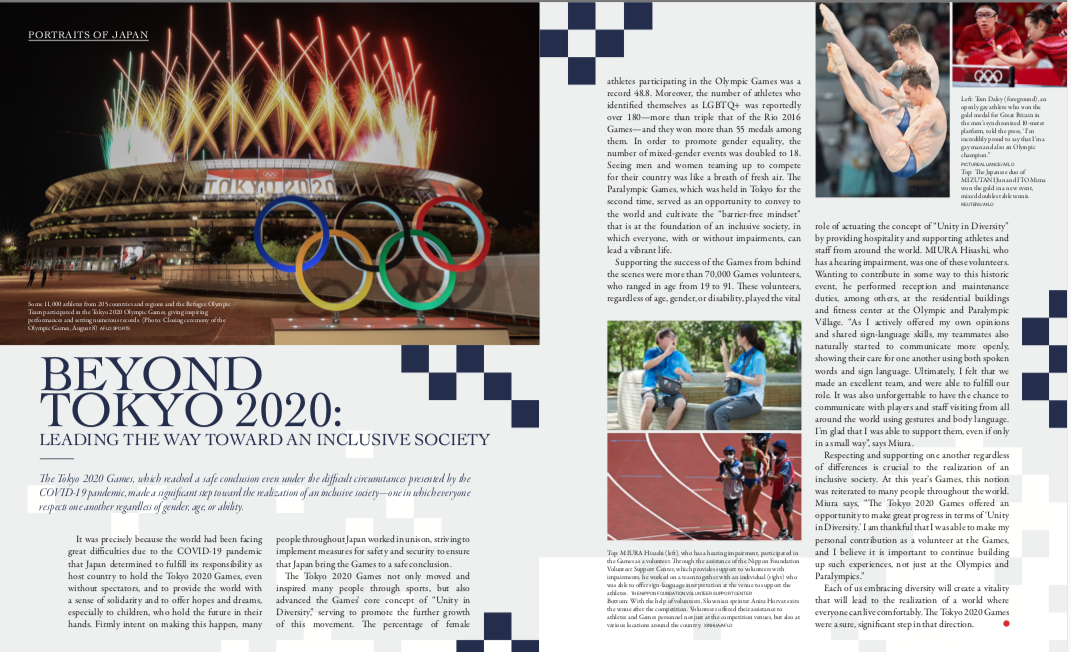
The following Japan Times article wouldn’t normally be put up on Debito.org yet because the negotiation is ongoing (covering much the same argumentative ground as already reported here), and nothing necessarily decisive has been decided. However, a new development in the USG’s constant-looking pressure on the GOJ to sign the Hague, and do something about its citizens using Japan as a haven for child abductions after divorce, is the fact that somebody official is bothering to answer the GOJ claim that obeying the Hague would mean sending back J children to be endangered by an abusive NJ parent (I’ll take that as a slur, thank you very much). Excerpts from the JT article below.
Posted in Child Abductions, Gaiatsu, Human Rights, Japanese Government, Media | 5 Comments »

Asahi: Prof pundit on Toyota uses “culture” benkai to explain recall issues

Posted by debito on 14th March 2010

Debito.org Reader BT commenting about culture once again being invoked as a defense:

Here’s an interview about Toyota recalls in the US, with “Hideo Kobayashi, a visiting professor at Yokohama National University’s Center for Risk Management and Safety Sciences”. I’m talking specifically about these two quotes:

“Q: Wasn’t Toyota’s confidence in product quality one of the factors that led to its sloppy handling of the situation?

A: Can what people in Japan consider “good quality” be also considered good in the United States, which has a more diversified population?

Japanese people generally have high driving skills and similar physical features. But the United States, whose society was more or less built by immigrants, has people with various physical features and behavioral patterns. To get a driver’s license, you don’t need the sort of skills that are required in Japan..”

(The “we’re superior” routine)

And,

“Q: Some say the reaction to Toyota’s problems has an aspect of “Japan bashing” about it. What is your view?

A: With American companies such as General Motors Corp. going under and Toyota doing well in sales, there naturally is an aspect of Japan bashing. But this is something that has to be overcome.”

(The “poor, poor Japan” routine)…

Posted in Bad Business Practices, Bad Social Science, Cultural Issue, Gaiatsu, Ironies & Hypocrisies, Media, Tangents | 28 Comments »

Kyodo et.al falls for NPA spins once again, headlines NJ “white collar crime” rise despite NJ crime fall overall

Posted by debito on 27th February 2010

It’s that time of year again. Time for the National Police Agency (NPA) Spring Offensive and Media Blitz against foreign crime. Article, then comment, then some original Japanese articles, to observe yet again how NJ are being criminalized by Japanese law enforcement and our domestic media:

No. of white-collar crimes by foreigners up by 31.2% in 2009
Thursday 25th February, 2010 Kyodo News
TOKYO — The National Police Agency detected 964 white-collar crimes by visiting foreigners in Japan last year, up 31.2% from the previous year, it said Thursday. The number of visiting foreigners charged with such crimes came to 546, up 7.9%, according to the NPA. It said notable among the crimes was teams using faked credit cards.

The overall number of crimes committed by all foreigners in the reporting year fell 11.1% to 27,790, with 13,282 people, down 4.3%, charged, the NPA said.

COMMENT: Yep. Same old same old. Parrot the NPA: Highlight the NJ crime rises, and play down the fact that NJ crime overall has gone down. And of course no depiction of J “white collar” (whatever that means) crime numbers, nor their ups or downs to give a sense of scale.

Posted in Bad Social Science, Japanese police/Foreign crime, Media, Problematic Foreign Treatment, 日本語 | 11 Comments »

Japan Times: Foreign press pulling out of Japan in favor of China

Posted by debito on 18th February 2010

In a new trend of “Japan Passing” (a play on the old debate-stifling term “Japan Bashing”, except this time it refers to Japan being passed over in importance as the purported “leader of Asia”, in favor of China), we see the ultimate effect of Japan’s closed-door policies towards the outside world (including immigration) — foreign correspondents pulling out and closing up shop, turning fading economic superpower Japan into an international media backwater by degrees. It’s sad to see the FCCJ (who accepted me as an associate member earlier this year, thanks) dwindling this much. But after “two lost decades” of Japan’s economic stagnation and the previous decade criminalizing and excluding immigrants, culminating in a policy push to send them “home” despite all their contributions, it’s just one more chicken coming home to roost.

Posted in Media | 12 Comments »

Kyodo & Mainichi: 14 prefectures now oppose NJ PR suffrage (Debito.org names them)

Posted by debito on 13th February 2010

Kyodo: Local assemblies in 14 of Japan’s 47 prefectures have adopted statements in opposition to giving permanent foreign residents in Japan the right to vote in local elections since the Democratic Party of Japan took power last year, a Kyodo News tally showed Monday.

Before the launch last September of the new government under Prime Minister Yukio Hatoyama who supports granting local suffrage, 31 prefectural assemblies took an affirmative stance, but six of them have turned against it since then.

(Those open-minded prefectures are: Akita, Yamagata, Chiba, Ibaraki, Toyama, Ishikawa, Shimane, Kagawa, Oita, Saga, Nagasaki and Kumamoto, plus Saitama and Niigata)

Posted in Immigration & Assimilation, Ironies & Hypocrisies, Japanese Politics, Media, 日本語 | 9 Comments »

UK journalist seeks interviews with Asian NJ wives in rural Japan

Posted by debito on 2nd February 2010

Request: I am a journalist based in the UK and coming to Japan in February/March to research a couple of stories, one of which is the issue of Asian women being encouraged to immigrate into Japan and marry into rural Japanese families.

I want to talk about the problem in farming community of there being a shortage of Japanese-born women because increasingly more are abandoning the countryside for the cities and hence there are many ‘drives’ to get Japanese men in rural communities to marry and produce children…

More specifically, I want to get the personal stories of some of the Asian wives who have come to Japan to marry into rural families. Would you know any such women that may be willing to talk to me about their experiences (they can keep anonymity of course if they want to).

Also, I would like to find (though this may be harder!) someone who is involved in the so-called ‘marriage brokering agencies’ – either someone who has contact with the agencies who play a role in sending women from Asian countries to Japan or, someone in Japan with a connection to local authorities who may have officially encouraged the practise.

Posted in Immigration & Assimilation, Media | 3 Comments »

Momoyama Gakuin Daigaku blocks online campus access to Debito.org. Just like Misawa Air Force Base.

Posted by debito on 31st January 2010

As a Sunday article, let me forward two collated emails that I received from a student at Momoyama Gakuin Daigaku. He sent proof that his university blocks campus access to Debito.org.

It’s not the first time I’ve heard of Debito.org being too truthy for some places with internal attitudes to maintain. Such as the American Air Force Base in Misawa, Aomori Prefecture. (I know for a fact they didn’t like me exposing both the “Japanese Only” signs right outside their base and the organized blind-eying both they and the City of Misawa gave it.) So instead of dealing with the problem, they dealt with the messenger, by making sure that anyone on base cannot see what you’re seeing now. It’s to them Non-Operational Information, I guess. Or, as Momoyama seems to indicate, it might give students in Japan too much of an education.

Report from Momoyama student follows, along with his unsuccessful efforts to get it “unblocked”. Arudou Debito, webmaster of the site just too hot for some institutions to handle.

Posted in Bad Social Science, Exclusionism, Ironies & Hypocrisies, Media | 12 Comments »

Tidy free FCCJ Scholarship up for grabs, deadline Feb 15

Posted by debito on 27th January 2010

Each year, the FCCJ Scholarship Committee awards up to one million yen in scholarship funds to university students who have demonstrated a serious interest in journalism. The fund was originally established by former FCCJ member Swadish DeRoy and is now supported through generous donations from individuals and businesses dedicated to excellence in journalism. Our Committee also conducts student workshops in Tokyo and Kansai that have drawn hundreds of students seeking to understand the basics of our profession.

But the Scholarship Fund is the heart of our committee work and we are anxious to reach as many applicants for this year’s fund as possible. We would thus like to request that you let as many possible applicants as possible know about the fund. Students do not have to be journalism majors. They merely need to be currently enrolled undergraduate or graduate students who have shown a serious interest in pursuing journalism as a career. Both Japanese and non-Japanese may apply.

Posted in Education, Media | No Comments »

Japan Times Amy Chavez comes unglued with weird “Japan Lite” column: “How about a gaijin circus in gazelle land?”

Posted by debito on 20th January 2010

Excerpt: “This confirms a suspicion I have long had about the Japanese people — they are descendants of gazelles… Consider that gazelles and the Japanese share some striking similarities: They are both fine boned and graceful and the females have pretty little feet with high heels, making them look like they are tip-toeing along. Now, put a cow next to the gazelle and you have us gaijin.

A crowd of Japanese people looks tidy but a crowd of beefy foreigners looks like a stampede. The Japanese, with their long, elegant limbs and quiet demeanor cannot possibly be descendants of the caveman.”

Whaaaa…..?

Posted in Bad Social Science, Cultural Issue, Media | 66 Comments »

On the 15th anniversary of the Kobe Earthquake: My first activism in Japan: Eyewitness essays when I volunteered down there

Posted by debito on 18th January 2010

As the Japanese media has been blitzing lately (dovetailing with the events in Haiti, although NHK refuses to put it as top news when there are Center Shikens affecting Japanese students out there), yesterday, January 17, was the fifteenth anniversary of the Kobe/Awajishima Earthquake that claimed over 6000 lives.

The Kobe Quake has special significance for me personally. A third of my life ago, I was so enraged by the GOJ irresponsibility (an NHK program last night from 9PM cataloging the science behind the 15-second temblor still refused to mention how the highway overpasses also collapsed because of shoddy construction work (tenuki kouji); commentators blamed it all on sea sand vs. mountain sand) that I went down for a couple of weeks at my own time and expense to help out as a volunteer. I of course wrote the events up, and they are amongst my first essays charting my nascent activism in Japan. Here are links to them all:

Posted in Ironies & Hypocrisies, Japanese Government, Media, Tangents | 2 Comments »

Sunday Tangent: Economist excerpt on being foreign

Posted by debito on 17th January 2010

In its Xmas Special of December 19, 2009, The Economist (London) had a long and thoughtful essay on what it’s like to be foreign, and how “it is becoming both easier and more difficult to experience the thrill of being an outsider”. It even devoted more than a paragraph specifically to Japan’s offer of foreignness:

“The most generally satisfying experience of foreignness—complete bafflement, but with no sense of rejection—probably comes still from time spent in Japan. To the foreigner Japan appears as a Disneyland-like nation in which everyone has a well-defined role to play, including the foreigner, whose job it is to be foreign. Everything works to facilitate this role-playing, including a towering language barrier. The Japanese believe their language to be so difficult that it counts as something of an impertinence for a foreigner to speak it. Religion and morality appear to be reassuringly far from the Christian, Islamic or Judaic norms. Worries that Japan might Westernise, culturally as well as economically, have been allayed by the growing influence of China. It is going to get more Asian, not less. Even in Japan, however, foreigners have ceased to function as objects of veneration, study and occasionally consumption…”

Posted in Cultural Issue, Discussions, Media, Tangents | 18 Comments »

NZ publisher perpetuates “Tales of Gaijin”; I have to withdraw submission due to rubric I cannot accept

Posted by debito on 14th January 2010

I was invited a little over a year ago to submit two stories to a NZ publisher, a new place called Fine Line Press, run by a jolly decent fellow I know (former head of the Tokyo Chapter of JALT) named Graham Bathgate. One story was on the Otaru Onsens Case, the other on the Top Five Things I Like About Japan. I knew the person, was happy to oblige, and we exchanged some story drafts until satisfaction about the submissions were reached on both sides.

However, in August I heard that the book would be published under the rubric of “Foreign Tales from Japan” (actually, they were originally punning on the “Tales of Genji” to make “Tales of Gaijin”. Ick). Alas, I am not a foreigner in Japan, and I said I did not want my stories to be included either under this rubric or within this concept. I have, naturally, very strong feelings about being treated as a foreigner in Japan, and I do not like publishers (and former long-termers in Japan, such as Graham) exporting the binary “Japanese vs. Gaijin” mindset to media overseas. We have enough trouble dealing with it over here without it being propagated in more liberal societies (such as NZ). Graham, IMHO, should know better, and should publish better.

So I protested and asked the rubric to be changed or my writing withdrawn. After several months of silence, I got the final word: The rubric would stand. Okay. Sad to see.

But I’m not one to let things like this go. I feel the publisher wound up pigeonholing me through imported racist paradigms. Should be known about. Here’s the main correspondence we had, for the record.

Posted in Articles & Publications, Bad Business Practices, Bad Social Science, Cultural Issue, Media | 15 Comments »

Asahi Shinbun Jan 8 “Japan edges closer to signing Hague Convention” on Child Abductions issue, still mentions NJ “DV concerns”

Posted by debito on 12th January 2010

New article in the Asahi re the GOJ and the Child Abductions Issue re signing the Hague Convention. As submitter PT comments:

“Note the Red Herring of Domestic Violence thrown out by Justice Minister Chiba in the last sentence. Interesting how the Japanese Government refuses to involve their justice ministry in talks with the US, yet they are quick to put forward a quote from the Justice Minister when pushing back on reasons against signing the Hague.” Article follows.

Posted in Anti-discrimination templates/meetings, Child Abductions, Japanese Government, Media, Problematic Foreign Treatment | 10 Comments »

Discussion: KFC Australia’s “racist” CM vs McD Japan’s “Mr James”

Posted by debito on 9th January 2010

Funny thing, this. We get KFC Australia doing a hasty retreat from its controversial commercial days after it goes viral on YouTube, and pulling it pretty quickly.

Now contrast with the ad campaign by another American-origin fast-food multinational, McDonalds. For those who don’t know, between August and November of last year McDonalds Japan had that White gaijin stereotype “Mr James” speaking katakana and portraying NJ as touristy outsiders who never fit in. More on what I found wrong with that ad campaign here.

Yet the “Mr James” ad campaign never got pulled. In fact, the reaction of some Asians in the US was, “Karma’s a bitch”, as in White people in Japan deserve this sort of treatment because of all the bad treatment they’ve foisted on Asians overseas in the past. Still others argue that we can’t expect Japan to understand the history of other countries, or how they feel about certain sentiments found overseas, and one shouldn’t foist their cultural values onto other cultures (this argument usually pops up when one sees minstrel blackface shows etc in Japan). This argument was also made in comments to this blog as well.

But KFC pulls the ad, in contrast to “Mr James”, where people rushed to defend it in the name of cultural relativism. Why the difference?

I’m not saying I have the answer to this question. So I bring it up for discussion here on Debito.org. What do readers think?

Posted in Bad Business Practices, Cultural Issue, Discussions, Food, Gaiatsu, Ironies & Hypocrisies, Media | 42 Comments »

GAIJIN HANZAI Magazine becomes a “Taboo” topic in a 2007 magazine, victimizing J publisher

Posted by debito on 8th January 2010

A magazine on “Taboos”, sent to me more than two years ago, tells the story of the reactionary gaijin who took the “Gaijin Hanzai Ura File” mook to task for the lies and hate speech it was spreading on convenience store newsstands nationwide (substantiation of that all here). And portrays that pitifully misunderstod publisher, Eichi Shuppan Inc., which went bankrupt within two months of releasing that mook, as victim.

It has quotes from me (even of me laughing) that it never garnered through any interviews (they apparently talked to Eichi, but I received no communication from this publication), and shows me as some sort of fearsome activist (thanks, I guess). It of course offers no counterarguments to Eichi’s spurious published assertions, for example about the rise of NJ crime (I would have given those counterarguments if they’d only asked), accepting their assertions at face value. And of course we have no real debate on whether or not the book was actually telling the truth or not (obviously, as I argued in many venues, it wasn’t). For all the research they did pulling my written quotes out of context, they didn’t cite my questions of the veracity of the portrayals that assiduously at all.

In other words, it’s a debate that once again favors and victimizes Team Japan. Those poor victimized convenience stores responding to public pressure (yeah, like that worked for “Mr James”; McDonald’s basically ignored us). It couldn’t just be that the stores carrying the mook were convinced by our arguments about its exaggerated and errant claims and hateful tone now, could it? Naw, Japanese lost to the foreigners, therefore the foreigners didn’t fight fair. And now because of that, we have yet another “taboo” that hurts We Japaneses’ Freedom of Speech. Hardly a “taboo” here. You overdid it, and lost the debate. That’s all.

Posted in Bad Social Science, GAIJIN HANZAI mag, Ironies & Hypocrisies, Media, Problematic Foreign Treatment | 10 Comments »

Fukushima Prefectural Tourist Information website advertises that now 318 of its hotels refuse NJ clients

Posted by debito on 5th January 2010

While doing research over the new year, I got quite a shock when I was doing some followup on a case of exclusionary practices. I reported on Debito.org in September 2007 that Fukushima Prefecture’s Tourist Information website was advertising 35 hotels that refused NJ clients. This is one of the few business sectors that actually has explicit laws preventing refusals of customers based upon nationality alone (thanks to the Hotel Management Law), so when a government agency is even promoting “Japanese Only” hotels, you know something is rum indeed.

What’s even more rum is that even after I advised the Tourist Information Agency that what they were doing is unlawful, and they promised in writing to stop doing it, now two years later the same website is now promoting 318 (!!) hotels that refuse NJ clients. You can’t help but get the feeling that you have been lied to, and by government bureaucrats.

A brief write up, with links to sources, follows. At the very bottom are screen captures of the FTIA website evidencing the exclusionary practices.

Posted in Bad Business Practices, Exclusionism, Ironies & Hypocrisies, Japanese Government, Media, 日本語 | 56 Comments »