Archive for the '“Pinprick Protests”' Category
These are small, individual, but widespread and sustained protests against a system or a phenomenon in Japan that apparently can’t be solved by negotiations appealing to basic humanity and common sense.
Posted by debito on 29th January 2013
There has been discussion within a previous blog entry about establishing a YouTube channel that can screen information videos/vlogs/etc. on topics Debito.org is concerned about. This is not unusual, as many advocacy groups have their own YouTube channels (such as Sakura TV, dedicated to disseminating far-rightist and historically revisionist views).
My vision for a Debito.org would be information that NJ in Japan could use for improving their lives in Japan, such as What to do if… a cop stops you for an ID check — filming some Shokumu Shitsumon proceedings as has happened with Japanese citizens here, here, and here (my favorite). In other words, filming these proceedings in action may act as at least a primary information source, at best a deterrent. The threat of accountability stops many a bureaucratic abuse. I personally think it’s a great idea and I’ll do what I can to help.
Posted in "Pinprick Protests", debito.org blog and website biz, Discussions, Education, Human Rights, Media, Practical advice | 25 Comments »
Posted by debito on 23rd January 2013
Last November, Debito.org reported that a magazine named Chagurin (sponsored by the PTA and the JA Japan Agricultural lobby, and placed in Elementary Schools nationwide) featured a scare-mongering article entitled “Children within the Poverty Country of America”. This was reported by a NJ resident named Stephanie whose daughter read the article in public school, questioned its contents because she had overseas experience, and was allegedly rebuffed by her teacher with an unquestioning, “It is written so it must be true.”
The contents, which were scanned and featured on Debito.org in full, depicted America as an example of what Japan should not become, and focused on several social problems (such as homelessness, poverty, obesity, non-universal health care, flawed education, and poor diet) which do exist but were largely exaggerated — even in some cases falsified — in the article; moreover with no grounding with comparative social problems in Japan. The author, Tsutsumi Mika (her website here), a bilingual journalist educated in the US who preaches critical thinking in her article’s conclusions, turns out to be someone who cranks out bestselling books in Japanese that don’t apply the same critical thinking to Japan (only to America, as a cautionary tale). I called the Chagurin article “propaganda”, not only because it was sponsored by a Japan Agricultural lobby famous for its dirty media tricks (see here, here and here), but also because it was disseminated to a young audience of sixth graders not yet trained in the critical thinking Tsutsumi so prizes. It followed Robert W. McChesney’s definition of propaganda exactly: “The more people consume your media, the less they’ll know about the subject, and the more they will support government policy.” And it caught them while they’re young.
Even more interesting information about Tsutsumi then came out in Debito.org Reader comments: She is married to a young Dietmember named Kawada Ryuuhei of the Minna No Tou Party; he is an HIV activist who preaches anti-discrimination within Japanese society, yet supports xenophobic arguments regarding revisions to Japan’s Nationality Law (ergo his anti-discrimination sentiments only apply to “Japanese”). They make for an interesting pair, espousing an interestingly self-serving (and un-self-reflective) ideology that defies critical thinking even for fully-grown, mature, and educated adults — especially unbecoming given their life experiences both in overseas societies and in matters of discrimination. (In contrast to what many say about international experience opening up the minds of younger Japanese, these two indicate the opposite effect as they pander to their xenophobic markets.)
That’s the background. The news for today’s blog entry is that Chagurin magazine responded to Stephanie this month, who in November had sent in a complaint letter about the article. Their reply acknowledged some errors within, even incorporated answers from Tsutsumi herself (who didn’t budge in her claims). I will translate it below with comments from Stephanie and myself, and enclose the original text. As Tsutsumi advocates, put on your critical thinking caps as you read it!
Posted in "Pinprick Protests", Bad Social Science, Discussions, Education, Hate Speech and Xenophobia, Ironies & Hypocrisies, Media, Problematic Foreign Treatment, 日本語 | 28 Comments »
Posted by debito on 17th January 2013
Here’s a couple of interesting lawsuits in the pipeline: A French woman being fired from NHK (despite 20 years working there) apparently for leaving Japan during the Fukushima crisis, and eight US Navy sailors suing TEPCO (from overseas) for lying about nuclear fallout dangers and exposing them to radiation.
No matter what you think about the act of litigation (and there are always those, such as House Gaijin Gregory Clark or tarento Daniel Kahl (see Komisarof, “At Home Abroad”, p. 100) who decry anything a NJ does in court, saying “they’re suing at the drop of a hat like the litigious Westerners they are” — even though millions of Japanese in Japan sue every year), these cases have the potential to reveal something interesting: 1) Blowing the lid off the Flyjin Myth of “fickle NJ leaving their work stations” once again, this time in the Japanese judiciary; and 2) showing whether international effects of GOJ negligence (and irradiating the food chain both domestically and internationally counts as such) is something that can be legally actionable from afar.
Kyodo: A French woman on Tuesday sued public broadcaster Japan Broadcasting Corp., or NHK, for dismissing her after she left Japan in response to a French government warning issued during the Fukushima nuclear crisis. Emmanuelle Bodin, 55, who had engaged in translation and radio work, said in a complaint filed with the Tokyo District Court that she had told her boss that she would return to work on March 30, 2011, but received a termination letter on March 22. Two days after the earthquake-tsunami disaster triggered the accident at the Fukushima Daiichi plant on March 11 that year, the French government advised its citizens to leave the Tokyo area.
Bloomberg: Tokyo Electric Power Co. is being sued for tens of millions of dollars by eight U.S. Navy sailors who claim that they were unwittingly exposed to radiation from the Fukushima No. 1 nuclear plant meltdowns and that Tepco lied about the dangers. The sailors aboard the nuclear-powered aircraft carrier USS Ronald Reagan were involved in the Operation Tomodachi disaster relief operations following the March 11, 2011, earthquake and tsunami that devastated the Tohoku region and led to the nuclear catastrophe, according to their complaint filed in U.S. federal court in San Diego on Dec. 21.
Posted in "Pinprick Protests", Gaiatsu, Labor issues, Lawsuits, Problematic Foreign Treatment | 22 Comments »
Posted by debito on 29th November 2012
Contributor Stephanie: My daughter is a 6th grader at a small country public school here in Hokkaido. Every month they get a magazine called “Chagurin” (I think it may be JA sponsored). Anyways, she looks forward to reading these as they have interesting articles and ideas. But this month in the December issue there is an article called “Hikon Taikoku America no Kodomotachi” [Children of the Poverty Great-Power Country of America]. After reading it she told her teacher she did not think parts of it were true, the teacher said it was written so it is true.
She brought this article home to us and translated it. I am so … what is the word…disappointed, mad…it is just not right that this lady writes an article with so many false statements and big generalizations. There are parts of truth but presented in a negative way.
Basically saying America is not a good place and no matter where you go you will see people living in tents in the parks. Other points — the poorer you are the fatter you are (which implies people are fat because they are poor). The health care is poor and it costs 150.000 yen to get one filling! Because people can not afford this they do not go to the dentist they in turn can not bite right, have interviews or get jobs.
One more thing. If you take a look at the photo with the boy with the “bad teeth” — as soon as I saw this photo I doubted those teeth are real. They remind me way too much of the fake halloween wax costume teeth I always had growing up. I sent the photo to a dental hygienist who has been working in America 20+ years and she said “In my 20+ years I have never seen teeth like these. They look like the fake halloween teeth.” When I write the author of the article I will be asking her for the photographer’s info to clarify the facts behind this photo. I think you can glean more by reading this yourself so I will attach the article, front cover, and back page…
Posted in "Pinprick Protests", Bad Social Science, Exclusionism, Food, Hate Speech and Xenophobia, Ironies & Hypocrisies, Japanese Government, Media, Problematic Foreign Treatment, 日本語 | 51 Comments »
Posted by debito on 14th November 2012
Something that came up on one of the mailing lists I’m on (a JALT group called PALE) is an interesting debate on physical education in Japan as part of cultural education in Japan — the new requirement for students to take a martial art in Junior High School as an attempt to “transmit tradition” and develop one’s inherent inner Japanese-ness.
My basic objection with all this education on “what it means to be Japanese” (which reasserted itself with former PM Abe’s reforms of the Basic Law of Education in 2006 to foster “an attitude that loves the nation”) is that, given the binary approach to “being Japanese” (especially when defined as “being unique”, with an added contrast to “being foreign”), it encourages people of NJ roots to be excluded (or else to deny their own diversity as incompatible). But the debate on PALE added a new dimension — an unnecessary degree of danger, given how martial attitudes in Japan often invite physical brinkmanship in unaccountable sports coaches over their young athletes. It’s tangental to the discussion of diversity in Japanese education, but read on as it’s good food for thought.
Posted in "Pinprick Protests", Cultural Issue, Education, Japanese Politics, Tangents | 14 Comments »
Posted by debito on 25th October 2012
Guest author “Bitter Valley” is back again with another thing he wants to get off his chest. I think he should, so here it is. One of my pet theories about Japan’s swing towards insularity and conservatism is that as people get older (and Japan as a society is doing just that demographically), they get more politically conservative and resistant to change — or at least change that is not in their best interests. And as “Bitter Valley” points out, it means an inordinate weighting of political power and economic resources in favor of the old at the expense of the young (especially since the very young have no vote, ever fewer numbers, and few political and civil rights to begin with). This is manifesting itself in ways that BV thinks are worth mentioning in Japan’s most cosmopolitan city. Given how centralized political power is in Japan, what happens here will set precedents for the rest of the nation.
BV: Hi Debito, this is “Bitter Valley” again. We’ve just had some terrible news that the second major children’s facility we have access to in Shibuya, the Kodomo no Shiro (Kiddies Castle) is closing down in 2015. It’s a bit of a hammer blow for us, as we have already just lost the Jidokaikan (Tokyo Children’s Center), which is going to be demolished for another old people’s home. Regardless of what might really behind the closures (more on this later) it’s going to lower the quality of life for kids and mums and dads in Shibuya (and wider afield) considerably.
Both children’s facilities are/were two of the only major educational/ fun/ accessible/ cheap (no or low cost) play centers. Both, incidentally, were/are tremendous resources for Shibuya’s large ratio of multinational kids. Parents of older children say that there are schools with most classes not only have one but several multiracial or foreign or Japanese but of NJ parentage in classes. Increasingly it’s seen as no big deal. That’s great, at least to non-knuckleheads and/or racists. But the closures suck. First of all the Tokyo Children’s Hall (Jidokaikan) was shut down last year and this spring….
Posted in "Pinprick Protests", Discussions, Ironies & Hypocrisies, Japanese Government, Tangents, Unsustainable Japanese Society | 53 Comments »
Posted by debito on 22nd October 2012
Japan Times: Japan as we know it is doomed. Only a revolution can save it. What kind of revolution? Japan must become “a nation of immigrants.”
That’s a hard sell in this notoriously closed country. Salesman-in-chief — surprisingly enough — is a retired Justice Ministry bureaucrat named Hidenori Sakanaka, former head of the ministry’s Tokyo Immigration Bureau and current executive director of the Japan Immigration Policy Institute, a private think tank he founded in 2007.
“Japan,” he said in a recent telephone interview, “is on the brink of collapse.” [...] No nation, barring war or plague, has ever shrunk at such a pace, and as for aging, there are no historical precedents of any kind. The nation needs a fountain of youth. Sakanaka claims to have found one. Japan, he said, “must welcome 10 million immigrants between now and 2050.” [...] It sounds fantastic, and in fact, Sakanaka acknowledges, would require legislation now lacking — anti-discrimination laws above all.
Posted in "Pinprick Protests", Cultural Issue, Discussions, Human Rights, Immigration & Assimilation, Japanese Government, Japanese Politics, Labor issues, Practical advice, Unsustainable Japanese Society | 52 Comments »
Posted by debito on 16th October 2012
Debito.org Reader CJ submits the following ZakSPA! page talking about Japan’s genetic internationalization in tabloid style: How “funny” it is to be a “half.” Reading through the articles (enclosed below), I’m of two minds about this. On one hand, it’s good to have the media acknowledging that there are Japanese kids of diverse roots and experiences out there, with some tone of saying how silly it all is that so many people get treated in stereotypical ways (with a “roundtable of halfs” at the end giving their own views on the situation). On the other hand, the level of discourse gets pretty low (“some foreigner talked to me in Narita Airport in English and it was so frightening I felt like crying”), and an opportunity to actually address a serious issue of how Japan has changed is wasted on parts laughing, parts crybabying, parts confirmation that treating people as “different” because they look “different” is a natural, if not inevitable, part of life in Japan. I’ll let Debito.org Readers read for themselves and decide whether this important topic is being broached properly.
Posted in "Pinprick Protests", Bad Social Science, Cultural Issue, Discussions, Humor, Immigration & Assimilation, Media, 日本語 | 29 Comments »
Posted by debito on 2nd October 2012
From The Shadows, a documentary film about Parental Child abduction in Japan, will premiere at the Philadelphia Film Festival on October 23rd and October 27th. This film follows the lives of 5 “Left Behind Parents” trying desperately to reconnect with their children after having their child-parent relationship cut by the other parent. Through their individual stories we examine why this situation is so common in Japan and hear opinions from an array of experts on the situation. The film has had work-in-progress screenings on Capitol Hill (Nov. 2011) and in Tokyo (Apr. 2012) that was attended by the foreign ministry and several embassy reps.
The screening venues and times for the Philadelphia Film Festival are:
1. Tuesday October 23rd, 5:00 pm – Prince Music Theater – 1412 Chestnut Street Philadelphia, PA 19102
2. Saturday October 27th 7:35 pm – Ritz East – 125 South Second Street Philadelphia, PA 19106
First go to this link: http://filmadelphia.festivalgenius.com/2012/films/fromtheshadows0_mattantell_filmadelphia2012
Posted in "Pinprick Protests", Anti-discrimination templates/meetings, Child Abductions, Gaiatsu, Good News, Human Rights, Injustice, Japanese Government, Media, NJ voices ignored, discounted & discredited, Unsustainable Japanese Society | 5 Comments »
Posted by debito on 29th September 2012
Here’s something quite indicative about the conservatives in Japan. As I will be alluding to in my next Japan Times column (due out October 2), there is an emphasis on making sure “hopes and dreams” are part of Japan’s future. Fine, but for Japan’s conservatives, fostering “hopes and dreams” means obliterating things like the shameful bits of Japan’s past (which every country, doing an honest accounting of history, has). For Osaka Mayor Hashimoto (who just launched his ominously-named “Japan Restoration Party”), that means killing off Japan’s only human-rights museum (which, when I visited, had a corner devoted to the Otaru Onsens Case). Because talking about how minorities in Japan combat discrimination against them is just too disruptive of Japan’s “dreamy” national narrative:
Morris-Suzuki: Founded in 1985, Liberty Osaka is Japan’s only human rights museum. It features displays on the history of hisabetsu buraku communities (groups subject to social discrimination), the struggle for women’s rights, and the stories of minority groups such as the indigenous Ainu community and the Korean minority in Japan. An important aspect of the museum is its depiction of these groups, not as helpless victims of discrimination, but rather as active subjects who have fought against discrimination, overcome adversity and helped to create a fairer and better Japanese society. By 2005 more than a million people had visited the Liberty Osaka. (See the museum’s website (Japanese) and (English).)
Today, the museum faces the threat of closure. The Osaka city government has until now provided a crucial part of themuseum’s funding, but the current city government, headed by mayor Hashimoto Tōru, has decided to halt this funding from next year, on the grounds that the museum displays are ‘limited to discrimination and human rights’ and fail to present children with an image of the future full of ‘hopes and dreams’ (Mainichi Shinbun 25 July 2012)
Posted in "Pinprick Protests", Bad Social Science, History, Human Rights, Japanese Politics, 日本語 | 22 Comments »
Posted by debito on 23rd September 2012
Been doing some writing and inserting the definition of “gaijin” in Japan in terms of marketing into my research, and found that the “Gaijin Mask” found at Tokyu Hands in 2009 and featured on Debito.org has recently been changed to “Gaikokujin Mask”, according to Amazon Japan.
Note the stereotypical racialized characteristics for both “dokkiri” party goods include large a large nose, blue eyes, cleft chin, blond hair, “Hollywood smile,” and grand gesticulations. The default language for the “foreigner” (as seen by the harō and ha-i!) is English (if not katakana Japanese for the desu copula). However, “gaijin” has been adjusted to “gaikokujin” (as if that makes the commodification of racism all better).
Note also that even though this apparently has been a recent change (information was received by Amazon Japan only last month), it’s suddenly “Currently unavailable” and “can not be shipped outside Japan”. (I wonder if anyone looking at the product with an IP in Japan is also unable to purchase it.) See screen capture here:
Same thing with the racialized Little Black Sambo dolls I found on Amazon Japan last night (which have been on sale since shortly after unbook Little Black Sambo was resuscitated in Japan, extending racism into the next generation): It’s also “Currently unavailable.” And not for sale anyway outside of Japan. So methinks the producers are well aware that they could get in trouble if marketed to an overseas audience. But no matter — there’s money to be made here — who cares if the product is racialized when the domestic market from childhood thinks racism of this sort is unproblematic?…
Posted in "Pinprick Protests", Anti-discrimination templates/meetings, Bad Business Practices, Cultural Issue, Good News, Issho.org/Tony Laszlo, Media, Problematic Foreign Treatment | 21 Comments »
Posted by debito on 26th July 2012
How the media portrays minorities and people of differences in any society is very important, because not only does it set the tone for treatment, it normalizes it to the point where attitudes become predominant, hegemonic, and unquestioned. This article in the Japan Times regarding a book that portrays blackness as “dirty” is instructive, in that it shows how people react defensively when predominant attitudes are challenged. The dominant, unaffected majority use the inalienable concepts of culture and identity (particularly in Japan) as blinkers, earplugs, and a shield — to deny any possibility of empathy with the people who may be adversely affected by this issue.
And I consider this to be a mild example. Remember what happened when Little Black Sambo was republished by Zuiunsha back in 2005, after years of being an “un-book” in Japan? But Sambo was just seen as a “cute” character, with no provided historical context of the world’s treatment of the Gollywog (after all, Japan often does not consider itself “of the world” when it comes to racial discrimination; some even profiteer off it). It was actually being used as a teaching tool in Saitama to impressionable pre-schoolers in 2010; nothing like forming Japanese kids’ attitudes early! So I did a parody of it (“Little Yellow Jap”) to put the shoe on the other foot. THEN the accusations of racism came out — but in the vernacular against me for parodying it! (Here’s an example of someone who “got it”, fortunately.) The same dynamic is essentially happening below.
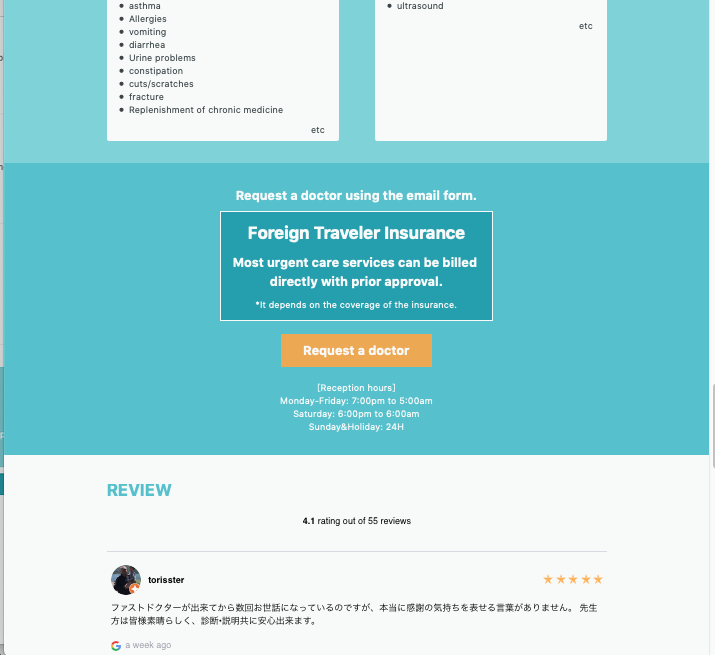
Joel Assogba: But, when I once ran across and brought home a picture book, “Ninjin-san ga Akai Wake” (“The Reason the Carrot is Red”) from the local library, my children got quite upset.
Written by renowned Japanese author of children’s literature Miyoko Matsutani, the story unfolds like this: A carrot and a burdock ask a white radish (daikon) out to a bath. The burdock jumps in the water but soon hops out because the water is too hot; it remains black. The carrot stays in the hot water longer and turns red. The daikon cools the bath with some cold water and washes himself thoroughly, which turns him shining white. At the end, the three stand beside each other to compare their color. The burdock is black and dirty because he did not wash his body properly; the daikon is white and beautiful because he did.
When I was talking about this story during one of my lectures on human rights issues at a PTA meeting in Fukuoka, one of the participants, a Japanese mother of an African-Japanese preschool boy, started crying and saying that her son was taunted, ridiculed and called “burdock” after his pre-school teacher read the aforementioned book to the class. When the little boy returned home that day, he jumped into the bathtub, started washing his body and crying, “I hate my light brown skin, I hate the burdock, I’m dirty and I want to be like the white radish!” How can this child have a positive image of himself?
Posted in "Pinprick Protests", Bad Business Practices, Bad Social Science, Cultural Issue, Education, Ironies & Hypocrisies, Media, NJ voices ignored, discounted & discredited | 12 Comments »
Posted by debito on 10th April 2012
JDG: On Sunday (8th April) I went via Hankyu Kurakuenguchi station to Shukugawa, where along the river bank many people enjoy hanami every year. It is (apparently) a very highly rated location on a national scale.
I have been meny years with Japanese friends, and have never had a problem. However, this was the first year that I went early and alone in order to secure a nice spot. Shukugawa has rules on it’s website (such as no ‘reserving’ of a spot with unattended blue sheets, and you must not enter the roped off areas around the tree roots), which I read in advance.
I arrived at 10.30 am, and immediately I found a nice spot and stopped, then some old guy started hassling me to move on, saying that I wasn’t allowed to stop there. I told him to shut up, and then ignored him (thinking he was just some grumpy old codger), but as I was setting out my sheet and blanket, four more old guys came along to join him, and tried telling me that the place I was in was off limits. I pointed to the Japanese groups set up all around me, and asked ‘What about them?’, but the old guys just ignored my question, and told me that they would call the police if I tried to give them any trouble.
I know I wasn’t breaking any of Shukugawa’s rules, so I just ignored them and waited for the rest of my group to arrive. For the next hour the group of five old guys stood over me, coming over every 5 minutes to ask me if I was going to move on, or asking me if I didn’t think that I was selfish by taking up so much room (one blue sheet), and even taking my photo twice. I told them that it was against the law to take my photo without my permission…
Posted in "Pinprick Protests", Bad Social Science, Cultural Issue, Food, Problematic Foreign Treatment | 31 Comments »
Posted by debito on 30th March 2012
Here’s another example of how NJ are not being trusted. Employees under the auspices of the JET Programme in Naha, AET, are being required to provide a urine sample in order to get a job. [...] We’ve seen this attitude from the police in Tokyo Azabu, who conducted similar “I-Pee” urine tests on NJ exiting bars in Roppongi without a warrant in 2009 just for tits and giggles, and because, after all, they’re the Japanese police so sod you. Now we see police powers expanding beyond the NPA (as they did when unlawfully deputizing hotels to smoke out illegal aliens back in 2005) and into private-sector/public-sector eikaiwa. Expect more of the same for whatever reason dreamable up.
XY: Dear Debito, Naha city now requires all AETs to take a urine test. Only the AETs, not the Japanese teachers. I thought I would bring this to your attention, as you are the right one to handle this type of situation. Can you give advice on how to deal with it? As AETs are blocked from forming any type of organization or union to fight against this type of BS. Here is the link: http://www.edu.city.naha.okinawa.jp/gakkyou/H24AETnaitei.pdf Notice on the second set of requirements where it tells the prospective applicant to turn in health related materials, it includes urine analysis. This is for drug testing, and only applies to AETs…
UPDATE MARCH 31: EVIDENCE PROVIDED THAT JTES ALSO REQUIRED TO SUBMIT TO URINALYSIS, SO THIS MEASURE ALSO APPLIES TO JAPANESE AS WELL. Conclusion: I still don’t think this is what some claim to be a mere “routine physical” (I think, given what I know about J employers’ access to health records, it is in fact a drug test, given the prior media shock of JETs and drugs in Okinawa), but if it’s applied across the board to Japanese and NJ as well, it’s not really a Debito.org issue. Might be an invasion of privacy issue, but not one necessarily of unfairness towards NJ, so that’s better discussed elsewhere. So Readers are welcome to continue to comment on this issue below, but unless we receive new information from the original claimant(s), I’m going to have to declare this one a false alarm and offer my apologies. Sorry.
Posted in "Pinprick Protests", Japanese Government, Labor issues | 48 Comments »
Posted by debito on 21st March 2012
Two articles, one journalistic, one from scientists at Psychology Today, on “Microaggression”, and how subtle practices of social “othering” in everyday interactions are difficult to deal with without getting (or sounding) paranoid. It happens on a daily basis to minorities and people of differences in any culture, to be sure. But in Japan, methinks, it gets dismissed as merely a Japanese cultural practice (“curiosity”, the product of the ubiquitous “shimaguni konjou”, the way many Japanese reconfirm themselves as “different” and “unique” as defined in contrast to the NJ, etc.). It’s not necessarily a willful act of racialization (and I would put it down to more of a “dominant group” issue rather than a “White” issue, so the analysis can cross societies), but is is definitely an aggressive act of “othering” (as in, assuming through the line of questioning, and against all evidence to the contrary that comes out in conversation, that someone is “different”) on the micro level. And when it happens often enough, it become a macro phenomenon. The advantage is, in English, there is a word for it. Not in Japanese, which makes it tougher to deal with.
Psychology Today: The term racial microaggressions, was first coined by psychiatrist Chester Pierce, MD, in the 1970s. But the concept is also rooted in the work of Jack Dovidio, Ph.D. (Yale University) and Samuel Gaertner, Ph.D. (University of Delaware) in their formulation of aversive racism – many well-intentioned Whites consciously believe in and profess equality, but unconsciously act in a racist manner, particularly in ambiguous situations.
Racial microaggressions are the brief and everyday slights, insults, indignities and denigrating messages sent to people of color by well-intentioned White people who are unaware of the hidden messages being communicated. These messages may be sent verbally (“You speak good English.”), nonverbally (clutching one’s purse more tightly) or environmentally (symbols like the confederate flag or using American Indian mascots). Such communications are usually outside the level of conscious awareness of perpetrators. In the case of the flight attendant, I am sure that she believed she was acting with the best of intentions and probably felt aghast that someone would accuse her of such a horrendous act.
Our research and those of many social psychologists suggest that most people like the flight attendant, harbor unconscious biases and prejudices that leak out in many interpersonal situations and decision points. In other words, the attendant was acting with bias-she just didn’t know it. Getting perpetrators to realize that they are acting in a biased manner is a monumental task because (a) on a conscious level they see themselves as fair minded individuals who would never consciously discriminate, (b) they are genuinely not aware of their biases, and (c) their self image of being “a good moral human being” is assailed if they realize and acknowledge that they possess biased thoughts, attitudes and feelings that harm people of color.
To better understand the type and range of these incidents, my research team and other researchers are exploring the manifestation, dynamics and impact of microaggressions. We have begun documenting how African Americans, Asian Americans, American Indians and Latina(o) Americans who receive these everyday psychological slings and arrows experience an erosion of their mental health, job performance, classroom learning, the quality of social experience, and ultimately their standard of living…
Posted in "Pinprick Protests", Cultural Issue, Tangents | 22 Comments »
Posted by debito on 17th February 2012
Here we have some naked xenophobia and related intolerance in interpersonal internet auctions. I have heard of numerous cases like these on Japanese internet outlets, where sellers simply refuse to sell to somebody with money if the buyer happens to be bearing money while foreign (and nothing would come of it from moderators). But here’s a report of what one person, Jeff Smith, decided to do about it. As he says, auction forums in Japan need to step up with rules to honor bona fide transactions, because that’s the entire point of money as a means of transaction — it is not foreign currency even if the buyer is foreign. Let’s wait and see what Yahoo Japan decides to do about it, if anything.
Jeff Smith: Something I came upon last night while looking for guitars on Yahoo Auctions, Japan. This individual ignoramus had the nerve to actually write in his or her auction that foreigners would be denied the right to buy said item once found to be foreign, NJ or otherwise: The statement here is as follows in English:
“Winners please be aware of the message I send upon auction close. I will not accept new bidders who do not reply, or people with bad manners. New bidders are to respond within 48 hours, and those that do so will be allowed to pay for the item. In addition, due to troubles that have occurred, I am not accepting any foreign bidders with a score under 30 rating. [This was actually changed this morning, Feb. 15, 2012: originally it said I will accept NO FOREIGN WINNERS, period.] If I find that the winner is a foreigner after the auction ends, I shall void the auction at my convenience.”
Amazed that this person could even have the gall to write in such a manner, I contacted the seller with a message as follows…
Posted in "Pinprick Protests", Bad Business Practices, Exclusionism, Media, Problematic Foreign Treatment, 日本語 | 38 Comments »
Posted by debito on 27th January 2012
Something I’ve noticed about Japan’s anti-crime campaigns: 1) These campaigns are not temporary (as in, “the campaign expires on this date”), meaning inevitable future crackdowns are cumulative (see for example here and here), 2) they quickly take on a racist bent (as NJ are officially depicted as more likely to commit crime, or even just be criminals by existing, as potential “illegal visa overstayers”) and encourage racial profiling in practice (see here and here), and 3) a general lack of legal oversight over the Japanese police means the cops go too far, bending laws (see for example here and here) and in this case targeting politically-disenfranchised people (NJ) who can’t fight back through the system or the media, or even through their political representative (who are basically in on the gaijin bashing for political capital and budgetary gain).
These are all elements of a police state, and the systematic mistrust of foreigners in Japan enables the bureaucracy to carry out in microcosm what Submitter PS (a pseudonym) reports below. Fortunately this time, PS had the presence of mind to take photographs of these toughs from Immigration, who clearly felt their need to police gaijin overrode their need to treat people with respect and dignity (not to mention without resorting to physical force and with due process under the law).

Submitter PS: My name is PS. I’m a 45-year-old American living and working in Tokyo, where I’ve resided for the last 8 and a half years. I have a valid working visa, pay my Japanese taxes (both national and local), and have never had any unpleasant encounters with the authorities; that is, until last Thursday, Jan. 19. It’s something that I think you should know about.
That morning, an Immigration official showed up at the door of my apartment, unannounced, and demanded to see my passport. I was very suspicious that Immigration (not the police) would make a sudden home visit to do a spot-check, especially since I’ve lived in the same apartment since 2003, and since my address has been registered with the Shinagawa Ward office for over 8 years. Anyway, I asked this gentleman to show me his badge so that I could write down his name and badge number. He quickly flashed me some ID, but I pointed out that I didn’t have the opportunity to see, much less write down, the details. In a belligerent tone, he said in English, “Passport first!” I refused, bid him a good day, and started to close my door. It was at this point that things got out of hand.
The aforementioned gentleman physically blocked my door from closing, and we got into a shoving match that led to my door getting knocked off its tracks. Then, suddenly, four of his associates (2 men and 2 women), who’d apparently been hiding in the stairwell, appeared en masse. Things continued to verbally escalate, though with no further physicality, until one of them finally relented and let me take a photo of his badge. I took the further liberty of photographing the three “men” who were harassing me. The photos are attached. The person wearing the surgical mask in Photos #2 and 3 is the one with whom I tussled. The name stitched on his uniform was “S. Maeda.”…
Posted in "Pinprick Protests", Fingerprinting, Targeting, Tracking NJ, Human Rights, Immigration & Assimilation, Ironies & Hypocrisies, Japanese Government, Japanese police/Foreign crime | 81 Comments »
Posted by debito on 18th January 2012
Last month I had an extensive interview with Victor Fic of the Asia Times on me, the Otaru Onsens Case, human rights in Japan, and the future. It went up last week. While long-term readers of Debito.org might not find much they haven’t heard before, it’s a good “catch-up” and summary of the issues for interested newbies.
Asia Times: When US-born Dave Aldwinckle became a Japanese citizen named Arudou Debito in 2000, two Japanese officials told him that only now did he have human rights in Japan. Such prejudice galvanized him into becoming a crusader against anti-gaijin(foreigner) discrimination after braving death threats to him and his family. Is Arudou throwing the egg of morality and legality against the rock of ancient bias? In this exclusive interview with Asia Times Online contributor Victor Fic, he sees Japan turning inward.
Victor Fic: Did you ever think that you would become a Japanese citizen?
Arudou Debito: Hell no! I wasn’t even interested in foreign languages as a child. But I moved from my birthplace, California, to upstate New York at age five and traveled much overseas, learning early to communicate with non-native English speakers. I’d lived a lot of my life outside the US before I graduated from high school and wasn’t afraid to leave home. But changing my citizenship and my name, however, was completely off the radar screen. I didn’t originally go to Japan to emigrate – just to explore. But the longer I stayed, the more reasonable it seemed to become a permanent resident, then a citizen. Buying a house and land was the chief reason that I naturalized – a mortgage means I can’t leave. More on me and all this on my blog [1]…
VF: Why do you insist that prejudice towards foreigners in Japan is severe?
AD: It’s systematic. In my latest Japan Times column [2] I discuss the lack of “fairness” as a latent cultural value in Japan. Japanese tend to see foreigners as unquestionably different from them, therefore it follows that their treatment will be different. Everything else stems from that. My column gives more details, but for now let me note that a 2007 Cabinet survey asked Japanese, “Should foreigners have the same human-rights protections as Japanese?” The total who agreed was 59.3%. This is a decline from 1995 at 68.3%, 1999 at 65.5% and 2003 at 54%. Ichikawa Hiroshi, who was a Saga Prefecture public prosecutor, said on May 23, 2011, that people in his position “were taught that … foreigners have no human rights ” [3]. Coming from law enforcement, that is an indicative and incriminating statement…
VF: Can you cite practical examples from daily life?
AD: Sure…
Posted in "Pinprick Protests", Anti-discrimination templates/meetings, Exclusionism, Human Rights, Immigration & Assimilation, Injustice, Japanese Government, NJ legacies, Otaru Onsen Lawsuit, Unsustainable Japanese Society | 2 Comments »
Posted by debito on 12th January 2012
Last blog entry I talked about Amnesty International’s 2002 report on horrendous treatment and conditions of NJ detainees in Narita Airport. As a complement, here is Chris Johnson, photojournalist at venues such as CNNGo and The Japan Times, offering his unexpurgated experiences there last December. Despite having a valid visa, he was denied entry, he believes, due to his critical press coverage of TEPCO and government responses to the Fukushima disasters. He spent 30 hours in the Narita Airport “Gaijin Tank” (which he calls a gulag) before being forced to buy an overpriced one-way ticket and deported, and it changed his views dramatically on Japan’s legal and policing system.
This issue deserves more attention. Extralegality may be the norm in Customs and Immigration Zones around the world, but extreme treatment is exactly what happens when policing is unfettered and unmonitored. It is, to put it mildly, unbefitting a society such as Japan’s, with official pretensions towards respecting the rule of law. Especially when you read about Chris’s experience with the private security goons, who seem to have gone beyond any plausible mitigation (“just following orders”) by Milgram. Were these the people who killed Abubakar Awadu Suraj in 2010 while deporting him, and to this day have not been charged with any crime?
CJ: When you line up to get your passport stamped at Narita international airport outside Tokyo, look to your right toward a set of “special examination rooms.” That is where the trap door into Japan’s secretive gulag begins.
Most travellers, who regard Japan as a safe country of civilized people, have no idea that thousands of foreign arrivals — just like them — have fallen down that trap door into windowless dungeons in the bowels of the airport. From there, foreigners of all nationalities — seeking a pleasant vacation or a better life in Japan — have vanished into a horrific network of “detention centres” imprisoning thousands of innocent foreigners in appalling conditions.
Most red-eyed foreign arrivals also don’t realize that the immigration officers taking their fingerprints and scanning their passports are working with xenophobic colleagues who have deported on average about 20,000 foreigners every year since 2005, and who have been on trial for themurder of a longtime foreign resident of Japan last year at Narita.
They also don’t realize that airlines, according to the Immigration Bureau, are technically responsible for providing nightmarish dungeons and hiring “security guards” accused of human rights abuses — everything from extortion to theft, torture and denial of rights to call embassies, lawyers or family…
Posted in "Pinprick Protests", Bad Business Practices, Exclusionism, Fingerprinting, Targeting, Tracking NJ, Gaiatsu, Human Rights, Immigration & Assimilation, Japanese Government, Japanese police/Foreign crime | 91 Comments »
Posted by debito on 21st December 2011
Gaijinwife: Two men from the immigration office [were] waiting in their car across the street when I got home from shopping at about 3pm. They show me their ID badges and say they are here to do a checkup on my application for permanent residency that I submitted in August. They give me a piece of paper to sign saying that I give them permission to come into the house and have a look round. I have had no warning they would be coming so it is just pure luck I’m not still in my PJs squiffing wine and watching horny housewife porn on an illegal streaming site.
The first thing they do is take a photo of the array of shoes in the genkan – focussing on the kids shoes. They ask me questions about the kids, where Granny K sleeps and then come into the lounge where they take a photo of the fire – the DVDs and the lego on the mantlepiece above it. We haven’t used the fire this season yet but when we do all the toys and shit will go and the big metal guard will come out – they asked about it. I offered to show them but that wasn’t necessary.
Then they wanted to know where the kids clothes were – as if shoes, lego, DVDs, and a pile of unfolded kids laundry on the sofa wasn’t enough. He even took a picture of a pulled out drawer with kids clothes in it. I then got quizzed on the futon downstairs – was that the master bedroom? No, I said, it is where I am sleeping cause I’ve got a hacking cough and no point keeping hub up as well. Oh, so you and your hub aren’t sleeping in the same room? No, but we do usually. Would you like to see our bedroom – its upstairs. So up we go where more photos are taken of our bedroom (bed miraculously made) and kids bedrooms….
Posted in "Pinprick Protests", Fingerprinting, Targeting, Tracking NJ, Immigration & Assimilation, Japanese Government | 38 Comments »
Posted by debito on 18th December 2011
J: I think I have an undeniable open-and-shut appeal case in which the courts will most likely overturn an immigration officer’s illegal decline of Permanent Residency. What makes [my] PR decline obviously “illegal” is that the following Law was ignored:
#1 reason for declination is: having committed a crime.
#2 reason for declination is: being financially too poor.
#3 reason for declination is: not being a profit to Japan.
The Law then nicely goes on to state that reason #1 and reason #2 can NOT be used to decline spouses of Japanese citizens. So, this means that if an immigration officer wants to legally decline Permanent Residency to a spouse of a Japanese citizen, he is REQUIRED to claim reason #3. My case is: I’m married to a Japanese citizen (7 years) and yet the immigration officer declined my Permanent Residence using reason #1, “previous conviction” [for a traffic accident].
Followup from J: Whoever wrote the original Law saying that reason #1 and reason #2 can NOT be used to decline spouses of Japanese citizens, their goal was clear: to let foreigners married to Japanese citizens become Permanent Residents, regardless of whether they were convicted criminals, or poor, or both. But then, some bureaucrats within immigration with the opposite goal (limiting PRs) decided to write some new “Guidelines” which say the exact opposite.
These new “Guidelines” (which the Unelected bureaucrats proclaim “trumps” the Laws written by Elected Lawmakers) say that reason #3 includes convictions… Guidelines written by Unelected bureaucrats are REVERSING and TRUMPING the Laws written by Elected Lawmakers, plus let’s remember that these Guidelines are usually secret.
Do the Elected Lawmakers know that their will has been reversed and trumped? Do the Elected Lawmakers know that these new guidelines are in direct conflict with national Laws?
My conversation recently with an immigration official summed it up perfectly, when I read him the Law stating that reason #1 can’t be used against me, he said, “That’s just a law!”
I couldn’t believe it, this officer actually said, in front of his co-workers, “それはただの法律だけ!” His tone was perfectly clear, “WE make the decisions around here, not laws.”
Posted in "Pinprick Protests", Fingerprinting, Targeting, Tracking NJ, Immigration & Assimilation, Ironies & Hypocrisies, Japanese Government, 日本語 | 31 Comments »
Posted by debito on 15th December 2011
K: My fiance and I went to get married today, and from the second we walked in the door it was: “…oh.” I understand that there have been many occasions of abuse of the system, but my fiance called the offices to ask what we needed to register. We took everything, but the second we walked in the door, it all changed.
My fiance tried to convince me it was HIS fault that the office needed more “proof”. I told him to not give me a load of BS, and eventually he admitted that the staff even told him point blank: “Look, it’s different because you are marrying a foreigner. If she were Japanese you wouldn’t have this problem, but she’s a foreigner.”
We brought every single document that they asked for. He called, made a checklist, and we brought it with us. Now they need everything from all of my “foreign proof and documentation” translated, extra stamps, his parents permission for him to marry me, etc. They told him none of that would be needed when he called, but when it came time to actually “seal the deal”, and we were standing in front of them, that is what we were told. We double checked with my embassy, etc, and we got told the same thing: “You don’t need any of that in your ward, just what you already have”. The items they ask for aren’t even on the ward’s website.
What should I do, as I don’t feel this should be allowed. I looked at your site, but didn’t see it mentioned about what one should do if it is a governmental institution itself.
I’ve dealt with so many sideways looks, been asked not to enter into establishments down south, etc, all because I am not good enough. I am “gaijin”. I’m not sure how you take it. My Japanese professor in college told me he left after 20 years, despite having a fiance, as he couldn’t take it. No matter what he did, he was still always “gaijin”. I understand, finally, what he means.
COMMENT: So, what are experiences of others out there? I certainly didn’t have this rigmarole, but I got married all the way back in 1989. My impression from others has always been that it’s pretty easy to get married in Japan to a Japanese, period. Have things recently changed?
Posted in "Pinprick Protests", Bad Social Science, Discussions, Immigration & Assimilation, Japanese Government, Problematic Foreign Treatment | 53 Comments »
Posted by debito on 3rd December 2011
This is an email written by an academic in Japan sent to a public Japan listserv. It is a very indicative accounting of how protests and grassroots activism is systematically stifled and stymied in Japan (in the context of Fukushima), and how even local governments are given the wrong incentives and making weird (and wrong) decisions (e.g., the apparent public shame in decontamination). Plus the terminology (i.e., kegare) that is shifting the blame from the perpetrator of the contamination to the victim. Followed by an excellent conclusion that is worthy of print that the social effects of this disaster (particularly in terms of discrimination) will last a lot longer than anticipated.
DS: As the process of decontamination in Tohoku gets going, we see a range of often chilling representations and bad options, pollution and risk everywhere. “Contamination” today goes beyond the early reports of avoidance behavior and school bullying. Fear of this stigmatization is forcing some townships to forgo governmental relief and retarding local protest efforts…
In yesterday’s Yomiuri [full text below] there was an article about municipalities that have refused governmental help with the decontamination processes for fear of stigmatization. ‘”If the government designates our city [as subject to intensive investigation of radiation contamination], the entire city will be seen as contaminated. We decided to avoid such a risk,” a senior municipal government official said.” Another official is quoted: “If our town receives the designation, it may deliver a further blow to our image, already damaged by radiation fears.” This, despite the fact these townships have already received excessive radiation measurements. Usually, the townships are afraid of hurting tourism or exports of agricultural products, but often the cost of decontamination is too high for them to pay themselves…
In a set of interviews that I have been doing among Fukushima women anti-nuke activists, one explained that it was very hard to enlist other women from her community for similar reasons. “It is sort of crazy–even though these women are afraid of radiation, and even though they actually know that areas all around [their children’s school] have high radiation, they do not want to say anything…. because they are afraid of the being singled out.” This activist was frustrated with the other mothers, angry because their reluctance to say anything weakened the voice of the community in taking a unified position.
Posted in "Pinprick Protests", Cultural Issue, Education, Exclusionism, Ironies & Hypocrisies, Japanese Government, Tangents, Unsustainable Japanese Society | 10 Comments »
Posted by debito on 7th November 2011
Speaking of odd Japanese police behavior towards NJ in criminal cases: We’ve talked about the Scott Kang and Matthew Lacey Cases here on Debito.org before. Fortunately, these cases have gathered traction thanks to caring family members, and tenacious reporters who don’t accept the NPA’s line that both of these deaths of NJ were mere accidents (while refusing to cooperate promptly and clearly on autopsy reports). I have argued before that Japanese justice operates on a different (and subordinate) track for NJ victims of Japanese crime (i.e., Japanese perps get off the hook, foreign perps get thrown the book). These articles in the Japan Times help to fortify that case (not to mention further illustrate how the USG’s missions abroad are woefully inadequate in providing service and protections to their own citizens).
JT: Nineteen-year-old Scott Kang was found lying unconscious in a pool of his own blood in the early hours of Aug. 26, 2010, in the sixth-floor stairwell of Collins Building 15, an eight-story high-rise of small hostess bars and clubs located near Shinjuku City Hall in Kabuki-cho. He remained in a coma for five days before dying of his injuries, his mother by his side, at the Kokuritsu Kokusai Iryo Kenkyu Center in Shinjuku…
The Kangs and their supporters strongly reject the police finding of accidental death and want to see the case re-opened. They are also deeply unhappy with the way the Japanese police carried out the investigation and their failure to inform the family when they closed the case [in February]… But according to Mr. Kang, he received no communication from the U.S. authorities about the investigation’s closure until early July when an officer from the U.S. State Department telephoned.
Kang says that the failure of the embassy to pass on such critical information in a timely fashion shows the embassy is not taking the case seriously. “I feel the U.S. Embassy acted as if Scott was not a U.S. citizen.”…
JT: Charles Lacey’s brother died mysteriously [in 2004] in Fukuoka and he’s still trying to learn the cause. He believes police bungled the investigation, wrongly concluded the death was due to an accident and are, like prosecutors, purposely withholding key information that could suggest foul play…
The English translation of the postmortem, which was prepared by Fukuoka police and not by the doctor who performed the exam, attributed the death to an “unknown external cause” and “it is suspected the subject was hit on the head.” To the family’s surprise, foul play was ruled out.
Posted in "Pinprick Protests", Bad Social Science, Gaiatsu, Injustice, Ironies & Hypocrisies, Japanese police/Foreign crime, Problematic Foreign Treatment | 21 Comments »
Posted by debito on 26th October 2011
This is still a growing issue, and there’s an excellent Reuters article below to hang this blog post on. Consider the case of Michael Woodford, a Brit hired more than thirty years ago by Japanese firm Olympus, with the superhuman tenacity to work his way up to the post of CEO (not hired, as are many of the famous NJ executives in Japanese companies, as an international prestige appointment). The presumption is that his appointment was because Mr Woodford would be different — there are plenty of Japanese corporate drones who would have gladly not rocked the boat for a quiet life and comfortable salary. But when he actually does something different, such as uncover and question possible corporate malfeasance, he gets fired because “his style of management was incompatible with traditional Japanese practices”. This of course, as further investigations finally gather traction, calls into practice the cleanliness of those traditional Japanese corporate practices. And it looks like the only way to get them investigated properly in Japan is to take the issue to overseas regulators (this is, after all, an international company, if only in the sense that it has international holdings, but now beholden to international standards). Not to mention the Japanese media (which, as the article alludes to below, is once again asleep at its watchdog position). None of this is surprising to the Old Japan Hands, especially those let anywhere close to Japanese corporate boardrooms, who see this nest feathering as a normal, nay, an obvious part of Japanese corporate culture the higher and richer you go. But woe betide the NJ whistleblower — perpetually in a vulnerable position for being of the wrong race and for not doing what he’s told like a good little gaijin. After all, there’s peer pressure behind membership in “Team Japan”, and as soon as it’s convenient, the race/culture card gets pulled by the crooks to excuse themselves. I’m just glad Mr. Woodford had the guts to do what he did. I doubt it’ll result in a system-wide cleanup (the rot is too systemic and entrenched, and few watch the watchers in corporatist Japan). But you gotta start somewhere, since exposure of corruption must be seen to be becoming commonplace in post-Fukushima Japan. Bravo Mr. Woodford, and expose away.
Posted in "Pinprick Protests", Bad Business Practices, Bad Social Science, Cultural Issue, Exclusionism, Gaiatsu, Good News, Ironies & Hypocrisies, NJ legacies, Unsustainable Japanese Society | 30 Comments »
Posted by debito on 29th September 2011
There have been demonstrations against nuclear power recently in Japan (one in Tokyo that at one estimate attracted 60,000 demonstrators). And of course there have counter-demonstrations against the demonstrations. However, one group, claimed to be Zaitokukai in a video below (with its own history of violent and property-damaging demonstrations) gave exhortations to police to inflict violence on the anti-nuke protesters (if not getting rough with the protesters themselves). Yet as usual the Japanese police do not arrest or hinder the Rightists, instead taking action against the Leftists — arresting two in the following video. One Japanese woman and one French man. The two arrested offer their account of what happened here. FCCJ Press Conference on this issue today, along with an eyewitness account of the demonstration from the H-Japan listserv reproduced below.

FCCJ: Are the Japanese police trying to silence political dissent through a systematic campaign of intimidation against the young in particular? Are the democratic rights to protest being observed in practice by those who claim to be protecting Japan’s social order? This event is an opportunity to reflect upon these crucial issues.
Scholars, writers and political analysts have issued a joint statement denouncing police suppression of the September 11 rally. The harsh measures against a peaceful protest may have enormous implications for the future in Japan.
Posted in "Pinprick Protests", Hate Speech and Xenophobia, Human Rights, Ironies & Hypocrisies, Japanese police/Foreign crime, 日本語 | 22 Comments »
Posted by debito on 25th September 2011
McPike: Based on research done by both Law Professors in Japan and by Left-Behind Parents, we know that these cases [of abducted children in Japan with American citizenship] number into the thousands.
In the english translation (Translation by Matthew J. McCauley of University of Washington’s Law School) of a paper written by Professor Tanase in 2009 (who has also been used as a consultant by DoS) he states, using statistics provided by various Japanese sources, that:
“ Over 251,000 married couples separated in 2008, and if this number is divided by the 726,000 marriages in the same year, roughly one out of every 2.9 marriages will end in divorce. Out of all divorcing couples, 144,000 have children, equaling about 245,000 children in all. Seeing as roughly 1.09 million children were born this year, about one out of every 4.5 children will experience divorce before reaching adulthood. Even with the increase in visitation awards, only about 2.6% of the 245,000 children affected by divorce [in Japan] will be allowed visitation. “
To simplify it: Out of 245,000 children who’s parent’s are divorced in Japan ONLYabout 6300 children will be allowed to maintain some level of contact with their “non-custodial parent” (We’ll get back to how custody is determined). The remaining 238,700 children have one parent ceremoniously cut completely and suddenly from their life – often being punished, either emotionally or physically, by the “custodial parent” if they ask to continue to see the removed parent.
In addition, based on statistics provided by the Japanese Ministry of Health, Labor, and Welfare (and gathered by Left-Behind Parent: John Gomez):
From 1992 to 2009, there have been 7,449 divorces between an American and a Japanese in Japan.
Of those Americans, 6,208 were men, and 1,241 were women.
According to the statistics, there is, on average, one child per divorce in Japan
So when you take 7,449 divorces (each with an average of 1 child based on the above statistics) and use Professor Tanase’s 2.6% estimate (which should be expected to be higher than would actually apply to foreign parents), that leaves you with approximately 7,255 children of US citizens (just counting data up to 2009) that are being denied access to their US parent….
Posted in "Pinprick Protests", Anti-discrimination templates/meetings, Bad Social Science, Child Abductions, Gaiatsu, Human Rights | 7 Comments »
Posted by debito on 24th September 2011
BAChome: Yesterday was an historic day. For the first time ever, the Japan Child Abduction issue reached the highest levels of our government. President Obama addressed the issue, to include both the Hague Convention and resolution of existing cases, in his meeting with Prime Minister Noda in New York yesterday…
AS Campbell: “The President also very strongly affirmed the Japanese decision to enter into The Hague Convention – asked that this – on Child Abduction – asked that these steps be taken clearly and that the necessary implementing legislation would be addressed. He also indicated that while that was an important milestone for Japan, that – he also asked the Japanese prime minister and the government to focus on the preexisting cases, the cases that have come before. The prime minister indicated that very clearly, he knew about the number of cases. He mentioned 123. He said that he would take special care to focus on these particular issues as we – as Japan also works to implement the joining of The Hague Convention, which the United States appreciates greatly.”
Posted in "Pinprick Protests", Anti-discrimination templates/meetings, Child Abductions, Gaiatsu, Good News, Human Rights, Japanese Government | 5 Comments »
Posted by debito on 22nd September 2011
BAChome writes to Beth Payne, Director Office of Children’s Issues, U.S. Department of State:
Ms. Payne, Mr. Lake has indicated that he is willing to provide a sworn affidavit that Ms. Vause told him his daughter Mary appeared in person at the Osaka consulate. However, even taking you at your word that Mary Lake called the consulate, we are simply distraught that the consulate employees did not do more to facilitate her rescue and return to her lawful parent…
The State Department’s failure to act during the brief window of time available to rescue Mary allowed her to disappear again into the black hole abyss of Japan, to join the other 374 children abducted to Japan since 1994, none of whom has ever been returned.
We ask you to answer one simple question…if Mary Lake were kidnapped by a STRANGER and held in Japan for six years, and then contacted the US Consulate asking them to “fly her home”, would the consulate actions have been any different, and if so, why? The State Department’s DUTY to Mary Victoria Lake is no different than to any other victim of a felony crime, and for you to treat it otherwise is simply a flagrant disregard for the law…
The State Department has conducted years of meetings, talks, meetings, talks, meetings and talks, but not a single parent has been able to even see their child as a result. This latest incident with William Lake’s daughter only further exacerbates the left-behind parent community’s total and complete loss of confidence in the State Department’s ability to protect our children. What happened to Mary Victoria Lake could have happened to any of our children, and this incident fills us with fear and anxiety that if a window of opportunity someday opens for the rescue of our children, State Department will simply shut that window, as they did with Mary Lake, rather than actually try to return our children.
Posted in "Pinprick Protests", Child Abductions, Exclusionism, Gaiatsu, Human Rights, Injustice, Ironies & Hypocrisies | 6 Comments »
Posted by debito on 9th July 2011
BV’s crie du coeur: A few weeks ago my wife gave birth to a beautiful baby girl. Not a “half” (I am British, my wife is Japanese) but a “full” person we hope will have a wonderful bicultural future. I felt encouraged when my Japanese father-in -law, who is in his 70s, beamed at her and me and said “nice mikksu!” …
But when my wife broached the subject of [our daughter's] dual nationality with the [Shibuya Ward Office] official, the tone turned hard.
“No, she can only be registered in your name.” What about her dual nationality “No, she has no dual nationality. She is Japanese.”
Until this point, I could understand the position of the official. Not support it, but I could see the point of view. We need as many new kids as possible. This is Japan. We think she is Japanese. But it was the following elements that really angered my wife:
But as the father is English, doesn’t she get a choice? she asked.
“No, she is Japanese. This is not like America, you know, where anyone can get nationality just by being born there,” the bureaucrat spat out, obviously scornfully.
“This is JAPAN. She has Japanese blood. She is Japanese.” (My emphasis, but I could hear the horrible little person on the other end of the phone…)
Wife: But can’t she choose later?
“No, she is Japanese!”
My wife shouted down the phone to the effect of: “How dare you tell me my daughter’s business? She can be Japanese or English, or both if she wants, because she can keep both passports.”
She cut the phone and looked at me. She said: “The Japanese system is broken.”
Posted in "Pinprick Protests", Bad Social Science, Cultural Issue, Exclusionism, Immigration & Assimilation, Ironies & Hypocrisies, Japanese Government, Unsustainable Japanese Society | 49 Comments »
Posted by debito on 7th July 2011
Mark Austin: On Monday evening, after I’d visited the onsen at the Dormy Inn, where I was staying, I asked a receptionist at the hotel if she could recommend a pub or bar where I could have a beer and something to eat. She pointed me in the direction of the area west of the railway. I walked there and found loads of “snack” bars, which I didn’t want to enter. Then I found Monika and was told by a Mr. XXXXX that I wasn’t welcome there.
I pointed out to Mr. XXXXX (in Japanese) that his refusal to serve me constituted racial discrimination (I used the phrase “jinshu sabetsu”) and he agreed that it was, and defended this by merely saying, “Ma, sho ga nai.”
After about 10 minutes, I gave up (politely) arguing with Mr. XXXXX and left…
As an employee of the Otaru Tourism Association, I’m sure you’ll agree that your job description is to try to boost the local economy as much as possible by advertising the many attractions of Otaru, a beautiful city with a rich history in which foreigners played an important part from the late 19th century, to Japanese and non-Japanese people alike. In Otaru, foreigners (residents and tourists) and Japanese spend the same currency–yen. Is it asking too much that we be treated the same, as far as possible?
Posted in "Pinprick Protests", Bad Business Practices, Exclusionism, Ironies & Hypocrisies, Otaru Onsen Lawsuit | 20 Comments »
Posted by debito on 10th June 2011
Jessica: In early June of 2011, I went to a pottery shop on Doguyasuji in Osaka. This particular shop only sells pottery and is in fact overflowing with pottery. They have too much to fit on the shelves so all the floor aisles have a row of pottery on each side, so that you have to walk very carefully so as not to kick any plates. I went into this shop twice and did not have any interaction with the salespeople the first time; the second time no salesperson approached me or seemed to take notice of me. The second time I picked out a bowl that was stacked on top of 2 others exactly like it and brought it up to the sales counter to purchase it. There were a couple salepeople there but none of them were looking at me, so I said “excuse me” in Japanese and held out the bowl to them, indicating I wanted to buy it. A saleswoman who appeared to be in her 30s looked at me, shook her head, pointed to a sign on the wall behind her (at the back of the store), turned away from me, and completely ignored me for the rest of my time in the store. Unfortunately I did not write down or take a picture of the sign, but it said in English something like, “It is not possible for us to sell any pottery because we do not have any in stock.” There was no explanation or even mention of ordering items for future pick-up either on the sign or by the salespeople. Again, this store was completely filled with pottery, and most pieces, including the bowl I wanted to buy, had identical ones on the shelves. This was definitely not a small artisan shop run by the potter, which might justify a desire to keep their personal pottery in the country; this was just a typical store that had pottery as its product. I watched for a little while and saw several Japanese people come into the store, browse a bit, pick something up off the shelf, and purchase it immediately. Nobody else had any extended discussion with a salesperson or filled out a form, and nobody appeared to come in and pick up pre-ordered pottery or get a large quantity of pottery off a shelf, as one would expect if this store was only selling to restaurant owners or only accepting pre-orders.
This is the street. http://www.osaka-info.jp/en/search/detail/shopping_5198.html It is geared towards restaurant owners, but the shops generally sell to anyone. I’ll look through my pictures and if I took one of this pottery shop I’ll send it to you, but it does stand out somewhat as the only one that is very small and overflowing with just pottery. I’m pretty sure it was the “scary shop” in this blog post. http://www.chekyang.com/musings/2010/12/30/day-9-osaka-douguyasuji/ Note that they did just buy things right off the shelves. According to their blog they were tourists, they’re from and currently live in Singapore, and they don’t speak Japanese and spoke English on that trip; the only difference between them and me is they look Asian….
UPDATE: Debito.org Reader Level3 investigates the store in question, discovers this is all apparently a misunderstanding, as he is able to make to purchase there. Read his full report in the Comments Section.
Posted in "Pinprick Protests", Bad Business Practices, Bad Social Science, Exclusionism | 12 Comments »
Posted by debito on 25th May 2011
This is a bit of a tangent, but what affects citizens will also affect non-citizens as well (especially so, actually), so here goes:
The Mainichi reported yesterday that two men who were wrongfully committed of a crime were finally released. The problem is that it was a 44-year ordeal for them, thirty years of it spent in prison. And they are not the only examples of this lack of due process. As the article says, “The case has become the seventh in postwar Japan involving the acquittal in a retrial of defendants previously sentenced to death or life imprisonment.”
I’ve said before (after experiencing now six civil court cases that have all been riddled with absolute illogic) that the Japanese judiciary is pretty fucked up. So this is an example of how fucked up the Japanese criminal justice system is. This deserves to be known about. So know about it. (You can also read about it in my novel IN APPROPRIATE.)
NB: Before all you relativists start looking for examples of wrongful convictions in other countries that were later overturned, don’t even bother. For a) it doesn’t justify it happening here, and b) How much of this rigmarole and unaccountability will happen in other healthy judiciaries? Thirty years is a sizeable chunk of a person’s life lost!
Is the Japanese justice system more concerned about looking like it never makes mistakes than about rectifying past ones and avoiding future ones?
Posted in "Pinprick Protests", Human Rights, Injustice, Japanese police/Foreign crime, Tangents | 16 Comments »
Posted by debito on 10th May 2011
Hi Debito. On a visit to Kobe for Golden Week, I came across a bar worthy of your Rogues’ Gallery of exclusionary establisments. Ironically, it was a soul music bar called Soul Love, with a sign featuring album covers of soul artists, including prominent Motown acts, who presumably would not be welcome inside the bar.
〒650-0011 兵庫県神戸市中央区下山手通1丁目3-10 TEL 078-321-6460
The bar was located on Higashimon Dori, a prominent thoroughfare in Sannomiya, one of Kobe’s major entertainment districts.
Following are links to photos I took of their sign reading ‘Excuse me Japanese people only,’ as well as the main sign for the business, which includes a phone number…
Posted in "Pinprick Protests", Bad Business Practices, debito.org blog and website biz, Exclusionism, Human Rights, Ironies & Hypocrisies | 40 Comments »
Posted by debito on 9th May 2011
Did you like my most recent Japan Times column on the “Fly-jin” bashing?
If so, please write in to the Japan Times and say so (community@japantimes.co.jp).
Internet bullies are writing in and once again trying to reassert their control over the debate.
Don’t let them anymore. Offer some balance.
Here’s the Rationale: [...]
Posted in "Pinprick Protests", Articles & Publications, Cultural Issue, Discussions, Ironies & Hypocrisies, Media, Problematic Foreign Treatment | 4 Comments »
Posted by debito on 19th April 2011
Two articles of note for today. One is from the Yomiuri about the Toyoko Inn, that hotel with a history of not only embezzling monies earmarked for Barrier-Free facilities for handicapped clients, but also wantonly racially profiling and unlawfully refusing entry to NJ clients. Less than a week after the Tohoku Disasters, the Yomiuri reports, Toyoko Inns in Iwate, Miyagi, Fukushima, and Ibaraki Prefectures were requiring customers to sign waiver contracts, absolving Toyoko of any responsibility should disaster strike. No signature means you couldn’t get accommodation, which is under the Hotel Management Law (and the Consumer Contract Law, mentioned below), unlawful. What a piece of work Toyoko Inn is. Again, hotels doing things like this deserve to be boycotted for bad business practices.
Then there are the knee-jerk hotels in Japan who go into spasm to deny service whenever possible. If it’s the case of NJ guests (27% of Japanese hotels surveyed, according to a 2008 GOJ survey, indicated they want no NJ guests at all), things get even more spastic: Either a) they Japanese hotels get deputized by the NPA to racially profile their clients, refusing foreign-looking people entry if they don’t show legally-unnecessary ID, or b) they put signs up to refuse NJ clients entry because they feel they “can’t offer sufficient service” (seriously), or c) they refuse NJ because of whatever “safety issue” they can dredge up, including the threat of theft and terrorism, or even d) they get promoted by government tourist agencies despite unlawfully having exclusionary policies. What a mess Japan’s hotel industry is.
As for Japanese guests? Not always better. Here’s the latest mutation: The Yomiuri reports places are refusing Japanese people too from irradiated Fukushima Prefecture because they think they might be glowing:
As the article lays out, it’s not just a hotel (although hotels have a particular responsibility, even under the law, to offer refuge and rest to the paying public). A gas station reportedly had a sign up refusing Fukushima Kenmin (they must think Fukushimans spark!), while complaints came in to official soudan madoguchi that a restaurant refused Fukushimans entry and someone had his car defaced. In all, 162 complaints reportedly came in regarding fuhyou higai, or roughly “damages due to disreputation” of being tarred by the disasters. Now that’s an interesting word for a nasty phenomenon.
Good news is that these problems are at least being reported in the media as a social problem, and Fukushima Prefecture is asking the national government to address them. Let’s hope the GOJ takes measures to protect Fukushima et.al. from further exposure to “fuhyou” and discrimination. Might be a template for getting the same for NJ. (Okay, probably not, but it’s still the right thing to do.)
Posted in "Pinprick Protests", Anti-discrimination templates/meetings, Bad Business Practices, Exclusionism, Human Rights, Japanese Government, Shoe on the Other Foot Dept., 日本語 | 12 Comments »
Posted by debito on 17th March 2011
John Harris writes: Across eastern Japan we are experiencing rolling power cuts and train service cuts to compensate for the nuclear plant outages. This interruption of normal life hugely ramps up public anxiety.
In the midst of all this, the 5,510,000 vending machines across Japan* are still operating. According to a report I read years ago, these machines require electricity equivalent to the output of an entire nuclear power plant.
The most power-hungry are the soft-drink machines that have both refrigeration and heating (for hot canned coffee). Coca-Cola has perhaps the largest network of beverage machines across Japan. Unlike domestic rivals, as a global company Coca-Cola must listen to consumers around the world. So if concerned Americans, Canadians, Europeans and everyone else speak up forcefully, Coke must act. And Japanese domestic operators will be forced to follow suit.
So, please, spread this message via email, Twitter and Facebook to everyone you know. And please email Coca-Cola’s CEO asking him to pull the plug on his vending machines in Japan.
Coca-Cola knows they have a problem, as you can tell by the message on their corporate website:
Posted in "Pinprick Protests", Bad Business Practices, Food, Gaiatsu, Media, Practical advice | 14 Comments »
Posted by debito on 28th January 2011
Caroline Pover: For anyone inclined to contact Gentosha (the publishers of Ichihashi’s book), you can do so by using the following:
Phone from within Japan: 03-5411-6211
Phone from outside of Japan: +81-3-5411-6211
Email (general enquiries): keieikikaku@gentosha.co.jp
Email (comments on their books): comment@gentosha.co.jp
There is a woman there who speaks perfect English, and one of the men responsible for making the decision to approach Ichihashi’s representatives has been reachable, but both these people have refused to give their names. And yes, just to clarify, the publishing house initiated the publication of this book. Their website is http://www.gentosha.co.jp.
Now I understand that there is human interest in this “story” and this book. I understand that human nature means that we are often interested in the sinister and the macabre, often for reasons we cannot explain and perhaps in a way we may not be particularly comfortable with. I understand that people are fascinated by how Ichihashi escaped and how he survived for so long on the run. I fully expected there to be a book at some point, and I don’t really blame the general public for wanting to read it.
What I don’t understand is how this book has been allowed to be released now. BEFORE the trial. Only in the past few days have tentative dates for the trial even been set — surely the publishers must have approached Ichihashi’s representatives knowing that they could produce the book before the trial, and Ichihashi’s representatives possibly thought to seize the opportunity to gain public sympathy.
Ichihashi has several defence lawyers, all of whom are working pro bono. A book like this will become a bestseller (and it will, make no mistake — and some scumbag is probably already on the phone right now asking for the movie rights). The Hawker family has repeatedly refused to accept any money from an individual claiming to be an Ichihashi supporter, and the family also refuses to accept any monies from the publication of this book. Ichihashi and his defence team may or not receive any money themselves, but the publisher certainly will. Ichihashi has been given the opportunity to tell his story, but shouldn’t that story be told in court?
What will be told in court however is the REAL story of what happened to Lindsay Ann Hawker. The real story of what he did to her, with details that her parents and sisters will have to listen to and live with forever. And when THAT story is told, the Gentosha staff who worked on Until I was arrested: Record of a two-year and seven-month blank will feel utterly ashamed of themselves.
Posted in "Pinprick Protests", Bad Business Practices, Ironies & Hypocrisies, Media | 12 Comments »
Posted by debito on 18th January 2011
In response to the feedback regarding his statements to the Japan Times last December 28, where in an article he calls himself a foreigner despite his Japanese citizenship, Dietmember Tsurunen Marutei sends this public statement through his office (not an official translation):
============================
“I wish to thank everyone for their comments. As people have pointed out, my use of the English word ‘foreigner’ was inappropriate. I was trying to express that I am not a ‘Japan-born Japanese’ and used ‘foreigner’, but strictly speaking I should have said ‘foreign-born person’, or as I said in the article ‘Finn-born Japanese’.
“I regret using expressions that gave rise to misunderstandings, and I would like to offer my apologies.”
============================
Posted in "Pinprick Protests", Good News, Immigration & Assimilation, Problematic Foreign Treatment, 日本語 | 16 Comments »
Posted by debito on 15th January 2011
Reuters: Tsukamoto is one of five people planning to file a lawsuit against the government and local authorities as early as February, saying the civil code that requires married couples to register under the same surname violates equal rights among married couples, as well as personal rights.
Men are allowed to take their spouses’ name, but it is rare.
The group will seek compensation for what it says is the legislature’s failure to enact change, the first such case to be debated in open court in Japan, the only country in the Group of Eight major industrialised nations with such a surname rule.
Hopes grew that the government would submit a bill to amend the civil code after the Democratic Party of Japan, which has advocated letting married couples keep separate names if they wish, took power in 2009. But opposition from a coalition ally caused the plan to stall.
“There were expectations that it could be enacted but unfortunately this did not take place. They do not want to wait any longer,” said Fujiko Sakakibara, lead lawyer for the group.
Grauniad: The movement for change gathered pace in the 1980s when more women entered the workplace. Many complained that changing their names after marriage was detrimental to their career prospects and affected relationships with colleagues.
Yet the Japanese are divided over the issue: in a 2009 survey 49% said they supported a change in the law, while 48% were opposed.
Women still have to use their registered surnames on official documents such as passports and health insurance cards.
Many companies allow married women to retain their maiden names at work, but for Tsukamoto, who married in 1960, unofficial acceptance is not enough.
“Now I am 75, and I was shocked to realise that I can no longer do the things I was able to do even last year,” she said. “That’s when I thought, I am Kyoko Tsukamoto … and I want to die as Kyoko Tsukamoto.”
Posted in "Pinprick Protests", Cultural Issue, Lawsuits, Tangents | 5 Comments »
Posted by debito on 14th December 2010
AT: Hey Debito, you gotta check out this YouTube video showing a prime example of the incompetence of the Japanese police. A guy riding a bicycle gets stopped by a police officer for no reason, which happens a lot in Japan. As the officer is asking him questions (which the guy is under no obligation to answer), we can hear an obvious traffic accident take place in the background just around the corner, and both the police officer and the bicyclist hear it. A reasonable police officer would realize that that was a traffic accident and that people may be injured and need first aid, etc. But no, this cop continues to question the bicyclist as if nothing happened. At one point he even denies that it may be a traffic accident. After the bicyclist convinces him to do so, he notifies dispatch of the traffic accident, and then continues to question the bicyclist rather than tending to the possibly injured! This cop neglected to tend to a possibly serious and fatal traffic accident, all so he can perform 職務質問 (voluntary questioning) on a bicyclist!
Posted in "Pinprick Protests", Ironies & Hypocrisies, Japanese police/Foreign crime, Tangents, 日本語 | 40 Comments »
Posted by debito on 9th November 2010
In case you haven’t heard, the latest APEC Summit is coming up in Yokohama this weekend. Aside from the regular boilerplate on places like NHK about how we’re gearing up to greet and communicate effectively with foreigners (with some smattering on the security measures — cops on every corner looking busy and alert etc.), we once again are hearing next to nothing (if any media is talking about this, please send source) about how security means targeting NJ as potential criminals and terrorists.
It’s one thing to have Police State-style lockdowns. It’s another matter of great concern to Debito.org for those lockdowns to encourage racial profiling. This seems to happen every time we have any major international summitry (see past articles here, here, here, and here), and as usual no media seems to question it. An eyewitness account redacted only in name that happened last week in Gotanda, Tokyo, quite a distance from the Yokohama site, follows. Anyone else out there getting racially profiled and zapped by the fuzz? Make sure you mention the whens and wheres, please. Thanks.
Posted in "Pinprick Protests", Fingerprinting, Targeting, Tracking NJ, Hokkaido Toyako G8 Summit 2008, Japanese Government, Media | 38 Comments »
Posted by debito on 6th November 2010
This will no doubt be put into the “shake your head in disbelief at Debito’s stubbornness” file by some, but here goes:
Last Tuesday my Japanese passport expired. Yes, it’s been more than ten years since I became a Japanese citizen. What that means to me is a topic for another blog entry someday. But what happens every time I go in to the Foreign Ministry’s Passport Renewal Office happened again like clockwork — it’s becoming a MOFA tradition.
So I went in on Tuesday and filled out my application as per normal (answer all the “you better say no” questions, mostly along the line of “are you a terrorist or criminal?”, correctly), and got all checked as normal: current passport (MOFA will later give it back cancelled, unlike, for example, international driver licenses issued in Japan), juuminhyou, koseki touhon (these were actually not necessary if the passport is still valid, which it was, darn it), and mug shot.
But as is traditional, we got into a dispute about how to spell my name.
Clerk: “You have to spell it in Hepburn Style. That means ARUDO or ARUDOH, not ARUDOU.”
Here we go…
Posted in "Pinprick Protests", Cultural Issue, Immigration & Assimilation, Japanese Government | 23 Comments »
Posted by debito on 8th October 2010
Here is a report from Chand Bakshi on how he called “basta” to a hotel that was racially profiling its customers, demanding all visually-looking NJ submit to an ID check and copy — claiming erroneously that this was required by law. Chand followed up on this to the point where he got capitulation and an apology. Well done.
This is actually pretty effective. The hotel I usually stay at in Tokyo has on various occasions (depending on how I was dressed) tried to Gaijin Card me too. I told them (and later followed up with an explanation to the management) that this only applied to tourists; NJ with Japanese addresses are not required to show ID. Of course, that’s not what the NPA would have hotels believe — they have explicitly instructed hotels to inspect and photocopy ID of ALL NJ. Which is why we must fight back against this invitation to racial profiling, as Chand has below.
In my case, my Tokyo hotel yesterday asked me if I had a domestic address upon check-in (which I’m fine with). I pointed to my name on the check-in card and said, check your records — I’m not only a Japanese, but also a frequent customer. Got a deep apology. But at least now my hotel chain is more sophisticated in its approach.
Read on for Chand’s report…
Posted in "Pinprick Protests", Anti-discrimination templates/meetings, Fingerprinting, Targeting, Tracking NJ | 33 Comments »
Posted by debito on 26th September 2010
KD: “Hi Debito, Today a lady rang my door and kindly asked me to fill out the census papers. As you probably remember from previous censuses, in the spirit of civil disobedience I refuse to participate with the census, in protest of long-term resident NJ’s not having the right to vote in local elections.
I discussed this with the lady who brought the census papers. She clearly understood my position and also brought up some points herself why it was strange that long-term NJ have no voting rights.
Anyway, to make a long story short, I do not intend to be an activist, but I thought that perhaps other people who follow you might be interested in the idea of protesting our lack of voting rights in this way.
In itself it won’t get us voting rights, but it does send a message. Sending that message, whenever we can, and in every way we can, is important.”
What do others think?
Posted in "Pinprick Protests", Discussions, Japanese Government, Problematic Foreign Treatment | 32 Comments »
Posted by debito on 5th September 2010
Sendaiben: Flying out of Narita on September 5th, I had a few hours to kill after connecting from Sendai. I was alone, reading on a bench in the restaurant area. After about 20 minutes, a young and very pleasant policeman came up and asked to see my passport in passable English. I replied in Japanese, and we had an interesting conversation. Unfortunately I was mentally unprepared for all of this, so gave him my passport from which he noted down all the details. I refused to provide a contact phone number, however…
Some important points:
1. It seems that the whole exercise is voluntary, something he mentioned when I refused to provide the phone number.
2. I reminded him of the law on the management of personal information, but he was unable to tell me why they needed my passport details or how long they would be kept on file.
3. He claimed it was a random check but that they asked ‘people who seemed foreign’. I asked him to ask some Asian people next, and he said he would
The whole thing seemed like a training exercise, down to the silent sempai observing from ten metres away…
Posted in "Pinprick Protests", Fingerprinting, Targeting, Tracking NJ | 44 Comments »
Posted by debito on 23rd April 2010
I would like to launch a new type of campaign, something I will call “Pinprick Protests”, an activity done on the individual level to protest injustice and unfair treatment in Japan. Less visible than picketing and petitions, it is no less effective over time: Enough individual protests nationwide, and it becomes “mendoukusai” for the authorities to have to deal with the issue anymore, and things shift for the better as GOJ attitudes and enforcement mechanisms change.
Case in point: I received a good news from a translator yesterday in Debito.org’s comments section:
JayIII: I work as a translator and often get jobs from the local government and I thought I would share a little bit of good news.
A request came across my desk today for updating the english phrasing recommended for hotels to display for foreign guests. The Japanese was changed from requiring “foreign visitors” and “display their passport or gaijin card” 外国人宿泊者 and 旅券もしくは外国人登録証明書を提示 to
Non-Japanese visitors without a permanent Japanese residence and display their passport 日本国内に住所を有しない外国人宿泊者 and 旅券を提示
So it’s one little step in the right direction.
Posted in "Pinprick Protests", Anti-discrimination templates/meetings, Exclusionism, Good News, Japanese Government, Problematic Foreign Treatment | 16 Comments »