


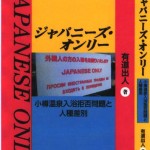


イドゥボ氏の 第2回公判4/23(水)14:30陳述書記載

mytest

HANDBOOKsemifinalcover.jpgwelcomesticker.jpgFranca-color.jpg
元町カフェ準強姦冤罪事件、イドィボさんの第2回公判が近づきました。
◇4/23(水)14:30
◇東京高裁 803号法廷
この裁判について詳しくはこちらです。
==============================
陳述書
2008年4月16日
オサユワメン・イドゥボ(東京拘置所在監)

 私は1969年11月26日生まれのナイジェリア人です。1990年から日本に18年間住んで来ました。2年前に日本で知り合ったポーランド人と結婚しました。横浜市の元町で「Big Y’s Cafe」という飲食店を経営しています。

 私はそのBig Y’s Cafeで2007年1月22日に加賀署の警官に逮捕されました。容疑は、告訴人の日本人女性の言うところによれば、酔っていた彼女を2006年11月1日の朝にレイプしたというものでした。まったく身に覚えがありません。逮捕は物証なく、一転二転して相互にくいちがいのある申立てにのみ基づいて行なわれました。告訴人の女性の友人が彼女を利用して私に対する訴訟を起こさせたものと思います。告訴人の友人は私の店の客でしたが、以前、私との間にトラブルがありました。警察は、私に有利な証拠を破壊することによって彼女らを助けて起訴に至りました。告訴人が店で身動きできないほど酔っていたというのも事実に反します。

 私は2007年12月10日に横浜地方裁判所で懲役3年の有罪判決を言い渡されました。しかし、私は無実です。私はこの犯罪を犯していません。私はレイピストではなく、犯罪者でもありません。完全に潔白です。そこで、直ちに控訴しました。

 控訴の趣意は弁護人から2008年2月25日に控訴趣意書を提出しました。私は次の事項を付け加えて述べたいと思います。警察官による供述調書は、署名すれば不起訴にするとの約束で、署名させられたものです。また、警察官は重要な証拠を隠したり、なくしたりしました。例えば、私の携帯電話のアドレス帳から告訴人の友人の電話番号が消され、彼女から私へ送られてきた脅迫メールの記録も消されていました。また、私の店の監視カメラの記録を調べなかったために、新しい内容が自動的に上書きされ、当日の記録は消されました。また、警察官は彼女たちの意図が分かるような告訴人とその友人の詳細な関係を調書に書きませんでした。

 最期にもう一度申し上げます。私は無実です。私はこの犯罪を犯していません。

 結婚した妻を心から愛しています。私達は幸福な家庭を営んできました。平穏な日常生活へ戻れるよう、公正に判断していただきたくお願いいたします。
以上

在日韓国・朝鮮人高齢者の年金訴訟を支える会: 4月25日判決傍聴と呼びかけ

mytest

HANDBOOKsemifinalcover.jpgwelcomesticker.jpgFranca-color.jpg
Hi Blog. Court decision due April 25 on elderly Korean Zainichis being denied their Japanese nenkin pension contributions due to being foreign. Details below FYI. Arudou Debito

===================================
Subject: 4月25日判決傍聴と呼びかけご協力のお願い
Date: April 17, 2008 9:42:55 AM JST

お疲れ様です。
在日韓国・朝鮮人高齢者の年金訴訟を支える会の鄭明愛です。
いつも、貴重な情報をありがとうございます。
この場をお借りしまして、ご案内させていただきます。

在日韓国・朝鮮人高齢者の年金訴訟の大阪控訴審が判決を迎えます。
4月25日(金)15時30分〜大阪高等裁判所202号法廷で、
終了後、16時〜大阪弁護士会館で報告集会を行います。

1月18日の第3回控訴審で、
原告側代理人の発言にも耳をかさず、裁判官の暴挙とも言える、
いきなりの結審、そして判決を通告しました。

大阪高裁裁判長のスピード結審、
昨年12月25日の在日無年金障害者の年金訴訟の最高裁の不当判決、
それに続く、大阪地裁提訴の高齢者年金訴訟の上告受理せずの通知

合わせると、言いたくありませんが、
不当判決の可能性です。
大阪高裁、そして、その後の大阪弁護士会館での報告集会で
ぜひとも、抗議の声をあげていただきたいと思っております。

傍聴、抗議の声、報告集会での応援の声をいただきたいと思っております。
ご参加くださいますようお願い申し上げます。

ご参加いただけます方は、
15時に大阪高等裁判所門前に集合してください。
15時15分には、横断幕を持って行進して裁判所へ入場します。

原告のオモニは、五名おられますが、
90歳のオモニは腰を骨折されて入院され、
87歳のオモニは裁判に関わるには体の負担が大きく無理で、
80歳のオモニはお仕事で参加できなくて、
このたびは、原告団長の玄順任オモニと高五生オモニがチョゴリを着て
参加してくださる予定です。

在日一世の方々は、何の補償もなく、また保障もないまま、
ずっと働いてこられ、私たちを育ててくださり、生活の基盤を築いてくださった一世の方々、
苦労されたオモニたちが、また、今、私たちの代わりに、日本社会の差別を是正するために、闘ってくださってます。
玄順任オモニの言葉、
「私が言いたいことは一つだけです。
戦前は「非国民」としてなじられ、戦後は「外国人」として排除され、そんなことってありますか。」
原告五名は、「死ぬまで、最後まで闘う」
とおっしゃってくださってます。
ぜひとも、応援の声をおかけくださいますようお願いいたします。
また、お知り合いの皆様へ傍聴の呼びかけのご協力をお願いいたします。

追伸
4月25日15時30分大阪控訴審判決を迎えますが、
何とか政治的決着をつける道筋を作りたいと思います。
今年、おそらく国会が解散総選挙をした後に、国会請願署名の提出と厚労省交渉に行きます。
また、10月には、国連の自由権規約委員会が開催されますので、
障害者年金の原告団長、金洙榮さんがジュネーヴに行って日本政府と日本裁判所の差別を報告する予定です。

鄭明愛

***************
在日外国人「障害者」の年金訴訟を支える会
在日韓国・朝鮮人高齢者の年金裁判を支える会京都

〒601-8022京都市南区東九条北松ノ木町12エルファ内
電話075-693-2550
FAX075-693-2555
携帯090-6753-6993
e-mail lfa AT h7.dion.ne.jp
エルファ http://www.h2.dion.ne.jp/~lfa/
在日外国人「障害者」の年金訴訟を支える会
http://munenkin.hp.infoseek.co.jp/
在日韓国・朝鮮人高齢者の年金裁判を支える会・大阪高裁判決4月25日15時〜
http://zainichi-nenkin.hp.infoseek.co.jp/
ENDS

Two articles from The Economist on bent Japanese criminal justice system, death penalty

mytest

HANDBOOKsemifinalcover.jpgwelcomesticker.jpgFranca-color.jpg

Hi Blog. It takes The Economist some time to come to its senses on many things regarding reporting on Japan, but it’s done a fine job this time in this tight little article, on how bent the Japanese criminal justice system is. Read on. The more attention brought to these sorts of injustices, the better. Debito in Sapporo

====================================
Criminal justice in Japan
Throw away the key
Japan’s Supreme Court misses a chance to right a 42-year-old wrong
Mar 27th 2008 | TOKYO
The Economist (London), March 27, 2008
http://www.economist.com/world/asia/displaystory.cfm?story_id=10925858

IN 1966 Iwao Hakamada was accused of killing a family and setting fire to its house during a robbery. He denied it. But after 19 days of 12-hour interrogations by police and prosecutors, he confessed. He saw a lawyer just three times for a total of 37 minutes. At his trial he said the “confession” had been coerced: the police had beaten and threatened to kill him. Judges noticed discrepancies in the confession, and demanded he redo it—45 times—until they were satisfied.

Mr Hakamada was found guilty in a 2-1 decision. The dissenting magistrate, Norimichi Kumamoto, quit the bench in silent protest. Last year he broke 39 years of silence to denounce the verdict. Requests for retrials and appeals had been denied from the 1970s onwards. But armed with the former magistrate’s words, supporters of Mr Hakamada, who has come to symbolise the rot in Japan’s criminal-justice system, felt their case was strong.

Yet on March 24th the Supreme Court turned down a retrial plea, citing a lack of “reasonable doubt” about the verdict. His lawyers plan to appeal against the decision. As for Mr Hakamada, now 72, he is losing his mind as he languishes in solitary confinement on death row.

Article 34 of the Japanese Constitution guarantees the right to counsel and habeas corpus, but is systematically ignored. Police and prosecutors can detain suspects for 23 days. Interrogations are relentless and sometimes abusive. Prosecutors are reluctant to bring cases to trial without a confession. Indeed, it is considered a first step in a criminal’s rehabilitation. When asked about the country’s 99% conviction rate, Japan’s justice minister, Kunio Hatoyama, corrected your correspondent to state that it was actually 99.9%, because prosecutors only present cases that are watertight.

Slow reform is coming. First, to tackle an acute shortage, the government is to let more people pass the bar exam and become lawyers: at present Japan has a mere 24,000, ten times fewer per head than Britain. Only 7% of students pass the bar exam. Second, a jury system will be brought in next year for serious cases. This will open the judiciary to greater public scrutiny. Third, the police are to introduce procedures for monitoring interrogations (though they rejected proposals to videotape them). All too late for Mr Hakamada.
ENDS
==================================

In a similar vein…
economist031308.jpg
The death penalty in Japan
Just plead guilty and die
Mar 13th 2008 | TOKYO
From The Economist print edition
http://www.economist.com/world/asia/displaystory.cfm?story_id=10854797

The wheels start to wobble on Japan’s judicial juggernaut

IT WAS a rarity for Japan: two notable acquittals within a month. On March 5th Mitsuko Katagishi, a 60-year-old from southern Kyushu island, was acquitted of charges that she had killed her brother and set fire to his house. The case against her rested on prosecution claims that she had confessed her crime to a cellmate during months in police detention. The presiding judge chided the police for planting the cellmate and dismissed the evidence as not credible. In a country with a conviction rate of over 99%—and where even defence lawyers urge clients to plead guilty—this was a deep embarrassment.

It follows a farcical trial in February of 11 mainly elderly defendants accused of vote-buying in Kagoshima, also on Kyushu. The trial collapsed when it became plain that the police had fabricated the evidence—though not before one defendant had died and another been subjected to over 700 hours of interrogation and 400 days in detention. All the accused had been ground down until they signed confessions of guilt.

In response to these problems, the authorities have closed ranks. Japan’s justice minister, Kunio Hatoyama, argues with casuistic skill that the vote-buying case cannot be described as a false prosecution: that would imply the real culprits are still at large when, happily for all, there are no culprits at all. But such complacency is wearing thin. Two changes are afoot in Japan’s criminal-justice system. One is the introduction next year of trials in which a lay jury of six will join three judges to adjudicate in criminal cases, with convictions secured by majority vote. This may encourage more popular involvement in the criminal-justice system. The other is the emergence of establishment figures prepared to question the shortcomings of that system, and especially of the death penalty, which means victims pay an irreversible price for miscarriages of justice.

Shizuka Kamei, a former chief in the National Police Agency and now a member of the Diet (parliament), describes Japan’s high conviction rate as “abnormal”. The police, he says, are under more pressure to find any culprit for a crime than to find the real one. To save face, senior officers are reluctant to highlight mistakes made by subordinates. Worse, prosecutors are not bound to disclose material that they choose not to use in court. Many false prosecutions never come to light.

The notion of being innocent until proven guilty is not strong in Japan. Mr Hatoyama calls it “an idea which I want to constrain”. But confessions are important and the courts rely heavily upon them. Apart from helping secure convictions, they are widely interpreted as expressions of remorse. A defendant not only risks a longer sentence if he insists he is innocent, he is also much less likely to be granted bail before trial—often remaining isolated in police custody, without access to counsel, for long enough to confess. Toshiko Terada, a private lawyer, calls this hitojichi shiho—hostage justice. Perversely, where little supporting evidence exists, the system helps hardened criminals, who know that if they do not confess they are unlikely to be indicted. Innocents, on the other hand, may crack—as in the Kagoshima case, or in a notorious 2002 rape case when the accused confessed under pressure but was released last October after the real culprit came forward.

Growing concerns about such miscarriages have helped forge an unlikely parliamentary alliance between politicians of the left pushing to abolish the death penalty, Mr Kamei (who in other areas is an arch-conservative) and Koichi Kato, a former secretary-general of the ruling Liberal Democratic Party. Last year Japan executed nine people, compared with America’s 42; it also has 106 people on death row. But its murder rate is only one-fifth that of America so its execution rate is roughly comparable. Some of Mr Hatoyama’s predecessors have been unwilling to sign death warrants, but in the past 18 months executions have leapt (see chart), including several accused who were elderly and infirm.

Executions take place in extreme secrecy under the auspices of the Justice Ministry. Prisoners are kept in near-isolation and are not usually informed that their time is up until less than an hour before the sentence is carried out—often after waiting for decades. The names of those executed were made public for the first time only in December. Not even Diet members may inspect a working gallows, and many people do not know that hanging is Japan’s method of execution. Bureaucratic secrecy has served to suppress debate about the death penalty—and give ordinary people a sense that justice is something best left to the authorities.
ENDS

J Times et al on homicide of Scott Tucker: “likely to draw leniency”

mytest

HANDBOOKsemifinalcover.jpgFranca-color.jpg
Hi Blog. We have a situation here I’ve been waiting to draw conclusions on for some days now. But here are some articles which substantiate what I’ve been fearing all along. The indication of differing judicial standards for similar crimes based upon nationality.

When a NJ killed a J in 1984 (see the Steve Bellamy Case, where a NJ defending a woman against a drunk and disorderly Japanese wound up killing him with his advanced martial arts skills), he was exonerated, then convicted, then exonerated again for, colloquially, “yarisugi” (and it became a case that changed jurisprudence for kajou bouei in Japan).

Now we have the opposite circumstance–a J killing a NJ–and according to the Japan Times, leniency is expected.

Historically, America had the expression, “he doesn’t have a Chinaman’s chance” (the modern-day equivalent of “a snowball’s chance in hell”), showing how bent the American judiciary was towards Asians a century or so ago. In Japan’s judiciary, are we to say, “he doesn’t have a gaijin’s chance”? Mr Yuyu Idubor, convicted for a rape he says he never committed, Mr Valentine, crippled due to police medical negligence during interrogation and completely ignored in court, or Mr Steve McGowan, barred from an Osaka eyeglass store express ‘cos the owner “doesn’t like black people”, again ignored in lower court (tho’ awarded a pittance in High Court), just might.

Here are two articles on the Scott Tucker homicide, one with conclusions, the other with details. The relative silence within the Japanese media on this case is pretty indicative. Contrast that with all the sawagi that would probably ensue if the opposite happened, where a NJ (especially a Beigun) killed a Japanese in this way. Arudou Debito in Sapporo.

(PS: If you want to comment on this case, please do so within the next 24 hours. After that, I’m going to be on the road with the book tour and unable to approve comments promptly.)

/////////////////////////////////////////////////////////////////
Death of American in bar fight likely to draw leniency
Japan Times Thursday, March 13, 2008
By JUN HONGO Staff writer
http://search.japantimes.co.jp/cgi-bin/nn20080313a3.html
Courtesy of Colin

The death of an American resident in Tokyo in a fatal bar fight late last month is not likely to result in any severe punishment being meted out due to the circumstances of the case, legal experts say.

Richard “Scott” Tucker, 47, died at Tokyo Metropolitan Hiroo Hospital after being punched and choked at Bullets, a nightclub in Tokyo’s Minato Ward, on Feb. 29. Police arrested Atsushi Watanabe, a 29-year-old disc jockey at the club, for the fatal assault.

While some media reports have suggested the West Virginian visited the club to complain about the noise, a police official told The Japan Times on Tuesday that Tucker appeared “heavily drunk and acted violently toward other customers,” at times striking a boxer’s pose, on the night of the incident.

Watanabe has told investigators he attempted to halt the disturbance in his club “because (Tucker) was picking a quarrel with everyone,” the official said on condition of anonymity.

Legal experts suggest such circumstances would likely result in Watanabe receiving relatively minor punishment.
ENDS
=================================

Tokyo killing of Charleston native ‘seeded in past events’
Tucker’s brother: Japanese bar’s noise led to fatal fight
The Charleston Gazette March 7, 2008
By Gary Harki Staff writer
http://sundaygazettemail.com/News/200803060766

A Charleston native killed in a Tokyo bar last weekend went there because he was angry about the noise, his brother said Thursday.

“Based on the information we have, Scott went into the bar with an attitude,” Chip Tucker said. “He was upset with the noise and commotion of what was going on, which was a routine. … He was not there for the party.”

Scott Tucker, 47, a Charleston native and West Virginia University graduate, died in a hospital after being choked and punched at a nightclub called Bullets in the Azabu section of Tokyo on Feb. 29, according to japantoday.com, an English-language news Web site.

Atsushi Watanabe, 29, a disc jockey at the club, is charged with killing Scott Tucker, according to the Web site.
“This was a specialized technique intended to do harm,” Chip Tucker said of how Watanabe allegedly killed his brother. “It’s a murder case. Everything points to that being the situation.”

The club was known for parties, noise and fights, Chip Tucker said. “His wife feels part of [Scott Tucker’s actions] were seeded in past events,” he said.

Tucker had been drinking and recently had developed a drinking problem, his brother said: “We are not sure if he had been home or was coming home when it happened.”

Chip Tucker said that based on Japanese law, the family will seek the maximum penalty for Watanabe. That won’t be determined until Watanabe is formally charged after the investigation has ended, he said.

“They determine punishment not only on a case-by-case basis but on the wishes of the family,” he said.
Some investigation records will be released in about 20 days, when police pull their records together and present the case to a judge, he said.

Tucker said it does not appear that Watanabe, who had no previous criminal record, intended to kill his brother. “It appears as though this was not premeditated, but he used force well beyond what he should have,” he said.

Scott Tucker lived in a building he had bought and – as is Japanese custom – named it after himself, said Chris Mathison, Scott’s former business partner.

Tucker had lived in the downtown Tokyo building, in an upscale section of the city, for at least 12 years, Mathison said. Two doors down was the jewelry studio of Tucker’s wife, Yumiko Yamazaki. Between the buildings was the Bullets club where Tucker was killed.

Mathison said he and Scott Tucker had traveled the world together in the early 1990s, working for various computer companies. The two still talked frequently, he said.

“He was rich. And not only did he do well, his wife is one of Japan’s leading jewelry designers,” Mathison said. “He had this career of closing enormous deals.”

Charleston Mayor Danny Jones said he remembered the Tucker family when they lived in Charleston in the 1960s, particularly Jean Tucker, Scott and Chip’s mother. He remembered waiting on her when he worked at the Pure Oil station in South Hills, he said.

“They were very nice people. They lived on Oakmont Road,” he said. “I stayed friends with them until I was drafted in 1969.”

Scott Tucker moved to Japan about 24 years ago, shortly after graduating from WVU with a degree in foreign languages and linguistics.

Chip Tucker said he attended a private service for the family at a crematory in Japan on Thursday. He will bring part of his brother’s ashes back to the United States to be spread in San Diego.

On Thursday, he and Yamazaki went to a neighborhood bar frequented by his brother to pick up a picture of Rolling Stones guitarist Keith Richards that he kept there.

“Scott loved music. He had a wide range of tastes,” he said.

There were a few regulars in the bar, Chip Tucker said.

“Everyone came over and showed their condolences to Scott’s wife. They couldn’t believe the situation. They had never seen Scott angry,” he said. “They all showed up at the funeral. They were overwhelmed.

“They had never seen Scott get in a fight. They couldn’t believe it.”
ENDS

“Foreign crime” in reverse: The Miura Kazuyoshi Case

mytest

HANDBOOKsemifinalcover.jpg
Hi Blog. A lot of people have brought this to my attention, and it’s of interest to Debito.org for reasons quite convoluted.

We usually hear about the crimes NJ commit in Japan. Very rarely about crimes committed by Japanese abroad, when we are the foreigners. Even more interesting is where a murder is committed and blamed on “foreign crime” overseas, namely the Americans and their society allegedly riddled with random crime.

Then we have the case of Miura Kazuyoshi. As you can see by the details below, we had a person convicted of killing his wife in a lower Japanese court unusually vindicated by a higher court. Then the guy gets arrested in US territory (which avoids double jeopardy) for the same crime nearly 25 years later. Wouldn’t it be yet another black eye for the Japanese judiciary if the US convicts him instead? We won’t know for a little while (but it will take definitely less time than the Japanese judiciary; hey, it took Miura four years for his High Court verdict, and Asahara has been on trial for more than a decade now…), but it should be interesting.

As an aside, crooked Dietmember Suzuki Muneo just got put away yet again today after his case was on appeal for close to four years too (in the interim he forms his own party and gets reelected; Hokkaido no haji!). About time. Still, he didn’t kill anybody. Couldn’t blame his corruption on foreigners, I guess.

Is Miura the Japanese O.J. Simpson or what? Instead of using the race card, he uses the “foreign crime” card… Debito in Sapporo

//////////////////////////////////////////////
Japan interviews arrested businessman
By THOMAS WATKINS, Associated Press Writer
Sun Feb 24, 5:58 PM ET
http://news.yahoo.com/s/ap/20080224/ap_on_re_us/businessman_s_wife_19;_ylt=AgwOdRE1FDr6pXh63kG7nMQE1vAI
Courtesy Chad Edwards, Tony Kehoe, and Erich Meatleg

LOS ANGELES – Japanese officials on Sunday interviewed a businessman from their country who was arrested in a U.S. territory on suspicion of killing his wife a quarter-century ago in a Los Angeles parking lot.

Kazuyoshi Miura was apprehended by U.S. authorities late Friday as he tried to pass through immigration control at Saipan’s airport to take a flight home, said Toshihide Kawasaki, a Foreign Ministry official in charge of Japanese citizens overseas. Japanese consular officials later talked to him at a Saipan detention center.

“He seemed in good health, and was receiving a fair treatment,” said Kenji Yoshida, one of the two Japanese consuls in Saipan.

“We talked about an hour, but not so much about his past crimes,” Yoshida said. “Naturally, he expressed hopes to see his family, and was very anxious to know what may happen to him.”

Miura, 60, had already been convicted in Japan in 1994 of the murder of his wife, Kazumi Miura, but that verdict was overturned by the country’s high courts 10 years ago. The 1981 shooting caused an international uproar, in part because he blamed the attack on robbers, reinforcing Japanese perceptions of America as violent.

“Why now?” Japan’s Mainichi newspaper asked in a headline. “His turbulent life entered a new phase.”

The LAPD said Miura was awaiting extradition, and details on the arrest were not made available.

“I think U.S. investigators have all along believed that they can make the case with the evidence they had already collected,” Tsutomu Sakaguchi, a Tokyo Metropolitan Police investigator at the time of the shooting, told TV Asahi in an interview Sunday. “If they have a new evidence, that could be a decisive step.”

Miura’s attorney, Junichiro Hironaka, has said the latest arrest is astonishing.

Miura, a clothing importer, and his 28-year-old wife were visiting Los Angeles on Nov. 18, 1981, when they were shot in a downtown parking lot. She was shot in the head, went into a coma and died the following year in Japan.

Her mother said Sunday that she never gave up hope that the case would be resolved.

“I burned incense for my daughter and prayed at a family Buddhist altar, telling her that Americans will put an end to the case, so let’s hold onto our hopes and wait,” Yasuko Sasaki told Japan’s public broadcaster NHK.

Miura reportedly collected hundreds of thousands of dollars from life insurance policies he had taken out on his wife. In addition, an actress who claimed to be Miura’s lover told a newspaper that Miura had hired her to kill his wife in their hotel room on a trip to Los Angeles three months before the shootings.

Miura was arrested in Japan in 1985 on suspicion of assaulting his wife in the hotel incident. He was convicted of attempted murder and while serving a six-year sentence was charged under Japanese law in 1988 with his wife’s murder.

Miura was convicted of that charge in 1994 and sentenced to life in prison. Four years later, a Japanese court overturned the sentence.
___

Associated Press writer Mari Yamaguchi in Tokyo contributed to this report.
ENDS

Mainichi: Chinese Trainees awarded big after taking exploitative strawberry farm to court

mytest

Hi Blog. Update to an earlier story on this blog. Good news about Strawberry Fields. You know the place where justice got real…

Congrats to the Trainees who didn’t just go home like good little disenfranchised Guest Workers, and managed to get the Japanese judiciary to establish deterrents to exploitative employers. Arudou Debito

============================
Employees win suit against Tochigi farms for unpaid wages, unfair dismissals
Mainichi Shinbun February 11, 2008
http://mdn.mainichi.jp/national/news/20080211p2a00m0na009000c.html
Courtesy of Ben Shearon

TSUGA, Tochigi — A group of strawberry farmers will have to pay a combined 30 million yen in unpaid and overtime wages, and reinstate five Chinese trainees who were unfairly dismissed after losing a class action suit brought against them by their employees.

The farmers have also acknowledged that they took away some of the trainees’ passports and forced them to save their wages: which, if proved, would constitute an illegal act, barring the farmers from accepting future trainees, according to the Ministry of Justice.

The trouble began when the Choboen strawberry farm in Tsuga dismissed five Chinese trainees in December last year because of a poor harvest, and attempted to force them to go back to their home country.

The five joined 10 trainees at six other strawberry farms in demanding 52.25 million yen in unpaid wages and overtime allowances over the past three years.

The owners of the seven farms have apologized for forcing the trainees to work for long hours and paying overtime allowances below the legal minimum. They agreed to pay a total of about 30 million yen to the 15, and Choboen retracted its dismissals.
(Mainichi Japan) February 11, 2008
ENDS

毎日:イチゴ農園が解決金3000万円 栃木

mytest

ブログの読者、以前取りあげたトピックスをアップデートを載せます。有道 出人

======================

中国人解雇:イチゴ農園が解決金3000万円 栃木
毎日新聞 2008年2月11日 2時30分 http://mainichi.jp/select/wadai/news/20080211k0000m040115000c.html

 栃木県のイチゴ農園が不作を理由に中国人技能実習生を解雇し、トラブルになっていた問題は、農家7軒が約3000万円の解決金を実習生計15人に支払うことで合意した。農家側は謝罪し、解雇を撤回した。

 同県都賀町のイチゴ農園「長苺(ちょうぼ)園」の実習生5人が昨年12月解雇され、無理やり帰国させられそうになったことからトラブルになった。5人は他の6農園の実習生10人と合流し、残業代など3年分の未払い賃金約5225万円を要求していた。

 農家側弁護士によると、最低賃金を下回る残業代だったことや、長時間労働を認めて謝罪。解決金として約3000万円を支払うことで合意した。

 農家側はこのほかに、パスポートを取り上げたり、貯金を強制したりするなどの行為があったことも認めている。法務省は「事実が確認できれば不正行為に該当し、受け入れ停止などの処分対象となる」と話している。【宮川裕章】

毎日新聞 2008年2月11日 2時30分
ENDS

Next Valentine Lawsuit Hearing Feb 12, 2008 1:30PM

mytest

【 Supporters wanted! 】

Mr. Valentine, a Nigerian national, is defending himself against the Tokyo Metropolitan Government after a police beating incident which took place in Shinjuku almost 4 years ago. This is an appeal, as the District Court not only exonerated the NPA for refusing him medical treatment for his broken leg for the duration of his interrogation (which resulted him in becoming crippled for life), but also did so on such spurious grounds as ignoring expert medical testimony of the degree of injury, and dismissed testimony because it came from a black person.

More in the Japan Times, August 14, 2007.

At the last trial, the judge did not close the case. Many thanks to the audience (more than 50 people sat in the public seats) who watched the trial so closely. And now the date for the 4th trial has been set. We are asking for your support, especially your participation in this upcoming hearing at Tokyo high court. Please help him to get justice.

The 4th Appeal Tribunal Trial schedule: Tuesday, February 12 2008

Court opens at: 13:30

At Tokyo High Court / Court Room Number 808

Court appellant: Mr. Valentine U.C. < case number " (NE) 2429th of 2007" >

This time, tickets to attend the trial will be distributed between 12:50 and 13:10 near the main entrance of the court (right side).Then a lottery by computer will take place. 40 people who win the lottery can attend the trial.

Access : “Kasumigaseki station” on Tokyo Metro Marunouchi line, Hibiya line or Chiyoda line. A1 exit, 1 minute walk. Or “Sakuradamon station” on Tokyo Metro Yuurakuchou line, No. 5 exit, 3 minute walk.

homepage: http://sky.geocities.jp/team_vuc/

Hope to see you there!

===================================

『支援会Aさんよりメッセージ』

みなさま、以下の文章は一例です。
3連休のためもう間に合わないとしても、火曜日の朝に大量のFAXが届いているのを大使館員の皆さんが目にしてくれたら、少しは何か感じてくれるかもしれません。
私は、03-5425-8016と03-5425-8021の両方のFAX番号にFAXを送りました。
もし、FAXを送ることに賛同できる・・・という方は、どうかよろしくお願いします。

☆在日ナイジェリア連邦共和国大使館
Embassy of the Federal Republic of Nigeria in Japan

Fax : 03-5425-8016 / 03-5425-8021 / 03-5425-8022
(emailでしたら consular@nigeriaembassy.jp です)

これより以下は、文章例です。

〓〓〓〓〓〓〓〓〓〓〓〓〓〓〓〓〓〓〓〓〓〓〓〓〓〓〓〓〓〓〓〓〓〓〓

(英語要請文の参考例 その1)

                              February9th, 2008

Embassy of the Federal Republic of Nigeria in Japan

I STRONGLY ASK FOR YOUR ATTENDANCE FOR AN APPEAL HEARING OF MR.VALENTINE’S TRIAL

Dear Mr.Yahaya Tabari Zaria,

I really thank you very much for reading my sudden message that I
asked for your attendance for a Nigerian, Mr Valentine’s upcoming
appeal hearing on Tuesday, 13:30pm February 12nd 2008 at Tokyo High
Court room 808.

Before his last appeal on November 20th, 2007, Mr.Valentine submitted
an application letter that requests attendance of embassy officers for
the hearing, however regret to say, no officers attend the hearing at
all. It was very disappointed not only for Mr.Valentine but all his
friends and supporters who concern very much.

This time also, Mr.Valentine has submitted an application again to
ask you and your officers for attending the hearing and support him.

Your attendance will help him very much, and same time this will be
great help not only for him but also for all Nigerians living in Japan
to improve their human rights in Japan, furthermore it can say to
tighten good relationship between Nigeria and Japan.

Your attendance will be highly appreciated.

Thank you very much.

Yours Sincerely,

Midori KIKUCHI

Representative
( )

Tel:

Email

Valentine Trial Support Group

http://sky.geocities.jp/team_vuc/
ENDS

バレンタイン氏の国賠訴訟控訴証人喚問2月12日開催

mytest

【2月12日、裁判傍聴に来てください!】

この弁論で、新たな証人喚問をしてもらえるかどうかが決まります。
一人でも多くの人のご参加をお願いいたします。

ナイジェリア国籍のバレンタインさんは、新宿歌舞伎町で私服警察官に不当な暴力を振るわれ、障害が残るほどの怪我を負いました。

バレンタインさんは東京都に対し国賠訴訟を起こしましたが、昨年3月「歌舞伎町黒人コミュニティーの仲間である同国人の証人証言を、そのまま信用することは到底できない。」などの理由により敗訴。また、東京警察病院は「受診カルテを紛失した」とし、初診の際のカルテを開示しませんでした。

バレンタインさんは現在控訴中ですが、前回の第3回弁論では法廷に入りきれないほどの50名以上の方がご参加くださり、熱心な弁護団の先生方と皆さんのお陰により結審せず、第4回弁論につなげることができました。
しかし、時間もあまり残されておらず、次の弁論が正念場でもあります。

東京高等裁判所が公正な裁判を進め、法廷で真実が明らかにされるよう、多くの方々の傍聴参加をお願いします!

■ 【第4回・控訴審弁論日程】 ■

今回の裁判は、傍聴券交付となります。
(無料。誰でも傍聴できます。)

当日は、12時50分から、東京高等裁判所正面玄関の右側入口付近にて傍聴券交付手続きがおこなわれる予定です。締切り時間は13時10分までです。

●控訴人バレンタインさんの事件名 「平成19年(ネ)第2429号 」

●平成20年2月12日(火)13時半 開廷

●場所:東京高等裁判所 8階 808号法廷

東京高等裁判所は、東京地方裁判所と同じ合同庁舎内
〒100-8920 千代田区霞が関1−1−4
地下鉄丸の内線・日比谷線千代田線 「霞が関駅」A1出口徒歩1分,
または、
有楽町線 「桜田門駅」5番出口徒歩約3分

当日の交付手続きに関しては、直前に裁判所HPなどで発表されます。
傍聴希望者が少ない場合は、傍聴券交付手続き締切り後でも法廷に入れますので、間に合わなかった方も、808号法廷の隣の待合室までおこしください。

交付手続き以外の、申込の必要や、入口でどこの法廷に行くかなどの届出は不要です。
(ただし、裁判所の中に入る際、持物検査があります。)
早く来られた方は、隣接の待合室でお待ち下さい。
他の支援者の方々も同じようにそこで待っています。

傍聴券交付が行われる裁判についての掲示はこちら
(ただし、2月5日時点で未掲載)
http://www.courts.go.jp/search/jbsp0010?crtName=6

詳しい裁判傍聴案内はこちら
http://www.courts.go.jp/kengaku/

■ 支援会のホームページ http://sky.geocities.jp/team_vuc/

===================================

『支援会Aさんよりメッセージ』

みなさま、以下の文章は一例です。
3連休のためもう間に合わないとしても、火曜日の朝に大量のFAXが届いているのを大使館員の皆さんが目にしてくれたら、少しは何か感じてくれるかもしれません。
私は、03-5425-8016と03-5425-8021の両方のFAX番号にFAXを送りました。
もし、FAXを送ることに賛同できる・・・という方は、どうかよろしくお願いします。

☆在日ナイジェリア連邦共和国大使館
Embassy of the Federal Republic of Nigeria in Japan

Fax : 03-5425-8016 / 03-5425-8021 / 03-5425-8022
(emailでしたら consular@nigeriaembassy.jp です)

これより以下は、文章例です。

〓〓〓〓〓〓〓〓〓〓〓〓〓〓〓〓〓〓〓〓〓〓〓〓〓〓〓〓〓〓〓〓〓〓〓

(英語要請文の参考例 その1)

                              February9th, 2008

Embassy of the Federal Republic of Nigeria in Japan

I STRONGLY ASK FOR YOUR ATTENDANCE FOR AN APPEAL HEARING OF MR.VALENTINE’S TRIAL

Dear Mr.Yahaya Tabari Zaria,

I really thank you very much for reading my sudden message that I
asked for your attendance for a Nigerian, Mr Valentine’s upcoming
appeal hearing on Tuesday, 13:30pm February 12nd 2008 at Tokyo High
Court room 808.

Before his last appeal on November 20th, 2007, Mr.Valentine submitted
an application letter that requests attendance of embassy officers for
the hearing, however regret to say, no officers attend the hearing at
all. It was very disappointed not only for Mr.Valentine but all his
friends and supporters who concern very much.

This time also, Mr.Valentine has submitted an application again to
ask you and your officers for attending the hearing and support him.

Your attendance will help him very much, and same time this will be
great help not only for him but also for all Nigerians living in Japan
to improve their human rights in Japan, furthermore it can say to
tighten good relationship between Nigeria and Japan.

Your attendance will be highly appreciated.

Thank you very much.

Yours Sincerely,

Representative
( )

Tel:

Email

Valentine Trial Support Group

http://sky.geocities.jp/team_vuc/
ENDS

川崎いじめ訴訟で100万円の賠償命令–Ethnically-diverse Japanese bullied in school wins lawsuit

mytest

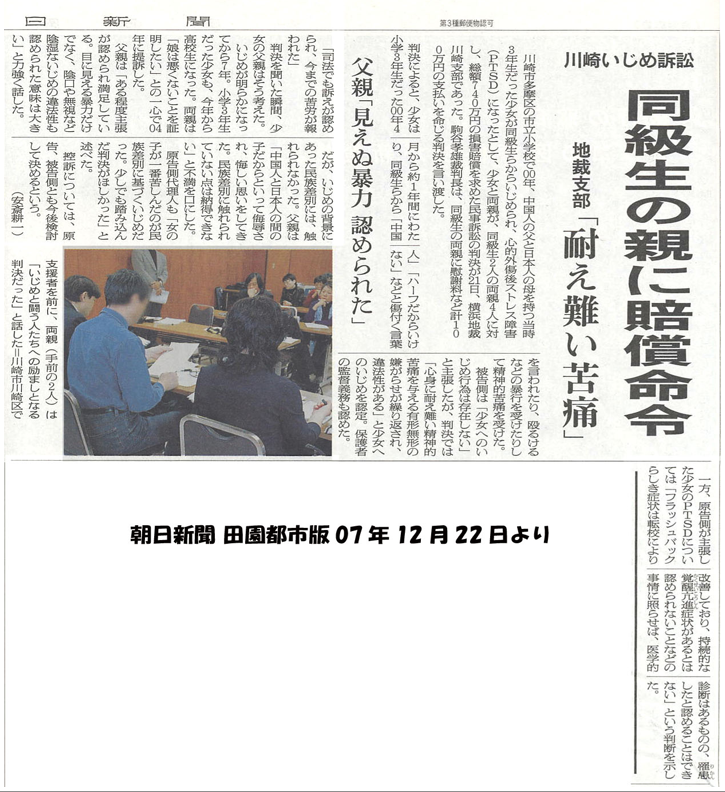
Hi Blog. Been meaning to put this up. About the U Hoden Case, where a Japanese grade schooler with Chinese roots (one parent a naturalized Chinese) was badly bullied–so badly she had PTSD medically diagnosed. Her parents took the bullies to court, and last December, they won! More background on this case here. Their supporters’ website here. Arudou Debito

テレビ神奈川の解説
川崎いじめ訴訟で100万円の賠償命令
07/12/21(金)12:59
小学生時代のいじめが原因でPTSD=心的外傷後ストレス傷害になったとして生徒と両親がいじめた側に損害賠償を求めた裁判の判決で横浜地裁川崎支部はいじめた同級生の両親に100万円の支払いを命じました。
 訴えを起こしていたのは現在、高校1年生の女子生徒とその両親です。
 訴えなどによりますとこの女子生徒は川崎市多摩区の小学3年生だった2000年に同級生2人から暴力を振るわれたり中国人の父と日本人の母を持つことについて「ハーフ」とはやし立てられるなど日常的にいじめを受けていました。
 女子生徒はこのいじめが原因でPTSDになったとしていじめた側に慰謝料を求めていました。
きょうの判決で横浜地裁川崎支部の駒谷孝雄裁判長は「いじめによって受けた精神的苦痛は相当大きい」といじめの違法性を認め、いじめた側の同級生の両親に合わせて100万円の支払いを命じました。
(弁護団のサイトはこちらです。)
asahi122207.tiff

Japan Today: Naturalized Chinese sues Hitachi for contract nonrenewal

mytest

Hi Blog. Here’s another lawsuit of note (sorry for not seeing it sooner).

Note the errroneous headline. This person is not a Chinese worker. She is a naturalized Japanese citizen, therefore a Japanese. Bishibashi for the copy editor (and the translation is pretty hokey too).

Quick comment follows article.

===================================

Hitachi sued by Chinese worker
Japan Today November 27, 2007
http://www.japantoday.com/jp/shukan/424

Hitachi is being sued for discrimination by a Chinese employee. The case is being watched by many major Japanese manufacturing companies because it’s quite a rare case that discrimination against their foreign workers becomes public.

The plaintiff graduated from a Chinese university and obtained a masters degree at a Japanese university. She joined Hitachi in 1994, and obtained Japanese citizenship during her career there. She is now 58 years old.

According to the plaintiff, after a one-year probation, she was hired by Hitachi and asked to work for a section dealing with China and assigned translation tasks. She was supposed to be given a full-time contract. But because of a working visa problem, she was given the status of a “non-regular staff,” which requires annual renewal of the contract. In April of 2004, Hitachi told her that they would not renew the contract.

In June of 2006, she sued Hitachi, saying, “The one-year contract as a non-regular staff is just an ad hoc measure, and I was virtually working full-time. There is no justification for making me quit.” In her suit, she has requested “confirmation of her rights in the contract,” unpaid salaries and 10 million yen compensation.

Hitachi says that she is just a non-regular worker whose contract had to be renewed annually and that the company let her go because her contract had finished.

However, on Oct 15, the plaintiff invited a former head of the Tokyo Immigration Bureau, Hidenori Sakanaka, who is now a specialist in foreign worker issues in Japan, to court. Sakanaka questioned Hitachi’s appeal, saying, “The plaintiff was given a special status called ‘Specialist in Humanities / International Services.’ This special status is given only to those who work as full-time staff and never given to ‘non-regular staff’ because ‘non-regular staff’ is not a legally recognized labor status.”

A lawyer who specializes in corporate laws says, “It’s actually common for foreign workers to renew their employment contracts every three years in order to renew their visa. I think corporations generally don’t fire their foreign employees who work full-time.”

Hitachi has refused further comments on the case, saying it is still a court matter. However, Sakanaka says the Hitachi case is the tip of the iceberg. Since China is an important market for Japanese companies, labor problems with Chinese employees could become more common from now on, he says. (Translated by Taro Fujimoto)
ENDS
===========================

COMMENT: The thing I don’t get about this article is that the plaintiff got Japanese citizenship while she was working at Hitachi, so why is visa and employment even an issue? Is she a Japanese worker or not? And did her work status not changed when she naturalized? And wow, this case is taking a long time, if she first filed suit in 2006!

Anyway, her case might help bring about some consistancy in the arrayed grey zone between perpetually-renewed contracted NJ and part-time J workers–something employers have been using to keep their staff disposable at will. Arudou Debito in Sapporo

Himu Case: Tokyo District Court orders Sankei Shinbun to pay NJ damages for reporting erroneous al-Qaeda link

mytest

Hi Blog. We’ve had enough rotten news recently. Now for some good news.

A Bangladeshi by the name of Islam Himu (whom I’ve met–he’s on my mailing lists) was accused during the al-Qaeda Scare of 2005 of being part of a terrorist cell. And the media, particularly the Sankei, reported him by name as such. Detained for more than a month by the cops, he emerged to find his reputation in tatters, his business rent asunder, and his life irrevocably changed.

This is why you don’t report rumor as fact in the established media. And as we saw in the Sasebo Shootings a few days ago, the papers and the powers that be won’t take reponsibility even when they get it wrong.

So Mr Himu sued the Sankei. And won. Congratulations. A good precedent. Now if only could get the Japanese police to take responsibility when they overdo things. Well, we can dream.

News article, referential Japan Times piece, and other background follows. Arudou Debito in Sapporo

================================

Sankei newspaper ordered to compensate foreigner over Al Qaeda slur
(Mainichi Japan) December 11, 2007
http://mdn.mainichi.jp/national/news/20071211p2a00m0na027000c.html

The Sankei newspaper has been ordered by the Tokyo District Court to pay a foreigner 3.3 million yen in compensation for implying he was linked to Al Qaeda and plotting a terrorist attack.

The court found the paper had defamed 37-year-old company president Islam Mohamed Himu of Toda, Saitama Prefecture, and ordered it to compensate him.

“It was inappropriate to publish his name,” Presiding Judge Hitomi Akiyoshi said as she handed down the ruling.

Sankei officials said they were not sure how the company will react to the case.

“We want to take a close look at the ruling before deciding how to respond,” a Sankei spokesman said.

Court records showed that Himu was arrested in 2004 for forgery and fined 300,000 yen. The day after his arrest, the Sankei ran a front page story under the headline “Underground bank produces terror funds, man with links to top terrorists arrested.”

Sankei proceeded to write that Himu had links to high-ranking Al Qaeda members and was suspected of involvement in procuring funds for terrorism.
ENDS
==================================

Alleged al-Qaeda link seeks vindication
Bangladeshi wants apology, claims he was falsely accused by police, press
The Japan Times April 2, 2005
http://search.japantimes.co.jp/print/nn20050402f4.html

A Bangladeshi businessman who was incorrectly alleged by police and the media last year as being linked to the al-Qaeda terrorist network is seeking vindication.

Investigators held Islam Mohamed Himu for 43 days but ultimately found he had no links to al-Qaeda.

Himu said that even since being freed, he has struggled to get his life and business back on track. He has filed a complaint of human rights violations with the Japan Federation of Bar Associations.

“I want to ask senior officials of the government or police: what was my fault?” Himu said in an interview.

“The Japanese police and media have destroyed my life,” said the 34-year-old, who runs a telecommunications company in Tokyo.

“I want them to apologize and restore my life,” he said, urging the government to help him obtain visas to make business trips to several countries that have barred his entry following the allegations.

Himu came to Japan in 1995 with his Japanese wife, whom he had met in Canada. After establishing a firm in Tokyo that mainly sells prepaid international phone cards, he obtained permanent residency in 2000.

Police arrested him last May 26 and issued a fresh warrant June 16. They alleged he had falsified a corporate registration and illegally hired two employees, including his brother.

While in custody, investigators mostly asked if he had any links to al-Qaeda, noting that a Frenchman suspected of being in al-Qaeda bought prepaid phone cards from him several times, according to Himu.

He said he tried to prove he had no connection with terrorists, telling police the Frenchman was one of several hundred customers and he had no idea the man used an alias.

However, police dismissed his claim, he said, and leaked to major media organizations, including Kyodo, their suspicions that he was involved with al-Qaeda, and all of them reported the allegations.

Himu said he believes police arrested him as a scapegoat even though they knew he had no link with al-Qaeda.

He was nabbed shortly after the media reported that the Frenchman had stayed in Japan in 2002 and 2003.

Prosecutors did not indict him on the first charge, while a court fined him 300,000 yen on the second charge. He was released on July 7.

Himu said the prosecutors’ failure to indict proves he was not an al-Qaeda member, but it did not necessarily constitute a public apology.

All his employees left following the release of the sketchy police information, and he now has 120 million yen in debts due to the disruption of his business, he claimed.

The Japan Times: Saturday, April 2, 2005

=============================

REFERENTIAL LINK:
Japan Times and Asia Times articles on 2004 police Al-Qaeda witch hunt, Himu Case, and police detentions in Japan.
http://www.debito.org/japantimes102305detentions.html

ENDS

アルカイダ報道:産経新聞に330万円賠償命令 東京地裁

mytest

アルカイダ報道:産経新聞に330万円賠償命令 東京地裁
毎日新聞 2007年12月10日 19時48分 (最終更新時間 12月10日 20時48分)
http://mainichi.jp/select/jiken/news/20071211k0000m040054000c.html
 国際テロ組織アルカイダと関係があると実名報道され名誉を傷付けられたとして、バングラデシュ国籍の会社社長、イスラム・モハメッド・ヒムさん(37)=埼玉県戸田市=らが産経新聞社に330万円の賠償を求めた訴訟で東京地裁は10日、全額支払いを命じた。秋吉仁美裁判長は「慎重な裏付け取材を続ける必要があった。少なくとも実名報道は妥当ではない」と指摘した。 

 判決によるとヒムさんは04年、電磁的公正証書原本不実記録容疑などで逮捕され、出入国管理法違反で罰金30万円の略式命令を受けた。産経新聞は逮捕翌日に1面で「地下銀行でテロ資金 幹部と接触男を逮捕」との見出しで、ヒムさんがアルカイダ幹部と接触し、テロ資金の送金に関与した疑いがあるなどと報じた。【高倉友彰】
ENDS

Alberto Fujimori really gets his–6 years’ prison; and that’s not all

mytest

Well, well, well… Idi Amin escaped the rap. So did Augusto Pinochet. But Charles Taylor and Slobodan Milosevic didn’t. And now Alberto Fujimori–who foolishly left his safe haven provided by the Japanese government and has wound up getting his. Ii kimi da.

See why Debito.org has something against Fujimori here. Arudou Debito in Sapporo

////////////////////////////////////////////////

Fujimori convicted
Associated Press
Canadian Globe and Mail, December 11, 2007 at 6:15 PM EST
http://www.theglobeandmail.com/servlet/story/RTGAM.20071211.wfuji1211/BNStory/International/home

LIMA — Former President Alberto Fujimori was convicted and sentenced to six years in prison on Tuesday on a charge of abuse of authority stemming from an illegal search he ordered as his government imploded in scandal seven years ago.

Supreme Court Judge Pedro Guillermo Urbina declared that Mr. Fujimori was guilty of abusing his power when he ordered an aide to pose as a prosecutor and search the luxury apartment of the wife of his spy chief without a warrant in November 2000.

Mr. Fujimori, who ruled Peru from 1990 to 2000 before fleeing to Japan as his government collapsed, faces a total of seven human rights and corruption charges in multiple trials.

On Monday, an indignant Mr. Fujimori shouted his innocence and waved his arms in outrage as he went on trial in a separate case on charges he authorized an army death squad to kill leftist rebels and collaborators. He faces up to 30 years in prison if convicted for his alleged role in the killings, which came amid a government crackdown on a bloody Maoist insurgency.

/////////////////////////////////////////////////

Fujimori convicted and sentenced in illegal search

Peru’s former president gets six years behind bars for abuse of power. He still faces charges on other serious counts.
By Adriana León and Patrick J. McDonnell, Special to The Los Angeles Times
December 12, 2007
http://www.latimes.com/news/nationworld/world/la-fg-fuji12dec12,1,4508479.story?coll=la-headlines-world

LIMA, PERU — Former President Alberto Fujimori was convicted of abuse of power Tuesday and sentenced to six years in prison after a judge found him responsible for an illegal search at the home of the wife of his onetime intelligence chief.

It was the first conviction in a series of criminal charges Fujimori has faced since being extradited from Chile in September.

Human rights advocates have hailed the multiple cases against Fujimori as blows against impunity. But supporters of the ex-president call him the victim of political persecution.

The abuse of power charge is among the least serious faced by Fujimori, but his conviction was a setback for the ex-president.

His daughter, Keiko Fujimori, a popular congresswoman, was visibly upset afterward, and called the decision “unjust.”

However, she added that her father had conceded the “irregularity” of the disputed search, which took place in the waning, convulsive days of his administration.

The ex-president, whose legal team had hoped for a suspended sentence, indicated that he would file a partial appeal of the conviction.

The conviction came a day after Fujimori stunned Peruvians with an emotional outburst in a separate, far more serious, case in which he stands accused of dispatching death squads to kill 25 suspected leftists. The ex-president faces a 30-year prison term in that case.

During Monday’s court session, Fujimori, 69, shouted that he was “totally innocent” of ordering the killings and argued that his decisive tactics had saved Peru from terrorism and economic ruin.

The former president also faces charges of kidnapping, corruption and bribery.

Fujimori, who is being held in a special lockup without bail, was subdued in court Tuesday as the judge took three hours to read his findings.

As the ex-leader was being led away, local media reported, he flashed a smile at his three children, who were watching proceedings from behind a glass partition.

The search at issue took place Nov. 7, 2000, in the former apartment of the wife of Vladimiro Montesinos, Fujimori’s shadowy spymaster. At the time, Montesinos was a fugitive in a mushrooming corruption case that would ultimately topple Fujimori’s government. Montesinos is now jailed here and, like Fujimori, facing multiple trials and life behind bars.

Prosecutors suspect that Fujimori ordered an aide to conduct the warrantless search in an eleventh-hour effort to collect videos or other evidence that could have implicated his administration in corruption. Montesinos, a purported master of blackmail, was known to have made clandestine videotapes of lawmakers and others receiving bribes.

Fujimori eventually fled Peru and filed his resignation by fax from Japan, his parents’ homeland.

/////////////////////////////////////////

Fujimori outburst sets tone for Peru human rights trials
Christian Science Monitor December 12, 2007 edition – http://www.csmonitor.com/2007/1212/p07s02-woam.html

Peru’s former leader let loose a tirade as his human rights and corruption trials began Monday.

By Lucien Chauvin | Correspondent of The Christian Science Monitor

Lima, Peru
The multiple human rights and corruption trials of Peru’s Alberto Fujimori got off to a colorful start this week when the former president launched into a tirade denying the charges against him and taking credit for the country’s current economic boom.

Mr. Fujimori, who ruled Peru from 1990-2000, began facing a three-judge panel Monday on charges that he approved the death-squad murders of 15 people in 1991 and nine students and a professor the following year. The trial also includes the charge of authorizing the kidnapping and torture of a journalist and a businessman, also in 1992.

He also may face a seven-year sentence in a separate trial on abuse of authority charges.

Fujimori disrupted the mundane administrative chores of the initial hearings Monday when he asked permission to briefly address the court before entering a plea.

The former president immediately threw up his arms, contorted his face, and started screaming that he had saved Peru from imminent collapse when he first took office in July 1990.

“I received Peru in 1990 in a state of collapse, with hyperinflation, international isolation, and widespread terrorism… Peru is progressing today because there were reforms in the context of respect for human rights,” he yelled. “I totally reject the charges. I am innocent.”

After shouting down the chief judge for a few moments, Fujimori stopped, politely thanked the court for the chance to speak and, smoothing his dark gray, pinstripe suit, calmly returned to his seat in the center of the small courtroom built for the trial on a police base where he has been incarcerated since September.

The outburst fits the image that both Fujimori’s supporters and detractors hold of him, and it is likely to set the tone for the trials, which are expected to last at least six months.

“If he acts this way, in the context of a trial and while under arrest, imagine how he must have been when he had all the power in his hands as president,” says Gloria Cano, a lawyer representing victims of those killed in the 1991 massacre.

Fujimori is proud of his legacy

Fujimori, a math professor, stunned Peruvians in 1990 by coming out of nowhere to win the presidency. He took office with inflation galloping in four digits, the economy shrinking by double digits, and nearly 75 percent of Peru’s territory under a state of emergency because of the actions of two leftist rebels groups, the Shining Path and Tupac Amaru Revolutionary Movement.

Fujimori’s economic reforms stopped inflation and reinserted Peru into the world financial community while new antiterrorism laws facilitated the arrests of the heads of the two subversive groups, effectively stopping them as threats to the Peruvian state. Fujimori and his followers hope that this is what Peruvians remember, and it is what he focused on in Monday’s outburst.

Opponents do not deny these successes, but say they came with a high cost to the country’s democracy.

When Congress balked at economic and legal changes, Fujimori simply closed it and the judiciary in April 1992, originally trying to govern alone with the Army and intelligence service. When that was not possible, he had a new Constitution written. The main change, foreshadowing a current trend in the region, allowed for immediate presidential reelection.

Fujimori ran and won again in 1995, and reinterpreted his own Constitution to allow for a third bid in 2000. He also won that contest, although later evidence would show that massive voter fraud committed throughout the electoral cycle helped him.

His third term only lasted four months. He fled Peru in November 2000, escaping a massive corruption scandal that would land his closest collaborators, including former Army chief Gen. Nicolas Hermoza and security adviser Vladimiro Montesinos, in prison.

Fujimori spent five years in Japan, his parents’ homeland, but flew secretly to Chile in 2005, with the alleged intention of returning home in time for elections the following year. He never made it. Chilean authorities arrested him and the country’s Supreme Court approved this past September seven of the 12 extradition requests filed against him.

Fujimori’s supporters are confident that he will be exonerated and make a comeback for the 2011 elections.

Supporters confident

“Today was an opportunity to the president to set the record straight. He is the man responsible for Peru’s good fortune. Peruvians are going to see through this charade. They are the real judges here and the verdict will be in our favor,” says Rep. Carlos Raffo.

Recent trials of former collaborators, however, are not promising. Ten of Fujimori’s former cabinet members were found guilty in late November of violating the Constitution because of their support for the 1992 move that closed Congress. Nine received suspended sentences, while one was given a 10-year sentence.

Even more damaging, his former security adviser and right-hand man, Mr. Montesinos, testified last week that he did not make any decisions on his own, always taking orders from Fujimori. That trial was about election fraud in 2000, but Montesinos, already found guilty in more than 20 cases from the Fujimori era, will also be one of the principal witnesses in the trial of his former boss.

///////////////////////////////////////////////

Law and Order | 11 December, 2007 [ 12:00 ]
Peru: 30-Year Prison Sentence Recommended for Alberto Fujimori
Living in Peru.com
http://www.livinginperu.com/news-5281-law-order-peru-30-year-prison-sentence-recommended-alberto-fujimori
© La Republica

(LIP-ir) — In a 20-minute statement, government prosecutor, José Antonio Peláez requested that Peru’s Supreme Court sentence Alberto Fujimori to 30 years in prison and fine him 100 million soles for the massacre that took place at Barrios Altos, the death of students and a teacher from La Cantuta University and the kidnapping of two people.

The government prosecutor clarified that Alberto Fujimori was not being tried for his fight against terrorism but was on trial for the “dirty war” led by the Grupo Colina, a paramilitary death squad.

He added that Fujimori had been the person responsible for giving the Colina Group its orders and was therefore responsible for the people that were killed and the kidnapping of a journalist and a businessman.

These accusations and others caused Peru’s former president to cry out his innocence in the courtroom.

César Nakasaki, Alberto Fujimori’s lawyer stated that it was natural for a man that felt he was innocent to respond in this manner while unfairly being accused.

He added that the former Head of State was offended and that he could not ask an innocent man not to speak out against the unjust accusations that were being made.

Fujimori’s outburst was a desperate political speech made when he lost control after realizing that the trial was not going in his favor, said political analyst Carlos Reyna. He stated that this did not help the former president at all.

The Australian/Japan Today on Kanagawa Police rape case lawsuit loss

mytest

Hi Blog. Developing a case for police patterns of behavior. If it’s a foreigner allegedly committing a crime against Japanese (as in the Idubor Case), the police go after it even if there is no evidence. If a Japanese commits a crime against a foreigner, it’s either not pursued (see the Valentine Case, for the time being) or handled with different standards (see the Lucie Blackman Case).

And when it’s a foreigner on foreigner crime, free pass. See below. Arudou Debito in Tokyo

===========================

Australian woman, raped by U.S. sailor, loses 5-year court battle with Japanese police
By Peter Alford
Japan Today/The Australian Friday, December 7, 2007 at 05:53 EST
http://www.japantoday.com/jp/news/422548

TOKYO — After being dealt another bitter blow by the justice system Tuesday afternoon, Jane seemed oddly jaunty: “I’m going to keep fighting. I’m fighting this not only for myself, but for other women who’ve been raped — Japanese women.”

Early on the morning of April 6 2002, Jane, an Australian expatriate, was raped near the American naval base at Yokosuka by a sailor off the USS Kitty Hawk, whom she had met earlier that night in a bar.

Then, Jane says, she was violated again, by the Kanagawa prefectural police who denied her medical attention for more than six hours while carrying out a callous and botched “investigation,” who forced her into a re-enactment of the assault and who then refused to charge her attacker.

On Tuesday, in the Tokyo District Court, the same court that found in November 2004 she had in fact been raped, Chief Judge Kenichi Kato and two colleagues ruled the Kanagawa police had acted within the law and fulfilled their responsibilities to the victim. “The case is rejected,” he said brusquely. “Costs will be paid by the plaintiff.” A woman in the courtroom began crying.

Minutes later as her lawyers, Mami Nakano and Masako Shinno who have stood beside her for the whole 5 1/2 years, hurriedly prepared their appeal to the Tokyo High Court, Jane told The Australian: “I hoped my case would cause a positive attitude to improving justice here and support for victims of sexual assault. But, so far, no. Deans is still a free man, free to rape other women, and the police did nothing … they wouldn’t even tell me his name — if that’s what his name was!”

Jane isn’t her real name. Nor, probably is the name given to the police by the Navy: Bloke T. Deans. That, Jane suspects, was just an offhand sneer at a woman who inconveniently got assaulted by one of their young men — just some Aussie woman stirring up trouble over a Bloke!

Apart from her being a foreigner, Jane’s case isn’t so unusual in most aspects; neither the rape, nor the police’s primitive methods of dealing with it, nor that the perpetrator was a U.S. serviceman, nor that the system let him get away.

What has made Jane’s case a cause celebre with Japanese women’s rights groups and with campaigners against military sex assault cover-ups, is that rather than slink away as she was supposed to from those humiliations, she stood and fought.

Nor was she content to be yoked to victimhood. Though still today struggling with post-traumatic stress disorder, Jane works with two doctors at a Tokyo university hospital to establish a 24-hour children’s sexual assault clinic.

Once established, she hopes, the clinic can gradually broaden its scope to rape victims generally. The doctors declined to be named or interviewed, apparently because publicity in association with a campaigner like Jane would hurt their project.

Set up self-help network for victims

She has set up a self-help network for victims of sexual abuse and campaigns for a 24-hour rape crisis center. There is not yet such an establishment in Tokyo or anywhere else in Japan.

“The government does provide a rape hotline,” says Masako Motoyama of the Asia-Japan Women’s Resource Centere. “But there are no adequate facilities, almost everything else is done by volunteers.”

The Tokyo Rape Crisis Center, which has been open for 24 years is restricted to telephone counseling twice a week. An official, who again asked not to be identified, says the center’s operations are severely restricted by the lack of any public funding.

Sometimes the police recommend victims to the centere but, reflecting their distrust of investigation procedures, center workers do not refer assaulted women to the police.

“The Japanese police have a prejudice against victims,” says the center official. “They don’t care for the rights of the women; they don’t feel any obligation to the victims.”

Though some large public hospitals and general crime victims’ services do provide some basic support services for sexual assault victims, there is just one other rape crisis center in this land of 126 million people. It was established on Okinawa, the island prefecture that hosts the largest number of U.S. bases and American servicemen, by an anti-military women’s group.

Jane’s case has also been taken up by a coalition of Japanese women’s groups in their submission on violence against women and rights violations to a U.N. Committee Against Torture report, released this year, was highly critical of Japanese official methods.

While welcoming the recognition, Jane is mildly bitter that until she won her Tokyo District Court civil case against the so-called Deans in late 2004, it was just her and her stalwart lawyers, Nakano and Shinno, against the system.

“Yes, she has a right to feel we were not giving her adequate support,” says Motoyama. “But our group did not become aware of her case until last year … Now we definitely want to support her. What she has done in bringing this case has been so courageous.”

Single mother living in Japan for 20 years

When Jane encountered Deans, she had lived in Japan for 20 years — half her life, having come here first with her parents as a teenager. She was separated from a Japanese husband and caring for three sons. An actress and model who appeared on Japanese network TV, she was an active and lively presence in Tokyo’s expatriate circles.

That all stopped immediately after the assault and the nightmarish 12 hours spent in the “care” of the Kanagawa prefectural police. “Working on TV was something that I truly enjoyed, but after I got raped, I could no longer bear to be near a camera,” she says. “I could not even bear to look in the mirror anymore. The rape made me feel so ugly, depressed, suicidal.”

At the station, she says, she was denied medical treatment during the first six hours, though bruised, scraped and suffering a whiplash injury from the force of the assault. The attitude of the policemen throughout was coarse and mocking. She says no attempt was made by the police to preserve bodily samples as evidence.

“Not only the rapist but even the Japanese police contributed to an abridgement of my civil and human rights,” she says. “I begged to be taken to a hospital from the onset of reporting the incident, but my pleas were repeatedly denied.”

Even after finally being taken to a nearby hospital about 9 a.m., she says she was returned to the station about midday for a further three hours of questioning.

(In court, the police contested her account of the timing, saying she was taken to the hospital earlier and released earlier. However Nakano and Shinno produced medical records that refuted this account.)

Deans, in the meantime, was enjoying the relative ease of the Yokosuka naval base. No long night at the police station for this Bloke.

The Status of U.S. Armed Forces in Japan agreement between the two governments stipulates that a serviceman accused of a civilian criminal offense shall be dealt with by the Japanese police and courts.

But the agreement also says: “The custody of an accused member … shall, if he is in the hands of the U.S., remain with the US until he is charged by Japan.” This means, in effect, U.S. military authorities can restrict civilian police access to military suspects.

Unfortunately for Jane, however, Deans did agree to one police procedural: a reenactment of the incident at the scene, her car.

Police reenacted the rape

In most modern jurisdictions, even hardened investigators would balk at the idea of putting an alleged rape victim through a reenactment. But that’s what happened — the only concession to her horrified protests was that a policewoman “played”Jane’s role, while she stood alongside the vehicle, giving directions. Deans had a separate reenactment of the encounter, which he claimed was consensual

And, at the end of it all, the Kanagawa police decided against charging Deans. The Yokahama district prosecutors endorsed this in June 2002, without giving reasons.

That, in the authorities’ view, is where the matter should have rested — as it has in a recent Hiroshima case. There last month, the district prosecutors’ office dropped charges against four U.S. Marines, aged 19 to 38 years, who were accused of raping and robbing a 19-year-woman in a car in October. The Marines said she consented to sex.

“We made the decision based on evidence,” said the assistant prosecutor, who then refused to give any further information.

But Jane wouldn’t go away. Unable to get a criminal prosecution, her lawyers started a civil action. In November 2004, the Tokyo District Court ruled Deans had raped her and ordered him to pay 3 million yen in damages and costs. But it was a Pyrrhic victory.

Two months after Jane filed suit, the U.S. Navy discharged Deans who immediately left Japan. Jane’s side wasn’t aware of this until 11 months later, the day before Deans was to testify, when his lawyer disclosed to the court what obviously he had known for at least some months.

Around then, Jane and her lawyers resolved to take the unprecedented step of suing the Kanagawa police, on the ground that their investigation had denied her proper justice and abrogated her human rights.

The events that literally changed her life, the rape and the Kanagawa police’s shabby treatment, happened within 15 hours. But in refusing to let go of those experiences, Jane has subjected herself and those close to her to more than five years of strain and misery.

She still suffers post-traumatic stress disorder and stomach ulcers. Each of her teenage sons, she believes, has been made ill by their experience of her unhappiness.

She’s perpetually broke and currently way behind in her rent; what money she gets in goes to supporting herself and the boys and funding the legal struggle. Her extraordinarily dedicated lawyers, Nakano and Shinno, have carried the case often without payment.

Jane tells The Australian she would happily reveal her identity — “I am not ashamed, I haven’t done anything to be ashamed of — but cannot risk any more damage to her family, particularly the boys. But I mostly feel so sorry for the next women that gets raped in this country — right now I would say to her: do not go to the police. Go to the hospital yourself, go home, don’t go near them. The police will treat you like trash.”

Peter Alford is Tokyo correspondent for The Australian newspaper, where this story ran on Wednesday.
ENDS

Valentine Lawsuit: Next Hearing Nov 20 11AM Tokyo High Court, join his support group.

mytest

Hi Blog. Nov 20 promises to be a busy day. If you’re not attending the Amnesty/SMJ Protest against Fingerprinting, then consider attending this event–in fact you can probably squeeze both of them in, since they’re both in Kasumigaseki.

About a person allegedly brutalized by the police, but undoubtedly denied medical treatment while incarcerated, and crippled in the event. Yet could not receive any compensation in court for his suffering or medical bills due in part to, according to the Lower Court decision, his (and his witnesses’) untrustworthy foreignness. I wrote about this in the Japan Times last August 14:

THE ZEIT GIST
Abuse, racism, lost evidence deny justice in Valentine Case
Nigerian’s ordeal shows that different standards apply for foreigners in court

http://www.debito.org/japantimes081407.html

Here are the details from the Support Group. Arudou Debito in Sapporo

////////////////////////////////////////////////////////////
SUPPORTERS WANTED FOR MR. VALENTINE’S TRIAL
== Please participate in his upcoming hearing ==

In Japan, when a witness is a foreigner, he can’t be trusted. And when an accused is a foreigner, he can’t have justice. At least, that is what is going on with his case…

Mr. Valentine, a Nigerian national, is defending himself against the Tokyo Metropolitan Government after a police beating incident which took place in Shinjuku almost 4 years ago. At the last trial, the judge did not close the case. Many thanks to the audience (more than 25 people sat in the public seats) who watched the trial so close. And now the date for the 3rd trial has been set. We are asking for your support, especially your participation in this upcoming hearing at Tokyo high court. Please help him to get justice.

The 3rd Appeal Tribunal Trial schedule:
Court opens at 11 am on November 20th. Tuesday, 2007
At Tokyo High Court 8th floor
Court Room Number 808
Court appellant : Mr. Valentine U.C.
< case number " (NE) 2429th of 2007" >

An application is not necessary to attend the hearing. Anyone can participate. Please come to the court before 11 am. You can enter the hearing room without any application or notification, but there will be a property check at the door. If you come earlier, please wait in the waiting room. Other supporters will meet you there. For more info: http://www.courts.go.jp/kengaku/

Access : “Kasumigaseki station” on Tokyo Metro Marunouchi line, Hibiya line or Chiyoda line. A1 exit, 1 minute walk. Or “Sakuradamon station” on Tokyo Metro Yuurakuchou line, No. 5 exit, 3 minute walk.

Mr. Valentine was arrested by Fuueihou violation in a back alley in Shinjuku Kabuki-cho on December 9th in 2003. Though he was handcuffed and did not resist during the arrest, he was brutally beaten by undercover police officers and it cost him a broken knee head bone. At the Tokyo police hospital, Mr. Valentine did not receive proper treatment. As a result, Mr. Valentine became a certified disabled person.

He brought a lawsuit against the Tokyo Metropolitan Government back in August, 2005, but lost the case. One of the reasons for the decision was based on the unaccountability of the eyewitness. The witness was also an African man. It stated anyone from the Kabuki-cho black people community can’t be taken as an accountable witness. And the Tokyo police hospital has not released his medical record, insisting it has been lost.

Read more:
http://search.japantimes.co.jp/cgi-bin/fl20070814zg.html
Contact: Valentine Trial Support Group (Japanese or English)
E-MAIL: rakuritsu.green@hotmail.co.jp
ENDS

バレンタインさんの警察官による外国人への暴力事件:【裁判傍聴に ご参加をお願いします!】 平成19年11月20日(火)11時 開廷

mytest

【裁判傍聴に ご参加をお願いします!】
===警察官による外国人への暴力事件===

ナイジェリア国籍のバレンタインさんは、新宿歌舞伎町で私服 警察官に不法な暴力を振るわれ障害者となりました。東京都を 相手取り裁判を起こしましたが、一審敗訴。東京都は暴力の事 実を認めず、バレンタインさんが勝手に看板に足をぶつけて怪 我をしたと虚偽の主張。証拠となる防犯カメラが現場にありま したが、都は防犯カメラを撤去し最初からなかったと主張しま した。初診のカルテも東京警察病院が「受診カルテを紛失した 」として裁判所命令にもかかわらず提出を拒否しています。一 審判決は原告側証人を「外国人だから信用できない」としまし た。原告は強大な公権力に翻弄され窮地に追い込まれています 。

人権が無視されていいのでしょうか、税金による公権力の不当 行使を許していいのでしょうか。

バレンタインさんは現在、控訴審公判中です。前回の第2回目 公判では25名以上の方々で傍聴席がうまり、そのお陰により 結審せず、第3回目公判につなげることができました。法廷で 真実を明らかにするため、東京高等裁判所に公正な判決を下し てもらうよう、多くの方々の傍聴参加をお願いします!

■ 【第3回・控訴審公判日程】 ■

平成19年11月20日(火)11時 開廷  東京高等裁判所 8階808号法廷

控訴人 バレンタインさんの事件名 「平成19年(ネ)第2 429号 」

○最寄り駅:地下鉄東京メトロ丸の内線・日比谷線・千代田線 「霞が関駅」A1出口から徒歩1分

地下鉄東京メトロ有楽町線「桜田門駅」5番出口から徒歩約3 分

○東京高等裁判所へのアクセス・案内図⇒
http://www.courts.go.jp/tokyo/about/syozai/tokyotisai.html

* 裁判の傍聴は、申込不要・受付不要です。誰でも傍聴でき ます。当日、開始時刻前に法廷に行って下さい。申込の必要や 、入口でどこの法廷に行くかなどの届出は不要です。(ただし 、裁判所の中にはいる際に、持物検査があります。)早くこら れた方は、隣接の待合室でお待ち下さい。他の支援者が同じよ うにそこで待っています。詳しい裁判傍聴案内は次のURLを参 照下さい⇒
http://www.courts.go.jp/kengaku/

【暴行の経緯】

ナイジェリア国籍のバレンタインさんは、2003年12月9 日午後7時45分、新宿歌舞伎町の路地裏にて風営法違反で逮 捕されました。当時歌舞伎町でナイトクラブのビラ配りのアル バイトをしていたバレンタインさんは、逮捕時には手錠をかけ られた上全く無抵抗であったのにも係わらず、私服警官から過 剰な暴行を受け、右膝周辺を力一杯踏みつけられ蹴飛ばされ、 右膝頚骨は粉砕してしまいました。その結果バレンタインさん は身体障害者になり、障害者手帳(5級)の保持者になりまし た。

バレンタインさんが懇願した末に搬送された東京警察病院でも 、必要な治療(手術)を受けらずに新宿署に10日間身柄を拘 束されました。本来ならば、通常このような患者には緊急手術 が施されますが、しかしその間も取調べは行われ、怪我を負わ された足にギブスをつけただけでした。そして現在も歩行に支 障をきたし、今後は普通に走ることなど望めません。

バレンタインさんはこの暴行に対し2005年8月、東京都に 対し国家賠償訴訟を起こしましたが、2007年3月29日敗 訴判決が下されました。(一審では、「歌舞伎町黒人コミュニ ティーの仲間である同国人の証人証言を、そのまま信用するこ とは到底できない。」などの理由により敗訴。また、東京警察 病院では「受診カルテを紛失した」とし、カルテを開示しませ んでした。)

同年5月に控訴し、7月15日に控訴審初公判、9月25日に 第2回公判を済ませ、現在は次回第3回公判の準備中です。

■連絡先: バレンタイン裁判支援会(メールは日本語でもO Kです。)

E-MAIL: rakuritsu.green@hotmail.co.jp
ENDS

Documentary film on parental child abduction in Japan: Fundraiser Tues Dec 11 in Tokyo

mytest

Hi Blog. I have been quite closely associated with this project for more than a year now (I’m interviewed in the film–see the link to the trailer below) and have a personal stake in the subject. I encourage you to join us for the fundraiser, help out in any way you can, and even perhaps suggest venues we could appear at to get the word out. This is the Golden Age of the documentary, and this one ranks amongst the important ones. Help us get it launched. Downloadable movie poster available here. Arudou Debito in Sapporo

=======================================

DOCUMENTARY FILM ON PARENTAL CHILD ABDUCTION IN JAPAN PLANS DECEMBER 11TH FUNDRAISER IN TOKYO

We first learned of this situation in January 2006 in a Metropolis article titled “Think of the children” by Kevin Buckland, and after some discussions we felt strongly that a documentary film would be an influential way to raise awareness about the issue. Both of us are married to Japanese and have started wonderful families, but hearing how easily and frequently a parent can be cut off from seeing their own kids was very disturbing. In reality, when a marriage in Japan or with a Japanese national(s) goes bad and there are kids involved, the situation easily becomes drastic and severe. Though the Japanese courts, government and police may not have intended it to be this way, Japan has become an abduction-friendly country, where the winner is the first one to grab the kids and run. We want to make this film to expose the depth of the current problem and how it affects everyone–worst of all, the children who are caught in the middle.

For the past year we have juggled our schedules to travel to several cities all over the world, talking to left-behind parents, attempting to speak with abducting parents, and conversing with experts on divorce, child psychology and law to gain and ultimately share a greater understanding of how and why this situation exists. We plan to take at least two months off from our current employment in spring 2008, and dedicate ourselves full time to edit and finalize the film. We aim for a screening at a film festival before the year is out. Our intention is to show it outside Japan first, garnering international support to create “gaiatsu” (outside pressure) that will force Japan to address and take responsibility for addressing the current situation. Matt and I want to make a film with tremendous impact in a prompt time frame, and to do that will require a much greater amount of funds than we have at this point. It is our goal to raise close to a quarter million dollars for this purpose. We ask all of you to consider making a donation within your budget toward our goal. For American tax payers we will soon have information about how you can donate tax free to our non-profit account at IDA.

We will have a Fundraiser at the Pink Cow restaurant in Shibuya on December 11th from 7:30 to 10:00pm. Tickets cost 10,000 yen include a beautiful buffet dinner two drinks (then cash bar), speakers and discussion about the current situation and a video presentation. For tickets contact: dave@fortakaandmana.com

Murray Wood, Steve Christie and Debito Arudou are among the list of attendees.

Please visit our website at:

http://www.fortakaandmana.com

View our trailer and find out more details about the film, links to other important websites, and donation details.

Matt’s e-mail is: matt@fortakaandmana.com
Dave’s e-mail is: dave@fortakaandmana.com

Thank you for your time and consideration.

David Hearn and Matt Antell
=======================================

MORE ON THIS ISSUE AT
“Remember the Children
One year on, has anything changed in the fight against international child abduction?”
Follow-up article in Metropolis by Kevin Buckland
http://metropolis.co.jp/tokyo/670/globalvillage.asp

Children’s Rights Network Japan
http://www.crnjapan.com/en/

http://www.debito.org/thedivorce.html
ENDS

NY1 News: Japanese Courts Make It Hard To Prove Innocence

mytest

Hi Blog. Word is getting out on what’s going on over here… Debito in Hirakata, Osaka.

======================================
JAPANESE COURTS MAKE IT HARD TO PROVE INNOCENCE
NY1 News, October 13, 2007

http://www.ny1.com/ny1/content/index.jsp?stid=1&aid=74482
Courtesy of John Blade

In part four of her five-part series Tokyo Justice, NY1 Criminal Justice reporter Solana Pyne looks into the story of a man who finds himself swallowed up in the Japanese criminal justice system even though he’s done nothing wrong, bullied by police who want him to confess to a crime he didn’t commit. The story became the basis for an eye-opening movie in Japan.

The film “I Just Didn’t Do It” tells the story of a young Japanese man wrongly convicted of groping a woman on the subway. Director Misayaki Suo says the idea for the movie came from a newspaper story about a man who went through that ordeal.

“In theory, the defendant is innocent until proven guilty, but in Japan the defendant has to earn his innocence by proving that he is not guilty. It appears to be that way to me,” says Suo through a translator.

He discovered Japanese courts convict close to 99 percent of those who come before them. It’s one of the many things about the movie that those who watch it think is fiction.

“Many people are surprised and they ask, ‘Is this a true story?’” says Suo.

It was no surprise to Takashi Yatabe, pictured above, and his wife. It was his story that inspired Suo. Yatabe’s ordeal began in December of 2000, during his routine commute to work.

“A lady was pinching my sleeve. I turned around and she began jumping and to her girlfriend. Her friend came over and suddenly called me a groper,” says Yatabe through a translator.

He says he went willingly to the local police box to tell his side of the story. Already he says there were holes in the woman’s account: he wasn’t where she said he was, and she said he unzipped his pants, but his pants only had buttons. Still, over the next few weeks he was interrogated some four times. And he had no lawyer in the room with him because Japanese law doesn’t allow it.

“One detective suddenly pounded on the table and said, ‘you must have done it, you must have done it,’” recalls Yatabe.

But he refused. After three months he was finally released on bail. While out, he made videos, and diagrams to show the woman was not telling the truth. After a series of proceedings that took almost a year, a judge eventually heard his case. There are no juries in Japan.

“Guilty. The sentence was a year and two months in prison,” says Yatabe.

He was able to stay out of prison on appeal, finally changing his strategy to say something bad must in fact have happened to his accuser, but he was not to blame. After more than a year, his conviction was overturned – something that happens just a few percent of the time.

“Before this, I thought the court was the place that protected human rights. I never doubted it. I believed in police and prosecutors too,” says Yatabe’s wife Atsuko Yatabe through a translator.

Some might ask what it will take to prevent what happened to Yatabe from happening to others. He says the system needs to be completely overhauled.

“If the entire judicial system changes, then police and prosecutors might improve,” says Yatabe.

– Solana Pyne
ENDS

Chosun Ilbo: Korean sues for apartment refusal, wins in Kyoto Court

mytest

Hi Blog. Got enough stuff backlogged recently to have two updates per day. Here’s a quick one, which didn’t appear in the Japanese media in English or Japanese, according to Google News. Thanks to the Korean press for covering it. Good news:

//////////////////////////////////////////////////////
Korean Woman Wins Discrimination Damages in Japan
Chosun Ilbo, South Korea, October 5, 2007

http://english.chosun.com/w21data/html/news/200710/200710050017.html
Courtesy of Neil Marks

A Kyoto court ruled partially in favor of a Korean woman who sued a Japanese landlord for refusing to rent a room to her. A Kyoto district court ruled that refusing to rent a room to a person due to her nationality is illegal and ordered the landlord to pay the woman W8.65 million (US$1=W916) [about 110 man en, pretty much the average award in these lawsuits] in compensation.

Courts have taken a dim view of refusal to let rooms to foreigners since an Osaka court in 1993 ruled this went against the constitutional stipulation of equality before the law. But in reality, Japanese homeowners often reject foreign tenants citing differences in the lifestyle and customs. Counsel for the plaintiff said the ruling was a “head-on attack on discrimination based on nationality” and predicted it would help eradicate unfair discrimination against foreigners.

The woman signed a contract to rent a room through a real estate agency in January 2005. But after she paid the deposit to the landlord and commissions to the realtor, the landlord changed his mind since she was a foreigner.

(englishnews@chosun.com )
//////////////////////////////////////////////////////

Moral: Get refused for being a foreigner, sue. It’ll only take you a year or two and you had better have signed a contract.

Next step necessary in the precedent ladder: winning in court for getting refused a room for being a foreigner, before a contract was even signed. Any takers? No doubt there are plenty of readers out there who have experience…

Arudou Debito in Sapporo

Shuukan Kinyobi/J Times: Vietnamese worker lawsuit against JITCO & Toyota-related company

mytest

Hi Blog. Another lawsuit against an employer for bad work practices. This time around, however, the plaintiffs are NJ. Let’s hope their efforts both make the labor laws more clearly enforceable, and highlight more of the problems created by treating NJ laborers as inferior. Thanks to Shuukan Kin’youbi and people at the Japan Times for bringing this to the fore. Arudou Debito in Sapporo

/////////////////////////////////////////////

EXPLOITING VIETNAMESE
Apocalypse now
Japan Times Sunday, April 29, 2007
By MARK SCHREIBER
Shukan Kinyobi (April 20)

http://search.japantimes.co.jp/cgi-bin/fd20070429t2.html
Courtesy of Steve Silver

For 22-year-old Thi Kim Lien, Japan was the shining city on the hill, glistening with the promise of a better life for her family of 10 in Ho Chi Minh City. Buoyed by such hopes, she arrived in Japan in 2004.

On March 27, Shukan Kinyobi reports, Lien and five of her Vietnamese compatriots filed charges in the Nagoya District Court against the Japan International Training Cooperation Organization (JITCO) and TMC, a Toyoda City-based, vehicle manufacturer that produced components on a subcontractor basis to Toyota Motor Corporation. The six demanded unpaid wages and financial compensation of some 70 million yen.

JITCO arranged to place the six as “trainees” (and later “interns”) at TMC. Their tasks involved stitching the covers onto armrests for use in vehicles produced by nearby Toyota Motor Corporation.

After having their personal seals, bank deposit books and passports taken away for “safekeeping,” the trainees were put to work at a monthly salary of 58,000 yen. They received a paltry 100 yen per hour for additional overtime work.

The six plaintiffs allege that their “training” frequently involved verbal harassment by supervisory staff. Any complaints were met with the threat of deportation, and mistakes on the job brought curses like, “You people aren’t humans, you’re animals.”

The greatest indignity, though, was that the employer posted a table outlining how many times and for how long its workers were permitted to utilize the toilets during work hours, and enforced the rule strictly. For each minute in the toilet in excess of the allotted times, they were docked 15 yen.

Besides being fined for responding to the call of nature, the six women also allege they underwent sexual harassment. One of the bosses, they claim, would “visit” their dormitory rooms at night and even slip into their futons, where he offered certain financial incentives in exchange for sexual favors.

Language training drills heaped further humiliation upon them, as they were encouraged to hone their Japanese pronunciation with such tongue twisters as “When nipples are large, the breasts are small. When the nipples are small, the breasts are large.”

“We really wanted to go back to Vietnam,” Lien says. “But we couldn’t.” It seems the trainees had posted a bond of $ 8,800 — the equivalent of six or more years of earnings in Vietnam — before leaving. Their families had borrowed to scrape together the money, which would be forfeited if they failed to fulfill their contractual obligations.

Truly, opines Shukan Kinyobi, this is a form of modern-day slavery that enables Japan to “abduct” Vietnamese.

According to TMC’s chairman Masaru Morihei, an organization called the Toyoda Technical Exchange Cooperative, comprised of 20 businesses, promoted the hiring of Vietnamese.

“We were told we could obtain low-cost labor that would address the problem of worker shortages,” he explains. “From the standpoint of a subcontractor factory at the bottom of the cost structure there was no reason for us to reject low-cost labor.”

Other firms in the area that employ Vietnamese trainees were reluctant to discuss the ongoing lawsuit. But one remarked off the record, “The only way for small subcontractors like us to survive is to hold the line on the cost of manufacturing by reducing labor costs.”

So what it comes down to is that the foreign workers who are helping to support a trillion-yen industry get penalized for responding to the call of nature. If that isn’t disgusting, huffs Shukan Kinyobi, what is?
ENDS

J Today on NJ workers, unions, NOVA, and job security in Japan

mytest

Hi Blog. Interesting article on job security in Japan and what unions can do to help. In light of the recent NOVA eikaiwa labor market earthquakes (not to mention pretty lousy job security in Japan for NJ in general–90% of all NJ workers in Japan are on term-limited contracts, according to the National Union of General Workers), it’s a decent roundup.

The title is a bit misleading–makes it sound as if unions are to blame for the mixed results. Not really the article’s tack.

And I encourage everyone in Japan who is NJ to join a union. I have. Lose the allergy and the visions of George Meany and Jimmy Hoffa, and realize it’s the only recourse you have in Japan to get your labor rights enforced. All other measures, as I have written in the past, be they the courts, the ministries, even the laws as written themselves, will not help you in a labor dispute. Especially if you are a NJ. Labor rights have been severely weakened over the past two decades, and the sooner you understand that and take appropriate measures, the more secure life you’re going to have in Japan.

Arudou Debito in Sapporo

///////////////////////////////////////////////////////////////

Foreign workers get mixed results from joining unions in Japan
By Oscar Johnson
Japan Today Feature Friday, September 28, 2007

http://www.japantoday.com/jp/feature/1293
Courtesy of Guregu

TOKYO —For many foreign workers in Japan, joining a labor union is hardly a priority. But just as Nova language school — the country’s largest employer of foreigners — has taken heat recently for illegal dealings with customers and not paying wages, its ongoing row with unions has been gaining scrutiny. For some, the issue calls into question the very viability of unions; for others, it confirms the need.

“If workers don’t join a union, there’s only one certainty: things will not change,” says Bob Tench, vice president of the Kanto branch of the National Union of General Workers’ Nova Union. “If they do, I can’t say for certain things will change, but there’s a chance.”

Tench speaks from experience. For years, his union has sparred with Nova over pension insurance, long-term contracts and other issues. “We haven’t gotten one demand,” he says. “The company has given nothing — zero.”

Indeed, there’s little incentive for companies like Nova, which did not respond to questions for this article, to publicly discuss its labor disputes. Unions, for their part, uniformly decline to reveal membership numbers, for fear of showing their hand to management. The relationship between the two is not always contentious, but in Japan the situation is hindered by a tendency to view foreign workers only as transitory, says Louis Carlet, deputy general secretary of the National Union of General Workers Tokyo Nambu (NUGW).

“The biggest issue we deal with is job security — dismissals, contract non-renewals and shaky contracts,” Carlet says. The typical one-year work agreement, he adds, can leave foreign employees in a state of limbo, fearing arbitrary non-renewals — a concept alien to most Japanese workers. Carlet admits that foreigners are often paid more than Japanese, but says there’s a tradeoff in job security and benefits, including unemployment and health insurance, that are needed by permanent residents. “One of our biggest goals is to achieve permanent employment status for foreign workers,” he says. “Right now, they’re regarded as what’s called `perma-temp’ (permanently temporary) workers.”

NUGW boasts about 65 workplace branches, and it has 200 more members at companies without on-site branches. Approximately 20% of its 2,600 members are foreigners, and 80% of those are teachers; another 10% work for newspapers. NUGW, whose foreign members are mostly from Western countries, is one of the Tokyo area’s few general unions with a large non-Japanese representation. Others, such as Zentoitsu Workers Union and Kanagawa City Union, have significant Central Asian, African and Brazilian members. Both unions put a priority on such issues as workplace safety and help with visas.

“If there’s a union branch, members can choose demands and submit them to management,” Carlet says. “We can help individuals, but it’s much more difficult. We can collective-bargain, but management sees one person as simply causing a problem. Often we tell them to come back with one or two of their coworkers.”

On the topic of Nova, Carlet and other union officials say that as Japan’s largest English language school, it sets the industry standard — for better or for worse. And these days, many agree, it’s the latter. After attempting to negotiate with the English school and even organizing strikes, NUGW Nova Union last year filed a suit with the Tokyo Labor Relations Board, and is now awaiting a verdict that Tench says could force Nova to negotiate more amiably. But that’s likely the least of the company’s concerns.

In April, the same month that Nova posted a net loss of 2.5 billion yen for fiscal 2006, it lost a Supreme Court decision in a lawsuit filed by a former student who was bilked out of a refund after canceling his contract for English lessons. By June, the Ministry of Economy, Trade and Industry slapped the firm with an unprecedented six-month ban on signing new long-term customer contracts after determining such practices were routine. The ministry cited other violations, including misleading advertising, according to media reports.

In response, the Health, Labor and Welfare Ministry yanked job-training subsidies for Nova language courses. And this month, as the school mulled over issuing new shares to stay afloat, the French financial group BNP Paribas unloaded its 11.85% stake in the company for 30 yen a share — 41 yen less than it paid for them, according to media reports. Recent revelations of shady business practices may be the source of Nova’s current woes, but some say they mirror labor practices its unions have been fighting for years.

NUGW Nova Union and its sister organization in Kansai were founded in 1993 following a dispute over random drug testing of Nova employees, a policy that was established after two instructors were arrested for drug possession. The Osaka Bar Association, whose decisions carry significant weight but are non-binding, ruled that the policy discriminated against foreign staff and violated their right to privacy. The association made a similar ruling against a Nova policy barring teachers from socializing with students outside of school in 2004, and the following year Nova settled out of court with one teacher after trying to enforce the policy. Yet both rules reportedly remain in place to this day.

“If a company doesn’t treat its workers fairly, then it will do the same to its customers,” says Tench. “Management at many companies resist improving working conditions, which seems to me to be an extraordinarily stupid thing for any company to do.” Despite such grievances, Tench and Dan Bain, an executive officer of the Osaka-based General Union, say they now worry about Nova’s future —especially after the chain announced last week that it may shutter 200 of its 900 schools. “Our concern is where the company is going — whether we’ll be able to keep our jobs,” he says. “One thing we’re looking at is possibly petitioning the government. That six-month suspension of new costumer contracts is not just penalizing the company but also teachers; some 5,000 staff could be out of work.”

Berlitz also under fire

Other English language school unions, however, say they have been more successful. Catherine Campbell is president of Berlitz Union NUGW (or BEGUNTO), which is lauded by many longtime members. “Currently, we are in dispute to see some of the profits Berlitz has been making reflected in the working conditions,” she said on a recent afternoon after passing out leaflets to passersby. “We’ve seen a steady decline in work conditions. The company introduces new contracts, and what we see is the newer people making a lot less money for the same work that people under older contracts are doing.” (Michael Mullen, a Berlitz human resources manager in Tokyo, said he or others at the company would not comment on unions for this article.)

Campbell is optimistic about union efforts, citing past successes. “In 2004, the company had a bad year, so it announced that teacher salaries would be frozen. The union didn’t accept that, so we went on strike and the company agreed to pay increases.” She also notes smaller victories, such as a dispute over a closet-size teachers’ room at one school, which led to Berlitz agreeing to consider teacher input when making renovations and choosing facilities. But not everyone is so upbeat.

Mark Jennings is a Berlitz Teacher and founding member of BEGUNTO who once held a series of executive posts in the union. After being actively involved with the group for much of his two decades in Japan, he had an epiphany: “I resigned because I finally figured out that NUGW is just a scam. I think unions in Japan are not serious and are not meant to be. NUGW keeps active just enough to maintain credibility.”

Jennings says unions are just an extension of management, more interested in collecting dues than creating change. Teachers have been fired for joining NUGW, yet the group took no real action, he says, and teachers have not had a base-pay raise since 1993, which indicates the union’s passive approach to collective bargaining.

Carlet, whose job as deputy general secretary pays 250,000 yen a month — less, he adds, than many of the members he works for — says union policy and how aggressive to be with management is decided by the members themselves. As proof of successful negotiations, he points to unemployment insurance for teachers at Nova and most other eikaiwa, which was a right won by the union. “If you have a problem with the union,” Carlet says, “then join it and change it.” It’s similar to the challange unions make regarding the workplace.

That’s a call that Mark Goldsmith, a copy editor for The Japan Times, heeded more than once — with mixed results. A former BEGUNTO member, Goldsmith moved on to the Daily Yomiuri in 1999, where he used his contacts to help start NUGW’s Daily Yomiuri Workers Union branch.

“After being there a few months and seeing the conditions, I asked if others were interested in starting a union, and there was considerable interest, especially among foreigners,” he says. The union was able to get late-shift payments and curtail indefinite “trial-period” contracts that excluded staff from health insurance, pension and unemployment benefits, Goldsmith and other sources say.

Asahi Shimbun used union-busting tactics

“It was stressful at first, but at least it wasn’t the union-busting tactics used by Asahi,” he says of his next job. As a copy editor at the International Herald Tribune/Asahi Shimbun, Goldsmith says he didn’t plan to start a union. Yet in 2002, he found himself right in the thick of another battle. “I thought Asahi, being a liberal paper, would be labor-friendly. I had no idea they had Japanese writers and translators being paid as freelancers that were required to be there the same hours as regular workers.”

Although Goldsmith and others managed to form the IHT/Asahi Employees Union branch of NUGW, collective bargaining proved fruitless. The last union member at the paper resigned after three remaining co-members refused to sign contracts that would have resulted in termination after five years. The three are now appealing a lawsuit they lost against the company.

Firms such as Asahi and Yomiuri have their own unions, but if they are open to all workers, Goldsmith, Carlet and others say, they’re unlikely to challenge management, much less stand up for a minority of disadvantaged coworkers. It leaves some feeling that the only option is to organize, which is not without its challenges — especially in the English conversation school industry.

“We like to say unionizing ALTs is like herding cats,” Carlet says. “They’re so scattered around that they never see each other.” Scant Japanese-language skills also put an undue burden on unions attempting to address foreign-worker issues. “Most foreigners in Japan are illiterate — they can’t read the rules and laws. I spend a lot of time translating affidavits and interpreting.” Carlet even jokes that the best thing about his 15-hour-a- week kidney dialysis treatments is that it forces him to rest. “Before dialysis, I used to work morning to night.”

Then there are the fence-sitters. “One of the most frustrating things,” says BEGUNTO’s Campbell, “is people say one of the reasons they joined Berlitz is because of the union, but they haven’t gotten around to joining. Some don’t want to spend 2,500 yen a month on union dues, and others say, `I don’t know how long I’m going to stay.'”

Tench of the Nova Union argues that many mistake the collective benefits of union membership with self-interest when weighing whether to join. “The reason a lot of foreign workers in Japan are not interested in joining unions — especially in the eikaiwa industry,” he says, “is they are not committed to the job and they’re not committed to the country.”

Signing up

If you are interested in joining a union or learning more about labor issues in Japan, check out the following organizations.

National Union of General Workers — Tokyo Nambu (NUGW)5-17-7 Shinbashi, Minato-ku. Tel: 03-3434-0669. Email: info@nambufwc.org. http://nambufwc.org

NUGW — Nova Union Branch Can be contacted via NUGW in Tokyo.

General Union — Osaka OfficeTel: 06-6352-9619. union@generalunion.org, http://www.generalunion.org

General Union — Nova branchCan be contacted via General Union in Osaka. http://www.generalunion.org/nova

Berlitz General Union Tokyo (BEGUNTO) Can be contacted via NUGW in Tokyo.

General Union Berlitz Branch (BEGUN) Can be contacted via General Union in Osaka.

IHT/Asahi Employees Union (NUGW branch) Can be contacted via NUGW in Tokyo. webmaster@iht-asahiunion.com, http://www.iht-asahiunion.com

Zentoitsu Workers Union http://www.zwu.or.jp (Japanese)

Kanagawa City Union http://www1.ocn.ne.jp/~kcunion (Japanese)

September 28, 2007
ENDS

Japan Today/Kyodo: Japan remains haven for parental abductors

mytest

Hi Blog. Another article cataloging the nastiness that occurs when Japan will neither allow joint custody of children after divorce (meaning one parent usually just disappears from a child’s life), nor sign the Hague Convention on Child Abductions (which in international marriages encourages Japanese to abscond with their kids back to Japan, never to return). More on this phenomenon at the Children’s Rights Network Japan site at http://www.crnjapan.com

I’m personally interested in this issue, as I too have not seen one of my children since Summer 2004, and am involved in the production of a movie talking about the Murray Wood Case. More on that in a future blog entry when the directors are good and ready for publicity.

The article below, by the way, disappeared from the Japan Today archives not three days after it appeared, oddly enough. I managed to retrieve it through a search engine cache. This is why I blog whole articles on Debito.org–to make sure information doesn’t just disappear. Enjoy. Arudou Debito in Sapporo

////////////////////////////////////////////////////////
Japan remains haven for parental abductors
September 25, 2007, Japan Today/Kyodo News
By Alison Brady

Courtesy http://www.japantoday.com/jp/feature/1287

LOS ANGELES — More than a year has passed since Melissa Braden was abducted to Japan by her mother, Ryoko Uchiyama. Brokenhearted and fearful, her father, Los Angeles resident Patrick Braden, prays for the day when he will see his daughter again.

Unlike in many cases of abducted children, there is little mystery about Melissa’s location. Braden is nearly 100% certain of his daughter’s whereabouts in Japan. But there is nothing he or the U.S. government can do to get her back.

On March 8, 2006, after months of custody proceedings, Los Angeles Superior Court Commissioner Gretchen Taylor ordered that Melissa’s passport, which Uchiyama had obtained, be turned over to Braden to prevent Uchiyama from fleeing with the child.

For the next eight days, Braden’s attorney fought Uchiyama’s to recover the passport, but to no avail. On March 16, they were gone.

The FBI issued an arrest warrant for Uchiyama within days of her departure. The FBI said she had committed a federal offense by fleeing the country to avoid prosecution.

But once on Japanese soil, Uchiyama was out of reach of U.S. law enforcement agencies. What is more, an injunction filed within hours of her arrival in Japan prevents Braden from following his former girlfriend to locate and negotiate the return of his daughter.

Experts identify several factors in Japan that have created a haven for parents who kidnap. First, Japan is not party to the Hague Convention on the Civil Aspects of International Child Abduction, a civil legal mechanism to deter parents from abducting their children to other countries.

More than 75 countries worldwide have [e]ffected the treaty, thereby agreeing to return any child abducted from his or her country of habitual residence to a party country in violation of the left-behind parent’s custodial rights, according to the U.S. Department of State website.

Another factor is that parental kidnapping is not considered a crime under Japanese law and Japan refuses to extradite parents who have kidnapped their own children and face arrest in other countries.

Japanese Ministry of Health, Labor and Welfare statistics show that since 1976, the time of the Hague treaty’s inception, the rate of marriage between Japanese nationals and foreign spouses has increased more than 800%.

As a result of the increasing number of international marriages, more than 21,000 children are born each year in Japan to couples of mixed Japanese and non-Japanese descent. Add to that the number of children born to Japanese who live abroad and are married to a non-Japanese.

What becomes of these bi-national children when the parents separate or divorce?

Cases like Melissa Braden’s are not uncommon. If the breakup occurs in Japan with custody proceedings taken to Japanese family court, foreign parents must battle what critics call a one-sided and often discriminatory system that almost never awards foreign parents custody of their children.

“An American parent in Japan may not be awarded any visitation rights at all in a divorce action,” explains a U.S. government official at the U.S. Embassy in Tokyo.

Even if custody is awarded to a foreign parent in Japan, there is little means of enforcing such a court order as Japanese police rarely get involved in family cases, says Colin Jones, a professor at Doshisha University Law School in Kyoto.

Walter Benda, 50, a publisher living in Virginia, spent more than a decade and $100,000 trying to gain visitation rights to his two daughters after his wife disappeared with them in 1995 from their home in Funabashi, Chiba Prefecture.

“I’ve tried every legal avenue available to me in Japan,” Benda told Kyodo News by phone. “I’ve gone to the Supreme Court with my case twice seeking visitation rights, partial custody rights, or any sort of way to see my children and I have not even had one scheduled visit with my children in all the legal efforts I’ve undertaken in Japan.”

“The police would not do anything,” Benda says, recalling the time his children first went missing. “They basically called my ex-in-laws, and the ex-in-laws said that they didn’t know anything but that they were sure the kids were okay. So, the police said that was good enough from them and they wouldn’t help me anymore beyond that except to say go see a lawyer.”

Benda went on to co-found a support group called the Children’s Rights Council of Japan, or CRCJ, to offer parents like himself a resource in the struggle to see their children again.

Issue ignored by Japanese government

CRCJ’s online group has over 90 members and in recent years the group has organized events in Washington and Tokyo aimed at increasing awareness about an issue the Japanese government has long ignored.

“No one is putting any pressure on the abducting parents right now,” Benda said. “They’re actually kind of being rewarded for their actions. Just by virtue of being born a Japanese citizen or by virtue of having abducted your children to Japan, you’re able to have 100% control of your children and deny contact to every other person…including the father and the extended family.”

There are no exact figures on how many children have been abducted to Japan. The National Center for Missing and Exploited Children reports 46 American children have been kidnapped to Japan since 1995. That number grows considerably when factoring in children of other countries and cases that were either dropped or never reported.

Furthermore, the U.S. government has no record of even a single case in which Japan has agreed to return an abducted child by legal means to the United States.

In an increasingly global society, bi-national children have the potential to be key allies between Japan and other nations. But Japan’s failure to sign the Hague treaty is creating a barrier to good relations.

“People like me, and especially my daughter, we’re the bridge between the two countries,” Braden says, “and that fact that Japan wants to make enemies of us is a very clear demonstration of their lack of foresight on this issue.”

Not everyone believes Japan’s signing the Hague treaty will rectify the child abduction issue.

In an article for the spring 2007 edition of the Whittier Journal of Child and Family Advocacy, Doshisha University’s Jones argues, “…it might even make the situation worse by removing a red flag to judges in foreign countries who might otherwise be inclined to disallow custody or visitation arrangements that involve travel to Japan.”

But that does not deter others from fighting for progress toward Japan signing the treaty. With a growing voice, people like Braden and Benda and the CRCJ have finally begun to be heard by U.S. politicians.

California Sen Dianne Feinstein wrote a letter to Japanese Ambassador Ryozo Kato in Washington in June 2007, imploring him to take action in returning Melissa Braden to her rightful home.

Governor of New Mexico and Democratic presidential candidate Bill Richardson wrote Secretary of State Condoleezza Rice in May of 2007, lamenting that “no progress has yet been made” on the Braden case, and urging her to “pursue this important issue with Japanese Prime Minister Shinzo Abe.”

Asked about Melissa’s case, Kazumi Yamada at the Japanese Foreign Ministry’s First North America Division in Tokyo told Kyodo News, “We are looking into the issue and attaching priority on the welfare of the child.”

“With regard to The Hague…we are still looking at the Convention to determine what our position will be,” she added.

The longer these children are kept from their non-Japanese mothers and fathers, the more likely their welfare is to be jeopardized.

Often fed lies about the left-behind parent and kept from school and regular socialization with other children because the abducting parent is afraid of being caught, children abducted by one of their own parents are likely to suffer deep developmental and emotional scars.

“It is very clear that the position that Japan takes is bad for the children. Bad for families. Bad for all people,” Braden says.

September 25, 2007, Japan Today/Kyodo News
ENDS

Next Valentine Lawsuit Hearing Tuesday Sept 25

mytest

Hi Blog. Just received this from Valentine:

Dear Debito.
Please, kindly remind your bloggers about the date for my court attendance. 25th Tuesday September, 2007 at the Tokyo High Court, Kasumigaseki. by 1.30pm 8 floor Rm 808. Thanks, Valentine

Attend if you like. More on the Valentine Lawsuit, where he was denied medical treatment for a broken leg while being interrogated by police (and is now crippled), and then the lower court exonerated the police of any respnsiblity on extremely flimsy grounds, at http://www.debito.org/valentinelawsuit.html

Debito in Sapporo

「川崎W女児いじめ裁判」傍聴参加のお願い

mytest

Next hearing for the Kawasaki Schoolgirl Ijime Lawsuit–where a Japanese grade schooler was bullied for having Chinese roots and was afterwards diagnosed with PTSD, will be September 20, 4:30 PM, at Yokohama District Court, Kawasaki Branch. Details in Japanese from their support group below. Arudou Debito

「川崎W女児いじめ裁判」傍聴参加のお願い
2007年9月11日

拝啓
猛暑の時季は通り越したものの、まだまだ厳しい残暑が続いておりますが、「裁判を支える会」の皆様におかれましてはますますご健勝にてご活躍のことと思います。 「川崎W女児いじめ裁判」の支援につきましては、日頃大変お世話になっております。
さて、来る9月20日(木) に開廷されます第13回公判では、最終弁論として原告、被告双方のすべての主張を記載した陳述書類が裁判官に提出され、裁判所の裁定を待つことになります。
原告側では日夜全精力を傾注し、最終弁論の書類作成に取り組んでおります。「裁判を支える会」でも、有志で結成した「精読会」メンバーにより、これまでの被告答弁書・準備書面に対する反対尋問案を作成し、原告に提供するなどの活動を行ってまいりましたが、このたび「いじめ裁判」のホームページを開設すべく準備を進めております。開設時にはあらためて皆様に閲覧のご案内をさせていただきます。
9月20日の公判では裁判官への書類の提出が主となりますが、ひとりでも多くの支援者が公判傍聴に参加していただくことにより、原告を励まし、あくまでも「いじめはなかった」と主張する被告に精神的な圧力を与えるものと思います。日頃ご支援を頂いております皆様の9月20日公判の傍聴を是非お願い致します。
敬具

― 第13回公判のご案内 ―

(1) 日時: 2007年9月20日(木)
(2) 開廷: 午後4時30分
(3) 閉廷: 午後5時(予定)
(4) 場所: 横浜地裁川崎支部第一法廷

* 傍聴終了後、原告を励ます支援者懇親会(参加は任意)を予定しております。
川崎W女児いじめ裁判を支える会
ENDS

Japan Times Aug 14 on Valentine Case, plus new JT column Aug 28

mytest

Hi Blog. About to jump on my bicycle again for a few days and catch the tail-end of the Hokkaido summer, but here’s a link to a Japan Times article on the Valentine Case, which came out shortly before my last cycle trip.

Japan Times column: “ABUSE, RACISM, LOST EVIDENCE DENY JUSTICE IN VALENTINE CASE: Nigerian’s ordeal shows that different standards apply for foreigners in court” (August 14, 2007).

Column 37 for the Japan Times Community Page
Courtesy http://search.japantimes.co.jp/cgi-bin/fl20070814zg.html
More information and documentation on this case at http://www.debito.org/valentinelawsuit.html

Excerpt:
===============================
In 1999, a Brazilian resident of Japan named Milton Higaki was involved in an accident that killed a schoolgirl. Rather than face justice in Japan, he fled to Brazil fearing “discrimination as a foreigner in Japanese courts.”

Although the domestic media quickly saw this as a case of crooked-foreigner-as-flight-risk, human rights attorney Yasuko Morioka took a more nuanced view, criticizing Japan’s “lack of legal hearings that consider the rights of foreign(ers).”

While fleeing from justice is not to be condoned, cases like Higaki’s are more understandable considering the increasing awareness of the scarier aspects of Japan’s judicial system.

Not only is the United Nations aware of the potential for torture in Japan’s prisons (more below), but courts here also tend to use different judicial standards when coming to decisions in cases involving non-Japanese.

Consider the Valentine case…
===============================

Webbed with links to original sources on Debito.org at http://www.debito.org/japantimes081407.html Original blog report on this case at http://www.debito.org/?p=497

Meanwhile, next Tuesday, August 28 (Wednesday in the provinces) will see my next column coming out in the Japan Times Community Page, on how NJ are being blamed for just about anything these days, and how that adversely affects any possible assimilation.

Enjoy. Arudou Debito in Sapporo

レポート:イドゥボ逮捕と物的証拠なき半年拘留事件

mytest

 皆様こんにちは。Debito.orgの有道 出人です。たいへんご無沙汰しております。

 猛暑日のなか、この事件を申し上げることは恐縮ですが、報告を送信します。これは物的証拠がなくても拘留して迅速な裁判にしてもらう権利を問う事件です。

イドゥボ・オサユワメン,準強姦被告事件
iduborphotocrop1.jpg
 2007年1月22日、本日からちょうど7ヶ月前、横浜市で飲食店を経営しているナイジリア国籍のイドゥボ氏は加賀町警察に逮捕されました。容疑は、2006年11月1日に当飲食店にて酩酊している日本人女性が彼にレイプされたという訴えでした。イドゥボの弁護士津留崎基行(つるさきもとゆき)によると、「平成19年1月22日に準強姦罪で逮捕され,平成19年2月9日に準強姦罪で起訴されました。上記逮捕とそれに引き続く拘留により平成19年5月11日まで加賀町警察署に留置されていましたが,同日,横浜拘置支所に移監になり,現在も同所において留置されています。当職は,平成19年5月21日付けで保釈の請求をいたしましたが,却下されました。」物的証拠がないというものの、イドゥボ氏は未だに拘留されている。筋によると、一つの理由は外国人容疑者の場合、「海外に逃亡する可能性がある」と刑事裁判官が思われているかもしれません。

 アムネスティ・インタナショナルからの紹介で、私はイドゥボ氏の妻(ポランド国籍)から連絡をいただき、彼女は彼の健康状態について大変心配しております。半年以上拘留された結果、彼の頭皮に蕁麻疹が発生し脱毛となり、耳からも血が出ています。にもかかわらず、適切な看病や病院へのアクセスが拒否されているようです。

 (実は、これはバレンタイン裁判と同様です。03年、ナイジリア出身のバレンタイン氏は警察に足が折られたと主張したものの、警察署は10日間の留置で適切な医療行為を拒否して、保釈した本人は現在に至り有害者となりました。損害賠償を要請したバレンタイン氏は東京地裁に今年3月に却下され、現在控訴中。高裁判決全文、警察署の陳述と私が書いたジャパンタイムズの記事はhttp://www.debito.org/valentinelawsuit.html。ちなみに、国連の反拷問委員会が本年5月に発行した日本に対する留置中の「拷問に等しい待遇」についての批判はhttp://www.debito.org/?p=415)

 イドゥボ氏の弁護士からのメモを全文転送させていただきます。問い合わせ、ご取材などをどうぞ津留崎弁護士に直接ご連絡下さい。次回の裁判期日は9月3日(月)14:30〜午後5時です。宜しくお願い致します。有道 出人

////////////////////////////////

〒231-0011
神奈川県横浜市中区太田町1-20三和ビル4A
つるさき法律事務所   弁護士 津留_ 基行
TEL:045-663-6874 / FAX:045-663-6895
email: tsurusaki AT tsuruhou DOT com

被告人イドゥボ・オサユワメン,準強姦被告事件の不合理な点

1 裁判で争われている公訴事実
 平成18年11月1日午前6時30分ころから同日午前9時30分ころまでの間に,飲食店店長であった被告人が,酩酊して抵抗不能な状態になっている客の女性を姦淫したというもの(準強姦)。

2 証拠の概況
 かかる強姦の事実があったことを示す物的な証拠は全くないと言っても過言ではなく,被害者の女性の供述がほぼ唯一の証拠となっている。

 もちろん,被告人は強姦の事実は否定しており,姦淫の事実すらないと述べている。

 ところが,被害者の女性の供述は以下の通り極めて不合理な点が多い。

3 被害者女性による供述の不合理な点
 被害者女性は複数の供述調書を残し,かつ公判廷でも証人として証言したが,供述する度に供述内容が変遷しており一貫していない。

 例えば,被害者女性は店の中でテキーラの一気飲みを3回したと供述しているが,最初の1杯を飲んだときに酔いが回って店の中で寝てしまったと供述したこともあれば,3回目に飲むまでは酔っていなかったと供述していることもある。また,レイプされている最中,自分の顔の上に被告人の顔があったと供述したこともあれば,被告人の顔は見えなかったと供述していることもある。

 また,被害者女性の供述は,客観的証拠とも合致していない点がある。

 例えば,被害者女性は被害に遭った後,パンティーに血がにじんでいたと供述しているが,証拠として提出されているパンティーの写真には血は付着していない。また,被害者女性は被告人に店舗の床の上で引きずられたと供述しているが,証拠として提出されている着衣の写真は全く汚れていない。

 その他,被害者の供述は,その供述内容自体が不自然である点が多い。

 例えば,被害者は,強姦の際に抵抗できないほど酔っていたと供述しながら,その直後に床上を這って店舗の入り口付近まで進んだと述べ,また,這って動くくらいかできないはずであるのに,その場所で足も届かないような高い椅子に自ら腰掛けたと述べ,そのようにする力があるにもかかわらず施錠もされていない店舗の外に逃げようともしていない。

 また,強姦の被害に遭った後,強姦した犯人であるはずの被告人の運転する車で友人宅まで送ってもらったと被害者は供述しているが,この点も通常は信じがたいところである。

 また,強姦の様子についても,その所要時間は1,2分程度で,犯人は射精もせずに自発的に姦淫行為を中断したと被害者が供述している点についても,通常は信じがたいところである。

 強姦被害に遭った当日の行動についても,被害者は当日の朝に抵抗できないほど酔った状態で強姦の被害に遭ったと供述しているにもかかわらず,同日の昼には友人の彼氏と2人でレストランに行って食事をとったと供述しており,強姦被害者の行動としては不自然といわざるを得ない。

 以上指摘した他にも,被害者の供述の中には,多数の不合理な点が含まれている。

4 弁護人の考え
 本件に関する証拠を吟味し,被告人との面会を重ねてきた弁護人は,被告人が本件について完全に無罪であることを確信している。

 そこで,是非とも無罪判決を勝ち取りたいと切望している。

5 要請事項
 時折,ニュースにおいて,真実は無実であるにもかかわらず有罪判決を受け,それが後に無罪であることが判明したという事件が報じられることがあるが,このようなケースは氷山の一角である。

 日本の刑事裁判の実態としては,起訴されれば99.9%有罪判決が出されるのが現状であり,どんなに弁護人が無罪を確信し,弁護活動をしたとしてもなかなか無罪判決が出されることはない。

 刑事裁判官の側に立てば,別の見方もありうるが,上のような現状認識が刑事弁護に携わっている多くの弁護士の共通認識であろうと思われる。

 とはいえ,このような現状を打破し,刑事裁判の結果を左右させるために,直接的に担当裁判所に対して政治的な圧力をかけるような行為は,裁判の公正を害する行為であるから慎まなければならない。

 有効なことは,公正な裁判が実現されるのかどうかを多くの人々が見守っているという事実を裁判所に何らかの形で知ってもらうことである。そのような監視の目があることを裁判所が認識すれば,公正な裁判を実現するために裁判所としては拙速を避けて慎重な審理を心がける可能性がある。

 例えば,裁判の傍聴は広く認められた権利であることから,多くの人達が裁判を傍聴することになれば,それによって裁判所も監視の目があることを意識するものと考えられる。

 もしも,次回の裁判期日(平成19年9月3日(月)14:30〜午後5時)に多くの傍聴希望者がいるとすれば,できる限り多くの傍聴人が裁判を傍聴できるように,広い法廷に変更してもらったり,傍聴人用の補助椅子を用意してもらうなどの要求を当職から裁判所に伝えたいと考えている。

平成19年7月6日
以上

Valentine Lawsuit: NPA denies medical treatment to suspect, Tokyo Dist. Court rules testimony invalid due to witness being African

mytest

“WE CAN’T TRUST THE TESTIMONY OF BLACK PEOPLE”
ANOTHER CASE OF JUDICIAL MISCARRIAGE
A NIGERIAN INJURED AND DETAINED IN J POLICE CUSTODY
LOSES HIS LAWSUIT AGAINST THE NATIONAL POLICE AGENCY

Report by ARUDOU Debito, Sapporo, Japan
debito@debito.org, http://www.debito.org
Freely forwardable
Released July 15, 2007

Japan Times Community Page article, August 14, 2007, on this case, entitled “Abuse, racism, lost evidence deny justice in Valentine Case”, available here.

This post is organized thusly:
SUMMARY
WHY THIS CASE MATTERS TO DEBITO.ORG
FACTS AND ASSERTIONS OF THE CASE
CONCLUSIONS

////////////////////////////////////////////////////////////
SUMMARY: According to court records, on December 9, 2003, UC Valentine, a Nigerian citizen working in Kabukicho, Shinjuku, Tokyo, was questioned by plain-clothes police on suspicion of violating laws forbidding the distribution of hand-held billets to passersby. Eventually a scuffle ensued in a narrow alley, where a melee of police and touts wound up with an injured Valentine being pinned to the ground by several police. Plaintiff Valentine claims that he was assaulted while being restrained, by a cop who repeatedly kicked Valentine’s leg so hard that it broke below the knee. The police claim that Valentine injured himself, running away and crashing knee-first into an elevated bar sign attached to the alley wall. In any case, Valentine was apprehended and interrogated for ten days, denied hospitalization or adequate medical treatment for the interim. Consequently, his leg injury became so medically traumatized that it required complex hospital operations. To this day Valentine remains physically impaired and in constant pain. In 2005, Valentine sued the NPA for damages and hospital bills totaling 42,937,800 yen in Tokyo District Court, but lost his case on March 29, 2007. Inter alia, the court ruled that not only was a doctor’s expert testimony about Plaintiff’s crippling injuries merely “a sense, not based upon rational grounds”, but also that a witness’s testimony was inadmissible because he is African. Clearly there is an emerging pattern of differing standards for non-Japanese claimants in Japanese courts.

The case is currently on appeal in the Tokyo High Court. First hearing on Tuesday, July 17, 2007, Tokyo Koutou Saibansho 8F, Rm 808, 1:30PM. Attend if you want.
////////////////////////////////////////////////////////////

Heisei 17 (wa) Dai 17658, Tokyo District Court, Civil Court Dai 44-Bu
Plaintiff: UC VALENTINE
Defendant: Tokyo Municipal Government (Tokyo-to), Governor ISHIHARA Shintaro et al.

Tokyo District Court decision full text in Japanese at
http://www.debito.org/valentinelawsuit.html
NPA’s fishy photo testimony of what happened at
http://www.debito.org/valentinelawsuit.html#NPAtestimony
Plaintiff Valentine’s testimony in English
http://www.debito.org/valentinelawsuit.html#etestimony

////////////////////////////////////////////////////////////

WHY THIS CASE MATTERS: Setting aside any “he-said, she-said” doubts about different recall of the facts of the case, both parties agree that Valentine was detained in police custody for ten days without hospitalization. This caused his medical condition to worsen to the point of debilitation. This was not, however, seen by the judiciary as something the police should take any responsibility for.

As far as Debito.org goes, from a judicial standpoint this case is also of great concern due to differing standards for evidence based upon nationality. The judge, when dismissing the case, actually goes so far as to say (page 19) that testimony of a witness for Valentine (who vouches for his version on the police breaking his leg) cannot be trusted because it is “from the Black Community”. To quote:

===============================
“In light of the fact that the witness has been acquainted with the Plaintiff , visiting him in hospital after his leg was broken, and is a friend of quite some closeness, and the fact that they associated with each other within the Black Community in Kabukichou, witness Francis’s testimony as an eyewitness account is not something we can see as having objectivity, and as such cannot possibly believe.”

“shounin wa, juuzen kara genkoku to menshiki ga ari, honken kossetsu go mo genkoku o byouin wo mimatteiru nado kanari shitashii koto ga ukagatteiru yuujin de ari, kabukichou no kokujin no komyunitei no nakama de atta koto tou o terasu to, shounin Furanshisu no kyoujutsu wa, mokugeki shougen to shite kyakkansei o yuusuru mono to wa iezu, kono mama shinyou suru toutei dekinai”
http://www.debito.org/valentinelawsuit.html#19
===============================

Hm, try disqualifying a person’s testimony because he’s a member of a Black Community (not to mention because he is a friend who visits the Plaintiff in hospital), and see how that gets you in the judiciary of most of the world’s other developed countries. Moreover, the accounts of other police officers are not similarly called into doubt for having too much closeness in their own “community”.

I’ve seen this sort of thing before. Check out the cracked judge in the McGowan Case of 2006, where the Plaintiff (an African-American) was refused entry by an eyeglass shop expressly because the shopkeep “hates black people”. There, Osaka District Court Judge Saga Yoshifumi ruled against the gaijin there too. Inter alia, McGowan and his Japanese wife’s eyewitness accounts were deemed insufficient due to an alleged language barrier. Full details on that case (starting with a Japan Times article) at
http://www.debito.org/mcgowanhanketsu.html#japantimesfeb7

In this case, presiding Judge Sugiyama et al go one better, and say that because they are black they are thick as thieves…

It’s one of the reasons we are seeing cases of suspects escaping overseas because they believe they’re going to get a raw deal in a Japanese court due to their foreignness.
http://www.debito.org/?p=361

I have no sympathy for wanted criminals, of course, but neither the McGowan nor the Valentine Cases are criminal cases. And still they got raw deals–court defeats. Due to a different set of judicial standards applied to foreigners than to Japanese. Adding these cases to the collection.

////////////////////////////////////////////////////////////

FACTS AND ASSERTIONS OF THE CASE
(based upon the court decision and with Valentine’s claims)

On December 9, 2003, UC Valentine (born 1972 and married to a Japanese from 2002) was working his shift as a show club distributing pamphlets to potential clients. In the early evening, he was approached by two plain-clothes officers who appeared to Valentine to be customers (Valentine asserts that they did not identify themselves as police until a melee ensued).

Minutes later, in a narrow alleyway close to the show club, other members of the Black Community shouted repeatedly to Valentine, “Leave them!”, apparently aware that they were either police or yakuza. What happens next depends on the side of the courtroom you’re sitting, but in any case, due either to panic (Valentine) or guilt (police), Valentine fled, then found himself being restrained by three cops on the ground in the alleyway. He was arrested on suspicion of violating the Entertainment and Amusement Trades Control Act (Fuueihou) Art. 22 Sec. 1 for distributing nightlife pamphlets on the street.

Somewhere in this scuffle Valentine’s right leg was broken below the knee. Valentine’s version (as was his eyewitness’s, unfortunately Black) is that a police officer named Tanabu kicked him several times in the knee, even while the former was being restrained by two other cops. The cops say (in photo-reenacted evidence shown to me in person by Valentine and his wife on April 26, 2007, and scanned at Debito.org at http://www.debito.org/valentinelawsuit.html#kneebash) that when Valentine fled, he crashed into a metal sign (jutting out in a triangle from the wall) knee first, breaking his leg.

valentineNPAreport004.jpg
valentineNPAreport0052.jpg

What’s fishy about this story is when you look at the photograph, the sign is actually on a wall 23 cms high, with a sidewalk below it showing a raised curb and two steps. Valentine was nimble enough to avoid tripping over three steps, but somehow not nimble enough to avoid the sign. When you consider that this happened on a December 9 around 8PM, when the sign is likely to be lit and the steps in shadow, it is odd that the more visible object is the thing Valentine allegedly crashed into.

Also odd is that if he crashed into the sign knee-first, it should have broken his knee, not the bone below his knee. However, the police apparently confiscated Valentine’s pants for analysis, and after some time finally returned them with no report on whether or not there were traces of footprint.

Valentine was held in police custody between December 9 and 19, 2003, and, despite being put into a cast, given no access to a hospital. According to his testimony (http://www.debito.org/valentinelawsuit.html#etestimony), he claims that police interrogation involved quid pro quos–access to painkillers and his wife in exchange for signing documents, one a statement stating inter alia that the police did not injure him. On Day 10 of his interrogation, once the clause about injury was eliminated, Valentine signed and was turned over to Immigration, who called an ambulance and hospitalized him at Ebara Byouin, Tokyo, immediately. His leg was apparently busted up so badly (a case the doctor who treated him, whose testimony was entered into the court record (page 17 (i)), said he had never seen the likes of before) that it required rib bone transferal to the area at great time and expense.

Situations like these in Japanese custody have come under fire in 2007 by the United Nations Committee Against Torture. See
http://www.debito.org/?p=494

////////////////////////////////////////////////////////////

WHY THE COURT REJECTED VALENTINE’S SUIT

In addition to dismissing the eyewitness testimony due to being members of the wrong ethnic community, the decision makes two singularly interesting points, also indicative of this court’s odd standards of evidence:

1) In order for a foreigner to sue the State of Japan, the foreigner’s home country laws must also cover a Japanese in the same situation in that country (page 13 3.1 (1)). I’m not a lawyer, but I would have thought that Japan’s laws apply to everyone equally, including foreign residents, regardless of their country of origin. Fortunately, the judges rule that Valentine’s Nigerian citizenship does not void his ability to sue the State.

2) Despite acknowledging the expertise of Valentine’s examining doctor at Ebara Byouin, the judges dismiss their medical testimony as merely “a sense” (kankaku teki), not “rational grounds” (gouriteki na konkyou–page 17 (i)). The judges even decide (in their somehow professional medical opinion, on page 15 u (a)) that Valentine’s leg didn’t get that much worse while in custody. Then they even judge on their own recognizance (page 16 item e) that Valentine’s bones are strong–so he must have run into that sign pretty hard to hurt himself. After all, shoes, they say, inflict “pinpoint injuries”, and Tanabu’s “rubber shoes” wouldn’t cause the injuries that Valentine suffered (page 16 a (a)). Shoes are apparently incapable of stomping from the heel, I guess.

////////////////////////////////////////////////////////////

CONCLUSIONS

There are other fine points, such as who did what to whom with what, and whether people were running slow or fast, but never mind. The point still remains that Valentine was crippled due to a sustained lack of medical attention, and what kept him from that were the Kabukichou Police.

The responsibility for this is not discussed adequately in the decision (judges assert that an X-ray, a cast, disinfection, and draining blood from the joints performed on the first day of incarceration were somehow medically sufficient (page 22 3 (1) i (a) onwards)–even were the best that could be done in a non-life-threatening situation given the fact that he was in custody. Therefore nothing illegal happened. Regardless of the fact that Valentine still wound up crippled, for reasons his doctor says was due to prolonged medical inattention.

Even if Valentine had not been crippled by the police (instead, say, stabbed in the leg by a criminal), would these dangerously temporary measures still be legal? Quite probably. Which means the NPA’s clear negligence for the welfare of the incarcerated, plus the judiciary’s unwillingness to force them to take responsibility when something goes wrong, is damning evidence of the unaccountability within Japan’s criminal justice system.

Couple that with a court willing to use any pretext possible to discount the victim’s standpoint, including overruling doctors and dismissing testimony by nationality, and you have a police force which, increasingly clearly, can deal with foreigners any way they like with impunity.

Arudou Debito
Sapporo, Japan
debito@debito.org
http://www.debito.org
July 15, 2007
REPORT ON VALENTINE LAWSUIT ENDS

Asian Pacific Law Journal on Japan as haven for parental child abduction.

mytest

Hi Blog. I included this as part of my previous newsletter on Japan’s judiciary, but it warrants a blog entry all its own. Don’t want it to get buried.

From Mark at Children’s Rights Network Japan. Debito

==================================

I would like to tell everyone about a new law journal article about Japanese family law that is now available. It’s written by a law professor in Japan who himself has been through the family court system all the way up to the Supreme Court.

First sentence: “Japan is a haven for parental child abduction.”

Need I say more? If you are married to a Japanese partner and have children, its a must read, even at 100 pages. Look for it here:

http://www.hawaii.edu/aplpj/

IN THE BEST INTERESTS OF THE COURT: WHAT AMERICAN LAWYERS NEED TO KNOW ABOUT
CHILD CUSTODY AND VISITATION IN JAPAN
Colin P.A. Jones
Asian Pacific Law and Policy Journal
University of Hawaii
Volume 8, Issue 2, Spring 2007.

Happy Reading.
Mark

==================================
ENDS

J Times on labor abuses at Gregory Clark’s Akita International University

mytest

Hi Blog. More labor abuses coming out at Gregory Clark‘s Akita International University (he’s vice president, after all; see his nice welcoming message to the world here). As catalogued yesterday in the Japan Times Community Page. Article also includes some lessons about what you can do about employers of this ilk.

Suggest you stay away from this place if you are looking for a job. More about AIU’s shenanigans at the BLACKLIST OF JAPANESE UNIVERSITIES, with the following entry:

==========================================
NAME OF UNIVERSITY: Akita International University (Private)
LOCATION: 193-2 Okutsubakidai, Yuwa, Tsubakigawa, Akita-City, Akita

EMPLOYMENT ABUSE: Despite wanting PhDs (or the equivalent) for faculty, AIU offers 3-year contracted positions with no mention of any possibility of tenure, plus a heavy workload (10 to 15 hours per week, which means the latter amounts to 10 koma class periods), a four-month probationary period, no retirement pay, and job evaluations of allegedly questionable aims. In other words, conditions that are in no visible way different from any other gaijin-contracting “non-international university” in Japan. Except for the lack of retirement pay.

SOURCE OF INFORMATION: Job advertisement in the Chronicle of Higher Education, dated September 2, 2006. http://chronicle.com/jobs/id.php?id=0000469416-01 (click here to read text if previous link is obsolete). Other unofficial sources of dissent available on the Chronicle’s forums (links may obsolesce, and their contents are completely independent of the Blacklist) at http://chronicle.com/forums/index.php?topic=28632.0
==========================================

Now for the expose in the Japan Times. Debito in Sapporo

==========================================

THE ZEIT GIST
Wronged employees seek redress through mediation
Prefectural labor boards offer cheap alternative to suing in work disputes
By MICHAEL KITAMURA
Special to The Japan Times, Tuesday, July 10, 2007

http://search.japantimes.co.jp/cgi-bin/fl20070710zg.html

Imagine you feel wronged by your employer and find simply sharing your work woes with friends and chat groups inadequate. You want compensation and acknowledgment that your employer acted unjustly.

Suing is not your only option. Prefectural labor boards may hear your case and bring your employer in for reconciliation.

A few years ago I was given a pay cut at my last university for political reasons. I had asked the university president, in a one-page private letter, to consider replacing the Hinomaru Japanese flag flying in front of the university with an Earth flag, partly because the university was always squawking about how international they are, and partly because faculty were invited to share any ideas and concerns with our “open-minded” president. So when he told me the reasons for a 10-percent pay cut included my opposition to the Iraq war, and the “flag letter,” and ended my evaluation meeting wagging his finger saying, “You should love the Japanese flag,” I was shocked, but didn’t know where to turn. Suing seemed a long shot.

Two years later this same president made a dramatic declaration to the faculty, informing us that none of our renewable contracts would be renewed. Instead, we would have to reapply and fight for our jobs via open recruitment.

However, what we didn’t know then was that the directors and several favored faculty members had been “blown kisses” — promised jobs and told to keep the fact secret. When the dust settled, 12 faculty members had just reason to seek compensation for breach of contract, out of whom 10 banded together — all nonunion foreigners — to speak with a local union rep.

Foreigners tend to scatter after losing their jobs, and we were no exception. Of the 10, only three planned to remain in Japan, making legal action even more impractical. And, while unemployed, who would have the resources for legal fees? Thus, I looked at speaking with the union rep more as a counseling session, to have someone knowledgeable listen and give a viewpoint, and perhaps sympathize. Some of the “winners” at my university, for example, implied there had been no breach of contract. Were we exaggerating the injustice?

After listening carefully, however, the union representative flatly stated, “That’s illegal.” Then, even more encouragingly, he told us about a course of action that didn’t involve any lawyers or fees at all: Meetings with a prefectural labor board that could lead to “assen,” meaning mediation or reconciliation.

The first step, which could not be skipped despite the futility of it, was to hold direct talks with the university. It was decided, with the help of the union and labor board, to submit a “yokyu isharyo” (demand or request for compensation) for 5 million yen per person for financial damages endured due to breach of contract.

Then, three dismissed faculty members and two union representatives met with four university staff. When they denied there was any connection between evaluation and renewal — a key point of our dispute — we learned what an uphill struggle we faced.

At the same time, we had concurrently been meeting with the prefectural labor board, because they realized time was limited until we’d have to move from the area. After the university refused to pay at our second meeting — which was predictable — the labor board heard more details. For example, when one faculty member with a doctorate in a Japan-specific field and glowing evaluations asked for the reason for her dismissal/nonrenewal, she was told by the president, “You’ve been in Japan too long.”

The board, in addition to hearing such testimony, also read documents, from contracts to memos, that belied the university’s claims, and led them to decide there was just cause to pursue “assen.”

Four respected members of the community — a corporation president, a university professor, a labor representative, and the head, a lawyer — served as judges to hear both sides of our dispute and suggest a compromise.

A key point to note about the process is that it’s not binding. At any point either party can simply withdraw. That being said, the labor board informed us that the mediators succeeded in solving 80 percent of the labor disputes they heard. Furthermore, the labor rep noted that a university is under tremendous pressure to comply with the decision of an independent third party — especially since the authority behind the mediation process was, in our case, the prefecture, which had bankrolled the university when it opened.

The mediation process is designed to avoid huge winners and losers, so we knew from the start that receiving 5 million yen per person was highly unlikely. At the same time, the mediation process saved us time and money: while court cases may cost millions of yen in lawyer’s fees, and drag on for years, our mediation would last just a couple of months, and cost nothing save transportation to hearings. Furthermore, while all 10 members were encouraged to attend hearings, attendance was not required.

Thus, we dropped any demand for lost salary, which the courts might grant, and aimed for “just” 5 million yen per person. More importantly, we wanted a decision which indicated our university had acted inappropriately, in an effort to curb dictator-like management styles, give some power to dismissed faculty, and yes, receive financial compensation.

By the third hearing, it was clear that we would be awarded a settlement figure, which we, and the university, could accept or refuse. We were also told negotiations would end there, and both sides had a take-it-or-leave-it option.

The 10 of us felt vindicated by the decision, that the university acted improperly and should indeed pay compensation that ranged from 1 million yen to 1.7 million yen per person, depending on whether the person had secured employment yet.

Yes, some felt the figure was low, because it didn’t even fully cover their moving expenses. Still, 1 million yen or more per person — 13 million yen in total — clearly indicated the university’s culpability. And we had understood the limitations of the process from the start. With such a small amount, we felt confident the university would pay. After all, the total of over 13 million yen equaled just about half of the university president’s remuneration for one year.

For the three faculty who had received pay cuts due to the corrupted evaluation process, the mediators did not have the power to ask that we be compensated. However, the decided settlement amount would at least recover salary I lost for my flag letter and opposition to the Iraq war — or so it seemed.

Unfortunately, our result was destined to fall in the 20 percent of unresolved cases, because the university refused to pay even that amount. As the labor rep had explained on more than one occasion, the process doesn’t have any means to force employers to fulfill obligations. Still, even in the absence of compensation, vindication of our position made “assen” worthwhile.

The labor rep also explained another option in addition to “assen” or legal action. In 2006, Japan created a labor disputes system (“rodo shinpan seido”) so disgruntled workers could get a hearing with minimal cost and minimal delay. A judge decides the case after meeting no more than three times with one labor rep and a company rep.

Thus, the worker avoids not only lawyer fees, but a protracted court case that may otherwise drag on for years. And, as opposed to “assen,” unscrupulous employers don’t have a right to refuse or withdraw. Both parties can, however, appeal, all the way to the Supreme Court.

Our group didn’t have the option to use this new labor court because it only hears cases for individuals, not groups. Most who utilize this new system are labor union members — but some, like ourselves, join a union only after having a workplace dispute.

Thus, in this era of short term contracts, temporary jobs, and political shifts to the right, workers, foreign or otherwise, should remember they have rights and their employer has responsibilities. Unions, which only exist due to the support of their members, can point workers the way to “assen” mediation, a special labor disputes court, and, if those time and money saving options fail, can provide a union lawyer and sue the most unscrupulous of employers.
—————————

The writer of this article was obliged to use a pseudonym. Send comments and story ideas to:community@japantimes.co.jp
ENDS

Jun 27 Sophia U Film Showing: “Refusing to Stand for the Kimigayo”

mytest

Hi Blog. Little something which might interest you. Debito back in Sapporo

//////////////////////////////////////////

From: David Slater
Subject: Film Showing at Sophia U: “Refusing to Stand for the Kimigayo” (June
27th)
Forwarded by Robert Aspinall

Institute for the Study of Social Justice at Sophia University
Invites you to a film screening:

//////////////////////////////////////////////////////////
AGAINST COERCION:Refusing to Stand for “Kimigayo”
(87 minutes/in Japanese with English subtitles)
Directors: Matsubara Akira and Sasaki Yumi (Video Press)
Wednesday, June 27, 2007
17:00-19:30
Room L921, 9th Floor, Central Library
Yotsuya Campus, Sophia University
Free Admission
//////////////////////////////////////////////////////////

Since the Tokyo Metropolitan Board of Education issued
a decree to strictly enforce the hoisting of Hinomaru
and the singing of Kimigayo at school ceremonies in
2003, over 340 public school teachers in Tokyo have so
far faced disciplinary actions for “negligence of
duties.” Although the Tokyo Local Court ruled such
coercion unconstitutional in September 2006, the Tokyo
Metropolitan Board of Education took disciplinary
measures against a further 35 teachers in March 2007
and appealed to Tokyo High Court. The punitive
measures of the Tokyo Board of Education are
cumulative, and as a consequence, it looks quite
possible at this point that some teachers will face
dismissal in March 2008 –if they continue to refuse
to stand for Kimigayo.

Such developments are not limited to Tokyo public
schools, and are indeed of particular relevance to
those who are in teaching professions at school as
well as university levels. The new Law on National
Referenda that the Abe government enacted last month
contains a stipulation that prohibits teachers (and
public servants) to “utilize their positions” during
future campaigns on constitutional revisions –in
other words, a school teacher or university professor
who expresses a view that does not conform with the
government proposal may very well face similar
disciplinary measures for “negligence of duties.”

This documentary film follows the school teachers, and
their students, as the teachers refuse to stand for
Kimigayo and face pay-cut, suspension, and re-training
programs. The doors open at 17:00, and the movie
screening is followed by a Q&A session with Ms.
Kawarai Junko, who is currently suspended from her
position at a school for the disabled in Tokyo.

This event represents the first part of a program
entitled “Is Freedom in Danger?” organized by the
Institute for the Study of Social Justice, Sophia
University. It will be followed by a symposium on
October 11, where Prof. Takami Katsutoshi (Sophia Law
School) will speak on the subject of constitution and
freedom, Father Tani Daiji (Bishop of Saitama,
Catholic Church) on freedom of religion, and Koichi
Nakano (Sophia University) on the contemporary
politics of illiberalism (all in Japanese).

ENDS

上智大学映画上映『君が代不起立』6月27日(水)

mytest

上智大学社会正義研究所では、連続企画『自由は危ないのか』第1回として、下記の予定でドキュメンタリー映画上映会を開催いたします。

2007年6月27日(水曜日)
上智大学 中央図書館9階L921号室
17:00〜19:30
参加無料・事前登録不要
ドキュメンタリー映画
『君が代不起立』
(With English Subtitles)

上映時間87分&河原井純子さん(東京都教員・停職処分中)たちとの質疑応答
2003年に東京都教育委員会が卒業式や入学式での日の丸掲揚・君が代斉唱の「厳格実
施」を通達して以来、のべ340人を超える教員が職務命令違反を理由に懲戒処分を受
けている。2006年9月には東京地裁が「強制は違憲」とする判決を下したにもかかわ
らず、東京都教委は2007年3月に新たに35人に処分を行った。都教委の処分は累積性
を持つことから、現況では2008年3月についに免職処分(解雇)となる教師が現れる
ことが危惧される事態となっている。

2006年12月にビデオプレス社が公開した『君が代不起立』は懲戒処分に直面している
不起立の教職員たちの考え、教育への想いと行動、そして彼らの教え子たちの姿を
追ったドキュメンタリー映画であり、これまで各地市民団体、ICU、外国人記者クラ
ブなどにおいて上映会を積み重ねている。

折しも、憲法改定を掲げる与党による国民投票法が制定され、この法律が教員・公務
員の「地位利用」を禁止した規定を含むことによって、同様に政権与党の意に沿わな
い見解を表明した教員は懲戒処分の対象となる可能性も出てきている。私立大学で教
育に携わる私たちにとっても他人事ではありえないこの問題を通じて、思想良心の自
由について、本学教職員・学生らと議論し考えることが本企画の趣旨である。
————————————
<予告>
連続企画第2回『自由は危ないのか』シンポジウム
2007年10月11日(木曜日)
中央図書館9階L921号室
17:00〜19:30
参加無料・事前登録不要・使用言語日本語
「憲法と自由」 高見勝利・上智大学法科大学院教授
「信教の自由と政教分離」 谷大二・さいたま教区司教
「反自由の政治」 中野晃一・上智大学国際教養学部准教授
思想良心の自由、表現の自由に限らず、信教の自由なども含めて今日自由をめぐる問
題は実に多岐にわたっている。戦後憲法の中で曲がりなりにも保障されてきた個人の
自由がかつてないほどに脅威にさらされていると危惧する声が上がる一方で、逆に
「戦後民主主義」の行き過ぎた自由が国家の存続基盤そのものを危うくしているとい
う論調も強くなってきている。
ドキュメンタリー映画『君が代不起立』上映会での問題提起を受けて、自由の現在と
将来についての学術的論考と討論を更に進めることが本企画の趣旨である。


David H. Slater, Ph.D.
Faculty of Liberal Arts
Sophia University, Tokyo

2ちゃんねるの西村氏に対する強制執行の件(芝池弁士著)

mytest

ブロク読者の皆様、こんにちは。10日間渡米して、ケネディ空港から便りを送っていますが、大分前私の弁護士から2ちゃんねるBBSの勝訴についてのアップデートです。勝訴後1年半以上となり、日本の司法府は自分の民事訴訟の判決を執行できないことは非常に明白になりましたね。有道 出人

Hi Blog. This is a letter from my lawyer Mr Shibaike, with the latest motions filed against 2-Channel BBS for unrequited damages awarded for libel. More on that case archived here. Writing from JFK Airport in NYC, no real time to translate. Point is, more than a year and a half after winning a judgment for libel against Administrator Nishimura Hiroyuki, the inability of the Japanese judiciary to enforce its own civil law judgments remains glaringly clear. And it’s not just me, remember–primer here. Arudou Debito in transit.

=========================
芝池です。
May 2, 2007 10:57:28 AM JST

2ちゃんねるの西村氏に対する強制執行の件につきまして、
札幌地方裁判所岩見沢支部において間接強制の決定がでましたので、
ご連絡いたします。
(決定書の写しを添付します。別紙は省略)
kansetsukyousei.pdf

間接強制とは、債務者が、相当と認める一定の期間内に債務を履行しないときは、
裁判所が、債務者に対し、直ちに債務の履行を確保するために相当と認める
一定の額の金銭を債権者に支払うよう命ずるというものです。

本件では、掲示板上の名誉棄損文言の削除及びIPアドレス等の発信者情報の
開示をしない場合、債務者(西村氏)は、1日につきそれぞれ2万5000円を
有道さんに支払うよう命じました。

この金員はいわゆる違約金の性質を持つもので、有道さんは、西村氏から
金銭執行の方法で取り立てることもできます。

なお、間接強制の申立てから決定までに時間がかかったのは、西村氏が裁判所
からの文書を受け取らなかったためで(この間接強制の手続きでは、裁判所が、
あらかじめ債務者を審尋することが必要とされています。)、最終的には、
公示送達という方法により、西村氏の審尋を経ずに決定が下されました。

ご不明な点がございましたら私か加藤までご連絡下さい。
よろしくお願いいたします。

**************************
北海道合同法律事務所
弁 護 士 芝 池 俊 輝
TEL :011-231-1888
FAX :011-231-1785
URL: http://www.hg-law.jp/
**************************
ENDS

Asahi on 2-Channel BBS: “Criticism mounts against forum”

mytest

Hi Blog. Another (rather pedestrian, but something for the uninitiated; even the GOJ comments–albeit flacidly–this time) article about the rolling controversy that remains 2-Channel, the world’s largest BBS, and a hotbed of anonymized libel (the “den of criminals” comment is not mine).

As always, 2-Channel adminstrator Nishimura gets quoted. Wish they’d asked more comments from the victims.

More on my (successful, but unrequited) libel lawsuit against them at

http://www.debito.org/2channelsojou.html

and

http://www.debito.org/?cat=21

Arudou Debito in Sapporo

=============================

Criticism mounts against forum

05/29/2007 THE ASAHI SHIMBUN

BY TOMOYA ISHIKAWA AND MARIKO SUGIYAMA

http://www.asahi.com/english/Herald-asahi/TKY200705290089.html

Courtesy of Dave Spector

Hiroyuki Nishimura is not one to play by the rules of others.

The 30-year-old founder of 2 Channel, the nation’s biggest online forum, has come under a growing barrage of criticism over his Web site, but he’s not paying much attention.

Since its creation in 1999, the forum has exploded in popularity. It currently boasts 10 million visitors monthly and brings in hundreds of millions of yen annually in advertising.

The forum’s most distinguishing feature, complete freedom and anonymity for posters, has led to much of its popularity. But it has also led to a pile of lawsuits against Nishimura.

So far, courts have awarded tens of millions of yen in compensation to complainants, but Nishimura has stated on his Internet blog and elsewhere that he has no intention of paying up.

“We are actually all living bound by an incomplete set of rules–you don’t have to pay if you simply refuse to pay. I mean, if I am going to be sentenced to death, I’d probably pay,” Nishimura said after one rare appearance in court.

2 Channel’s anonymity and sheer size have contributed to the site entering the social consciousness in a variety of ways. There was the case of an in-house whistle-blower who blew the lid on illegal company behavior.

And there were the “Densha Otoko” (train man) postings by an anonymous otaku who won his dream girl with the support of his online friends. The modern fairy tale became a book, a TV drama and a movie starring Takayuki Yamada and Miki Nakatani.

But there is a flipside; numerous complaints regarding libelous remarks and invasions of privacy.

The most recent case was after a 17-year-old boy in Aizu-Wakamatsu, Fukushima Prefecture, walked into a police station on May 15, saying he had killed his mother. The 2 Channel bulletin board exploded with rumors and information revealing the juvenile’s name.

As soon as the boy was arrested on suspicion of murder, 2 Channel was full of activity. One post said: “Here’s all the information I gathered about ‘–.’ Feel free to add anything that you’ve got.” The boy’s name, the names of the high school he attends and the junior high school he graduated from were all revealed.

Authorities asked 2 Channel moderators to delete 25 postings, stating they violated the Juvenile Law, which bans the publication of information that identifies minors accused of crimes. The request brought little change. In fact, a flurry of additional postings followed.

A Justice Ministry official said once information is posted on the site, it is extremely difficult to keep a lid on the data.

“Once you get written up on 2 Channel, the comments get quoted in other Internet blogs. Requesting deletion becomes an endless cat-and-mouse chase. There would be fewer problems if (the moderator) deleted the offensive post immediately.”

More than 50 lawsuits have been filed against Nishimura at the Tokyo District Court alone since 2001. A company in Tokyo took 2 Channel to court following a slew of postings stating the company was a “den of criminals.” Names of the company board members were posted. The company repeatedly asked that the posts be deleted, but to no avail.

In 2004, the company filed a provisional disposition with the Tokyo District Court. In June that year, 2 Channel was ordered to delete the comments. Nishimura refused to comply.

Two months later, an indirect enforcement was applied, imposing a fine each day until the request is met. Nishimura has refused to pay the fines.

According to 2 Channel’s internal guidelines, “Posts that have been subjected to court rulings will be deleted.” Yet the rule is there in name only.

A group of 300 voluntary self-elected moderators supposedly manage the 2 Channel site. But when it comes to a decision on whether to delete a post, Nishimura said: “If the post is obviously a crime, (it goes). We have our own criteria.”

Under a law enforceable since 2002, victims or Justice Ministry authorities can request a bulletin board’s operator to erase posts considered a civil rights violation and disclose sender information. Still, the request is not enforceable, and noncompliance does not carry penalties. Everything is left to the provider’s discretion.

According to one of the plaintiff’s lawyers, the accumulated fines from indirect enforcement orders has hit at least 430 million yen.

Nishimura has admitted that he draws an annual income of more than 100 million yen.

However, he has no real estate, and it is unclear how much he receives from a company on which he serves as a board member. Collection by seizing assets becomes difficult.(IHT/Asahi: May 29,2007)

ENDS

Dietmember Hosaka critical of “thought screening” in new J jury system

mytest

Hi Blog. Excerpting an excellent article from Chris Salzberg at Global Voices Online on Japan’s upcoming jury system (from May 2009). He translates Lower House Dietmember Hosaka Nobuto‘s questioning of the Justice Minister et al regarding their proposed screening of applicant citizen jurors in the new and upcoming jury for criminal cases.

I don’t want to cut and paste in Chris’s entire blog entry, so see it here. But I will paste below his and his partner’s translation of Hosaka’s blog entry (Japanese original here or up at the abovementioned Chris blog link).

This is very important, since for once Japan’s judiciary is trying to open the sacerdotal system of judicial decisionmaking to more public input and scrutiny. And here they go all over again trying to screen jurors to make sure they are sympathetic towards (i.e. trusting of) the police. The police and prosecutors have enough power at their disposal to convict people (to the point of raising hackles at the UN Committee Against Torture) without proposing to stack the jury too.

Again, it’s best written up at Chris’s blog, so also take a look at that. Arudou Debito in Sapporo

==============================
(Written by Chris Salzberg and Tokita Hanako)

…It is only against this backdrop of the chronic problem of forced confessions that Hosaka’s blog entry can really be understood. The blog entry is called “The hidden ‘trap’ of the citizen judge system: thought checking in citizen judge interviews“, and begins:

Yesterday, in the Lower House Committee on Judicial Affairs, I questioned [the government] for 40 minutes over a legal revision of criminal proceedings to institutionalize “Participation in the Judicial Action of Crime Victims”. In exchanges between the Supreme Court and the Justice Ministry, a state of affairs was revealed in which the legal system would be swayed from its foundation by a “wide range of views from a group of citizens chosen by drawing lots”, part of the [new] citizen judge system. When a police officer is called by the prosecution to testify as a witness, it is permissible to ask the citizen judge candidates and the court of justice: “Do you have trust in the investigation of this police officer?” If you answer: “No, I do not trust this police officer”, then the prosecutor can judge that “A fair trial cannot be guaranteed” and can instigate a procedure in which, without indicating any reasons, a maximum of 4 candidates can be disqualified.

The 6 members of the citizen judge system, acting as “representatives of the people”, under this filtering by the prosecution, becomes a group of only “well-intentioned citizens without any doubts about the police”; this in turn has a huge influence in court battles in which the prosecution argues with the defence over the “voluntariness of confessions” [extracted by the police]. The investigation has the authority to perform a “thought check” on these delegates of the citizen court system, chosen by “drawing lots”, related to issues such as their “degree of confidence in the police investigation” and their “view on the death penalty”, and, without stating any reason, can carry out a “challenge” procedure to eliminate up to 4 candidates. I am shocked that this scheme has been hidden. For the “bureaucracy”, this very convenient “well-intentioned citizen without doubts about the bureaucracy”, chosen from the entire population by drawing lots, is nothing more than a disguise under the name of “participation in the legal system”. If the three elements of the judicial community have concocted these “unacceptable questions” which could impinge on the freedom of thought and creed, we cannot ignore this. Below I have presented a tentative record [of the proceedings]. Starting next week, I will try to put the brakes on this reckless degeneration of justice. Please have a look at the exchange that took place in the Committee of Judicial Affairs, reproduced below.

The rest of the blog entry consists of the proceedings of the Diet session, translated here in their entirety:

Hosaka
There was an article in yesterday’s newspaper about the finalization of the essentials of a supreme court outline relating to procedures for the court of justice’s new citizen judge system. In this article, it was explained that the citizen judges would be questioned in an oral consultation or interview. In these consultations or interviews, “investigator testimony” — i.e. in cases in which the police officer (witness) is scheduled to testify — if there is an appeal by the person concerned (prosecution), then the presiding judge can ask: “Are there any circumstances in which you would be able to trust this investigation conducted by the police and others? Or, alternatively, are there any circumstances about which you do not have particular confidence?” In cases in which the answer is “no”, no further questions are asked [of the candidate citizen judge]. In cases in which the answer is “yes”, the citizen judge is asked: “What kind of circumstances are these?” Depending on the answer to this question, if necessary, the candidate citizen judge is then asked: “Do you think you can consider the contents of the police officer’s testimony and render a fair judgement?” The citizen is assessed on the basis of the existence or nonexistence of doubts about the fairness of the trial. What is the meaning of this? We are all acutely aware of the fact that there are cases, such as the Shibushi incident, in which police investigations have gone much too far. One of these citizen judge candidates might for example say: “Police investigations sometimes do things behind closed doors, so in this sense perhaps they go too far.” What is the intention of this questioning?

(Detective Superintendent of the Secretariat of the Supreme Court) Ogawa
I will answer the question. In cases in which there are arrangement procedures preceding the public trial, when it becomes known either that applications are being processed for an investigator witness, or that an investigator is scheduled to appear, in cases in which the party concerned has made a request, in order to assess whether or not there is any possibility that judgement about the “confidence in the verbal testimony of the investigator witness” will be dealt with in an unfair manner, we are right now considering questions indicated by the committee member (Hosaka) so that we can use it as one reference. In a practical sense, the court makes the decision, so how things will turn out, in concrete terms, is really a judgement to be made by the court.

Hosaka
I am asking this question to the Detective Superintendent of the Justice Ministry. In cases such as you just mentioned, in which the investigator appears as a witness, probably a confession has been made. However, what about cases in which, after the [confession], the person switches their position and issues a denial, and raises doubts about the voluntariness of the “recorded confession”? I believe that there are many cases of this kind. The court is asking questions: “Do you have trust in the investigation of the police officer?” If a candidate answers in an interview: “I have no trust at all. I think that it is strange, all these things going on behind closed doors recently,” then the investigator is able to challenge the candidacy of the citizen judge. Could this be a reason for disqualification?

(Someone from the ruling party [LDP] exclaims:
They can do that? Hosaka’s explanation to this ruling party member: “Yes, they can issue challenges. Without giving a reason, they can disqualify up to 4 candidates. How will the prosecution judge people who have doubts in their mind about the police officer?”)

(Detective Superintendent of the Secretariat of the Supreme Court) Ogawa
On the question of under what circumstances an investigator can, without indicating any reason, challenge [the candidacy of a citizen judge], we really haven’t done any concrete investigation on this. I think it is up to the judgement of the investigator in each individual case.

Hosaka
I request that the Minister of Justice share his thoughts on this. The citizen judges are chosen by drawing lots. From a list of registered voters in the Lower House elections. However, in this process, in cases in which [the candidate citizen judge] says: “I have a bit of trouble placing my trust in this police investigation”, the prosecution can declare that “We challenge [the candidacy of] this citizen judge”. The citizen judge may then be excluded. ……if citizen judges become the object of such challenges, I wonder if we can really say that this is a system which draws on an even distribution of representative views of people from the entire country? I am extremely concerned. What do you think about this situation?

Justice Minister Nagase
I remember that there were various views expressed when the citizen court system was being set up. “If this is in there, then won’t everybody be judged innocent?”, “No, everyone will be sentenced , right?”, I remember that there were arguments like this. The concerns that you are expressing now are I believe related to those earlier arguments. However, in the three branches of government, in an appropriate manner, we are working toward a citizen judge system that reflects the good sense of the average citizen, not some kind of legal debate in which people quibble over every insignificant detail.

Hosaka
My intention is not to quibble over every insignificant detail. What we have to debate about, in a broader sense, is the participation, in the court of justice, of the “victim” within the citizen judge system. As we now understand the meaning of the “challenge” [of candidates], I want to have a thorough debate on this issue.
ENDS

保坂衆議院議員:裁判員制度の知られざる「罠」、裁判員面接で思想チェックを問う

mytest

ブロク読者の皆様おはようございます。有道 出人です。

年金問題の大騒ぎで気付いていないことかもしれませんが、きのう、衆議院保坂展人氏ブログによると、これから「犯罪被害者の訴訟参加」の「思想チェック」を実施するようです。

「どれぐらい警察官を信じるのか」をチェックしてから陪審員として取り入れるかどうかを決心するようです。衆議院法務委員会で表面化したことを転送します。長勢法務大臣の返答も入っています。これはGlobal Voices OnlineのChris Salzbergさまからいただいたお知らせです。感謝いたします。

早速記載しますが、宜しくお願い致します。有道 出人

=================================
裁判員制度の知られざる「罠」、裁判員面接で思想チェック
保坂展人衆議院議員 著
裁判員制度を問う / 2007年05月26日
http://blog.goo.ne.jp/hosakanobuto/e/27f78e12828b4ce61eb1beb8d0ab42ff)

昨日は、衆議院法務委員会で「犯罪被害者の訴訟参加」を制度化する刑事訴訟法改正案の質疑を40分行った。この最高裁と法務省とのやりとりの中で、裁判員制度の「くじで選ばれる国民の幅広い意見」という根底から揺らぐような事態が明らかになった。検察側が「警察官」を証人として出廷される時に、裁判所に対して裁判員候補に対して「あなたは警察官の捜査を信用していますか」と質問させることが出来る。「いや、信用ならないですね」と答えると「公平な裁判が保障されない」と検察官が判断して最大4人まで理由を示さずに「忌避」の手続きを行うことが出来るというものだ。

「市民の代表」として出てくる6人の裁判員たちは、検察側のフィルタリングにかけられた「警察を疑わない善意の市民」ばかりとなり、「自白の任意性」をめぐって弁護側と激しく争う事件について、大きな影響を与えるのは間違いない。「くじ」で選ばれた裁判員候補を、捜査権力が「警察の捜査への信頼度」「死刑についての考え方」などに対して「思想チェック」をして、理由を述べずに4人まで「忌避」という排除手続きを取るという仕組みが隠れていたことに愕然とする。「官」にとって、都合のいい「官を疑うことなき善良な市民」が国民全体から「くじ」で選ばれたとすれば、これは「市民の司法参加・偽装」そのものである。法曹三者で国民の思想信条の自由を侵すような「許しがたい設問」をつくりあげていたとすれば、看過出来ない。以下に仮記録を示しておく。来週から、国会内で「裁判員制度を問う超党派議員の会」を呼びかけ、司法の変質と暴走にブレーギをかけていきたいと思う。以下、委員会でのやりとりを再現してみよう。

保坂 昨日の新聞に裁判所の裁判員制度の手続きに関する最高裁規則の要綱がまとまったという記事が出ています。そこで、質問を裁判員について口頭諮問というか面接でするわけですが゛、この中に「捜査官証言」、つまり警察官等(※証人)が予定されている事件において、当事者の求めがあった場合(※検察側)、裁判長が口頭で「あなたは警察等の捜査が特に信用出来ると思う事情がありますか。あるいは、逆に特に信用出来ないという事情がありますか」と質問をし、「いいえ」と回答した場合は、何も質問しない。「はい」と回答した場合は、「それはどのような事情ですか」と質問する。その回答によって必要がある時には、「警察官等の証言の内容を検討して公平に判断することが出来ますか」と質問をし、不公平な裁判をするおそれの有無を判断する、とある。どういう意味ですかね。我々は志布志事件などで警察の捜査も行き過ぎがあるということを随分認識しています。たとえば裁判員の候補者がですね、「警察の捜査も時々、密室で行われているから行き過ぎがあるかもしれません」と言うかもしれません。どういう意図でこの設問があるのですか。

小川最高裁事務総局刑事局長 お答えします。公判前整理手続きをやっていく際に、捜査官証人が申請される、また予定される事件があるとわかりました時に、当事者の方から求めがあった場合に「捜査官証人の証言の信用性」について不公平な裁判をするおそれがあるかないかという点を判断をするために、今、委員の御指摘のような質問をさせていただく、ひとつの判断資料となろうかと思います。実際には、裁判体が判断されますから具体的どうなるかというのは裁判体の判断となります。

保坂 法務省刑事局長に聞きたいのですが、今のような捜査官が証人として出てくる場合には、おそらく自白はしている、しかし、その後に否認に転じて、「自白調書」の任意性に疑いがある場合、こういうことが多いんではないかと思います。裁判所が設問していますよね。「警察官の捜査等にどれだけ信用性を置いているかどうか」と。「私は全然信用していないんだ。最近は相当密室でおかしいと思う」と面接で言っていたら、検察官はこの裁判員候補者を忌避出来るんですね。忌避する理由になりますか。

(そんな事が出来るのか? と与党席からの声。「忌避出来るんですよ。理由を示さずに4人まで忌避出来るんです。警察官はどうかなあという人に対して検察側がどう判断するかどうか」と保坂議場の与党議員に説明)

小津法務省刑事局長  この件、検察官がどのような場合に理由を示さないで忌避するかどうかということは、私どもで何も具体的に検討しているわけではないわけで、個々の事件における検察官の判断ということになろうかと思います。

 保坂 法務大臣に感想を求めたいんですよ。裁判員というのはくじで選ばれるんですよね。衆議院選挙の有権者名簿で。しかし、その中で、「警察の捜査はちょっと私は信用出来ないですよ」と言った場合には、検察側から「この人、忌避」と出るかもしれない。……忌避の対象になってくると、本当に国民全体の意見を代表して、まんべんなく汲み上げた制度になるのかどうか、大変不安になってきたんですね。その点、どうですか。

長勢法務大臣 裁判員制度を創設する時、当時は色々な御意見があった事を思い出します。片一方は、「こんなのが入るとみんな無罪になってしまうんじゃないか」「いや、みんな重罪になってしまうんじゃないか」という議論があったことを思い出します。
今の議論もそういうことに関連しているのかなと不安を感じますが、法曹三者において適切にですね、こういうあまり重箱のスミをつつくような法律論じゃなくて、一般の国民の良識が反映されるような裁判員制度にしていきたいと思います。

保坂 重箱のスミをつつくような議論をしているつもりはありません。これは裁判で裁判員制度の中で「被害者」の方が参加されるというトータルなパッケージとしての議論をしなければならない。この「忌避」ということも今、わかってきたわけなので、トータルに議論したい。
(保坂議員のブログでコメントを)
===========================

裁判員制度の知られざる「罠」、裁判員面接での選別の論理
保坂展人衆議院議員 著
裁判員制度を問う / 2007年05月27日
http://blog.goo.ne.jp/hosakanobuto/e/8e2558afdb37d497aae9a00efcfa6c4c

昨日のブログには大変な数の反響を頂いた。土・日にも関わらず、弁護士会内部でも賛否両論の議論が起きているようだ。「裁判員制度」の導入が全国民を対象にしているだけに、誰もが「警察官の捜査を信用出来ますか」と裁判官から尋問を受けて、「NO」と答えた人たちはこの質問を要求した検察官から「理由を示さずに忌避」されて不選任となるという事態に正直言って私は驚いた。ところが、裁判員制度に関わってきた関係者からは、「何、今ごろゴタゴタ言ってるの。アメリカの陪審制でも同様の制度があるし、04年の立法当時にもそう議論にならなかったじゃないか」と、「驚いている人たちが出てきたことに驚く」という反応があるらしい。「アメリカでも陪審制…」と言う人たちに聞いてみたい。アメリカの捜査と日本の捜査は透明度は同一なのだろうか、と。陪審員が全員一致で判断するかどうかで有罪・無罪を決める陪審制と、多数決に従う日本の裁判員制度は同一の制度ではない。さらに、そのアメリカでも冤罪事件が後を絶たないことも忘れてはならない。
ここで、「面接・質問」と「忌避」「不選任」の条文を見ておこう。

「裁判員の参加する刑事裁判に関する法律」

(裁判員等選任手続の方式)
第三十三条  裁判員等選任手続は、公開しない。
2  裁判員等選任手続の指揮は、裁判長が行う。
(省略)

(裁判員候補者に対する質問等)
第三十四条  裁判員等選任手続において、裁判長は、裁判員候補者が、職務従事予定期間において、第十三条に規定する者に該当するかどうか、第十四条の規定により裁判員となることができない者でないかどうか、第十五条第一項各号若しくは第二項各号若しくは第十七条各号に掲げる者に該当しないかどうか若しくは第十六条の規定により裁判員となることについて辞退の申立てがある場合において同条各号に掲げる者に該当するかどうか又は不公平な裁判をするおそれがないかどうかの判断をするため、必要な質問をすることができる。
2  陪席の裁判官、検察官、被告人又は弁護人は、裁判長に対し、前項の判断をするために必要と思料する質問を裁判長が裁判員候補者に対してすることを求めることができる。この場合において、裁判長は、相当と認めるときは、裁判員候補者に対して、当該求めに係る質問をするものとする。
3  裁判員候補者は、前二項の質問に対して正当な理由なく陳述を拒み、又は虚偽の陳述をしてはならない。
4  裁判所は、裁判員候補者が、職務従事予定期間において、第十三条に規定する者に該当しないと認めたとき、第十四条の規定により裁判員となることができない者であると認めたとき又は第十五条第一項各号若しくは第二項各号若しくは第十七条各号に掲げる者に該当すると認めたときは、検察官、被告人若しくは弁護人の請求により又は職権で、当該裁判員候補者について不選任の決定をしなければならない。裁判員候補者が不公平な裁判をするおそれがあると認めたときも、同様とする。
(以下省略)

この法律は04年の国会で全会一致で成立している。しかし、この裁判長の質問の具体的な内容と、検察官の「忌避」と不選任の流れが、明確に語られることはなかった。国会審議の議事録で具体的に掘り下げた議論の形跡はない。たしかに「被告人」「弁護士」にも「忌避」の権利が同等にあるじゃないかという指摘もあるだろう。裁判員法は「公平な裁判をするかどうか」で国民を選別しようとしているが、
私たちは「裁判所が公平な裁判をするかどうか」を問うているのである。「公判前整理手続き」という名で「裁判迅速化」が進み、「厳罰主義」の風潮の中で「被告人」「弁護士」は、検察官と対等に選任手続きに臨めるだろうか。たぶん、昨日のブログで紹介した「質問案」を見て、私は背筋が寒くなって鳥肌が立ってしまった。それは「直観的」「感覚的」なものかもしれないが、公権力が国民をくじで呼び出しておいて、「警察を信じるか」「死刑についてどうか」と思想・信条、内面の関わる質問をしようとしていることに拒否感が強いのだ。弁護士の『ヤメ記者弁護士さんのブログ』も、さっそく反応してくれた。以下、紹介する。

(引用開始)
これは、大変なことだ。警察官の捜査に対して、批判的な気持ちを持っている人は、裁判からはずしてしまう。少しくらい、警察官が行きすぎたことをしていても、まぁ、悪いことをした奴を自白させるには手荒いこともしないとねって許してしまう人ばかりが、裁判員になるかもしれないということだ。

 質問自体は、「警察の捜査は特に信用できると思うような事情、あるいは逆に、特に信用できないと思うような事情がありますか」という一見公平なものであるから、問題ないのではないか、という反論がありそうだが、「特に信用できると思うような事情」がある人なんているだろうか?やはり、具体的には、「特に信用できないと思うような事情」が問題になるケース、例えば、自分の身内が警察の取調で酷い目にあったから信用できない、などというケースがほとんどだろう。
 
 その場合、検察は、裁判員から外してしまうことができるのだ…。あきれはてる。警察を信用する人によってしか裁判ができない、しかも、その裁判は、まさに警察官が証人として採用され、その証人の信用性が問題になろうとしているものばかりというのだ。刑事裁判が市民にさらされ、警察の不適切な捜査が市民によって問題化されることを恐れているのだろう。このような質問を用意すること自体、毛札は信用できないと自白しているようなもんだ。

 陪審制を採用している米国でも裁判官の質問制度はあるが、このようなアホな質問は許されない。

 例えば、マサチューセッツ州では、�事件の当事者・証人・弁護士を知っているか、�その事件について個人的に知っていたか、又はテレビ・ラジオ、新聞等から知っているか、�当該事件及びこの種の事件に意見を発表したり、又まとめたことがあるか、�どちらかに何らかの先入観又は偏見を持っているか、�当該事件に個人的興味・関心を持っているか、�その他当該事件に公正に対処できない何らかの事情があるかどうかの6問である(「陪審制度」第一法規)。

 まさに、その具体的な事件について、不公平な裁判をするかどうかが、問題とされているのであって、それ以外の政治信条について聞くことはない。

 なお、裁判員制度に伴うこの質問制度の問題点は、以上のことだけではない。

 死刑の適用が問題となる事件については、「起訴されてる○○罪について法律は、『死刑または無期懲役または○年以上の懲役に処す』と定めています。今回の事件で有罪とされた場合は、この刑を前提に量刑を判断できますか」という質問を裁判官にさせることができる。そのうえ、「できない」と答えた場合、「証拠によってどのような事実が明らかになったとしても、絶対に死刑を選択しないと決めていますか」と聞くというのだ。
 
 はぁ、それじゃあ、死刑積極論者しか残らないではないか!

 この質問がもし許されるとしたら、反対の質問として、「人を殺したら原則死刑にするべきだと思うか」という質問をして、するべきだと答えたら、排除する制度がある場合のみだろう(このような質問自体が許されないと考えるが…)。

 変な裁判員制度…。(引用終了)

幸いあと2年の時が残されている。今、きちんと議論をし徹底的に制度を検証しておかないと、取り返しがつかなくなってしまうと私は考える。

(昨日に引き続き、引用歓迎です)
(保坂議員のブログでコメントを)
ENDS

Kevin Dobbs: Judge rules that overloading foreign faculty is legal

mytest

Hi Blog. Turning the keyboard over to Kevin Dobbs, with a report on his temporary court defeat earlier this month over a workload around twice that given regular full-time faculty… Debito in Sapporo

==========================

Judge rules that unequal work loads on foreign faculty is legal
By Kevin Dobbs, Full-time educator at IUHW
May 8, 2007 (REVISED EDITION)

More background on the case on the Blacklist of Japanese Universities at
http://www.debito.org/IUHWdata.html

Hi Debito,

Our court experience was called “Kari Saiban” or Temporary Court, so our judge made his decision in 33 days. Following are the three main points that the judge said swayed him in favor of my workplace, the International University of Health and Welfare in Tochigi:

1) There was a “work agreement” (not a contract) that all charter teachers had to sign in 1995, the year IUHW opened. This agreement theoretically assured that teachers would stay at IUHW for 4 years, Monkasho’s trial period. All teachers signed this agreement including myself.

Teachers would not, however, have to sign any other “work agreement” thereafter. I, of course, did not. Even though that “agreement” expired in 1999, the judge deemed it admissible even though it expired 8 years ago and even though we stated in a plea that I do not remember signing the “agreement.” The one they submitted conveniently says in Article 4, “B shall teach as many hours as A requires, and shall teach English effectively to A’s students. . .”

On that day in 1995 that I was supposed to have signed this agreement, I was moving my family from Kanagawa to Tochigi. Even though we have asked for the original copy of this “agreement,” IUHW has not produced it. I strongly suspect it has been doctored. But of course this expired piece of paper shouldn’t even be valid, anyway. Curiously, I never received a copy of this “agreement” after I was supposed to have signed it.

2) Stated in our Labor Board settlement of 2006, IUHW awards Zheng Tan Yi (my wife) a decent payoff for getting unfairly fired and another “contract” colleague slightly better working conditions. As for me, the settlement states that “IUHW should carefully consider the number of my koma and make an effort to balance that number with other teachers’ koma at the university.” The average number of koma at IUHW is 6, but the judge believed the university when they said that other teachers’ committee work and other duties equaled 6 additional koma per week, which is just insane. Anyway, this provision in the settlement is really what bunged things up. . .and it was our labor union people and our lawyer who allowed that provision as a part of our overall settlement (I think they were in a hurry to finish things up)—could it be the provision that destroys me? As IUHW officials told us at a recent collective bargaining: “Because of this provision, we can give Kevin Dobbs 15 or 20 koma if we want.” Think they want me to quit?

3) A 1-year-renewable contract teacher (the one I mention above) at IUHW, and the only other union member still at IUHW, stated at a recent collective bargaining that 12 koma was acceptable for him. But that number was in his contract, anyway, and always has been, so he had no choice in the matter. Even though this teacher is a koshi with no publications or presentations to his credit, the judge decided to perceive me and this other teacher as qualitatively the same. The judge said, “If this teacher agrees with 12 koma, then so should Kevin Dobbs”—this, even though I have well over 100 highly competitive publications and some presentations to my credit, not to mention the fact that I was director of up to ten native-English speaking teachers for 10 years. At a recent collective bargaining, however, IUHW said: “If Kevin Dobbs wants to publish, he should quit and get a job at another university. His accomplishments mean nothing to us.”
—————————–

Anyway, this judge totally ignored our evidence: indisputable Monkasho documents, letters from primary sources, and labor law. It was an abomination of Japanese law and basic decency.

We’re a little hesitant to appeal since we’ve been told that we might get the same judge as before—mind you, in the first town, Otawara, in Japan to allow that awful text book that recently fabricated what happened in WW II. We just don’t know what to do at this point. We’re reeling. Even though we’ve been fighting hard for 3 years, and have become hardened and tough, we’re at a loss here.

Oh, you’ll find this interesting: our union people fear that, if other universities hear about this judge’s decision, they’ll think it’s okay to give teachers more koma. As always, thank you so much for your support.

Your Tochigi Friend, Kevin Dobbs (kdobbs329@yahoo.co.jp)
ENDS

=========================
ADDENDUM (MAY 27)

–SENT TO ME BY KEVIN DOBBS, SINCE SOME PEDANTS HAVE ARGUED BACK THAT THEY DON’T SEE KEVIN AS SOMEHOW “QUALIFIED ENOUGH” TO DESERVE THE SAME TREATMENT AS HIS FELLOW FULL-TIME JAPANESE FACULTY OTHERWISE HIRED UNDER THE SAME CONDITIONS. HOPE THE SHOE’S ON THE OTHER FOOT FOR THE PEDANTS SOMEDAY SO THEY CAN SEE HOW IT FEELS. ANYWAY, HERE ARE KEVIN’S QUALIFICATIONS, FOR WHAT THEIR WORTH. DEBITO

Professional Bio
Kevin Dobbs

Since 1995, I have worked as an Associate Professor of English at International University of Health and Welfare in Japan. Up to 2006, I was Director of Communicative Strategies and was in charge of up to ten native-English speaking instructors. Now we have only two regular native-English speaking instructors; the other three are from local language schools. The two native-English full-timers who remain have been officially isolated—in other words, our names do not appear on any university literature whether it be hard copy or on the school’s website.

At IUHW, when management considered me a “professional,” I served in many supervisory, public relations, and administrative capacities: these duties included graduate student selection; foreign graduate student advisor; departmental budget management; scheduling; curriculum design; test design; faculty advisor for several student extracurricular clubs (for example, the English Speaking Society); committee for festival coordination; design and implementation of CALL workshops; design and implementation of a university-wide, public speaking program; design and implementation of community outreach, English language workshops; coordinator for sharing outreach with nearby NGO’s and NPO’s; English-speaking host for many of our guest scholars from such countries as Kenya, Cambodia, China, Sweden; international committee; university curriculum committee; hiring committee; committee for foreign student admittance; and many others.

My research and publishing has been interdisciplinary in nature, an accepted way of publishing in Japan since anyone can remember. I’ve published academically in the specialties of EFL public speaking, EAP/ESP writing across the curriculum, and in cross-cultural communication and aesthetic sharing within the classroom. In the 1990’s, I published several book reviews in the Asahi Shimbun, and I’m proud of the fact that later on I was primary essay writer for Shigeru Matsumoto’s text book, Rakku Raku Eibun Kaishaku (Understandable English Essays). Also, I have published primary source literature—short stories, essays, and poems—in dozens of highly competitive, North American literary journals including The New York Quarterly, Carolina Quarterly, Raritan: a Quarterly Review, Mid-American Review, Chelsea, Beloit Fiction Journal, Florida Review, Gulf Stream, Karamu, Poet Lore, Sou’wester, Madison Review, and many others. Within these venues, I’ve published on numerous occasions with Nobel and Pulitzer Laureates, National Book Award winners, and many other literary luminaries. Once, I was featured with one of my favorite novelists, Ken Kesey, in Whiskey Island Magazine, Cleveland State University Press. By the way, if you’d like to take an easy look at some of my poems, go to Maverick Magazine, a leading online journal in which I’ve been published in four issues: maverickmagazine.com. If you’d like to check (verify) my publications, Google me by writing into the search box, “Kevin Dobbs, poetry,” or just “Kevin Dobbs” should get quite a few listings.

Although I’m an accomplished writer, I’m obviously not, by any means, famous, but most of IUHW’s Japanese full-timers, who teach English, have had few or no publications at all. There was never a time since 1995 that I didn’t have more publications than all other Japanese English teachers put together.

As for my graduate degree, I have a terminal Master of Fine Arts (MFA) degree in Creative Writing, Arizona State University, which consisted of 48 semester hours: 24 in literature and 24 in various forms of writing. This kind of degree usually takes three and a half to four years to complete. My four and a half years in graduate school left me with 58 graduate semester hours. My undergraduate degree was in English literature.

I’ve taught ESL/EFL since 1986: composition, public speaking, conversation, listening, basic reading, American culture, basic literature, ESP (medical English), traditional grammar and usage, creative writing, film criticism, critical reading and writing and research, and research methods.

Ends

LA Times: More on forced police confessions

mytest

Hi Blog. Another in a series on how warped the judicial system here can get, with its overreliance on confession (as opposed to gathering evidence). To the point where we have a rare case of a former judge cracking and spilling his guts over a case, giving us some insight on how a panel of three judges could convict a person on circumstantial evidence. Pity the convicted has already spent 28 years in solitary confinement on death row…

Anyway, read on. Another good article. Debito in Sapporo

====================
Japan urged to come clean on confessions
Police routinely torment suspects, say activists for a death row convict whose judge admits, 40 years later, that he erred.
LOS ANGELES TIMES May 12, 2007
By Bruce Wallace Los Angeles Times Staff Writer

http://www.latimes.com/news/nationworld/world/la-fg-confessions12may12,1,5427226.story?coll=la-headlines-world
Courtesy of Larry G and Jon L

TOKYO — The physical evidence that implicated former pro boxer Iwao Hakamada in the stabbing deaths of a family of four on a summer night in 1966 was hardly conclusive.

The clothes prosecutors said he had worn during the killing did not fit him.

The murder weapon Hakamada allegedly used was, according to his lawyers, too small to make the wounds. And, they said, the door police claimed Hakamada used to enter and leave the victims’ house was locked.

But prosecutors had the most important piece of evidence they needed, enough for the three judges of the Shizuoka District Court to find Hakamada guilty and sentence him to death.

Hakamada’s confession.

It did not matter that Hakamada almost immediately retracted his admission and then testified during his trial that he had been beaten and threatened during extended interrogations over 22 days in a police detention cell, with no lawyer present. His signed admission of guilt has kept him in prison ever since, through failed appeals, still awaiting an execution that could come at any time.

Now his conviction is again under scrutiny, after the only surviving judge of the three-man panel that found him guilty — by consensus — broke four decades of silence to say he had always believed that Hakamada’s confession was coerced. The case is seen by analysts here as a stark illustration of the Japanese legal system’s addiction to acquiring convictions by confession.

“I knew right away that something was wrong with his confession,” said the former judge, Norimichi Kumamoto, after he finally went public with his belief that he had participated in sentencing an innocent man to die.

Kumamoto, 70, quit the bench six months after the 1968 trial, and says he has carried “hurt in his heart” over his role in sending Hakamada to death row.

“I have always regretted that I couldn’t persuade the chief judge” to acquit, he says. “He was older than me, and I thought that because he had experienced the war when freedoms were taken away or oppressed, that he would understand what had happened to Hakamada.

“But judges in Japan tended to be influenced by the media and social pressures, and the media were being very aggressive, describing [the accused] as an evil figure,” Kumamoto recalls. “And Japanese tend to believe that the prosecutors’ office, as an arm of the government, wouldn’t do anything intentionally wrong.”

Japanese courts deliberate in secret and verdicts are issued under all three names. (Japan does not have a jury system but plans to introduce a hybrid form of judges and juries in 2009.) Kumamoto kept his doubts about the boxer’s conviction to himself, maintaining silence even as Hakamada’s confession was cited as the reason for turning down his appeals and a bid for retrial.

When the ex-judge finally went public in March at a news conference in Tokyo, much of the subsequent media coverage attacked him for flouting a law prohibiting judges from disclosing deliberations.

Some, however, did welcome Kumamoto’s blistering indictment of the system’s reliance on confessions to maintain a conviction rate that exceeds 99% in criminal trials. Unlike American law, which gives suspects the right to have a lawyer present during questioning, Japan allows police to interrogate people without a lawyer for as many as 23 days before pressing charges or releasing them. They can then be rearrested, beginning another 23-day session.

‘Substitute prisons’

The suspects are kept in small holding cells known as daiyo kangoku, or “substitute prisons,” a setting that critics say allows police to coerce confessions to crimes they did not commit. The Japan Federation of Bar Assns. recently joined human rights groups in contending that holding suspects in such cramped conditions, with little or no contact with the outside world, “is a breeding ground of confession coercion and false accusations.”

“This type of interrogation causes heavy mental suffering to suspects and can be considered torture,” the lawyers group said.

Some judges have shown an increased willingness to question the methods used to acquire confessions. In February, a judge in western Japan reprimanded police and prosecutors for their handling of a case in which 12 defendants were eventually found not guilty of using beer and cash to buy votes in a local election.

Six of the suspects had confessed, but the judge ruled that they probably did so “to please the investigators, as they desperately wanted to be released.”

Police had arrested, released and rearrested some of the suspects — one defendant was held for a total of 395 days — and some said they had been told that unless they confessed, their children would be fired from their jobs. The bullying was so bad that one defendant tried to drown himself, but was rescued.

In two other high-profile cases this year, murder and rape convictions were overturned that had been based solely on confessions extracted under intense pressure.

In 2005, the government made slight modifications to the daiyo kangoku system, allowing video cameras to record questioning in select cases.

But the bar associations say the location of the interview is itself the problem: a holding cell where a suspect can be questioned at any time, for any length of time, without food, breaks or a lawyer.

“Even strong people can confess under those circumstances,” says Katsuhiko Nishijima, a Tokyo human rights lawyer who is at the forefront of the legal campaign to get Hakamada’s conviction overturned.

The greatest resistance to introducing new guidelines comes from the police, Nishijima said. “The police argue that videotaping interviews and allowing lawyers would destroy the necessary trust between police and the suspect,” he said.

Many here say the dependence on confessions is a cultural phenomenon in a country where even the best TV detectives are the ones who pull an admission from the crook in a dramatic interrogation scene rather than uncover evidence.

“The general public has trust in this confession system,” Nishijima says. “It’s in the Japanese DNA: There’s a belief that if you commit a crime, you should come clean and confess. When someone is arrested, the newspapers report that ‘police are now aggressively interrogating the suspect.’ And if he doesn’t confess, then the public are unhappy. ‘Ah, he’s still denying it,’ they say.”

That’s why the recent criminal trial of fallen Internet mogul Takafumi Horie for financial malfeasance was seen here as so extraordinary: The young businessman refused to confess during his incarceration. Other top executives at his firm quickly admitted guilt to investigators and agreed to testify against their boss. But Horie held out and, at his trial, made a rare not-guilty plea. He was convicted anyway.

Maintaining innocence

Since recanting his initial confession, Hakamada, too, has always denied any guilt. His lawyers say the onetime contender for Japan’s flyweight crown now refuses to see either family or his lawyers, his mental condition having deteriorated over 28 years in solitary confinement on death row. In Japan, death row inmates are not told when their sentences will be carried out and some have awaited execution for decades. The 99 inmates currently awaiting hanging live with the knowledge that their death will come with as little as a few minutes’ warning.

Working on Hakamada’s behalf, a team of lawyers and activists, which includes 12 former Japanese boxing champions, announced this week that they would petition the Supreme Court for a retrial. They are optimistic that the late-in-life admission by the judge who helped send him away can still free Hakamada, who is 71.

The former judge himself, aging and becoming weaker, says he is trying to right a wrong before it’s too late for both of them. Kumamoto saw himself as a rising star in the judiciary in the mid-1960s, working his way up the case ladder in Tokyo District Court. He had no compunctions about capital punishment, having presided over five death penalty convictions before Hakamada’s trial.

When he arrived in Shizuoka prefecture to hear the boxer’s trial, the media were clamoring for a conviction. But Kumamoto had also schooled himself in American case law, using Time magazine as a reference for U.S. Supreme Court cases of interest. He was particularly impressed by the Warren court of the 1950s and ’60s, lauding it for “its professionalism and its commitment to the rights of the accused.”

Listening to the evidence, Kumamoto says, he believed the boxer was innocent of the murder charges. Hakamada described in court how police pulled his hair and slapped him during interrogations that lasted more than 12 hours a day, and how he was forced to use a portable toilet in the room. He testified that police threatened to bring his mother and brothers in for questioning as well unless he confessed.

By the morning of the 21st day, he said, he was dizzy, feverish and wanted only to rest. Begging for a break, he offered to confess “in the afternoon” if they would just allow him to rest. Instead, the officers came back into the room with a document labeled “Confession” and berated him into signing. He told the court the document was never read to him.

“I wanted a silence and had a headache so just wrote down my name and put my head down on the table,” he testified. “They held my hand and took my fingerprint.”

‘Media pressure’

Although the interrogators testified that they did not use force to get the confession, Kumamoto says he was convinced at the time that it was unreliable. The retired judge says he had even drafted a thick “not guilty” ruling to be read in court when the other two judges insisted on a conviction and ordered him to rewrite the ruling.

“It was half because of the confession, half because of the media pressure,” Kumamoto explains.

He still can’t get Hakamada out of his mind. The images come to him in the late afternoons, he says: the way Hakamada confidently met the judges’ eyes when they entered the courtroom, convinced he was about to be set free. The way his body slumped and his head fell forward at the guilty verdict.

“I couldn’t hear the words that I had written being read out in court,” Kumamoto recalls, tears in his eyes. “I almost lost my mind.”

Kumamoto said he always hoped that a higher court would overturn the verdict. He never considered going public until now. Not after he left the judiciary when a senior judge suggested to him that such a liberal thinker would be happier and more productive as a lawyer or academic. Not during Hakamada’s appeals and pleas for retrials.

“There was no right time until now,” Kumamoto says, refusing to elaborate.

But he’s ready to meet Hakamada to apologize. “And I’ll stand as a witness for him in the Supreme Court, if this is possible,” he says.

“It’s getting late. It’s the last chance.”

—————————
bruce.wallace@latimes.com

Hisako Ueno of The Times’ Tokyo Bureau contributed to this report.
ENDS

IPS: Xenophobia May Hamper Economic Growth

mytest

Hi Blog. Here’s another article outlining the social damage created by Japan’s close-to-a-decade (since April 2000, see my book JAPANESE ONLY) of media, police, and governmental targeting of NJ as agents of crime and social instability: Even when the press finally decides to turn down the heat, the public has a hard time getting over it.

More on the history of the GOJ’s anti-foreign campaigns starting from:

http://www.debito.org/TheCommunity/communityissues.html#gaijinimages

http://www.debito.org/TheCommunity/communityissues.html#police

One more stat from the article below:

“On average, foreigners are paid around 15,000 US dollars annually, almost half the minimum considered necessary to live in this country.”

Hope to see this substantiated more fully elsewhere so we can cite it in future. That’s quite a bellwether wage differential.

Debito in Sapporo

================================

LABOUR-JAPAN:

Xenophobia May Hamper Economic Growth

By Suvendrini Kakuchi

Inter Press Service News Agency, May 8, 2007

http://www.ipsnews.net/news.asp?idnews=37549

Courtesy of Hans ter Horst

TOKYO, Apr 30 (IPS) – Junko Nakayama, 56, refuses to believe that the number of foreigners arrested for crimes is decreasing as per statistics released by the National Policy Agency.

”There are an increasing number of foreigners, mostly Asian, in the area where I live and they look menacing. I am now very nervous when I walk back home from the train station in the evening,” she says.

Nakayama, who works in an international company, is not alone. Surveys indicate that more Japanese — over 70 percent in a poll — believe that the influx of foreigners into Japan is posing a threat to the country’s famed domestic peace. The notion is fuelled, say activists, by sensationalism in the media over crimes committed by overseas workers.

Accepting foreign migrant workers and treating them equally has been a long simmering debate in Japan where pride in national homogeneity is deep-rooted.

Says Nobushita Yaegashi at Kalaba No Kai, a leading grass roots group helping foreign labour: �-?’Despite new steps to allow foreign workers into Japan, they are viewed as cheap labour not as individuals who have the right to settle down and make a life in Japan. This policy reveals Japan’s xenophobia and is represented in the media.”

The debate over foreigners and crime was highlighted in January when prosecutors in San Paulo, Brazil, charged Milton Noboru Higaki, a former Brazilian worker in Japan, with professional negligence in a hit-and-run case in 1999.

Higaki, a Brazilian of Japanese descent, fled to Brazil four days after the incident that killed a high school girl Mayumi Ochiai, then 16. Her parents then pursued Higaki in his home country in a case that hailed in Japan as a step forward in ensuring judicial accountability of foreigners. Brazil and Japan have no extradition accord and Brazil’s laws forbid the handover of its nationals to foreign countries.

In 2005, Chinese nationals topped the list of foreigners arrested for crime. Nikkei, or second and third generation, Brazilians came next. According to justice ministry figures there are 320,000 of Nikkei living in Japan, working mostly in factories.

�-?The Yomiuri’, Japan’s largest daily, commented on Feb. 17 in an editorial titled �-?Fleeing foreign criminals should be tried in Japan’, said �-?’crimes committed by foreign residents is a serious problem”. The editorial called for a “stringent stance by the Japanese authorities in not allowing foreign criminals to escape punishment.”

But Yasuko Morioka, a human rights attorney, says the media would have done better to focus on the lack of laws to protect foreigners’ rights in Japan. �-?’There is no doubt that provision for access to professional interpretation, documents in their native language, and a legal hearing that considers the rights of foreign foreign workers is largely lacking in Japan,” she explained to IPS.

Morioka said there is no attempt to link crimes committed by Japanese-Brazilian workers to the abuses they suffer — poor working conditions, denial of education for children due to language barriers, discrimination and gross state negligence.

Japan is an attractive labour market for Asian and Latin American overseas workers given the high value of the Japanese yen. On average, foreigners are paid around 15,000 US dollars annually, almost half the minimum considered necessary to live in this country.

Eagerly sought after by small manufacturing companies and farms for cheap labour, they are considered essential to stay competitive against rapid globalisation.

Activists also say Japanese employers easily get away without paying compensation or providing relief when foreign employees are injured during work on the grounds of the lack of documented visas or access to an established system where workers can report this abuse.

Indeed, Higaki was quoted in the media as saying the reason why he fled was because he feared ‘discrimination’ as a foreigner in Japanese courts.

”The charge is understandable,” said Morioka, who is lobbying hard, with the Japan Lawyers Association, for the government to pass legislation that will guarantee the right of foreigners to be treated equally in the host country.

Experts warn that resistance to accepting migrant workers on an equal basis in Japan can result in a host of social problems that can only be blamed on government policies.

According to Hidenori Sakanaka, a former justice ministry official, Japanese companies are desperate to take in foreign workers to make up for a drastic population decline that can only worsen in the coming years.

Japan needs immigrant workers because its own population is both aging and declining. In 2005, deaths outnumbered births by 10,000. From 2006 onwards, the population was projected to dwindle steadily with some projections saying that Japan’s population, currently standing at 127 million, could dwindle to around 100 million by 2050. (FIN/2007)

ENDS

Lucie Blackman’s alleged killer acquitted, given life for other crimes

mytest

Hi Blog. More Japanese judiciary at work. Brief comment (have to keep it brief tonight–done four speeches at ICU these past two days and have to work on the Powerpoint for tomorrow’s) and other articles follow:

========================
Serial rapist Obara gets life term
Developer acquitted in Blackman slaying but sent up over Ridgway’s murder
The Japan Times, Tuesday, April 24, 2007

http://search.japantimes.co.jp/cgi-bin/nn20070424x1.html
Compiled from AP, Kyodo

The Tokyo District Court acquitted wealthy property developer Joji Obara of the 2000 death and dismemberment of British bar hostess Lucie Blackman but sentenced him to life for the slaying of an Australian woman and a series of rapes nearly a decade ago.

Obara, 54, was charged with serial rape and the death of two foreign women — Blackman in 2000 in a case that became one of Japan’s most notorious sex crimes and raised concerns over the safety of women in night clubs and the sex industry here, and Australian Carita Ridgway in 1992.

Despite widely reported circumstantial evidence, Obara was cleared of all charges relating to Blackman. He was sentenced to life for nine other rapes, including the attack that led to Ridgway’s 1992 death — a case that may have gone unpunished, ironically, had Blackman’s disappearance not triggered suspicions that led to the accused.

Obara was charged with raping and fatally drugging Blackman, and mutilating and burying her body in cement in a cave near one of his seaside condominiums. But Presiding Judge Tsutomu Tochigi said there was “no evidence to link the suspect directly to” the dismembering and burying of her body.

Obara, a regular at bars in Tokyo where foreign women pour drinks for clients, was never charged with murder, but instead the lesser charge of “rape leading to death.”

Ridgway was a 21-year-old acting student who also worked as a bar hostess in Tokyo when, according to prosecutors, Obara gave her a drug overdose and raped her in 1992, and she died in a hospital. Her death, however, was not linked to the millionaire until Blackman’s disappearance years later.

Blackman was also 21 and working at a Tokyo night club in 2000 when she disappeared after telling a friend she was going on a drive with a male customer. Her dismembered body was discovered in a seaside cave near Obara’s condominium in Miura, Kanagawa Prefecture, in early 2001, her head encased in concrete.

Prosecutors had alleged that Obara invited Blackman to another of his condos in nearby Zushi in June 2000, drugged her and raped her after she fell unconscious. When Blackman died of a drug overdose, he dismembered her and buried her corpse steps away from the Miura condo, the charges said.

Obara claimed in testimony that Blackman took the drugs herself. His defense argued that no direct evidence has been presented by the prosecution to link Obara to her death, the cause of which remains unknown because of the nature of her remains.

Obara was convicted Tuesday for a string of other rapes, including two more involving foreign women he met at Tokyo hostess clubs. He videotaped many of the attacks.

He had met his victims at nightclubs, had drinks with them and then brought them back to his Zushi condominium, where he drugged them with alcohol and chloroform.

Obara pleaded innocent to all the charges.

While his defense said it has not been proven that Ridgway was drugged to death, Judge Tochigi determined that she died of acute hepatitis due to the intake of chloroform.

Blackman’s disappearance in July 2000 triggered one of Japan’s highest-profile hunts.

The Blackman family has repeatedly come to Tokyo to urge prosecutors and lawmakers to make Lucie’s case a priority, and called on the public to give police any potentially helpful information.

Lucie’s father, Tim, and his daughter, Sophie, were in Tokyo to hear the verdict. “The length of the process and so many years of waiting and wondering has been tough on the Blackman family,” the father said Monday after visiting the cave where Lucie’s body was found.

The verdict also comes as Japanese police are investigating another high-profile murder of a Briton last month.

Lindsay Ann Hawker, whose naked body was found in a sand-filled bathtub on the balcony of an apartment in Chiba Prefecture, was beaten and then suffocated, and police are still hunting for the prime suspect, Tatsuya Ichihashi, who lived in the apartment and had allegedly stalked the victim, who taught English for the Nova language school chain.
ARTICLE ENDS
======================

COMMENT: Japan has many famous “enzai” (framing) cases, where the police try very hard to make the case that someone is guilty, even with only circumstantial evidence.

One example here, the Eniwa Enzai Jiken:
http://www4.ocn.ne.jp/~sien/
http://stone2.at.infoseek.co.jp/eniwa.html
Other enzai cases here:
http://www.sayama-case.com/ring/ring.cgi
(Articles in Japanese)

And a brief on the case (old, no newer article found on JT site) here:

==========================
Murder arrest looms
The Japan Times, May 23, 2000
(page down past first article)
http://search.japantimes.co.jp/cgi-bin/nn20000523a5.html

SAPPORO (Kyodo) Police Monday were expected to arrest a 29-year-old former coworker of a woman whose charred body was found in Eniwa, Hokkaido, in March, on suspicion of murder and dumping a body.

According to police, a passerby found the charred body of Kaori Hashimukai, 24, from Komakomai, Hokkaido, on a street in Eniwa, on the morning of March 17.

The direct cause of her death was determined to be suffocation, and police suspect Hashimukai was burned at the scene after she was murdered.

Hashimukai had been unaccounted for since she left her office in the city of Chitose, near Sapporo, on March 16.

A police investigation found Hashimukai’s vehicle in a parking lot at JR Osatsu Station in Chitose near her office.

Her cellular phone, which was found in her office locker, was used after she was murdered, they said.

Police suspected someone familiar with Hashimukai committed the slaying, and they had been investigating her close friends.

The former coworker from the town of Hayakita, Hokkaido, whose identity was withheld, was with Hashimukai when she left the office the night of her disappearance, police said.

Meanwhile, the suspect filed a civil suit with the Sapporo District Court the same day demanding 5 million yen from the Hokkaido government for the emotional suffering caused by her questioning at the hands of police.

According to the lawsuit, the woman was placed under observation by investigators for roughly a month after police decided she was a possible suspect in the case.

She was admitted to the psychiatric unit of a hospital in Sapporo after being questioned over a 14-hour period as part of voluntary questioning sessions, the lawsuit said.

The former coworker, who was discharged from the hospital Monday, maintains in the lawsuit that she suffered mental anguish from the investigation, which she said was not based on objective evidence but was merely aimed at obtaining a confession from her.
ARTICLE ENDS
======================

She lost in District and High Court later on, thanks to police efforts to convict her…

And here’s today’s Japan Times news analysis raising the question (to me, anyway) about how Japan’s police keep faffing up cases of crime against foreign criminals:

======================

Approach to Blackman slaying hit, likened to Keystone Cops
Faulty police procedures seen foiling quick action, prevention
The Japan Times, Tuesday, April 24, 2007

http://search.japantimes.co.jp/cgi-bin/nn20070424f1.html
By JUN HONGO AND ERIC PRIDEAUX
Staff writers

After years of litigation closely watched around the world, the Tokyo District Court sentenced property developer Joji Obara to life in prison Tuesday for raping and drugging nine women, including Australian Carita Ridgway who subsequently died, but acquitted him of all the charges related to the death of Briton Lucie Blackman.

In the Blackman investigation, the highest profile of the 10 cases, despite pressure from the British government and frequent visits to Japan by Blackman’s family since her disappearance in July 2000, authorities were never able to assemble enough evidence to charge Obara, 54, with murdering the former stewardess-turned-Roppongi bar hostess. He denies the charge.

Blackman’s dismembered body was discovered in a cave on Kanagawa Prefecture’s Miura Peninsula in February 2001, about 200 meters from one of Obara’s many summer getaway homes.

Yet Obara has said prosecutors lack sufficient evidence to hold him responsible for Blackman’s death, the dismemberment of her body or any of the other charges.

“The court should give me the benefit of the doubt,” Obara, a once affluent property developer who fell down on his luck, said in a statement released after his counsel’s closing arguments in December.

But many informed observers disagree. One is former police officer Akio Kuroki, a 23-year Metropolitan Police Department detective who said that in the Blackman case, at least, the defendant stands firmly implicated.

“Everything points to Obara,” he said.

On July 1, 2000, Blackman, a 21-year-old hostess at the now-defunct Roppongi club Casablanca, went on an outing with a client from the club, telling her Tokyo roommates by cell phone that she would visit the beach with him and would not be late in returning.

She promised to call again within two hours, according to prosecutors.

That was the last time she was ever heard from. On July 3, the girlfriends received a phone call from a man identifying himself as Akira Takagi, saying that Blackman was in Chiba Prefecture and had joined a cult and was not planning to return, according to trial records.

The following day, the women alerted police that Blackman was missing, describing the phone call to the authorities. Prosecutors say the call was traced to a prepaid cell phone bought by Obara and that he placed the call.

Newspapers started publicizing Blackman’s disappearance on July 13. Prosecutors say that on July 20, the Azabu Police Station received a letter purporting to be written by Blackman, saying she had vanished on her own accord.

Similar letters would arrive in the following months, they said.

It was reportedly after the first letter arrived that police began a rigorous search of Roppongi.

That turned their suspicions toward a certain wealthy man who frequented the local hostess bars. But it would be months before Obara was arrested.

Several brushes with the law might have put Obara on investigators’ radar screens early on, but didn’t.

According to a May 2001 article in Time Magazine, in early October 1997, a young British hostess had shown up at her Roppongi job drugged and gravely ill after spending time with a man the article said was “now believed to be Obara.” Medical exams, the magazine said, indicated she had sustained liver damage.

Her boss, Kazuo Iizuka, took the woman to police on several occasions, urging her to file rape charges against the then-unknown assailant, but police refused to open a case because the woman was a hostess, according to the magazine.

Asked by telephone about the report, a Tokyo Metropolitan Police spokesman refused to comment, because, he said, “Those events occurred in the past.”

A police spokeswoman was also reluctant to provide details in a subsequent query.

In 1998, Obara, using a fake name, was arrested on a Wakayama Prefecture beach after slipping into a women’s restroom dressed in drag in an attempt to surreptitiously videotape a woman using the toilet. He was released after paying a 9,000 yen fine.

And five days after Blackman was last heard from, on July 6, 2000, police received a call from the manager of Obara’s condominium on the shores of the Miura Peninsula and were told of a tenant who had been making lots of noise in his unit the day before.

Prosecutors say police visited the apartment that evening and found Obara naked from the waist up, covered in sweat. Officers asked permission to look around his apartment and were allowed in. Chunks of cement were strewn near the entrance and around the apartment. Asked about this, Obara said he had been “removing tiles,” according to a trial transcript.

When officers requested access to the bathroom, Obara said, “You’ve already seen enough.” Upon further questioning, he grew agitated and the officers eventually left.

Besides the concrete debris, officers also glimpsed a bulky sack in the room and what appeared to be a gardening hoe.

As peculiar as that scene may seem in retrospect, Kuroki, the former detective, stressed that because the Miura police at that point were not even aware of Blackman’s disappearance, they had no reason to be more suspicious of Obara.

Article 35 of the Constitution protects citizens against police searches without “adequate cause.” Still, the Police Execution of Duties Law permits searches of “land, buildings and vehicles” when police “have sufficient reason to believe that a crime has been or is about to be committed” based on “suspicious circumstances.”

Kuroki is disappointed that prosecutors, who claim the sack may have contained Blackman’s dismembered corpse, failed to present any proof.

“Had the officers gone further into the apartment, they would have found solid evidence, and prosecutors could have charged Obara with murder,” Kuroki said.

That September, other victims came forward upon hearing of Blackman’s disappearance and identified Obara, a patron of hers at her hostess club, as someone who had date-raped them. Obara was arrested in October.

Although Blackman’s hair was found at Obara’s apartment in Zushi, Kanagawa Prefecture, none of her blood was, and he stayed mum while in detention.

It wasn’t until the following February that Blackman’s body was discovered buried at the seaside cave, each part encased in concrete and so badly decomposed that the cause of death could not be determined.

Questions also surround the investigation into the death of Ridgway, a 21-year-old Ginza hostess who, having taken ill, was dropped off by a man at a Tokyo hospital. The Australian woman was diagnosed with acute hepatitis and died two weeks later.

Although the man accompanying Ridgway had identified himself as Akira Nishida, prosecutors say a hospital receipt found in Obara’s home after his arrest identifies him as the man in question.

After Obara’s arrest, tests were conducted on Ridgway’s liver, a part of which had been preserved. Prosecutors and news reports say that toxic levels of chloroform were behind the death, but according to medical expert testimony during the trial, it was impossible to prove what triggered the onset of acute hepatitis.

Obara is reported to have kept extensive records of sexual encounters with women. According to respected Australian newspaper The Age, an entry found in a confiscated Obara diary contains the name Carita Ridgway, and beside that, “Too much chloroform.”

Obara disputes any suggestion that he poisoned the woman, and said in his December statement, “It is believable that Ridgway died from shellfish poisoning.”

Details have gradually emerged about Obara, including allegations that he had a penchant for filming the rape of drugged women. Police say the person in the video committing those acts appears to be him in a mask. Yet evidence to substantiate murder charges appears to be lacking.

A tabloid, however, alleged some of the videos show the arm of another male who may have been involved. This man was missing a pinkie and had a tattoo, but no other suspect has been named in the case.

Although professing his innocence, Obara paid Blackman’s father, Timothy, a large sum of money allegedly so he would be less vocal about the case, and also offered money to Lucie’s divorced mother, but she refused.

The way police handled the Blackman and Ridgway deaths appear remarkably similar to that of Lindsay Ann Hawker, a 22-year-old Briton found slain last month.

The suspect in that murder, Tatsuya Ichihashi, 28, gave several officers the slip at his Chiba Prefecture apartment, where Hawker’s strangled corpse was found in a disconnected tub full of sand on his balcony.

He had allegedly been stalking Hawker, an English teacher at a Nova school, and she had agreed to go to his apartment to give him a private lesson.

Although police claim their team was properly positioned when they went to question Ichihashi on Hawker’s disappearance on March 26, he managed to bolt down a fire escape and remains at large.

As in the Blackman case, human limitations appear to play a part in the failure by police to convincingly pin the crime on a suspect.

But Tomomi Ando, a lawyer of 24 years, said that as in the Blackman case, limitations on how far police can carry out their initial search may have been a factor in their failure to nab Ichihashi.

“Since both (Obara and Ichihashi) were not (formal) suspects at that point, it would have been a misuse of authority and an illegal investigation if they probed further,” Ando said.

Either way, he said, in both cases, police could have been more suspicious and modified their tactics while still remaining within the scope of the law.

“It’s no simple matter,” Ando said. “Police might not have not been able to ransack the apartments, but it was possible for them to place officers appropriately (in the Ichihashi search) to avoid a getaway or strengthen their surveillance of Obara.”

=====================

For more stories related to the Lucie Blackman case on the Japan Times, click here

Arudou Debito in Musashisakai, Tokyo

Joe Jones on surrogate mothers and J citizenship (UPDATED)

mytest

Hi Blog. In his fascinating new JAPAN LAW blog by friend Joe Jones (of Mutantfrog blog fame), charting developments which interest the foreign lawyer (gaiben) community, we have yet another facet of Japanese citizenship up for dispute. The trend for infertile couples to seek Surrogate Mothers (i.e., and at the risk of sounding a bit crass: borrowing another woman’s womb to bring a child to term after in vitro fertilization and surgical impregnation).

Japan’s Supreme Court recently ruled that the woman giving birth, not the woman who contributed her DNA, is to be recognized as the legal mother. Now throw in the new question of paternity (“he’s my dad, but she’s not my mom… er, what?”) and you have yet another forehead-slapper from our ever-sagacious judiciary.

Defeats the whole purpose of Surrogate Motherhood, in my view, and throws in extra monkey wrenches should Japanese wish to use extranational surrogates to help with Japan’s low birthrate. (This is precisely what happened; see article from China Post below Joe’s writeup.)

The Japanese government (and the popular public) has long had the unofficial attitude that the uterus is the Property of the State, not the property of the mother (shikyuu (or hara) wa karimono) (See also “WOMENSWORD” by Kittredge Cherry, p 87-88). So I guess this is the next logical extension.

I blog this even though it is not really a foreigner issue (except to say people had better not outsource overseas if they want their babies to have Japanese nationality, let alone legal ties to mom). But definitely a citizenship issue in Japan. And it’s a great excuse to notify readers of Joe Jones’s new blog.

UPDATE APRIL 12: AND NOW WITH THE PARENTS REFUSING TO REGISTER THEIR CHILDREN, IT *HAS* BECOME A FOREIGNER ISSUE–BECAUSE THEIR CHILDREN HAVE BEEN DENIED JAPANESE CITIZENSHIP. SEE UPDATE AT VERY BOTTOM

Turning the keyboard over to Joe:

===================================
Surrogate children are the children of the surrogate
Posted by Joe Jones under Family Law, Supreme Court

The Supreme Court ruled on March 24 that children born to a surrogate mother are not legally the children of their biological parents. The Court came to this conclusion based on the Civil Code provision (art. 772) that maternity is recognized by giving birth to the child. The Court also deemed that enforcing a US court order which reached the opposite conclusion would violate public policy. (PDF of decision in Japanese) This overturns a Tokyo High Court ruling passed down in October, which recognized the parental rights of the biological parents.

The story here is not that the Supreme Court is against surrogate parents. Rather, they give priority to strict construction of the Civil Code, which was drafted long before surrogate parenting was on the horizon. This viewpoint almost invites the Diet to pass a new statute to fill out this hole… an especially likely proposition when you consider that the mother of these children is a TV personality who will probably push for public support. Prime Minister Shinzo Abe is being characteristically mum about the whole thing, however, so this may require more publicity before it moves forward.

Why not adopt? For one thing, the children’s “natural mother” would forever be recorded in the family’s koseki (family register), the document which evidences their relationship. Paternity may be an interesting issue as well. Under the Civil Code, there is a presumption that a child was sired by the husband of its mother. The mother’s husband may disavow paternity, and another man may claim paternity, but either claim must go through the Family Court, one of Japan’s more well-traveled bureaucratic nightmares. Until the paternity of the biological father is established, the children may not even be construed as Japanese citizens.

See PDF of the decision at
http://www.redhead.jp/japanlaw/2007/04/03/surrogate-children-are-the-children-of-the-surrogate/

============================

Japan court rejects surrogate twins
The China Post 2007/3/24
By Carl Freire TOKYO, AP
http://www.chinapost.com.tw/news/archives/asiapacific/2007324/105406.htm

Japan’s Supreme Court on Friday rejected a lower bench’s ruling that would have allowed a Japanese couple to register their twin sons — born in the United States to an American surrogate mother — as their own.

The nation’s top court struck down a September 2006 Tokyo High Court decision ordering a local government to accept Aki Mukai, a television personality, and her husband Nobuhiko Takada’s registration of their two boys, according to a copy of the ruling posted on the Supreme Court’s Web page.

The Supreme Court cited in its decision a Japanese law that presumes the woman who gives birth to a child is its mother.

Surrogate births involve removing an egg for fertilization and implanting it in another woman who carries the baby to birth. Mukai can no longer have children of her own after undergoing a hysterectomy because of cancer.

Friday’s ruling upheld a November 2005 Tokyo Family Court verdict that found in favor of the local government’s decision to reject their registration request. Local authorities had refused to register the twins because the Justice Ministry said Mukai could not be recognized as the boys’ mother.

In a message on her Internet home page, Mukai said she had “expected the Supreme Court to hand down a conservative ruling,” but added she wanted to reserve further comment until she had a chance to study it more closely.

Prime Minister Shinzo Abe said the case highlighted the need for discussion and debate.

“How we should think about the parent-child relationship is a fundamental problem for us as human beings,” Abe told reporters Friday evening.
============================
ENDS

UPDATE APRIL 12, 2007

TV show Tokudane this morning did a long report on Mukai Aki and Takada Nobuhiko, the plaintiffs in the abovementioned cases.

The news is that they refused to file paperwork to acknowledge the paternity of husband Takada over their two children within a deadline, which was today.

Meaning that now they are the proud parents of two American (and only American) citizens, since the courts have refused Mukai maternity status, and there is no other way to establish citizenship (except by legal adoption) through the Koseki system.

They refused to file the paperwork because, according to the show:

1) The mother of the children would be listed as “Cindy” (the surrogate), not Mukai Aki.
2) “Cindy” legally relinquished all ties to the children, and a Nevada court established the full parentage of Mukai and Takada over the twins.
3) They promised both Cindy and the courts that “Cindy” would be fully left out of future proceedings.
4) The inability of Japanese courts to uphold Nevada court rulings (based upon Meiji-Era laws which are based upon ancient ways of establishing parentage (since modern methods, such as DNA testing, didn’t exist) would make registering “Cindy” an illegal act (in Nevada), and the breaking of a promise made to “Cindy”.

So they will raise their children as Japanese with American citizenship.

As the show pointed out, this means:

1) The children (now three years old) must get visas, and keep renewing them.
2) The children must register as foreigners, and carry Gaijin Cards 24-7, or face criminal charges, once they reach Junior-High age.
3) The children have no automatic right to compulsory education (gimu kyouiku), guaranteed only to citizens in Japan.
4) The children cannot vote.
5) The children cannot participate in the political process.
6) The children have no automatic inheritance rights (short of the parents writing a Will).

Now my opinion. I’m very proud of Mukai and Takada standing up for themselves like this. The ruling, as I mentioned above, is ludicrous. And it may inspire lawmakers to update the citizenship laws to reflect modern realities.

Moreover, this case (attracting great attention due to the couple’s celebrity status) might even point out out what a raw deal foreigners have in Japan (particularly regarding education and inheritance), even if they ARE born here.

Debito in Sapporo

SOME REFERENTIAL LINKS:
Japan Times Saturday, March 24, 2007 Top court: No registry for pair born to surrogate
http://search.japantimes.co.jp/cgi-bin/nn20070324a3.html

Japan Times Wednesday, Apr. 4, 2007 READERS IN COUNCIL Shoddy ruling on baby twins
http://search.japantimes.co.jp/cgi-bin/rc20070404a4.html

Tokyo High Court’s reasoning in 2005 when rejecting Mukai and Takada’s case (basing it more upon public morals than maternity issues):
Japan Times: Tuesday, May 24, 2005 “High court rejects registering babies by surrogate mother”

Presiding Judge Sota Tanaka of the Osaka High Court: “Surrogate birth poses a serious humanitarian concern as it treats a person as a reproductive tool and causes danger to a third person through pregnancy and giving birth. The contract for such surrogate births violates public order and morals and is invalid, as it could cause a serious feud over the child.”
http://search.japantimes.co.jp/print/nn20050524a5.html

ENDS

入店不可「純血日本人のみ」看板、帰化者入店拒否、外国人男根用心マンニュアル

mytest

ブロクの皆様こんにちは。有道 出人です。いつもお世話になっております。

さてと、きょうのラインアップは以降の通りです:

/////////////////////////////////////////////////
1)越谷市で入店不可看板:中国人、帰化人、残留孤児、中国系混血人児。純血日本人のみ
2)広島市で帰化した東南アジア系の日本人でも入店拒否
3)「女子学生堕落マニュラル」で「外国人生殖器の違い」など
4)2ちゃんねる:「死刑になるなら敗訴賠償金を払うが」(読売)

/////////////////////////////////////////////////
By Arudou Debito
March 22, 2007
http://www.debito.org/nihongo.html
リアルタイムアップデートなら私のブログへどうぞ
http://www.debito.org/?cat=8

/////////////////////////////////////////////////

1)越谷市で入店不可看板:中国人、帰化人、残留孤児、中国系混血人児。純血日本人のみ

私の店舗前に掲げる「外国人お断り」の看板のコレクションが増えつつあります。しかし、先日、唖然とするくらいの排他的な看板を記者に送付されました。

===========================
入店不可
中国人&帰化人、残留孤児、中国系混血人児、接待に入店禁止、純血日本人男児のみ。

===========================
edensign03070721.jpg
店舗「エデン」
埼玉県越谷市越谷2ー3
Phone: 048-964-8852
http://www.k-eden.com
看板の写真は
http://www.debito.org/roguesgallery.html#Koshigaya

これは「アダルト・ストア」だそうですが、この看板が掲げ続けられると、「中国人の血が汚点だ」が公に助長されるのにちがいません。ましてや「帰化人」なら無論日本国憲法違反ですね。放置されると模倣を促進すると思います。どうぞ事情を調べて下さい。

同様に…

/////////////////////////////////////////////////

2)広島市で帰化した東南アジア系の日本人でも入店拒否

場所「CLUB サマ サマ」
住所 広島市中天地1ー2 広島代ビル3F
電話 082ー246ー2320
看板は
===========================
 暴力団及びその関係者の方、風俗者、風俗関係者、酩酊者、18歳未満の未成年者、当店でトラブルのあった方、外国人の方、プロモーターの方の入店は固くお断ります。入店後発覚した場合、即退場して頂きます。御料金は返金致しません。
またそれ意外の方でも、当店の判断でお断りする場合もありますので、ご了承下さい。

===========================
samasamasign1.jpg
http://www.debito.org/roguesgallery.html#Hiroshima

但し、この規則に反していない人も外見のみで退場させられました:

入店拒否された東南アジア系帰化した日本人より本文:
===========================
 「ご無沙汰しております。昨日、広島で人権講演の仕事があって(2007年3月 8日)、その前の日(7日)から入っていました。男性友人(いわゆる日本人)二人と食事をしてその次に広島の繁華街にあった紹介所を訪れました。紹介所で は「インドネシアの女性がいる店でも良いか」と聞かれて「良い」と返事をしました。しばらくすると、そのインドネシアの女性などがいる店【サマ サマ】の 従業員が来て私たちを案内してくれた。そしてお店の中に入りました。

 「入って座るやいなや奥の方から男性が走って来て「すみなせん、外人は駄目なん です」って言いました。私はたまたまパスポートを持っていたので「国籍は日本人なんですよ」って言いました。でも「見た目が外国人なので退室してくださ い」って言われました。そして店の外に出された後に、店の外に書いてあった看板を見せられました。そこには、外国人が断りと書いてあった。写真を取ろうと したときに邪魔されましたで少しぶれていますが、その写真も添付いたしました。いかがいたしましょう。」
===========================

帰化も効かないならば、帰化は無意味となるではないでしょうか。阻害された人に弁護士を推薦しましたが、もし直接取材などをしたければ、どうぞ私にご連絡下さい。debito@debito.org. 転送させていただいきます。

/////////////////////////////////////////////////

3)「女子学生堕落マニュラル」で「外国人生殖器の違い」など

当単行本はいかに科学的研究法に従っていない分析で笑いたいですが、大変真面目に読まれたいマンニュアルです。1995年に「非行問題研究会」に出版され、未だにアマゾンなどで発売中です。
darakumanual001.jpg
内容は(抜粋):
===========================
外国人との交際法:
人種別ペニスの違い:日本人…白人…黒人…アラブ人(馬なみ!!)(イラスト付き)
外国人の困るところ:
体臭がきつい 気性が激しい セックスがしつこい お金を持っていない
ジャンキーが多く危険

===========================
darakumanualpenises.jpg
スキャンしたページはこちらです。
http://www.debito.org/joseidarakumanual.html

これと「外人犯罪裏ファイル」と同様に「言論の事由」で保護されていますか。

/////////////////////////////////////////////////

4)2ちゃんねる:「死刑になるなら敗訴賠償金を払うが」(読売)

「死刑になるなら払う」2ちゃんねる管理者、賠償拒否
3月20日10時42分配信 読売新聞
http://headlines.yahoo.co.jp/hl?a=20070320-00000301-yom-soci
http://www.debito.org/?p=280

 インターネット掲示板「2ちゃんねる」への誹謗(ひぼう)中傷の書き込みなどを巡り、名誉棄損訴訟などで相次いで敗訴している管理者・西村博之氏(30)が19日、東京地裁で開かれた民事訴訟に出廷した。

 西村氏は閉廷後、報道陣に対し、過去の訴訟で確定した賠償金などについて、「支払わなければ死刑になるのなら支払うが、支払わなくてもどうということはないので支払わない」などと、支払いの意思がないことを明らかにした。

 西村氏は、これまでに全国で50件以上の訴訟を起こされ、その大半で敗訴が確定。未払いの賠償金や、裁判所の仮処分命令に従わないことに対する制裁金が少なくとも計約5億円に上るとされるが、西村氏が自ら支払いに応じたケースはほとんどない。その理由について、西村氏は「踏み倒そうとしたら支払わなくても済む。そんな国の変なルールに基づいて支払うのは、ばかばかしい」と話した。
ends
=========================

クイックコメント:西村氏は大人ですか。こういう議論は大人気ないですね。

私と2ちゃんねるの関係のいきさつは
http://www.debito.org/2channelsojou.html
http://www.debito.org/?cat=21

/////////////////////////////////////////////////

きょうは以上です。いつもお読みいただきありがとうございました。
宜しくお願い致します。有道 出人
debito@debito.org
http://www.debito.org
March 22, 2007
ENDS

Yomiuri on 2-Channel’s Nishimura: “I’ll pay court damages only if sentenced to death”

mytest

Hi Blog. 2-Channel’s Admin Nishimura Hiroyuki, now millions of dollars in the hole in terms of court penalties, just keeps the ball right on rolling. According to today’s Yomiuri, he won’t follow court orders unless there’s the threat of execution. Otherwise, he feels no compulsion. Is this a case of celebrity-status-induced insanity, or is this guy just a child when it comes to social responsibility?

Translating the Yomiuri article myself. The Japanese original is available at http://www.debito.org/?p=280
More background on how it connects with me at
http://www.debito.org/?cat=21
http://www.debito.org/2channelsojou.html
Debito in Sapporo

=================================

“I’LL PAY IF SENTENCED TO DEATH”: 2-CHANNEL BBS ADMIN, REFUSING TO PAY COURT PENALITIES

Yomiuri Shinbun March 20, 2007

Nishimura Hiroyuki, 30, administrator of 2-Channel Internet BBS, appeared in Tokyo District Court on March 19 for a civil case against him. His site has been the scene of many malicious email posters, and Nishimura has lost successive lawsuits for libel.

After the hearing, when asked for comment by a media contingent regarding his unpaid court penalities, he said: “If I would be put to death for not paying, I would. But nothing’s going to happen to me if I don’t pay, so I won’t.” He made very clear his intention not to pay in future.

Nishimura has up to now been the defendant in more than 50 civil suits nationwide, and the great majority of them have been losses for him. Unpaid damages and penalties assessed for not following injunctions and court rulings have now amassed to around 5 million dollars US. However, Nishimura has hardly ever paid up. Justifying this, Nishimura said, “If you turn deadbeat, nobody’s going to make you pay. With rules as stupid as this country has, it would be idiotic to pay up.”
ENDS
=================================

Er, I’ve said this before, but I’ll say it again:

Huh?

Debito

読売:「死刑になるなら払う」2ちゃんねる管理者、賠償拒否

mytest

「死刑になるなら払う」2ちゃんねる管理者、賠償拒否
3月20日10時42分配信 読売新聞
http://headlines.yahoo.co.jp/hl?a=20070320-00000301-yom-soci

 インターネット掲示板「2ちゃんねる」への誹謗(ひぼう)中傷の書き込みなどを巡り、名誉棄損訴訟などで相次いで敗訴している管理者・西村博之氏(30)が19日、東京地裁で開かれた民事訴訟に出廷した。

 西村氏は閉廷後、報道陣に対し、過去の訴訟で確定した賠償金などについて、「支払わなければ死刑になるのなら支払うが、支払わなくてもどうということはないので支払わない」などと、支払いの意思がないことを明らかにした。

 西村氏は、これまでに全国で50件以上の訴訟を起こされ、その大半で敗訴が確定。未払いの賠償金や、裁判所の仮処分命令に従わないことに対する制裁金が少なくとも計約5億円に上るとされるが、西村氏が自ら支払いに応じたケースはほとんどない。その理由について、西村氏は「踏み倒そうとしたら支払わなくても済む。そんな国の変なルールに基づいて支払うのは、ばかばかしい」と話した。
最終更新:3月20日10時42分

=========================

クイックコメント:西村氏は大人ですか。こういう議論は大人気ないですね。有道 出人

Yomiuri: 2-Channel’s lost lawsuits pile up; now 43!

mytest

Hi Blog.  A roundup of the trouble that 2ch is making for Japan’s judiciary.  One of those 43 unresolved lawsuits happens to be mine.  More on that at
http://www.debito.org/?cat=21
http://www.debito.org/2channelsojou.html
Arudou Debito in Tatebayashi

/////////////////////////////////////////////////////////
Message board owner has lost 43 lawsuits
The Yomiuri Shimbun Mar. 6, 2007

http://www.yomiuri.co.jp/dy/national/20070306TDY03005.htm

Hiroyuki Nishimura, the operator of the nation’s largest Internet message board, 2channel, has lost at least 43 of more than 50 civil lawsuits filed against him in Tokyo and elsewhere over defamation and other charges, according to a Yomiuri Shimbun survey.

Nishimura, 30, has been ordered to pay a total of about 58 million yen in damages, but has defied court orders by failing to pay most of it, and as a result has been fined the equivalent of about 880,000 yen a day, or more than 434 million yen cumulatively.

It appears Nishimura has not complied with any orders for payment of damages, meaning most of the plaintiffs have not received compensation despite winning lawsuits.

Observers have pointed out that this illustrates the lawlessness on the Internet and the limits in terms of judicial action that can be taken against those who break the law online.

Since 2001, more than 50 lawsuits have been filed against Nishimura with the Tokyo District Court alone. Nishimura’s defeat in court was finalized in 40 of the cases, as well as in respect of lawsuits filed with the Sapporo, Osaka and Kobe district courts.

In the lawsuits, the plaintiffs called for the deletion of content on the discussion board, the disclosure of information on message writers and the financial compensation from Nishimura over his neglect to eliminate problematic writings.

In a libel case filed by a Tokyo animal clinic operator in July 2001 over a post that described the clinic as “nasty,” Nishimura was ordered to pay 4 million yen in damages. The ruling has been finalized.

In a case filed by a Hokkaido associate professor in January last year seeking damages over messages that denounced him as racist and psychotic [guess who], Nishimura was ordered to pay 1.1 million yen in damages. The court ruling to that effect was finalized.

In many of his trials, Nishimura neither employed a lawyer nor attended hearings, resulting in the court handing down decisions all in favor of the plaintiffs. Nishimura rarely appealed the rulings.

According to the Yomiuri survey, Nishimura complied with court orders for removing messages in 11 cases and disclosing information in three cases.

But he has not paid up in any of the 21 cases in which he was ordered to pay damages.

As a result, the plaintiffs in nine of the cases filed for court orders for the seizure of Nishimura’s assets. But the plaintiffs could secure only 3 million yen in four cases.

The seizure of Nishimura’s assets did not prove successful because it has proved hard to trace his bank accounts, and even when his accounts were found, there was little money in them.

Another reason is because the court was told by a company at which Nishimura served as director of the board that it did not pay him remuneration.

Those libeled on the forums have filed for provisional injunctions ordering the removal of certain posts and the disclosure of information on their authors. If the defendant does not follow a court ruling or provisional injunction order, the court, based on the demands by the plaintiff, can order the defendant to pay a daily fine until he or she complies with the order.

Such system has been applied to Nishimura in five cases. He is now obliged to pay about 880,000 yen a day. As of March 1, the cumulative fines came to 434 million yen.

The Yomiuri Shimbun has sent e-mail requests to Nishimura since late last month asking him for an interview, but had received no response as of Monday.

Nishimura started 2channel in 1999 while he was studying in the United States.

The message board is subdivided into various categories in which people can write on any topic anonymously.

(Mar. 6, 2007)
ENDS

Otaru Onsens “Japanese Only” sign incorporated into video game

mytest

Well, here’s a surprise. Incorporated into an online video game (a first-person shoot ’em up called “Counter Strike, Condition Zero”, one of the most popular, with customizable characters, weapons, and backgrounds), here is a scene where our hero gunman faces a door with a “JAPANESE ONLY” sign.

Believe it or not, that is a copy and paste from the Otaru Yunohana Onsen sign (up between 1998 and 2000), defendant in a lawsuit for racial discrimination between 2001 and 2004 (which it lost). More on that here. (I was one plaintiff in that case.)

Here’s a screen capture of the scene (click thumbnail for larger image):
gamejosign.jpg

Here’s a picture of the original Japanese Only sign, for comparison’s sake:
onsenyunohanasign.jpg

BTW, the scene apparently didn’t make the final cut.
http://www.geocities.jp/palaceofdune/cscz2/list1.html
(Japanese text)

Amazing to think how far this case and lawsuit has entered the popular culture. Not only has it been featured on entrance and final exams for law degrees in Japan, I’m told it also has been cited as one of the twenty most influential postwar law cases in a Waseda University law publication, not to mention overseas textbooks studying Japanese law.

Now it’s been slipped into a video game? I wonder if as the gunman character I could have used the gun to shoot the sign up. Oh, well, I can dream, can’t I?

Thanks to Dan for notifying me. I wonder what’s on the other side of that doorway… Not me I hope. 🙂 Debito in Sapporo

Metropolis on J int’l child abductions

mytest

Hi Blog. An update (thanks to Metropolis for defying the general trend of the media, which usually takes up an issue and then drops it without conclusion because it is no longer “fresh news”) on Japan’s record regarding child abductions after the breakup of international marriages. One year later, pretty scant progress.

I will say that there is a documentary movie in the works on this case. I can’t give you more details at this time, but I will when the directors are good and ready.

More on Murray Wood’s Case at the Children’s Rights Network website at http://www.crnjapan.com/people/wom/en/. Kudos to the Canadian Government for doing their job–actually helping out their citizens overseas. Debito in Sapporo

=============================
Remember the Children
One year on, has anything changed in the fight against international child abduction?
Metropolis Magazine, January 19, 2007

http://metropolis.co.jp/tokyo/recent/globalvillage.asp
http://metropolis.co.jp/tokyo/669/globalvillage.asp

Last January, Metropolis publicized the plight of parents fighting for access to children abducted by Japanese spouses. A year on, few can report any progress.

It’s been more than two years since Canadian Murray Wood’s children were abducted to Japan by his ex-wife, Ayako Maniwa-Wood. Any hope for the quick return of son Takara, now 12, and daughter Manami, 9, faded last January after a year-long battle in the Japanese courts ended in failure.

“The first year was a mad frenzy of documentation and court proceedings,” Wood says. “The second year was quieter. My family and I were exhausted and still emotionally drained.”

Not a day goes by that Wood doesn’t think of his kids, and worry about how they are coping with life separated from one half of their family. But it’s only recently that he’s started to realize that Takara and Manami are not the same children he kissed goodbye at Vancouver International Airport in November 2004.

“Now that it has been two years I find myself confronting the fact that we have been excluded from each other’s lives for a really long time,” Wood says. “It breaks my heart to think about how much they must have changed since the last time we were together.”

However, the passing of time has served to harden Wood’s resolve, not weaken it. “The harm this situation is inflicting on the children is increasing with time,” he says. “We cannot, and we will not, give up.”

Wood’s is just one of the 31 active cases of child custody and family distress that the Canadian Embassy is currently dealing with in Japan, a sharp increase from the 21 active cases a year earlier.

“With increasing globalization, the issue of parental child abduction is becoming more prevalent and problematic as the number of international marriages and divorces rises,” said an embassy spokesperson. Canadian officials are discussing ways to address the issue with Japanese authorities, but progress has been limited.

As we reported 12 months ago, no Japanese court has ever caused a child abducted to Japan by a Japanese parent to be returned to the child’s habitual residence outside Japan. Part of the problem is that Japan is not a signatory to the 1980 Hague Convention on the Civil Aspects of International Child Abduction, which works to ensure the prompt return of abducted children to their country of habitual residence.

There is no reason to hope for change any time soon: Japan’s Ministry of Foreign Affairs says it is still studying the document, more than 25 years after its inception. “Japan continues to be a haven for international child abduction, and I see no sign of any improvement,” says Jeremy D. Morley, a New York attorney who specializes in international child custody cases. The problem, he says, goes much deeper than simply the ratification of a document.

“The Hague Convention requires that each signatory country have effective courts that can issue prompt, fair and non-discriminatory orders that are then promptly enforced,” Morley explains. “For this reason, Japan would likely be in default of the convention shortly after its effective date.”

In addition, Japanese custody laws differ substantially from those of other developed countries—another reason that consideration of the document is taking so long, according to the Ministry of Foreign Affairs.

“In custody matters, the Japanese system merely rubberstamps the status quo,” Morley says. That means the parent that has physical possession of the children is guaranteed legal custody, and since parental child abduction is not a crime in Japan, the result is a system that indirectly encourages abduction. “It is ‘finders keepers, losers weepers’ in its rawest and most cruel form,” Morley says.

“The concept of dual custody is totally alien to them,” adds Briton David Brian Thomas, co-founder of the Children’s Rights Council of Japan, a volunteer child advocacy organization whose motto is “the best parent is both parents.”

Thomas’ Japanese wife abducted their two-year-old son, Graham Hajime, in November 1992 from their home in Saitama. Although Thomas is still legally married to the woman, something that should give him access to the child, the reality has been quite different: he hasn’t seen him in almost 15 years.

The boy turns 16 this month, an age when psychologists say children ask more and more questions about missing parents. “That’s why I stay in Japan,” Thomas says. “Some people ask me why I don’t just go back to Great Britain and start over, but then how could he access me?”

Although Thomas knows where his son lives and goes to school, he hasn’t tried to approach him, as that could hurt things more than help them. “It would defeat the whole purpose of what I’m trying to do by staying here,” he says.

Wood also knows his children’s whereabouts, and while desperation has sometimes driven him to think of going to Japan to take them back, he knows that is not an option. “Re-abducting the children would do even more damage to them,” he says. “Who would they be able to trust then?”

Instead, Wood and his family send letters, cards and gifts, and post messages to the children on the internet. They also try via email to encourage Wood’s ex-wife to allow Takara and Manami to get back in touch with them.

“Ayako has a responsibility to help the children re-establish contact with their Canadian family, and I will ensure that she and everyone around her is aware of that responsibility,” Wood says. While he doubts his struggle to access his kids will be over any time soon, he remains optimistic that as they get older, they will come to understand what has happened to them and eventually find a way back to him.

“The children will find out the truth,” he says. “And when they do, I hope they will know that we are here for them.”

==================

Support the Cause

The International Rights of Children Society http://www.irocs.org
Children’s Rights Council of Japan http://www.crcjapan.com
Children’s Rights Network Japan http://www.crnjapan.com
Original Metropolis article: http://metropolis.co.jp/tokyo/618/feature.asp
ENDS

NEWSFLASH: 2chan Comments in Wake-Up Plus TV and Sunday Mainichi

mytest

Hi Blog. Quick notice on two upcoming media events you might want to keep an eye on, as the 2-Channel media attention steps up a few more rungs:

==================================
“WAKE UP PLUS”, Yomiuri TV, Saturday January 20 8AM
If you can get up in time, there will be a report on 2-Channel, and comments from me.

If you can’t get up in time, my comments which were aired January 16 are visible at YouTube
http://www.youtube.com/watch?v=SpRfhR02T6k
Comments should be the same. NTV asked for my permission yesterday to recycle them. I said sure, and added there’s a lot more where they came from.
==================================

==================================
SUNDAY MAINICHI Weekly
Called this morning, got some comments, should be in their issue on sale Tuesday, January 23.
==================================

More to come. Debito

2ちゃんねる:読売テレビとサンデー毎日報道

mytest

NEWS FLASH
ブロクの皆様、取り急ぎ載せますが、NEWS FLASH 1/20(土)の読売テレビ(NTV)の「ウェクアッププラス」(午前8時から放送)とサンデー毎日(1/23)をご覧下さい。2ちゃんねるの件についてコメントが報道されるようです。

宜しくお願い致します。有道 出人

関連記事
2ちゃんねるが注目を集めている、サイバーテロがdebito.orgを標的する、16日NTV放送 (youtubeへリンク)
http://www.debito.org/?p=169

東京スポーツ:「2ちゃん閉鎖騒動・逆手に大儲け」
http://www.debito.org/?p=172

毎日:2ちゃんねる:書き込み者を名誉棄損で告訴 神奈川の学校
http://www.debito.org/?p=167

ZAKZAK: 2ch管理人に破産申し立て…35歳被害者が手続き
http://www.debito.org/?p=168

ENDS