Submitter JK comments: “I would say this is good news, so long as the leadership of these 28 firms don’t conduct themselves like Olympus. The companies cited (i.e. Fast Retailing and Aeon) seem to ‘get it’…for these two cases, would you say that, ‘Don’t work for a Japanese company as an NJ and expect equality and upward mobility’ is still applicable?”
PHOTO CAPTION: Foreign students studying in Japan listen as a company representative explains his firm’s recruitment plan during a recruitment seminar held at Pasona headquarters in Chiyoda Ward, Tokyo, on Oct. 16. (Mainichi)
Some 23 percent of Japan’s top 122 companies are considering employing more foreigners starting from next year, citing plans for overseas expansion as their main incentive, a Mainichi survey has revealed.
Sixty-two companies, some 50.8 percent of all firms surveyed, further answered that they are likely to hire more foreign employees in the next 10 years as well.
Conversely, 45 companies, or 36.9 percent, answered that their foreign employee numbers will remain unchanged. There were no firms that plan to decrease foreign employment from current figures.
The survey, conducted between mid-November and mid-December 2011, sought responses from top executives of leading firms including Fast Retailing Co., Aeon Co., Dai Nippon Printing Co., and Hitachi Ltd.
A strong inclination for hiring foreign employees was observed mainly among companies with overseas expansion ambitions. Fast Retailing Co., the owner of casual wear chain Uniqlo, stated “more overseas shops” as the main reason for the increase, while Aeon Co., another retail giant, cited the necessity of increasing employees from other Asian countries due to the company’s plans for further expansion on the continent.
Meanwhile, companies judged economic prospects in Japan as either declining or about the same as last year. Nearly 90 percent of all companies expressed concern over the rising yen as their prime economic anxiety.
Asked to assess current economic conditions, 66 firms (54.1 percent) answered they had remained unchanged — a sharp increase from the total of 44 firms (37 percent), which gave the same answer in last year’s July-August survey.
There were no companies that judged current economic conditions as “improved” and only 34 firms (27.9 percent) answered that the economy is gradually improving. The figures were higher during last year’s survey, when a total of 62 companies (52.1 percent) said the economy was improving.
Meanwhile, 21 companies (17.2 percent) judged current economic conditions as either “deteriorating” or “gradually deteriorating,” yet another sharp increase from last year’s 13 companies (10.9 percent) that said so in the 2011 survey.
Europe’s ongoing debt crisis, the yen’s appreciation, and the influence of Thailand’s floods are believed to be some of the reasons behind companies’ worsened economic outlook.
The survey also found that nearly half of all companies (59 firms, or 48.4 percent) believe the economy will stay unchanged in the near future, while 43 firms (35.2 percent) said they expect it will improve.
Furthermore, when asked what the future held for Japan’s employment system, 36 companies answered that they foresee an increase in mid-career recruitment ten years from now, while 20 firms chose “enforcement of merit-based salary” among the provided multiple-choice suggestions.
UPDATES ON TWITTER: arudoudebito
DEBITO.ORG PODCASTS on iTunes, subscribe free
Hi Blog. On what looks to be the end game regarding Japan signing the Hague Treaty on International Child Abductions, here’s a quickie article saying Japan’s probably gonna do it.
TOKYO — Japan’s government on Friday approved a bill to join a pact on settling cross-border child custody rows, opening the way for its adoption after years of foreign pressure. The cabinet approved the bill that would mean Japan signing the 1980 Hague Convention. It would extend custody rights to non-Japanese parents whose children are moved to Japan by their former spouse. The bill is now set to be debated in parliament. Japan is the only major industrial nation that has not signed the treaty and has been pressured in recent years by the United States and other countries to do so. Japanese courts almost never grant custody to foreign parents, particularly fathers, when international marriages break up. ENDS
In an outline of procedures for the Hague Convention on international child-custody disputes, a government panel has proposed allowing court officials to forcibly remove a child from a Japanese parent to return him or her to the country of habitual residence.
In its draft proposal on Jan. 23, a subcommittee of the Legislative Council, an advisory panel to the justice minister, also said the child will not have to be returned if he or she may face violence from the parent back in the other country.
Japan has been under pressure to join the Hague Convention on the Civil Aspects of International Child Abduction, which is designed mainly to deal with cross-border “abductions” by parents following broken international marriages.
The government plans to draw up a bill for domestic procedures based on the panel’s proposal and seek Diet approval during the ordinary session that opened on Jan. 24.
The United States and European countries have been pressing Japan to join the Hague Convention. Passage of the bill will pave the way for Japan’s accession.
But it is still unclear whether the bill will pass the Diet because some lawmakers, both in the ruling and opposition parties, are opposed and the government has other priority legislation, such as the consumption tax hike.
The convention stipulates that it is not necessary to return a child if there is a significant risk that the child will suffer damage physically and/or mentally.
The subcommittee proposed that factors, such as the risk that the child will face violence back in the country of habitual residence and a situation in which it is difficult for the parents to take custody of the child, be considered.
Specific cases cited include: the parent demanding custody of the child commits acts of violence against the other parent in front of the child; the parent in a foreign country is addicted to drugs or alcohol; and the Japanese parent who returns with the child may be arrested.
A family court, in Tokyo or Osaka, will be responsible for deciding whether a child will have to be returned. Hearings will be held behind closed doors.
If a Japanese parent refuses the decision to return the child to the country of habitual residence, the court will order him or her to make a monetary payment. If the parent refuses to comply, the court will seize his or her property.
If the parent refuses to hand over the child for two weeks, court execution officers may forcibly remove the child from the parent.
The execution officers will be authorized to persuade parents to obey the court order and search for children. If they encounter resistance from parents, they can ask for support from the police.
These procedures will only cover cases that occur after Japan joins the Hague Convention and will not apply retroactively.
The Justice Ministry estimates that Japan will handle several dozen cases a year.
“I am afraid that children might be returned unconditionally unless detailed standards are established, including consideration of psychological violence,” Michiko Kanazumi, a lawyer familiar with domestic violence cases, said.
Kanazumi also said experts will have to be present when execution officers remove the child from the parent.
“When they suddenly try to remove the child, he or she will cry and resist,” she said.
ENDS
UPDATES ON TWITTER: arudoudebito
DEBITO.ORG PODCASTS on iTunes, subscribe free
Hi Blog. Good news. Congratulations to The Don for getting his Japanese citizenship, and on what looks to be an expedited schedule (of only four months, according to the Yomiuri below. Of course; the guy is in his ninetieth year!) I think it’s good that an old man can realize his twilight dreams, and take advantage of opportunities that he has clearly earned as a contributor to Japan in the world.
Quoth Donald in the above press conference: 「日本人として犯罪を起こさないことを誓います」(As a Japanese, I swear not to commit any crimes.)
That said, I don’t believe that gives him license to continuously bad-mouth other NJ, whom he yet again essentially accuses of desertion, according to the Asahi article trumpeting the news of his successful application below (translation mine):
“…[Keene] received Japanese Permanent Residency, but after the Great East Japan Earthquake, knowing about the large numbers of foreigners that distanced themselves from Japan, he said, ‘I came to Japan, where I will always stay. I believe in Japan, is what I wanted to broadcast.'”
And it shows a remarkable naiveté regarding Japan and life in general, since will you never have to face a life in Japan as a non-elite NJ laborer in Japan; moreover, as I’ve said before, as a nonagenarian you won’t be around for any denouement. Just shut up and take your kudos with grace, already, without denigrating others. Do something to lose that “mean-old-man” stink you’re repeatedly and needlessly airing in public. Arudou Debito
Here’s the Yomiuri’s take, with The Don not only bashing NJ and coming here for the sake of “enduring hardships with the Japanese”, but also traipsing off to Africa and India next month, like most Japanese can to escape their hardships.
Keene becomes Japanese citizen
The Yomiuri Shimbun (Mar. 9, 2012), courtesy of JK
Donald Keene speaks to The Yomiuri Shimbun in Tokyo on Thursday morning after learning he has been granted Japanese citizenship.
Donald Keene, a prominent scholar of Japanese literature and culture, has been granted Japanese citizenship, the Justice Ministry announced in a government gazette issued Thursday.
Keene, 89, decided to permanently live in Japan following the Great East Japan Earthquake.
A professor emeritus at Columbia University, Keene studied Japanese literature and culture after serving as an interpreter for U.S. forces during the Pacific War.
Regarded as an authority in the field, he received the Order of Culture in 2008.
He expressed his intention to obtain Japanese citizenship after the March 11 disaster.
“I love Japan,” Keene said, while explaining his decision to move to Japan at a press conference following his last lecture at Columbia University. He now lives in Tokyo.
===
Keene expresses gratitude
Keene expressed his joy over the news that he has been granted the Japanese citizenship in an exclusive interview with The Yomiuri Shimbun at his home in Tokyo on Thursday.
“I’m so glad to finally be able to become Japanese,” a smiling Keene said.
“If my decision encourages the Japanese people, it’s a great joy.”
Keene was informed of the decision by phone by a Justice Ministry official on Thursday morning. He said he expressed his appreciation to the official, repeatedly saying, “Thank you.”
Right after the March 11 disaster, Keene saw the stoic suffering of people in the Tohoku region on TV.
Worried over the news that an increasing number of foreigners were leaving the country, Keene made up his mind to permanently live in Japan. “I wanted to endure the hardships with the Japanese, who had taken good care of me, at a difficult time like this,” he said.
Keene applied for Japanese citizenship in November last year.
He wondered how long it would take to obtain citizenship, but officials only told him it would take some time. He sometimes expressed his anxiety to people around him, saying, “As I’m already 89 years old, I don’t have much time left.”
In the end, he obtained his citizenship in only about four months.
“Donald Keene” became his pen name, and his Japanese name is now Kiin Donarudo.
Starting next month, he will travel by ship to India and Africa for vacation.
“[After returning to Japan], I’ll continue to work more diligently in a suitably Japanese way. I also want to contribute to areas affected by the disaster,” he said with a smile.
UPDATES ON TWITTER: arudoudebito
DEBITO.ORG PODCASTS on iTunes, subscribe free
The Japan Times, Tuesday, March 6, 2012 JUST BE CAUSE Japan’s revolving-door immigration policy hard-wired to fail By DEBITO ARUDOU Column 49 with links to sources
Courtesy http://www.japantimes.co.jp/text/fl20120306ad.html
Last December, the Japanese government announced that a new visa regime with a “points system” would be introduced this spring.
It is designed to attract 2,000 non-Japanese (NJ) with a “high degree of capability” (kōdo jinzai), meaning people with high salaries, impeccable educational and vocational pedigrees, specialized technical knowledge and excellent managerial/administrative skills.
Those lucky foreign millionaire Ph.Ds beating a path to this land of opportunity would get preferential visa treatment: five-year visas, fast-tracking to permanent residency, work status for spouses — even visas to bring their parents and “hired housekeepers” along.
Sweet. But then comes the fine print: You must get 70 points on the Justice Ministry’s qualifying scale (see www.moj.go.jp/content/000083223.pdf) And it’s tough, really tough. Take the test and see if you qualify (I don’t). Symptomatic of decisions by committee, it’s a salad of idealized preferences without regard for real-world application. There’s even a funny sliding scale where you get more points the longer you’ve worked, yet fewer points the older you get.
Interesting is how low Japanese language ability is weighted: only 10 points — in a “bonus” category. One would have assumed that people communicative in Japan’s lingua franca would be highly prized (especially when the call for kōdo jinzai is in Japanese only).
However, I would argue the opposite: Crowds of NJ completely fluent in Japanese are exactly what the government does not want. Visa regimes with illiterate foreigners facing insurmountable hurdles are what maintain Japan’s revolving-door labor market.
For example, consider 2008’s visa program to import elderly-care nurses from the Philippines and Indonesia.
These NJ were all qualified nurses in their own countries, so their only real obstacle was the Japanese language. Yet this visa program required that they pass the same nursing exam that native speakers sit. Within a time limit of three years. Otherwise they lose their visas and get sent home.
This, coupled with a full-time job (of humiliating unskilled labor, including bathing patients and setting tables) and insufficient institutional support for learning kanji, ensured they would fail. And they did: The Yomiuri (Jan. 5) reported that 95 percent of the Indonesians tested over the past three years did not pass — and more than half (even one of those who did pass) have gone home. Future applications have since dried up.
This begs the question: If learning written Japanese was so important, why didn’t the government hire nurses from kanji-literate China, Singapore, Hong Kong, Macau or Taiwan? Because, I guess, that would be too easy, and we’d get hordes of skilled Chinese. Undeterred by policy failure, the country being asked next for nurses is — drum roll, please — Vietnam.
Now consider another regime: 1990s nikkei South Americans’ special “repatriation” visas.
The nikkei were invited to come to this country based on the assumption that somehow their Japanese blood would make them more assimilable (see Just Be Cause, April 7, 2009). Wrong. So, after nearly two decades of working full-time keeping Japan’s export industries price-competitive, the nikkei were told after 2008’s economic downturn that they were no longer employable. Because of — you guessed it — their lack of Japanese ability.
The government offered only 1 percent of the nikkei any retraining, and the rest for a limited time only a free plane ride home (forfeiting their unemployment insurance and pension claims, natch).
Now triangulate this with concurrent “trainee” and “researcher” visa regimes, bringing in even cheaper (sometimes slave-labor) NJ from all the other less-developed countries. Applicants were once again lured with false promises of “training” or “research,” only to be given unskilled labor like cleaning pig sties or pounding sheet metal. And, once again, their visas only lasted one to three years. Back home they mostly went.
I think we can safely say that Japan’s working-visa regimes (including, if you think about it, even the JET Programme) are deliberately designed to discourage most NJ from ever settling here. Given this context, let’s now consider this new “points system.”
While I am in favor of having an objective and reviewable program (for a change) for granting visas, it is still no substitute for a real immigration policy. All of Japan’s visas are temporary migration policies; this new one just aims for a rich elite with a housekeeping entourage.
Not to worry: It will fail to bring in any significant numbers of foreigners. By design. For in this era of unprecedented levels of international migration, think about the incentives available to all governments to use exclusivity as a weapon.
Here’s what I mean: One of the prerogatives of a sovereign nation-state is the ability to make laws about who is a “member” of its society (i.e., a citizen) and who isn’t (i.e., a foreigner).
Axiomatic is that citizens have full rights and foreigners have fewer, meaning that the latter is in a weakened position in society.
This is how countries exploit people: Give them visas that don’t let them get too settled, because foreigners who stay indefinitely might put down roots, agitate for more rights as contributors to society, even — shudder — take out citizenship and expect to be treated like citizens.
So Japan’s visa regimes use criteria that practically guarantee foreigners stay disenfranchised — such as low language ability. After all, an unassimilated foreign populace without the means to communicate their needs remains the perpetual “other.” Then you can siphon off their best working years, send them home with a simple visa nonrenewal, and never have to pay back their social contributions and investments.
But if a nation-state can set boundaries on membership, it must also set criteria for how people can surmount those boundaries and graduate into becoming members — in this case, making foreigners into Japanese citizens.
If it doesn’t, it becomes clear that the goal is to deliberately create a weakened subset of the labor force that can be politically disenfranchised and permanently exploited. This can go on for generations, as the zainichi Koreans and Chinese might attest.
However, for Japan these visa scams are no longer sustainable. Demographically, Japan needs more laborers to pay its taxes, work its factories and service sectors, and support its aging society. It needs measures to make Japan open enough to get people to stay — like, for instance, a law against racial discrimination, protecting residents regardless of nationality from prejudice and inequality. But no.
International labor is bypassing Japan for other rich countries — those with more accommodating labor practices, more open import/export markets, a more internationally useful language to learn, and a less irradiated food chain.
Japan has the option to believe that immigrants do not belong in Japan’s future. On the other hand, potential immigrants have the option to watch from afar as Japan withers into an economic backwater. Again, by design.
===================================
Discussions on this issue can be found at debito.org/?p=9848 and debito.org/?p=9809. Debito Arudou’s latest book is “In Appropriate” (www.debito.org/inappropriate.html) Twitter arudoudebito. Just Be Cause appears on the first Community Page of the month. Send your comments to community@japantimes.co.jp
ENDS
UPDATE MARCH 13, 2012: More proof of the agenda and character of GOJ policy, in case you needed it, follows. Courtesy of Ben
A health ministry panel is urging the government to keep holding the national nursing test for foreign examinees in Japanese, despite strong calls to let them take it in their mother tongues.
At a meeting last week, the panel also opposed the idea of introducing a foreign-language nursing exam in combination with a Japanese-language aptitude test for foreign applicants seeking nursing licenses.
Amid a nationwide nurse shortage, the Health, Labor and Welfare Ministry will use the report to pick a specific plan for the nurse test to be held this month.
The pass rate for foreign nurse candidates is pathetic at just 4 percent. This includes those undergoing preparatory training in Japan under bilateral economic partnership agreements.
The panel concluded that the present system should be retained as nurses must be able to accurately understand doctors when updating medical records and reading them.
The decision is likely to discourage foreign nurse candidates and the Japanese medical facilities training them. ENDS
===============================
UPDATES ON TWITTER: arudoudebito
DEBITO.ORG PODCASTS on iTunes, subscribe free
DEBITO.ORG NEWSLETTER MARCH 5, 2012
Hi Newsletter Readers. Before I begin, let me give you as always a sneak preview of my next Japan Times JUST BE CAUSE column 49, coming out March 6, 2012 (tomorrow), on how the GOJ’s visa regimes in fact constitute an anti-immigration policy:
======== PREVIEW BEGINS ============ WHAT’S THE POINT OF A VISA “POINTS SYSTEM”? (tentative title)
Last December, the Japanese government announced that a new visa regime with a “points system” would be introduced this spring.
It is designed to attract 2,000 non-Japanese (NJ) with a “high degree of capability” (koudo jinzai), meaning people with high salaries, impeccable educational and vocational pedigrees, specialized technical knowledge and excellent managerial/administrative skills […]
Sweet. But then comes the fine print. You must get 70 points on the Justice Ministry’s qualifying scale (see http://www.moj.go.jp/content/000083223.pdf). And it’s tough, really tough. […]
Interesting is how low Japanese language ability is weighted: only 10 points — in a “bonus” category. One would have assumed that people communicative in Japan’s lingua franca would be highly prized.
However, I would argue the opposite: Crowds of NJ completely fluent in Japanese are exactly what the government does NOT want. Visa regimes with illiterate foreigners facing insurmountable hurdles are what maintain Japan’s revolving-door labor market.
For example, consider 2008’s visa program to import elderly-care nurses from the Philippines and Indonesia…
========== PREVIEW ENDS ============
Read the rest tomorrow in the Japan Times! Now on with the Newsletter:
Table of Contents:
/////////////////////////////////////////
HISTORICAL WRONGS, ABERRATIONS, AND AMNESIA 1) Levin: J citizens of empire stripped of Japanese nationality in 1952, made into Zainichi by bureaucratic fiat — by a simple MOJ office circular (kairan)! 2) Mainichi and JT: Nagoya mayor Kawamura repeatedly denies Nanjing Massacre, joins ranks of revisionist J politicians 3) Mainichi/Kyodo: NJ crime down again, but once again only reported in English and apparently not in J Mainichi, Asahi, Yomiuri, or Sankei 4) Mainichi: NHK Press publishes book about NJ “underground reality” (e.g., prostitution, fake marriages and citizenships, profiteering). Contrast with interview with freewheeling cannibal Sagawa Issei.
BLOWBACK 5) Yomiuri: Language hurdle trips up Indonesian nurses in 4-year-old GOJ EPA program, and they’re leaving. By design, methinks. 6) Asahi: Registered NJ population drops again in 2010, GOJ to institute policy of “points system” for future NJ visas this Spring 7) Mainichi: NJ held by immigration sharply down after reviewing rules 8 ) Jeff Smith on Yahoo Japan auctioneer denying foreign bidders, and what he did about it
… and finally… 9) My Japan Times JUST BE CAUSE Column #48: “These are a few of my favorite things about Japan”, Feb. 7, 2012 /////////////////////////////////////////
By Arudou Debito (debito@debito.org)
RSS and biweekly blog updates at www.debito.org, Twitter arudoudebito
Freely Forwardable
/////////////////////////////////////////
HISTORICAL WRONGS, ABERRATIONS, AND AMNESIA
1) Levin: J citizens of empire stripped of Japanese nationality in 1952, made into Zainichi by bureaucratic fiat — by a simple MOJ office circular (kairan)!
While doing research two days ago, I ran across this curious footnote in journal article (Levin, Mark, “Essential Commodities and Racial Justice”; Journal of International Law and Politics (NYU, Winter 2001) 33:419, at 500, footnote 288), which tells us a lot of something quite remarkable about how much extra-parliamentary legislative power is invested in Japan’s bureaucracy: The power to strip entire peoples of their Japanese citizenship (despite their colonial contributions and experience, including fighting and dying in the Imperial Army) by fiat. By kairan, even.
Levin: The involuntary de-naturalization [of hundreds of thousands of Koreans and Taiwanese persons resident in Japan] was accomplished by administrative fiat, interpreting the Nationality Lw under an implicit association with the 1951 Peace Treaty between Japan and the Allied Powers. “In 1952, nine days before the Peace Treaty came into force, the Director-General of the Civil Affairs Bureau in the Ministry of Justice issued a Circular Notice [an internal government document] to the officials concerned, announcing that all Koreans, including those residing in Japan, were to lose their Japanese nationality.” … Although Japanese courts, including the Supreme Court, have consistently upheld the legality of this act, Iwasawa persuasively argues that the court rulings were analytically unsound, that Japan’s action violated international standards regarding nationality, and that the action was unconstitutional because the act “runs counter to Article 10 of the Constitution, which provides, ‘The conditions necessary for being a Japanese national shall be determined by hōritsu [statutes].’ The question should have been settled by a statute enacted by the Diet.”
This degree of extralegal power — to the point of a simple office memo to disenfranchise for generations an entire minority in Japan — shows just how abusive and capricious Japan’s mandarins can be — and the judiciary will back them up.
2) Mainichi and JT: Nagoya mayor Kawamura repeatedly denies Nanjing Massacre, joins ranks of revisionist J politicians
Here’s another Japanese politician, Nagoya Mayor Kawamura Takashi, playing to type (as in, playing to a Rightist historical revisionist base) by reportedly denying that the Nanjing Massacre in WWII China ever took place. He’s not alone. The Japan Times article below is particularly good, as it includes other deniers and their dates in Japan’s political discourse, showing there is a longstanding arc to this discourse.
There may be a political dimension. As a commenter mailed me, “Because I have lived in Nagoya for over 20 years, Mayor Kawamura’s atrocious lack of tact really makes me cringe. We’ve seen it before with these old boys. They reach a certain age and feel they can afford to throw caution to the wind. However, there may be some background here that isn’t being aired. The Chinese apparently had their sites on a prime piece of land near Nagoya Castle and wanted to build a consulate or trade related facility of some kind. There is local opposition. So it’s possible that the Mayor deliberately wanted to piss them off.” Interesting if true. Let’s have that investigated.
A little academic expostulating, if I may: One of the things that Japan has never undergone (as opposed to, say, Germany) is a postwar examination of its colonialist/imperialist past, as Postcolonialism as an analytical paradigm seems to have passed Japanese academia by (as have many rigorous intellectual disciplines, in favor of, say, the unscientific pseudo-religion that is Nihonjinron). Even proponent Edward Said was blind to it, by binding us to an East-West divide when encapsulating his theory of lack of minority voices in the world’s historical discourse as “Orientalism”, meaning Japan became an “Oriental” country (as opposed to a fellow colonial empire builder) and thus immune to the analysis. Partially because of this, Japan lacks the historical conversation (and is ignored overseas for not undertaking it) that would include and incorporate the minority voices of “sangokujin” (i.e., the former peoples of empire) et.al as part of the domestic discourse.
And this is one reason why fatheads like Kawamura are able to keep on reopening old wounds and refuse to face the dark side of Japan’s history — a history which, if an honest accounting of history is done everywhere, every country has.
3) Mainichi/Kyodo: NJ crime down again, but once again only reported in English and apparently not in J Mainichi, Asahi, Yomiuri, or Sankei
Here we have the biannual report on NJ crime, as always used to justify further prevention and crackdowns on NJ as potential criminals (justifying all manner of NPA budgets and racial profiling). But the news this time is good, in that NJ crime is down. Significantly so.
Good. But here’s the thing: If it’s bad news (i.e., foreign crime goes up), then it gets splashed all over the place and a media panic ensues about a reemergent foreign crime wave. However, when is good news (i.e., foreign crime goes down), one of three things happen:
1) The Japanese police find some way to portray it as a rise, 2) The Japanese media find some way to headline it as a rise (while even, famously, depicting it as a fall in the English headline), 3) They ignore it completely. Foreigners can only ever be news if they’re criminals.
To support this last assertion, look how the above article was featured in the Mainichi online only in English, as a copy of a Kyodo wire. And doing a Google news search in Japanese, (search terms gaikokujin hanzai and the newspaper title), I could not find a similar article on this news on the Mainichi, Asahi, Yomiuri, or Sankei Shimbun sites (search as of February 23, 2012).
Instead, you get Japanese sites, for example Zakzak News below, concurrently and ironically talking about how dangerous Japanese society has become due to foreign crime (despite it going down), and saying how having a “kokumin bangou” to identify all citizens by number is now indispensable (since, as Zakzak says below, foreigners now speak Japanese!!). Fine, have that conversation if you want, but don’t blame it on foreign crime.
This perpetual criminalization of foreigners in Japan is nothing short of hate speech. On an official scale. And you get a regular fit of it twice a year regardless of what NJ residents do (or don’t do).
4) Mainichi: NHK Press publishes book about NJ “underground reality” (e.g., prostitution, fake marriages and citizenships, profiteering). Contrast with interview with freewheeling cannibal Sagawa Issei.
Speaking of Japanese media profiteering off NJ by peddling images of them to the public (after in some cases killing them first, e.g., Ichihashi Tatsuya, Sagawa Issei), here we have a quick book review of some author depicting NJ adding to the undercurrent of Japan’s crimes and misdemeanors (N.B., in two articles that are quite different in English and Japanese, as the Mainichi is quite prone to doing). While I haven’t read the book to see if there is any element of, “If these guys had better opportunities in Japan, they might not resort to these trades” (i.e., it’s not because NJ are intrinsically predisposed to criminality, despite what other Japanese media has nakedly asserted), it still panders to the latent NPA-promoted public prejudices of “foreigner as criminal”, sensationalizing the lives of NJ residents in Japan. Pity. There is significantly less media about the regular lawful contributions NJ make to Japanese society. But I guess a book about someone who does his or her day job, brings home the paycheck to put food on the table, spends the weekends playing with the kids, pays taxes on time, and takes on neighborhood association duties, isn’t fodder for selling scads of sensationalism. But I betcha that’s much closer to the “reality” for far more NJ in Japan.
Mainichi:How much do we know about the real lives of Japan’s foreigners? This is the question that Kota Ishii, a spirited non-fiction writer, raises in his new book, “Nippon ikoku kiko — zainichi gaikokujin no kane, seiai, shi” (Journey through foreign Japan: The money, love, sex and death of foreigners in Japan)… Ishii, who has published several books on prostitution, slums and underground businesses in Asia, sheds light this time on different foreign communities in Japan.
The book introduces a South Korean who has conquered the Japanese sex industry by undercutting prices; an Israeli man with an expired visa who pays a Japanese woman to marry him to obtain Japanese nationality; Chinese who flee from the country after obtaining citizenship, and many other examples that portray the reality of “underground” foreign communities in Japan. Because there are so many fake marriages initiated by foreigners in Japan, some international matchmaking companies even provide compensation to victims, Ishii writes.
5) Yomiuri: Language hurdle trips up Indonesian nurses in 4-year-old GOJ EPA program, and they’re leaving. By design, methinks.
Speaking of GOJ visa statuses with high to insurmountable hurdles, here’s how the years-long (started in 2008) bilateral program to bring over nurses from The Philippines and Indonesia to work in Japan’s medical system is doing: As predicted. Precisely due to “language barriers”, NJ are being relegated to lower-skilled labor and then sent home (or else, as you can also see below, going home by themselves after having enough of it all). Again, this is the point of Japan’s visa regimes — make sure migrants never become immigrants, siphon off the best working years of their lives, send them back for whatever excuse or shortcoming you can come up with, then bring in a new batch of dupes filled with false hopes. That way you keep the revolving-door labor market revolving, and never let NJ settle down here and get their due for their tax and pension payments. How nice. But as I’ve written before, it’s been the perpetual SOP for the GOJ.
Yomiuri: More than half of 104 Indonesian nurses who came to Japan in 2008 through a bilateral economic partnership agreement to obtain nursing licenses have returned home, due mainly to difficulties meeting Japanese language requirements, it has been learned.
Through the EPA program, Indonesian nurses have been allowed to work in Japanese hospitals for three years as assistant nurses who take care of inpatients. They are all licensed nurses in Indonesia. The program requires they pass an annual national nursing certification test during their three-year stay.
However, only 15 of the first group of 104 nurses who came to Japan from Indonesia passed the national exam. Among the 89 who failed the exam, 27 were granted special permission to extend their stay if they wished to because they managed to score a certain number of points on the previous exam. These nurses will take the national exam again in February.
The remaining 62 returned to Indonesia by the end of August, though they were still eligible to take the national exam. Only four of them will return to Japan to take the February exam, meaning the remaining 58 have likely given up working in Japan.
6) Asahi: Registered NJ population drops again in 2010, GOJ to institute policy of “points system” for future NJ visas this Spring
To continue a salvo of blog entries on NJ migration/immigration to Japan, here are two articles from the vernacular press. The first one talks about the MOJ’s institution of a “points system” for future NJ visas, in order to encourage “foreign researchers, doctors, managers and people with specialized knowledge or skills” to come to Japan — with higher value accruing to those with good educational pedigrees, higher salaries, etc. “People with more than 70 points” will be considered “higher-degree people with capabilities” (koudo jinzai), with an annual quota of about 2000 souls. They’ll get special benefits like easier visa conditions for wives and children (something currently reserved for those here on foreign expat packages in the financial markets), and five-year waits for Permanent Residency (instead of the usual ten for those not married to Japanese), and no doubt more. It’s scheduled to start from this Spring.
Fine, let’s have an objective and reviewable system for immigration (or in Japan’s case, just plain old inward migration), but there are two assumptions here, 1) that people are still simply beating a path to Japan now as a matter of course (when by now there are plenty of other rich countries in the region that are better at, say, foreign languages and import infrastructure, not to mention without an irradiated food chain), and 2) a guarantee of things that are fundamental to making a life here without harassment for being different (such as, say, oh, a law against racial discrimination, and checks and balances against a police force that sees racial profiling, street harassment, and even home invasion as part of its mandate). Japan has had plenty of opportunity to take some safeguards against this, and the fact that it won’t yet still wants to get people to live here anyway to offset its demographic crisis is just plain ignorant of reality.
The second article talks about the effects of a society with institutions that aren’t all that friendly or accountable for its excesses — the second drop of the registered NJ population in two years, after a rise over 48 straight years. I talked about this briefly in my January Japan Times column (as one of the Top Ten Human Rights Events for 2011), so for the record, here is a vernacular source. I think, sadly, that people are starting to wise up, and realize that Japan isn’t all that open a place to settle.
7) Mainichi: NJ held by immigration sharply down after reviewing rules
Speaking of incarceration of NJ under unreviewed circumstances (start here), here is what happens when the GOJ suddenly starts, as encouraged by the United Nations and even domestic think tanks such as JIPI, to actually REVIEW its own rules: They discover that not as many NJ need to be incarcerated. Quite a few of not as many. Very high percentages, even.
Well, how about that. Glad this happened, and got some press too. May it happen more often, so that the NPA and Immigration realize that there are some boundaries to their power of interrogation and incarceration, even if (and especially if) the incarcerated happen to be NJ (who are even, according to here as well as the article below, committing suicide rather than take any more of this inhumane treatment).
Mainichi/Kyodo: The number of foreign nationals detained one year or longer by Japanese immigration officials dropped significantly after a review of procedural rules for a more flexible approach in response to criticisms about the treatment of long-term detainees, data for last year showed… The Japanese government came under fire for its long-term detentions in 2007 by the United Nations, which recommended that detention periods should be limited…
Those who were held for at least one year totaled 47, down sharply from 115 at the end of 2009. The Justice Ministry said it has been actively releasing those who are subject to deportation but it sees no need for holding in custody since July 2010… The number of foreign nationals detained one year or longer by Japanese immigration officials dropped significantly after a review of procedural rules for a more flexible approach in response to criticisms about the treatment of long-term detainees, data for last year showed.
8 ) Jeff Smith on Yahoo Japan auctioneer denying foreign bidders, and what he did about it
Here we have some naked xenophobia and related intolerance in interpersonal internet auctions. I have heard of numerous cases like these on Japanese internet outlets, where sellers simply refuse to sell to somebody with money if the buyer happens to be bearing money while foreign (and nothing would come of it from moderators). But here’s a report of what one person, Jeff Smith, decided to do about it. As he says, auction forums in Japan need to step up with rules to honor bona fide transactions, because that’s the entire point of money as a means of transaction — it is not foreign currency even if the buyer is foreign. Let’s wait and see what Yahoo Japan decides to do about it, if anything.
Jeff Smith: Something I came upon last night while looking for guitars on Yahoo Auctions, Japan. This individual ignoramus had the nerve to actually write in his or her auction that foreigners would be denied the right to buy said item once found to be foreign, NJ or otherwise: The statement here is as follows in English:
“Winners please be aware of the message I send upon auction close. I will not accept new bidders who do not reply, or people with bad manners. New bidders are to respond within 48 hours, and those that do so will be allowed to pay for the item. In addition, due to troubles that have occurred, I am not accepting any foreign bidders with a score under 30 rating. [This was actually changed this morning, Feb. 15, 2012: originally it said I will accept NO FOREIGN WINNERS, period.] If I find that the winner is a foreigner after the auction ends, I shall void the auction at my convenience.”
Amazed that this person could even have the gall to write in such a manner, I contacted the seller with a message as follows…
UPDATES ON TWITTER: arudoudebito
DEBITO.ORG PODCASTS on iTunes, subscribe free
Hi Blog. While doing research two days ago, I ran across this curious footnote in journal article (Levin, Mark, “Essential Commodities and Racial Justice”; Journal of International Law and Politics (NYU, Winter 2001) 33:419, at 500, footnote 288), which tells us a lot of something quite remarkable about how much extra-parliamentary legislative power is invested in Japan’s bureaucracy: The power to strip entire peoples of their Japanese citizenship (despite their colonial contributions and experience, including fighting and dying in the Imperial Army) by fiat. By kairan, even. Read on:
////////////////////////////////
288. The involuntary de-naturalization [of hundreds of thousands of Koreans and Taiwanese persons resident in Japan] was accomplished by administrative fiat, interpreting the Nationality Lw under an implicit association with the 1951 Peace Treaty between Japan and the Allied Powers. “In 1952, nine days before the Peace Treaty came into force, the Director-General of the Civil Affairs Bureau in the Ministry of Justice issued a Circular Notice [an internal government document] to the officials concerned, announcing that all Koreans, including those residing in Japan, were to lose their Japanese nationality.” IWASAWA, [“International Law, Human Rights, and Japanese Law” 52, 299 n. 35 (1998)], at 130-31…; see also MORRIS-SUZUKI [“Reinventing Japan: Time, Space, Nation” 11 (1998)], at 190; Foote, [“Japan’s ‘Foreign Workers’ Policy: A View from the United States”, 7 Geo. Immigr. L.J. (1993)] at 724-25. Although Japanese courts, including the Supreme Court, have consistently upheld the legality of this act, Iwasawa persuasively argues that the court rulings were analytically unsound, that Japan’s action violated international standards regarding nationality, and that the action was unconstitutional because the act “runs counter to Article 10 of the Constitution, which provides, ‘The conditions necessary for being a Japanese national shall be determined by hōritsu [statutes].’ The question should have been settled by a statute enacted by the Diet.” See IWASAWA… at 131-34; see also cases [Port, “The Japanese International Law ‘Revolution’: International Human Rights Law and Its Impact in Japan”, Stan. J. Int’l. L. 139 (1991)]. Iwasawa’s work is not scholarship from the radical fringes. Professor Iwasawa belongs to the law faculty at Tokyo University and is one of the leading authorities on international public law in Japan.
////////////////////////////////
This degree of extralegal power — to the point of a simple office memo to disenfranchise for generations an entire minority in Japan — shows just how abusive and capricious Japan’s mandarins can be. And the judiciary will back them up!
Another interesting anecdotal case of bureaucratic attitudes to the laws that should be governing them (“That’s just a law,” my correspondent claims the bureaucrats said when arbitrarily denying him Permanent Residency under “secret guidelines”), can also be found here.
Be aware. As evidenced above, the rule of law in Japan is quite weak, especially regarding the control by and the control of Japan’s bureaucracy. This will not be news to any Japanese lawyer, but for laypeople thinking that Japan (and the treatment of NJ) is not in fact governed by anonymous bureaucrats, FYI. Arudou Debito
TOKYO (Kyodo) — The number of crimes by foreigners uncovered by police across Japan in 2011 dropped 12.7 percent from a year earlier to 17,286, a preliminary National Police Agency survey showed Thursday.
The number of foreign nationals the police questioned, arrested and sent papers on to prosecutors last year also fell 15.2 percent from 2010 to 10,061. Both numbers have been on a declining trend after peaking in 2005, according to the survey.
Foreigners with permanent residence status are not included in the data.
Among the crimes committed by foreigners, the number of fake marriage cases soared 26.1 percent in 2011 to 193, with the number of foreign nationals investigated by police in those cases also rising 17.6 percent to 554.
Police have been clamping down on bogus marriages, believing they are creating the infrastructure for a host of other criminal activities, the survey said.
Of the total number of crimes committed by foreigners, violations of the Penal Code in 2011 dipped 10.2 percent from the previous year to 12,590, while infringements of the Immigration Control and Refugee Recognition Act and other laws declined 18.8 percent to 4,696.
By country of origin, China topped the list with Japanese police taking action against 4,012 Chinese nationals, accounting for 39.9 percent of the total, followed by South Korea and the Philippines.
The number of foreign suspects who fled overseas in 2011 slipped 4.0 percent to 677, according to the survey.
3) They ignore it completely. Foreigners can only ever be news if they’re criminals.
To support this last assertion, look how the above article was featured in the Mainichi online only in English, as a copy of a Kyodo wire. And doing a Google news search in Japanese, (search terms gaikokujin hanzai and the newspaper title), I could not find a similar article on this news on the Mainichi, Asahi, Yomiuri, or Sankei Shimbun sites (search as of February 23, 2012):
Instead, you get Japanese sites, for example Zakzak News below, concurrently and ironically talking about how dangerous Japanese society has become due to foreign crime (despite it going down), and saying how having a “kokumin bangou” to identify all citizens by number is now indispensable (since, as Zakzak says below, foreigners now speak Japanese!!). Fine, have that conversation if you want, but don’t blame it on foreign crime.
This perpetual criminalization of foreigners in Japan is nothing short of hate speech. On an official scale. And you get a regular fit of it twice a year regardless of what NJ residents do (or don’t do). Arudou Debito
UPDATES ON TWITTER: arudoudebito
DEBITO.ORG PODCASTS on iTunes, subscribe free
Hi Blog. This is hot news (or has been recently), so let me cut in with this issue and break the arc of immigration/labor issues. Here’s another Japanese politician, Nagoya Mayor Kawamura Takashi, playing to type (as in, playing to a Rightist historical revisionist base) by reportedly denying that the Nanjing Massacre in WWII China ever took place. He’s not alone. The Japan Times article below is particularly good, as it includes other deniers and their dates in Japan’s political discourse, showing there is a longstanding arc to this discourse.
There may be a political dimension. As a commenter mailed me, “Because I have lived in Nagoya for over 20 years, Mayor Kawamura’s atrocious lack of tact really makes me cringe. We’ve seen it before with these old boys. They reach a certain age and feel they can afford to throw caution to the wind. However, there may be some background here that isn’t being aired. The Chinese apparently had their sites on a prime piece of land near Nagoya Castle and wanted to build a consulate or trade related facility of some kind. There is local opposition. So it’s possible that the Mayor deliberately wanted to piss them off.” Interesting if true. Let’s have that investigated.
A little academic expostulating, if I may: One of the things that Japan has never undergone (as opposed to, say, Germany) is a postwar examination of its colonialist/imperialist past, as Postcolonialism as an analytical paradigm seems to have passed Japanese academia by (as have many rigorous intellectual disciplines, in favor of, say, the unscientific pseudo-religion that is Nihonjinron). Even proponent Edward Said was blind to it, by binding us to an East-West divide when encapsulating his theory of lack of minority voices in the world’s historical discourse as “Orientalism”, meaning Japan became an “Oriental” country (as opposed to a fellow colonial empire builder) and thus immune to the analysis. Partially because of this, Japan lacks the historical conversation (and is ignored overseas for not undertaking it) that would include and incorporate the minority voices of “sangokujin” (i.e., the former peoples of empire) et.al as part of the domestic discourse.
And this is one reason why fatheads like Kawamura are able to keep on reopening old wounds and refuse to face the dark side of Japan’s history — a history which, if an honest accounting of history is done everywhere, every country has. Arudou Debito
//////////////////////////////////////////////
Nagoya mayor repeatedly denies Nanjing massacre
Mainichi Shimbun, February 23, 2012, courtesy of JK.
Nagoya Mayor Takashi Kawamura speaks to reporters on the morning of Nov. 26. (Mainichi)
TOKYO (Kyodo) — Nagoya Mayor Takashi Kawamura said Wednesday that no incident in which hundreds of thousands of people were slaughtered in Nanjing, China, in 1937 took place, defending his earlier remarks in which he doubted the Japanese military’s massacre and rape of civilians there.
“Since I became a lawmaker I’ve said there was no massacre of hundreds of thousands” in Nanjing, Kawamura told a press conference in Tokyo. “It is better to say so openly, rather than saying it secretly.”
Asked why he doubts a massacre took place, Kawamura said, “The crucial reason is that there were no witnesses.”
His remarks about the 1937 massacre during the Sino-Japanese war have already had repercussions, with Chinese media reporting that Nanjing decided to suspend its exchanges with its sister city of Nagoya, and his latest statement could draw further fire from China.
Chief Cabinet Secretary Osamu Fujimura said Wednesday morning that Nagoya and Nanjing should settle the dispute by themselves.
“It isn’t a matter for the state to interfere in as they have sister-city relations,” Fujimura said at a news conference. “The issue should be settled appropriately by the local governments of Nagoya and Nanjing.”
Fujimura added that Tokyo has not changed its view on the Nanjing Massacre, saying, “It cannot be ruled out that the killing of noncombatants, looting and other acts occurred” following the advance of Japanese troops into the Chinese city.
China says the number of victims was more than 300,000, but Japanese academics cite various estimates ranging from 20,000 to 200,000.
The 63-year-old Nagoya mayor on Monday told Liu Zhiwei, a member of the Chinese Communist Party’s Nanjing City Standing Committee, he believes that only “conventional acts of combat” took place there, not mass murder and rape of civilians.
His comments immediately prompted Nanjing, which established a sister-city relationship with Nagoya in December 1978, to announce the suspension of exchanges on Tuesday.
Emphasizing that the Japanese city shares the same view on the Nanjing Massacre as the central government, a Nagoya government official said, “They were the mayor’s personal remarks and it is very regrettable if they are affecting the friendship” between Nagoya and Nanjing.
Aichi Gov. Hideaki Omura on Wednesday called on Kawamura to correct his comments as soon as possible, saying, “It has become a diplomatic issue.”
Nagoya is the capital city of Aichi Prefecture in central Japan.
(Mainichi Japan) February 23, 2012
ENDS
=====================================
The Japan Times Thursday, Feb. 23, 2012
Nagoya mayor won’t budge on Nanjing remark
By JUN HONGOStaff writer (excerpt), courtesy of CG
Nagoya Mayor Takashi Kawamura on Wednesday refused to retract his contentious comments about the veracity of the 1937 Nanjing Massacre and said he is ready to visit the city to explain his views.
Takashi Kawamura
Speaking Monday to a group of Chinese Communist Party members from Nanjing, Kawamura said he was skeptical about whether the Imperial Japanese Army actually raped and slaughtered thousands of Nanjing residents during the war.
The city of Nanjing responded by suspending exchanges with Nagoya, while Beijing assured him it had “solid evidence” proving the massacre took place…
Disputes over the Nanjing Massacre are a constant source of friction in Sino-Japanese relations, and Kawamura’s comments are merely another example of the skewed perceptions held by Japan’s politicans.
In May 1994, then Justice Minister Shigeto Nagano, a former chief of the Ground Self-Defense Force, said the Nanjing Massacre was a “fabrication.” Nagano, who played a key role in having references on the sexual slavery perpetrated by the Imperial army deleted from history textbooks, resigned after the comment caused outrage in China.
Three months later in August 1994, then Environment Agency chief Shin Sakurai stepped down after stating Japan “did not intend to invade” Asia.
Similarly in 1995, then Management and Coordination Agency chief Takami Eto said Japan did “some good deeds” during its colonial rule of the Korean Peninsula, resulting in the veteran lawmaker being booted from the Cabinet.
However, Kawamura’s comments come at a crucial time in bilateral relations as the two sides prepare to mark the 40th anniversary of the normalization of diplomatic ties this year…
With Xi Jinping expected to succeed Hu Jintao as China’s new leader later this year, Tokyo is eager to avoid sparking any controversy with Beijing so it can present an amicable relationship.
Kawamura said Monday that only “conventional acts of combat” took place in Nanjing and that the likelihood that mass murder took place there was doubtful.
Nanjing, the former capital of China, fell to the Imperial army on Dec. 13, 1937. Beijing says 300,000 soldiers and civilians were slaughtered during the invasion.
But loss of historical records in both Japan and China has made the task of determining the number of victims elusive to this day. Most Japanese experts claim Beijing’s figure is off, but their estimates range from at least 10,000 to more than 200,000.
JAKARTA–More than half of 104 Indonesian nurses who came to Japan in 2008 through a bilateral economic partnership agreement to obtain nursing licenses have returned home, due mainly to difficulties meeting Japanese language requirements, it has been learned.
Through the EPA program, Indonesian nurses have been allowed to work in Japanese hospitals for three years as assistant nurses who take care of inpatients. They are all licensed nurses in Indonesia. The program requires they pass an annual national nursing certification test during their three-year stay.
However, only 15 of the first group of 104 nurses who came to Japan from Indonesia passed the national exam. Among the 89 who failed the exam, 27 were granted special permission to extend their stay if they wished to because they managed to score a certain number of points on the previous exam. These nurses will take the national exam again in February.
The remaining 62 returned to Indonesia by the end of August, though they were still eligible to take the national exam. Only four of them will return to Japan to take the February exam, meaning the remaining 58 have likely given up working in Japan.
When the first batch arrived in 2008, the national exam was severely criticized, as non-Japanese applicants were disadvantaged by their difficulty in reading complex kanji used in the exam.
For example, the word “jokuso” (bedsore), which is difficult to read even for a Japanese if it is written in kanji, appeared in the exam.
The criticism prompted the Health, Labor and Welfare Ministry to simplify the exam last year. The ministry put kana alongside difficult kanji to indicate their pronunciation.
However, Indonesian nurses were discouraged by another aspect of the EPA program. As assistant nurses, they were not allowed to conduct medical treatments such as drip infusions and injections, treatments they had engaged in as licensed nurses in Indonesia.
In Japan, they were primarily in charge of services such as table setting and bathing inpatients. After leaving Japan, most of them found new jobs in medical institutions in Indonesia.
A 27-year-old Indonesian nurse who was a member of the first group and worked in a hospital in Wakayama Prefecture said, “My exam scores did not improve as I had hoped. Eventually, I didn’t want to see kanji anymore.”
The government has an EPA program with the Philippines, through which Filipino nurses are able to work in Japan. It plans to introduce a similar scheme with Vietnam.
(Jan. 5, 2012)
Submitter JK comments:
Now this is telling: “As assistant nurses, they were not allowed to conduct medical treatments such as drip infusions and injections, treatments they had engaged in as licensed nurses in Indonesia. In Japan, they were primarily in charge of services such as table setting and bathing inpatients.”
Let’s face it — language isn’t what’s really at issue here — the hurdle doing the tripping is the system in which the nurses ended up being mere care-givers instead of actual nurses.
What’s worse is that instead of improving the system to make better use of the NJ nurse’s talents, the GoJ is planning on rolling out a Vietnam version of the EPA!
The system cannot be fixed with the mere addition of furigana.
My prognosis is that rather than NJ 介護者, Japan needs NJ ‘nurses’ to help treat Japanese society. -JK
The word is so obscure that Yahoo Japan Dictionary doesn’t even provide an English translation of it.
So for you naysayers that say, “nurses should be fluent for their job, so it’s the NJ’s fault”, obviously the standards have been set too high.
Besides, as has been pointed out, if the GOJ was really worried about kanji fluency, they could have gotten nurses from China, Taiwan, Hong Kong, Macao, or Singapore, which still use (variants of) kanji. But no.
There’s obviously more to this issue than mere common sense in hiring practices. Try bilateral trade issues, which Japan doesn’t stand to gain much from when it comes to city-states (or as far as the GOJ is concerned, disputed territories), or (shudder) bring in MORE Chinese, as higher-skilled professionals!
UPDATES ON TWITTER: arudoudebito
DEBITO.ORG PODCASTS on iTunes, subscribe free
Hi Blog. To kick off a salvo of blog entries on NJ migration/immigration to Japan, here are two articles from the vernacular press. The first one talks about the MOJ’s institution of a “points system” for future NJ visas, in order to encourage “foreign researchers, doctors, managers and people with specialized knowledge or skills” to come to Japan — with higher value accruing to those with good educational pedigrees, higher salaries, etc. “People with more than 70 points” will be considered “higher-degree people with capabilities” (koudo jinzai), with an annual quota of about 2000 souls. They’ll get special benefits like easier visa conditions for wives and children (something currently reserved for those here on foreign expat packages in the financial markets), and five-year waits for Permanent Residency (instead of the usual ten for those not married to Japanese), and no doubt more. It’s scheduled to start from this Spring.
Fine, let’s have an objective and reviewable system for immigration (or in Japan’s case, just plain old inward migration), but there are two assumptions here, 1) that people are still simply beating a path to Japan now as a matter of course (when by now there are plenty of other rich countries in the region that are better at, say, foreign languages and import infrastructure, not to mention without an irradiated food chain), and 2) a guarantee of things that are fundamental to making a life here without harassment for being different (such as, say, oh, a law against racial discrimination, and checks and balances against a police force that sees racial profiling, street harassment, and even home invasion as part of its mandate). Japan has had plenty of opportunity to take some safeguards against this, and the fact that it won’t yet still wants to get people to live here anyway to offset its demographic crisis is just plain ignorant of reality.
The second article talks about the effects of a society with institutions that aren’t all that friendly or accountable for its excesses — the second drop of the registered NJ population in two years, after a rise over 48 straight years. I talked about this briefly in my January Japan Times column (as one of the Top Ten Human Rights Events for 2011), so for the record, here is a vernacular source. I think, sadly, that people are starting to wise up, and realize that Japan isn’t all that open a place to settle. Arudou Debito
UPDATES ON TWITTER: arudoudebito
DEBITO.ORG PODCASTS on iTunes, subscribe free
Hi Blog. Here we have some naked xenophobia and related intolerance in interpersonal internet auctions. I have heard of numerous cases like these on Japanese internet outlets, where sellers simply refuse to sell to somebody with money if the buyer happens to be bearing money while foreign (and nothing would come of it from moderators). But here’s a report of what one person, Jeff Smith, decided to do about it. As he says, auction forums in Japan need to step up with rules to honor bona fide transactions, because that’s the entire point of money as a means of transaction — it is not foreign currency even if the buyer is foreign. Let’s wait and see what Yahoo Japan decides to do about it, if anything. Arudou Debito
Yahoo Auctioneer Denies Foreign Bidders Documented by Jeff Smith (Osaka, Japan) February 15th, 2012
Something I came upon last night while looking for guitars on Yahoo Auctions, Japan. This individual ignoramus had the nerve to actually write in his or her auction that foreigners would be denied the right to buy said item once found to be foreign, NJ or otherwise:
“Winners please be aware of the message I send upon auction close. I will not accept new bidders who do not reply, or people with bad manners. New bidders are to respond within 48 hours, and those that do so will be allowed to pay for the item. In addition, due to troubles that have occurred, I am not accepting any foreign bidders with a score under 30 rating. [This was actually changed this morning, Feb. 15, 2012: originally it said I will accept NO FOREIGN WINNERS, period.] If I find that the winner is a foreigner after the auction ends, I shall void the auction at my convenience.”
Amazed that this person could even have the gall to write in such a manner, I contacted the seller with a message as follows:
こんばんは。外国人とのトラブルがあったことは残念ですが、一切取り引きをしないと書かれるのが相当偏見で厳しい考えだと思います。
真面目なひともいますし、日本人でもトラブルを起こします。僕はそういう経験がありますが、日本人全員のせいにはしません。これからいい落札者が出現できるように。
English translation: Good evening. It’s a shame that you have claimed to have had some trouble with foreigners, but to say that you will do no business with them is prejudicial thinking on your part. There are people on this auction who are serious, and Japanese people have caused trouble on auctions as well. I myself have had problems, and have not blamed all Japanese people for it. I hope you find a good bidder.
The auctioneer quickly replied with the following:
残念ながら言葉の通じないかたや、意志疎通のでないかたが多いので取引しないことにしています。
English: “Because of lack of comprehension and inability to effectively communicate intentions on the part of the winners, I have decided not to do business with foreigners.” (意志疎通: ishisottsu; means this ability to communicate thoughts or intentions smoothly)
English: “If you (or someone else) doesn’t like it, just don’t bid, please. Also, please don’t put comments like this (actually these, because いちいち(ichi-ichi) in Japanese implies a nagging complaint, therefore someone else called this person out.) This person’s Japanese language ability isn’t all that great, either.
I reported this person to Yahoo Auction under 詐欺 (sagi:fraud), and possible trouble (トラブル可能性) which if you think about it, it is if someone is to deny someone their rights to buy an item if they are found to be foreign! The ridiculous comments from this person, such as the “inability to communicate intentions” just goes to show how xenophobes and racists use these lame excuses to cover up how they dropped the idiomatic “ball” and had bad experiences. Still, Yahoo Auction needs to have a clearer stance on their guidelines as to not tolerating this kind of behavior.
Be on the lookout for these types of idiots who think they can run auctions with impunity: don’t be afraid to call people out on it!
Pity. There is significantly less media about the regular lawful contributions NJ make to Japanese society. But I guess a book about someone who does his or her day job, brings home the paycheck to put food on the table, spends the weekends playing with the kids, pays taxes on time, and takes on neighborhood association duties, isn’t fodder for selling scads of sensationalism. But I betcha that’s much closer to the “reality” for far more NJ in Japan. Arudou Debito
The myth that Japan is a homogenous society lost its veracity long ago. With the growth of globalization, the sight of foreigners living and working in Japan is certainly no longer a rare occurrence.
However, how much do we know about the real lives of Japan’s foreigners?
This is the question that Kota Ishii, a spirited non-fiction writer, raises in his new book, “Nippon ikoku kiko — zainichi gaikokujin no kane, seiai, shi” (Journey through foreign Japan: The money, love, sex and death of foreigners in Japan).
“What happens with the bodies of foreigners if they die in Japan?”; “A Mie Prefecture island: A haven for foreign prostitution?”; “A South Korean church helping Japanese homeless — what is its real aim?” These are just a few examples of what Ishii tackles in his latest work.
Ishii, who has published several books on prostitution, slums and underground businesses in Asia, sheds light this time on different foreign communities in Japan.
The book introduces a South Korean who has conquered the Japanese sex industry by undercutting prices; an Israeli man with an expired visa who pays a Japanese woman to marry him to obtain Japanese nationality; Chinese who flee from the country after obtaining citizenship, and many other examples that portray the reality of “underground” foreign communities in Japan.
Because there are so many fake marriages initiated by foreigners in Japan, some international matchmaking companies even provide compensation to victims, Ishii writes.
The writer further introduces readers to a recent phenomenon among foreigners in Japan: jumping occupations.
Pakistanis opening Indian restaurants is one example from this trend, Ishii writes. Many construction company or factory employees who have lost their jobs are pushed into alternative businesses, the writer explains.
Even while he cuts deeply into the lives of Japan’s foreigners, lending a critical eye to their doings, Ishii manages to portray the people who fight hard to survive in a foreign land with compassion.
“Nippon ikoku kiko — zainichi gaikokujin no kane, seiai, shi” went on sale in January.
ends
///////////////////////////////////////////////
“Original Japanese story” that was linked from this article:
PS: For the purposes of contrast, here’s a creepy interview with cannibal Sagawa Issei; overlook the somewhat questionable journalism, see him speaking after 1:14, and just try not to go slack-jawed…
UPDATES ON TWITTER: arudoudebito
DEBITO.ORG PODCASTS on iTunes, subscribe free
Hi Blog. Speaking of incarceration of NJ under unreviewed circumstances (start here), here is what happens when the GOJ suddenly starts, as encouraged by the United Nations and even domestic think tanks such as JIPI, to actually REVIEW its own rules: They discover that not as many NJ need to be incarcerated. Quite a few of not as many. Very high percentages, even.
TOKYO (Kyodo) — The number of foreign nationals detained one year or longer by Japanese immigration officials dropped significantly after a review of procedural rules for a more flexible approach in response to criticisms about the treatment of long-term detainees, data for last year showed.
As of August 2011, a total of 167 foreign nationals were held for at least six months at immigration facilities in Ibaraki, Osaka and Nagasaki prefectures, according to the Justice Ministry.
Many of them are believed to have overstayed their visas and were waiting to be deported to their native countries or undergoing procedures to seek asylum in Japan.
Those who were held for at least one year totaled 47, down sharply from 115 at the end of 2009. The Justice Ministry said it has been actively releasing those who are subject to deportation but it sees no need for holding in custody since July 2010.
The Japanese government came under fire for its long-term detentions in 2007 by the United Nations, which recommended that detention periods should be limited.
Support groups and lawyers’ associations have repeatedly called on the government to make improvements on the treatment of detainees.
Faced with claims that it was taking too long to conduct asylum reviews, the Justice Ministry has since adopted a policy to process them within six months in principle.
As a result, the number of cases without any decision to grant asylum after six months dropped to 35 as of March 31, 2011, a whopping drop from 612 at the end of June 2010.
Immigration officials also took an average 12.6 months to review asylum cases between July and September 2010 and 14.4 months between October and December 2010.
The periods were curtailed to 4.7 months and 5.2 months in the same periods the following year.
UPDATES ON TWITTER: arudoudebito
DEBITO.ORG PODCASTS on iTunes, subscribe free
Hi Blog. This essay was again in the top five “most read articles” on the Japan Times all day yesterday, thanks everyone! And according to my editor, I have pioneered the use of the word “turtle-heading” in the JT (aw, shucks!). Enjoy! Arudou Debito
The Just Be Cause column has been running now for four years (thanks for reading!), and I’ve noticed something peculiar: how commentators are pressured to say “nice” stuff about Japan.
If you don’t, you get criticized for an apparent “lack of balance” — as if one has to pay homage to the gods of cultural relativism (as an outsider) or tribal commonalities (as an insider).
This pressure isn’t found in every society. Britain, for example, has a media tradition (as far back as Jonathan Swift, William Hogarth and George Cruikshank) where critics can be unapologetically critical, even savage, towards authority (check out Private Eye magazine).
But in Japan, where satire is shallow and sarcasm isn’t a means of social analysis, we are compelled to blunt our critique with pat niceties. Our media spends more time reporting nice, safe things (like how to cook and eat) than encouraging critical thinking.
Likewise, Just Be Cause gets comments of the “If Debito hates Japan so much, why does the JT keep publishing him?” ilk — as if nobody ever criticizes Japan out of love (if we critics didn’t care about this place, we wouldn’t bother).
Moreover, why must we say something nice about a place that hasn’t been all that nice to its residents over the past, oh, two stagnant decades (even more so since the Fukushima nuclear disaster)? Japan, like everywhere else, has problems that warrant attention, and this column is trying to address some of them.
Still, as thanks to the readership (and my editor, constantly put off his beer defending me in bars), I’ll succumb and say something nice about Japan for a change. In fact, I’ll give not one, but 10 reasons why I like Japan — enough to have learned the language, married, had children, bought property, taken citizenship and lived here nearly a quarter-century.
Leaving out things like cars, semiconductors, consumer electronics, steel, etc. (which have been written about to death), Japan is peerless at:
10. Public transport
Overseas, I’ve often found myself saying, “Curses! I can’t get there without a car!” but even in Hokkaido I could find a way (train, bus, taxi if necessary) to get practically anywhere, including the outback, given a reasonable amount of time.
How many cities the size of Tokyo can move millions around daily on infrastructure that is, even if overcrowded at times, relatively clean, safe and cheap? Not many.
9. Seafood
Japan’s irradiated food chain notwithstanding (sorry, this has to be caveated), dining in Japan is high quality. It’s actually difficult to have a bad meal — even school cafeterias are decent.
World-class cuisine is not unique to Japan (what with Chinese, Italian, Thai, Indian, French, etc.), but Japan does seafood best. No wonder: With a longer history of fishing than of animal husbandry, Japan has discovered how to make even algae delicious! Japanese eat more seafood than anyone else. Justifiably.
8. Onomatopeia
I am a Japanese kanji nerd, but that’s only the bureaucratic side of our language. Now try gitaigo and giseigo/giongo — Japanese onomatopoeic expressions. We all know gussuri and gakkari. But I have a tin ear for pori pori when scratching the inside of my nose, or rero rerowhen licking something, or gabiin when agape.
Japanese as a language is highly contextualized (say the wrong word and mandarins just sit on their hands) and full of confusing homophones, but the universe of expressiveness found in just a couple of repeated kana is something I doubt I will ever master. My loss.
7. Packaging
Stores like Mitsukoshi cocoon your purchase in more paper and plastic than necessary. But when you really need that cocoon, such as when transporting stuff, you’re mollycoddled. Japanese post offices offer boxes and tape for cheap or free. Or try the private-sector truckers, like Yamato or Pelican, whom I would even trust with bubble-wrapping and shipping a chandelier (and for a reasonable price, too).
If you don’t know how to pack, leave it to the experts — it’s part of the service. As Mitsukoshi demonstrates, if it’s not packaged properly, it’s not presentable in Japan.
6. Calligraphic goods
I’m used to crappy Bic ballpoint pens that seize up in the same groove (and inexplicably only in that groove, no matter how many times you retrace), which you then summarily discard like used toothbrushes. But in Japan, writing implements are keepers, combining quality with punctiliousness.
People prowl stationery stores for new models (with special buttons to advance the pencil lead, twirl cartridges for multiple colors, or multicolored ink that comes out like Aquafresh toothpaste) spotted in specialty stationery magazines (seriously!). Maybe this is not so mysterious considering how precisely one has to write kanji — but I know of only two countries that put this fine a point on pens: Germany (whose companies have a huge market here) and Japan.
5. Group projects
Yes, working in groups can make situations inflexible and slow. But when things work here, they really work, especially when a project calls for an automatic division of labor.
For example, when I was politically active in a small Hokkaido town, we would rent a room for a public meeting. Beforehand, without ever being asked, people would come early to set things up. Afterward, attendees would put everything back before going home.
I’ve done presentations overseas and the attitude is more, “Hey, you take care of the chairs — what are we paying you for?” Sucks.
It’s nice to be here, where pitching in often goes without saying, and everyone has a stake in keeping things clean and orderly.
4. Public toilets
Sure, public conveniences exist overseas, but they are frequently hard to track down (shoppers overseas must have enormous bladders) and when found, they can resemble a war zone.
Japan, however, generally keeps its toilets clean and unstinky. Comfortable, too. Sure, I hate it when I’m turtle-heading and can only find Japan’s squatter types, but I also hate being trapped overseas in a stall where strangers can see my ankles under the door.
Besides, whenever I need a public time-out, I head for the nearest handicapped toilet and bivouac. Ah, a room to myself; it’s a love hotel for my tuchus. And that’s before mentioning the washlets, bidets, warmed toilet seats . . .
3. Anime
I’ve been reading comic books since I was 2 years old, and have long admired Japanese animation and comic art. I can’t resist anime’s clean lines, sense of space and forcefulness, and storyboard style of narrative.
Once underrated overseas, Japan’s comics are now one of our coolest cultural exports. Resistance is futile — watch the knockoffs on Cartoon Network (love “The Powerpuff Girls” and “Samurai Jack”)!
Consider one knock-on benefit of a society so consumed by comic art: Japan’s average standards for drawing are very high. I came from a society with an enormous standard deviation in artistic talent: You either get stick figures or Pat Oliphants. In Japan, however, contrast with the following example.
I once tested my university students on spatial vocabulary. I drew a room on the answer sheet and said, “Under the table, draw Doraemon.” Amazingly, 98 of 100 students could draw a Doraemon that would infringe copyright — complete with propeller, collar bell, philtrum and whiskers.
Try getting people overseas to draw a recognizable Mickey Mouse, Felix the Cat or even just Snoopy and you’ll see how comparatively under-practiced drawing skills tend to be outside Japan.
2. Silly cute
Nobody combines these two quite like Japan does — simultaneously campy, tacky and kitschy. Some pundits lament how the culture of cute has paved over genuine time-tested Japanese iconography. But if you avoid being a curmudgeon, you’ll wind up giggling despite yourself.
Where else are you going to get Marimokkori (algae balls with superhero capes and inguinal endowments)? Try resisting Hello Kitty when she’s affecting regional dining habits or clothes (I love Pirika Kitty and supertacky Susukino Kitty, both homages to Hokkaido). And all those cellphone mascots! And there’s plenty more crap out there, some finding markets overseas.
What’s the appeal? My theory is that the Occident just can’t do cute or silly without sarcasm seeping in (even Disney resorts to wise-cracking). Shooting for it include France’s Barbapapa (which comes off as “easy to draw,” not cute), Finland’s weird Moomins (with that evil-looking Little My character) and Britain’s even weirder Teletubbies (arguing its cuteness will give you a hernia; watch while stoned). They all could do with a cute J-makeover and a firm J-marketing push.
Look, campy, tacky and kitschy eventually become ironic, cheap and tiresome. But Japan’s brand of straight-faced silly manages to (thanks to that intrinsic lack of sarcasm) remain tirelessly unironic. As long as you keep developing new and unexpected permutations, you never quite get sick of it. Instead you just giggle.
People need that. Silly-cute makes life in Japan and elsewhere more bearable.
1. Onsens
Of course. If you can get in. Ahem.
Illustrations by Chris Mackenzie. A version of this essay appeared in the now-defunct Sapporo Source magazine in December 2009; an expanded version can be found at www.debito.org/?p=2099. Debito Arudou’s latest book is “In Appropriate” (www.debito.org/inappropriate.html) Twitter arudoudebito. Just Be Cause appears on the first Community Page of the month. Send comments and story ideas to community@japantimes.co.jp
UPDATES ON TWITTER: arudoudebito
DEBITO.ORG PODCASTS on iTunes, subscribe free
DEBITO.ORG NEWSLETTER FEBRUARY 5, 2012
Table of Contents:
//////////////////////////////////////// TALK OF JAPAN’S FUTURE 1) CNN’s Zakaria: Japan’s economy “has run out of gas”: first trade deficit in 31 years shows J’s decline and “the end of an era” 2) Debito interview with Asia Times: “Overcoming the ‘Japanese Only’ factor”, on human rights and Japan’s future 3) Japan Times FYI Column: “Many angles to acquiring Japanese citizenship”, quotes inter alia Debito
SHOCKS TO THE SYSTEM 4) Nepalese beaten to death in Osaka, 4 assailants arrested in apparent hate crime 5) PS on Gaijin Card Checkpoint at his apartment — Immigration doing door-to-door checks, using physical force (photos included) 6) Shock/Horror on Japanese TV show, where Japanese under new Arizona laws could be treated as foreigners, with ID checks! Kibishii!? 7) Changes to Alien Registration Act July 2012 — NJ to be registered on Juuminhyou Residency Certificates at last
OFFICIAL HARASSMENT OF NJ 8 ) Amnesty International 2002 report on human rights abuses, including extortion and physical abuse, at the Narita Airport “Gaijin Tank” detention center 9) Chris Johnson on his 2011 experiences in the “Narita Airport Gaijin Gulag”, a complement to Amnesty’s 2002 expose (Amended) 10) Mainichi: Transport ministry mulling random body search of 10% of all airport passengers at Narita etc. Random? Not likely. 11) Japan Today: GOJ ministries block foreign firms from helping tsunami-stricken Japanese, using bureaucratic stonewalling
And finally…
12) My Japan Times JUST BE CAUSE Column 47, January 3, 2012: 2011′s Top 10 Human Rights Issues affecting NJ in Japan
////////////////////////////////////////
By Arudou Debito (debito@debito.org)
RSS and biweekly blog updates at www.debito.org, Twitter arudoudebito
Freely Forwardable
////////////////////////////////////////
TALK OF JAPAN’S FUTURE
1) CNN’s Zakaria: Japan’s economy “has run out of gas”: first trade deficit in 31 years shows J’s decline and “the end of an era”
Reader JD submits this as “Cliff Notes for Debito.org”. Quite so. It’s what we’ve been saying for a while now about Japan in decline. Only this time, we have something quantitative (and a major economic indicator) to demonstrate it:
CNN: This week marks a turning point – one of the world’s great export engines has run out of gas… For the first time in 31 years, Japan has recorded a trade deficit… Tokyo’s policymakers have failed its people – they could have opened up many of its closed sectors to competition, reformed its labor laws to make Japanese labor more attractive, cut pension benefits, and allowed more immigration. Its government could have put the country on a path to reduce its massive debt burden. Instead, we’re now entering an era where one of the great manufacturing nations of history faces a looming current account deficit. With its debt at 211% of its GDP, if the cost of its borrowing increases, Tokyo would face an even greater crisis: A default… [Japan] was unable to change its ways, reform, and get less rigid. The result was decline.
2) Debito interview with Asia Times: “Overcoming the ‘Japanese Only’ factor”, on human rights and Japan’s future
Last month I had an extensive interview with Victor Fic of the Asia Times on me, the Otaru Onsens Case, human rights in Japan, and the future. It went up last week. While long-term readers of Debito.org might not find much they haven’t heard before, it’s a good “catch-up” and summary of the issues for interested newbies.
Asia Times: When US-born Dave Aldwinckle became a Japanese citizen named Arudou Debito in 2000, two Japanese officials told him that only now did he have human rights in Japan. Such prejudice galvanized him into becoming a crusader against anti-gaijin(foreigner) discrimination after braving death threats to him and his family. Is Arudou throwing the egg of morality and legality against the rock of ancient bias? In this exclusive interview with Asia Times Online contributor Victor Fic, he sees Japan turning inward.
Victor Fic: Did you ever think that you would become a Japanese citizen?
Arudou Debito: Hell no! I wasn’t even interested in foreign languages as a child. But I moved from my birthplace, California, to upstate New York at age five and traveled much overseas, learning early to communicate with non-native English speakers. I’d lived a lot of my life outside the US before I graduated from high school and wasn’t afraid to leave home. But changing my citizenship and my name, however, was completely off the radar screen. I didn’t originally go to Japan to emigrate – just to explore. But the longer I stayed, the more reasonable it seemed to become a permanent resident, then a citizen. Buying a house and land was the chief reason that I naturalized – a mortgage means I can’t leave. More on me and all this on my blog [1]…
VF: Why do you insist that prejudice towards foreigners in Japan is severe?
AD: It’s systematic. In my latest Japan Times column [2] I discuss the lack of “fairness” as a latent cultural value in Japan. Japanese tend to see foreigners as unquestionably different from them, therefore it follows that their treatment will be different. Everything else stems from that. My column gives more details, but for now let me note that a 2007 Cabinet survey asked Japanese, “Should foreigners have the same human-rights protections as Japanese?” The total who agreed was 59.3%. This is a decline from 1995 at 68.3%, 1999 at 65.5% and 2003 at 54%. Ichikawa Hiroshi, who was a Saga Prefecture public prosecutor, said on May 23, 2011, that people in his position “were taught that … foreigners have no human rights ” [3]. Coming from law enforcement, that is an indicative and incriminating statement…
VF: Can you cite practical examples from daily life?
3) Japan Times FYI Column: “Many angles to acquiring Japanese citizenship”, quotes inter alia Debito
About a month ago Japan Times reporter Masami Ito contacted me for information about GOJ naturalization procedures (I’m honored; there are many other people out there who have done the same, and my information, more than a decade old, is by now probably a bit out of date). It appeared December 27, 2011 as the year’s last FYI Column. Excerpt follows. I enclose the original questions I was asked as well as my answers since they may be instructive.
JT: Nationality has long been a controversial issue in Japan. For most, it is something they are born with; for others, it is something they had to fight for. For some, nationality may be a source of pride, while for others, it may be the cause of discrimination. Meanwhile, citizenship may be something that they have to sacrifice in order to pursue their goals or dreams — like comedian and runner Neko Hiroshi, who made headlines last month after announcing he had obtained Cambodian nationality in the hope of competing in the 2012 London Olympics.
What are the conditions for obtaining Japanese nationality?…
4) Nepalese beaten to death in Osaka, 4 assailants arrested in apparent hate crime
JT: A Nepalese man died Monday after being assaulted on a street in Osaka early Monday by two men and two women, police said Tuesday. Bishnu Prasad Dhamala, 42, died at a hospital after being attacked in Abeno Ward.
The police said they arrested Hiroki Shiraishi, 21, a tattoo artist, and his acquaintance, Miyoko Shiraishi, 22, at the scene after receiving a report about the assault. The police are looking into the whereabouts of the other two assailants. [who were later arrested in Tokyo] The four and Dhamala are not believed to be acquainted and the police are trying to identify the cause of the incident.
COMMENT: This is clearly a hate crime. It is reportedly a random singling out of a NJ by a group of four J youths who beat him senseless — even dropped a bicycle on his head, smashing his skull on the pavement. Fortunately (after a chase), they have all been arrested, no doubt after the security camera footage (below) made any plausible deniability of the event impossible. (In statements to the police, according to the Japanese media below, one assailant even insinuated that he couldn’t believe he had actually killed a foreigner. Come again? That’s the ultimate in kubetsu plus denial.)
There is little more to be said except that this is hardly an isolated incident. We’ve already mentioned the Scott Kang and Matthew Lacey probable homicides (“probable” only because the NPA essentially refuses to acknowledge that they were outright murders, and stonewalls attempts to release further data that would probably prove things conclusively). But go back a bit, and you’ll find the Herculano Case, where a 14-year-old Brazilian boy named Herculano Reiko Lukocevicius was similarly beaten to death on October 6, 1997 by a Japanese gang in Komaki, Aichi (information about a book on his case is here); he was afforded much less press coverage (I’m glad the Japanese media is on the ball this time, with far more coverage in Japanese than in English). And of course we cannot leave out the Suraj Case, which is even more insidious since his brutal death was at the hands of officialdom (and may be but the tip of the iceberg, given Immigration’s history of ill-treatment of NJ while in detention). And if we stretch the issue even further, how about that recent curious “suicide” of a NJ suspect, accused of murdering two other Taiwanese students, who was somehow allowed to have a knife and sufficient mobility while in NPA custody presumably despite searches? All curious lapses in standard procedure when a NJ is involved.
In sum, I think it is time to retire the myth that Japan is preternaturally “safe”. After all, public maintenance of this myth not only gets in the way of honest accounting, but also makes nationality an issue, as officialdom publicly states that foreigners commit more crime (and therefore, the logic eventually ensues, shouldn’t be here in the first place). Let’s face it: When properly accounted for, reported, and considered without the bias of nationality either of victim or perp, Japan has its fair share of criminal behavior. Therefore people should be careful of being the target of basic covetousness, wanton prejudice and scapegoating, or even just random hatred. After all, Japan has no effective laws to punish the last two (see here and here) if you have the misfortune to be existing while foreign here.
5) PS on Gaijin Card Checkpoint at his apartment — Immigration doing door-to-door checks, using physical force (photos included)
Something I’ve noticed about Japan’s anti-crime campaigns: 1) These campaigns are not temporary (as in, “the campaign expires on this date”), meaning inevitable future crackdowns are cumulative (see for example here and here), 2) they quickly take on a racist bent (as NJ are officially depicted as more likely to commit crime, or even just be criminals by existing, as potential “illegal visa overstayers”) and encourage racial profiling in practice (see here and here), and 3) a general lack of legal oversight over the Japanese police means the cops go too far, bending laws (see for example here and here) and in this case targeting politically-disenfranchised people (NJ) who can’t fight back through the system or the media, or even through their political representative (who are basically in on the gaijin bashing for political capital and budgetary gain).
These are all elements of a police state, and the systematic mistrust of foreigners in Japan enables the bureaucracy to carry out in microcosm what Submitter PS (a pseudonym) reports below. Fortunately this time, PS had the presence of mind to take photographs of these toughs from Immigration, who clearly felt their need to police gaijin overrode their need to treat people with respect and dignity (not to mention without resorting to physical force and with due process under the law).
Submitter PS:My name is PS. I’m a 45-year-old American living and working in Tokyo, where I’ve resided for the last 8 and a half years. I have a valid working visa, pay my Japanese taxes (both national and local), and have never had any unpleasant encounters with the authorities; that is, until last Thursday, Jan. 19. It’s something that I think you should know about.
That morning, an Immigration official showed up at the door of my apartment, unannounced, and demanded to see my passport. I was very suspicious that Immigration (not the police) would make a sudden home visit to do a spot-check, especially since I’ve lived in the same apartment since 2003, and since my address has been registered with the Shinagawa Ward office for over 8 years. Anyway, I asked this gentleman to show me his badge so that I could write down his name and badge number. He quickly flashed me some ID, but I pointed out that I didn’t have the opportunity to see, much less write down, the details. In a belligerent tone, he said in English, “Passport first!” I refused, bid him a good day, and started to close my door. It was at this point that things got out of hand.
The aforementioned gentleman physically blocked my door from closing, and we got into a shoving match that led to my door getting knocked off its tracks. Then, suddenly, four of his associates (2 men and 2 women), who’d apparently been hiding in the stairwell, appeared en masse. Things continued to verbally escalate, though with no further physicality, until one of them finally relented and let me take a photo of his badge. I took the further liberty of photographing the three “men” who were harassing me. The photos are attached. The person wearing the surgical mask in Photos #2 and 3 is the one with whom I tussled. The name stitched on his uniform was “S. Maeda.”…
6) Shock/Horror on Japanese TV show, where Japanese under new Arizona laws could be treated as foreigners, with ID checks! Kibishii!?
In line with the current theme of the GOJ targeting NJ, here’s some idea of just how ignorant Japanese are of what happens to foreigners in Japan, e.g., Gaijin Card Checks. This is an excerpt of a variety show called “Manaberu News” (date unknown, sometime in 2010) discussing new laws to catch illegal aliens in Arizona (permanent carrying of ID and criminal penalties if caught not doing so) signed into law in April 2010, which critics have argued increases the probability of racial profiling and wanton detention of suspects. The show mentions the requirement for foreigners in Arizona to carry ID 24/7, and how they could be arrested for not doing so. We get gasps all around at how “kibishii” this is.
COMMENT: I find this amusing, less because the ditzy Japanese panelists don’t seem to realize that once outside of Japan THEY become foreigners, more because nobody there seems to realize (or, for the purposes of balance in this admittedly short segment, have it pointed out) that this practice of random search with criminal penalties is already standard procedure in Japan. NJ have been profiled this way for at least two generations now, regardless of whether or not they’re tourists!
No shock/horror here except for the ignorance. Most people I’ve ever talked to in Japan (save for bureaucrats and employers of NJ) even know that there’s a Gaijin Card system in existence for tracking and targeting foreigners, not to mention a separate regime for registering (or not registering, as in Juuminhyou) them.
Lack of public awareness of this issue is part of the problem, and it enables the Japanese police, as we have seen on Debito.org, to feel like they can take liberties with their law enforcement as soon as a foreigner is involved. “Do unto others…” should also entail that regular Japanese folk consider what might happen to them if THEY were foreigners (but as this show demonstrates, for many that is simply pin to konai).
7) Changes to Alien Registration Act July 2012 — NJ to be registered on Juuminhyou Residency Certificates at last
As the first real post of the new year, I thought we should start with a bit of unexpected good news. Let’s talk about the changes in Immigration’s registration of NJ residents coming up in July.
It’s been in the news for quite a bit of time now (my thanks to the many people who have notified me), and there is some good news within: NJ will finally be registered on Residency Certificates (juuminhyou) with their families like any other taxpayer. Maximum visa durations will also increase from 3 to 5 years, and it looks like the “Gaijin Tax” (Re-Entry Permits for NJ who dare to leave the country and think they can come back on the same Status of Residence without paying a tariff) is being amended (although it’s unclear below whether tariffs are being completely abolished).
But where GOJ giveth, GOJ taketh. The requirement for jouji keitai (24/7 carrying of Gaijin Cards) is still the same (and noncompliance I assume is still a criminal, arrestable offense), and I have expressed trepidation at the proposed IC-Chipped Cards due to their remote trackability (and how they could potentially encourage even more racial profiling).
Anyway, resolving the Juuminhyou Mondai is a big step, especially given the past insults of awarding residence certificates to sea mammals and fictional characters but not live, contributing NJ residents (not to mention omitting said NJ residents from local government population tallies). Positive steps to eliminate an eye-blinkingly stupid and xenophobic GOJ policy. Read on.
8 ) Amnesty International 2002 report on human rights abuses, including extortion and physical abuse, at the Narita Airport “Gaijin Tank” detention center
AI Report Introduction: Foreign nationals entering Japan may be at risk of ill-treatment by immigration authorities during interrogations at Special Examination Rooms and by private security guards in detention facilities located at Japanese ports of entry, including Narita Airport.
During the period after denial of entry into Japan and before they were issued “orders to leave” or issued deportation orders, foreign nationals have allegedly been detained in detention facilities located within the airport premises known as Landing Prevention Facilities (LPFs) or at an “Airport Rest House” outside the airport site. Amnesty International has found evidence of ill-treatment of detainees at LPFs. It forms part of a pattern of arbitrary denial of entry to foreign nationals and systematic detention of those denied entry – a process which falls short of international standards. Amnesty International has received reports of detained foreign nationals being forced to pay for their “room and board” and for being guarded by private security agencies that operate the LPFs. Foreign nationals have allegedly been strip-searched, beaten or denied food by security guards at these facilities if they have been unwilling to pay. The LPFs have detention cells that have no windows and there have been reports of foreign nationals being detained in these cells for several weeks without sunlight(1)and not being allowed to exercise.
Asylum-seekers have also had their requests for asylum rejected with no or inadequate consideration of the serious risk to their lives they face on deportation. These asylum seekers have been denied access to a fair and satisfactory asylum procedure; they are frequently not allowed access to interpreters and lawyers. Furthermore, they are forced to sign documents in languages they do not understand and of the content of which they have not been adequately informed. These documents may include a document signed by the deportee waiving his or her rights to appeal against decisions made by the immigration officials such as denial of entry into Japan. Amnesty International believes that the lack of access to independent inspections and the secrecy that surround LPFs and other centres of detention in Japan make them fertile ground for human rights abuses. Detained foreign nationals in the LPFs or immigration detention centres are not informed adequately about their rights.In particular, they do not always have prompt access to a lawyer or advice in a language they understand. The Japanese government should recognize the rights of people in detention to information, legal counsel, access to the outside world and adequate medical treatment. Those who had sought to contact United Nations High Commissioner for Refugees (UNHCR) have had their request turned down. In many cases, detainees at LPFs have been refused medical treatment by staff of security companies and by immigration officials. Decisions and actions of immigration officials and staff of security companies reveal a widespread lack of awareness of international human rights standards.
COMMENT: Sadly, this AI report is now ten years old and underreported; I was alerted to this situation by a journalist who underwent this procedure (including the extortion) over the past year. It’s not merely a matter of turning somebody away at the border — it is in my view a matter of prison screws extracting a perverse satisfaction (as will happen, cf. Zimbardo experiment) by lording it over foreigners, because nobody will stop them. And that’s Narita. I wonder how the situation is at Japan’s other international ports of entry. Sickening.
9) Christopher Johnson on his 2011 experiences in the “Narita Airport Gaijin Gulag”, a complement to Amnesty’s 2002 expose (Amended)
Last blog entry I talked about Amnesty International’s 2002 report on horrendous treatment and conditions of NJ detainees in Narita Airport. As a complement, here is Chris Johnson, photojournalist at venues such as CNNGo and The Japan Times, offering his unexpurgated experiences there last December. Despite having a valid visa, he was denied entry, he believes, due to his critical press coverage of TEPCO and government responses to the Fukushima disasters. He spent 30 hours in the Narita Airport “Gaijin Tank” (which he calls a gulag) before being forced to buy an overpriced one-way ticket and deported, and it changed his views dramatically on Japan’s legal and policing system.
This issue deserves more attention. Extralegality may be the norm in Customs and Immigration Zones around the world, but extreme treatment is exactly what happens when policing is unfettered and unmonitored. It is, to put it mildly, unbefitting a society such as Japan’s, with official pretensions towards respecting the rule of law. Especially when you read about Chris’s experience with the private security goons, who seem to have gone beyond any plausible mitigation (“just following orders”) by Milgram. Were these the people who killed Abubakar Awadu Suraj in 2010 while deporting him, and to this day have not been charged with any crime?
CJ: When you line up to get your passport stamped at Narita international airport outside Tokyo, look to your right toward a set of “special examination rooms.” That is where the trap door into Japan’s secretive gulag begins.
Most travellers, who regard Japan as a safe country of civilized people, have no idea that thousands of foreign arrivals — just like them — have fallen down that trap door into windowless dungeons in the bowels of the airport. From there, foreigners of all nationalities — seeking a pleasant vacation or a better life in Japan — have vanished into a horrific network of “detention centres” imprisoning thousands of innocent foreigners in appalling conditions.
Most red-eyed foreign arrivals also don’t realize that the immigration officers taking their fingerprints and scanning their passports are working with xenophobic colleagues who have deported on average about 20,000 foreigners every year since 2005, and who have been on trial for the murder of a longtime foreign resident of Japan last year at Narita.
They also don’t realize that airlines, according to the Immigration Bureau, are technically responsible for providing nightmarish dungeons and hiring “security guards” accused of human rights abuses — everything from extortion to theft, torture and denial of rights to call embassies, lawyers or family…
10) Mainichi: Transport ministry mulling random body search of 10% of all airport passengers at Narita etc. Random? Not likely.
Relating to the current Debito.org topics of racial profiling, searches, horrendous detentions, and even killings of NJ in Japanese airports, here is a harbinger of future policy: More of the same. In fact, according to the Mainichi, a “strengthened” more of the same — affecting 10% of all air passengers. All in the name of anti-terrorism. Sounds jolly. It’s still in the “mulling” stage (but it’s at the bureaucratic level, so no doubt it’ll be smoothly rubber-stamped into law by politicians loath to “touch the controls” when the “safety of wagakuni, the kokutai and kokumin” (i.e., not foreigners) is at stake.
Proponents claim these searches will be “random”. Yeah, sure. Just like they have been so far. After all, GOJ official policy has long been that foreigners are more likely to be terrorists. So, find the foreigner, and Bob’s your uncle, yuppers; it’s a short cut. Narita Airport, a pretty crappy and inconvenient airport to begin with, sounds like it’s becoming a real funhouse.
Mainichi: The transport ministry is considering strengthening antiterrorism measures at international airports in Japan from as early as April by conducting body searches on randomly selected passengers, airport sources said Sunday.
Departing passengers who do not pass screening at walk-through metal detectors are currently asked to go through a body search. With the new inspection procedure, about 10 percent of passengers will be randomly selected for a body search and baggage check, the sources said. The Ministry of Land, Infrastructure, Transport and Tourism expects the reinforced inspection procedures to act as a deterrent to terrorism, including acts involving explosives and weapons which metal detectors do not pick up, they said.
The new airport security practice is expected to be introduced at Narita airport and some other international airports, the sources said. The ministry and airlines are discussing whether the longer time needed for the security inspection would cause significant delays in plane boarding.
11) Japan Today: GOJ ministries block foreign firms from helping tsunami-stricken Japanese, using bureaucratic stonewalling
Japan Today: Red tape and rigid adherence to regulations stopped a number of foreign firms from providing help and specialist expertise in the immediate aftermath of the March 11 disasters in northeast Japan, while other firms say their efforts to render assistance to the homeless and destitute were frustrated because the markets here are effectively closed to outsiders.
Among those whose offers of help were dismissed, and who agreed to speak to ACUMEN, are British firms with experience in providing high- quality emergency shelter — that has been gratefully accepted in disaster zones around the world — as tens of thousands of people were living rough in school gymnasiums and municipal offices in the hardest-hit prefectures of Fukushima, Miyagi and Iwate. In addition, there are at least two UK firms that were eventually successful in securing contracts, after having endured frustrating delays and red tape, but they declined to be identified out of fear of jeopardising future deals.
The experience of trying to meet the demands of government ministries and prefectural authorities has left some British firms irritated or angry — in particular those whose members travelled to areas affected by the magnitude-9 Great East Japan Earthquake and the tsunami that it triggered, and who saw for themselves the misery of the victims. The people who lost out due to officials’ inability to think outside the box, they say, were those who had already lost everything in the disasters.
UPDATES ON TWITTER: arudoudebito
DEBITO.ORG PODCASTS on iTunes, subscribe free
Hi Blog. Reader JD submits this as “Cliff Notes for Debito.org”. Quite so. It’s what we’ve been saying for a while now about Japan in decline (see for example here, here, and here). Only this time, we have something quantitative (and a major economic indicator) to demonstrate it: Japan’s first trade deficit in 31 years. Fareed Zakaria from CNN offers this crisp blog comment. Arudou Debito
Wherever you are in the world, you’ve probably used or coveted some Japanese product – a Honda four-wheeler; a Toyota Prius, a Sony, a Panasonic TV, a Nikon camera. Since the 1950s, Japan’s exports have flooded the world and fueled an economic miracle at home, making that country one of the wealthiest in the world. Well, this week marks a turning point – one of the world’s great export engines has run out of gas.
What in the world is going on?
For the first time in 31 years, Japan has recorded a trade deficit. In simple terms, that means Japan imported more than it exported last year. Now this is not that unusual for some rich countries: the U.S. has had a trade deficit since 1975, and yet we’ve grown. But the U.S. economy is not built on exports. Japan’s economic rise on the other hand, has been almost entirely powered by exports.
So what has changed in Japan?
The Japanese government would like to blame one-off events: Last year’s earthquake and tsunami crippled factories and shut down nuclear energy reactors. The offshoot of that was decreased economic output, plus they needed to import expensive oil from the Middle East. But natural disasters have only highlighted and accelerated existing trends in Japan: A decline in competitiveness and an ageing work force.
China and other East Asian countries can now produce cheaper products and in greater quantities. Add to that a rising Yen, and Japan’s exporters have been at a disadvantage globally. Toyota’s chief perhaps said it best last year: “It doesn’t make sense to manufacture in Japan.”
Then add to this Japan’s demographics. Between 1990 and 2007, Japan’s working population dropped from 86 to 83 million. At the same time, the number of Americans between the ages of 15 and 64 rose from 160 million to 200 million. In a global marketplace, this is a major handicap for Tokyo.
Between 2001 and 2010, Japan’s economy grew at seven-tenths of one percent – less than half the pace of America’s. It was also well behind Europe. Contrast that with growth per person – or GDP per capita – and Japan actually outperforms America and the Euro Zone.
So while Japan’s economy in aggregate has been hurt by this lack of workers, for the average Japanese worker income is still up and quality of life is still very high. That’s partly why the country has not felt the pressure to reform.
Now it’s easy to extrapolate from the data that Japan’s low growth is not a failure of economic policy, but just a reflection of its demographics. But that’s too simple. In reality, Japan’s industry is becoming less competitive and even per capita incomes will start slowing down.
Tokyo’s policymakers have failed its people – they could have opened up many of its closed sectors to competition, reformed its labor laws to make Japanese labor more attractive, cut pension benefits, and allowed more immigration. Its government could have put the country on a path to reduce its massive debt burden. Instead, we’re now entering an era where one of the great manufacturing nations of history faces a looming current account deficit. With its debt at 211% of its GDP, if the cost of its borrowing increases, Tokyo would face an even greater crisis: A default.
Keeping a rich country competitive is very hard, especially in a democracy where interest groups keep asking for more – more benefits, more subsidies, more protections. They want to be shielded from competitive forces. It is happening in America, just as it happened in Japan. It’s easy to forget how powerful a growth engine Japan was in the 1960s, 70s, and 80s.
But eventually, it was unable to change its ways, reform, and get less rigid. The result was decline.
ENDS
UPDATES ON TWITTER: arudoudebito
DEBITO.ORG PODCASTS on iTunes, subscribe free
Hi Blog. Here’s a shocking development post-Tohoku disasters: The bureaucrats interfering with international business assistance/opportunities in disaster relief unless Japanese firms could get a slice of the pie. Which begs the question: What’s more important — the lives, shelter, and comfort of stricken Japanese citizens, or maintaining the trade barriers around Japan Inc.? I think I already knew that answer (given what happened in Kobe in 1995-9), but this article helps substantiate it. Arudou Debito
Red tape and rigid adherence to regulations stopped a number of foreign firms from providing help and specialist expertise in the immediate aftermath of the March 11 disasters in northeast Japan, while other firms say their efforts to render assistance to the homeless and destitute were frustrated because the markets here are effectively closed to outsiders.
Among those whose offers of help were dismissed, and who agreed to speak to ACUMEN, are British firms with experience in providing high- quality emergency shelter — that has been gratefully accepted in disaster zones around the world — as tens of thousands of people were living rough in school gymnasiums and municipal offices in the hardest-hit prefectures of Fukushima, Miyagi and Iwate. In addition, there are at least two UK firms that were eventually successful in securing contracts, after having endured frustrating delays and red tape, but they declined to be identified out of fear of jeopardising future deals.
The experience of trying to meet the demands of government ministries and prefectural authorities has left some British firms irritated or angry — in particular those whose members travelled to areas affected by the magnitude-9 Great East Japan Earthquake and the tsunami that it triggered, and who saw for themselves the misery of the victims. The people who lost out due to officials’ inability to think outside the box, they say, were those who had already lost everything in the disasters.
“Our first reaction, on hearing of the disaster, was that we could help — and help very quickly — with low-cost, quickly assembled temporary housing and other raw materials for rebuilding,” said Colin Shea, managing partner of Sure Lock Homes.
The firm, a subsidiary of UK-based Convolvulus Ltd, manufactures solid- wood, interlocking buildings and has been operating for more than 25 years.
“We have the resources, the manpower and the technology to design, make and deliver 500 solid-wood temporary homes each month,” he said. “Each unit can be put up in a single day by two semi-skilled workers.
“We worked 24 hours a day for three days to complete the tender requested by the Ministry of Land, Infrastructure and Transport and I submitted it in person by the April deadline at the Shibuya offices,” Shea said. “It was immediately rejected as we did not have a Japanese partner with a construction license.”
Trade officials at the British Embassy Tokyo used all their contacts and skills to help UK firms get a toehold in the Japanese market, but to no avail.
“Even with their support, we could not get past the red tape”, said Shea, who complains that the experience of trying to offer assistance to Japan has left him deeply frustrated.
The Charles Kendall Group (CKG) had a similar experience.
Three members of staff from the firm’s offices in Kuala Lumpur were in Sendai within 48 hours of the tragedy striking and an operations room had been opened in Tokyo. The firm, which is a global end- to-end supply-chain management group based in London, immediately grasped that there would be a critical need for modular housing. That was confirmed in meetings with officials from the three prefectures most severely affected and the ministry.
CKG responded to the tender, partnering with Berkshire Hathaway’s Clayton Homes — the largest builder of homes in the world — offering 10,000 modular homes that met all the requirements of the ministry and the prefectural authorities. The homes would be manufactured in the U.S. and could have been installed in Japan within 60 days.
Not a single unit was accepted, said Hugh Mainwaring, who spearheaded the campaign to provide assistance.
“Once the tender had been submitted, before the 25 April closing date, the prefectures and the ministry became very distant and somewhat unthankful for the offer,” said Mainwaring. He was told that the local Japanese market would be able to meet the demand for emergency housing — but that was proved incorrect by the delays over the summer that saw families, the elderly and those with infants still living rough well into August.
The Japanese government initially promised to provide 30,000 temporary housing units for victims of the quake and the tsunami, as well as those who had to be evacuated from the immediate vicinity of the Fukushima Daiichi Nuclear Power Plant, by the end of May. The effort fell nearly 3,000 units short and it was not until the Bon summer holidays that emergency housing was available to the 110,000 people who had been in 2,000 shelters across northern Japan.
The ministry stipulated that foreign firms submitting tenders to provide emergency services or assistance needed to have a Japanese partner on the grounds that the three prefectures would find it difficult to communicate with non-Japanese firms. It also had a deadline of one week before tenders had to be submitted.
“As soon as the UK firms heard they had to find a Japanese partner and provide a tender—preferably in Japanese, as the ministry stated — most of them simply gave up,” said a UK Trade and Investment spokesperson at the embassy. “It was just impossible for them to do that.”
The official, who was instrumental in providing help and advice to a number of UK firms that decided to push ahead with the tender process, said the effort was almost certainly futile from the outset. “The ministry was, we believe, keen to show that it was doing all it could to help the people of Tohoku by opening up the opportunity to foreign trade and imports,” the official said. “For example, they relaxed the normal requirement for pre-registration as a government supplier to make it easier for foreign companies to participate. But the reality was that the need for local partners and for submission in Japanese meant that foreign companies were disadvantaged from the start.” But the problems were not limited to British firms and the construction sector.
A large amount of high-end children’s clothing was donated through the Embassy of Portugal in Tokyo during the summer, but was initially refused because the aid agencies said they already had enough, while another firm delivered boxes of gloves to a shelter in the disaster zone, only to be told that they could not be accepted as there were not enough pairs for everyone at the facility.
The barriers that foreign firms need to overcome may not be deliberately erected, and are more likely due to excess caution, inefficiency and Japan not keeping up with technological advances, believes Alison Murray, executive director of the European Business Council in Japan.
“We hope to change their mindset and, once they start removing some of the non-tariff barriers, I think there will be a significant shift in attitude,” said Murray. “They have to overcome the fear that they will be flooded with foreign imports that will be of inferior quality.
“We are not talking about not having any regulations, but we want rational regulations that meet global standards,” she said. “Where there are international standards that the EU and the U.S. use, then Japan should use those standards as well.”
The situation in Tohoku may have been exacerbated by the preference, among local authorities, for employing firms based in the region, in order to provide work for local businesses, she said, while the government has also been slow to draw up a master plan for the overall reconstruction of the affected area.
The hurdles that Sure Lock Homes’ Colin Shea came up against simply encouraged him to try to circumvent the red tape, with a degree of success.
In early November, Shea visited the Fukushima Prefecture town of Aizu Misato to meet the mayor and local town hall staff to discuss the donation of a community centre by information technology and communications services provider KVH Co Ltd for evacuees from the nearby town of Naraha-machi, which was devastated by the tsunami and lies within the exclusion zone around the nuclear plant.
Previously, Sure Lock Homes built a kindergarten in the town of Kamaishi, with the help of the local rugby team, the Kamaishi Sea Waves. The building was donated by Sure Lock Homes and the former CEO of Wedgwood Japan.
“I believe that the Japanese wanted to do everything in-house,” Shea said. “I get a sense of inflexibility.
“Anyone who visits the Tohoku region will see it is the people who are suffering; they are the ones losing out by far,” he added. “I shall never forget the look of hope and appreciation on faces of the people of Naraha on my visit to Aizu Misato. One little boy, curious as to why a foreigner was visiting the temporary home camp, said ‘Hello’ — I think it was his only English vocabulary. And I replied in English to encourage him.
“We will never give up and shall continue offering our building solutions to the Japanese people, especially children,” he added. “We will keep chipping away, so to speak.”
UPDATES ON TWITTER: arudoudebito
DEBITO.ORG PODCASTS on iTunes, subscribe free
Hi Blog. In line with the current theme of the GOJ targeting NJ, here’s some idea of just how ignorant Japanese are of what happens to foreigners in Japan, e.g., Gaijin Card Checks. Submitted as a comment in November 2010 by Marius, it deserves resurrecting as a separate blog entry today:
The show mentions the requirement for foreigners in Arizona to carry ID 24/7, and how they could be arrested for not doing so. We get gasps all around at how “kibishii” this is.
COMMENT: I find this amusing, less because the ditzy Japanese panelists don’t seem to realize that once outside of Japan THEY become foreigners, more because nobody there seems to realize (or, for the purposes of balance in this admittedly short segment, have it pointed out) that this practice of random search with criminal penalties is already standard procedure in Japan. NJ have been profiled this way for at least two generations now, regardless of whether or not they’re tourists!
Lack of public awareness of this issue is part of the problem, and it enables the Japanese police, as we have seen on Debito.org, to feel like they can take liberties with their law enforcement as soon as a foreigner is involved. “Do unto others…” should also entail that regular Japanese folk consider what might happen to them if THEY were foreigners (but as this show demonstrates, for many that is simply pin to konai). Arudou Debito
These are all elements of a police state, and the systematic mistrust of foreigners in Japan enables the bureaucracy to carry out in microcosm what Submitter PS (a pseudonym) reports below. Fortunately this time, PS had the presence of mind to take photographs of these toughs from Immigration, who clearly felt their need to police gaijin overrode their need to treat people with respect and dignity (not to mention without resorting to physical force and with due process under the law). Arudou Debito
My name is PS. I’m a 45-year-old American living and working in Tokyo, where I’ve resided for the last 8 and a half years. I have a valid working visa, pay my Japanese taxes (both national and local), and have never had any unpleasant encounters with the authorities; that is, until last Thursday, Jan. 19. It’s something that I think you should know about.
That morning, an Immigration official showed up at the door of my apartment, unannounced, and demanded to see my passport. I was very suspicious that Immigration (not the police) would make a sudden home visit to do a spot-check, especially since I’ve lived in the same apartment since 2003, and since my address has been registered with the Shinagawa Ward office for over 8 years. Anyway, I asked this gentleman to show me his badge so that I could write down his name and badge number. He quickly flashed me some ID, but I pointed out that I didn’t have the opportunity to see, much less write down, the details. In a belligerent tone, he said in English, “Passport first!” I refused, bid him a good day, and started to close my door. It was at this point that things got out of hand.
The aforementioned gentleman physically blocked my door from closing, and we got into a shoving match that led to my door getting knocked off its tracks. Then, suddenly, four of his associates (2 men and 2 women), who’d apparently been hiding in the stairwell, appeared en masse. Things continued to verbally escalate, though with no further physicality, until one of them finally relented and let me take a photo of his badge. I took the further liberty of photographing the three “men” who were harassing me. The photos are attached. The person wearing the surgical mask in Photos #2 and 3 is the one with whom I tussled. The name stitched on his uniform was “S. Maeda.”
(NB from Debito: This crappy rubber-stamped and handwritten note passes for GOJ ID??)
After I was satisfied that these people were who they claimed to be, I retrieved my alien registration card, which I presented to them. One of these individuals tried to take it from me, but I made it quite clear that the card wasn’t leaving my hand. My name and number were written down, and these people finally took their leave. I will admit to getting very upset and giving them quite the tongue-lashing as they were walking away. I couldn’t help but point out the infringements on my human rights, not to mention the ridiculous waste of manpower – 5 officials to harass one law-abiding “gaijin” who pays their salaries through his tax payments.
After they left, I called my landlady, who rang Immigration on my behalf. The official she spoke said to confirmed that it was indeed their staff who paid me a visit, though the reason was not forthcoming. After I got to work, I rang the U.S. Embassy to report the matter and told my employer as well. My deep concern was that I might “disappear” and wind up in some windowless dungeon, so I wanted to be sure I had some lifelines established.
This experience has left me terribly shaken and deeply resentful. Given my long tenure in Japan, I was aware that the police on occasion took certain liberties that would not be tolerated in most Western countries (e.g. no Habeas Corpus statute, leading to lengthy incarcerations without charges being filed). However, I had no idea that I was living in a virtual police state in which my home could be practically invaded without cause, and I could be harassed by what struck me as a pack of Gestapo agents, the presence of the two women notwithstanding.
Thanks to the excellent resources available on your website, I was able to do some research. As far as I can tell, what Immigration did to me was not legal. I know that the Foreign Registry Law, Section 13, compels me to present my alien registration card to a Ministry of Justice official if he/she asks for it. But can such a person just show up at my doorstep out of the blue and make me produce said ID? The people at issue in my case had no just cause to suspect me and produced no warrant, without which I can’t see how they could justify blocking my door and getting physical with me.
I know you get a lot of e-mail, so I won’t go on any further. However, if you can shed any light on what happened to me (and perhaps spread the word), I’d be very grateful. As I said, this is the first incident of its kind I’ve ever heard of taking place in this country. Thanks for your time in reading this long e-mail.
Yes, by all means, please post my story (with the photos) at your website. It’s fine to use my initials: “P.S.”
By the way, the American Embassy also got back to me. They were not much help, just referring me to a link where I could find a lawyer. In closing, they gently reminded me that, as a foreigner, I was obliged to obey the laws of the country in which I reside, even if they are very different from those of the U.S. That’s not a point I was disputing, so I wonder if they read my e-mail carefully.
FINAL COMMENT FROM DEBITO: Ironic how the USG expects their citizens to obey the laws of the land when even Japanese law enforcement won’t. Would be nice if the USG et.al would at least make their citizens less disenfranchised by giving them an avenue for channeling complaints of this nature.
UPDATES ON TWITTER: arudoudebito
DEBITO.ORG PODCASTS on iTunes, subscribe free
Hi Blog. What follows in my view is clearly a hate crime. It is reportedly a random singling out of a NJ by a group of four J youths who beat him senseless — even dropped a bicycle on his head, smashing his skull on the pavement. Fortunately (after a chase), they have all been arrested, no doubt after the security camera footage (below) made any plausible deniability of the event impossible. (In statements to the police, according to the Japanese media below, one assailant even insinuated that he couldn’t believe he had actually killed a foreigner. Come again? That’s the ultimate in kubetsu plus denial.) Story follows, then a quick comment from me:
//////////////////////////////////////////
The Japan Times, Wednesday, Jan. 18, 2012 Man beaten to death on Osaka street
Osaka (Kyodo) — A Nepalese man died Monday after being assaulted on a street in Osaka early Monday by two men and two women, police said Tuesday.
Bishnu Prasad Dhamala, 42, died at a hospital after being attacked in Abeno Ward.
The police said they arrested Hiroki Shiraishi, 21, a tattoo artist, and his acquaintance, Miyoko Shiraishi, 22, at the scene after receiving a report about the assault.
The police are looking into the whereabouts of the other two assailants.
The four and Dhamala are not believed to be acquainted and the police are trying to identify the cause of the incident.
Dhamala came to Japan about 10 years ago and had been working at a restaurant in the city, according to the police.
Therefore people should be careful of being the target of basic covetousness, wanton prejudice and scapegoating, or even just random hatred. After all, Japan has no effective laws to punish the last two (see here and here) if you have the misfortune to be existing while foreign here. Arudou Debito
UPDATES ON TWITTER: arudoudebito
DEBITO.ORG PODCASTS on iTunes, subscribe free
Hi Blog. About a month ago Japan Times reporter Masami Ito contacted me for information about GOJ naturalization procedures (I’m honored; there are many other people out there who have done the same, and my information, more than a decade old, is by now probably a bit out of date). It appeared December 27, 2011 as the year’s last FYI Column. Excerpt follows. I enclose the original questions I was asked as well as my answers since they may be instructive. Arudou Debito
Nationality has long been a controversial issue in Japan. For most, it is something they are born with; for others, it is something they had to fight for. For some, nationality may be a source of pride, while for others, it may be the cause of discrimination.
Going for the glory: Comedian Neko Hiroshi, who obtained Cambodian nationality in a bid to compete in the 2012 London Olympics, takes part in the Southeast Asian Games in Indonesia on Nov. 16. AP / KYODO PHOTO
Meanwhile, citizenship may be something that they have to sacrifice in order to pursue their goals or dreams — like comedian and runner Neko Hiroshi, who made headlines last month after announcing he had obtained Cambodian nationality in the hope of competing in the 2012 London Olympics.
What are the conditions for obtaining Japanese nationality?
According to the Nationality Law, a foreigner seeking Japanese nationality must have permission from the justice minister. He or she can become a naturalized citizen after clearing several conditions, including being at least 20 years old, residency in Japan for at least five consecutive years, a history of “upright conduct,” and no plans to join groups interested in overthrowing the Constitution or the government.
To file for naturalization, you must submit many documents to the local legal affairs bureau detailing your relatives, your livelihood, job or business, your motive for wanting to become a Japanese citizen, your tax payments, and an oath.
The Justice Ministry says the whole process takes about six months to a year, but some naturalized Japanese have noted it took about a 18 months to get the final seal of approval.
Activist Debito Arudo, who was granted citizenship in 2000, said the process took a couple of years.
“It was rather difficult, with a huge paper chase documenting my complicated family in America, and some unnecessarily intrusive questions about my private life,” he recalled.
> 1. When and why did you decide to obtain Japanese > nationality? Did you have second thoughts about losing > your original U.S. nationality?
I decided to apply for Japanese nationality back in 1998, after I bought a house and took out a 30-year mortgage. I realized I lived in Japan like every other citizen, with a family paying taxes and gainfully employed. So I decided to actually be a citizen, with the right to vote as well. It was granted in 2000. And given what I felt about the President Bush II Administration, no.
> 2. Was it easy to get Japanese nationality?
No, it was rather difficult, with a huge paper chase documenting my complicated family in America, and some unnecessarily intrusive questions about my private life. More at debito.org/residentspage.html#naturalization.
> 3. In what ways did it change your life in Japan? (the > good side and/or the bad)
It made me feel Japanese and gave me more respect from my neighbors, more rights and better treatment by the authorities. However, those have been steadily eroded over the past decade as the media has turned more overtly racist and scaremongering (Masami, see my FCCJ No.1 Shimbun article on this at http://no1.fccj.ne.jp/index.php?option=com_content&view=article&id=481:nothing-has-changed&catid=71:sept-11&Itemid=101, or for your readers shorter link at debito.org/?p=9372), and the government has enacted policies criminalizing foreigners in Japan; as a Caucasian I have been naturally snagged by the dragnets of racial profiling, and this defies my newfound expectations as a citizen.
> 4. From your view, do you recommend foreigners in Japan to seek nationality > or just keep their permanent status? (I guess this depends on what > sort of life you are trying to build in Japan…)
Yes it does. If you want to vote, run for office, effect change in Japan, and “feel like a Japanese”, then naturalize. If you want to lead a quiet life and a hermetic existence here, PR is perfect. Although I’m hearing that the rigmarole for PR is now becoming comparable with citizenship (Masami, see debito.org/?p=9731 and debito.org/?p=9623).
UPDATES ON TWITTER: arudoudebito
DEBITO.ORG PODCASTS on iTunes, subscribe free
Hi Blog. Last month I had an extensive interview with Victor Fic of the Asia Times on me, the Otaru Onsens Case, human rights in Japan, and the future. It went up last week. While long-term readers of Debito.org might not find much they haven’t heard before, it’s a good “catch-up” and summary of the issues for interested newbies. Excerpt follows. Arudou Debito
When US-born Dave Aldwinckle became a Japanese citizen named Arudou Debito in 2000, two Japanese officials told him that only now did he have human rights in Japan. Such prejudice galvanized him into becoming a crusader against anti-gaijin(foreigner) discrimination after braving death threats to him and his family. Is Arudou throwing the egg of morality and legality against the rock of ancient bias? In this exclusive interview with Asia Times Online contributor Victor Fic, he sees Japan turning inward.
[…]
TO David “foolish” Aldwinkle [sic]
GET OUT OF JAPAN
YOU ARE A FUCKING GAIJIN
NOT A JAPANESE
FUCK YOU!!
GAIJIN LIKE YOU ARE RUINING THIS COUNTRY
WE WILL KILL YOUR KIDS
YOU CALL THIS DISCRIMINATION?
YOU WANT MONEY THAT MUCH?
GO HOME YANKEE CUNT!
— Death threat in English and Japanese, postmarked February 5, 2001, from Asahikawa, Hokkaido, with a fake name that literally means “full of sperm”, and a fake organization called “Friends of Onsen Local 2”. Reproduced in “Japanese Only: The Otaru Hot Springs Case and Racial Discrimination in Japan” (Akashi Shoten, Inc. 2006), page 305.[NB: This was the original opening to the interview that Mr. Fic filed with the Asia Times. It was removed by the editors, which is a pity. Racial discrimination is an ugly thing, and the content and tone of this death threat is but one symptom.]
Victor Fic: Did you ever think that you would become a Japanese citizen?
Arudou Debito: Hell no! I wasn’t even interested in foreign languages as a child. But I moved from my birthplace, California, to upstate New York at age five and traveled much overseas, learning early to communicate with non-native English speakers. I’d lived a lot of my life outside the US before I graduated from high school and wasn’t afraid to leave home. But changing my citizenship and my name, however, was completely off the radar screen. I didn’t originally go to Japan to emigrate – just to explore. But the longer I stayed, the more reasonable it seemed to become a permanent resident, then a citizen. Buying a house and land was the chief reason that I naturalized – a mortgage means I can’t leave. More on me and all this on my blog [1].
VF: The contrast with your earlier life is dramatic because you started life as an above average American guy in the northeast …
AD: How do you define “average?” I certainly had opportunities. I grew up in a good educational district and had high enough grades to get into Cornell University, where I earned a degree in government. I springboarded into a quality graduate program at the Graduate School of International Relations and Pacific Studies at the UC San Diego, and availed myself of excellent Japanese studies programs, including a mentor relationship with the late East Asia expert Chalmers Johnson. I then did the hard slog of learning the language and culture and it set me up my life as an academic, writer, commentator, and educator about issues Japanese.
VF: Why do you insist that prejudice towards foreigners in Japan is severe?
AD: It’s systematic. In my latest Japan Times column [2] I discuss the lack of “fairness” as a latent cultural value in Japan. Japanese tend to see foreigners as unquestionably different from them, therefore it follows that their treatment will be different. Everything else stems from that. My column gives more details, but for now let me note that a 2007 Cabinet survey asked Japanese, “Should foreigners have the same human-rights protections as Japanese?” The total who agreed was 59.3%. This is a decline from 1995 at 68.3%, 1999 at 65.5% and 2003 at 54%. Ichikawa Hiroshi, who was a Saga Prefecture public prosecutor, said on May 23, 2011, that people in his position “were taught that … foreigners have no human rights ” [3]. Coming from law enforcement, that is an indicative and incriminating statement.
VF: When immigrants to the West naturalize, they hear “congratulations!” But when you became Japanese, you were greeted with another statement … what was it?
AD: On October 11, 2000, I naturalized. And yes, I heard “congratulations”. But I was also visited at home by two representatives of Japan’s Public Safety Commission to tell me that they would now take action against the threats and harassment I had been getting during the Otaru Onsens case. They said clearly, “Now that you are a Japanese citizen, we want to protect your human rights.” Meaning rights to protect when I became a citizen – not before.
VF: Can you cite practical examples from daily life?
New novel IN APPROPRIATE, on child abductions in Japan, by ARUDOU Debito
UPDATES ON TWITTER: arudoudebito
DEBITO.ORG PODCASTS on iTunes, subscribe free
Hi Blog. Relating to the current Debito.org topics of racial profiling, searches, horrendous detentions, and even killings of NJ in Japanese airports, here is a harbinger of future policy: More of the same. In fact, according to the Mainichi, a “strengthened” more of the same — affecting 10% of all air passengers. All in the name of anti-terrorism. Sounds jolly. It’s still in the “mulling” stage (but it’s at the bureaucratic level, so no doubt it’ll be smoothly rubber-stamped into law by politicians loath to “touch the controls” when the “safety of wagakuni, the kokutai and kokumin” (i.e., not foreigners) is at stake.
CHIBA (Kyodo) — The transport ministry is considering strengthening antiterrorism measures at international airports in Japan from as early as April by conducting body searches on randomly selected passengers, airport sources said Sunday.
Departing passengers who do not pass screening at walk-through metal detectors are currently asked to go through a body search. With the new inspection procedure, about 10 percent of passengers will be randomly selected for a body search and baggage check, the sources said.
The Ministry of Land, Infrastructure, Transport and Tourism expects the reinforced inspection procedures to act as a deterrent to terrorism, including acts involving explosives and weapons which metal detectors do not pick up, they said.
The new airport security practice is expected to be introduced at Narita airport and some other international airports, the sources said.
The ministry and airlines are discussing whether the longer time needed for the security inspection would cause significant delays in plane boarding.
This issue deserves more attention. Extralegality may be the norm in Customs and Immigration Zones around the world, but extreme treatment is exactly what happens when policing is unfettered and unmonitored. It is, to put it mildly, unbefitting a society such as Japan’s, with official pretensions towards respecting the rule of law. Especially when you read about Chris’s experience with the private security goons, who seem to have gone beyond any plausible mitigation (“just following orders”) by Milgram. Were these the people who killed Abubakar Awadu Suraj in 2010 while deporting him, and to this day have not been charged with any crime? Arudou Debito
NB: What follows is an updated version of Chris’s report as of January 18, 2011, amending allegations about a private security company called G4S. Read on for disclaimers:
Detained for 30 hours and expelled from Japan, a veteran Tokyo-based journalist gets a harrowing glimpse into the trap door at Narita Airport leading into a secretive gulag of rights abuses against thousands of foreign visitors and expats, often by guards hired by airlines
(((This is a revised, tightened version of an earlier post. It includes a correction based on a comment from a spokesman for g4s, one of the world’s largest companies, which supplies security guards to more than 60 airports. A spokesman says g4s staff are NOT working at Narita. It is not clear who employs the guards accused of mistreating foreigners at Narita.
It includes information about other Westerners wrongfully jailed and expelled from Japan. Also includes comments via Japan Times from former immigration chief, one of the most important critics of detention policy. As previously noted, it is a raw work in progress, unedited, unpolished. Please send comments, anecdotes and info for inclusion in this story.)))
—-When you line up to get your passport stamped at Narita international airport outside Tokyo, look to your right toward a set of “special examination rooms.” That is where the trap door into Japan’s secretive gulag begins.
Most travellers, who regard Japan as a safe country of civilized people, have no idea that thousands of foreign arrivals — just like them — have fallen down that trap door into windowless dungeons in the bowels of the airport. From there, foreigners of all nationalities — seeking a pleasant vacation or a better life in Japan — have vanished into a horrific network of “detention centres” imprisoning thousands of innocent foreigners in appalling conditions.
Most red-eyed foreign arrivals also don’t realize that the immigration officers taking their fingerprints and scanning their passports are working with xenophobic colleagues who have deported on average about 20,000 foreigners every year since 2005, and who have been on trial for themurder of a longtime foreign resident of Japan last year at Narita.
They also don’t realize that airlines, according to the Immigration Bureau, are technically responsible for providing nightmarish dungeons and hiring “security guards” accused of human rights abuses — everything from extortion to theft, torture and denial of rights to call embassies, lawyers or family.
Instead of taking a public stand against the flagrant abuse of their valued customers over the last 15 years, airlines at Narita — knowingly or not — have been reaping windfalls from thousands of expelled passengers forced to purchase one-way tickets at exorbitant prices. Airline officials have not yet replied to requests over the past week for comments on the matter.
Whether you are a fresh-minded explorer or a jaded expat fluent in the language and culture, the numbers are shocking, and an embarrassing revelation into the darkest side of Japan, a country that prides itself on safety and rule of law.
Amnesty International’s annual report for 2011 says Japan accepted 30 refugees out of about 1000 applicants this past year. It’s not clear what happened to the other 970 or so applicants. Many of them could still be incarcerated.
According to the Immigration Bureau, Japan deports on average 20,000 foreigners every year, including 33,000 in 2005, and another 18,578 in 2010. In other words, Japan kicked out about one-fifth the number of people — 91,778 — who were, as of January 2010, “overstaying their visas”. In reality, “overstaying” means they were dedicating their lives to working for Japanese bosses or employing Japanese in their own businesses, in a country that desperately needs entrepreneurs and job creators. These people, who would normally become immigrants or refugees in other countries, often become prisoners and suicide cases in Japan. All of these people were customers of airlines at Narita.
That 2010 number — 18,578 individuals with names and families, often in Japan — is enough to fill about 100 jets flying out of Japan during the mass foreign exodus from aftershocks and radiation fears in March.
That number — 18,578 — is similar to the official death toll from the March 11 tsunami, which triggered a wave of international sympathy for the plight of Japan.
Yet other than Amnesty, the UNHCR and some courageous NGOs, few foreign organizations or celebrities have done anything about a system of abuses that ultimately damages Japan’s relations with its key trading partners, causes more than 100,000 people to bear grudges against Japan, andstains the image and balance sheets of airlines who have lost thousands of expelled foreigners as customers.
Many immigration officers are aware of these issues, and some are trying to reform from within. One of the bureau’s main critics is their former chief, Hidenori Sakanaka. “One year of confinement is mentally tough,” Hidenori Sakanaka, who headed the Tokyo Regional Immigration Bureau from April 2002 to March 2005, told the Japan Times in July, 2010. The JT noted reports of suicides by a Brazilian and South Korean earlier that year, and hunger strikes at detention centers. “The Immigration Bureau must stop suicides and hunger strikes.”
He said detention centers and the Immigration Bureau must go public about the suicides and treatment of detainees, and also explain how a Ghanaian man, who had been working in Japan for 22 years, died in the custody of immigration officers at Narita airport in March 2010. “The incidents give the Immigration Bureau a chance to improve itself.”
Sakanaka has also authored a book asking readers whether they want “a Bigger Japan” teeming with immigrants, or a “Smaller Japan” with few foreign faces.
Japan’s Immigration Bureau declares on its website (http://www.immi-moj.go.jp/english/) that it’s motto is “internationalization in compliance with the rules.” It says the bureau makes “contributions to sound development of Japanese society” by “making efforts for smoother cross-border human mobility” and “deporting undesirable aliens”.
The problem, activists say, is their view of who is “undesirable.” In fact, few of the 18,578 deportees in 2010 were hardcore criminals threatening Japanese society. The Japanese media stereotype of them as being poor, dirty, uneducated miscreants is completely wrong. Many deportees have Japanese wives, children, friends and pets. Many are fluent in Japanese, with college degrees and successful careers.
“Jim” is a white male college professor from the United States, who began teaching in Japan about 30 years ago. I first met him in the airport’s “special examination room”. He was wearing a suit and tie like other middle-aged businessmen. He had just walked off a United Airlines flight from America. He wanted to spend Christmas with his 20-year old son, now living with his ex-wife in the Tokyo area. “I got a really cheap ticket, and decided to go for it to see my son,” he says. “The airline let me on, so there shouldn’t have been a problem.”
Jim would spend Christmas in the dank, windowless dungeon, where for 72 hours he was a victim of extortion, theft, strip-searching, abuse, denial of rights and expulsion from Japan at a rip-off price. (I would later discover that he had given speeches supporting anti-nuke protesters in Japan.)
((But even Jim was fortunate compared with Danny Bloom, an American journalist who, after working for five years at the Daily Yomiuri, says he was arrested on charges of overstaying his visa, held in solitary confinement for 41 days in 1995, and deported from Japan. He says he had Post Traumatic Stress Disorder, which affects an estimated 30 million Americans, due to a plane crash in Alaska, and couldn’t fly to Seoul to obtain a work permit. Now exiled in Taiwan, he says he can never return to “the police state” of Japan, even though he still loves Japanese people.))
((Other educated white males from the US, Canada, the UK and Australia, who have contacted me since this story first appeared, say privately that they were also victims of wrongful deportation and similar abuses.))
x–x—x—x—x—x—x–x–x—x–x–x—x–x–x
WHO IS WATCHING THE GUARDS?
Jim’s ordeal, and my own experience during a 30-hour detention at Narita and expulsion on Christmas Eve from Japan, confirms Amnesty’s reports dating back to the year 2000, when they first discovered a secret gulag housing thousands of foreigners.
As other victims have told Amnesty, it’s a scam, and a money-maker for the airlines and security guards. At Narita, they have arbitrary powers, and they use them. They can decide “Entry Denied”, and then find a rule or excuse to justify it. They don’t have to explain their reasons, and the appeal process is a sham.
Since there aren’t many reports of these abuses at Haneda and other airports in Japan, victims suspect there is a criminal syndicate operating at Narita since at least 1996. One guy marks a paper “Entry Denied.” He hands you off to a guy who shakes you down for 30,000 yen, who then hands you off to another guy who takes away your rights in the dungeon, who then hands you off to another guy who forces you to buy a rip-off plane ticket. If Amnesty is correct in estimating 7 cases per day on average, this syndicate could earn 200,000 yen per day in extortion fees, and 300,000 to perhaps a million yen per day on marked up airline tickets. Where does the money go? Who can stop them from doing this?
My own experience is consistent with several previous cases cited by Amnesty, and at least five other victims who have emailed me their stories. In my case, Asiana Airlines staff at the check-in counter in Seoul saw that I had a proper visa for Japan, and let me board a flight to Tokyo. The immigration officer at Narita, however, didn’t even look through my Canadian passport, where he would have found proper stamps, working visas, and multiple re-entry permits dating back years. While taking my fingerprints, he saw my name pop up on a list on his computer. (I have strong reason to believe that I have been blacklisted due to my critical coverage of TEPCO, Japan Tobacco, Olympus, JAL, the yakuza, fascists, and state neglect of tsunami survivors and nuclear refugees.) He marked a paper and gave my passport to another officer.
After leading me to the “special examinations room”, hostile immigration officials at Narita falsified my statements, disregarded my proof, confiscated my passport and belongings, and arbitrarily denied me permission to enter Japan, where I have built up a career as a journalist covering Asia since 1987. They gave no sensible explanation for their decision. An officer simply wrote “no proof, entry denied” on a document, and asked me to sign it. I refused.
I was shocked that they could do that. But I shouldn’t have been. Thousands of foreigners arriving at Narita have been victimized by brutal thugs and racists — some of whom are not ethnically Japanese. According to Amnesty, airlines at Narita hire “security guards” to “escort” their passengers to the “detention facilities” — which are de facto maximum security jails. These guards also deny basic human rights, such as phone calls to lawyers, embassies or UNHCR. These guards harass, beat, or torture airline customers into paying “service fees”. In Jim’s case, they abused him until he finally coughed up 30,000 yen, about 400 US. They demanded the same from me, and also took money from my wallet. Gear was also stolen from my baggage.
Then, after passengers have been deported or denied landing rights, they are forced to acquire an overpriced one-way ticket. Since nobody can stop them from stealing or confiscating your possessions, the guards can use your credit cards or cash to buy tickets against your will. Since nobody is overseeing their extra-legal actions, it’s possible that the guards are taking kickbacks from airline staff selling the outrageously priced tickets.
In my case, employees at the airport said that I would have to pay as much as 400,000 yen ($5000) for a one-way ticket from Tokyo to Vancouver and Calgary. With a one-way ticket “purchased” against my will, they forced me onto a flight to Canada without much winter clothing for minus 40 temperatures in Alberta. They even called my longtime Japanese partner in Tokyo and threatened her, saying that if she didn’t pay for the ticket, her partner would face lengthy jail time.
After nearly 25 years of life in Asia, I arrived in Canada with 3-days clothing, far away from my house in Tokyo.
(((Who are these guards? Who is employing them? In my delirium during detention, I originally thought I saw “gas” written on their uniforms and van. After a rough draft of this story first appeared, several people wrote to say the guards are working for g4s, a UK-based company founded more than 100 years ago. A spokesman for g4s says this is not true.
Adam Mynott, director of media relations at g4s, has kindly requested a correction of this. After being contacted by a reporter with The Economist, Mr. Mynott told me in an email that g4s “does not have any security business whatsoever at Narita Airport, nor are there any g4s affiliated Japanese companies working as security guards at the airport.”
I also have found no proof that g4s is operating at Narita.
This raises key questions: who are the guards escorting detainees at Narita? What company are they working for? Why is “gas” written on the side of their van? Since “gAs” and “g4s” look quite similar, is that company “pirating” the logo of g4s, a respected international company? Or is it simply a coincidence?
A security company working behind the scenes in Japan might have good reason for wanting to somehow draw upon the global success of g4s.
According to links sent by readers after this story first appeared, g4s is indeed one of the world’s largest companies, with more than 600,000 employees in 125 countries. They reportedly supply security guards to more than 60 airports including Heathrow, Oslo and Vancouver, US military bases in South Korea, Immigration Removal Centers in the UK and detention centres in Australia, a state prison in Birmingham, England, the 2012 London Olympics, US nuclear power plants, oil tankers facing pirate attacks off Somalia, and Japanese embassies around the world. (Note the photo of an armed woman guarding a nuclear reactor: http://careers.g4s.com/2010/11/g4s-nuclear-security-services-corporation-nssc/)
It’s not clear where g4s operates in Japan. In South Korea, the US military on December 15 (only a week before I returned from Seoul), accused g4s of violating a contract to guard their bases there, according to Stars and Stripes. Former guards have refused to work for the new company for longer hours and lower wages. These guards have protested outside U.S. Army bases, including Yongsan Garrison, Camp Red Cloud, Camp Casey, Camp Humphreys, Camp Henry and Camp Carroll. (http://www.stripes.com/news/gis-still-manning-gates-in-s-korea-as-contractor-struggles-to-fill-slots-1.163646)
A company press release said they won a $400 million contract to screen passengers and baggage at 20 airports in Canada, beginning November 1, 2011. When I passed through airports in Vancouver and Calgary on December 24, I found the security staff to be exceptionally friendly and professional.
The company’s official website (www.g4s.com.) says they help ensure “the safety and welfare” of millions of people worldwide. “We secure airports and embassies, protect cash and valuables for banks and retailers across the globe, safeguard some of the most exciting events in the global sporting and entertainment calendar, and are a trusted partner to governments worldwide,keeping personnel and some of the world’s most important buildings safe and secure. What we do touches people’s lives in nearly every area you can imagine.”
((http://www.g4s.com) (info@jp-g4s.com, +81-42-519-9303) US media contact: Fiona Walters, Chief Communications Officer,+1 561 691 6459)
(As of January 17, it remains unclear who hired the guards accused of extortion and abuses at Narita since at least 1996. It’s also unclear if the guards, speaking foreign languages during my detention, were Gurkhas from Nepal or nationals of other countries.)
The immigration bureau’s own documents confirm that airlines are responsible for hiring the security guards at Narita. “Concerning your expenses for being in Japan (meal, lodging, guard etc.) till your departure, the Immigration Bureau cannot take any responsibility,” said an officially stamped notice of the Ministry of Justice Tokyo Immigration Bureau, given to me a few hours before my expulsion. “This is a matter between you and your carrier (airline company).”
Many airlines gained respect for flying passengers for free or reduced prices out of danger zones after the 2004 tsunami and 2011 nuclear disaster. ANA and JAL, which use Narita as a hub for their global operations, are among the most respected airlines in the world, and they are highly-regarded for their service and safety. Yet credit card and airline employees have stated that they would not normally reimburse payments in such cases, since their passengers had technically“authorized” purchase by signing forms. As one victim of this scam has noted, it’s the moral equivalent of an armed bank robber getting off because the victimized bank teller, fearing for her life, “signed” the withdrawal slip.
ENDS
/////////////////////////////////////
UPDATE JANUARY 20, 2012 FROM DEBITO
In related news regarding violence/homicide by private security companies towards their detainees, Private Eye (UK) Issue 1291 24 June – July 7, 2011 reported the following:
CONGRATULATIONS to G4S, the gigantic “Securing Your World” security company that has made sales of GBP 4.2 billion to the Ministry of Justice [UK] alone. Justice secretary Ken Clarke, in reply to a parliamentary question, listed ten contracts with G4S, including running prisons, escorting prisoners and tagging offenders.
This is in addition to its GBP 42 million in Foreign Office security deals (GBP million in Afghanistan alone) — although these are believed to represent the mere tip of an iceberg, because the FO said details of its numerous contracts around world “are not kept centrally and could only be obtained at disproportionate cost”.
Then there is the company’s Welfare to Work bonanza, which, as chief executive David Taylor-Smith told financial analysts last month, “when clocked in next year will be GBP 130 million”, not to mention to the “very strong pipeline”that he boasted was heading G4S’s way from the Department of Health.
Evidently profiting from the public sector carve-up, G4S is the ideal lucrative refuge for former well-connected government ministers such as John Reid, former home secretary and minister of health, defence and transport. Reid, now a peer, went on the G4S payroll in 2008 when he was a backbench MP and is now a G4S non-executive director.
Amid all this good news, only a party pooper would point out that G4S may face corporate manslaughter charges over the death last year of deportee Jimmy Mubenga, after use of “restraint” at Heathrow; or that the company is awaiting sentence in Australia in the case of an Aboriginal elder who was cooked to death (dying of heatstroke and suffer third-degree burns) as he was transported across the outback in the back of a badly maintained G4S van with no air conditioning, little water, and no way of alerting drivers in the front to his dreadful plight. The company has pleaded guilty to charges of failing to ensure the man’s health and wellbeing.
But then, with a maximum penalty of a mere AU$ 400,000 (GBP 260,000), it won’t eat into the profits too much.
——-
Last week it emerged that G4S received 773 complaints last year from removal centre detainees — an increase of 240 on the previous year.
=======================
ENDS
COMMENT: Sorry to bring in an unrelated American political “talking point”, but if “corporations are people”, it seems that unlike people, corporations really CAN get away with murder. And even if G4S was uninvolved in the Narita Airport events discussed on Debito.org, the rot and unaccountability of the thuggish private security firms managing the post 9-11 bonanza seems to be systemwide. This must be known about and done away with.
UPDATES ON TWITTER: arudoudebito
DEBITO.ORG PODCASTS on iTunes, subscribe free
Hi Blog. What follow are some shocking allegations of ill-treatment of NJ at Narita Airport, and this time I’m not referring to the routine racial profiling done by Narita police in the airport after you’ve entered Japan. I’m talking about what happens to NJ in that extralegal zone known as Customs and Immigration, where people are neither in their own country nor under Japanese constitutional protections (since they officially have not entered Japan yet). Below, according to Amnesty International, we have allegations of renditioning to non-MOJ private policing forces, denial of basic human comforts, physical abuse, extortion, etc., all done without proper oversight or accountability. Sadly, this AI report is now ten years old and underreported; I was alerted to this situation by a journalist who underwent this procedure (including the extortion) over the past year. It’s not merely a matter of turning somebody away at the border — it is in my view a matter of prison screws extracting a perverse satisfaction (as will happen, cf. Zimbardo experiment) by lording it over foreigners, because nobody will stop them.
And that’s Narita. I wonder how the situation is at Japan’s other international ports of entry. Sickening. Arudou Debito
The Landing Prevention Facility (Jouriku Boushi Shisetsuor LPF hereafter) was first drawn to Amnesty International’s attention in June 2000 when two Tunisian male tourists were reportedly beaten by staff belonging to a private security agency X (not real name of the security agency) in Narita Airport. During their five day detention at the LPF, the two men were denied access to medical facilities despite suffering injuries from the beatings, and only allowed to contact the police after three days in detention. They were denied the opportunity to contact the Tunisian embassy in Tokyo during their detention.
The two men , Thameur Hichem (20) and Thameur Mouez (22) had arrived on 20 June 2000 by Turkish Airlines, but were denied entry by Japanese immigration authorities at Second Terminal Building of Narita Airport despite possessing adequate travel documents.
The Immigration authorities handed the two Tunisian men to the custody of security personnel belonging to private security agency X contracted by Turkish Airlines. The security agency asked the two Tunisians to pay US$240 each as security charges. They refused to pay, which resulted in the security personnel forcing them to pay by use of physical force and verbal abuse. Thameur Hichem and Thameur Mouez were taken to the parking lot of Terminal 1 of Narita Airport by three guards who were staff of Security Company X. One of them hit and kicked Thameur Hichem on his left leg and then hit his head several times against the wall. Another staff member forced his shoulders to the floor and took US$300 from his pocket. Thameur Mouez was taken separately and was subjected to beatings until he paid US$300 to staff of Security Company X. Thameur Hichem and Thameur Mouez were detained for five days in a small windowless room until they were deported on 25 June 2000. They were not allowed access to a medical doctor despite their repeated requests. The reason given to them by Security Agency X was that their injuries were not serious enough. They were only allowed to contact their parents by phone after two days into their detention on 22 June 2000. They were also not allowed access to the police. The allegations against staff belonging to Security Company X were not adequately investigated.
Introduction
Foreign nationals entering Japan may be at risk of ill-treatment by immigration authorities during interrogations at Special Examination Rooms and by private security guards in detention facilities located at Japanese ports of entry, including Narita Airport.
During the period after denial of entry into Japan and before they were issued ”orders to leave” or issued deportation orders, foreign nationals have allegedly been detained in detention facilities located within the airport premises known as Landing Prevention Facilities (LPFs) or at an ”Airport Rest House” outside the airport site. Amnesty International has found evidence of ill-treatment of detainees at LPFs. It forms part of a pattern of arbitrary denial of entry to foreign nationals and systematic detention of those denied entry – a process which falls short of international standards. Amnesty International has received reports of detained foreign nationals being forced to pay for their ”room and board” and for being guarded by private security agencies that operate the LPFs. Foreign nationals have allegedly been strip-searched, beaten or denied food by security guards at these facilities if they have been unwilling to pay. The LPFs have detention cells that have no windows and there have been reports of foreign nationals being detained in these cells for several weeks without sunlight(1)and not being allowed to exercise.
Asylum-seekers have also had their requests for asylum rejected with no or inadequate consideration of the serious risk to their lives they face on deportation. These asylum seekers have been denied access to a fair and satisfactory asylum procedure; they are frequently not allowed access to interpreters and lawyers. Furthermore, they are forced to sign documents in languages they do not understand and of the content of which they have not been adequately informed. These documents may include a document signed by the deportee waiving his or her rights to appeal against decisions made by the immigration officials such as denial of entry into Japan. Amnesty International believes that the lack of access to independent inspections and the secrecy that surround LPFs and other centres of detention in Japan make them fertile ground for human rights abuses. Detained foreign nationals in the LPFs or immigration detention centres are not informed adequately about their rights.In particular, they do not always have prompt access to a lawyer or advice in a language they understand. The Japanese government should recognize the rights of people in detention to information, legal counsel, access to the outside world and adequate medical treatment. Those who had sought to contact United Nations High Commissioner for Refugees (UNHCR) have had their request turned down. In many cases, detainees at LPFs have been refused medical treatment by staff of security companies and by immigration officials. Decisions and actions of immigration officials and staff of security companies reveal a widespread lack of awareness of international human rights standards.
This report highlights Amnesty International’s concerns at the procedure adopted by immigration authorities and the abuses within the LPFs. It documents examples of discrimination that have underlined the arbitrary denial of entry to Japan. The report details cases where foreign nationals, including asylum-seekers, have been denied entry to Japan and have been detained in detention facilities like the LPF and have been threatened with deportation. The report also highlights cases of ill-treatment suffered by foreign nationals in detention at the LPF in recent years. These incidents suggest that, in practice, Japan has failed to respect its obligations under international human rights standards.
Concerns about procedures adopted by immigration authorities and the abuses within Landing Prevention Facilities: falling short of international standards
Amnesty International is concerned
about reported ill-treatment in the course of interrogations and the process of deportation or exclusion of foreign nationals who are denied entry to Japan and are detained at the LPF or at an ‘Airport Rest House’ outside the airport. Ill-treatment is alleged to have taken place during different stages of interrogations conducted by immigration authorities. Such treatment is alleged to have taken place during interrogations shortly after foreign nationals have landed in Narita airport and where the decision to deny entry to the foreign national is made. Additionally, ill-treatment has been alleged during interrogations held by immigration officials during subsequent detention of foreign nationals in the LPFs. These interrogations are allegedly held to force foreign nationals to sign documents waiving their rights to appeal against decisions by immigration authorities.(2) Ill-treatment of those in detention constitutes a violation of Articles 7 and 10 of the International Covenant of Civil and Political Rights (ICCPR)(3) which Japan ratified in June 1979. The failure of the Japanese government to initiate a prompt and impartial investigation into these allegations constitutes a violation of Article 12 of the Convention against Torture(4) which Japan acceded in June 1999. The ICCPR also carries with it a duty on states to ensure that complaints about torture or cruel, inhuman or degrading treatment must be investigated promptly and impartially by competent authorities;(5)
that there have been incidents where the immigration authorities have failed to provide adequate translation facilities while questioning foreign nationals in Special Examination Rooms at Narita Airport to determine their status. This failure to provide adequate interpretation facilities constitutes the non-observance of Principle 14 of the 1988 Body of Principles for the Protection of All Persons under Any Form of Detention or Imprisonment (Body of Principles)(6);
that some detainees at the LPF have been held incommunicado. They have often been denied access to their families in violation of Principles 16 (1)(7) and 19(8) of the Body of Principles for the Protection of All Persons under Any Form of Detention or Imprisonment; they have also reportedly not been allowed to communicate with their consular or diplomatic missions in Japan or to contact representatives of the UN High Commissioner for Refugees (UNHCR) in contravention of Principle 16 (2) of the Body of Principles for the Protection of All Persons under Any Form of Detention or Imprisonment(9) and international standards for refugee determination. Detainees have also not been allowed to communicate with independent legal advisors in violation of Principle 17 of the Body of Principles for the Protection of All Persons under Any Form of Detention or Imprisonment;(10)
that detainees were only informed verbally by immigration officials at entry ports in Japan including Narita Airport about the refugee status determination process and that information on the procedure in Narita Airport was not available freely. Immigration officials informed an Amnesty International delegation in December 2000 that they only kept pamphlets containing information on the refugee status determination procedure in Japanese at Narita airport. It appears that detainees are not given any written information on the asylum procedure in Japan in a language that they can understand. The failure to provide adequate information about the rights of detainees in a language that they can understand constitutes non-observation of Principles 13(11) and 14 of the Body of Principles for the Protection of All Persons under Any Form of Detention or Imprisonment;
that many asylum-seekers are denied access to fair and satisfactory asylum procedures by the immigration authorities. Denial of access to a fair and satisfactory asylum procedure, to independent legal counsel and to the UNHCR may lead to refoulement. The principle of non-refoulement is enshrined in the 1951 Convention relating to the Status of Refugees(11) and the 1984 Convention against Torture,(12) to both of which Japan is a state party.
The law and practice of an arbitrary ‘fast-track’ detention-deportation procedure: providing opportunities for human rights abuses
The two Tunisian nationals mentioned above are among thousands of foreign nationals who are detained in the LPF at Narita Airport every year, prior to being deported on the next available flight of the same air carrier on which they had flown into Japan. Detention at the LPF, or at an ”Airport Rest House”, forms part of the procedure followed by Japanese authorities after foreign nationals are refused entry and before they are deported from Japan (the Jouriku Boushi Gyoumu procedure).
The legal framework for this procedure is provided for in the Immigration Control and Refugee Recognition Act (the ICRR Act). This Act provides for a Special Inquiry Officer to interview a foreign national once an Immigration Inspector finds that his or her documents to enter or depart do not conform with requirements of the Ministry of Justice Ordinance (Article 6(2) and 9(4) of the ICRR Act provides for this procedure). If the Special Inquiry Officer finds as a result of the interview that the foreign national does not meet conditions of landing (provided for in Article 7(1)), the officer has to inform the foreign national of this decision, and give reasons for that decision (Article 10(9)).
These interviews do not meet international standards, in particular denial of access to adequate interpretation facilities(13) and have resulted in ill-treatment of foreign nationals. For example, there have been allegations that foreign nationals, some of whom may have been asylum-seekers, have not had access to adequate interpretation facilities during such interviews, which at times have lasted several hours.
[…]
Concerns regarding private security companies
Private security companies have been contracted by air carriers to transport foreign nationals from Special Examination Rooms of the immigration authorities to their detention facilities and back from their detention facilities to the air carrier on the day of their flight. Private security companies also supervise these foreign nationals in their detention facilities, including at the LPF; they guard them round the clock to ensure that the foreign nationals are prevented from leaving the rooms and from entering Japan. Companies such as Security Agency X (not the real name of the company) try to make the foreign nationals pay the cost for their ”accommodation”. It appears that when Security Agency X failed to receive the payments from foreign nationals, they asked the flight operator to reimburse the amounts owed.(17)
Up until the summer of 1999, Security Agency X was contracted by air carriers to transport foreign nationals and also supervise the security of the LPF at Narita Airport. The agency could ask foreign nationals to pay the costs for this accommodation during the period of their stay. When they did not pay, they were allegedly strip-searched.Force was allegedly used by the security company when foreign nationals protested and questioned these requests.
When Security Agency X lost the contract to be in charge of security at the LPF at Narita Airport, it still continued to be contracted by airline carriers to transport foreign nationals who had been denied entry into Japan from the Examination Room to the LPF and from the LPF to the air carrier when the foreign national was being deported. Its reduced security responsibilities had diminished opportunities for Security Agency X to force foreign nationals to pay during their detention at the LPF. Thameur Hichem and Thameur Mouez were beaten not inside the LPF but outside in a building located at the parking lot in Narita Airport when they showed unwillingness to pay up to the demands of the staff members of Security Agency X. When Amnesty International asked immigration officials about actions they had taken against Security Agency X, the officials stated that they had been satisfied with the reply from the security agency and that the company had done no wrong. No action had apparently been taken by the immigration authorities though they had admitted to Amnesty International that the LPF was under the overall supervision of the immigration authorities at Narita Airport. The lack of prompt and impartial investigation by the authorities into such allegations of ill-treatment contravenes Article 12 of the Convention against Torture.
The LPF in Narita Airport: a secret detention facility
Not much was known of the LPF until the case of the two Tunisian nationals became public. The LPF is used for the physical detention within the airport complex of those foreign nationals who are denied entry into Japan usually after they have been issued ”orders to leave”.(18)When an Amnesty International delegation was granted access to the LPF in December 2000, there were two facilities which were located in the administrative wing on the second floor of Terminal 2 of Narita Airport.(19)The LPF in Narita Airport comprises at least two detention facilities, at least one is reserved for men and at least one facility is reserved exclusively for women detainees. According to Immigration officials questioned by the Amnesty International delegation, a daily average of some seven persons were detained in the LPF. Both of the facilities in Narita Airport consisted of four windowless rooms.
In the room to which Amnesty International was allowed access, there were narrow benches (which former detainees have informed Amnesty International doubled up as beds) and large dust-bins. The room, which was in the LPF allocated to women, was not occupied by any detainees at that time. There were five benches in the room, possibly indicating that the room was meant for five detainees. The room was about 10 feet by 8 feet and 7 feet high and was the only room that was not behind a locked steel gate. All other rooms (three in the women’s facility, and four rooms in the men’s facility) were behind a locked steel gate which was guarded throughout the day by two guards on 12 hour shifts. The rooms were always locked, the keys were held by the guards. In cases of emergencies like sickness or fire in the room, detainees had no choice but to bang the door hard to raise alarm and catch the attention of the guards. A vertical glass window fitted into the door which enabled the guards to have a good view of the room. This meant that detainees were effectively denied privacy. The guard room, in turn, was locked. Detainees’ luggage was kept separately in a room next to the guard room.
Despite requests, the Amnesty International delegation was not allowed to meet detainees. Amnesty International has been informed that two delegations of Japanese Diet (National Assembly) members were also denied access to those detained in the LPF at the time of their visits. The refusal to allow visits by qualified persons to places of detention constitutes a violation of Principle 29 of the Body of Principles for the Protection of All Persons under Any Form of Detention or Imprisonment.(20)
Discrimination on the basis of nationality
There appears to be a link between the denial of entry by immigration authorities, ill-treatment during questioning of entry or asylum applicants, detention at the LPF and the nationality of the person. There have been denials of entry on the basis of superficial generalisations of persons belonging to certain countries revealing a xenophobic bias of immigration officials. A Colombian national, who was denied entry into Japan in October 1996, claimed to have been told by the Immigration official that ”You don’t have to be in Japan. Only one out of five Colombians can enter Japan. Colombians are untrustworthy, selling drugs, involved in prostitution and robbery.” There have been, since 11 September 2001, several cases of asylum seekers being refused entry into Japan apparently because they are from particular countries, such as Afghanistan or the Middle East region. Most of them have been forced to sign documents facilitating their deportation with little regard paid to the non-refoulementprinciple enshrined in the 1951 Convention relating to the Status of Refugees (the Refugee Convention) and the Convention against Torture.
UPDATES ON TWITTER: arudoudebito
DEBITO.ORG PODCASTS on iTunes, subscribe free
Hi Blog. As the first real post of the new year, I thought we should start with a bit of unexpected good news. Let’s talk about the changes in Immigration’s registration of NJ residents coming up in July.
The revised immigration law will take effect next July 9 and the government will start accepting applications for new residence registration cards on Jan. 13, the Cabinet decided Tuesday, paving the way for increased government scrutiny through a centralized immigration control of foreign nationals.
The amendment will affect foreign nationals who are residing here under medium- to long-term residence status as stipulated by the Immigration Control Act. While some will be exempt from the change, such as special permanent residents of Korean descent, most foreign residents will be required to make a few major changes, including obtaining new registration cards.
The current alien registration cards, overseen by local municipalities, will be replaced with the cards issued by the central government.
According to the Justice Ministry, foreign residents can apply for the new card at their nearest regional immigration office beginning Jan. 13 but won’t receive it until July. However, valid alien registration certificates will be acceptable until the cardholder’s next application for a visa extension takes place.
At that point, the old card will be replaced with the new residence card, which will have a special embedded IC chip to prevent counterfeiting.
The government claims that centralized management of data on foreign residents will allow easier access to all personal information of the cardholder, such as type of visa, home address and work address, and in return enable officials to more conveniently provide services for legal aliens.
For example, documented foreigners will have their maximum period of stay extended to five years instead of the current three years. Re-entry to Japan will also be allowed without applying for a permit as long as the time away is less than a year, according to the Justice Ministry.
Permanent residents, meanwhile, will have to apply for a new residence card within three years from July 2012. Required materials necessary for an application have not been determined yet.
TOKYO — On July 9, a new system of residence management will be implemented that combines the information collected via the Immigration Control Act and the Alien Registration Law respectively. Foreign nationals residing legally in Japan for a medium to long term are subject to this new system.
The government will start accepting applications for new residence registration cards on Jan 13, which will then be issued after July 9. To apply for the new card, you are required to appear in person at the nearest regional immigration bureau.
The Ministry of Justice says the new system ensures further convenience for such persons by extending the maximum period of stay from 3 years to 5 years. In addition, a system of “presumed permit of re-entry,” which essentially exempts the need to file an application for permission for re-entry when re-entering Japan within one year of departure, will be implemented.
Upon introduction of the new system of residence management, the current alien registration system shall become defunct. Medium- to long-term residents will get a new residence card which they will be required to always carry with them. Children under the age of 16 are exempt from the obligation to always carry the residence card.
Foreign nationals residing legally for a medium to long term with a status of residence under the Immigration Control Act, EXCLUDING the persons described below, shall be subject to the new system of residence management:
—Persons granted permission to stay for not more than 3 months —Persons granted the status of residence of “Temporary Visitor” —Persons granted the status of residence of “Diplomat” or “Official” —Persons whom a Ministry of Justice ordinance recognizes as equivalent to the aforementioned foreign nationals —Special permanent residents (for example, of Korean descent) —Persons with no status of residence
Permanent residents, meanwhile, will have to apply for a new residence card within three years from July 2012.
What is the residence card?
The residence card will be issued to applicable persons in addition to landing permission, permission for change of status of residence, and permission for extension of the residence period, etc. The card is equipped with an IC chip to prevent forgery and alteration, and the chip records all or part of the information included on the card. Fingerprint information will not be recorded in the chip.
The card will contain a portrait photo of the individual and the following information:
—Legal items given —Name in full, date of birth, sex, nationality —Place of residence in Japan —Status of residence, period of stay, date of expiration —Type of permission, date of permission —Number of the residence card, date of issue, date of expiration —Existence or absence of working permit —Existence of permission to engage in an activity other than those permitted under the status of residence previously granted
New visa and re-entry system
(1) Extension of the maximum period of stay
The status of residence with a period of stay of 3 years under the present system, will be extended to 5 years. As for the status of residence of “College Student,” the maximum period of stay will be extended to “4 years and 3 months” from the current “2 years and 3 months” starting from July 1, 2009.
(2) Revision of the Re-entry System
A foreign national with a valid passport and a residence card will be basically exempt from applying for a re-entry permit in cases where he/she re-enters Japan within one year from his/her departure. In cases where a foreign resident already possesses a re-entry permit, the maximum term of validity for the re-entry permit shall be extended from 3 years to 5 years.
Conditions of Revocation of Status of Residence
Implementation of the new system of residence management includes establishment of the following provisions concerning the conditions of revocation of status of residence and deportation, and penal provisions:
—The foreign national has received, by deceit or other wrongful means, special permission to stay —Failing to continue to engage in activities as a spouse while residing in Japan for more than 6 months (except for cases where the foreign national has justifiable reason for not engaging in the activities while residing in Japan —Failing to register the place of residence within 90 days after newly entering or leaving a former place of residence in Japan (except for cases with justifiable reason for not registering the place of residence), or registering a false place of residence —Forgery or alteration of a residence card —Being sentenced to imprisonment or a heavier punishment for submitting a false notification required of medium to long term residents, or violating the rules concerning receipt or mandatory presentation of the residence card
Alien Registration Act will be abolished, and Immigration Control Act and Basic Resident Registration Act will be amended as of July 2012! [Courtesy of MM]
◎ For a household consisting of Japanese nationals and foreign nationals, the conventional system under which the family members can identify themselves by certified copy of the residence record for Japanese nationals (Jumin-hyo) or by certified copy of alien register for foreign nationals (Gaikokujin tourokugenpyo kisaijiko shomeisho), will be abolished and they will be able to uniformly identify themselves by a single residence record (Jumin-hyo).
◎ Like a Japanese national does, a foreign national who moves from one city to another will need to report to the city he/she used to live of the removal and obtain “Certificate of Removal (Tenshutsu shomeisho)” which then needs to be submitted to the city which he/she moves in.
◎ A foreign national will be released from some burdens. → After the changes, a foreign national who has registered with the Immigration Bureau any change to his/her status of residence, an extension of period of stay, etc. will not need to report as such to the city where he/she lives.
◎ The Alien Registration Card (Gaikokujin torokusho) will be replaced by “Residence Card (Zairyu card)” containing less information. → For permanent residents …
A Residence Card (Zairyu card) will be issued by taking procedures at
Immigration Bureau within three years after the law amendment. For others …
A Residence Card (Zairyu card) will be issued at the first extension of period of stay after law amendment or when any change to the status of residence is made at the Immigration Bureau.
Alien registration system will be abolished and aliens will be subject to Basic Resident Registration Act.
Changes to Immigration Control Act will benefit foreign nationals living in Japan.《Foreign nationals entitled to registration to Residence Record (Jumin-hyo)》 Excluding the persons staying in Japan for short periods of time, foreign nationals residing legally in Japan for more than three months with a status of residence. (1) Medium to long term resident (2) Special permanent resident (3) Person granted landing permission for temporary refuge or person granted permission for provisional stay (4) Person who is to stay in Japan through birth or who has renounced Japanese nationality ⇒ Persons who do not fall within any of the aforementioned categories or who do not qualify for the status of residence as of the law amendment (including those who have not reported to the city under Alien Registration Act any change to the duration of stay) will not be registered to Residence Record (Jumin-hyo) and thus certified copies of the residence record may not be issued. If you will need a certified copy of Residence Record (Jumin-hyo), take necessary procedures as soon as possible.
※ For those subject to the new system, a Provisional Resident Record (Kari jumin-hyo) will be sent to you from April 2012 for you to check information contained in the record.
Neither reference date for making Provisional Resident Record (Kari jumin-hyo) nor effective date of the law amendment has yet been decided. Once decided, it will be announced on the City website and other notices.
Here’s JBC’s fourth annual roundup of the top 10 human rights events that affected Japan’s non-Japanese (NJ) residents last year. Ranked in ascending order of impact:
Kim’s demise may not silence the alarmists (China will still be seen as a threat, especially now; more below), but even a tamping down of the standard foaming-at-the-mouth invective was impossible while “Dear Leader” was still around.
The Karina Garcia case brought further attention to Japan’s insane system of child custody (see Zeit Gists, Aug. 9, 2011; Sept. 21 andSept. 28, 2010; Jan. 26 , and Feb. 2, 2010; and Just Be Cause Oct. 6, 2009), and made it clear to Japanese abductors that outstanding arrest warrants will be enforced.
That an international company would immediately invoke culture to defend their criminality is testament to so much of what is wrong with Japanese corporations. But also consider the plight of NJ employees like Woodford, promised during the bubble years that fluency in Japanese, hard work, sacrifice and company loyalty would bring opportunities. Decades later, it turns out their contributions matter not one whit if they ever speak up with integrity; in the end, they’re just another gaijin out on their ear. “Tradition,” indeed.
As it is unlikely this scandal will lead to any cleanup of Japan’s tribal (and consequently corrupt) corporate culture, the unfortunate lesson is: Don’t work for a Japanese company as an NJ and expect equality and upward mobility.
This horrific event confirmed, along with the suspiciously unsolved deaths of Scott Kang and Matthew Lacey (ZG, Sep. 6), that foreigners’ lives are essentially held in low regard by Japan’s police forces (ZG, March 24, 2009) and media (in contrast to the hue and cry when a Japanese is murdered overseas, or by a foreigner in Japan). The point is, once Japan’s unaccountable police get their hands on you, your very life is potentially in jeopardy.
6. Oita denial of benefits overturned
In 2008, Oita Prefecture heartlessly rejected a welfare application from a 78-year-old Chinese (a permanent resident born in Japan) because she is somehow still a foreigner. Then, in a shocking ruling on the case two years later, the Oita District Court decreed that NJ are not automatically eligible for social welfare. Finally, in November, this stubborn NJ, in her 80th year, won a reversal at the Fukuoka High Court — on the grounds that international law and treaty created obligations for “refugees (sic) (to be accorded) treatment at least as favorable as that accorded to their nationals.”
Bravo for this NJ for staying alive long enough to prize her case away from xenophobic local bureaucrats and set congruent legal precedents for all NJ.
5. Japan as No. 3
2011 was the year that China’s GDP conclusively rose to second place behind the United States’, meaning Japan had to deal with no longer being the largest, richest and apparently most attractive economy in Asia. Marginalization sank in: More NJ studying Mandarin than Japanese, world media moving offices to Beijing, rich Chinese starting to outspend Japanese worldwide, and the realization that a recessionary/deflationary spiral for two (yes, now two) full decades had enabled others to catch up, if not surpass Japan.
It was time for a rethink, now that Japan’s mercantilist economy, largely intolerant of any standards but its own, was being seen as an untenable modern Galapagos. But fresh ideas from long-ignored resident NJ weren’t forthcoming. For they seemed to be leaving.
Brazilians, once the workhorses of Japan’s most competitive exporters, fell the most in raw numbers (more than 16 percent), while Chinese, already the largest NJ contingent in Japan, still managed to grow a smidge. But that was before the events of last March . . .
3, 2, 1. The Fukushima nuclear disaster
A no-brainer, this. The chain reactions set in motion on March 11 illuminated so many things that are wrong with Japan’s current system.
Let’s start with the obvious examples: The unwillingness of TEPCO to come clean with their data, of politicians to forsake petty political games of interference, and of administrators to give proper guidance to people in danger- all of this devastated public faith and trust.
Then the abdication of accountability of people supposedly in charge reached new heights as irradiated land and water spread (e.g., Tepco claimed in court (Aera, Nov. 24) that it no longer “owned” the radiation, and was therefore not liable for decontamination).
Then we get to the outright nastiness and hypocrisy of Japan’s media (and the self-hating gaijin toadies) who accused NJ residents (aka “flyjin”) of deserting their work stations ( JBC, May 3). Never mind that under the same conditions Japanese do the same thing (even encourage others to do so; remember, Japan imported Thai workers during Bangkok’s floods), and that NJ contributions before and during the Tohoku disasters were insufficiently reported and praised.
Meanwhile, the muzzling of investigative journalism, independent academic research and credible criticism outside of official channels further disempowers the public of their right to know.
Conclusion: Generations under Japan’s control-freak “nanny state” have accustomed people to being told what to do. Yet now the public has been deserted, with neither reliable instructions nor the organization to demand them.
Nothing, short of a major revolution in critical thinking and public action (this time — for the first time — from the bottom up), will change Japan’s destructive system of administration by unaccountable elites.
========================
2011 was the year the world realized Japan has peaked. Its aging and increasingly-conservative public is trapped in a downward spiral of economic stagnation and inept governance. It is further burdened by an ingrained mistrust of the outsider ( JBC, Oct. 7, 2008) as well as by blind faith in a mythology of uniqueness, powerlessness as a virtue, and perpetual victimhood.
Japan has lost its attractiveness as a place for newcomers to live and settle, since they may be outright blamed for Japan’s troubles, if not ostracized for daring to fix them. Now, thanks to the continuous slow-burn disaster of Fukushima, anyone (who bothers to listen anymore) can now hear the doors of Japan’s historically cyclical insularity slowly creaking shut.
UPDATES ON TWITTER: arudoudebito
DEBITO.ORG PODCASTS on iTunes, subscribe free
DEBITO.ORG NEWSLETTER JANUARY 2, 2012
Happy New Year! Hope it’s a better one for Japan than 2011. Regarding that, have a read tomorrow of my next Japan Times JUST BE CAUSE column #47, coming out Tuesday, January 3, with my fourth annual round-up of the top 10 human rights events that affected Japan’s NJ residents last year. I won’t spoil the surprise of what made the list, but let me say that I pull no punches. Here’s my concluding paragraph:
============================= “2011 was the year the world realized Japan has peaked. Its aging and increasingly-conservative public is trapped in a downward spiral of economic stagnation and inept governance. It is further burdened by an ingrained mistrust of the outsider (JBC Oct. 7, 2008) as well as by blind faith in a mythology of uniqueness, powerlessness as a virtue, and perpetual victimhood. Japan has lost its attractiveness as a place for newcomers to live and settle, since they may be outright blamed for Japan’s troubles if not ostracized for daring to fix them. Now, thanks to the continuous slow-burn disaster of Fukushima, anyone (who bothers to listen anymore) can now hear the doors of Japan’s historically-cyclical insularity slowly creaking shut.”
=============================
Have a read tomorrow! And a Happy New Year, everyone!
Table of Contents:
////////////////////////////////////////////// END TIMES 1) The System really is irredeemably broken: BBC: Tsunami relief funds diverted to GOJ whaling program 2) Japan’s Broken System Pt 2: H-Japan cites AFP, Reuters, Yomiuri. NYT on how bad GOJ ineptness and obfuscation re Fukushima fiasco is getting
WEIRD AND CAPRICIOUS J BUREAUCRACY 3) Tokyo Reporter: Bust of Gas Panic bars in Roppongi due to “poorly behaving” foreigners allegedly breaking J laws against “dancing” 4) Arbitrary bureaucratic hurdles for registering international marriages in Tokyo Edogawa-ku Ward office. Have things changed? 5) J on how Japan’s Immigration Bureau uses unlegislated bureaucratic guidelines to trump the letter of the law, in this case re obtaining Permanent Residency 6) Gaijinwife blog on her house check — is having authorities visit Permanent Residency applicant’s home and throughly photograph its interior now SOP?
HOLIDAY DIVERSIONS: 7) How “religious” treatment of things Japanese allows for Japan to be kid-gloved through international public debate 8 ) Seidensticker in TIME/LIFE World Library book on Japan dated 1965. Compare and contrast with today’s assessments. 9) End-year Irony #1: Japan cancels free flights for NJ tourists, claims it’s “insensitive”, while funding GOJ whaling expeditions 10) End-year Irony #2: Japanese cast as Roman in “Thermae Romae” despite J complaints about Chinese cast as Japanese in “Memoirs of a Geisha” 11) DEBITO.ORG POLL: Agree or disagree: “2011 was a good year for me.”
… and finally…
12) My Japan Times JUST BE CAUSE column Dec. 6, 2011, on the effects of a lack of “fairness” as a strong cultural value in Japan (full text)
//////////////////////////////////////////////
By ARUDOU Debito (debito@debito.org, www.debito.org, Twitter Feed arudoudebito (now at 900 followers, thanks!)
Freely forwardable
//////////////////////////////////////////////
END TIMES
1) The System really is irredeemably broken: BBC: Tsunami relief funds diverted to GOJ whaling program
A bit of a tangent, but an important one, as it’s a watershed moment. I saw some news last December that made me say out loud, “That’s torn it. The System is irredeemable.” According to the BBC and the SMH below, we have relief efforts that should be going towards helping its own citizens recover from a tsunami and botched corrupt nuclear disaster going towards a GOJ pet project, a corrupt one that essentially exists to thumb its nose at the world: whaling. Yes, whaling.
People might have excused the GOJ for botched relief efforts up to now because a) the scale of the disaster is unprecedented or facing too many unknowns, b) the infrastructure was too damaged for efficient cleanup and rescue, c) things just take time and money to fix. But there is NO excuse for diverting money away from relief efforts for this kind of vanity project. It’s porkbarrel at the expense of a slowly-poisoned public.
And do you think the domestic media would have exposed this if activists and the foreign media hadn’t? The System is broken, and the Japanese public, cowed by a forever-fortified culture of submission to authority that punishes people for ever trying to do something about it, will not fix it. As I have argued before, Japan has never had a bottom-up revolution. And I don’t see it happening at this time no matter how corrupt and poisoned things get.
2) Japan’s Broken System Pt 2: H-Japan cites AFP, Reuters, Yomiuri. NYT on how bad GOJ ineptness and obfuscation re Fukushima fiasco is getting
DS: Here is a review of the SDF (Self-Defense Forces) and their uneven and slow attempts to clear irradiated soil. It seems that they carry as little protection as many of the ad-hoc volunteer groups. Some of the work was outsourced to private companies, but all of the different groups mostly work with shovels and buckets. “‘There’s no magical way to decontaminate the areas instantly. Our job is to prove our technology, even though it’s low-tech,’ said an official of the Japan Atomic Energy Agency, which is jointly conducting the decontamination project with the central government.” And “A dosimeter briefly displayed radiation levels of seven to eight microsieverts per hour during the cleanup. The central government has set a goal of lowering the radiation level to 20 millisieverts per year and 3.8 microsieverts per hour in the contaminated zones.”
Here is the New York Times article that gives a broader scope to the issues, and problems, of decontamination. Fackler writes, “So far, the government is following a pattern set since the nuclear accident, dismissing dangers, often prematurely, and laboring to minimize the scope of the catastrophe. Already, the trial cleanups have stalled: the government failed to anticipate communities’ reluctance to store tons of soil to be scraped from contaminated yards and fields.” This is midst continuing reports of opposition by local communities to allow radioactive soil to be relocated and dumped in their own area…
3) Tokyo Reporter: Bust of Gas Panic bars in Roppongi due to “poorly behaving” foreigners allegedly breaking J laws against “dancing”
Sometimes it seems to me that rules in Japan are made just to keep people from having fun. For example, cultural conventions hinder swimming after Obon in the south (despite still being jolly hot outside — I’ve been in southern Shikoku in late August and found campsites closed and beaches deserted), and have seen police command the public get out of the ocean in Okinawa (I’m told there are some times of the year when ocean swimming in this semitropical climate is officially frowned upon) on New Year’s Day. We’ve been told we can’t play games (such as chess or euchre) at izakayas by barkeeps; similarly, in a Tokyo “Irish bar” during a JALT conference, we had Irish friends who brought out their pocket instruments to play Irish music, only to be told that it was causing discomfort to the customers (it wasn’t; people were clapping and tapping along), and they had to be quiet in favor of the canned Irish music being piped in. Japan’s frowning on outdoor screens during the World Cup 2002 (unlike in Korea, Japan’s fans had to watch the games within walls) due to alleged traffic control and crime prevention concerns. I’m sure Readers can come up with lots more examples — of anal-retentive people who use their power to summarily prevent public expressions of joy and release (that is, without the socially-accepted cloak of too much alcohol).
Now we have this actually legally-established ban on “dancing without a license” after 1 a.m. I could understand late-night controls on noise etc., but dancing?? Not only that, the cause of dancing is deemed to be foreign in origin. Yeah right, Japanese don’t dance. And when does dancing begin and just tapping out a rhythm end? And when does the accusation, made below, of making the neighbors uncomfortable because foreigners are around end?
Sounds like yet another NPA pretense to raid the “foreigner clubs”. And it isn’t the first time — try 2007’s raid on Hiroshima’s “El Barco” (which let anyone visibly Japanese go and targeted the NJ for Immigration checks) on the charge of dancing violations, and 2009’s Roppongi bar raids and NJ spot urine checks for drugs (which in this case are supposed to require a warrant). So I guess accusations of “dancing” are something that doesn’t involve racial profiling — unless, of course, you say that the foreigners in specific are committing them. As the article below basically does. Arbitrary and capricious.
Tokyo Reporter: The weekend bust of two popular nightclubs within the Gas Panic chain was due to the presence of undesirable foreigners, reports Nikkan Gendai (Nov. 30)… A journalist who covers the adult entertainment industry says the chain of foreigner-frequented bars is popular for those on low budgets, but in recent times police have been taking notice of trouble. “Recently, poorly behaving foreigners from the Middle East and South-East Asia have started showing up,” says the source. “They make others not want to come around, and maybe some neighbors complained.”
4) Arbitrary bureaucratic hurdles for registering international marriages in Tokyo Edogawa-ku Ward office. Have things changed?
K: My fiance and I went to get married today, and from the second we walked in the door it was: “D’oh.” I understand that there have been many occasions of abuse of the system, but my fiance called the offices to ask what we needed to register. We took everything, but the second we walked in the door, it all changed.
My fiance tried to convince me it was HIS fault that the office needed more “proof”. I told him to not give me a load of BS, and eventually he admitted that the staff even told him point blank: “Look, it’s different because you are marrying a foreigner. If she were Japanese you wouldn’t have this problem, but she’s a foreigner.”
We brought every single document that they asked for. He called, made a checklist, and we brought it with us. Now they need everything from all of my “foreign proof and documentation” translated, extra stamps, his parents permission for him to marry me, etc. They told him none of that would be needed when he called, but when it came time to actually “seal the deal”, and we were standing in front of them, that is what we were told. We double checked with my embassy, etc, and we got told the same thing: “You don’t need any of that in your ward, just what you already have”. The items they ask for aren’t even on the ward’s website.
What should I do, as I don’t feel this should be allowed. I looked at your site, but didn’t see it mentioned about what one should do if it is a governmental institution itself.
I’ve dealt with so many sideways looks, been asked not to enter into establishments down south, etc, all because I am not good enough. I am “gaijin”. I’m not sure how you take it. My Japanese professor in college told me he left after 20 years, despite having a fiance, as he couldn’t take it. No matter what he did, he was still always “gaijin”. I understand, finally, what he means.
COMMENT: So, what are experiences of others out there? I certainly didn’t have this rigmarole, but I got married all the way back in 1989. My impression from others has always been that it’s pretty easy to get married in Japan to a Japanese, period. Have things recently changed?
5) J on how Japan’s Immigration Bureau uses unlegislated bureaucratic guidelines to trump the letter of the law, in this case re obtaining Permanent Residency
J: I think I have an undeniable open-and-shut appeal case in which the courts will most likely overturn an immigration officer’s illegal decline of Permanent Residency. What makes [my] PR decline obviously “illegal” is that the following Law was ignored: #1 reason for declination is: having committed a crime. #2 reason for declination is: being financially too poor. #3 reason for declination is: not being a profit to Japan. The Law then nicely goes on to state that reason #1 and reason #2 can NOT be used to decline spouses of Japanese citizens. So, this means that if an immigration officer wants to legally decline Permanent Residency to a spouse of a Japanese citizen, he is REQUIRED to claim reason #3. My case is: I’m married to a Japanese citizen (7 years) and yet the immigration officer declined my Permanent Residence using reason #1, “previous conviction” [for a traffic accident].
Followup from J: Whoever wrote the original Law saying that reason #1 and reason #2 can NOT be used to decline spouses of Japanese citizens, their goal was clear: to let foreigners married to Japanese citizens become Permanent Residents, regardless of whether they were convicted criminals, or poor, or both. But then, some bureaucrats within immigration with the opposite goal (limiting PRs) decided to write some new “Guidelines” which say the exact opposite.
These new “Guidelines” (which the Unelected bureaucrats proclaim “trumps” the Laws written by Elected Lawmakers) say that reason #3 includes convictions… Guidelines written by Unelected bureaucrats are REVERSING and TRUMPING the Laws written by Elected Lawmakers, plus let’s remember that these Guidelines are usually secret.
Do the Elected Lawmakers know that their will has been reversed and trumped? Do the Elected Lawmakers know that these new guidelines are in direct conflict with national Laws?
My conversation recently with an immigration official summed it up perfectly, when I read him the Law stating that reason #1 can’t be used against me, he said, “That’s just a law!”
I couldn’t believe it, this officer actually said, in front of his co-workers, “Sore wa tada no houritsu dake!” His tone was perfectly clear, “WE make the decisions around here, not laws.”
6) Gaijinwife blog on her house check — is having authorities visit Permanent Residency applicant’s home and throughly photograph its interior now SOP?
Gaijinwife: Two men from the immigration office [were] waiting in their car across the street when I got home from shopping at about 3pm. They show me their ID badges and say they are here to do a checkup on my application for permanent residency that I submitted in August. They give me a piece of paper to sign saying that I give them permission to come into the house and have a look round. I have had no warning they would be coming so it is just pure luck I’m not still in my PJs squiffing wine and watching horny housewife porn on an illegal streaming site.
The first thing they do is take a photo of the array of shoes in the genkan — focussing on the kids shoes. They ask me questions about the kids, where Granny K sleeps and then come into the lounge where they take a photo of the fire — the DVDs and the lego on the mantlepiece above it. We haven’t used the fire this season yet but when we do all the toys and shit will go and the big metal guard will come out — they asked about it. I offered to show them but that wasn’t necessary.
Then they wanted to know where the kids clothes were — as if shoes, lego, DVDs, and a pile of unfolded kids laundry on the sofa wasn’t enough. He even took a picture of a pulled out drawer with kids clothes in it. I then got quizzed on the futon downstairs — was that the master bedroom? No, I said, it is where I am sleeping cause I’ve got a hacking cough and no point keeping hub up as well. Oh, so you and your hub aren’t sleeping in the same room? No, but we do usually. Would you like to see our bedroom — its upstairs. So up we go where more photos are taken of our bedroom (bed miraculously made) and kids bedrooms…
7) How “religious” treatment of things Japanese allows for Japan to be kid-gloved through international public debate
As a special treat, allow me to connect some dots between terms of public discourse: How Japan gets kid-gloved in international debate because it gets treated, consciously or unconsciously, with religious reverence.
It’s a theory I’ve been developing in my mind for several years now: How Japan has no religion except “Japaneseness” itself, and how adherence (or irreverence) towards it produces zealots and heretics who influence the shape and scope of Japan-connected debate.
So let me type in two works — one journalistic, the other polemic — and let you connect the dots as I did when I discovered them last November. I hope you find the juxtaposition as insightful as I did.
National Geographic May 1994, on world rice: “Next stop, Japan. At the Grand Shrines of Ise, 190 miles southwest of Tokyo, the most revered precinct of Japan’s Shinto religion, white-robed priests cook rice twice daily and present it to the sun goddess, Amaterasu, who, they say, is the ancestor of the imperial family.
“The goddess brought a handful of rice from the heavens,” a senior priest tells me, “so that we may grow it and prosper.” He adds that in the first ceremony performed by each new emperor, he steps behind a screen to meet the goddess and emerges as the embodiment of Ninigi no Mikoto, the god of the ripened rice plant. Then every autumn the emperor sends to Ise the first stalks harvested from the rice field he himself has planted on the imperial palace gorunds. All Japanese, says the priest, owe their kokoro — their spiritual essence, their Japaneseness — to the goddess, “and they maintain it by eating rice, rice grown in Japan.”
Japanese law, in fact, long restricted the importation of rice. “Rice is a very special case,” explained Koji Futada, then parliamentary vice minister for agriculture, forestry, and fisheries. “It is our staple food, and so we must have a reliable supply as a matter of national security. That is why we politicians favor sulf-sufficiency, the domestic growing of all the rice we eat.”
Richard Dawkins, “The God Delusion”: “A widespread assumption, which nearly everybody in our society accepts — the non-religious included — is that religious faith is especially vulnerable to offence and should be protected by an abnormally thick wall of respect, in a different class from the respect that any human being should pay to any other… If the advocates of apartheid had their wits about them they would claim — for all I know truthfully — that allowing mixed races is against their religion. A good part of the opposition would respectfully tiptoe away.”
8 ) Seidensticker in TIME/LIFE World Library book on Japan dated 1965. Compare and contrast with today’s assessments.
Happy holidays. Today I offer you some historical perspective regarding overseas dialog on Japan, in this case policy towards Japan by the United States. The year is 1965 (first edition 1961), an excerpt from a book about my age offering Edward Seidensticker, famous translator and interpreter of things Japanese for the English-reading outsider. This is a “WORLD LIBRARY” monthly library book on Japan (published by Time Life Inc.). His conclusion, in part:
Seidensticker: So many forces shaping the future of Japan are nevertheless out of Japanese hands, and therefore beyond the power of anyone to influence, that no country can afford to be unmindful of them. This can be said of any country, but it is particularly true of a country that remains divided.
For the West, and particularly its most powerful nation, a pair of injunctions would seem to be an apt conclusion to what has been said: Be quiet, and be strong.
Be quiet. If the troubles the United States had with Japan in 1960 taught a lesson, it was that the Japanese must not be pushed to a decision about their responsibilities in the world. They may eventually come to a decision by their own devices, but as things stand today, nothing should be done that might give the impression that the United States is applying pressure…
Debito’s comment, in part: In sum, this is a thoughtful article, and in 2000 words Seidensticker acquits himself well when it comes to knowledge and sensitivity towards Japan. But it’s clearly dated (not just because of smug hindsight to see how many predictions he got wrong); it’s clearly in the Edwin Reischauer camp of “poor, poor, misunderstood Japan, let’s not be ignorant or mean towards it”, meaning protecting the status quo or else someday Japan will attack us.
Yet now, fifty years later, Japan has essentially gotten everything it wanted from the West in order to develop and prosper. Yet I believe it’s heading back towards insularity today due to structures and habits that were NOT removed from Japan’s postwar bureaucracy and education system. Such as a weak investigative press, an economic system not geared beyond developmental capitalism, a lack of solid oversight systems that encourage rule of law rather than allow bureaucratic extralegal guidelines or political filibustering, a lackluster judiciary that cannot (or refuses to) hold powerful people and bureaucrats responsible, a public undereducated beyond a mythological and anti-scientific “uniqueness” mindset, able to understand equality and fairness towards people who are disenfranchised or who are not members of The Tribe, etc. These are all essential developments crucial to the development of an equitable society that were stalled or stymied (starting with the Reverse Course of 1947) under the very same name of maintaining the delicate balance of Japan’s anti-communist status quo. Well, the Cold War is long over, folks, yet Japan still seems locked into unhealthy dependency relationships (unless it is able to lord it over poorer countries in cynical and venal attempts to influence world politics in its own petty directions; also unhealthy). Only this time, for the past twenty years and counting, Japan simply isn’t getting rich from it any longer.
9) End-year Irony #1: Japan cancels free flights for NJ tourists, claims it’s “insensitive”, while funding GOJ whaling expeditions
As the sands in the 2011 hourglass trickle away, here are a couple of posts to be filed away under Ironies. Today’s deals with how the GOJ sees “Tohoku disasters relief measures” — both in terms of funding foreign tourists and in funding ships killing whales.
Looks like one ministry is more prone to feeling public shame than the other, so, according to the announcements below, the suddenly “insensitive” proposal to give free plane tickets to foreign visitors to visit Japan has been cancelled. The Agriculture, Forestry, and Fisheries Ministry, however, is singularly shameless, so I doubt that will happen to whaling. Now, sooner or later, we’ll have to show sensitivity somehow to those afflicted by the Tohoku disasters. I wonder which ministry that falls under. Probably a lot of it under the former Construction Ministry arm of MLIT (Ministry of Land, Infrastructure, Transport, and Tourism), which has a long history of being even more shameless in ripping off the Japanese public than MAFF. Once again, evidence of just how out of touch Japanese bureaucrats are with the public they purportedly serve. I guess the next disaster, sadly, will have to happen in Tokyo.
JNTO: This autumn there were many reports about the Japan Tourism Agency proposing to give away 10,000 free flights to Japan in 2012. After the proposal was reported, people from around the world sent messages to Japan National Tourism Organization saying they would like to participate in the programme to visit Japan and to help revitalize Japan’s tourism industry following the March 2011 earthquake. So it is with regret that the Japanese Government announced the budget for this proposal has been declined, so the flight give away will not be going ahead.
Thanks to the support of the international community, Japan is making vigorous progress towards reconstruction in the earthquake and tsunami affected northeast of Japan, but recovery from the earthquake continues to be a pressing issue.
“We realise that this announcement is going to disappoint thousands of people around the world, but we hope people will understand how insensitive it would appear for the Japanese Government to give people free flights to Japan when the cities, towns and villages devastated by the tsunami are still in desperate need of funding for reconstruction. We also would not want people thinking that the generous donations given from around the world to aide [sic] those affected by the disaster was being spent on giving people free flights,” said Kylie Clark, Head of PR & Marketing, Japan National Tourism Organization.
10) End-year Irony #2: Japanese cast as Roman in “Thermae Romae” despite J complaints about Chinese cast as Japanese in “Memoirs of a Geisha”
Here’s another bit of irony from Japanland. It’s quite petty, so I kept it as a year-end frivolous tangent: Japanese movies can cast Japanese as NJ, but NJ movies cannot cast NJ as Japanese. Works like this:
JDG: [According to Japan Probe, live-action movie THERMAE ROMAE] casts a Japanese as a Roman]. I thought that it was a bit rich to cast a Japanese guy as an Italian, considering the outcry in Japan when when a Chinese actress starred in the film adaptation of MEMOIRS OF A GEISHA, the showing of which was even banned by some theaters in Japan on that basis! It’s a double standard.
COMMENT: There is likewise a long history in Hollywood to cast Asians fungibly — Chinese cast as Japanese in WWII propagandistic movies, some quite odd ethnic Japanese cast as “real” Japanese or even other Orientals (e.g., Mako, Gedde Watanabe), etc., etc., and that’s before we get to the outright racial stereotyping done in period-piece embarrassments such as Mickey Rooney’s Mr Yunioshi in BREAKFAST AT TIFFANY’S. Doesn’t take much to dig up the same phenomenon anywhere in world cinema.
But this is becoming unforgivable in this time of greater globalization, migration, immigration, and general ability to research, travel, and understand different people. People in the media should be trying harder. And they certainly are not in the THERMAE example. Nor were they in SPACE BATTLESHIP YAMATO (2010) — the live-adaptation of the manga and anime starring Kimura Takuya, in which the whole human galaxy is exclusively Japanese! (according to the IMDB full cast list) Even the STAR TREK crew casting did a bit better than that way back in the mid-1960’s! (Incidentally, I love how again-fungible-Asian Mr. Sulu is translated into “Mr. Katou” for the Japanese audience… But I digress. Then again, at least the cast is diverse enough to allow for that.)
I’m no doubt opening a can of worms (I can hardly wait until someone brings up the deliberate cultural insensitivities of BORAT…), but let’s end the year on a relatively frivolous note, since 2011 was probably the worst year on record for Japan and its residents in my lifetime.
Responses to this column published in the JT last week at http://www.japantimes.co.jp/text/fl20111227hs.html
(They were so full of straw men and things I didn’t say that I didn’t bother to blog about them.)
//////////////////////////////////////////////
Thanks for reading! Here’s to a better year this year! Arudou Debito DEBITO.ORG NEWSLETTER JANUARY 2, 2012 ENDS





 Click here for the original Japanese story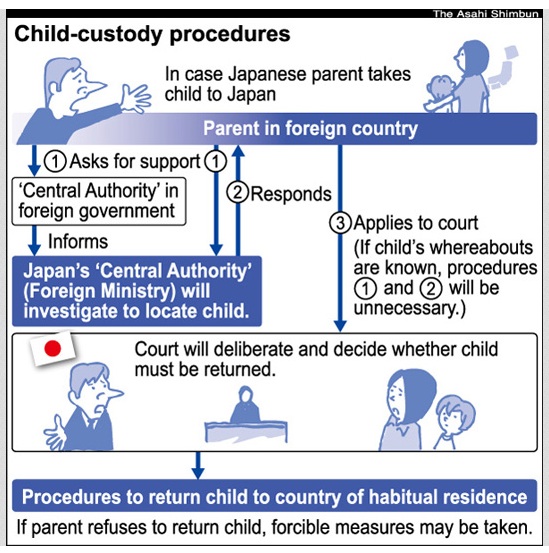
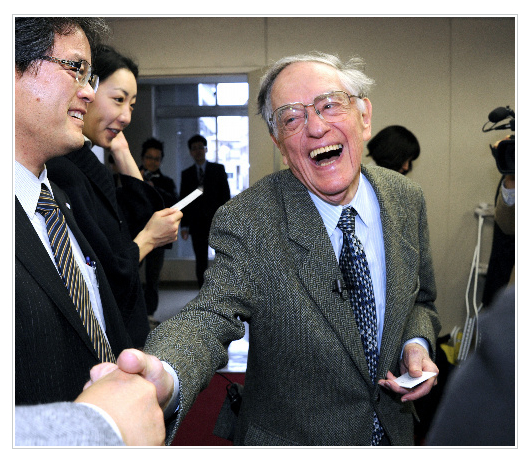





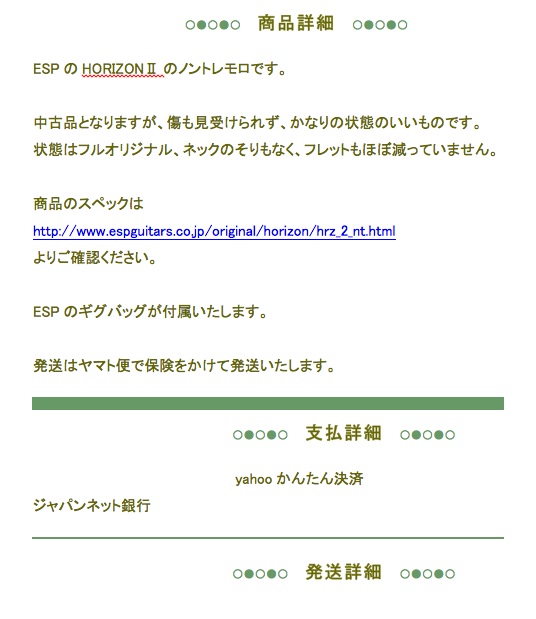


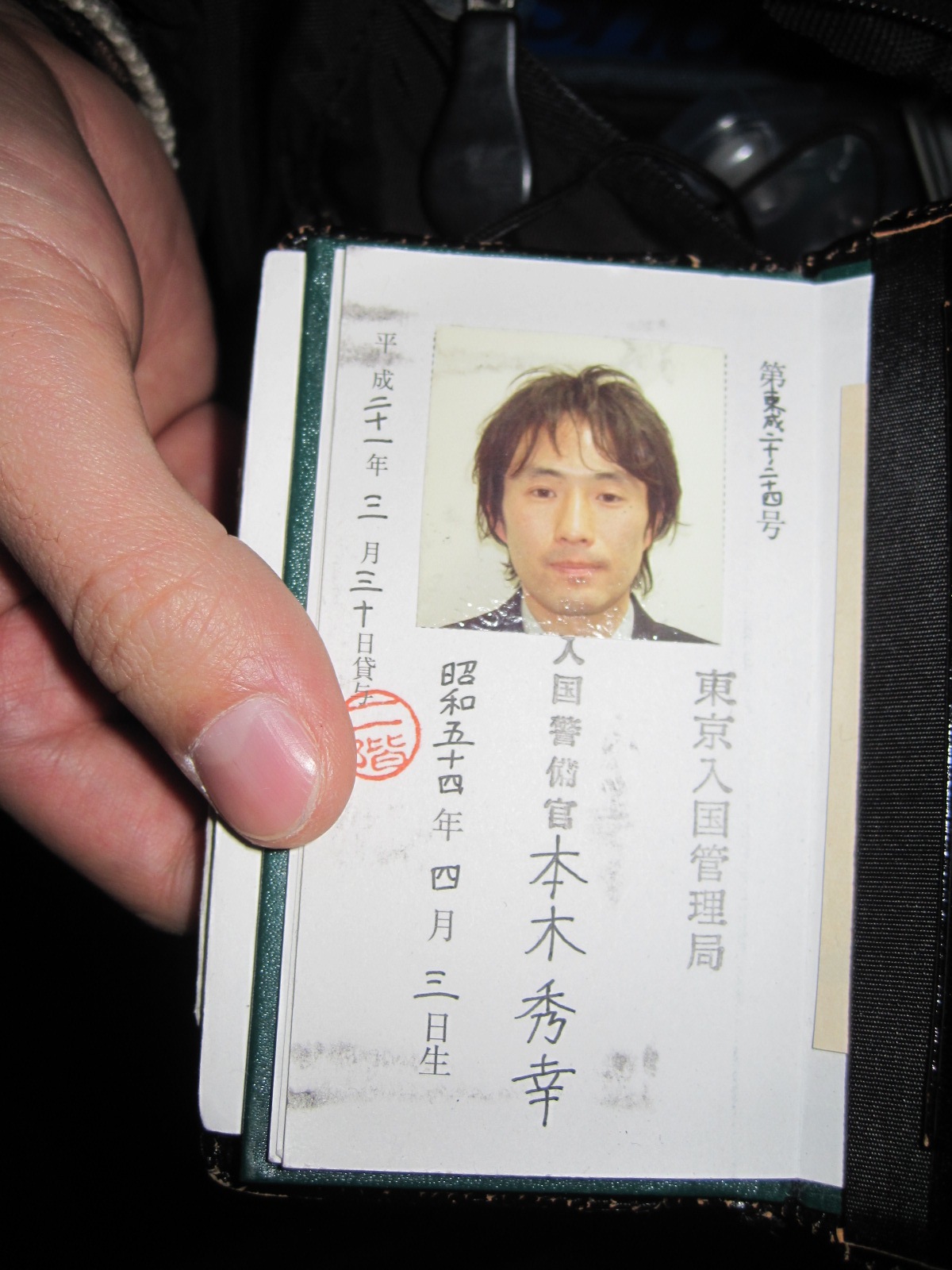


.jpg)