Asahi: Business leaders call for law to allow firing of workers without justification: i.e., the gaijinization of all workplaces

mytest

Books etc. by ARUDOU Debito (click on icon):
Handbook for Newcomers, Migrants, and Immigrants to Japan\" width=「ジャパニーズ・オンリー 小樽入浴拒否問題と人種差別」(明石書店)JAPANESE ONLY:  The Otaru Hot Springs Case and Racial Discrimination in Japansourstrawberriesavatardebitopodcastthumb
UPDATES ON TWITTER: arudoudebito
DEBITO.ORG PODCASTS on iTunes, subscribe free
“LIKE” US on Facebook at http://www.facebook.com/debitoorg
http://www.facebook.com/handbookimmigrants

Hi Blog.  Debito.org has previously discussed the curious phenomenon of “Gaijin as Guinea Pig“, where future reforms that put the general public at a disadvantage to the elite are first tested out and normalized through application on Japan’s foreigners.  For example, “Academic Apartheid” (the practice of contracting all NJ educators while granting Japanese educators tenure from day one in Japan’s higher education system) gave way to contract employment for every educator in 1997.  More examples here.

Now according to the Asahi we have the previous legally-enshrined practice of making all workers (roudousha) protected by Japan’s labor laws being chipped away at.  Previously seen in the labor-law exemption given NJ workers under “Trainee” Visas (e.g., foreign factory workers, farm laborers, caregivers), we are now seeing a similar push to exempt all Japanese workers from labor law protections.

Japan hopes to make themselves more attractive to international labor migration when they’re in process of making an exploitative labor market even more so, for everybody?  Again, deserves to be known about.  Arudou Debito

/////////////////////////////////////////

Business leaders call for law to allow firing of workers without justification
Asahi Shimbun AJW, March 16, 2013, courtesy of MP
By TAKUFUMI YOSHIDA/ Staff Writer
http://ajw.asahi.com/article/behind_news/social_affairs/AJ201303160063

Business leaders at a government panel have proposed that employers in Japan be allowed to fire workers at their discretion as a way to improve the nation’s economic growth.

Members of the Industrial Competitiveness Council called March 15 for rules that will, in principle, allow employers to dismiss regular employees freely if the workers are compensated with “re-employment support.”

The council is chaired by Prime Minister Shinzo Abe.

The proposal was made by Yasuchika Hasegawa, chairman of Keizai Doyukai (Japan Association of Corporate Executives), and president of Takeda Pharmaceutical Co., and others.

Article 16 of the Labor Contract Law stipulates that there must be reasonable grounds for a dismissal. Employers are not permitted to sack workers unless they have valid reasons, such as poor performance, disciplinary offenses or reducing the work force as a result of financial trouble.

Hasegawa and other members suggested that the Labor Contract Law should be amended to allow employers to dismiss workers at their discretion.

They also called for the establishment of a system in which employers would be able to fire workers without a valid reason as long as they provide them so-called monetary re-employment support.

In addition, they said the Labor Contract Law should make it clear in what instances dismissals would not be permitted.

In many European countries, if a court determines that a dismissal is unlawful, the employer can still dissolve the employment relationship by paying the fired employee compensation–usually one to two years worth of salary.

But if a similar court decision was made in Japan, workers would have few options other than returning to their former workplaces.

The system the panel in Japan is pushing differs from the European labor practice in that employers would be able to freely sack workers without reasonable grounds as long as they pay compensation.

Panel members said the proposed system would not only increase liquidity in the labor market, but benefit workers, depending on the amount of compensation paid.

The panel includes 10 leaders from the private sector and is expected to come up with a proposed economic growth strategy by June.
ENDS

SITYS: GOJ’s new “Points System” to attract “higher-skilled” NJ being reviewed due to dearth of applications, impossibly high hurdles

mytest

Books etc. by ARUDOU Debito (click on icon):

Handbook for Newcomers, Migrants, and Immigrants to Japan\" width=「ジャパニーズ・オンリー 小樽入浴拒否問題と人種差別」(明石書店)JAPANESE ONLY:  The Otaru Hot Springs Case and Racial Discrimination in Japansourstrawberriesavatardebitopodcastthumb
UPDATES ON TWITTER: arudoudebito
DEBITO.ORG PODCASTS on iTunes, subscribe free
“LIKE” US on Facebook at http://www.facebook.com/debitoorg
http://www.facebook.com/handbookimmigrants

Hi Blog.  We’ve talked about Japan’s “Points System” before on Debito.org, where I took a dim view of it as just another “revolving door” labor visa regime to bring people over, leech off their prime working lives, and then boot them back home without letting them settle and reap the rewards for contributing to Japanese society (cf. the “Trainees”, the “Nikkei Returnees”, and the “foreign caregivers“, all of whom I have written about for the Japan Times).

Well, now, in yet another episode of SITYS (“See I Told You So”), Asahi reports the “Points System” is going through similar “revisions” as the visa scams above due to a dearth of applications.  As I thought would happen — the PS’s qualifying hurdles are simply too high.

Even if one assumes good faith in Japan’s policymakers (some of whom do see the slow-motion demographic disaster in progress due to crushing public debt unsupportable by a society that is shrinking and aging) who might want to treat “foreign laborers” as people, Japan’s bureaucrats are so paranoid about NJ somehow “abusing” the system that they make it practically impossible for anyone to ever “use” the system to their benefit.  Again, the GOJ keep wanting “workers” and discover to their surprise later that they imported “people”, with livelihood needs beyond mere work hours converted into “the privilege of living in Japan”.

These policy failures will keep happening again and again until NJ are treated as “people”, and given a fair chance by the GOJ at becoming “Japanese” (with transfers of political, economic, and social power — and that includes input at the policymaking stage too).  But I still don’t see that happening anytime soon.  Arudou Debito

////////////////////////////////////////

Strict conditions hamper certification system for foreign skilled workers
Asahi Shimbun AJW March 24, 2013, courtesy of JK
By SEINOSUKE IWASAKI/ Staff Writer
http://ajw.asahi.com/article/behind_news/social_affairs/AJ201303240055

A policy initiative designed to encourage highly skilled foreign professionals to come and stay in Japan is not working out as the Justice Ministry had envisioned.

In fact, the point-based system has proved so unpopular that it is being reviewed only a year after it was introduced.

The program covers the following fields: research, engineering and management. Points are awarded on the basis of a person’s experience and capabilities.

An individual who receives a certain number of points can, for example, bring his or her parents to live in Japan or gain permission for a spouse to work, something that few foreign workers had been able to do until a year ago.

According to the Justice Ministry, less than 1,000 will likely be certified in the initial year, compared with 2,000 that officials had expected.

Foreign applicants have complained to immigration offices about the strict conditions, particularly one pertaining to income levels.

Shao Huaiyu, a renewable energy researcher at Kyushu University, applied at the recommendation of school officials soon after the system was introduced last May.

He was certified as highly competent after receiving 100 points out of a maximum 140 in the researcher division based on his doctor’s and patented inventions.

Shao planned to ask his parents to come from China and help raise two daughters, aged 2 and under 1 year old.

But his application was refused because of an additional condition that called for an annual income of 10 million yen ($106,000) or more.

“It is almost impossible for a university researcher in his or her 30s to earn 10 million yen,” Shao said. “By the time I can earn that much, my children will have grown up.”

The Justice Ministry plans to review the system. An Immigration Bureau official said the system has not been widely publicized overseas due to limited budgets.

Junichi Goto, a professor of labor economics at Keio University, is opposed to the planned review, saying looser conditions could jeopardize a ban on unskilled laborers.

He has also expressed concern that some foreigners could abuse the system by bringing their parents over simply to get advanced medical treatment under the nation’s universal health insurance system.

A similar point system has been introduced in Canada, New Zealand and other countries eager to accept skilled immigrants.

According to the Canadian Embassy, 90,000 to 110,000 engineers and their families enter the country each year.

Even among industrialized countries, Japan is regarded as exercising very strict control over immigration.

The Japanese program is intended to attract only those whose skills are needed in Japan, rather than increasing the number of foreign nationals working in this country by loosening the immigration control law.

ENDS

JT/Kyodo: Record high applicants for J refugee status. Why media fixation on refugees? Because they are a bellwether of Japan’s “legitimacy as a competent, advanced, Western democracy”

mytest

Books etc. by ARUDOU Debito (click on icon):
Handbook for Newcomers, Migrants, and Immigrants to Japan\" width=「ジャパニーズ・オンリー 小樽入浴拒否問題と人種差別」(明石書店)JAPANESE ONLY:  The Otaru Hot Springs Case and Racial Discrimination in Japansourstrawberriesavatardebitopodcastthumb
UPDATES ON TWITTER: arudoudebito
DEBITO.ORG PODCASTS on iTunes, subscribe free
“LIKE” US on Facebook at http://www.facebook.com/debitoorg
http://www.facebook.com/handbookimmigrants

Hi Blog.  Making national news whenever statistics come out is how Japan deals with (i.e., mostly rejects) refugees. I was always curious about why refugee numbers have always been considered newsworthy (when there are many other significant NJ-related statistics that merit more fanfare but don’t, such as the number of “Newcomers” with Permanent Residency overtaking the “Oldcomer” Zainichis with Special Permanent Residency in 2007, representing a sea change in the composition of permanent immigrant NJs in Japan).  But then I found something in an academic writing that put things in perspective:  Acceptance of refugees are one bellwether of Japan’s acceptance of international norms, as part of its “greater role in international cooperation” and an attempt “to increase its legitimacy as a competent, advanced Western democracy”.  First the most recent news article, then the academic article to put it in perspective:

//////////////////////////////////////////

NATIONAL
2012 saw record-high 2,545 people apply for refugee status in Japan
The Japan Times/KYODO
MAR 20, 2013, courtesy of JK
http://www.japantimes.co.jp/news/2013/03/20/national/2012-saw-record-high-2545-people-apply-for-refugee-status-in-japan

A record 2,545 foreigners applied for refugee status in Japan in 2012, the Justice Ministry’s Immigration Bureau said Tuesday.

While the figure marked an increase of 678 compared with the previous year, there was a drop in the number of those who were actually granted refugee status, the bureau said.

In 2011, there were 21 foreigners recognized as refugees, but for 2012, the number fell to 18.

Among those who applied, Turkish nationals constituted the largest group, with 423, followed by 368 from Myanmar, 320 from Nepal and 298 from Pakistan, the bureau said.

A bureau official could not provide the exact reason behind the rise in refugee applications.

Meanwhile, the number of foreigners who were denied refugee status but were allowed to stay in Japan on humanitarian grounds totaled 112, the bureau said.

Since Japan began its refugee recognition system in 1982, there have been 14,299 people who applied and 616 who were recognized as refugees.

ENDS

//////////////////////////////////////////

Now read this excerpt from Kashiwazaki Chikako (Associate Professor of Sociology at Keio University). 2000. “Citizenship in Japan: Legal Practice and Contemporary Development.” In T. Alexander Aleinikoff, and Douglas Klusmeyer, eds., From Migrants to Citizens: Membership in a Changing World. Washington DC: Carnegie Endowment for International Peace, pp. 448-50.  I retype in all paragraphs preceding the section on refugees to Japan, to give you the geopolitical context under which bureaucrats created refugee policy.

============================

INTERNATIONAL LEGAL NORMS AND CHANGES IN INTERNATIONAL CONTEXT

Since the mid-1970s, Japan has come into prominence in the international arena as a major player in the world economy.  Internationalization became a slogan for the new direction of the country, with demands from both within and abroad to open, to take a leadership role, and to assume international responsibility.  For the Japanese government, successful economic development provided the opportunity to assume a greater role in international cooperation and to increase its legitimacy as a competent, advanced Western democracy.  To do so would require accepting an emerging set of international legal norms, including those in the area of citizenship.

Among international legal norms, the most relevant to the recent development of citizenship are the UN conventions on human rights and the rights of migrant workers and noncitizen residents.  In Western Europe, international conventions on human rights have provided legal and normative underpinnings to the extension of partial citizenship rights to noncitizen residents.  The goal of economic integration through free movement of people within the common market has also facilitated legislation regarding the legal rights and protection of migrants.

Another major impetus for changing laws regarding citizenship and nationality is the principle of gender equality.  The 1979 Convention on the Elimination of All Forms of Discrimination against Women required that signatory countries accord the same rights to women as they do to men in regard to their children’s nationality.  Consequently, a number of countries that had a patrilineal jus sanguinis system shifted to the bilineal system where children obtain both their father’s and mother’s nationality.

In the absence of an equivalence in European integration, the role and the extent of international coordination are expected to be different for the Japanese case.  Nevertheless, Japan has also been under the constraints of international legal norms.  Admission of Indochinese refugees and the adoption of bilineal jus sanguinis [in 1984] are two examples that show the impact of international factors on nationality and citizenship regulations.

The end of the Vietnam War in 1975 generated refugees from Indochina.  In the same year, the G7 Summit meeting was established. As the only Asian country admitted to membership in the G7 Summit, Japan was obliged to take some steps to accommodate refugees.  In 1978, the Japanese government permitted the settlement of refugees within the set limit of the ceiling.  The initial quota was only 500 refugees, although it was gradually expanded to 10,000 by 1985.  At the end of 1997, 10,241 Indochina refugees had been accepted for settlement [Shutsunyuukoku Kanri 1998].

Although the number of refugees settled in Japan was small, their arrival had a strong impact on the social rights of resident aliens.  With the acceptance of refugees, the Japanese government was compelled to join relevant international conventions.  Japan acceded to the International Covenant on Civil and Political Rights as well as the International Covenant on Economic, Social, and Cultural, Rights in 1979, and then ratified the Convention relating to the Status of Refugees in 1981.  Provisions in these conventions required that resident aliens be treated equally with the citizens of the country in the areas of social security and welfare.  Consequently, several legal changes removed eligibility restrictions based on nationality in such areas as national pension and public housing.  Furthermore, the creation of a new residential status for refugees in 1981 contributed to improvement in the legal status of preexisting long-term resident aliens.

EXCERPT ENDS

//////////////////////////////////////////

COMMENT:  So you see, Japan basically only acceded to these international norms and agreements as a vanity project — a matter of “not looking like an outlier” in the international community.  Not because policymakers had any good-faith interest in helping NJ or outsiders in need come to Japan and settle.  That’s why we see honne hiccoughs from time to time (like the one in 2010 when a 78-year-old Zainichi granny was denied social welfare by Oita Prefectural Government — where a court ruled that “Welfare payments to non-citizens would be a form of charity“.  So much for those international treaties guaranteeing equal treatment being respected by Japan’s judiciary!).  We’ve also seen how Japan simply will not pass a law against racial discrimination (despite signing another international agreement, the UN CERD, in 1995) — and will in fact counteract anyone who does.  So in this context, Kyodo’s reporting that “since Japan began its refugee recognition system in 1982, there have been 14,299 people who applied and 616 who were recognized as refugees,” should come as no surprise.  The GOJ has no intention of keeping its international treaty promises.  They are merely national self-esteem boosters, not real guidelines or goals.  Arudou Debito

Interesting cases: naturalized Japanese sues city councilor fiance who jilted her for Korean ethnicity, Pakistani parents file criminal complaint for injurious school bullying, Hatoyama Yukio officially called “traitor” for not toeing official party line on Senkaku/Nanjing issues

mytest

Books etc. by ARUDOU Debito (click on icon):
Handbook for Newcomers, Migrants, and Immigrants to Japan\" width=「ジャパニーズ・オンリー 小樽入浴拒否問題と人種差別」(明石書店)JAPANESE ONLY:  The Otaru Hot Springs Case and Racial Discrimination in Japansourstrawberriesavatardebitopodcastthumb
UPDATES ON TWITTER: arudoudebito
DEBITO.ORG PODCASTS on iTunes, subscribe free
“LIKE” US on Facebook at http://www.facebook.com/debitoorg
http://www.facebook.com/handbookimmigrants

Hi Blog. Here are a couple of interesting cases that have fallen through the cracks recently, what with all the higher-level geopolitical flurry and consequent hate speech garnering so much attention.  With not much to link them thematically except that these are complaints made into public disputes, let me combine them into one blog post and let them stand for themselves as bellwethers of the times.

First up, we have a criminal complaint filed with the police for classroom bullying resulting in serious injury due to his Pakistani ethnicity.  This is one of a long line of cases of ethnic bullying in Japan, once again with insufficient intervention by authorities, and we’re lucky this time it hasn’t resulted yet in PTSD or a suicide.  Like it has in these cases here with an ethnic Chinese schoolgirlwith an Indian student in 2007, or a Filipina-Japanese student in 2010 (in the last case NHK neglected to mention ethnicity as an issue).  Of course, even here the Mainichi declines to give the name of the school involved.  Whatever happened to perennial promises of a “major bullying study” at the ministerial level a couple of years ago to prevent things like this?  Or of grassroots NGO actions way back when?

/////////////////////////////////////////////////

Pakistani student’s parents file complaint against classmates over bullying

http://mainichi.jp/english/english/newsselect/news/20130219p2a00m0na006000c.html

TAKAMATSU — The parents of a 13-year-old Pakistani junior high school student here have filed a criminal complaint with police, accusing their son’s classmates of bullying and injuring him.

A male Pakistani student at a public junior high school in a town in Kagawa Prefecture was bullied and seriously injured by his classmates, his parents alleged in a complaint filed on Feb. 18 with prefectural police.

The parents requested on the same day that the town’s board of education investigate the case and take measures to prevent a recurrence as they claim the student has been racially abused by four of his classmates since last spring. However, the education board denies bullying took place at the school.

According to the parents who held a news conference, the student was verbally bullied about the color of his skin by four of his classmates ever since he entered school last April. The parents claim that the students would make racist comments that their son’s skin was “dirty” and that they told him to “go back to his home country.”

The student was also physically bullied repeatedly by his classmates. Last November, one of the four classmates tripped him over when he was running in the hallway, severely injuring his legs and face. Since that incident, the student reportedly has to use crutches to walk.

The student’s 41-year-old father said, “We asked the homeroom teacher and vice principle multiple times to improve the situation but they failed to take any action.”

February 19, 2013 (Mainichi Japan) 

傷害容疑:「いじめで重傷」告訴…パキスタン籍の中1両親

毎日新聞 2013年02月19日 00時37分(最終更新 02月19日 09時33分)

http://mainichi.jp/select/news/20130219k0000m040116000c.html

 香川県中部の町立中学校に通うパキスタン国籍の1年男子生徒(13)が同級生からの暴行で重傷を負ったとして、男子生徒の両親が18日、傷害容疑で県警に告訴した。昨春以降、同級生ら4人から人種差別的な暴言によるいじめも続いているといい、両親は同日、町教育委員会に調査と再発防止を申し入れた。町教委側は「いじめはなかった」と否定している。

記者会見した両親らによると、男子生徒は昨年4月の入学直後から同級生4人に肌の色の違いを言われ「汚い」「国へ帰れ」など人種差別的な発言をされ、足を蹴られるなどの暴行も繰り返し受けたという。昨年11月には、校内の廊下を走っていて4人のうち1人に足を掛けられ転倒。足や顔などに重傷を負ったという。男子生徒は今も松葉づえで登下校している。父親(41)は「担任や教頭に何度も改善を訴えたがかなわなかった」と話している。【鈴木理之、広沢まゆみ】

婚約破棄:「在日差別意識に起因」 女性が市議を提訴
毎日新聞 2013年01月28日 15時00分(最終更新 01月28日 16時11分)
http://mainichi.jp/select/news/20130128k0000e040180000c.html

婚約相手だった兵庫県内の自治体の30代男性市議に自分の祖父が在日韓国人だと告げたところ、婚約を破棄されたとして、大阪市の会社員の女性(28)が市議に550万円の損害賠償を求める訴訟を大阪地裁に起こした。市議側は結婚できない理由として「政治的信条から消極的にならざるを得なかった」と説明しているが、女性側は「差別意識に起因し、不当だ」と批判している。人権問題に詳しい専門家からは市議の対応を問題視する声が上がっている。

提訴は昨年10月。訴状などによると、市議と女性は結婚相談所の紹介で同3月に知り合った。市議は同6月、「あなたのことが大好きです」などと書いた手紙を渡して「結婚したい」と伝え、女性も承諾した。しかしその数日後、女性が自分の祖父は在日韓国人だと市議に伝えると、市議は「韓国の血が流れている」などとして婚約を破棄したという。女性自身は日本国籍だった。

市議側は地裁に提出した書面で「結婚したい」といったん女性に伝えたことは認めた上で、「保守派の政治家として活動し、在日韓国人らに対する選挙権付与に反対するなどの政治的スタンスをとっており、政治的信条などから結婚できないと考えた」と説明。さらに「婚約は成立していない」として請求の棄却を求めている。

市議本人は取材に「弁護士に任せているのでコメントできない」としているが、女性は「どれだけ人を傷つけたのか、深く受け止めてほしい」と話した。在日外国人問題に詳しい田中宏・一橋大名誉教授は「結婚で出自を問う発想は問題だ。政治家としての考え方があるから正当化されるものではない」と指摘している。

判例などによると、双方の両親や友人らに婚約の意思を伝えている▽結納や指輪の交換をした−−などの事実があれば、婚約が成立したとみなされる。過去には、日本人男性から国籍を理由に婚約を破棄されたとして韓国籍女性が男性に慰謝料などを求めた訴訟で、大阪地裁は83年、「民族差別の存在に起因した迷いから婚約破棄したのは不当」として、男性に約240万円の支払いを命じた判決がある。【渋江千春】
ENDS

///////////////////////////////////

And finally, courtesy of japanCRUSH last January, we have this interesting titbit:

Japanese defense minister Onodera Itsunori is the latest politician to enter the fray by calling former prime minister Hatoyama Yukio a ‘traitor’ on a television programme. Onodera’s remark came after Hatoyama commented to Chinese officials that the Senkaku Islands should be recognised as disputed territory, rather than Japanese territory, during his trip to China. Interestingly, Hatoyama caused further controversy this week when he apologised for the Nanjing massacre.

Translations courtesy of japanCRUSH:

Defense Minister Calls Hatoyama a ‘Traitor’ (kokuzoku)

Sankei Shinbun:  On the evening of January 17, defense minister Onodera Itsunori gave a scathing criticism of Hatoyama Yukio, who met with Chinese officials in Beijing, for his acknowledgement of the Senkaku Islands in Okinawa Prefecture as being a disputed territory between Japan and China. Onodera stated, ‘This is a huge negative for Japan. At this, China will announce to the world that there is a dispute, and form international opinion. For the first time in a long while, the word ‘traitor’ came to mind’. Onodera spoke on a BS-Fuji news programme.

鳩山氏は「国賊」と防衛相

産經新聞 2013.1.17 22:29 [鳩山氏の不思議な行動
 小野寺五典防衛相は17日夜、北京で中国要人と会談した鳩山由紀夫元首相が沖縄県・尖閣諸島は日中間の係争地だとの認識を伝えたことについて、「日本にとって大きなマイナスだ。中国はこれで係争があると世界に宣伝し、国際世論を作られてしまう。久しぶりに頭の中に『国賊』という言葉がよぎった」と述べ、鳩山氏を痛烈に批判した。BSフジの報道番組で語った。
===========================

Defense Minister Onodera: Former Prime Minister Hatoyama is a ‘Traitor’

JIJI/YahooNews.jp:  On the evening of January 17, defense minister Onodera Itsunori appeared on a BS-Fuji television programme, and said that ‘This is a huge negative for Japan. I shouldn’t really say this, but for a moment the word ‘traitor’ came to mind,’ strongly criticising former prime minister Hatoyama Yukio’s remark that ‘It is important to recognise that the Senkaku islands are a disputed territory’.

The defense minister showed his anxiety, saying ‘Although there is no dispute, and (Senkaku) is native Japanese territory, the Chinese will announce to the world that this is what a former Japanese prime minister thinks, and indeed world opinion will be formed as though there really is a dispute’.

鳩山元首相は「国賊」=小野寺防衛相

時事通信 1月17日(木)22時37分配信

 小野寺五典防衛相は17日夜、BSフジの番組に出演し、「尖閣諸島を係争地と認めることが大事だ」との鳩山由紀夫元首相の中国での発言について「日本にとって大きなマイナスだ。言ってはいけないが『国賊』という言葉が一瞬、頭をよぎった」と述べ、強く非難した。
防衛相は「係争などなく(尖閣は)固有の領土なのに、中国側は、日本の元首相はこう思っていると世界に宣伝し、いかにも係争があるかのように国際世論がつくられてしまう」と懸念を示した。

http://headlines.yahoo.co.jp/hl?a=20130117-00000197-jij-pol

///////////////////////////////////

So this is what it’s coming to.  Dissent from prominent Japanese (who, in Hatoyama’s case, are no longer even political representatives) who act on their conscience, deviate from the saber-rattling party line, and show any efforts at reconciliation in this era of regional brinkmanship get decried as “traitors”.

Check out this photo essay link from the Sankei showing Hatoyama and missus provocatively bowing and praying at Nanjing (text of article follows):

///////////////////////////////////

鳩山元首相が「南京大虐殺記念館」訪問 中国、「安倍内閣牽制」に利用も
産經新聞 2013年1月17日
http://photo.sankei.jp.msn.com/kodawari/data/2013/01/17hatoyama/

【上海=河崎真澄】中国を訪問中の鳩山由紀夫元首相は17日、日中戦争で旧日本軍による南京占領で起きたとされる「南京事件」の資料などを展示する江蘇省南京市の「南京大虐殺記念館」を訪問した。日本の首相経験者が同館を訪れるのは、海部俊樹、村山富市両元首相に続いて3人目。

中国版のツイッター「微博」などでは、「もっと日本に鳩山元首相のような人が増えればいい」といった同館訪問を歓迎する発言に加え、「記念館で鳩山はざんげしろ」「日本人は歴史を直視しろ」などとの書き込みもある。鳩山氏と対比する形で、東南アジア歴訪中の安倍晋三首相を「右翼的思想だ」と警戒感をむき出しにした発言も目立つ。

歴史認識をめぐって植民地支配と侵略を認めた「村山談話」を継承しつつ、新たな談話の作成を進める安倍内閣に対し、中国側はいわば同館への鳩山氏訪問のタイミングを利用し、牽制する狙いもありそうだ。

鳩山氏は16日の賈慶林全国政治協商会議主席ら中国要人との会談で、沖縄県の尖閣諸島について、日本政府の公式見解と異なり中国との「係争地」と発言、波紋を広げている。
///////////////////////////////////

Doesn’t seem like there is much space for tolerance of moderate or diverse views (or people) anymore.  Arudou Debito

My latest academic paper on Asia-Pacific Journal: Japan Focus: “Japan’s Rightward Swing and the Tottori Prefecture Human Rights Ordinance”

mytest

Books etc. by ARUDOU Debito (click on icon):

Handbook for Newcomers, Migrants, and Immigrants to Japan\" width=「ジャパニーズ・オンリー 小樽入浴拒否問題と人種差別」(明石書店)JAPANESE ONLY: The Otaru Hot Springs Case and Racial Discrimination in Japansourstrawberriesavatardebitopodcastthumb
UPDATES ON TWITTER: arudoudebito
DEBITO.ORG PODCASTS on iTunes, subscribe free
“LIKE” US on Facebook at http://www.facebook.com/debitoorg
http://www.facebook.com/handbookimmigrants

Hi Blog. Here’s my latest publication, which came out last Sunday, elaborating more on the historical arc of Japan’s rightward swing I have already talked about journalistically in three recent Japan Times columns:

Here is how I see the build up to what came to fruition with PM Abe and his cadre’s reinstatement to power last December.  Excerpt follows.  Arudou Debito

//////////////////////////////////////////////
The Asia-Pacific Journal, Vol. 11, Issue 9, No. 3, March 4, 2013.
Japan’s Rightward Swing and the Tottori Prefecture Human Rights Ordinance
日本の右傾化と鳥取県人権条例

By Arudou Debito

ABSTRACT
Japan’s swing to the right in the December 2012 Lower House election placed three-quarters of the seats in the hands of conservative parties. The result should come as no surprise. This political movement not only capitalized on a putative external threat generated by recent international territorial disputes (with China/Taiwan over the Senkaku/Diaoyu islands and with South Korea over Takeshima/Dokdo islands). It also rode a xenophobic wave during the 2000s, strengthened by fringe opposition to reformers seeking to give non-Japanese more rights in Japanese politics and society.

This article traces the arc of that xenophobic trajectory by focusing on three significant events: The defeat in the mid-2000s of a national “Protection of Human Rights” bill (jinken yōgo hōan); Tottori Prefecture’s Human Rights Ordinance of 2005 that was passed on a local level and then rescinded; and the resounding defeat of proponents of local suffrage for non-citizens (gaikokujin sanseiken) between 2009-11. The article concludes that these developments have perpetuated the unconstitutional status quo of a nation with no laws against racial discrimination in Japan.

Keywords: Japan, human rights, Tottori, racial discrimination, suffrage, minorities, Japanese politics, elections, xenophobia, right wing

Introduction

As has been written elsewhere (cf. Arudou 2005; 2006a; 2006b et al.), Japan has no law in its Civil or Criminal Code specifically outlawing or punishing racial discrimination (jinshu sabetsu). With respect to the United Nations Convention on the Elimination of Racial Discrimination (which Japan adopted in 1996), Japan has explicitly stated to the United Nations that it does not need such a law: “We do not recognize that the present situation of Japan is one in which discriminative acts cannot be effectively restrained by the existing legal system and in which explicit racial discriminative acts, which cannot be restrained by measures other than legislation, are conducted. Therefore, penalization of these acts is not considered necessary.” (MOFA 2001: 5.1)

However, in 2005, a regional government, Tottori Prefecture northwest of Ōsaka, did pass a local ordinance (jōrei) explicitly punishing inter alia discrimination by race. What happened to that law shortly afterwards provides a cautionary tale, demonstrating how public fear of granting any power to Non-Japanese occasioned the ordinance to be rescinded shortly afterwards. This article describes the defeat of a similar bill on a national scale, the public reaction to Tottori’s ordinance and the series of events that led to its withdrawal. The aftermath led to the stigmatization of any liberalization favoring more rights for Non-Japanese.

Prelude: The Protection of Human Rights Bill debates of the mid-2000s

Throughout the 2000s, there was a movement to enforce the exclusionary parameters of Japanese citizenship by further reinforcing the status quo disenfranchising non-citizens. For example, one proposal that would have enfranchised non-citizens by giving them more rights was the Protection of Human Rights Bill (jinken yōgo hōan). It was an amalgamation of several proposals (including the Foreign Residents’ Basic Law (gaikokujin jūmin kihon hō)) that would have protected the rights of residents regardless of nationality, ethnic status, or social origin.

Read the rest at https://apjjf.org/2013/11/9/arudou-debito/3907/article

Other Japan Focus articles by Arudou Debito at http://japanfocus.org/-Arudou-Debito

3907 Arudou Debito

Japan’s Rightward Swing and the Tottori Prefecture Human Rights Ordinance

2708 Arudou DebitoA. Higuchi

Handbook for Newcomers, Migrants, and Immigrants to Japan

2559 Arudou Debito

Japan’s Future as an International, Multicultural Society: From Migrants to Immigrants

2386 Arudou Debito

Gaijin Hanzai Magazine and Hate Speech in Japan: The Newfound Power of Japan’s International Residents

2078 Arudou Debito

The Coming Internationalization: Can Japan assimilate its immigrants?

1743 Arudou Debito

JAPANESE ONLY: The Otaru Hotspring Case and Discrimination Against “Foreigners” in Japan

Prof. Kashiwazaki Chikako: Japan’s Nationality Law and immigration policy deviates from current international legal norm

mytest

Books etc. by ARUDOU Debito (click on icon):
Handbook for Newcomers, Migrants, and Immigrants to Japan\" width=「ジャパニーズ・オンリー 小樽入浴拒否問題と人種差別」(明石書店)JAPANESE ONLY:  The Otaru Hot Springs Case and Racial Discrimination in Japansourstrawberriesavatardebitopodcastthumb
UPDATES ON TWITTER: arudoudebito
DEBITO.ORG PODCASTS on iTunes, subscribe free
“LIKE” US on Facebook at http://www.facebook.com/debitoorg
http://www.facebook.com/handbookimmigrants

Hi Blog. Something I came across during my readings. Thought you might find it interesting.

Over the years I have gotten from many corners (particularly from people who have not researched things too deeply) how “jus sanguinis” (law of blood) requirements for Japanese citizenship are not all that far from the international norm, and how Japan’s Nationality Law (which requires blood ties to a Japanese citizen for conferral of Japanese nationality) is but one example of many in the community of nations that confer nationality/citizenship by blood.

Well, I knew both from experience and in my gut that there was something wrong with that. I felt that Japan’s method of conferring nationality/citizenship was quite specially exclusive (for example, we’ve had half a million Zainichi former citizens of Empire excluded from full “Denizenship” (see below) in Japanese society for three Postwar generations now, and only a tiny number of people becoming naturalized Japanese citizens every year).  This exclusion (which every nation does when deciding national membership, but…) has been done in ways unbecoming of a country with the reputation of being a legitimate, competent, advanced Western democracy — one Japan has had since its emergence as a “rich society” in the 1980s — and thus expected to take on a greater role in international cooperation (such as acceptance of refugees) by accepting international legal norms (such as signing and enforcing international treaties).

Now I’ve found something in writing from someone who HAS researched things deeply, and she too finds that Japan’s policies towards the outside world are outside the international norm.

These are excerpts from Kashiwazaki Chikako (Associate Professor of Sociology at Keio University). 2000. “Citizenship in Japan: Legal Practice and Contemporary Development.” In T. Alexander Aleinikoff, and Douglas Klusmeyer, eds., From Migrants to Citizens: Membership in a Changing World. Washington DC: Carnegie Endowment for International Peace, pp. 434-74.

Regarding trends in immigration policies for Japan’s developed-country brethren:

Comparative research suggests that citizenship policies might be effectively employed for the integration of immigrants in a democratic society.  Citizenship policies in a broad sense include rules for not only the attribution of full, formal citizenship but also the admission of legal migrants and the extension of “partial” citizenship for resident aliens.  The Japanese case is similar to other advanced industrial countries in that recent labor migration represents south-north migration or migration from developing countries to developed countries.  Experiences of Western European countries in particular provide useful points of comparison when studying the case of Japan, because Japan in its modern national state form was constructed by an indigenous majority group rather than by immigrants, as in the United States, Canada, and Australia.

Contemporary debates about citizenship policies in Western European countries have their roots in immigration in the post-WWII era.  In response to sharp increases in the immigrant population, governments of these countries restricted admission and encouraged return migration in the 1970s.  The result was the settlement of former “temporary” workers and an increase in family reunification.  As immigrants were becoming a permanent feature of the society, host countries in Western Europe turned increasingly toward incorporation.  Over time, foreign workers and their families obtained a greater scope of citizenship rights.  Referred to as “denizens”, resident aliens with permanent status enjoy extensive civil and social citizenship rights, if not electoral rights on the national level. 

Denizens, however, do not possess full citizenship, notably full political rights.  For fuller integration of immigrants into a democratic political community, it becomes important to give them the opportunity for them to obtain full citizenship, not just denizenship.” (435-6)

Regarding the claim that Japan is “not an outlier” in terms of conferring nationality by blood ties, and the frequent defense that “other rich countries, such as Germany, also do it”, consider this:

“In the 1980s and 1990s, laws regulating nationality and citizenship were revised in immigrant-receiving countries such as Germany, the Netherlands, Sweden, and Switzerland, where nationality transmission was mainly based on jus sanguinis (by parentage). These revisions eased criteria for acquiring nationality by first-generation, long-term resident aliens as well as by the second and subsequent generations. Major types of legal administrative changes include introduction or expansion of the as-of-right acquisition of citizenship [Japan has no “as-of-right acquisition” system; i.e., anyone who was not attributed Japanese citizenship by birth must go through the process of naturalization]; double jus soli, by which the third generation obtains citizenship automatically; and toleration for dual nationality… [On the other hand], there is no unified, coherent policy that could be called the Japanese citizenship policy.” (436-7)

Regarding the GOJ’s intolerance of dual nationality:

“The current international trend in coordinating nationalities is to have a greater degree of tolerance for the incidence of multiple nationality than for statelessness. The principle of “one nationality for everyone” is therefore increasingly understood to mean at least one nationality, rather than “only one,” for each person. Furthermore, migrant-sending countries have tended to support dual nationality, which would allow their nationals to retain close relationships with their country of origin while enjoying full rights and protection in the host country. Outside Europe, Mexico’s recent move to allow dual nationality for those who became naturalized U.S citizens is another example. Insisting on the desirability of “only one” nationality, the official stance of the Japanese government, therefore deviates from the current international norm.” (451)

Regarding official policy for migration and integration:

“The system of naturalization is not designed to transform foreign nationals promptly into Japanese nationals. Restriction on naturalization corresponds to the government’s stance on border control, namely that Japan does not admit immigration for the purpose of permanent settlement.” (443)

The justifications, when proffered by the Ministry of Justice all the way back in 1959, still resonate today as current:

“Since Japan is one of the most densely populated countries in the world, policies of controlling both population growth and immigration are strongly called for. It should therefore be a government policy to severely restrict the entry of foreigners into Japan. This is all the more so because there are undesirable foreigners who would threaten the lives of Japanese nationals by criminal activity and immoral conduct.” (MOJ Shutsunyuukoku Kanri, 1959, pg. 3) (441).

So there you have it, from another researcher. It has never been policy in Japan, despite all the promises we heard in the “Kokusaika” 1980s about “getting in, making the effort to work hard in Japanese companies, learning the language and culture, and ultimately becoming Japanese like everyone else”, to let immigrants stay or make it easier for them to stay.  So it’s not going to happen (no matter what recent flawed GOJ Cabinet opinion polls claim about the public’s “no longer rejecting” NJ), because of official government policy not to let people settle, and because policymakers don’t trust foreigners to ever be “Japanese”.

In any case, it’s not a matter of being “socially accepted” by our peers — friendships on the individual level can happen.  The problem is more a matter of allowing NJ to take our place in the hierarchy — allowing for NJ and former NJ to have some transference of power and rights to them (such as letting them become sempai) in Japan beyond alien status, beyond mere “partial citizenship” and “Denizenship” through increasingly-tougher Permanent Residency, but into granting full citizenship with extensive civil and social citizenship rights while allowing them to keep their ethnic identity.  But no.  NJ are not to be trusted, because they might, unlike Japanese, commit crime or engage in immoral conduct.  As Kashiwazaki indicates above, those systematic and persistent exclusionary attitudes are outliers amongst Japan’s developed-country brethren.  Arudou Debito

UPDATE:  Okay, one more researcher weighs in, pithily.  From the same book, Part Four Introduction, pp. 383-5, by Aristide R. Zolberg, who writes in comparative perspective:

“Japan and Israel surely stand out as the ‘odd couple’ of the comparative citizenship project, each of them being an outlier in which one element of citizenship policy has been extrapolated into a dominant feature.  In short, Japan comes closer than any other economically advanced constitutional democracy to retaining a fundamentalist version of jus sanguinis, and the ‘blood’ involved is the immediate and concrete one of family or lineage, rather than merely the usual ‘imagined’ national community.” (385)

ends

Letters from J human rights groups to the visiting Olympic Committee re Tokyo 2020: Discrimination in Japan violates IOC Charter

mytest

Books etc. by ARUDOU Debito (click on icon):

Handbook for Newcomers, Migrants, and Immigrants to Japan\" width=「ジャパニーズ・オンリー 小樽入浴拒否問題と人種差別」(明石書店)JAPANESE ONLY:  The Otaru Hot Springs Case and Racial Discrimination in Japansourstrawberriesavatardebitopodcastthumb
UPDATES ON TWITTER: arudoudebito
DEBITO.ORG PODCASTS on iTunes, subscribe free
“LIKE” US on Facebook at http://www.facebook.com/debitoorg
http://www.facebook.com/handbookimmigrants

Hi Blog.  I received this two days ago and am reposting (as is) with permission.  The International Olympic Committee is currently in Japan considering Tokyo as a venue for the 2020 Summer Games.  In light of recent events that point to clear examples of discrimination and advocacy of violence towards, for example, Koreans (see below), human rights groups in Japan are advocating that the IOC understand that these actions violate the Olympic Charter and choose their venue accordingly.  Articles, photos, and letters follow from the Japan Federation of Bar Associations (Nichibenren), Tanaka Hiroshi in the Mainichi Shinbun, and sources demonstrating that, for example, all GOJ educational subsidies for Korean ethnic schools have been eliminated as of 2013 from government budgets.

Academic Tessa Morris-Suzuki might agree with the assessment of rising discrimination, as she documents on academic website Japan Focus the protection of xenophobic Rightists and the police harassment of their liberal opponents.  Her conclusion: “But there is no rule of law if the instigators of violence are left to peddle hatred with impunity, while those who pursue historical justice and responsibility are subject to police harassment. There is no respect for human rights where those in power use cyber bullying in an attempt to silence their opponents. And democracy is left impoverished when freedom of hate speech is protected more zealously than freedom of reasoned political debate.”  Have a look.

SITYS.  This is yet but another example of Japan’s clear and dangerous swing to the Right under PM Abe.  And granting an Olympics to this regime despite all of this merely legitimize these tendencies, demonstrating that Japan will be held to a different standard regarding discrimination.  Wake up, IOC.  Arudou Debito

REPORT BEGINS:

////////////////////////////////////////////

Date: 2013/3/3Dear Sir/Madam,

I am … an activist against racism. I hope you to know about
racism against resident Koreans, especially  emergent crisis of Korean
ethnic schools by the central and local governments’ oppression in
Japan, even though the governments would invite the Olympic Games 2020
to Tokyo.

I’ve attached a letter to you below.

The International Olympic Committee’s evaluation commission arrived in
Tokyo on last Friday and it is going to inspect Tokyo from 4th to 7th
March.

It would be great honour if you handle this issue.
All the best, [redacted]

Japan Network for the Institutionalization of Schools for
Non-Japanese Nationals and Ethnic Minorities

Email: sangosyo@gmail.com

//////////////////////////////////////

Tokyo – a city which discriminates against Korean children
January 2013

We hope to inform you that Tokyo is not an appropriate city for the
Olympic Games based on the Fundamental Principals of the Olympics,
especially that of anti-discrimination.
The main reason for this is that the central and Tokyo governments
officially discriminate against Korean children who attend Korean
schools, which are key to maintaining the Korean communities in Japan.

Koreans in Japan are an ethnic minority who were forced to come to
Japan under the Japanese colonial rule of Korea and settle there even
after WWII. Throughout their enforced stay here they have faced
various difficulties. After the liberation from the Japanese colonial
rule, Koreans in Japan established their own ethnic schools in various
places in Japan in order to maintain their own language and culture
that had been deprived from them under the Japanese colonial rule.

Although the Japanese government has not recognized Korean schools as
regular and official schools and has been imposing institutional
discrimination upon them such as exclusion from a financial support
scheme of the central government, the Korean community has been
sustaining their schools on their own for more than 60 years. The
total number of Korean schools in Japan is approximately 70, including
kindergarten, primary to high schools, and university. Nearly 10,000
Korean children whose nationality is South Korean, North Korean and
Japan are learning in those schools today, even though 80-90 % of
Korean children attend Japanese schools.

The new Democratic Party administration proposed the plan of a
so-called “Free High School Tuition” system in October 2009 as soon as
it was established. The then plan intended not to collect tuition fees
from students of public high schools in Japan and to supply students
of private schools and minority schools authorized by local
governments as “vocational school” including Korean schools with a
subsidy of the amount equivalent to the tuition fee of public high
schools.

In March 2010, the United Nations Committee on the Elimination of
Racial Discrimination expressed concern about the approach of some
politicians who had suggested the exclusion of Korean schools from the
bill of “Free High School Tuition” due to the diplomatic issues
between Japan and the Democratic People’s Republic of Korea. The
reason for this concern was the discriminatory effects of such a
policy. However, the policy was instigated in April 2010 and since
then the central government has been discriminating against Korean
school students. They have been excluded from this system for nearly
three years, although students of 37 minority high schools including
International schools, Chinese schools and Brazilian schools have been
supplied with subsidies through this system.

On the other hand, all 27 prefectural governments where Korean schools
are located accepted them as “vocational schools” and have been
providing subsidies to Korean schools for decades, even though the
central government requested prefectural governments to not accept
them as any kind of schools in 1965.

However, the decision of the central government to exclude Korean
schools from “Free High School Tuition” has led to the new
discriminative situation in which five prefectural governments
including Tokyo have stopped their subsidies to Korean schools. Tokyo
had supplied financial aid to Korean schools for at least over 15
years. In 2009, it provided about 27,000,000Yen (190,000 Pound);
however, Tokyo has stopped its subsidies to Korean schools since 2010
without providing a clear rationale.

In addition, the then Tokyo Governor Ishihara Shintaro officially said
that he would reconsider the accreditation of Korean schools in Tokyo
as “vocational schools” in March 2012. If the accreditation of
“vocational school” is revoked, it will cause extensive damages to
Korean schools. For instance, Korean schools will become completely
exempt from the “Free High School Tuition” system and there will be no
possibility to receive any financial support from local governments.
Furthermore, Korean schools will be forced to pay consumption tax for
tuition fee.

In December 2012, as soon as the Liberal Democratic Party won the
General Election and established its new government, it declared it
would revise an ordinance in order to exclude Korean schools due to
political tensions between Japan and North Korea, primarily the
abduction of Japanese citizens by North Korea.

In January 2013, Korean schools and school children in Osaka and Aichi
prefecture brought a lawsuit before the court, and Korean school
children in Tokyo are preparing lawsuit concerning these
discrimination.

Racism in Japan is generally increasing, encouraged by the racial
discrimination by the central government. The number of demonstrations
repeating hate speech against Non Japanese nationals, especially
Korean, communities has been increasing in Japan (Annex1). The police
are just gazing at the demos without restricting them because there is
no anti-discrimination law nor hate speech legislation in Japan so
that the demos has been unchecked.

ENDS

///////////////////////////////////////////

REFERENCE MATERIALS:

List of Annexs

1, The images of demonstration by anti-Korean racists in Korean Town of Tokyo

2, The Statement of President of the Japan Federation of Bar Associations objecting to exclusion of Korean Schools from applying Free High School tuition policy

3, The Article of The Mainichi Shimbun (23 February, 2013)

4, The situation of the cut of the subsidies to Korean schools from local governments in Japan

///////////////////////////////////////////

Annex 1: The Images of Demonstration by Anti-Korean Racists

(February 2013, in Korean Town of Tokyo)

 antikoreandemosShinOhkubo020913

Video URL: http://matome.naver.jp/odai/2136038266418742101

///////////////////////////////////////////

Annex2: Statement of President of the Japan Federation of Bar Associations objecting to exclusion of Korean Schools from applying Free High School tuition policy

The Ministry of Education, Culture, Sports, Science and Technology (MEXT) announced a proposed amendment to ministerial ordinance on December 28th, 2012, which amends a part of enforcement regulations regarding free tuition for public high schools and subsidies for private high schools. As for the high schools where foreign students are enrolled such as international schools and ethnic schools, the current enforcement regulations define the subject for the policy as either high schools that are confirmed through its embassy to have curriculum equivalent to that of high schools in its native state, or high schools that are certified by international evaluation body, while the rest of the schools that are evaluated as having curriculum equivalent to that of Japanese high schools can be the recipient of the subsidies, whether or not Japan has diplomatic relations with its native state, after the minister of the MEXT designates each school individually. The proposed amendment is to delete the grounds for the individual designation.

Regarding the purpose of this revision, the minister of MEXT, Hakubun Shimomura, stated at the press conference on December 28th, 2012, that the proposed amendment is aimed at deleting the grounds for designating Korean schools because there is no progress to resolve the Democratic People’s Republic of Korea’s (DPRK) abduction of Japanese citizens, which makes it clear that this proposed amendment is aimed at excluding Korean Schools from applying the Free High School tuition policy.

As we stated in the “Statement on Subject High Schools of the Free Tuition Bill” on March 5th, 2010, the main purpose of this bill is “to contribute to the creation of equal educational opportunities by alleviating the financial burdens of high school education”, which is also demanded by Article 28 of Convention on the Rights of the Child. Considering the fact that Convention on the Rights of the Child as well as International Bill of Human Rights (International Covenant on Civil and Political Rights) guarantee the right to receive education with ethnic identity being maintained, the current ministerial ordinance which would include international schools and ethnic schools is in a right direction. Furthermore, it is revealed through the process of the deliberation on the bill that, as the Government’s collective view, the designation of high schools for foreign students should not be judged by diplomatic concern but should be judged objectively through educational perspective.

On contrary to that, this proposed amendment is to refuse to provide subsidies based on the grounds that there being no diplomatic relations between Japan and DPRK or no progress to resolve the DPRK’s abduction issue, either of which has nothing to do with the right of the child to receive education. It is a discriminative treatment which is prohibited by Article 14 of the Constitution of Japan.

Korean Schools in Japan completed applying for the designation based on the current bill legitimately by the end of November, 2011, this upcoming amendment is to extinguish the regulations considered as the grounds for applying and refuse the Korean Schools’ application retroactively after more than two years from the application, which poses serious doubt on its procedure.

The Japan Federation of Bar Associations strongly urges that the proposed amendment be withdrawn whilst the review of the application from Korean schools be concluded promptly based on the current law and screening standard.

February 1st, 2013

Kenji Yamagishi, President

Japan Federation of Bar Associations

///////////////////////////////////////////

Annex3: The Article of The Mainichi Shimbun


Discrimination against Korean Schools need be reconsidered

Hiroshi Tanaka

Honorary Professor at Hitotsubashi University

24 February, 2013 

Since the host city for the 2020 Olympics and Paralympics games will be determined in September, the Governor of Tokyo Metropolitan, Naoki Inose, has started Bids for Olympics in earnest. Under such circumstances, would it be right for the Tokyo Metropolitan Government and the Japanese Government to continue discriminating Korean Schools in Japan?

At the time of Nagoya bid for the 1988 Summer Olympics, Nagoya City had “Nationality Clause” for the employment of teachers at public school which has been open to foreigners in Tokyo or Osaka, thus preventing foreigners from applying. A nongovernment human right committee in Nagoya sent an English letter to the International Olympics Committee (IOC), urging IOC to consider the serious issue on human rights of Nagoya City and to be sufficiently concerned about the improvement of moral qualification in the Olympic Movement to determine the host city. It was Seoul that was chosen as the host city in September, 1981. Though it is uncertain whether or not the letter had anything to do with the decision, it must be remembered that discrimination is unforgivable matter in the international community.

The Tokyo Metropolitan Government had previously been providing subsidies worth of 15,000 yen per a student to each of 27 schools for foreign students. However, the Metropolitan Government has stopped providing subsidies to Korean Schools alone since 2010 and not on the budget next year either. There has been no illegal act on the Korean Schools side. The education of the child should not be confounded with international affair.

So called “Free High School tuition law” was implemented in the same year 2010, which was applied not only to Japanese high schools but to vocational schools and high schools for foreign students as well. Students from each of 39 high schools, such as Brazilian Schools, Chinese Schools, (South) Korean Schools and International Schools were provided with subsidies equivalent to the tuition for the public high school.

Nevertheless, the decision over whether or not (North) Korean Schools would be applicable to the policy still remains unmade and students at Korean Schools have already graduated without ever receiving subsidies over the last two years.

Following the birth of Abe Cabinet, the Minster of the Ministry of Education, Culture, sports, Science and Technology (MEXT), Hakubun Shimomura (aka Hirohumi Shimomura) amended the enforcement regulations of Free High School tuition law with the purpose of excluding Korean Schools alone from the policy because there is no progress to resolve Democratic Peoples Republic of Korea’s abduction of Japanese citizens. The law’s main purpose is “alleviating the financial burdens of high school education” and “to contribute to the creation of equal education opportunities”. Doesn’t this amendment to the enforcement regulations go beyond the limitation of a delegated order?

UN Committee on the Elimination of Racial Discrimination (CERD)  expressed its concern about the exclusion of Korean Schools from Free High School tuition policy in the Concluding Observation in March, 2010, after reviewing the report submitted by Japanese Government and recommended Japan to consider acceding to the UNESCO Convention against Discrimination in Education (adopted in 1960, 100 signatories). The concern of CERD became realized by Abe Cabinet.

The report from Japanese Government to the UN Committee on Economics, Social and Cultural Rights is to be reviewed in coming April. List of Issues from the Committee says “Please provide information on the impact of the measures taken to address the persistent discrimination against children belonging to ethnic minorities and migrant families, in particular children of Korean origin”. Female students at Korean Schools used to go to school wearing chima jeogori, the traditional Korean form of dress. It’s been a long time since it became unseen in order to avoid harassment and assaults by heartless Japanese citizens.

Olympic Charter states “Any form of discrimination with regard to a country or a person on grounds of race, religion, politics, gender or otherwise is incompatible with belonging to the Olympic Movement.” Discrimination against Korean School is incompatible with Olympics.

Discrimination against Korean Schools need be reconsidered.

/////////////////////////////////////////

Annex4: The situation of the cut of the subsidies to Korean schools from local governments in Japan ( 2009 – 2013 )

2009

2010

2011

2012

2013

Prefecture

(start date of subsidy)

Total amount of subsidy

Total amount of subsidy

Total amount of subsidy

Total amount of subsidy

Total amount of subsidy

Tokyo

(1995)

23.5 million

0

0

0

Cut from the budget

Saitama

(1982)

9 million

0

0

0

Cut from the budget

Osaka

(1988)

185 million

87 million

0

0

Cut from the budget

Miyagi

(1992)

1.5 million

1.5 million

0

0

Cut from the budget

Chiba

(1985)

5.6 million

5.6 million

0

0

Cut from the budget

Hiroshima

(1992)

13.8

million

10.1

million

9.6

million

0

Cut from the budget

Kanagawa

(1977)

72.5

million

63

million

63

million

63

million

Cut from the budget

Yamaguchi

(1992)

2.4

million

2.4

million

2.3

million

2.2

million

Cut from the budget

Based on a survey by The Association of Korean Human Rights in Japan

All the currency unit is Japanese yen ( 1 euro≒123 yen, 1 dollar≒93 yen [as of 22 Feb 2013] )

ENDS

Amazing new Cabinet survey finds “81% welcome ‘foreigners’ of Japanese descent”. Festival of cognitive dissonance!

mytest

Books etc. by ARUDOU Debito (click on icon):
Handbook for Newcomers, Migrants, and Immigrants to Japan\" width=「ジャパニーズ・オンリー 小樽入浴拒否問題と人種差別」(明石書店)JAPANESE ONLY: The Otaru Hot Springs Case and Racial Discrimination in Japansourstrawberriesavatardebitopodcastthumb
UPDATES ON TWITTER: arudoudebito
DEBITO.ORG PODCASTS on iTunes, subscribe free
“LIKE” US on Facebook at http://www.facebook.com/debitoorg
http://www.facebook.com/handbookimmigrants

Hi Blog.  This has already been discussed better elsewhere, but it would be remiss of Debito.org to not give a bit of space to this amazing Cabinet survey:

From the Japan Times/Kyodo:

//////////////////////////////////
Poll: 81% welcome foreigners of Japanese descent
KYODO MAR 2, 2013

http://www.japantimes.co.jp/news/2013/03/02/national/80-of-japanese-welcome-foreigners-of-japanese-descent/

More than 80 percent of respondents in a new poll said they are open to foreign nationals of Japanese descent living in the nation, the Cabinet Office reported.

The office’s first survey of its kind, released Thursday, found 80.9 percent of respondents expressed openness to living alongside those with Japanese ancestry, including Brazilian and Peruvian descendents of Japanese immigrants. Only 12.9 percent opposed the idea.

Of the 3,000 citizens canvassed in January for the poll, 59.7 percent were also in favor of the central government and municipalities assisting non-Japanese residents to a greater extent, for instance by providing Japanese-language classes for unemployed young people and recruiting interpreters at Hello Work job-placement offices.

“With more opportunities to interact with foreigners, (Japanese people) are eventually no longer rejecting” the idea of accepting non-Japanese nationals in society, a Cabinet Office official remarked.

As of the end of 2011, there were fewer than 300,000 foreigners of Japanese descent living in the country, of whom 210,000 were Brazilians and another 50,000 Peruvians, the Cabinet Office said.
ENDS
//////////////////////////////////

Now just sit back in your chair and let that sink in for a moment. We have the highest level of government in Japan conducting a slanted survey (available in Japanese here) asking not about public acceptance of NJ, but rather a breed of NJ, specifically “Nikkei Teijuu Gaikokujin” (non-citizen residents of Japan who are of Japanese lineage). Why would that be the question asked? What policy is retroactively being sought to be justified? And why is this angle newsworthy?

Apropos of a few answers, here are some comments garnered from Debito.org and elsewhere:

==============================
AS: “Blood = Japanese v.2?”

JDG: “It’s a brilliantly pointless piece of reporting, for the sake of massaging the egos of the Japanese readers, and assuring them that Japan is a ‘modern’ country… J-public are finally willing to accept foreigners… as long as they are ‘Japanese’ foreigners… I feel like I have gone back in time 5 years. The same politicians are back, the same old economic policies are back, and now Japan wants all those Nikkeijin they paid to go home, to come back too?”

Puddintain: “Imagine a similar poll in a country mostly populated with folks of white European descent that found that 80% percent of them were willing to live with immigrants of white European descent! Wouldn’t that be something amazing?”
==============================

Robert Moorehead’s JAPANsociology blog offers a more in-depth analysis of the Cabinet survey itself, so I won’t repeat. The most poignant parts of it for me was:

==============================
Moorehead: The survey asked respondents if they knew that there were Nikkei living in Japan, and how they knew this. Nearly 53 percent the respondents either knew that Nikkei were living in Japan, or had heard about it. 46 percent answered that they did not know that this group was living in Japan… [!!!]

On the one hand, I’m encouraged by the support for Nikkei in Japan. It’s certainly better than if they had said the opposite. But … I’m skeptical. South Americans in Japan, Nikkei and non-Nikkei alike, have told me very clearly that they do not feel included in Japanese society. Instead, borrowing some phrases from Eli Anderson’s The Cosmopolitan Canopy, they’re perpetually ‘on probation.’ In this provisional status, any misstep can be used against you as a sign of the fact that you’ll never fit in…

Hopefully government officials will use this survey to promote further initiatives to empower the Nikkei (and hopefully other non-Japanese) in Japan. Publicly conducting the survey, posting it on the Cabinet Office website, and releasing it to the press, may indicate that the government is testing public support for such initiatives.

http://japansociology.com/2013/03/02/80-of-japanese-welcome-foreigners-of-japanese-descent/
==============================

COMMENT: Bingo! As has been noted before on Debito.org, the Cabinet, in its sessions last summer on how to “accept” NJ into Japanese society for future economic vitality, only showed interest in the treatment of Nikkei. Nikkei, you see, are somehow part of “us” (due to Wajin blood conceits), and it looks like Japan’s policymakers are going to give the old failed Nikkei worker importation strategy another try, and cite this “shooting fish in a barrel” survey to support it.

Anyway, if the Cabinet is so keen on taking surveys, how about its perpetually embarrassing (and, as I’ve reported in the Japan Times, very flawed) Cabinet Survey on Human Rights that it conducts every four years? I just found the 2012 version here, a year late, clearly made public with significantly less fanfare (I searched for it as late as last October).  Perhaps because the results in the past were far more revealing about Japan’s cognitive dissonance regarding human rights (over the past decade or so, only a bit more than half of respondents answered affirmatively to the survey question, “Should foreigners have the same human rights protections as Japanese?”), meaning a large proportion don’t support granting equal human rights to foreign humans!  You see, human rights for NJ, by the very nature of having to ask this kind of question, are optional in Japan.  Less so, it would seem based upon this new Cabinet survey, for the “foreigners” with the right bloodline.  Which is the conceit that this new Cabinet survey is pandering to.

Ultimately, I believe the GOJ will once again fall into the same old shortsightedness (like so many other societies) of wanting “workers” only to discover later they brought in “people”.  And then, as before, society will seek to denigrate if not get rid of them as soon as they actually have needs (such as health care to provide, children to educate, lifestyles that reflect their backgrounds, retirement pensions to pay, political power to cede) that run counter to the original national plans…  Arudou Debito

=======================

PS:  I will talk about the new 2012 Human Rights Survey shortly, (for the record, it’s archived at https://web.archive.org/web/20130210112833/http://www8.cao.go.jp/survey/h24/h24-jinken/index.html) after my next Japan Times JBC column comes out next Tuesday JST.  Seems like the surveyers read my 2007 JT column criticizing it, and changed the survey questions regarding NJ discrimination this time.

For the record:
〔参考1〕 外国人の人権擁護についての考え方,,,,,
,該当者数,日本国籍を持たない人でも、日本人と同じように人権は守るべきだ,日本国籍を持たない人は日本人と同じような権利を持っていなくても仕方がない,どちらともいえない,わからない
,人,%,%,%,%
平成19年6月調査(注1),”1,766″,59.3,25.1,10.8,4.8
平成15年2月調査(注1),”2,059″,54,21.8,15.7,8.5
平成9年7月調査(注1),”2,148″,65.5,18.5,11.5,4.5
平成5年7月調査(注1),”2,274″,68.3,20.4,8,3.2
昭和63年7月調査(注2),”2,320″,61.8,16.7,12.3,9.2
(注1)平成5年7月調査から平成19年6月調査までは、「日本に居住している外国人は、生活上のいろいろな面で差別されてい,,,,,
ると言われていますが、外国人の人権擁護について、あなたの意見は次のどちらに近いですか。」と聞いている。,,,,,
(注2)昭和63年7月調査では、「生活上のいろいろな面で、外国人は差別されていると言われていますが、外国人の人権擁護に,,,,,
ついてあなたの意見は次のどちらに近いですか。」と聞いている。,,,,,
https://web.archive.org/web/20130220074813/http://www8.cao.go.jp/survey/h24/h24-jinken/zh/h14san1.csv

Wash Post: US teacher in Japan under attack from Internet bullies for lessons on Japan’s history of racial discrimination

mytest

Books etc. by ARUDOU Debito (click on icon):
Handbook for Newcomers, Migrants, and Immigrants to Japan\" width=「ジャパニーズ・オンリー 小樽入浴拒否問題と人種差別」(明石書店)JAPANESE ONLY:  The Otaru Hot Springs Case and Racial Discrimination in Japansourstrawberriesavatardebitopodcastthumb
UPDATES ON TWITTER: arudoudebito
DEBITO.ORG PODCASTS on iTunes, subscribe free
“LIKE” US on Facebook at http://www.facebook.com/debitoorg
http://www.facebook.com/handbookimmigrants

Hi Blog. Here we have a case of cyberbullying by Japan’s nasty Internet denizens who do not wish the inconvenient truth of Japan’s racism (a subset of the stripe found in every country and every society) to be discussed or thought about. It made the Washington Post.  Comments by me follow the article:

////////////////////////////////////

American teacher in Japan under fire for lessons on Japan’s history of discrimination

Posted by Max Fisher on February 22, 2013 at 6:00 am

Courtesy http://www.washingtonpost.com/blogs/worldviews/wp/2013/02/22/american-teacher-in-japan-under-fire-for-lessons-on-japans-history-of-discrimination/ and Medama Sensei

Miki Dezaki in his Okinawa classroom. He says very few students raised their hands at first. (Screenshot from YouTube by Washington Post)

Miki Dezaki in his Okinawa classroom. He says very few students raised their hands at first. (Screenshot by Washington Post)

Miki Dezaki, who first arrived in Japan on a teacher exchange program in 2007, wanted to learn about the nation that his parents had once called home. He taught English, explored the country and affectionately chronicled his cross-cultural adventures on social media, most recently on YouTube, where he gained a small following for videos like “Hitchhiking Okinawa” and the truly cringe-worthy “What Americans think of Japan.” One of them, on the experience of being gay in Japan, attracted 75,000 views and dozens of thoughtful comments.

Dezaki didn’t think the reaction to his latest video was going to be any different, but he was wrong. “If I should have anticipated something, I should have anticipated the netouyu,” [sic] he told me, referring to the informal army of young, hyper-nationalist Japanese Web users who tend to descend on any article — or person — they perceive as critical of Japan.

But before the netouyu put Dezaki in their crosshairs, sending him death threats and hounding his employers, previous employers and even the local politicians who oversee his employers, there was just a teacher and his students.

Dezaki began his final lesson with a 1970 TV documentary, Eye of the Storm, often taught in American schools for its bracingly honest exploration of how good-hearted people — in this case, young children participating in an experiment — can turn to racism. After the video ended, he asked his students to raise their hands if they thought racism existed in Japan. Almost none did. They all thought of it as a uniquely American problem.

Gently, Dezaki showed his students that, yes, there is also racism in Japan. He carefully avoided the most extreme and controversial cases — for example, Japan’s wartime enslavement of Korean and other Asian women for sex, which the country today doesn’t fully acknowledge — pointing instead to such slang terms as “bakachon camera.” The phrase, which translates as “idiot Korean camera,” is meant to refer to disposable cameras so easy to use that even an idiot or a Korean could do it.

He really got his students’ attention when he talked about discrimination between Japanese groups. People from Okinawa, where Dezaki happened to be teaching, are sometimes looked down upon by other Japanese, he pointed out, and in the past have been treated as second-class citizens. Isn’t that discrimination?

“The reaction was so positive,” he recalled. For many of them, the class was a sort of an a-ha moment. “These kids have heard the stories of their parents being discriminated against by the mainland Japanese. They know this stuff. But the funny thing is that they weren’t making the connection that that was discrimination.” From there, it was easier for the students to accept that other popular Japanese attitudes about race or class might be discriminatory.

The vice principal of the school said he wished more Japanese students could hear the lesson. Dezaki didn’t get a single complaint. No one accused him of being an enemy of Japan.

That changed a week ago. Dezaki had recorded his July classes and, last Thursday, posted a six-minute video in which he narrated an abbreviated version of the lesson. It opens with a disclaimer that would prove both prescient and, for his critics, vastly insufficient. “I know there’s a lot of racism in America, and I’m not saying that America is better than Japan or anything like that,” he says. Here’s the video:

Also on Thursday, Dezaki posted the video, titled “Racism in Japan,” to the popular link-sharing site Reddit under its Japan-focused subsection, where he often comments. By this Saturday, the netouyu had discovered the video.

“I recently made a video about Racism in Japan, and am currently getting bombarded with some pretty harsh, irrational comments from Japanese people who think I am purposefully attacking Japan,” Dezaki wrote in a new post on Reddit’s Japan section, also known as r/Japan. The critics, he wrote, were “flood[ing] the comments section with confusion and spin.” But angry Web comments would turn out to be the least of his problems.

The netouyu make their home at a Web site called ni channeru, otherwise known as ni chan, 2chan or 2ch. Americans familiar with the bottommost depths of the Internet might know 2chan’s English-language spin-off, 4chan, which, like the original, is a message board famous for its crude discussions, graphic images (don’t open either on your work computer) and penchant for mischief that can sometimes cross into illegality.

Some 2chan users, perhaps curious about how their country is perceived abroad, will occasionally translate Reddit’s r/Japan posts into Japanese. When the “Racism in Japan” video made it onto 2chan, outraged users flocked to the comments section on YouTube to attempt to discredit the video. They attacked Dezaki as “anti-Japanese” and fumed at him for warping Japanese schoolchildren with “misinformation.”

Inevitably, at least one death threat appeared. Though it was presumably idle, like most threats made anonymously over the Web, it rattled him. Still, it’s no surprise that the netouyu’s initial campaign, like just about every effort to change a real-life debate by flooding some Web comments sections, went nowhere. So they escalated.

A few of the outraged Japanese found some personal information about Dezaki, starting with his until-then-secret real name and building up to contact information for his Japanese employers. Given Dezaki’s social media trail, it probably wasn’t hard. They proliferated the information using a file-sharing service called SkyDrive, urging fellow netouyu to take their fight off the message boards and into Dezaki’s personal life.

By Monday, superiors at the school in Japan were e-mailing him, saying they were bombarded with complaints. Though the video was based almost entirely on a lecture that they had once praised, they asked him to pull it down.

“Some Japanese guys found out which school I used to work at and now, I am being pressured to take down the ‘Racism in Japan’ video,” Dezaki posted on Reddit. “I’m not really sure what to do at this point. I don’t want to take down the video because I don’t believe I did anything wrong, and I don’t believe in giving into bullies who try to censor every taboo topic in Japan. What do you guys think?”

He decided to keep the video online, but placed a message over the first few sentences that, in English and Japanese, announce his refusal to take it down.

But the outrage continued to mount, both online and in the real world. At one point, Dezaki says he was contacted by an official in Okinawa’s board of education, who warned that a member of Japan’s legislature might raise it on the floor of the National Diet, Japan’s lower house of parliament. Apparently, the netouyu may have succeeded in elevating the issue from a YouTube comments field to regional and perhaps even national Japanese politics.

“I knew there were going to be some Japanese upset with me, but I didn’t expect this magnitude of a problem,” Dezaki said. “I didn’t expect them to call my board of education. That said, I wasn’t surprised, though. You know what I mean? They’re insane people.”

Nationalism is not unique to Japan, but it is strong there, tinged with the insecurity of a once-powerful nation on the decline and with the humiliation of defeat and American occupation at the end of World War II. Japan’s national constitution, which declares the country’s commitment to pacifism and thus implicitly maintains its reliance on the United States, was in some ways pressed on the country by the American military government that ruled it for several years. The Americans, rather than Japan’s own excesses, make an easy culprit for the country’s lowered global status.

That history is still raw in Japan, where nationalism and resentment of perceived American control often go hand-in-hand. Dezaki is an American, and his video seems to have hit on the belief among many nationalists that the Americans still condescend to, and ultimately seek to control, their country.

“I fell in love with Japan; I love Japan,” Dezaki says, explaining why he made the video in the first place. “And I want to see Japan become a better place. Because I do see these potential problems with racism and discrimination.” His students at Okinawa seemed to benefit from the lesson, but a number of others don’t seem ready to hear it.

ENDS
/////////////////////////////////////////////

COMMENT BY DEBITO: Miki Dezaki contacted me last week for some advice about how to deal with this (I watched the abovementioned video on “Racism in Japan” and found it to be a valuable teaching aid, especially since it reconnected me with “Eye of the Storm“, the original of which I saw in grade school four decades ago); the only major problem I have with it is that it neglects to mention current stripes of racism against immigrants and Visible Minorities in Japan), and told him to stand his ground. Now the “Netouyo” (Netto Uyoku, or Internet Right-Wing, misspelled throughout the article above) have stepped up their pressure and attacks on him, and authorities aren’t being courageous enough to stand up to them. Now that his issue has been published in the Washington Post, I can quote this article and let that represent the debate.

The focus of the debate is this:  a perpetual weak spot regarding bullying in Japanese society.  We have loud invisible complainants cloaked by the Internet, who can espouse hateful sentiments against people and shout down historical and current social problems, and they aren’t simply ignored and seen as the cowards they are: anonymous bullies who lack the strength of their convictions to appear in public and take responsibility for their comments and death threats. People in authority must learn to ignore them, for these gnats only get further emboldened by any attention and success they receive.  The implicit irony in all of this is that they take advantage of the right to “freedom of speech” to try and deny the same rights to those they merely disagree with.  I hope that sense prevails and the debate is allowed to proceed and videos stay up.  Miki has done admirable work making all this information (including translations into Japanese) on uncomfortable truths accessible to a Japanese audience.  Bravo, Miki.  Stand your ground.  Debito.org Readers, please lend your support.  Arudou Debito

UPDATE MARCH 3: MIKI DEZAKI RESPONDS TO CRITICS, REFUSES TO TAKE HIS VIDEOS DOWN. BRAVO

The 25-year “Special Reconstruction Tax” of Jan 1, 2013 — yet another GOJ leech on the Japan workers’ payroll?

mytest

Books etc. by ARUDOU Debito (click on icon):
Handbook for Newcomers, Migrants, and Immigrants to Japan\" width=「ジャパニーズ・オンリー 小樽入浴拒否問題と人種差別」(明石書店)JAPANESE ONLY:  The Otaru Hot Springs Case and Racial Discrimination in Japansourstrawberriesavatardebitopodcastthumb
UPDATES ON TWITTER: arudoudebito
DEBITO.ORG PODCASTS on iTunes, subscribe free
“LIKE” US on Facebook at http://www.facebook.com/debitoorg
http://www.facebook.com/handbookimmigrants

Hi Blog.  A couple of weeks ago I received this:

///////////////////////////////////////

January 30, 2013
Dear writers,
Thank you very much for contributing your articles to The Japan Times.
We would like to inform you that the special reconstruction income tax, introduced by the government to secure financial resources for reconstruction after the Great East Japan Earthquake of March 2011, took effect on January 1, 2013. This tax is imposed on individuals and corporations – both Japanese and foreign – at a rate of 2.1 percent over a 25-year period through 2037.

As a result, the total withholding tax rate deducted from the manuscript fee will rise from 10 percent to 10.21 percent for residents in Japan, and from 20 percent to 20.42 percent for overseas residents, starting with the February payment for articles carried in The Japan Times in January.
Thank you for your understanding and cooperation.
Sincerely,
The Japan Times

///////////////////////////////////////

This post is not to criticize The Japan Times (who clearly have no control over this circumstance whatsoever).  But have others also received word of yet another tax on income to go towards “reconstruction”?

We’ve already seen where money earmarked for “disaster relief” has been going — to fund corrupt bureaucratic practices within the GOJ (e.g., “road building in distant Okinawa; prison vocational training in other parts of Japan; subsidies for a contact lens factory in central Japan; renovations of government offices in Tokyo; aircraft and fighter pilot training, research and production of rare earths minerals, a semiconductor research project and even funding to support whaling“).  I’ve also heard of pay cut after pay cut in the academic communities for “reconstruction”, with little to no accountability over the funds afterwards (one case I’ve heard of is where the gakuchou of a major national university has been sequestering monies into an account to earn interest for his own purposes).

What say other readers of Debito.org?  We’ve already discussed extensively how the Post-Fukushima Debacles have laid bare just how irredeemably broken Japan’s system is (see related articles herehere (item #2), hereherehereherehereherehere, and here).  Are you also seeing more skimming, both GOJ and non-GOJ related, from your paychecks for “reconstruction”?  Just how bad do things have to get before people say “enough”?  Arudou Debito

Mainichi: NJ medical intern death from overwork finally officially recognized as karoushi after 2 years

mytest

Books etc. by ARUDOU Debito (click on icon):
Handbook for Newcomers, Migrants, and Immigrants to Japan\" width=「ジャパニーズ・オンリー 小樽入浴拒否問題と人種差別」(明石書店)JAPANESE ONLY:  The Otaru Hot Springs Case and Racial Discrimination in Japansourstrawberriesavatardebitopodcastthumb
UPDATES ON TWITTER: arudoudebito
DEBITO.ORG PODCASTS on iTunes, subscribe free

Hi Blog. In a sad precedent, we have a clear case of death through overwork being officially recognized as such for a NJ doctor.  It’s sadder that it has taken so long (more than two years) for that official recognition to come through.  I’ve long realized that Japan has at times some pretty crazy work ethics (and a peer group atmosphere that encourages people to give their all, even until they die), but it seems even more crazy for NJ to leave their societies to come to a place that will work them to death.  Especially as a NJ “trainee”, where they have even fewer labor-law rights than the locals who are in similar work circumstances.  This situation has to be known about, since Japan’s immigration laws aren’t allowing a labor market where enough doctors (even imported ones) can satiate the perpetual labor shortage being referred to below.  Only when GOJ authorities realize that the jig is up, because the international labor force is avoiding Japan as a harsh labor market to work within, will things change.  Arudou Debito

/////////////////////////////////////////////

Death of Chinese medical intern recognized as work-related
December 26, 2012 (Mainichi Japan), courtesy of Yokohama John
http://mainichi.jp/english/english/newsselect/news/20121226p2a00m0na015000c.html

A regional labor standards inspection office in Aomori Prefecture has recognized that a Chinese trainee doctor who was working at a municipal hospital died from overwork, a lawyer representing the victim has disclosed.

It is reportedly the country’s first case in which a foreign doctor working in Japan has been recognized by a labor standards office as having died from overwork.

The Hirosaki Labor Standards Inspection Office in Aomori Prefecture acknowledged that the 2010 death of Lu Yongfu, a Chinese trainee doctor at a municipal hospital in Hirosaki, was work-related, in a decision on Dec. 20. Lu died at the age of 28 after working up to 121 hours overtime a month.

Ayako Hiramoto, a lawyer representing the victim, revealed the labor office’s decision during a news conference on Dec. 25.

According to the office, Lu had worked between 84 and 121 hours overtime per month before he died of an acute circulatory disorder in November 2010. His average monthly overtime hours surpassed 80 hours — the criteria for certifying death from overwork, or “karoshi” in Japanese.

The trainee was on duty almost all weekends except for the summer break, and had two to four night shifts a month that left him working on day shifts the following day without enough sleep, according to the labor office.

Lu had arrived in Japan in 2002 and graduated from the school of medicine at Hirosaki University in Aomori Prefecture before starting his internship at the hospital in April 2010.

Hiramoto said there were at least six other cases in Japan in which trainee doctors had died from overwork in the past.

“Regional areas are suffering from a serious shortage of doctors, while the management of their work hours is sloppy. Drastic measures need to be taken,” she said.
ENDS

=================================
Original Japanese story

過労死:中国人研修医に初認定、残業最大121時間
毎日新聞 2012年12月25日 19時01分
http://mainichi.jp/select/news/20121226k0000m040047000c.html

青森県弘前市の同市立病院で研修医として勤務中の10年11月に急性循環器不全で亡くなった中国人の呂永富さん(当時28歳)について、弘前労働基準監督署が、長時間過重労働が原因だとして労働災害を20日付で認定した。代理人の平本紋子(あやこ)弁護士が25日、記者会見して明らかにしたもので、日本で働く外国人医師の過労死が認められたのは初めてという。

平本弁護士などによると、呂さんは02年に訪日し、弘前大学医学部を卒業。10年4月から同病院で研修医として外科や内科、救急部門の外科で勤務した。労基署の認定によると、この間最も短い月で84時間、最長で121時間の時間外労働をし、平均は過労死認定基準の80時間を超えていた。夏休み以外はほとんどの土日に出勤し、月2〜4回の宿直で十分な睡眠を取れないまま日直勤務についていた。

研修医の過労死は平本弁護士が把握しているだけでも過去6件。同弁護士は「地方の医師不足は深刻な上、研修医の労働時間管理はずさん。抜本的な対策が必要だ」と話している。

弘前市立病院の東野博院長は「労災認定されたことを重く受け止め、労働環境の再点検を行いたい」と話した。【東海林智】
ENDS

Quoted in Die Zeit newspaper: “Japan: Old and Xenophobic” (German with machine translation)

mytest

Books etc. by ARUDOU Debito (click on icon):
Handbook for Newcomers, Migrants, and Immigrants to Japan\" width=「ジャパニーズ・オンリー 小樽入浴拒否問題と人種差別」(明石書店)JAPANESE ONLY:  The Otaru Hot Springs Case and Racial Discrimination in Japansourstrawberriesavatardebitopodcastthumb
UPDATES ON TWITTER: arudoudebito
DEBITO.ORG PODCASTS on iTunes, subscribe free

Hi Blog.  Sometimes I wish the Star Trek Universal Translators were already here.  But we’re getting closer.  Here’s a Google Translate version of an article that came out in Die Zeit newspaper a couple of months ago that cites me and others about Japan’s political problems with creating an immigration policy.  Not a lot here that frequent readers of Debito.org don’t already know (except for the give-and-take access to export markets for the bilateral nursing agreements between Indonesia and The Philippines), but here’s a German media take on the issue.  There are some bits that are a bit clumsily translated, so corrections welcome.  Arudou Debito

////////////////////////////////////////

JAPAN
Old and xenophobic
Japan on the day of elections: the economy is running out of workers. Immigrants may bridge the gap, but locals reject strangers.
DIE ZEIT, December 6, 2012, by Felix Lill
Courtesy of author Felix Lill, OM, and Google Translate (cleaned up a bit, corrections welcome)
Original German at
http://www.zeit.de/2012/50/Japan-Wirtschaft-Arbeitskraefte-Einwanderer

To Ezekiel Ramat would be the Japanese economy actually tear. [??]  The 24 year old geriatric nurse is young, well educated and unmarried. Moreover, the man hails from the Philippines, who for almost two years in Japan, lives for two-thirds of the salary of his Japanese colleagues. But instead of being welcomed with open arms, Ramat needs after-hours cramming. After four years, he must either pass the Japanese nurse exam – or leave the country.

The contents Ramat knows that from his training at home. But the three Japanese alphabets in which the questions are asked, make it almost impossible for foreigners to pass the test. Only one in ten may remain at the end.

“I’m learning every day,” says Ramat. “Maybe I have a 50-50 chance.” He says he’s even hopeful about the December 16th Japanese parliamentary elections: A new government , which will most likely represent to current polls business-oriented Liberal Democratic Party (LDP), must be on the future of Japan. “Japan’s economy still needs foreigners working. It would be unwise to kick us again.”  So gives Ramat courage.

An immigration campaign would be political suicide

For decades, Japan has been in a shaky position. The once-booming industrial nation barely registered economic growth. The national debt – in terms of economic power – is higher than that of Greece.

Even today, every fourth Japanese is over 65 years old . The birth rate is so low that the population will decline by 2050 from 127 million today to below 90 million. Several governments have tried to counter by more kindergartens, child care allowance and the like, but little has borne fruit. In 100 years, there might be only 40 million Japanese.

Now there is a lack of skilled labor, falling tax revenues, and no one knows who is going to pay in the future the growing pension claims. According to calculations by the United Nations, by 2050 only 17 million workers will be found to fund the pensions.

But there is a solution: Immigrants like Ezekiel Ramat. Japan’s foreign population is currently 1.3 percent, extremely low for a highly developed country: Germany has at about 8.5 percent foreigners. In Japan, the number of immigrants in recent years even went down. But strange: no one in politics seems to care about immigration policy. Neither the ruling Democratic Party of Japan (DPJ) nor the main opposition parties mention the subject at all in their campaigns. When asked, all assert that they want to promote more immigration. But they make no specific proposals.

“In Japan, it would be political suicide to run an immigration campaign,” says Arudou Debito. The author of US-Japanese origin has long been involved with Japan’s foreign policy, and has also just written his doctoral thesis. “Most Japanese can not imagine having to share their country with foreigners.” Opinion polls recorded in recent years paint a foreigner-skeptical picture.

Only half of the Japanese supported the idea of ​​granting foreigners the same fundamental rights as Japanese. A third of the population was against further immigration. Three-quarters think that in ten million immigrants would exceed the limit of what is acceptable.

“Which party is under such circumstances to make active immigration policy?” Asks Debito. He even a few years ago made headlines when he sued a Japanese hot spring, which had denied his two American-looking daughters entry. [Sic:  it was one of my daughters, not both.]  To date, Japan has no law to protect foreigners against [racial] discrimination.

Japan has tried to compensate for an aging society through immigrants. As the dangers of shrinking population became known in the eighties, Japan courted Japanese-born Brazilians for simple tasks. By 2004 this had risen to almost 300,000. But since there was a lack of integration programs, a lot of Brazilians in Japan never felt at home.

In addition, policy making and media sentiment against the newcomers blamed the increasing proportion of foreigners for a rise in crime. With the start of the financial crisis, it was finally opportune to send back the foreigners out of the country. From 2009, each Brazilian has been offered a one-way ticket to South America, on condition they never seek work in Japan [sic: on the same visa status].

In June 2008, the Liberal Democrat Cabinet of Prime Minister Yasuo Fukuda announced a plan by which within 50 years about ten million immigrants should be admitted. The number of foreign students should rise by 2025 to one million per year. But both Fukuda and his predecessor, Junichiro Koizumi, who ruled Japan from 2001 to 2006, saw the acceptance by the Japanese the biggest obstacle. At the end of his administration, Koizumi said, “If the number of foreign workers exceeds a certain level, there will be conflict.  It should be prevented. “

To not rely on the consent of the electorate, Japanese bureaucrats concluded their last bilateral contracts through the back door. Agreements with the Philippines and Indonesia that were hardly discussed publicly allowed Japanese companies market access and in turn allowed the posting of caregivers for sick and elderly to Japan.

A sign for a better immigration policy was not there. “The main objective of these agreements was to support our export economy,” says Takahiro Wakabayashi, who is in Japan’s Ministry of Foreign Affairs in charge of business with Southeast Asia. Wakabayashi does not deny the need for more immigration itself, but on the question of why this insight occasions little action, he gives an answer that is heard again and again: The topic of immigration is controversial. “We should have the economic capacity to take in more people. But the unions fear in such a case falling wages.”

Young foreigners be exploited – and then sent away

The author Debito believed that the current provisions for foreign workers are therefore less restrictive, so they do not remain in the country in the long term. “The examination system at the nurses is intended to take advantage of some of the best years of young foreigners and then return them home. The system works: Theoretically, everyone has the chance to make it to a status of unlimited right of residence [sic:  I did not say anything about Permanent Residency], but almost no one gets it. “

If there are alternatives to more immigration to Japan? One might raise the retirement age, which is 65 years. But that would be very expensive for the company. In Japan, namely, the principle that with increasing seniority and higher salaries are paid. In addition, today many Japanese retirees take new jobs, because their pension is not enough. Women, of which less than two-thirds have a job complain that there was not enough childcare.

In the eyes of the scientist Naohiro Ogawa, it is a matter of time before Japan’s “demographic time bomb” explodes. “Until Japan is willing to open the door to more immigrants, the countries that would like to send today, workers have long since been in the situation of labor shortage. Worldwide, the population growth back already. ” [??]

And the patience of Japanese contractors is limited. For example, Clifford Paragua of the Philippine Embassy in Tokyo. He says: “We could do a lot more than the current 600 workers send to Japan. Japan could use a lot more. “In the Middle East 800,000 Filipinos are working in hospitals, their education will also be recognized, and they came through with English mostly. Why,” asks Paragua, should “young Filipinos choose Japan?”

No matter who wins: Even after the election will probably not change much in the integration policy. Many of the few foreigners who make it to Japan, such as geriatric nurses Ezekiel Ramat, will send half of their income to the family back home – and then leave after a few years the country again.

“We’re shooting ourselves in the foot,” says Naohiro Ogawa. Because immigrants would not just do the work and pay the pensions, they would not buy the products of Japanese manufacturers and with their own children compensate the lack of Japanese youth.” Ogawa says that his people would only think about it once properly. “Economic understanding would suffice.”
ENDS

Japan Times JUST BE CAUSE Column 60, Feb 4, 2013: “Keep Abe’s hawks in check or Japan and Asia will suffer”

mytest

Books etc. by ARUDOU Debito (click on icon):
Handbook for Newcomers, Migrants, and Immigrants to Japan\" width=「ジャパニーズ・オンリー 小樽入浴拒否問題と人種差別」(明石書店)JAPANESE ONLY:  The Otaru Hot Springs Case and Racial Discrimination in Japansourstrawberriesavatardebitopodcastthumb
UPDATES ON TWITTER: arudoudebito
DEBITO.ORG PODCASTS on iTunes, subscribe free
“LIKE” US on Facebook at http://www.facebook.com/debitoorg
http://www.facebook.com/handbookimmigrants

justbecauseicon.jpg

Keep Abe’s hawks in check or Japan and Asia will suffer
By ARUDOU, Debito
The Japan Times, February 4, 2013
Column 60 for the Japan Times Community Page
Courtesy http://www.japantimes.co.jp/community/2013/02/04/issues/keep-abes-hawks-in-check-or-japan-and-asia-will-suffer, version with links to sources below

On Jan. 1, The Japan Times’ lead story was “Summer poll to keep Abe in check.” It made the argument that Prime Minister Shinzo Abe’s Liberal Democratic Party alliance falls short of a majority in the Upper House, so until elections happen this summer he lacks a “full-fledged administration” to carry out a conservative agenda.

I believe this is over-optimistic. The LDP alliance already has 325 seats in Japan’s overwhelmingly powerful Lower House — safely more than the 320 necessary to override Upper House vetoes. Moreover, as Japan’s left was decimated in December’s elections, about three-quarters of the Lower House is in the hands of avowed hard-right conservatives. Thus Abe already has his mandate.

So this column will focus on what Abe, only the second person in postwar Japanese history given another chance at PM, is up to this time.

Recall how Abe fluffed his first chance between 2006-7 — so badly that he made it onto a list of “Japan’s top 10 most useless PMs” (Light Gist, Sept. 27, 2011) on these pages. The Cabinet he selected was a circus of embarrassments (e.g., after his corrupt agriculture minister claimed ¥5 million for “office utility expenses,” the replacement then claimed expenses for no office at all, and the next replacement only lasted a week), with gaffe after gaffe from an elitist old-boy club whittling away Abe’s approval ratings.

Abe himself was famously incapacitated with diarrhea (spending hours a day on the john) as well as logorrhea, where his denials of wartime sexual slavery (i.e., the “comfort women”) were denounced even by Japan’s closest geopolitical allies. Finally, after the LDP was trounced in a 2007 Upper House election, Abe suddenly resigned one week after reshuffling his Cabinet, beginning a pattern of a one-year tenure for all subsequent Japanese PMs.

However, Abe did accomplish one important conservative reform in 2006: amending the Fundamental Law of Education. The law now clearly states that a right to education in Japan is restricted to “us Japanese citizens” (ware ware Nihon kokumin — i.e., excluding foreigners), while references to educational goals developing individuality have been removed in favor of education that transmits “tradition,” “culture” and “love of nation.”

In other words, building on Japan’s enforced patriotism launched by former PM Keizo Obuchi from 1999 (e.g., schoolteachers and students are now technically required to demonstrate public respect to Japan’s flag and national anthem or face official discipline), vague mystical elements of “Japaneseness” are now formally enshrined in law to influence future generations.

That’s one success story from Abe’s rightist to-do list. He has also called for the “reconsideration” of the 1993 and 1995 official apologies for wartime sexual slavery (even pressuring NHK to censor its historical reportage on it in 2001), consistently denied the Nanjing Massacre, advocated children’s textbooks instill “love” of “a beautiful country” by omitting uglier parts of the past, and declared his political mission as “recovering Japan’s independence” (dokuritsu no kaifuku) in the postwar order.

Although LDP leaders were once reticent about public displays of affection towards Japan’s hard right, Abe has been more unabashed. Within the past six months he has made two visits to controversial Yasukuni Shrine (once just before becoming LDP head, and once, officially, afterwards). Scholar Gavan McCormack unreservedly calls Abe “the most radical of all Japanese post-1945 leaders.”

Now Abe and his minions are back in power with possibly the most right-wing Cabinet in history. Academic journal Japan Focus last week published a translation of an NGO report (japanfocus.org/events/view/170) outlining the ultraconservative interest groups that Abe’s 19 Cabinet members participate in. Three-quarters are members of groups favoring the political re-enfranchisement of “Shinto values” and Yasukuni visits, two-thirds are in groups for remilitarizing Japan and denying wartime atrocities, and half are in groups seeking sanitation of school textbooks, adoption of a new “unimposed” Constitution, and protection of Japan from modernizing reforms (such as separate surnames for married couples) and outside influences (such as local suffrage for foreign permanent residents).

Abe alone is a prominent leader (if not a charter member) of almost all the ultra-rightist groups mentioned. Whenever I read rightwing propaganda, Abe’s face or name invariably pops up as a spokesman or symbol. He’s a big carp in a small swamp, and in a liberal political environment would have been consigned to a radical backwater of fringe ideologues.

But these are dire times for Japan, what with decades of stagnation, insuperable natural and man-made disasters, and the shame of no longer being Asia’s largest economy. The glory of Japan’s regional peerlessness is gone.

That’s why I have little doubt that the LDP saw this perfect storm of 3/11 disasters (which, given how corrupt the unelected bureaucracy has been after Fukushima, would have led to the trouncing of any party in power) as perfect timing to reinstall someone like Abe. Why else, except for Abe’s thoroughbred political pedigree (grandson of a suspected Class-A war criminal turned postwar PM, and son of another big LDP leader whose name is on international fellowships) and sustained leadership of back-room interest groups, would they choose for a second time this jittery little man with a weak stomach?

Why? Because LDP kingpins knew that people were so desperate for change last year they would have elected a lampshade. After all, given the nature of parliamentary systems, people vote more for (or, in this case, against) a party, less for an individual party leader. Moreover, Abe, at first glance, does not seem as extreme as the “restorationists” (Shintaro Ishihara et al) who wish to take Japan back to prewar glories by banging war drums over territorial sea specks. So, the lesser of two evils.

But look at the record more closely and these “liberal democrats” and restorationists are actually birds of a feather. Now more powerful than ever, they’re getting to work on dismantling postwar Japan. Abe announced on Jan. 31 that he will seek to amend Article 96 of the Constitution, which currently requires a two-thirds Diet majority to approve constitutional changes. That’s entirely possible. Then the rest of Japan’s “Peace Constitution” will follow.

So I end this month’s column with a caution to outside observers:

The current Abe administration is in pole position to drive Japan back to a xenophobic, ultra-rightist, militaristic Japan that we thought the world had seen the last of after two world wars. Abe can (and will, if left to his own devices) undo all the liberal reforms that postwar social engineers thought would forever overwrite the imperialist elements of Japanese society. In fact, it is now clear that Japan’s conservative elite were just biding their time all along, waiting for their rehabilitation. It has come.

One of the basic lessons of chess is that if you allow your opponent to accomplish his plans, you will lose. If Abe is not kept in check, Asia will lose: Japan will cease to be a liberal presence in the region. In fact, given its wealth and power in terms of money and technology, Japan could become a surprisingly destabilizing geopolitical force. Vigilance, everyone.

===============================

Debito Arudou and Akira Higuchi’s bilingual 2nd Edition of “Handbook for Newcomers, Migrants, and Immigrants,” with updates for 2012′s changes to immigration laws, is now on sale. Twitter @arudoudebito. Just Be Cause appears on the first Community Page of the month. Send your comments to community@japantimes.co.jp .

ENDS

BBC on Japan’s remilitarization: Island disputes justifying quiet buildup in Japan’s aircraft carriers, xenophobia in J youth

mytest

Books etc. by ARUDOU Debito (click on icon):
Handbook for Newcomers, Migrants, and Immigrants to Japan\" width=「ジャパニーズ・オンリー 小樽入浴拒否問題と人種差別」(明石書店)JAPANESE ONLY:  The Otaru Hot Springs Case and Racial Discrimination in Japansourstrawberriesavatardebitopodcastthumb
UPDATES ON TWITTER: arudoudebito
DEBITO.ORG PODCASTS on iTunes, subscribe free
“LIKE” US on Facebook at http://www.facebook.com/debitoorg
http://www.facebook.com/handbookimmigrants

Hi Blog. In one of the most haunting news dispatches I’ve seen on Japan, Rupert Wingfield-Hayes of the BBC reported from the field last November in a video I have watched several times just to take in all the points. I’ll paste the accompanying text below, but make sure you watch the video, as Wingfield-Hayes takes us to the Senkakus, before a pre-PM Abe Shinzou talking tough, to otherwise sensible-looking college students spouting in public anti-Chinese vitriol to support a remilitarizing Japan, before an equally vitriolic Ishihara Shintaro calling for Japan to unsheath its sword (who, visibly chuffed by the international attention, comes back with a smirk (and a surprising level of English) to make sure the BBC got his point), finishing aboard a brand-spanking new Japanese aircraft carrier, the Hyuuga (one of two others planned), showing an emerging arms race in Asia. Watch it!  And shudder as the dogs of war begin straining their leashes.  Arudou Debito

Video at (could not embed, so please click):

http://www.bbc.co.uk/news/world-asia-20302604

Accompanying article:

Watching Japan and China square off in East China Sea
By Rupert Wingfield-Hayes
BBC News, Japan, 12 November 2012

Who do the Senkaku or Diaoyu Islands belong to? The short answer is I don’t know.

Japan once had a small colony there for a few decades. But they left in the 1940s.

No-one has lived on the remote islands since the end of WWII. As a piece of real estate they are not very attractive. Only one is big enough to be, just possibly, habitable.

But to therefore dismiss the islands as an irrelevance would be a mistake.

China has long claimed them, and is now for the first time aggressively asserting that claim. It is equally clear Japan is not about to give them up, and is possibly prepared to fight to keep them. It is, in other words, a very dangerous situation.

The only way to get to the islands is by fishing boat. It is not a particularly pleasant journey. In late October, the seas were choppy. The small 12m (39ft) fishing boat we had chartered pitched and rolled constantly. Inside the cabin the engine-noise was almost unbearable.

After 10 hours ploughing through the waves, the islands hove in to view through the pre-dawn light.

But between our boat and the islands were two large, white coastguard cutters. Out of the gloom, a pair of speedboats came skipping across the waves towards us. The coastguard officers were extremely polite, but made it clear we must stay at least one mile off shore.

Japan has banned all civilians, including Japanese, from landing on the island. It is to stop right-wing Japanese nationalists, who have in the past attempted to build a lighthouse and other structures there. It is exactly the same reason the Japanese government gives for “nationalising” the islands in September; to stop right-wing nationalists taking control of them.

When Japan and China established diplomatic relations in 1972, the leaders of both countries agreed to put the issue of the Senkaku/Diaoyu islands to one side; to let future, supposedly wiser, generations deal with the problem. They both also agreed that neither side would unilaterally change the status quo.

That is what China says Japan has done by “nationalising” the island. Beijing is now using that alleged change to justify its own assertion of sovereignty.

Brazen tactics
As the sun rose higher over the island the radio on board our fishing boats crackled into life. It was the Japanese coastguard. “Chinese ships are heading in this direction, please immediately move around to the north of the island!”

Over the horizon we could see them coming: first two, then two more. Large, white Chinese ships with four blue stripes down the side.

Our fishing boat captain didn’t need asking twice. He was off. We sped round to the north of the main island.

But the Chinese boats kept on coming.

A Japanese P3 Orion surveillance plane then appeared from the east, swooping back and forth over the Chinese ships. The Japanese coastguard was now extremely nervous.

“Please stop filming and leave the area immediately,” came the message from the radio.

“They’re worried the Chinese will come and board us,” said the captain. If that happened it could turn into an international incident.

I don’t think that was really ever the Chinese intention. Their job was pretty simple, to brazenly sail through Japanese-controlled waters, while loudly proclaiming them to actually be Chinese.

The Chinese tactics are aggressive, but not too aggressive. The ships are “civilian” not naval. The aim is to wear down the Japanese resolve, to make Chinese control of the waters around the islands at least equal to that of the Japanese.

The Japanese government does not appear to have a counter strategy. We watched as the Japanese coastguard ships shadowed the Chinese ships, always keeping a distance.

After the anti-Japanese violence in China in September, Tokyo is understandably reluctant to do anything to antagonise Beijing further.

But China’s communist leadership, caught up with the 18th party congress, has shown no interest in dialogue.

Indeed, President Hu Jintao’s speech at the opening of the congress last week was a very public statement of China’s determination to build a powerful blue-water navy and enforce its territorial claims.

Such rhetoric is making people in Japan nervous of China’s intentions and more susceptible to the calls of right-wingers like Shintaro Ishihara, the former governor of Tokyo. He is one of many on the right who say it is time for Japan to scrap its pacifist constitution, and prepare to defend itself.
ENDS

NHK on Fukushima: Offering all-expense-paid junkets to NJ journalists, interviews for NJ residents who experienced disasters. What’s the catch?

mytest

Books etc. by ARUDOU Debito (click on icon):
Handbook for Newcomers, Migrants, and Immigrants to Japan\" width=「ジャパニーズ・オンリー 小樽入浴拒否問題と人種差別」(明石書店)JAPANESE ONLY:  The Otaru Hot Springs Case and Racial Discrimination in Japansourstrawberriesavatardebitopodcastthumb
UPDATES ON TWITTER: arudoudebito
DEBITO.ORG PODCASTS on iTunes, subscribe free
“LIKE” US on Facebook at http://www.facebook.com/debitoorg
http://www.facebook.com/handbookimmigrants

Hi Blog. In an interesting development, NHK is offering opportunities for NJ (both journalist and resident) to give their views on the “The 2011 Great Tohoku, Japan Earthquake and Tsunami”. For example:

====================================

Job: Non-Japanese journalists to cover stories in the Tohoku region

POSTED BY  (Asia Chapter of the Asian-American Journalists Association) ⋅  ⋅ LEAVE A COMMENT
FILED UNDER  

NHK is looking for non-Japanese journalists to cover stories in the Tohoku region. All the expenses are paid by NHK. Anyone interested in this, please contact Ayako Mie at ayako.mie@japantimes.co.jp

Project Description

NHK Enterprises will soon start the production of a new series program. Its title is “Tomorrow: Japan, beyond 3.11”. NHK will air this series from April 2013 and NHK Enterprises will produce 30 episodes in one year. The synopsis of this series is as follows;
A huge disaster attacked Japan. It was as if it denied the civilization which we build in 20th and 21st century. But many new movements begin in all over Japan. They are about ecology, new energy, industry, education, community, mental care and etc. Many experts and scientists are working hard to build the future of Japan not only in Tohoku area but also all over Japan. They think they have to utilize the precious experience of disaster.In this series, a foreign journalist, presenter or editor of TV, radio, or website will visit the places where new movements begin. He or she will cover this and will meet the people who are involved in this movement. And this series will depict the process of his or her discovery and will ask his or her impression. It will tell us the new things which Japanese people have not recognized.

(28 minutes x 30, From April 2013 to March 2014)

We are now looking for journalists, presenters or editors who can come to Japan to cover the new movements in Tohoku area or in Japan. The criteria of the reporter and theme of the series are as follows;

  1. Journalists, presenters or editors of TV, radio, or website who can deliver their messages through the media to the broad audience in their countries.
  2. Those who have the concern for the new situation after the earthquake in Japan and those who want to meet key persons of the new movements in Japan.
  3. Themes of this serried are the nuclear issues, the new technology about the earthquake, new movements which began after the earthquake, new trends of business, volunteers and etc. They can be not only directly connected to the earthquake of nuclear crises but also about the broad movements of life style, culture, technology or business.

If you have any idea of the reporter in your country, please tell us the name and contact information. We’ll invite him or her and will coordinate the trip and research in Japan. And we’ll allow them to use the materials which we will shoot.

==============================

Now that’s a great opportunity for outsiders to come in on a junket and do some reporting. This opportunity is also being echoed within a call to GaijinPot for NJ residents to give their views:

==============================

“My 3-11″ – Voluntary Interviewee for the program

https://jobs.gaijinpot.com/job/view/lang/en/job_id/82360, courtesy of MB

ON AIR:
March 2013

CONTENT:
NHK is seeking to interview those who had experienced The 2011 Great Tohoku, Japan Earthquake & Tsunami while living in Japan. They will film your unique perspective and experience on the disaster, and it impacted your life in Japan. The interview will take place for the special documentary program in February to be aired in March.

CONDITIONS:
Please write your 3-11 experience in your cover letter
Currently reside in Japan (Preferred for the interview)
Those who previously posted your earthquake experience on GaijinPot
http://injapan.gaijinpot.com/japan-needs-you/my311/

EXAMPLE:
**** My 3.11 memory *****
“That night I walked home with what seemed like every other person in Tokyo. My abiding memory of that walk was the good spirits, friendly nature and calm resolve to get home shared by everybody.

I was working as the editor of a news website when the earthquake first struck. It had been an almost stereotypical slow news day when the office started to shake, then shook some more, and then kept shaking. That convinced us to prepare to leave. I had just enough time to write a one-sentence bulletin on a large earthquake being felt in Tokyo before having to leave….

***** What did I get / learn from your experience of 3-11? *****
I had my first sense of wide scale failure on 3.11 and the immediate aftermath. Authorities, some individuals and technology all cracked in some way. But I learnt how to conquer fears in a scenario such as that, how to deal with systematic failures around you and how to buck up and keep smiling.”

Some of examples in the above link;
– British Photographer, living in Saitama
– Software engineer, Pakistani
– Margarita, Swedish, Female, Fukushima
– Canadian, Chiba-ken, Male, English teacher
– Japanese-Egyptian
– Juliet M, Koriyama ,Fukushima, English Teacher
– United States, Ibaraki, Female, Assistant Language Teacher
– ALT American, in Kamaishi, Iwate
…and many other contributors.

Although NHK is only able to interview a small number of listed applicants, we appreciate your willingness to share your experiences and we will read (and possibly consider airing) no matter if you are selected as an interviewee or not.”

==============================

This invites a “where’s the catch?” reaction.  When I posted this announcement yesterday within a separate blog entry, one of the more cynical comments from a Debito.org Reader included:

==============================

Marcus:  @Debito (#19), how convenient that they give you a pre-made, “wa”-stressing example of what you should write. I understand that Japanese-style documentaries are almost exclusively not real, but scripted reality along these lines. The truth has to be hidden, unless it exactly fits the bigger scheme, I guess.

It kind of makes me want to submit an sarcastic entry like, “On 11/3 I was living the sweet gaijin life, getting drunk, doing drugs, and french kissing frozen tuna in Tsukiji, when suddenly the earth started to shake. Of course, I was completely freaked out by it because I am not as used to it as the noble Japanese. When the shaking got really strong I switched on CNN, which by the way is owned by the Chinese and therefore totally Anti-Japanese. I saw the Tsunami hitting Tohoku and realized that this might have be ‘The Big One’. So I did what all we Gaijin came to Japan to do: Go out onto the street to riot and loot, and try to overthrow the Emperor. I made it to Shinjuku and met an old, but really genki man on the street who seemed to suffer from really dry eyes. I was so impressed and intimidated by his antics that I gave up all my evil plans, and spent the rest of the day marveling at ‘the good spirits, friendly nature and calm resolve to get home shared by everybody.’

=============================

NHK in fact has a history of using NJ to advance an agenda, for example using a quite willing supplicant in Tarento Daniel Kahl to portray overseas media as being biased regarding reportage on Fukushima (something Debito.org has had opinions about in the past). Consider this five minutes (!!) of NHK airtime devoted to Kahl for the newsworthy gesture of making a grandstanding YouTube video:

After all, if even a native speaker (well, one, anyway, and a few others that agreed with Kahl with no dissenters included in the broadcast) says there’s something fishy about overseas reportage (despite, after all, Japan’s already fishy domestic reportage), my, that’s added credibility for NHK viewers! It’s hard to believe that the above proposals won’t be put to the same ends, which is why I created this blog entry to discuss it.  After all, I saw how Hokkaido Shimbun, for example, completely sanitized an article I wrote in 1995 about my experiences in Kobe as a post-earthquake volunteer there (see below) and still had the temerity to put my name on it! (see also here)

Debito in Kobe as an earthquake volunteer. “Everyone was such a hard trier (ganbariya).” Not my title, not my contents.

It’s not outside precedent.  I would even argue that “sanitizing opinion for domestic consumption” is standard operating procedure.

What say you, Debito.org Readers? Arudou Debito

Asahi: Media-fostered xenophobia forces prefectural countermeasures against NJ buying “strategic land”

mytest

Books etc. by ARUDOU Debito (click on icon):
Handbook for Newcomers, Migrants, and Immigrants to Japan\" width=「ジャパニーズ・オンリー 小樽入浴拒否問題と人種差別」(明石書店)JAPANESE ONLY:  The Otaru Hot Springs Case and Racial Discrimination in Japansourstrawberriesavatardebitopodcastthumb
UPDATES ON TWITTER: arudoudebito
DEBITO.ORG PODCASTS on iTunes, subscribe free
“LIKE” US on Facebook at http://www.facebook.com/debitoorg
http://www.facebook.com/handbookimmigrants

Hi Blog. Debito.org has reported in the past on how media fearmongering against foreigners (by the Yomiuri, natch) has caused people in the boonies to get paranoid about NJ purchasing land for apparently nefarious purposes (for who knows what they’ll do to the water table beneath them!).  Well, the Asahi below has surveyed this paranoia and exposed it for the bunkum it is.

It’s especially ironic when the New York Times does a story two days later (in their “Great Homes and Destinations” column, a promo piece on the buyer’s market for real estate in Japan) and buys hook line and sinker the assertion by vested interests that “Foreign buyers face no restrictions in Japan.”  Not anymore, and not for a little while now (Debito.org’s earliest story on this is from 2010!).  More under-researched bunkum posing as news.  Especially in this time of politically-motivated NJ Witch Hunts in Japan’s property market. Arudou Debito

////////////////////////////////////

Local governments swallow scare stories over ‘foreigners’ buying strategic land
Asahi Shimbun December 25, 2012, courtesy of Yokohama John
http://ajw.asahi.com/article/behind_news/social_affairs/AJ201212250046
By KOSUKE TAUCHI/ Staff Writer

A flap over “foreigners” buying Japan’s upland forests and potentially controlling the nation’s water resources has caused some local authorities to push the panic button and introduce heightened oversight of some land sales.

Four prefectural governments have written new rules and nine others are considering similar measures, which they say are intended to help protect the national nature of Japan’s water resources.

But The Asahi Shimbun has found limited evidence of foreigners buying Japan’s forests—and not a single confirmed case of them doing so with the aim of securing control of water.

Fears that foreign nations—notably, China—might buy up forest and deplete subterranean water caused a storm in political circles and the news media three years ago. At that time, China’s economic power was increasingly being viewed as a threat, amid acquisitions of Japanese enterprises and real estate by Chinese capital.

News reports fueled the scare. One suggested that China was looking to acquire headwaters areas in Japan. Another said investors from Hong Kong had purchased a forest in Hokkaido.

The Forestry Agency said in 2010 it had about 30 confirmed cases of forests being bought with foreign capital.

In March of this year, Hokkaido became the first prefectural government to approve an ordinance to counter such acquisitions. Saitama, Gunma and Ibaraki prefectures followed suit.

All four prefectures now require sellers and buyers of land in headwaters areas, both Japanese and foreign nationals, to notify the authorities in advance. Corporations and individuals who fail to do so, or ignore subsequent government recommendations, risk being publicly named.

“It will help curb foreign acquisitions,” said Kiyoshi Ueda, governor of Saitama Prefecture.

Seven other prefectures—Yamagata, Yamanashi, Nagano, Fukui, Gifu, Tokushima and Kochi—said they are considering similar moves. Two others—Toyama and Ishikawa prefectures—initially said they had no such plans when The Asahi Shimbun first contacted them in August, but their respective prefectural governors later said they would consider following suit.

In a survey of all 47 prefectural governments across Japan, The Asahi Shimbun found that foreign capital had purchased a total 1,234 hectares of forest. The sales were in eight prefectures. More than 80 percent of the forest concerned was in Hokkaido.

asahiforeignlandbuys122512

Source:  Asahi Shinbun 12/25/12

Acquisitions by Chinese capital accounted for 408 hectares, and most of those purchases were made with capital from Hong Kong.

Most purchasers gave their motivation as asset ownership or speculation in land prices ahead of likely resale. There was no confirmed case of a purchaser aiming to “secure water resources.”

In nine of the 13 prefectures that have either tightened rules or are considering doing so, there were no records—ever—of foreign purchasers buying forests.

The story appears to be a case of politicians exploiting sensitivity over Japan’s “homeland” and “territories”—and running one step ahead of reality.”

ENDS

////////////////////////////////////////////////

INTERNATIONAL REAL ESTATE
House Hunting in … Japan
THE NEW YORK TIMES, Great Homes and Destinations column,
By NINA ROBERTS
Published: December 26, 2012 (excerpt)
http://www.nytimes.com/2012/12/27/greathomesanddestinations/real-estate-in-japan.html

[…] MARKET OVERVIEW

Japan is a buyers’ market, said Erik Oskamp, the owner of Akasaka Real Estate in Tokyo. “Owning property in Tokyo is probably half or a third of the monthly price than if you rent,” he said, “and still people are not buying; that’s how depressed the market is. You always have to explain to people, ‘We’re still here, Japan still exists.’ “

The housing stagnation dates to 1991, the year that diminished expectations about Japan’s economy sent property values into a nosedive.

“During the 1980s, Japan became the financial center of the Asian region,” said Jiro Yoshida, an assistant professor of business at Penn State. “People had a really rosy expectation about the future of the Japanese economy.” With lowered expectations came “a huge drop in property prices,” Mr. Yoshida added, recalling that property prices fell by about 50 percent over the next decade.

The free fall abated in the early 2000s, and a gradual ascent began by 2006 and 2007, Mr. Oskamp said. Still, according to Mr. Yoshida, residential values remain about half what they were in 1991, and even 70 percent less in some areas. In resort areas like Minikami and Chiba, Mr. Oskamp said, values are down by as much as 90 percent.

That said, however, the global economic downturn did not have a huge impact on Japan because its banks had not expanded globally, Mr. Yoshida said.

WHO BUYS IN JAPAN

Almost no foreigners are buying primary residences in Japan, according to Mr. Oskamp. Some are buying as an investment or for use as a second home, but the number is minuscule. “Less than 1 percent of all real estate transactions in Japan involves a foreigner,” he said.

Compounded as it was by the 2011 earthquake and the resulting fear of radiation contamination, the financial crisis pushed many foreigners — especially the banking professionals who typically buy property — to choose Singapore or Hong Kong instead.

What few foreign buyers there are tend to be from China or Taiwan, said Yukiko Takano, the Japan Sotheby’s International Realty agent who has this listing.

BUYING BASICS

Foreign buyers face no restrictions in Japan. Hiring a lawyer for residential real estate transactions is not standard practice; instead, real estate agents typically handle the legal work, with the seller’s agent drafting the contracts. A judicial scrivener, or notary public, investigates the property’s history of ownership and registers its change.

Employed foreigners are generally able to obtain mortgages from Japanese banks. If a borrower defaults on a mortgage, the bank has the right to go after personal assets.

WEB SITES

Japan Tourism: jnto.go.jp/

Tokyo Travel Guide: gotokyo.org/en/

Mount Fuji tourism: yamanashi-kankou.jp/

EXCERPT ENDS

NYT: Xenophobia in Environmental Ministry re exclusionary Fukushima decontam efforts: “Japanese soil is different”, “NJ assistance might scare local grandmas”

mytest

Books etc. by ARUDOU Debito (click on icon):
Handbook for Newcomers, Migrants, and Immigrants to Japan\" width=「ジャパニーズ・オンリー 小樽入浴拒否問題と人種差別」(明石書店)JAPANESE ONLY:  The Otaru Hot Springs Case and Racial Discrimination in Japansourstrawberriesavatardebitopodcastthumb
UPDATES ON TWITTER: arudoudebito
DEBITO.ORG PODCASTS on iTunes, subscribe free
“LIKE” US on Facebook at http://www.facebook.com/handbookimmigrants

Hi Blog. As part of a continuing series of how the Post-Fukushima Debacles have laid bare just how irredeemably broken Japan’s system is (see related articles here (item #2), here, here, herehere, here, herehere, and here), the NYT has just reported the latest on the Fukushima radiation cleanup effort.  Within, we can witness a wonderful fusion of corruption, xenophobia, and unaccountable bureaucratic culture that have been symptomatic of why Japan as a society cannot not fix itself (see items #1-3).  And this time, it’s a wonderful capsule summary of why foreign technology and assistance will lose out to featherbedded domestic interests (the Kensetsu Zoku, who are making a right mess of things).  And how there’s no hope of it getting better since the corrupt corporatists who facilitated this system in the first place (LDP under Abe and co.) are back in power as of December with a fresh mandate.  A choice excerpt from the NYT, very, very germane to the purview of Debito.org, follows:

===================

NYT:  Japanese officials said adapting overseas technologies presented a particular challenge.

“Even if a method works overseas, the soil in Japan is different, for example,” said Hidehiko Nishiyama, deputy director at the environment ministry, who is in charge of the Fukushima cleanup. “And if we have foreigners roaming around Fukushima, they might scare the old grandmas and granddads there.”

(UPDATE:  Original Japanese question and answer, courtesy of Hiroko Tabuchi (thanks!):

質問:なぜ除染事業に海外の業者や技術が採用されてないのか。
環境省福島除染推進チーム次長 西山 英彦:
(ストリップペイント等の除染技術については)「海外で有効なものでも、日本は土が違ったりしますから」
(除染事業全体を海外の会社が請け負うことについて)「外国人が福島をうろうろしてたら、お年寄りのおじいちゃんおばあちゃんが恐がるでしょう」

===================

(Here’s a picture of Nishiyama Hidehiko to burn into your memory cells, courtesy of Reuters:)
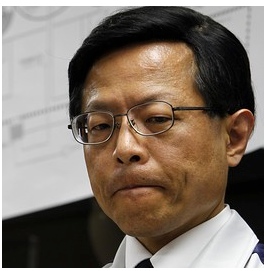
NishiyamaHidehiko

This is an incredibly racist insult to all the NJ who were both there and who went up there to help the victims of the disasters at great time, expense, and risk to their health — without scaring people.  I have two articles below the NYT from the WSJ which outline what a horrible little fellow this Nishiyama is, and how he keeps bouncing right back into power despite scandal within Japan’s unaccountable bureaucracy.

After that, I have some links to previous comments on this article.  I originally put this up yesterday as an addendum to a previous blog entry, but the comments there (see most of them in context here) are worth archiving here because they express the appropriate amount of outrage.  About a system that is, in the end, betraying everyone.  Kudos to NYT reporter Hiroko Tabuchi for uncovering this.  Arudou Debito

/////////////////////////////////////////////

In Japan, a Painfully Slow Sweep
The New York Times, January 7, 2013
By HIROKO TABUCHI
See photos at http://www.nytimes.com/2013/01/08/business/japans-cleanup-after-a-nuclear-accident-is-denounced.html

NARAHA, Japan — The decontamination crews at a deserted elementary school here are at the forefront of what Japan says is the most ambitious radiological cleanup the world has seen, one that promised to draw on cutting-edge technology from across the globe.

But much of the work at the Naraha-Minami Elementary School, about 12 miles away from the ravaged Fukushima Daiichi nuclear power plant, tells another story. For eight hours a day, construction workers blast buildings with water, cut grass and shovel dirt and foliage into big black plastic bags — which, with nowhere to go, dot Naraha’s landscape like funeral mounds.

More than a year and a half since the nuclear crisis, much of Japan’s post-Fukushima cleanup remains primitive, slapdash and bereft of the cleanup methods lauded by government scientists as effective in removing harmful radioactive cesium from the environment.

Local businesses that responded to a government call to research and develop decontamination methods have found themselves largely left out. American and other foreign companies with proven expertise in environmental remediation, invited to Japan in June to show off their technologies, have similarly found little scope to participate.

Recent reports in the local media of cleanup crews dumping contaminated soil and leaves into rivers has focused attention on the sloppiness of the cleanup.

“What’s happening on the ground is a disgrace,” said Masafumi Shiga, president of Shiga Toso, a refurbishing company based in Iwaki, Fukushima. The company developed a more effective and safer way to remove cesium from concrete without using water, which could repollute the environment. “We’ve been ready to help for ages, but they say they’ve got their own way of cleaning up,” he said.

Shiga Toso’s technology was tested and identified by government scientists as “fit to deploy immediately,” but it has been used only at two small locations, including a concrete drain at the Naraha-Minami school.

Instead, both the central and local governments have handed over much of the 1 trillion yen decontamination effort to Japan’s largest construction companies. The politically connected companies have little radiological cleanup expertise and critics say they have cut corners to employ primitive — even potentially hazardous — techniques.

The construction companies have the great advantage of available manpower. Here in Naraha, about 1,500 cleanup workers are deployed every day to power-spray buildings, scrape soil off fields, and remove fallen leaves and undergrowth from forests and mountains, according to an official at the Maeda Corporation, which is in charge of the cleanup.

That number, the official said, will soon rise to 2,000, a large deployment rarely seen on even large-sale projects like dams and bridges.

The construction companies suggest new technologies may work, but are not necessarily cost-effective.

“In such a big undertaking, cost-effectiveness becomes very important,” said Takeshi Nishikawa, an executive based in Fukushima for the Kashima Corporation, Japan’s largest construction company. The company is in charge of the cleanup in the city of Tamura, a part of which lies within the 12-mile exclusion zone. “We bring skills and expertise to the project,” Mr. Nishikawa said.

Kashima also built the reactor buildings for all six reactors at the Fukushima Daiichi plant, leading some critics to question why control of the cleanup effort has been left to companies with deep ties to the nuclear industry.

Also worrying, industry experts say, are cleanup methods used by the construction companies that create loose contamination that can become airborne or enter the water.

At many sites, contaminated runoff from cleanup projects is not fully recovered and is being released into the environment, multiple people involved in the decontamination work said.

In addition, there are no concrete plans about storing the vast amounts of contaminated soil and foliage the cleanup is generating, which the environment ministry estimates will amount to at least 29 million cubic meters, or more than a billion cubic feet.

The contaminated dirt lies in bags on roadsides, in abandoned fields and on the coastline, where experts say they are at risk from high waves or another tsunami.

“This isn’t decontamination — it’s sweeping up dirt and leaves and absolutely irresponsible,” said Tomoya Yamauchi, an expert in radiation measurement at Kobe University who has been helping Fukushima communities test the effectiveness of various decontamination methods. “Japan has started up its big public works machine, and the cleanup has become an end in itself. It’s a way for the government to appear to be doing something for Fukushima.”

In some of the more heavily contaminated parts of Fukushima, which covers about 100 square miles, the central government aims to reduce radiation exposure levels to below 20 millisieverts a year by 2014, a level the government says is safe for the general public. But experts doubt whether this is achievable, especially with current cleanup methods.

After some recent bad press, the central government has promised to step up checks of the decontamination work. “We will not betray the trust of the local communities,” Shinji Inoue, the environment vice minister, said Monday.

There had been high hopes about the government’s disaster reconstruction plan. It was announced four months after the March 2011 disaster, which declared Japan would draw on the most advanced decontamination know-how possible.

But confusion over who would conduct and pay for the cleanup slowed the government response. It took nine months for the central government to decide that it would take charge of decontamination work in 11 of the heaviest-contaminated towns and cities in Fukushima, leaving the rest for local governments to handle.

In October, the state-backed research organization, the Japan Atomic Energy Agency, announced that it was soliciting new decontamination technology from across the country.

By early November, the agency had identified 25 technologies that its own tests showed removed harmful cesium from the environment.

A new system to trap, filter and recycle contaminated runoff, developed by the local machinery maker Fukushima Komatsu Forklift, was one of technologies. But since then, the company has not been called on to participate in the state-led cleanup.

“For the big general contractors, it’s all about the bottom line,” said Masao Sakai, an executive at the company. “New technology is available to prevent harmful runoff, but they stick to the same old methods.”

The Japanese government also made an initial effort to contact foreign companies for decontamination support. It invited 32 companies from the United States that specialize in remediation technologies like strip-painting and waste minimization, to show off their expertise to Japanese government officials, experts and companies involved in the cleanup.

Opinions on the trip’s effectiveness vary among participants, but in the six months since, not a single foreign company has been employed in Japan’s cleanup, according to the trip’s participants and Japan’s Environment Ministry.

“Japan has a rich history in nuclear energy, but as you know, the U.S. has a much more diverse experience in dealing with the cleanup of very complicated nuclear processing facilities. We’ve been cleaning it up since World War II,” said Casey Bunker, a director at RJ Lee, a scientific consulting company based in Pennsylvania that took part in the visit.

“There was a little of, ‘Hey, bring your tools over and show us how it works.’ But they ultimately wanted to do it themselves, to fix things themselves,” Mr. Bunker said. “There didn’t seem to be a lot of interest in a consultative relationship moving forward.”

Japanese officials said adapting overseas technologies presented a particular challenge.

“Even if a method works overseas, the soil in Japan is different, for example,” said Hidehiko Nishiyama, deputy director at the environment ministry, who is in charge of the Fukushima cleanup. “And if we have foreigners roaming around Fukushima, they might scare the old grandmas and granddads there.”

Some local residents are losing faith in the decontamination effort.

“I thought Japan was a technologically advanced country. I thought we’d be able to clean up better than this,” said Yoshiko Suganami, a legal worker who was forced to abandon her home and office over two miles from the Fukushima Daiichi plant. “It’s clear the decontamination drive isn’t really about us any more.”

Most of the clients at Ms. Suganami’s new practice in Fukushima city are also nuclear refugees who have lost their jobs and homes and are trying to avert bankruptcy. She said few expect to ever return.
ENDS

/////////////////////////////////////////

In Japan Rarity, Nuclear Spokesman Replaced After Affair Allegations

By Yuka Hayashi

Wall Street Journal, June 30, 2011, courtesy of JE

http://blogs.wsj.com/japanrealtime/2011/06/30/in-japan-rarity-nuclear-spokesman-replaced-after-affair-allegations/

Over the past few months, the world has been rocked by revelations of powerful men caught in sex scandals: Arnold and Anthony Weiner, to name a few. Now Japan has its own version, which this week claimed the scalp of Hidehiko Nishiyama, Tokyo’s former chief nuclear spokesman.

NishiyamaHidehiko
Reuters
Hidehiko Nishiyama was demoted from his role as the government’s chief nuclear spokesman on June 29 after rumors about an alleged affair with a young female employee unfurled.

Unlike the U.S., where online flirting costs politicians their jobs, the public in Japan is generally forgiving of powerful men involved in sex scandals. But not this time.

Mr. Nishiyama, a successful career bureaucrat at the Ministry of Economy Trade and Industry, was abruptly pushed out of his role Wednesday, less than a week after a news magazine reported an alleged affair between him and a younger female staffer at the ministry. While Mr. Nishiyama, 54, denied having a sexual relationship with the woman through a ministry spokesman, the colorful details reported in the article became a source of incessant  gossip among the city’s elites.

Extra-marital affairs of politicians and business leaders are often viewed in Japan as they are in France – personal matters that should be left alone as long as they don’t interfere with their work — or dramatically offend people’s sensitivities. Some even consider such scandals as something the men should be proud of, as a sign of their power and personal charm.

Take Prime Minister Naoto Kan. In 1998, a news magazine reported his affair with a newscaster. He was called “You idiot!” by his wife, as he himself admitted, but suffered no lasting damage to his career. Paparazzi captured Goshi Hosono, a rising star of Mr. Kan’s ruling party, in a moment of passion with a TV reporter in 2006, but the 39-year-old married politician quickly put his career back on track; he just got appointed as Japan’s new nuclear minister on Monday.

Until recently, Mr. Nishiyama, who is married with two children, was known as a rising star within the ministry, but that hardly made him a public figure. That changed a few days after the March 11 disaster, when he was tapped to moderate the ministry’s daily briefings on the accident. With his articulate answers and knowledge of the power industry gained through his previous assignments, he became a familiar face on national television.

Mr. Nishiyama will now return to his pre-March 11 job in the ministry’s trade bureau, where his primary responsibility is to move Japan toward participating in a controversial regional trade agreement called the Trans-Pacific Partnership.

“I apologize if (the report) gave the impression or invited concerns that I was not fully committed to my job” Mr. Nishiyama said last week. Yukio Edano, chief government spokesman, said Wednesday Mr. Nishiyama was relieved of his responsibility due to “concerns that (the scandal) would interfere with his duties.”

ENDS

==================================

Wall Street Journal, November 18, 2011

Bureaucratic Fallout

By Yoree Koh and Yuka Hayashi

http://blogs.wsj.com/japanrealtime/2011/11/18/bureaucratic-fallout/

It has been a punishing day for Japan’s nuclear officials.

Environment Minister Goshi Hosono said Friday he would forgo his monthly cabinet salary of Y1.5 million, or roughly $20,000, to take responsibility for an employee of his ministry dumping radioactive soil sent from Fukushima prefecture near his backyard in Tokyo’s suburbs.

As the minister also overseeing the cleanup of the nuclear crisis, Mr. Hosono said the insensitive behavior exhibited by his staff ultimately falls on his shoulders. (He will continue to collect his Y1.3 million monthly income as a member of parliament).

Penalties were also imposed on the environment vice ministers, who will face a 20% pay cut for two months. Others involved have been transferred to other positions and given stern warnings.

The penalties come the day after Mr. Hosono revealed that an environment ministry employee threw soil with trace amounts of radiation away in a vacant lot near his home last week. The soil was sent to the ministry from a Fukushima resident, who had asked the ministry to get rid of the soil. Tests of the soil detected radiation of about 0.18 microsieverts per hour – a low level deemed safe.

Looking ever more haggard since becoming the central government’s captain in charge of the Fukushima Daiichi accident soon after March 11,  Mr. Hosono said at a press conference Friday: “What is behind this is the feeling among Fukushima residents that the government has not been implementing its responsibility for handling contaminated soil and should be doing more. I do not think I will be able to gain understanding of people in Fukushima with something like this,” according to state broadcaster NHK.

Separately, the environment ministry has taken in a familiar face to help oversee the soil decontamination effort. Hidehiko Nishiyama, a former government nuclear spokesman disgraced by a sex scandal,  has been named deputy chief of a special team for decontamination of Fukushima, set up within the ministry of environment, a spokeswoman for the Ministry of Economy, Trade and Industry said Friday.

Mr. Nishiyama, once a rising star at the METI, became a television star soon after the March accident at the Fukushima Daiichi plant as a well-spoken, never-tiring spokesman for the Nuclear and Industrial Safety Agency, the ministry’s nuclear regulatory body. But he lost the high-profile job in June after a weekly magazine carried a detailed account of his extramarital affair with a female staffer of the ministry. Mr. Nishiyama apologized at the time for the trouble the allegations had caused. On Sep. 30, the ministry formally suspended  the 54-year-old career bureaucrat for one month for having been engaged in “inappropriate” sexual conduct during working hours at the height of the nuclear crisis.

Mr. Nishiyama still remains an employee of the METI but will now be on lease to the environment ministry.  The 54-year-old elite bureaucrat joined the ministry in 1980 after graduating from Tokyo University. Mr. Nishiyama wasn’t available for comment.

ENDS

/////////////////////////////////////////////

COMMENTS:

AB: Like the classic “gaijin skis won’t work on Japanese snow” absurdity van Wolferen (?) wrote about 20 years ago. Unbelievable this crappola is still going on. Only gonna get worse with LDP back in the saddle. To paraphrase de Tocqueville “a people gets the government it deserves”

=======================

CD: i wonder the extent to which this statement is a convenient misdirection. it’s much easier to spew out some xenophobic nonsense than to publicly admit that fukushima has been written off. i mean, the place was written off the moment they built the plants. but what japanese politician or bureaucrat is going to admit to that? much easier to say grandma and grandpa might get scared by gaijin.

=======================

AB: No one — at least no one IN JAPAN — is EVER going to admit this (even though it’s true). It’s like the same-old same-old — everyone afraid of being tarred with the “Hikokumin brush” and being called “defeatist” or a “dream-destroyer” (yume wo kowasu hito).

Same dynamic that kept everyone with half a brain enough to see what was going on otherwise silent as Imperial Japan lurched toward — then plunged into — a suicidal war in 1941.

=======================

EF: This is private life, [Nishiyama] does with his tin-tin whenever he wants. What concerns us is his racist profile and he attacking foreigners this way again after all foreigners have done for the victims in Fukushima because, at the time of the hard cleaning up, many foreigners were there removing the corpses along with the Japanese and no one seemed scared by our presence.

=======================

GH: [Nishiyama’s] comments are already noted on his Wikipedia page under 日本人論的・差別的発言.

=======================

IJ: Pathological racism. Just like how they couldn’t use the U.S. military’s rescue helicopters in Kobe. The Japanese air is different so the pilots might not have been able to fly in Japanese airspace… and the U.S. and French doctors might have scared the earthquake victims to death. But it was really the swiss search dogs that would have been the biggest problem. Japanese dog food is so different. LOL … What a frigging mess Japan is in. Gladder and gladder I voted with my feet years ago.

=======================

KL: So the local victims have to suffer because of the racism of the authorities?! But I guess the little people don’t matter…

=======================

MN: I know the real reason foreign companies were not invited to take part. I have a relative who works for a major general contractor (maybe even one mentioned in the article). He tells me that ALL (not some, ALL) of their business is carried out in cash for the single purpose of ensuring bribes go smoothly. Foreign companies are not above this. They just don’t know how to play the game.

=======================

JDG: Yet another microcosm for all that is wrong with Japan. If the J-public (especially the victims of the disaster) are going to persist in taking it lying down (and unlubricated!), then I can’t see much hope for the future.

=======================

GP: Instead, there are now armies of cheap laborers washing down buildings with water and scraping topsoil off schoolyards and dumping it in local rivers – simply spreading the contamination even further while they toil to line the coffers of companies with the juicy cleanup contracts – companies that just conveniently are linked to the nuclear industry. And this is a first world country?

The final comment from the environment ministry really said it all though. This almost reads like a sarcastic joke referencing the “Japan has different snow” tactics of yester-year, with a fine dash of xenophobia thrown in for good measure. Can’t have any nasty furriners scaring the oldies!! (Let’s conveniently ignore the fact that hundreds of foreigners if not thousands have already given their time, money and labor to cleanup and rebuild in Tohoku, and by all accounts their assistance was warmly welcomed).

=======================

JDG: ATTENTION APOLOGISTS!

Since you obsessively check this site, please read Debito’s post #23 and explain to me;

  1. How this is simply one small isolated case of government and business collusion in corruption, and does by no means indicate that ‘Japan Inc.’ is broken?
  2. How does this prove that the Fukushima situation is fully safe and under control, and being managed in a transparent fashion?
  3. How does the following statement;’“Even if a method works overseas, the soil in Japan is different, for example,” said Hidehiko Nishiyama, deputy director at the environment ministry, who is in charge of the Fukushima cleanup. “And if we have foreigners roaming around Fukushima, they might scare the old grandmas and granddads there.”’, prove that rather than racism being endemic in the heart of the Japanese state, I am simply an over sensitive moaner who can’t understand Japan’s unique culture?
  4. How does this article prove that all Japan reporting is shoddy in nature, and biased unfairly against Japan?
  5. How does this statement by a displaced Fukushima resident; ‘“It’s clear the decontamination drive isn’t really about us any more.”’ clearly reek of unfair and scientifically unsound anti-nuclear lobby alarmism?

By all means, please take this opportunity to show us all where we have being getting it so wrong for all these years in our criticism of Japan.
=======================

ENDS
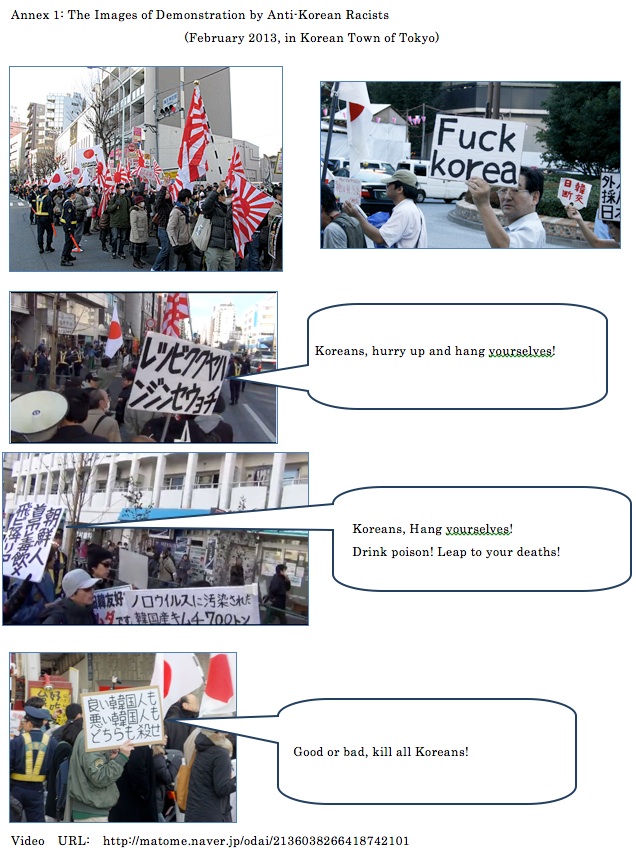
US Senator Daniel Inouye dies, Mazie Hirono Becomes First U.S. Senator Born in Japan; contrast with do-nothing self-gaijinizing Tsurunen

mytest

Books etc. by ARUDOU Debito (click on icon):
Handbook for Newcomers, Migrants, and Immigrants to Japan\" width=「ジャパニーズ・オンリー 小樽入浴拒否問題と人種差別」(明石書店)JAPANESE ONLY:  The Otaru Hot Springs Case and Racial Discrimination in Japansourstrawberriesavatardebitopodcastthumb
UPDATES ON TWITTER: arudoudebito
DEBITO.ORG PODCASTS on iTunes, subscribe free
“LIKE” US on Facebook at http://www.facebook.com/handbookimmigrants

Hi Blog.  Second in a series of two of prominent passings is American Senator Daniel Inouye, a notable Congressman who held on to his congressional seat longer than even legacy legislator Ted Kennedy.  As per the local obit excerpt below, he had a quite glorious career in the military as part of the groundbreaking 442nd (some veterans I’ve even met in Hawai’i), then was a pathbreaker for Asian-Americans as a public servant.

http://www.kitv.com/news/hawaii/Sen-Daniel-K-Inouye-dead-at-age-88/-/8905354/17808008/-/wsjrh/-/index.html
Senator Inouye began his career in public service at the age of 17 when he enlisted in the U.S. Army shortly after Imperial Japan attacked Pearl Harbor on December 7, 1941. He served with ‘E’ company of the 442 Regimental Combat Team, a group consisting entirely of Americans of Japanese ancestry. Senator Inouye lost his arm charging a series of machine gun nests on a hill in San Terenzo, Italy on April 21, 1945. His actions during that battle earned him the Medal of Honor.

But consider how he was able to do this, as pointed out by submitter PKU:

http://en.wikipedia.org/wiki/442nd_Infantry_Regiment_%28United_States%29
President Roosevelt announced the formation of the 442nd Infantry Regimental Combat Team (the “Go For Broke” regiment), saying, “Americanism is not, and never was, a matter of race or ancestry.” Ultimately, the draft was instated to obtain more Japanese–Americans from the mainland and these made up a large part of the 14,000 men who eventually served in the ranks of the 442nd Regiment.

Now this is important.  Even as least AS FAR BACK AS FDR (the better part of a century ago), we had the United States at the highest levels of public office attempting to disentangle race/national or social origin from nationality.

This is something that Japanese society to this day has never accomplished (Japan’s Nationality Law still requires blood for citizenship, and from that derives the entanglement of race and legal status).  Nor is Japan really trying.  I speak from personal experience (not to mention court precedent) when I say that civil and political rights in Japan are grounded upon being “Japanese”, and “Japaneseness” is grounded upon phenotype (i.e., “looking Japanese”).  This MUST be untangled by Japan if it ever hopes to encourage people to come in and settle down as “New Japanese”, not to mention allow people of mixed heritage to breathe as people of color and diversity.  But I neither see it happening soon, nor are progressive steps even being taken towards it (I am in fact arguing that Japan in recent years has been regressing… see herehere and here).

As further proof of the helpfulness of a society with notions of citizenship disentangled from race/national or social origin, we have another Senator from Hawaii who just got elected, Mazie Hirono — and she wasn’t even born in the United States!  She was born in Japan.

Now, you might say that, well, Finland-born Caucasian Dietmember Tsurunen Marutei has also been elected to high office in Japan, so big deal.  But Tsurunen has been at his post for more than a decade now, and he’s squandered the opportunity by settling into it like a sinecure — doing just about nothing for the rights of NJ in Japan (such as not even bothering to attend or send a rep to a UN CERD meeting at the Diet on May 18, 2006).  In fact, Tsurunen has even gone so far as marginalize and gaijinize himself!  If one gives him the benefit of the doubt (I don’t, but if), such are the effects of constant pressure of being socially “Othered” in Japan, despite his legal duty to uphold his constitutional status as a Japanese citizen and an elected official.

In comparison, the hurdles Hirono overcame were significant but not insuperable.  Even though she was nowhere near as articulate or politically thoroughbred as her Republican opponent, former Hawai’i Governor Laura Lingle, Hirono still grossed nearly double the votes (261,025 to 155,565) last November 6 to clinch the seat.  Further, if the legacy of Inouye is any template, I think Hirono will do more than just settle for being a symbolic sphinx in her role as a legislator.  Because she can — in a polity which can elect people for life despite their foreign (or foreign-looking) backgrounds, she has more opportunities in society than Tsurunen ever will — or will make for himself.

My point is, the disentanglement of race/social origin from nationality (i.e., rendering clearly and politically at the highest levels of government) is something that every state must do if it is to survive as a nation-state in future.  Given its demographics, especially Japan.  Arudou Debito

//////////////////////////////////////////////

November 6, 2012, 10:59 PM JST
Hirono Becomes First U.S. Senator Born in Japan
By Yoree Koh
http://blogs.wsj.com/japanrealtime/2012/11/06/japanese-born-woman-set-to-make-u-s-election-history/

Associated Press, Courtesy of CC

UPDATE: U.S. Democratic Rep. Mazie Hirono defeated former Hawaii Gov. Linda Lingle on Tuesday night, according to the Associated Press. Ms. Hirono becomes the Aloha State’s first woman senator as well as the first Japan-born immigrant to be elected to the U.S. Senate.

As Japan’s politicians jockey over when to hold the next general election, one of Japan’s own is on the cusp of making U.S. election history.

Recent polls show Democratic Rep. Mazie Hirono is favored to win the open Senate seat in Hawaii when voters cast their ballots Tuesday. If successful, Ms. Hirono will usher in a wave of firsts. She will be the first Japanese immigrant to be elected senator. She will also be the first Buddhist and Asian-American woman. She will be the first woman senator to represent the Aloha State, and is already the first foreign-born woman of Asian ancestry to be sworn into Congressional office.

The 65-year-old congresswoman was born in Fukushima, the northeastern prefecture where the tsunami-damaged Fukushima Daiichi nuclear plant is located. When she was 8 years old, her mother moved the family to Hawaii. Ms. Hirono once said the immigrant experience and being raised by a single mother in economically difficult circumstances made her a “feisty and focused” lawmaker. She became a naturalized citizen in 1959, the same year Hawaii became a state.

Regardless who wins, Hawaii will get its first woman senator. Ms. Hirono, currently serving her third term in the House of Representatives, is up against former Gov. Linda Lingle, a Republican and long-time political rival to whom Ms. Hirono lost the 2002 gubernatorial race. The two women are chasing the seat opened up by Hawaii’s 88-year-old junior senator, Daniel Akaka, a Democrat. After a 36-year career, Mr. Akaka, the Senate’s only Chinese American, announced his retirement last year.

Scores of Americans of Japanese descent have been elected to public office since World War II. Case in point: If Ms. Hirono wins, both senators from the Aloha State will be of Japanese descent. Senior senator Daniel Inouye, who is also a Democrat, made his own imprint on Asian American history as the first Japanese American to serve in the U.S. House of Representatives and later, the Senate. The 88-year-old Mr. Inouye has been a senator since 1963, making him the second-longest serving senator in U.S. history.

There have been only five Asian American senators until now. Four have represented Hawaii and one has represented California.

But no Japanese-born–or any Asian-born for that matter–has been elected to the Senate. According to the U.S. Senate Historical Office, of 1,931 senators who have been sworn in since 1789, there have been 58 born outside the U.S. Most immigrated from Ireland (16), England (12) and Canada (10). One each came from Cuba, Mexico, Antigua and Sweden. People who have been U.S. citizens for at least nine years are eligible to be senator.

Ms. Hirono is a familiar face among Hawaii’s Democratic establishment. Since returning from the mainland after earning a law degree from Georgetown University, she served for 14 years in the state legislature, eight years as lieutenant governor and is currently in her fifth year in the U.S. House of Representatives. Her one election failure was her bid to become governor in 2002. But it raised her profile, both at home and in Japan. State broadcaster NHK covered her campaign extensively and had plans to televise the 2002 election live, according to a Chicago Tribune story.

Ms. Hirono, whose immigrant story seems to resonate with Hawaii’s diverse voting population, has campaigned fully backing President Barack Obama’s platform, casting her opponent as a Republican lackey. The Hawaiian-born president recently recorded a radio ad for Ms. Hirono, noting that she once worked with his late grandmother, Madelyn Dunham.

“So Mazie isn’t just a reliable partner of mine in Washington; she is part of my ohana at home in Hawaii. Now, I need Mazie’s cooperative style and commitment to middle-class families in the U.S. Senate,” said the president in the ad released Saturday. “Mazie is a nationally recognized leader in early childhood education. A staunch defender of Medicare and Social Security.”

Ms. Lingle’s campaign challenges Ms. Hirono’s past claims of support for the middle class. “Contrary to her rhetoric and her efforts to portray herself as caring about working people, Mazie Hirono’s actions clearly illustrate either that her words are just talk or that she simply does not understand the impact of her votes,” said Retired Maj. Gen. Robert Lee, Ms. Lingle’s campaign manager, in a statement on Oct. 23.

In the final days of campaigning, polls indicated Ms. Hirono breaking away from her opponent with as much as a 22-percentage-point lead.

ENDS

Beate Sirota Gordon, one architect of the Postwar Japanese Constitution, dies at 89, her goals uncompleted if not currently being undone

mytest

Books etc. by ARUDOU Debito (click on icon):
Handbook for Newcomers, Migrants, and Immigrants to Japan\" width=「ジャパニーズ・オンリー 小樽入浴拒否問題と人種差別」(明石書店)JAPANESE ONLY:  The Otaru Hot Springs Case and Racial Discrimination in Japansourstrawberriesavatardebitopodcastthumb
UPDATES ON TWITTER: arudoudebito
DEBITO.ORG PODCASTS on iTunes, subscribe free
“LIKE” US on Facebook at http://www.facebook.com/handbookimmigrants

Hello Blog.  Let me devote this blog entry (one of two, next one in three days) to the passing of a historical figure whose importance within Japanese history cannot be overstated.  Beate Sirota Gordon, a woman in a committee of men drafting the Japanese Postwar Constitution, wrote articles that remain fundamental to the rights Debito.org has devoted decades to upholding:  Article 14, which guarantees that “All of the people are equal under the law and there shall be no discrimination in political, economic or social relations because of race, creed, sex, social status or family origin.”  The other, Article 24, states (excerpt), “Marriage shall be based only on the mutual consent of both sexes and it shall be maintained through mutual cooperation with the equal rights of husband and wife as a basis. With regard to choice of spouse, property rights, inheritance, choice of domicile, divorce and other matters pertaining to marriage and the family, laws shall be enacted from the standpoint of individual dignity and the essential equality of the sexes;” this guarantees fundamental human and civil rights to women that weren’t present under the horrible Prewar Ie Seido (which among other things made people into property).  A hearty Debito.org salute to Gordon for a life well lived and opportunities to improve Japanese society well taken.  NYT obituary enclosed below.

A few Debito.org-esque comments:  One is that the NYT’s claim below of “Ms. Gordon was the last living member of the American team that wrote Japan’s postwar Constitution” is probably erroneous.  That honor probably belongs to an old teacher of mine when I was at Cornell, Milton J. Esman, who was born in 1918 and is apparently still alive (see his resume page two here).  (Wikipedia also notes that Gordon was not the only woman assigned to the group either, as economist Eleanor Hadley was also present.)

Second, reflecting upon Gordon’s life when eulogizing, it is important to note a number of fundamental rights enshrined in the Japanese Constitution that have remained unenforced.  One is of course the lack of a law against racial discrimination (which is unconstitutional under Article 14 but not illegal in the Civil or Criminal Code), meaning racial discrimination can be (and is) “practiced undisturbed”, as the UN has noted in the past, in a “deep and profound” manner (despite Japan effecting the UN Convention on Racial Discrimination in 1996; we’re now approaching seventeen years of unkept promises).  The other I will just mention is the clause of “essential equality of the sexes” mentioned above in Article 24.  Despite the Equal Employment Opportunities Law of 1986, Japan still maintains an immense gender-wage gap:

genderpaygapasia2005
Screen capture courtesy ILO, “Work, Income, and Gender Equality in East Asia“, page 34.

Japan ranks at the very bottom (basically on par with ROK and Malaysia), and although the research notes that comprehensive comparisons cannot be made, the point still remains that women in Japan earn less than half of what men in Japan make for comparative work.  Wage differentials may be true in all societies (I know of no society where gender-pay equality is systemwide), but this egregious a gap is unbecoming of a developed country, and shows the lack of good-faith drafting or enforcement of constitutionally-grounded laws in Japanese society.

Finally, we have seen how much trouble the Japanese elite has gone to circumvent and undermine the Postwar “Peace Constitution”.  We can start with the translation into Japanese (that Gordon’s group missed despite their fluency) that limited Article 14’s interpretation of constitutional protections for “all of the people” to Japanese citizens only.  We can go on to talk about the unconstitutional standing military that is the JSDF and the right of education limited to citizens only in the Fundamental Law of Education.  Plenty more, if people wish to point that out in Comments.  And now, with the new PM Abe government, we can look forward to proposals for constitutional revisions to restore Japan’s military in name and allow for a remilitarization of Japan.

I wonder what Gordon would say now about Japan’s December 2012 rightward swing.  My guess is that she would lament her work remaining unaddressed if not being undone.  Arudou Debito

/////////////////////////////////////////////////////

Beate Gordon, Long-Unsung Heroine of Japanese Women’s Rights, Dies at 89
By MARGALIT FOX
Published: January 1, 2013
http://www.nytimes.com/2013/01/02/world/asia/beate-gordon-feminist-heroine-in-japan-dies-at-89.html
Courtesy of lots of people, particularly DY and CRF

Beate Sirota Gordon, the daughter of Russian Jewish parents who at 22 almost single-handedly wrote women’s rights into the Constitution of modern Japan, and then kept silent about it for decades, only to become a feminist heroine there in recent years, died on Sunday at her home in Manhattan. She was 89.

The cause was pancreatic cancer, her daughter, Nicole Gordon, said.

A civilian attached to Gen. Douglas MacArthur’s army of occupation after World War II, Ms. Gordon was the last living member of the American team that wrote Japan’s postwar Constitution.

Her work — drafting language that gave women a set of legal rights pertaining to marriage, divorce, property and inheritance that they had long been without in Japan’s feudal society — had an effect on their status that endures to this day.

“It set a basis for a better, a more equal society,” Carol Gluck, a professor of Japanese history at Columbia University, said Monday in a telephone interview. “By just writing those things into the Constitution — our Constitution doesn’t have any of those things — Beate Gordon intervened at a critical moment. And what kind of 22-year-old gets to write a constitution?”

If Ms. Gordon, neither lawyer nor constitutional scholar, was indeed an unlikely candidate for the task, then it is vital to understand the singular confluence of forces that brought her to it:

Had her father not been a concert pianist of considerable renown; had she not been so skilled at foreign languages; and had she not been desperate to find her parents, from whom she was separated during the war and whose fate she did not know for years, she never would have been thrust into her quiet, improbable role in world history.

Nor would she have been apt to embark on her later career as a prominent cultural impresario, one of the first people to bring traditional Asian performing arts to audiences throughout North America — a job, pursued vigorously until she was nearly 70, that entailed travel to some of Asia’s most remote, inaccessible reaches.

The daughter of Leo Sirota and the former Augustine Horenstein, Beate (pronounced bay-AH-tay) Sirota was born on Oct. 25, 1923, in Vienna, where her parents had settled.

When she was 5, her father was invited to teach at the Imperial Academy of Music in Tokyo, and the family moved there for a planned six-month stay. Mr. Sirota soon became revered in Japan as a performer and teacher, and they wound up living in Tokyo for more than a decade.

Beate was educated at a German school in Tokyo and, from the mid-1930s on, after the school became far too Nazified for her parents’ liking, at the American School in Japan. In 1939, shortly before her 16th birthday, she left for Mills College in Oakland, Calif. Her parents remained in Japan.

In December 1941, after the attack on Pearl Harbor, it became impossible to contact Japan. Beate had no word from her parents, and no money.

She put her foreign language prowess to work: by this time, she was fluent in English, Japanese, German, French, Spanish and Russian.

Obtaining permission from Mills to take examinations without having to attend classes, she took a job at a United States government listening post in San Francisco, monitoring radio broadcasts from Tokyo. She later worked in San Francisco for the United States Office of War Information, writing radio scripts urging Japan to surrender.

Beate Sirota received her bachelor’s degree in modern languages from Mills in 1943 and became a United States citizen in January 1945. At war’s end, she still did not know whether her parents were alive or dead.

For American civilians, travel to Japan was all but impossible. She went to Washington, where she secured a job as an interpreter on General MacArthur’s staff. Arriving in a devastated Tokyo on Christmas Eve 1945, she went immediately to her family’s house. Where it had stood was only a single charred pillar.

She eventually found her parents, who had been interned in the countryside and were malnourished. She took them to Tokyo, where she nursed them while continuing her work for General MacArthur.

One of MacArthur’s first priorities was drafting a constitution for postwar Japan, a top-secret assignment, begun in February 1946, that had to be finished in just seven days. As the only woman assigned to his constitutional committee, along with two dozen men, young Beate Sirota was deputized to compose the section on women’s rights.

She had seen women’s lives firsthand during the 10 years she lived in Japan, and urgently wanted to improve their status.

“Japanese women were historically treated like chattel; they were property to be bought and sold on a whim,” Ms. Gordon told The Dallas Morning News in 1999. “Women had no rights whatsoever.”

Commandeering a jeep at the start of that week in February, she visited the libraries in Tokyo that were still standing, borrowing copies of as many different countries’ constitutions as she could. She steeped herself in them and, after seven days of little sleep, wound up drafting two articles of the proposed Japanese Constitution.

One, Article 14, said in part, “All of the people are equal under the law and there shall be no discrimination in political, economic or social relations because of race, creed, sex, social status or family origin.”

The other, Article 24, gave women protections in areas including “choice of spouse, property rights, inheritance, choice of domicile, divorce and other matters.”

The new Constitution took effect in 1947; the next year, Beate Sirota married Joseph Gordon, who had been the chief interpreter for American military intelligence in postwar Japan.

In the 1950s, Ms. Gordon joined the staff of the Japan Society in New York, becoming its director of performing arts. In that capacity, she introduced many Japanese artists to the West, including masters of traditional music, dance, woodblock printing and the tea ceremony.

In 1970, she became director of performing arts at the Asia Society in New York. She scoured Asia for talent, bringing Balinese gamelan ensembles, Vietnamese puppeteers, Mongolian dancers and many others to stages throughout the United States and Canada. She retired in 1991 as the society’s director of performances, films and lectures.

Ms. Gordon’s husband, who became a real estate developer, died last August. Besides her daughter, she is survived by a son, Geoffrey, and three grandchildren.

For decades, Ms. Gordon said nothing about her role in postwar Japan, at first because the work was secret and later because she did not want her youth — and the fact that she was an American — to become ammunition for the Japanese conservatives who have long clamored for constitutional revision.

But in the mid-1980s, she began to speak of it publicly. The release of her memoir, “The Only Woman in the Room,” published in Japanese in 1995 and in English two years later, made her a celebrity in Japan, where she lectured widely, appeared on television and was the subject of a stage play and a documentary film, “The Gift From Beate.”

In recent years, amid renewed attacks on the Constitution by Japanese conservatives, Ms. Gordon spoke out ardently in its defense.

Ms. Gordon was awarded the Order of the Sacred Treasure, a high honor bestowed by the Japanese government, in 1998. But perhaps the greatest accolade she received came from Japanese women themselves.

“They always want their picture taken with me,” Ms. Gordon told ABC News in 1999. “They always want to shake my hand. They always tell me how grateful they are.”
ENDS

Japan Times JUST BE CAUSE Column 59: The year for NJ in 2012: a Top 10

mytest

Books etc. by ARUDOU Debito (click on icon):
Handbook for Newcomers, Migrants, and Immigrants to Japan\" width=「ジャパニーズ・オンリー 小樽入浴拒否問題と人種差別」(明石書店)JAPANESE ONLY:  The Otaru Hot Springs Case and Racial Discrimination in Japansourstrawberriesavatardebitopodcastthumb
UPDATES ON TWITTER: arudoudebito
DEBITO.ORG PODCASTS on iTunes, subscribe free
“LIKE” US on Facebook at http://www.facebook.com/handbookimmigrants

justbecauseicon.jpg

Hi Blog. Thanks everyone for putting this article in the Top Ten Most Read once again for most of New Year’s Day (and to the JT for distinguishing this with another “Editor’s Pick”). Great illustrations as always by Chris Mackenzie.  Here’s hoping I have more positive things to say in next year’s roundup… This version with links to sources. Enjoy. And Happy New Year 2013.  Arudou Debito

=================================

The Japan Times: Tuesday, Jan. 1, 2013

The year for non-Japanese in ’12: a top 10

By ARUDOU DEBITO

Back by popular demand, here is JBC’s roundup of the top 10 human rights events that most affected non-Japanese (NJ) residents of Japan in 2012, in ascending order.

10. Keene’s naturalization (March 7)
News photo

This should have occasioned great celebration in Japan’s era of crisis, but instead, scholar Donald Keene’s anointment as a Japanese citizen became a cautionary tale, for two reasons. One was his very public denigration of other NJ (despite their contributions as full-time Japan residents, taxpayers and family creators) as alleged criminals and “flyjin” deserters (JBC, Apr. 3), demonstrating how Old Japan Hands eat their young. The other was the lengths one apparently must go for acceptance: If you spend the better part of a century promoting Japanese literature to the world, then if you live to, oh, the age of 90, you might be considered “one of us.”

It seems Japan would rather celebrate a pensioner salving a wounded Japan than young multiethnic Japanese workers potentially saving it.

9. Liberty Osaka defunded (June 2)
News photo

Liberty Osaka (www.liberty.or.jp), Japan’s only human rights museum archiving the historical grass-roots struggles of disenfranchised minorities, faces probable closure because its government funding is being cut off. Mayor Toru Hashimoto, of hard-right Japan Restoration Party fame (and from a disenfranchised minority himself), explicitly said the divestment is due to the museum’s displays being “limited to discrimination and human rights,” thereby failing to present Japan’s children with a future of “hopes and dreams.”

In a country with the most peace museums in the world, this politically motivated ethnic cleansing of the past augurs ill for cultural heterogeneity under Japan’s right-wing swing (see below).

Sources:  https://www.debito.org/?p=10619 http://japanfocus.org/-Tessa-Morris_Suzuki/3818

8. Nationality Law ruling (March 23)
News photo

In a throwback to prewar eugenics, Tokyo District Court ruled constitutional a section of the Nationality Law’s Article 12 stating that a) if a man sires a child with a foreigner b) overseas, and c) does not file for the child’s Japanese citizenship within three months of birth, then citizenship may legally be denied.

Not only did this decision erode the 2008 Supreme Court ruling that granted citizenship to international children born out of wedlock, but it also made clear that having “foreign blood” (in a country where citizenship is blood-based) penalizes Japanese children — because if two Japanese nationals have a child overseas, or if the child is born to a Japanese woman, Article 12 does not apply. The ruling thus reinforced a legal loophole helping Japanese men evade responsibility if they fool around with foreign women.

Sources:  https://www.debito.org/?p=10060 https://www.debito.org/?p=1715

7. No Hague signing (September 8)
News photo

Japan’s endorsement of the Hague Convention on the Civil Aspects of International Child Abduction became a casualty of months of political gridlock, as the opposition Liberal Democratic Party blocked about a third of the ruling Democratic Party of Japan’s bills.

The treaty outlines protocol for how children of broken marriages can avoid international tugs of war. As the Community Pages have reported umpteen times, Japan, one of the few developed countries that is not a signatory, remains a haven for postdivorce parental alienation and child abductions.

Since joint custody does not legally exist and visitation rights are not guaranteed, after a Japanese divorce one parent (regardless of nationality) is generally expected to disappear from their child’s life. Former Diet member Masae Ido (a parental child abductor herself) glibly called this “a Japanese custom.” If so, it is one of the most psychologically damaging customs possible for a child, and despite years of international pressure on Japan to join the Hague, there is now little hope of that changing.

Sources:  http://www.japantimes.co.jp/text/nn20120908a2.html
https://www.debito.org/?p=10548

6. Immigration talks (May 24-August 27)
News photo

In one of the few potentially bright spots for NJ in Japan this year, the Yoshihiko Noda Cabinet convened several meetings on how Japan might go about creating a “coexistence society” that could “accept” NJ (JBC, July 3). A well-intentioned start, the talks included leaders of activist groups, local governments and one nikkei academic.

Sadly, it fell into old ideological traps: 1) Participants were mostly older male Japanese bureaucrats; 2) those bureaucrats were more interested in policing NJ than in making them more comfortable and offering them a stake in society; 3) no NJ leader was consulted about what NJ themselves might want; and 4) the Cabinet itself confined its concerns to the welfare of nikkei residents, reflecting the decades-old (but by now obviously erroneous) presumption that only people with “Japanese bloodlines” could “become Japanese.”

In sum, even though the government explicitly stated in its goals that NJ immigration (without using the word, imin) would revitalize our economy, it still has no clue how to make NJ into “New Japanese.”

Source:  https://www.debito.org/?p=10396

5. Mainali, Suraj cases (June 7, July 3)
News photo

2012 saw the first time an NJ serving a life sentence in Japan was declared wrongfully convicted, in the case of Govinda Prasad Mainali. The last time that happened (Toshikazu Sugaya in 2009), the victim was released with a very public apology from public prosecutors. Mainali, however, despite 15 years in the clink, was transferred to an immigration cell and deported. At least both are now free men.

On the other hand, the case of Abubakar Awudu Suraj (from last year’s top 10), who died after brutal handling by Japanese immigration officers during his deportation on March 22, 2010, was dropped by public prosecutors who found “no causal relationship” between the treatment and his death.

Thus, given the “hostage justice” (hitojichi shihō) within the Japanese criminal prosecution system, and the closed-circuit investigation system that protects its own, the Japanese police can incarcerate you indefinitely and even get away with murder — particularly if you are an NJ facing Japan’s double standards of jurisprudence (Zeit Gist, Mar. 24, 2009).

Sources: https://www.debito.org/?p=9265
https://www.debito.org/?p=10407
“Hostage justice”: https://www.debito.org/?p=1426

4. Visa regimes close loop (August)
News photo

Over the past two decades, we have seen Japan’s visa regimes favoring immigration through blood ties — offering limited-term work visas with no labor law rights to Chinese “trainees” while giving quasi-permanent-residency “returnee” visas to nikkei South Americans, for example.

However, after 2007’s economic downturn, blood was judged to be thinner than unemployment statistics, and the government offered the nikkei (and the nikkei only) bribes of free airfares home if they forfeited their visa status (JBC, Apr. 7, 2009). They left in droves, and down went Japan’s registered NJ population for the first time in nearly a half-century — and in 2012 the Brazilian population probably dropped to fourth place behind Filipinos.

But last year was also when the cynical machinations of Japan’s “revolving door” labor market became apparent to the world (JBC, March 6) as applications for Japan’s latest exploitative visa wheeze, “trainee” nurses from Indonesia and the Philippines, declined — and even some of the tiny number of NJ nurses who did pass the arduous qualifying exam left. Naturally, Japan’s media (e.g., Kyodo, June 20; Aug. 4) sought to portray NJ as ungrateful and fickle deserters, but nevertheless doubts remain as to whether the nursing program will continue. The point remains that Japan is increasingly seen as a place to avoid in the world’s unprecedented movement of international labor.

Sources: https://www.debito.org/?p=10010
https://www.debito.org/?p=10497
https://www.debito.org/?p=10340
International labor migration stats http://www.oecd.org/els/internationalmigrationpoliciesanddata/internationalmigrationoutlook2012.htm

3. New NJ registry system (July 5)
News photo

One of the most stupefying things about postwar Japan has been how NJ could not be registered with their Japanese families on the local residency registry system (jūmin kihon daichō) — meaning NJ often went uncounted in local population tallies despite being taxpaying residents! In 2012, this exclusionary system was finally abolished along with the Foreign Registry Law.

Unfortunately, this good news was offset by a) NJ still not being properly registered on family registries (koseki), b) NJ still having to carry gaijin cards at all times (except now with potentially remotely readable computer chips), and c) NJ still being singled out for racial profiling in spot ID checks by Japanese police (even though the remaining applicable law requires probable cause). It seems that old habits die hard, or else just get rejiggered with loopholes.

Sources:  https://www.debito.org/?p=10414
https://www.debito.org/?p=9718
Remotely readable computer chips https://www.debito.org/?p=10750

2. Post-Fukushima Japan is bust
News photo

After the multiple disasters of March 11, 2011, there was wan hope that Japan’s electorate would be energized enough to demand better governance. Nope. And this despite the revelations in December 2011 that the fund for tsunami victims was diverted to whaling “research.” And the confusing and suppressed official reports about radioactive contamination of the ecosystem. And the tsunami victims who still live in temporary housing. And the independent parliamentary report that vaguely blamed “Japanese culture” for the disaster (and, moreover, offered different interpretations for English- and Japanese-reading audiences). And the reports in October that even more rescue money had been “slush-funded” to unrelated projects, including road building in Okinawa, a contact lens factory in central Japan and renovations of Tokyo government offices.

Voters had ample reason for outrage, yet they responded (see below) by reinstating the original architects of this system, the LDP.

For everyone living in Japan (not just NJ), 2012 demonstrated that the Japanese system is beyond repair or reform.

Sources:  https://www.debito.org/?p=9745
https://www.debito.org/?p=9756
https://www.debito.org/?p=10706
https://www.debito.org/?p=10428
https://www.debito.org/?p=9698
http://japanfocus.org/-Iwata-Wataru/3841

1. Japan swings right (December)
News photo

Two columns ago (JBC, Nov. 6), I challenged former Tokyo Gov. Shintaro Ishihara (whose rabble-rousing bigotry has caused innumerable headaches for disenfranchised people in Japan, particularly NJ) to “bring it on” and show Japan’s true colors to the world in political debates. Well, he did. After a full decade of successfully encouraging Japanese society to see NJ (particularly Chinese) as innately criminal, Ishihara ratcheted things up by threatening to buy three of the privately-owned Senkaku islets (which forced the Noda administration to purchase them instead, fanning international tensions). Then Ishihara resigned his governorship, formed a “restorationist” party and rode the wave of xenophobia caused by the territorial disputes into the Diet’s Lower House (along with 53 other party members) in December’s general election.

Also benefiting from Ishihara’s ruses was the LDP, who with political ally New Komeito swept back into power with 325 seats. As this is more than the 320 necessary to override Upper House vetoes, Japan’s bicameral legislature is now effectively unicameral. I anticipate policy proposals (such as constitutional revisions to allow for a genuine military, fueling an accelerated arms race in Asia) reflecting the same corporatist rot that created the corrupt system we saw malfunctioning after the Fukushima disaster. (Note that if these crises had happened on the LDP’s watch, I bet the DPJ would have enjoyed the crushing victory instead — tough luck.)

In regards to NJ, since Japan’s left is now decimated and three-quarters of the 480-seat Lower House is in the hands of conservatives, I foresee a chauvinistic movement enforcing bloodline-based patriotism (never mind the multiculturalism created by decades of labor influx and international marriage), love of a “beautiful Japan” as defined by the elites, and more officially sanctioned history that downplays, ignores and overwrites the contributions of NJ and minorities to Japanese society.

In sum, if 2011 exposed a Japan in decline, 2012 showed a Japan closing.

Sources: https://www.debito.org/?p=10854
New arms race:  http://www.bbc.co.uk/news/world-asia-20302604 (Watch the video from minute 5.30:  the Hyuuga, Postwar Japan’s first new aircraft carrier is now in commission, two new big aircraft carriers are in production.)

Bubbling under (in descending order):

• China’s anti-Japan riots (September) and Senkaku-area maneuvers (October to now).

• North Korea’s missile test timed for Japan’s elections (December 12).

• NJ workers’ right to strike reaffirmed in court defeat of Berlitz (February 27).

• NJ on welfare deprived of waiver of public pension payments (August 10), later reinstated after public outcry (October 21).

• Statistics show 2011’s postdisaster exodus of NJ “flyjin” to be a myth (see JBC, Apr. 3).

Sources: https://www.debito.org/?p=10055
https://www.debito.org/?p=10081

Debito Arudou and Akira Higuchi’s bilingual 2nd Edition of “Handbook for Newcomers, Migrants, and Immigrants,” with updates for 2012’s changes to immigration laws, is now on sale. Twitter @arudoudebito. Just Be Cause appears on the first Community Page of the month. Send your comments to community@japantimes.co.jp.
The Japan Times: Tuesday, Jan. 1, 2013
ENDS

Japan now a place to avoid for international labor migration? NHK: Even Burmese refugees refusing GOJ invitations, electing to stay in Thai refugee camp!

mytest

Books etc. by ARUDOU Debito (click on icon):
Handbook for Newcomers, Migrants, and Immigrants to Japan\" width=「ジャパニーズ・オンリー 小樽入浴拒否問題と人種差別」(明石書店)JAPANESE ONLY:  The Otaru Hot Springs Case and Racial Discrimination in Japansourstrawberriesavatardebitopodcastthumb
UPDATES ON TWITTER: arudoudebito
DEBITO.ORG PODCASTS on iTunes, subscribe free

Hi Blog.  In this time of unprecedented migration of labor across borders (click to see some international labor migration stats from the ILO and the OECD), I think increasingly one can make a strong case that Japan is being seen as a place to avoid.  As I will be mentioning in my next Japan Times JUST BE CAUSE column (out January 1, 2013), as part of my annual countdown of the Top Ten most influential human rights issues in 2012 affecting NJ in Japan, Japan’s “revolving-door” visa regimes (which suck the most productive work years out of NJ while giving them fewer (or no) labor law protections, and no stake in Japanese society — see here and here), people who are even guaranteed a slot in Japan’s most difficult visa status — refugees (see also here) — are turning the GOJ down!  They’d rather stay in a Thai refugee camp than emigrate to Japan.  And for reasons that are based upon word-of-mouth.

That’s what I mean — word is getting around, and no amount of faffing about with meetings on “let’s figure out how We Japanese should ‘co-exist’ with foreigners” at the Cabinet level is going to quickly undo that reputation.

Immediately below is the article I’m referring to.  Below that I offer a tangent, as to why Burmese in particular get such a sweetheart deal of guaranteed GOJ refugee slots.  According to media, “From 1982 to 2004, Japan accepted only 313 refugees, less than 10 per cent of those who applied. Even after its rules were slightly liberalized in 2004, it allowed only 46 refugees in the following year. Last year it accepted only 34 of the 954 applicants.  Those numbers are tiny in comparison with Canada, which accepted more than 42,000 refugees last year, despite having a much smaller population than Japan.  But they are also tiny in comparison to European countries such as France and Italy. On a per capita basis, Japan’s rate of accepting refugees is 139th in the world, according to the United Nations.”  This means that Burmese make up between a third to a half of all refugees accepted!  Why?  As a holiday tangent, consider the elite-level intrigue of a wartime connection between the Japanese Imperial Army and SLORC…  Arudou Debito

///////////////////////////////////////////////////

Japan to receive no Myanmar refugee this year
via NHK
Published on Wednesday, 26 September 2012
http://www.houseofjapan.com/local/japan-to-receive-no-myanmar-refugee-this-year

All 16 people on a list of Myanmar refugees preparing to enter Japan have dropped out of the program. They have decided to remain in a camp in northwestern Thailand.

The 16, from 3 families, said they were worried about life in Japan. They had already quit studying Japanese language and culture.

The Japanese government started the program 2 years ago to help refugees who escaped from conflicts and persecutions in their home countries.

45 people from 9 families have used the program to move to Japan.

One of those leaving the program this year said he wanted his children to study technology in Japan, but was concerned that he had no support network in the country.

He had planned to move to Japan with his wife and 4 children.

Myanmar’s democratization has convinced some refugees to return home.

The Japanese government says it plans to continue the program next year.

ENDS

Now for the political intrigue:

/////////////////////////////////////

JPRI Working Paper No. 60: September 1999
Japan’s “Burma Lovers” and the Military Regime (excerpt)
by Donald M. Seekins
http://www.jpri.org/publications/workingpapers/wp60.html

Japanese people often claim that their nation has a “special relationship” with Burma. Most older Japanese think of Michio Takeyama’s novel Biruma no tategoto (translated by Howard Hibbett as Harp of Burma), the story of Private Mizushima, a good-hearted soldier who is separated from his comrades and dons the robes of a Buddhist monk. When his unit is repatriated to Japan after the war, he refuses to go with them, staying behind to take care of the remains of the Japanese war-dead. As many as 190,000 Japanese soldiers died in Burma in 1941-1945, and groups of veterans regularly visit the country to relive old memories and pray at the graves of fallen comrades.[…]

The most important legacy of the Japanese occupation was the establishment of a powerful national army, Tatmadaw in Burmese, which grew out of the BIA and was largely modeled on Japanese rather than British lines. Many of its officers studied at Japanese military academies during the war. Lieutenant General Khin Nyunt, a leading member of the military junta that has ruled Burma since September 1988, commented in November 1988, “We shall never forget the important role played by Japan in our struggle for national independence” and “We will remember that our Tatmadaw [army] was born in Japan.”1 Ethnic minorities like the Karens and Shans who have experienced the Tatmadaw’s counterinsurgency campaigns in the border areas claim that its brutal behavior was inspired by the Imperial Japanese Army.[…]

Postwar Economic Ties

Postwar relations between Japan and Burma were primarily economic in nature. Official ties began in 1954, after Tokyo and the U Nu government signed a peace treaty and a war reparations agreement, which brought the struggling young state some US$250 million in Japanese goods and services, supplemented by “quasi-reparations” amounting to US$132 million between 1965 and 1972. Tokyo allocated these additional “quasi-reparations” (jun baisho) on the grounds that the original funds were insufficient compared to those given other Asian countries.

During this period, many Japanese who went to Burma as diplomats or technical advisers fell in love with the country. Back home, they were called biru-kichi (Biruma-kichigai, “crazy about Burma”), a remarkable attitude given the condescension with which most Japanese officials regarded their poor Asian neighbors. Japanese were impressed by the professionalism and honesty of Burma’s civil servants, who used reparation funds conscientiously, in contrast to some other recipient governments.

Many Japanese also identified with the country because of shared Buddhist values, although the schools of Buddhism (Theravada in Burma, Mahayana in Japan) are different. Their social ethics are similar, however, stressing respect for elders and educated people, strong family ties, and a sense of mutual obligation. But while Japan had rapidly modernized and is losing many of these traditional values, Burma seemed to have preserved them uncorrupted by modernity.

According to the well-known business guru Ken’ichi Ohmae, who visited Burma in 1997 with a Japanese business delegation and was a quick convert to the biru-kichi mindset, “Even I, with much contact with many Asian countries, have seen no other country in Asia whose morality is so firmly grounded in Buddhism.”2 Ohmae compares Burma favorably with China where allegedly “they do everything for money.” Burma also evokes his nostalgia for Japan’s rural past: “Seeing the lives of the people in Myanmar [Burma], I remembered Japan in previous years. I was raised in the countryside in Kyushu, where children always walked around barefoot, the lights were not electric, and the bathrooms had no running water. The current Myanmar mirrors these memories of farming villages in Japan.” While biru-kichi is a refreshing alternative to the insular Japan-is-unique worldview, it is not unmixed with other motives, as the title of Ohmae’s November 26, 1997, article in Sapio (magazine) suggests: “Cheap and Hardworking Laborers: This country Will Be Asia’s Best.” […]

Many inside Japan’s business world–and their supporters in academia and the media–seem to share a common goal with the junta: discrediting Aung San’s daughter. Given her central role in the struggle for democracy, it is not an exaggeration to say that if she could be marginalized and lost the support of the international community, big corporations in Japan and elsewhere would find it easy to get their governments to snuggle closer to the junta. Without Suu Kyi, full economic engagement and recognition would surely follow swiftly.

Kazushige Kaneko, director of an obscure Institute of Asian Ethnoforms and Culture in Tokyo, repeats the junta’s racist charges that Aung San Suu Kyi sold out her country by marrying a foreigner, the late Oxford professor Dr. Michael Aris. He writes, “For example, if Makiko Tanaka [the daughter of former Prime Minister Kakuei Tanaka and today a member of the Diet] stayed in America for thirty years and returned with a blue-eyed American husband and children, do you think we Japanese would make her our prime minister?” (The Asia 21 Magazine, Fall 1996).

Nor is the attack on Aung San Suu Kyi confined to fringe figures. In an April 1995 article published in Bungei Shunju, Yusuke Fukada claims that Burmese are sending out a “love call” (rabu kooru) to Japan for economic assistance and that Suu Kyi is the only real obstacle to better relations. The reason she is so uncompromising with the military regime, Fukada argues, is her marriage to an Englishman. “If she had married a Japanese, she would have made quite different decisions.” In the June 1996 issue of Shokun, Keio University Professor Atsushi Kusano expresses amazement that Suu Kyi has become a figure of international stature, attributing it to a campaign by the mass media.8 […]

Two factors seem to account for Japan’s ambiguous Burma policy. One is the strength of its business interests, counterbalanced by pressure from Japan’s Western trading partners who take a less indulgent stance toward the junta. Some observers cynically suggest that Western governments, especially Washington, act as Tokyo’s “superego” on human rights, inhibiting it from pursuing its usual economics-first policies. But Liberal Democratic Party cabinets cannot ignore business interests, which have been stepping up pressure for full engagement since 1989, using means both fair and foul. The best of both worlds for policymakers in Japan would be a transition to civilian rule, either involving Aung San Suu Kyi or someone else. This could legitimize more active aid policies as well as greater investment by Japanese companies. But given the political situation, this is unlikely to happen soon.

Second, if Tokyo strongly supported the democracy movement in Burma, this would inevitably reflect on its policies toward other countries such as China and Indonesia, where the stakes for Japan are much higher. Some Americans have criticized their own government’s inconsistency on this matter: the Clinton Administration maintains sanctions on little-known Burma but maintains full economic engagement with the regime in Beijing.

Japanese elites are not used to and do not like open debate, especially on foreign policy. Some members of the Diet are interested in Burma, both pro- and anti-junta, but the issues are rarely discussed, even the junta’s misuse of debt relief funds for the procurement of weapons. Bureaucrats and LDP bigwigs keep policy initiatives to themselves, which means that their actions often appear incomprehensible or arbitrary to outsiders, including Japanese citizens. The flap over so-called humanitarian aid for Rangoon’s airport is an example of this. In a way, Tokyo’s Burma policy, deeply influenced by the sentimental Orientalism of the business world and its allies, says as much about the limitations of Japanese-style democracy as it does about the lack of democracy in Burma.

Full article at http://www.jpri.org/publications/workingpapers/wp60.html

ENDS

2012 Election Special: Japan’s lurch to the right has happened, as predicted. DPJ routed, LDP and Ishihara ascendant in Dec 2012 LH Election

mytest

Books etc. by ARUDOU Debito (click on icon):
Handbook for Newcomers, Migrants, and Immigrants to Japan\" width=「ジャパニーズ・オンリー 小樽入浴拒否問題と人種差別」(明石書店)JAPANESE ONLY:  The Otaru Hot Springs Case and Racial Discrimination in Japansourstrawberriesavatardebitopodcastthumb
UPDATES ON TWITTER: arudoudebito
DEBITO.ORG PODCASTS on iTunes, subscribe free

Hi Blog. It’s been said that people get the democracy that they deserve.  Although unduly harsh, that rings true today, as the results of 2012’s election have absolutely routed the DPJ and placed the old-school LDP/Koumeitou alliance and the even older-school Ishihara Party, pardon, Japan Restoration Party (JRP) with a greater than 3/4 majority (LDP/KMT at 324, JRP 54) as a total in the 480-seat Lower House. (Source: Yomiuri 12/17/12) This is well over the 320 votes necessary to override the Upper House’s vetoes, and essentially makes Japan’s bicameral legislature unicameral. This new parliamentary composition could very well squeeze out a revision to the Self-Defense Forces (calling it what it really is: a standing military that should be unconstitutional) as well as force a “revision of the pacifist American-made Japanese Constitution” out of this.  More on this below.

The DPJ, for its part, was completely and utterly routed. It went from 230 seats in the Lower House to, as of this writing, a mere 57. Even in my home area of Hokkaido, a bellwether DPJ stronghold, the DPJ lost *ALL* their seats in their 12-district electoral system (with only two DPJ, including long-standing career politician Yokomichi — as a legacy vote due to his status as current Speaker of the Lower House and former Hokkaido Governor — squeaking by on the Proportional Representation vote). (Source: Yomiuri 12/17/12) This meant that eight Cabinet members lost their seats (two of them, Public Safety’s Kodaira and Health and Welfare’s Mitsui, from Hokkaido), which is by far a Postwar record (the previous record was only three in the 1983 Nakasone Cabinet). (Source: Yomiuri 12/17/12).

The smaller fringe parties saw increases more favoring the right than the left (as of this writing, according to the Yomiuri, Communists are down yet another seat from 9 to 8, socialist Shamintou down from 5 to 2, DPJ ally Kokumin Shintou down from 3 to 1, and the shards of other parties Mirai no Tou down from 61 to 9!).  The quasi-libertarian but really all-over-the-map-just-vote-for-us-already Minna no Tou was up from 8 to 18.  And one-man-party Shintou Daichi, run by the utterly corrupt Hokkaidoite and Debito.org bogeyman Suzuki Muneo, was also down from 3 to 1.

How to interpret all of this? Former and future PM Abe Shinzo rather glibly offers the assessment that the voters were “saying no to the confusion of the past three years” (a confusion created by people like him, note). I’m sure others have their reads, and we’ll let the Comments Section below cover that. My read is that people were voting less a “yes” for Abe (who was one of Japan’s most useless PMs when he was last in office between 2006-7) and more a “no” to the DPJ, who have had some of the greatest (literally) seismic shifts in power on their watch (the Japan Times editorialists would agree). If the LDP had been ruling in their place when these disasters all happened (given that the decades of systemic corruption were bred under their watch), I doubt they too would have been immune from the rout. That said, yesterday’s strength of the showing for the JRP I cannot interpret as anything other than a reaction to fear, particularly of a xenophobic nature (cf. China and North Korea, who timed their actions perfectly for the likes of Ishihara to exploit).

If one must search for the silver lining out of this election, it is that the far-right JRP didn’t pick up as many seats as was initially projected (100-150), but that was always just an optimistic guesstimate. And since both leaders of the LDP and the JRP have inchoate urges to mold a “beautiful Japan” in their image (read: more willful ignorance of history and nationalistic excess in the name of a more xenophobic nation-state), the real silver lining is that they have to come to grips with the unelected bureaucrats that are even more powerful and less accountable than they are.

What’s next? Here’s what the Japan Times says:

===================================
Both the LDP and the Japan Restoration Party are known for their hawkish attitude on constitutional issues. They call for revising the Constitution, including revision of the war-renouncing Article 9, and for exercising the right to collective self-defense.

The government’s traditional interpretation is that the Constitution prohibits Japan from exercising that right. If the right to collective self-defense is allowed to be exercised, Japan would be legally able to take military action to defend a nation with close ties with Japan if that nation is militarily attacked by a third party.

Attention must be paid to the fact that while a constitutional revision requires the support of two-thirds of the Diet members to initiate a national referendum on such a revision, changing the government’s interpretation of the Constitution related to the right to collective self-defense does not require such a procedure.

The LDP and other parties calling for the exercise of that right can enact a bill that will change the government’s traditional interpretation. Exercising the right to collective self-defense could open the way for putting Japanese nationals in harm’s way by involving Japan in military conflict not directly affecting it. This would violate Japan’s defense-only defense policy. Such a bill would completely gut the no-war principle of the Constitution.

The LDP calls for revising Article 9 to create a National Defense Force. Its draft revision states that the proposed NDF, under a specific law, can take part in international cooperative activities to help maintain peace and security in the international community — a concept that can be used to justify Japan’s participation in virtually any type of military mission abroad.

Even without revising the Constitution, the LDP may try to enact a bill to expand the Self-Defense Forces’ activities overseas. Given Japan’s military aggression in the Asia-Pacific region in the 1930s and ’40s, the LDP’s posture would arouse suspicions about Japan’s true intentions among neighboring and other countries, thus destroying the international community’s trust in Japan. It could also lead to a fierce arms race and destabilization of relations in East Asia, endangering Japan’s security.
===================================

Full editorial at http://www.japantimes.co.jp/text/ed20121217a1.html

Fine words. But who’s listening anymore? Certainly not Japan’s voters at this time. Keep an eye on what happens from now, folks, because I think that once the sake cups have been drained and hangovers recovered from, these people are going to get to work with a vengeance. Because for this generation of old-schoolers (such as Ishihara), there’s not much time left for the Wartime Generation to undo all the Postwar liberalizations of Japan that have helped make Japan rich without overt remilitarization and aggression. For these fans of a martial Japan, who only value, respect, and covet a world in terms of power and hierarchy, revenge will be sweet. For as I have written before (Japan Times Oct. 2, quoting Dr. M.G. Sheftall):

“As a historian, it’s discomfiting having anything smacking of wartime ideology making a comeback while men who committed atrocities for the Imperial Japanese military still live. While they deserve some sympathy for what they endured under an ideology they were unable to resist or reject, I don’t they deserve the satisfaction of leaving this mortal coil feeling that Japan’s war has been historically vindicated.”

I think that is what this election has been all about. It’s just a pity that so many bad things had to happen to the Japanese public over the past three years to cause them to overlook this hidden agenda.  Arudou Debito

===================

PS:  As per the NJ-in-Japan bent of Debito.org, there is a decent assessment of how each party dealt with NJ issues before the election here.  Thus the winners of this election are clearly not pro-foreigner, and I bet NJ in Japan are going to be clouted as the pendulum swings to the right.

Japan Times JUST BE CAUSE Column 58, Dec. 11, 2012: “Do Japan a favor: Don’t stop being a critic”

mytest

Books etc. by ARUDOU Debito (click on icon):
Handbook for Newcomers, Migrants, and Immigrants to Japan\" width=「ジャパニーズ・オンリー 小樽入浴拒否問題と人種差別」(明石書店)JAPANESE ONLY:  The Otaru Hot Springs Case and Racial Discrimination in Japansourstrawberriesavatardebitopodcastthumb
UPDATES ON TWITTER: arudoudebito
DEBITO.ORG PODCASTS on iTunes, subscribe free

Hi Blog.  Just wanted to thank everyone for putting this column in the Top Ten Most Read again this month (as it is every month for years now), and thank the JT Editor for choosing it as an “Editor’s Pick” this month.  Now up for commentary:

justbecauseicon.jpg

The Japan Times, Tuesday, Dec. 11, 2012
JUST BE CAUSE Column 58
Do Japan a favor: Don’t stop being a critic
By ARUDOU Debito
Courtesy http://www.japantimes.co.jp/text/fl20121211ad.html

Remember grade school, when the most demanding question put to you was something as simple as “What color do you like?” Choose any color, for there is no wrong answer.

This is the power of “like,” where nobody can dispute your preference. You don’t have to give a reason why you like something. You just do.

In adult society, however, things are more complicated. When talking about, say, governments, societies or complicated social situations, a simple answer of “I like it” without a reason won’t do.

Yet simply “liking” Japan is practically compulsory, especially in these troubled times. With Japan’s swing towards the political right these days (to be confirmed with this month’s Lower House election), there is ever more pressure to fall in line and praise Japan.

“Liking” Japan is now a national campaign, with the 2007 changes to the Basic Education Law (crafted by our probable next prime minister, Shinzo Abe) enforcing “love of country” through Japan’s school curriculum. We must now teach a sanitized version of Japanese history, or young Japanese might just find a reason not to “like” our country.

But surely this is a case of mountains and molehills, a critic might counter — aren’t “like” and “dislike” harmless and inevitable facets of the human condition? After all, these two emotions inform so much of our lives, including choices of food, lifestyle, leisure, friends, lifetime partners, etc. Is it really that unsavory a thought process?

Of course not. My point is that reducing public debate to “like or dislike” is too unsophisticated for thoughtful social critique — especially when it is being enforced from above. I will even argue that this rubric fundamentally interferes with the constructive debate an ailing Japan desperately needs.

Consider this: Have you ever noticed how words not only affect our thoughts, but even limit their scope and expressibility?

There is plenty of evidence to suggest that they do (look up “cognitive linguistics” and its proponents Lera Boroditsky and George Lakoff). Publicly framing what should be a complex intellectual process as a “like or dislike” dichotomy vastly oversimplifies the shades of the emotional spectrum.

Now add on another layer that stifles dissent yet further in Japan: wa maintenance. Dissent frequently gets silenced to keep things calm and orderly. Remember the oft-cited axiom of “putting a lid on smelly things” (kusai mono ni wa futa o shiro) to explain away censorship and coverup? The more criticism something might invoke, the more likely it is to be suppressed. (How the Olympus and Fukushima fiascoes were handled are but two examples.)

It also engenders an element of self-censorship. If there is inordinate pressure to “like” things, then you’d better keep the “dislikes” to yourself. After all, “If you can’t say something nice, don’t say it at all,” right?

Non-Japanese (NJ) readers of this column know this dynamic well, because the pressure on NJ to “like” Japan is relentless.

Ever notice how you are supposed to say “I like Japan” at every opportunity? Mere hours or minutes off the airplane, someone wants to hear how much you like Japan so far. As you begin to study Japanese, set phrases are less “Where is the library?” more “I like sushi, anime and Japan’s unique four seasons” and other pat platitudes.

Even years or decades later, thanks to the predominance of “guestism,” NJ “guests” are not to be overly critical of their “host” country (even if they are naturalized citizens, as letters protesting this column indicate just about every month). I was even compelled to devote an entire column (JBC, Feb. 6, 2012) to what I like about Japan. Why? Oh, just because.

And if you dare get critical? You face exclusionism, even from NJ themselves. The common retort to any criticism is, “Well, if you don’t like it here, why don’t you leave?”

With reasoned argument debased to the level of “love it or leave it,” the “like or dislike” ideological prism effectively becomes an intellectual prison. The reaction towards critics of Japan is clear and immediate: Non-likers become disliked.

So why are people so quickly labeled han-nichi (anti-Japan), Nihon-girai (Japan-haters) or “Japan-bashers” just because they offer criticism? Because, linguistically, you can stigmatize and shut them up for walking on the wrong side of the dichotomy.

Thus, “like” leads to an enforcement of “like-mindedness.” It is ultimately an issue of power — a subtle means to disenfranchise any dissenter and empower the status quo. And that suits the Powers That Be just fine, thank you very much.

This dynamic is being used very effectively on the eve of a historic election. As Japan wilts economically, politically and demographically, ascendant rightwing demagogues are offering simplified slogans dictating how the public can better “like” Japan by “disliking” their leftwing opponents and critics.

Not to mention “disliking” outsiders — after all, the wolf at the door in many debates is a bullying China. Or anyone who hasn’t fallen in on “Japan’s side.”

Therein lies the fatal flaw of the “like or dislike” discourse in public debate, which critic-haters are invariably blind towards.

The act of criticizing a government is not the same as criticizing an individual, or a group of individuals, or even necessarily a society in general. A government is always — but always — fair game for critique. A government is power personified, and power must be constantly challenged. “Liking or disliking” a government is completely irrelevant to the discussion.

I should mention one more significant problem with this oversimplification process: If it is so easy in public discourse to talk about “liking” or “disliking” things without offering a reasoned argument why, it becomes just as easy to apply this to people.

As in “I like/dislike foreigners,” which one hears all too often in Japan. Healthy societies should not be this unsophisticated towards other human beings. But if normalized public discourse is this unsophisticated, what can you do but choose a side? Better “like” the side with the power, or else. It’s even patriotic.

That side, alas, will not favor fresh, new ideas put forth by the critics already labelled outsiders and excluded from the debate — and that’s ironic. As Japan’s rightists hark back to an (ahistorical) golden past of Japan’s preeminence and intellectual purity, they ignore the legacies of those outsiders: Pre-industrial Japan sent envoys overseas and imported foreign specialists to investigate how modern nations ran themselves, famously adopting outside models successfully.

Sadly, rightwing exclusionism is selling well these days because it’s offering, as usual, simple solutions to more complex issues, grounded in how much people love Japan and dislike other people.

We must get beyond this grade-school-level debate. That means being brave and brazen with critique. Don’t succumb to the pressure to say only “good things” about any society. It beggars meaningful conversation and defangs the debate necessary to make things better.

Criticism does not signal “dislike”; it indicates critical thinking. If critics didn’t care enough about a place to analyze it deeply, they wouldn’t bother. Critique is their — and your — civic duty.

So do Japan some good: Offer some fresh ideas. Be a critic. Or else, as things get worse, you will only find more things to be critical of. Silently, of course.

——————————-

Arudou Debito and Akira Higuchi’s bilingual 2nd Edition of “Handbook for Newcomers, Migrants, and Immigrants,” with updates for 2012’s changes to immigration laws, is now on sale. Twitter @arudoudebito. Just Be Cause appears on the first Community Page of the month. Send your comments to community@japantimes.co.jp.

ENDS

Irony: GOJ pushes citizen ID law despite outcry over J privacy rights. Sadly, never similar concerns for NJ privacy, natch.

mytest

Books etc. by ARUDOU Debito (click on icon):
Handbook for Newcomers, Migrants, and Immigrants to Japan\" width=「ジャパニーズ・オンリー 小樽入浴拒否問題と人種差別」(明石書店)JAPANESE ONLY:  The Otaru Hot Springs Case and Racial Discrimination in Japansourstrawberriesavatardebitopodcastthumb
UPDATES ON TWITTER: arudoudebito
DEBITO.ORG PODCASTS on iTunes, subscribe free

Hi Blog.  As a follow-up to the Debito.org post a few weeks ago on putting trackable chips on all non-citizens, we have the same kind of push happening for Japan’s citizens (as per this old article that got buried in my draft blog posts, sorry) for very different express reasons (except for the oft-claimed “convenience” of those being identified, with the unescapable whiff of policing).  That said, note how whenever there is an issue involving the infringement of civil/human rights for “citizens”, there is also an ameliorating push to protect those rights with legislation (see second article below).  For “foreigners”, however, all civil, political, and human rights are essentially left to the mandate of the policing Ministry of Justice, which frequently makes a hash of things.  But all this public concern over, say, privacy rights (whereas foreigners in Japan have had no guaranteed right to privacy in the Postwar Era, since the creation of the Foreign Registry Law)…  Again, it’s one differentiation within Japan’s discourse that alienates Newcomers and Oldcomers, and sets the stage for making disenfranchised exceptions for people who don’t appear to be “Japanese”.  Have a think about this dichotomy, and how the GOJ a) normalizes discrimination, while b) ironically tries to foist the same style of rights abrogations on the general public that have been long-tested upon the “gaijin guinea pigs“.  Arudou Debito

///////////////////////////////////////////////////////

2012 February 15 – 21 [POLITICS]
Cabinet pushes citizen ID law
Japan Press February 15, 2012, courtesy of MMT
http://www.japan-press.co.jp/modules/news/index.php?id=2728

The Noda Cabinet approved bills at its meeting on February 14 that will assign an identification number to every citizen and every company, without regard to concerns over privacy abuse or to apprehensions about the possibility of having to pay more in taxes in order to receive better welfare services.

The identification system will collate personal information currently administrated under different programs such as for pension, healthcare, and taxation. The government states that it wants to implement a national ID system in January 2015.

There is now growing concern that such a national identity system could lead to invasion of privacy issues and may also be used to restrict government social security payments.

The government claims that a national ID system will provide easier access to social welfare programs for low-income families.

If that is the aim, it can use other means to provide benefits. What is the government’s true motive?

Akahata reports that the true intention is the promotion of the idea that “social welfare is a benefit one pays for,” which contradicts the established idea of social welfare as a basic human right. The government, in essence, aims to cut back on its payments for social welfare benefits and increase social welfare premiums on the general public.

Democratic Party of Japan member of the Lower House Tamura Kenji during a Cabinet workgroup meeting candidly stated that the introduction of a national ID system is aimed at strengthening tax collection.

The DPJ has since 2009 called for a national ID system as “essential” to “avoid paying unneeded or excessive social security benefits.”

Japanese business leaders have also pushed for a national ID system. Chairman of the Japan Business Federation (Nippon Keidanren) Yonekura Hiromasa said point-blank, “That’s for the purpose of cutting social security expenditures.”

An opinion poll conducted in November last year by the Cabinet Office shows that more than 80% of respondents “do not know” about the proposal to introduce a national ID system. The government should not be allowed to proceed with the plan to introduce such a system while keeping it secret from the general public.

///////////////////////////////////////////////////////

The “Jinken Kyuusai Houan” wends its way through political channels

民主部門会議、人権救済法案を了承 反対派の意見押し切り
産經新聞 2012.8.29 11:24 [民主党]
http://sankei.jp.msn.com/politics/news/120829/stt12082911250005-n1.htm

民主党は29日、法務部門会議(座長・小川敏夫前法相)を開き、人権侵害救済機関「人権委員会」を法務省の外局に新設する人権救済機関設置法案(人権救済法案)を了承した。今後、党政策調査会で了承され、今国会中にも閣議決定される見通しだが、与野党の多数派が衆参両院で異なる「ねじれ国会」のため成立する可能性は極めて低い。

同法案をめぐっては「人権侵害の拡大解釈で憲法21条の表現の自由が侵される恐れがある」といった反対論が党内でも根強く、今国会での閣議決定は見送られてきた。だが、野田佳彦首相は8月23日の衆院予算委員会で今国会での法案提出に向け「必要な作業を進めていきたい」と答弁し、立法化を促していた。

この日の会議で、小川座長らは「党内での議論をもっと丁寧にやるべきだ」といった、立法化に慎重な議員らの反対意見を一方的に押し切り、了承した。小川座長は会議後、記者団に「これ以上議論してもいずれ党内がまとまる雰囲気ではなく、このタイミングで結論を出した」と述べた。

///////////////////////////////////////////////////////

 ENDS

PTA-recommended “Chagurin” mag puts propaganda article “Children within the Poverty Country of America” in Japan’s 6th-Grader classrooms

mytest

Books etc. by ARUDOU Debito (click on icon):
Handbook for Newcomers, Migrants, and Immigrants to Japan\" width=「ジャパニーズ・オンリー 小樽入浴拒否問題と人種差別」(明石書店)JAPANESE ONLY:  The Otaru Hot Springs Case and Racial Discrimination in Japansourstrawberriesavatardebitopodcastthumb
UPDATES ON TWITTER: arudoudebito
DEBITO.ORG PODCASTS on iTunes, subscribe free

Hi Blog. Debito.org Reader Stephanie sent me this eye-opening email a few days ago. I’ll let her tell the story (citing and redacting with permission), and comment at the very bottom after the article being cited:

/////////////////////////////////////

November 25, 2012
Hello Debito. I really don’t know if this falls under an area of concern that you might want to get involved with but…

My daughter is a 6th grader at a small country public school here in Hokkaido. Every month they get a magazine called “Chagurin” (I think it may be JA sponsored). Anyways, she looks forward to reading these as they have interesting articles and ideas. But this month in the December issue there is an article called “Hikon Taikoku America no Kodomotachi” [Children of the Poverty Great-Power Country of America]. After reading it she told her teacher she did not think parts of it were true, the teacher said it was written so it is true.

She brought this article home to us and translated it. I am so … what is the word…disappointed, mad…it is just not right that this lady writes an article with so many false statements and big generalizations. There are parts of truth but presented in a negative way.

Basically saying America is not a good place and no matter where you go you will see people living in tents in the parks. Other points — the poorer you are the fatter you are (which implies people are fat because they are poor). The health care is poor and it costs 150.000 yen to get one filling! Because people can not afford this they do not go to the dentist they in turn can not bite right, have interviews or get jobs.

One more thing. If you take a look at the photo with the boy with the “bad teeth” — as soon as I saw this photo I doubted those teeth are real. They remind me way too much of the fake halloween wax costume teeth I always had growing up. I sent the photo to a dental hygienist who has been working in America 20+ years and she said “In my 20+ years I have never seen teeth like these. They look like the fake halloween teeth.” When I write the author of the article I will be asking her for the photographer’s info to clarify the facts behind this photo.

I think you can glean more by reading this yourself so I will attach the article, front cover, and back page.

My issue is not that some people feel this way. My issue is that this magazine is for elementary students who, after reading it, believe it. I have plenty of issues with America but also feel very strongly about not writing or portraying all of America based on one area of America. This author says things that are downright wrong and then goes on to tell the kids that they should always seek to find out the truth … that angers me. Can you imagine a counter part article printed in the States about Japan based on one person’s narrow vision of an area and experience in Japan. I have a friend who works in a H.S. in Japan — the students write graffetti on the walls and throw desks out the window — should I write an article for all US children to read about the downfall of Japanese schools?

I will write the magazine, the author, and whoever else I can think of but truly I think we will only turn an ear if more than one person writes to discuss this.

Is this something you can write about? Maybe call or write the magazine?

Also, above the magazine name on the front of the magazine and the back page that I am sending you it says something about “JA group” If this is backed by JA do you have an idea of who I could write with JA as well? Please let me know. And thank you. Regards, Stephanie

PS: I have an email below that I am preparing to send the Chagurin magazine regarding the article I just wrote you about. I can only send this in English — unless you, or someone you know might be willing to translate this. It would need to be on a volunteer basis as I really can’t afford to pay anything beyond 1,000 yen at this time — and my own Japanese is poor beyond the daily chit chat. Thanks, Stephanie
—————————————————————–

Dear Chagurin Editor,

My 6th grade daughter borrowed her school’s “Chagurin” magazine, December 2012 issue. She enjoys reading the Chagurin magazine, but was surprised when she read the article “Hikontaikoku America no kodomotachi”

While this article does have some truths — the majority of the article is not only negative but also filled with generalizations and falsehoods.

It is not true that in “doko no machi ni itemo” you will find parks filled with tents. We live in Japan, but we are from America. In all of our experience of living and traveling America — we have never seen a park with homeless people in tents. It may be true for a few select areas of America, but not as Mika Tsutsumi writes in her article. This is incorrect and a huge generalization.

It is not true that one filling at the dentist costs 150.000 yen. That is nowhere near true and is completely outrageous. It would cost around $100.

And it is not true that because of the expense of filling one tooth people can not interview and get jobs. That, again, is a huge generalization.

I am saddened that you would allow such a negative article with several falsehoods to be printed for young children in Japan to read and believe!

We love Japan. We love America. Both countries have strengths and weaknesses. Both can learn from each other. But to write an article in either country that takes an experience of one person in one area and then paint it as truth for the whole country — that is just wrong.

I come from a multi-cultural background and I raise my children here in Japan so they too can experience a new culture and way of thinking. It is disappointing for me to have my daughter read this article and then talk with her teacher, telling her that the article was not true and the teacher responds that it is written and so must be true. And sadder yet, to have the Japanese children that read this article actually believe it.

I believe the only way to make this right is to write a retraction of the article, clarifing the falsehoods and generalizations.

I know an ALT who teaches at a public school in Japan. The students at that school write on the walls, don’t listen to teachers, sneak off and smoke in the school, and throw desks out the window. Shall I take this experience and write an article for a children’s magazine in America about the demise of the Japanese school system?

Of course I would not. But I hope you can understand what I am saying. I am truly disappointed in the printing of this article. I look forward to your response.

Sincerely, Stephanie
ENDS

UPDATE JANUARY 2013:  CHAGURIN EDITORS RESPOND, ADMIT ERRORS IN ARTICLE

=======================================
CHAGURIN MAGAZINE COVER DECEMBER 2012
Note that this magazine is put out by the JA Group “as a magazine to further the education of children’s dietary lifestyles”), and is recommended by the Japan National Parent-Teachers’ Association.

FIRST PAGE OF ARTICLE
The author is credited as Tsutsumi Mika, a native of Tokyo who was at the United Nations Development Fund for Women (commonly known as UNIFEM) and Amnesty International’s NYC division, before landing her current job at Nomura Securities America. One of her books is also entitled “Report from the Field: The Poverty Great-Power Country of America” (Iwanami Shoten Inc.).  The article’s headline: “Children in Poverty Great-Power Country of America”, where in the subtext notes that the site of the “American Dream” is now a place where one in seven people live in poverty, and children are also being affected (“sacrificing” (gisei), is the word used). “Let us learn what is happening in America, and think about it together!” is the conclusion.
(all pages enlargable by clicking on image)

SECOND PAGE OF ARTICLE
Question raised: “Is it true that the number of people without homes is increasing in America?”
Answer proffered: “There are many tents where people who have been forcefully evicted from their homes have to live.” (Among other claims, the article notes how this can be found in parks in any town — and Tsutsumi even takes care to note that it affects Whites as much as Blacks and Latinos!)

THIRD PAGE OF ARTICLE
Question raised: “Is it true that the poorer an area you’re in, the more fat children there are?”
Answer proffered: “Because all they can afford is junk food, children with decrepit bodies and teeth are increasing.”

FOURTH PAGE OF ARTICLE
Question raised: “Is it true that even if you get sick, you can’t go to hospital?”
Answer proffered: “It’s the world’s most expensive place for medical costs, where one hospitalization can cost you all your assets.” This is also the page with the claim that a single tooth filling will cost you 150,000 yen, and the suspiciously bad teeth on a photographed child.

FIFTH PAGE OF ARTICLE
Question raised: “Is it true that one out of every two school students teachers quit school within five years?”
Answer proffered: “This is one of the many evils (heigai) from tests that only evaluate people based upon point scores”. [Seriously, this criticism despite Japanese society being famous for its “examination hells”.]

SIXTH PAGE OF ARTICLE
Question raised: “Is it true that the number of children [sic] who graduate high school and enter the army are increasing?”
Answer proffered: “With the poverty, future options for youth are disappearing”.

SEVENTH PAGE OF ARTICLE (the best one yet!)
Question raised: “What can we [readers] do so that we don’t wind up like America?”
Answer proffered: “If you have questions, find things out for yourself, and develop an eye that can see through to the truth”. It claims that Japan is on the same road as America, what with the homeless, the TPP and resultant outsourcing overseas etc. One of the questions that Tsutsumi suggests we subject to critical thinking is “Why are hamburgers so cheap?”

BACK PAGE OF MAGAZINE
Gives profiles of the editors behind this propaganda piece. The editor of this article, Mogi Kumiko, notes how it was so frightening that it made her break out in goosebumps.

Mogi encourages people to send in their feelings about the article. That address is:

Tokyo Shinjuku-ku Ichigaya Funagawara Machi 11.  Postcode 162-8448
Chagurin’s website is at http://www.ienohikari.net/press/chagurin/
The sponsors, Ie-No-Hikari (funded by the Japan Central Union of Agricultural Cooperatives), can be found at http://www.ienohikari.net/ja/
(And in case you were wondering, the doggerel name for the magazine apparently comes from Child-Agricultural-Green.)

COMMENT FROM DEBITO: Y’know, I am quite partial to the succinct definition of “propaganda” given by The Problem of the Media (2004) author Robert W. McChesney: “The more people consume your media, the less they’ll know about the subject, and the more they will support government policy.” That I believe is exactly what is happening with this magazine.

I have seen these kinds of dirty tricks rolled out by the goons in Japan’s agricultural sector before. Remember the whole rice kyousaku back in 1995, when rice had to be imported, but the “good stuff” was blended with Japanese, American and Chinese-made Japonica, while the lower-quality stuff was sold as is and called “Thai rice” to make sure a firewall was maintained between “Japanese” and “foreign” rice? I do, and The Ministry of Dirty Tricks itself (Nourinshou) has done the same thing with other agricultural goods, including apples back in the 1990s and imported beef/longer Japanese intestines back in the 1980s.

Of course, now we have a more international audience in Japan’s schools, who can see through the propaganda because they have experiences outside of Japan. It’s immensely disingenuous for author Tsutsumi to advocate a critical eye toward the truth yet fall into the propagandizing camp herself. Especially to an audience of Sixth Graders nationwide. But catch them while they’re young, and you will instill fear in them of not only America, but the outside world for a lifetime.

Wonder when the JA will give us the same straight poop on Japan’s irradiating food chain. Arudou Debito

========================

UPDATE JANUARY 2013:  CHAGURIN EDITORS RESPOND, ADMIT ERRORS IN ARTICLE

Kyodo: UN HRC prods Japan on sex slaves, gallows. But the elephant in the room still remains no law against racial discrimination in Japan

mytest

Books etc. by ARUDOU Debito (click on icon):
Handbook for Newcomers, Migrants, and Immigrants to Japan\" width=「ジャパニーズ・オンリー 小樽入浴拒否問題と人種差別」(明石書店)JAPANESE ONLY:  The Otaru Hot Springs Case and Racial Discrimination in Japansourstrawberriesavatardebitopodcastthumb
UPDATES ON TWITTER: arudoudebito
DEBITO.ORG PODCASTS on iTunes, subscribe free

Hi Blog.  The UN Human Rights Council has once again prodded Japan to do something to improve its record on human rights (and this time the GOJ, which must submit a report every two years, actually submitted something on time, not eight years overdue as a combined “Third, Fourth, Fifth, and Sixth Combined Report”).  Here’s how the media reported on their interplay:

////////////////////////////////////

Japan Times Sunday, Nov. 4, 2012

U.N. prods Japan on sex slaves, gallows
Kyodo
http://www.japantimes.co.jp/text/nn20121104a8.html

GENEVA — A panel under the U.N. Human Rights Council has endorsed some 170 recommendations for Japan to improve its human rights record, including Tokyo’s handling of the so-called comfort women issue, the euphemism for the Imperial army’s wartime sex slaves.

The Universal Periodic Review’s working group, which is tasked with examining the human rights records of all U.N. member states, compiled 174 proposals for Japan in a report summarizing the findings from a session held last week.

While the recommendations are not legally binding, Japan has been asked to provide a response by March, when the Human Rights Council will convene for a regular session at the United Nations office in Geneva.

During last week’s session, China, North and South Korea, and numerous other countries proposed that Japan recognize its legal responsibility and provide adequate compensation to women forced into sexual slavery across Asia by the Imperial army before and during the war.

Other recommendations include the safeguarding of Japanese citizens’ right to lead a healthy life, in light of the enormous amount of radioactive fallout spewed over a vast area by the March 2011 meltdowns at the Fukushima No. 1 plant. The town of Futaba, which found itself in the center of the nuclear storm since it cohosts the wrecked plant, had actively campaigned for the inclusion of this right.

The report also called on Japan to abolish the death penalty after more than 20 countries, including prominent EU member states, objected to its continued use of capital punishment.

ENDS

======================================

Universal Periodic Review – MEDIA BRIEF

Wednesday 31 October (afternoon)

http://www.ohchr.org/EN/HRBodies/UPR/Pages/Highlights31October2012pm.aspx

(Disclaimer: The following brief is intended for use of the information media and is not an official record. The note provides a brief factual summary of the UPR Working Group meeting with the State under review and does not cover all points addressed. An official summary of the meeting can be found in the Working Group report.)

[NB:  Emphasis in bold italics added by Debito.org.]

State under review Japan
Represented by a 30-member delegation headed by Mr. Hideaki Ueda, Ambassador in charge of Human Rights and Humanitarian Affairs, Ministry of Foreign Affairs
Documents To access national report, compilation of UN information, and summary of stakeholders’ information, visit the Japan page of the UPR website
Troika * Bangladesh, Libya, Peru
Opening statement by State under review Few points raised in the  opening statement of State under review:
(See full statement on the Japan page of the UPR extranet )

  • The head of delegation noted that in July 2009 Japan ratified the Convention on enforced disappearance and in April 2010, the Ministry of Foreign Affairs set up the Division for the Implementation of Human Rights Treaties;
  • In March 2011, Japan extended a standing invitation to the Special Procedures and the Special Rapporteur on the right to health was visiting the country next month;
  • In September 2012, the Cabinet adopted a decision confirming the content of a Bill to establish a Human Rights Commission  which will be an independent body compliant with the Paris Principles;
  • The Government of Japan was of the view that the application of the death penalty was unavoidable in the case of the most heinous crimes and therefore considered that the immediate abolition of the death penalty was not appropriate;
  • Japan has been working to realize a gender-equal society in various fields based on the Third Basic Plan for Gender Equality formulated in December 2010;  furthermore, an Action Plan for Economic Revival through Women’s Active Participation was formulated for a gender-equal society;
  • Japan drew up an Action Plan to Combat Trafficking in Persons in 2009 and in July 2011 the Government compiled guidelines outlining the measures to be taken by the concerned ministries and agencies engaged in combatting in persons;
  • Japan was carrying out intensive institutional reforms concerning persons with disabilities and was moving towards an early ratification of the Convention of the rights of persons with disabilities, which it has already signed;
  • In June 2008, the Diet adopted a resolution calling for the recognition of the Ainu as an indigenous people and in July 2009 the Advisory Council for the Future Ainu Policy proposed basic principles for the future Ainu policies aiming to build a rich and cohesive society where Ainu people can live with a sense of pride;
  • Noting that 19 months had passed since the earthquake of March 2011, the head of delegation stated that in order to achieve reconstruction the Government was committed to alleviating the continuing hardship of the people affected by the disaster and was decisively carrying out reconstruction projects without delay;
  • Responding to questions posed in advance, a member of the delegation noted that per the Constitution of direct or indirect discrimination was prohibited in Japan; as far as children who were born out of wedlock, provided that the authorities were notified of the birth the registration of the child’s birth was permissible;
  • In response to questions posed by States during the review, the delegation noted that the majority of Japanese people were of the view that the death penalty was unavoidable and that a life sentence in place of a death sentence was unfair for the prisoner as they were not given the possibility of release;
  • Discrimination in recruitment, wage disparity and dismissal on the basis of pregnancy were prohibited by law.
Participants In total 79 States participated in the dialogue:  28 HRC members and 51 observers  (Statements available onthe Japan page of the UPR extranet)
Positive achievements Positive achievements noted by delegations included, among others:

  • The promotion of disaster reduction policies and efforts to respect human rights during the reconstruction;
  • The extension of a standing invitation to the Special Procedures;
  • Measures to uphold the rights of the child and to combat human trafficking;
  • Steps to promote and protect the rights of persons with disabilities;
  • Initiatives to prevent violence against women and to advance women’s rights and the Third Basic Plan for Gender Equality;
  • Achievements in the field of socio-economic development and the realization of the MDGs.
Issues and Questions Issues and questions raised by the Working Group included, among others:

  • Plans envisaged to abolish the death penalty or impose a moratorium;
  • Efforts to reform the prison/detention system and to uphold the rights of prisoners;
  • Measures to address cases of child abduction and child pornography;
  • Plans to set up a national human rights commission in compliance with the Paris Principles;
  • Steps to enhance the gender equality and eliminate gender stereotypes;
  • Anti-discrimination legislation, particularly targeting migrants and disabled persons.
Recommendations States participating in the dialogue posed a series of recommendations to Japan. These pertained to the following issues, among others:

  • Abolishing the death penalty or establishing a moratorium on its use, and establishing a national dialogue in this regard; and considering imposing a life sentence in place of a death sentence;
  • Reforming the detention system (Daiyo Kangoku) to bring it in line with international standards;
  • Defining discrimination in national legislation in line with the CERD and prohibiting all forms of discrimination including on the basis of age, gender, religion, sexual orientation, ethnicity or nationality and adopting specific legislation to outlaw direct and indirect racial discrimination and guaranteeing access to effective protection and remedies through competent national courts;
  • Strengthening efforts to promote and protect the rights of migrants including through public awareness and implementing a comprehensive anti-discrimination law providing effective protection against discrimination against persons with disabilities;
  • Facilitating the acquisition of nationality by all children born on its territory who would otherwise be stateless and ensuring free birth registration;
  • Taking further steps to raise public awareness of, and to eliminate gender stereotypes against women and ensuring greater political representation and participation of women in public life;
  • Conducting a comprehensive study on the situation of minority women and developing a national strategy to improve living conditions for minority women;
  • Taking measures acceptable to the victims of the issue of so-called “comfort women” who were forced into sexual slavery for the Japanese Imperial Army during the Second World War;
  • Adopting a plan of action to combat sexual exploitation of children, child pornography and prostitution and to provide assistance to victims of sexual exploitation, and reviewing legislation with a view of criminalizing the possession of child pornographic materials;
  • Step up efforts to establish a national human rights institution in compliance with the Paris Principles;
  • Protecting the right to health and life of residents living in the area of Fukushima from radioactive hazards and ensuring a visit of the Special Rapporteur on the right to health in that connection;
  • Ratification of human rights instruments:  the Convention on the rights of migrant workers, the Palermo protocol on human trafficking, OP to the CESCR, the 2nd OP to the ICCPR, the OPCAT, the Hague Convention on the Civil Aspects of International Child Abduction, the 3rd OP to the CRC,  the Convention on the rights of persons with disabilities, and the OP to CEDAW.
Adoption of reportof Working Group The adoption of the report of the UPR Working Group on Japan is scheduled to take place on Friday, 2 November
  • The troikas are a group of three States selected through a drawing of lots who serve as rapporteurs and who are charged with preparing the report of the Working Group on the country review with the involvement of the State under review and assistance from the OHCHR. 

Media contact: Rolando Gómez, Public Information Officer, OHCHR, + 41(0)22 917 9711, rgomez@ohchr.org
============================

DETAILED SOURCES

http://www.ohchr.org/en/NewsEvents/Pages/DisplayNews.aspx?NewsID=12667&LangID=E

http://www.unhcr.org/refworld/country,,,,JPN,4562d8cf2,506d55922,0.html

http://www.ohchr.org/EN/HRBodies/UPR/Pages/JPSession14.aspx

============================

So you see, once again the GOJ is avoiding the topic of creating a legal framework to protect people against racial discrimination — claiming it’s already forbidden by the Japanese Constitution (but as we’ve stressed here umpteen times, no explicit law in the Civil or Criminal Code means no enforcement of the Constitution).  But all the UN HRC seems to be able to do is frown a lot and continue the talk shop.  Further, the UN still chooses the word “migrants” over “immigrants”, which makes NJ (and their J children) who need these rights look like they’re only temporary workers — the “blind spot” continues.  Meanwhile, Fukushima and the death penalty seem to have sucked all the oxygen out of the debate arena regarding other human rights issues.

What follows is what Japan submitted to the HRC for consideration.  As you can see, it’s basically cosmetic changes, open to plenty of bureaucratic case-by-case “discretion”, amounting to little promise of fundamental systemic or structural changes.  Arudou Debito

//////////////////////////////////////////////

From http://www.unhcr.org/refworld/pdfid/506d542e2.pdf
A/HRC/WG6/14/JPN/1
(screen captures of section pertinent to Debito.org, pages 15-16)

ENDS

SITYS: IC Chips in new NJ Gaijin Cards are remotely scannable, as witnessed in USG’s Faraday Envelopes to protect cardholders’ privacy

mytest

Books etc. by ARUDOU Debito (click on icon):
Handbook for Newcomers, Migrants, and Immigrants to Japan\" width=「ジャパニーズ・オンリー 小樽入浴拒否問題と人種差別」(明石書店)JAPANESE ONLY:  The Otaru Hot Springs Case and Racial Discrimination in Japansourstrawberriesavatardebitopodcastthumb
UPDATES ON TWITTER: arudoudebito
DEBITO.ORG PODCASTS on iTunes, subscribe free

Hi Blog.  A little follow-up on something I have been reporting on for years now:

As Readers of Debito.org know, Japan instituted its new Gaijin Cards (Zairyuu Kaado, or ZRK) from July 15, 2012, promising to promote the “convenience” of NJ residents by streamlining bureaucratic procedures.  But as I have argued, the Ministry of Justice’s main interest is not the convenience of NJ (or else it would have not left NJ in legal limbo when Japan’s Postal Authorities arbitrarily decided not to honor the old Gaijin Cards as a valid form of ID any longer — even though the MOJ acknowledged the old Gaijin Cards issued by them were still legal for at most three more years).  No, the MOJ’s interest is in policing NJ (well, “administering” (kanri) is how they benignly put it, as they explicitly noted in their Cabinet-level presentation last May about how to “co-exist” with NJ in future — essentially by cracking down on visa overstayers further).

To that end, the ZRK has an embedded IC Chip with RFID technology, which, as I have argued for years now, is a means to remotely track NJ in a crowd and beef up racial profiling.  After all, if the NPA scans a crowd and sees somebody walking while visibly “foreign”, they now have probable cause to stop them for one of their patented ID checkpoints formerly permitted under the Foreign Registry Law.  Hey you, gaijin, why aren’t you showing up on our scanners?  Woe betide the naturalized citizen or Japanese of international roots, who now have the burden of proving somehow that they are not “foreign”…

(As an aside, I have been told by at least one legal expert that spot checks are apparently no longer legally permitted, since the Foreign Registry Law has been abolished, but never mind — it’s still happening.  In fact, I just heard word the other day that somebody who got zapped for a Gaijin Card check in Tokyo wasn’t carrying it, had to be escorted home for proof of valid visa, and after showing it was still slapped with a 200,000 yen fine.  Waiting for final confirmation on that…)

However, here’s where the SITYS (See I Told You So) comes in:  People who should know better have constantly argued that I’m donning a tinfoil hat for saying that embedded IC Chips are remotely trackable, and will be used not only for identity theft (for NJ only, since only they are legally required by law to carry ZRK at all times or face criminal penalty), but also for enhanced policing.  No amount of evidence presented (even “the scan-proof travel pouches” long on sale) has convinced them.  So let’s try again:

Look, even the US Government acknowledges that their cards (in this case, my friends’ “Green Card” and Global Entry Card) need to be issued with Faraday Cage envelopes “to protect their privacy”.  If these cards were not remotely trackable, why would the USG bother issuing them with the following instructions?

“Green Card” Faraday Envelope:

Global Entry Card Faraday Envelope:

Do you think the GOJ will ever issue a Faraday Envelope to NJ with their ZRKs?  Nosiree.  That would defeat the point of inserting the IC Chip in the first place.  (For the record, taking off the tinfoil hat and wrapping it around your card protects your privacy — until you get remotely racially profiled, of course…)

Remember, protecting the privacy of NJ is not a priority of the MOJ.  As far as they’re concerned, NJ have no right to privacy, for who knows what they’ll get up to in Japan if they’re not properly “administrated”?

So let’s face facts, everyone:  Embedded chips are there to track NJ and legally NJ only.  No more denialism please.  SITYS.  Arudou Debito

Archiving Tottori’s 2005 Jinken Ordinance (the first and only one ever passed, then UNpassed, penalizing racial discrimination in Japan) to keep it in the historical record

mytest

Books etc. by ARUDOU Debito (click on icon):
Handbook for Newcomers, Migrants, and Immigrants to Japan\" width=「ジャパニーズ・オンリー 小樽入浴拒否問題と人種差別」(明石書店)JAPANESE ONLY:  The Otaru Hot Springs Case and Racial Discrimination in Japansourstrawberriesavatardebitopodcastthumb
UPDATES ON TWITTER: arudoudebito
DEBITO.ORG PODCASTS on iTunes, subscribe free

Hi Blog. Archiving something important today: The text of the first law explicitly against (inter alia) racial discrimination in Japan that was passed (and then subsequently UNpassed by a panicky public). Although I have already written about this subject before, let me give you the story in more detail, then finish with the text of the jōrei so it does not disappear from the historical record.

On October 12, 2005, after nearly a year of deliberations and amendments, the Tottori Prefectural Assembly approved a human rights ordinance (tottori-ken jinken shingai kyūsai suishin oyobi tetsuzuki ni kansuru jōrei) that would not only financially penalize eight types of human rights violations (including physical abuse, sexual harassment, slander, and discrimination by “race” – including “blood race, ethnicity, creed, gender, social standing, family status, disability, illness, and sexual orientation”), but also set up an investigative panel for deliberations and provide for public exposure of offenders.  Going farther than the already-existing Ministry of Justice, Bureau of Human Rights (jinken yōgobu, which has no policing or punitive powers), it could launch investigations, require hearings and written explanations, issue private warnings (making them public if they went ignored), demand compensation for victims, remand cases to the courts, and even recommend cases to prosecutors if they thought there was a crime involved. It also had punitive powers, including fines up to 50,000 yen. Sponsored by Tottori Governor Katayama Yoshihiro, it was to be a trial measure — taking effect on June 1, 2006 and expiring on March 31, 2010.  It was a carefully-planned ordinance, created by a committee of 26 people over the course of two years, with input from a lawyer, several academics and human rights activists, and three non-citizen residents. It passed the Tottori Prefectural Assembly by a wide margin: 35-3.

However, the counterattack was immediate.  The major local newspaper in the neighboring prefecture, the Chūgoku Shimbun (Hiroshima), claimed in its October 14 editorial entitled, “We must monitor this ordinance in practice,” that the ordinance would “in fact shackle (sokubaku) human rights.”  Accusations flew that assemblypersons had not read the bill properly, or had supported abstract ideals without thinking them through. Others said the governor had not explained to the people properly what he was binding them to.  Internet petitions blossomed to kill the bill.  Some sample complaints (with my counterarguments in parenthesis, for brevity):  a) The ordinance had only been deliberated upon in the Assembly for a week (though it was first brought up in 2003 and discussed in committees throughout 2005); b) The ordinance’s definitions of human rights violations were too vague, and could hinder the media in, for example, investigating politicians for corruption (even though the ordinance’s Clause 31 clearly states that freedom of the press must be respected); c) Since the investigative committee was not an independent body, reporting only to the Governor, this could encourage arbitrary decisions and cover-ups (similar to the Bureau of Human Rights, which reports only to the secretive Ministry of Justice); d) This invests judicial and policing powers in an administrative organ, a violation of the separation of powers (which means that no oversight committee in Japan is allowed to have enforcement power — but this calls into question the many other ordinances in Japan, such as those governing garbage disposal, mandating fines and incarceration).

The Japan Federation of Bar Associations (Nichibenren) sounded the ordinance’s death knell in its official statement of November 2, 2005: Too much power had been given the governor, constricting the people and media under arbitrary guidelines, under a committee chief who could investigate by diktat, overseeing a bureaucracy that could refuse to be investigated.  This called into question the policymaking discretion of the committees that had originally drafted it, and the common sense of the 35 Assemblymembers who overwhelmingly passed it.  The government issued an official Q&A to allay public concern, and the Governor said problems would be dealt with as they arose, but the original supporters of the ordinance, feeling the media-sponsored and internet-fomented pressure, did not stand up to defend it.  In December and January 2006, the prefecture convoked informal discussion groups containing the Vice-Governor, two court counselors, four academics, and five lawyers (but no human rights activists), where arguments to rescind the bill included how appointed untrained public administrators ostensibly cannot act as judges.  On March 24, 2006, less than six months after passing the ordiance, the Tottori Prefectural Assembly voted unanimously to suspend it indefinitely.  “We should have brought up cases to illustrate specific human rights violations.  The public did not seem to understand what we were trying to prevent,” said Mr. Ishiba, a representative of the Tottori Governor’s office.  “They should have held town meetings to raise awareness about what discrimination is, and created separate ordinances for each type of discrimination,” said Assemblywoman Ozaki Kaoru, who voted against the bill both times.  Governor Katayama resigned his governorship in April 2007, saying that ten years in office was enough.  The ordinance was later resubmitted to committees in 2007, where it was voted down for the last time. As of this writing, the text of the ordinance, Japan’s first legislation explicitly penalizing racial discrimination, has been removed entirely from the Tottori Prefectural website.

The fact that this former law has been removed entirely from the legislative record is a crime against history, and an unbefitting end to a template of human-rights legislation so needed in Japan.  So let me, for the purposes of keeping a record of the casualty of this catastrophic event, blog the entire text of the Ordinance on Debito.org to keep it web searchable:

Courtesy http://web.archive.org/web/20080329214102/http://www.pref.tottori.jp/jinken/jorei-kyusai.html

とりネッ ト >  人権局 > 鳥取県人権 侵害救済推進及び手続に関する条例

鳥取県人権侵害救済推進及び手続に関する条例

目次

  • 第1章  総則(第1条−第3条)
  • 第2章  人権侵害救済推進委員会(第4条−第15条)
  • 第3章  人権侵害に対する救済手続(第16条−第28条)
  • 第4章  適用上の配慮(第29条−第33条)
  • 附則

第1章 総則

  • (目的)
    第1条  この条例は、人権の侵害により発生し、又は発生するおそれのある被害の適正かつ迅速な救済又はその実効的な予防に関する措 置を講ずることにより、人権が尊重される社会の実現に寄与することを目的とする。
  • (定義)
    第2条  この条例において「人権侵害」とは、次条の規定に違反する行為をいい、行政機関による同条の規定に違反する行為を含むもの とする。
    2  この条例において「虐待」とは、身体に外傷が生じ、若しくは生じるおそれのある暴行、心理的外傷を与える言動若しくは性的いや がらせをし、又は養育若しくは介護を著しく怠り、若しくは放棄することをいう。
    3  この条例において「人種等」とは、人種、民族、信条、性別、社会的身分、門地、障害、疾病又は性的指向をいう。
    4  この条例において「社会的身分」とは、出生により決定される社会的な地位をいう。
    5  この条例において「障害」とは、継続的に日常生活又は社会生活が相当な制限を受ける程度の身体障害、知的障害又は精神障害をい う。
    6  この条例において「疾病」とは、その発症により日常生活又は社会生活が制限を受ける状態となる感染症その他の疾患をいう。
  • (人権侵害の禁止)
    第3条  何人も、次に掲げる行為をしてはならない。
    (1) 人種等を理由として行う不当な差別的取扱い又は差別的言動
    (2) 特定の者に対して行う虐待
    (3) 特定の者に対し、その者の意に反して行う性的な言動又は性的な言動を受けた者の対応によりその者に不利益を与える行為
    (4) 特定の者の名誉又は社会的信用を低下させる目的で、その者を公然とひぼうし、若しくは中傷し、又はその者の私生活に関する事実、肖像そ の他の情報を公然と摘示する行為
    (5) 人の依頼を受け、報酬を得て、特定の者が有する人種等の属性に関する情報であって、その者の権利利益を不当に侵害するおそれがあるもの を収集する行為
    (6) 身体の安全又は生活の平穏が害される不安を覚えさせるような方法により行われる著しく粗野又は乱暴な言動を反復する行為
    (7) 人種等の共通の属性を有する不特定多数の者に対して当該属性を理由として不当な差別的取扱いをすることを助長し、又は誘発する目的で、 当該不特定多数の者が当該属性を有することを容易に識別することを可能とする情報を公然と摘示する行為
    (8) 人種等の共通の属性を有する不特定多数の者に対して当該属性を理由として不当な差別的取扱いをする意思を公然と表示する行為

第2章 人権侵害救済推進委員会

  • (設置)
    第4条  第1条に規定する目的を達成するため、人権侵害救済推進委員会(以下「委員会」という。)を設置する。
  • (委員会の職務)
    第5条  委員会は、人権侵害による被害の救済及び予防に関する職務を行う。
  • (組織)
    第6条  委員会は、委員5人をもって組織する。
    2  委員は、非常勤とする。
    3  委員会に委員長を置き、委員の互選によりこれを定める。
    4  委員長は、委員会の会務を総理し、委員会を代表する。
    5  委員長に事故があるとき、又は欠けたときは、委員長があらかじめ指名する委員が、その職務を代理する。
  • (任命)
    第7条  委員は、人格が高潔で人権に関して高い識見及び豊かな経験を有する者のうちから、議会の同意を得て知事が任命する。
    2  委員のうち男女いずれか一方の数は、2人以上となるように努めなければならない。
    3  委員のうちには、弁護士となる資格を有する者が含まれるように努めなければならない。
  • (任期)
    第8条  委員の任期は2年とし、再任されることができる。
    2  委員の任期が満了したときは、当該委員は、後任者が任命されるまで引き続きその職務を行うものとする。
  • (身分保障)
    第9条  委員は、次の各号のいずれかに該当する場合を除いて、在任中その意に反して解任されない。
    (1) 禁錮以上の刑に処せられたとき。
    (2) 委員会により、心身の故障のため職務の遂行ができないと認められたとき、又は職務上の義務違反その他委員たるに適しない非行があると認 められたとき。
  • (解任)
    第10条  知事は、委員が前条第1号に該当するときは、その委員を解任しなければならない。
    2  知事は、委員が前条第2号に該当するときは、議会の同意を得てその委員を解任することができる。
  • (委員の責務)
    第11条  委員は、公平かつ適切にその職務を遂行しなければならない。
    2  委員は、職務上知ることができた秘密を漏らしてはならない。その職を退いた後も、同様とする。
    3  委員は、在任中、政党その他の政治的団体の役員となり、又は積極的に政治運動をしてはならない。
  • (委員会の会議)
    第12条  委員会の会議は、委員長が招集し、その議長となる。
    2  委員会の会議は、委員の3分の2以上の出席がなければ開くことができない。
    3  委員会の議事は、出席者の3分の2以上の多数により行う。
    4  委員会は、必要があると認めるときは、事案の当事者その他の関係者、学識経験者等の出席を求め、その意見を聴くことができる。
  • (委員の除斥)
    第13条  委員は、次に掲げる場合には、その職務の執行から除斥される。
    (1) 委員又はその配偶者若しくは配偶者であった者が、事案の当事者であるとき。
    (2) 委員が、事案の当事者の四親等内の血族、三親等内の姻族若しくは同居の親族であるとき、又はあったとき。
    (3) 委員又はその配偶者若しくは二親等内の血族が、その従事する業務について事案の当事者と直接の利害関係があるとき。
    2  前項に規定する除斥の原因があるときは、委員会は、職権又は申立てにより、除斥の決定をする。
    3  除斥の申立てがあったときは、その申立てについての決定が確定するまで当該事案に係る職務の執行を停止しなければならない。
  • (報告)
    第14条  委員会は、第21条若しくは第24条第1項の規定による措置を講じたとき、又は同条第3項の規定による公表を行ったとき は、当該措置又は公表の 内容を、知事を経由してその日以降の最初の議会に報告しなければならない。
    2  委員会は、毎年度、この条例に基づく事務の処理状況について報告書を作成し、知事を経由して議会に提出しなければならない。
    3  前項の報告書には、第24条第1項の規定により行った県の機関に対する勧告について、その具体的内容を明記するものとする。
  • (事務局)
    第15条  委員会の事務を処理させるため、委員会に事務局を置く。
    2  事務局に事務局長その他の職員(以下「事務局の職員」という。)を置く。
    3  第11条及び第13条の規定は、次条第2項の規定により同条第1項の相談を行う事務局の職員及び第18 条第4項の規定により同項の調査を行う事務局の 職員について準用する。

第3章 人権侵害に対する救済手続

  • (相談)
    第16条  委員会は、人権侵害に関する問題について、相談に応ずるものとする。
    2  委員会は、委員又は事務局の職員に前項の相談を行わせることができる。
  • (救済の申立て等)
    第17条  何人も、本人が人権侵害の被害を受け、又は受けるおそれがあるときは、委員会に対し救済又は予防の申立てをすることがで きる。
    2  何人も、本人以外の者が人権侵害の被害を受け、又は受けるおそれがあることを知ったときは、委員会に対しその事実を通報するこ とができる。
    3  第1項の申立て又は前項の通報(以下「申立て又は通報」という。)は、当該申立て又は通報に係る事案が次のいずれかに該当する 場合は、行うことができ ない。
    (1) 裁判所による判決、公的な仲裁機関又は調停機関による裁決等により確定した権利関係に関するものであること。
    (2) 裁判所又は公的な仲裁機関若しくは調停機関において係争中の権利関係に関するものであること。
    (3) 行政庁の行う処分の取消し、撤廃又は変更を求めるものであること。
    (4) 申立て又は通報の原因となる事実のあった日(継続する行為にあっては、その終了した日)から1年を経過しているものであること(その間 に申立て又 は通報をしなかったことにつき正当な理由がある場合を除く。)。
    (5) 申立て又は通報の原因となる事実が本県以外で起こったものであること(人権侵害の被害を受け、又は受けるおそれのある者が県民である場 合を除 く。)。
    (6) 損害賠償その他金銭的補償を求めるものであること。
    (7) 現に犯罪の捜査の対象となっているものであること。
    (8) 関係者が不明であるものであること。
    (9) 前各号に掲げるもののほか、その性質上、申立て又は通報を行うのに適当でないものとして規則で定めるものであること。
    4  知事は、前項第9号の規則の制定又は改廃をしたときは、これを議会に報告しなければならない。
    5  申立て又は通報は、文書又は口頭ですることができる。
  • (調査)
    第18条  委員会は、前条第1項の申立てがあったときは、当該申立てに係る事案に関して必要な調査を行わなければならない。
    2  委員会は、前条第2項の通報があったときは、当該通報に係る事案に関して必要な調査を行うことができる。
    3  委員会は、人権侵害の被害の救済又は予防を図るため必要があると認めるときは、職権により調査を行うことができる。
    4  委員会は、委員又は事務局の職員に調査を行わせることができる。
    5  調査は、犯罪捜査のために認められたものと解してはならない。
  • (関係者の協力等)
    第19条  委員会は、前条に規定する調査に関し必要があると認めるときは、当該調査に係る事案に関係する者に対して、事情の聴取、 質問、説明、資料又は情 報の提供その他の必要な協力を求めることができる。
    2  前項の規定による協力の要請を受けた調査に係る事案の当事者は、法令で特段の定めがある場合その他正当な理由がある場合を除 き、当該調査に協力しなけ ればならない。
    3  第1項の規定による協力の要請を受けた関係行政機関は、当該協力の要請に応ずることが犯罪の予防、鎮圧又は捜査、公訴の維持、 刑の執行その他公共の安 全と秩序の維持(以下「公共の安全と秩序の維持」という。)に支障を及ぼすおそれがあることにつき相当の理由があると当該関係行政機関の長が認めるとき は、当該協力の要請を拒否することができる。
    4  第1項の規定による協力の要請を受けた関係行政機関は、当該協力の要請に対して事実が存在しているか否かを答えるだけで公共の 安全と秩序の維持に支障 を及ぼすおそれがあるときは、当該事実の存否を明らかにしないで、当該協力の要請を拒否することができる。
  • (調査結果の通知等)
    第20条  委員会は、第18条に規定する調査を行ったときは、当該調査に係る事案の当事者に対し、その調査結果の内容を書面により 通知するものとする。
    2  委員会は、前項の規定による通知をするときは、通知の相手方に対し、調査結果の内容について再調査を申し立てることができる旨 及び申立てをすることが できる期間を教示しなければならない。
    3  第1項の規定により通知を受けた者は、当該調査結果の内容について不服があるときは、当該通知を受けた日から2週間以内に、そ の理由を記載した書面に より、委員会に再調査を申し立てることができる。
    4  委員会は、前項の規定による申立てに理由があると認めるときは、再度第18条に規定する調査を行わなければならない。
  • (救済措置)
    第21条  委員会は、第18条に規定する調査の結果に基づき、人権侵害による被害を救済し、又は予防するため必要があると認めると きは、次に掲げる措置を 講ずるものとする。
    (1) 人権侵害の被害を受け、又は受けるおそれのある者及びその関係者(以下「被害者等」という。)に対し、必要な助言、関係公的機関又は関 係民間団体 等の紹介、あっせんその他の援助をすること。
    (2) 人権侵害を行い、若しくは行うおそれのある者又はこれを助長し、若しくは誘発する行為を行う者及びその関係者(以下「加害者等」とい う。)に対 し、当該行為に関する説示、人権尊重の理念に関する啓発その他の指導をすること。
    (3) 被害者等と加害者等の関係の調整を図ること。
    (4) 犯罪に該当すると思料される人権侵害について告発すること。
  • (調査及び救済手続に当たっての配慮)
    第22条  委員会は、第18条に規定する調査を行い、又は前条に規定する措置を講ずるに当たっては、当該調査に係る事案の当事者に よる自主的な解決に向け た取組が促進されるよう十分配慮しなければならない。
  • (調査及び救済手続の終了等)
    第23条  委員会は、調査を開始した後において、当該調査に係る事案が第17条第3項各号のいずれかに該当することが明らかになっ たときは、調査又は救済 措置を中止し、又は終了するものとする。
    2  委員会は、調査を開始した後において、人権侵害による被害が確認できず、又は生ずるおそれがないことが明らかであるときは、調 査又は救済措置を中止 し、又は終了することができる。
    3  委員会は、前2項の規定により調査又は救済措置を中止し、又は終了したときは、理由を記載した書面により、その旨を申立人又は 通報者に通知しなければ ならない。ただし、通報者の所在が匿名その他の理由により分からないときは、この限りでない。
  • (是正等の勧告等)
    第24条  委員会は、生命若しくは身体に危険を及ぼす行為、公然と繰り返される差別的言動、ひぼう若しくは中傷等の重大な人権侵害 が現に行われ、又は行わ れたと認める場合において、当該人権侵害による被害を救済し、又は予防するため必要があると認めるときは、第21条に規定する措置を講ずるほか、次に掲げ る措置を講ずるものとする。
    (1) 加害者等に対し当該人権侵害をやめ、又はこれと同様の行為を将来行わないよう勧告すること。
    (2) 加害者等に対し人権啓発に関する研修等への参加を勧奨すること。
    2  前項第1号に掲げる勧告を受けたときは、当該加害者等は、委員会に対し、当該勧告に関して行った措置を報告しなければならな い。
    3  委員会は、第1項第1号に掲げる勧告を行ったにもかかわらず、当該加害者等が正当な理由なく当該勧告に従わないときは、その旨 を公表することができ る。
    4  委員会は、第1号及び第2号に該当するときは申立人、通報者及び被害者等に、第3号に該当するときは申立人、通報者、被害者等 及び加害者等に通知する ものとする。ただし、通報者の所在が匿名その他の理由により分からないとき、その他正当な理由があるときは、この限りでない。
    (1) 第1項の規定により措置を講じたとき。
    (2) 第2項の規定により加害者等から報告があったとき。
    (3) 前項の規定により公表したとき。
  • (弁明の機会の付与等)
    第25条  委員会は、前条第1項第1号の規定による勧告又は同条第3項の規定による公表を行うときは、あらかじめ当該加害者等に対 し、弁明の機会を与えな ければならない。
    2  弁明は、委員会が口頭ですることを認めたときを除き、弁明を記載した書面(以下「弁明書」という。)を提出してするものとす る。
    3  弁明をするときは、証拠書類等を提出することができる。
  • (弁明の機会の付与の通知等)
    第26条  委員会は、弁明書の提出期限(口頭による弁明の機会の付与を行う場合は、その日時)までに相当な期間をおいて、当該加害 者等に対し、次に掲げる 事項を書面により通知するものとする。
    (1) 原因となる事実
    (2) 弁明書の提出先及び提出期限(口頭による弁明の機会の付与を行う場合には、その旨並びに出頭すべき日時及び場所)
  • (訴訟援助)
    第27条  委員会は、第18条に規定する調査に係る人権侵害の被害者等若しくはその法定代理人又はこれらの者から委託を受けた弁護 士から委員会が保有する 当該人権侵害に関する資料の閲覧又は写しの交付の申出を受けた場合において、当該人権侵害に関する請求に係る訴訟を遂行するために必要があると認めるとき は、申出をした者に当該資料(事案の当事者以外の者の権利利益を不当に侵害するおそれがある部分を除く。)の閲覧をさせ、又は写しを交付することができ る。
    2  委員会は、前項の規定により資料の閲覧をさせ、又は写しの交付をした場合において、当該被害者等が当事者となっている当該人権 侵害に関する請求に係る 訴訟の相手方若しくはその法定代理人又はこれらの者から委託を受けた弁護士から当該資料の閲覧又は写しの交付の申出を受けたときは、申出をした者にその閲 覧をさせ、又は写しを交付しなければならない。
    3  前2項の規定により資料の写しの交付を受ける者は、当該写しの作成及び送付に要する費用を負担しなければならない。
  • (罰則)
    第28条  第11条第2項(第15条第3項において準用する場合を含む。)の規定に違反して秘密を漏らした者は、1年以下の懲役又 は50万円以下の罰金に 処する。
    2  正当な理由なく第19条第2項の規定に違反して調査を拒み、妨げ、又は忌避した者は、5万円以下の過料に処する。

第4章 適用上の配慮

  • (人権相互の関係に対する配慮)
    第29条  この条例の適用に当たっては、救済の対象となる者の人権と他の者の人権との関係に十分に配慮しなければならない。
  • (不利益取扱いの禁止)
    第30条  何人も、この条例の規定による措置を求める申立てをしたことを理由として、不利益な取扱いを受けない。
  • (報道の自由に対する配慮)
    第31条  この条例の適用に当たっては、報道機関の報道又は取材の自由その他の表現の自由を最大限に尊重し、これを妨げてはならな い。
  • (個人情報の保護)
    第32条  この条例の適用に当たっては、個人情報の保護について配慮しなければならない。
  • (委任)
    第33条  この条例に定めるもののほか、この条例の施行に関し必要な事項は、規則で定める。

附則

  • (施行期日)
    1  この条例は、平成18年6月1日から施行する。ただし、次の各号に掲げる規定は、当該各号に定める日から施行する。
    (1) 第7条第1項中議会の同意を得ることに関する部分  公布の日
    (2) 第2章(第7条第1項中議会の同意を得ることに関する部分を除く。)及び第28条第1項の規定  平成18年4月 1日
    (3) 第28条第2項の規定  平成18年10月1日
  • (この条例の失効)
    2  この条例は、平成22年3月31日までに延長その他の所要の措置が講じられないときは、同日限り、その効力を失う。
  • (この条例の失効に伴う経過措置)
    3  この条例の失効の際現に第18条に規定する調査を行っている事案については、同条から第27条までの規定は、前項の規定にかか わらず、同項に規定する日 後も、なおその効力を有する。この場合においては、同日に在任する委員が、その任期にかかわらず、引き続きその職務を行うものとする。
  • 4  委員又は事務局の職員であった者が職務上知ることができた秘密については、第11条第2項及び第15 条第3項の規定は、附則第2項の規定にかかわら ず、同項に規定する日後も、なおその効力を有する。
  • 5  この条例の失効前にした行為及び前2項の規定によりなおその効力を有することとされる場合におけるこ の条例の失効後にした行為に対する罰則の適用につ いては、なお従前の例による。ENDS

My Japan Times JUST BE CAUSE Column 57, November 6, 2012: “If bully Ishihara wants one last stand, bring it on”

mytest

Books etc. by ARUDOU Debito (click on icon):
Handbook for Newcomers, Migrants, and Immigrants to Japan\" width=「ジャパニーズ・オンリー 小樽入浴拒否問題と人種差別」(明石書店)JAPANESE ONLY:  The Otaru Hot Springs Case and Racial Discrimination in Japansourstrawberriesavatardebitopodcastthumb
UPDATES ON TWITTER: arudoudebito
DEBITO.ORG PODCASTS on iTunes, subscribe free

justbecauseicon.jpg

The Japan Times, Tuesday, Nov. 6, 2012
JUST BE CAUSE
If bully Ishihara wants one last stand, bring it on
http://www.japantimes.co.jp/text/fl20121106da.html or
http://www.japantimes.co.jp/text/fl20121106ad.html, whichever you prefer
By ARUDOU Debito
Column 57 for the Japan Times Community Page

On Oct. 25, Tokyo Gov. Shintaro Ishihara announced his resignation from office. He now plans to stand for election to the Diet as head of a new conservative party. He suggested political alliances with other conservative reactionaries and xenophobes, including Osaka Mayor Toru Hashimoto and Tachiagare Nippon (Sunrise Party of Japan) chief Takeo Hiranuma (Just Be Cause, Feb. 2, 2010). And all before a Lower House election that must be held within two ten months.

I say: Bring it on. Because it’s time for somebody to make clear which way Japan is heading.

The world’s media has largely misunderstood — or misrepresented — what kind of an elected official Ishihara is, often portraying him as a “nationalist” (which sounds like a patriot). He is in fact a hate-mongering racist bigot.

This is the man, remember, who began his governorship by calling for foreigners to be rounded up on sight in the event of a natural disaster — for they might (unprecedentedly) riot! Cue one natural disaster in 2011: No riots. Yet no retraction. Thus he got a free pass.

This is also a man who goes beyond the standard right-wing denials of the dark side of Japanese history, such as the Nanjing Massacre and the “comfort women.” He has called the 2011 tsunami “divine retribution” for Japan’s sins, insinuated that Africans in Japan are unintelligent, said commentators on Japan “don’t matter” if they’re foreign, likened foreign judo practitioners to “beasts,” claimed Chinese are criminals due to their “ethnic DNA,” called parts of Tokyo with higher foreign populations “hotbeds of crime” too scary for even Japanese crooks to enter, and stigmatized Japanese politicians who support more rights for foreigners by saying they must have foreign roots themselves (as if Japanese with tainted bloodlines are somehow unpatriotic).

He has also stated that old women are “useless” and “toxic” to civilization, gays “gadding about” are “pitiable,” French is unqualified as an international language because of its counting system — and so on ad nauseam, painting grotesque caricatures of foreigners and minorities in broad, bigoted strokes. Just listing them all would take up my entire column.

Yet, instead of pillorying this piece of work out of office, the media has generally dismissed his statements as “gaffes.” But a gaffe is technically an error or an unintended misstatement — and Ishihara’s are too frequent to be anything but deliberate.

Sadly, due to the limited attention span inherent in media cycles, Ishihara managed to out-stare the press. They then excused their own lack of tenacity by treating his outrageous comments like a personality quirk, as if he suffers from a particularly offensive form of Tourette’s — effectively handing him a free pass.

Passes got freer after one re-election. Then another. Then another. The default theory became: Ishihara must be doing something right. Either voters actually like him, or they are just overlooking his bigoted outbursts because they have no other viable choice (or are sick of sloganeering milquetoast politicians in general).

My take is simply that Ishihara chooses his targets wisely. He never goes after the majority (who might vote him out). Good at sensing the weak minority voice behind any issue, he makes himself appear powerful at their expense — especially when he targets foreigners, who can’t vote anyway.

I also think people (including reporters) are generally suckers for celebrities and power-brokers, especially when they’re charismatic bullies picking on people. It’s amusing to watch people squirm — as long as you’re not the one being bashed.

Bearing all this in mind, Ishihara quitting his job can only be a good thing — for two reasons.

One is that the fool is giving up his self-legitimizing bully-pulpit-for-life. He’s lost the power to threaten to raid Metropolitan Tokyo’s tax coffers for bank bailouts, purchases of geopolitically sensitive ocean dots, relocation of the world’s largest fish market to a polluted empty lot, or hosting Olympic Games.

He also no longer has Japan’s most centralized police force (keishichō) at his disposal — one which, as Edward Seidensticker noted, can convert Tokyo into “a police city” whenever necessary (Zeit Gist, Apr. 22, 2008). Ishihara can no longer target people he dislikes with the same degree of public authority.

But the other, more important reason is because it’s time for the world to stop doling out free passes and realize just how far rightward Japan is swinging.

The Japan Times has reported many times (ZGs, Oct. 4, 2002, May 4, 2005, Feb. 20, 2007, Aug. 28, 2007, May 4, 2010, etc.) how Ishihara and his ilk have egregiously blamed outsiders for Japan’s domestic social ills (including crime, terrorism, subversive activities and a general undermining of all things “Japanese”) and gotten xenophobic public policies to match. However, these gradual developments have been largely ignored by outside observers and decision-makers.

Remember, the only thing that can really shame Japan into clamping down on xenophobia and chauvinism is the feeling they’re being watched by the world — i.e., gaiatsu (outside pressure). Yet international organizations, such as the International Olympic Committee, still treat Ishihara’s proposals as if they are legitimate. Again, where are the international boycotts to protest this man’s history of hate-mongering?

So, Ishihara putting his cards on the table will speak definitively about Japan’s future direction. If Ishihara gets his way (and he will win election to the Diet, comfortably) and gets, say, a Cabinet post or the prime ministership, he will legitimize a path for all the young budding Rightists (such as Hashimoto, who is half Ishihara’s age) to push their agenda of remilitarizing Japan and rekindling an ahistorical love for its fascist past.

This will finally get people to sit up and realize how much of a threat postmodern Japan — a state addicted to a discourse of self-victimization while scapegoating others for its own problems — is to stability in Asia.

If Ishihara doesn’t get his way (and becomes one of the many grumbling parliamentary pinheads within a fringe party, hamstrung by the omnipotent bureaucracy Ishihara himself so loathes), this will take the wind out of the sails of Japan’s Rightists — who are so desperate for attention they’ve reinstalled Shinzo Abe as leader of the opposition Liberal Democratic Party (even though he lacked the stomach for the job the last time he was prime minister).

Either way, I say again: Bring it on. By abdicating his otherwise permanent job, Ishihara is making one last gamble at age 80. And he’s doing it out of the hubris and addiction to power seen in other old men (such as former Peruvian President and Ishihara crony Alberto Fujimori), who have spent too long in self-affirming sound chambers surrounded by sycophants.

These megalomaniacs have convinced themselves that as part of an elite ruling class, whatever they want they will get. In Fujimori’s case, the twit gave up his extradition-proof safe haven in Japan to seek re-election back in Peru (JBC, May 5, 2009). He is now serving life in a Peruvian jail.

In Ishihara’s case, a seat in the Diet may wind up being his final sequestration. It certainly ain’t no Tokyo governorship.

Go for it, Ishihara! Let’s see what you’ve got in the time you have left. Show us clearly, once and for all, how Japan intends to position itself for the future — so the rest of the world can start making plans.

=====================

Debito Arudou’s latest writing is the Hokkaido section of the Fodor’s Japan travel guide. Twitter @arudoudebito. Just Be Cause appears on the first Community Page of the month. Send your comments to community@japantimes.co.jp
ENDS

AP: Where Japan’s Post-Fukushima rebuild cash really went: Corruption and coverup on grand scale in a crisis that even TEPCO admits “could have been avoided”

mytest

Books etc. by ARUDOU Debito (click on icon):
Handbook for Newcomers, Migrants, and Immigrants to Japan\" width=「ジャパニーズ・オンリー 小樽入浴拒否問題と人種差別」(明石書店)JAPANESE ONLY:  The Otaru Hot Springs Case and Racial Discrimination in Japansourstrawberriesavatardebitopodcastthumb
UPDATES ON TWITTER: arudoudebito
DEBITO.ORG PODCASTS on iTunes, subscribe free

Hi Blog. This story has hit a lot of newspapers worldwide.  I’ll just blog the first article I saw, and other Debito.org Readers who find articles that cover points not mentioned here can add them to the Comments Section.

For all the talk we have had in the past of Japan’s efficient government and incorruptible bureaucracy (dating from, oh, perhaps Chalmers’ MITI AND THE JAPANESE MIRACLE — even Transparency International still ranks Japan higher than say, oh, the US, France, or Spain in its “Corruption Perceptions Index 2011”), one major factor that not only despirits a nation but also steals its wherewithal is an unaccountable administrative branch robbing the public coffers blind.  In this case, the GOJ is reportedly siphoning off disaster funds that had been earmarked to save people’s lives and livelihoods and diverted to support completely unrelated projects.

The news below goes beyond the fact that TEPCO and the GOJ have finally admitted their collusion to cover up their malfeasance in preventing the nuclear meltdown (article archived below — note that the investigative committee was led by a NJ).  It shows, as Debito.org first mentioned back in December 2011 (and repeated in a different incarnation last July) that our first “see I told you so” moment (where even our critics would not capitulate for being wrong about corruption and coverup) stating that Japan’s control-freak governance system in Japan is irredeemably broken, was ever more right all along.

And more Japanese elites, as I am hearing through as-yet inconclusively-researched channels, are moving overseas to set up transplant Japanese communities away from this strangler-fig bureaucracy.  More on that later if we get something conclusive.  Arudou Debito

///////////////////////////////////////////////////

Where Japan’s rebuild cash really went
Associated Press/The New Zealand Herald, Wednesday Oct 31, 2012
http://www.nzherald.co.nz/world/news/article.cfm?c_id=2&objectid=10844050

About a quarter of the US$148 billion budget for reconstruction after Japan’s March 2011 tsunami and nuclear disaster has been spent on unrelated projects, including subsidies for a contact lens factory and research whaling.

The findings of a government audit buttress complaints over shortcomings and delays in the reconstruction effort. More than half the budget is yet to be disbursed, stalled by indecision and bureaucracy, while nearly all of the 340,000 people evacuated from the disaster zone remain uncertain whether, when and how they will ever resettle.

Many of the non-reconstruction-related projects loaded into the 11.7 trillion yen budget were included on the pretext they might contribute to Japan’s economic revival, a strategy that the government now acknowledges was a mistake.

“It is true that the government has not done enough and has not done it adequately. We must listen to those who say the reconstruction should be the first priority,” Prime Minister Yoshihiko Noda said in a speech to parliament on Monday.

He vowed that unrelated projects will be “strictly wrung out” of the budget.

But ensuring that funds go to their intended purpose might require an explicit change in the reconstruction spending law, which authorizes spending on such ambiguous purposes as creating eco-towns and supporting “employment measures.”

Among the unrelated projects benefiting from the reconstruction budgets are: road building in distant Okinawa; prison vocational training in other parts of Japan; subsidies for a contact lens factory in central Japan; renovations of government offices in Tokyo; aircraft and fighter pilot training, research and production of rare earths minerals, a semiconductor research project and even funding to support whaling, ostensibly for research, according to data from the government audit released last week.

A list of budget items and spending shows some 30 million yen went to promoting the Tokyo Sky Tree, a transmission tower that is the world’s tallest freestanding broadcast structure. Another 2.8 billion yen was requested by the Justice Ministry for a publicity campaign to “reassure the public” about the risks of big disasters.

Masahiro Matsumura, a politics professor at St. Andrews University in Osaka, Japan, said justifying such misuse by suggesting the benefits would “trickle down” to the disaster zone is typical of the political dysfunction that has hindered Japan’s efforts to break out of two decades of debilitating economic slump.

“This is a manifestation of government indifference to rehabilitation. They are very good at making excuses,” Matsumura told The Associated Press.

Near the crippled Fukushima Dai-Ichi nuclear plant, which suffered the additional blow from the worst nuclear accident since the 1986 Chernobyl disaster, recovery work has barely begun.

More than 325,000 of the 340,000 people evacuated from the disaster zone or forced to flee the areas around the nuclear plant after the March 11, 2011, disaster remain homeless or away from their homes, according to the most recent figures available.

In Rikuzentakata, a fishing enclave where 1,800 people were killed or went missing as the tsunami scoured the harbor, rebuilding has yet to begin in earnest, says Takashi Kubota, who left a government job in Tokyo in May 2011 to become the town’s deputy mayor.

The tsunami destroyed 3,800 of Rikuzentakata’s 9,000 homes. The first priority, he says, has been finding land for rebuilding homes on higher ground. For now, most evacuees are housed, generally unhappily, in temporary shelters in school playgrounds and sports fields.

“I can sum it up in two words speed and flexibility that are lacking,” Kubota said. Showing a photo of the now non-existent downtown area, he said, “In 19 months, there have basically been no major changes. There is not one single new building yet.”

The government has pledged to spend 23 trillion yen over this decade on reconstruction and disaster prevention, 19 trillion yen of it within five years.

But more than half the reconstruction budget remains unspent, according to the government’s audit report.

The dithering is preventing the government, whose debt is already twice the size of the country’s GDP, from getting the most bang for every buck.

“You’ve got economic malaise and political as well. That’s just a recipe for disaster,” said Matthew Circosta, an economist with Moody’s Analytics in Sydney.

Part of the problem is the central government’s strategy of managing the reconstruction from Tokyo instead of delegating it to provincial governments. At the same time, the local governments lack the staff and expertise for such major rebuilding.

The government “thinks it has to be in the driver’s seat,” Jun Iio, a government adviser and professor at Tokyo University told a conference in Sendai. “Unfortunately the reconstruction process is long and only if the local residents can agree on a plan will they move ahead on reconstruction.”

“It is in this stage that creativity is needed for rebuilding,” he said.

Even Sendai, a regional capital of over 1 million people much better equipped than most coastal communities to deal with the disaster, still has mountains of rubble. Much of it is piled amid the bare foundations, barren fields and broken buildings of its oceanside suburb of Arahama.

Sendai quickly restored disrupted power, gas and water supplies and its tsunami-swamped airport. The area’s crumbled expressways and heavily damaged railway lines were repaired within weeks.

But farther north and south, ravaged coastal towns remain largely unoccupied.

More than 240 ports remain unbuilt; in many cases their harbors are treacherous with tsunami debris.

Like many working on the disaster, Yoshiaki Kawata of Kansai University worries that the slow progress on reconstruction will leave the region, traditionally one of Japan’s poorest, without a viable economy.

“There is almost no one on the streets,” he said in the tiny fishing hamlet of Ryoishi, where the sea rose 17 metres. “Building a new town will take many years.”

Even communities remain divided over how to rebuild. Moving residential areas to higher ground involves cumbersome bureaucratic procedures and complicated ownership issues. Each day of delay, meanwhile, raises the likelihood that residents will leave and that local businesses will fail to recover, says Itsunori Onodera, a lawmaker from the port town of Kesennuma, which lost more than 1,400 people in the disaster.

“Speed,” he says, is the thing most needed to get the region back on its feet. -AP

ENDS

/////////////////////////////////////////////

TEPCO ADMITS FUKUSHIMA CRISIS COULD HAVE BEEN AVOIDED
By Mari Yamaguchi, Associated Press
NATIONAL OCT. 13, 2012, courtesy of JDG
http://www.japantoday.com/category/national/view/tepco-admits-fukushima-crisis-could-have-been-avoided

TOKYO — The utility behind Japan’s nuclear disaster acknowledged for the first time Friday that it could have avoided the crisis.

Tokyo Electric Power Co (TEPCO) said in a statement that it had known safety improvements were needed before last year’s tsunami triggered three meltdowns at the Fukushima Daiichi nuclear plant, but it had feared the political, economic and legal consequences of implementing them.

“When looking back on the accident, the problem was that preparations were not made in advance,” TEPCO’s internal reform task force, led by company President Naomi Hirose, said in the statement. “Could necessary measures have been taken with previous tsunami evaluations? It was possible to take action” by adopting more extensive safety measures, the task force said.

The task force said TEPCO had feared efforts to better protect nuclear facilities from severe accidents such as tsunamis would trigger anti-nuclear sentiment, interfere with operations or increase litigation risks. TEPCO could have mitigated the impact of the accident if it had diversified power and cooling systems by paying closer attention to international standards and recommendations, the statement said. TEPCO also should have trained employees with practical crisis management skills rather than conduct obligatory drills as a formality, it said.

The admissions mark a major reversal for the utility, which had defended its preparedness and crisis management since the March 2011 tsunami. The disaster knocked out power to the Fukushima plant, leading to the meltdowns, which forced massive evacuations and will take decades to clean up.

The statement was released after TEPCO held its first internal reform committee meeting, led by former U.S. nuclear regulatory chief Dale Klein. His five-member committee oversees the task force’s reform plans.

“It’s very important for TEPCO to recognize the needs to reform and the committee is very anxious to facilitate the reform necessary for TEPCO to become a world-class company,” Klein told a news conference. “The committee’s goal is to ensure that TEPCO develops practices and procedures so an accident like this will never happen again.”

The reform plans aim to use the lessons learned at TEPCO’s Kashiwazaki-Kariwa plant in northern Japan. The cash-strapped utility wants to restart that plant, but TEPCO officials denied the reform plans are aimed at improving public image to gain support for the plant’s resumption.

“The reforms are intended to improve our safety culture, and we have no intention to link it to a possibility of resuming the (Kashiwazaki-Kariwa) plant,” said Takafumi Anegawa, the TEPCO official in charge of nuclear asset management. “We don’t have any preconditions for our reforms.”

The Fukushima Daiichi plant has been substantially stabilized but is still running on makeshift equipment as workers continue their work to decommission the four damaged reactors, which could take several decades.

Additional safety measures have been installed at nuclear power plants nationwide since the accident under the government’s instructions, including enhancing seawalls, adding backup power and cooling water sources, and developing better crisis management training. But plant operators will be required to take further steps as a new nuclear regulatory authority launched in September steps up safety requirements.

Investigative reports compiled by the government and the parliament panels said collusion between the company and government regulators allowed lax supervision and allowed TEPCO to continue lagging behind in safety steps.

Despite records indicating a major tsunami had once hit off Japan’s northern coast, TEPCO took the most optimistic view of the risk and insisted that its 5.7-meter-high seawall was good enough. The tsunami that struck Fukushima Dai-ichi was more than twice that height.

The company had said in its own accident probe report in June that the tsunami could not be anticipated and that the company did the best it could to bring the critically damaged plant under control, although there were shortfalls that they had to review. TEPCO bitterly criticized what it said was excessive interference from the government and the prime minister’s office.

TEPCO’s Anegawa said the task force plans to compile by the end of the year recommendations “that would have saved us from the accident if we turn the clock back.”
ENDS

Wash Post: A declining Japan loses its once-hopeful champions (including Ezra Vogel!) — as Japan is eclipsed by an ascendant China

mytest

Books etc. by ARUDOU Debito (click on icon):
Handbook for Newcomers, Migrants, and Immigrants to Japan\" width=「ジャパニーズ・オンリー 小樽入浴拒否問題と人種差別」(明石書店)JAPANESE ONLY:  The Otaru Hot Springs Case and Racial Discrimination in Japansourstrawberriesavatardebitopodcastthumb
UPDATES ON TWITTER: arudoudebito
DEBITO.ORG PODCASTS on iTunes, subscribe free

Hi Blog.  The Washington Post’s Chico Harlan does a very good article summarizing what it was once like for us “Bubble Era” veterans, and how views of Japan were once either Japan as the perfectible society to be emulated or as the irresistible wave of the future (as in, in addition to the pop-culture economic bellwethers listed below, Michael J. Fox’s boss in BACK TO THE FUTURE II being a Japanese).  Remember?

Now, as the article indicates below, it’s all collapsed, and former boosters have now become pessimists (with even Japan championer Ezra Vogel now turning his attention to China!).  Here in Hawaii, the Chinese consumer is ascendant (look how empty most of the “Japanese Only” trolleys are nowadays in Waikiki), with the likely domination of Chinese over Japanese language on store signs fairly soon.  In this year’s remake of TOTAL RECALL, the exotic language being used in the background was no longer Japanese (a la BLADE RUNNER), but rather Chinese.  Check out the dominant kanji in this greeting card:  Mainland Chinese (with Japanese far receding).

I think this trend will continue as Japan is eclipsed not only by China but even South Korea (Gangnam Style on last week’s episode of SOUTH PARK anyone?  It’s Japan with more color and better pronunciation of diphthongs…) in terms of economics, politics, and visions of the future.

Ah well, Japan, you had your chance.  You blew it.  Arudou Debito

/////////////////////////////////////////////////////

A declining Japan loses its once-hopeful champions
By Chico Harlan. Washington Post, October 27, 2012.  Also republished in The Japan Times.  Courtesy of WDS
http://www.washingtonpost.com/world/asia_pacific/a-declining-japan-loses-its-once-hopeful-champions/2012/10/27/f2d90b2e-1cea-11e2-9cd5-b55c38388962_story.html

TOKYO — Jesper Koll, an economist who’s lived in Japan for 26 years, says it’s not easy for him to keep faith in a country that’s shrinking, aging, stuck in protracted economic gloom and losing fast ground to China as the region’s dominant power.

“I am the last Japan optimist,” Koll said in a recent speech in Tokyo.

Indeed, the once-common species has been virtually wiped out. It was only two decades ago that Japan’s boosters — mainly foreign diplomats and authors, economists and entrepreneurs — touted the tiny nation as a global model for how to attain prosperity and power.

But the group has turned gradually into non­believers, with several of the last hold­outs losing faith only recently, as Japan has failed to carry out meaningful reforms after the March 2011 triple disaster.

The mass turnabout has helped launch an alternative — and increasingly accepted — school of thought about Japan: The country is not just in a prolonged slump but also in an inescapable decline.

There’s frequent evidence for that in economic data, and in the country’s destiny to become ever-smaller, doomed by demographics that will shrink the population from about 127 million today to 47 million in 2100, according to government data.

The current doom is a sharp reversal from several decades ago, when Japanese companies bought up Columbia Pictures and Rockefeller Center, and Americans argued whether Japan was to be feared or envied.

Like a separate but related group, known as “Japan bashers,” the optimists were bullish about Japan’s future as an economic powerhouse. But unlike the bashers, who viewed Japan as a dangerous challenger to the United States, the optimists saw Japan as a benevolent superpower — rich but peaceful, with a diligence worth emulating.

Now, when Japan is discussed, it’s instead for its unenviable fiscal problems — debt, rising social security costs, flagging trade with China because of an ongoing territorial dispute.

China, not Japan, is mentioned in U.S. presidential debates and described as the next threat to American supremacy. Japan’s government has announced record quarterly trade deficits while some of its iconic companies — Sony and Sharp — have announced staggering losses.

By 2050, Japan “will be the oldest society ever known,” with a median age of 52, according to the recent book “Megachange,” published by the Economist magazine. Even over the next decade, Japan’s aging population will drag down the gross domestic product by about 1 percent every year. That will further strain Japan’s economy, which in 2010 lost its status as the world’s second-largest, a position now claimed by China.

“If you speak optimistically about Japan, nobody even believes it,” Koll said. “They say, ‘Oh, in 600 years there will be 480 Japanese people left. The Japanese are dying out and debt is piling up for future generations.’ Japan is an easy whipping boy.”

Now a pessimist

Japan optimism became a mainstream movement with the 1979 publication of “Japan As No. 1,” an international bestseller that described the way a country the size of Montana had come to make cars as well as the Germans, watches as well as the Swiss and steel as well as the Americans — in more efficient plants. Japan’s people worked hard, its government guided the economy, and its streets were clean and crime-free.

“Japan has dealt more successfully with more of the basic problems of post­industrial society than any other country,” wrote author Ezra Vogel, a sociologist at Harvard.

But Vogel, who has lived for several periods in Japan, and has traveled here at least once a year since 1958, says he, too, has become a pessimist. Most Japanese still have a comfortable life, he says, but the political system is “an absolute mess,” juggling prime ministers almost every year. The youngest generation, its expectations sapped by years of deflation, “doesn’t have the excitement about doing things better.”

Even the promise of lifetime employment and tight cooperation between government and corporations has backfired, leaving a bureaucracy-enforced status quo that makes it hard for established companies to reform and for smaller, more creative companies to emerge.

“What I did not foresee is that the slowdown would be such a challenge — that many of the things that worked so well on the way up . . . would be so difficult on the way down,” Vogel said.

Vogel, still a professor emeritus at Harvard, says he has switched his focus in the past five years to China.

A disturbing trend

For more than a decade after Vogel’s book was published, his predictions seemed prescient. Between 1980 and 1990, Japan’s national wealth nearly tripled. Real estate prices in downtown Tokyo skyrocketed so high that analysts said the land under the Imperial Palace was worth more than the state of California. Japanese companies bought up American landmarks, and some policymakers feared Japan was challenging U.S. supremacy, particularly by using protectionist trade policies that blocked American products.

Vogel credited Japan’s success in part to its willingness to study others. He described a nation obsessed with overseas travel: Students went to American universities, national sports coaches studied the training programs in other countries, trade ministry bureaucrats went on missions to Europe to hone policies. Japan even had programs in five foreign languages available on its national television networks.

But today, former Japan optimists see a disturbing trend. Fewer Japanese, they say, want to interact with the rest of the world, and undergraduate enrollment of Japanese students at U.S. universities has fallen more than 50 percent since 2000. The generation now entering Japan’s job market is described by older workers here as risk-averse and unambitious, with security and comfort their top priorities.

“They have just given up trying to be number one” said Yoichi Funabashi, former editor in chief of the Asahi Shimbun newspaper and chairman of the Rebuild Japan Initiative. “People think you just cannot beat China, so don’t even try. But that’s bad, because if you don’t train yourself on the international scene, you don’t . . . sharpen your edge. And you become more inward-looking. There’s a sense in Japan that we are unprepared to be a tough, competitive player in this global world.”

Japan is famous among historians for its sudden transformations, re-engaging with the world in the mid-19th century after two centuries of isolation, later moving toward the militarism that helped launch World War II. After the mega-disaster last year, Japanese hoped for another transformation, with the reconstruction of a tsunami-battered region prompting a broader political and economic overhaul.

But Japanese increasingly feel that hasn’t happened, according to a recent Pew Research Center poll. Just 39 percent now say that last year’s disaster has made Japan a stronger country, compared with 58 percent in a similar survey taken right after the earthquake and tsunami. (According to the same survey, released in June, 93 percent of the Japanese public describe the current state of the economy as bad.)

Preference for self-criticism

Global sentiment has swung so far against Japan, the last few optimists now relish the chance to make a case on Japan’s behalf.

Although Japan is commonly thought to be a “Detroit-like zone” with little chance for economic growth, former Sony chief executive Nobuyuki Idei said in an interview, the country still has a chance to prosper if it can tap into Asia’s booming economies as a trade partner or investor. Tokyo-based venture capitalist Yoshito Hori said that Japan’s many strengths are often overlooked, because Japanese prefer self-criticism to self-promotion.

“The value of Japan is, even when we do something good, we rarely say it,” Hori said.

“When the Chinese achieve something, they say, ‘We have done this.’ ” Japanese must learn to do the same, Hori said, “otherwise, we will lose our position globally.”

That’s partly why Koll, a ­JPMorgan Japan manager, decided this summer to give a TED talk — the common name for a series of pop-education ­speeches — in which he described his reasons for being the last optimist.

Japan has the world’s most competent financial regulator, Koll said, and a per capita GDP several times that of China. Real estate prices are back down to 1981 levels — “wealth destruction has been tremendous,” he said — but Japan has weathered this while still retaining its social cohesion and relative quality of life, with an unemployment rate of just 4.2 percent.

But Koll also admitted in his speech that being bullish on Japan is tantamount to saying Elvis is still alive.

“Things have changed,” he said. “When I first got here, I had conversations with people who said, ‘Oh, you’re so lucky to speak Japanese, because we’ll all be working for the Japanese soon.’ You know, those are the things they’re saying about China now.”
ENDS

Ishihara resigns Tokyo Governorship, seeks Diet seat as new party head. I say bring it on.

mytest

Books etc. by ARUDOU Debito (click on icon):
Handbook for Newcomers, Migrants, and Immigrants to Japan\" width=「ジャパニーズ・オンリー 小樽入浴拒否問題と人種差別」(明石書店)JAPANESE ONLY:  The Otaru Hot Springs Case and Racial Discrimination in Japansourstrawberriesavatardebitopodcastthumb
UPDATES ON TWITTER: arudoudebito
DEBITO.ORG PODCASTS on iTunes, subscribe free

Hi Blog.  Something very important happened a few days ago when Tokyo Governor Ishihara Shintaro made a surprise announcement that he would resign his governorship, launch a new political party, and run for a Diet seat in the next Lower House election due in two months.

I say bring it on.  This xenophobic old bigot (now 80) has fallen for one of the oldest tricks in the book:  self-delusion, brought on by decades of megalomania and ideological sound-chambering within a cadre of sycophants — which Alberto Fujimori (an old friend of Ishihara and his elite ruling circles) similary fell for when the self-deluded demagogue buggered off back to Chile (forfeiting his unextradictable safe haven in Japan) to stand for reelection in Peru.  Fujimori, as you know, was then extradited to Peru for trial and is now doing essentially life in prison.  But I digress.

I say bring it on for two reasons.  One is that even if elected (which he will be, under Japan’s Proportional Representation system — the main avenue for celebrity schmoes to pad their resume and stroke their egos), Ishihara can do less damage as a Dietmember of a fringe party (analysts already are beginning to doubt the strength of the Rightist alliance between other fringe parties) than as Governor of Tokyo, with an entire Metropolitan Police Force (the strongest and most influential in all of Japan) at his disposal to target people he doesn’t like.  One of the reasons he says he resigned his Diet seat in 1995 after 25 years in office is because of his frustration with the powerlessness of the Diet in the face of the pervasive Japanese bureaucracy (which, as he correctly claims, rules the country).  Now he’s going right back to that same Diet, and I think he thinks he’ll stop at nothing short of becoming PM (He won’t.  He won’t live long enough.  Osaka Mayor Hashimoto is the bigger threat at half the age.)

The other reason is because it’s time to put some cards on the table.  The Center-Left in Japan (in the form of the DPJ) tried their liberalizations (with NJ PR local suffrage, etc.) and lost badly due to the hue and cry over how NJ, if given any power in Japan, would automatically abuse it and destroy Japan).  The image in Japanese politics nowadays is of a rightward swing.  Alright, let’s see just how rightward.  Japan’s bureaucrats like things just the way they are (their sole purpose is to keep the status quo as is, even if that means Japan irradiates itself and strangles itself to death demographically).  It would take a miracle (something I think not even Ishihara is capable of) to dismantle that system.  If Ishihara wins, Japan’s rightward swing is conclusive, and the world will have to stop ignoring a resurgent militarist xenophobic Japan.  If Ishihara loses, that will take a lot of wind out of Rightist sails and push the country back towards centrism.

In this poker game, I believe Ishihara will lose.  And NJ in Japan have already won a victory by having that bigot abdicate his throne/bully pulpit as leader of one of the world’s largest cities.

The clock is ticking, Ishihara.  How much more time you got?  Do your thing and then shuffle this mortal coil.  Arudou Debito

///////////////////////////////////////////

The Japan Times, Friday, Oct. 26, 2012
Ishihara to resign, form new political party
Outspoken nationalist says he wants to take his case countrywide
By MIZUHO AOKI Staff writer

In a surprise move, Tokyo Gov. Shintaro Ishihara announced Thursday he will resign and return to the national arena by launching a new political party that can battle the Democratic Party of Japan and Liberal Democratic Party in the next Lower House election.

Later in the day, Ishihara submitted his letter of resignation to the chairman of the Tokyo Metropolitan Assembly, in effect giving 30 days’ notice. However, he can leave office earlier if the assembly gives its approval. The election to replace him will be held no more than 55 days from Thursday.

The 80-year-old former author said he would launch the party with Diet members later in the evening, and he plans to run in the next Lower House election on the proportional representation segment of the ballot.

Ishihara said he will be the leader of the new party, which is expected to include members of Tachiagare Nippon (Sunrise Party of Japan). He said at least five Diet members, the minimum required to be recognized as a national political party under election laws, will join up with him.

How much influence the party will have on the national level remains to be seen.

Ishihara was once regarded as a key player in a possible realignment of existing political parties, but public attention shifted to Nippon Ishin no Kai (Japan Restoration Party) led by Osaka Mayor Toru Hashimoto, who has gained popularity among voters frustrated with the DPJ and LDP.

Ishihara said he wants to cooperate with Nippon Ishin no Kai but didn’t elaborate.

Rest of the article at http://www.japantimes.co.jp/text/nn20121026a1.html

///////////////////////////////////////////

The Japan Times, Saturday, Oct. 27, 2012
ANALYSIS
Ishihara-Hashimoto tieup seen as difficult
Hawkish allies share nationalist bent but differ on nuclear future
By ERIC JOHNSTON and NATSUKO FUKUE, Staff writers

Tokyo Gov. Shintaro Ishihara’s announcement Thursday that he is resigning to form a new national party marks the first step in his final major political push.

But one of Ishihara’s key assumptions, that his new party will team up with Osaka Mayor Toru Hashimoto’s Nippon Ishin no Kai (Japan Restoration Party), remains problematic due to unresolved differences, especially on the future of nuclear power.

Ishihara, 80, and Hashimoto are close personally and have long hoped to form a third political force able to challenge the ruling Democratic Party of Japan and the Liberal Democratic Party. But political experts say the influence Ishihara’s envisioned party would wield in Nagata-cho could be far more limited.

Rest of the article at http://www.japantimes.co.jp/text/nn20121027a1.html

///////////////////////////////////////////

Japan Times Editorial of October 28, 2012 on this issue here.

ENDS

BV: “Victimizing the Young, Featherbedding the Old?” On how Japan’s elite bureaucratic rot is adversely affecting Japan’s children

mytest

Books etc. by ARUDOU Debito (click on icon):
Handbook for Newcomers, Migrants, and Immigrants to Japan\" width=「ジャパニーズ・オンリー 小樽入浴拒否問題と人種差別」(明石書店)JAPANESE ONLY:  The Otaru Hot Springs Case and Racial Discrimination in Japansourstrawberriesavatardebitopodcastthumb
UPDATES ON TWITTER: arudoudebito
DEBITO.ORG PODCASTS on iTunes, subscribe free

Hi Blog.  Guest author “Bitter Valley” is back again with another thing he wants to get off his chest.  I think he should, so here it is.  One of my pet theories about Japan’s swing towards insularity and conservatism is that as people get older (and Japan as a society is doing just that demographically), they get more politically conservative and resistant to change — or at least change that is not in their best interests.  And as “Bitter Valley” points out, it means an inordinate weighting of political power and economic resources in favor of the old at the expense of the young (especially since the very young have no vote, ever fewer numbers, and few political and civil rights to begin with).  This is manifesting itself in ways that BV thinks are worth mentioning in Japan’s most cosmopolitan city.  Given how centralized political power is in Japan, what happens here will set precedents for the rest of the nation.  Arudou Debito

===============================

Victimizing the Young, Featherbedding the Old?
By Bitter Valley.  Exclusive to Debito.org, October 19, 2012

Hi Debito, this is “Bitter Valley” again, a year and some change after my previous post about Shibuya Ku’s knuckle-headed attitudes toward my family (I’ll always be a gaijin and my daughter is only Japanese, and that’s that).

We’ve just had some terrible news that the second major children’s facility we have access to in Shibuya, the Kodomo no Shiro (Kiddies Castle) is closing down in 2015. It’s a bit of a hammer blow for us, as we have already just lost the Jidokaikan (Tokyo Children’s Center), which is going to be demolished for another old people’s home.

Regardless of what might really behind the closures (more on this later) it’s going to lower the quality of life for kids and mums and dads in Shibuya (and wider afield) considerably.

Both children’s facilities are/were two of the only major educational/ fun/ accessible/ cheap (no or low cost) play centers. Both, incidentally, were/are tremendous resources for Shibuya’s large ratio of multinational kids. Parents of older children say that there are schools with most classes not only have one but several multiracial or foreign or Japanese but of NJ parentage in classes. Increasingly it’s seen as no big deal.

That’s great, at least to non-knuckleheads and/or racists.

But the closures suck.

First of all the Tokyo Children’s Hall (Jidokaikan) was shut down last year and this spring. The adjacent park was closed and the homeless community, many of whom had been forcibly ejected from what is now “Nike Park,” went where? I don’t know.

I don’t mind people whizzing up and down on their silly skateboards in some lumpen concrete basin. Better that than the road, where the idiots sometimes venture. But I do feel for the homeless, who have now been shunted out of two parks in two years.

After spending a fortune building a gochiso, luxurious old people’s home at Mitake no Oka next door to the Jidokaikan, the plan is now by Tokyo Metropolitan Government to turn it into a old folks leisure center. That means the kids lose out, but the old folks get two delux centers.

That’s right. The building next to the Jidokaikan used to be a shogakko and a fire station. That got knocked down and deluxe old folks home got built. I unfondly remember when it opened. The officials used to park their expensive Toyota Land Cruisers and other official vehicles with their parking rights windshield stickers on the sidewalk in front. I was so angry at this I put up stickers on the windshields saying “Your luxury vehicle paid for by our local taxes.”  The cars all disappeared the next day.

There was a minor concession- they built a nursery, but the nursery that had been public before was privatized, run by Benesse, so while we continue to pay our taxes, we have to pay for privatized nursery care by a company that immediately starts throwing its branded toys, goods disguised as educational programs, at infants.

Meanwhile the “park” next to the Jidokaikan is now a plain concrete flat space. The jidokaikan just sits there, empty and unused, 18 months after being closed down.

The loss of Jidokaikan was a great blow for mums, dads and kiddies people all over Tokyo as it was a major fun and educational center for kids from all over the place.

NOW to our disgust (my wife is appalled and angry, rare for her, it takes a lot to make her disgusted) Kodomo no Shiro (Kiddies Castle) (http://www.kodomono-shiro.jp/index.shtml) up the road (Omotesando) is being closed in 2015 due to “lack of demand.”

Turn my brain upside down- white is black and black is white. The place is like a non-branded treasure trove for kids, with an excellent kiddies gym, educational and workshop facilities and an AV and music center, excellent, trained staff — who don’t treat gaijin any differently from any other kids or parents.

Lack of demand? The place is brilliant, popular and packed out. On any given weekend, it’s also packed with foreign kids, haafus, kids from all over the place. It genuinely is a major popular, well-run, packed out educational and fun palace for all sorts of children — open, tolerant, vibrant, safe and cheap.

This amounts to a systematic closing down of badly needed facilities for kids and infants that are paid for by entrance fees and taxes, for more expensive, privatized versions.

From our perspective there seems to be clear bias here. The oyaji making these decisions are making things great for themselves, and stuff the mums and kids and people raising families.

Kiddies 0, Oldies 2; or perhaps oldies win by two knockouts and submission by tired, stressed mums.

Perhaps this is Japan’s plan for the future. Turn Tokyo into a vast old folks home and leave their children’s children to pick up the bill, or have their kids play in the ruins?

ENDS

Sakanaka in Japan Times: Japan as we know it is doomed, only immigrants can save it

mytest

Books etc. by ARUDOU Debito (click on icon):
Handbook for Newcomers, Migrants, and Immigrants to Japan\" width=「ジャパニーズ・オンリー 小樽入浴拒否問題と人種差別」(明石書店)JAPANESE ONLY:  The Otaru Hot Springs Case and Racial Discrimination in Japansourstrawberriesavatardebitopodcastthumb
UPDATES ON TWITTER: arudoudebito
DEBITO.ORG PODCASTS on iTunes, subscribe free

Hello Blog. My old friend Sakanaka Hidenori, who has had his writings featured on Debito.org in the past, has bravely spoken out once again to talk about Japan’s inevitable decline into oblivion if present trends continue. He calls for a revolution through immigration and… well, let me excerpt from the Japan Times article on him that came out yesterday.  Says things that have also been said here for a long, long time.  Arudou Debito

/////////////////////////////////////

‘Only immigrants can save Japan’
The Japan Times, October 21, 2012
By MICHAEL HOFFMAN, Special to The Japan Times

PHOTO CAPTION: Face of change: Hidenori Sakanaka, the former Justice Ministry bureaucrat and Tokyo Immigration Bureau chief fears the nation is on the brink of collapse, and says “we must welcome 10 million immigrants between now and 2050.”

Japan as we know it is doomed.

Only a revolution can save it.

What kind of revolution?

Japan must become “a nation of immigrants.”

That’s a hard sell in this notoriously closed country. Salesman-in-chief — surprisingly enough — is a retired Justice Ministry bureaucrat named Hidenori Sakanaka, former head of the ministry’s Tokyo Immigration Bureau and current executive director of the Japan Immigration Policy Institute, a private think tank he founded in 2007.

It’s an unlikely resume for a sower of revolution. Sakanaka clearly sees himself as such. His frequent use of the word “revolution” suggests a clear sense of swimming against the current. Other words he favors — “utopia,” “panacea” — suggest the visionary.

“Japan as we know it” is in trouble on many fronts. The Great East Japan Earthquake of March 11, 2011, and the subsequent tsunami and nuclear disasters, struck a nation whose economy had been stagnant for 20 years while politicians fiddled and government floundered. But that’s not Sakanaka’s point. He is focused on demographics. “Japan,” he said in a recent telephone interview, “is on the brink of collapse.” […]

No nation, barring war or plague, has ever shrunk at such a pace, and as for aging, there are no historical precedents of any kind. The nation needs a fountain of youth.

Sakanaka claims to have found one.

Japan, he said, “must welcome 10 million immigrants between now and 2050.” […]

It sounds fantastic, and in fact, Sakanaka acknowledges, would require legislation now lacking — anti-discrimination laws above all.

Full article at http://www.japantimes.co.jp/text/fl20121021x3.html
ENDS

Kyodo: NJ on welfare (unlike Japanese on welfare) now need to pay pension premiums, says Japan Pension Service

mytest

Books etc. by ARUDOU Debito (click on icon):
Handbook for Newcomers, Migrants, and Immigrants to Japan\" width=「ジャパニーズ・オンリー 小樽入浴拒否問題と人種差別」(明石書店)JAPANESE ONLY:  The Otaru Hot Springs Case and Racial Discrimination in Japansourstrawberriesavatardebitopodcastthumb
UPDATES ON TWITTER: arudoudebito
DEBITO.ORG PODCASTS on iTunes, subscribe free

Hi Blog. I know so little about this issue that I post this with hopes that others will do some investigation for us (thanks, research on other things in process). Comment follows too-short article.

/////////////////////////////////////////

Foreigners on welfare need to pay pension premiums: agency
TOKYO, Oct. 16, 2012, Kyodo News, courtesy of JK
http://english.kyodonews.jp/news/2012/10/188282.html

Japan Pension Service has drawn up a guideline that renders foreign residents on welfare no longer eligible for a uniform waiver from premium payments for the public pension, effectively a turnaround from a long-held practice of treating them equally with Japanese, sources familiar with the matter said Tuesday.

Human rights activists said it is tantamount to discrimination based on nationality. In fiscal 2010, roughly 1.41 million households were on public assistance. Around 42,000 were households led by foreign residents.

In a reply dated Aug. 10 to a query from a local pension service office, JPS, a government affiliate commissioned to undertake pension services, said, “Public assistance benefits are provided to foreigners living in poverty as done so for Japanese nationals, but foreigners are not subject to the law on public assistance.”

ENDS

//////////////////////////////////////

COMMENT:  It sounds like the same sort of thing that happened when Oita Prefectural bureaucrats unilaterally decided in 2008 that elderly NJ didn’t deserve welfare benefits, despite it being legal by Diet decree since 1981 (see here also item six). It took a very brave and long-lived Zainichi to get that straightened out.

Only this time, it’s not just some local bureaucrats and asinine local courtroom judges. It’s the governing agency on the whole pension scheme, publishing a “guideline” on this. Even though, as the Yomiuri noted in 2011, “The [2011 Fukuoka] high court ruling noted Diet deliberations in 1981 on ratifying the U.N. Convention Relating to the Status of Refugees, which stipulates that countries ‘shall accord to refugees within their territories treatment at least as favorable as that accorded to their nationals’.”  One would think that this would apply in this case too.  Thoughts?  Arudou Debito

The first version of my Oct 2012 JT JUST BE CAUSE column (rejected for publication) blogged for your comments, on “sanctioned reality”: Do you “get” it?

mytest

Books etc. by ARUDOU Debito (click on icon):
Handbook for Newcomers, Migrants, and Immigrants to Japan\" width=「ジャパニーズ・オンリー 小樽入浴拒否問題と人種差別」(明石書店)JAPANESE ONLY:  The Otaru Hot Springs Case and Racial Discrimination in Japansourstrawberriesavatardebitopodcastthumb
UPDATES ON TWITTER: arudoudebito
DEBITO.ORG PODCASTS on iTunes, subscribe free

Hi Blog. Before I wrote my monthly Japan Times column on the Senkakus/Takeshima Disputes published on Oct 2 (see it here), I wrote a completely different column that approached the issue from the back door:  How Japan’s enormous focus on “genuine” and “legitimate” leads  to diversity getting subsumed.  And when it leads to diversity in opinion being subsumed, you get a society that is particularly susceptible to top-down control of not only the dominant social discourse, but also the very perception of reality within a society. And that leads us to crazy ideas such as a few far offshore rocks being worth all this fuss.

Heavy stuff. Unfortunately, the people who approve columns at The Japan Times didn’t “get” it, even after two major rewrites and sixteen drafts. (Actually, in all fairness it wasn’t only them — two other friends of mine didn’t “get” it either. But two of my friends in academia did. And we suspect that it was just too “Ivory Tower” for a journalistic audience.) So eight hours before deadline, I rewrote the damn thing entirely, and what you saw published is the result.

But The Japan Times suggested that I blog it and see what others think. So here it is: The column on the Senkakus/Takeshima Disputes that I wanted to run. I think there are plenty of ideas in there that are still worth salvaging. But let me ask you, Debito.org Readers: Do you “get” it? Arudou Debito

/////////////////////////////////////

ON SANCTIONED REALITY, MAJORITARIANISM AND JAPAN’S DEMOCRACY
By ARUDOU, Debito
JUST BE CAUSE Column 56 for the Japan Times Community Page
To be published October 2, 2012
DRAFT SIXTEEN – version submitted for edits and rejected for publication

I recently attended an interesting talk. It discussed Japan’s cultural conceit with the “real,” “genuine,” and “legitimate” as governed by the kanji “hon.” For example, genuine articles are “honmono,” the home of a famous product “honke”, one’s genuine feelings, intentions and character include “honki”, “honne,” “honshō” and “hongoshi,” you get the idea.

That made me think: What makes something legitimately “genuine” or “real” in Japan? Public acknowledgment of authenticity, of course. Certification could be an official government document, strong media attention, or even positive word of mouth.

For example, an artist or writer instantly becomes worthy of attention and accolade after becoming a “Living National Treasure” or an Akutagawa Prize winner. (Remember, this is how future Tokyo Governor Ishihara got his start.)

Of course, by definition one needs public support to become popular, and popularity begets more recognition as celebrity.

But Japan takes the “popularity = recognition” concept one step further, to “popularity = more trustworthy.” Unrecognized things tend to be seen as less legitimate in terms of quality or as a source of information.

For example, a restaurant without a write-up in the local tour guidebook can’t be any good. If something’s apparently unpopular, there must be something wrong with it. This is why tourist traps overseas pay big bucks to be featured in the Japanese “Hato Bus” media circuit.

So what is this column’s epiphany? If popularity means something is more “real” and “legitimate,” sole individuals and their opinions will have less influence over reality. This has a profound effect on Japan’s democracy. Seriously.

Start with an everyday interaction: Remember when you asked a group their opinion (particularly in classrooms). What’s the first thing most respondents do? Turn to their neighbors for affirmation.

Few are brave enough to immediately offer their “own opinion” because it might “not be commonly acceptable” (tsūyō shinai). There has to be a “consensus” before anyone declares anything definitive.

One exception, of course, is an opinion about Japanese behavior or culture. Ever notice how answers like, “because we’re an island nation” or “we have a long history of being a closed society” are immediate and standardized? Because they are the “consensus responses” – commonly-held, thus legitimate. This is one reason why Japanese society is so susceptible to talking in stereotypes.

Point is, people here have to “read the air” (kūki o yomu) first to determine reality, which takes time, energy, and guesswork to concoct. Moreover, people who buck the trend with an unpopular opinion merely look like troublemakers. This tedious dynamic forces people to default into silence.

The exception to the silent default is when someone has enough power in the group to be a sempai. Or a bully. Both will if necessary browbeat people into their mode of thinking.

Thus, reality depends on the dominant group hierarchy maintaining the dominant discourse.

One problem with a “certified reality for mass consumption” is that minority views are unacceptable. By definition, if a majority does not support a minority view, then tsūyō shinai. After all, if enough people don’t say or do it, it’s not “The Real Japan.” This majoritarianism acts as a natural brake on Japan’s diversity.

But the bigger problem is the brake on dissent.

If people are more likely to “take seriously” a fact or opinion (and, due to a lack of training in critical thinking, people often have trouble telling the difference) just because they saw that fact or opinion on TV or in a newspaper, then people who control media outlets can create “consensus” by “changing the air.”

This means that Japanese society, whose most trusted and ubiquitous media outlet is government-run, becomes more easily manipulated by officialdom.

Of course, the media manufactures public consensus in all societies. But in Japan’s case, a hierarchical social dynamic enforced at all levels of society makes people particularly susceptible to top-down decision making.

This can be taken too far. We’ve witnessed a decade of “rampant foreign crime” grounded in police media campaigns instead of careful statistical analysis (Zeit Gist Oct. 7, 2003).

But now consider the current claims that a few faraway “islands” are sufficient reason to hate the local ethnic shopkeeper. Volume has shouted down reason.

Now add one more thing to the mix: “koe.” In Japan, disembodied voices are often taken as legitimately as official voices. That’s how Japan’s media justifies rumor through anonymous sources, and how officials justify public policy by saying “koe ga atta” (there has been talk of…). This is further amplified by Japan’s anonymous Internet culture, a bullying and outrage industry in its own right (JBC Feb. 3, 2009).

Eventually any bubble of commonly-held lies and distortions will pop. But when it pops in Japan, there is little denouement. Rarely are the brave individuals who initially offered dissent commended. Most dissenters realize it’s too mendōkusai (bothersome) to pipe up and so in future just pipe down.

In sum, this social dynamic helps the ruling elite keep control of the status quo. And it’s one reason why conservatives have spent their lives dismantling liberalized education (yutori kyōiku) – for heaven forbid that Leftist teachers ever indulge in critical thinking or encourage students to question authority!

There are consequences: Every now and then Japan’s debate arenas fall into an echo-chamber “reality trap,” where circular logic based on bad social science becomes mutually-reinforcing. We’ve seen the logical excesses in public outrages about, say, human rights, gender equality, foreign suffrage, and now Japanese territorial integrity with the Senkakus and Takeshima.

Once mired in this “reality trap,” the most effective way to adjust the prevailing “reality” (aside from total defeat in a war) is by appealing to Japan’s legitimacy overseas.

Since the Meiji Era, Japan has always wanted be taken seriously by the club of powerful countries. Due to the enormous cultural value placed upon hierarchy, Japan has aspired to join the club in a superior, respected position.

Yet most people know Japan as the “fragile superpower,” and Japan’s ruling elites know well that there is much to lose by creating trouble: Not only in terms of hard-won (and paid for) international esteem, but also economic resources if bullies and zealots irritate the neighbors.

Bully celebrities and zealots have gained much ground these past decades, legitimizing jingoistic interpretations of history in mainstream media. But I think the browbeaten public is betting that reason will soon prevail amongst ruling elites.

Why? Because Japan never wants to be seen as the aggressor in any conflict, or the bad guy in any situation.

Consider the dominant discourse in postwar Japan: We didn’t engage in military conquest during WWII – a rapacious military leadership inflicted great suffering on all Japanese. Then we were subjected to horrific atomic bombings. After that, we had decades of miraculous prosperity generated from our own hard work. But then things slowed down even though we did our best. It’s not our fault: Even our current mess was caused by force majeure – our volcanic archipelago, against which we stoically persevere. We are all victims.

What about dissenting opinions to this discourse, including the public’s complicity in rooting out prewar Leftists, the wartime responsibility of the Showa Emperor, the granting of favorable terms of trade for reconstruction, and generations of government-industrial corruption through unaccountable bureaucratic rule? All drowned out under Japan’s majoritarianism, delegitimizing unpopular opinions in favor of perpetual victimhood.

But not this time. It’s pretty difficult to justify Japan’s victim status with the Senkakus and Takeshima. The rocks are just an official distraction from the irradiating food chain and accelerating economic tailspin.

Back to the concepts of “genuine” and “legitimate.” What good is this “islands” dispute if the other rich countries, looking increasingly to China as Asia’s leader, won’t see Japan as a “genuine” victim with a “legitimate” grievance?

Sooner or later the ruling elites, perpetually looking over their shoulder at world opinion, will tell the jingoists to tone it down — for business’ sake. It’s the effect of gaiatsu, or outside pressure.

Gaiatsu is basically the only way that Japan, once it gets into these ideological bully-pulpit spirals, will be calmed down. Because Japan’s general public, structurally defanged by a culture of being unable to say or think anything is “real” or “legitimate” without certified permission, cannot stop itself when domestic bullies get too powerful. It needs somebody else to put the jingoism genie back in the bottle.

Outside world, it’s nigh time to do it again.
1396 WORDS
ends

Japan Times: Japan Post Office unilaterally decides old “Gaijin Cards” no longer acceptable ID, despite still valid under MOJ

mytest

Books etc. by ARUDOU Debito (click on icon):
Handbook for Newcomers, Migrants, and Immigrants to Japan\" width=「ジャパニーズ・オンリー 小樽入浴拒否問題と人種差別」(明石書店)JAPANESE ONLY:  The Otaru Hot Springs Case and Racial Discrimination in Japansourstrawberriesavatardebitopodcastthumb
UPDATES ON TWITTER: arudoudebito
DEBITO.ORG PODCASTS on iTunes, subscribe free

Hi Blog. Debito.org Reader MMT writes in (he says it all, really, so I won’t comment further):

September 30, 2012: An interesting bit of news that was on the JT homepage this week. It seems that although the alien registration card is considered equal to the new zairyu card until July 2015 by the government, it appears not for certain government agencies. Japan Post has a notice on their homepage stating that foreign residents can no longer use the alien registration card as of July 9th, 2012 (or in other words, the same day the zairyu card became available). How the post office can reject ID which is still valid and basically force longer-term residents into changing over their cards immediately is beyond my comprehension.

http://www.post.japanpost.jp/service/fuka_service/honnin/

http://www.japantimes.co.jp/text/fl20120925at.html

JT:  “Even though alien registration certificates are valid until 2015, Japan Post decided effective July 9, 2012, to no longer accept such cards. Please see this website,” he writes.

“I found this out when needing to show identification for receiving a restricted delivery mail service document. I am a permanent resident. I find it odd, perhaps discriminatory, and certainly a bureaucratic overreach on the part of the postal service.”

We confirmed this with Japan Post; it’s true that they are now only accepting the new resident cards (zairyūkādo), which have replaced alien registration cards, despite the fact the latter are still valid until renewal or 2015 (whichever comes first). If you have another form of picture ID, such as a driver’s license, this should work, or a passport if your address doesn’t need to be confirmed.

October 1, 2012: As a further bit of news regarding this story, I called the immigration help line on October 1, 2012, to see if they were aware of this development. The staff informed me that yes, the alien registration card is still valid, as stated and acts as one’s zairyu card until July 9th, 2015. When I asked if they were aware that the Japan Post officially began rejecting the alien registration card the very same day the zairyu card became available, they replied that perhaps in cases such as with banks and the post office, you may have to switch over to the new card in order to have acceptable ID. I quickly pointed out that since the government (namely, the Ministry of Justice, no less) has deemed this ID to be equal to the zairyu card for a further three years, shouldn’t it be unacceptable (unlawful?)  for any any semi-government agency or private business to reject it? They agreed that my argument “made sense.”

The immigration staff then suggested that if my alien registration card is rejected by the post office or other place of business that I should give them the number for the Tokyo Immigration administration office (03-5796-7250) so that the post office can call them and get a clarification. It was at that point that I hinted that perhaps it was the job of the immigration department to inform all relevant agencies to stop making arbitrary rules regarding which government-issued ID they will choose to accept: to which I got no answer. Strange, indeedCheers,  MMT

Okay, I’ll comment:  It’s just evidence of how secondarily the concerns of NJ are taken in Japan.  Even the bureaucracy that governs and polices them won’t fight for them when one branch of it arbitrarily denies them privilege or assistance.  Arudou Debito

Japan Times JUST BE CAUSE Column 56 on the Senkakus/Takeshima Disputes: “Revisionists marching Japan back to a dangerous place”

mytest

Books etc. by ARUDOU Debito (click on icon):
Handbook for Newcomers, Migrants, and Immigrants to Japan\" width=「ジャパニーズ・オンリー 小樽入浴拒否問題と人種差別」(明石書店)JAPANESE ONLY:  The Otaru Hot Springs Case and Racial Discrimination in Japansourstrawberriesavatardebitopodcastthumb
UPDATES ON TWITTER: arudoudebito
DEBITO.ORG PODCASTS on iTunes, subscribe free

justbecauseicon.jpg

The Japan Times
Tuesday, Oct. 2, 2012
JUST BE CAUSE
Revisionists marching Japan back to a dangerous place
By ARUDOU DEBITO
Courtesy http://www.japantimes.co.jp/text/fl20121002ad.html

No doubt you’ve seen the news about the Takeshima and Senkaku disputes: Japan is sparring with China, South Korea and Taiwan over some specks in the ocean.

Why is this happening? Theories include pre-election political posturing and securing borders to exploit resources. But it’s gotten to the point where even respected academics (such as Stanford’s Harumi Befu and Harvard’s Ted Bestor) are worriedly writing, “current developments are counterproductive to the lasting peace in East Asia and are dangerously degenerating into belligerent diplomacy.”

My take on these scraps is pretty simple: They are merely a way to distract the Japanese public from a larger malaise, the symptoms of which include Japan’s loss of clout as Asia’s leading economy, perpetual economic funk, ineffectual political leadership and an irradiated food chain.

But the larger question remains: How could these far-flung rocks get so much domestic political traction? Bully-pulpiteer Tokyo Gov. Shintaro Ishihara managed to raise $18 million from the general public for buying bits of the Senkakus. This in turn forced Prime Minister Yoshihiko Noda to nationalize them with $26 million of public funds, entangling the government in this imbroglio (and no doubt giving Ishihara a chuckle over all the mischief he’d caused).

(NB:  Total money raised by Ishihara according to Yomiuri Sept 7, 2012: 1.4 billion yen.  Purchase price 2.05 billion yen.) http://www.yomiuri.co.jp/dy/national/T120906004354.htm

After all, Japan has a lot to lose in these disputes. Known as the “fragile superpower,” Japan depends on the outside world both for raw materials and export markets. (China is, remember, Japan’s largest trading partner.)

Japan also has a reputation for being diplomatic towards everyone for business purposes (with its foreign policy sardonically known as happō bijin gaikō, “like a woman who appears beautiful viewed from any angle”). Why now so out of character?

Some might argue that Japan is “growing up” and “acting like a normal country.” Ishihara himself co-wrote the book “The Japan That Can Say No,” which among other things called for Japan to be more “assertive” on the world stage.

But that was in 1989. Now much older and more powerful (as head of a megacity), Ishihara has clearly revised “assertive” to mean “belligerent.” This isn’t Japan just saying “no.” It’s Japan saying, “Gimme. Or else.”

And this is not limited to Ishihara anymore, meaning the fundamental character of Japan’s leadership has shifted. The heads of Japan’s three main cities (Tokyo, Osaka, and Nagoya) have all expressed “revisionist” views of history, doubting the legitimacy of Asian claims of Japan as aggressor and plunderer during World War II. Revisionists seem determined to fan passions against outsiders for demagogic purposes.

For example, in what historian Tessa Morris-Suzuki (Japan Focus, Sept. 3) calls “foreign policy by tweet,” Osaka Mayor Toru Hashimoto capriciously stirred up historical matters largely settled a decade ago. Through glib texts to the general public, he stated in essence that the “comfort women” wartime sexual slavery issue had not been resolved by Japan’s official acknowledgment of the historical evidence in 1993 (something Prime Minister Shinzo Abe also asserted but later retracted).

The subtext is that Hashimoto’s ilk wants a government-authored history that paints Japan in a “hopeful” light. Indicatively (and ironically, considering his family background), he is pulling funding from Japan’s only human rights museum in Osaka next year, on the grounds that displays are “limited to discrimination and human rights” towards Japan’s minorities. In his view, they fail to inspire Japan’s children with a future full of “hopes and dreams” (Mainichi Shimbun, July 25).

How did this cabal gain such political leverage? I think we can understand their appeal through the lens of rekindling national “hopes and dreams.”

First, as Japan’s “lost decade” of economic woe stretched into two, a public hungry for hope and inspiration became receptive to the message of reliving past glories — not only in terms of wealth and international prestige, but also in terms of military might (as can be seen in the popularity of jingoistic manga like “Gomanism”). At last, there was something to be proud of amidst the interminable bad news.

Second, Gov. Ishihara, in cahoots with Japan’s police forces, banged the alarmist drum of foreign crime and terrorism so loudly and successfully that other political hopefuls could chime in and get (re-)elected. The ensuing suspicion of “outsiders in our midst” helped stem the tide of Japan’s internationalization and diversification, as Japan’s foreign-resident population, after an unbroken 48-year rise, began falling.

Third, hopes for liberalization were dashed when, for the first time in Japan’s postwar political history, a viable opposition party took over from the perpetually-ruling, corrupt Liberal Democratic Party. A mere three years later, people seem disappointed that the Democratic Party of Japan couldn’t undo a half-century of embedded LDP cronyism.

This all plays into the hands of zealots who wish to “restore” Japan (To what? A bubble economy? A regional military power?) without a clear template — except past precedent. The small print is that those past systems won’t work without the exercise of military power, or favorable overseas terms of trade designed for a reconstructing economy (neither of which are viable for present-day Japan).

No matter, say the Revisionists, let’s march backward: Last month, not only did the LDP reelect staunch historical revisionist Shinzo Abe as its party leader, but Hashimoto also launched his ominously named Japan Restoration Party, which has few policy aims except the proactive defense of Japanese sovereignty and territories.

It’s laughable how far removed all this is from what the Japanese public really wants. I believe most Japanese are not looking for trouble with any neighbor — in Japan or abroad. They just want to lead a quiet, prosperous life.

But now that even the Japanese media have started adopting the jingoistic tone of “restoring” Japan, the current discourse of belligerency is normalized and irresistible. Only true patriots dare say anything in public, while the silent majority hunkers down and waits for the fracas to pass (hopefully without any shots fired).

In a few months, this may all amount to a storm in a teacup. But I don’t think so. Political movements such as these (even if promoted by a very loud minority) do real social damage, setting precedents that legitimize the next wave of nationalism and antiliberalism.

As I’ve discussed on these pages before (e.g., Zeit Gist, July 8, 2008), extreme positions have eventually justified quiet but radical and illiberal reforms. For example, officially sponsored fears about foreign crime and terrorism have created a surveillance society that affects everyone. Since the DPJ took office, alarmist (and successful) invective against, say, granting local suffrage to foreign permanent residents also emboldened conservatives to defeat other liberalizing proposals, such as granting separate surnames to married couples and more civil rights for children. Several attempts at getting a universal law against discrimination have been defeated because of allegations that foreigners would abuse Japanese with it.

Thus foreigners are the perpetual wolf at the door, and have been used very effectively to mobilize the nation against both putative internal and external threats.

Now with boats clashing prows and loosing water cannon at each other because of ocean specks, soon there will be very normal-sounding calls for revisions of our “Peace Constitution.” Revisionists will argue (Ishihara already has) that like any “normal” country, Japan needs an actual “military,” able to defend its sovereignty from the wolves.

Therein lies the cognitive dissonance of any historical revisionist: Somehow “hope” is generated by forgetting a regrettable history.

This must not happen, because the proponents of this view simply do not wish to learn from history. And you all know what George Santayana said about “those who cannot remember the past (being) condemned to repeat it.”

I will conclude with the thoughts of M.G. Sheftall, professor of modern Japanese cultural history at Shizuoka University:

“Postwar Japan wanted to be welcomed back into the community of responsible countries and membership in the United Nations. So as a condition, the government acknowledged a ‘we were wrong’ narrative of the war experience. I think bearing guilt for a few more generations for the 20 million Asians killed under Japanese imperialism is necessary before the words ‘army’ or ‘navy’ inevitably return to the official Japanese lexicon. It’s just the decent thing to do.

“As a historian, it’s discomfiting having anything smacking of wartime ideology making a comeback while men who committed atrocities for the Imperial Japanese military still live. While they deserve some sympathy for what they endured under an ideology they were unable to resist or reject, I don’t they deserve the satisfaction of leaving this mortal coil feeling that Japan’s war has been historically vindicated. There’s justice in that, I think.”

By then, history will have taught Japan’s governing elites the folly and waste of clashing over petty nationalistic goals. If there is any hope.

============================
Debito Arudou’s latest writing is the Hokkaido section of the Fodor’s Japan travel guide. Twitter @arudoudebito. Just Be Cause appears on the first Community Page of the month. Send your comments to community@japantimes.co.jp
ENDS

“From the Shadows” documentary on Japan’s child abductions debuts in Philly Film Festival Oct 23 & 27, tickets on sale now

mytest

Books etc. by ARUDOU Debito (click on icon):
Handbook for Newcomers, Migrants, and Immigrants to Japan\" width=「ジャパニーズ・オンリー 小樽入浴拒否問題と人種差別」(明石書店)JAPANESE ONLY:  The Otaru Hot Springs Case and Racial Discrimination in Japansourstrawberriesavatardebitopodcastthumb
UPDATES ON TWITTER: arudoudebito
DEBITO.ORG PODCASTS on iTunes, subscribe free

Hi Blog.  Great news.  A movie that has been close to a decade in the making is finally hitting the silver screen:  A documentary on child abductions after divorce in Japan (something I have personal experience with; I was interviewed regarding the Murray Wood Case six years ago; the documentary project has since expanded into something much, much bigger and my interview got cut.  Ah well, DVD extras…?).  Directors David Hearn and Matt Antell have this to say:

////////////////////////////////////////////

From The Shadows, a documentary film about Parental Child abduction in Japan, will premiere at the Philadelphia Film Festival on October 23rd and October 27th. This film follows the lives of 5 “Left Behind Parents” trying desperately to reconnect with their children after having their child-parent relationship cut by the other parent. Through their individual stories we examine why this situation is so common in Japan and hear opinions from an array of experts on the situation. The film has had work-in-progress screenings on Capitol Hill (Nov. 2011) and in Tokyo (Apr. 2012) that was attended by the foreign ministry and several embassy reps.
The screening venues and times for the Philadelphia Film Festival are:

1. Tuesday October 23rd, 5:00 pm  – Prince Music Theater – 1412 Chestnut Street  Philadelphia, PA 19102
2. Saturday October 27th 7:35 pm  – Ritz East – 125 South Second Street  Philadelphia, PA 19106

First go to this link: http://filmadelphia.festivalgenius.com/2012/films/fromtheshadows0_mattantell_filmadelphia2012
 
Then go to the bottom of the screen and make sure you select the screening(s) you want to attend and proceed through to payment.

We hope you can attend one or both screenings. There will be a Q and A session after each screening and a reception after the 27th screening. More information on the film and the trailer can be seen at www.fromtheshadowsmovie.com

Please contact David at david@fromtheshadowsmovie.com for more information.

//////////////////////////////////
Congrats, guys.  I’m nowhere near Philly, but those who are, please consider attending!  Wish I could be there!  Hope it gets picked up by a distributor!  Arudou Debito

AP Interview: Japan Nuke Probe Head Kurokawa defends his report, also apportions blame to NJ for Fukushima disaster!

mytest

Books etc. by ARUDOU Debito (click on icon):
Handbook for Newcomers, Migrants, and Immigrants to Japan\" width=「ジャパニーズ・オンリー 小樽入浴拒否問題と人種差別」(明石書店)JAPANESE ONLY:  The Otaru Hot Springs Case and Racial Discrimination in Japansourstrawberriesavatardebitopodcastthumb
UPDATES ON TWITTER: arudoudebito
DEBITO.ORG PODCASTS on iTunes, subscribe free

Hi Blog.  Here’s something interesting.  A Debito.org Reader submits an article about an AP interview with the head investigator behind the Fukushima Nuclear Disasters, Kurokawa Hiroshi, who in his report on what caused the disaster (depending on which version you read) not only points a finger away from “specific executives or officials” (rather blaming “ingrained conventions of Japanese culture“), but also rather subtly points a finger at NJ.

As written below, part of the responsibility also lies within the international community.  Quote:

He said [his six-month investigation] showed that bureaucrats brushed off evidence of tsunami risks that had been clear as far back as 2006, and that representatives from international watchdog groups took travel money from the utilities.

Gosh, travel money as hush money?  That must have been quite a lavish journey.  As the submitter notes:  “NJ allowed themselves into being bribed by TEPCO, and therefore, failed to make sure TEPCO was acting properly?  Total blame shifting. Why didn’t he say that in his English presentation to the FCCJ?”

Perhaps because “Kurokawa made similar points in other parts of the report,” sort of thing (see below)?  Or maybe it’s the flip side of “we’re all victims” now:  “We’re all to blame.”  Arudou Debito

///////////////////////////////////////////////////

AP Interview: Japan Nuke Probe Head Defends Report
Thu, 09/13/2012 – 11:25pm
YURI KAGEYAMA – AP Business Writer – Associated Press, courtesy of JDG

http://www.pddnet.com/news/2012/09/ap-interview-japan-nuke-probe-head-defends-report

The head of a major investigation into Japan’s nuclear disaster is defending his report against criticism that his panel avoided blaming individuals and instead blamed elements of the nation’s culture.

Kiyoshi Kurokawa, a doctor who headed the Fukushima Nuclear Accident Independent Investigation Commission, said he sticks with his view that the catastrophe was “Made in Japan,” underlining collusion among the regulators and the utility that had set off the worst nuclear disaster since Chernobyl. He said his panel intentionally stopped short of naming individual culprits.

“No one takes responsibility in Japan, even those in positions of responsibility,” Kurokawa told The Associated Press this week at his commission office in Tokyo. “This is unique to Japan, a culture that stresses conformity, where people don’t complain.”

People are complaining, however, about the commission’s report, not only for lacking specifics on responsibility but for making statements on Japan’s culture that appeared in the English-language version of the document but not the Japanese version.

The 641-page report, released in July, compiled interviews with 1,167 people and scoured documents obtained from nuclear regulators and Tokyo Electric Power Co., the utility that operated Fukushima Dai-ichi nuclear plant.

A devastating March 2011 tsunami set off by a 9.0 magnitude quake destroyed backup generators and sent Fukushima Dai-ichi nuclear plant into multiple meltdowns and explosions. About 150,000 people were evacuated from a 20-kilometer (12-mile) no-go zone. Fears remain in Fukushima about cancer and other sickness from radiation.

The independent panel of 10 experts, including a lawyer, former diplomat and chemist, was appointed by the legislature. It is a style of investigation common in Western nations but was unprecedented in Japan.

The panel’s report has drawn criticism from Japanese and overseas critics.

“One searches in vain through these pages for anyone to blame,” Columbia University professor and Japan expert Gerald Curtis wrote in an opinion piece submitted to The Financial Times. “To pin the blame on culture is the ultimate cop-out. If culture explains behavior, then no one has to take responsibility.”

Tatsujiro Suzuki, vice chairman of the government Atomic Energy Commission, which promotes nuclear technology, was critical of the differences between the English and Japanese versions of the report. He said it appeared to be putting on one face to the Japanese people, while presenting another abroad.

The preface of the English version said, “What must be admitted — very painfully — is that this was a disaster ‘Made in Japan.’ Its fundamental causes are to be found in the ingrained conventions of Japanese culture: our reflexive obedience; our reluctance to question authority; our devotion to ‘sticking with the program;’ our groupism and our insularity,” he wrote in the English version.

The passage wasn’t in the Japanese message. But Kurokawa said he made similar points in other parts of the report in Japanese.

He said he wanted to reach a global audience by pointing to the longtime practice of handing plum jobs to retired bureaucrats, the half-century domination by a single party, and elitist employees taking lifetime jobs for granted as a peculiar “mindset” that fosters irresponsibility, slow decision-making and dubious governance.

“I didn’t want to say it, but it is ‘Made in Japan,'” Kurokawa said. “This is about Japanese culture and values. There is nowhere else quite like that.”

Tokyo prosecutors recently accepted a request by a group of lawyers to carry out an investigation into criminal charges of professional negligence against regulators and the nuclear plant’s management. If prosecutors move ahead, their power to subpoena records, raid offices and question officials would be far greater than that of Kurokawa’s panel.

Kurokawa said such an investigation was welcome as a sign of a “healthy democracy.” He said his six-month investigation offered plenty of fodder for a criminal inquiry. He said it showed that bureaucrats brushed off evidence of tsunami risks that had been clear as far back as 2006, and that representatives from international watchdog groups took travel money from the utilities. He said it may not have the names, but the dates and circumstances are there so all the investigators have to do is check, he said.

Japanese media have reported that prosecutors waited for Kurokawa’s report before deciding to take up a criminal investigation. The report’s finding that the accident was preventable and manmade made it more likely the prosecutors would investigate.

ENDS

Kyodo: J airport “random body searches” start October. On “int’l passengers”, naturally, so not so random, considering police precedents of racial profiling

mytest

Books etc. by ARUDOU Debito (click on icon):
Handbook for Newcomers, Migrants, and Immigrants to Japan\" width=「ジャパニーズ・オンリー 小樽入浴拒否問題と人種差別」(明石書店)JAPANESE ONLY:  The Otaru Hot Springs Case and Racial Discrimination in Japansourstrawberriesavatardebitopodcastthumb
UPDATES ON TWITTER: arudoudebito
DEBITO.ORG PODCASTS on iTunes, subscribe free

Hi Blog. A policy trial balloon floated last December by the Transport Ministry has become a full-fledged policy measure:

///////////////////////////////
Japan to start random body searches at airports in October
Kyodo News, Friday, September 14th 2012, courtesy of MD
http://english.kyodonews.jp/news/2012/09/182144.html

The transport ministry said Thursday it will start conducting random body searches on international passengers at 29 airports across the country in October to prevent explosives from slipping through metal detectors.

At present, body searches are only performed on passengers who set off metal detectors before boarding, the Land, Infrastructure, Transport and Tourism Ministry [sic]. The ministry did not elaborate on how the body searches would be carried out or by whom.

The ministry is taking the step because terrorist plots involving the use of liquid or solid explosives have been reported in Britain and the United States. It did not say if it was referring to recent events.

The International Civil Aviation Organization recommends that countries conduct random contact inspections or full-body scans on passengers to enhance security.
ENDS

///////////////////////////////

COMMENT:  Well, the ministry might well use the word “random”, but precedent dictates that enforcement of any policing operation in favor of “security” tends to see anyone who “looks foreign” as the security threat.  Examples are Legion here on Debito.org, but see a few here, here, here, here, and here.  My point is that we’re just making racial profiling, which is standard procedure in policing operations in Japan, ever more systematic and justified under formal policy.  After all, without the “probable cause” of a metal detector alarm, the procedure has now become completely discretionary.

Remember, this policy is from the same set of Keystone Kop travel authorities that have engaged in such unprofessional activities as planting boxes of cannabis (“randomly”, of course) in NJ bags to test their sniffer dogs.  Problem was, not only was the act of planting their drugs in actual people’s bags formally prohibited, airport authorities did so without notice 160 times over the course of eight months between 2007 and 2008!  We only know about this because one time the fools lost track of the bag they had spiked, and the owner went all the way to downtown Tokyo and checked into his hotel before he realized what was going on.  Now what if he had faced that “random” search while en route?  “Gee officer, I don’t know how that got there,” will certainly convince flinty-eyed NPA representatives trained to target “foreigners”.  Sources:

CNN: Narita Customs spike HK passenger’s bag with cannabis

Narita Customs Cannabis and Sniffer Dog Training part 2: Kyodo says it’s happened 160 times since last September

So attention all you transit passengers going through Japan to other points in Asia:  Even though you haven’t formally been “admitted” into Japan’s Constitutionally-governed territory (such as it is), you’re still going to be treated as an internal security threat, and subject to searches for the sake of preventing terrorism.  Because after all, under Japanese laws and policies, only foreigners are potential terrorists (and carriers of infectious diseases, too).  Enjoy your trip.  Youkoso Japan!  Arudou Debito

Discussion: JDG, Harumi Befu et al. on the end of Japan’s internationalization and swing towards remilitarization

mytest

Books etc. by ARUDOU Debito (click on icon):
Handbook for Newcomers, Migrants, and Immigrants to Japan\" width=「ジャパニーズ・オンリー 小樽入浴拒否問題と人種差別」(明石書店)JAPANESE ONLY: The Otaru Hot Springs Case and Racial Discrimination in Japansourstrawberriesavatardebitopodcastthumb
UPDATES ON TWITTER: arudoudebito
DEBITO.ORG PODCASTS on iTunes, subscribe free

Hi Blog.  There’s a case that can be made nowadays that Japan is not only in decline, it’s falling back on jingoism (beyond the standard nihonjinron and historical revisionism) to support the image of a Japan that was once better when it had fewer foreigners (or none, which was historically never the case).  As my current research (more on this in future) has sought to demonstrate, Japan’s (Postwar, not Prewar, cf. Oguma Eiji) national narrative of “monoculturalism, monoethnicity, and homogeneity” has sponsored an ideological ethnic cleansing of Japan, thanks in part to revolving-door visa regimes and all manner of incentives to make sure that few “visibly foreign” foreigners stay here forever (hence the prioritizing of the Nikkei) for they agitate for more rights as generational residents (consider the visas that can be cancelled or phased out pretty much at government whim; we’ve seen it before with, for example, the Iranians in the late 1990s).  And if you ever thought “the next generation of younger Japanese will be more liberal”, we now have Osaka Gov Hashimoro Touru (younger than I) also supporting historical revisionism (see below) and forming the “Japan Restoration Party” (the poignantly and ominously named Nihon Ishin no Kai) on September 12, 2012.  With the recent saber-rattling (which nation-states indulge in periodically to draw public attention away from larger social problems, in Japan’s case the issues of nuclear power and the irradiating food chain) and the overblown flaps over the Takeshima/Tokdo and Senkaku/Diaoyu ocean specks, we have an emerging vision of Japan as a remilitarized power in Asia, courtesy of Debito.org Reader JDG.  I thought we’d have a discussion about that here.  Take a look through the resource materials below and consider whether or not you share the apprehension that I (and some major academics overseas, including Ted Bestor and Harumi Befu, at the very bottom) have about Japan’s future.  Arudou Debito

/////////////////////////////////////////////////////

August 23, 2012
Hello Debito, I hope that you are well, and enjoying your sumer break.  I was wondering if I might suggest a JBC topic for you?

The Economist link I sent to you before, combined with the earlier war-crimes denial by the mayor of Nagoya, the ever-irritating blinky [Ishihara Shintaro], and now this:
http://www.japantimes.co.jp/text/nn20120822x3.html

===========================================
The Japan Times Thursday, Aug. 23, 2012
No evidence sex slaves were taken by military: Hashimoto
By ERIC JOHNSTON Staff writer (excerpt)
OSAKA — Osaka Mayor Toru Hashimoto said there was no evidence that the Imperial Japanese Army forced Korean women and girls into sexual servitude at wartime military brothels.

In response to a question Tuesday about South Korean President Lee Myung Bak’s visit to the disputed Takeshima islets, which are called Dokdo in South Korea, which controls them, Hashimoto touched on Lee’s recent demands for Japan to apologize to the forced sex workers — now often described as “sex slaves” by the media — who were euphemistically called “comfort women” by the Japanese.

“There is no evidence that people called comfort women were taken away by violence or threat by the (Japanese) military,” Hashimoto said. “If there is such evidence, South Korea should provide it.”…

In August 1993, after more than 1½ years of government research into the issue, then-Chief Cabinet Secretary Yohei Kono issued a statement saying the Japanese military was, directly or indirectly, involved in the establishment and management of “comfort stations” and the transfer of comfort women.

“The government study has revealed that in many cases they were recruited against their own will, through coaxing, coercion, etc., and that, at times, administrative/military personnel directly took part in the recruitments,” the statement said.

“It is deeply regrettable that the politician (Hashimoto) made remarks that run counter to the official position of the Japanese government,” said a South Korean government spokesman in an email to The Japan Times. “Former Chief Cabinet Secretary Kono issued a statement acknowledging the forcible recruitment of the so-called comfort women, sexual slavery victims drafted for the Japanese Imperial Army. As such, we believe the Japanese government has already acknowledged the forced nature of the recruitment of comfort women.”
Full article at http://www.japantimes.co.jp/text/nn20120823a6.html
===========================================

Hashimoto denying J-war crimes is giving me massive pause for thought about the future of Japan. J-politicians have done this since the reverse course, but the fact of Hashimoto doing it proves that even the ‘next’ generation of J-politicians can’t stop the denial, and abandon Imperial era ideology.

Why does this bother me (beyond the obvious)?

Power is (as I am sure you know) based on three ‘legs’ in international relations terms. The first is political power (you can influence countries because they agree with your policies). Post-war Japan has never had any clout in this area. The second form is economic power (you can influence other countries with cash incentives). Until now Japan has been quite adept at quelling ruffled neighbors feathers with large amounts of ODA. But now China and Korea are ‘catching up’ economically, and Japan is falling behind, so this economic power is seen to be escaping from Japan’s grasp.

The third type of power in international relations is military power (when you can’t convince or buy concordance, smack them in the face). Recent comments by J-politicians named above, the continued visits to Yasukuni by the insensitively flippantly named ‘Let’s Visit Yasukuni!’ group of Diet members, the recent changing of the constitution to ‘ensure Japan’s nuclear safety’ (a move that specifically does not exclude the development of nuclear weapons- ‘Self Defense Force’ type word games), are causing me and others, great apprehension about Japan’s future.

Whilst I have no doubt that Japan will not embark on a series of expansionist wars, it seems to me that increasing Japanese insecurity with economic stagnation (read as: ‘Economic failure=losing the post-war peace’), is forcing J-politicians to fall back increasing on the verbosity of the third leg of international relations power. The purpose of this verbosity is to garner domestic support rather than exert any real international influence, and in this sense, it is of great concern for NJ residents in Japan.

Whilst I hope sincerely that a significant majority of the Japanese public would resist such endorsement of Imperial-era Japanese militarism, I am not encouraged. Given that it is unrealistic to suppose that Japan could successfully take military action against it’s powerful neighbors free from the risk of retaliation, my fear is that (as in 1930’s Germany), we are seeing a ‘renaissance’ of Japanese nationalistic ideology, rather than it’s much prolonged demise. An ideology that can only find a vent for it’s frustration on the NJ living in Japan.

The implications of this for NJ is that Japan will certainly not become more open and less discriminatory, but rather the drastic opposite.

At present, it’s all rather in the balance, but the fact that 67 years after the end of WWII the Mayors of Japan’s first, second, and third cities can still deny war crimes whilst calling for a militarily ‘stronger’ Japan should certainly make any NJ think twice about even visiting.

I have had enough, and will be leaving with my family. Japan, I sincerely believe, will get much worse for NJ as the economy fails to right itself. I think that the case can be made that the chance for Japan to become an internationalized country (in the Western sense) passed some 20 years ago, and instead of looking to the future, the Japanese are raging at the passing of glory days gone by.

Sincerely JDG.

/////////////////////////////////////////

September 10, 2012

As a postscript to the mail I sent you before, have you seen this?
http://www.japantimes.co.jp/text/nn20120911a1.html

===========================================
The Japan Times, Tuesday, Sep. 11, 2012
Tanigaki out, Ishihara likely in LDP race
Party angling for return to power; Noda kicks off DPJ campaign
By MASAMI ITO and NATSUKO FUKUE Staff writers

Liberal Democratic Party President Sadakazu Tanigaki gave up his bid Monday to seek re-election in the Sept. 26 LDP leadership race, paving way for his right-hand man, Nobuteru Ishihara, as yet an undeclared candidate, to vie for the helm…

[Current DPJ PM] Noda, 55, vowed to create a nuclear power-free society, without saying when this may be achieved, and pledged 1 percent inflation within a year to overcome deflation.

He also vowed to protect Japanese sovereignty, including over the Senkaku Islands, which Japan controls, and the Takeshima islets, which are held by South Korea. He pledged to pave the way for the return of the Russia-held islands off Hokkaido. Noda also noted the government will buy three of the five Senkaku Islands, which are currently owned by a Saitama businessman.

Full article at http://www.japantimes.co.jp/text/nn20120911a1.html
===========================================

Son of blinky as the next PM, combined with The Economist’s insiders’ take on future LDP policy? Does not bear thinking about for NJ.

I believe that Japan has been stringing the world along all along, just so that we would be happy to buy their cars and VCRs and other crap. In it’s heart Japan has never changed because it doesn’t want to, and now that we aren’t buying enough of their products, they have no reason to pretend to have changed.

I think that the time is coming for a change in strategy. Working from inside to educate the Japanese about the issues is having no real effect, maybe the next phase is just to shove evidence of Japan’s disgraceful behavior into the face of the international community until Japan is shamed into taking action.

After all, what should the headline of the NY Times be on the day that PM Son-of-Blinky shakes hands with the President of the USA?

////////////////////////////////
The Japan Times, Thursday, Sep. 13, 2012
Hashimoto launches party amid workload, universal appeal doubts
By ERIC JOHNSTON Staff writer (excerpt)
http://www.japantimes.co.jp/text/nn20120913a3.html
OSAKA — Osaka Mayor Toru Hashimoto’s new national political party, Nippon Ishin no Kai (Japan Restoration Party), was officially launched Wednesday with the aim of fundamentally changing the way the nation is governed…

The event boasted a map of Japan that included not only the four main islands and Okinawa, but also the Japan-controlled Senkaku islets, which are also claimed by China, the Takeshima islets, which are held by South Korea, where they are called Dokdo, and the four Russian-held islands off Hokkaido that Japan has wanted back since Soviet forces seized them at the end of the war.

Hashimoto’s party platform calls for proactive defense of Japanese sovereignty and territories. It did not specify how it would deal with territory Japan claims but no longer has control over….

There is also concern among Hashimoto’s advisers over how broad, nationally, the new party’s appeal will be. His biggest supporters are socially conservative urban males in their late 20s through late 40s, and media are already dubbing the party a “boy’s club.” Of the 105 local-level politicians in Osaka Ishin no Kai, only nine are women, and there were no female participants in Sunday’s discussion.

Full article at http://www.japantimes.co.jp/text/nn20120913a3.html

////////////////////////////////
日本維新の会、結党を宣言 衆院選350人擁立目指す
朝日新聞 2012年9月13日
http://www.asahi.com/kansai/news/OSK201209130004.html

大阪維新の会(代表・橋下徹大阪市長)は12日、大阪市内で政治資金パーティーを開き、橋下氏が国政政党「日本維新の会」結党を正式に宣言した。次期衆院選に向けて350人程度の擁立を目指し、候補者の公募も週内に開始する。設立時期は、新党に参加する衆参国会議員7人の離党時期を踏まえ、今月下旬以降になる見通し。

パーティーで橋下氏は「我々大阪維新の会は国政政党をつくることに決めた」と、大阪市内に本部を置く日本維新の会結成を宣言。「これから日本の大いくさが始まる。今日そのスタートを切る」と、次期衆院選に向けた候補者擁立などの準備を本格化するとした。

橋下氏は、新党に参加するため11日に離党届を出した民主党の松野頼久元官房副長官(衆院熊本1区)、自民党の松浪健太衆院議員(比例近畿)ら衆参国会議員7人を紹介。次期衆院選での擁立を検討している前横浜市長の中田宏氏らのほか、維新の会との連携を模索する河村たかし名古屋市長や大村秀章愛知県知事も参加した。
ENDS
////////////////////////////////

September 12, 2012 3:45 am
Japan’s not ready to be a reliable ally

The Financial Times (London), Letter to the Editor
From Dr Jean-Pierre Lehmann. Courtesy DH
http://www.ft.com/intl/cms/s/0/99321782-fb4d-11e1-87ae-00144feabdc0.html

Sir, Ian Bremmer and David Gordon’s suggestion that “Japan must be the new indispensable ally for the US in Asia” (September 10) is an absolute non-starter; going down that road would be disastrous for the US and for the region.

First, Japan has become more than ever since the end of the second world war, and more than any other major country, an inward looking-nation. There is no Japanese world view. The number of Japanese students in the US has significantly declined, in contrast to the growing numbers from many other Asian countries. Japan scores last but one (North Korea) in TOEFL (tests of English as a foreign language). Since Sadako Ogata served as the UN high commissioner for refugees there has been no prominent Japanese holding an international position. There is no visibility, let alone influence, of Japan at the World Trade Organisation. On this, as in respect to many other issues, no one knows what Japan stands for. At international policy forums, the Japanese, apart from a tiny handful of regulars, tend to be conspicuous by their absence. Japan remains a very closed country to foreigners: there are very, very few foreigners (and especially few non-Japanese Asians) in prominent positions in Japanese companies, Japanese universities, Japanese think-tanks, Japanese non-governmental organisations (of which there are very few internationally inclined), and so on. The picture of Japanese corporate diplomacy they present is a throwback to a vision of the 1980s, which was pretty much a mirage already then.

Second, and far more critical as recent events so sadly demonstrate, Japan, unlike Germany, has still not made peace with its neighbours. Relations are terrible with the Koreans and with China, but they are also bad with many other Asian countries or entities, including Hong Kong and Taiwan. Not only has Japan shown no leadership in Asia, it has been seen to behave in a highly mercantilist fashion and with a stunning lack of conscience of its past atrocities. The Japanese have shown themselves, at best, to be amazingly insensitive.

For the moment, unlike in the 1930s and 1940s, Japan poses no military threat. However, its behaviour vis-à-vis the world in general and its Asian neighbours in particular poses a serious security threat. There can be no peace in the Asia of the 21st century if the peace of the 20th century in Asia has not been restored. By whitewashing the past (as the US did vis-à-vis Japan and Asia in the aftermath of the second world war) and embracing Japan as an indispensable ally in Asia, the US will be seriously exacerbating the already explosive regional condition.

Japan should be encouraged to make peace and open up. Then prospects for a peaceful and prosperous Pacific will be greatly enhanced.

Jean-Pierre Lehmann, Emeritus Professor at IMD, Lausanne, Switzerland

ENDS

////////////////////////////////////////////////

From: “Bestor, Theodore” XXXXXXX@WJH.HARVARD.EDU
Date: September 3, 2012 6:10:57 PM
To: EASIANTH@LISTSERV.TEMPLE.EDU
Subject: FW: China & Korea relations with Japan 中国〜日本/韓国〜日本
Reply-To: East Asia Anthropologists’ discussion

Dear Colleagues,

With Harumi Befu’s permission, I am forwarding his email of earlier today regarding the crises among various Asian nations over nominal control of tiny rocks in the several oceans and seas around East Asia. I entirely agree with his position that nationalist rhetoric is ramping up in very disturbing ways on all sides.

I send this along in the hope (both Harumi’s and my own) that those of us who study and write about East Asian cultures, societies, polities might help create spaces in which to engage in creative and productive dialogue that could contribute to a diffusing of tensions.

Harumi and I agree that the current heated rhetoric over the various specks in dispute are serious threats to regional peace and stability.

Perhaps EASIANTH could be a forum for discussion on this set of issues.

With best wishes, Ted

==================================

From: Harumi XXXX@stanford.edu
Date: Mon, 3 Sep 2012 19:56:30

Subject: China & Korea relations with Jpan 中国〜日本/韓国〜日本

Dear Colleagues in East Asian Studies:
(Apologies for multiple mailing.)

This communication is being sent to my colleagues who might be concerned as I am with the current developments in the border dispute between Korea and Japan and between China and Japan, created by respective governments’ hardened positions. These disputes are unnecessarily escalated by the support of nationalist sentiments of all sides and are further flared by the media.

I hope at least some of you share my view that the current developments are counterproductive to the lasting peace in East Asia and are dangerously degenerating into belligerent diplomacy, and that it is time and it is the duty of us academics making our living by studying this area to undertake a concerted effort to make our voices heard, trusting that our collective wisdom has the power of persuading the public and the governments of the three countries.

Our academic endeavor is an effort in futility if we cannot exert any influence on the larger society in time of crisis.

I have no preconceived agenda, formula, or program of action. You must have your own take and preferred course of action. Some might like to act alone; others might like to underscore the Durkheimian belief that collective action is more than the arithmetic sum of parts. Whatever you wish to do, time is of essence. Dark clouds are gathering fast. I beseech you to act.

Respectfully submitted by your colleague,
Harumi Befu, Stanford University
p.s. My mailing list is woefully inadequate. I hope you will feel encouraged to utilize your own lists of contact.

ENDS

Diet session ends, Hague Convention on Int’l Child Abductions endorsement bill not passed

mytest

Books etc. by ARUDOU Debito (click on icon):
Handbook for Newcomers, Migrants, and Immigrants to Japan\" width=「ジャパニーズ・オンリー 小樽入浴拒否問題と人種差別」(明石書店)JAPANESE ONLY:  The Otaru Hot Springs Case and Racial Discrimination in Japansourstrawberriesavatardebitopodcastthumb
UPDATES ON TWITTER: arudoudebito
DEBITO.ORG PODCASTS on iTunes, subscribe free

Hi Blog. After much political gridlock (the likes of which have not been seen, since, oh, the LDP was in power and the DPJ controlled the Upper House — not that long ago), the current Diet session is over, and one bill that matters to Debito.org did not pass: The one endorsing Japan’s accession to the Hague Convention on International Child Abductions. You know — the treaty that just about everyone else in the club of rich developed nations has signed, and the one that stops you at an international border if you’re traveling single with a child, demanding proof that you’re not abducting your child from the other parent. It’s a good idea, since divorce in Japan due to the Koseki Family Registry System results in one parent (regardless of nationality) losing all legal ties to the child, and leads in many (almost all, it’s estimated) cases to the child growing up with no contact whatsoever (since Japan does not allow joint custody) with the noncustodial parent.  It’s even worse for international marriages, and Japan has gotten a lot of pressure from other countries in recent years to sign.  Now unsuccessfully.

Entire movie at http://crnjapan.net/The_Japan_Childrens_Rights_Network/itn-sbfaja.html

Well, so Japan will remain a haven for child abductions, both domestic and international. But the interesting thing I’m seeing concrete evidence of these days is overseas Japanese taking advantage of this system, banding together to assist each other in abducting their children to Japan, and the Japanese embassies/consulates cooperating with them as they spirit them into Japan.  (I’ll blog about that someday once I receive permission to make that information public.)

But as I have argued before, I’m not sure it really matters if Japan signs the Hague. The GOJ has signed other treaties before (most notably the Convention for Elimination on Racial Discrimination), and refuses to enforce them under domestic laws with criminal penalties (or in Japan’s case regarding the CERD, now signed 17 years ago, refuses to create any laws at all).  In the Hague’s case, the GOJ was looking for ways to caveat themselves out of enforcing it (by creating laws of their own advantageous to Wajin spiriters of children that would trump the HCICA, or finding loopholes, such as claims of DV (that only NJ inflict upon us gentle, mild, weak, peaceful Wajin), that would allow the children to stay in Japan out of fear.)

Or, true to character, we’ll have people claiming that it’s a matter of “Japanese custom” (shuukan) the last resort for any unjustifiable situation (only this time coming from elected Japanese Dietmember Ido Masae who herself abducted her kids):

http://www.crnjapan.net/The_Japan_Childrens_Rights_Network/blg-jldpac.html

It’s pretty messy, by design, so visit the Children’s Rights Network Japan Website to try and untangle it.

So I guess the question I’d like to open up for discussion is:

Is it better for a nation-state to be bold-faced about it and just say, “We can’t enforce this treaty due to our culture, so we’re not going to sign it, and if you don’t like it, don’t marry our citizens”? Or, is it better for a nation-state to sign it, not enforce it, and face the (geopolitically mild) pressure of a broken promise? I know which route the GOJ has taken so far. Arudou Debito

/////////////////////////////////////

Rocky, extended Diet session over; bills, treaties left in lurch
Hague, vote-value, deficit bond measures fail to clear grudge fest
The Japan Times, September 8, 2012
By MASAMI ITO Staff writer
Excerpt, rest at http://www.japantimes.co.jp/text/nn20120908a2.html

The extended 229-day Diet session closes with a whimper Saturday, with piles of important bills and treaties left unaddressed and voters left only with an image of lawmakers engaging in political maneuvering for their own goals — particularly those over the contentious sales tax hike and over the next Lower House election.

And now both the ruling Democratic Party of Japan and the Liberal Democratic Party are focused on one thing — the presidential elections for both parties to be held this month to choose the leaders who will guide their parties in that next general election…

During the current Diet session, which started in January, only 66 percent of newly submitted government-sponsored bills cleared both chambers.

Political squabbling took center stage last month when the nonbinding censure motion against Noda was approved by the Upper House, stopping almost all Diet deliberations.

Thus the government also failed to live up to its promise to the international community to pass a bill to endorse the 1980 Hague Convention on the Civil Aspects of International Child Abduction to prevent estranged parents from spiriting a couple’s children across borders.

Rest at http://www.japantimes.co.jp/text/nn20120908a2.html

Kyodo: “Foreign caregiver program faces tightening”: Death knell of program as J media finds ways to blame the gaijin?

mytest

Books etc. by ARUDOU Debito (click on icon):
Handbook for Newcomers, Migrants, and Immigrants to Japan\" width=「ジャパニーズ・オンリー 小樽入浴拒否問題と人種差別」(明石書店)JAPANESE ONLY:  The Otaru Hot Springs Case and Racial Discrimination in Japansourstrawberriesavatardebitopodcastthumb
UPDATES ON TWITTER: arudoudebito
DEBITO.ORG PODCASTS on iTunes, subscribe free

Hi Blog.  Now let’s get back to some of Debito.org’s roasting chestnuts.  Let’s have a look at what’s becoming of Japan’s latest “revolving door” labor visa regime scam (after the “Trainees”, the “Nikkei Returnees”, and the “Points System”):  the “foreign caregivers“, which has ground to a halt due to the (otherwise fully-qualified) NJ health professionals themselves realizing that the systematic barriers were creating an exploitative regime.  So now according to Kyodo News it looks like it’s being scaled back.  But not without kicking someone in the ribs first.  As submitter JDG notes:

=============================

The foreign caregiver program was launched because there was a realization that the looming shortage of caregivers to meet Japan’s aging population had already arrived. However, as you have documented, from it’s inception it has been riddled with unrealistic expectations, low pay, harsh conditions, few incentives, and subject to some strange accounting.

Well, here is the logical conclusion:  foreign caregivers are ‘gaijin criminals taking advantage of the system’. Rather than examining what is wrong with the system, the (of course) natural response by officials is to make the program even tougher to live with for caregivers. Only a Kyoto University Prof. seems to have any sense about him. I would say that this development will mark the end (in real terms) of the program. Of course, it’s all the NJ’s fault…

=============================

Read on.  Arudou Debito

/////////////////////////////////////////////

Foreign caregiver program faces tightening
Kyodo News, Saturday, Aug. 4, 2012
http://www.japantimes.co.jp/text/nn20120804f1.html

The program to enable Filipino and Indonesian care workers to work in Japan under free-trade agreements is at crossroads four years after its launch as Tokyo wavers over whether to tighten requirements for candidates in light of unexpected incidents that have run counter to the plan.

In the latest case, a 37-year-old Indonesian candidate was arrested and deported for working illegally at an auto parts plant in Aichi Prefecture instead of at the nursing home in Okinawa to which she had been assigned, apparently because she had difficulty mastering the Japanese language.

This came amid heightened public scrutiny of the program after it was reported that a number of candidate care workers had quit and returned to their home countries despite passing the qualification exam. They had been expected to work in Japan.

“Work at the special nursing home for the elderly was tough,” the Indonesian caretaker was quoted as saying when questioned by immigration officers in Nagoya after her arrest.

The woman came to Japan under the program in August 2010. After undergoing training, she began working at a special nursing home in Okinawa along with four other candidates in December of that year.

Last December she briefly returned to Indonesia, saying she wanted to spend Christmas and New Year’s in her home country.

She later re-entered Japan, but did not return to her workplace in Okinawa. Instead, she started working at the auto parts plant in Aichi in March.

“We had no problem with her working attitude, although it seems she was troubled by the fact that she was lagging behind other candidates in terms of learning Japanese,” a staff member at the nursing home said. “I wish she would have come to us for consultation.”

Caregivers who come to Japan under the program are allowed to stay in Japan for a maximum of four years until they pass the national exam. Before this summer, it was easy for them to apply for re-entry permits prior to making short trips to their home countries or for other travel outside of Japan.

Under the new immigration control system that came into effect in July, foreigners working in the country are now allowed to exit and return within a year without obtaining re-entry permits.

“A blind spot in the system has been taken advantage of,” a government official said on condition of anonymity. “Illegal employment absolutely came out of the blue.”

Similarly, an immigration official in charge lamented that when an application for a re-entry permit is submitted, it is “impossible” to detect whether the applicant is going to engage in activities beyond the scope permitted under the applicant’s visa status.

To remedy the situation, the government is considering revising the program’s prerequisites for entry into Japan, including requiring candidates to have a certain level of Japanese language skill. On the other hand, some are concerned that making the rules too stringent will go against the original aim of opening doors to foreign caregivers.

Commenting on the issue, Wako Asato, a special associate professor at the graduate school of Kyoto University, criticized the government for failing to come up with a consistent policy as it sits on the fence between those supportive of the program and others wary of it.

“How should Japan welcome and make good use of talented care workers from abroad? If the government does not present a clear stance on this, I believe we’ll be seeing more candidates giving up halfway or quitting to return home even after passing the exam,” the expert on migration said.

According to Japan International Corporation of Welfare Services, the program’s intermediate coordinator agency based in Tokyo, a total of 1,562 care workers and nurses have come to Japan under the program. Of them, five became unaccounted for and authorities have not been able to confirm if they left the country.
ENDS

Yomiuri: Iwate town sponsors Vietnamese future doctor — and people reportedly react with trepidation

mytest

Books etc. by ARUDOU Debito (click on icon):
Handbook for Newcomers, Migrants, and Immigrants to Japan\" width=「ジャパニーズ・オンリー 小樽入浴拒否問題と人種差別」(明石書店)JAPANESE ONLY:  The Otaru Hot Springs Case and Racial Discrimination in Japansourstrawberriesavatardebitopodcastthumb
UPDATES ON TWITTER: arudoudebito
DEBITO.ORG PODCASTS on iTunes, subscribe free

Hi Blog.  In light of how NJ nurses under a national visa program have been treated in the face of a chronic careworkers shortage, here we have a case where even local sponsorship of a NJ doctor is also viewed (according to the Yomiuri, which may indeed in the interest of “balance” be conjuring up a tempest in a teapot) with suspicion because she is a foreigner.  After all, she might not stay!  Then again, so might not anyone else being trained on that scholarship program regardless of nationality.  Ah, but foreigners are different, you see.  They always represent a flight risk…  Anyhoo, good news tainted with an editorial bias of caution and trepidation just because the subject is NJ.  Arudou Debito

/////////////////////////////////////////

Town turns to Vietnam for future doctor
The Yomiuri Shimbun (Jun. 23, 2012), courtesy of JK
http://www.yomiuri.co.jp/dy/national/T120622004307.htm

ICHINOHE, Iwate — Facing a serious and chronic shortage of doctors, the town of Ichinohe felt it necessary to look overseas to find medical staff willing to live and work in the rural area.

The town plans to spend more than 10 million yen on school and living expenses for a Vietnamese woman on the condition that she will practice medicine in the town for at least seven years after obtaining her license.

The unusual plan raised eyebrows when the town ran it by the Health, Labor and Welfare Ministry, and some residents have questioned why the town is sponsoring a foreigner.

However, Ichinohe Mayor Akira Inaba believes the unprecedented plan is just what the town needs.

“The scholarship program for Japanese medical students hasn’t attracted enough applicants to meet its quota,” he said. “We have no other choice but to secure our doctors on our own.”

The foreign student the town plans to sponsor is 18-year-old Luu Hong Ngoc, who will graduate this month from Vietnam National University’s High School for the Gifted in Ho Chi Minh City. The school is one of Vietnam’s most prestigious.

Inaba visited Ho Chi Minh City after a local sewing plant began accepting Vietnamese vocational trainees. Ngoc’s grandmother served as the mayor’s interpreter in Ho Chi Minh City, and told him that her granddaughter hoped to become a doctor overseas.

Inaba asked to see Ngoc’s school transcript and requested other information about her. Her records showed her to be a qualified and enthusiastic student, and after receiving a letter of recommendation from Ngoc’s school, the town decided to invite her to Japan.

Municipalities in Iwate Prefecture run a joint scholarship program to support medical students, which Ichinohe participates in. The scholarship provides each student with 200,000 yen a month and pays a lump sum of up to 7.6 million yen when the recipient enters medical school.

However, for several years the scholarship has failed to fill its quota. The program also provides no guarantee the recipient will work in Ichinohe after receiving a medical license.

These difficulties are what pushed the town to decide to independently fund Ngoc’s medical education.

The entire process will take eight to 10 years and cost 10 million yen to 20 million yen. In return, the town will receive a pledge from Ngoc to work for at least seven years at the town’s prefectural hospital.

The town plans to allocate funds for Ngoc’s costs for this fiscal year in a supplementary budget to be submitted in September.

Inaba said Ngoc’s grandmother, who learned Japanese in Moscow, is “Japan’s No. 1 fan in Vietnam.”

The town has heard that Ngoc is telling people she plans to study other subjects besides the specialized course to help her become a better doctor.

Ngoc is scheduled to come to Japan by the end of the year. In the spring, she will begin studying for the medical school entrance exam at a national university while learning Japanese at a vocational school in Morioka.

However, some residents and members of the town assembly have raised concerns about the plan, such as what would happen if Ngoc decided to return to Vietnam before finishing the course, or why the town is sponsoring a Vietnamese person in the first place.

The town government has said it will take steps so the money will have to be returned if Ngoc does not fulfill the work agreement, possibly through a contract.

Ichinohe, population 14,000, has a prefectural hospital and four internal medicine clinics, with a total of 18 full-time doctors.

However, many people must visit hospitals in Morioka, about 100 kilometers away, because local facilities lack obstetrics and outpatient ophthalmology departments.

“I hope what we do will draw attention to the lack of doctors in rural areas,” Inaba said. “We’ll keep looking for more talented young people in Vietnam.”
ENDS

Hurrah, the separate Alien Registration System is abolished after 60 years. Now let’s consider the GOJ give & take regarding tracking NJ under this policy

mytest

Books etc. by ARUDOU Debito (click on icon):
Handbook for Newcomers, Migrants, and Immigrants to Japan\" width=「ジャパニーズ・オンリー 小樽入浴拒否問題と人種差別」(明石書店)JAPANESE ONLY:  The Otaru Hot Springs Case and Racial Discrimination in Japansourstrawberriesavatardebitopodcastthumb
UPDATES ON TWITTER: arudoudebito
DEBITO.ORG PODCASTS on iTunes, subscribe free

Hi Blog. After many years of bureaucratic policy trial balloons and lots of advance warning, July 9, 2012 has finally come to pass, and the longstanding Alien Registration System, promulgated in 1952 to help the GOJ keep track of the pesky aliens (mostly former citizens of the Japanese Empire who were stripped of their Japanese citizenship) who wouldn’t go back to “their country” (staying on in Japan as Zainichi, generational “foreigners” born in Japan to this day), has been abolished sixty years later. In its place, NJ are now registered on Japan’s juuminhyou Residency Certificatesclosing up a ludicrous system where only citizens could be registered as “residents” (juumin) despite paying Residents’ Tax (yup, juuminzei), and teeth-grindlingly stupid moves such as local governments giving animals and fictional characters their own honorary “juuminhyou” despite untaxable status.  Now NJ can also now be listed with their Japanese (and non-Japanese) families properly as family members and heads of household (no longer excluded even from local population tallies for not being listed in the juumin kihon daicho). Finally, closure to that. Good riddance.

That said, the new system also includes new Gaijin Cards (Zairyuu Kaado), which are higher-tech versions (I say remotely trackable due to the RFID technology inside, by design; see below) and still required under criminal law to be carried 24-7 under penalty of search, seizure, and possible incarceration for a week or three. That hasn’t changed. In fact I would now argue it’s gotten worse — since Japanese citizens (even if computer chip technology has also been introduced into J driver licenses and passports, which not all Japanese get anyway) are not required by law to carry any ID whatsoever at all times. Some historical links regarding the true intention of the ZRK (tracking and control of untrustworthy NJ, not convenience for them as is generally sold) follow.

Japan Times IC Chip Gaijin Card Pt 3: View of Bureaucrats: Control of NJ at all costs

Japan Times May 20, 2009: “IC you: Bugging the Alien” article on new Gaijin Cards

Bus. consortium to track Ginza shoppers, then IC Gaijin Cards?

Kyodo: GOJ proposes GPS tracking of criminals. SITYS.

Mysterious Asahi translation: “IC cards planned to track ‘nikkeijin’”

Japan Times on Japan’s emerging NJ policing laws. Nichibenren: “violation of human rights”

Follow-up: More on fingerprinting, tracking people electronically, and RFID technology

New Japanese driver licenses now have IC Chips, no honseki

Alright, I’ll paste some articles below and let’s see what the media has made of this. Feel free to tell us how the changes have been affecting you as well. Arudou Debito

////////////////////////////////////////////

Alien system ends; foreigners to be issued resident cards
The Yomiuri Shimbun (Jul. 10, 2012), courtesy of JT
http://www.yomiuri.co.jp/dy/national/T120709004610.htm

A new management system for foreign residents in Japan started Monday. As part of the changes, the previous alien registration system will be abolished and a new resident card will be issued to foreign residents in Japan.

The new system is designed to reduce the number of foreign residents staying in Japan illegally and to be more convenient for bona fide foreign residents.

In the previous alien registration system that began in 1952, local municipalities issued alien registration certificates to foreign residents without examining their resident status. This enabled foreigners staying in Japan illegally to obtain the certificates.

Under the new system, the Justice Ministry will issue a resident card to foreign residents, excluding certain people such as diplomats, who have been granted a status of residence in Japan with a period of stay for more than three months. The card will hold information that includes the name, nationality, date of birth and address of the cardholder.

For special permanent residents such as Korean residents in Japan, a special permanent resident certificate will be issued instead of a resident card.

The period of stay limit for foreign residents has been extended from three years to five years. Under the new system, people leaving Japan will not be required in principle to obtain a re-entry permit if they hold a passport and a resident card and return to Japan within a year and before their period of stay expires.

Foreigners with a resident card or a special permanent resident certificate are included in the national resident registry and they will be able to obtain a copy of their certificate of residence from their local municipality.

On the other hand, those who stay in Japan illegally will not be included in the registry. This could prevent them from obtaining administrative services including education services and medical assistance because local municipalities will not be able to obtain necessary information, such as their address.
ENDS
////////////////////////////////////////////

The Japan Times Tuesday, July 10, 2012
Re-entry permits soon consigned to history
Foreigners flock for new residence IDs
By MINORU MATSUTANI Staff writer

A large number of foreign residents flocked to the Tokyo Regional Immigration Bureau on Monday, the first day it is issuing new “zairyu,” or residence, cards to replace alien registration cards.

At 8:30 a.m., more than 100 people had lined up for the applications to obtain a new card, an official at the center in Minato Ward said.

Those who arrived at around 8 a.m. had to wait about two hours. People who didn’t bring a head shot measuring 4 cm by 3 cm also had to line up at the photo booths.

Eight regional bureaus, six district immigration offices and 63 branch offices across the nation are now issuing the residence card. Applicants can go to a bureau or office, fill out the application form and receive the card the same day.

“I feel like a part of society,” Yang Chunying, 52, a Chinese national, said after receiving her residence card at the Tokyo bureau. “I am glad to have the card because things will be more convenient.”

The new immigration control system that began Monday has unified the administrative work on foreign residents under the Immigration Bureau.

While some fear that controls on non-Japanese will be tightened, the government has made it more convenient for law-abiding foreigners by extending visa lengths to five years from the current three, and eliminating the requirement to obtain a re-entry permit before leaving Japan for any period less than a year.

The system is designed to be tougher on illegal residents, however.

Such people have been receiving various public services because municipalities usually don’t care about who is here legally or illegally, but this may not last under the Immigration Bureau’s watch.

Some 130 people, mainly Asians, held a demonstration Monday against the new immigration control system at Hibiya Park in Chiyoda Ward, Tokyo, saying it is overly harsh on illegal residents.

Rest of the article at
http://www.japantimes.co.jp/text/nn20120710a1.html

//////////////////////////////////////////////////

First new residency cards for foreign nationals issued at Haneda
July 09, 2012 (Mainichi Japan)
http://mainichi.jp/english/english/newsselect/news/20120709p2a00m0na013000c.html

Two people on a flight from the United States became the first to get Japan’s new foreign resident cards early on the morning of July 9, the first day of the Ministry of Justice’s new mid- to long-term residency management system for foreign nationals.

Late on July 8, staff from the Immigration Bureau — administered by the justice ministry — stood by at Tokyo International Airport (Haneda) in preparation for the switch to the new system. When the clock struck midnight, they changed the signs above the immigration counters, and those indicating card-issuance counters for mid- to long-term residents.

Two passengers from a flight from Los Angeles, California, were the first to apply for the new resident cards at around 4:30 a.m. on July 9. The first recipient was Carlos Shaw, a 37-year-old Tennessee native who was coming to Japan for the first time. Shaw, who is here to teach English at an elementary and junior high school in Yamagata, said he felt lucky to be the first recipient of the new card.

Because the alien registration certificates that had heretofore been issued are being replaced by the new resident cards, mid- to long-term residents already in Japan must exchange their old cards for new ones when they renew their visas. Foreign nationals residing in Japan illegally are not eligible for resident cards under the new system.
ENDS
Original Japanese

在留管理:新制度スタート 「カード」を交付
毎日新聞 2012年07月09日 10時14分(最終更新 07月09日 11時08分)
http://mainichi.jp/select/news/20120709k0000e010074000c.html

3カ月以内の短期滞在者などを除く外国人正規滞在者(中長期在留者)に「在留カード」を交付する「新しい在留管理制度」が9日、スタートした。同日早朝、羽田空港(東京都大田区)の入国審査場では、米国籍の男性が同制度で初の在留カードを手にした。

羽田空港では、8日深夜から法務省入国管理局の担当者らが新制度への移行に向けて待機。日付が9日に変わると、入国審査ゲート上の看板の表示を新しくする作業を行い、カード交付用窓口の表示を「中長期在留外国人」に変えた。

9日午前4時半過ぎ、米ロサンゼルスからの航空機に搭乗していたうち2人が初めて在留カードの交付手続きを実施。第1号の取得者となった米テネシー州のカルロス・ショーさん(37)は「山形の小中学校で英語を教えるため、初めて日本に来た。今日から在留管理制度が新しくなることは知らなかったので、第1号だと聞いて、とてもラッキーな気分だ」と驚いていた。

新制度の導入により外国人登録証が失効するため、既に国内に滞在している中長期在留者は9日以降、在留カードへの切り替えを行うことになるが、不法滞在者は新制度の適用外で、カードを取得できない。【伊藤一郎】
ENDS

Suraj Case: Chiba prosecutors decide not to indict 10 Immigration officers in whose custody he died

mytest

Books etc. by ARUDOU Debito (click on icon):
Handbook for Newcomers, Migrants, and Immigrants to Japan\" width=「ジャパニーズ・オンリー 小樽入浴拒否問題と人種差別」(明石書店)JAPANESE ONLY:  The Otaru Hot Springs Case and Racial Discrimination in Japansourstrawberriesavatardebitopodcastthumb
UPDATES ON TWITTER: arudoudebito
DEBITO.ORG PODCASTS on iTunes, subscribe free

Hi Blog. Sad news. The Suraj Case, which has been covered in various media reproduced here on Debito.org, has wound up as predicted: With the Immigration officers getting off with no indictment and the GOJ getting away with murder (if not negligence leading to homicide while in official custody). Even the Japan Times called his death “brutal”. It’s bad enough when you have a criminal justice system where even citizens are victims of “hostage justice”.  It’s another when you can get away with killing somebody during deportation just because they’re foreign.  One more brick in the wall to demonstrate that once the Japanese police get your hands on you as a NJ, you don’t stand a Chinaman’s Chance, be it in Japan’s criminal investigations, incarceration systems, jurisprudence and standards of evidence, criminal court, or civil court afterwards. In a word, disgusting. Arudou Debito

///////////////////////////////////////////

Chiba prosecutors decide not to indict 10 immigration officers over death of Ghanaian man
Mainichi Shimbun July 4, 2012, courtesy of MD
http://mainichi.jp/english/english/newsselect/news/20120704p2a00m0na006000c.html

CHIBA — The Chiba District Public Prosecutors Office decided on July 3 not to indict 10 officers of the Tokyo Regional Immigration Bureau on charges of assault and cruelty resulting in a Ghanaian man’s death when they overpowered him aboard an aircraft.

In deciding to drop the case, the Chiba District Public Prosecutors Office said, “There is no causal relationship between the action (by the immigration officers) and the death (of the Ghanaian man), and the action was legitimate.”

According to Chiba Prefectural Police and other sources, Ghanaian national Abubakar Awudu Suraji, who had overstayed his visa, became violent when he was taken aboard a plane for deportation at Narita Airport on March 22, 2010. The 45-year-old man passed out when immigration officials tried to restrain him with handcuffs, towels and other means. He was taken to a hospital at the airport but died shortly thereafter. The cause of his death remained unknown as a legal autopsy showed no noticeable bodily injuries.

The man’s Japanese wife filed a complaint with the Chiba District Public Prosecutors Office in June 2010, arguing that “there is a high possibility that (her Ghanaian husband) died from a violent assault while being escorted.” In December 2010, the Chiba Prefectural Police sent papers on the case to the Chiba District Public Prosecutors Office.
ENDS

////////////////////////////////////////
Original Japanese article

強制送還中に死亡:入管警備官10人 不起訴処分に
毎日新聞 2012年07月03日 22時41分
http://mainichi.jp/select/news/20120704k0000m040091000c.html

成田空港で一昨年3月、強制送還中のガーナ人男性(当時45歳)が東京入国管理局の入国警備官の制止を受けた後に死亡した事件で、千葉地検は3日、特別公務員暴行陵虐致死容疑で書類送検された警備官10人を容疑なしで、いずれも不起訴処分とした。地検は「行為と死亡の因果関係はなく、行為は適法だった」と説明している。

千葉県警などによると、不法滞在していたアブバカル・アウドゥ・スラジュさんは10年3月22日、強制送還のため旅客機に搭乗した際に暴れ、警備官が手錠やタオルなどで制止した後に意識を失い、空港内の病院に搬送されたが死亡した。司法解剖の結果、目立った外傷もなく、死因も不明だった。

男性の日本人妻が「護送中の暴行で死亡した可能性が高い」として同年6月に地検に告訴。同12月、県警が書類送検していた。【黒川晋史】

Japan Times JUST BE CAUSE Column 53 July 3, 2012: “In formulating immigration policy, no seat at the table for NJ”

mytest

Books etc. by ARUDOU Debito (click on icon):
Handbook for Newcomers, Migrants, and Immigrants to Japan\" width=「ジャパニーズ・オンリー 小樽入浴拒否問題と人種差別」(明石書店)JAPANESE ONLY:  The Otaru Hot Springs Case and Racial Discrimination in Japansourstrawberriesavatardebitopodcastthumb
UPDATES ON TWITTER: arudoudebito
DEBITO.ORG PODCASTS on iTunes, subscribe free

Hi Blog. My Japan Times JUST BE CAUSE Column 53 dated July 3, 2012, is on the Japanese Government’s renewed policy debate on creating conditions conducive to immigration (without actually portraying it in any way as “immigration” (imin), just more NJ residents). It’s their attempt to address Japan’s demographic and probable economic nosedive despite their assiduous efforts over the decades to a) exploit NJ as temporary workers on a revolving-door labor visa regime, b) blame NJ for all manner of social ills, including foreign crime and desertion, and in the process c) poison the public debate arena for productive discussion about ever treating NJ well enough that they might want to actually stay (since the past three years have seen the NJ population continuously dropping, after 48 years of unbroken rise). The writing’s on the wall, and the GOJ is finally doing something constructive. But (as usual) the bureaucracy is controlling the agenda, and the typical blind spots are coming into play, so as things stand now I think the policy drive will be ineffective.  Have a read and a think.  Arudou Debito
justbecauseicon.jpg

In formulating immigration policy, no seat at the table for non-Japanese

The Japan Times: Tuesday, July 3, 2012
JUST BE CAUSE Column 53 for the Community Page
By ARUDOU Debito
http://www.japantimes.co.jp/text/fl20120703ad.html

Last month the Japanese government took baby steps toward an official immigration policy. Ten ministries and several specialist “people of awareness” (yūshikisha) held meetings aimed at creating a “coexistence society” (kyōsei shakai) within which non-Japanese (NJ) would be “accepted” (uke ire).

This is a positive change from the past two decades, when Japan cultivated an unofficial unskilled labor visa regime that a) imported NJ as cheap work units to keep Japanese factories from going bankrupt or moving overseas, and then b) saw NJ as an inconvenient unemployment statistic, fixable by canceling visas or buying them tickets home (JBC, Apr. 7, 2009).

Yes, we’ve seen this kyōsei sloganeering before. Remember the empty “kokusaika” internationalization mantra of Japan’s ’80s bubble era?

But this time the government is serious. Sponsored by the Cabinet, these meetings are considering assimilationist ideas suggested by local governments and ignored for a decade.

Why? Attendees acknowledged that Japan needs NJ to revitalize its future economy.

Unusually, their discussions were open to public scrutiny (www.cas.go.jp/jp/seisaku/kyousei/index.html) Thank you. And here scrutiny comes . . .

The good news is that the meetings’ heart is in the right place. A fuller analysis of the materials can be found at www.debito.org/?p=10271, but what they’re getting right includes:

• State-supported Japanese language education for all NJ.

• State-supported education for all NJ children (so they don’t wind up as an illiterate unskilled underclass).

• More multilingual information online and in public access areas.

• Proper enrolment for NJ in Japan’s health, unemployment and social welfare systems.

• More assistance with finding NJ employment and resolving unemployment.

• Some attention to “cultural sensitivity” and “mutual respect” issues (not just the one-way gripe of “how NJ inconvenience us Japanese on garbage day”).

• Better coordination between all levels of government for more comprehensive policies, etc.

Bravo. But there are some shortcomings:

First, definitions. What do “coexistence” and “acceptance” mean? Just letting people across the border? Gated communities? Official recognition of ethnic minorities and domestic “foreign cultures”? Acceptance of ethnic differences as “also Japanese”? Or repressing and overwriting those “foreign cultures” (a la the Ainu, Okinawans, Koreans and Taiwanese in Meiji Japan). Without making the terms of discussion clear, we can’t see ultimate intentions.

Second, hard-wired in the proceedings is a narrative that “offsets” and “others” NJ. We have the standard embedded policy invective of “our country” (wagakuni — but isn’t Japan the country of all its residents?), with the issue couched negatively as “the foreign laborer problem” (gaikokujin rōdōsha mondai). If NJ are not treated as intruders, then they are “guests” (as opposed to just human beings) being indulgently granted something from above.

Third, the ministries are considering vague “environmental preparations” (kankyō seibi) before more NJ get here. (But wait, aren’t NJ already here? Or are we somehow wiping the slate clean?)

OK, fine — semantics. But then you read how each ministry’s proposal further betrays an odd predisposition toward NJ:

The Justice Ministry complained that they can’t “administer” (kanri) NJ properly once they cross the border. But with upcoming reforms to NJ registration systems ferreting out more visa miscreants, that’s fixed, they added. Phew. Not much else was proposed.

The health ministry suggested making some important improvements to welfare and employment systems. But nothing too legalistic — after all, discrimination against NJ as workers is already forbidden (kinshi) by law (as if that’s made much difference so far). They also heralded the preferential treatment for “high-quality” (shitsu no takai) NJ from now on through a new “points system” (critiqued as problematic in my March 6 column).

The Cabinet talked exclusively about assisting nikkei — NJ of Japanese descent. Never mind residents from, say, China or the Philippines; bloodlines take priority.

The education ministry recycled old ideas, saying that we need to teach NJ the Japanese language and, er, not much else — not even any antibullying proposals.

Nothing at all from the attending ministries of foreign affairs, finance, trade and industry, transport and tourism, or forest and fisheries.

The most useless report was from the National Police Agency, who, with a single page of statistics cooking up a NJ crime rise (despite a dramatic fall across the board (JBC, April 3)), advocated more policing, much like the Justice Ministry did. (Funny thing, that: Are the police invited to every policy meeting on the treatment of Japan’s residents, or only for policies concerning those inherently untrustworthy NJ residents?)

The biggest problem was the lack of diversity. As this article went to press, all attendees were older Japanese men (OK, two women), with approximately the same socioeconomic status and life experience. Not one NJ attended.

Thus everyone relied on third-party “reports from the field” (genba de), as if NJ are exotic animals studied from binoculars in their habitat. Not even the token Gregory Clark (who never misses an opportunity within these pages to claim how open-minded the Japanese are because they plonk him on blue-ribbon panels) was shoehorned in.

If the people for whom this policy is being created are not present at the agenda-setting stage, the inevitable happens: blind spots.

Here’s the major one: Where is the legal apparatus (hō seibi) to back up those “environmental preparations”?

For example, where is a proposed amendment to the Basic Education Law (to remove the conceit of kokumin, or Japanese national) to ensure that Japanese schools can no longer refuse NJ children an education?

Where is a proposed punishment for the employer who treats his NJ workers unequally, such as by not coughing up their required half of social insurance payments?

What about that law against racial discrimination? Again, these meetings are a well-intentioned start. But I think the outcome will still be policy failure. For there is still no discussion about making NJ feel like they “belong,” as “members” of Japan.

Academic Yumiko Iida (a Japanese, so no claims of cultural imperialism, please), in her award-winning research about Japanese identity (see www.debito.org/?p=10215), argued that there are four things any viable nation-state must create to make its people feel like “members”:

1) A shared memory of the past (i.e., a national narrative) that links them all.

2) A sense of community, with moral obligations attached to it.

3) A world view that makes sense.

4) Hope for the future that other people share.

Consider how NJ are denied these things:

1) NJ have little presence in Japan’s history (remember the old saw, “Japan merely borrows ‘things’ from overseas and then uniquely ‘Japanizes’ them”) so, as these meetings indicate by their very attendance roster, NJ are forever an exogenous force to Japanese society.

2) As discussed on these pages (JBC, June 5), NJ are systematically othered, if not completely ignored as even a minority community within Japan, and that will naturally discourage a feeling of moral obligation to Japan.

3) A world view that does not acknowledge the existence of entire minority peoples cannot possibly make sense to those peoples.

4) Hope for the future in a Japan in decline is a hard sell even for Japanese these days.

The point is, if this policy discussion is to go beyond political theater, the GOJ must now use the dreaded word “immigration” (imin). It must also prepare the public to see immigrants as members of Japanese society — as minority Japanese.

This committee has not. It had better start.

In this era of unprecedented opportunities for world labor migration, Japan must be more competitive. Above all, it must lose the arrogant assumption that people will want to come to Japan just because it’s Japan.

Japan must seriously think about how to be nice — yes, nice — enough to NJ so that they’ll want to stay. And that means making them feel equal in terms of importance and inclusion — as though they belong — with everyone else.

So you want to create public policy that reflects, not dictates, what NJ need? Then listen to those of us already here. The government has admitted you need us. Treat us as an exogenous force at your peril.

=====================

Twitter @arudoudebito. Just Be Cause appears on the first Community page of the month. Send your comments to community@japantimes.co.jp. For readers’ views on last month’s column, please visit www.japantimes.co.jp/text/fl20120703hs.html
ENDS

Asia Pacific Bulletin: “Accepting Immigrants: Japan’s Last Opportunity for Economic Revival”

mytest

Books etc. by ARUDOU Debito (click on icon):
Handbook for Newcomers, Migrants, and Immigrants to Japan\" width=「ジャパニーズ・オンリー 小樽入浴拒否問題と人種差別」(明石書店)JAPANESE ONLY:  The Otaru Hot Springs Case and Racial Discrimination in Japansourstrawberriesavatardebitopodcastthumb
UPDATES ON TWITTER: arudoudebito
DEBITO.ORG PODCASTS on iTunes, subscribe free

Hi Blog.  Here’s some evidence of how the debate regarding Japan’s need for immigration is starting to percolate through USG policy circles — this time the Asia Pacific Bulletin.  It’s another well-intentioned brief article for busy policymakers, but with a couple of mistakes:  1) since the 2011 earthquake the number of foreign residents in Japan has also been on a downward trend” is not quite right since it was on a downward trend before 3/11 too (in fact, when I was debunking the “Flyjin” Myth in my Japan Times column I demonstrated how the decreasing trend in NJ numbers was largely unaffected by the multiple disasters); 2) the “stagnant policy discussion at the national levelhas in fact been restarted and quite actively discussed starting from May onwards (perhaps after Mr. Menju sent the article to press, but the APB website notes their turnaround on articles is mere weeks), as has been discussed here in detail on Debito.org.   But Mr. Menju does get some important things very, very right — as in the other J media-manufactured myth of NJ crime and social disruption (especially the NPA’s involvement in cooking the numbers), how this dynamic forestalls a healthy discussion on immigration policy, and Japan’s overall need for immigration despite all the years of active ignoring of local governments’ advice on tolerance and acceptance.  Decent stuff, and worth a read.  Arudou Debito

///////////////////////////////////////

Analysis:  Accepting Immigrants: Japan’s Last Opportunity for Economic Revival
Asia Pacific Bulletin, No. 169
Publisher: Washington, D.C.: East-West Center in Washington
Publication Date: June 27, 2012
By Toshihiro Menju, courtesy VW
http://www.eastwestcenter.org/publications/accepting-immigrants-japan’s-last-opportunity-economic-revival

BIO:  Toshihiro Menju, (Facebook profile here) Managing Director of the Japan Center for International Exchange, explains why “A proactive decision on accepting immigrants could very well be a constructive solution for two of Japan’s most salient problems: a shrinking economy spurred by a declining population.”

Japan is very slowly beginning to recover from the enormous economic and infrastructural setbacks caused by the March 11, 2011, earthquake. One reason for the slow pace of recovery is due to Japan’s shrinking and aging population, a phenomenon that is gradually and detrimentally affecting Japanese society as a whole. As of November 2011, Japan’s population totaled 128 million, ranking it tenth in the world after Russia. Historically, Japan’s large population has contributed to its dynamic economic output, providing a well-educated workforce along with a large domestic consumer market. However, since 2005 the total population has been in decline for the first time since WW II. Indeed, over the next decade it is expected to decrease by 5.3 million people, a significant decline of four percent, more than the entire population of Shikoku, Japan’s fourth largest island.

Unfortunately, Japan, unlike other developed economies, has only experienced two brief baby booms. The first baby boom, which occurred immediately after WWII, lasted just three years, until abortion became legal in 1949. Ironically, concerns over a sudden swell in population resulted in an increase in the number of pregnancy terminations. Furthermore, that post-WWII generation started a national trend where each subsequent generation has had fewer and fewer children, as evidenced by the brief baby boom in the early 1970s. As a result, today, the demographic decrease in Japan of children under the age of 15 is a serious national concern. Since 2003, over 400 public elementary, junior high, and senior high schools have closed every year directly as a result of demographics. It is estimated that between 2005 and 2025 the Japanese labor force–ages 15 to 64–will decrease by approximately 14 million, and at the same time citizens aged 75 and over will increase by 10 million. The economic, civil, and societal implications for such a dramatic and sudden demographic change are unprecedented.

Lack of Political Debate on Immigration
Currently, Japan has strict controls regarding foreign immigration, and there is no coherent national government policy or debate on how to utilize immigration to constructively address the issue of a declining population. Foreigners residing in Japan during 2010 totaled 2.13 million, almost two percent of the population. Currently 690,000 foreign residents are Chinese. Koreans rank second at around 570,000, of which 400,000 are direct descendents of Koreans who immigrated to Japan before WWII. The third largest group, at 230,000, is of Japanese-Brazilian descent, with a sudden increase in the early 1990s due to a relaxation in the immigration law for Japanese descendants living in South America. However, the number of Japanese-Brazilians living in Japan decreased rapidly after the 2008 global economic crisis. In addition, since the 2011 earthquake the number of foreign residents in Japan has also been on a downward trend.

There are three obstacles that hinder acceptance of immigrants or that even prevent starting a discussion at the national level on the subject of immigration. These three impediments are: the fear of social disruption attributed to immigrants as often witnessed in Europe and the United States; an increase in the rate of unemployment for Japanese citizens, especially among the youth; and an increase in the number of crimes committed by immigrants.

The first anxiety is a byproduct of the Japanese media’s coverage of immigrant issues in Europe, as well as in the United States. Japanese media coverage only presents the negative aspects of immigration in these countries; there is very rarely any coverage on the positive attributes of immigrants in these societies. The second apprehension is also unfounded, as Japan can tightly control the number and educational levels of incoming immigrants. The labor deficit within the agricultural, fishery, manufacturing, and service industries is a significant problem, combined with the fact that many Japanese youth refuse to work in these labor intensive and low-paying jobs.

The increase in crimes perpetrated by immigrants is also a misconception. Japan’s National Police Agency has, since 1990, featured a special section on crimes committed by foreigners in the annual Crimes in Japan report, and this has fueled the debate on the possibility of a spike in criminal activity due to an influx of immigrants. However, what is not widely discussed is that the number of crimes committed by foreigners has actually been steadily declining since 2005.

Healthy discussion on immigration is also inhibited by a number of other factors including ultra-nationalistic groups who are very vocal and unduly critical of neighboring countries. Furthermore, the perception in Japan of Imin–immigrants–is generally negative, with the public belief that if the door is opened, a flood of poor people from around the world will suddenly rush in. In reality, Japan is surrounded by a high language barrier that hinders non-serious immigrants.

Local Initiatives
However, in spite of the stagnant policy discussion at the national level, some local governments and grassroots organizations have been very active in accepting foreigners. This trend developed in the 1980s to help increase the number of foreign students in local communities, and the movement was boosted in the 1990s when Japanese-Brazilians suddenly increased from just a few thousand to 300,000 within approximately ten years. Tabunka-Kyosei–living together in a multi-culture–became the buzz word for these local movements. Local governments, including Toyota city (home town of Toyota motors), formed the Coalition of Cities with Foreign Residents in 2001. This coalition has campaigned for broader acceptance of foreigners living in Japan. Initiatives include submitting petitions to the central government for the establishment of a national immigration agency and provisions for the education of immigrant children. More recently, some rural mayors have begun openly discussing the merits of accepting immigrants into their communities, explaining that without these additions their communities will soon become ghost towns due to aging and depopulation.

Unfortunately, Prime Minister Yoshihiko Noda and his ruling Democratic Party of Japan have already used their limited political capital working on controversial legislation to raise domestic tax rates and tackling the thorny issue of restarting Japan’s nuclear power plants. They will not take on another controversial topic such as immigration at this moment in time. However, pro-immigration grassroots movements will continue to grow and eventually their arguments will reach the national level.

But the question is when. If it takes too long, a healthy recovery fueled by new immigrants will be more difficult to achieve, and another opportunity for Japan’s economic revival will have been missed. A proactive decision on accepting immigrants could very well be a constructive solution for two of Japan’s most salient problems: a shrinking economy spurred by a declining population.

========================
About the Author

Toshihiro Menju is Managing Director and Chief Program Officer at the Japan Center for International Exchange (JCIE). He can be contacted via email at tmenju@jcie.or.jp.

ENDS

GOJ Cabinet “Coexistence with NJ” Pt. 2: Critique of June 15, 2012 meeting — a very positive Third Act to this Political Theatre

mytest

Books etc. by ARUDOU Debito (click on icon):
Handbook for Newcomers, Migrants, and Immigrants to Japan\" width=「ジャパニーズ・オンリー 小樽入浴拒否問題と人種差別」(明石書店)JAPANESE ONLY:  The Otaru Hot Springs Case and Racial Discrimination in Japansourstrawberriesavatardebitopodcastthumb
UPDATES ON TWITTER: arudoudebito
DEBITO.ORG PODCASTS on iTunes, subscribe free

Hi Blog. Following up on my blog post of June 10: “GOJ embryonic policymaking reboot for “co-existence with foreigners”: Some good stuff, but once again, policy about NJ without any input from them“, here is an evaluation of the GOJ’s third meeting of June 15, 2012. It’s taken a while to report on this since The Cabinet took their time putting the meeting’s materials online, but here is the cover page for proceedings, courtesy of http://www.cas.go.jp/jp/seisaku/kyousei/dai3/sidai.html

(click to expand image)

Once again, let’s walk through the materials provided. First up, the people (the yuushikisha “people of awareness” experts, presenting their views to the GOJ.  Here are the links:

1.開会
2.中川大臣挨拶
3.議事
  外国人が生活する「現場」での課題、取組について
  (有識者からのヒアリング)
  • 鈴木康友氏 (静岡県浜松市長)
  • 中山弘子氏 (東京都新宿区長)
  • 田村太郎氏 (多文化共生センター大阪代表)
  • 坂本久海子氏(NPO法人愛伝舎理事長)
4.閉会
【配付資料】
 資料1 鈴木氏提出資料
 資料2 中山氏提出資料
 資料3 田村氏提出資料
 資料4 坂本氏提出資料
 参考資料1 第2回検討会議(6月1日)における主な発言
 参考資料2 「外国人との共生社会」実現検討会議の開催について(要綱)
 参考資料3 当面の検討会議スケジュール
 参考資料4 有識者ヒアリング参集者
 参考資料5 外国人との共生社会の実現に向けた主な論点、検討課題(例)

As noted in my June 10 post, these are the backgrounds of the presenters:

Mr Suzuki Yasutomo is Mayor of Hamamatsu City, Shizuoka Prefecture (since so many NJ are clustered there working in factories; here’s his “manifesto” linked, with emphases on NJ children’s education, proper communication between Hamamatsu gaikokujin shimin (thank you) and the regular sort, and facilities).  Ms Nakayama Hiroko is the Kuchou of Tokyo Shinjuku-ku (where the famed “a lawless zone of foreign crime” Kabukicho is; however, here’s her very well organized and readable “manifesto” for the next four years, which has decent mentions of, yes, “multicultural coexistence” and some proposals to back them up (see policies 51-53)).  Mr Tamura Taro is representative of the Multicultural Center Osaka (which works a lot with Nikkei Brazilian issues).  Ms Sakamoto Kumiko is head of NPO Aidensha (which works with Portuguese speakers etc. in Mie Prefecture explaining Japan’s rules, helping them get homes and proper insurances, and assisting in translations etc.).  They all seem informed and on the level, albeit there is weighting towards dealing with Nikkeis rather than just NJs.  Now let’s look at what they presented to the GOJ:

ITEM ONE:  Hamamatsu Mayor Suzuki’s powerpoint:

Mayor Suzuki opens with an overview of the major changes in the makeup of NJ since 1990, with the doubling of the NJ population and then the drop after the “Lehman Shock” and Fukushima.  Particularly noted was the drop in their (local) Brazilian population (which makes the GOJ’s focus on Nikkei NJ all that more puzzling, given the absence of the Chinese and Filipinas/nos, as the other top NJ (and growing, unlike the Brazilians) at this forum).  Suzuki makes the salient point that cities around Hamamatsu have been cooperating for more than a decade now to create policies helping their NJ residents (e.g., The Hamamatsu Sengen, up to now studiously ignored by the GOJ).  He gives the demographics of his NJ, particularly how long they’ve been here (nearly half for more than 15 years [!]), and that nearly half of them have Permanent Residency (and 83% have long-term visas).  He talks inter alia about Hamamatsu’s measures taken (e.g., Japanese language teaching, in which 89% of teachers are “volunteers” not assisted by the GOJ), and laments that there is no compulsory education for NJ children guaranteed by law [!!].  He also talks about the “lack” (ketsujo, the same word used when decrying a lack of common sense) of unified policy or promotion on the part of the GOJ (particularly singling out the Cabinet for treating NJ as “a laborer problem” and over-focusing on Nikkei [!!!] concerns), and an overall “lack of aim to accept NJ” (gaikokujin no uke ire houshin no ketsujo).  He proposes a) that a joint integrated social policy be created and promoted at the national level; b) that teijuu (Long-Term Residency, a quasi-PR visa hitherto reserved for the Nikkei Brazilians and Peruvians) policies be expanded to all NJ; c) that a “NJ Bureau” (kyoku) be created in the short term, a “NJ Agency” (gaikokujin chou) be created in the medium term; d) that this “coexistence” series of meetings be made continuous; e) that a research council be established with more yuushikisha and people who have experience in education (gakushoku keikensha), and f) that a non-partisan politician group be created within the Diet to debate more on how to accept (uke ire) NJ. [!!!!]

(COMMENT:  Wow.  Let me just interject bowdlerized Hendrix here:  “Excuse me, while I kiss this guy!”)

ITEM TWO:  Shinjuku-ku Head Nakayama’s powerpoint:

Ms. Nakayama opens with a view “from the field” (genba de) of how NJ live their lives (I guess that’s somehow better than having NJ actually there at the meeting).  Her 14-page but very readable powerpoint goes through the statistics of the NJ under her mandate:  11% of all residents (appropriately now worded as juumin) are NJ, with the top three quarters  (37% each) Koreans and Chinese; fewer PRs than the national average (far more people, particularly close to half of all the Chinese, are there on “student” visas (ryuugaku; shuugaku) due to the local J language schools and Waseda), along with a jump (more than doubling) in the number of PRs; a quarter of all NJs live in the (traditionally Korean district) of Ohkubo, and a fifth are young, in their twenties.  Interesting stats, but….  Just when you think this presentation will end as a show-and-tell, we get a few slides on Shinjuku-ku’s attempts at multicultural coexistence policies:  Japanese language training (taught again by volunteers) at their Tabunka Kyousei Plaza, with a paid course (1500-4000 yen per semester) once or twice a week in ten locations, and a multilingual “consultation corner” in English, Korean, Chinese, Burmese, and Thai.  There is some Japanese language teaching for Grade and Jr. High schoolers both at the Ku-level and at some Ku-ritsu schools.  There some “guidelines” handbooks for life and disaster prevention in Korean, Chinese, English, and Japanese, and finally rah-rah the end of the presentation, where she says that we at the local level are doing lotsa stuff to help people, but there’s a limit to what they can do:  We have to come up with a unified philosophy (ri’nen) for how we’re going to systematize social welfare, employment, education, children’s upbringing, and lifestyles for NJ, etc., etc.  There were no grounded proposals beyond that, making Ms Nakayama’s presentation a definite anticlimax to Mayor Suzuki’s suggestions.  In the end, this felt like a bureaucratic presentation justifying budgets.

ITEM THREE:  Multicultural Center Osaka Head Tamura’s powerpoint:

Tamura also opens with the “genba de” view (sorry, must just be the title they were given by the bureaucrats, but Suzuki above shirked it), first introducing his NPO and what it does (promoting daibaashiti; okay, that sounds better to me than the hackneyed and misunderstandable “coexistence”) though its five centers nationwide.  Tamura was deeply involved in the volunteer efforts for relief and recovery in Tohoku area over the past year.  Comes off as a good egg.  Then he gets to his points about NJ residents:  He pointed out three “weak spots” (3 tsu no zeijaku sei) in how NJ live their lives as J residents:  1) a language and customs barrier (i.e., lack of instruction and access to policy), 2) legal recourse (little to no translation systems or personnel, or guaranteed access to education or boards of education), and 3) misunderstandings and prejudices on the part of Japanese society (e.g., “Hey, they came here of their own accord so they can fend for themselves”, or “the increase in NJ threatens our public safety”).  This results in their being excluded from education, employment, accommodation, and welfare.  NJ should not be seen as “weak” in themselves, but rather as in a weakened position in society.  He advocates inter alia that 1) NJ be seen by society not as “temporary stayers” but as “permanent citizens” (eijuu suru shimin — with an effective chart comparing the rise of PR Newcomers over the PR Oldcomers on page 4); 2) gentle and sophisticated (teinei) policies for coexistence be created reflecting the diversity in NJ based upon their specific areas of residence (with four sophisticated models proposed for a) major cities, b) places with high NJ populations, c) suburbs, and d) provinces, quite specific in detail; page 5); 3) four groupings for dealing with the major parties to this issue — the local governments, the national government, the local Japanese residents and industry, and — yes — the NJ communities (finally, an acknowledgment of a sense of domestic ethnic community without it being construed as a threat to Japan); again, quite detailed on page 6); 4) consider the future Japan with one million NJ PRs (nearly at that point already), and what should be done about it — inter alia:  a) consultations with NPOs and local governments, b) not seeing problems as specifically “foreign problems”, c) public acknowledging the good that NJ do for Japanese society, d) social workers that include NJ residents, and e) laws to back up any policies.  [!!!!!]  Very, very good stuff indeed!

ITEM FOUR:  NPO Aidensha Head Sakamoto’s powerpoint:

Sakamoto gave a very thick and academic series of essays that probably put the bureaucrats to sleep, opening with an organizational chart of how NPOs and NGOs relate to society at large in their activities.  She gave an over-detailed laundry list of the activities her NGO has carried out (including how find free computer courses and how to register e-messages; filter, Ms. Sakamoto!).  Amidst some very meaningful jobs Aidensha does (e.g., assisting people out of DV situations, finding housing, assisting with visa and social insurance issues, etc.) was the overwhelming chaff of giving case studies and telling stories about their hard work, when all the audience merely wanted was conclusions and advice.  Her points, when filtered of chaff, useless stats, and photographs were inter a lot of alia, 1) helping non-native speakers of Japanese get around and fend for themselves, 2) educating NJ children, 3) resolving employment and unemployment problems, 4) finding stable lives and residences, and, er… f) we should be nice and respectful to one another.  When we get into what I call “Kumbaya Territory”, you lose the bureaucrats.  I hope somebody patted her on the back for all her hard work, since that’s what it seemed like she wanted.

The other five items at the links above were recap:  Items 1) and 2) were the Minutes and Attendees from the previous meetings (which I covered in my blog entry here), 3) was the schedule of meetings previous and future (the next one will be July 3, with more yuushikisha, and the fifth one will be at a later date and feature interim thoughts on what concrete policies to pursue).  Item 4 tells us who are the scheduled yuushikisha for the July 3 meeting (including — gasp! — an actual NJ, or rather, former NJ, naturalized former Brazilian Angelo Ishi of Musashi University, along with three other regular Japanese academics from Tsukuba, Keio, and Dokkyou Universities).  The final Item 5 was a summary of the points under consideration so far regarding realizing a “Coexistence Society with Foreigners” all over again.  The problems listed therein were also recaps of ones covered in my previous blog entry.

COMMENT:  Alright, this is a positive series of developments, with inputs much better than the first two meetings (it’s a pity the short-sighted bureaucrats almost always get first dibs on agenda setting, with the people who might offer different opinions, such as Angelo Ishi, thrown in later down the line as an afterthought.  Nevertheless, it’s a good Third Act in this political theatre, where people who contributed to the June 15 Meeting have made their points, two of them saying things I would have said (down to the semantics).  Good.  Still, however, no mention of that law against racial discrimination…

More on the July 3 Meeting when it goes online no doubt in a few weeks.  Thanks for reading.  Arudou Debito