Mainichi & Asahi: 40% of Japan’s local govts received complaints about their policies designed to help NJ Residents. This fits a history of coordinated efforts from Far-Right internet trolls nationwide to stymie conscientious public policy. Hence being the “Good Gaijin” will not help you assimilate in this political climate.

mytest

Books, eBooks, and more from Debito Arudou, Ph.D. (click on icon):
Guidebookcover.jpgjapaneseonlyebookcovertextHandbook for Newcomers, Migrants, and Immigrants to Japan「ジャパニーズ・オンリー 小樽入浴拒否問題と人種差別」(明石書店)sourstrawberriesavatardebitopodcastthumbFodorsJapan2014cover
UPDATES ON TWITTER: arudoudebito
DEBITO.ORG PODCASTS on iTunes, subscribe free
“LIKE” US on Facebook at http://www.facebook.com/debitoorg
https://www.facebook.com/embeddedrcsmJapan
http://www.facebook.com/handbookimmigrants
https://www.facebook.com/JapaneseOnlyTheBook
https://www.facebook.com/BookInAppropriate
If you like what you read and discuss on Debito.org, please consider helping us stop hackers and defray maintenance costs with a little donation via my webhoster:
Donate towards my web hosting bill!
All donations go towards website costs only. Thanks for your support!

(Original title of this blog post was, “Mainichi and Asahi: 40% of Japan’s local govts received coordinated complaints from Far-Right Internet Trolls nationwide, stymieing local-govt policies to help their NJ Residents. Hence being the “Good Gaijin” will not help you assimilate in this political climate.”  But that was a bit misleading, so amended; H/T to SB.)

Hi Blog.  I post these two articles because they offer evidence that becoming a part of Japanese society isn’t just a matter of being “Good Gaijin”, e.g., contributing and behaving until “your outward appearance causes no particular problems“.  These are good things to do, of course, but they are not a panacea, because the Netto Uyoku (Far-Right Internet Xenophobes and Trolls) in Japan are well-organized and will not accept NJ as Residents under any circumstances.

There is in fact a long history of the Netto Uyoku and helpful local government policies shot down one after another due to a storm of “complaints” like these (many of which aren’t even from local residents; see the Asahi article below the Mainichi in Japanese), as seen in this case study from 2013 about Tottori Prefecture passed, then UN-PASSED, a human rights ordinance.  This is how the structural barriers to NJ Residents remain, and will not be removed until governments stand up to racists and trolls like these.  Debito Arudou, Ph.D.

/////////////////////////////////////////////

40% of Japan local gov’ts received complaints over foreigner policies: Mainichi survey

December 19, 2025 (Mainichi Japan), courtesy of Mark Schreiber

Courtesy https://mainichi.jp/english/articles/20251219/p2a/00m/0na/010000c

Japanese version below

Photo:  People raise signs opposing immigrants during a rally in Tokyo’s Shinjuku Ward on Nov. 30, 2025. (Mainichi)

FUKUOKA — There has been a spate of cases where local governments in Japan have been flooded with complaints over measures related to foreigners.

A Mainichi Shimbun survey covering 67 local bodies — 47 prefectural governments and 20 ordinance-designated cities — found that 40%, or 26 of 65 bodies responding to the survey, had instances of complaints, protests and opinions streaming in regarding foreigner policies over the past year. [emphasis added]

The survey specifically asked whether there were cases where complaints and other opinions were frequent, what triggered them and the number of those cases over a one-year period up to the end of September 2025. A total of 65 local governments, excluding the Tokyo Metropolitan Government and the Nara Prefectural Government, replied, with the response rate at 97%.

Of the 26 local bodies that reported experiencing a series of complaints, 15 received fewer than 100 calls or emails across 18 cases, 13 received 100 to fewer than 1,000 calls or emails across 18 cases, and three received 1,000 or more calls or emails across three cases.

The most significant case involved Miyagi Prefecture’s temporary consideration of developing burial grounds with Muslim residents in mind, which drew 2,470 calls and emails including those expressing concerns about the potential impact on water quality and soil.

Several local governments indicated that complaints were driven by unverified or false information on social media.

Of the 26 governments, 19 reported feeling burdened by handling complaints, with Miyagi Prefecture noting instances requiring 1 1/2 to 2 hours to respond and Shizuoka Prefecture revealing that staff were subjected to verbal abuse, causing them to feel scared of answering calls.

While most governments said there was no impact on their policies from a rush of baseless complaints, Shizuoka Prefecture noted increased caution in sending out information on multicultural coexistence policies to avoid complaints. Nara Prefecture, while admitting there were cases where complaints, protests and opinions flooded in, refrained from responding to the survey due to concerns about similar incidents arising from media coverage.

Among the 26 governments, more than 90%, or 24 local bodies, reported an increase in complaints compared to the previous year. As for the reasons, they cited a surge in foreign residents and extensive discussions on foreign nationals during the House of Councillors election in July.

Masami Wakayama, a professor of political science at Hokuriku Gakuin University, pointed out, “The concentration of burdens on local governments may cause them to feel intimidated, potentially reversing the trend toward multicultural coexistence.” He stated, “The current Liberal Democratic Party-led administration is extremely wary of introducing measures as ‘immigration policy’ due to concerns about alienating conservative voters. However, adapting to changing times and society is essential. As demands from residents to local governments increase, there is a growing need to enhance support systems for local bodies, including the development of laws to serve as a basis for their decision-making.”

(Japanese original by Keisuke Muneoka and Mayuka Ikeda, Kyushu News Department)

/////////////////////////////////////////////

外国人施策などへの苦情、自治体の4割に 「電話怖くなった」職員も
社会
毎日新聞 2025/12/19 07:00(最終更新 12/19 07:49)
https://mainichi.jp/articles/20251217/k00/00m/040/345000c

フォート:移民に反対するプラカードを掲げる人たち=東京都新宿区で2025年11月30日午後2時45分

外国人に関わる施策などを巡り、自治体に苦情が殺到するケースが相次いでいる。毎日新聞が過去1年間に苦情や抗議、意見が相次いだ事例の有無について都道府県と政令市の計67自治体に取材したところ、回答した65自治体のうち4割にあたる26自治体が「あった」と答えた。

2025年9月末までの1年間で、苦情が相次いだ事例の有無やきっかけ、件数などを聞き、東京都と奈良県を除く65自治体が回答した(回答率97%)。

苦情などが相次いだ経験があったと答えた26自治体に寄せられた電話やメールの件数は、100件未満が15自治体18事例▽100件以上1000件未満が13自治体18事例▽1000件以上が3自治体3事例――だった。

最も多かったのは、宮城県が整備を一時検討していた、イスラム教徒らの利用を念頭に置いた土葬墓地に関する事例で、「水質や土壌への影響が不安」などといった電話やメールが2470件程度寄せられた。

在留外国人数の推移
26自治体中19自治体が苦情対応の負担が「あった」と回答。「1時間半から2時間に及ぶ対応を迫られる事例が複数」(宮城県)「(職員が)一方的に暴言を受け、電話に出るのが怖くなった」(静岡県)と明かした。

多くの自治体が根拠のない苦情が殺到することによる施策への影響は「なかった」と回答したが、静岡県は「多文化共生施策に関する情報発信で、苦情を受けないよう配慮をするようになった」と答えた。奈良県は「苦情や抗議、意見が相次いだ事例はあったが、記事で同様の事案が発生することを懸念」と回答を控えた。

苦情が相次いだ26自治体のうち、前年に比べ苦情が「増えた」と答えたのは9割超の24自治体。在留外国人が急増していることや、7月の参院選で外国人に関する議論が多く交わされたことを理由に挙げた。

北陸学院大の若山将実教授(政治学)は「自治体に負担が集中することで萎縮し多文化共生の流れが後退する恐れもある」と指摘。「現在の自民党中心政権では保守層を意識し『移民政策』として施策を打ち出すことを極度に恐れる側面があるが、時代と社会の変化への対応は不可欠だ。住民からの自治体への要望が増えるなか、判断のよりどころとなる法律の整備など自治体の支援体制の拡充が一層求められる」と話す。【宗岡敬介、池田真由香】

==================================

Miyagi halts Muslim burial site plan amid pushback
THE ASAHI SHIMBUN
September 19, 2025 at 18:49 JST, courtesy of Niklas
https://www.asahi.com/ajw/articles/16039254

SENDAI—Miyagi Governor Yoshihiro Murai abruptly scrapped a plan to build burial sites for Muslims on Sept. 18, citing unanimous oppositiion from local mayors–just weeks ahead of the gubernatorial election.

His announcement came during a general session of the prefectural assemby that day, when Murai responded to a question from a member who asked, “Wouldn’t it be appropriate to cancel the plan to avoid further confusion, given the lack of support?”

The proposal, which had been under consideration since late last year, sought to accommodate religious burial practices for foreign workers—but faced strong public opposition and political resistance.

Murai revealed that between Sept. 13 and 17, he had called every mayor in the prefecture to confirm their position.

“All of them said they could not accept the plan, even if the prefecture formally proposed it,” he said.

Under Japan’s cemetery and burial law and prefectural ordinances, new cemeteries require approval from local municipalities.

With no prospect of gaining consent from mayors—the final decision-makers—Murai said, “The situation is extremely difficult, and I have decided to withdraw the plan entirely.”

Just days earlier, on Sept. 12, the governor had responded to a similar question by saying the plan was still in the research phase and undecided. However, that exchange prompted him to seek clarity from local leaders, he said.

Speaking to reporters after the withdrawal announcement, Murai said, “I’ve been struggling with this for quite some time. I concluded that continuing the discussion would only increase anxiety among residents.”

ORIGINS OF THE PLAN

The idea to build burial sites for Muslims emerged as part of Miyagi Prefecture’s efforts to attract foreign workers, particularly from Islamic countries such as Indonesia.

Due to religious beliefs, Muslims cannot be cremated, but Japan has only about 10 cemeteries nationwide that allow burials.

In 2023, the prefectural government signed a memorandum with the Indonesian government to accept more technical interns and skilled workers.

Anticipating a rise in long-term residents, Murai had identified the need to “create a supportive living environment,” including burial options, as a key policy goal.

In October last year, Murai told the prefectural assembly that he wanted to explore building burial sites for Muslims and others who, for religious reasons, do not wish to be cremated. Prefectural staff began visiting existing burial sites outside the prefecture to gather information.

Although Japan does not legally prohibit burials, many municipalities effectively ban them through local ordinances.

In Miyagi, Muslim residents had previously consulted municipal governments about building burial sites, but conditions such as “no impact on the surrounding environment” and “consent from nearby residents” proved difficult to meet.

As a result, families often had to transport bodies to distant burial sites or repatriate them to their home countries.

PUBLIC BACKLASH

When media reported in late December that Murai was considering building burial sites, the prefectural office was flooded with calls and emails expressing concern and opposition.

Comments included, “Is this going to move forward without public input?” “I’m worried about damage to the reputation of local products and environmental impact,” and “I’m uneasy about the increase in foreign residents.”

The prefecture has received more than 2,000 emails and phone calls to date. Approximately half of these reportedly came from outside the prefecture. [emphasis added]

Despite the backlash, Murai initially stood firm. He said the plan was based on requests from Muslim residents and argued, “If we talk about multicultural coexistence, but ignore (burial) needs, that’s a failure of governance. Even if criticized, we must move forward.”

In March, Murai condemned discriminatory social media posts targeting Muslims and reiterated his commitment to the burial site plan.

“Japan originally had a burial culture. Christianity is also based on burial. Even the imperial family used to be buried,” he said.

He emphasized that the issue affected not only foreign residents but also Japanese converts to Islam.

Murai also downplayed environmental concerns: “Wild animals return to the soil naturally. Saying burial causes pollution is an exaggeration.”

Acknowledging the negative reactions, he said, “I’ve received online pushback, but I believe this is necessary.”

ELECTION PRESSURE

The sudden reversal has sparked speculation that Murai’s decision was politically motivated. He is currently serving his fifth term and plans to run for a sixth. Official campaigning will kick off on Oct. 9 and voting is scheduled for Oct. 26.

While the burial site plan was never part of his official campaign platform, some candidates voiced opposition, saying it could lead to increased immigration and should not be led by the prefecture.

Even within the Liberal Democratic Party faction supporting Murai in the gubernatorial election, many members expressed negative views toward the plan.

Murai insisted, “I didn’t withdraw the plan because of the election.”

However, opposition lawmakers say the timing suggests a political calculation.

“He probably realized he couldn’t go into the election with this controversy swirling,” said an opposition assembly member. “Murai isn’t the type to give up after a single phone call. He may have been looking for the right moment to pull back.

COMMUNITY REACTION

“It made me happy that (the prefecture) didn’t just see foreigners as laborers, but actually considered their lives,” said Noboru Sato, 83, a Muslim and representative of the Islamic Cultural Center of Sendai (ICCS). “That’s why this is so disappointing.”

According to Sato, who has led the organization for nearly four decades, the Muslim populations in the prefecture–once made up primarily of international students–now includes workers in the automotive and construction industries, reflecting both steady growth and increasing diversity.

There are only about 10 burial cemeteries in Japan, and none in the Tohoku region. Sato said that many Muslims wish to be buried in their hometowns, but currently must travel to the Kanto or Chubu regions, which is costly and complicated.

Sato and other Muslims had written letters to the governor requesting burial sites.

“Many people aren’t familiar with Muslim culture. Forcing the plan through amid so much criticism wouldn’t be right. I suppose it can’t be helped,” Sato said.

Muhammad Usama, 29, a Pakistani staff member at ICCS, said he understands that the Islamic burial rules may appear to Japanese as a “unique culture.“

At the same time, he added, “Day by day, Japanese people accept Islam” and “understand our religion.”

Sato agreed, saying, “We must continue working to eliminate misunderstandings and prejudice.”

(This article was compiled from reports by Ryo Oyama, Ikuko Abe and Yosuke Fukudome.)

Related News

Miyagi to secure cemetery to put workers from Indonesia at ease
December 22, 2024

Muslims living in Japan face difficulties burying the dead
May 11, 2022
ENDS
======================
Do you like what you read on Debito.org?  Want to help keep the archive active and support Debito.org’s activities?  Please consider donating a little something.  More details here. Or if you prefer something less complicated, just click on an advertisement below.

My SNA Visible Minorities column 71: “Karen Hill Anton’s Willful Ignorance of History” (Dec 1, 2025), on how a self-declared spokesperson on behalf of Japan’s Visible Minorities is hurting them by deliberately ignoring info counter to her narrative

mytest

Books, eBooks, and more from Debito Arudou, Ph.D. (click on icon):

Guidebookcover.jpgjapaneseonlyebookcovertextHandbook for Newcomers, Migrants, and Immigrants to Japan「ジャパニーズ・オンリー 小樽入浴拒否問題と人種差別」(明石書店)sourstrawberriesavatardebitopodcastthumbFodorsJapan2014cover
UPDATES ON TWITTER: arudoudebito
DEBITO.ORG PODCASTS on iTunes, subscribe free
“LIKE” US on Facebook at http://www.facebook.com/debitoorg
https://www.facebook.com/embeddedrcsmJapan
http://www.facebook.com/handbookimmigrants
https://www.facebook.com/JapaneseOnlyTheBook
https://www.facebook.com/BookInAppropriate
If you like what you read and discuss on Debito.org, please consider helping us stop hackers and defray maintenance costs with a little donation via my webhoster:
Donate towards my web hosting bill!
All donations go towards website costs only. Thanks for your support!

Karen Hill Anton’s willful ignorance of history

A prominent spokesperson within Japan’s foreign community won’t admit racism happens in Japan unless it rises to the level of racism in America.  That’s bad science.

By Debito Arudou.  Courtesy Shingetsu News Agency, December 1, 2025.  Text with links to sources follows under SNA link.

Visible Minorities: Karen Hill Anton’s Willful Ignorance of History

The original fount for this essay with extra links to sources archived at Debito.org here.

If you haven’t heard of Karen Hill Anton, she is well known as commentator on life in Japan.  Living in Japan’s countryside since 1975 with an American husband and raising several interracial children, Anton has written and spoken widely on cross-cultural communication, her most famous work being the award-winning memoir “The View from Breast Pocket Mountain” (2020).

Anton’s accomplishments are impressive.  Her LinkedIn lists diversity training consultancies at corporations such as Shinsei Bank, Corning Japan, Eli Lilly, and Citigroup.  A Freeman Foundation Fellow and Plenary Speaker at JALT 2022, Anton has also been a member of the Jun Ashida Educational Foundation, the Shizuoka Human Rights Association, and the Board of Overseers at Temple University, Japan.  Her gigs include 14 years writing the “Crossing Cultures” column for the Japan Times, and another 15 writing the “Another Look” column for the Chunichi Shimbun. 

She has even advised the highest levels of the Japanese government, serving on the Internationalization in Education and Society Advisory Councils of Prime Ministers Obuchi and Hashimoto. 

I respect this mightily, and said so when I met her at her home in 2024.  But I’ve recently discovered her time-honored platform willfully ignores, minimizes, or outright dismisses the experiences of other Non-Japanese (NJ) Residents.  That’s what this column is about.

A FLAWED METHODOLOGY TOWARDS RACISM IN JAPAN

In a recent Substack essay, “What Racism is – and isn’t – in Japan” (November 12), she offered herself as an example of a “visible minority,” citing her experiences dealing with people as an African-American woman in Japan. 

Despite the essay’s title, Anton notes that Japan does distinguish between people based upon their physical appearance, such as a Japanese shopkeeper who grabbed her dreadlocks and asked if they were real.  But for Anton, in Japan it’s more a matter of stupidity, rudeness, or poor behavior in individual interactions, not racism.  Defining racism as a systemic, institutionally enforced exclusion from social, educational, or economic participation (as opposed to modern definitions involving the process of differentiation, “othering,” and subordination), Anton concludes that racism is not present in Japan like in the United States. 

This sounds plausible until it becomes clear she is working backwards from a conclusion.  She claims, “Any foreign child can go to any public school anywhere in Japan.” 

That’s manifestly untrue.  As reported on Debito.org and in Japanese media for decades, foreign children have been denied entry to Japanese schools.  Even Visible Minorities, e.g., international children with Japanese citizenship, get bullied out of the system, as they are a frequent target of Japan’s self-appointed “hair police”—school officials who force children to cut, straighten, or dye their hair or be suspended.  That’s why there are ethnic schools in Japan—so these children can somehow get an education.

How can this happen?  Because, even using Anton’s definition, of something systemic and institutionally enforced:  Japan’s Fundamental Law on Education (Kyouiku Kihon Hou) only guarantees primary and secondary education to citizens (kokumin), and has expressly been cited by authorities to deny foreign children entry

This is should not be news to Anton, since there is, for example, an underclass of now-grown undereducated South American workers less than an hour’s local train ride from her.

Regardless, Anton narrates a story about her fourth-grade daughter dealing with a classmate who “said something mean” to her.  In Anton’s telling, all it took was her husband reporting it to the principal and the very next day the boy’s mother visited the Anton household offering cakes, a flower bouquet, and an apologetic son.  Anton concluded, “As far as I was concerned, the matter was finished.  There was no victim here.” 

Good that all was resolved so well, what with the school administration and the classmate’s parents being so cooperative, and that scars from the experience did not seem to linger in Karen’s child.  But this experience is hardly universal.  Debito.org has catalogued many cases where the parents of Visible Minorities weren’t so lucky in their experiences either administratively or interpersonally.  Some have even resulted in lawsuits with damages awarded, or in suicides.  This is all available with a quick Google search, but those facts would spoil Anton’s story.

Anton instead places the onus on NJ Residents to avoid being treated this way:  “In the places I’ve called home in Japan, if you follow the rules for putting out your garbage, and participate in community obligations like cutting roadside weeds, it could be said your outward appearance causes no particular problems.”

This is reasonable advice, but not a panacea.  It also “could be said” there are systemic barriers (such as “Japanese Only” signs and establishmentslegally exclusionary government policies, and even bullying Neighborhood Associations) to Visible Minorities, harassed and excluded no matter how much effort they put into community effort and assimilation.  Plenty of journalistic and government surveys evidence the effects of this.  

But the biggest flaw in Anton’s essay is her constant minimizing of discrimination in Japan by comparing it to Jim Crow America of the 1950s.  

A commenter to Debito.org responded best:  

“As a black European in Japan, this habit of American activists to hold racism in the US up as some kind of yardstick is frustrating to say the least. ‘Bad things that happened in the US don’t happen here, therefore there’s no problem,’ is a terrible method of evaluation, not least because the conversation is supposed to be about issues in Japan, no need to drag a different country into it.  I’m not the only one whose daily life is a series of frustration and (mostly small) humiliations caused by Japan’s ethnocentrism and resulting racism.  ‘At least you’re not getting lynched’ offers no reassurance, it’s only a bizarre way to shift the focus of the conversation to a different, unrelated, topic.  It’s like telling a homeless person that they should be glad that at least they’re not terminally ill.  Not helpful.”

A WILLFUL IGNORANCE OF HISTORY

What spurred me to write this column was the essay’s conclusion, where Anton discounts a famous 1999 lawsuit by a Brazilian journalist named Ana Bortz.  Refused entry into a jewelry store in nearby Hamamatsu, Bortz won in Shizuoka District Court on the grounds of “racial discrimination” (jinshu sabetsu).  It was the first court decision acknowledging that discrimination in Japan is in fact racial.

Anton’s take? 

ANTON:  “The woman, who filed a discrimination lawsuit, and won—as well she should have—was described by a foreign journalist as ‘the Rosa Parks of Japan.’ Rosa Parks?  Surely not the same Mrs. Rosa Parks, revered by Americans and people of conscience worldwide, for her courage and principled stance in literally sitting down while standing up to injustice.  She succeeded in galvanizing a nation in challenging hundreds of years of oppression and institutionalized racism, protected by law, in the most powerful country on earth.  That Rosa Parks?  I don’t think so.”  

That was the last sentence Anton’s of essay:  A straw-man argument that because some lazy journalist compared Bortz to Parks, it’s somehow… not racism… enough? 

Two issues:  One, I worked with Ana Bortz, and she never compared herself to Parks.  Two, Anton here commits an egregious sin of omission.  She neglected to mention the subsequent Otaru “Japanese Only” Public Baths Case, which my friends and I took all the way to Japan’s Supreme Court, and where lower courts unanimously upheld the Ana Bortz precedent.  

Or the subsequent Steve McGowan Case, where an African and African-American were refused entry to an eyeglass shop, and we caught the manager on tape expressly saying he refused Steve because he is black and he personally hates black people.  

Or the Yener Case.  Or the Aigi Golf Club Case.  Or the umpteen other lawsuits, many successful, regarding racial discrimination.  This is disrespectful to the people who toiled for years at great personal cost to fight discrimination.

THE DAMAGE DONE

I blogged a paragraph-by-paragraph critique of Anton’s essay at Debito.org and notified her via her Substack comments.  She responded to say, “Anyone who wants to take me down, scold me, disagree with my experience, perspective, and opinion, is free to.”  Hours later she deleted my comment.  When I followed up to ask why, she wrote, “I do not want to clutter my site.” 

When counterarguments are treated as “clutter,” it’s clear that what’s going on here is a willful ignorance of history on a complex topic. 

But given her prominent position, Anton’s antics are hurting people. 

Another person texted me to say,

“Thank you for calling Karen Anton Hill out.  I felt the same after her plenary at JALT a few years ago…  The few people I have mentioned this to have not liked me pointing this out about her work.  As a darker skinned minority whose kids were brutally bullied, who has experienced real racism, her platform and narrative allows real concerns to be dismissed.  Good luck though, she is great at ingratiating herself… and is great at self-promotion.  I have learned that I can’t overtly criticize her.”

So I will, with this SNA column.  It’s about time.

But why me?  Because this denialism goes against all our work.  Let me establish some credibility here:

I know about racial discrimination in Japan, particularly towards Japan’s Visible Minorities, to the point where I was awarded a PhD on it in 2014 from Meiji Gakuin University.  My doctoral dissertation became monograph Embedded Racism:  Japan’s Visible Minorities and Racial Discrimination (Lexington Books, 2015, 2nd Ed. 2022).  My other books include “Japanese Only”:  The Otaru Hot Springs Case and Racial Discrimination (Akashi Shoten, Inc: English and Japanese 2004, updated 2006 and 2013), and Handbook for Newcomers, Migrants, Immigrants and Immigrants to Japan (coauthored with Akira Higuchi; Akashi Shoten 2008, updated 2012).  

I have also maintained Debito.org, an active archive of human rights issues in Japan, since 1995, offering more than thirty years of research and historical record.  This includes 15 years of direct fieldwork cataloging “Japanese Only” signs and rules on businesses nationwide in Japan.  

My point is this isn’t just my personal experience; I speak with peer-reviewed authority on this subject.  That’s why Anton’s column is such a shock—it overwrites a history that people like me have curated over decades to combat the natural revisionism of time. 

Granted, we could merely put it down to the shortcomings of a memoirist’s methodology—in other words, “If it didn’t happen to me, it’s not part of my life memoir.”  But the blind spot in this methodology is that it dismisses other people’s cases.  How many times have you heard naysayers argue something like, “I personally haven’t seen it, so did it really happen?  It’s not the Japan I know.”

But there’s ignorance, and then there’s willful ignorance.  Even when I presented facts and a historical record counter to her narrative, Anton refused to address any of them.  Her retort: “I do not want to engage with you.”

She can, of course, disagree with the case as I presented it, or offer other facts to counter mine.  Instead, she chose to just delete it and not engage. 

Karen is entitled to her worldview, of course.  But if she’s speaking on how to live life in Japan as a self-described “visible minority” advising Japan’s corporate world on issues of diversity and inclusion, even meeting policymakers at the highest levels of Japan’s government, she needs to get it right.  She’s not.  Instead she promotes a dangerous denialism of how NJ and Visible Minorities experience Japanese society.

DENIALISM AS A MARKETING GIMMICK

When I followed up some more, Anton did respond briefly to say, “I do not hold myself ‘as a template about how to live in Japan’ or anything else.  That’s your interpretation.  I write about my experience.  I do not seek agreement.  Ever.”

Yet in public press releases, she has been marketed not only as an “author, columnist, and consultant,” but also as “a model of successful cultural adaptation,” “lecturing widely” as a “bridge between cultures.” 

That’s what makes Anton’s schtick a business. 

Her whole mindset of, “Just get out there and contribute more to your communities and your skin color won’t matter,” is more gimmick than fact. 

But it sells well.

A Japanese policymaker will especially like hearing it’s the foreigners’ fault they aren’t trying hard enough to be accepted.  It’s a lot easier than calling for the government to legally guarantee equal treatment and access, or for the dismantling of systems that perpetually differentiate, “other,” and subordinate minorities. 

And it’s especially appealing when, even in the clearest cases of discrimination in Japan, a long-term foreigner dismisses them because it’s not like America.  Even if this process excuses racism here because it’s worse over there.

It’s classic “whataboutism.”  But it works.  It’s gotten Anton a seat the table at even the highest levels of government.

It’s also one reason why it’s been difficult to get “Newcomer” Visible Minorities to unite and speak with one voice in the form of, for example, domestic anti-defamation leagues.  (The “Oldcomer” ethnic Koreans and Chinese do it much better.)  Because spokespeople within the minorities’ own ranks undermine any potential social movement and self-disempower—by saying all we have to do is cooperate and behave.  After all, it worked for these spokespeople.  They made a life out of it.

For those who think I’m unduly picking on Karen Hill Anton, let the record show I have similarly called out others who pander:  Kyoto Seika University President Oussouby Sacko, who similarly denies there is racism in Japan by dumbfoundingly claiming he is treated differently in Japan not because he is black, but because he does not “look Japanese.”  Or Japan Times columnist Gregory Clark, who has profiteered mightily from selling Japan’s uniqueness myths in his nationwide speaking tours. 

Or journalist Henry Scott-Stokes, who staved off late-life penury by putting his name to books ghostwritten by Japan’s far right denying Japan’s wartime atrocities.  Or Tony Laszlo, protagonist of the bestselling “My Darling is a Foreigner” manga series, who completely deleted the online history of our pre-Debito.org activist organization, Issho.org, before it had an impact on his wife’s book sales.  I’ve even criticized sacred cows like famed translator Donald Keene, who, on the day of his naturalization into Japan, denigrated NJ residents during a press conference by joking he, unlike them, was not a criminal. 

There are lots of people like this in Japan:  Ideologues proffering snake-oil narratives that are popular and profitable.  Pandering pays.  Why wait for Japanese society to toss you a few crumbs from the table?  Say what people want to hear and they’ll even give you a seat at it.

THE PLIGHT OF THE COLUMNIST:  TO PANDER OR NOT TO PANDER?

One more point:  Like Anton, I too have been a columnist for 40 years, including 17 years at the Japan Times, eleven years under the “Just Be Cause” byline.  I understand that having a clear and consistent perspective sustains an audience. 

But over time the question becomes:  How do you keep that audience as you age?  Do you continue with the topics that attracted your audience in the first place?  Or do you pursue new avenues of inquiry and hope your readers follow? 

Either way, you should be open to learning new information, or you’ll just have stale columns running on retreads.  But as you absorb new things and get new data, you should be intellectually honest enough to change your mind.

Old stale columnists can fall into a trap of relying on personal experience as a source in itself.  After all, the province of the elderly is the sanctity of their memory.  Your past is yours to recall and portray.  In your own mind, nobody can assail your impressions of what happened to you.  Only you witnessed it all. 

And memoirists by definition make this their methodology.  But you still have to be responsible with your platform, especially if you’re going to talk about a subject as complicated as racism.  Be aware of your own limitations.  How you’re remembering things.  How you’re gathering information.  How you’re interpreting the world. 

Stories not grounded in history and social science are merely extended anecdotes.  A sample size of one.

Yes, memoirists are entitled to their own world.  It’s their memoir, after all.  But I have a problem when they go outside their world and try to overwrite history (especially one I’ve painstakingly curated) as a marketing gimmick.  When they minimize, ignore, deny, or even delete facts and cases because they don’t fit their narrative, that’s not just dogmatism.  That’s dishonesty.  And when it’s hurting people, it needs to be called out.

Look at the big picture here:  Denialism may be Karen Hill Anton’s survival strategy in Japan, but it’s not going to help Japan’s Visible Minorities, the very group she claims to speak for. 

Remember that Prime Minister Sanae Takaichi recently rose to power in part by blatantly lying about foreigners kicking park animals.  Now watch as Cabinet minister Kimi Onoda (who herself was a dual citizen of Japan and America until she too was called out) finds new ways to scapegoat NJ Residents for Japan’s ills. 

All this pandering by NJ spokespeople will mean little in the end. The powers-that-be will still treat you as second-class citizens and residents no matter how hard you try to assimilate. 

The onus is not on NJ to scrape for acceptance.  The onus is on Japanese society and legal structures to treat all of its legal residents, regardless of citizenship, as human beings with equal rights.

Karen Hill Anton’s methodology doesn’t lend itself to pushing for that.  It’s certainly been an effective survival strategy for her, as she’s accomplished a lot for herself.  But it should be seen for what it always has been:  An isolated sample size of one.  Not a template.  And as she keeps on keeping on, vigilance:  She should not be permitted to minimize, ignore, dismiss, or overwrite the history of other NJ in Japan.

ENDS

======================
Do you like what you read on Debito.org?  Want to help keep the archive active and support Debito.org’s activities?  Please consider donating a little something.  More details here. Or if you prefer something less complicated, just click on an advertisement below.

Japan commentator Karen Hill Anton writes on “What Racism is — and isn’t — in Japan” (her Substack, Nov 12, 2025). I critique, as it’s under-researched and willfully ignorant of the historical record. UPDATE: Karen responds on her Substack to say anyone is “free to disagree” with her, then deletes all of our correspondence from her Substack (which I archive as screen captures here)

mytest

Books, eBooks, and more from Debito Arudou, Ph.D. (click on icon):
Guidebookcover.jpgjapaneseonlyebookcovertextHandbook for Newcomers, Migrants, and Immigrants to Japan「ジャパニーズ・オンリー 小樽入浴拒否問題と人種差別」(明石書店)sourstrawberriesavatardebitopodcastthumbFodorsJapan2014cover
UPDATES ON TWITTER: arudoudebito
DEBITO.ORG PODCASTS on iTunes, subscribe free
“LIKE” US on Facebook at http://www.facebook.com/debitoorg
https://www.facebook.com/embeddedrcsmJapan
http://www.facebook.com/handbookimmigrants
https://www.facebook.com/JapaneseOnlyTheBook
https://www.facebook.com/BookInAppropriate
If you like what you read and discuss on Debito.org, please consider helping us stop hackers and defray maintenance costs with a little donation via my webhoster:
Donate towards my web hosting bill!
All donations go towards website costs only. Thanks for your support!

Debito meets the Hill-Antons, June 5, 2024
Debito meets the Hill Antons as a guest at their home, June 5, 2024.


Hi Blog.  Karen Hill Anton, a memoirist, writer, and longtime columnist and commentator on Japan I respect a great deal (and have met in person, which is why I will write about her by her first name), recently wrote something on her Substack that I take great issue with.

The problems I have with the essay I’ll state at the outset:

It’s not only poorly researched.  It misrepresents history, distorts the science, and even winds up disrespecting the activists who invested so much of their lives into this issue.  In sum, it’s a shock, and threatens to overwrite a history I’ve tried very hard to catalog and keep alive from the natural revisionism of time. And that’s why I’ll take a break from my constant grading and preparing for classes to critique it.

First, let’s establish some credibility.  I write as:

— Debito Arudou, Ph.D., Meiji Gakuin University, Tokyo, 2014. My doctoral dissertation became the monograph of Embedded Racism:  Japan’s Visible Minorities and Racial Discrimination (Lexington Books, 2015, 2nd Ed. 2022); my other monographs include Japanese Only”:  The Otaru Hot Springs Case and Racial Discrimination (Tokyo:  Akashi Shoten, Inc: English and Japanese 2004, updated 2006 and 2013).  I have also maintained Debito.org, this archive of human rights issues in Japan, since 1995, meaning more than thirty years of research and historical record, including 15 years of fieldwork cataloging “Japanese Only” signs and rules on businesses nationwide in Japan.  My point is that I speak with some accredited authority on this topic beyond just my personal experience.

I will put Karen’s article in boldface, then intersperse my comments:

/////////////////////////////////////////////

What Racism Is — and Isn’t — in Japan
Reflections from fifty years as a “visible minority” — and why I don’t call it racism
KAREN HILL ANTON
NOV 12, 2025

Courtesy https://karenhillanton.substack.com/p/what-racism-is-and-isnt-in-japan/

I’ve long read and heard about how the Japanese discriminate against people who look different from them, especially “visible minorities”.

DEBITO:  I’m not sure if she’s read my books above on Visible Minorities.  She has not defined her term or offered any reflection on the science behind it.  If you as a serious author going to have a serious conversation about a topic this complicated, you must demonstrate you have done the background research and are qualified to talk about it.  “Long read and heard” aren’t real qualifications.

As I am clearly a visible minority, here are some of my reflections and experiences during the years I’ve lived in Japan, 1975 to the present.

DEBITO:  Already, this is starting off as an essay grounded in Karen’s reflections based upon her personal experience.  I see this as part of Karen’s general methodology as a memoirist:  Her data set is her experience.  That’s fine within the scope of a personal memoir.  The problem with grounding your social science this way is that it leads a blind spot common in people, especially NJ Residents who willfully choose to ignore the evidence of what happens to other NJ, who tend to dismiss claims and cases as, “But it’s never happened to me.”  Bear that in mind as we look at the methods of gathering evidence for the rest of this essay:

The majority of the time I’ve lived here has been in a village, or small town. I imagine the experience of foreigners who live in the great metropolis Tokyo, for example, might be significantly different from my own.

In the places I’ve called home in Japan, if you follow the rules for putting out your garbage, and participate in community obligations like cutting roadside weeds, it could be said your outward appearance causes no particular problems.

DEBITO:  “It could be said.”  That’s an interesting way to phrase it.  But it could also be said that there are systemic barriers (such as “Japanese Only” signs and establishments, explicitly exclusionary government policies, even bullying Neighborhood Associations) to Visible Minorities being harassed and excluded no matter how much effort they put into community effort and assimilation into Japanese society.  Plenty of journalistic and government surveys evidence the effects of this, which is why we need more science behind this facile generalization.

Still, it would be unusual, and highly unlikely, if I’d never had a negative experience regarding my observable physical characteristics.

Like the time a shopkeeper came out from behind the counter as I was about to pay, caught up a bunch of my hair, which was in dreadlocks, in her hands and, while holding it, looked at the woman I was with, and, addressing her, said: “Is this real?”

The woman I’d gone to the store with, a fellow volleyball mom (we’d just dropped off a carload of junior high girls at a local tournament), duly mortified, was completely speechless. After all, what could she have answered?

“I too am curious. Why don’t we ask the person to whom the hair belongs?”

I took the shopkeeper’s hand by the wrist, removed it from my hair and said in a voice as cold as Arctic ice: “It’s real. Don’t touch it.”

I wasn’t sure if this woman had lost her mind or just her manners. Although I am not capricious in attributing bad intentions to anyone, I will not tolerate poor behavior. Talk about being impolite, I call that kind of behavior rude and offensive. I’d also call that woman ignorant, insensitive, and inconsiderate. No matter how different I may look, I am not an inanimate object.

I would not, however, call this woman a “racist.” That’s the term an American man I know used when I told hm this story. No, it wasn’t a “racist” act. It was a stupid one.

DEBITO:  Okay, so this sort of targeting has happened to Karen, and she acknowledges it.  But she conclusively dismisses it as based upon stupidity rather than the process of racism.  And then shoehorned in that the racist claim is somehow grounded in a foreign context (“an American man”).  The underlying sentiment, as you will see as we read on, is “It’s not as bad as racism in America,” as if that is some yardstick.  However, modern scholars of racism do not see it as a matter of degree, or else you get into a “discrimination Olympics”, and the worst countries get held up to excuse the smaller permutations of racism elsewhere with “whataboutism“.  Even the most ancient scholars of modern racism (such as W.E.B. DuBois, Souls of Black Folk, 1905) see it not as a matter of definition (which is harder to nail down), but rather a process.

In other words, don’t get bogged down on what race and racism is.  Rather, focus on what racism does.  As such, modern scholars of racism talk about the process of “differentiation, othering, and subordination” (cf. Miles, Racism after ‘Race Relations‘, 1995).  And that was in process with Karen’s hair example.  It just didn’t reach the subordination stage because this stupid person apparently didn’t have the power to refuse Karen service.  If she had, I assume we’d have the full range of motion that might even qualify under Karen’s worldview.  Maybe Japan’s notorious “hair police” in schools would qualify.

Any foreign child can go to any public school anywhere in Japan. If they could not, if they were prevented from attending because of their skin color, and because they were deemed an “inferior race” — I’d call that racism.

DEBITO:  Good.  Now we know what you would call racism.  Now do the research:  School exclusions based upon race, ethnicity, and nationality happen in Japan.  That’s why we have so many ethnic schools for children with international roots.  So kids excluded and bullied out of Japanese schools can still get an education.

If it required armed officers of the law to ensure these children could go to school unmolested, as was once the situation in the country of my birth — the United States of America — they would clearly be victims of racism. It’s almost hard to believe now that there was a time when American children were harassed, threatened, intimidated, physically and verbally abused, simply trying to go to school.

DEBITO:  America as the international racism yardstick again.  Yes, that happened in America, and it’s a reflection of racist policies.  But that’s happened in Japan too.  How about the Japanese police raiding and shutting down Korean Schools in 1948?  It’s from the same time period of the incident mentioned above (1957).  You cite that, I’ll cite this.  And it was the opposite course — the government itself was harassing, threatening, intimidating, and abusing these kids simply trying to go to school.

Racism systematically and effectively shuts out and excludes persons or groups from the social, educational, and economic mainstream.

When this system is forcibly maintained by tradition, and institutionalized by law, it is oppression.

DEBITO:  But it’s still the process of “differentiation, othering, and subordination”.  And it is institutionalized by law.  The very Fundamental Law on Education (Kyouiku Kihon Hou) in Japan doesn’t guarantee access to education to foreigners — only to citizens — and that has been cited to systematically and effectively shut out and exclude NJ from getting a basic education in Japanese schools.  That’s why there is an uneducated Brazilian underclass that fell through the cracks (as seen in Hamamatsu, a 42-minute local train ride from Karen’s house).  Likewise, how about the Supreme Court ruling in 2014 that NJ Residents systemically and systematically don’t qualify for the welfare programs they paid their taxes into?

I could go on.  But I shouldn’t have to.  It’s been cataloged on Debito.org for 30 years now, there for people who are willing to do the research beyond one’s own personal experiences.

All this, under modern definitions of racism that go beyond seeing American racism and Western “race relations”, still qualifies as racism, not merely “oppression”.  That’s why people should do some scholarship on the complicated topic before speaking aloud and workshopping ill-defined ideas.

PHOTO CAPTION:  From left: Lila 璃羅 Mario 眞理雄 Nanao 奈々緒 Mie 美枝
My four children, born and raised in rural Japan, never had a foreign friend, playmate, or classmate when they were growing up here. They were always the only foreign children in their schools and our neighborhood. (Nanao, the eldest, was born in Denmark.)

This did not present any significant problems. Although it seems young children desire nothing more than to be like their friends — and have no desire to stand out, by looks, language, or anything else.

One day my second daughter, Mie, then in fourth grade, came home in tears, saying a boy in her class had said something mean to her regarding her [brown] skin color. I do not remember what he said, but recall it was offensive enough for my husband to report it to the principal.

The very following day, the boy’s mother, with her son in tow, (I noted he was dressed in a white collared shirt) came to our door. Bowing deeply in apology (and she was practically in tears), she offered me a flower bouquet, and a gift. I, keenly aware she was upset, bowed in return, as I accepted her apology, along with her gift of small cakes.

No ill feelings. As far as I was concerned, the matter was finished. There was no victim here. I thought of it as a lesson. Our daughter learned we would not let any act of bullying or offensive behavior go unaddressed. The boy would learn how he brought distress and embarrassment to his family and his school. As well as shame, a powerful deterrent to poor behavior in Japanese society.

DEBITO:  I am pleased that all was resolved so well, with the school admin and the kids’ parents being so cooperative, and that scars from the experience did not seem to linger in Karen’s children.  Bravo.  But this experience is hardly universal, and I can cite plenty of other cases where the parents of Visible Minorities weren’t so lucky in their experiences either administratively or interpersonally.  Some have even resulted in lawsuits with damages awarded.

Again, I see this is the blind spot of the memoirist.  If it didn’t happen in their experience, it doesn’t make the memoir.  But plenty of evidence attests that this methodology discounts or dismisses different experiences.

Now get a load of the conclusion to this essay:

There was an incident a some years ago in Japan when racism was charged in a civil suit against a shopkeeper who did not want a Brazilian woman in his jewelry store. The woman, who filed a discrimination lawsuit, and won — as well she should have — was described by a foreign journalist as “the Rosa Parks of Japan.”

Rosa Parks? Surely not the same Mrs. Rosa Parks, revered by Americans and people of conscience worldwide, for her courage and principled stance in literally sitting down while standing up to injustice. She succeeded in galvanizing a nation in challenging hundreds of years of oppression and institutionalized racism, protected by law, in the most powerful country on earth. That Rosa Parks? I don’t think so.  ENDS

DEBITO:  And that’s where my pencil dropped.  This is where the essay ends?  With the “Straw-Man Argument” that the plaintiff in this case, Ana Bortz, is not Rosa Parks?  Therefore what happened to Bortz is not racism?

(By the way, even The Guardian calls this narrative of Rosa Parks a “fable”.)

This is why the tone in this critique is annoyed, not cajoling.  It’s willful ignorance and misrepresentation of the historical record during and after.  As seen in many long-term commentators (such as Daniel Kahl and others) who simply refuse to do the research.

I knew Ana Bortz.  I worked with her for years.  Catalogued her case on Debito.org.

Bortz never compared herself to Parks.

So why cite this hack journalist’s lazy sloganeering as a means to dismiss her case as basically incomparable to an American example?  A comparison nobody really made is somehow cited as proof that Bortz’s case is not racism… enough?

(UPDATE:  It turns out that even Anton’s recounting of what the journalist actually said is likely untrue.)

That’s manifestly incorrect.  Even Bortz’s judge expressly ruled that it was “racial discrimination” under the UN CERD.  How disrespectful to Ana Bortz’s work!

But note what was left out by ending the essay there.  No mention of the Otaru Onsens Case, which we took all the way to Japan’s Supreme Court, and where lower courts unanimously ruled that “Japanese Only” signs ARE “racial discrimination” (jinshu sabetsu).  Or the Steve McGowan Case, where an African and African-American were refused entry to a store, and we caught the manager on tape expressly saying he refused Steve because he is black and he personally hates black people.  Or the Yener Case.  Or the Aigi Golf Club Case. Or any mention of the umpteen other lawsuits, many successful, regarding racial discrimination?  (Summarized in one essay here.)  How disrespectful to them as well!

When we met a year and a half ago for dinner, Karen and I talked about this issue in some detail, and there were no altercations or dismissive language between us.

But if a respected writer is going to make claims in writing as grand as these to a broader audience, do the research.  It’s not hard.  Decades of work and publications are but a Google search away.

If you don’t, you wind up paving over history with ahistorical revisionism that we’re already seeing on Karen’s Substack comments section.  This is how ignorance proliferates.

Karen has seen all this happen in real time to other people, but ignores it because it doesn’t fit into her memoir.  That’s just not good social science.

Last word:  This was a disappointing tossed-off essay from someone who should write better.  And that’s why I’m responding:  I’m not going to let an influential commentator on Japan overwrite history just because it doesn’t fit her personal narrative on Japan.

Debito Arudou, Ph.D.

////////////////////////////////////////////

UPDATE NOV 21, 2025:  

I responded to Karen.  I posted the conclusion to this essay on Karen’s Substack comments section to this article, with a link back to this page.  Screenshot as evidence:

(link to this blog entry at the bottom cut off)

Karen kindly responded, saying that those who disagree with her are *free to”:

(This screen capture is from an email notification from Substack.)

Less than a day later, my post and her response were deleted from Karen’s Substack.

I guess we’re “free to” disagree as long as it doesn’t intrude into Karen’s Substack narrative.  

Even if she had left it up, note that her argument that she “didn’t mean to demean or denigrate Ana Bortz” could apply to anyone who wrongs anyone.  Including those who touch her hair.  “I didn’t mean it.”  But again, it’s easier to dismiss potential racists as merely “stupid” (and compare it to racism in America) than to challenge a system that defends and encourages them.  It’s easier to ignore and deny history than to research it.

My takeaway from this event is that willful omission is the MO behind this world view.  A deliberate short-sightedness.  No mention again in Karen’s response of the Otaru Onsens Case or anything any other case I mentioned beyond Ana Bortz.  To Karen, as long as you put in the effort to contribute to your community, anything bad that happens is I guess your fault because you didn’t put in enough effort somehow.  No amount of clear-cut examples to the contrary shall be factored in.  They’ll even be deleted.

But for someone who continuously holds herself up as a template for how to live in Japan, both in writing and in her public speeches to places like JALT, this is dangerous behavior.  I’ve already had one person contact me directly to say, “As a darker skinned minority whose kids were brutally bullied, who has experienced real racism, her platform and narrative allows real concerns to be dismissed.”

Karen is welcome to her worldview, of course.  But when it becomes a means for other people to ignore (or, in this case, outright delete) history, this isn’t just poor social science.  This is dangerous denialism.  And it deserves to be called out.  Debito Arudou, Ph.D.

SECOND UPDATE, DEC 5, 2025:

Karen Hill Anton has since deleted ALL of our correspondence, including the follow-up exchanges, from her Substack.  She calls it “clutter”.  I guess counterarguments would indeed clutter her mind and her narrative, which is now verifiably and firmly rooted in denialism.  Why brook dissent when it undermines her brand?  Screen captures for the record again.  Sincerely, Debito Arudou, Ph.D.

Image 1:  My followup after Karen deleted my comment archived above:

Image 2:  My answer to her short answer:

Image 3:  Karen’s short answer, then my response to that:

Image 4:  Finally, Karen’s final answer before she deleted this exchange entirely.

Image 5:  How the site looks now after all the deletions of the record.  Nothing left but the subsequent comment from Frederick Stimson Harriman you saw above.  Karen’s comment underneath that is also indicative.

ARCHIVE ENDS

Last word:  As another person wrote to me personally on this case (identifying information redacted):

—————————-

“Gawd, thank you. I felt gaslit with my assessment and reaction to her work. I checked the comments to her substack and her responses. As someone with a graduate degree in [a social science], I question how she got the work she did. She appears to be anti-DEI and has survivorship bias when it comes to race issues. You are someone who is an academic in the field you publicly write about, so responding to her article as you did even though you met her is redeeming and it feels like you have given me a voice.

An older Chinese woman I know who has spent more time in Japan than China was recently shoved and told to go back home. I mentioned this as a concern of rising aggression to friends and their response was that it was nothing, the person likely had mental issues etc. not wanting to discuss it intellectually. It represented another first hand ground level anecdote to how attacking, delegitimizing the field the field you research has shifted from being pushed by the far right to being normalised. I work in the field as well and it guts me how narrative is being manipulated to benefit those in privileged positions. You are doing good work and it gives me faith that some are willing to punch through the BS wall built by the people who benefit from dividing us.”


THIRD UPDATE DECEMBER 22, 2025

Karen Hill Anton responded on her Substack to another supportive comment (after deleting a few more critical ones, or course) from an editor I locked horns with a few decades ago.  Her response is within character.  I guess “engaging with me directly” means keeping my counterarguments to her only despite her public post.  It’s an ironic use of “coward”, and a fallback to her methodology of “I can write whatever I want because it’s my personal experience,” never mind doing research on and being honest about the historical record on an issue so complex.  The self-promotion schtick at the expense of others will no doubt continue.  And I’ll probably have to keep calling it out.  Archiving this again for the record:

Caption: Cowardice

======================
Do you like what you read on Debito.org?  Want to help keep the archive active and support Debito.org’s activities?  Please consider donating a little something.  More details here. Or if you prefer something less complicated, just click on an advertisement below.

My SNA Visible Minorities 68: “Viewing Trump’s ‘DOGE reforms’ from the inside”, where I interview a civil servant in the US Government on how the bureaucrat purge is affecting them (July 21, 2025)

mytest

Books, eBooks, and more from Debito Arudou, Ph.D. (click on icon):
Guidebookcover.jpgjapaneseonlyebookcovertextHandbook for Newcomers, Migrants, and Immigrants to Japan「ジャパニーズ・オンリー 小樽入浴拒否問題と人種差別」(明石書店)sourstrawberriesavatardebitopodcastthumbFodorsJapan2014cover
UPDATES ON TWITTER: arudoudebito
DEBITO.ORG PODCASTS on iTunes, subscribe free
“LIKE” US on Facebook at http://www.facebook.com/debitoorg
https://www.facebook.com/embeddedrcsmJapan
http://www.facebook.com/handbookimmigrants
https://www.facebook.com/JapaneseOnlyTheBook
https://www.facebook.com/BookInAppropriate
If you like what you read and discuss on Debito.org, please consider helping us stop hackers and defray maintenance costs with a little donation via my webhoster:
Donate towards my web hosting bill!
All donations go towards website costs only. Thanks for your support!

Hi Blog.  Right after the Upper House Elections on July 24, I usually like to give my opinion about the results.  I do have an opinion (which is, in short:  I think the fears of a xenophobic surge are overblown, since for decades ALL of these slogans have been said by people both on campaigns and after being elected), but I’m going to flesh it out more in my next SNA column.  This one I’ve been working on for months with a civil servant in the US Government in the era of DOGE.  Have a read.  Debito Arudou, Ph.D.

/////////////////////////////////////////////////

VIEWING TRUMP’S “DOGE REFORMS” FROM THE INSIDE

SNA interviews a federal government employee on the front lines

By Debito Arudou.  Shingetsu News Agency, Visible Minorities column 68, July 24, 2025

Courtesy https://shingetsunewsagency.com/2025/07/24/visible-minorities-viewing-doge-from-the-inside/

Intro:  President Trump has been on a mission of sorts to reform the Executive Branch of the American Federal Government.  To do so, for a while he appointed billionaire CEO Elon Musk and a number of shady computer experts to fire as many civil servants as possible under a pseudo-department called DOGE, for “Department of Government Efficiency“.  SNA talked with one civil servant, whom we will call “Sam” (a pseudonym) via email to get an insider’s perspective on what’s going on.  Due to the difficulties of finding time to talk in a turbulent time, this interview took place piecemeal over the past few months.

SNA:  First, tell us more about yourself, as much as you can without revealing yourself.

SAM:  I’ve been with the federal government for nearly two decades and have stayed with the same agency and program all those years. I’m a subject matter expert or program specialist but not a manager or director. My area of expertise is on social services with a focus on program coordination and implementation.

SNA:  How is your department dealing with all this chaos?

SAM: We have lost many of our staff through RIFs and early retirements. The RIFs are still going through legal appeal, and recently the Supreme Court condoned the administration proceeding with massive layoffs. The RIF’s targeted agency support functions such as data, legal, contracts, HR and operations.

SNA:  Sorry, what are “RIFs?”

SAM:  RIFs are “reductions in force.” There are regulations that the Federal government must follow to implement one. Typically, when planning a RIF, they look at seniority, performance and job code or skills. None of those were considered in the RIF earlier this year. It was done by organization code for the most part.

SNA:  It’s interesting that there is in fact a system in place for getting rid of public-sector workers.  Our image is that bureaucrats have secure jobs for life and are basically unfireable.  Please tell us a bit more about the RIF system that should have been implemented in order to downsize, and how it was actually done by DOGE.  I take it DOGE didn’t do things by the book.

SAM:  As I mentioned, a list of those to be RIFfed that includes details about their seniority and performance needs to be developed because those people would have priority in new Federal hiring. I believe that the administration should also notify the union for bargaining unit eligible employees for a 30-day review period and then a 60-day advanced notice in writing for all employees to be RIFfed, after which their “admin leave” pay stops, and their severance pay starts based on their years of service. I’ve heard that many agencies did not do this consistently for all RIFfed employees and that ultimately different people had different RIF dates.

SNA:   Now that all the regular procedures are bypassed, are you hopeful the US Judiciary will hold DOGE in check?

SAM:  I’d like to maintain a glimmer of hope due to the Federal court injunction which made it through an appeals court and to the Supreme Court, that the union and other stakeholder plaintiffs will prevail in their lawsuit. Apparently the actions of DOGE don’t comply with the Administrative Procedures Act. I’m not sure if that matters. Given the Supreme Court’s latest decision to disallow Federal judges to put a stay on some agency RIFs that are being contested in Federal court, it seems like the administration will proceed with more large-scale layoffs in many agencies.

SNA:  The actions with RIFs notwithstanding, have you seen anything blatantly illegal happening on the part of DOGE?

SAM:  I’ve literally not seen anything besides the RIFs and putting staff on indefinite administrative leave for past activities pertaining to diversity, equity and inclusion, even if they were minor voluntary duties and they are not doing them now, I don’t have a good sense of what they’re doing day-to-day. I know they’re canceling and descoping contracts.

SNA:  Sorry, another ask for clarification.  “Descoping?”

SAM:  Many agencies award contracts for technical assistance and evaluation from pooled evaluation funds or program national activity funds in lieu of hiring more staff to work in these areas. Descoping means that the tasks and quantity of deliverables are being removed from current and future contracts. Staff are asked to ensure that only tasks that are in statute or are mission critical be in contracts. But statutory language is usually vague about these activities other than authorizing an agency to carry them out and contract for them. Without guidelines, staff are reducing contract amounts by more than 10%, up to perhaps 50%, but still thinking that’s better than losing the contract entirely because they lack any staff who can pick up that work in-house.

SNA:  How are you viewing the arguments that these are “cost-cutting, efficiency-promoting” measures on the part of DOGE?

SAM:  I think many of us have observed inefficiencies in processes and procedures and staffing across our larger offices or agencies. It would have been more productive to have a discussion with career managers and regular staff to understand that better. As for “government inefficiency,” decisions can be inexplicably slow in being made or even in staff from one office getting a response from another office. While not quite the 20-80 rule since everyone has particularly busy times of the year, and as with any large agency or organization, there’s no question that some people do more than their share of the work and others do not, with an understandable exception for new employees learning the ropes and moving up the GS grades as they do. Government decisions can have widespread impacts on many people, so decision-makers want to avoid mistakes and are probably extra-cautious. On the other hand, there are people willing to stick their necks out and take risks and do more than they have to in order to help more people. it’s been thrilling to work with people who work very hard, some of whom may also be political appointees. So much can be and has been accomplished.

SNA:  Sorry, no doubt you’re using work jargon so familiar that one forgets they’re not in common parlance.  For our readers, what’s the 20-80 rule?

SAM:  There’s an old adage that 20% of the staff do 80% of the work. That’s harsh and I don’t think the ratio is that extreme, but there’s probably some truth to it in any large organization. In government there is also a stronger bottleneck in clearing everything that will be publicly disseminated through many levels of career and political management to avoid mistakes or criticism that can take attention away from what an initiative is trying to accomplish.

SNA:  Thanks.  When you say, “So much can get accomplished,” here’s a good chance for you to tout an accomplishment.  Can you point to one without giving up who you are and where you work?

SAM:  We have gotten out years of files of privacy protected data down to the local level as the number and kind of people served by our program vary a lot locally and by year and so do outcomes for them. Other agencies award their grants serving similar populations locally and some national organizations have been able to analyze our data in ways we and our contractors have not had the capacity to do.

SNA:  Alright, let’s deal with the main argument head-on.  Your adversaries see you as part of the “deep state.”  Put charitably, they claim you bureaucrats thwart any real reforms because you’re inherently politicized, or, as per Milton Friedman, you’re a problem just because you exist.  There are plenty of people who also see government and its growth as naturally inefficient, because you’re spending other people’s money so you have no incentive to be efficient.  To paraphrase Ronald Reagan, you’re not the solution to a problem but “the problem” itself.  Some people don’t trust bureaucracies under any circumstances.  What would you say to them?

SAM:  It’s probably the case that people who are hired in to work on a program want to support it and improve it, and have gotten to hear many stories of people who have benefited from the program services and the people who advocate for them. However, when it comes to process or procedure, there’s a focus on consistency and fairness, treating everyone equally and advantaging no one. Different than elected politicians, I think most career civil servants pride themselves on their professionalism in doing so. Some politicians or political appointees may feel thwarted by this, and the public or grantees may be frustrated by the slowness or opaqueness of some advice or actions. However, a lot of effort is put into restraining Federal “overreach” on states and a lot of national programs are rather leanly staffed with a ratio of thousands of grantees and even hundreds of thousands of grant beneficiaries per hired civil servant. Even with dedicated administrators, it’s hard to get the balance of capacity right, and work can fluctuate due to funding and policy changes by Congress and the administration. While people interested in public service probably are motivated to help other people and may have progressive leanings, the “deep state” is overhyped. If only we could coordinate across programs and agencies that easily and effectively!

SNA:  Are you seeing any resistance to DOGE etc. within your organizations anywhere?  

SAM: Definitely through the union and on social media with former and current colleagues. Our union local is party to the lawsuit on the RIFs and other administrative actions. There is a Federal Unionists Network, but it seems to be very grassroots and kind of a “train the trainer” approach to those who wish to organize their colleagues. I’m a member of and support our local branch union of AFGE.

SNA:  Do you think a union is actually going to make a difference?  A lot of Americans don’t put much faith in unions because — vicious circle — they don’t see unions as effectual, so they don’t join them.  In my union, there’s always some naysayer out there contacting us offlist claiming that unions are just a parasite on our paycheck, and we should not pay dues and just freeload instead.  I’m not listening to that bunkum, but the culture of working class solidarity is shaky in the United States after more than a century of anti-Socialism.  What’s the attitude in your circles?

SAM:  I think the union has been useful as a source of information and collective direction. They get out good communications during chaotic times and also have networked with the national union and other unions to oppose the RIFs. I would say that the culture of solidarity is shaky as many don’t have active union membership or union leadership experience.  Our union has had some ups and downs over the years, and people are divided by office or program, professional background, grade and range of experience. Nonetheless we have some leaders and active members.

SNA:  Alright, let’s shift gears to a burning question I’ve had.  One thing I’ve never quite understood is that some civil servants, including the Librarian of Congress, were sent termination notices via basic email, not even in writing on letterhead or in person from somebody higher up.  I would have just ignored it as spam and kept working.  Why don’t people just resist by showing up to work regardless?  I’m sure this is a misperception on my part, but why do they seem to be going so quietly?

SAM:  Going against Executive Branch leadership is not that easy. In my agency and others, staff who were RIFfed got locked out of their government-furnished computers that need special ID cards to access. They were also restricted from any internal systems even when they had a couple weeks to wrap up their work. After then, they could not enter the building without being escorted by a security guard. I did read about the person at USDA who refused her RIF, came to work and was allowed to work for a while at least. I wonder why unions, RIFfed staff and their surviving colleagues aren’t having more protests outside agencies.

SNA:  So much for the “deep state,” then.  Many people have just resigned out of protest.  Why haven’t you?  What would be the threshold where you would?

SAM: I’m not fully eligible for retirement and there aren’t many equivalent jobs that are hiring. I love working on my program and don’t want to stop working on it. It would be better to be RIFfed, get severance pay and have priority for hiring if/when the Federal government is rehiring.

SNA:  I see.  Finally, do you see any light on the horizon? 

SAM:  I do see the “shock and awe” of the first 100 days or even the first six months, for that matter, slowing down. I’m not sure how supportive Congress will be of the administration, but it’s been surprising how much they and the Supreme Court have allowed the administration to do. So it depends on us voters and other forms of political and social action. I’m heartened by the primary results in some states and localities. I wonder if or when the pendulum will be swinging.  Maybe it will take a few more botched responses to natural disasters or on some key domestic or foreign policy decisions.

SNA:  Perhaps.  Then again, the SCOTUS Roberts’ Court edict of July 14, which “temporarily” decreed from its emergency docket that layoffs may continue for now at the Department of Education—without offering any reasoning—is not a good bellwether.  Thank you very much for your time and for sharing your experiences.

ENDS

======================
Do you like what you read on Debito.org?  Want to help keep the archive active and support Debito.org’s activities?  Please consider donating a little something.  More details here. Or if you prefer something less complicated, just click on an advertisement below.

HNY 2025: My SNA VM column 63: “Trump’s Weak Mandate” (Jan 20, 2025), on how 47’s victory was in fact a narrow one, and arguably not because people support his authoritarianism. More a worldwide election trend against incumbent parties. Don’t fall for 47’s ploy.

mytest

Books, eBooks, and more from Debito Arudou, Ph.D. (click on icon):
Guidebookcover.jpgjapaneseonlyebookcovertextHandbook for Newcomers, Migrants, and Immigrants to Japan「ジャパニーズ・オンリー 小樽入浴拒否問題と人種差別」(明石書店)sourstrawberriesavatardebitopodcastthumbFodorsJapan2014cover
UPDATES ON TWITTER: arudoudebito
DEBITO.ORG PODCASTS on iTunes, subscribe free
“LIKE” US on Facebook at http://www.facebook.com/debitoorg
https://www.facebook.com/embeddedrcsmJapan
http://www.facebook.com/handbookimmigrants
https://www.facebook.com/JapaneseOnlyTheBook
https://www.facebook.com/BookInAppropriate
If you like what you read and discuss on Debito.org, please consider helping us stop hackers and defray maintenance costs with a little donation via my webhoster:
Donate towards my web hosting bill!
All donations go towards website costs only. Thanks for your support!

Hi Blog, and Happy New Year!  This column marks a complete departure from my Japan-based opining and more what I’m professionally researching now:  The state of democracy in the US and elsewhere.  I’m sure there are a lot of other informed venues you can read on this subject, but if you’re interested in my take as a Political Scientist, well here you go.  I hope 2025 turns out as well for you as it possibly can, but I’m in the camp where I don’t think it will, and offer some strategies below.  Thank you as always for reading and commenting to Debito.org.  Debito Arudou, Ph.D.

/////////////////////////////////////////////////

Visible Minorities 63: Trump’s Weak Mandate

Subtitle: Trump is reentering the presidency with what has been called an “overwhelming, historic mandate.” That’s not true. In fact, the case is stronger that what happened was less a matter of support for Trump and more a worldwide repudiation of incumbents. Keep reminding people of that.

Shingetsu News Agency, January 20, 2025 by DEBITO ARUDOU in COLUMN
Courtesy https://shingetsunewsagency.com/2025/01/20/visible-minorities-trumps-weak-mandate/

SNA (Tokyo) — Donald Trump has been sworn in today as the 47th American president, returning to power in what is being built up in politics and media as popular legitimacy for his authoritarianism.

Since November, his supporters have claimed that he was re-elected by “a massive margin” (Vivek Ramaswamy), giving him “an overwhelming mandate” (Spokesman Steven Cheung and House Majority Leader Steve Scalise), as a repudiation of “progressive parties who have lost touch with voters’ concerns” (Editorial, The Observer (UK)).

Sure seems that way. Both chambers of Congress and the corrupted Supreme Court (which granted Trump immunity for anything he does as official duties while in office) are in the hands of the Republicans. In poker, that’s pretty much a royal flush.

But I still say, “Not so fast.” By assuming this victory entitles him to do whatever he wants, because apparently that’s what the voters want, we’re giving him more power than he deserves in a democracy. And his victory was certainly not an “overwhelming mandate” by any measure.

Look at the Statistics: The Senate

Brace yourself for a walk through the political weeds. I’ll simplify the system a bit for those who aren’t familiar with the structure of American politics:

In America’s legislature, the Senate (upper house) has a clear majority for Trump’s Republican Party (GOP) over the leftist Democratic Party (Dems). Out of 100 seats, the balance of the Senate shifted from 51-49 Dem to 53-47 GOP, a loss of four seats for the Dems.

In a two-party system, this matters because control of the chamber means control over the chamber’s rules, agenda-setting, committee assignments, leadership, and confirmation of Trump’s cabinet and judicial nominations.

But it’s not an “overwhelming” majority. This also matters because the US Senate is not majoritarian. You need a supermajority (60 senators) to pass most legislation (thanks to a rule called the filibuster). And since the Senate hasn’t had a supermajority for either party since 1964, it’s still pretty much business as usual in 2025.

Granted, there have been significant holes punched in the filibuster in the past couple of decades (that’s how the Supreme Court, for example, got stacked with Trump justices in his first term), but unless the GOP gets rid of the filibuster (not impossible, but the current form of the rule has been in place for more than a century), the Dems can still easily blockade and force compromises.

Look at the Statistics: The House

The other chamber, the House of Representatives (lower house), is like a regular legislature where you need a simple majority to pass things. But in 2025, the voting margin is even slimmer than it was before the election. Despite all the talk about a “red wave” for Trump, his party actually lost one seat from its pre-election majority to wind up at 220 GOP to 215 Dem.

Yes, that means that the House GOP, like in the Senate, retains control of chamber rules, speakerships, and leadership in committees.

But do the math. In the likely event that all 215 Dems vote as a bloc, that means only three GOP defections will doom a bill.

And since three GOP Congresspeople have resigned their seats to vie for Trump cabinet positions, that means the margin (until those people are replaced by their state governors or special elections, which may take months), is 217-215. One GOP defection dooms the boldest moves for most of Trump’s first 100 days.

And given that Congress usually has somebody resign or die every session, these are the slimmest margins of support for a president in a long time.

Now let’s turn to Trump’s claims of popular support for his programs because he won the election.

Caveats to Trump’s Mandate

Yes, Trump won the popular vote. But not by much. He won by 1.7% more votes than Kamala Harris got. Good for him, but that’s a smaller percentage than the 2.1% of the popular vote Hillary Clinton got more than Trump in 2016 (and Clinton only lost because of the weird US Electoral College).

Source:  MSNBC, Nov 7, 2024

It’s also the fourth-smallest margin of victory in the 26 presidential elections over the past century (ahead of Nixon 1968 at 0.7%, Kennedy 1960 at 0.2%, Bush Jr. 2000 at -0.5% (due to another Electoral College-only victory), and Trump again in 2016.

Source:  US Senator Sheldon Whitehouse (D-RI)

But still, Trump won the popular vote, right? Yes, but not by a majority. Trump got 49.8% of the vote (versus Harris’s 48.3%). That’s a plurality, not a majority.

The point is that any claims of Trump’s “overwhelming” victory are clearly overblown. Turns out that more than half of American voters did not vote for him.

Worldwide Trends in Democracy

Trump’s victory is actually part of a worldwide wave against the incumbent.

Believe it or not, nearly half of the world’s population (3.7 billion people) voted in 2024. And as noted in the Financial Times, almost all democracies decided to vote out the incumbent party, regardless of whether it was on the Left or the Right.

Places like Lithuania, France, and Belgium saw the party in power lose seats by 30% or more. Most famously, the UK Conservative Party lost a whopping 46%!

Source:  MSNBC, Nov. 7, 2024

For its part, the United States saw a 7% shift against the incumbents, who happened to be the hapless Democrats. But if you want to turn the frown upside down, that means that on a global scale, the Dems in fact did better than all other leftist parties worldwide (the only exception being Mexico, where the leftist governing party won in a landslide, expanding their support from 54% to 61%).

But of course, that’s not how it’s being spun by the media and political operatives. They keep harping on about how all branches of government are in the hands of one party so Trump can do whatever he wants.

Wrong. Trump’s victory was narrow at best, and not necessarily because voters supported Trump’s policies, but because they wanted a change from the status quo. And in the United States, that means there’s only one other party to vote for.

And that’s why we need more people taking civics classes on how to read elections, so they don’t fall for the spin.

Reading This Election

The fairest conclusion that can be drawn is that the United States is split evenly, a 50-50 country (often seen in two-party, “winner-take-all” electoral systems).

Or more accurately, when considering the 244+ million voting-eligible population of Americans, 31.5% voted for Trump, 30.6% voted for Harris, and 37.7% did not vote at all. The country is split into even thirds.

Source:  Ian Carillo, Ph.D.

Now put that through the American election filter where outcomes are measured not by total popular vote, but state-by-state and in mostly “gerrymandered” (uncompetitive) districts drawn by states usually dominated by one political party.

This means that small shifts in the electorate (sometimes only a couple thousand votes) can swing whole states in favor of one presidential candidate or another.

Yes, this worked in Trump’s favor (as the Electoral College famously gives advantages to rural, conservative areas), winning all “swing states” that were competitive in this election. But that means the pendulum can swing back, and probably will do so in two years when all of the House and a third of the Senate go up for election again.

It’s pretty much a law of political gravity that the incumbent president loses seats in Congress (the notable exception being, for the first time since 1934, Biden in 2022). So we can anticipate this happening again in 2026.

But again, this is not an “overwhelming” or “massive” victory for Trump by any measure.

The Point: Do Not Obey in Advance

One of the features of the US executive branch is that it, unlike the fractious Congress, is intensely hierarchical. Once installed, the president has effective control over the US military, foreign policy, border security, military assignations, the nuclear arsenal, and entire budgets (which, yes, have to be approved by Congress, but they have to want to hold the president accountable).

But over the past century, Congress and the Supreme Court have increasingly abdicated their oversight powers in favor of the theory of the “unitary executive.” This has effectively given the man who already occupies the most powerful position in the world even more powers, such as conducting secret activities while immune to the rule of law, discretion over whether to spend budgets earmarked by Congress, hiring or firing apolitical bureaucrats based upon their loyalty to Trump, pardoning people for political gain and enhanced corruption, and whipping members of Congress to do his bidding or face being “primaried” from office.

America’s fabled federal “checks and balances” eroded to an inflection point in 2025. And starting today, Trump is going to leverage all this politics of fear and personal retribution into making government into a transactional business that always profits him, depicting any dissent as enemy action, and doing what he can to whiten up the avenues of power. All while the GOP pretends there’s a coherent conservative ideology behind it all. The rich and powerful now see it clearly and aren’t even hiding the fact they’re lining up to kiss the ring, “paying to play.”

And we’re all supposed to wish it “godspeed” as part of a “honeymoon period,” as if it’s just politics as normal.

The point of this essay is to bear in mind that this election has not given him the mandate to do any of this.

A common adage spouted by cynics is that “people get the leaders they deserve.” However, that fatalism is fatal to democracy, and voter resignation is in fact part of the authoritarian playbook.

Have a read someday of Yale historian Timothy Snyder’s important booklet, On Tyranny. I teach it in my classes. The very first lesson is:

“Do not obey in advance. Most of the power of authoritarianism is freely given. In times like these, individuals think ahead about what a more repressive government will want, and then offer themselves without being asked. A citizen who adapts in this way is teaching power what it can do.”

That’s why we’ve heard so much about the “overwhelming mandate.” It’s a ploy to get us out of the way.

It’s our job as defenders of democracy to not enhance Trump’s power by attrition.

A golden rule of the game of chess is that, “If you let your opponent accomplish their goal, you will lose.” So do what you can to thwart.

Of course, I assume that most people will shrug and say, “I haven’t the time or energy to picket outside, call my representative, etc.”

What you can do is what we see people always do when disaster strikes: Send a little money to the helpers.

Fund some civil-society organizations (the ACLU, Southern Poverty Law Center, Ballotpedia, Open Secrets, Democracy Docket, Indivisible, etc.) who are keeping track of corruption, lawfare, voting rights, social justice issues, etc. Sending them five bucks will not break the bank. In America, you spend more than that tipping your server for dinner.

The least you can do is pay your journalists, especially local. Take out a paid subscription to a few reliable news agencies. They are doing god’s work.

The End of the Tunnel

Let me try to end this column on a hopeful note without being panglossian.

As a benchmark, American presidents have “the first 100 days” to get as much done as possible. That’s Trump’s momentum to lose, and he has a habit of being capricious enough to blow up his own policies.

And realistically, short of a full descent into autocracy, Trump has two years (actually, eighteen months, given that Congress gears up for re-elections six months prior) before the above-mentioned political gravity sets in and the pendulum probably swings back.

That’s the window for him to do his worst. No doubt he will try. But that’s better to manage mentally than thinking in terms of four more years.

Meanwhile, remind others when you can that Trump’s mandate is overblown. A simple reminder that a majority of Americans didn’t vote for him is probably sufficient in most situations. The belief of invulnerability and inevitability is a self-fulfilling prophecy. Let’s do what we can to break that spell.

ENDS

Collated sources and links in a powerpoint:

2024 Election Results and 47’s Mandate

======================
Do you like what you read on Debito.org?  Want to help keep the archive active and support Debito.org’s activities?  Please consider donating a little something.  More details here. Or if you prefer something less complicated, just click on an advertisement below.

Debito’s SNA Visible Minorities 62: “Electing the Joker” (Dec 10, 2024), on how a trend over the past decades to depict the “villain as hero” in popular culture has influenced politics downstream and made Trump more electable

mytest

Books, eBooks, and more from Debito Arudou, Ph.D. (click on icon):

Guidebookcover.jpgjapaneseonlyebookcovertextHandbook for Newcomers, Migrants, and Immigrants to Japan「ジャパニーズ・オンリー 小樽入浴拒否問題と人種差別」(明石書店)sourstrawberriesavatardebitopodcastthumbFodorsJapan2014cover
UPDATES ON TWITTER: arudoudebito
DEBITO.ORG PODCASTS on iTunes, subscribe free
“LIKE” US on Facebook at http://www.facebook.com/debitoorg
https://www.facebook.com/embeddedrcsmJapan
http://www.facebook.com/handbookimmigrants
https://www.facebook.com/JapaneseOnlyTheBook
https://www.facebook.com/BookInAppropriate
If you like what you read and discuss on Debito.org, please consider helping us stop hackers and defray maintenance costs with a little donation via my webhoster:
Donate towards my web hosting bill!
All donations go towards website costs only. Thanks for your support!

Hi Blog.  Emerging from my busiest semester ever plus a November election, I have a lot on my mind.  And it’s about US politics, since that is the data set I’m working with these days.  Here’s something you might find interesting about it.  Thanks for reading as always.  Debito Arudou, Ph.D.

=================================================

SNA VM 62:  “Electing the Joker”

People still can’t believe Trump won again.  Let’s consider how a shift in American popular culture favoring the villain over the hero might have legitimized it.

By Debito Arudou, Ph.D. Shingetsu News Agency, December 10, 2024

Courtesy https://shingetsunewsagency.com/2024/12/10/visible-minorities-electing-the-joker/

I read an inspiring column in the New York Times, “The Supervillain is the Hero Now” (Nov 23), by cultural critic A.O. Scott.  It surprisingly offered me a plausible theory as to why Trump got re-elected.

Scott’s thesis was that popular culture and politics are linked, in that politics is downstream from culture.  That is to say, metaphorically speaking, what condenses in the snowpack of a society’s culture is eventually reflected downstream in the meltwater of its politics.

Suffice it to say, America’s politics have shifted, where it seems that the bad guys triumph, there are no truth or consequences for any actions, and you can do anything as long as you win.  

The cause is that American popular culture has justified it—over the past decades, according to Scott, the “villain” of a story is portrayed as the “hero.”  

For those who still can’t wrap their head around how Trump won despite all the baggage, this column offers a cultural theory rooted in decades of attitude shift in favor of the bad guys.  To the point where being bad has become a sales point.

TRACE THE ARC OF THE ELECTABLE VILLAIN

Let’s start with how villains are of course attracted to politics.  In fact, it’s generally seen as part of the job description:  people with no patience for politics see politicians as venal, self-serving, and corrupt crooks.  

But historically, that in itself hasn’t made them electable.  In popular culture, crooks were at least supposed to hide their criminal tendencies during election campaigns, and portray themselves as morally upright with a sense of public duty.  But if they were caught with their hand in the till, popular culture served up justice:  They lost office, stood trial, and got put behind bars.

As many have noted aloud, if you tried to sell a story of a candidate running for president with the slogan of, “I’m voting for the convicted felon,” no TV or movie producer would have bought it.  It would have been too far-fetched and unrealistic.  

Not any more.  And that’s because we’ve gotten to the point of voting for even the most obvious, cartoony villains in popular culture.

This plot twist has been decades in the making.  Consider, for example, in two 1966 episodes of the Adam West “Batman” TV series, cartoon villain The Penguin actually ran for Mayor of Gotham City, having gotten a substantial lead in the polls against the incumbent.  Batman, naturally, had no choice but to run against him, and eventually won after The Penguin conveniently got caught showing his true colors as a criminal in public.  Justice prevailed. 

Now fast forward thirty years and consider the 1994 “Simpsons” episode where cartoon villain Sideshow Bob ran for Mayor of Springfield.  What was interesting this time was how sophisticated the nomination process was.  The local right-wing talk show radio host (styled after Rush Limbaugh) portrayed Bob (a felon convicted of attempted murder) as a victim of the justice system, got him pardoned, and had him run against (venal, self-serving, and corrupt) Mayor Quimby.  

In this case, Bob won the election.  Why?  He had an ace up his sleeve:  charisma.  Being an entertainer, Bob approached public policy in an unserious way, making the audience laugh with physical comedy and antics.  Being an outsider not behaving “like a politician” was his selling point.  And, once elected, he used his mandate to take revenge against his enemies.  

(Justice ultimately did yet prevail, but that’s because each Simpsons episode has to reset every week, Bob was again conveniently shown in public to have rigged the election, putting Quimby back in office.)

Nowadays things are different.  Villains, even the cartoony ones, win the popularity contests for real.  Reality shows such as “Survivor” (which does have elections at the end of every episode) routinely decide not to vote out the villains early (or at all; as of 2020, at least nine seasons have had the sociopathic contestant win—including the wildly successful first season).  

This attitude has trickled downstream into real-life politics.  Given that US Presidential elections are basically a season of Survivor that lasts for years, the American public has learned to accept, even celebrate, the villain as the hero now.  To the point of now being electable not despite, but because they are villains.

TRUMP’S SURPRISING ADVANTAGES IN THIS NEW CULTURAL MILIEU

As Scott notes in his column, the “evil” villain has distinct advantages over the “good” hero.  One is that standards of ethical behavior are looser for villains.  We expect the “goody-goodies” to follow the rules and political norms to the letter.  To the point where one presidential pardon by Joe Biden of his son Hunter (an act plenty of earlier presidents have similarly done) is somehow more outrageous than the huge list of other convicted felons (who have committed egregiously worse crimes than Hunter) pardoned by Trump in his first term. 

The reason for this double standard, in my read, is that Biden didn’t adhere to our image of a hero, and villains can get away with more because they’re acting within our expectations of an villain.  Being venal, self-serving, and corrupt is what they do, so the hero must do only good things in contrast.  Or else there is no truth or justice, the whole system is bad, and we can believe in nothing.

Another advantage villains have is they are simply more interesting than heroes.  We can actually live without a hero at the center of a story now.  Whole series are devoted exclusively to the villain (two movies about “The Joker” alone since 2019), with immersive TV series that spend years developing classic villain backstories, either humanizing/justifying their character traits, or showing how both hero and villain are not that far apart (witness “Wicked,” “Maleficent”, “Gotham,” “Cruella,” or the multi-movie Star Wars arc about Darth Vader).  Even the optimistic “Star Trek” universe is plumbing the lawless “Section 31” loophole, while “The Wire” or “Breaking Bad” have gone out of their way to make us root for the bad guy no matter how evil they become. 

This fandom for the “anti-hero” probably started with “The Godfather” series (later rehashed in much more detail as “The Sopranos”), but back then I remember it being scandalous.  Not any more.  Nihilism is now normal.  

The twist is that in a society like America’s that is addicted to entertainment, boredom is somehow worse than bad behavior.  People need drama 24/7, and the villain is intrinsic to drama.

Finally, villains have an advantage when it comes to what’s considered “entertaining” with the accelerated media consumption of the Internet.  Anything made public needs to be short (or risk being dismissed as “TL;dr”), easily digestible, viral, and optimally funny.  

That means a Sideshow Bob-esque character like Trump, with all his loopy dances, puerile humor, and communal grievances, holds the aces in modern political debate.  He can in turns, as Scott puts it, “enact both the babyface tropes of wounded innocence and flag-waving wholesomeness and the belligerent, transgressive, over-the-top rantings of the classic [villain],” as illustrated in professional wrestling matches.  That comparison is insightful.  Just watching wrestlers do their thing gets boring.  We positively crave the backstories, slaps, chairs over the head, and bloodletting between a villain and a hero.  And the bad-guy character often triumphs.  

Trump knows all of this, as he is a huge fan of professional wrestling.  And from decades of media events he has mastered holding your attention forever.  As presidential historian Jon Meacham put it, “Trump doesn’t see America as a country.  He sees it as an audience.”  

That craving for drama at all times puts our public servants, especially those wanting to win a popularity contest, at an enormous disadvantage.  Public policy, i.e., the ability to use the government to find solutions to collective problems, is actually pretty ho-hum stuff.  

But it’s supposed to be.  You want the complex planning, detail, and implementation to be as predictable (and undramatic) as possible, or resources get wasted, people get hurt, and government gets blamed for not doing a good job.  

Yet if you’re a dry, serious, or complicated candidate or functionary, then boooooriiiiing.  To win, you must now put an entertaining spin on policy minutia.  Most people simply aren’t talented enough to do that, as it requires comedic timing, an economy of words, an effective use of visuals, and internet savvy.  

That means the Class Clown who spent high school disrupting class making people laugh at their desks has a more electable skill set now than the Teacher’s Pet who spent all their years quietly studying and mastering complicated concepts.  

Hyperbole?  Contrast the tone and content of the Trump and Harris rallies.  Which one is closer to the Class Clown?  Which one is more televisable?  Which one grabs more headlines?  Which one brings back more repeat viewers, crowds, and ratings?  “Are you not entertained?,” I’m expecting Trump to say someday.

DEMOCRACY FANS NEED TO GET READY

The point of this column is to point out a stone unturned in the political debate:  How American culture itself has shifted against the “goody two-shoes” doing the right thing.  In my view, the Democratic Party did everything they should have done as the Good Guys to appeal to the American public as they knew it.  They lost in part because they just weren’t interesting enough to get out enough votes in their favor, or to stem the wave of voters dissatisfied with the status quo.  

But there’s more, and here’s where the brain rot goes very deep:  Voters who like sociopathy. 

Trump is fortunate enough to be downstream of an American cultural snowmelt that has normalized and celebrated sociopaths as never before.  The deluge of shows celebrating villains has created a permission structure for a cult of copycats who want bad because it is bad.  The “bad fan,” as Scott puts it, is where “the most passionate members of the audience embrace what they are meant to condemn.”  

For the echo-chambers of communities of “bad fans” who found each other via the Internet, what unites them is Trump’s villainy—it’s what they like best about him.  The Democrats just aren’t villainous enough—and they better not be, or American democracy is doomed.  

The problem is that this simply isn’t politics as usual, and what’s about to happen isn’t just contained within a movie or TV drama anymore.  America is about to be run by villains, put there in part by “bad fans.”  

I don’t think they know what they’re getting everyone into.  Americans have never dealt with an authoritarian like Trump before.  (Contrast with the South Koreans, who have, and voted down the recent attempt at a Martial-Law coup within hours.)  Americans are convinced their democracy in America is invulnerable, that authoritarianism “couldn’t happen here.”  

So they essentially elected The Joker on a whim and a lark.  After all, he didn’t destroy American democracy last time around.  What’s the worst he can do?

We’re about to find out, because here comes the kakistocracy.  The Joker’s minions are much better organized this time, and Republican majorities in all three branches of government (including a Supreme Court that has unprecedentedly granted him immunity) means even less oversight.  Something very wicked this way comes.

But the Americans who eventually find they aren’t entertained by all this won’t be able to walk out of the theater partway or change the channel.  They’re stuck.  The Joker is on them.

Hang on, everyone.  It looks like America has to get the authoritarian disease before it comes up with a cure.

ENDS
======================
Do you like what you read on Debito.org?  Want to help keep the archive active and support Debito.org’s activities?  Please consider donating a little something.  More details here. Or if you prefer something less complicated, just click on an advertisement below.

Debito’s SNA VM column 57: “Overtourism as racism” (July 1, 2024). Most media on too many foreign tourists in Japan ignores how xenophobes are using “overtourism” to bully foreigners. Debito.org even argues it’s producing discriminatory policies worse than “Japanese Only” signs!

mytest

Books, eBooks, and more from Debito Arudou, Ph.D. (click on icon):

Guidebookcover.jpgjapaneseonlyebookcovertextHandbook for Newcomers, Migrants, and Immigrants to Japan「ジャパニーズ・オンリー 小樽入浴拒否問題と人種差別」(明石書店)sourstrawberriesavatardebitopodcastthumbFodorsJapan2014cover
UPDATES ON TWITTER: arudoudebito
DEBITO.ORG PODCASTS on iTunes, subscribe free
“LIKE” US on Facebook at http://www.facebook.com/debitoorg
https://www.facebook.com/embeddedrcsmJapan
http://www.facebook.com/handbookimmigrants
https://www.facebook.com/JapaneseOnlyTheBook
https://www.facebook.com/BookInAppropriate

////////////////////////////////

“OVERTOURISM” AS RACISM

Much media has covered the downside of too many foreign tourists in Japan. Less attention has been devoted to how xenophobes use “overtourism” as a means to bully foreigners.

By Debito Arudou, Ph.D.

SNA Visible Minorities column 57, July 1, 2024

Courtesy https://shingetsunewsagency.com/2024/07/01/visible-minorities-overtourism-as-racism/

In late May, Joshua Sherlock, an eight-year resident of Kyoto offering local tours, took a group of foreign tourists on an evening visit of Yasaka Shrine.  They were confronted by a local middle-aged woman (Twitter handle @fujino_ojo), accusing them of ringing the shrine’s bell too loudly and disrespecting a religious place.

Fujino took the liberty of filming the occasion, and according to her video, Sherlock’s group apologized multiple times.  But she still chased after them as they left.  Sherlock repeatedly asked her to leave them alone in English and Japanese, to which Fujino accused Sherlock of discrimination because he spoke English to her.  Finally, he answered in Japanese using the same tone she used on him.  Claiming Sherlock had “rudely brushed her off,” Fujino then uploaded her videos to Twitter where they got a million views.

What happened next was devastating.  According to The Times (London), Sherlock’s family reported people telephoning his home to scream insults and demand he leave Japan.  A removal van arrived to collect their belongings.  Strangers began prowling their neighborhood, and somebody threatened to set their apartment on fire.  His wife began having panic attacks and their daughter was taken out of school.  

Sherlock says that he no longer feels safe in Kyoto, and, suspending his tour services, fears that even stepping outside might result in him being “attacked by a lynch mob of extreme right-wing people.”  

The Times’ headline:  Japanese hospitality wears thin as overtourism takes toll”.

“OVERTOURISM” AS A MEANS OF HARASSMENT 

“Overtourism” has become a trendy word to describe Japan attractions (e.g., Shibuya Scramble, Hachiko, Ginza, Kyoto, Senso-ji, Mount Fuji) being overrun by tourists.  But in Japan the word is specifically associated with “foreign tourists,” i.e., mobs blocking traffic, disrupting local businesses and mores by littering and chattering away in their foreign languages.

I don’t dispute that “overtourism” can happen.  Too many people crowding into a place can produce problems of noise, pollution, disruption, and property damage.  

But be careful about associating it with “foreigners.”  As evidenced by the Karen-esque confrontation at Yasaka Shrine, it’s giving license to Japan’s busybodies, bullies, and xenophobes.

This column will argue that “overtourism” is not only becoming the latest incarnation of racialized bullying, it’s also producing reactionary public policies that are actually worse than the “Japanese Only” signs of yore.

WHAT EXACTLY DOES JAPAN WANT FROM ITS TOURISTS?  

Given Japan’s excellent public transportation systems, tourism has long been a source of economic activity.  As Japanese discovered they had more disposable income, depopulating rural areas realized they needed more revenue.  

So local governments launched programs to encourage people to visit.  Even during the privations of the pandemic, there were subsidized traIns, cut rates on hotel and airplane packages, and ad campaigns for local festivals and seasonal sights encouraging people to get out and spend money.

This included foreign tourists.  Hard to believe now, but Japan once whined that there weren’t enough foreigners sightseeing.  An article in the June 6, 2010, Asahi Shinbun grumbled that Chinese consumers were being “stingy,” noting their “tendency to scrimp on accommodations and meals and bypass tourist attractions for the main purpose of their trips—buying electronic appliances and designer brand clothing and accessories.”  

So the national government steered them towards those attractions with slogans about Japan’s special “omotenashi” (hospitality) and splashy “Cool Japan” and “Yokoso Japan” campaigns worldwide.  For good measure, Japan also sponsored major international competitions such as the FIFA World Cup, the Rugby World Cup, and the Olympics.  

The goal was to make Japan a major world tourism destination.  They succeeded beyond their wildest dreams.  

In 2023, according to the World Travel and Tourism Council, Japan’s tourism sector was forecast to employ about 5.6 million people and represent 6.8% of Japan’s GDP.  With the devalued yen, I expect the numbers will be even better this year.

But there can be too much of a good thing.  Local governments in Kyoto and Mt. Fuji have started restricting entry to certain areas.  A town in Yamanashi famously put up a screen to block a view of Mt Fuji behind a convenience store, blaming this overkill on “bad manners” from foreign tourists.  And as seen in the Yasaka Shrine case, there have been increased confrontations with “culturally disrespectful” tourists.

The flip side is that there are people eager to take offense and capitalize on confrontation.

“CULTURAL DIFFERENCES” USED AS A WEAPON

In 2019, this column wrote about how Halloween in Shibuya was a target of “Xeno-Scapegoating”, where drinking in public was somehow portrayed as an imported problem.  Yes, despite Japan being the origin of “cosplay,” the seasonal festivals and outdoor partying, entertainment sectors in every Japanese city, and the lack of open container laws, Shibuya Mayor Ken Hasebe made that argument with a straight face when he banned all festivities in 2023.

He could because whenever foreigners are proximate to a problem, they tend to get blamed for it.  

Why?  Because of cultural conceits about “unique Japan.”  If Japan is different from everywhere else in the world, foreigners must axiomatically have “different manners” (or they wouldn’t be foreign).  So “cultural differences” are seen as an inevitable source of problems wherever foreigners congregate.

But there are people who take advantage of this dynamic:  bullies.  They exist in every society, but are especially powerful in Japan because of the general avoidance of confrontation.  They get a freer hand to push people around because fewer people push back.

Bullies generally prey on the vulnerable, so they especially like to push foreigners around.  After all, foreigners are supposed to be “guests” (not residents) while Japanese are their “hosts,” so the former occupies a lower rung on the social ladder.  (If you doubt that, consider how it is official policy in Japan’s civil service to not grant administrative jobs to foreigners, expressly because they would have authority over Japanese.  They must remain subordinate.)

This makes foreigners, not to mention Japan’s Visible Minorities (Japanese citizens who do not “look Japanese”), an easy target.  Allow me to illustrate.  

Last month I was lined up waiting for a taxi in front of Tokyo Station, and just as a cab pulled up for me, some pushy middle-aged guy jumped the line and took it.  When I told him in Japanese that I was in fact next, he cursed me out, shouting that I should speak “proper Japanese” (peppered with a few “omae”s to establish dominance).  So I obliged, telling him in “proper Japanese” to get bent and eat shite.  Clearly not used to being challenged by the likes of me, he shut up, took my cab anyway and fumed as the door closed.  I got the next cab and got on with my day.

Now, if any culture-policing Karen at Yasaka Shrine had been filming that, they would have seen people in line apologizing to me.  I also looked over the crowd and saw no hairy eyeballs on me, so clearly they had seen his queue jumping too. 

But the lesson I took from this incident is this:  The bully chose the foreign-looking guy as the spot to jump the queue, thinking he could get away with it.  And he kinda did.  

Now consider what happens when these bullies think they can empower themselves as Culture Police as part of the “overtourism” backlash.

FROM ENFORCEMENT OF THE RULES TO MAKING UP YOUR OWN RULES

Live in Japan long enough and you’ll probably encounter the Culture Police.  They’re essentially the people wanting foreigners to “get off their lawn.”  Of course, all of Japan is their lawn and they consider themselves the arbiter of “the Japanese Way.”  

They’re in parks enforcing arbitrary rules like telling you not to eat in public or talk loudly in foreign languages.  Or they’re gruffly sorting through your garbage bags on Gomi Day assuming foreigners can’t follow the rules.  Or drunkenly giving you a piece of their mind on the street regarding something they’ve taken an instant dislike to, such as your not walking on the correct side of the sidewalk or daring to date a Japanese.  

Some of these weirdos take their policing role quite literally.  There have been cases of people masquerading as uniformed cops to demand foreigners’ ID and get their private details, which is one reason why the government rendered that info invisible on Gaijin Cards.

Usually it’s best to ignore these Karens.  But sometimes you can’t, especially when they swarm online.

Yasaka Shrine is an excellent case in point.  It’s one thing for Fujino to point out somebody’s social faux pas, then accept their apologies in good faith.  It’s a completely different matter to film them and vindictively upload it for millions to see, encouraging doxxing, destroying Sherlock’s livelihood and terrorizing his family.

But the online swarm went even further, calling their shrine visit a “desecration” (fukei), and advocating criminal prosecution under Penal Code Article 188 with 6 months imprisonment and a 100,000 yen fine.  So if they didn’t drive Sherlock out of Japan, they could try to get him arrested.  

All this for ringing a bell too loudly. 

BULLYING CRYSTALIZING INTO BAD GOVERNMENT POLICY

But the overkill doesn’t stop there.  Riding the backlash to “overtourism,” people are already creating nutty policies that target foreigners.

Restaurants are charging higher “foreigner” prices and blaming it on Japan’s cheapening yen.  Local government officials are demanding an entry tax for foreign tourists at attractions.  The Osaka Governor and Himeji Mayor are currently considering a significant Gaijin Surcharge to enter their local castles.  Others have established “foreigner-only” buses and hotels.  

It only promises to get more amateurish.  For example, Remi Kimura, indicatively a “former volunteer guide who currently works in the social media content industry,” somehow got a one-off column published in the Japan Times on June 21 calling for an “arrival tax” on foreigners, to “dissuade some from coming to Japan while funding cultural preservation.”  

What was she basing this on?  She opens with how she went back to her hometown in the Japan Alps, finding a restaurant with “avocado toast” and “cold cuts and bread,” something she claimed “virtually no Japanese person would order.”  To her this was evidence that “tourism has transformed the places of my childhood.”

I’m not sure what she’s trying to preserve beyond her own personal preferences.  I found a charcuterie plate (rendered as such in katakana) at a local craft beer place in Tokyo Jinbocho.  I also found avocado sushi combos in a kaiten sushi restaurant in Engaru, all the way out in the Hokkaido outback.  

Photo:  Avocado on the menu:  Toriton restaurant, Engaru Town, untouristed Hokkaido, June 2024.

Neither place is overtouristed.  So Kimura is essentially blaming foreigners for Japanese tastes evolving when she wasn’t looking.  Get off my lawn!

“OVERTOURISM” COUNTERMEASURES ARE IN FACT WORSE THAN “JAPANESE ONLY” SIGNS

When I put this issue up on Debito.org last month, regular commenters had a lot to say.  One even made the case that Gaijin Surcharges (dual pricing systems, or nijuu kakaku sei) are actually worse than “Japanese Only” signs and rules outright excluding all foreigners.  

First, exclusions cost the company because they lose business.  On the other hand, overcharging foreigners rewards the company with more money.

Second, how will the dual pricing systems be enforced?  Will Foreign Residents have to produce their Gaijin Cards to prove their residency?  Will these ID checks, once unlawfully required by hotels at the behest of the police, now be expanded to regular shops nationwide?  Will Japan’s Visible Minorities also be forced somehow to prove their Japaneseness to get the “local” price?

Third, the pressure to change course disappears.  A “Japanese Only” sign not only invites public shame, it is in fact unconstitutional with lawsuits supporting its removal.  A Gaijin Surcharge is a lot more sustainable and probably harder to challenge in court, especially if the government is behind it.  

So financial incentives are there to make things more expensive for foreigners only nationwide, including those working here and getting paid in Japanese yen like any other Japanese.  The social hierarchies that already force “foreigners” onto a lower social rung are now fostering an economic apartheid.

CONCLUSION:  YOU WANTED THEM HERE.  NOW PROTECT THEM.

The utter irony behind this situation is that, again, Japan wanted tourists to save Japan’s economy.  Now that they’re here doing so, they’re getting punished.  Local governments are succumbing to vocal xenophobes and coming up with discriminatory policies.

Foreign Residents and Visible Minorities are also getting caught in the backlash.  What’s happening to Joshua Sherlock’s family is not just Cultural Karenism.  It’s outright terrorism.   

Japan has for nearly three decades already refused to protect foreigners against racial discrimination despite international treaty promises.  Not protecting them from the “overtourism” bullies is similar negligence.  

What should be done?

First, let’s create an official definition of “overtourism” that doesn’t encourage foreigner bashing and racial profiling.  Have it show some nuance that reflects the fact that plenty of tourists are Japanese citizens and Foreign Residents too.

Second, develop suitable infrastructure to accommodate incoming foreign tourists.  If that means siphoning off numbers to more outlying attractions, make that possible and do the groundwork to prepare locals for any anticipated language and cultural barriers.

Third, bring in qualified tourism experts.  Not the “get off my lawn” Cultural Karens with an aversion to avocado.  From what I’ve witnessed, the “overtouristed” places are already doing a pretty good job.  Get their advice on how to protect our “guests” as good “hosts” should.  

Above all, stop blaming the tourists for doing what you asked them to do—come here and enjoy themselves.  Yes, tourists can be more respectful and mannerly.  But make those rules, norms, and manners clear, and enforce them gently but firmly.

And do it quickly.  Japan’s cultural hypersensitivity is already a source of overseas humor.  Last month The Onion ran a satirical article entitled, “Tourist Immediately Breaks 34 Sacred Local Customs While Deboarding Airplane,” where an American “within 30 seconds of unbuckling his seat belt at the gate, had unknowingly violated countless unwritten rules that inhabitants of Japan had observed for thousands of years.”  

Tourists can always take their money elsewhere. After decades of effort to get them here, don’t let Japan’s Cultural Karens, bullies, and xenophobes spoil things for everyone.

ENDS

======================
Do you like what you read on Debito.org?  Want to help keep the archive active and support Debito.org’s activities?  Please consider donating a little something.  More details here. Or if you prefer something less complicated, just click on an advertisement below.

Incidents of confrontationalism toward NJ are on the rise. Debito.org argues that this is standard social bullying of foreigners being disguised as a reaction to alleged “overtourism”. Push back at it.

mytest

Books, eBooks, and more from Debito Arudou, Ph.D. (click on icon):

Guidebookcover.jpgjapaneseonlyebookcovertextHandbook for Newcomers, Migrants, and Immigrants to Japan「ジャパニーズ・オンリー 小樽入浴拒否問題と人種差別」(明石書店)sourstrawberriesavatardebitopodcastthumbFodorsJapan2014cover
UPDATES ON TWITTER: arudoudebito
DEBITO.ORG PODCASTS on iTunes, subscribe free
“LIKE” US on Facebook at http://www.facebook.com/debitoorg
https://www.facebook.com/embeddedrcsmJapan
http://www.facebook.com/handbookimmigrants
https://www.facebook.com/JapaneseOnlyTheBook
https://www.facebook.com/BookInAppropriate

////////////////////////////////

Hi Blog.  This is just a quick personal post as what’s happening to others is also happening to me.

We’ve had plenty of reports in recent months of people being confrontational towards NJ (Resident and Tourist), or people who look like NJ, accusing them of all manner of cultural slights and faux pas.

In recent weeks, we’ve had a confrontation at Yasaka Shrine in Kyoto, and enough tourism in Kyoto and Mt Fuji to warrant bans on people going to certain places — even the recent overkill of a local government putting up a screen to block a view of Mt Fuji around a convenience store, with predictable accusations that foreigners are spoiling everything.  Halloween in Shibuya even became a target, with drinking in the street made out to be a foreign-imported problem (seriously?!).

Some of this is inevitable.  For quite some time now we’ve had grumbles about Chinese consumers’ spending habits in places like Ginza.  And whenever foreigners are about, they tend to be the first people blamed for any problem due to “cultural differences” that are automatically at odds with Japan’s putative “uniqueness”.  They’re a soft target.

It even happened to me yesterday in front of Tokyo Station.  Some ojisan (now they’re actually younger than me) decided to jump his place in line for taxis in front of us, and then cursed me out when I told him that that wasn’t acceptable behavior.  When I cursed him out back, he told me to speak “proper Japanese” peppered with a few “omae”s to establish his dominance.  I told him to get lost and to eat shit, and he jumped into the cab and fumed as the doors closed.  The people behind us in line apologized to me (thanks; appreciated, but not something you’re responsible for), and a visual survey of the crowd behind me revealed no hairy eyeballs being directed at me.  They saw his line jumping too.  So I got the next cab and got on with my day.

But the lesson I took from this incident is that, since bullying is a cultural standard in Japan due to the hierarchical nature of everything here, there are plenty of bullies who naturally believe that anyone who looks NJ is on lower social rung.  Seeing me as a soft target, the bully yesterday decided to enforce that.

And while he didn’t accuse me specifically of being a tourist, it’s easy nowadays to justify the standard bullying that happens to NJ as a reaction to overtourism.

We as Visible Minorities and NJ Residents should be wary of that dynamic and push back at it.  Don’t let overtourism become leverage for bullying.  Make it clear that rules are rules, rudeness is rudeness, and Cool Japan is no longer cool when it becomes knee-jerk disrespectful.

After all, tourism is what Japan wanted.  “Cool Japan” and all that.  And now you’ve got record levels of visitors (not to mention NJ Residents, by the way).  So live with it.  Deal with it (as I’ve found Japan generally has, successfully).

But definitely don’t blame people who look “foreign” for doing what Japanese do too.  I mean, just about everything foreign tourists do here are what Japanese also do at home — from littering to being loud in public to shoplifting (theft by Japanese is by far the largest crime in Japan), etc. etc.  And it’s especially true for Japanese abroad, due to a philosophy of tabi no haji wa kakisute (“shed your shame when traveling”, with both positive and negative connotations).

Lose the racism and quit the bullying.  And stand up to the bullies when necessary.  Debito Arudou, Ph.D.

======================
Do you like what you read on Debito.org?  Want to help keep the archive active and support Debito.org’s activities?  Please consider donating a little something.  More details here. Or if you prefer something less complicated, just click on an advertisement below.


My SNA Visible Minorities column 56: “Addressing Japan’s Child Abduction Problem”, on the recent bill passed to allow joint custody after divorce (May 27, 2024)

mytest

Books, eBooks, and more from Debito Arudou, Ph.D. (click on icon):
Guidebookcover.jpgjapaneseonlyebookcovertextHandbook for Newcomers, Migrants, and Immigrants to Japan「ジャパニーズ・オンリー 小樽入浴拒否問題と人種差別」(明石書店)sourstrawberriesavatardebitopodcastthumbFodorsJapan2014cover
UPDATES ON TWITTER: arudoudebito
DEBITO.ORG PODCASTS on iTunes, subscribe free
“LIKE” US on Facebook at http://www.facebook.com/debitoorg
https://www.facebook.com/embeddedrcsmJapan
http://www.facebook.com/handbookimmigrants
https://www.facebook.com/JapaneseOnlyTheBook
https://www.facebook.com/BookInAppropriate

Hi Blog.  Here’s my latest SNA column.  There are mixed feelings from many people hurt by the Koseki System, but I hold the view that the new law allowing for Joint Custody after divorce is a step in the right direction.  Read on and see what you think.  Debito Arudou, Ph.D.

////////////////////////////////

ADDRESSING JAPAN’S CHILD ABDUCTION PROBLEM
By Debito Arudou, Ph.D., Shingetsu News Agency Visible Minorities column 56, May 27, 2024

Courtesy https://shingetsunewsagency.com/2024/05/27/visible-minorities-addressing-japans-child-abduction-problem/

It has been one of Japan’s worst-kept secrets.  It has shattered lives and caused enormous international embarrassment to Japan’s reputation as a nation of laws.  It has caused untold misery to countless children and families worldwide.  And amongst all the G7 “developed” nations, it only happens like this in Japan.  

I’m talking about Japan’s issues with child custody and access after divorce.  

Japan has something called the Family Registry (koseki) system.  It serves the important purposes of not only conferring Japanese citizenship, it also prioritizes the family unit over the individual.  A throwback system unamended for more than a century, the Family Registry has a major bug:  If you get divorced, the bureaucracy forces the couple as a registered family unit to cleave back into two unconnected individuals with completely severed family ties. 

The problem is that children are likewise forced into one severed family registry or another,  This means they lose all legal ties with one parent, and that parent (usually the father) has not rights of joint custody or child visitation.  

This means that divorce in Japan completely disappears a “Left Behind Parent’ (LBP) from a child’s life.

This invisibility is enforced by the rest of society too.  For example, if you want to visit your child’s school and find out how they’re getting along, the school will turn you away as a stranger.  Or if you want to say hello to your child at home or on the street, your ex can call the police and have you arrested as a stalker.  Even in extreme cases where the custodial parent dies or abandons the children, grandparents have adopted the kids (since the kids are still legally registered to that family unit) and shut out the LBP all over again!  Despite this, LBP are obligated to pay child support.  So essentially the system is there to punish you for ever getting divorced, since you lose everything and can’t even pay to play.

This cruel system affects everyone in Japan, Japanese citizen or not (as former Prime Minister and LBP Junichiro Koizumi can attest).  But it hits international divorces especially hard.  If you are, say, a foreign resident with a Spouse Visa you void your status to live and work in Japan.  Then on top of that you get specially targeted by two evil narratives.  

One is of course the racial profiling that happens when your ex siccs the police on you, and you get the regular third degree for existing while foreign in Japan.  The other is a conviction that foreigners are naturally violent and prone to spousal or child abuse.  Yes, people actually believe (and are repeatedly told by mass media and even the Japanese government) that despite all the bullying in Japan that goes on at home, school, and the workplace, foreigners are the ones who beat their children because of automatically presumed “cultural differences.”

Your rights are even fewer if you marry a Japanese and live overseas.  Umpteen cases have been recorded of illegal child abductions (e.g., taking a child across an international border without the permission of both parents) by Japanese spouses fleeing to Japan.  Sometimes they are assisted by abduction guidebooks you can find on Amazon Japan.  Sometimes they have been actively abetted by the local Japanese consulate issuing them a new passport, in defiance of overseas court orders granting joint or sole custody to the Non-Japanese parent.  And when the LBP comes to Japan to enforce the court order in Japanese court, they get ruled against because “habitual residence” has already been established here.  She who dares, wins. 

Many a Non-Japanese LBP has been arrested, gone on hunger strike, or even committed suicide due to this nightmarish lack of rights.  And enough international arrest warrants on Japanese spouses have piqued the interest of foreign governments.  Finally, after decades of overseas government pressure (gaiatsu), Japan signed The Hague Convention on International Child Abductions in 2014, only a decade ago.  Unfortunately, Japan just caveated its way out of ever enforcing it.  

People filing claims under the Convention rarely got a Japanese court to side with them.  If the abduction took place many months ago, then “habitual residence” was established and that’s that.  Or there’s the common prejudice that a child naturally belongs more with their mother.  And one verbal claim of “child abuse” or “spousal violence” (which in Japan, according to some spokespeople, could include a raised voice, an angry look, or even a silent stare in an argument) is usually enough to close ranks.  Plus there’s the conceit that Japan’s population is decreasing, so there’s a demographic interest in stopping depopulation through repatriation.  We got our kid back, so that’s that.

This system has even inspired racism.  As I mentioned before, the Japanese mass media and government surveys have long had a white-hot curiosity about finding what causes conflict in any international marriage.  (Japanese men are pretty browned off about losing their women to foreigners—even though the majority of international marriages are Japanese men to foreign women—so there’s a smug satisfaction in knowing that foreign men aren’t perfect either.)  But a Foreign Ministry pamphlet in 2014, issued shortly after Japan signed the Convention, clearly reinforced the narrative that foreigners are violent through illustrations depicting a Caucasian father beating his child.  For good measure, the pamphlet also insinuated that Japanese can’t get a fair deal in a foreign court, and was clearly written working backward from a conclusion that the Convention disadvantaged Japanese.

Likewise, the most creative argument came from far-right propaganda network Sakura TV, which opined in 2018 that Japan’s signing the Hague Convention was just the judiciary trying to appease White people.  The Convention’s main goal was to empower White men playing around with women from “uncivilized” countries, who would then divorce them in favor of White women, and convert their foreign playthings into de facto babysitters of their offspring.  Therefore the Convention exists to ensure White cads still enjoy access to their bastard children!

But let’s return to reality and get to the good news occasioning this column.  First, full disclosure:  I too have been through a divorce in Japan and lost all contact with my children.  So have many of my friends and colleagues, Japanese and foreign.  I have argued before that nobody, Japanese or foreign, should get married under these conditions and have children, as it’s just too risky should the relationship sour.  I stand by that argument even today.  

But finally this May the Japanese Diet passed a law establishing joint custody.  Starting in 2026 and working retroactively, this law means that both parents will now, at least on paper, legally have a say in a child’s upbringing after divorce.  Unless both parents agree to sole custody, joint is presumed under Family Court proceedings.

Naturally, there will be caveats for accusations of domestic violence or child abuse.  But these have to be recognized by a court case-by-case as legitimate concerns.  It is the first change to Japan’s laws concerning parental authority in 77 years, and it will be revisited in five years to assess how well it’s working.

Not surprisingly, the response has been muted from my experienced colleagues.  Some, inured to decades of Japan’s bad-faith negotiations and policing, doubt the law will ever be properly enforced.  Signing the Convention didn’t work, so why should this?  After all, what Japanese court would ever willfully give priority to a foreigner over a Japanese in a dispute?  Or by now the law is too little, too late, as their children are all grown up and the damage is done for a lifetime.  An outcome that makes up for all the past cruelty and denial is simply impossible.  

Nevertheless, my take is that this new law is still good news.  It’s better to have it than not.  It can be pointed to as the law of the land, as opposed to a malleable norm that can be much more easily bent away from any LBP in any convoluted “he-said, she-said” dispute.

In principle, giving power to both parents over the well-being of a child is better than giving all power to one vindictive spouse.  It will at least allow the possibility of a child hearing both sides of a story, which is a valuable skill set for anyone in their formative years.  Moreover it will bring Japan back within international practices.  

It’s been pretty much determined by child psychologists that, on average, children need both parents in their life.  It’s about time the law in Japan reflected that.  The Japanese government has finally taken that step in the right direction.  Now let’s wait and see if it gets enforced in good faith.
ENDS

======================
Do you like what you read on Debito.org?  Want to help keep the archive active and support Debito.org’s activities?  Please consider donating a little something.  More details here. Or if you prefer something less complicated, just click on an advertisement below.
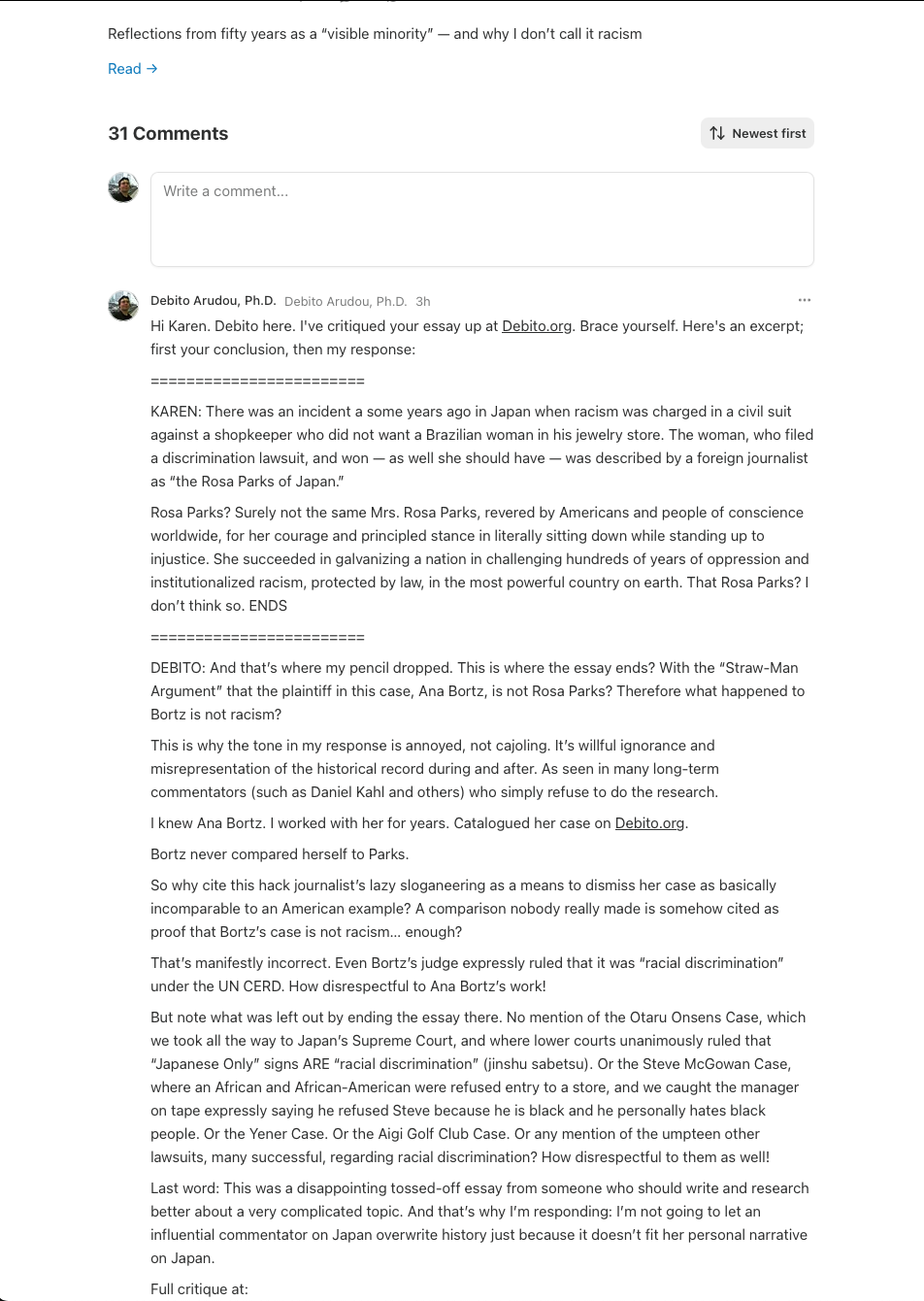
My SNA Visible Minorities col 55: “From Dancing Monkey to Symbol of Hope”: Interview with Ibaraki Prefectural Assemblyman and naturalized Canadian-Japanese Jon Heese (May 2, 2024)

mytest

Books, eBooks, and more from Debito Arudou, Ph.D. (click on icon):
Guidebookcover.jpgjapaneseonlyebookcovertextHandbook for Newcomers, Migrants, and Immigrants to Japan「ジャパニーズ・オンリー 小樽入浴拒否問題と人種差別」(明石書店)sourstrawberriesavatardebitopodcastthumbFodorsJapan2014cover
UPDATES ON TWITTER: arudoudebito
DEBITO.ORG PODCASTS on iTunes, subscribe free
“LIKE” US on Facebook at http://www.facebook.com/debitoorg
https://www.facebook.com/embeddedrcsmJapan
http://www.facebook.com/handbookimmigrants
https://www.facebook.com/JapaneseOnlyTheBook
https://www.facebook.com/BookInAppropriate

////////////////////////////////

Hi Blog.  Here’s my latest SNA column, where Jon Heese and I have yet another candid chat (previous ones here, here, and here) about politics in Japan — he as a politician, me as a columnist with a PoliSci background and a more adversarial relationship to power. Enjoy. I did. Debito Arudou, Ph.D.

Visible Minorities: From Dancing Monkey to Symbol of Hope
Shingetsu News Agency, May 02, 2024, by Debito Arudou
https://shingetsunewsagency.com/2024/05/02/visible-minorities-from-dancing-monkey-to-symbol-of-hope/

BIOJon Heese is becoming an old hand in Japanese politics, having served 13 years at various levels of government. He is presently one of five councilors representing Tsukuba (60 km NE of Tokyo) in the Ibaraki Prefectural Assembly—similar to a state or provincial legislature. After winning four terms at the city level, Mr. Heese leveled up in December, 2022. He is the first foreign-born politician to ever serve at the regional level.  He sat down for an interview with Debito Arudou for his Visible Minorities column in April 2024.

SNA:  Hi Jon.  Thanks for agreeing to yet another interview with me. 

Heese:  It’s the least I can do for my favorite rabble rouser.

SNA:  Let me open with an argument:  I make the case in one of my recent columns (https://www.debito.org/?p=17392) that we don’t see enough former Non-Japanese running for office because the Japanese government doesn’t want them to.  With no immigration policy, the GOJ doesn’t just encourage NJ to become voters and citizens, they make it hard to graduate up to Permanent Residency and citizenship.  Would you agree with that assessment?

Heese:  No immigration policy? Do you mean “no policy to import labor willy-nilly à la every western country?” The question is already loaded. As for policy to prevent naturalization, thereby enfranchisement, I do not see any active policies intending to keep NJ from getting citizenship. Overall I see their immigration policies as an attempt to ensure that only contributing foreigners are allowed to stay beyond the 90 day tourist visa by obtaining a longer visa. Many countries try to keep out deadbeats. Japan is no different. By deadbeats, I mean people who are only coming to take advantage of our rather generous social services.

SNA:  Hang on.  Point of order.  We’re still falling back on those boilerplate arguments we see in the chauvinistic media that some foreigners are freeloaders.  Not so.  Every person in Japan one way or another pays some form of tax, and we’ve had study after study showing that migrants and immigrants on balance contribute more to every society than they take out.  So let’s not resort to reflexive foreigner bashing “à la every Western Country”.  Now back to your point about naturalization.

Heese: Immigrants are by their nature successful. The poorest and sickest cannot afford the cost of the trip, whether to pay for flights, boats, or other forms of transportation. Migrants demonstrate their motivation just by reaching our borders. Unsurprisingly they work hard to continue in their successful ways or leave for greener pastures. My “à la every Western Country” comment is a reference to how much stricter Japan is to whom they give visas.

SNA:  And that’s kinda the point I’m making in my opening argument. 

Heese:  To continue, it’s been my observation that the highest bar for naturalization is Japan’s demand that new citizens give up their previous citizenship. Though I disagree with the government’s ban on dual citizenship, I believe the government, as representatives of the people, have the right to make the rules. Are their rules shortsighted? In my opinion, yes. Will they change those rules at some point? I believe they will. However, given that it’s actually easier to get citizenship than permanent residency, it’s not the government keeping people from voting, it’s the foreigners themselves that are keeping themselves from voting.

SNA:  Okay, spoken like a true Japanese politician.  Blame the foreigner for the rules that are set by the politicians and bureaucrats. 

Heese:  Would you have the foreigners setting their own rules…?

SNA:  Yes.  I think they should have some input into the process.  They know better what’s best for them.  Especially if they’ve leveled-up out of being foreign.  To circle back to my opening point, the government is trying not to let them level up.

Heese:  It is my understanding that only a few countries out there that allow non-citizens to vote. And those countries that do permit participation limit foreigners to local elections. I understand Japan’s logic but disagree with their fears of potential consequences.

SNA:  Granted, I also make the case that NJ have to take it upon themselves to stop being “guests” and enfranchise themselves.  You’ve advanced a similar argument (even to me when I considered running for office), only much more softly.  Have you encountered much “guestism”

Heese:  I’m not entirely sure what you mean by “guestism,” but I will assume you mean foreigners who see themselves as guests in spite of their very heavy investments in land and life in Japan.

SNA:  Yes, basically.  What of it then?

Heese:  I see guestism all the time. I have also seen quite an uptick in people taking citizenship. Back when you and I naturalized we were still outliers. That is no longer the case. I estimate that the experiences of those who have become Japanese has influenced the thinking of lifers. When I arrived in Japan in ‘91 it was years before I ever met a naturalized person. You may be the first one I ever talked to. Former Upper House Diet Member Tsurunen Marutei would likely have been the first I ever heard of. You can’t be what you can’t see. As more of us appeared, and, with the ability to share our experiences via social media, that we never had any issues getting through immigration, never felt pushback from our surrounding communities, indeed, life was really no different from pre to post naturalization, others took the plunge.

SNA:  Yes, but that was then and this is now.  I say there is a lot more pushback now.  It’s harder to get Permanent Residency because you need a 3-year visa to get it, and there are plenty of incentives—and examples—of people being stuck on perpetual one-year visas.  Then COVID really flipped the script, where even those who had graduated up to Permanent Residents suddenly realized that they were no better than any short-term visa holder.  They were, in the end, just garden-variety foreigners who couldn’t come back if they left.

Heese:  I would argue it’s much easier than when I first came in ’91 to get PR. My first experiences with PR lifers, they needed to have worked 10 (continuous) years or be married to a local to get their PR in 5 years. These days they are offering the same to desired workers after 3 years. Other workers only need 5 years. No Japanese family necessary. I would also point out it’s now easier to get citizenship. Back in our day we needed to have a Japanese spouse to get citizenship. No longer.

SNA:  Just a quick interruption, sorry.  That last bit is not actually true.  I know of a number of single people who managed to naturalize despite being dedicated bachelors or unsavory characters.  Delfo Zorzi or Nicola Zappetti, for example.  And again, back to PR:  Yes, the years are less on paper, but reaching the 3-year visa threshold is harder.  I will agree with you, however, that naturalization is easier than PR nowadays.  As long as you are willing to burn bridges with your country of origin, of course, and that’s no small thing.

Heese:  I was told specifically back then I needed to be married. However, the Japanese bureaucracy does, on occasion, make exceptions. When I make the case these days to lifers, I point to what happened during the COVID pandemic. When the first travel bans were enacted there were no restrictions on the Japanese themselves. Japanese all had the right to come back. Yes, it was shameful, but the mewlings of you and I were not going to influence the Immigration officials.

SNA:  Right.  But again, the rules are not set by the foreigners, so I think mewling is warranted here.  It was a border control policy grounded in racism, not immunological science.

Heese:  No counterargument on my part. As the memory of the pandemic fades I will fall back to my initial argument of, “You have too much invested here for you to have no right to return.” In principle I ask lifers if they honestly believe they’re going back to their “homeland.” If not, then why are they holding on to some privilege they’ll likely never use? In addition, even if they give up their previous citizenship, it’s been my understanding that reacquiring their previous citizenship is pretty easy and straightforward.

SNA:  Really?  Maybe in Canada, but I doubt other countries are so forgiving.  I’ve found that United States officials even view giving up US citizenship as an act of betrayal.

Heese:  I think Canada would be more a world model than the US. Much of Canadian immigration policy would be influenced by the British Commonwealth. Last I saw there were more than 50 countries in the Commonwealth. In any case, I ask what is really being risked by taking citizenship? Importantly, why are they risking their working life’s investment for a “maybe someday” idea?

SNA:  Okay, so to summarize, it’s clear that you’re very much on the side of the philosophy of “shit or get off the pot” when it comes to living in Japan as a Japanese citizen, even finding naturalization preferable to just taking out PR.  Again, COVID made that choice much clearer.  So how hard have you pushed people to naturalize and get elected?  What arguments have you made to them to do so?

Heese:  I would generally recommend PR before naturalization for people from developed countries. Immigrants from less developed societies likely have nothing to go back to so giving up their citizenship is not an issue.

Regarding my efforts to get others to run, there is one poor woman I’ve been hounding to run for city council for a decade already. By now it’s just a personal joke between us. She’ll never run but it wouldn’t surprise me if she naturalizes. I don’t understand why she hasn’t already. Different strokes, I guess.

SNA:  Definitely.  I too came this close to running for Sapporo City Council back in the day.

Heese:  Yes you did. And your decision gave me a lot to ponder on. What I have come to realize is people run for their own reasons. The candidates best suited to run don’t need a dumbass like me to push them. At best I can show them the ropes. Towards that end I’ve written a few blog posts, one with instructions on how to run an election, and another outlining what I actually did as a city councilor. I think I shared those sites already. If not, I’ll pass them along.

There is a link to the second post in the first.

Heese:  This year I’ve started a new project to log all my work activities at the prefecture, including travel times. You may have seen some of them on LinkedIn. As well as activities I try to liven my posts up with personal observations regarding the political system. People think politicians are the government. How naïve! I’m doing my best to show how much work and what the work involves. My job is not at all what people think it is.

SNA:  Well, spill the tea, Marie.  What exactly is your job?  Sell it to us, since you even hound people to run.

Heese:  Rather than just explaining my job, it will be useful to explain government. Understand that even after 15 years my views are still a work in progress.

SNA:  As they should be.  Politics is complicated.  Any official who thinks they have all the answers is self-delusional.  Please go on.

Heese:  The government is actually a symbiosis of elected and unelected officials. I’ll start with the unelected officials, commonly known as civil servants. Their role is to maintain the machine as well as come up with solutions to problems society encounters on our common journey. Maintenance looks automatic but small adjustments still need to be made.

SNA:  So you clearly fall into the camp of government exists in order to solve problems.  For the record, I agree, but remember I came of age during Reagan and Friedman’s “small government” era, where “government is not the solution to the problem; government IS the problem.”  And I’ve spent a lifetime realizing that good public policy is possible.  Japan convinced me of that.  Pity Japan, for its part, is too timid sometimes to solve problems because people fear taking responsibility for making mistakes or causing unintended consequences.  Instead they should better prepare the public in advance for what the potentially positive or negative consequences of a policy might be.  [Sighs]  Yeah, maybe I should have run for office after all…

Heese: Ha! I believe you should have. Serving would have been an eye-opening experience for you. As for public problems, a considerable amount of effort is made creating, distributing, and analyzing questionnaires. Walk-ins also make requests at the various service counters, keeping the civil service well informed of the needs and wants of the people. It is from these questionnaires that new policy is born.

SNA:  So you see policymaking in Japan as more bottom-up rather than top-down.  I think most observers of Japan might think the opposite.

Heese:  Yes, like everywhere the media poorly portrays how the sausage is really made. Generally the populace believe that civil servants are managed by the elected officials, thus the power lies with the politicians. I believe it’s the other way around. If you’ve ever had the pleasure to watch the BBC programs, “Yes, Minister,” and “Yes, Prime Minister,” their depiction of how government actually works is much closer to the truth than the media leads us to believe. If you haven’t watched it, it is MUST WATCH TV for anyone who wants to understand government. In my opinion it is the groups of unassuming civil servants who wield the greatest amount of collective power. Just as the CEO is the one who gets all the credit, it is more than likely the secretary that runs the ship.

SNA:  Then policymaking in Japan actually is top-down, yes?  Then why so many questionnaires?  Are we actually seeing an example of successful Marxist “Democratic Centralism,” where input is collected from below and channeled upwards, but once the decision is made from the top, people below must follow it since they have given their input?  Okay, sorry, I’ll stuff my PoliSci textbook back in my mouth and let you continue.

Heese:  As I said, it’s a symbiosis. My role, as elected representative of the people, is to act as the immune system. My duties in council are generally to shoot down any brick balloons some aspiring group of civil servants might try to float past the house. That bills seldom get shot down is due to a deep understanding by the civil service of what the people want.

SNA:  Okay, let me underscore this.  As a politician, you see yourself as actually protecting the people from the bureaucrats?

Heese:  Absolutely!!!!! One only needs to look at failing countries to see how terrible things can get when the bureaucracy or politicians capture the public purse. If the balance is off, look out!

My secondary job is to act as a mouthpiece for the people. I bring ideas and problems to the civil service they may not yet have been exposed to. However, I am also a teacher, in a sense. I find that I spend about 30% of conversations with citizens explaining how the system works. In addition, I listen to people’s issues and try to solve them by pointing them in the right direction, whether that’s toward the entry point of the government service they are looking for, or the company which will be able to handle their situation.

SNA:  I doubt most people see politicians in Japan, or anywhere for that manner, so positively.  Do you think most of your elected compadres have a similar view of themselves being a dedicated public servant?

Heese:  That is a very good question I’ll need to ask. I’m sure the topic will provide some interesting fodder. Ask me again in 6 months and I’ll spill what I learned.

How I personally approach the public relations part of the job is to engage as many people as I can on any given day. I try to be approachable. I can’t possibly know what people’s needs are beyond Maslow’s basics. And I’ll never know if they don’t tell me.

SNA:  Huh.  Well, that’s a bit strange to me.  In my dealings with Japanese politicians in the past, especially when I was trying to get legislation passed to outlaw racial discrimination and get “Japanese Only” signs down, I rarely saw them giving much more than a popcorn fart about listening to the people.  Perhaps it was the complexity of the issue.  Perhaps it was because people who look like me probably can’t vote so who cares?  But for the most part, if there wasn’t an election at hand, I found Japanese politicians at best noncommittal, at worst actively avoiding any chance to listen to folks like you say you do.  Are you an outlier?

Heese:  Of course I’m an outlier. To be blunt, I take the approach of being constantly in election mode. I don’t have an election machine I can just fire up nor can I assume I’ll get reelected simply because I’m an incumbent. I’ve seen too many cases of incumbents getting their walking papers to believe it can’t happen to me. In my case every vote is won at the individual level so I am required to be out and about.

I am, by nature, very curious. I am always happy to listen to what people do. In “The Tipping Point,” Malcolm Gladwell mentions three kinds of people: Connectors, Mavens, and Salesmen. I do my best to be a bit of all three but I know I am best suited to be a Connector. I don’t know enough about any given topic to be a Maven and my ideas aren’t well developed enough to be a Salesman. Hence, I spend a lot of time just trying to get to know people and introducing them to others who can help them.

SNA:  I plead guilty to being a Maven.

I can’t speak to your experiences with other politicians except to say that NJ needs are seldom a high priority, not because their needs aren’t important, but because there’s unlikely to be traction within the surrounding community. Your concerns regarding “Japanese Only” signage won’t be showing up in questionnaires either.

On the other hand, here in Tsukuba, where foreigners are plentiful and a vital part of the community, such a sign would only last a day or two before the Mayor’s office would come down like a ton of bricks on any business foolish enough to post one. On a few occasions I’ve been informed, for example, of a policy that a local gym, a chain, has implemented requiring members to be able to communicate in Japanese. Their argument is safety in case of an injury. Pure BS. The problem is invariably a new manager from outside Tsukuba thinks they can run their shop like they do in Butthole-shi. Have staff who speak English ya moron! Or train them in basic English. Easy enough in highly educated Tsukuba. I’ve spoken to the mayor about the issue and he was very attentive, requesting I pass on unresolved instances.

So, to summarize my job, I shoot down bad ideas, promote good ones, and introduce people to others with solutions to their problems. To be blunt, I love my job, but I also recognize that not everyone can do it. One needs a tough skin to withstand the slings and arrows of outrageous allegations.

SNA:  I’ll say.  Again, I’m not sure I’d have the patience to put up with what I see you putting up with, just from the standpoint of shrugging off your how you’re treated occasionally as an outsider or an anomaly in the halls of power.  But that’s perhaps a topic for a future interview.  That’s really all the time we have for today.  I want to thank you for agreeing to another interview with me, Jon.  I look forward to slinging some arrows at you again next time. 

======================
Heese:  We all have our roles to play. At times I’m the dancing monkey. On other occasions I am the symbol of hope for newbies straight off the boat. I do my best to play my part well. Thanks for keeping me on my toes. I look forward to our next conversation. ENDS

======================
Do you like what you read on Debito.org?  Want to help keep the archive active and support Debito.org’s activities?  Please consider donating a little something.  More details here. Or if you prefer something less complicated, just click on an advertisement below.

Debito cited in article, “Japan is becoming more diverse. Will its government?” Christian Science Monitor, April 12, 2024. As are several other naturalized and elected Japanese citizens originating from Canada, Uzbekistan, Syria/Egypt, and Bolivia.

mytest

Books, eBooks, and more from Debito Arudou, Ph.D. (click on icon):
Guidebookcover.jpgjapaneseonlyebookcovertextHandbook for Newcomers, Migrants, and Immigrants to Japan「ジャパニーズ・オンリー 小樽入浴拒否問題と人種差別」(明石書店)sourstrawberriesavatardebitopodcastthumbFodorsJapan2014cover
UPDATES ON TWITTER: arudoudebito
DEBITO.ORG PODCASTS on iTunes, subscribe free
“LIKE” US on Facebook at http://www.facebook.com/debitoorg
https://www.facebook.com/embeddedrcsmJapan
http://www.facebook.com/handbookimmigrants
https://www.facebook.com/JapaneseOnlyTheBook
https://www.facebook.com/BookInAppropriate

////////////////////////////////

Hi Blog.  What follows is an insightful article on how NJ are becoming Japanese to the point where they’re getting elected at the local level.  Meaning it’s possible.  This is, in Debito.org’s view, a good thing, because having diverse voices enfranchised in a democracy does matter at the policymaking level.  Groundwork for this article also inspired one of my recent SNA columns, where the reporter asked me if this was real evidence that fundamental changes were afoot.  The exchange went something like this:

Reporter:  “I think Heese, Orzugul, Inoue, and Sultan offer interesting insights into the shifting demographics of Japan.  But none of them are Chinese, Korean, Vietnamese and Filipino—the four groups who make up the most non-Japanese residents.  Do you think it is easier for certain types of Non-Japanese to gain power and acceptance in the country?”

Debito:  “I don’t know.  There is certainly a hierarchy of treatment based upon country of origin and skin color in Japan, especially in naturalization processes.  But certainly people of Chinese and Korean ancestry have been elected in the past.  Probably when other ethnic groups aren’t overworked, underpaid, and restricted to unstable visa statuses, we’ll see more of them naturalizing and running for office.”  Debito Arudou, Ph.D.

/////////////////////////////////////////////////

Japan is becoming more diverse. Will its government?
By Takehiko Kambayashi, Christian Science Monitor April 12, 2024.  Article with photos of the interviewed at:
https://www.csmonitor.com/World/Asia-Pacific/2024/0412/japan-immigrants-local-government
TOKYO, KAWAGUCHI, AND TSUKUBA, JAPAN

A former swimming instructor from Egypt is helping revive the sleepy mountain town of Shonai, Japan. About 200 miles away, a Canadian polyglot is singing the praises of Tsukuba city. And Orzugul Babakhodjaeva is standing onstage at a food festival outside Tokyo, decked in a traditional Uzbek dress, expressing her desire to “create a society where diversity is accepted.”

The first-term city councilor in Tokyo’s Setagaya Ward – who does not use her family name, and campaigned simply as “Orzugul” – is one of a small but growing number of foreign-born local government members bringing fresh perspectives to an island nation long known for its homogeneity. These lawmakers are often multilingual and have rich international work experience. Their platforms have resonated with many Japanese voters, as well as with a growing population of non-Japanese residents.

The number of non-Japanese residents jumped 10.9% from 2022 to 2023, reaching a record 3.4 million, as the country struggles to address a chronic labor shortage driven by its aging population. Last year, 8,800 residents were naturalized as citizens, allowing them to vote in elections.

Shifting demographics are challenging Japan’s reputation as a homogeneous society – and creating unprecedented openings for immigrants to participate in local government.

Arudou Debito, author of the book “Embedded Racism: Japan’s Visible Minorities and Racial Discrimination,” says the election of immigrants to local government is “very important” for Japan’s democracy.

“Non-Japanese residents’ viewpoints are woefully unseen in Japanese society. They’re treated as ‘guests,’” explains Mr. Arudou, who is a U.S.-born naturalized citizen. “The fact that former non-Japanese residents are getting elected means they aren’t ‘guests,’ meaning Japanese society can trust immigrants with public policymaking power.”

Outsiders’ lens

About 30 miles northeast of Tokyo, first-term Ibaraki Prefectural Assembly member Heese Jon cuts a dapper figure as he drives a reporter around the city of Tsukuba, boasting about its 360 parks and its culinary delights. The city also hosts the University of Tsukuba, the headquarters of the Japan Aerospace Exploration Agency, and other leading institutes.

“We are sitting at the heart of Japanese research,” says the native Canadian from the driver’s seat of his electric vehicle.

About 12,700 non-Japanese residents from 144 countries live in Tsukuba, making up 5% of its population, nearly twice the national rate of 2.8%.

Before his victory in the 2022 assembly election, Mr. Heese had already served four terms as a Tsukuba city councilor and won the most votes for three straight elections. He credits his popularity to his passion for women’s issues and the environment, as well as to his fresh face.

“The incestuousness of the political scene is really stunning,” he says. Especially in smaller cities, politicians “are almost all related to each other.” On billboards displaying local candidates, he stands out.

“One thing they can say is, ‘This is not someone who can be bribed,’” he says.

Tsukuba resident Sciortino Atsuko, who is married to an immigrant, believes that local government needs to reflect the city’s diversity. She says Mr. Heese, being married to a Japanese woman and raising kids in Tsukuba, understands the experience of being in an interracial family.

“Jon has long supported a non-Japanese community here, and played a role as a bridge with the government,” she says. “When non-Japanese speakers were in trouble at shops or gyms, Jon was the one who helped them out. … Jon has brought the needs of the minority to the table.”

Mr. Heese, who speaks five languages, says his long-term goal is to “bring politicians from all over Japan to foreign countries and be their guide. They do not look beyond their communities very far.”

Bolivian-born Inoue Noemi, a fourth-term member of Tokyo’s Sumida City Council, agrees that Japan can be an inward-looking country. “We need to go global,” she says.

Ms. Inoue worked at Bolivia’s central bank and the United Nations Development Program before moving to Japan in the late 1990s with her husband, a former member of parliament.

Inoue Noemi, a fourth-term member of Tokyo’s Sumida City Council, is from Bolivia. When she first came to Japan in the 1990s, women’s low social status was “the most shocking issue,” she recalls.

Before her first stint in local government in 2011, Ms. Inoue founded the Japan-Latin America Friendship Association in Tokyo to develop cultural, social, and business relations overseas. She also taught Spanish and still sees language barriers as a big problem.

Non-Japanese residents often have trouble communicating with police and hospital staff, she says. When facing problems from bullying to domestic abuse, few know what to do or where to go. Such information is not readily available in their languages.

Back in 2021, Sultan Nour was seriously considering leaving the northern town of Shonai, where he’d moved five years prior to be closer to nature. Like many rural areas in Japan, Shonai had struggled with severe depopulation, and no longer had any pediatricians. Mr. Sultan, who was born in Syria and grew up in Egypt, had two small children to care for.

But then he stumbled upon news of an upcoming by-election for the Shonai Town Assembly, and decided to go for it. He won that race and the next one, securing reelection with the highest vote count of all the candidates.

“I have long wanted to contribute to society,” says Mr. Sultan, who had taught English, managed an Arabic restaurant, and worked for a construction company in Japan before running for local office. He also works as an Arabic interpreter for authorities.

Change came in December 2023: Thanks in large part to continued pressure from Mr. Sultan and other parents, Shonai’s main hospital now has a pediatrician four days a week.

It’s not the end of Mr. Sultan’s mission in Shonai.

Japan’s population is aging rapidly, and like other policymakers who face the daunting task of reinvigorating Japan’s rural towns, Mr. Sultan emphasizes the need to “put more efforts into child care support, measures for the falling birthrate, and job creation.”

Ms. Inoue sees immigrants as a key part of the solution – but they need support. “Japan needs to have good immigration law to support foreigners to find a job and live a decent life,” Ms. Inoue says. “Now foreigners come, but nobody wants to rent a house to them.”

Her comments echo the experience of Orzugul, who was rejected by 53 companies when she first arrived in Japan, mainly because she did not graduate from a Japanese university. Later, she found it almost impossible to rent an apartment or business space in Tokyo without her Japanese husband present.

Despite the discrimination she faced, “I love Japan deeply,” says Orzugul. “That’s why I cannot look the other way. I would like to help open up doors to those who seek opportunity in this country.”
ENDS

======================
Do you like what you read on Debito.org?  Want to help keep the archive active and support Debito.org’s activities?  Please consider donating a little something.  More details here. Or if you prefer something less complicated, just click on an advertisement below.
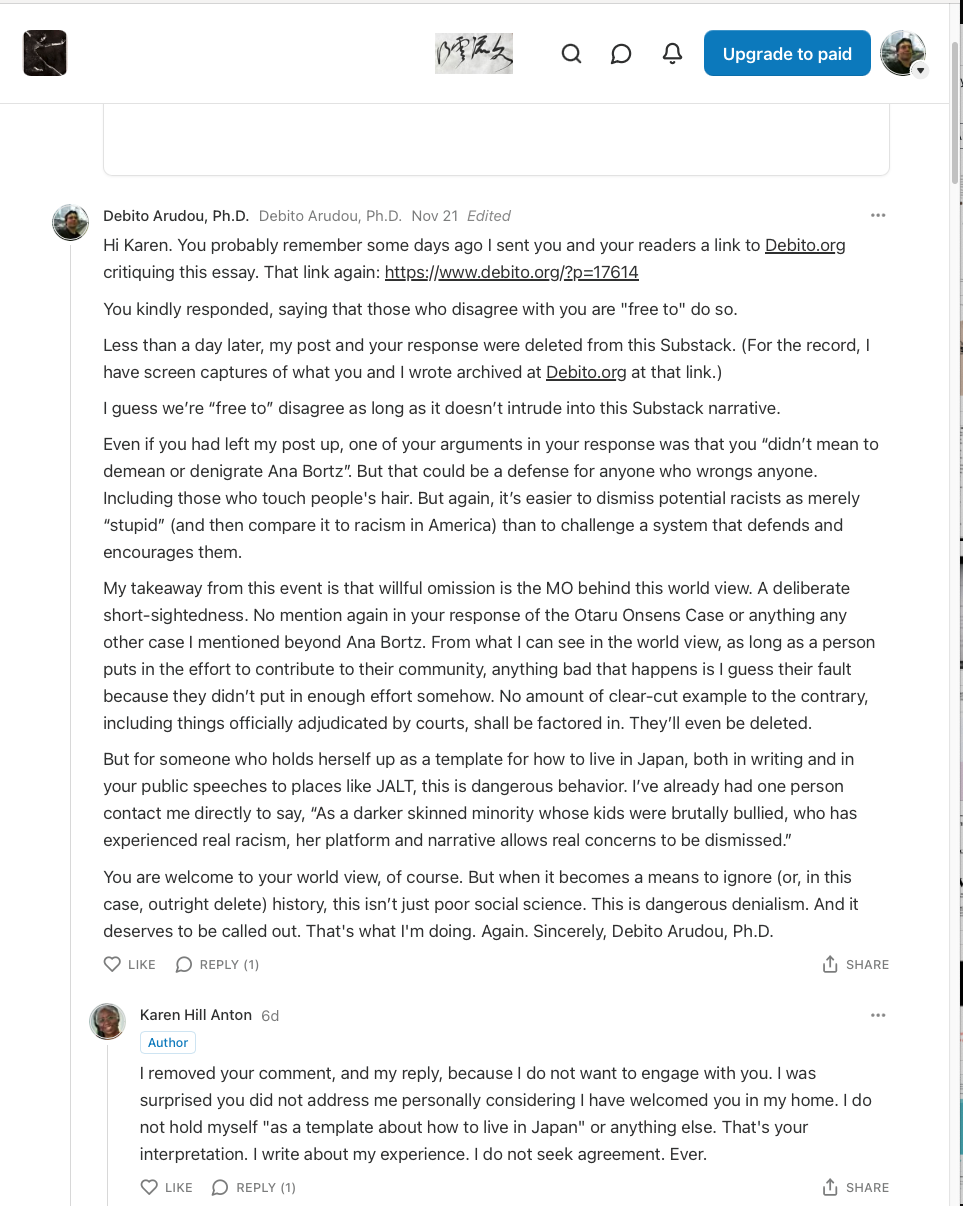
My SNA Visible Minorities 54: “Non-Japanese Residents claim political power” (Mar 31, 2024), where I argue the power of the vote matters whether you are a candidate or part of the electorate; the J Govt tries hard to make sure neither happens for Japan’s Immigrants.

mytest

Books, eBooks, and more from Debito Arudou, Ph.D. (click on icon):
Guidebookcover.jpgjapaneseonlyebookcovertextHandbook for Newcomers, Migrants, and Immigrants to Japan「ジャパニーズ・オンリー 小樽入浴拒否問題と人種差別」(明石書店)sourstrawberriesavatardebitopodcastthumbFodorsJapan2014cover
UPDATES ON TWITTER: arudoudebito
DEBITO.ORG PODCASTS on iTunes, subscribe free
“LIKE” US on Facebook at http://www.facebook.com/debitoorg
https://www.facebook.com/embeddedrcsmJapan
http://www.facebook.com/handbookimmigrants
https://www.facebook.com/JapaneseOnlyTheBook
https://www.facebook.com/BookInAppropriate
If you like what you read and discuss on Debito.org, please consider helping us stop hackers and defray maintenance costs with a little donation via my webhoster:
Donate towards my web hosting bill!
All donations go towards website costs only. Thanks for your support!

Hi Blog. My latest SNA column talks about how NJ do have the ability to get some political power in Japan.  It will of course mean some work on their part, but that’s inevitable for all minorities anywhere.  But the biggest obstacle, aside from the willful exclusion of NJ from the electorate, is the will to naturalize and run for office.  You can do it, and I believe it’s likely you’ll get in, since the Japanese electorate is really quite hungry for something different to choose from.  But you’ve gotta stop believing that you’re merely a “guest” in Japan in the first place.  Read on to see some examples of elected former NJ and take note.  Debito Arudou, Ph.D.

////////////////////////////////////////////////

Non-Japanese Residents claim political power despite obstacles
Shingetsu News Agency, Visible Minorities column 54, March 31, 2024
Courtesy https://shingetsunewsagency.com/2024/03/31/visible-minorities-non-japanese-residents-claim-political-power/

I teach Political Science at the university level.  In my first lecture every semester, I try to convince skeptical students why they should bother studying Political Science at all.

I argue that understanding how power flows through political structures will help students enfranchise themselves in a democratic system.  Because if they don’t, other people who understand the system better will use it to their advantage instead.

But this assumes one major fundamental:  that they can participate in the democratic system at all.  Fortunately, most of my students are citizens, so they can vote.  Given how abysmal youth voter turnout generally is, I consider it a major educational outcome if they bother to.  Persuading people that their vote matters is the bare minimum a civics class can accomplish.  

If I have the opportunity in higher-level classes to proselytize further, I encourage them to engage in community building, such as organizing into interest groups and consolidating power into voting blocs.  

My real converts consider running for local office, thereby embedding themselves within the very power structure itself.  Because political power, especially for minorities in any society, is rarely surrendered without a struggle.  We need more diverse views in office as demographics change the makeup of future majorities.  

That’s how democracy is supposed to work.  Unfortunately, this is a lesson that Japan’s Non-Japanese (NJ) Residents and Visible Minorities still have trouble grasping.  As a result, they are letting the Japanese government deprive them of their potential as a political force in Japan.

GETTING BEYOND THE “GUESTISM”

A lot of the issue is that, as I have written before, many of Japan’s minorities believe they really don’t have the ability—or even the right—to shape Japanese society.  They convince themselves that they are merely “guests” in Japan—not taxpayers and residents—and therefore have no say in how they’re treated by public policy.  

After all, they’re in Japan by choice, and if they don’t like the way things are, they should go “home.”  They’ve internalized the narrative that Japan is not “home” and foreigners don’t belong here.

This dehumanizing mantra is well-established and reinforced on a daily basis.  But less considered are the underlying political structures enforcing it.  It’s hard to have a stake in a society when it might be booting you out shortly.  

Official permission to work, i.e., visas, are generally only one to three years in duration, sometimes non-renewable, and often tethered to a specific job sponsor.  This means many NJ can’t change jobs without losing their visa and risking going to jail as overstayers.  Employers, of course, are happy with this situation, leveraging this vulnerability to abuse and exploit NJ workers even further.  Thus all the incentive structures are there to make NJ life in Japan temporary and miserable.

But consider one more disenfranchising mechanism:  The larger scheme to make sure NJ never coalesce into interest groups and voting blocs.  

In other societies, minorities, newcomers and immigrants cluster in like-minded regions where they can create communities.  Harlem.  Chinatowns.  The Navajo Nation.  Little Tokyo, Little Armenia, and Little Saigon.  The Dearborn Muslims.  New York’s Jewish communities.  The Polish Patches.  The Castro District.  The proposed states of Jefferson and Deseret.  And the majority-minority states of Hawaii, California, Texas, Nevada, New Mexico, Maryland, and soon Georgia.  

Once people reach a critical mass in a population, they can foster entire social movements, even elect representatives and become an unignorable political force.

PREVENTING RESIDENTS FROM BECOMING VOTERS

But Japan makes sure NJ never reach a critical mass.  Whenever we hear about, for example, Chinese buying up land in an area, out come the politicians stoking fear about Chinese becoming the local majority and “seceding from Japan.”  Essentially, the logic is that more foreigners means less Japan, and if NJ ever get power over Japanese, Japan is lost.  That’s especially visible when NJ are officially denied administrative roles in any public sector positions.

Then there’s simply getting rid of NJ Residents by not renewing visas en masse.  Clean house and ethnically cleanse.  The lost historical Iranian, Filipina, and Brazilian communities in Japan are testament to that. 

But even without a critical mass, power within a democracy is granted to people who can vote, so Japan makes sure NJ Residents never become part of the electorate.  

Japan still has no official immigration policy to encourage NJ Residents to become Japanese citizens.  Further, whenever Japan announces an expansion to any working visa program, politicians at even the highest levels of government are quick to clarify this does not mean these migrants will become immigrants.  The very word “immigrant” (as in a person) isn’t an established concept in Japanese policymaking circles.  

This situation seems unlikely to change, despite the recent resumed mass migration into Japan.  Japan’s NJ Registered Resident population reached a record high of 3.4 million in 2023, up more than 10% over the previous year.

Yet the government has made it more difficult over the past two decades to go from a one-year visa to a three, not to mention obtain Permanent Residency.

The numbers reflect this.  Although the largest group of NJ Residents are Permanent Residents, their numbers only grew about 3% in 2023.  

Then there’s the issue of actually taking out Japanese citizenship, as this author has.  Yet the number of people who have naturalized on average over the past decade is less than 1000 per year, and on a general downward trend.  

No wonder.  After years languishing in nasty jobs and jumping through so many visa hoops, getting Japanese citizenship is often a very arbitrary process, with applications rejected even for parking tickets and “cultural incongruities.”  There’s also favoritism shown to applicants from countries with richer economies and lighter skins.  Not to mention the identity sacrifice of forcing people to give up their birth nationality.

IMMIGRANT POWER AND POLITICIANS IN JAPAN

Consequently, the only NJ groups in Japan that have accrued any political power are the Zainichi generational “foreigners.”  They’re the Japan-born descents of the former citizens of empire, who have lived in Japan more than a century yet are still “foreigners.”  Also known as the “Oldcomers,” they have formed lobbying groups such as as Mindan, Mintoren, and Soren.  Then there are also historical and indigenous minority groups such as the Burakumin Liberation League and Utari Kyoukai.  They all have managed to move the needle on how minorities are portrayed in the media.  

But in terms of shifting real political power, there is no substitute for getting the vote and a seat at the policymaking table.  And that means overcoming it all to become a citizen and get elected to office.

That happens, even in Japan.  Perhaps the most visible case was Finland-born Tsurunen Marutei, who not only served in his local town council in Kanagawa Prefecture from 1992, he also served two terms in Japan’s national Diet from 2002 to 2013.

Others have since followed.  Decades ago US-born Anthony Bianchi and Canadian-born Jon Heese won back-to-back city council seats in Inuyama and Tsukuba respectively.  Bianchi has since retired, but Heese (whom I have interviewed for this column before) has since graduated up to a prefectural-level elected position.  

We have also seen incumbents such as Bolivian-born Noemi Inoue, elected in 2011 to the Sumida-ku Assembly; Syrian-born former Egyptian Sultan Nour, elected in 2021 to Shonai Town Assembly in Yamagata Prefecture; and Uzbekistan-born Babakhodjaeva Orzugul, elected to a seat in Tokyo’s Setagaya-ku Assembly in 2023. 

Notably, all of them won their seats quite easily, some even getting the highest number of votes of all candidates running, despite the fact that their fellow NJ Residents cannot vote for them.  Bravo.

A reporter recently asked me if this meant change in Japan was afoot.  

My answer was that yes, this is not something we’ve seen before, and Visible Minorities claiming the right (and the structural power) to be Japanese is a positive change.  I think anyone who wants to see the change has to be the change, and they’re doing that.

How did they win so handily?  My theory is that given Japan’s single-party democracy, I think the Japanese electorate are hungry for any hope of change.  Something different.  Newcomer Immigrant Japanese can be precisely that.  So for once, being seen as an outsider in Japan can be an advantage. 

This theory also holds when you consider the opposite example:  When Diet Member Tsurunen didn’t offer his constituents anything new beyond having blue eyes (seriously, that was his slogan), he got voted out.  They realized he was basically running more for himself than them.  So you really have to be the change, not just look it.

Finally, the reporter said, “I think Heese, Orzugul, Inoue, and Sultan offer interesting insights into the shifting demographics of Japan.  But none of them are Chinese, Korean, Vietnamese and Filipino—the four groups who make up the most non-Japanese residents.  Do you think it is easier for certain types of Non-Japanese to gain power and acceptance in the country?”

My answer was this:

“I don’t know.  There is certainly a hierarchy of treatment based upon country of origin and skin color in Japan, especially in naturalization processes.  But certainly people of Chinese and Korean ancestry have been elected in the past.  

“Probably when other ethnic groups aren’t overworked, underpaid, and restricted to unstable visa statuses, we’ll see more of them naturalizing and running for office.”

We’ll talk again with Jon Heese about running for office next column.

ENDS
======================
Do you like what you read on Debito.org?  Want to help keep the archive active and support Debito.org’s activities?  Please consider donating a little something.  More details here. Or if you prefer something less complicated, just click on an advertisement below.
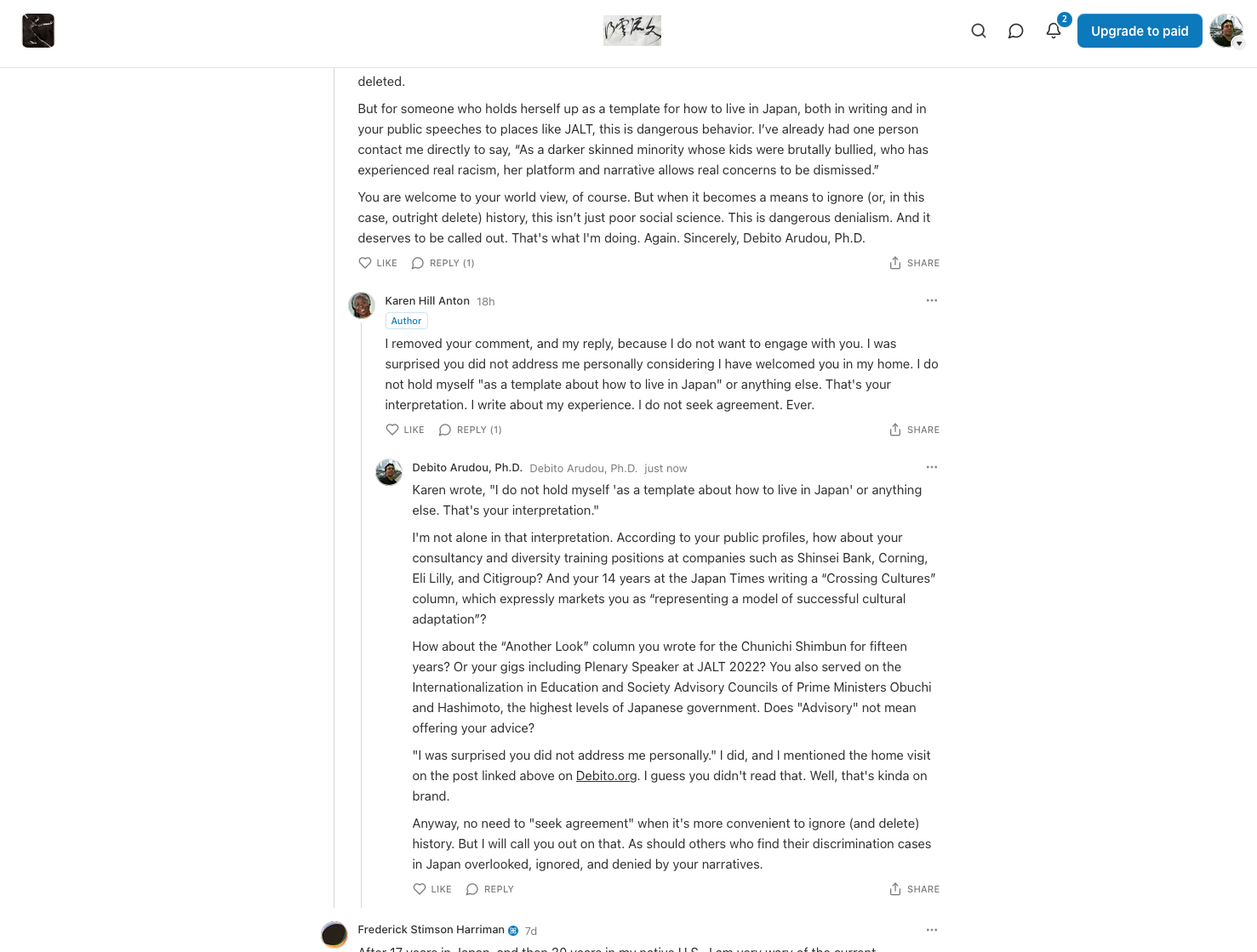
Debito.org Reader XY on “Rakuten Card is asking for sensitive Koseki Family Registry documents for Naturalized Japanese clients as a prerequisite for continued service”, even though nobody is clearly requiring them to.

mytest

Books, eBooks, and more from Debito Arudou, Ph.D. (click on icon):
Guidebookcover.jpgjapaneseonlyebookcovertextHandbook for Newcomers, Migrants, and Immigrants to Japan「ジャパニーズ・オンリー 小樽入浴拒否問題と人種差別」(明石書店)sourstrawberriesavatardebitopodcastthumbFodorsJapan2014cover
UPDATES ON TWITTER: arudoudebito
DEBITO.ORG PODCASTS on iTunes, subscribe free
“LIKE” US on Facebook at http://www.facebook.com/debitoorg
https://www.facebook.com/embeddedrcsmJapan
http://www.facebook.com/handbookimmigrants
https://www.facebook.com/JapaneseOnlyTheBook
https://www.facebook.com/BookInAppropriate

////////////////////////////////

Hi Blog. Forwarding with permission from Debito.org Reader XY. Lightly redacted. The dragnet of suspecting any foreigner, including NJ Residents, of being a money launderer expands to people who are no longer foreign as well. Debito Arudou, Ph.D.
//////////////////////////////////////

From: XY
Subject: Rakuten Card is asking for Koseki of Naturalized Japanese clients
Date: March 4, 2024
To: “debito” <debito@debito.org>

Dr. Debito,

I’m writing you because I’m experiencing a new type of discrimination by Rakuten Card.

I’ve been a Rakuten Card owner since 2014, and it is the card I’ve hold the longest, making it the biggest chunk of my credit history.

Also, I’m a naturalized Japanese citizen, that naturalized back in 20XX, and one month afterwards I had already completed all the requirements for change of name and status according to what I was asked by Rakuten Card, which, if I remember correctly, required me to send copies of documents proving my change of name and status.

About a month ago, I received a mail by Rakuten Card asking me to send them a copy of my current Residence Card. I was very confused by this, so I contacted them, and they told me that since when I applied for the Card I was a foreigner, I needed to provide them with something that “proved” my residence status, and they asked me for my koseki, which is insane.

I told them that I already gave them the documents they required back when I naturalized, that I’ve never been asked this by any other Bank or Credit Card company, and that it is insane for them to ask me for a Koseki Family Registry, which is a very sensitive document that should be handed for these kind of requests, since something as simple as my Juminhyo Residency Certificate, which I think is what I sent back in 20XX proved my nationality, and they also have my “My Number” information, which should gave them access to corroborate this.

They insisted that this was something that the Financial Services Agency as part of an anti Money Laundering KYC thing, I asked them to give me more specifics on this, and they refused to do so, so I called the Financial Services Agency, and they told me in non ambiguous terms that they have not asked Rakuten Card to do this, that the Agency is in fact not responsible for this stuff regarding Credit Cards, and that the people responsible for all Anti Money Laundering guidelines and such are actually the Police.

I called once again Rakuten Card to confront them with this information, and in very wishy washy terms, being careful of not making any definitive statements about it, that this was part of some measured BASED on some ambiguous public request by the Financial Services Agency which they cannot give any specifics for, and that unless I provide them with my Koseki, they will terminate my contract.

I pointed out how this is obviously discrimination, as getting a card as a Japanese citizen NEVER requires you to give your Koseki, and if I wanted, I could just cancel my current account, and then open a completely new one, and there would be no requirements like these, and even though they acknowledged that I could do that, they continue to say that unless I give them my Koseki they will cancel my account, and that “this will not change no matter what”. I asked them to then reimburse me for the cost of getting my Koseki, and of course they said they couldn’t do that.

To be honest, right now I rarely use my Rakuten Card, as it has become more and more useless over the years, and I have way better cards that have never discriminated against me, so outside of the credit history, I don’t care so much about losing that card, but this is 100% without a doubt a discriminatory treatment against someone who is a Japanese citizen.

At this moment, I’m trying to get in contact with regulators to tell them about what Rakuten Card is doing to their customers, and if necessary, I’m also thinking of taking legal action against Rakuten Card if they in fact cancel my contract. – XY

======================
Do you like what you read on Debito.org?  Want to help keep the archive active and support Debito.org’s activities?  Please consider donating a little something.  More details here. Or if you prefer something less complicated, just click on an advertisement below.
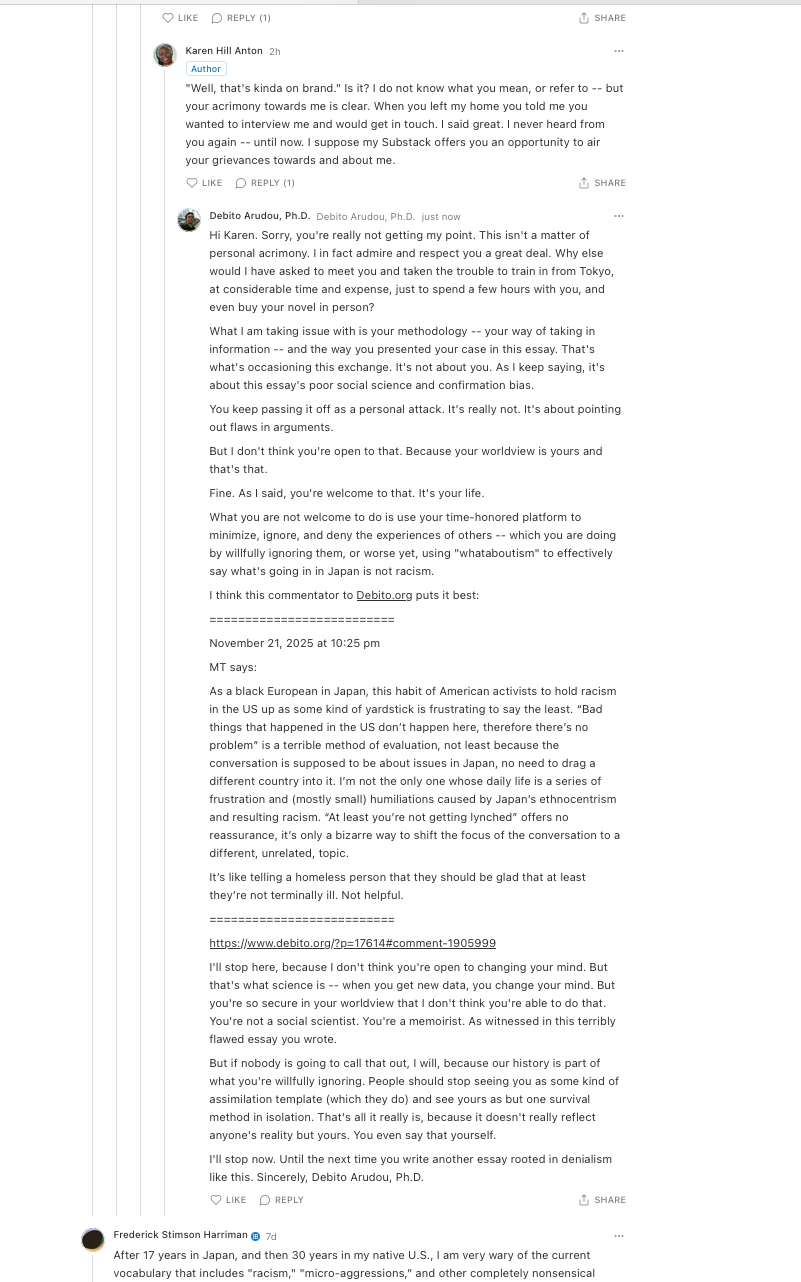
Reuters: Visible Minorities (“Foreign-born residents”) file lawsuit against government for police racial profiling. Good. Go for it.

mytest

Books, eBooks, and more from Debito Arudou, Ph.D. (click on icon):
Guidebookcover.jpgjapaneseonlyebookcovertextHandbook for Newcomers, Migrants, and Immigrants to Japan「ジャパニーズ・オンリー 小樽入浴拒否問題と人種差別」(明石書店)sourstrawberriesavatardebitopodcastthumbFodorsJapan2014cover
UPDATES ON TWITTER: arudoudebito
DEBITO.ORG PODCASTS on iTunes, subscribe free
“LIKE” US on Facebook at http://www.facebook.com/debitoorg
https://www.facebook.com/embeddedrcsmJapan
http://www.facebook.com/handbookimmigrants
https://www.facebook.com/JapaneseOnlyTheBook
https://www.facebook.com/BookInAppropriate

////////////////////////////////

Foreign-born residents file suit in Japan over alleged racial profiling
By Chris Gallagher
Reuters January 29, 2024, courtesy of Senaiho
Article with excellent video on the case with statements from the Plaintiffs at
https://www.reuters.com/world/asia-pacific/foreign-born-residents-file-suit-japan-over-alleged-racial-profiling-2024-01-29/

TOKYO, Jan 29 – Three foreign-born residents of Japan filed a lawsuit on Monday against the national and local governments over alleged illegal questioning by police based on racial profiling.

It is the first such lawsuit in Japan, according to the plaintiffs’ lawyers, and comes amid a sharp rise in the number of foreign workers coming to the country to help stem labour shortages as its population ages and declines.

It also comes amid a renewed debate over what it means to be and look Japanese, after a Ukrainian-born, naturalised Japanese citizen was crowned Miss Japan last week.

The three men filed the lawsuit with the Tokyo District Court demanding that the national, Tokyo Metropolitan and Aichi Prefecture governments recognise that it is illegal for police officers to stop and question people solely on the basis of their race, nationality or ethnicity.

The plaintiffs say they have suffered distress from repeated police questioning based on their appearance and ethnicity, which they say is a violation of the constitution.

The Tokyo Metropolitan Government, Aichi Prefectural Government and National Police Agency all declined to comment, while representatives of the Ministry of Justice could not be reached. ENDS
////////////////////////////////////

COMMENT: I won’t decline to comment. Debito.org has reported at length on how racial profiling is standard operating procedure for the Japanese police, so it’s an issue that deserves to be pursued in court. We’ve also sued the government before, and think it’s unlikely they’ll win (we didn’t). But it’s worth doing for the awareness raising. If we can get it on the record that the judiciary recognizes this as “racial profiling”, or even that “racial profiling” actually exists in Japan as a term and a phenomenon, this will be a big step ahead. Plaintiffs, go for it, and good luck, says Debito.org. Debito Arudou, Ph.D.

PS.  This has made big international news, the likes I haven’t really seen since the Otaru Onsens Case.  Good.  Links to sources here.

Here’s another good one:

/////////////////////////////////////

3 foreign-born residents in Japan file suit over claims of racial profiling by police
January 29, 2024 (Mainichi Japan), courtesy of Kimpatsu
https://mainichi.jp/english/articles/20240129/p2a/00m/0na/019000c

PHOTO CAPTION:  The plaintiffs, from left to right, Maurice, Zain Syed and Matthew participate in a press conference at the Tokyo District Court in Tokyo’s Chiyoda Ward on Jan. 29, 2024. (Mainichi/Jun Ida)

TOKYO — Three foreign-born residents of Japan filed suit at the Tokyo District Court on Jan. 29 against the Japanese state plus the Tokyo Metropolitan and Aichi Prefectural governments for what they claim is frequent police questioning based solely on their ethnicity, or racial profiling.

In addition to 3.3 million yen (about $22,000) each in compensation, the plaintiffs are demanding confirmation from the Tokyo and Aichi Prefectural governments that it is illegal for police officers to stop and question a person because of their race or nationality, and confirmation that the National Police Agency (NPA) is responsible for directing and making sure forces across Japan don’t engage in racial profiling. They allege that the police questioning violates Japanese constitutional guarantees of freedom from racial discrimination and respect for the individual, as well as Japanese law requiring probable cause for officers to stop and question someone.

Zain Syed, who came to Japan from Pakistan with his family when he was 8 and became a Japanese citizen at age 13, claims in the complaint that he has been questioned by police 15 times since moving to Nagoya as a teenager in 2016. In one incident in April 2023, he said that officers questioning him outside his home asked to see his foreign resident card, and searched his belongings when he informed them that he was a Japanese citizen. The officers allegedly never told Zain why he was being questioned.

“I understand it (police questioning) is extremely important for Japan’s public security,” Zain told a Jan. 29 press conference. However, his own frequent questioning made him suspect that people around him believed he might commit a crime because of his ‘foreign’ appearance. “I think there’s a very strong image that ‘foreigner’ equals ‘criminal,'” he said.

Fellow plaintiffs Maurice, a Black American, and Matthew, a South Pacific Islander of Indian descent, claim similar incidents of harassment when the officers involved did not give a clear legal reason for stopping them.

Maurice claims he has been questioned by police in public 16 or 17 times in the about 10 years he has lived in Japan. He told The Mainichi that it has “ramped up especially in the past five to six years.

“All I know is that if they (the police) stop me on the road and I don’t get a ticket, well, why did you stop me?” he said. And beyond the police, Maurice added that he is subjected to “extra questioning about what I’m doing” by regular people, including, “Are you overstaying your visa? Why are you here?”

Matthew states that police have questioned him at least 70 times since he arrived in Japan in 2002. In an incident in October 2021, Matthew said that officers who had pulled him and his Japanese wife over even stated that they had stopped the couple because “it’s rare to see a foreigner driving around here.” He added that he feels like he could be approached by police anywhere he goes in Tokyo, and multiple times, and that he now avoids going out.

Racial profiling, or the use of race, skin color, ethnicity, and other factors to suspect that someone is involved in crime, or target them for a police investigation, is a serious problem worldwide. In 2020, The United Nations’ Committee on the Elimination of Racial Discrimination has recommended countries to formulate guidelines to prevent racial profiling.

In December 2021, the U.S. Embassy in Japan revealed on its Twitter account that it had “received reports of foreigners stopped and searched by Japanese police in suspected racial profiling incidents.” Japanese lawmakers demanded the NPA report on the situation, and in April 2022 the agency began examining complaints, inquiries, and other consultations with police forces across the country. In November 2022, the NPA announced that it found six cases of police officers questioning people inappropriately or without cause based on national and racial stereotypes in 2021.

Meanwhile, a Tokyo Bar Association survey of foreign residents and those with foreign roots carried out between January and February 2022 found that 62.9% of the 2,094 respondents claimed they had been questioned by police in the past five years. Of these, 85.4% said that officers approached them while acknowledging that they were someone with foreign roots based on “physical features” and other factors. And some 76.9% believed that there were no other factors than them being “a foreigner or someone with foreign roots” that prompted officers to approach them.

Plaintiffs’ attorney Motoki Taniguchi told the conference that, as the Japanese government tries to attract more foreign workers to combat the impact of its aging society and low birth rate, “society must be structured so that we can all live together with people with different roots.” He added that racial profiling by police has made “not a few people with foreign roots feel they’ve had enough, that they’re tired of Japan. Japan hasn’t formed the mindset yet that they (people with foreign roots) should be welcomed and treated as members of Japanese society.”

Police questioning “happens on the street, so naturally people who are around see this and may think that foreigners are up to no good. It reinforces a stigma. This completely contradicts the Japanese government’s policy of welcoming more foreigners to Japan.”

Zain noted that the number of people with foreign roots in Japanese society, including at schools, is rising, and will grow further as people stay long-term and have children here. “Compared to when I was a child, there are more people who, even if they look ‘foreign,’ they were born and raised in Japan and can only speak Japanese. I don’t want them to have the same experiences (with police) as I did, and I’d like to see a widening change of awareness across Japanese society,” he said.

(By Jun Ida and Robert Sakai-Irvine, The Mainichi staff writers) ENDS

======================
Do you like what you read on Debito.org?  Want to help keep the archive active and support Debito.org’s activities?  Please consider donating a little something.  More details here. Or if you prefer something less complicated, just click on an advertisement below.
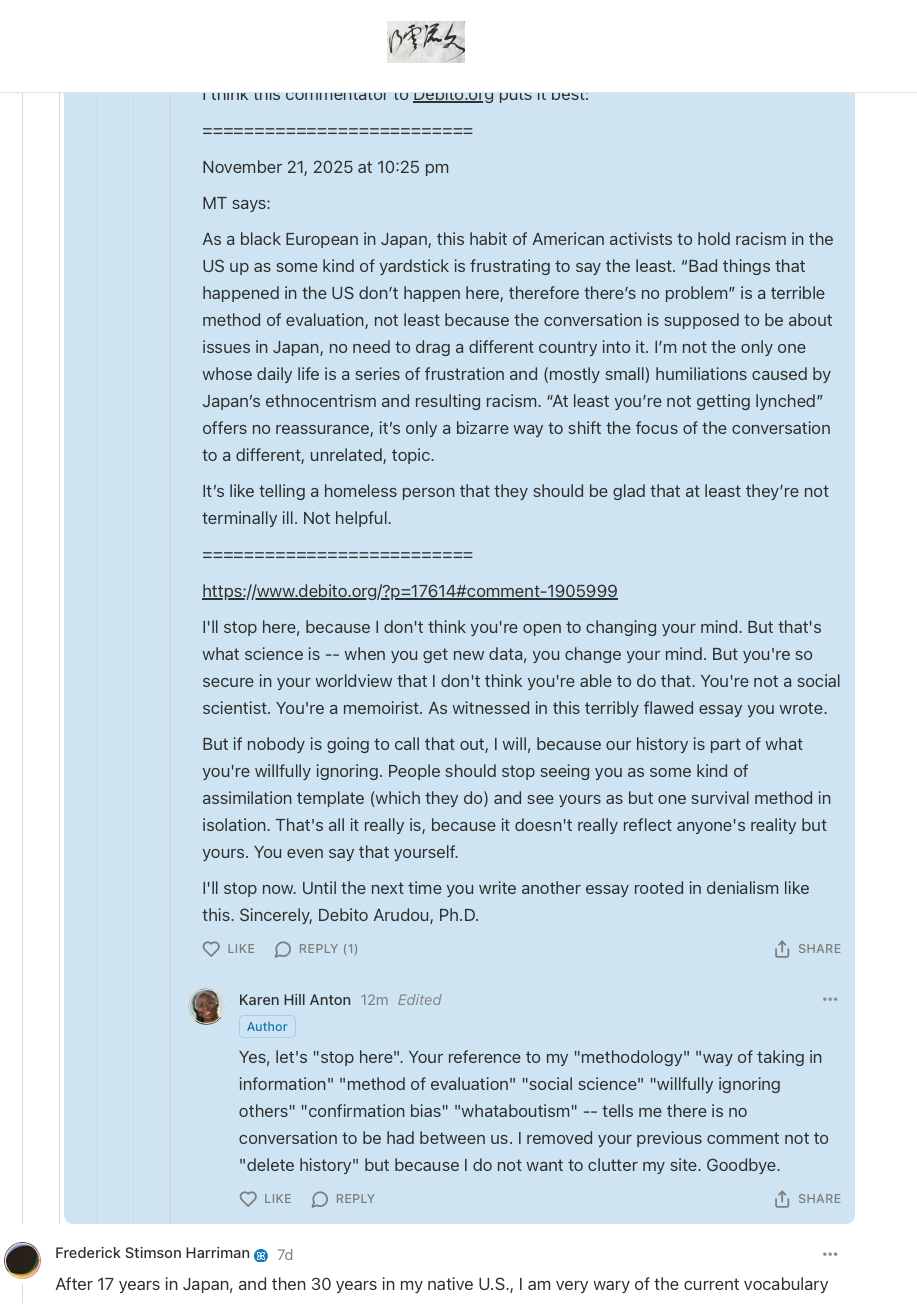
Japan Times: “Fukuoka court rules ban on dual nationality is constitutional”. Debito.org makes the case for why banning dual nationality is unrealistic, not to mention just plain stupid, with an excerpt from my book “Embedded Racism”.

mytest

Books, eBooks, and more from Debito Arudou, Ph.D. (click on icon):
Guidebookcover.jpgjapaneseonlyebookcovertextHandbook for Newcomers, Migrants, and Immigrants to Japan「ジャパニーズ・オンリー 小樽入浴拒否問題と人種差別」(明石書店)sourstrawberriesavatardebitopodcastthumbFodorsJapan2014cover
UPDATES ON TWITTER: arudoudebito
DEBITO.ORG PODCASTS on iTunes, subscribe free
“LIKE” US on Facebook at http://www.facebook.com/debitoorg
https://www.facebook.com/embeddedrcsmJapan
http://www.facebook.com/handbookimmigrants
https://www.facebook.com/JapaneseOnlyTheBook
https://www.facebook.com/BookInAppropriate

Hi Blog. First this article, then a comment:

/////////////////////////////////////////////

Fukuoka court rules ban on dual nationality is constitutional
Yuri Kondo (center), the plaintiff of a dual nationality case, speaks during a news conference Wednesday in the city of Fukuoka after the Fukuoka District Court handed down a ruling on her case.
BY ANIKA OSAKI EXUM, The Japan Times, Dec 6, 2023
https://www.japantimes.co.jp/news/2023/12/06/japan/crime-legal/dual-nationality-fukuoka-ruling/
Courtesy of lots of people, including Dave Spector
Discussion already underway on Debito.org in an earlier blog post Comments section here.

FUKUOKA – The Fukuoka District Court ruled Wednesday that Japan’s law that bans dual nationality is constitutional, rejecting an argument by a Japan-born plaintiff who lost her Japanese citizenship after she naturalized as an American.

Yuri Kondo, 76, had argued that the nationality law — which stipulates that Japanese nationals will lose their citizenship if they become a citizen of a foreign country — undermines fundamental human rights to pursue happiness, self-determination, and identity, as guaranteed under the Constitution.

While the nationality law was deemed constitutional, presiding Judge Fumitaka Hayashi said the wish of the individual who would lose their nationality should be considered as it is part of a person’s identity.

Hayashi also touched on the fact that since the nationality law was last revised in 1984, the number of countries allowing dual nationality has increased from one-third to three-quarters worldwide, reflecting a change in global attitudes.

“It is worth considering allowing individuals to remain dual nationals and giving them a certain period of time to choose a nationality, as proposed by the plaintiffs,” said Hayashi.

Born and raised in Japan, Kondo spent nearly four decades working and raising a family in the United States. She became a U.S. citizen in 2004.

After traveling back and forth between her home countries with both nationalities for years, she was flagged as being a dual citizen in 2017 — first at a passport office in Tokyo, where her passport was confiscated and her application rejected, and then by airport immigration officials when they realized she was exiting Japan with an American passport that had no entrance stamp.

Today, Kondo only has an American passport. She hasn’t reapplied to renew her Japanese one, fearing it would be denied again. However, she still retains her Japanese family registry and she also hasn’t received any follow-ups from the government asking her to formally withdraw one of her nationalities.

Kondo returned in 2020 at the start of the COVID-19 pandemic and has remained in Fukuoka ever since. She feared she might not be able to return to Japan if she left and now fears that she’ll face punishment for overstaying while her citizenship status remains in limbo.

During her time as a lawyer in the U.S., Kondo was consulted by many Japanese people living overseas facing similar situations. So, in hopes of advocating not only for herself but for many others too, she filed the lawsuit in 2022 questioning the constitutionality of the nationality law, its lack of procedure and the harm it’s caused to people who have Japanese roots.

After hearing the Fukuoka court’s ruling Wednesday, Kondo admitted she felt a bit deflated.

“In a way, I thought ‘Again?’” she said, referencing a recent ruling by the Supreme Court upholding the dismissal of another dual nationality case filed in Tokyo.

Kondo questioned the part of the ruling where it was stated that Japan permits the opportunity to choose a nationality. Many people — including those from whom she receives emails for consultation — are unaware that choosing another citizenship means they will automatically lose their Japanese citizenship, as in her case, she said.

Japanese law prohibits citizens from having more than one nationality after the age of 20. But when it comes to the requirements and enforcement surrounding those rules, the process is murky at best.

In September, the Supreme Court dismissed an appeal on a separate dual nationality case, involving eight plaintiffs currently living in Europe, which questioned the law’s constitutionality.

The Supreme Court rejected the basis of the appeal, upholding the original district court dismissal of the case that stated the law works to prevent “friction” that could arise from having dual nationality. The lower court ruling also noted that Japan still allows the freedom to change nationality.

Lawyers, some of whom are also working on Kondo’s case, said that the Supreme Court’s dismissal didn’t include a sufficient rationale behind the decision and requested a retrial.

With the Fukuoka court ruling though, Kondo’s lawyers felt there was significant progress in the court’s choice of words, as it mentioned the significance of Japanese nationality being the basis of one’s human rights and identity.

“For the first time, (the ruling) clearly stated that an individual’s intention must be respected to the fullest extent possible if they were to lose their citizenship,” lawyer Teruo Naka said. “I believe this is tremendously significant and this verdict signals significant progress in certain areas.”

There are currently multiple ongoing lawsuits against the government concerning Japan’s dual nationality law. Other cases include one filed in Tokyo that involves a child who was stripped of Japanese citizenship after the child’s parents applied for the child’s British passport, and another in Kyoto by a Japanese person who obtained Canadian citizenship. ENDS
////////////////////////////////

COMMENT FROM DEBITO: Most arguments made by the Japanese Government dovetail around the idea that people will be somehow confused in terms of national allegiances if they have more than one nationality. For what if Japan went to war with the country you have a second passport for? Where would your allegiances lie?

Crafting public policy merely on the basis of hypotheticals is not the best way to make laws. As noted above in the article, the number of countries allowing dual nationality is in fact increasing (“the number of countries allowing dual nationality has increased from one-third to three-quarters worldwide“), as more people around the world travel, resettle, immigrate, marry, and have multinational children as well as lives.  Forcing them to give up their other nationality is to force them to give up part of their identity — a completely unnecessary and moreover psychologically damaging move just for the sake of bureaucratic convenience.  And that’s before we get into issues of arbitrary enforceability, as discussed below.

The increase in diversity should be reflected in laws to accommodate reality.  Instead, we have pig-headed J politicians who can’t imagine a life beyond their own experiences (with the exception of the LDP’s Kouno Taro, who actually argued for dual nationality, albeit to coat the Kokutai in more glory, not for the sake of the individual’s identity) and refuse to legislate reality into reality.  And that feeds into a hidebound judiciary that claim they can only enforce the law as it’s written (even presiding Judge Hayashi above expressed regret at that).

To finish up, let me excerpt from my book “Embedded Racism” on this topic.  It’ll make the case about why public policy is as stupid as it is as best I can.  Debito Arudou, Ph.D.

=====================

From Arudou, Debito, “Embedded Racism:  Japan’s Visible Minorities and Racial Discrimination” (Lexington Books, 2nd Edition, pp 117-122, plus footnotes)

Legal Renunciation/Revocation of Japanese Citizenship and Wajin Privilege

Japan’s Nationality Law also allows for renunciation and unilateral revocation of citizenship, which may happen, for example, because dual nationality is not permitted. According to Articles 14 through 16, if a child has two nationalities, the child must have surrendered one of them with written proof to the Ministry of Justice by age 22). If not done promptly and correctly, the Law states that criminal penalties, including revocation of Japanese citizenship, can apply. Also, according to the Law, kokumin who take out (or choose) another citizenship must also declare it to the Government of Japan (GOJ) and renounce Japanese citizenship.[i]

            However, people who can claim blood ties to Japan’s Wajin majority enjoy significant privilege under the Nationality Law. Notwithstanding the entitlement-by-blood privileges that are the definition of a jus sanguinis system, Nikkei persons of Japanese descent get a faster track for obtaining nationality (Article 6), and even former citizens get special Wajin privileges after renunciation (Article 17, neither of which happen, for example, under United States’ nationality laws).[ii] Moreover, Wajin children of international marriages often keep dual nationality beyond the age of 22 due to unenforced regulations.[iii]

That said, the GOJ has been given more latitude in recent years to put Japan’s international children on legal tenterhooks: In 2015, the Supreme Court creatively interpreted Article 12 to allow the unilateral revocation of Japanese citizenship for clerical errors in cases where Japanese children were born overseas; and in 2021, a lower court ruled that citizens discovered with dual passports beyond the age of 22 can be stripped of their Japanese nationality at the GOJ’s discretion.[iv] Naturally, this incentivizes adults with international backgrounds to suppress their diversity in favor of Japan’s pure-blooded monoethnic narrative.[v]

An Example of Wajin Privilege and Politics under the Nationality Law: The Alberto and Aritomi Fujimori Cases

An instructive case of Wajin privilege under the Nationality Law is that of former Peruvian President Alberto Fujimori,[vi] born in Peru to two Japan-born émigré Wajin parents. Fujimori was reportedly a dual citizen of Japan and Peru due to his parents registering him in Kumamoto from within Peru as a child (more on Japan’s registry systems below). In 2000, after a decade in office laden with allegations of corruption and human rights abuses,[vii] Fujimori infamously resigned his presidency via a Tōkyō hotel room fax and declared himself a Japanese citizen. Despite holding public office overseas, in contravention of Nationality Law Article 16.2, Fujimori received a Japanese passport weeks later (when most applications can take a year or two to process).[viii] Then, despite international arrest warrants, Fujimori was not extradited, and enjoyed a comfortable lifestyle with his fellow naturalized brother-in-law Aritomi[ix] in Tōkyō’s high society until 2005.[x] Although the media assigned cause to political connections, e.g., “favorit[ism] among conservative politicians… enamored with the idea of a man with Japanese ancestry reaching political heights abroad,”[xi] Fujimori’s case is nevertheless one of privilege.[xii] This is in contrast to scenarios under Japan’s nationality regime where even half-Wajin children caught in bureaucratic registration dilemmas (such as being born of one North Korean parent)[xiii]have been rendered stateless due to geopolitical conceits, with legal protections of no country.

Supreme Court 2008 Interpretation of the Nationality Law: Human Rights in Japan Predicated upon having Japanese Citizenship

Other recent developments have made clear that human and civil rights in Japan are connected to having Japanese citizenship. Japan’s Supreme Court, in a landmark decision in June 2008, declared unconstitutional a clause in Article 3 requiring acknowledgment of Wajin paternity through marriage. That is to say, enforcement of the Nationality Law could no longer deny Japanese nationality to a child of a non-citizen woman and a Wajin man who had been born out of wedlock (or else had not been properly registered before birth). The Supreme Court’s express legal reasoning behind declaring this situation unconstitutional was, inter alia, that a lack of Japanese nationality is the cause of discrimination, and that obtaining Japanese nationality is essential for basic human rights to be guaranteed in Japan.[xiv] This systematic linkage between rights and citizenship has also been reaffirmed in pinpoint examples, such as the GOJ’s biased Prime Ministerial Cabinet surveys of human rights in Japan;[xv] and, famously, a police prosecutor in Saga Prefecture bravely admitted in 2011, “We were taught that… foreigners have no human rights” when under police detention and interrogation.[xvi]

At this juncture, it is important to emphasize the embedded discourse behind the Supreme Court’s legal reasoning here: Human rights in Japan are not linked to being human; they are linked to holding Japanese citizenship.[xvii] That is the crux of this research. That means the process of granting, restricting, or denying citizenship to select people is the gatekeeping mechanism any nation-state has over the enforcement of civil and political rights and privileges. However, as will be described below, the systemic granting of special privileges to people with Wajin blood ties also embeds a racialized framework behind equal protection under the law. It is the essential ideology justifying a structurally unequal treatment of non-kokumin at all other levels of society.

Japan’s Nationality Law from an International Comparative Perspective: Becoming An Outlier

Although the gatekeeping mechanism of naturalization is available to any nation-state through its citizenship laws, Kashiwazaki (2000) offers a comparative perspective of structural inequality in Japan’s citizenship rules:

In the 1980s and 1990s, laws regulating nationality and citizenship were revised in immigrant-receiving countries such as Germany, the Netherlands, Sweden, and Switzerland, where nationality transmission was mainly based on jus sanguinis (by parentage). These revisions eased criteria for acquiring nationality by first-generation, long-term resident aliens as well as by the second and subsequent generations. Major types of legal administrative changes include introduction or expansion of the as-of-right acquisition of citizenship [i.e., Japan has no “as-of-right acquisition” system; anyone who was not attributed Japanese citizenship by birth must go through the process of naturalization]; double jus soli, by which the third generation obtains citizenship automatically; and toleration for dual nationality… [On the other hand], there is no unified, coherent policy that could be called the Japanese citizenship policy (436-7).

Kashiwazaki also cites five characteristics of how Japan is distinctive in restricting access to citizenship: 1) Jus sanguinisonly for nationality transmission, with no concession made for former “Commonwealth”-style colonial historical ties, 2) tight border control, 3) strict naturalization rules that only go through the Ministry of Justice, 4) a close relationship between nationality and family registry, and 5) restrictive access to Permanent Residency status (437-47).

Now that we have established the barriers to becoming a kokumin, let us proceed to the second hurdle for national membership as a national: how kokumin are officially registered as citizens, and, conversely, how non-citizens have been officially excluded as residents of Japan.

FOOTNOTES

[i] Independent researcher and translator William Wetherall disputes this research’s interpretation of “renunciation” on his website (www.wetherall.sakura.ne.jp/yoshabunko///nationality/Dual_nationality.html), writing as of 2017 that the converse, dual nationality, is “not forbidden, unpreventable, and tacitly permitted,” because the GOJ works under a “pragmatic recognition of its inability to force Japanese nationals to renounce other nationalities.” He disputes the GOJ’s power of revocation under the Nationality Law between the semantics of “abandoning” (hōki) versus “revoking” (ridatsu) versus “choosing” (sentaku) Japanese nationality. In other words, in Wetherall’s reading, as far as the GOJ is concerned, the only issue is the “choice” or “revocation” of Japanese nationality, not the “revocation” or “abandonment” of foreign nationalities, so the GOJ has no power to force dual nationals to “abandon” foreign and “choose” Japanese.

That said, the Nationality Law nevertheless officially demands the “choice” of Japanese nationality only, and does not allow citizens to “choose” other nationalities without (in principle) “losing” (sōshitsu) Japanese nationality. Parts of this law are backed up by criminal penalties for noncompliance (Article 20), direct permissions and punishment by the Minister of Justice (e.g., Article 16), and recent court decisions mentioned in this chapter further empowering the GOJ’s ability to punish dual citizenship holders. My read is that whether or not the GOJ chooses to enforce the Nationality Law remains at their discretion; as we shall see below in this chapter, Japan’s administrative branch has great extralegal power to “clarify” laws through ministerial directive (see also Asakawa ibid). This enables bureaucrats, acting on behalf of the Minister of Justice, to activate or strengthen formerly dormant sections of the law given the exigencies of current political policy.

[ii] United States Department of State, personal communications, January and March 2011.

[iii] Furthermore, under Nationality Law Article 2.3, babies born in Japan whose nationality is unknown, or whose parents are unknown, are by default Japanese nationals (which leads to a conundrum when Non-Wajin babies are left in hospital “baby hatches” for abandoned children; incidentally, this loophole is the only way Japanese citizenship may be acquired by jus soli. See “Foreign baby left at ‘baby hatch’.” Kyodo News, September 8, 2008; “Akachan pōsto ni gaikokujin no kodomo: Kumamoto-shi no Jikei Byōin.” [Foreign baby left in “baby hatch” at Kumamoto clinic], 47News.jp, September 8, 2008. Vaguely, the media determined the “foreignness” of the baby as due to the unknown parents reportedly being Zainichi. More at www.debito.org/?p=1900.

[iv] “Top court backs repeal of Japanese nationality due to parents’ lapse abroad.” Asahi Shinbun, March 11, 2015, at www.debito.org/?p=13144; “Court rules in favor of Japan’s ban on dual nationality.” Mainichi Shinbun, January 21, 2021, at www.debito.org/?p=16393.

[v] “Dual citizenship in Japan: A ‘don’t ask, don’t tell’ policy leaves many in the dark.” Japan Times, feature undated, mid-2018.

[vi] Sources for this section include: “Ex-President Fujimori should face Justice.” Japan Today, July 16, 2001; “Fujimori dismisses Interpol notice.” Japan Times/Associated Press, March 30, 2003; “Fujimori gets Peru passport, eyes return.” Japan Times, September 15, 2005; “Japan ‘uncooperative’ in Fujimori probe.” Kyodo News, November 19, 2005; “Fujimori tied to $300,000 in ‘hidden’ bank account.” Kyodo News, November 30, 2005; “Ending Impunity: Pinochet’s involuntary legacy.” The Economist, December 13, 2006; “Ex-Peruvian President Fujimori asked to run in Japan elections.” Mainichi Daily News, June 19, 2007; “Editorial: Fujimori’s Candidacy.” Asahi Shinbun, July 12, 2007; “Diet seat eludes absentee Fujimori.” Kyodo News, July 31, 2007; “Fujimori returns to Peru to face trial.” Associated Press, September 23, 2007; “Fujimori convicted.” Associated Press, December 11, 2007; “Peru’s Fujimori gets 25 years for death squad.” Associated Press, April 8, 2009; Debito Arudou, “Fujimori gets his; Japan left shamed.” Japan Times, May 5, 2009.

[vii] See for example “Mass sterilisation scandal shocks Peru.”  BBC News, July 24, 2002; et al.

[viii] The GOJ expedited the process by claiming the “Master Nationality Rule”, an interpretation of Article 4 of 1930’s League of Nations Convention on Certain Questions Relating to the Conflict of Nationality Laws, where a state has the option to recognize a dual national as a sole national if it so chooses, as long as the person in question has the nationality of that state. The Japanese government chose to recognize only Fujimori’s “Japanese nationality,” based upon childhood family registration in Kumamoto from abroad, which is also in contravention of Japan’s Nationality Law. The GOJ also claimed that under the 1985 revision of the Nationality Law, which permitted citizenship to pass through the Japanese mother’s blood as well as the father’s, that children with multiple nationalities had until the end of 1986 to declare or forfeit Japanese nationality; those who declared nothing would be assumed to have retained Japanese nationality and forfeited all others. Since Fujimori had not declared either way, he was reportedly grandfathered in. See “The many faces of citizenship.” Japan Times, January 1, 2009. See also Anderson & Okuda (2003: 334-289). They conclude that Fujimori’s Japanese citizenship was legally binding, as he had never notified the Japanese government of his intent to give it up, and the Japanese government had declined to notify him that he had lost it.

[ix] Anderson & Okuda (2003: 310-8); see also “Fugitive Fujimori relative is shielded by Japan,” New York Times, July 19, 2001, regarding the case of Fujimori’s brother-in-law, and former Peruvian Ambassador to Japan, Victor Aritomi Shinto’s expedited naturalization into Japan. Although Anderson & Okuda conclude that Fujimori’s Japanese citizenship was not necessarily a politically-motivated move (albeit one of government “discretion” not to a priori notify Fujimori of his lost citizenship), since he legally retained it by not giving it up, the authors also conclude that Aritomi’s example was of dubious legal standing, since it was a naturalization procedure (not a latent holding of Japanese citizenship). Moreover, a) it took only six months, much less time than average, and b) it was awarded despite an outstanding international arrest warrant, in violation of the Nationality Law’s abovementioned requirement for “upright conduct.”

[x] See for example “Author Sono calls for racial segregation in op-ed piece.”  Japan Times, February 12, 2015, which mentions Sono opening her home to Fujimori. There is an even more curious epilogue to the Fujimori Case. Reportedly bored with his Tōkyō lifestyle (Sims, ibid), Fujimori renewed his Peruvian passport and flew to Chile in 2005 to stand for election in absentia in Peru, whereupon he was immediately put under arrest pending extradition. He lost the Peruvian election, but was able to run for election in Japan in absentia in 2007 (where he lost again). Then Chile extradited Fujimori to Peru, where he was ultimately sentenced to prison in 2009 for 29 years for human rights violations, including abuses of power, murder, and kidnapping. After being pardoned by the President of Peru in 2017, Peru’s Supreme Court reversed the pardon and put Fujimori back in prison in 2019.

[xi] Ibid, Associated Press, March 30, 2003.

[xii] This is not the only case of an alleged criminal facing extradition for criminal charges overseas taking refuge in Japan’s naturalization processes. Delfo Zorzi, aka Hagen Roi, despite accusations of neo-fascist terrorism and mass murder by the Italian judiciary for allegedly taking part in a massacre in Milan in 1969, was also granted Japanese citizenship even though government officials had been aware for years that he was a convicted criminal under extradition proceedings. The GOJ refused extradition, and Zorzi currently directs an import-export business in Aoyama, Tōkyō. See“Zorzi got citizenship despite criminal past”, Mainichi Daily News, June 2, 2000.

[xiii] “24 defectors from DPRK still stateless: Prejudice rife in Catch-22 situation”, Yomiuri Shinbun, June 13, 2007.

[xiv] “Top court says marriage requirement for nationality unconstitutional,” Kyodo News, June 4, 2008. See alsoIwasawa (1998: 303), and Bryant (1991-2). Bryant’s discussion of how the very definition of “Japanese citizenship” (official koseki family registration) creates discrimination towards children born out of wedlock or insufficiently registered is particularly informative.

[xv] More on this below, but the abovementioned Bureau of Human Rights survey asked leading questions casting doubt on foreigners’ grounds to have human rights, and consequently got responses indicating that a majority of the Japanese public “does not believe that foreigners should have the same human-rights protections as Japanese.” See “Human rights survey stinks: Government effort riddled with bias, bad science.” Japan Times, October 23, 2007.

[xvi] Debito Arudou, “For the sake of Japan’s future, foreigners deserve a fair shake”, Japan Times, December 6, 2011; Colin P.A. Jones, “Schizophrenic Constitution leaves foreigners’ rights mired in confusion”, Japan Times, November 1, 2011; “‘Yakuza to gaikokujin ni jinken wa nai to oshierareta’, moto kenji ga bakuro shita odoroku beki ‘shinjin kyōiku’ no jittai” [“We were taught that foreigners have no rights”: A former prosecutor confesses how new entrants are educated in surprising ways], Niconico News, May 23, 2011.

[xvii] Dōshisha Law School Professor Colin P.A. Jones (ibid) concurs: “[T]he Japanese Constitution speaks of defining equality and ‘fundamental human rights’ as being conditioned on nationality rather than being human.”

ENDS
======================
Do you like what you read on Debito.org?  Want to help keep the archive active and support Debito.org’s activities?  Please consider donating a little something.  More details here. Or if you prefer something less complicated, just click on an advertisement below.
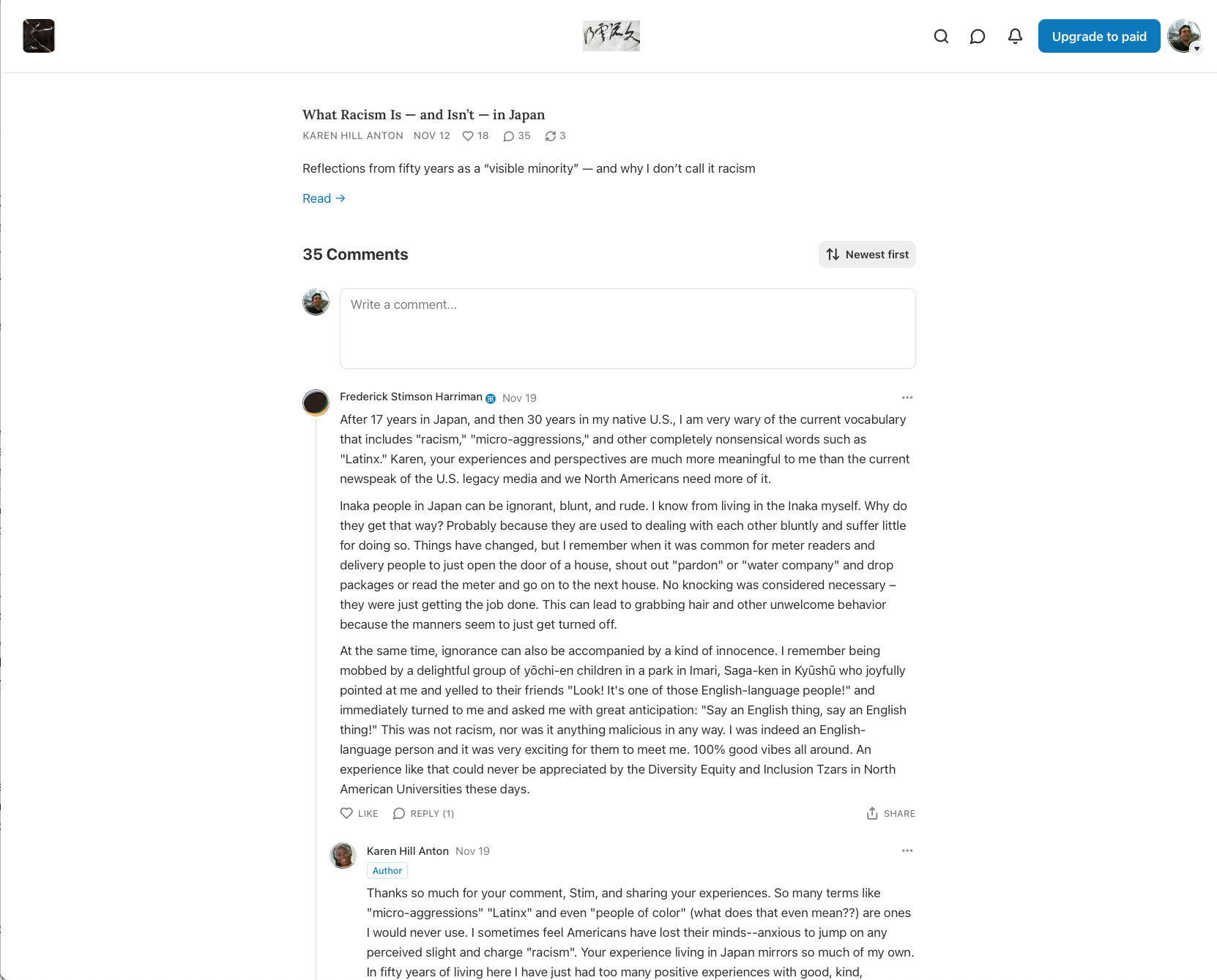
My SNA Visible Minorities Column 50, “Memory-holing the ‘Japanese Only’ signs” (Oct 31, 2023), where I conclude that, since racial discrimination is unconstitutional but not illegal in Japan, the most effective way to get “Japanese Only” signs down is to get the media and government involved. If they won’t help, you’re probably out of luck.

mytest

Books, eBooks, and more from Debito Arudou, Ph.D. (click on icon):
Guidebookcover.jpgjapaneseonlyebookcovertextHandbook for Newcomers, Migrants, and Immigrants to Japan「ジャパニーズ・オンリー 小樽入浴拒否問題と人種差別」(明石書店)sourstrawberriesavatardebitopodcastthumbFodorsJapan2014cover
UPDATES ON TWITTER: arudoudebito
DEBITO.ORG PODCASTS on iTunes, subscribe free
“LIKE” US on Facebook at http://www.facebook.com/debitoorg
https://www.facebook.com/embeddedrcsmJapan
http://www.facebook.com/handbookimmigrants
https://www.facebook.com/JapaneseOnlyTheBook
https://www.facebook.com/BookInAppropriate

Memory-holing the “Japanese Only” signs

Exclusionary businesses have a long history in Japan, and people seem to be forgetting it.  Here’s a reminder from somebody who has studied them more than anybody.

By Debito Arudou.  Shingetsu News Agency VM 50, October 31, 2023

News Item:  The Okinawa Times reported that an izakaya pub in Naha put up a sign saying, in a mix of English and Japanese, “Because our staff can only speak Japanese, Japanese Only (sorry).  We don’t allow customers from overseas to enter our bar.”  Once it made the news, the local government tourist agency intervened, and after some weeks and back and forth, the bar took the sign down.  

For this, my 50th column for SNA, I’d like to take the reader on a little nostalgia trip through a project I’ve been working on for a quarter century:  “Japanese Only” signs.  

I’ve investigated and interviewed hundreds of these exclusionary places, published and updated seven books on this issue in English and Japanese, and curated on Debito.org the “Rogues’ Gallery of Exclusionary Establishments” since 1999 to make sure this issue doesn’t get memory-holed.   

For it seems that memory-holing is happening.  A SoraNews24 article on the Naha Case didn’t do much research, claiming somehow that, “Bars with Japanese-customers-only policies aren’t unheard of in Japan, but they’re becoming increasingly uncommon in the modern age. Moreover, when you do come across such establishments, they’re generally dedicated bars.”  (Incorrect.  The highest incidents of exclusionary rules are in fact hotels.)  

Then we get to the public reaction to the news.  When I put it up on Debito.org, some readers were defensive as usual, basically ranging from the “self-othering” by the Guestists (quote:  “I understand why they do it. I’m not offended. It’s their business and country.”) to the Ostriches who prefer, in spite of decades of evidence to the contrary, to bury their head in the sand and pretend the problem simply doesn’t exist (quote:  “You are overdramatizing things.  It doesn’t say we do not allow foreigners.  Being to those places as long as you speak Japanese you can enter anywhere.  You have to see things from their perspective too you know.  They don’t wanna get in trouble because a tourist doesn’t read nor understand.  As simple as that.”)

But it’s not as simple as that.  “Japanese Only” signs in fact predate the massive tourist influx to Japan over the past decade and thus cannot be blamed on them.  Yes, signs have popped up here and there since foreigners were allowed back in after the pandemic, but the earliest signs I’ve been able to verify started in 1992, when public baths in the city of Kofu put up signs refusing foreigners — particularly foreign women imported during the Bubble Era to work as bar hostesses and in the sex trades — due to the contemporary fear of AIDS (which of course was linked to foreigners).  Fortunately, once the Kofu Case hit national news, the city health department intervened, demanded the bathhouses cease excluding, and educated the public about how AIDS is actually transmitted (i.e., not through shared bathwater or bathhouse).

But then it bubbled up again in Otaru, a seaport in Hokkaido, when in 1993 “Japanese Only” signs went up in a couple of public baths ostensibly to bar Russian sailors shipping in seafood from former Soviet waters.  However this time local media and government ignored the situation, because they knew the locals have a “thing” about about Russians.  

After WWII, many Japanese who lived in wartime-occupied Sakhalin and the Kuriles were forcibly repatriated by international agreements, and most emigrated to Hokkaido in general and Otaru in specific.  Memories are long in a defeated people, so they ate the Russians’ seafood but drew the line at “smelly, scary, and drunk Russkies” (their words) sharing their public baths.  And up stayed the exclusionary signs for years.

How on earth can this happen?  Because in Japan, “Japanese Only” rules are unconstitutional but not illegal.  

Unconstitutional because discrimination by race is explicitly barred under the Constitution of Japan (Article 14).  Not illegal because Japan is the only developed democratic country without any law in its civil or criminal code specifically banning racial discrimination (jinshu sabetsu).

And it shows.  Compare what would happen if a business open to the public put up a “no foreigners” sign in other developed democratic countries.  Civil rights laws would kick in and the local civil rights division would probably get their their business license suspended.  Media would also make an issue of it.  There might even be boycotts, spray paint, and broken windows.

Not in Japan.  Quite the opposite, actually.  When we took up the abovementioned Otaru Case in 1999, we actually had people and opinion leaders rallying on the side of the exclusionary establishments.  They made sophistic arguments claiming that unique Japanese culture must be protected from allegedly illiterate, ignorant, and rampaging foreigners.  (A column explicitly titled “Antiforeigner discrimination is a right for Japanese people” even appeared in The Japan Times.)  Or that businesses could exclude anyone anytime for anything.  (Try making that argument to the Burakumin, for example, and see how far you get.)  One establishment mentioned that their patrons have bad WWII memories (to which we replied, “What about German customers?”)

But it wasn’t just offhand, ill-considered comments.  The government was even complicit back then.  The Potemkin department for overseeing discriminatory issues in Japan, the Ministry of Justice’s Bureau of Human Rights (which has only advisory, not punitive powers), actually coached the Otaru City Government in writing NOT to do anything about their “Japanese Only” bathhouses — because, they argued, it would legally carry no penalty!

And that’s only talking about the discrimination that’s clearly signposted.  Now consider, for example, renting an apartment in Japan or trying to get a job at the “Hello Work” unemployment agency.  Racist landlords and corporate practices are so normal that explicitly stating “no foreign applicants” in their descriptions is perfectly acceptable. 

This is all really funny, because Japan signed a United Nations treaty in 1995 (the CERD) in which it promised to take all effective measures to eliminate all forms of racial discrimination.  As the Naha Case proves nearly 30 years later, Japan was just going through the motions of a “developed country,” signing treaties without any intention to enforce them.

So why not just go elsewhere and spend your money at a place that won’t exclude you?  Because the problem with leaving “Japanese Only” signs up is that covert discrimination in Japan becomes overt.  Racism becomes an option for any bigot who obviously need fear no penalty.  

History bears this out.  After the Otaru Case made national and international news after 1999, exclusionary signs and rules spread nationwide across industries.  This included bars, discos, internet cafes, restaurants, stores and shops, hotels, realtors, schools, and even hospitals.  It goes without saying, but these industries have a fundamental impact on a minimum standard of living.  It’s not just a matter of getting a drink in a bar.  If there’s ever even the possibility that you can’t shop, stay, reside, receive an education, or get medical treatment, you’re in trouble.

So if you leave discrimination alone, it not only spreads — it mutates.  Consider the most elaborate exclusionary sign I ever saw:  “Chinese and naturalized citizens, war orphans, and children with mixed Chinese blood are absolutely refused entry.  Only pure-blooded Japanese males only.”  That’s grounded in some mighty specific prejudices.  

But why do these places exclude in the first place?  In my interviews over more than a decade, their standpoints range from, “Foreign customers were disruptive to my business” to “I personally hate foreigners.”  Some who thought their prejudice through a bit more cite an apparently exclusive clientele that want their dining or bathing experience to be “foreigner-free.”  Even those who never dealt with a foreign customer cited rumor to claim that something bad might happen, so the signs were a preventative measure.  

All point to a pretty simple logic:  If foreigners are let in, they’ll go bankrupt because Japanese customers will stay away.  (Even though plenty of these places went under anyway despite their exclusionary policies.  So maybe it wasn’t the foreigners after all.)  

But here’s the most insidious thing:  enforcement.  To the gatekeepers, a “foreigner” can be determined on sight.  This happened in practice when people who didn’t “look Japanese” enough were still refused entry even after they showed proof of Japanese citizenship.  That means they excluded by race, not nationality.  “Japanese Only” signs exclude Japanese too.

So you see, the “Japanese Only” sign in Naha was nothing new or all that simple.  What’s new is that the Okinawa media and the local government played a role in getting it down.  

After decades of thinking about this, I’ve come to the conclusion that seems to be the best route.  

With the Otaru Case, we tried everything else.  We spent more than a year negotiating with the exclusionary businesses, the local, regional, and national governments, and the general public.  Then we spent much money and many years in Civil Court trying to get one place to open their doors and one government to take responsibility for their years of negligence.  I even took the Otaru Case to Japan’s Supreme Court in 2005, which stunningly denied cert because it somehow “didn’t involve any Constitutional issues.”  At least the courts formally acknowledged that “Japanese Only” signs are in fact “racial discrimination.”  But that was a lot of energy spent on one bathhouse.  Now try doing that for all the other places that exclude foreigners.

As the Naha Case shows, the most effective way to get an exclusionary sign down is to get it in the media and make the government fear an impact on local tourism.  In a society where issues of human rights perpetually take a back seat to business ethics (which, in any society, would happily make money selling poison to the public as long as there’s no law to stop them), you really have few other reliable or effective options in Japan.  

Sad to say, but it’s as simple as that.

ENDS

======================
Do you like what you read on Debito.org?  Want to help keep the archive active and support Debito.org’s activities?  Please consider donating a little something.  More details here. Or if you prefer something less complicated, just click on an advertisement below.
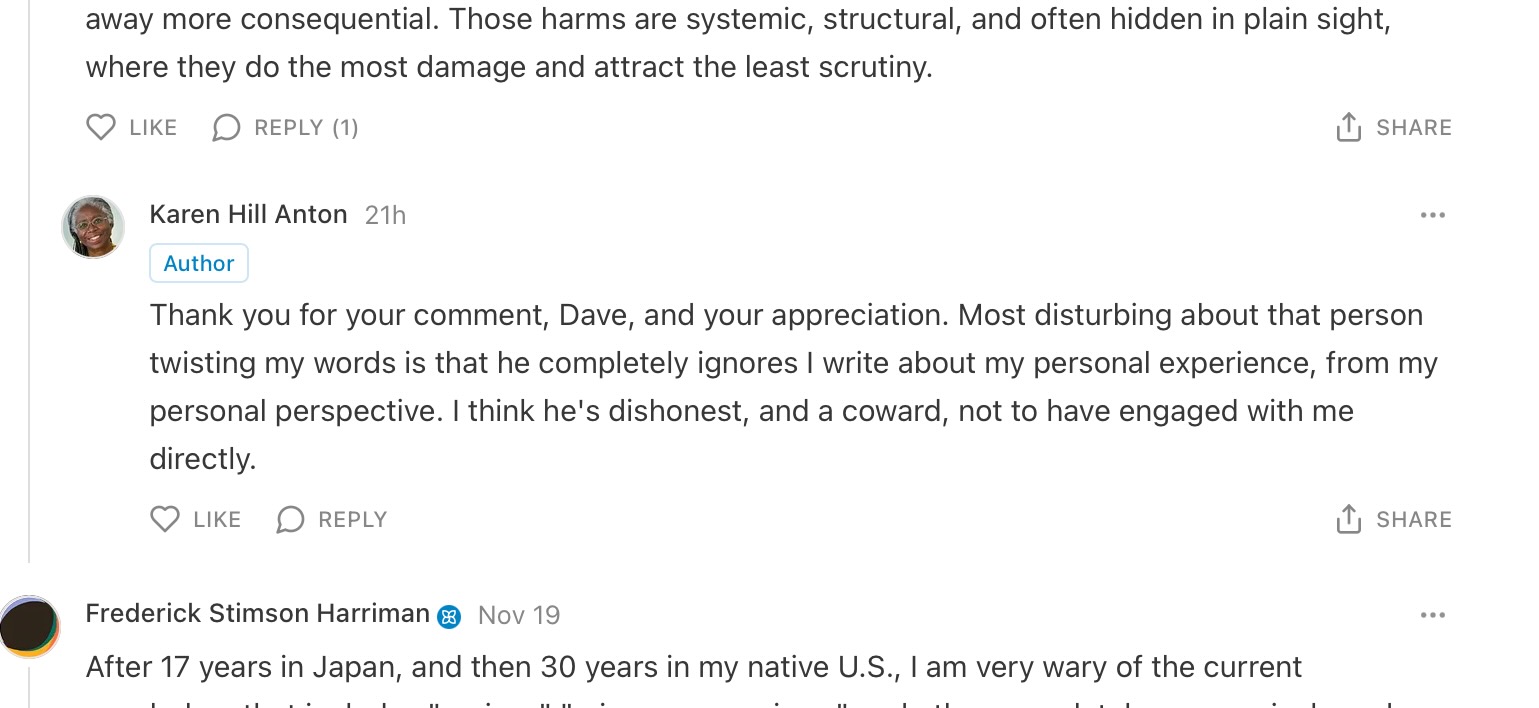
“Japanese Only” sign on izakaya bar in Naha, Okinawa (Okinawa Times and Japan Today). Removed after govt scrutiny and media exposure.

mytest

Books, eBooks, and more from Debito Arudou, Ph.D. (click on icon):
Guidebookcover.jpgjapaneseonlyebookcovertextHandbook for Newcomers, Migrants, and Immigrants to Japan「ジャパニーズ・オンリー 小樽入浴拒否問題と人種差別」(明石書店)sourstrawberriesavatardebitopodcastthumbFodorsJapan2014cover
UPDATES ON TWITTER: arudoudebito
DEBITO.ORG PODCASTS on iTunes, subscribe free
“LIKE” US on Facebook at http://www.facebook.com/debitoorg
https://www.facebook.com/embeddedrcsmJapan
http://www.facebook.com/handbookimmigrants
https://www.facebook.com/JapaneseOnlyTheBook
https://www.facebook.com/BookInAppropriate

Hi Blog.  Here’s the latest entry for the Rogues’ Gallery of Exclusionary Establishments, where a bar in Okinawa refuses all “customers from overseas” (=”Japanese Only“) to enter the bar.  The difference is that the media took it up and ran them through the wringer of logic.  Not to mention they faced government scrutiny, which history shows makes all the difference.  It came out poorly for the bar, so they took the sign down.  Good.  Debito Arudou, Ph.D.

(courtesy Okinawa Times)

Okinawa pub posts ‘Japanese only’ admission sign based on some shaky logic

116 Comments

By Casey Baseel, SoraNews24, courtesy of Eric


▼ A photo of the notice


Screen-Shot-2023-10-05-at-9.12.35.png

Bars with Japanese-customers-only policies aren’t unheard of in Japan, but they’re becoming increasingly uncommon in the modern age. Moreover, when you do come across such establishments, they’re generally dedicated bars, with menus almost entirely consisting of drinks, and often the presence of hostesses or “floor lady” pseudo-hostesses. Izakaya, on the other hand, are essentially restaurants, where customers are expected to order both food and drinks, and it’s competitively rarer for them to have such exclusionary admission policies.

[Ed:  Clearly the author didn’t do much research.]

According to local newspaper Okinawa Times, the notice had been posted since at least a year ago, during which the management has turned away non-Japanese would-be customers. Eventually the sign came to the attention of two members of a Naha residents group that reported it to various government departments, including the Naha City Tourism Division and Okinawa Convention Bureau. This prompted a visit by members of the Tourism Division in August of this year in which they asked the owner to take the sign down, especially in light of increasing numbers of overseas travelers visiting Okinawa following the lifting of pandemic protocols, but the owner refused to do so.

The owner claims that the notice wasn’t meant to be taken as discriminatory intent, saying “We only have one person working the dining hall, and one person in the kitchen, so we don’t have time to spare for customer interaction. We have no intent of discriminating.” Coupled with the sign’s disclaimer that the staff only speaks Japanese, that would seem to indicate that the aim of the no-customers-from-overseas rule was to eliminate time-consuming communication problems, but if that’s really the case, the more appropriate policy would have been “Customers must order in Japanese.” It’s pretty short-sighted to make a blanket assumption that all non-Japanese diners will be unable to speak Japanese, given that the number of people living outside Japan who’ve still acquired some basic proficiency with the language is higher than it’s ever been, as is the number of non-ethnically Japanese residents of Japan, most of whom can order food and drinks in the language without difficulty. Even if the owner’s concern was foreign customers asking for changes in how their food is prepared, something far more common at restaurants outside Japan than within it, a sign saying “No menu substitutions allowed” would be sufficient and succinct.

With the sign getting increased attention, the owner has apparently rethought the Tourism Division’s request to remove it, and at some point in September it was taken down, with the owner saying “The writing was incorrect.”

However, he also added “What I want the government to do isn’t to try to attract travelers from other countries, but to teach people about izakaya culture.” But if what he really wants is a broader understanding of izakaya drinking and dining traditions, presumably on a global scale (since Japanese people are already familiar with those traditions), it’s hard to see how turning people away because they’re not Japanese was going to accomplish that.

Source: Okinawa Times

///////////////////////////////////////////

Japanese from Okinawa Times
入店拒否の張り紙。英語で「スタッフが日本語しか話せないため/日本人のみ(ごめんなさい)/海外からのお客さまは入店させません」と記す=9月、那覇市
沖縄タイムズ 2023年10月2日 Courtesy of KM and JK
https://www.okinawatimes.co.jp/articles/-/1232333

那覇市の居酒屋が入り口に「ジャパニーズオンリー」と書いた紙を張り、外国人の入店を拒否していた。国籍による違法な差別で、市民グループが気付き、行政に相談した。現時点で店側は張り紙を取り外しているが、客や通行人を傷つけていた事実は残る。行政による支援や啓発の必要性も浮かぶ。(編集委員・阿部岳)

張り紙は「スタッフが日本語しかしゃべれないため」と書き、さらに英語で外国人の入店禁止を伝える内容。1年ほど前に張り、実際に入店を断ったこともある。拒否された客は「非常に悲しい」とネットに投稿している。
経営者は「ホール担当1人、キッチン担当1人で接客に時間を割けない。差別は意図していない」と主張する。

ただ、国籍だけを理由にした入店拒否は人種差別撤廃条約に反する。静岡地裁浜松支部は1999年、街頭の店舗は一般に開放されていると指摘し、外国人の入店を拒否した宝石店に損害賠償を命じた。

那覇市の居酒屋の張り紙を偶然見つけた市民グループの2人は、市の各部署や沖縄観光コンベンションビューローに相談して回った。「沖縄カウンターズ」のメンバーは「これを見た外国人がどれだけ傷つくか。でもいきなり炎上させるのではなく、行政も一緒に円満に解決したかった」という。

相談を受けた市観光課は8月、店を訪問し、「観光客が増える中、好ましくない」と撤去を打診したが、店側は応じなかった。市の担当者は「権限がなく、お願いしかできない」と説明する。

最終的に本紙が9月、取材に訪れると、経営者が「文面は間違っていた」と撤去した。一方で「行政はただ海外客を呼ぶのではなく、居酒屋文化を伝えてほしい」と求める。

問題解決に向けて行政にかけ合ったもう1人、「多文化ネットワークfuふ!沖縄」のメンバーは「観光行政も人数や収入だけでない、文化の相互理解につながる観光を目指してほしい。店側が相談できる場所も必要ではないか」と投げかける。

4月に施行された県差別のない社会づくり条例は、事業者に差別解消に向けた努力を求めている。条例の検討委員だった白充(ペクチュン)弁護士は「国籍のみを理由とした入店拒否は条例に抵触しており、実効性が問われる。県民一人一人の意識変容に加え、県が周知徹底する努力も必要だ」と話した。
ENDS

======================
Do you like what you read on Debito.org?  Want to help keep the archive active and support Debito.org’s activities?  Please consider donating a little something.  More details here. Or if you prefer something less complicated, just click on an advertisement below.

My SNA Visible Minorities 46: “Visible Minorities: Departing Japan at Middle Age” (May 15, 2023)

mytest

Books, eBooks, and more from Debito Arudou, Ph.D. (click on icon):
Guidebookcover.jpgjapaneseonlyebookcovertextHandbook for Newcomers, Migrants, and Immigrants to Japan「ジャパニーズ・オンリー 小樽入浴拒否問題と人種差別」(明石書店)sourstrawberriesavatardebitopodcastthumbFodorsJapan2014cover
UPDATES ON TWITTER: arudoudebito
DEBITO.ORG PODCASTS on iTunes, subscribe free
“LIKE” US on Facebook at http://www.facebook.com/debitoorg
https://www.facebook.com/embeddedrcsmJapan
http://www.facebook.com/handbookimmigrants
https://www.facebook.com/JapaneseOnlyTheBook
https://www.facebook.com/BookInAppropriate

Hi Blog. My latest column offers a frank assessment of living your life out in Japan as an immigrant. It of course can be done, but most of you will find that even after decades swimming against the current in terms of legal status and social acceptance, you will get no commensurate reward after all your efforts.  In fact, I found that life opportunities dwindle as you age in Japan, and you get locked into a dreary, impoverished lifestyle like most other elderly here. If you think you can avoid this situation, power to you, but I suggest you make your decision to stay permanently or not by age 40.  Good luck.  Debito Arudou, Ph.D.

/////////////////////////////////

Visible Minorities: Departing Japan at Middle Age
MAY 15, 2023 by DEBITO ARUDOU in COLUMN
https://shingetsunewsagency.com/2023/05/15/visible-minorities-departing-japan-at-middle-age/

SNA (Tokyo) — As you have probably have heard, SNA President Michael Penn will be moving his operations overseas. He’s leaving Japan. At his age, that’s probably a good idea. I speak from experience.

I came to Japan during the “Bubble Years” of the 1980s, when Japan was ascendant upon the world stage and buying everything in sight. Money orgiastically sloshed around the economy.

Finding work was pretty easy. Lots of Japanese companies were trying to “internationalize” by hiring token foreign staff who were looking for an international experience. Or, if being a corporate drone wasn’t your thing, you could teach English for about US$100 an hour. It was one great big party. I came over, fell in love with the language and a girl, and decided to make a go of it here.

It was a pretty good go. I lived in Japan for 24 years, married and had kids, became tenured faculty at a university, bought land, built a house, and learned the language and culture well enough to write books in Japanese and take out Japanese citizenship. In terms of trying to assimilate into Japan, I don’t think there’s a lot more I could have done. I was an ideal immigrant.

But then, like Michael, I too left Japan. That’s both a pity and, in my case, an inevitability.

Japan should be trying harder to keep people like us. It really doesn’t. The longer you’re in Japan, the more your opportunities dwindle.

Opportunities Denied

Let’s first talk about the natural obstacles to people staying on, starting with how difficult it is to keep a visa.

Unless you marry (and stay married to) a Japanese, it’s quite difficult for foreigners to control their own professional lives in Japan. Becoming a salaryman is one thing, where you can work until you drop, but promotion is tougher for foreigners, and they are the first ones laid off in any economic downturn. Moreover, the types of jobs you can take are mostly “foreigner” jobs in certain industries.

So how about starting your own business in Japan? It can happen, and there are a few successful entrepreneurs. But I’ve seen many, many more failures. Some were dragged down by onerous requirements such as expensive shareholder investment and being forced to hire Japanese staff. Others got tripped up either by mandarin rigmarole that is designed more for the bureaucrats’ convenience than yours, or by pedantic officials who are out to get you, finding any mistake in your paperwork so they can reflexively revert to the “culture of no.”

You’re better off establishing a headquarters overseas and setting up a branch in Japan than registering a company in Japan proper. But if you do that, suspicion is triggered in the Immigration Bureau and you face even more visa rigmarole.

That’s all before we get to how Japan has toughened up its visa requirements over the years.

Compared to when I first arrived, it’s harder to graduate from a three-month visa to a one-year; and so is getting a three-year and Permanent Residency, especially for people of color or from developing countries. The assumption is that people from poor countries are only in Japan for the money, not to positively contribute to Japanese society as a resident and taxpayer like everyone else.

In any case, the mandarins’ overall attitude is that foreigners must prove themselves worthy of the honor of staying in Japan. Japan’s graveyard of defunct visa statuses, discontinued because they had qualifications so ludicrous that few people applied, reflects that.

The clearest indication that Japan really doesn’t want us to stay is the lack of an official immigration policy, an official Ministry of Immigration, or other governmental organs at the national level to help foreigners become Japanese. Politicians have repeatedly said that they want foreigners to come work for awhile but not stay on. Take them at their word.

Nevertheless, You Persisted

But let’s say you have satisfied all these requirements and gained Permanent Residency or even Japanese citizenship. What do you get for after all that effort? Not enough.

You start realizing this when you hit middle age in Japan. Around 40 I could see where I had been and where I was heading, and it looked pretty bleak.

This is because I was seeing how old people actually lived in Japan. Yes, there are great networks for them to be active both physically and mentally, including mountain climbing, gateball, mahjong, or go boardgames. Japan’s medical system is very good, especially compared to, for example, the hellscape that is US healthcare. Of course there’s good food and drink to be had everywhere.

That might be satisfactory if you’re a Japanese old fart. As a foreign old fart, you’re stuck in treadmill conversations with people who have mostly lived for work and often don’t have many interests beyond it. If they are educated, they’ll often see you as a cultural curiosity to be studied, or as a basis of comparison to sharpen their predispositions informed by the “we Japanese” superiority complexes.

If you can psychologically handle a life where your friends are mostly insular and conservative, enjoy. If not, you’re going to be lonely.

Chances are you’re also going to be poor. The average payout for the Japanese pension, according to Reuters in 2019, is about 150,000 yen per month. That might cover rent and leave enough for a comfortable lifestyle in many of Japan’s dying countryside towns, but not in the major cities.

This should not have come as any surprise. Even during the Bubble Years Japan’s elderly were poor, and were being sent overseas to “silver zone” enclaves so their yen could go farther with the exchange rates.

But now that the value of the yen is dropping, that has all slipped away. Forget traveling much, especially overseas, unless you have additional savings or means of your own. It’s highly likely you’ll find yourself stuck in Japan.

This situation will not improve, because Japan has ignored its demographic issues for decades. All the way back in 2000, both the United Nations and the Japanese government agreed that Japan’s aging society would soon become top-heavy with geriatrics with not enough young taxpayers paying into the pension.

The proposed solution–then, as now–was immigration. Foreigners were going to save Japan. But, again, the Japanese government assiduously declined to take us.

Policymakers clung to homogeneous-society narratives and stopgap measures like the exploitative “trainee” visa system, and watched pension contributions per capita dwindle. What is their solution now that the warnings from nearly a quarter-century ago proved accurate? Raise the retirement age to the late 60s and pay out less pension. We’ll probably see Japan’s retirement age raised to 70 before too long.

By the time you want to retire, you’ll get a pittance, or might not be expected to retire at all.

Twilight Years in Japan

Let’s say you’ve done better future planning than the Japanese government did, and you can live your middle and late age comfortably anywhere you wish. Why not spend your later middle age and twilight years in Japan?

Because, as I said above, the longer you’re in Japan the more your opportunities dwindle.

Let’s start with dealing with the inevitable “midlife crisis.” It’s highly likely your current job has become boring or gone sour. Often the younger workers aren’t happy with having a foreign senpai above them, and won’t treat you with the dignity and respect that was required of you when you were lower on the totem pole. Changing a job in Japan is culturally frowned upon. You’ll lose both salary and seniority. You’ll probably have to take what you can get, like everyone else.

Eventually all that’s left is the “make-work” jobs for seniors. Can you imagine wearing a uniform and flagging people past traffic cones? Sure, it’s nice to supplement your income and get out of the house, but it’s probably going to be boring at best, humiliating and a soft target for bullying at worst. Again, people aren’t going to forget that you’re a foreigner.

The fact is that geriatrics in Japan are expected to be impoverished, housebound, and satisfied with monotonous days full of television, drinking, and gateball. Sure, you might have your “forever home,” but you’re expected to die in it. You won’t get much money if you try to resell your house or other equity and expect to live on the proceeds, as only the land is worth anything. You can’t, for example, buy an RV and live the nomadic life of retirees on pensions in Western societies. You can only live like you’re expected to live.

Personally, I couldn’t take this encroaching monotony. Around the time I turned 45, I realized that the main reason I had loved life in Japan was the adventures–the curious and weird things that happened around me daily. But the more familiar I became with Japan, the adventures largely evaporated.

After more than twenty years in Japan, every day became Groundhog Day. I could sleepwalk through most conversations. I had to find diversions to alleviate the boredom; they no longer found me.

The fact is, unless a brick had fallen from the sky and brained me, I could predict what was going to happen from the morning when I woke up to the moment I went to bed. So I decided to leave.

What Happens If You Leave Japan?

Leaving Japan is also made into something difficult. You’re constantly reminded that if you ever depart for good, you’ll lose everything and have to start from zero, especially professionally.

A very sad discovery is that your Japan experiences don’t count for much in other countries, given that now China is the Asian regional power. Even if Japan had retained its luster, there were always people overseas with Japanese roots competing for your Japan-specialist job, and got it by arguing bald-facedly that foreigners can’t know as much as Japanese with “real Japanese blood.” The Japanese Only attitudes you see in Japan’s hiring practices are exported worldwide.

If you have a family in tow, it’s even tougher to leave. They’re especially scared by the Japanese media constantly rattling on about how dangerous life is overseas. If your kids are still in the Japanese school system, they’ll begrudge being uprooted too. They know that if they ever return to Japan, they’ll never be considered “Japanese” enough because they haven’t passed through the Japanese education system.

Coming to Japan was always a carefully baited hook–if you get past all the obstacles, you’ll find yourself trapped in a society where you’re not allowed to truly belong, yet are constantly expected to try.

Yet some people do leave, sometimes permanently, sometimes not.

People like Japan specialists Alex Kerr and Donald Keene regularly split their time between Japan and overseas. Authors Haruki Murakami lives permanently in Honolulu and Marie “spark joy” Kondo lives in Los Angeles.

Even famed Tale of Genji translator Edward G. Seidensticker departed Japan back in 1962, signing off with, “The Japanese are just like other people. They work hard to support their–but no. They are not like other people. They are infinitely more clannish, insular, parochial, and one owes it to one’s sense of self-respect to retain a feeling of outrage at the insularity. To have this sense of outrage go dull is to lose one’s will to communicate and that, I think, is death. So I am going home.”

Eventually Seidensticker went back on these words, living his life on both sides of the Pacific, dying in Tokyo in 2007 at age 86.

I too spend extended periods in Japan and am much happier (and prosperous) by having a foot in two countries. I can pick and choose the best of both societies when I want, and I think I’ve earned that option.

But I had to make a choice: I wouldn’t have been able to do that with Japan as my home base. Having a “totalization agreement” for both my pension systems helps too. I’m having to catch up with my pension contributions in my new tax home, but fortunately the opportunities are here for me to do so.

So if you’re thinking about staying in Japan permanently, I suggest you make the final decision by age 40. After that, you’ll be stuck in a rut in Japan. Then if you change your mind, you’re probably not going to make an easy transition back to your home country, as your friends and family themselves retire and die off. Fair warning.

Godspeed, Michael Penn. May you and SNA prosper more in another society than Japan would let you. ENDS

======================
Do you like what you read on Debito.org?  Want to help keep the archive active and support Debito.org’s activities?  Please consider donating a little something.  More details here. Or if you prefer something less complicated, just click on an advertisement below.
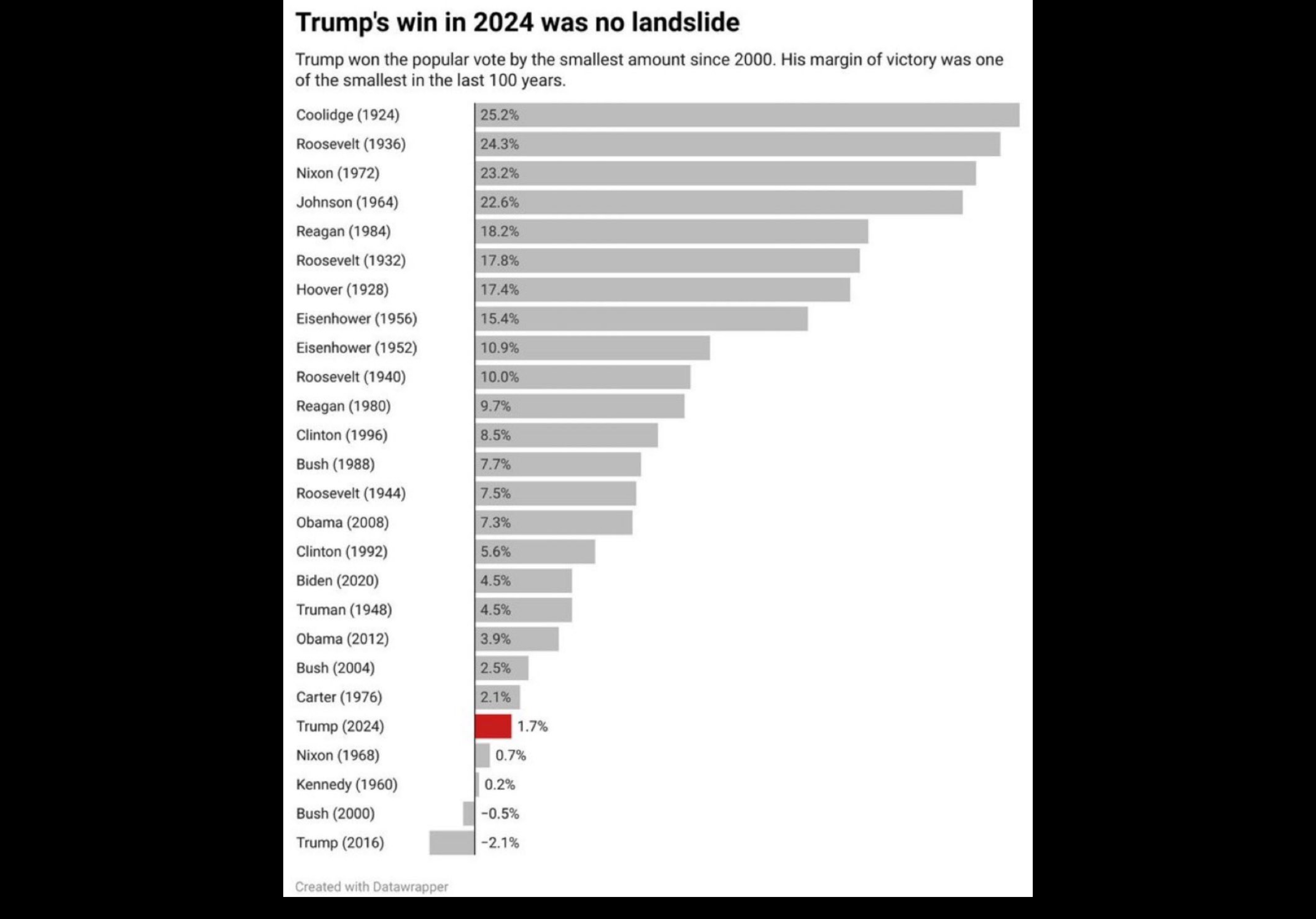
My SNA Visible Minorities 45: “Judges Strip Equal Protection from Naturalized Citizens”, on the unjust Aigi Country Club decision (Apr 24, 2023) (full text)

mytest

Books, eBooks, and more from Debito Arudou, Ph.D. (click on icon):
Guidebookcover.jpgjapaneseonlyebookcovertextHandbook for Newcomers, Migrants, and Immigrants to Japan「ジャパニーズ・オンリー 小樽入浴拒否問題と人種差別」(明石書店)sourstrawberriesavatardebitopodcastthumbFodorsJapan2014cover
UPDATES ON TWITTER: arudoudebito
DEBITO.ORG PODCASTS on iTunes, subscribe free
“LIKE” US on Facebook at http://www.facebook.com/debitoorg
https://www.facebook.com/embeddedrcsmJapan
http://www.facebook.com/handbookimmigrants
https://www.facebook.com/JapaneseOnlyTheBook
https://www.facebook.com/BookInAppropriate
If you like what you read and discuss on Debito.org, please consider helping us stop hackers and defray maintenance costs with a little donation via my webhoster:
Donate towards my web hosting bill!
All donations go towards website costs only. Thanks for your support!

Hi Blog.  My blog post from yesterday has become a full-blown column at the Shingetsu News Agency. Have a read, and lament for Japan’s future if horrible legal precedents like this are allowed to stand. Debito Arudou, Ph.D.

//////////////////////////////////////////
Visible Minorities: Judges Strip Equal Protection from Naturalized Citizens
Shingetsu News Agency, April 24, 2023 by DEBITO ARUDOU in COLUMN

https://shingetsunewsagency.com/2023/04/24/visible-minorities-judges-strip-equal-protection-from-naturalized-citizens/

The website archiving and substantiating all of the claims below is at
https://www.debito.org/?p=17240

SNA (Tokyo) — It’s the next stage of evolution in Japan’s variant of racial discrimination: a naturalized Japanese citizen was last year denied membership at a golf course—explicitly for being a former foreigner. He sued. This month a district court in Mie Prefecture ruled that this was not an illegal act of discrimination.

You read that right: not illegal. Follow me down this rabbit hole.

Aigi Country Club in Kani city, Gifu Prefecture, refused a former Zainichi Korean with Japanese citizenship. Their justification, according to the Asahi Shinbun, was that “our club has a quota for foreign nationals and former foreign nationals who have become naturalized Japanese and restricts new memberships. We currently have no vacancies in that quota.”

In court, Aigi Country Club duplicitously denied outright racism by claiming that they refused him for more reasons than foreign roots. It didn’t matter. The judges acknowledged that the plaintiff was refused for being foreign and they still ruled against him. They accepted that this was an instance of discrimination, but it wasn’t enough discrimination.

The judges ruled that a golfing club by design is a “closed and private organization with strong personal ties among its members” and that Article 21 of the Constitution guarantees “freedom of association.” In their reading, private groups are free to decide their membership criteria and, at any rate, playing golf is “not indispensable for social life.”

In sum, it wasn’t an instance of discrimination “beyond socially acceptable limits.”

Really?

Exclusionism is rampant at Japan’s golf courses. Last May the Asahi Shinbun provided an excellent overview of how Japan’s country clubs routinely refuse not only membership but also entry to foreign golfers. Some have even refused women. According to interviews, they have “nationality clauses” (i.e. Japanese Only rules) because “the atmosphere slightly changes when there are foreigners around.”

To them, these are just their rules, established long ago. In its case, the Aigi Country Club started in 1964. They won’t change without outside pressure, such as when the International Olympic Committee forced changes in a few Japanese clubs before they were permitted to host international competitions. Without such international scrutiny, they are content to preserve their discrimination in amber.

This Aigi ruling clearly empowers golf bigots to stay the course.

Legal Logic of the Ruling

There are two elements of the logic behind the ruling that deserve to be highlighted.

First is the “beyond socially acceptable limits” reasoning, which has been circulating for generations within Japan’s jurisprudence. It holds that some discrimination is inevitable (for example, separating bathrooms by gender). So as long as institutions or individuals don’t go beyond the “socially acceptable level” of discrimination, there is no legal sanction.

A problem with this approach is that “social acceptance” is determined entirely by the subjective impressions of individual judges. There is no hard data or social science involved. It’s all in the eyes of the judges.

The United Nations has repeatedly criticized Japan for this kind of reasoning (especially its legal corollary of “rational discrimination”).

In this case, even prior Japanese court precedent disagrees. In a similar golf club suit brought in 1995 by a Zainichi Korean plaintiff, the Tokyo District Court ruled that a denial of membership on the grounds of nationality was unconstitutional under Article 14—all people are equal under the law. The Tokyo court also previously dismissed some other bits of the Aigi decision—ruling that golf is a leisure activity and thus a necessary place to socialize. It also noted that, since golf memberships can be purchased on the market, they aren’t really all that exclusive.

Unfortunately, a separate lawsuit in 2001 by another Zainichi Korean against a golf course ruled against him, affirming the primacy of private corporations to choose their members, even if that includes excluding foreigners.

This brings us to the second big issue: the plaintiff in the Aigi case was not a foreigner.

What’s even the point of naturalizing and taking Japanese nationality if the legal status conveyed offers no equal protections?

We’ve already seen this occur within the Japan Sumo Association, which also limits the number of foreign wrestlers in sumo stables. Even if they become Japanese citizens, they are still counted as “foreigners.” Nobody has yet challenged this practice as unconstitutional.

The plaintiff in the Aigi Country Club Case effectively did challenge it, and yet the Aigi judges accepted the argument that Japanese citizens with foreign roots are not equally protected under the law. They will forever remain “Japanese” with an asterisk.

Open Season on Foreign Roots

If the Mie ruling stands, there will be nothing preventing–at least at the formal legal level–almost any private enterprise from putting up a “Members Only” sign and enforcing “nationality clauses.” Many institutions could conceivably argue for keeping memberships exclusive in order to “preserve the atmosphere” at their venues.

It’s not even unprecedented. During the 2002 World Cup, coordinated “Members Only” signs went up on restaurants and bars throughout Sapporo’s party district; other “Members Only” places like public bathhouses can be found on the Debito.org Rogues’ Gallery of “Japanese Only” Exclusionary Establishments. What’s next? Sports clubs? Hotels? Hospitals? Schools? In fact, all of these kinds of institutions have been found to possess formal and informal “Japanese Only” rules.

Thanks to the Aigi Country Club case, bigots are being offered stronger legal grounds to maintain and extend discrimination.

Naturally, this means that not only first generation immigrants, but also those born in Japan may discover that they are not equal under the law.

With all of Japan’s international marriages, there are hundreds of thousands of Japanese children with a foreign parent or relative. The ruling of Aigi Country Club case means that if some children “look foreign” and due to their presence the “atmosphere slightly changes,” then they can be excluded by organizations because it is “socially acceptable” to do so.

Of course, it is remarkably easy in many cases to spot any mudblood whose kin or relative has a katakana or odd kanji name. Through this ruling, children can be regarded as biologically radioactive and refusable. Citizenship will not protect them.

The Signposts Along the Way

Finally, let’s put things in a larger context. This decision is actually part of a broader trend eroding all civil protections for “foreigners” (however defined) within the Japanese judiciary.

Consider this arc of precedents:

1) The Ana Bortz case of 1998-1999 found that foreigners in Japan were protected by the International Convention on the Elimination of All Forms of Racial Discrimination (CERD) against being turned away by private enterprises open to the public (in this case a jewelry store). The court awarded Bortz ¥2 million.

2) The Otaru Hot Springs case of 1993-2005 found that two foreigners and one naturalized Japanese citizen (yours truly) were not allowed to be turned away from a private enterprise (in this case a public bathhouse). The courts eventually whittled the award down to ¥1 million yen each. However, the courts undermined the Bortz Case by ruling that, a) the CERD offered no actual protection against racial discrimination—it was merely a guideline without the force of law; and, b) racial discrimination did happen, but that was not necessarily illegal. Discrimination only becomes illegal when it goes “beyond socially acceptable limits.” Sound familiar? To cap things off, the Supreme Court also summarily dismissed the case as involving no constitutional protections—not even Article 14, which also explicitly forbids racial discrimination.

3) The Steve McGowan case of 2004-2006 undermined the Bortz and Otaru precedents further, finding no protection for his denial by a private enterprise (an eyeglass store). Instead, the ruling found that any discrimination that occurred was essentially due to a misunderstanding. McGowan, as a non-native speaker, allegedly didn’t understand enough Japanese to portray his case correctly. This ruling was handed down in spite of the fact that the defendant was caught on tape explicitly saying that he refused McGowan because he “hates black people.” The initial ruling was overturned on appeal, but McGowan’s court award was also whittled down to only ¥350,000, insufficient even to cover his legal fees.

4) The Aigi County Club case potentially drops rights down to near zero. It finds that: a) there are no inherent protections for foreigners; b) even if they have Japanese citizenship; c) and even if everyone admits that the discrimination was nationality or ethnicity-based. It’s not a legal problem to discriminate because golf clubs are designed to be exclusive, by whatever standards they choose to employ. This is “socially acceptable” and thus legally permissible.

I hope I’m not the first one telling you this, but Japan has no national law against racial discrimination, despite treaty promises back in 1995 to pass one “without delay” when it ratified the CERD.

At a UN hearing in 2000, the Ministry of Foreign Affairs officially claimed that “the Constitution of Japan stipulates not only guarantee of being equal as Japanese nationals under the law but also guarantee of equality of all rights as Japanese nationals. Therefore, there is no discrimination at all for civil, political, economic, and cultural rights under the legal system.”

The Aigi County Club case demonstrates openly that this was a lie.

The case is on appeal. I hope the plaintiff prevails.

(UPDATE:  He does.  Read the comments to this blog entry.)

ENDS

//////////////////////////////////////////

The SNA article is at
https://shingetsunewsagency.com/2023/04/24/visible-minorities-judges-strip-equal-protection-from-naturalized-citizens/

The website archiving and substantiating all of the claims above is at
https://www.debito.org/?p=17240

======================
Do you like what you read on Debito.org?  Want to help keep the archive active and support Debito.org’s activities?  Please consider donating a little something.  More details here. Or if you prefer something less complicated, just click on an advertisement below.
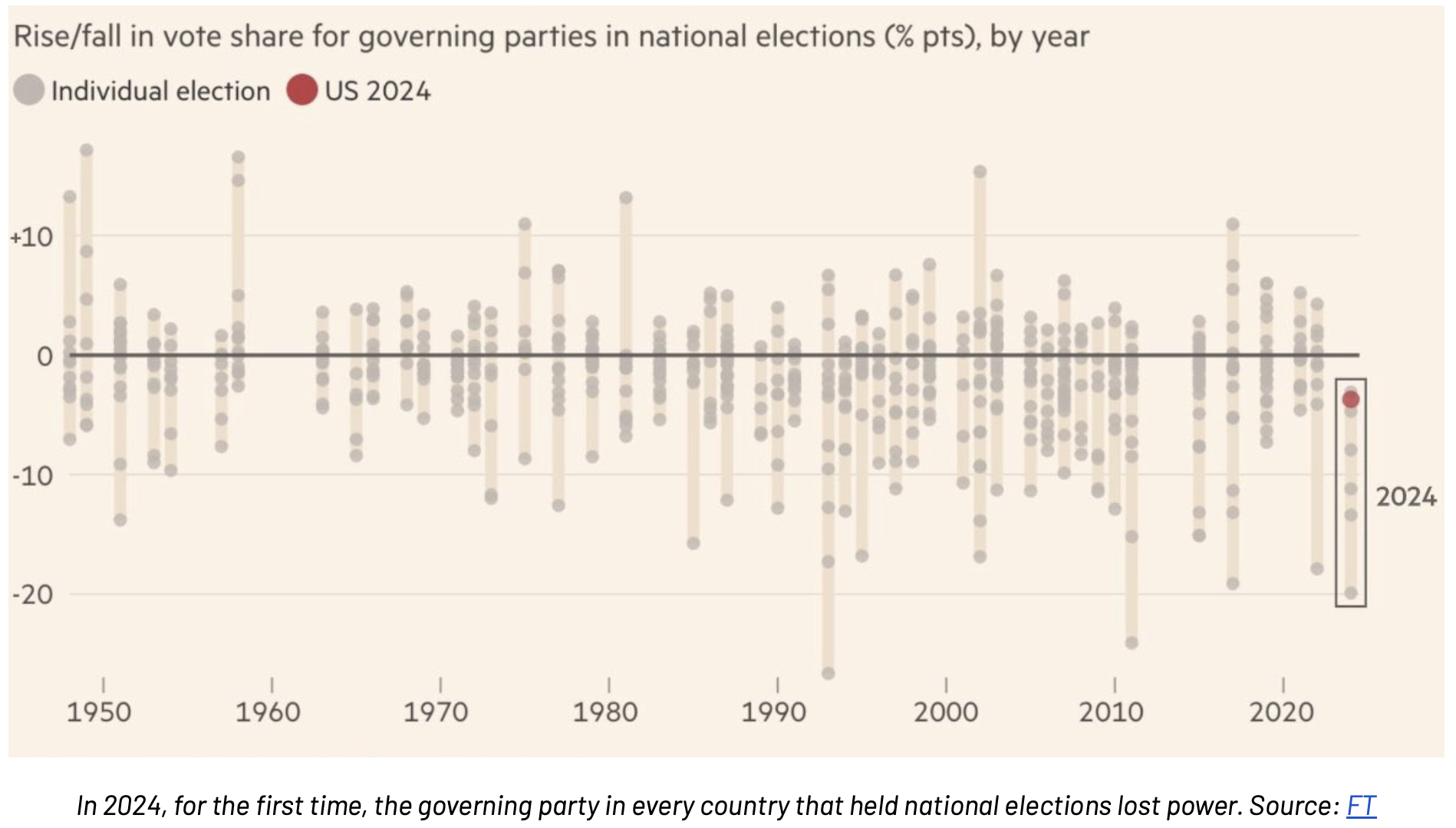
Mainichi & Asahi: Naturalized Zainichi Korean-Japanese sues “Japanese Members Only” Aigi Country Club; court rules denial of golf membership explicitly for being a former foreigner NOT illegal

mytest

Books, eBooks, and more from Debito Arudou, Ph.D. (click on icon):
Guidebookcover.jpgjapaneseonlyebookcovertextHandbook for Newcomers, Migrants, and Immigrants to Japan「ジャパニーズ・オンリー 小樽入浴拒否問題と人種差別」(明石書店)sourstrawberriesavatardebitopodcastthumbFodorsJapan2014cover
UPDATES ON TWITTER: arudoudebito
DEBITO.ORG PODCASTS on iTunes, subscribe free
“LIKE” US on Facebook at http://www.facebook.com/debitoorg
https://www.facebook.com/embeddedrcsmJapan
http://www.facebook.com/handbookimmigrants
https://www.facebook.com/JapaneseOnlyTheBook
https://www.facebook.com/BookInAppropriate
If you like what you read and discuss on Debito.org, please consider helping us stop hackers and defray maintenance costs with a little donation via my webhoster:
Donate towards my web hosting bill!
All donations go towards website costs only. Thanks for your support!

HI Blog.  In a stunning decision, a Japanese court in Mie Prefecture has ruled that a foreigner… excuse me, a JAPANESE CITIZEN who naturalized from being a Zainichi Korean, may be denied membership to a golf course that limits its membership to “Japanese Only”.  Including people who are legally Japanese. Including former Zainichi Korean Permanent Residents who have been in Japan for generations.

(NB:  This blog entry became a full-blown SNA column on May 24, 2023.  Read it here.  Evidence for claims in the article, however, is below in this website.)

For the record, this is Aigi Country Club in Gifu Prefecture.
〒509-0238 岐阜県可児市大森1501
TEL 0574-64-1211  (Website here.  Plenty of overseas web presence where you can leave reviews of the golf course here.)  Photo courtesy of the Asahi Shinbun.

Their case, as stated to the Asahi Shinbun below, is,

“Our club has a quota for foreign nationals and former foreign nationals who have become naturalized Japanese and restricts new memberships. We currently have no vacancies in that quota.”

This denies the privileges and equal protections under the law when you get Japanese citizenship. The court even states that Aigi Country Club’s rules were not illegal as its actions did not violate his human rights beyond “socially acceptable limits.”

Ah yes, that old legal argument. That was used in the Otaru Onsens Case to say that racial discrimination did indeed happen, but the illegal activity wasn’t the racial discrimination itself, but rather “discrimination that went beyond socially acceptable limits.” Some discrimination is acceptable, according to the courts. Here, discrimination for having Korean roots is acceptable in a club. After all, according to the Asahi below,

“private entities like the golf club are guaranteed freedom of association under Article 21 of the Constitution. In principle, such private groups are free to decide the terms and conditions of their memberships.” Especially since it’s an “exclusive and private group,” and playing golf is “not indispensable for social life.”

There’s plenty more below, but let me put this in context about how the Japanese judiciary has been slowly whittling away NJ rights:

The Ana Bortz Case of 1998-1999 found that foreigners were protected by the UN CERD against being turned away at private enterprises open to the public (in this case, a jewelry store), and awarded Bortz 2 million yen (at the time, about $15,000).

The Otaru Onsens Case of 1993-2005 found that foreigners (and one naturalized Japanese citizen) were not allowed to be turned away from a private enterprise (in this case, a public bathhouse), and awarded plaintiffs 1 million yen each. But they did not hold that the UN CERD offered protections, and the Japan Supreme Court also ruled that there were no constitutional protections involved.

The Steve McGowan Case of 2004-2006 found NO protections for his denial from a private enterprise (an eyeglass store), and blamed him for not understanding enough Japanese (even though we had him on tape saying he refused McGowan because he “hates black people”. This was overturned on appeal, but by now the court award was whittled down to only 350,000 yen, not enough to cover his legal fees for the initial lawsuit and appeal.

Now, this Aigi Country Club Case ruling says a) there are no protections for foreigners, b) even if they have Japanese citizenship, c) even if everyone admits the discrimination was nationality/ethnicity-based.  It’s not discrimination because golf clubs are designed to be exclusive, by whatever standards they want.  It’s “socially acceptable”.

This is a horrible precedent, and completely undermines the Japanese Government’s position that Japan doesn’t need a law against racial discrimination because we have an active judiciary.  If there’s a problem, sue, and get legal protections.

“Furthermore, in cases where the rights of the people are infringed, the Court can offer them redress. (Article 32 of the Constitution provides that “no person shall be denied the right of access to the courts.”)… The Constitution of Japan stipulates not only guarantee of being equal as Japanese nationals under the law but also guarantee of equality of all rights as Japanese nationals. Therefore, there is no discrimination at all for civil, political, economic and cultural rights under the legal system.”

Nope.  It was a lie all along, and now verifiably so.  Debito Arudou, Ph.D.

(NB:  This blog entry became a full-blown SNA column on May 24, 2023.  Read it here.  Evidence for claims in the article, however, is below in this website.)

Referencial articles follow:

/////////////////////////////////

Golf club’s denial of membership to former foreign citizen not illegal: Japan court
April 20, 2023 (Mainichi Japan), courtesy of MMT and Niklas
https://mainichi.jp/english/articles/20230420/p2a/00m/0na/008000c

TSU — The Yokkaichi branch of the Tsu District Court on April 19 dismissed a lawsuit filed by a man who said he suffered emotional pain after being denied membership at a country club because he is a former foreign national.

The plaintiff, a man in his 40s, sued the private Aigi Country Club in Kani, Gifu Prefecture, for roughly 3.3 million yen (about $24,400) in compensation for emotional distress.

The court ruled that there was nothing illegal about the club refusing to grant the man membership because of his former citizenship. The plaintiff, a resident of the Mie Prefecture city of Kuwana, plans to appeal.

According to the ruling, the man, a former Korean national who acquired Japanese citizenship in 2018, played at the club with an acquaintance in February 2022 and applied for membership. Later, the club rejected his application, saying, “There is no room in the membership quota for foreign nationals, including former foreign nationals, and you cannot join right now.” The man claimed that the club’s response violated Article 14 of Japan’s Constitution, which stipulates equality under the law.

Presiding Judge Tomomichi Masukawa (with Presiding Judge Kan Hibino reading on his behalf) rejected the club’s claim that “being a former foreign national is not the only reason for refusing membership,” and recognized that the refusal was due to the plaintiff’s former Korean nationality.

However, the judge pointed out that the club is a “closed and private organization with strong personal ties among its members,” as membership requires a referral from two regular members and approval by the board of directors. He concluded that “the degree of infringement on the right to equality cannot be considered to exceed socially acceptable limits in light of the purpose of the Constitution.”

In response, the plaintiff’s attorney Junji Oichi said, “It is very regrettable. It goes against the times.” The man said, “I cannot agree with this at all. Is it acceptable to suffer mental anguish from discrimination if it is within a private organization?”

(Japanese original by Taeko Terahara, Tsu Bureau)

元外国籍で入会拒否、違法性なし ゴルフ会員権訴訟 津地裁支部
毎日新聞 2023/4/19 18:15
https://mainichi.jp/articles/20230419/k00/00m/040/227000c

元外国籍であることを理由に入会を断られ精神的苦痛を受けたなどとして、三重県桑名市の40代男性が愛岐カントリークラブ(岐阜県可児市)に対し、慰謝料など約330万円の損害賠償を求めた訴訟で、津地裁四日市支部は19日、男性の請求を棄却した。私的団体であるゴルフクラブが元外国籍であることを理由に入会を拒否することに違法性はないと判断した。男性は控訴する方針。

判決によると、元韓国籍で2018年に日本国籍を取得した男性は22年2月、知人と同クラブでプレーし、入会を申し込んだ。その後、クラブ側から「元外国籍を含む外国籍の会員の枠に空きがないためすぐに入会することはできない」として入会を断られた。男性は「法の下の平等」を定めた憲法14条に抵触する、などと主張していた。

判決理由で升川智道裁判長(日比野幹裁判長代読)は、「元外国籍であることが入会拒否の唯一の理由ではない」というクラブ側の主張を退け、入会拒否は元外国籍であることが理由だと認めた。一方で、クラブは会員となるために正会員2人の紹介と理事会の承認を得る必要があるなど「会員同士の人的つながりが強い閉鎖的かつ私的な団体」だと指摘。「平等の権利への侵害の程度は憲法の趣旨に照らし、社会的に許容しうる限界を超えるとは認められない」とした。

原告代理人の尾市淳二弁護士は「非常に残念。時代の流れとも逆行する」と話した。男性は「まったく納得できない。差別を受け精神的苦痛を受けることも私的団体内であれば許されるのか」と述べた。【寺原多恵子】

/////////////////////////////////

Court sides with golf club that rejected man born Korean
THE ASAHI SHIMBUN
April 20, 2023 at 17:04 JST
https://www.asahi.com/ajw/articles/14889867
Photo/Illutration: The Yokkaichi branch of the Tsu District Court in Yokkaichi, Mie Prefecture (Asahi Shimbun file photo)

YOKKAICHI, Mie Prefecture–A naturalized Japanese citizen expressed outrage after a court rejected his lawsuit against a golf club that refused his membership because he was not born Japanese.

The Yokkaichi branch of the Tsu District Court on April 19 accepted the argument of the plaintiff in his 40s that the Aigi Country Club in Kani, Gifu Prefecture, had denied his membership application because he used to be ethnic Korean.

The court also said there was room to doubt the reasoning behind the club’s membership rules.

But the court ruled against the plaintiff, saying the golf club’s rules were not illegal, and its actions did not violate his human rights beyond “socially acceptable limits.”

“The ruling is out of step with the times,” said a lawyer for the plaintiff, who lives in Kuwana, Mie Prefecture. “The court should have found it unlawful discrimination.”

The plaintiff, who was born to ethnic Korean parents and obtained Japanese citizenship in 2018, filed the lawsuit in April 2022, demanding 3.3 million yen ($24,000) in compensation.

The man, who runs a cleaning business, argued that the golf club violated Article 14 of the Constitution, which guarantees equality to all people under the law.

The court, however, said private entities like the golf club are guaranteed freedom of association under Article 21 of the Constitution. In principle, such private groups are free to decide the terms and conditions of their memberships, the ruling said.

The court also said legal intervention into the internal affairs of a private group is permitted only in exceptional cases when an individual’s rights are violated beyond socially acceptable limits.

It said the golf club is an “exclusive and private group,” and playing golf is “not indispensable for social life.”

The ruling concluded that the disadvantages suffered by the man as a result of being refused membership did not constitute an “exceptional case.”

The plaintiff said he plans to appeal the ruling because he would otherwise continue to be mistreated as a “former foreign citizen.”

A lawyer representing the golf club said they will thoroughly examine the ruling.

(This article was written by Hiroshi Matsubara and Yusuke Saito.)

/////////////////////////////////

Nationality not the only issue at exclusive golf clubs in Japan
By HWANG CHUL/ Staff Writer
May 10, 2022 at 07:10 JST
Photo/Illutration: The Aigi Country Club in Kani, Gifu Prefecture, seen here on April 14, opened more than half a century ago. (Hwang Chul)
https://www.asahi.com/ajw/articles/14608465

Despite being a naturalized Japanese, a man born to ethnic Korean parents was refused membership to an exclusive golf club in Gifu Prefecture on grounds its quota for non-Japanese was full.

When the fortysomething man, who obtained Japanese citizenship in 2018, sought an explanation, a representative of the Aigi Country Club cited his country of origin.

“Our club has a quota for foreign nationals and former foreign nationals who have become naturalized Japanese and restricts new memberships,” she said in a phone call on Feb. 20. “We currently have no vacancies in that quota.”

When he applied for membership, the man, who lives in Kuwana, Mie Prefecture, and runs a cleaning services company, submitted a copy of an extract of his family register which stated he had South Korean citizenship when he was naturalized.

“If only you could accept (our decision),” a director of the club told him three days later in a phone call the man recorded.

In March, the man sent a written notice to the club through his lawyer, demanding an apology and payment of 3 million yen ($23,500) in compensation, contending its denial of membership constituted “groundless discrimination.”

He also requested the Mie Bar Association to address the infringement of his human rights.

The man had agonized for ages before deciding to take Japanese citizenship.

“Shouldn’t I be switching nationalities, not least for my wife and children, as long as I will go on living in Japan?” he asked himself.

WAY THINGS ARE DONE

The Aigi Country Club, based in Kani, Gifu Prefecture, opened in July 1964, making it the fourth of its kind in the prefecture. It has hosted competitions organized by the Japan Golf Association and was the venue of women’s golf events during the National Sports Festival held in Gifu Prefecture in 2012.

Masakatsu Ito, the club’s managing director, told The Asahi Shimbun that the club, with around 1,500 members, has a combined quota of somewhere below 20 for foreign nationals and former foreign nationals who have obtained Japanese citizenship. He said new members are admitted only when vacancies occur in that category.

“We set those rules as a private golf club,” Ito said. “It is said that the atmosphere slightly changes when there are foreigners around. The decision may have been made in that train of thought. It is not easy to offer a clear answer because the rules were introduced a long time ago.”

When asked why those who have obtained Japanese citizenship are includd in the quota for non-Japanese, he said: “That’s how we’ve been doing things. It is our conventional practice, and I hope it will be understood as such.”

Club officials acknowledged that those rules are not written explicitly in the club’s regulations but have been handed down as internal rules.

HARDLY AN ISOLATED CASE

The Korean Chamber of Commerce & Industry in Japan conducted a survey of 1,794 members-only golf clubs around Japan in 1994 to ascertain nationality clauses in membership requirements.

Of the 821 respondents, 170 golf courses said they had certain restrictions, such as limiting eligibility to Japanese nationals.

KCCI officials said no detailed figures are available on the current situation as a similar survey has not been carried out at least since 2010.

An online search for information on golf club memberships shows that many clubs deny memberships to non-Japanese nationals.

“A good number of golf courses still have nationality clauses, and some even restrict membership for naturalized citizens as well,” a sales official of a Tokyo dealer of memberships told The Asahi Shimbun. “They still retain that exclusive mood.”

“Private clubs handle the matter of membership with their respective criteria,” a JGA official said of the membership restrictions for non-Japanese nationals. “The JGA has never taken a position on the nationality clauses of those clubs or other related matters.”

COURT DECISIONS DIVIDED

In March 1995, the Tokyo District Court ruled on a case concerning a Tokyo golf club operating company that denied membership to an ethnic Korean man on grounds of his nationality. The court found that doing so contravened the spirit of Article 14 of the Constitution, which says all people are equal under the law.

“Golf clubs are deemed to be groups of a certain social nature, partly because golf is a leisure activity broadly practiced in Japan and partly because golf club memberships are circulating in the market,” the decision said in part. “It is difficult to say they have total discretion over how they screen their memberships.”

In a separate lawsuit, the Tokyo District Court in May 2001 rejected the claims of an ethnic Korean plaintiff, saying, “It cannot be said that equality rights are violated beyond socially acceptable limits when a golf club, as a private corporation, restricts its membership requirements on grounds of nationality.”

That decision was upheld by the Tokyo High Court in 2002.

But those “socially acceptable limits” are changing, say some industry insiders.

A law was enacted to deal with hate speech, or instigation of discrimination, against specific ethnic or other groups, and there is a growing awareness about human rights of sexual minorities.

“Golf courses are under pressure to deal with human rights issues, which are not limited to matters of nationality,” the manager of a golf club in the Tokai region said.

He said his club, which has been operating for more than four decades, stopped nationality-based screening of its memberships several years ago.

He cited the example of the Kasumigaseki Country Club in Kawagoe, Saitama Prefecture, which was the venue of golf competitions during the Tokyo Olympics last year.

The International Olympic Committee called on the golf club to rectify its rules that denied full memberships to women, which the IOC said went against the Olympic Charter. The rules were eventually changed.

“Changes in the environment surrounding golf clubs, which were symbolized by that case, will likely go on over the years to come,” the manager said.

“In the United States and elsewhere, golf courses that discriminate against people on the basis of race and gender are finding themselves left out of opportunities to host competitions,” noted Ryusuke Kin, a lawyer with the Tokyo Bar Association.

Kin wrote about the golf club membership issue in “Ethnic Koreans in Japan as seen in lawsuits,” a book compiled and edited by the Lawyers Association of Zainichi Koreans.

“It is problematic that many golf clubs in Japan still have rules that deny memberships to non-Japanese nationals across the board,” he said. “What is more, drawing a line among compatriots on grounds of whether they were non-Japanese in the past amounts to an obvious violation of human rights. The golf world needs to rectify that problem.”

ENDS

======================
Do you like what you read on Debito.org?  Want to help keep the archive active and support Debito.org’s activities?  Please consider donating a little something.  More details here. Or if you prefer something less complicated, just click on an advertisement below.
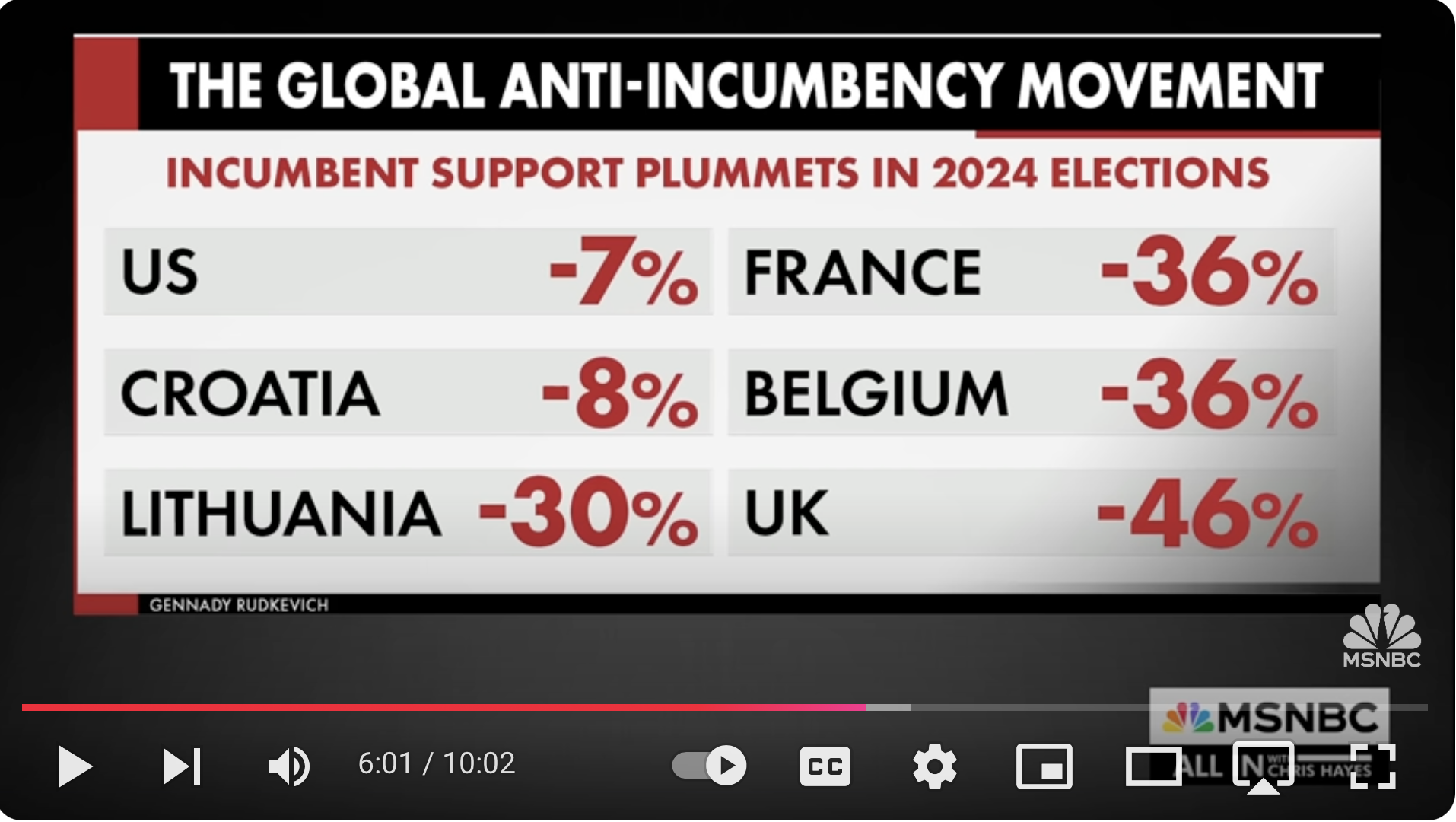
My latest SNA Visible Minorities column 44: “Interview with Jon Heese: Life Lessons from a Naturalized Japanese Politician”, March 20, 2023

mytest

Books, eBooks, and more from Debito Arudou, Ph.D. (click on icon):
Guidebookcover.jpgjapaneseonlyebookcovertextHandbook for Newcomers, Migrants, and Immigrants to Japan「ジャパニーズ・オンリー 小樽入浴拒否問題と人種差別」(明石書店)sourstrawberriesavatardebitopodcastthumbFodorsJapan2014cover
UPDATES ON TWITTER: arudoudebito
DEBITO.ORG PODCASTS on iTunes, subscribe free
“LIKE” US on Facebook at http://www.facebook.com/debitoorg
https://www.facebook.com/embeddedrcsmJapan
http://www.facebook.com/handbookimmigrants
https://www.facebook.com/JapaneseOnlyTheBook
https://www.facebook.com/BookInAppropriate

Hi Blog My latest SNA VM column 44, which came out today, is an interview with Jon Heese (pronounced Hayes), a naturalized Canadian-Japanese and elected Tsukuba City Councillor of twelve years. A Caucasian Visible Minority of Japan, Heese has long been advocating that other Non-Japanese Residents naturalize and run for office in Japan like he did.

This interview took me more than a decade to secure, as I first invited Jon to interview back in the early 2010s. This time he contacted ME for the interview, so I felt less guilty about serving up some non-softball questions. Excerpt:

=========================

Debito Arudou: Hi Jon. Please introduce yourself as you’d like to be seen by your voting and non-voting public.

Jon Heese: Obviously I would like them to see me as a combination of Brad Pitt and Nelson Mandela. But I would be satisfied if they only see me as someone who is doing his best. I’m left of center on social issues and a fiscally conservative social democrat. This means freedom for people to be who they are within the structures of society. Businesses should also be free to function within a social structure. And I underline social. Businesses function within society. They are not entities unto themselves. It is the community that is educating their workers, building their infrastructure, and protecting their property. Businesses need to pay their taxes and stop trying to privatize profits while socializing risks. Fundamentally, governments should be in the business of regulating, not competing with legitimate businesses…

Debito Arudou: Woah, woah, woah. I asked how you wanted us to see you, and you’re starting to give us us your personal philosophy of government. Okay, but I was asking more: “Where are you from, and what do you do?” Let’s back up a sec and get into that.

Jon Heese: Silly me. As a good politician I’ll blame someone else for my misunderstanding. Okay. So, who am I. I’m a small town boy from Wymark, Saskatchewan, Canada, population 175. If you’ve ever seen Dances with Wolves, that’s pretty much what the area looks like. I’m from a family of eleven kids (six adopted). My family moved around a lot due to my father’s career as a Mennonite preacher. I spent about two years as a kid in central Kansas, and after high school I went to Europe for two years to see a bit of the world. I then attended the University of Regina and graduated with a Bachelor of Music Education. In 1991 I landed in Narita looking for one of those sweet English teaching jobs I’d heard so much about. I got a bunch of crap jobs, but they paid the bills. Eventually I ended up in Tsukuba, Ibaraki, a city about 60 kilometers north of Tokyo with a population of about 150,000 at the time. Eventually I understood that students didn’t really want to learn English so much as have an hour of entertainment with one of them movie star types. In the end I lasted about six years in the English biz. By ‘97 I was burned/bummed out and could already see the writing on the wall. The Bubble was bursting. Pay was in decline and finding students was getting harder. Besides which, after six years I had hardly learned any Japanese. I knew I needed to find a job where I would be forced to speak Japanese. I opened a bar and ran that for seven years. Then I opened an import company to supply the many foreign researchers in Tsukuba and rewrite papers for the Japanese researchers. I also did a bunch of acting for TV and movies. Eventually I got into politics at the city level.

Full interview at https://shingetsunewsagency.com/2023/03/20/life-lessons-from-a-naturalized-japanese-politician/

======================
Do you like what you read on Debito.org?  Want to help keep the archive active and support Debito.org’s activities?  Please consider donating a little something.  More details here. Or if you prefer something less complicated, just click on an advertisement below.

My SNA Visible Minorities 43: “Salute to the “Author of Cartels of the Mind’,” an obituary of influential Japan Studies scholar and mentor Ivan Hall (1932-2023)

mytest

Books, eBooks, and more from Debito Arudou, Ph.D. (click on icon):
Guidebookcover.jpgjapaneseonlyebookcovertextHandbook for Newcomers, Migrants, and Immigrants to Japan「ジャパニーズ・オンリー 小樽入浴拒否問題と人種差別」(明石書店)sourstrawberriesavatardebitopodcastthumbFodorsJapan2014cover
UPDATES ON TWITTER: arudoudebito
DEBITO.ORG PODCASTS on iTunes, subscribe free
“LIKE” US on Facebook at http://www.facebook.com/debitoorg
https://www.facebook.com/embeddedrcsmJapan
http://www.facebook.com/handbookimmigrants
https://www.facebook.com/JapaneseOnlyTheBook
https://www.facebook.com/BookInAppropriate
If you like what you read and discuss on Debito.org, please consider helping us stop hackers and defray maintenance costs with a little donation via my webhoster:
Donate towards my web hosting bill!
All donations go towards website costs only. Thanks for your support!

Hi Blog.  My latest SNA column 43 is a tribute to old friend, mentor, and influential scholar Ivan Hall.  I blogged about him shortly after he died here.  This is a fuller treatment, excerpted.  RIP.  Debito Arudou, Ph.D.

///////////////////////////////////////

Visible Minorities: Salute to the Author of Cartels of the Mind
By Debito Arudou
Shingetsu News Agency, February 20, 2023

SNA (Tokyo) — Ivan Parker Hall, author of landmark book Cartels of the Mind: Japan’s Intellectual Closed Shop, died in Berlin on February 1, 2023, at age 90.

Before I start writing another obituary, please let me pause and talk about our very close relationship: Ivan Hall fundamentally changed my life into an activist researcher in Japanese Studies.

It wasn’t always this way. When I first arrived in Japan during the latter 1980s, I was in fact a cultural relativist. Carefully trained in the non-judgmentalism of the liberal arts, I had the mantra of “Who am I to judge Japan?” It had its own way of doing things, and would get along just fine without one white Western interloper (or even the outside world) telling it what to do. As per my classic Edwin O. Reischauer Ivy League training, Japan was one of those precious “culturally unique” jewels that should just be left to flourish in its own way.

That’s why at first I was a devoted scholar of the “Japanese Way.” After all, Japan must be doing something right. Its people were living the longest in the world. Its economy measured per capita had just surpassed that of Americans. It was buying up major world assets on the strength of the Yen. Our next boss, according to movies such as Back to the Future II, was going to be Japanese.

It took just one stint working for an abusive Japanese trading company–and the bursting of Japan’s asset bubble–to disabuse me of those early notions.

But it wasn’t until I became a Japanese university professor that I saw just how much the Japanese system was wasting talent due to racism. Japanese faculty hired full-time were getting permanent tenure from Day One, while almost all foreign educators (who were often more qualified than their Japanese counterparts) were getting permanent contract work.

Enter Ivan Hall, who summed this situation up most pithily as “Academic Apartheid.”…

Read the rest at the Shingetsu News Agency at https://shingetsunewsagency.com/2023/02/20/visible-minorities-salute-to-the-author-of-cartels-of-the-mind/

======================
Do you like what you read on Debito.org?  Want to help keep the archive active and support Debito.org’s activities?  Please consider donating a little something.  More details here. Or if you prefer something less complicated, just click on an advertisement below.
My SNA column 41: “Celebrating Christmas as a Compromise” (Dec 27, 2022), about what to do when people say you shouldn’t celebrate regular traditions you hold dear because they’re “not Japanese”

mytest

Books, eBooks, and more from Debito Arudou, Ph.D. (click on icon):
Guidebookcover.jpgjapaneseonlyebookcovertextHandbook for Newcomers, Migrants, and Immigrants to Japan「ジャパニーズ・オンリー 小樽入浴拒否問題と人種差別」(明石書店)sourstrawberriesavatardebitopodcastthumbFodorsJapan2014cover
UPDATES ON TWITTER: arudoudebito
DEBITO.ORG PODCASTS on iTunes, subscribe free
“LIKE” US on Facebook at http://www.facebook.com/debitoorg
https://www.facebook.com/embeddedrcsmJapan
http://www.facebook.com/handbookimmigrants
https://www.facebook.com/JapaneseOnlyTheBook
https://www.facebook.com/BookInAppropriate
If you like what you read and discuss on Debito.org, please consider helping us stop hackers and defray maintenance costs with a little donation via my webhoster:
Donate towards my web hosting bill!
All donations go towards website costs only. Thanks for your support!

Hi Blog.  Let me say it upfront:  If you’re celebrating December customs such as Christmas, then I hope you had a Merry (and unobstructed) Christmas and a Happy New Year.  If your Christmas was in fact obstructed in some way by people who claim that “Christmas is not Japanese” or “Christmas is something you should outgrow” (as happened to a friend of mine recently), my end-year SNA column is for you:

/////////////////////////////////////////////////

Visible Minorities: Celebrating Christmas as a Compromise

SNA (Tokyo) — A long-term Non-Japanese resident friend, married with a Japanese husband and adult kids, recently told me about a new development in their relationship: Christmas was no longer to be celebrated in their household.

Their children were all grown and didn’t believe in Santa Claus anymore; so no more presents or any big dinner to celebrate the day. They would allow her only a tree.

Why this sudden change of heart? To her surprise, all this time Christmas had been regarded by the family as a nuisance, a cultural imposition on them. Now it was time to grow out of it.

It raises a fundamental issue that someday comes up within any intercultural relationship: How much culture do you give up for the sake of compromise?  

I argue that Japan’s “unique” culture narrative (and therefore its lack of commonality with anything “foreign”, by definition) can often create sudden, long-term culture shocks.  Because people here can see any accommodation of “foreign” culture as an identity sacrifice, a denial of “Japaneseness”, this can kill relationships, and I offer advice on what to do about it.  

Article at https://shingetsunewsagency.com/2022/12/27/visible-minorities-celebrating-christmas-as-a-compromise/

/////////////////////////////////////////////////

Thanks for reading!  Seasons Greetings to all Debito.org Readers and beyond!  Debito Arudou, Ph.D.

======================
Do you like what you read on Debito.org?  Want to help keep the archive active and support Debito.org’s activities?  Please consider donating a little something.  More details here. Or if you prefer something less complicated, just click on an advertisement below.
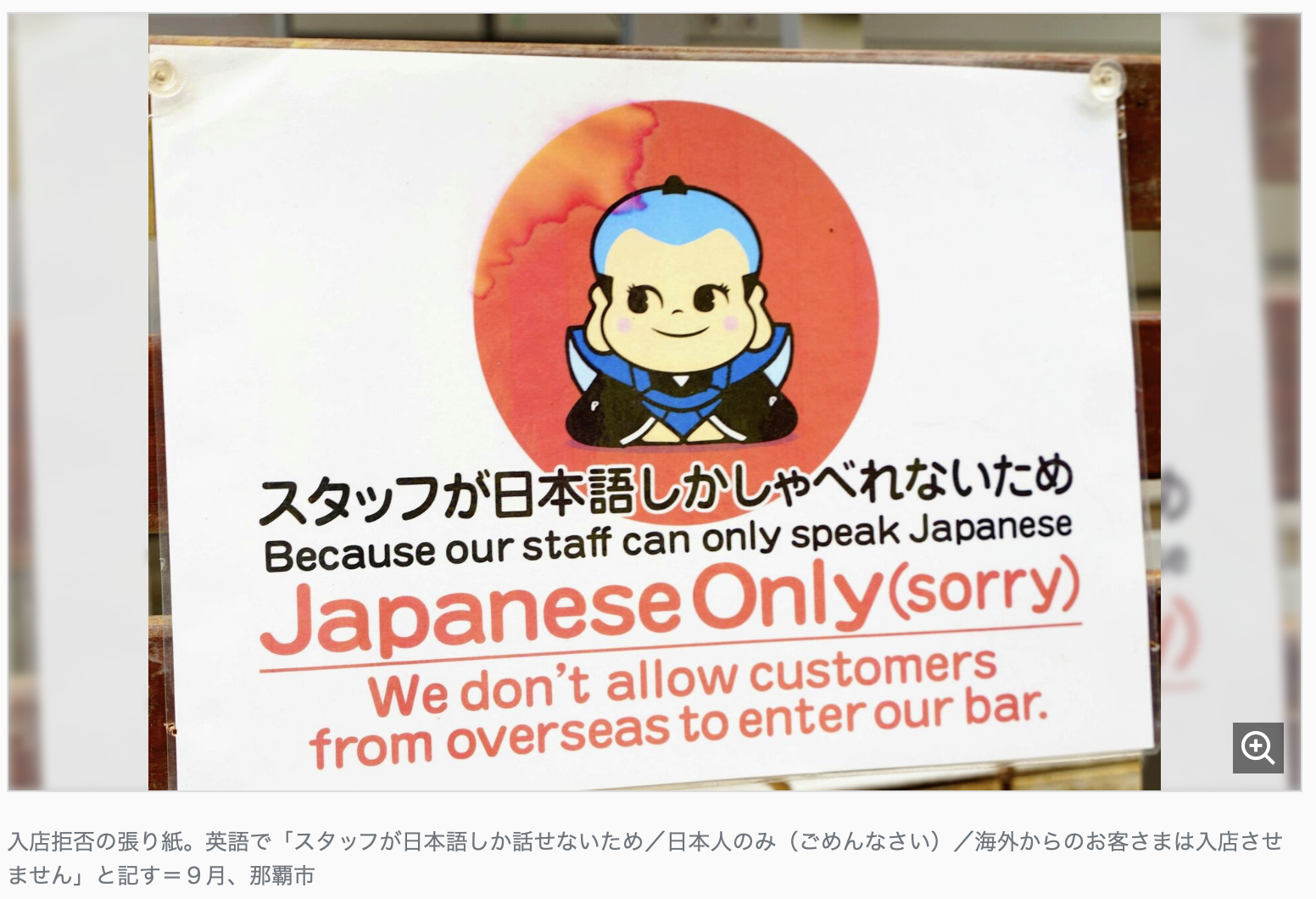
Debito’s SNA VM37: “Reforming Japan’s Dickensian Foreign Trainee Program,” Aug 22, 2022, and why I remain skeptical that reforms will actually happen

mytest

Books, eBooks, and more from Debito Arudou, Ph.D. (click on icon):
Guidebookcover.jpgjapaneseonlyebookcovertextHandbook for Newcomers, Migrants, and Immigrants to Japan「ジャパニーズ・オンリー 小樽入浴拒否問題と人種差別」(明石書店)sourstrawberriesavatardebitopodcastthumbFodorsJapan2014cover
UPDATES ON TWITTER: arudoudebito
DEBITO.ORG PODCASTS on iTunes, subscribe free
“LIKE” US on Facebook at http://www.facebook.com/debitoorg
https://www.facebook.com/embeddedrcsmJapan
http://www.facebook.com/handbookimmigrants
https://www.facebook.com/JapaneseOnlyTheBook
https://www.facebook.com/BookInAppropriate
If you like what you read and discuss on Debito.org, please consider helping us stop hackers and defray maintenance costs with a little donation via my webhoster:
Donate towards my web hosting bill!
All donations go towards website costs only. Thanks for your support!

Visible Minorities: Reforming Japan’s Dickensian Foreign Trainee Program
August 22, 2022, By Debito Arudou

SNA (Tokyo) — News Item: video footage surfaced in 2020 of a Vietnamese “trainee” being physically abused by Japanese co-workers at a construction company in Okayama Prefecture, resulting in injuries including broken ribs and a broken tooth. Despite a criminal complaint, the Okayama Prefectural Police Prosecutor’s Office declined to prosecute the four Japanese co-workers involved.

Here is the video footage that started it all.

https://www.youtube.com/watch?v=PK1HhnvktOc&t=76s

This Vietnamese trainee is not alone. Despite the strict Covid border controls, currently 280,000 foreigners toil as temporary low-wage workers in Japan’s farms and factories nationwide. Given Japan’s often nasty work environments, which generally combine exploitative work ethics with a normalized bullying culture, this means that more than a quarter of a million foreigners are here and in harm’s way under a system of unfettered abuse…

[…]

Fortunately, there are some stirrings that reforms might happen. Even the conservative Yomiuri Shinbun said in an August 20 editorial that reforming the system is “unavoidable.” Moreover, the government announced last month a full-scale review of the program, intending to “bring this long-standing issue to a historical conclusion.”

I am skeptical these reforms will achieve what is promised, which is basically to resolve the ongoing human rights abuses which have always characterized the trainee system. One reason for my doubts is because…
==================================

Read the rest at https://shingetsunewsagency.com/2022/08/22/visible-minorities-reforming-japans-dickensian-foreign-trainee-program/

======================
Do you like what you read on Debito.org?  Want to help keep the archive active and support Debito.org’s activities?  Please consider donating a little something.  More details here. Or if you prefer something less complicated, just click on an advertisement below.
Asahi: Okayama public prosecutors drop co-worker violence claim by Vietnamese “Trainee” despite video evidence. No wonder Japan’s violent bully culture thrives! (UPDATE: Out-of-court settlement was reached)

mytest

Books, eBooks, and more from Debito Arudou, Ph.D. (click on icon):
Guidebookcover.jpgjapaneseonlyebookcovertextHandbook for Newcomers, Migrants, and Immigrants to Japan「ジャパニーズ・オンリー 小樽入浴拒否問題と人種差別」(明石書店)sourstrawberriesavatardebitopodcastthumbFodorsJapan2014cover
UPDATES ON TWITTER: arudoudebito
DEBITO.ORG PODCASTS on iTunes, subscribe free
“LIKE” US on Facebook at http://www.facebook.com/debitoorg
https://www.facebook.com/embeddedrcsmJapan
http://www.facebook.com/handbookimmigrants
https://www.facebook.com/JapaneseOnlyTheBook
https://www.facebook.com/BookInAppropriate
If you like what you read and discuss on Debito.org, please consider helping us stop hackers and defray maintenance costs with a little donation via my webhoster:
Donate towards my web hosting bill!
All donations go towards website costs only. Thanks for your support!

Hi Blog.  Here’s a handy site I just found on Facebook (GoEMON Global) that offers news and translation of interest to Debito.org.  Something of note (with my comment afterwards):

========================

OKAYAMA PREFECTURAL PUBLIC PROSECUTORS OFFICE DECIDES TO NOT CHARGE FOUR JAPANESE PEOPLE WITH THE ALLEGED ASSAULT OF A VIETNAMESE TRAINEE TWO YEARS AGO

Courtesy TT and GoEMON (https://goemon-jp.com/)

Two years ago, a 41-year-old male Vietnamese technical trainee was abused by his four Japanese coworkers while working. The act was then discreetly recorded by another Vietnamese trainee, causing a buzz within the public at that time. The result of the case was recently disclosed by the Okayama Prefectural Public Prosecutors Office.

The technical trainee filed a case to the Okayama Prefectural Public Prosecutors Office, claiming that he had been assaulted during the past two years working at the company, in which the four coworkers, all in their 30s, were referred to prosecution on suspicion of causing injuries and other charges. The Prosecutor’s Office, however, announced that the four cannot be prosecuted, due to a lack of information.

The indictments were dropped against two for injury, one for injury and violation of the Violent Acts Punishment Law, and one for violation of the Violent Acts Punishment Law.

Original article:

ベトナム人実習生暴行容疑で書類送検の4人、不起訴に 岡山区検

朝日新聞 2022年8月4日

https://www.asahi.com/articles/ASQ8466HSQ84PPZB012.html

Video evidence:


Courtesy https://www.youtube.com/watch?v=PK1HhnvktOc&t=76s

技能実習生のベトナム人男性(41)が実習先の岡山市の建設会社で2年間にわたって暴行を受けたと訴え、岡山県警が同社の元従業員の男性4人(いずれも30代)を傷害などの疑いで書類送検していた事件で、岡山区検は4日、4人全員を不起訴処分とした。理由は明らかにしていない。
不起訴となったのは傷害容疑の2人と、傷害と暴力行為等処罰法違反容疑の1人、暴力行為等処罰法違反容疑の1人。

訴える(うったえる): Prosecute
暴行(ぼうこう): Abuse
不起訴(ふきそ): Cannot be prosecuted
違反容疑(いはんようぎ): Alledged
傷害(しょうがい): Injury
—————————————
GoEMON is a sharing and community connection platform in Japan. We want to build a community to help foreigners have a better life in Japan by sharing the real experiences of foreigners in Japan.
#GoEMON #News

//////////////////////////////////////////////////

COMMENT FROM DEBITO: “A lack of information”!? [Well, in the original Japanese, it just says, “For reasons left unclear.”] Anyway, watch the video above.  Yet another example (see the McGowan Case for another) of how even when you have photographic or audio evidence of abusive behavior, the laws are only as good as the people enforcing them.  If public prosecutors will not do their job and prosecute, the laws specifically against violent acts mean nothing.

Consider this: How many of you out there have been in a situation where the bullying in Japan escalated from verbal to physical?  Personally, I have, many times.  And it’s no wonder why — as evidenced here, there’s nothing official to stop or hold abusers accountable.  This is despite all the public promises of reform of Japan’s already abusive, exploitative, and deadly “Trainee” system.  In a sense, this poor guy is lucky he didn’t end up laid up in the hospital or worse!  Debito Arudou, PhD

=====

PS:  I got out of my bullying situations by fighting back.  But that usually had mixed results — too many times in Japan the victim gets blamed for either “overreacting”, or for disrupting things by reacting at all.  And it’s one reason why Japan remains a society where bullies dominate.  Because who dares, wins.  D.

////////////////////////////////////////

UPDATE AUGUST 19, 2022:  Other media gave more detail that the case was dropped due to a settlement.  Article follows, translation mine:

============================

ベトナム人技能実習生への暴行事件 建設会社の元従業員4人を不起訴に 岡山区検
YahooNews.co.jp, 2022.8.4(木), courtesy of LP
https://news.yahoo.co.jp/articles/faa361ab11a2bc6d7c7c865e7044a2e57d3eb716

岡山市の建設会社で働いていたベトナム人技能実習生に暴行し、けがをさせたとして書類送検されていた元従業員4人を岡山区検察庁は不起訴処分としました。

この事件は2019年秋に来日したベトナム人技能実習生の男性が、職場の岡山市の建設会社で約2年間、日本人従業員から暴行を受け肋骨を折るなどのけがをしたと訴えていたものです。

2022年6月、岡山県警は傷害などの疑いで当時従業員だった4人を書類送検していました。

岡山区検は不起訴処分とした理由について明らかにしていません。

実習生を保護していた労働組合によりますと、建設会社と監理団体から実習生に謝罪がありその後、解決金が支払われ示談が成立したとしています。ENDS
============================

Translation by Debito:

Violence against a Vietnamese Trainee:  Okayama Public Prosecutors decide not to prosecute four former [Japanese] employees at construction company

Yahoo News, August 4, 2022

A case sent to Okayama District Public Prosecutors, where four former [Japanese] employees at an Okayama city construction company were violent towards a Vietnamese Trainee co-worker, causing him injuries, has been dropped from prosecution.

The Vietnamese male Trainee, who had arrived in Japan in the Fall of 2019, reported that over the course of about two years, he had endured violence from Japanese co-workers at an Okayama construction company workplace, including injuries such as broken ribs.

In June 2022, Okayama Police sent the four Japanese workers to prosecutors for injurious damages.  Public Prosecutors did not give a reason why they decided not to prosecute.

According to the labor union protecting the Trainee, there was an apology from the construction company and the administering agency (kanji dantai), with restitution (kessaikin) paid through private settlement.  ENDS

/////////////////////////////////////

FURTHER COMMENT FROM DEBITO:  Well, if the “Trainee” feels that honor has been satisfied through apologies and restitution, so be it.  And according to this article, his abusers seem to have gotten fired.

But let’s consider how this should have proceeded:

  1. The violence shouldn’t have gone on for two years.  There should have been a way to report it to authorities at the first sign of violence, particularly to those authorities who got the “Trainees” here in the first place, and gotten him transferred him out of there immediately.
  2. It shouldn’t have taken the painstaking amount of effort on the part of the victim to make a video and get a labor union involved before authorities sat up and took notice.  Even broken ribs wasn’t enough evidence?  How many months of everyday hell and pain did this poor “Trainee” have to endure?
  3. The workplace should have been screened better as an acceptable workplace, and then monitored afterwards.  This isn’t the first case of foreign “Trainee” or “Researcher” workplace abuse by any stretch.  Abuse, according to the labor unions, is in fact the norm.  According to labor union leader Torii Ippei, companies that are NOT abuse their foreign workers are “very rare” (goku mare).

This case shows just how much, despite calls for reform of the system for decades, things have NOT progressed.  By now, things like this shouldn’t still be happening.  But official negligence is the norm here. Again, good thing the “Trainee” had the video of the savage treatment that resulted in broken ribs and untold mental damage. But he shouldn’t have had to. Debito

/////////////////////////////////////////

Even more detail here (excerpt):

ベトナム人技能実習生への暴行で示談成立 建設会社・監理団体が謝罪
西本秀 朝日新聞 2022年5月7日
https://www.asahi.com/articles/ASQ5675PYQ4XPITB003.html

ベトナム国籍の技能実習生の男性(41)が実習先の岡山市の建設会社で2年間にわたって暴行を受けたとし、動画を公表して訴えていた問題で、男性を保護した労働組合・福山ユニオンたんぽぽ(広島県福山市)は、会社や、実習生を仲介した監理団体との間で示談が成立したことを明らかにした。

ユニオンによると、建設会社シックスクリエイトは、暴行があったとし、監理団体の岡山産業技術協同組合は、保護責任を果たせなかったとしてともに男性側に謝罪し、補償金を支払うという。

シックスクリエイトの代理人弁護士は「取材は受けない」とした。監理団体は「示談により問題が円満解決に至った」としつつ、内容は「関係者のプライバシーに関わり、詳細を明らかにすることを差し控えさせていただきます」とコメントした。

国も問題視 計画認定取り消しに
男性は2019年10月に来… rest at https://www.asahi.com/articles/ASQ5675PYQ4XPITB003.html

======================
Do you like what you read on Debito.org?  Want to help keep the archive active and support Debito.org’s activities?  Please consider donating a little something.  More details here. Or if you prefer something less complicated, just click on an advertisement below.
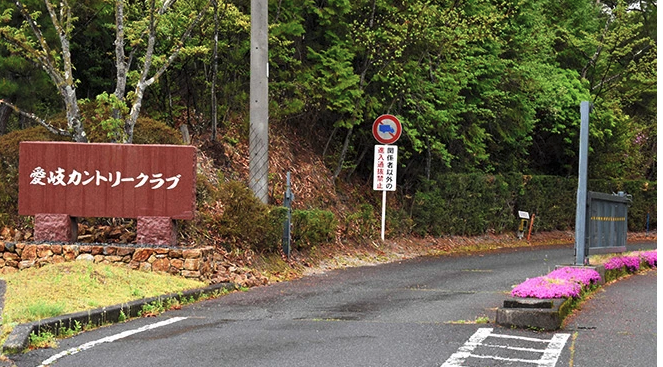
My SNA VM35: “Visible Minorities: Torture and Murder in Japan Detention Centers” (June 20, 2022) including the Sandamali, Suraj, Fernando, Okafor, Ekei etc. Cases.

mytest

Books, eBooks, and more from Debito Arudou, Ph.D. (click on icon):
Guidebookcover.jpgjapaneseonlyebookcovertextHandbook for Newcomers, Migrants, and Immigrants to Japan「ジャパニーズ・オンリー 小樽入浴拒否問題と人種差別」(明石書店)sourstrawberriesavatardebitopodcastthumbFodorsJapan2014cover
UPDATES ON TWITTER: arudoudebito
DEBITO.ORG PODCASTS on iTunes, subscribe free
“LIKE” US on Facebook at http://www.facebook.com/debitoorg
https://www.facebook.com/embeddedrcsmJapan
http://www.facebook.com/handbookimmigrants
https://www.facebook.com/JapaneseOnlyTheBook
https://www.facebook.com/BookInAppropriate
If you like what you read and discuss on Debito.org, please consider helping us stop hackers and defray maintenance costs with a little donation via my webhoster:
Donate towards my web hosting bill!
All donations go towards website costs only. Thanks for your support!

Visible Minorities: Torture and Murder in Japan Detention Centers
Shingetsu News Agency, June 20, 2022, by Debito Arudou

https://shingetsunewsagency.com/2022/06/20/visible-minorities-torture-and-murder-in-japan-detention-centers/

SNA (Tokyo) — News Headline: “Prosecutors drop case over death of detained Sri Lankan woman.”

In August 2020, a Sri Lanka national named Ratnayake Liyanage Wishma Sandamali was arrested for overstaying her visa, and detained in a Nagoya Immigration Detention Center. She had arrived in Japan in 2017, but her student visa was cancelled in 2019 because she couldn’t afford tuition fees. While in detention, she opted not to return to Sri Lanka, reportedly due to reduced flights during Covid and an abusive boyfriend back home.

During her seven months in custody, however, Sandamali’s health steadily declined due to a stress-induced stomach condition. According to the Straits Times, Sandamali “was vomiting blood in her final days, and was so weak that she had no control of her arms and legs. The immigration authorities allegedly turned a blind eye to medical expert advice to put her on an intravenous drip or to grant her provisional release to ease her stress. A report by public broadcaster NHK suggested that officials tend to suspect malingering for minor illnesses in their reluctance to grant provisional release.”

That’s a questionable decision, since she had lost 20 kilograms from her small frame over seven months—hard to dismiss as mere “malingering” or “minor illness.” And her decline was not sudden: According to the Asahi Shinbun, she had notified her jailers from mid-January about nausea and lack of appetite. Nineteen days before her death, a urine test indicated she was in a state of starvation. The New York Times noted that in her final days she could ingest little more than water, sugar, or morsels of bread, and could barely make a fist or speak. Yet she was again refused provisional release for hospital treatment.

On March 6, 2021, Sandamali died in her cell, aged 33. An August 2021 postmortem probe by Japan’s Immigration Services Agency ruled that Sandamali had been “mistreated” by the Nagoya Regional Immigration Services Bureau, formally reprimanding the bureau’s director and three other supervisors for not reporting her requests for examination and treatment to an outside doctor.

But overlooked was cruelty of her captors. According to Nikkei Asia, “one immigration officer allegedly mocked Wishma when she was unable to swallow her drink,” and the Mainichi Shinbun reported that other Immigration officers misled a doctor about her condition two days before her death, dismissing her illness as merely “psychosomatic.”

By the time Sandamali’s family received her body, “her skin was wrinkled like an old person, and it was stuck firmly to her bones.” In November 2021, Sandamali’s family lodged a criminal complaint against officials at the Nagoya facility, accusing them of murder through willful negligence.

Unfortunately, as noted above, last week the Nagoya District Public Prosecutor’s Office dropped the Sandamali case, citing an inability to establish criminal liability or even a cause of death, blaming it on “multiple factors.”

Multiple factors indeed. Sandamali’s case is not unprecedented. According to CNN, since 1997 at least 27 foreign detainees have died in Japan’s Immigration detention centers (aka “Gaijin Tanks,” because they detain foreigners only).

The main factor here is the cruel and unusual punishment by public officers, expressly forbidden under Article 36 of the Constitution.

Yet nobody has ever been held criminally liable for foreigner deaths in detention. That’s what makes Japan’s Gaijin Tanks so cruel and unusual.

Let’s consider a few more cases, then talk about the system that killed them…

Read the rest at https://shingetsunewsagency.com/2022/06/20/visible-minorities-torture-and-murder-in-japan-detention-centers/

======================
Do you like what you read on Debito.org?  Want to help keep the archive active and support Debito.org’s activities?  Please consider donating a little something.  More details here. Or if you prefer something less complicated, just click on an advertisement below.
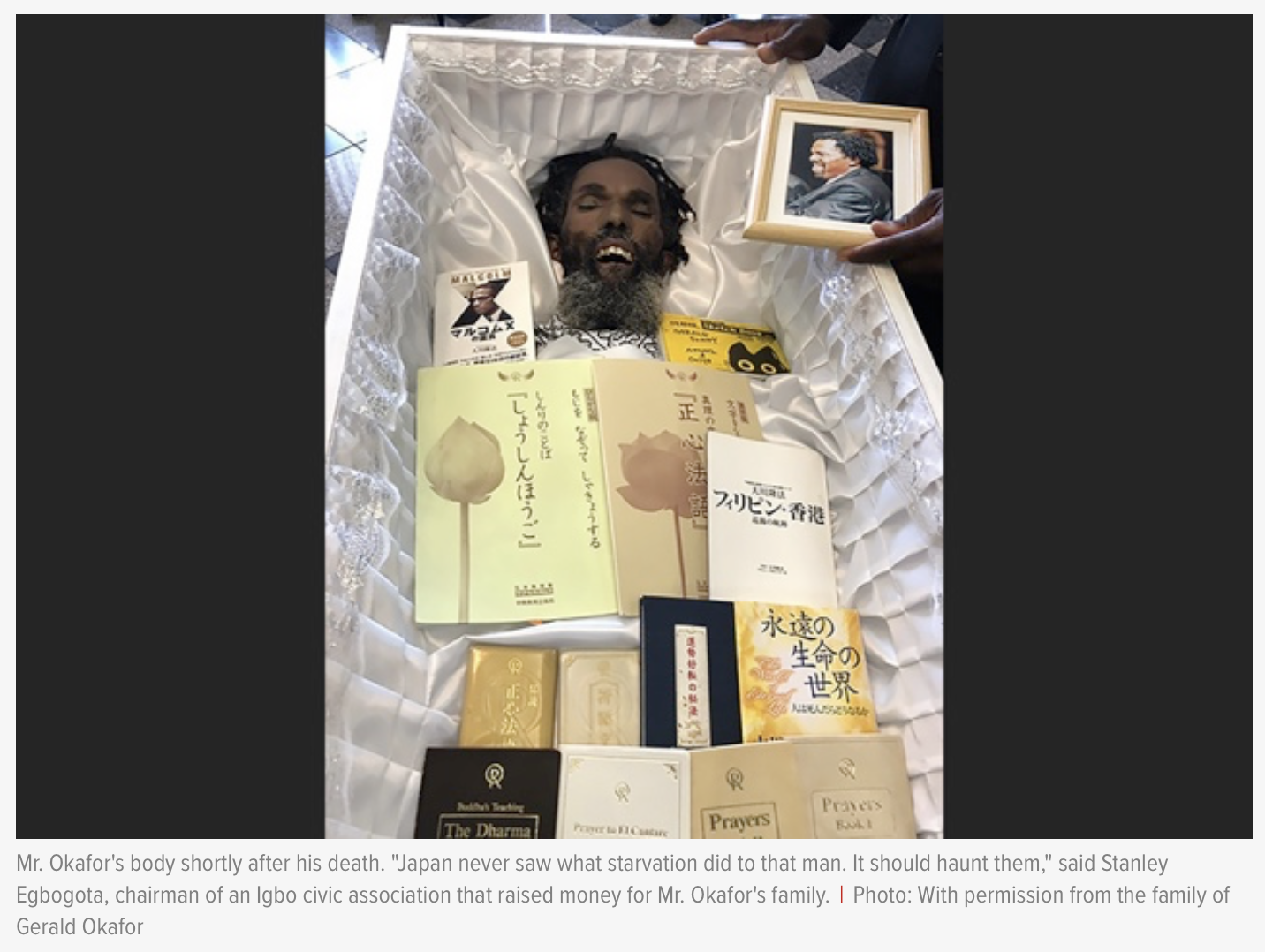
Asahi: “Prosecutors drop case over death of detained Sri Lankan woman”, predictably ending Criminal Case brought by the family of Wishma Sandamali, and keeping Japan’s deadly “Gaijin Tanks” unaccountable

mytest

Books, eBooks, and more from Debito Arudou, Ph.D. (click on icon):
Guidebookcover.jpgjapaneseonlyebookcovertextHandbook for Newcomers, Migrants, and Immigrants to Japan「ジャパニーズ・オンリー 小樽入浴拒否問題と人種差別」(明石書店)sourstrawberriesavatardebitopodcastthumbFodorsJapan2014cover
UPDATES ON TWITTER: arudoudebito
DEBITO.ORG PODCASTS on iTunes, subscribe free
“LIKE” US on Facebook at http://www.facebook.com/debitoorg
https://www.facebook.com/embeddedrcsmJapan
http://www.facebook.com/handbookimmigrants
https://www.facebook.com/JapaneseOnlyTheBook
https://www.facebook.com/BookInAppropriate
If you like what you read and discuss on Debito.org, please consider helping us stop hackers and defray maintenance costs with a little donation via my webhoster:
Donate towards my web hosting bill!
All donations go towards website costs only. Thanks for your support!

Hi Blog. The Wishma Sandamali Criminal Case has sadly reached a predictable end: Japanese prosecutors have dropped their case against the people in charge of the Immigration “Gaijin Tank” Detention Center that killed her through negligence.

We’ve talked about the Sandamali Case here on Debito.org before, as we have the many other cases of death and destruction in Japan’s cruel Detention Centers. One of the reasons they remain so cruel is that they face no accountability, as seen here.  And prosecutors declining to prosecute those who kill foreigners have been discussed at length in my book Embedded Racism, Chapter 6, “A ‘Chinaman’s Chance’ in Japanese Court” (with 2022 updates of more cases, including Sandamali’s, in the Second Edition).

The Civil Case for damages brought by the Sandamali family is ongoing.  But I am not optimistic about justice being done there either.  Debito Arudou, Ph.D.

//////////////////////////////////////////////////////////////

Prosecutors drop case over death of detained Sri Lankan woman
THE ASAHI SHIMBUN, June 17, 2022, courtesy of lots of people.
https://www.asahi.com/ajw/articles/14647083

Public prosecutors will drop their case against senior officials from the Nagoya Regional Immigration Services Bureau over the death of a Sri Lankan woman at an immigration detention facility, according to sources.

Wishma Sandamali, 33, died in March 2021 at a facility run by the bureau, in a case that sparked widespread outcry over her mistreatment.

The Nagoya District Public Prosecutors Office launched an investigation into whether the senior officials in charge at the time had committed murder or negligence as a guardian resulting in death, responding to criminal complaints against them from Wishma’s family and others.

Sources said the prosecutors office concluded it cannot establish criminal liability in this case following discussions with another prosecution office that is higher in rank.

The decision is expected to be communicated to those who made the criminal complaints, including Wishma’s family members, on June 17 at the earliest.

This will effectively end the investigation into criminal liability of the senior officials.

According to a report compiled by the Immigration Services Agency in August last year, Wishma came to Japan as a student in June 2017.

She was held at the detention facility after being arrested for overstaying her visa in August 2020.

Her health rapidly deteriorated in the facility and she started to complain about loss of appetite and nausea from mid-January 2021.

Her urine test showed that she was in a state of starvation on Feb. 15, 2021, 19 days before her death.

After that, she became even more ill and died on March 6, 2021.

The report admitted that Wishma died of an illness, but also said that “multiple factors might have caused her death and it is difficult to determine which one was the cause.”

Her family members maintain, however, that she would not have died had she received proper medical treatment, such as with an intravenous drip or hospitalization.

In November 2021, they lodged a criminal complaint with the Nagoya District Public Prosecutors Office against the then chief of the bureau, the person who acted as the chief guard at the detention facility on the day of her death, and other officials.

They argued that the officials committed murder thorough willful negligence and did not care if she died.

Earlier, in June 2021, a member of the teaching staff at a university in Nagoya had lodged a criminal complaint with the same district public prosecutors office against the bureau’s officials, alleging their conduct amounted to death through aggravated abandonment.

Wishma’s family members are also seeking around 156 million yen ($1.17 million) in damages from the state and that court case is still ongoing at the Nagoya District Court. ENDS

======================
Do you like what you read on Debito.org?  Want to help keep the archive active and support Debito.org’s activities?  Please consider donating a little something.  More details here. Or if you prefer something less complicated, just click on an advertisement below.
MRI on rude and slipshod treatment from Shizuoka hospitals and health care practitioners

mytest

Books, eBooks, and more from Debito Arudou, Ph.D. (click on icon):
Guidebookcover.jpgjapaneseonlyebookcovertextHandbook for Newcomers, Migrants, and Immigrants to Japan「ジャパニーズ・オンリー 小樽入浴拒否問題と人種差別」(明石書店)sourstrawberriesavatardebitopodcastthumbFodorsJapan2014cover
UPDATES ON TWITTER: arudoudebito
DEBITO.ORG PODCASTS on iTunes, subscribe free
“LIKE” US on Facebook at http://www.facebook.com/debitoorg
https://www.facebook.com/embeddedrcsmJapan
http://www.facebook.com/handbookimmigrants
https://www.facebook.com/JapaneseOnlyTheBook
https://www.facebook.com/BookInAppropriate
If you like what you read and discuss on Debito.org, please consider helping us stop hackers and defray maintenance costs with a little donation via my webhoster:
Donate towards my web hosting bill!
All donations go towards website costs only. Thanks for your support!

Hi Blog. For all of the positive things about Japan’s near-universal health coverage system, there’s still no accounting for the rude, if not outright exclusionary, treatment that NJ often get from Japan’s health care practitioners. We’ve covered this many times on Debito.org (see several stories here, for example). Here’s another testimonial from a NJ patient I’ll call MRI. Debito Arudou, Ph.D.

=============================

From: MRI
Subject: Issues with doctors in Shizuoka City
Date: May 6, 2022
To: debito@debito.org

Hello Dr. Arudou, I am another concerned foreigner living here in Japan.

I have been working and living in Shizuoka City for [close to a decade] now. I have not had any serious illnesses other than a mild case of chronic gastritis but in recent years, I know it has become more serious due to my symptoms becoming more severe regardless of the Takecab that I take daily for it. Due to this health issue becoming more serious, I have been needing to visit various clinics and I have been experiencing what I call indirect refusal.

So, I know that in the past, many foreigners were refused medical care due to not having kokumin kenkou hoken but even though I have a valid card, the doctor will always ignore me while I am trying to explain my symptoms and reason for my visit. Both the doctors and staff of various clinics here in Shizuoka City have almost systematically acted cold, uncaring, unresponsive and even downright rude to me.

After this happened the first couple times, I thought it was just that one particular nurse or doctor that was the problem, but after numerous experiences just like this at a number of other clinics, I realized that this is a big problem that needs to be brought to light.

Every time I am waiting in the lobby of a clinic or hospital here in Japan, I have a constant feeling that I am wasting my time and money. I almost always leave a clinic kicking myself because the doctor did indeed do everything they could to avoid helping me.

There have been times where doctors will “do a test” for a couple minutes and then quickly tell me that “I am healthy” and that “there is nothing wrong with me”. When I explain that my symptoms are sometimes terrible, they just laugh it off and tell me that they can prescribe me some medicine. The ineffective “put a band-aid over a shotgun wound” solution it seems.

These experiences have left me completely jaded with regard to the medical care system for foreigners here in Japan. It almost seems as if they couldn’t care less if we become ill and die because we are just foreigners after all. I guess the Hippocratic oath here in Japan only applies if you are of Japanese decent! I find it ironic that the stress of dealing with these doctors in pursuit of treating my health issue is actually causing my health issue to become worse!

My first experience was at Watanabe Clinic (わたなべクリニック) located in Minami-cho just south of Shizuoka Station. When I went to sit down there was a woman that had her handbag sitting on the chair next to me and after I sat down she clutched her handbag and looked at me as if I were some kind of criminal. I merely stated that she doesn’t need to clutch her handbag because I am not a thief. The doctor must have overheard me say this to the woman because he actually wrote down on the referral paper to another doctor that I am “kind of a strange person”. I did not bother reading the referral written in Japanese at the time because I just assumed he wrote a professional referral stating only the facts and the reason why I needed to have an MRI.

Of course, the hospital staff were unusually cold and uncaring toward me and it was a bit confusing during my visit. It wasn’t until I actually read the referral that I realized what he had written down. I was shocked and so was my Japanese girlfriend. She couldn’t understand how a doctor could get away with writing such unprofessional things about someone and not face any trouble for it.

I just experienced another strange occurrence today at a famous gastroenterology clinic here in Shizuoka City called Takano Surgery and Gastroenterology Clinic (高野外科胃腸科医院). This clinic is headed by director Satoshi Takano. Satoshi Takano performed an endoscopy on me 7 years ago and diagnosed me with chronic gastritis. Since then I moved to a different area and I have been receiving my prescription of Takecab from another clinic, which has not been giving me trouble so far since I only go there to pick up refills of my medicine.

So during today’s visit at Takano Surgery and Gastroenterology Clinic, I was trying to explain my worsening symptoms and mentioned that he diagnosed me with chronic gastritis 7 years ago. He looked at the old photos of my endoscopy and said in an irritated tone that I do not have chronic gastritis. Then I presented him a photograph from the endoscopy where he had written that I have gastritis on the backside. Then he let out a sigh and rechecked the photos again and then said that I do have chronic gastritis and that he just did not check all the images closely enough. He didn’t even apologize!

He still had the nerve to act like I was the one being troublesome. He kept trying to rush me and wouldn’t even let me explain my current symptoms. He seemed impatient with me and he kept asking if I want an endoscopy or what and this was before I could even explain my symptoms and get his feedback.

It was busy at the clinic today, but I have experienced doctors and staff rushing me even on days where the clinic was not busy at all. It is as if their mission is to get the foreigner out of the clinic or hospital as quickly as possible without actually seriously addressing their health issues.

So, today I basically paid 1,200yen to have an argument with a xenophobic doctor who was anything but professional.

Another terrible experience was at a clinic here in Shizuoka City called Ohya Hazama Clinic. After I moved to Oya Town, I came to this clinic for an attempt at an endoscopy. Before the endoscopy, I was given anesthetic that was supposed to put me under while he did the procedure. I guess he must not have given me enough because I did not pass out or fall asleep. I remained awake and the staff seemed annoyed by this. They came back into the room with a pillow and a blanket and turned off the light for about 20 minutes and told me to try to fall asleep. Well, I tried but I was unable to do so. Both the doctor and the nurses almost seemed irritated with me. Ridiculous as it sounds, it seems as though they were blaming me not falling asleep from the anesthesia as my fault! The doctor said to me that I can reschedule another day for an endoscopy and I told him that I will do that and left. I never returned there since.

Another wonderful experience I had was at a clinic called Shizuoka ENT Clinic (静岡ENTクリニック). While waiting to be seen by the doctor at this clinic, I noticed how friendly the staff and nurses were with all of the Japanese patients by making eye contact, smiling, answering their questions, thanking them and telling them to take care of themselves.

When it was my turn to go up to the front desk, I received none of the above. All of the staff immediately stopped smiling, they would look down while speaking with me, they seemed annoyed when I asked a couple questions, they seems cold and almost unwilling to even help me. One of them assumed that I couldn’t even speak Japanese and asked me if I could fill out a form and was explaining where I write my name and basic information. The entire experience only lasted a couple minutes but their ignorance and xenophobia was mind blowing.

When I finally had a chance to see the doctor, I explained all this to her. She couldn’t care less of course and just brushed it off. Although this doctor prescribed me the medicine I needed for my sinus infection, the overall experience was so terrible that I will never return there. I feel the same way about these other clinics. I am almost at the point where I feel like I might die of a serious illness such as cancer because none of these doctors seem willing to even look into what is going on in my body. It is a bit ridiculous that as a tax payer here in Japan, I even need to entertain thoughts about returning to my home country just to receive basic health care and visit a doctor that will provide me with proper medical care.

I apologize for the long-winded email, but I read one of your articles and I felt the need to contact you about some of my worst experiences here in Japan. I have even more horror stories than this, but these are the worst of them.
Best Regards, MRI

======================
Do you like what you read on Debito.org?  Want to help keep the archive active and support Debito.org’s activities?  Please consider donating a little something.  More details here. Or if you prefer something less complicated, just click on an advertisement below.
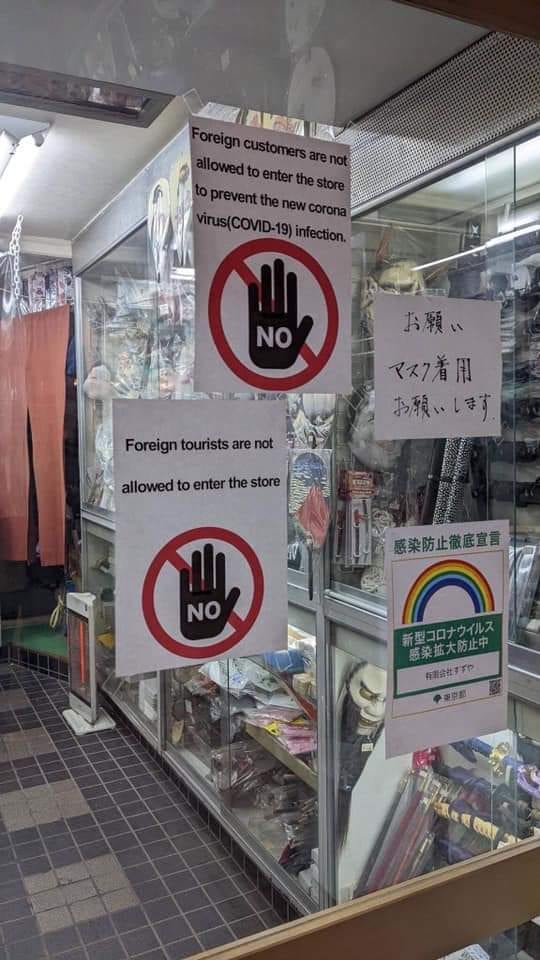
Kyodo: Japan-born American files suit against Japan’s dual nationality ban

mytest

Books, eBooks, and more from Debito Arudou, Ph.D. (click on icon):
Guidebookcover.jpgjapaneseonlyebookcovertextHandbook for Newcomers, Migrants, and Immigrants to Japan「ジャパニーズ・オンリー 小樽入浴拒否問題と人種差別」(明石書店)sourstrawberriesavatardebitopodcastthumbFodorsJapan2014cover
UPDATES ON TWITTER: arudoudebito
DEBITO.ORG PODCASTS on iTunes, subscribe free
“LIKE” US on Facebook at http://www.facebook.com/debitoorg
https://www.facebook.com/embeddedrcsmJapan
http://www.facebook.com/handbookimmigrants
https://www.facebook.com/JapaneseOnlyTheBook
https://www.facebook.com/BookInAppropriate
If you like what you read and discuss on Debito.org, please consider helping us stop hackers and defray maintenance costs with a little donation via my webhoster:
Donate towards my web hosting bill!
All donations go towards website costs only. Thanks for your support!

Hi Blog.  Here’s another person challenging Japan’s ban on dual nationality.  Her case makes the following circumstances clear:

  1. If you’re born in Japan with Japanese blood, you’re a Japanese citizen.
  2. If you’re born in Japan (or overseas) with Japanese and Non-Japanese blood, with proper registry with the GOJ after birth, you’re a citizen of both countries until age 20.  Then as per the ban on dual nationality, you have to choose one.  But if you choose Japanese citizenship, there is no penalty for those who do not give up their foreign nationality.  As long as the GOJ doesn’t know, and they don’t try too hard to find out.
  3. If you’re born in Japan without Japanese blood, you’re a foreigner unless you naturalize.  But if you naturalize, you must give up your foreign nationalities.  (However, I know at least one naturalized Japanese citizen who did not give up their NJ nationality, and still maintains both unbeknownst to the GOJ.)
  4. If you’re born in Japan (or overseas) with Japanese blood and then move permanently overseas and take another citizenship, and the GOJ finds out about it, you will unilaterally lose your Japanese citizenship, as the article below makes clear.
  5. The wild card:  If you are famous, like Nobel Prize winners or famous elites like Alberto Fujimori, former authoritarian President of Peru.  Then you can get your Japanese citizenship back in an eyeblink.  Again, for purposes of national pride, the rule of law doesn’t apply:  “They’ll claim us if we’re famous.”

Anyway, Japan’s Nationality Law makes things unnecessarily arbitrary, racialized, and complicated, as described in more detail in my book “Embedded Racism“. And it does not pay to be honest.  Let’s take a closer look at the case described in Case 4 above.  Arudou Debito, Ph.D.

/////////////////////////////////////////////////

Japan-born American files suit against Japan’s dual nationality ban
KYODO NEWS – Jun 2, 2022, courtesy of EYS
https://english.kyodonews.net/news/2022/06/d25c7dd60667-japan-born-american-files-suit-against-japans-dual-nationality-ban.html

A Japanese-born American said Thursday she has filed a lawsuit with a Japanese court claiming that the country’s nationality law, which bans its citizens from also holding a foreign nationality, violates the Constitution.

Yuri Kondo, 75, who currently lives in Fukuoka in southwestern Japan and filed the lawsuit at the Fukuoka District Court, said at a press conference with her legal team that acquiring U.S. citizenship should not have automatically stripped her of her Japanese one.

Kondo, who was born in Kamakura, Kanagawa Prefecture, moved to the United States in 1971 to attend graduate school and began practicing law in Arizona in 1997.

After becoming a U.S. citizen in 2004, she attempted to renew her Japanese passport in 2017 but her application was rejected. She is currently in Japan on her U.S. passport.

Kondo claims that Article 11 of the nationality law, which stipulates that Japanese citizens automatically lose their nationality upon gaining a foreign nationality, violates the right to pursue happiness and equality as guaranteed by the Constitution.

“Nationality is an important human right, and it is illegal to automatically take it away from someone without their consent,” she said.

The Tokyo District Court in January 2021 rejected a similar lawsuit filed by eight men and women residing in Europe, ruling that Japan’s nationality law is constitutional. The plaintiffs have appealed.  ENDS

======================
Do you like what you read on Debito.org?  Want to help keep the archive active and support Debito.org’s activities?  Please consider donating a little something.  More details here. Or if you prefer something less complicated, just click on an advertisement below.
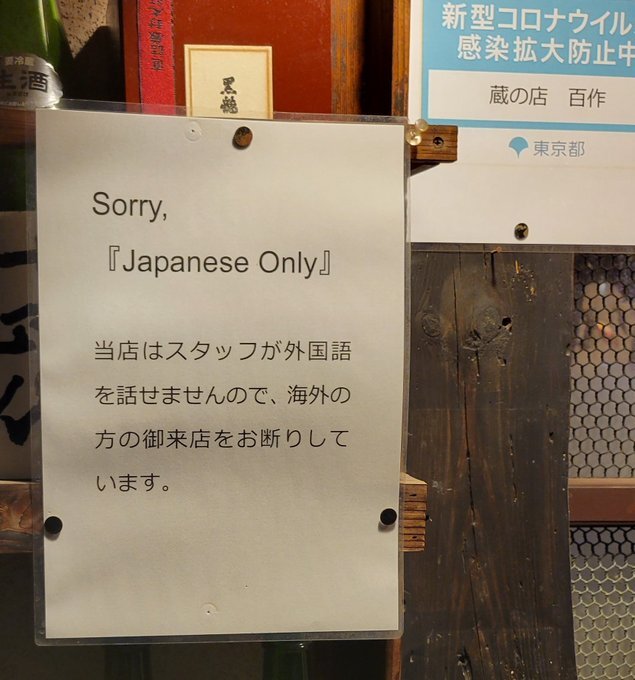
Japan Today expose: How the media failed Japan’s most vulnerable immigrants (Feb 22, 2022)

mytest

(Photo courtesy of Japan Today)

Hi Blog.  Since Japan Today has a history of “expiring” its articles (in addition to some irresponsible journalistic practices) and this one is important enough to warrant public archiving, Debito.org includes its full text below for the record.  As Japan’s xenophobic and extreme border controls continue to treat foreign outsiders like the plague despite some signs of opening (as we have discussed here, here, and here), officialdom treats foreigners it has incarcerated like animals or worse (as we have discussed here).  What follows is some excellent original reporting on yet another death in custody, and the political ramifications that conspired to maintain the deadly status quo.  Debito Arudou, Ph.D.

////////////////////////////////////////

Opinions
How the media failed Japan’s most vulnerable immigrants
Japan Today, Feb. 22, 2022, By Dreux Richard, courtesy of JDG
https://japantoday.com/category/features/opinions/how-the-media-failed-japans-immigrants?comment-order=popular
TOKYO
The Ministry of Foreign Affairs is a strange institution. It’s responsible for the way Japan is perceived abroad, and it decides who receives the opportunity to immigrate. But its jurisdiction over the lives of immigrants largely vanishes when they reach Japan. It’s also the most influential agency that does not play a meaningful role in developing the government’s legislative agenda. Senior MoFA officials can only watch in dismay as less prestigious agencies, including some of Japan’s most corrupt, devise legislation that erodes the rights of immigrants and damages Japan’s international reputation.

A proposed overhaul of Japan’s detention system, scuttled in 2021 after the death of detainee Wishma Rathnayake and a resulting wave of protests, was especially unpopular with Japanese diplomats. The Kishida administration has revived it anyway, with parliamentary debate anticipated this summer. Until recently, MoFA relied on the press to guard against legislative aggression toward immigrants, quietly passing sensitive information to reporters who covered the Ministry of Justice, which enforces immigration law.

According to MoFA officials who acted as my sources during the 10 years I covered immigration, their current reluctance to cooperate with journalists is related to the sense, among the agency’s staff, that the media has become “much louder, but much less effective” on issues of immigration.

The officials I spoke with traced this problem to 2019, when a detainee starved to death at a detention center in Nagasaki, following a four-week hunger strike.

The Ministry of Justice cleared the detention center of wrongdoing, issuing a report that contained several defamatory statements about the detainee. He was not, as the ministry’s findings suggested, a hardened criminal or a deadbeat father—not according to court records, not according to his family.

The report went on to claim that it wasn’t possible to return the detainee to Nigeria because he refused to cooperate with the deportation process in January 2019. But the report also documented a meeting in May of 2019 where the detainee begged to be deported. As one MoFA official dryly observed, “May comes after January.”

The death was covered in Japan’s major newspapers, as well as a variety of global outlets. All of them printed the government’s claims without attempting to verify them. Not a single reporter succeeded in confirming the identity of the detainee, a native of southeastern Nigeria who came to Japan 19 years earlier to look for work in the leather tanneries of Hyogo Prefecture. His name was Gerald “Sunny” Okafor.

An important story about the destruction of a family was overlooked. Okafor’s widow, who is deaf, struggled to raise her daughter alone after her husband was detained, pushing her to the brink of psychological collapse. Immigration officials took advantage of her vulnerability, pressuring her to file for divorce and promising—disingenuously—that it would expedite Okafor’s release.

The media also failed to uncover administrative malpractice at the detention center, which led Mr. Okafor to believe that steps were being taken to expedite his return to Nigeria. After learning this wasn’t true, he refused to receive intravenous fluids, precipitating his death. The Nigerian embassy helped the Ministry of Justice cover up these mistakes, leaving a paper trail in Okafor’s immigration file.

The success of this cover-up has undermined the best opportunity to sink the proposed immigration reforms, which were developed in response to Okafor’s death. The reforms are based on the insulting notion that the detention center could have saved Okafor if it had possessed greater powers of coercion—the power to sanction his attorneys, for instance, if they pushed too aggressively for their client’s release.

But the press has helped to turn Okafor’s death into a non-story, by disseminating state propaganda that diminishes the death’s significance, then responding to that propaganda with opinion essays instead of investigations.

“The media approaches the immigration debate as an ideological matter, rather than a test of the integrity of Japan’s institutions,” observed one MoFA official who monitored Mr. Okafor’s case. “That’s not helpful to people in government who are trying to fix the system, because it doesn’t change anybody’s mind. It only inflames existing disagreements.”

If disobeying the instructions of immigration officials becomes a criminal offense, as the government has now proposed, it will be made possible by the collapse of non-partisan relationships between trustworthy elements of Japan’s government and their counterparts in the press.

Mr. Okafor’s body shortly after his death. “Japan never saw what starvation did to that man. It should haunt them,” said Stanley Egbogota, chairman of an Igbo civic association that raised money for Mr. Okafor’s family. Photo: With permission from the family of Gerald Okafor


In an era of journalism where editorial decisions are shaped by web traffic and algorithms, the loss of knowledgeable sources may not strike every media professional as a matter of concern. Reporters didn’t need to speak with anyone who knew Mr. Okafor in order to write about him, or to decide that it was no longer necessary to write about him — even as parliament debated legislation that resulted from his death.

“They got the answers they needed,” Okafor’s widow observed in our most recent correspondence. “And in such a convenient way: from no one, from nowhere.”

=======================

For six years, Dreux Richard covered Japan’s Nigerian community for a daily newspaper in Tokyo. His first book, Every Human Intention: Japan in the New Century, was published by Pantheon in 2021. ENDS

Kyodo: “63% of people with foreign roots in Japan questioned by police”, part of systemic racial profiling by the National Police Agency

mytest

Books, eBooks, and more from Debito Arudou, Ph.D. (click on icon):
Guidebookcover.jpgGuidebookcover.jpgjapaneseonlyebookcovertextHandbook for Newcomers, Migrants, and Immigrants to Japan「ジャパニーズ・オンリー 小樽入浴拒否問題と人種差別」(明石書店)sourstrawberriesavatardebitopodcastthumbFodorsJapan2014cover
UPDATES ON TWITTER: arudoudebito
DEBITO.ORG PODCASTS on iTunes, subscribe free
“LIKE” US on Facebook at http://www.facebook.com/debitoorg
https://www.facebook.com/embeddedrcsmJapan
http://www.facebook.com/handbookimmigrants
https://www.facebook.com/JapaneseOnlyTheBook
https://www.facebook.com/BookInAppropriate

Hi Blog. It’s been difficult for me to blog much this year (beyond my monthly SNA columns), as I’ve had the busiest semester on record. All of my writing energies are being absorbed by coursework. So in order to keep up with events, I’m going to try to post more but feel the need to comment less.

Instead, Debito.org Readers are keeping us all updated in real time in their comments to various blog posts, but in particular see their updates and reposts of news articles in the Comments Sections of all Debito.org NewsLetters. They’re doing a far better job than I am. Many thanks.

On to the Kyodo article, which is more quantifiable grist for the mill for Debito.org’s longstanding substantiated claim that Racial Profiling is standard operating procedure for the Japanese Police. Read on. Bravo Tokyo Bar Association for getting us some citable statistics.  Debito Arudou, Ph.D.

///////////////////////////////

63% of people with foreign roots in Japan questioned by police
April 10, 2022 (Mainichi Japan/Kyodo News), courtesy of lots of people
https://mainichi.jp/english/articles/20220410/p2g/00m/0na/019000c

PHOTO: Foreign residents take to the streets in Tokyo’s Shibuya Ward on May 30, 2020, in protest against the alleged mistreatment by Japanese police of a Kurdish man. (Kyodo)

TOKYO (Kyodo) — A total of 62.9 percent of people in Japan with foreign roots were questioned by police over the past five years, preliminary results of a recent Tokyo Bar Association survey showed, with the group saying the outcome is evidence of biased behavior by officers.

The survey on racial profiling drew responses from 2,094 people with roots in foreign countries. The association said it conducted the poll after receiving complaints that many such people had been questioned by police apparently due to their appearance.

Among individuals who were approached by the police over the past five years, 50.4 percent were stopped “two to five times,” while 10.8 percent were questioned “six to nine times” and 11.5 percent “10 times or more,” according to the survey conducted between Jan. 11 and Feb. 28.

A total of 70.3 percent of those individuals said they “felt uncomfortable” with the police questioning, while 85.4 percent said the police approached them upon recognizing they have roots in other countries. Most of those people believed officers had such an awareness because of their appearance.

A Japanese law governing police officers on duty allows them to question people if there are reasons to suspect they have committed an unusual act or crime. But 76.9 percent of people who were questioned by police officers in the survey said there was no reason for being treated with suspicion.

In a free description section, some wrote that after officers learned of their foreign nationality, they showed “overbearing behavior” toward them.

The U.S. Embassy in Tokyo had warned on its official Twitter account last year that it had been receiving reports of “suspected racial profiling incidents” with several foreigners “detained, questioned and searched” by the police.

ENDS

======================
Do you like what you read on Debito.org?  Want to help keep the archive active and support Debito.org’s activities?  Please consider donating a little something.  More details here. Or if you prefer something less complicated, just click on an advertisement below.
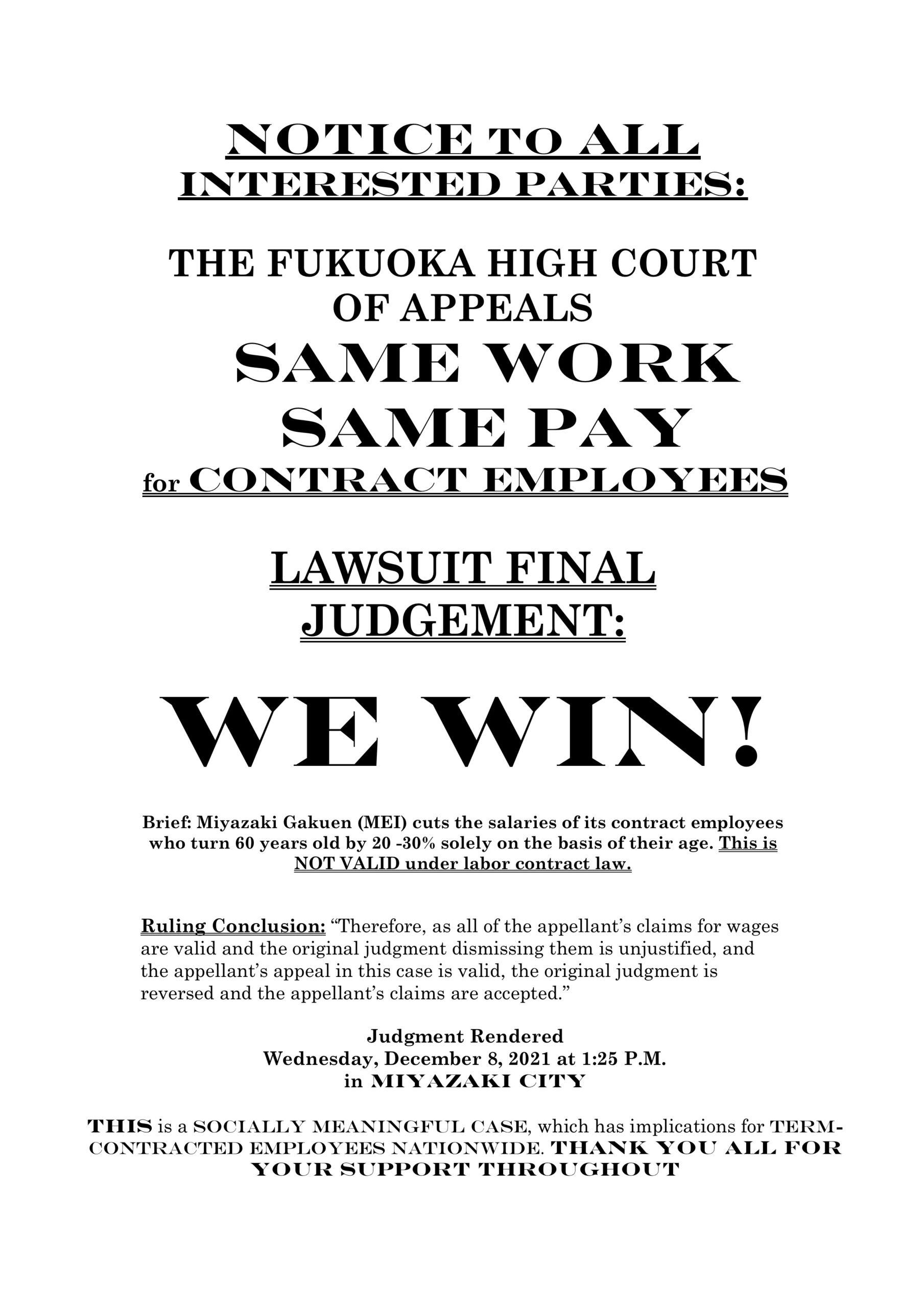
HAPPY NEW YEAR 2022: Tokyo Asakusa “Suzuya” theatrical prop store bars “foreign customers” to “prevent COVID infection”. (Plus Momosaku, another repeat offender in Asakusa.)

mytest

Books, eBooks, and more from Debito Arudou, Ph.D. (click on icon):
Guidebookcover.jpgGuidebookcover.jpgjapaneseonlyebookcovertextHandbook for Newcomers, Migrants, and Immigrants to Japan「ジャパニーズ・オンリー 小樽入浴拒否問題と人種差別」(明石書店)sourstrawberriesavatardebitopodcastthumbFodorsJapan2014cover
UPDATES ON TWITTER: arudoudebito
DEBITO.ORG PODCASTS on iTunes, subscribe free
“LIKE” US on Facebook at http://www.facebook.com/debitoorg
https://www.facebook.com/embeddedrcsmJapan
http://www.facebook.com/handbookimmigrants
https://www.facebook.com/JapaneseOnlyTheBook
https://www.facebook.com/BookInAppropriate

Hi Blog. Happy New Year 2022! May this be a healthy and happy one for all Debito.org Readers.

Let me open the year inauspiciously with a post about new “Japanese Only” signs.

The first one is from a store called “Suzuya Buyou Kodougu” (Suzuya Traditional Dance Props) in Asakusa Kouen Nishisandou. Courtesy lots of people, but notably SD, RO, and MW.

Entertainment Goods 浅草公園西参道
有限会社すずや舞踊小道具店
電話 03-3844-3798
〒111-0032 東京都台東区浅草2-7-13
営業時間 am10:00~pm6:00(火曜日定休)
お問い合せ、ご注文はお電話でお願いいたします。
http://asakusasuzuya.co.jp/shop.html
Mapped at https://itp.ne.jp/info/133487635100000899/

Feel free to contact them and tell them what you think about their sign, particularly since no foreign tourists (and very few foreign residents) are being allowed into Japan to spread Covid. Yet that doesn’t stop racist signs depicting foreigners already here (who like regular Japanese residents probably haven’t travelled abroad) as more infectious than Japanese from appearing on stores (again).  Because (again) there’s no law against racial discrimination in Japan stopping anyone from putting up a “Japanese Only” sign for any reason whatsoever.

Meanwhile, eagle-eyed Debito.org Readers are sending in other exclusionary signs they’ve discovered:

=======================================

From: XY
Subject: Discriminatory posting spoted in the wild
Date: December 27, 2021
To: Debito Arudou <debito@debito.org>

Hi Debito,

Since you post things like this from time to time, I thought I’d send over a photo of a sign I saw tonight when I was out looking for a place to grab a bite. It’s an izakaya in Asakusa called Momosaku.

Why post that you only have service/menus in Japanese when you can reach straight for the discrimination, I guess, eh? — XY.

Name: 100 (izakaya) (Momosaku 百作)
Address: 4 Chome-7-12 Asakusa, Taitō-ku, Tōkyō-to 111-0032
http://tinyurl.com/yb9uv3tz

[Japanese version: None of our staff at this establishment speak foreign languages, so we refuse entry to all overseas people (kaigai no kata)].

=================================

No “overseas people” could possibly speak Japanese to their staff, of course.

The funny thing is, we featured Momosaku on Debito.org back in April 2018.  Back then, the submitter pulled down that sign, and it was replaced a day later.  Clearly Momosaku’s managers don’t like foreigners, Covid or no Covid.

Feel free to drop by and let them know how you feel about their “Japanese Only” sign.  Perhaps pull it down again.  Debito Arudou, Ph.D.

======================
Do you like what you read on Debito.org?  Want to help keep the archive active and support Debito.org’s activities?  Please consider donating a little something.  More details here. Or if you prefer something less complicated, just click on an advertisement below.
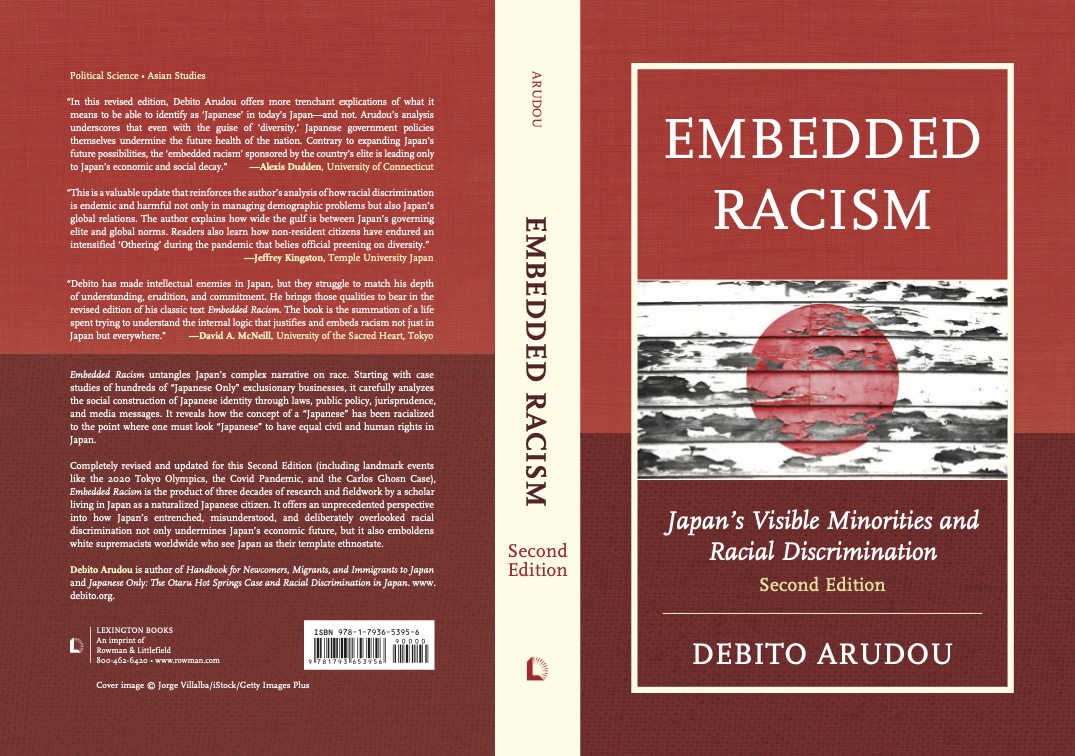
My annual “Human Rights Top Ten for 2021” countdown now at Shingetsu News Agency, VM 29 Dec 27, 2021

mytest

Books, eBooks, and more from Debito Arudou, Ph.D. (click on icon):
Guidebookcover.jpgGuidebookcover.jpgjapaneseonlyebookcovertextHandbook for Newcomers, Migrants, and Immigrants to Japan「ジャパニーズ・オンリー 小樽入浴拒否問題と人種差別」(明石書店)sourstrawberriesavatardebitopodcastthumbFodorsJapan2014cover
UPDATES ON TWITTER: arudoudebito
DEBITO.ORG PODCASTS on iTunes, subscribe free
“LIKE” US on Facebook at http://www.facebook.com/debitoorg
https://www.facebook.com/embeddedrcsmJapan
http://www.facebook.com/handbookimmigrants
https://www.facebook.com/JapaneseOnlyTheBook
https://www.facebook.com/BookInAppropriate

Hello and Happy Holidays to all Debito.org Readers! Here’s my annual Top Ten, this year moved to the Shingetsu News Agency because The Japan Times isn’t in the market for articles like these anymore. Excerpt:

//////////////////////////////
Visible Minorities: Human Rights Top Ten for 2021
SHINGETSU NEWS AGENCY, DEC 27, 2021 by DEBITO ARUDOU in COLUMN

SNA (Tokyo) — Since 2008, I have always devoted my end-year columns to counting down the Top Ten human rights issues as they pertain to Non-Japanese residents of Japan. This year I’m moving this feature to the Shingetsu News Agency. Let’s get started:

10) Debito.org Turns 25 Years Old…
9) Tourism to Japan Drops 99% Since 2019…
8 ) Vincent Fichot Hunger Strike against Japan Child Abduction…
7) Tokyo Musashino City Approves, Then Defeats, Inclusive Voting Proposal…

Full countdown with write-ups at https://shingetsunewsagency.com/2021/12/27/visible-minorities-human-rights-top-ten-for-2021/

Enjoy!  More to come in 2022!  Debito Arudou, Ph.D.

======================
Do you like what you read on Debito.org?  Want to help keep the archive active and support Debito.org’s activities?  Please consider donating a little something.  More details here. Or if you prefer something less complicated, just click on an advertisement below.
Miyazaki International College cut their elderly professors’ salaries by 20%. After a 7-year battle, Fukuoka High Court rules this illegal. A victory for foreign plaintiffs too.

mytest

Books, eBooks, and more from Debito Arudou, Ph.D. (click on icon):
Guidebookcover.jpgjapaneseonlyebookcovertextHandbook for Newcomers, Migrants, and Immigrants to Japan「ジャパニーズ・オンリー 小樽入浴拒否問題と人種差別」(明石書店)sourstrawberriesavatardebitopodcastthumbFodorsJapan2014cover
UPDATES ON TWITTER: arudoudebito
DEBITO.ORG PODCASTS on iTunes, subscribe free
“LIKE” US on Facebook at http://www.facebook.com/debitoorg
https://www.facebook.com/embeddedrcsmJapan
http://www.facebook.com/handbookimmigrants
https://www.facebook.com/JapaneseOnlyTheBook
https://www.facebook.com/BookInAppropriate

Hi Blog.  A friend sends word that his group of plaintiffs, some of whom are Non-Japanese, won their lawsuit against a university employer that had been ongoing for seven years.

In his words:

=========================

December 9, 2021

If you are getting this notice, it’s because you contributed in some way to our win in this case so CONGRATULATIONS! A few of you contributed massively, putting in many many hours of work, some helped by providing data or a letter we could submit to the court to counter MEI lies, or helped with translation, or showed up in court, or are union members who voted for funding. Some of you spread the word about the case. Some just said, “Gambatte!” when we needed it.

My point here is it took a long term (7 years for some of us!) team effort by dozens of us to finally succeed, and succeed we did in the high court. We could not have achieved a better outcome…

MEI has two weeks to appeal to the Supreme Court. And they might. That’s for them to worry about, not us.

In terms of money, I won all of my back pay, plus 5% interest, plus court fees that I had paid. I was not compensated for attorney fees, or mental anguish. We have no anchor website for this issue.

The main reasons we won were: 
1.) MEI failed to negotiate in good faith with the union about the cut 
2.) They had no real financial need to reduce salaries 
3.) There was no reduction in workload or other compensation for the reduction in pay.

Flyer we made public:

COMMENT FROM DEBITO:  This matters because there’s a long tradition in Japan of Academic Apartheid, where foreign academics in higher education are given contracted status (increasingly, term-limited) while Japanese-citizen academics are given uncontracted, permanent tenure from day one of employment.  This is probably the oldest issue we’ve taken up on Debito.org, and it’s only gotten worse over the quarter-century of coverage:  Instead of more foreign academics becoming tenured like Japanese, the trend is to “gaijinize” the Japanese faculty (as a money-saving effort encouraged by the Ministry of Education all the way back in 1995) by putting them on contracts, eliminating tenure in an attempt to clean out disagreeable leftists from Japan’s universities.

MEI’s move to put everyone above a certain age on a different lower pay scale (Japanese and foreign) was a line the Fukuoka High Court was not willing to allow under the law.  Good to have that precedent set. Conclusion:  Join a union if you’re working in Japan.  Then fight these things in court as a union.

Despite this being important news for Japan’s academics, it hasn’t made the English-language media.  So let me translate the Mainichi’s brief on this.  Debito Arudou, Ph.D.

//////////////////////////////////////////////////////////
未払い賃金訴訟、元教授が逆転勝訴 「不利益大きい」 高裁宮崎支部
毎日新聞 2021/12/10 Courtesy of one of the plaintiffs
https://mainichi.jp/articles/20211210/k00/00m/040/049000c.amp

給与基準改定による年俸の2割減額は労働契約法に反し無効だとして宮崎国際大学(宮崎市)元教授の60代米国人男性が学校法人宮崎学園に対し、改定前との差額の未払い賃金約425万円の支払いを求めた訴訟の控訴審判決で、福岡高裁宮崎支部は8日、請求棄却した3月の1審・宮崎地裁判決を取り消し、男性側の請求を全て認めた。

判決によると、元教授は2000年に有期雇用の講師として採用され、契約更新しながら勤務し続け17年に教授に昇進。20年に退職した。学校法人側は15年、厳しい財政状況を理由に有期雇用教職員の60歳以降の年俸を従前の2割減に改定。元教授も減額対象となったが、不利益が大きく合理的と認められないとした。

高橋亮介裁判長は「教員間の不均衡もあり、減額に伴う不利益緩和のための経過措置や代償措置も取られていない」と法人側の主張を退けた。【塩月由香】

Unofficial translation:

Unpaid Salaries Lawsuit:  Former Professors see their prior decision against them overturned:  “This is a huge disadvantage” says Fukuoka High Court Miyazaki Branch

Mainichi Shinbun, December 10, 2021, translation by Debito, corrections welcome.

Due to a revision in the basic salary levels, Miyazaki International College cut their former professors’ base salaries by 20% once they reached sixty years of age. Plaintiffs sued their employer, Miyazaki Gakuen, for breach of labor contract, and demanded they pay 42,500,000 yen of unpaid salaries based upon their previous contract status.  Upon appeal, on December 8 the Fukuoka High Court overturned the Miyazaki District Court’s prior ruling, and awarded the plaintiffs all of their claims.

According to the decision, the former professors were employed on contract status as instructors from the year 2000, and over 17 years of contract renewals they achieved the rank of professor.  They retired in 2020.  According to the college, in 2015 they claimed financial distress and revised the base salary to cut 20% from all contracted educators over the age of sixty.  This pay cut also affected the former professors in question, and the court would not acknowledge the rationality of the cut due to it being overly disadvantageous to plaintiffs (furieki ga ookiku gouriteki to mitomerarenai to shita).

Head Judge Takahashi Ryousuke said, “For the educators this is disproportionate, and the university did not even take measures such as other compensation that would alleviate the disadvantages that come with such a pay cut,” dismissing the college’s claims.  ENDS

======================

Do you like what you read on Debito.org?  Want to help keep the archive active and support Debito.org’s activities?  Please consider donating a little something.  More details here. Or if you prefer something less complicated, just click on an advertisement below.
Debito’s SECOND EDITION of “Embedded Racism: Japan’s Visible Minorities and Racial Discrimination” (Lexington Books, 2022), fully revised and updated, now on sale

mytest

Hi Blog. The new SECOND EDITION of “Embedded Racism” (Lexington Books, 2022), completely revised and updated with 100 extra pages of new material, is now on sale.

Information site outlining what’s new, with excerpts and reviews, and how to get your copy at a discount at

https://www.debito.org/embeddedracism.html

(Or you can download a flyer, take it to your library, have them order the book, and then borrow it for free at EmbeddedRacism2ndEdFlyer)

Read a sample of the book on Amazon here.

Front Cover:

Full cover with reviews:

Debito Arudou, Ph.D.

2018 United Nations CERD Report (CERD/C/JPN/10-11) still mentions Debito.org’s works: “Foreign nationals and individuals with a foreign appearance have reportedly been denied entry to and services of certain privately owned facilities like hotels and restaurants that otherwise serve the public, including through the posting of signage reading ‘Japanese only’.”

mytest

Books, eBooks, and more from Debito Arudou, Ph.D. (click on icon):
Guidebookcover.jpgjapaneseonlyebookcovertextHandbook for Newcomers, Migrants, and Immigrants to Japan「ジャパニーズ・オンリー 小樽入浴拒否問題と人種差別」(明石書店)sourstrawberriesavatardebitopodcastthumbFodorsJapan2014cover
UPDATES ON TWITTER: arudoudebito
DEBITO.ORG PODCASTS on iTunes, subscribe free
“LIKE” US on Facebook at http://www.facebook.com/debitoorg
https://www.facebook.com/embeddedrcsmJapan
http://www.facebook.com/handbookimmigrants
https://www.facebook.com/JapaneseOnlyTheBook
https://www.facebook.com/BookInAppropriate

Hi Blog.  Here’s something that makes me smile.  The 2018 United Nations CERD Report (CERD/C/JPN/10-11) includes something that might not otherwise be there — had Debito.org not taken up the task of describing and cataloging discrimination for the past 25 years (back when people were even denying that racial discrimination actually happened in Japan!).

Everything mentioned in the UN excerpt below is covered in my book Embedded Racism in Japan (Lexington Books, 2015).  But especially close to my heart is the text enlarged below.

One of my lifetime goals is leaving the planet a better place than when I arrived. This feels like proof that we at Debito.org have done something positive. Debito Arudou, Ph.D.

/////////////////////////////////
United Nations
CERD/C/JPN/CO/10-11
International Convention on the Elimination of A ll Forms of Racial Discrimination
Distr.: General
26 September 2018
Original: English
Committee on the Elimination of Racial Discrimination

Concluding observations on the combined tenth and eleventh periodic reports of Japan

1.The Committee considered the combined tenth and eleventh periodic reports of Japan (CERD/C/JPN/10-11), submitted in one document, at its 2662nd and 2663rd meetings (CERD/C/SR.2662 and 2663), held on 16 August and 17 August 2018. At its 2676th meeting, held on 28 August 2018, it adopted the present concluding observations.

[skip down to page seven]

Situation of non-citizens

33.The Committee is concerned that:

(a)Non-citizens have reportedly been denied housing and employment because they are foreign nationals;

(b)Foreign nationals and individuals with a foreign appearance have reportedly been denied entry to and services of certain privately owned facilities like hotels and restaurants that otherwise serve the public, including through the posting of signage reading “Japanese only”;

(c)Non-citizens, in particular Koreans, continue to be excluded from the national pension scheme because of the age requirement;

(d)The State party has not yet amended its legislation to allow non-citizens to be eligible for basic disability pensions;

(e)Non-citizens and long-term foreign residents and their descendants remain excluded from public positions that engage in the exercise of public authority or public decision-making because they do not have Japanese nationality;

(f)Some permanent residents must obtain a permit to re-enter the country prior to departing, even if they are only leaving for one day, while others do not need such a permit.

=======================

34. Bearing in mind the Committee’s general recommendation No. 30, the Committee recommends that the State party:

(a) Ensure access to housing and employment to non-citizens and foreign nationals without discrimination ;

(b) Create and enforce legislation against the posting of discriminatory signs and the practice of excluding public services by privately owned facilities, such as hotels and restaurants, to persons on the basis of being a foreigner or of foreign appearance;

(c) Ensure that non-citizens are included in the national pension scheme ;

(d) Amend legislation to allow non-citizens to be eligible for basic disability pensions ;

(e) Allow non-citizens, especially long-term foreign residents and their descendants, to have access to public positions that engage in the exercise of public authority or public decision-making ;

(f) Eliminate the permit requirement prior to departure for some permanent residents so that they may enter and exit the country in the same manner as other permanent residents ;

(g) Consider ratifying the Convention relating to the Status of Stateless Persons and the Convention on the Reduction of Statelessness.

/////////////////////////////////

Full report downloadable in several languages at:
https://tbinternet.ohchr.org/_layouts/15/treatybodyexternal/Download.aspx?symbolno=CERD/C/JPN/CO/10-11&Lang=En

ENDS

======================
Do you like what you read on Debito.org?  Want to help keep the archive active and support Debito.org’s activities?  Please consider donating a little something.  More details here. Or if you prefer something less complicated, just click on an advertisement below.

Igarashi Kanoa, California-born athlete who won Silver for Japan in 2020 Olympics, rates himself worthy of representing Japan because “My blood is 100% Japanese. That’s something that you don’t change.” Dangerous old-school Olympian thoroughbred-ism.

mytest

Books, eBooks, and more from Debito Arudou, Ph.D. (click on icon):
Guidebookcover.jpgjapaneseonlyebookcovertextHandbook for Newcomers, Migrants, and Immigrants to Japan「ジャパニーズ・オンリー 小樽入浴拒否問題と人種差別」(明石書店)sourstrawberriesavatardebitopodcastthumbFodorsJapan2014cover
UPDATES ON TWITTER: arudoudebito
DEBITO.ORG PODCASTS on iTunes, subscribe free
“LIKE” US on Facebook at http://www.facebook.com/debitoorg
https://www.facebook.com/embeddedrcsmJapan
http://www.facebook.com/handbookimmigrants
https://www.facebook.com/JapaneseOnlyTheBook
https://www.facebook.com/BookInAppropriate

Hi Blog. Just a follow-up on my Shingetsu News Agency column of this week. When I was talking about the roots of the Olympics, I made the case there that the Games are less about athleticism than national demonstrations of power, particularly in the vein of racial superiority and thoroughbred-ism.  In my summary of their history, I wrote:

/////////////////////////////////
SNA: Thanks to my background in political science, I’m trained to view nationalism with a critical eye: How governments convince people to live, fight, and even sacrifice their lives for their country. The Olympics are rooted precisely in these attitudes, and forever filter athleticism through the lens of national representation and superiority.

Remember that the Olympics were first framed as a way for the ancient Greeks to assert their superiority over neighboring city-states.

When the Games were resuscitated by aristocrats in 1896, in spirit they were still grounded in contemporary attitudes equating national strength with physical strength. Thanks to the racialized social theories in currency at the time, including Social Darwinism and eugenics, the Games soon became a public demonstration of the social engineering of supermen, which depended on how racially “thoroughbred” an athlete and a society was. It’s not difficult to draw a straight line from the geneticist attitudes promoted by the prewar Olympics to The Final Solution.

Even in the postwar Games, despite all the emphasis on individual athleticism and sportsmanship, the legacy of national superiority still exists. You easily find it in the schlong-measuring national medal tallies, and the enormous pressure put on athletes to prove themselves worthy of all the national attention and hype they’re getting.

Japanese athletes in particular must get Gold (especially in sports Japan thinks it owns, such as judo or karate) or publicly apologize for taking Shameful Silver or Despicable Bronze. This culture of self-sacrifice for the sake of nationalism is one reason why, as I have written elsewhere, Japanese athletes live surprisingly shorter lives, and why I constantly wince at the nasty nationalistic coverage in NHK and Japan’s sports newspapers.

Full article at http://shingetsunewsagency.com/2021/08/16/visible-minorities-tokyo-2020-olympics-postmortem/
/////////////////////////////////

I want to highlight how one athlete, who won Silver for Japan in Surfing, decided to depict himself. Again, as I wrote for SNA above:

/////////////////////////////////

SNA: Kanoa Igarashi, US-born resident of Huntington Beach, CA, indicatively promotes himself on his Olympics website entry in classic Olympic “thoroughbred-ism”: “I have so much support here in the USA and America will always be part of who I am. But I’ve grown up with a lifestyle and in a generation where things can seem a bit borderless. And so representing Japan felt like a solid, comfortable decision. My blood is 100% Japanese. That’s something that you don’t change.”

/////////////////////////////////

His statement in context, courtesy of https://olympics.com/tokyo-2020/olympic-games/en/results/surfing/athlete-profile-n1316618-igarashi-kanoa.htm#addInformation.


His bio in brief, courtesy of

https://olympics.com/tokyo-2020/olympic-games/en/results/surfing/athlete-profile-n1316618-igarashi-kanoa.htm

COMMENT:  Now that’s playing to type. Blood type, in fact.  As I responded in my column:

/////////////////////////////////

SNA:  Good for his bloodline, I guess. But for mongrel non-medalists like Osaka Naomi, as the New York Times noted, Japan’s social media pounced, contesting her Japanese language ability, her standing to represent Japan, and even her Japaneseness…

/////////////////////////////////

In sum, I wanted to highlight one of the main arguments of my column:  how The Olympics also brings out racist attitudes not only in its governments but also in its athletes.

Again, you can self-identify with and play for whatever country will have you.  But a person like this who has benefited from both systems does not deserve respect for this throwback-Eugenicist attitude, and it should be challenged appropriately in public. Doing so here.  Debito Arudou, Ph.D.

UPDATE:  According to the Japan Times, Igarashi faced online hate during the Olympics. While I feel for Igarashi’s situation when it comes to online hate and racism, he doesn’t seem to have reflected on how his express pure-blood-ism further encouraged by Japan’s blood-oriented nationalism and Olympic attitudes encourages those hateful and tribal attitudes as well. Excerpt from the JT article in Comments Section below.

======================
Do you like what you read on Debito.org?  Want to help keep the archive active and support Debito.org’s activities?  Please consider donating a little something.  More details here. Or if you prefer something less complicated, just click on an advertisement below.

“Japanese Only” doctors: “Fast Doctor” House Call Service in Tokyo (which takes foreign traveler insurance) closed to all foreigners due to Covid. Hippocratic Oath? UPDATE: The “Japanese Only” rule has been removed.

mytest

Books, eBooks, and more from Debito Arudou, Ph.D. (click on icon):
Guidebookcover.jpgjapaneseonlyebookcovertextHandbook for Newcomers, Migrants, and Immigrants to Japan「ジャパニーズ・オンリー 小樽入浴拒否問題と人種差別」(明石書店)sourstrawberriesavatardebitopodcastthumbFodorsJapan2014cover
UPDATES ON TWITTER: arudoudebito
DEBITO.ORG PODCASTS on iTunes, subscribe free
“LIKE” US on Facebook at http://www.facebook.com/debitoorg
https://www.facebook.com/embeddedrcsmJapan
http://www.facebook.com/handbookimmigrants
https://www.facebook.com/JapaneseOnlyTheBook
https://www.facebook.com/BookInAppropriate

Hi Blog. Another casualty of the Covid scare in Japan has been the Hippocratic Oath, where this English-language medical service called Fast DOCTOR (see Japanese site, and English site) (where a doctor will make house calls for a flat fee of 50,000 yen) is now closed to all foreigners. Screen captures of the English site follow.

You can comment below about the rather odd things about the English site (including the iStock photos of non-Asian practitioners, and the testimonials at the bottom without a single recommendation in English). But the fact remains that this medical service is contravening their medical oath to treat all patients. Second, the “foreign” patients they are likely to treat (especially in this time of strict Covid checks at the border and better vaccination programs overseas) at this time are less likely to be infected by the pandemic than the average Japanese patient. Finally, it of course assumes that foreigners who read English are travelers, not Japan residents. Given all of these things that defy both good physical and social science, I wonder what kind of medical care they offer in the first place. Debito Arudou, Ph.D.

UPDATE: A defender of these practices steps forward below to gaslight, claiming “FastDoctor continues to offer its services to foreign residents of Japan.” See comments section for this blog entry.

(Screen captures of their English site follow, courtesy of EG. FYI, their Facebook page is https://www.facebook.com/fastdoctor.tokyo/)


UPDATE AUGUST 29, 2021:  FastDoctor’s website has been amended to remove their “Japanese Only” rules.  I have received no notification or justification for this from the company.  (I simply rechecked their website as a followup.  But it’s gone.  File under another exclusionary sign disappearing when social shame is brought to bear.  –Debito

Screen capture from https://fastdoctor.jp/global/ 

======================
Do you like what you read on Debito.org?  Want to help keep the archive active and support Debito.org’s activities?  Please consider donating a little something.  More details here. Or if you prefer something less complicated, just click on an advertisement below.

“Japanese Only” signs up in two Hokkaido Chitose city restaurants, Yakitori “Kawasemi” and Shokuji-dokoro “Yokaro”, June 2021.

mytest

Books, eBooks, and more from Debito Arudou, Ph.D. (click on icon):
Guidebookcover.jpgjapaneseonlyebookcovertextHandbook for Newcomers, Migrants, and Immigrants to Japan「ジャパニーズ・オンリー 小樽入浴拒否問題と人種差別」(明石書店)sourstrawberriesavatardebitopodcastthumbFodorsJapan2014cover
UPDATES ON TWITTER: arudoudebito
DEBITO.ORG PODCASTS on iTunes, subscribe free
“LIKE” US on Facebook at http://www.facebook.com/debitoorg
https://www.facebook.com/embeddedrcsmJapan
http://www.facebook.com/handbookimmigrants
https://www.facebook.com/JapaneseOnlyTheBook
https://www.facebook.com/BookInAppropriate

Hi Blog. Here are some more “Japanese Only” signs that have appeared in Hokkaido (and nationwide) since the original ones back on 1993 that occasioned the Otaru Onsens Case. This time they are gracing restaurants in the eatery area of Chitose, a major city just outside of Sapporo that hosts Hokkaido’s largest international airport.

Courtesy of Keiron, taken June 21 and June 24, 2021. Details follow.  Enjoy the omotenashi of un-Embedded Racism.  Debito Arudou, Ph.D.

==============================

1) Yakitori Restaurant “Kawasemi”
北海道 千歳市 千代田町 2-1-1 1F
Ph: 0123-27-6700
Location: https://tabelog.com/hokkaido/A0107/A010701/1027793/dtlmap/

Comment: The owner also has a sign up in Japanese on the door excluding customers who have been to the local cabaret clubs and karaoke enterprises. But I guess foreigners are excludable under all circumstances, regardless of their choice of entertainment.
Anyway, for what it’s worth, the establishment gets only lukewarm reviews on Tabelog.
https://tabelog.com/hokkaido/A0107/A010701/1027793/

==============================

2) Restaurant “Yokaro”
北海道 千歳市 幸町 1-1 新橋通り商店街
Ph: 0123-24-5448
Location: https://tabelog.com/hokkaido/A0107/A010701/1034029/dtlmap/

Comment: This restaurant also gets only lukewarm reviews on Tabelog. Methinks these places can hardly afford to turn away customers.
https://tabelog.com/hokkaido/A0107/A010701/1034029/

======================
Do you like what you read on Debito.org?  Want to help keep the archive active and support Debito.org’s activities?  Please consider donating a little something.  More details here. Or if you prefer something less complicated, just click on an advertisement below.
My SNA Visible Minorities 24: “The Tokyo Olympics Trap”, on how these Games are harming Japan’s minorities, and how the IOC is harming Japan

mytest

Books, eBooks, and more from Debito Arudou, Ph.D. (click on icon):
Guidebookcover.jpgjapaneseonlyebookcovertextHandbook for Newcomers, Migrants, and Immigrants to Japan「ジャパニーズ・オンリー 小樽入浴拒否問題と人種差別」(明石書店)sourstrawberriesavatardebitopodcastthumbFodorsJapan2014cover
UPDATES ON TWITTER: arudoudebito
DEBITO.ORG PODCASTS on iTunes, subscribe free
“LIKE” US on Facebook at http://www.facebook.com/debitoorg
https://www.facebook.com/embeddedrcsmJapan
http://www.facebook.com/handbookimmigrants
https://www.facebook.com/JapaneseOnlyTheBook
https://www.facebook.com/BookInAppropriate

Hi Blog. My latest SNA column 24 is about the fiasco the Tokyo 2020 Olympiad has become. Introduction:

//////////////////////////

Visible Minorities: The Tokyo Olympics Trap
By Debito Arudou, Shingetsu News Agency, July 19, 2021

SNA (Tokyo) — On the eve of the Tokyo Olympics, let’s talk about the mess.

Much space has been devoted to the idiocracy behind spending record amounts of money on infrastructure that is not built to last, or even if it is, it often winds up abandoned. Further, holding a superspreader sports meet during a global pandemic is a surefire path to social discord and preventable death.

But it matters that Japan is hosting this mess. This column as usual will first focus on the Olympics’ impact on our minorities, and then talk about the IOC’s responsibility for scamming Japan…
//////////////////////////

Rest is at http://shingetsunewsagency.com/2021/07/19/visible-minorities-the-tokyo-olympics-trap/

======================
Do you like what you read on Debito.org?  Want to help keep the archive active and support Debito.org’s activities?  Please consider donating a little something.  More details here. Or if you prefer something less complicated, just click on an advertisement below.

Nikkan Sports: Aggressive Japanese man harasses Muslim woman and 3-year-old daughter in park, demands her Gaijin Card; then aggressive Japanese police detain, interrogate, and release the woman and child’s private info. I told you this would happen.

mytest

Books, eBooks, and more from Debito Arudou, Ph.D. (click on icon):
Guidebookcover.jpgjapaneseonlyebookcovertextHandbook for Newcomers, Migrants, and Immigrants to Japan「ジャパニーズ・オンリー 小樽入浴拒否問題と人種差別」(明石書店)sourstrawberriesavatardebitopodcastthumbFodorsJapan2014cover
UPDATES ON TWITTER: arudoudebito
DEBITO.ORG PODCASTS on iTunes, subscribe free
“LIKE” US on Facebook at http://www.facebook.com/debitoorg
https://www.facebook.com/embeddedrcsmJapan
http://www.facebook.com/handbookimmigrants
https://www.facebook.com/JapaneseOnlyTheBook
https://www.facebook.com/BookInAppropriate

Hi Blog. I’ve written at length about how demonizing foreigners will lead to official racial profiling, and how deputizing the general public to target NJ will lead to abuse.

Well, SITYS. (See I told you so.) Check out this article from Nikkan Sports. (Translation mine, corrections welcome.)

/////////////////////////////////////

Muslim Woman in Her Forties is Subjected to Wrongful Questioning by Police: Submits Complaint to Tokyo Public Safety Commission.
Nikkan Sports, July 6, 2021, courtesy of lots of people

A Muslim woman in her forties from South Asia living in Tokyo, who was subjected to wrongful voluntary questioning by officers of the Tokyo Metropolitan Police and had her name, address, and other private details leaked to a third party, submitted a formal complaint to the Tokyo Public Safety Commission on July 5. Her legal representation criticized, “This is a use of public power grounded in discriminatory attitudes towards foreigners.”

According to documents from her legal group questioning the Tokyo Metropolitan Police and other connected people, on June 1, the woman was letting her 3-year-old daughter play in a neighborhood park when a man rushed up to her and claimed her daughter had knocked his son down. “Gaijin”, “show me your Zairyu Card”! He then called the police, and six officers rushed in and used rough language towards the woman (who has limited abilities in Japanese), saying things like, “Hey you (omae), you want us to believe you really can’t speak Japanese?” Following that, they took the woman and her daughter only to the nearest police station, and voluntarily interrogated them about two and a half hours.

The woman and her daughter denied that she had knocked anyone down. However, they were not allowed to go home until they had acknowledged there had been some physical contact (boukou), and they had agreed to release their contact details and phone number to the man involved. On a later date, the police told the man more personal information, such as the names, ages, and address of the woman and her daughter so he could begin a civil lawsuit against her. It is said that Child Services were also contacted in case the woman would be unable to take care of her daughter.

The woman claims that being alone and interrogated by four officers during questioning has made her unable to sleep due to PTSD.

Her lawyer, Nishiyama Atsuko, pointed out that even though these are “voluntary” interrogations, foreign suspects often feel they cannot refuse police due to fear of forced deportation. Moreover, “Being a foreigner in itself is enough to justify wrongful treatment by the police. This situation is but the tip of the iceberg.”

The woman herself made the following statement to the press: “My daughter absolutely did not do what they said she did. Now that my address has been leaked, I’m uneasy and cannot live my life in peace. I want the police to be admonished so that they cannot repeat this sort of discriminatory behavior over and over again.”

ENDS (Original Japanese below comment.)
////////////////////////////

(More commentary by Debito.org Readers on a separate site from here.)

COMMENT: Look, it’s as I’ve said here for decades, and in a number of books: When you train police to see foreigners as social destabilizers, that’s how foreigners will be treated in most circumstances involving them. When the only tool in your training is a hammer, every problem looks like a nail.

Nowadays, when you get people who aren’t trained police at all made aware that foreigners have Gaijin Cards (more specifically Zairyuu Cards), and who are now not only encouraged but also empowered by official online apps to demand them, then you have people in a social status so weak that there will be abuses by bullies, or by anyone on a power trip.

And that’s clearly what happened here.  Let’s recap:  A man accuses a three-year-old kid of assault, gets aggressive with a Muslim woman (and reportedly SPECIFICALLY demands her Gaijin Card), and then siccs six also-aggressive cops on her.  Then the cops cart only her and her toddler daughter off to the nearest cop shop for hours of interrogation, and hold her hostage until she releases her private information to this strange man.  And later cops give that man even more information in case he decides to sue a three-year-old!

Clearly this has been blown out of proportion.  And the cops abetted it!  What a nightmare.

I’m pleased the woman sought out legal representation and filed the formal complaint with the Public Safety Commission.  But that will probably result in nothing.  (I’ve done the same for over-the-top police reactions in the past, and never gotten any satisfactory conclusion.)  You can’t expect much when it’s wolves policing other wolves.

So I hope she files an actual civil suit against the police and the person who harassed her and her daughter, so we can get some legal precedent behind this complaint. We need some kind of damper put on all the social damage done by the Japanese police demonizing foreigners for decades, and then deputizing the general public to target them.

Finally, kudos to Nikkan Sports and Kyodo News for taking this issue up.  Here’s hoping more media pays attention to this case.  Debito Arudou, Ph.D.

///////////////////////////////////

Original Japanese:

40代ムスリム女性に警察官が不当聴取 都公安委に苦情申し出
[日刊スポーツ 2021年7月6日1時3分]

https://www.nikkansports.com/general/news/202107050001193.html

東京都内に住む南アジア出身で40代のイスラム教徒(ムスリム)の女性が、警視庁の警察官から不当な任意聴取を受け、他人に氏名や住所などの個人情報を漏らされたとして5日、都公安委員会に苦情を申し出たことが分かった。代理人弁護士は「公権力による外国人への差別意識が根底にある」と批判している。

弁護団が警視庁や関係者に問い合わせるなどした結果に基づく申し出書によると、女性は6月1日、近所の公園で長女(3)を遊ばせていた際、園内にいた男性から、息子が長女に突き飛ばされたとして「外人」「在留カード出せ」などと詰め寄られた。男性の通報で警視庁の警察官6人が駆け付け、日本語が不自由な女性に「おまえ本当に日本語しゃべれねえのか」などと発言。その後女性と長女のみ最寄りの警察署で約2時間半、任意聴取された。

女性と長女は突き飛ばしたことを否定。だが警察官に暴行を認めるよう言われ、男性側に連絡先の電話番号を伝えることに同意するまで帰してもらえなかった。警察側は後日、民事訴訟を起こすとする男性に女性と長女の氏名や年齢、住所などの個人情報を伝達。女性が長女を監督できていなかったとして児童相談所に通報したという。

長女は単独で4人の警察官から聴取された場面もあり、現在、トラウマ(心的外傷)による不眠の症状を訴えている。

代理人の西山温子弁護士は、任意の聴取でも、外国人は容疑をかけられ強制送還されることを恐れて警察に逆らえないことが多いとし、「外国人というだけで警察に不当な扱いを受けることがあり、この問題は氷山の一角だ」と指摘する。

女性は取材に「娘は絶対にやっていない。住所を漏らされ、不安で平和な生活ができない。差別的な行為が繰り返されないよう、警察にはしかるべき対処をしてほしい」と話した。(共同)

======================
Do you like what you read on Debito.org?  Want to help keep the archive active and support Debito.org’s activities?  Please consider donating a little something.  More details here. Or if you prefer something less complicated, just click on an advertisement below.
Japan’s “Gaijin Tank” Immigration Detention Centers: The Death of Sri Lankan Wishma Sandamali highlights a senseless, inhuman, and extralegal system killing foreigners they’ve trapped.

mytest

Books, eBooks, and more from Debito Arudou, Ph.D. (click on icon):
Guidebookcover.jpgjapaneseonlyebookcovertextHandbook for Newcomers, Migrants, and Immigrants to Japan「ジャパニーズ・オンリー 小樽入浴拒否問題と人種差別」(明石書店)sourstrawberriesavatardebitopodcastthumbFodorsJapan2014cover
UPDATES ON TWITTER: arudoudebito
DEBITO.ORG PODCASTS on iTunes, subscribe free
“LIKE” US on Facebook at http://www.facebook.com/debitoorg
https://www.facebook.com/embeddedrcsmJapan
http://www.facebook.com/handbookimmigrants
https://www.facebook.com/JapaneseOnlyTheBook
https://www.facebook.com/BookInAppropriate

Hi Blog. At long last, I can get to this issue.

As I have written elsewhere, Japan’s Immigration Bureau Detention Centers (aka “Gaijin Tanks“) are an extra layer of incarceration that only non-citizens must deal with.

Regular Wajin Japanese, when detained, arrested, and/or incarcerated, go through Japan’s criminal justice and prison system.  However, because non-citizen detainees cannot renew their visas while in detention, any arrest and incarceration by police increases the probability of detention later in separate Immigration detention facilities (specifically reserved for non-citizen visa overstayers and refugees/asylum seekers). Detainees in these Immigration facilities (nyūkoku kanri sentā) face a different system both in terms of criminal procedure and living conditions.

In terms of procedure, inmates convicted of a specific crime and sentenced to a Japanese prison have a legally-defined release date, often with the possibility of parole; visa overstayers being detained in an Immigration detention center, however, have no specific limit to their detention period, resulting in people detained for several years (and for some, still counting).

In terms of living conditions, rights of detainees to adequate food, exercise and living space in Immigration Bureau detention centers are less regulated than in Japanese prisons (which are subject to international oversight regarding standards of favorable treatment). Consequently, inhospitable, unsanitary, and generally unmonitored conditions in these detention centers have occasioned protests both from human rights organizations and from the detainees, in the form of hunger strikes and suicides. Immigration detainees have also suffered and died from their medical conditions being neglected by detention officials, and from the over-prescription of sedatives and painkillers.

In 2021, the senseless death of a Sri Lankan named Ratnayake Liyanage Wishma Sandamali, due to medical negligence in a detention center, brought national attention and protest against the GOJ’s treatment of visa overstayers and asylum applicants—and the withdrawal of a bill before the Diet that would have only strengthened the ability for bureaucrats “to keep any foreign national in custody without the approval of a judge”, thus violating constitutional guarantees of due process.

Those are the headlines. Now for the sources:

  • See for example CCPR/C/79/Add.102, which notes, “[T]he Committee is concerned that there is no independent authority to which complaints of ill-treatment by the police and immigration officials can be addressed for investigation and redress. The Committee recommends that such an independent body or authority be set up by the State party without delay.United Nations, November 19, 1998; “Welcome to Japan?” Amnesty International, 2002, alleging extortion and physical abuse at the Narita Airport detention center, excerpt archived at www.debito.org/?p=9846.
  • “Detention centers lack doctors: Two facilities holding visa violators not offering proper medical care.” Daily Yomiuri, December 22, 2006 (the Japanese version of this article, dated December 21, has the more revealing headline, “Ōmura nyūkan sentā de jōkin-i fuzai 2 nen ni, kakuho no medo tatazu” [The Ōmura Detention Center has had no full-time doctor on call for two years now, and no idea when they will secure one].
  • Interviews, Michael. H. Fox, Director, Japan Innocence and Death Penalty Research Center, 2004-8.
  • Caterpillars and cockroaches: Foreigners lead hunger strike in immigration detention center.” Asahi Shinbun, October 18, 2007.
  • Detainees allege abuse at Kansai holding center.” Japan Times, March 9, 2010.
  • Immigration detainees end hunger strike.” Japan Times, March 22, 2010; “Inmates on hunger strike in Japan immigration center.” AFP, May 20, 2010; “Running to nowhere.” Kansai Time Out, June 2010.
  • “Deportee center hunger strike abates, detentions drag on.” Japan Times, September 1, 2012; “Nigerian dies after hunger strike in Japan detention center.” Reuters/Asahi Shinbun Asia-Japan Watch, June 27, 2019; “Death in Detention: Grim toll mounts in Japanese detention centers as foreigners seek asylum.” Reuters, March 8, 2016, archived at www.debito.org/?p=13885, noting: “The watchdog report drew attention to what it said was the heavy prescription of drugs to detainees. At the time he died, Ghadimi had been prescribed 15 different drugs, including four painkillers, five sedatives—one a Japanese version of the tranquilizer Xanax—and two kinds of sleeping pills, the report said. At one point during his incarceration, he was on a cocktail of 25 different pills.”
  • Ex-immigration boss: detentions too long.” Japan Times, July 14, 2010, former Immigration Bureau chief Sakanaka Hidenori proposed that detentions in Immigration facilities not exceed one year; however, once oversight mechanisms were activated in August 2011, the number of detainees awaiting deportation or asylum permission for more than six months dropped dramatically (indicating how lax oversight had hitherto been).
    See “Foreigners held by immigration sharply down after reviewing rules.” Mainichi Shinbun, February 4, 2012.
  • Nevertheless, abuses, some resulting in fatalities, continue to the present. See for example Asylum-seeker dies after collapsing at detention center while doctor at lunch.” AFP/Japan Today and Japan Times, October 25, 2013; “Immigration detention centers under scrutiny in Japan after fourth death.” Reuters, December 3, 2014; “Immigration detention centers like prisons, U.K. inspectors say.” Japan Times, February 6, 2015; “Immigration detention centers like prisons, U.K. inspectors say.” Japan Times, February 6, 2015—and I make the case that they are worse than prisons at www.debito.org/?p=13056
  • “Progressive News Service: Deaths of unknown persons in the custody of the Tokyo Metropolitan Police: At least 5 in past year.” Debito.org, March 9, 2015, www.debito.org/?p=13136
  • “Sri Lankan woman dies in detention, wrote about her hunger.” Asahi Shinbun, March 15, 2021; “A Sri Lankan’s tragic death in Japan casts a harsh spotlight on controversial refugee system.” Straits Times, April 24, 2021, which notes, “Ms. Wishma was vomiting blood in her final days, and was so weak that she had no control of her arms and legs. The immigration authorities allegedly turned a blind eye to medical expert advice to put her on an intravenous drip or to grant her provisional release to ease her stress. A report by public broadcaster NHK suggested that officials tend to suspect malingering for minor illnesses in their reluctance to grant provisional release.”
  • Finally, “Left in limbo: Japan’s haphazard immigration policies, disrespect for human rights.” Mainichi Shinbun, April 19, 2019, notes,As of the end of July 2018, of the 1,309 detainees nationwide, 54 percent had been detained for six months or longer. According to attorneys and others who provide assistance to foreign workers in Japan, 13 foreign nationals died by suicide or from illness while in detention between 2007 and 2018. Many detainees complain of appalling health conditions at detention centers, saying they are hardly permitted to see physicians. A damages lawsuit brought against the central government at the Mito District Court for the 2014 death of a then 43-year-old Cameroonian man while he was detained at Higashi Nihon Immigration Center in the Ibaraki Prefecture city of Ushiku is ongoing. His mother, who resides in Cameroon, filed the suit.According to the legal complaint that was filed, the man had been confirmed as diabetic after a medical consultation at the immigration center. He began to complain of pain in February 2014, and died at the end of March that year. Security cameras at the center captured him saying in English that he felt like he was dying starting the night before his death, and the footage has been saved as evidence. Even after the man fell from his bed, he was left unattended, and a staff member found him in cardiopulmonary arrest the following morning. He was transported to a hospital where he was confirmed dead. “Immigration officials have a duty to provide emergency medical care,” says the plaintiff’s attorney, Koichi Kodama. “The government should be accountable for revealing who was watching the footage of the man rolling around on the floor, screaming in pain, and whether anyone went directly to his room to check on his condition.”
  • Sri Lankan’s death in spotlight as Japan debates immigration bill.”
    Japan Times/Kyodo News, May 12, 2021; “Immigration reform fails to resolve asylum contradictions.” Japan Times, March 13, 2021; “Withdrawal of immigration bill underscores Suga’s precarious standing.” Japan Times/Kyodo News, May 19, 2021.

There are plenty of other articles out there, since the Wishma Sandamali Case attracted so much attention.  However, it was not soon enough for some, and won’t be for others still being destroyed by this system.  For as Submitter JK notes,

============================

“Relindis Mai Ekei did not die in detention [in January 2021] like Wishma Sandamali. Instead, she died in hospital [of untreated breast cancer] about three hours before receiving her residence card (在留カード):

Was Cameroonian woman’s death hours before she received Japan residency avoidable? (Pt. 1)

Was Cameroonian woman’s death hours before she received Japan residency avoidable? (Pt. 2)

Was Cameroonian woman’s death hours before she received Japan residency avoidable? (Pt. 3)

死の直前「漢字勉強したい」カメルーン出身者は救えなかったのか

From the article:

If Mai’s status of residence had been granted earlier, she would have been able to take better care of herself through welfare and health insurance.

============================

Even more on the Gaijin Tanks issue starting from here: https://www.debito.org/?p=13885#comment-1805327.

There is no defense for this inhumane extralegal detention system that is killing people through willful negligence simply because they are foreigners incarcerated.  We catalog it all here on Debito.org for the record.  Debito Arudou, Ph.D.

======================
Do you like what you read on Debito.org?  Want to help keep the archive active and support Debito.org’s activities?  Please consider donating a little something.  More details here. Or if you prefer something less complicated, just click on an advertisement below.

My SNA Visible Minorities column 22: “Interrogating the Discriminatory Covid Self-Quarantine Scandal”, May 17, 2021

mytest

Books, eBooks, and more from Debito Arudou, Ph.D. (click on icon):
Guidebookcover.jpgjapaneseonlyebookcovertextHandbook for Newcomers, Migrants, and Immigrants to Japan「ジャパニーズ・オンリー 小樽入浴拒否問題と人種差別」(明石書店)sourstrawberriesavatardebitopodcastthumbFodorsJapan2014cover
UPDATES ON TWITTER: arudoudebito
DEBITO.ORG PODCASTS on iTunes, subscribe free
“LIKE” US on Facebook at http://www.facebook.com/debitoorg
https://www.facebook.com/embeddedrcsmJapan
http://www.facebook.com/handbookimmigrants
https://www.facebook.com/JapaneseOnlyTheBook
https://www.facebook.com/BookInAppropriate

Hi Blog. Hello Debito.org Newsletter Readers. This month’s SNA Visible Minorities column 22 updates us on how Japan’s discriminatory border policies disproportionately punish Non-Japanese residents, even when things that are going wrong are due to government mismanagement. Paraphrased excerpt:

==============================
Visible Minorities: Interrogating the Discriminatory Covid Self-Quarantine Scandal
By Debito Arudou, May 17, 2021 (condensed intro)

SNA (Tokyo) — Sometimes government-designed policies lack sense. Or, in places where the government is as unaccountable as Japan’s, policymakers ignore cautions—-or don’t get cautioned at all because a docile mass media is mobilized behind a national goal. So when things go wrong, very bad things can happen, especially when punishments for noncompliance only go one way and hurt innocent people.

That is what’s in the cards yet again with Japan’s Covid border controls. The current policy is that if you are a resident of Japan returning from overseas, you face a mandatory self-quarantine system. Everyone, regardless of nationality, signs must notify the authorities of their current location each day. If not, authorities will contact them via Skype, WhatsApp video call, or by voice cell phone number.

If you are found to be breaking quarantine as a Japanese, you get your name exposed to the public. However, foreign residents will lose everything—their lives, livelihoods, and anything they ever invested in Japan—by getting deported. So with punishments this disproportionate, the government had better make sure nothing goes wrong. Guess what? Things are going wrong, and it’s the government’s fault…
==============================

Rest is at http://shingetsunewsagency.com/2021/05/17/visible-minorities-interrogating-the-discriminatory-quarantine-scandal/

Links to sources cited in the full article:  Kyodo News May 1, Japan Times May 12, MOFA self-quarantine pledge.

Enjoy! Debito Arudou, Ph.D.
======================
Do you like what you read on Debito.org?  Want to help keep the archive active and support Debito.org’s activities?  Please consider donating a little something.  More details here. Or if you prefer something less complicated, just click on an advertisement below.
Kyodo: “300 people per day re-entering Japan breaking COVID self-quarantine”. But NJ report Govt incompetence, which punishes them disproportionately.

mytest

Books, eBooks, and more from Debito Arudou, Ph.D. (click on icon):
Guidebookcover.jpgjapaneseonlyebookcovertextHandbook for Newcomers, Migrants, and Immigrants to Japan「ジャパニーズ・オンリー 小樽入浴拒否問題と人種差別」(明石書店)sourstrawberriesavatardebitopodcastthumbFodorsJapan2014cover
UPDATES ON TWITTER: arudoudebito
DEBITO.ORG PODCASTS on iTunes, subscribe free
“LIKE” US on Facebook at http://www.facebook.com/debitoorg
https://www.facebook.com/embeddedrcsmJapan
http://www.facebook.com/handbookimmigrants
https://www.facebook.com/JapaneseOnlyTheBook
https://www.facebook.com/BookInAppropriate

Hi Blog. Government incompetence is nothing new. There’s not much you can do when the expectation is one-way: The Man demands a promise from you, with punishments if you don’t comply, but if The Man doesn’t keep his promises, too bad, since there’s often no punishment for the Powers That Be.

That’s what’s happening under Japan’s new “self-quarantine” rules. Kyodo News reports that “up to 300 people per day are breaking the self-quarantine”. People, regardless of nationality. What is NOT evenly enforced regardless of nationality is the punishment.

As Kyodo notes, ‘The health ministry, which has asked for people to honor their pledge, has warned that penalties for noncompliance include publicly revealing names or, in the case of a foreign national, revocation of their status of residence and deportation.”

That’s very different. Especially since people are reporting to Magdalena Osumi of the Japan Times (see below) that there has been no follow-up from the government when it comes to helping people keep their pledge (and some confusion about how the rules are supposed to work). So if the GOJ messes things up and you’re a citizen, uh, your name gets made public. Big whoop. But if you’re NJ, through no fault of your own, you get deported.  Your life in Japan is over.

As Debito.org has predicted might happen, this new Covid “Self-Quarantine” regime has become yet another means to ethnically-cleanse Japan of its foreigners. As if revolving-door visas and insecure job statuses aren’t enough.

And of course, the Kyodo article neither questions the disproportionality of the punishment or reports on the incompetence of the government.

What follows is the Kyodo article. After that, a request from Magdalena Osumi for information about the government incompetence for an upcoming article. Read on if you have something to share with her. Debito Arudou, Ph.D.

//////////////////////////////////

Up to 300 people per day breaking self-quarantine pledge in Japan

KYODO NEWS – May 1, 2021, Courtesy of Magdalena Osumi at the Return to Japan Support Group
https://english.kyodonews.net/news/2021/05/7e132ca7447a-up-to-300-people-per-day-breaking-self-quarantine-pledge-in-japan.html

Up to around 300 people every day, who had pledged to self-isolate upon arrival into Japan as part of measures to contain the novel coronavirus, could not be confirmed to be in their quarantine location or were found to be some distance away, the health ministry and a contracted medical service firm said Saturday.

The daily checkups have been conducted as part of strengthened border control measures since the end of March to keep imported cases of the coronavirus at bay and target all arrivals into the country for a 14-day period.

But with the whereabouts of some people unable to be confirmed during the period, the ministry is now considering having private security companies pay visits to quarantine locations if the person cannot be reached for more than three days.

According to the ministry and the medical service company supporting the quarantine operation, an average of 24,000 people needed to be accounted for on a daily basis during a 14-day self-quarantine period.

Of that number, around 200 to 300 people every day could not be confirmed to be in their pledged quarantine locations, with 70 percent failing to report their whereabouts to authorities and 30 percent found to be away from the locations.

A health ministry official has called on people not to rely too heavily on the results from tests conducted when they entered the country, as it is possible to get a false negative result during an incubation period.

“We want people to properly see through their quarantine,” the official said.

Japan now requires all arrivals into the country to provide COVID-19 negative test results taken within 72 hours of departure and be retested at the time of entry. Even if the results are negative, people are asked to pledge they will self-quarantine for 14 days in their home, a hotel or another facility.

People are also asked to install a location tracking app called OEL upon arrival, with notification messages requesting location information and health status sent on a daily basis during the quarantine period.

Those who fail to report their whereabouts are contacted individually via a Skype video call or other methods.

The health ministry, which has asked for people to honor their pledge, has warned that penalties for noncompliance include publicly revealing names or, in the case of a foreign national, revocation of their status of residence and deportation.
ENDS
//////////////////////////////////

MAGDALENA OSUMI SAYS: Hello. Regarding this article about people breaking quarantine rules in Japan, I know that many people have had problems with applications they’re supposed to install after entering Japan, or haven’t received passwords to log in. I understand that’s one of the reasons why people are blamed for breaking the self-isolation rules and the pledge.

I would like to write about it for The Japan Times. Is there anyone who has experienced such problems with any of the tracking applications or had problems with reporting on their health condition and whereabouts during the 14-day quarantine period, and could share their experience with me? It will be greatly appreciated.

Magdalena’s JT email: magdalena.osumi@japantimes.co.jp

==================

Responses (anonymized and excerpted in places)

LACK OF OFFICIAL FOLLOWUP:

AB: Today is day 15 for me and I never received an OEL email and password. No Skype call. No WhatsApp call. No messages. All I did was the daily health update automated email.

CD: My [spouse] and I finished our quarantine never having received the OEL password, or a Skype call. We did receive the health questionnaire and reported our health daily.

EF: I never received a phone call from anyone.

GH: The thing that surprised me the most were the people that they stationed at Narita airport that were supposed to check that all these applications were installed. They were clearly not from the quarantine department or any other government agency. They were non native Japanese speakers and one of them had trouble conversing in Japanese at all. One Japanese man was getting very upset because he couldn’t understand how to install the applications on his phone. In my case, the person responsible couldn’t remember how to check if my location tracking was set up properly and made a mistake. Everything starts at the airport. I imagine some of the problems you are looking into happen because the apps aren’t set up right in the first place.

MO: They are understaffed so they had to get some help from somewhere else but it doesn’t seem to be organized well. I’ll keep that in mind.

CONFUSION ABOUT THE SYSTEM

IJ: I don’t know how they get that 300 number, for example I used OEL to check in at the quarantine hotel, and then check in again at home after 3 days. There’s a large distance in between, am I count as one of those 300?

KL: there r two “buttons” on the app, one to report a place of stay, which is used once u arrive at the place of quarantine, and another button for subsequent location check ins. If you have to change the place of quarantine, you need to click on the button reporting your new place of stay.

MN: However, the OEL alert only directs you to the I’m Here button. There were no instructions about checking in at the new location so I assumed pressing the I’m Here button will suffice, also assuming that the location will automatically be updated. I got a Skype call on my 4th day asking me to check in at my new location.

OP: Another vote for the two buttons being quite confusing — I kept pressing the “check in” button for three days instead of the “i’m here” – as the screens look almost exactly the same (same coloring and design) and “check in” could absolutely be interpreted as something along the lines of “daily check-in.” It feels like there are many ways to make an error here because of unclear app design.

QR: As for me, it didnt work a freakin single time

ST: IMO, all the written forms allude to the fact we are allowed [to go outside and exercise]. But apparently not. I was prepared to not leave my house, but then I read my forms saying we are allowed out if necessary and we must wear a mask and not catch public transport.

UV: i just spoke to a lady from immigration and going out to get food is ok, as it is a necessity. Provided you don’t go too far from where you are staying and practice safe measures i.e. mask and social distancing, you should be ok. Going on walks I would probably say are not ok though.

WX: no, it’s not ok. The pledge you signed specifically states that you must stay at home or risk deportation or a 10 million yen fine. If you get caught, the defense of a “random, unnamed person at immigration said it was ok” isn’t really going to cut it. And the more people that think they’re entitled to break the rules, the tougher the rules are going to get for everyone.

YZ: I think this is so typical of Japanese nuanced messaging… I am in [not Tokyo] at the moment and we have been told since the end of last year to avoid all unnecessary and non-urgent trips out of the city….. ‘if we can help it’. I have adhered to this, yet many of my colleagues have been attending conference or business meetings all over Japan! Am considering a trip back [overseas], but will have to quarantine in Tokyo since no private transport option possible. I can do 14 days in a hotel but not 14 without exercise and fresh air – wiling to go for a walk at 5am with a mask on!

ZA: It’s a possible 1 million fine, not 10. The only actual penalty currently is making your name public. The wording specifically says:

For 14 days after arrival in Japan, (1) I must stay at home or the accommodation listed in 2. below. I must consult the public health center and Health Monitoring Center for Overseas Entrants in advance when I need to change my accommodations due to unavoidable circumstances. (2) I must not have contact with anyone who I do not live with. (3) I must not use public transportation (trains, buses, cabs/taxies, domestic flights, etc.) for 14 days after entering Japan.

https://www.mofa.go.jp/files/100168885.pdf

However, I would advise people to abide by the spirit as much as possible.

This is the Japanese of the pledge:
入国後 14 日間、①自宅又は宿泊場所など下記(2)に記載する住所で待機すること。なお、やむを得ない理由により待機場所を変更する必要が生じた場合は、自宅又は宿泊施設を管轄する保健所及び入国者健康管理センターに事前相談すること。②他者との接触を行わないこと。③公共交通機関(不特定多数が利用する電車、バス、タクシー、国内線の飛行機等)を使用しないこと。
It’s the same as the English. No public transit or taxis, must reside in the same place unless unavoidable, no contact with other people.

According to many people I have spoken to both online and in person have stated that immigration officials at the airport and by phone have expressly stated that they can go out during quarantine. This is exactly why people are confused. This information is not in the official pledge travelers are required to sign. My suggestion for your report is to contact the immigration authorities directly and find out the truth. Print that in the newspaper so everyone, Japanese and gaijin are aware of the rules and one group doesn’t get blamed for the continued spread of the virus. The problem is with immigration and their hypocrisy.

ENDS

======================
Do you like what you read on Debito.org?  Want to help keep the archive active and support Debito.org’s activities?  Please consider donating a little something.  More details here. Or if you prefer something less complicated, just click on an advertisement below.
Problematically racialized Education Ministry-approved primary-school “Morals” textbook: “Shōgaku Dōtoku: Yutaka na Kokoro 1-nen” (Kōbun Shoin, 2020)

mytest

Books, eBooks, and more from Debito Arudou, Ph.D. (click on icon):
Guidebookcover.jpgjapaneseonlyebookcovertextHandbook for Newcomers, Migrants, and Immigrants to Japan「ジャパニーズ・オンリー 小樽入浴拒否問題と人種差別」(明石書店)sourstrawberriesavatardebitopodcastthumbFodorsJapan2014cover
UPDATES ON TWITTER: arudoudebito
DEBITO.ORG PODCASTS on iTunes, subscribe free
“LIKE” US on Facebook at http://www.facebook.com/debitoorg
https://www.facebook.com/embeddedrcsmJapan
http://www.facebook.com/handbookimmigrants
https://www.facebook.com/JapaneseOnlyTheBook
https://www.facebook.com/BookInAppropriate

Hi Blog. We’ve talked numerous times before about GOJ-approved (and other) textbooks in Japan’s primary education (particularly in regards to teachingmorals“), and their issues with racializing “foreigners” and people of diversity in Japan. Here’s the latest version in a new textbook, from Debito.org Reader XY, who is facing an uphill battle in teaching his young child how to view diversity in society. Debito Arudou, Ph.D.

////////////////////////////

From: XY
Subject: Problematic depictions of race in a dōtoku textbook for first graders
Date: April 26, 2021
To: Debito Arudou <debito@debito.org>

Hi Debito,

Today I’m contacting you because I’ve to share something problematic concerning the dōtoku (morals) class taught in Japan’s schools. My child just entered primary school and because of the questionable reputation the dōtoku class gained during the last two decades, I put the dōtoku textbook under scrutiny. As I suspected it didn’t disappoint me and provided two sections I find highly problematic when it comes to race images and relations in Japan.

But first I want to provide the bibliography of the textbook in question.

Shōgaku Dōtoku: Yutaka na Kokoro 1-Nen, Tokyo: Kōbun Shoin, 2020 (“Primary School Morals:  Having a Heart Full of Plenty, Year One”, approved by MEXT in 2019) (click on images to expand in browser).

The first two photos are of the cover and the imprint, including a list of authors.

And now to the two problematic sections I found.

The first one stretches from pages 26 to 29.


It shows a story of a lumberjack who lost his axe in a pond. A goddess appears from the pond, shows him a golden axe, and asks him if it’s his one. He declines. Next, she brings him a silver axe, but he declines again saying that his axe is made of iron. The goddess is impressed by his honesty and gives him his iron axe together with the golden and silver ones as reward for his honesty. The neighboring lumberjack hears what happened, gets envious, and wants those precious axes, too. He goes to the pond and throws his axe into the pond on purpose. The goddess appears and offers him a golden axe. The envious lumberjack immediately claims that this is his lost one, but the goddess knows that it’s a lie and disappears, leaving the envious lumberjack without any axe. The textbook then asks the pupils how they feel about the behavior of the envious, lying lumberjack.

The story is a classic and the questions raised are fair enough, but I think the depiction of the characters is literally begging for criticism. The goddess is obviously modelled after something stereotypically Ancient Greek, but that’s not a big deal. To me the problem lies within the looks of the two lumberjacks. While the honest one could pass as an ordinary J-salaryman if you draw him in a suit, the dishonest one looks like a stereotypical Western lumberjack, complete with a very pronounced large nose to convey the “proper” racial stereotype of a white person to first graders. Not very flattering.

The second problematic section stretches from pages 100 to 103.


It deals with a blonde, white foreign girl called Emma from Australia transferring to the class of the protagonist. But if you go on and read the text, you’ll quickly find out that this “foreign” girl (and the text blatantly says gaikoku no hito) from Australia is actually a “hāfu”, having an Australian father and a Japanese mother (tick the box for the stereotype of a white man marrying a J woman).

So, the girl isn’t a gaikoku no hito, at all, but would have Japanese citizenship by bloodline through her mother in the real world. A barefaced, unjust gaijinization of a certain type of birthright Japanese. The story goes on with the description how Emma marks correct answers (with a check rather than the Japanese circle) emphasizing differences and that Emma is not able to speak Japanese properly, yet (tick box for the next stereotype about “foreigner’s” language skills). The story concludes with the typical anticipation of the Japanese girl – the protagonist – looking forward to converse with Emma in English after the start of English classes.

I identified three major problematic points in total:

  1. Gross gaijinization of a birthright Japanese just because of having a foreign father instead of doing the morally correct thing and teach that the so-called “hāfu” are as Japanese as any “pure” Japanese.
  2. The claim that Emma is bad at Japanese because of her “foreignness”, which can easily proliferate the stereotype that “foreigners” can’t speak Japanese (properly), even if they have a Japanese parent (and therefore aren’t gaikokujin (or gaikoku no hito, wording that is more about origin than legal status) in the first place).
  3. A strong focus on differences rather than similarities as human beings no matter what race someone belongs to.

Overall an extraordinarily poor example, sidelining mixed-race Japanese to gaikokujin status and planting this legally false and socially outdated idea into the minds of first graders. A G7 member should do away with the proliferation of such bs. It’s 2021, not 1921.

In conclusion, I think that these two texts sneak in stereotypes into the minds of Japanese first graders that are detrimental to foreigners and international (racially diverse) Japanese. The first one subtly conveys a “foreigners can’t be trusted” kind of message, the second one treats legal Japanese with international heritage as genuine gaikokujin and overemphasizes differences over similarities, and also proliferates the obnoxious gaikokujin = blonde eigojin stereotype.

Best regards,
XY

======================
Do you like what you read on Debito.org?  Want to help keep the archive active and support Debito.org’s activities?  Please consider donating a little something.  More details here. Or if you prefer something less complicated, just click on an advertisement below.
Nagasaki Yorozuya-machi Steak House “Bronco” sign: “Foreign people are forbidden to enter this restaurant to prevent infection.” Exclusionary racism evolves with Covid. (UPDATED: Signs are down)

mytest

Books, eBooks, and more from Debito Arudou, Ph.D. (click on icon):
Guidebookcover.jpgjapaneseonlyebookcovertextHandbook for Newcomers, Migrants, and Immigrants to Japan「ジャパニーズ・オンリー 小樽入浴拒否問題と人種差別」(明石書店)sourstrawberriesavatardebitopodcastthumbFodorsJapan2014cover
UPDATES ON TWITTER: arudoudebito
DEBITO.ORG PODCASTS on iTunes, subscribe free
“LIKE” US on Facebook at http://www.facebook.com/debitoorg
https://www.facebook.com/embeddedrcsmJapan
http://www.facebook.com/handbookimmigrants
https://www.facebook.com/JapaneseOnlyTheBook
https://www.facebook.com/BookInAppropriate

Hi Blog. Last week I received the following information from around the internet (h/t to GG, WX, XY, and YZ) and about a “Japanese Only” establishment that put up some exclusionary signs. Their report follows, my comment comes at the very end.

//////////////////////////////////
From: XY
Subject: Foreign people are forbidden sign in Nagasaki
Date: April 16, 2021
To: <debito@debito.org>
[anonymized and edited for brevity]

Dear Debito,
I’m XY, who shared the racist signs outside a restaurant in Nagasaki on Facebook this week. GG, an old friend, tells me that he contacted you about the signs and that you’d like more information. Another long-term resident, WX, originally posted the photos on Tuesday on Facebook and I shared them, as did YZ. The signs were still there as of yesterday.

The restaurant is called Bronco, address 850-0852 Nagasaki, Yorozuya machi 5-4.

Phone 095-825-9377.
Facebook page: https://www.facebook.com/ステーキハウス-ブロンコ-206688849396493/

This is in Kanko dori, the main downtown shopping area in Nagasaki. Online photos of the interior show a Confederate flag on display. [All signs courtesy of YZ as of April 17, 2021; click on image to expand in browser.]

Caption by YZ: The first two were taken two days ago by a student of mine who lives near that place. The third picture was the original one that WX had taken And the last is a screenshot of my comment on their Facebook page about the confederate flag. The inside of the restaurant is decorated in pretty much anything you can think of from the United States and especially from Texas. (Ironic, don’t you think?)

XY continued: After we posted the photographs, many people both foreign and Japanese either called the restaurant or contacted local government agencies to complain. The owner didn’t answer any of the calls and the person who did said they realised the signs were problematic. The agencies contacted said the signs were offensive or discriminatory but they had no legal recourse to action.

YZ and I planned to visit the restaurant to talk to the owner yesterday, but it was their 定休日. Apparently the owner has a bad reputation of being extremely unpleasant and we suspect he knows fully well that the signs are discriminatory and doesn’t care. YZ contacted someone in the local chamber of commerce in the hope that they can pressure the owner to remove the signs.

In all my decades of living in Nagasaki I have never seen anything like this. I’m deeply upset that Nagasaki, with it’s long history of interaction with foreign countries, and it’s image of a peace-loving city, is allowing this. I have no desire to eat in this restaurant but I believe the signs are infringing on my human rights, by discriminating against me as a foreigner, and suggesting that foreigners are the source of COVID-19 infection. Thank you for your interest in our story. Please let me and YZ know if you need more information. Kind regards, XY

//////////////////////////////////

COMMENT FROM DEBITO:  Another one to add to Debito.org’s collection of “Japanese Only” signs.  In addition to all of the other places archived both here on the Debito.org Blog and on the Rogues’ Gallery of Exclusionary Establishments, it looks like the owner of Bronco is so much of a fan of America that he’s adopting America’s long history of racism, down to the Confederate Flag (supporters of which would historically no doubt have supported America’s Asian exclusion laws, WWII internment camps for Japanese, and other measures that would exclude Non-Whites like him).

The interesting thing about this bigot is that his racism has evolved with the times.  No longer is it a matter of excluding people because they don’t “look Japanese” or “don’t understand Japanese customs or language” etc., etc.  Now it’s a matter of infection (which in fact is a Japanese government-supported narrative).  No matter that Japan’s primary vectors of infection in recent months have been Japanese returning from overseas themselves, what with Japan’s honor-system quarantines for Japanese only until relatively recently, a willful under-testing of the asymptomatic or much contract tracing of infected Japanese (to keep the numbers low and the Olympics coming), and abysmally low vaccination rates in Japan, leading to the distinct possibility that Japan has incubated its own Eek Variant of the Coronavirus.

If anything, foreign returnees and even tourists are probably more likely to be vaccinated and therefore less contagious than the average Taro. But no matter.  Blame the foreigner.  After all, it’s what even the main Japanese scientist advising the government told us we should do.  Bad physical science, coupled with even worse social science, has once again enabled the racists.  Debito Arudou, Ph.D.

//////////////////////////////////

UPDATE:  EXCLUSIONARY SIGNS ARE DOWN

From: XY
Subject: Re: Foreign people are forbidden sign in Nagasaki
Date: April 25, 2021
To: Debito Arudou <debito@debito.org>

Hi Debito,

I’m sorry for not getting back in touch with you sooner. Thank you for blogging about Bronco. I’m happy to report that the signs were taken down by Sunday April 18th, we think because of pressure from the local shop owners’ association. YZ had contacted MICE, an organization which promotes the new conference center being built here [info in English, Japanese], who told her they would ask the shop owners’ association to talk to the owner. Also some of YZ’s friends are members of the association and also acted on our behalf, after seeing her posts on SNS.

We are both glad that the local Japanese community stood up against racism.
Kind regards, XY

////////////////////////////////////////

DEBITO COMMENTS:  See?  If the government has an interest or a duty to stop this exclusionary behavior, it can happen quite rapidly.  Yet another reason why we need actual laws against racial discrimination.

======================
Do you like what you read on Debito.org?  Want to help keep the archive active and support Debito.org’s activities?  Please consider donating a little something.  More details here. Or if you prefer something less complicated, just click on an advertisement below.
SNA Visible Minorities 21: “A Retrospective on 25 Years of Activism”, April 19, 2021

mytest

Books, eBooks, and more from Debito Arudou, Ph.D. (click on icon):
Guidebookcover.jpgjapaneseonlyebookcovertextHandbook for Newcomers, Migrants, and Immigrants to Japan「ジャパニーズ・オンリー 小樽入浴拒否問題と人種差別」(明石書店)sourstrawberriesavatardebitopodcastthumbFodorsJapan2014cover
UPDATES ON TWITTER: arudoudebito
DEBITO.ORG PODCASTS on iTunes, subscribe free
“LIKE” US on Facebook at http://www.facebook.com/debitoorg
https://www.facebook.com/embeddedrcsmJapan
http://www.facebook.com/handbookimmigrants
https://www.facebook.com/JapaneseOnlyTheBook
https://www.facebook.com/BookInAppropriate

SNA — I’ve been involved in activism in Japan for many years. Indeed so many that my online archive of work, Debito.org, just turned 25 years old last week. With that in mind, I’d like to devote this column to a retrospective of the past quarter century: What, if anything, has Debito.org contributed to help make conditions for Non-Japanese residents and Visible Minorities better?

Debito.org first went live on April 15, 1996, during the earlier days of the World Wide Web, as a means to respond to online bulletin board critics. When topics came up over and again, I’d just archive a previous essay on Debito.org and send a link. After a couple hundred essays were organized into general information sites, Debito.org became a platform for issues involving foreign residents of Japan.

The first major issue I took up was “Academic Apartheid” in Japan’s universities. This is where all Japanese full-time faculty were granted contract-free tenure from day one of employment, while all foreign academics, despite many being better qualified than their Japanese counterparts, got perpetual ninkisei contracts (some of them term-limited) without the opportunity for tenure.

I discovered a “smoking gun” one day in my university mailbox: A paper directive from the Ministry of Education encouraging national and public universities to fire their older foreign professors by not renewing their contracts. I scanned it, archived it, and sent a link to prominent advocates like Ivan P. Hall (author of Cartels of the Mind) for further exposure. It turns out that a government demanding their universities axe all their foreigners over forty is state-sponsored discrimination, and it blew up into an international issue that even then-US Ambassador Walter Mondale took up.

All of that information is still up on Debito.org today, and it turns out that a permanent archive that is searchable, citable, with context and without paywall, is a valuable resource, especially as many unscrupulous people would rather have a history of their actions and policies disappear into the ether. Once archived on Debito.org, it didn’t. Soon other issues on Debito.org garnered national and international attention, even generating public policy movements…

Rest is at http://shingetsunewsagency.com/2021/04/19/visible-minorities-retrospective-on-25-years-of-activism/

======================
Do you like what you read on Debito.org?  Want to help keep the archive active and support Debito.org’s activities?  Please consider donating a little something.  More details here. Or if you prefer something less complicated, just click on an advertisement below.
Weird new Govt term to firewall naturalized and mudblood Japanese off from “real” Japanese: “Honpougai Shussinsha”: racist AND patriotic, ironically found on Justice Ministry’s Bureau of Human Rights site

mytest

Books, eBooks, and more from Debito Arudou, Ph.D. (click on icon):
Guidebookcover.jpgjapaneseonlyebookcovertextHandbook for Newcomers, Migrants, and Immigrants to Japan「ジャパニーズ・オンリー 小樽入浴拒否問題と人種差別」(明石書店)sourstrawberriesavatardebitopodcastthumbFodorsJapan2014cover
UPDATES ON TWITTER: arudoudebito
DEBITO.ORG PODCASTS on iTunes, subscribe free
“LIKE” US on Facebook at http://www.facebook.com/debitoorg
https://www.facebook.com/embeddedrcsmJapan
http://www.facebook.com/handbookimmigrants
https://www.facebook.com/JapaneseOnlyTheBook
https://www.facebook.com/BookInAppropriate

Hi Blog.  In anticipation of Japan becoming a less avowedly monoethnic society over time, what with international marriages, more Visible Minorities becoming prominent, and naturalized citizens, the Powers That Be are coming up with new terminologies to keep a firewall between the “real” pure-blooded Japanese and the mongrels.  We’ve had the “Mixed-Blood Children Problem” (Konketsuji Mondai) as a Postwar Japan issue for policymakers to “fix”, the offsetting epithet “Haafu” for generations, and recently the official term “Gaikokujin Shimin” used throughout Japan’s local government offices and ministries to lump anybody (including Japanese citizens, born and naturalized) into the “foreigner” category if they have any foreign connections. (Official definition of GS: “In addition to people with foreign nationalities with an address within [our jurisdiction], this includes people like those who obtained Japanese citizenship, children born from international marriages, people with foreign cultures in their backgrounds, and people who have foreign roots.”)

Not to be outdone, creative purists are coming up with new terms.  Check out this screen capture from a Ministry of Justice site (courtesy of CJ, click to expand in browser):

From http://www.moj.go.jp/JINKEN/jinken02_00025.html.

Check out the first word of the message: “honpougai shusshinsha” (本邦外出身者) , or “people originating from outside our homeland state”.

Yes, that is being used by the Justice Ministry’s Bureau of Human Rights (Jinken Yougo Kyoku) website, and this fresh, new term creates another (this time very nationalistic) definitional line a non-Wajin cannot cross. After all, “shusshin” (origin) is something you’re born into, and a new legal status (such as a new citizenship) cannot change it.  Even naturalized Japanese (such as sumo wrestlers) are forever stuck with “gaikoku shusshin” in official categorizations.

But note the invective this time.  It’s not even “nippongai” (outside Japan) or “kaigai shusshin” (overseas origin).  It’s “Honpougai” (outside the real homeland of Japan), adding a “motherland/fatherland/our country” patriotic flavor.

Finally, note the occasion for using it: “Kokusai jinshu sabetsu teppai dei ni muketa jinken yougo kyoku kara no messeiji” (A message from the Bureau of Human Rights on the International Day for Eliminating Racial Discrimination).  Wow, TPO.

COMMENT:  I’m actually not all that shocked that this is coming from the MOJ BOHR. We’ve talked about them many times on Debito.org (see for example here, here, here, here, here, here, and here)  It’s an organization technically assigned to investigate and defend our human rights in Japan, but it is in fact a Potemkin system. It has no enforcement powers (as they will tell you in every conference you have with them), only existing to deflect international criticism of Japan’s human rights record. Remember this the GOJ agency that actually violated UN Treaty on racial discrimination (CERD), specifically advising the City of Otaru during the Otaru Onsens Case that passing legislative measures to eliminate racial discrimination were “okay if necessary”, and that “there would be no penalties” for not doing so. Lest we forget, here’s the actual document about it, courtesy of the Otaru City Government:

(From Arudou Debito, “Japanese Only” 2nd Ed. in Japanese, all editions in English.)  

This is how the GOJ will delay the erosion of Japan’s ethnostate by the mudbloods and interlopers for as long as possible. Debito Arudou, Ph.D.

======================
Do you like what you read on Debito.org?  Want to help keep the archive active and support Debito.org’s activities?  Please consider donating a little something.  More details here. Or if you prefer something less complicated, just click on an advertisement below.
German media Tagesschau on what it’s like to be Covid-quarantined in Japan (basically a prison run by sweaty-headed bureaucrats)

mytest

Books, eBooks, and more from Debito Arudou, Ph.D. (click on icon):
Guidebookcover.jpgjapaneseonlyebookcovertextHandbook for Newcomers, Migrants, and Immigrants to Japan「ジャパニーズ・オンリー 小樽入浴拒否問題と人種差別」(明石書店)sourstrawberriesavatardebitopodcastthumbFodorsJapan2014cover
UPDATES ON TWITTER: arudoudebito
DEBITO.ORG PODCASTS on iTunes, subscribe free
“LIKE” US on Facebook at http://www.facebook.com/debitoorg
https://www.facebook.com/embeddedrcsmJapan
http://www.facebook.com/handbookimmigrants
https://www.facebook.com/JapaneseOnlyTheBook
https://www.facebook.com/BookInAppropriate

Hi Blog. Here’s is a German TV show reporting on what life is like in Japanese Covid quarantine. At first, it seems like an April Fool’s article, but it rings all too familiar when one deals with Japanese bureaucracy, especially when it gets paranoid about contact with the outside world and contagion. (I remember once on an NHK news broadcast during the Avian Flu scare in 2003, where bureaucrats were filmed positioning chairs 2 meters apart in an international airport quarantine zone, measuring down to the millimeter (yes, with a measuring tape) the distance between them. Phew! That one millimeter makes all the difference.)

Anyway, read what the German media has to say about current life in quarantine in Japan (which TV news show Tagesschau compares to a prison, but with very Japanese-bureaucracy touches), and how Olympic participants will be bypassing it all. “Measuring-tape Science” at work again. Debito Arudou, Ph.D.

//////////////////////////////////

From: Maximilian Doe
Subject: Great and nauseating article by “Tagesschau” (Review of the Day), Germany’s apex TV news, on the latest quarantine rules for overseas travelers returning to Japan
Date: April 1, 2021
To: Debito Arudou <debito@debito.org>

Hi Debito,

Maximilian Doe here. I wanted to draw you attention to a great and nauseating article by the “Tagesschau”, Germany’s apex TV news broadcasting (Germany’s equivalent to Britain’s BBC News). It deals with the current quarantine rules for incoming travelers and how they are enforced.

Here is the link: https://www.tagesschau.de/ausland/asien/tokio-einreisebestimmungen-corona-101.html

And here is my translation. Comment from me follows:

///////////////////////////////////////

Corona-Entry to Japan
Jail-like quarantine
Tagesschau April 1, 2021, 12:17 p.m., translation courtesy of MD

The government of Japan gets seemingly nervous a couple of months to the Olympic Games: Many travelers from abroad have to go to a quarantine hotel – and that is a ripsnorter: No fresh air, roll call in the morning, cold food.

By Kathrin Erdmann, ARD Studio Tokyo

Lively singing of birds – that sounds nice at first glance, but the truth is that it is a sudden insolation forced upon the guests in a Covid quarantine hotel in Tokyo. And it is cynical, because all incoming travelers are sealed off from the outside world starting with boarding the plane for Japan. The windows of the hotel cannot be opened, the air-conditioning does not work. Those you want to exchange air by opening the door of the room just a crack wide will cause a crisscross of voices. The telephone will ring. Japan is watching you – and is scolding you as if you are a school child.

Roll call in the morning with spit test

There are roll calls at 6:30 in the morning. All who are captive the third or the sixth day have to do a Covid spit test. It will be collected one hour later, but that way you have plenty of time to collect your spit. And it wakes up everyone else, too.

Japan has decided two important things just a couple of weeks ago. First: Those who enter the country have to undergo three days of publicly financed mandatory quarantine and have to self-isolate afterwards for eleven days. Everything is rigidly double-checked with Apps, Skype, and written inquiries twice daily.

Second: The internationally accepted PCR-test is not enough for Japan’s bureaucracy any more. Now Japan demands swabs from the nose and throat. Those who do not agree to these swabs by signing and stamping must spend six days of quarantine without fresh air. Many travelers were affected by this during the last days, because these new rules were only mentioned in small print, a practice that also enraged multiple European embassies according to our information.

Food supply under surveillance

Three times a day a young Japanese voice wordily informs, that food will now be hanged at the doorknob and that it is prohibited to open the door in any case. Another announcement comes after the delivery has ended. Then you can take the food in, provided you are wearing a mask, and it is watched by a guard at the floor, who is standing there the entire day wearing a mask and face shield.

At the first time people curiously look into the bag with the food, but the joy dissipates already with the dinner at 6 p.m.: The food is always cold, it is always a pile of dry rice, always three snippets of white cabbage, often thin slices of pork with a rim of fat, and half a liter of water to gobble it down.

Alcohol is prohibited unless you coincidentally have some in your luggage. It is said that those who are hungry can – after extensive checks, of course – call friends to bring them dry food to the hotel.

Complicated way home

When the last gong rings after three or six days and multiple Corona tests the people affected are not allowed to take a taxi home. To not bother the neighborhood everybody has to go back to the airport first – probably with a colored rubber band at the arm again – and then they can go home.

Many Japanese are so embarrassed by this treatment of the bureaucracy towards incoming travelers that they apologize.

Participants in the Olympic Games are exempt from this

Participants in the Olympic Games and their teams are reportedly exempt from all of this next summer. According to current planning they can enter without any quarantine – and if they cannot bring the correct corona test Japan will probably welcome them anyway. After all, Japan wants to showcase itself as a tomodachi, a friend.
ENDS
////////////////////////////////

Comment from MD: I first hoped that it’s a very bad April Fools, but it wasn’t, since the article is still up today. It ranked #2 in the ranking of the most read articles at the time of translating, so people are curious about it, and rightly so.

This policy apparently applies to all returnees regardless of nationality, so the treatment is not necessarily racial discrimination. But it’s nonetheless a very problematic arrangement, basically punishing returnees with jail-like confinement. Also the part about food supply is dire. (sarcasm warning) I suppose Jewish and Muslim returnees will be extremely delighted by a bag of cold pork. Best regards, MD

======================
Do you like what you read on Debito.org?  Want to help keep the archive active and support Debito.org’s activities?  Please consider donating a little something.  More details here. Or if you prefer something less complicated, just click on an advertisement below.
“Foreign nationalities OK” apartments bin at Century 21 Saitama realty, and “We’re sorry about our foreign staff’s language & cultural barriers” notice in Family Mart Kyoto (SECOND UPDATE with answer from Century 21 Japan)

mytest

Books, eBooks, and more from Debito Arudou, Ph.D. (click on icon):
Guidebookcover.jpgjapaneseonlyebookcovertextHandbook for Newcomers, Migrants, and Immigrants to Japan「ジャパニーズ・オンリー 小樽入浴拒否問題と人種差別」(明石書店)sourstrawberriesavatardebitopodcastthumbFodorsJapan2014cover
UPDATES ON TWITTER: arudoudebito
DEBITO.ORG PODCASTS on iTunes, subscribe free
“LIKE” US on Facebook at http://www.facebook.com/debitoorg
https://www.facebook.com/embeddedrcsmJapan
http://www.facebook.com/handbookimmigrants
https://www.facebook.com/JapaneseOnlyTheBook
https://www.facebook.com/BookInAppropriate

Hi Blog. One important job Debito.org has been undertaking for more than two decades is the cataloging of “Japanese Only” exclusionary signs (and in this case, signs that also publicly denigrate foreigners), to make sure that evidence of Japan’s racial discrimination does not disappear into the ether. Starting with the Rogues’ Gallery of Exclusionary Establishments , the Debito.org Blog you’re reading now is also putting up cases we receive from Debito.org Readers spotting them about town.

It’s important to do this so that everyone can see that this is an ongoing issue. Racists and xenophobes can put up these signs and notices because they are not illegal. Japan has no law against racial discrimination, the only one of the G7 developed countries, and now more than a quarter century after signing the UN CERD (in 1995, where it promised “without delay” to take all measures, including laws, to eliminate racial discrimination), Japan still has not and will not. Let’s put up another treaty violation, shall we?

And please feel free to send me more: debito@debito.org. In addition to the Rogues’ Gallery, the Debito.org Blog’s past record of “Japanese Only” signs and rules is here. Debito Arudou, Ph.D.

////////////////////////////////////////////

Place: Century 21 Realty Saitama Kawagoe Ekimae (Century 21不動産、川越駅前, 埼玉県川越市脇田町105) March 28, 2021, Submitted by ARW, who notes “The photo of the staff was taken after I called their attention to the ‘box’.”

Comment: How nice of an American company to play by Japanese rules by assuming the default for rentals is “Japanese Only”, with a special box that “foreign citizenship OK”.  Not the first time I’ve seen this.

Anyway, I’ve contacted Century 21 USA to report this issue as discrimination.  (Oddly, there was no option to select “Japan” under their list of countries they do business in.)

///////////////////////////////////////

Place: FamilyMart convenience store, Kawaramachi-Takoyakushi
295 Narayacho, Nakagyo Ward, Kyoto, 604-8033
075-229-6322

On Jan 17, 2021, RM says: I saw this just now and thought you should have a look. Found that little nice racist notice on the entrance door on a Famima in Kyoto Kawaramachi. Basically says “I deeply apologize for troubling you with my foreigners” in essence. Unbelievable.

The sign says (Debito’s translation):  Regarding the foreign staff at this branch:  We have a large number of foreign staff at this branch. Customers may find their language and cultural barriers to be a nuisance. Employing them was at our discretion, and we are sorry for the inconveniences.  We will soon be focusing our efforts on coaching staff in the proper manners for Japan’s customer service. Your understanding and forbearance would be much appreciated.  BRANCH MANAGER.”

Comment:  Wow, how arrogant and dehumanizing. Please cue the shakuhachi soundtrack before you teach your foreign minimum-wage workers how to unlock the “Secrets of the Orient” — to overcome foreigners’ presumed “language and cultural barriers” interfering with proper “Japanese customer service” in a konbini!   I wonder what happened to inspire the Manager to put up a notice publicly shaming his pet foreigners? (And for the record, I’ve seen plenty of taciturn, indifferent, and unmannerly Japanese staff working for next to nothing in Japanese convenience stores; would I have gotten a sign up if I’d reported their lack of “Japanese manners”?)

///////////////////////////////////////////

UPDATE: CENTURY 21 USA answers:

Begin forwarded message:

From: C21 Customer Relations <CustomerRelations@century21.net>
Subject: FW: Complaint notification email (Consumer: Debito Arudou)
Date: March 28, 2021
To: “debito@debito.org” <debito@debito.org>

March 28, 2021

Debito Arudou
debito@debito.org

Dear Debito Arudou:

Thank you for contacting Century 21 Real Estate LLC. We received your complaint involving your experience with CENTURY 21 Japan.

While the goal of all CENTURY 21® franchise offices is always to meet and exceed the customers’ expectations, we recognize that there may be circumstances where any office or salesperson can fall short of expectations or where the parties may not communicate perfectly. As the franchisor of the Century 21 Real Estate System, we ask CENTURY 21 affiliated brokerage offices to address consumer complaints respectfully and promptly to protect the goodwill of our service marks, but as independently owned and operated businesses, the franchisee must handle any complaints or issues directly with the consumers. Accordingly, Kunihiro Osada the franchisee, is the appropriate party to address your concerns.

We will, of course, advise Kunihiro Osada, Master Franchisee of CENTURY 21 Japan about your complaint and request that they address your issue directly with you. When they have received our communication, we expect that the office will reach out to you to discuss the matter. It is our hope that your complaint will be resolved quickly and amicably, but we cannot provide any assurances as to the outcome.
Thank you for bringing this matter to our attention.

Sincerely,

Customer Relations
customerrelations@century21.net

Century 21 Real Estate LLC.
175 Park Avenue
Madison, NJ 07940
ENDS

/////////////////////////////////
ANSWER FROM CENTURY 21 JAPAN

From: 酒井 秀敬 <h-sakai@century21.jp>
Subject: Complaint notification email (Consumer: Debito Arudou)
Date: March 31, 2021
To: “‘debito@debito.org'” <debito@debito.org>
Cc: “‘CustomerRelations@century21.net'” <CustomerRelations@century21.net>, 経営企画部 <japan@century21.jp>

Dear Mr. Debito Arudou:

We acknowledge receipt of your email regarding the issue involving one of our franchisees in the Kawagoe area. It has been forwarded to us by the Customer Relations Department of CENTURY 21 Global Headquarters in the US (C21 US), which you have initially contacted regarding this matter.

Firstly, in case you are not familiar with how a global franchise system works, please allow us to offer an explanation. CENTURY 21 Real Estate of Japan, Ltd. (C21 Japan) is the Master Sub-franchisor of the CENTURY 21 brand in Japan. We serve as the administrative headquarters of our franchise operation in Japan.

CENTURY 21 offices in Japan are franchisees and not branches of C21 Japan nor C21 US. Our franchisees in Japan are all independently owned and operated. Therefore, we are not directly involved in the advertisement of listing properties of our franchisees’ businesses. Also, as Japanese real estate brokerage, our franchisees are governed by Japanese law such as Real Estate Brokerage Act, which is known as “Takuchi-Tatemono-Torihiki-Gyouhou” in Japanese.

Having said this, however, we take very seriously any actions or behaviors of our franchisees and agents that might be less than the professional standards that we set and, in any way, tarnish the reputation and integrity that our brand has attained over the past decades. All of the regional headquarters within the CENTURY 21 global network are obliged to follow specific policies and procedures that are set by the Global Headquarters to maintain a uniform standard of excellence.

There are certainly cases where an “expectation gap” arises between the prospective customer and the agent, and oftentimes this gap grows wider during the course of interaction between the two. This is particularly true when different cultural norms, sets of regulations, and industry practices exist. For example, in the US there is the wide-reaching Fair Housing Act (FHA) that bans pretty much all forms of discrimination. Japan does not. Therefore, what could be a violation of the FHA in the US would not necessarily be one in Japan.

Having said this, however, C21 Japan HQ believes it is never good for business to practice and kind of intentional discrimination and caution our franchisees accordingly. We will, therefore, request the office you have identified to remove the subject bin to avoid any semblance of discrimination, no matter how unintentional the original reason might have been. We apologize for any unpleasantness that you felt because of the bin’s existence.

Thank you for bringing this matter to our attention.

Best regards,

Hidetaka Sakai
Global Business Relations Office
CENTURY 21 Real Estate of Japan, Ltd.
ENDS
======================
Do you like what you read on Debito.org?  Want to help keep the archive active and support Debito.org’s activities?  Please consider donating a little something.  More details here. Or if you prefer something less complicated, just click on an advertisement below.