



Colin Jones in Japan Times: How J media is portraying J divorcees and child abductors as victims, NJ as perps

mytest

Handbook for Newcomers, Migrants, and Immigrants to Japan\Foreign Residents and Naturalized Citizens Association forming NGO\「ジャパニーズ・オンリー 小樽入浴拒否問題と人種差別」(明石書店)JAPANESE ONLY:  The Otaru Hot Springs Case and Racial Discrimination in Japansourstrawberriesavatar
UPDATES ON TWITTER: arudoudebito

Hi Blog.  Lawyer Colin Jones has hit us with a one-two punch this week in the Japan Times — first by explaining what Christopher Savoie’s arrest and recent release for “kidnapping” his own kids has brought to light, and now about how the domestic media is reacting to it.  Predictably, portraying  Japanese as perpetual victim, NJ as perp and victimizer.  I’ve mentioned the biased NHK report on the subject before (so does Colin below in his article). Now, here’s a deeper roundup and some crystal-balling about how this might affect NJ particularly adversely, as wagons circle and the GOJ protects its own. Excerpt follows. Arudou Debito in Sapporo

===========================

Tuesday, Oct. 20, 2009
Foreign parents face travel curbs?
By COLIN P. A. JONES

http://search.japantimes.co.jp/cgi-bin/fl20091020a1.html
Excerpt:

…While Japan signing the Hague Convention is certainly a desirable goal, it is probably convenient for everyone on the Japanese government side of the issue for foreigners to be the bad guys. That way they appear to be dealing with a “new” problem, rather than one that they have already ignored for far too long. From there, the easiest way to prevent further abductions is to require foreign residents seeking to exit Japan with their children to show proof that the other parent consents to the travel. This requirement, I believe, will be the most immediate tangible result of Japan signing the Hague Convention (if in fact it ever does).

If such a requirement is imposed, will it apply to Japanese people? Probably not: Japanese citizens have a constitutional right to leave their country. And foreigners? They apparently lack this right — the re-entry permit foreigner residents are required to have is proof that they are not equally free to come and go as they please!

Full article at
http://search.japantimes.co.jp/cgi-bin/fl20091020a1.html
ENDS

CBS News interviews Chris Savoie after his return to US

mytest

Handbook for Newcomers, Migrants, and Immigrants to Japan\Foreign Residents and Naturalized Citizens Association forming NGO\「ジャパニーズ・オンリー 小樽入浴拒否問題と人種差別」(明石書店)JAPANESE ONLY:  The Otaru Hot Springs Case and Racial Discrimination in Japansourstrawberriesavatar

UPDATES ON TWITTER: arudoudebito

Hi Blog. Left-behind father in the Savoie Abduction Case, Christopher Savoie is interviewed on CBS’s Early Show earlier today (courtesy of Newscenter5 Tennessee) after his recent release about his treatment in Japanese jails and the US Consulate Fukuoka. According to him, they knew he was coming and a consulate official was present when he arrived there with the kids, but for some reason the Consulate front gate never opened. He also says he is not permitted any contact whatsoever with his children now and must pursue matters through Japanese courts. Well, that’s it then. He’s lost them. Courtesy of Paul Wong. Arudou Debito in Sapporo

Video:
http://www.cbsnews.com/video/watch/?id=5400359n


Watch CBS News Videos Online

Text:
American Dad on Losing Kids, Japanese Jail
In an Exclusive Interview, Christopher Savoie Tells Story of Trying to Take Back His Kids with Police on His Heels
CBS News.com Oct. 20, 2009

http://www.cbsnews.com/stories/2009/10/20/earlyshow/main5400421.shtml

(CBS) The American father who tried to take his children back from his ex-wife in Japan said in an exclusive interview with Phil Williams, chief investigative reporter of CBS Nashville affiliate WTVF that he’s not only have trouble getting over what he endured in Japan — he’s also now having to come to grips with the real possibility that he won’t be able to watch his own children grow up.

Christopher Savoie said the ordeal of more than two weeks in a Japanese jail was bad enough. But coming home without his children — Isaac, now 9, and Rebeccab 6 — was excruciating.

“There are no words for it, you know. There just aren’t any words for it,” he said.

Savoie, who’s from Nashville, made international news when he picked up his kids as they walked to school with their mother.

He says his ex-wife, Noriko Savoie, had abducted the children to Japan in August — and Tennessee courts gave him full custody. But Japan doesn’t honor foreign custody agreements, so Chris took matters in his own hands.

Savoie told Williams the physical act of taking his children from their mother wasn’t aggressive, saying, “Oh, no, hugging your kids and putting them in a car, I hardly think that is a violent act.”

Savoie added he didn’t push or hit his ex-wife when he took the children.

Finally reunited with them, Savoie raced to the nearby U.S. consulate. Savoie said the consulate knew they were coming, because he called ahead.

However, Savoie’s plans for returning his children were thwarted by his ex-wife, who had alerted local police. They were waiting outside the Consulate.

With Rebecca in his arms and Isaac trailing behind, Savoie said he tried to race past a police barricade, to get the children to U.S. soil. Savoie said he ran to the door with police in riot gear running after him with shields and batons.

“It felt like a movie, actually,” Savoie said. “It was very unreal for me.”

Japanese police arrested him and, for 17 days, held him in jail, repeatedly interrogating him, while they decided whether to indict him on kidnapping charges.

Savoie said, “Everything that you’re not supposed to do to a defendant, especially pre-indictment, they did — and a whole lot more.”

While imprisioned, Savoie said he argued that he had a right to his children.

“They didn’t disagree with me on that,” he said. “They just said I’m not allowed to see them.”

Then, last week prosecutors let Savoie go, with the stipulation that he leave the country and his kids.

“Basically, I’m not allowed to see them. I’m not allowed to call them,” Savoie told Williams. “I’m not even allowed to send them birthday presents.”

While Japanese authorities say he can pursue custody of his children through Japanese courts, Savoie knows the odds are against him. He said he just hopes the memory of the incident will let his children know he tried.

“They’re going to find out who their dad is, what he’s all about, and that he loves them,” he said. “And if loving my kids so much that I really want to be with them is a crime, then, well, I’m guilty. I’m guilty of loving my kids.”

Williams added on “The Early Show” that Savoie also said that, when he got to the onsulate gates, one official reached out to take his daughter. But for reasons he doesn’t understand, the gates never opened.
ENDS

Colin Jones in Japan Times: What the media attention from Savoie Child Abduction Case highlights

mytest

Handbook for Newcomers, Migrants, and Immigrants to Japan\Foreign Residents and Naturalized Citizens Association forming NGO\「ジャパニーズ・オンリー 小樽入浴拒否問題と人種差別」(明石書店)JAPANESE ONLY:  The Otaru Hot Springs Case and Racial Discrimination in Japansourstrawberriesavatar
UPDATES ON TWITTER: arudoudebito

Hi Blog.  People have asked what the Savoie Child Abduction Case actually brought to light.  I’ll let lawyer Colin Jones explain that below.  Again, whichever side of the custody battle you support, you have to give Christopher credit for bringing the international spotlight on one of Japan’s dirty little secrets.  Excerpt follows.  Arudou Debito in Sapporo

====================================

The Japan Times Tuesday, Oct. 20, 2009
THE ZEIT GIST
Signing Hague treaty no cure-all for parental abduction scourge
‘Best interests of the bureaucracy’ standard applies in Japan
By COLIN P. A. JONES

http://search.japantimes.co.jp/cgi-bin/fl20091020zg.html
Excerpt follows:

…Thus, the fact that police have recently started to arrest parents like Mr. Savoie despite the Japanese penal code remaining unchanged may simply reflect the police having decided that parental abduction is a problem they should do something about either in general, or in specific cases. Having made this decision, what the law actually says or is intended to address doesn’t really matter, so long as there is a vaguely drafted statute they can point to as justification.

A similar dynamic plays out in Japanese courts. In custody disputes, courts purport to apply a “best interests of the child” standard. Fortunately for the courts, this standard remains undefined by either statute or clearly announced judicial rules, meaning that judges are free to resolve cases in whatever way is most convenient for the court — which more often than not is the status quo, which they have little power to change. Thus, the real standard being applied is probably what is in the best interests of the court.

A similarly bureaucratic approach may also explain the apparent willingness of Japanese courts to cooperate with other bureaucracies such as police and prosecutors by ratifying seemingly novel applications of criminal law arrests and prosecutions that seem to stretch the law. In another parental abduction case earlier this decade a Dutch man was arrested for trying to leave Japan with his daughter. He was prosecuted for violating an obscure human trafficking statute and duly convicted. In rejecting his appeal, Japan’s Supreme Court noted that there is a high degree of unlawfulness in taking a child whose life is established in one country to another country, even if the person doing so is one of that child’s parents. Apparently, neither this statute nor this logic has ever been applied to any of the scores of cases of abduction to Japan.

My own view is that as a matter of law, Japan could start returning abducted children tomorrow without having signed the Hague Convention — just as children who have been abducted to countries like the United States or England have been returned to Japan notwithstanding the country’s nonsignatory status. Mr. Savoie’s case clearly demonstrates that it is not actually necessary to waste time and money in futile family court proceedings to get your child back: The police will do it for you if it is in their interests to arrest the abducting parent. The converse is that they may not do anything if it is not, and this is also why it is conceivable that Japan could sign the Hague Convention and immediately appear on the U.S. State Department’s list of noncompliant treaty partners.

Whatever the law says, it is very hard to imagine it being in the interests of the police and prosecutors to be seen taking crying half-Japanese children away from distraught Japanese mothers.

This is why the media attention is so important on this issue. Because law in Japan tends to serve the bureaucrats first and the people second, legislation and litigation may not lead to solutions if the bureaucrats are part of the problem. Thus, it will likely be criticism — relentless pressure and attention from both domestic and foreign sources — that will probably carry the day in Japan shedding its shameful status as an abduction haven. If so, it will be because the criticism risks damaging the authority of the bureaucrats by making them look bad…

Full article at:
http://search.japantimes.co.jp/cgi-bin/fl20091020zg.html
ENDS

CSM’s Kambayashi ties up Savoie Case, alludes to gender discrim

mytest

Handbook for Newcomers, Migrants, and Immigrants to Japan\Foreign Residents and Naturalized Citizens Association forming NGO\「ジャパニーズ・オンリー 小樽入浴拒否問題と人種差別」(明石書店)JAPANESE ONLY:  The Otaru Hot Springs Case and Racial Discrimination in Japansourstrawberriesavatar
UPDATES ON TWITTER: arudoudebito

Hi Blog.  Just to complete the arc, here’s the CSM surveying the final chapter of Christopher Savoie’s foray into getting his kids back:  He gets released from jail and gets out of Dodge.  But now, as we’ve pointed out here before, there are new problems related to this issue coming to light.  In sum, Savoie’s stint in the clink was worth it, for all left-behind spouses in Japan.  Arudou Debito in Sapporo

===================================

Released, American father still faces uphill child custody battle in Japan

American Christopher Savoie was arrested Sept. 28 in Japan after trying to get his children back from his ex-wife. The case has underscored widely different views in the US and Japan of parental rights and child-rearing.

Christian Science Monitor October 15, 2009 edition

http://www.csmonitor.com/2009/1015/p06s11-woap.html

By Takehiko Kambayashi | Correspondent of The Christian Science Monitor
TOKYO

Japanese police have released an American father who was imprisoned for allegedly kidnapping his own children despite his sole legal custody of them.

Prosecutors have not pressed charges against the American, Christopher Savoie, but they haven’t yet dropped the case. Officials said they decided to release him on grounds that he was not a flight risk.

The case, which is among a growing number of international custody disputes in Japan, highlights widely varying views of divorce and child-rearing.

After Christopher and Noriko Savoie divorced in the United States, Mrs. Savoie defied a court order and took their two children to Japan. Mr. Savoie then came to Japan to get the children back. On Sept. 28, he forcefully took them and tried to get them into the American Consulate in Fukuoka. He was arrested for kidnapping them, the police say.

Tadashi Yoshino, Mr. Savoie’s Japanese lawyer, said before his client’s release that the American should not be indicted. “All he did was to exercise his legitimate right,” Mr. Yoshino said, “though technically he may have committed a crime according to Japanese law.”

US CRITICAL OF JAPAN
US officials have long criticized Japan for its failure to sign a 1980 international agreement governing child abductions, known as the Hague Convention on Civil Aspects of International Child Abduction.

“Until now, this issue received scant media attention [in Japan]. However, with the Savoie case, Japan has earned a worldwide reputation as a safe haven for abductions,” writes Debito Arudou, a columnist for the Japan Times.

In Japan, women usually gain custody of the children after a divorce. The number of cases where mothers have parental authority increased from about 50 percent in 1970 to 80 percent in 2005, according to government reports.

“In Japan, divorce means that one side [usually the father] can lose all contact with the kids,” says Mr. Arudou, a naturalized Japanese citizen who himself is divorced and has no contact with his children. He says he has seen one of his daughters only once over the past five years.

“After divorce, dual custody of children is not allowed here,” says Reichi Miyahara, the leader of fathers’ rights group, who supports single-parent families in Fukuoka. He adds that the nation’s family registry system, known as koseki, does not allow placement of a child on two people’s registry.

In the Savoie case, the issue is further tangled by the fact that the couple, who had lived in Japan, never divorced in Japan, though they did in the US. Japanese officials also say that the children hold Japanese passports.

JAPAN MORE OPEN TO REVISING LAW?
Some lawmakers in the ruling Democratic Party lawmakers are now in favor of abolishing the controversial system. In a July interview with the Japan Times Herald, Yukio Hatoyama, then-opposition leader and now prime minister, said that “We support ratifying and enforcing the Hague Convention, and involved in this is a sweeping change to allow divorced fathers visitation of their children. That issue affects not just foreign national fathers, but Japanese fathers as well. I believe in this change.”

According to the major daily Yomiuri, the Fukuoka District Prosecutor’s Office says Savoie has pledged to resolve the issue of custody and rearing through dialogue between agents.

NO AID FOR MOTHERLESS FAMILIES
Still, many hurdles remain in terms of society’s view of child-rearing. Mr. Miyahara, who divorced his wife two years ago and now lives with his three children, says motherless families like his do not receive public assistance such as child-care allowances, even as there are government programs that support fatherless families.

“It is taken for granted that fathers have a certain amount of income,” he says. “The system dates back to the wartime period.”

Miyahara came to Tokyo last year to meet Health Ministry officials and DPJ lawmakers to ask for help. Since the DPJ won a landslide victory in the elections and is now in power, the change is expected to come, he says.

“Many single fathers also tend to hide [the fact that] they are motherless families. But I tell them to talk openly about it,” he says. “In fact, more people are becoming interested in our situations.”

ENDS

Reuters on skater Yuko Kawaguchi: How Japan’s lack of dual nationality brands her a “traitor”

mytest

Handbook for Newcomers, Migrants, and Immigrants to Japan\Foreign Residents and Naturalized Citizens Association forming NGO\「ジャパニーズ・オンリー 小樽入浴拒否問題と人種差別」(明石書店)JAPANESE ONLY:  The Otaru Hot Springs Case and Racial Discrimination in Japansourstrawberriesavatar
UPDATES ON TWITTER: arudoudebito

Hi Blog.  Here’s another case of how Japan’s lack of dual nationality causes unnecessary hardship and sacrifice.  Figure skater Yuko Kawaguchi has to give up her Japanese nationality in order to skate — and she reportedly gets branded a “traitor” for her trouble.

Japan puts enough pressure on its athletes to be world-class (sometimes demanding no less than a gold medal), and this lack of a “personal-best” culture (i.e. Japanese athletes have to become the pride or shame of the entire nation in any international competition) means many Japanese choke and crumble under the stress.  Or in this case, give up their legal ties to Japan entirely.  Silly.  Then again, if Kawaguchi DOES get the Gold, we might claim her all over again (like we did the emigrant “Japanese” who got Nobel Prizes recently).

It’s time to get governments off their 20th-Century war footings (as in, “If we grant dual nationality , what if we go to war with that country?  Which side will you choose?”) and allow individuals more options and identities.  And nationalities.  Because, again, the state of modern international migration warrants that.  Arudou Debito in Sapporo

======================================

FEATURE-Olympics-Kawaguchi braves taunts to skate for Russia
Reuters, on Yahoo Sports Oct 14, 8:02 am EDT
By Gennady Fyodorov

http://sports.yahoo.com/olympics/news?slug=reu-figure_skatingkawaguchi_feature_pix&prov=reuters&type=lgns

MOSCOW, Oct 14 (Reuters) – Yuko Kawaguchi was branded a traitor in her native Japan when she changed nationality to pursue her childhood dream of competing in the Olympics.

Since Japan does not allow dual citizenship, the figure skater was forced to give up her Japanese passport in exchange for a Russian one, enabling her and partner Alexander Smirnov to represent her adopted country at next year’s Winter Games in Vancouver.

“It was a very hard choice for me to make. But since I was a little girl I wanted to compete in the Olympics so in the end I had to make that choice in order for me to fulfil my childhood dream,” the Aichi native told Reuters in an interview.

While competing internationally for Russia required approval only from the sport’s governing body, the International Skating Union (ISU), she had to obtain Russian citizenship in order to take part in the Olympics.

Kawaguchi, who turns 28 next month, made her international debut for Russia at the 2007 world championships in Tokyo, where she and Smirnov finished ninth.

They have steadily improved in each of the last two seasons, coming fourth in the world in 2008 before taking bronze at this year’s world championships in Los Angeles.

While switching countries is common among athletes nowadays, Kawaguchi’s decision met with angry reaction back in Japan.

“I’ve read some nasty comments on the Internet. Those who don’t know how international rules work in sports even called me a traitor but I don’t get angry at them,” she said.

PAIRS SKATING

“People who follow sports understand that I’m not a traitor. I still consider myself Japanese. I chose to compete for Russia because I didn’t have a (good) partner in Japan.”

Japan have regularly produced world-class skaters in individual events for men and women but struggled to find top-level performers for pairs competition.

Russia have dominated Olympic pairs skating for nearly half a century, winning gold at every Winter Games since 1964.

Despite the fact that Kawaguchi and Smirnov represent their best hope for a medal in Vancouver, there was some resentment towards the Japan native among Russian sports officials who felt the country should develop their own skaters.

The pair’s coach, Tamara Moskvina, disagreed.

“Unlike some nations who pay millions to lure top athletes, we didn’t buy Kawaguchi,” the renowned trainer, who has guided three different pairs to Olympic titles, told Reuters.

“It was strictly her own decision and she paid her own way to come to Russia and train here. It was her perseverance and hard work that made her a top skater.”

Kawaguchi’s resilience was the main reason she ended up in Russia in the first place.

Inspired by watching Russia’s Yelena Berezhnaya and Anton Sikharulidze compete at the 1998 Nagano Olympics, Kawaguchi wrote to their coach Moskvina, asking if she could also train her.

“I enjoyed watching Yelena skate. She was the most graceful skater; she was also very small, just like myself, but with a very big heart,” said the 1.57-metre tall Kawaguchi, who looks even smaller skating alongside the powerfully-built Smirnov.

DIFFERENT PARTNERS

“She was very persistent, so I finally agreed to take her aboard,” Moskvina recalled. “She also had to come to America as I was working in Hackensack, New Jersey, at the time.”

After spending several years in the United States, Kawaguchi followed Moskvina to St Petersburg when she returned home after leading Berezhnaya and Sikharulidze to the 2002 Olympic gold.

Kawaguchi and Smirnov, 25, each had two different partners before deciding to work together. She first skated with Russian-born Alexander Markuntsov, representing Japan.

“We had a good working relationship,” said Kawaguchi, who became the first pairs skater from Japan to medal at an international competition when she and Markuntsov won silver at the 2001 world junior championships.

“But it was very difficult for Alexander to acquire Japanese citizenship, thus we couldn’t represent Japan in the Olympics so after a while we decided to break up.”

Kawaguchi then teamed up with American Devin Patrick.

“It was a different story with Patrick. We had problems on the ice; we weren’t getting along too well,” she said.

St Petersburg-based Smirnov, who had skated with Alexandra Danilova and Yekaterina Vasilyeva before teaming up with Kawaguchi, was quick to pay compliments to his new partner.

“We often trained at the same rink and I could see how hard she works,” said Smirnov. “I thought I was a hard worker but after watching her I was really amazed by her work level.”

Moskvina said: “The combination of Japanese discipline and work ethic together with Russian artistry and elegance is what makes them unique.”

Asked to asses their Olympic chances, she was cautious, however, saying: “Don’t forget they have only been together for three years.

“Winning any medal in Vancouver would be a great success because time is on their side.” (Editing by Clare Fallon; To query or comment on this story email sportsfeedback@thomsonreuters.com)

ENDS

Author’s blog at

http://blogs.reuters.com/gennady-fyodorov/

Sunday Tangent: China Daily on Chinese African-American girl facing racism in China

mytest

Handbook for Newcomers, Migrants, and Immigrants to Japan\Foreign Residents and Naturalized Citizens Association forming NGO\「ジャパニーズ・オンリー 小樽入浴拒否問題と人種差別」(明石書店)JAPANESE ONLY:  The Otaru Hot Springs Case and Racial Discrimination in Japansourstrawberriesavatar
UPDATES ON TWITTER: arudoudebito

Hi Blog.  It’s not only Japan that will have to deal with a multicultural, multiracial future.  Lou Jing, the daughter of a liaison with a Chinese woman and an African-American, is having to deal with small minds on the other side of our pond.  China has its share of internet bullies, it seems.  Read on and see if there are any lessons here.  One I can think of is:  At least the (English language) media in China is brave enough to call it racism.  Courtesy of the Japan Times October 16, 2009.  Arudou Debito in Kyoto

===================================

Seeing red over black Angel
(China Daily)
Updated: 2009-09-18 09:56

Seeing red over black Angel

Luo Jing (middle; also pictured right) speaks on Dragon TV’s Go! Oriental Angel show. Bi Yueping

Luo Jing (middle; also pictured right) speaks on Dragon TV’s Go! Oriental Angel show. Bi Yueping

A half-Chinese, half-black young woman is making a lot of Chinese netizens mad. She didn’t do anything. She just looks different.

One of the most popular comments is titled: “Wrong parents; wrong skin color; wrong to be in a television show”.

Lou Jing, a student in the Shanghai Drama Academy, is participating in Go! Oriental Angel on Shanghai-based Dragon TV. It’s designed to discover potential stars. I cannot receive the channel in my home. After watching a few clips online, I could easily tell that Lou is not a good singer but she looks stunning. I’m not surprised she has been nicknamed “China’s Halle Berry”. But what really strikes me is her easy-going personality. She exudes a healthy dose of joie de vivre.

I’m not in a position to judge whether she deserves to be among the top five Shanghai finalists. But she definitely does not deserve the cruel lashing by the huge online populace.

There is absolutely nothing wrong with her skin color. Yes, in terms of her skin tone, she probably looks more like her African-American father than her

Shanghainese mother. So what?

Of course, it’s a big deal in a homogenous country like China. But China has 56 ethnicities, some of whom look quite different from the majority Han. Even Han is an amalgam of many smaller clans, tribes and ethnicities, who over the millenniums inter-married and blended into one another.

But this kind of historical knowledge obviously falls on deaf ears to those who harbor racial bigotry. There are two factors at work here: Lou Jing is not a pure-blood Chinese, and anyone who marries a foreigner is deemed a “traitor” of his or her race. More relevant, Lou’s father is black.

Much of China’s simmering intolerance is color-based. It is not an exaggeration to say many of my countrymen have a subconscious adulation of races paler than us. The flip side: We tend to be biased against those darker skinned. It’s outright racism, but on closer examination it’s not totally race based. Many of us even look down on fellow Chinese who have darker skin, especially women. Beauty products that claim to whiten the skin always fetch a premium. And children are constantly praised for having fair skin.

I see it as an offshoot of class discrimination. For thousands of years, those who worked outdoors were of the lower social status. Scorched by the sun, they invariably had darker skin while officials and scholars were sheltered from the sunlight by sedan chairs and fancy abodes. I don’t know whether this will change in the future as outdoor aficionados pioneer a new lifestyle with suntan as a badge of honor. It’s not going to change overnight, though.

I got my fair skin from my mother and my daughters got it from me. During my college years, I hated it and desperately wanted a tan. My friends, who were spending a small fortune on whitening products, joked: “You are just like those rich kids who want to bring down all the landlords and establish a classless society. You don’t know how lucky you are!”

Continues at

http://www.chinadaily.com.cn/showbiz/2009-09/18/content_8707573.htm

More on the issue at

http://www.chinasmack.com/stories/shanghai-black-girl-lou-jing-racist-chinese-netizens/

ENDS

The Atlantic Monthly on mercenary child-retreivers, mentions Japan

mytest

Handbook for Newcomers, Migrants, and Immigrants to Japan\Foreign Residents and Naturalized Citizens Association forming NGO\「ジャパニーズ・オンリー 小樽入浴拒否問題と人種差別」(明石書店)JAPANESE ONLY:  The Otaru Hot Springs Case and Racial Discrimination in Japansourstrawberriesavatar
UPDATES ON TWITTER: arudoudebito

Hi Blog. Here are the lengths people will go to if there is no legal framework to enforce international child abductions:  even hire a professional to retrieve your child. From The Atlantic Monthly November 2009, courtesy of Children’s Rights Network Japan.  This is it, the big leagues.

Congratulations, left-behind spouses. You’ve hit a home run with this issue. All these years talking and writing about the Otaru Onsens Case and “JAPANESE ONLY” signs proliferating across Japan, and pffft — few countries really press Japan nowadays to enforce the UN CERD.  Yet here practically overnight you’ve got US Congressional and State Department hearings, and Diet lobbying, and worldwide press.  You’ve put Japan into the international spotlight over a problem just as long-suffering as racial discrimination in Japan.  I guess Chris had to get arrested before it would happen, alas.

It will probably will get the GOJ to sign the Hague. Getting us to enforce it, however, is another matter. Keep on it. Arudou Debito in Kyoto

======================================

The Snatchback
by Nadya Labi
The Atlantic Monthly, November 2009

http://www.theatlantic.com/doc/200911/labi-snatchback

If your ex-spouse has run off and taken your children abroad, and the international legal system is failing to bring them back, what are you to do? One option is to call Gus Zamora, a former Army ranger who will, for a hefty fee, get your children back. Operating in a moral gray area beyond the reach of any clear-cut legal jurisdiction, Zamora claims to have returned 54 children to left-behind parents. Here’s the story of number 55…

(snip)

The left-behind parent faces tough odds. Many countries, especially in Asia and the Middle East, have not signed the convention. Those countries have a tendency to favor the rights of their nationals, even if they’re the taking parents. Japan has one of the worst records among non-Hague countries. The State Department is handling 73 outstanding cases involving 104 children who have been abducted to or retained in Japan by parents.

The predicament of Walter Benda is typical. In 1995, he was living with his wife of 13 years in her home country of Japan. According to Benda, he wanted to return to the U.S. and she did not. One day, she disappeared with their two daughters. “Please forgive me for leaving you this way,” she wrote in a note she left. The Japanese police, Benda says, would not investigate what they viewed as a family matter; it took him three and a half years to find the girls. He never won visitation rights. “It took a couple of years before the courts even interviewed my children,” he recalls. “By that time, they’d been brainwashed and didn’t want to see their father.”

Rest at
http://crnjapan.net/The_Japan_Childrens_Rights_Network/itn-snwzam.html

Speaking at Japan Writer’s Conference Sat Oct 17, Doshisha Women’s Univ. On how to write quickly, concisely, & with panache

mytest

Handbook for Newcomers, Migrants, and Immigrants to Japan\Foreign Residents and Naturalized Citizens Association forming NGO\「ジャパニーズ・オンリー 小樽入浴拒否問題と人種差別」(明石書店)JAPANESE ONLY:  The Otaru Hot Springs Case and Racial Discrimination in Japansourstrawberriesavatar
UPDATES ON TWITTER: arudoudebito

Hi Blog.  This weekend I will be speaking in Kyoto at Doshisha Women’s University at the Japan Writer’s Conference.  Saturday afternoon, October 17, to be exact.

All the details you need for who’s speaking and how to get there here:

http://www.japanwritersconference.org/

My schedule and agenda:

16:00 ARUDOU Debito “Essaywriting: How I get something out quickly, concisely, and with panache” (short lecture with Q&A)

Summary: Want to write essays but suffer from “Writer’s Block”? No joy in writing exposition? Come listen to Arudou Debito, an essayist who writes a couple hundred per year, give some tips on how to become prolific.

Abstract: I’ve heard people say writing expository essays is a drag. Like the childhood injections that put us off needles for a lifetime, the first book reports for English class were likewise off-putting for many people. I will describe how I overcome that, to the point of becoming prolific. It’s not rocket science, but getting over a few bad habits will make your writing fun, not drudgery — because if you’re having fun writing, your reader will more likely have fun reading. This talk is geared towards more elementary-level nonfiction writers who experience “Writers’ Block” (I never do), but the seasoned writer is welcome to attend and share strategies as well.

Bio: ARUDOU Debito, 44, is a Japan Times columnist and an author of several books. He maintains a daily blog on life in Japan and human rights issues at www.debito.org. He cannot imagine a day without writing something.

Now, for those who cannot make it, here is my handout.  And for those who can, I will provide step-by-step writing procedures I used for three essays I wrote (outline, first draft, final draft), so you can see how the sausages are made.

If you prefer, download the following presentation handout as a 2-page formatted Word file here:

https://www.debito.org/debitoessaywritingtips.doc

This is how writing works for me, FYI.  Hope it helps other people too.  Arudou Debito in Sapporo

=========================================

TIPS ON HOW TO WRITE ESSAYS QUICKLY, CONCISELY, AND WITH PANACHE

By ARUDOU Debito, Columnist, Japan Times and Sapporo Source

Japan Writers Conference Oct 17, 2009, Doshisha Women’s College Kyoto

I write a lot.  Five books, umpteen academic essays and chapters, a daily diary for more than a decade, and a blog entry basically every day for more than three years.  In addition to thousands of essays (all archived online at Debito.org), I write two columns a month for newspapers plus exposition for other venues upon request.  I pound out a good 1500 words every day, never suffering from “Writer’s Block”.

Howcum?  Here are my tricks for writing QUICKLY:

1) Allow yourself to sketch.  When I have an essay rolling around in my head (sometimes for years), I just jot down ideas in no particular order on a piece of paper (or a bound notebook).  You’ll find time for it:  stoplights, mass transit, boring meetings, standing in line, waking up first thing in the morning.  But before you start typing, always outline (I prefer longhand), because it will free up your mind (you won’t have to hold the points in your head).  Once down you can order your bullets in importance; you can also add additional thoughts to the list that occur to you when typing.

2) Cut yourself some slack.  Don’t expect perfection the first time:  All artists sketch before they paint.  Nobody has to see your essay until you’re good and ready to show it, so don’t worry about mistakes, grammar, structure, flow, or anything that would make you want to go back and reread what you’ve just written.  Revisions will come later.  Just get the skeleton of your essay down from beginning to end.  It’s a lot easier to snip out words than it is to create them anew when editing.

3) Have confidence in yourself that it’ll all work out in the edit.  Just pound it down.  Generally speaking, it takes me about an hour to type down a typical 800- to 1000-word column.  Why?  Because I’m all “damn the torpedoes full speed ahead” until I have converted my entire outline to a rough essay.  Don’t expect the flow or even the conclusion to click yet.  But have faith that it will click later.

Now for writing CONCISELY:

4) Print the first draft up and leave it alone for a little while.  You’ve earned a break, so take it and come back afresh (I recommend at least an hour off, and suggest you allow a total of three days from start to submission; plan ahead so you’ll have that much time).   Be your own third-person editor.  With new eyes, you’ll be surprised how sapient you were at the start, and what you forgot to add back then.  Moreover, you can relax:  with a hard copy fresh out of the printer, you have no matter what something concrete in case of a computer crash.

5) After your break, begin the revisions.  If everything you want to say is already down at least skeletally, you can add a bit here, subtract a bit there, and move things around as your essay’s tack becomes clearer.  (It’s not usually clear from the start, mind; very often I have no idea how the essay will come out until I finish it.)  In fact, the essaywriting process is an excellent way to firm up your future opinions.  Feel free to scribble all over the hard copy — mine usually gets covered with red ink as time goes by in boring meetings or breadlines.

6) Be prepared to go through several drafts over a few days.  A typical 1500-word Japan Times article for me goes through at least 17 drafts before I submit.  Save each one if you want (I don’t; I might print them, however).  If you’re in a bind about whether or not to drop a paragraph or go down a certain rhetorical avenue, save both alternative paths as separate files and come back to them later.  Know your word limit and find ways to shorten sentences (tricks:  active voice takes fewer words than passive; use a big one-word instead of five colloquials — your audience has access to a dictionary; use online thesauruses and dictionaries to save time (Google “define: (word)”).

As for PANACHE:

Panache is the spice that makes that article mine.  As frequent readers of my essays know, I have a rather “know-it-all”, slightly hectoring and scolding, tone (sorry:  I blame my US East-Coast college training and too much studying under Chalmers Johnson).  When I’m not pontificating on the state of the world, however, I take an avuncular, advisory tone.  Either way, panache comes through; people have picked my essays out as mine even when I write under a pseudonym.

But panache is the last thing I garnish the essay with, when I’m a good 95% done and I’m really “getting into” the points I’ve made.  I put a jibe here, bury a needle there, spray a whiff of sarcasm everywhere.  But matters of style (as opposed to structure or flow) come last for me, and I say don’t sweat them.  By Day Three or Draft Seventeen or so (especially after lots of breaks, meals, and online chat forums collecting potential counterarguments on the subject you’re writing), you’ll have the moxie to say, “Hey, this is what I think.  Dammit.  And it ain’t half-baked, neither!”

Finally, I suggest that writers maintain a number of good personal habits:  1) Avoid writing under the influence of anything (except maybe caffeine), or else you’ll feel dependent on it to write if, say, you were drunk and came out with a humdinger of an essay.  2) Allow enough time to write without undue stress (deadlines should help you organize, but work backwards schedulewise to allow for sufficient “cud-chewing” essaywriting over a few days).  And if possible, 3) try to write about something you’re interested in.  Tough, but steer yourself towards those subjects you enjoy.

And — I can’t stress this enough except through bigger fonts — ENJOY the act and the process of writing.  While typing and editing, don’t assume the character of your shredding sarky faculty advisor in high school or college (they’re very often stuck in their own cobwebby intellectual ruts and know-it-all Ivory Towerdom, defensively bashing you for not knowing as much, by definition, as they do):  Be the guy who likes reading what you wrote, amazed with how much you know and how clearly you said it (I very often go back and read what I wrote years ago — and, yes, enjoy it!)  In other words, during the editing process, try to make the conversation within yourself a partnership, not an adversarial relationship.  Because if you’re not enjoying your own writing, I bet that will also come across to the reader and reduce their enjoyment of reading. If writing is drudgery, it’s not sustainable.  And then Writer’s Block will set in and render your typing fingers immobile.

There you go.  Now go write something.  And have fun doing it, dammit.

RECOMMENDED READ:  Stephen King, On Writing, Pocket Books, 2002.  Now there’s a man who never has Writer’s Block! ENDS

Joseph pieces together plausible timeline in Savoie Case, finds for Christopher

mytest

Handbook for Newcomers, Migrants, and Immigrants to Japan\Foreign Residents and Naturalized Citizens Association forming NGO\「ジャパニーズ・オンリー 小樽入浴拒否問題と人種差別」(明石書店)JAPANESE ONLY:  The Otaru Hot Springs Case and Racial Discrimination in Japansourstrawberriesavatar
UPDATES ON TWITTER: arudoudebito

Hi Blog. I received this comment early this morning from “Joseph” regarding the Savoie Case, piecing together with a minimum of speculation (shame on all you online rumormongers) a probable plausible timeline for what happened between Christopher and Noriko. It’s too good to be buried as a comment, so I create a separate blog entry for it. He finds for Christopher, concluding:

In Japan, sole custody is awarded to one parent, and one parent only. This means that if there is a messy divorce, as it appears to be in this case, and the mother doesn’t want to allow the father to see his children, there is nothing that can be done. Period. Christopher was obviously well aware of this, and knew that if he wanted to have any access to his children, he needed to have his divorce here.

Noriko, with full knowledge of Amy, came here specifically for the purpose of getting that divorce – she was not “tricked” into it. She came here, she had her day in court, she received a large financial settlement, she repeatedly assured the court that she had no intention of removing the father from his childrens’ lives, and then she went ahead and did just that. She took the children away, took the money, and now she happily spends her days walking the children to and from school, while he spends his being interrogated in jail. He sits there knowing that, as the Japanese courts always favor the Japanese parent in these cases, he will in all likelihood never see his children again.

Read on. Arudou Debito in Sapporo

===============================
LETTER FROM JOSEPH BEGINS

Hello, This is a very confusing case due to all of the “facts” that are flying around. I have read everything that I can find, including the court transcripts (http://wtvf.images.worldnow.com/images/incoming/Investigates/savoie1.pdf and http://wtvf.images.worldnow.com/images/incoming/Investigates/savoie2.pdf) and I’m wondering whether anyone can add to any of this:

It has been reported that Noriko has either US citizenship or US permanent residency status. Some have suggested that this is false because she only just came here this year, and could not have gotten either in such a short amount of time. However, in the transcripts I mentioned above, Noriko states that she and Christopher have known each other for 18 years, and have been married for 14 years (See page 79 http://wtvf.images.worldnow.com/images/incoming/Investigates/savoie2.pdf).

This would mean that they met sometime in or around 1991, and married sometime in or around 1995. From reading around, it seems that they had lived in Japan from 2001 through 2008. That would mean that they met outside of Japan? This seems to corroborate the information relayed on this message board by Amy Savoie (http://www.topix.net/forum/source/wtvf/T40LV9OOMRME6BAHB/p2) Specifically, she stated that Noriko had been working in Silicon Valley, and that Isaac was born at Stanford University, in California. This suggests that the claims of Noriko’s US citizenship / permanet residency status might have some truth after all.

Combining those dates, with the other significant dates, allows one to contruct a possible timeline:

– 1991: Noriko and Christopher met in California, where Noriko was working? (Partial Speculation)

[correction from Joseph: -1995 ~ ? Christopher begins work at Kyushu University]
– 1996: Noriko and Christopher were married in California? (Partial Speculation)
– 2001: Issac was born at Stanford University, in California? (Partial Speculation)
– 2001: Noriko, Christopher, and Issac moved to Japan after Issac’s birth (Confirmed)
– 2003: Rebecca is born in Japan (Confirmed)
– 2005: Noriko and Christopher were separated. (Confirmed)
– 2005-2008?: Noriko asks for a divorce in Japan (Confirmed)
– January 2009: Noriko comes to Tennessee for the divorce (Confirmed)
– September 2009: Noriko takes children, and returns to Japan (Confirmed)

I will state outright that this timeline is partial speculation, but it fits the facts, and it does seem to paint a somewhat more sympathetic picture of Christopher.

He meets a Japanese woman in California in 1991. They are married, in California, in 1996. Their first child, Isaac, is born at Stanford University, in California, in 2001. Shortly after Issac’s birth, Noriko convinces Christopher to move to Japan. What the reasoning for that move was, only those two can know for sure, but knowing what I know of Japanese families (I am married to a Japanese national. My wife’s sister is a happily married Japanese woman, married to a Japanese man, and she and the children spend 75% of their time at her mother’s house. This is common over there), I am going to assume the reason was so that she could have lots of help raising Isaac (and eventually Rebecca) from her mother and extended family. Again, whatever the reason, the three of them move to Japan. Rebecca is born there three years later. Sometime between Rebecca’s birth and 2005, things fall apart, and he and Noriko are separated.

Once again, the reasons for the divorce are known only to Noriko and Christopher. People can speculate that it was because of Amy, but we do not yet know if the relationship with Amy started before or after the separation. Additionally, I have also read speculation or accusations that it was becasue Christopher was abusive, but the facts do not support this. Noriko was divorced here, and had her day in court. If he was abusive, she easily could have brought that up, received sole custody of the children, alimony, and carte blanche to return to Japan with the children permanently. She made no such claims, and Christopher was awared substantial visitation rights.

Either way, during this separation, Noriko asks Christopher for a divorce in Japan. Christopher knows that if he divorces in Japan, he will, with almost absolute certainty, have no contact whatsoever with his children, and refuses. He then talks Noriko into coming to Tennessee for the divorce, where he will receive the visitation rights he would never get in a Japanese court, and where she would recieve a large monetary settlement that she would never receive in a Japanese court.

She accepts this arrangement, comes to the US specifically for the divorce, and receives: (1) $800,000 in a lump sum; (2) $30,000 in an account for Isaac; (3) $30,000 in an account for Rebecca; (4) an unspecified (in the transcript) amount money for Noriko’s education; (5) unspecified (in the transcript) monthly alimony payments; (6) primary custody of the children (7) The right to take the children to Japan for 6 weeks every summer, with Christopher paying for all airfare (please see page 95-96 http://wtvf.images.worldnow.com/images/incoming/Investigates/savoie2.pdf)

While staying here, the two of them continuously spar via email, culminating in an email from Noriko in which she basically threatens to take the children to Japan, and cut off all contact with him. This causes Christopher to file for a restraining order preventing Noriko from taking the Children to Japan for the six week vacation awarded in the marriage dissolution agreement, out of fear that she will not return, and that he will never see his children again.

It is at that hearing (again, the transcripts can be found at http://wtvf.images.worldnow.com/images/incoming/Investigates/savoie1.pdf and http://wtvf.images.worldnow.com/images/incoming/Investigates/savoie2.pdf), that Noriko repeatedly lies to the court:

Pg 77————————————————————–

Q: And do you think it’s important for the children to visit their father?

A: Yes, of course.

Q: Do you have plans to move permanently to Japan since we signed the – since you signed the permanent parenting plan and the final decree was enacted?

A. No, I haven’t.

PG 88————————————————————–

Q. Ms. Savoie, you know that one of Dr. Savoie’s biggest fears is that you will take the children to Japan, and he will never see them again –

A. Right

Q. — you know that correct?

A. Yes, I do.

Q. And he’s expressed that to you many, many times?

A. Yes, he did.

Q. But even knowing that, you put in writing to him, february 12th that “it is very hard to watch the kids become American and losing their Japanese identity. I have tremendous fear for my children and myself. I’m overwhelmed without a problem. Therefore, please cooperate with me in order for us to stay here”?

A. Correct.

Q. The only way I can read that is that was a threat to him; that if you don’t do what I want you to do, I’m going to take your children away and you will never see them again. You understand the fear?

A. I do understand his fear, however –

Q. Well, what can you do today to alleviate that fear; what can you do, what can you say to Judge Martin, what can you say to their father that assures us that when you get to Japan –

A. Yes

Q. — you will not let your parents and your friends and your — as you said, all the people that came to the airport, influence you to just stay there, what assurance do we have?

A. Yes, actually that’s why I brought this here. First of all, I have never thought about taking children away from their father, never. And — but based on that –

Q. Well, let me ask you this — and I’ll ask the questions, if you would — do you have plans to take your children and move to Japan?

A. No, I don’t.

Q. And are your plans to take the children for a vacation and return home?

A. Return home means –

Q. To Tennessee.

A. Yes.

p 100————————————————————–

Q How can we know that when you go, that you won’t let your family persuade you to stay there;

A. Because I won’t; I mean, because I won’t stay there.
———————————————————————

In the end, it is that lying, and that dishonesty, that I have a real problem with. That, and the fact that the Japanese courts, with regards to this sort of thing, are a complete and total mess.

In Japan, sole custody is awarded to one parent, and one parent only. This means that if there is a messy divorce, as it appears to be in this case, and the mother doesn’t want to allow the father to see his children, there is nothing that can be done. Period. Christopher was obviously well aware of this, and knew that if he wanted to have any access to his children, he needed to have his divorce here.

Noriko, with full knowledge of Amy, came here specifically for the purpose of getting that divorce – she was not “tricked” into it. She came here, she had her day in court, she received a large financial settlement, she repeatedly assured the court that she had no intention of removing the father from his childrens’ lives, and then she went ahead and did just that. She took the children away, took the money, and now she happily spends her days walking the children to and from school, while he spends his being interrogated in jail. He sits there knowing that, as the Japanese courts always favor the Japanese parent in these cases, he will in all likelihood never see his children again.
ENDS

The Toland Child Abduction Case: making waves in the wake of the Savoie Case

mytest

Handbook for Newcomers, Migrants, and Immigrants to Japan\Foreign Residents and Naturalized Citizens Association forming NGO\「ジャパニーズ・オンリー 小樽入浴拒否問題と人種差別」(明石書店)JAPANESE ONLY:  The Otaru Hot Springs Case and Racial Discrimination in Japansourstrawberriesavatar
UPDATES ON TWITTER: arudoudebito

Hi Blog.  I’ve been following another case of child abduction to Japan, that of Paul Toland, US Navy Commander, who lost his daughter Erika to an international divorce with a Japanese and abduction seven years ago. Then when his ex-wife died two years ago, custody went not to the only surviving parent in existence, but to the Japanese mother-in-law!  Background follows, but Toland has been pushing on both sides of the Pacific for reforms, and he just might succeed.  Keep an eye on this one. Arudou Debito in Sapporo

More on the Toland Case case here:
http://www.crnjapan.net/The_Japan_Childrens_Rights_Network/res-crn-av.html
(page down to Radio Interviews)

CNN:

Download that report in mp4 format here:
https://www.debito.org/video/CNN093009.mp4

Background to the case, according to his Facebook entry (which has nearly 800 members, join if you like), courtesy:

http://www.facebook.com/group.php?gid=98937667971&ref=ts

On July 13th 2003, Erika Toland was abducted from her home at Negishi Navy Family Housing in Yokohama, Japan. She was abducted by her mother, Etsuko Toland, who subsequently died on October 31st, 2007. Since the death of her mother, Erika has been held by her maternal Grandmother, Akiko Futagi. For six long years her father, Commander Paul Toland, US Navy, has been trying to see his daughter Erika, but to no avail. Erika is held in Japan, a haven for international child abduction. Japan is the only G7 country that is not a signatory to the Hague Convention on the Civil Aspects of International Child Abduction. The United States Department of State is not aware of any case in which a child taken by one parent has been ordered returned to the United States by Japanese courts, even when the left-behind parent has a United States custody decree.


You can see Erika’s abduction discussed on the Floor of the United States House of Representatives at
http://www.c-spanarchives.org/congress/?q=node/77531&id=9005768and see Paul discussing Erika’s case on CNN at http://www.cnn.com/video/#/video/bestoftv/2009/09/29/cb.dad.behind.bars.cnn?


On March 11, 2009, the United States House of Representatives unanimously passed House Resolution 125 by a vote of 418-0. This Resolution condemned Japan for its actions on International Child Abduction and called on Japan to sign the Hague Convention. This Congressional resolution described Japan as “a United States ally which does not recognize intra-familial child abduction as a crime, and though its family laws do not discriminate by nationality, Japanese courts give no recognition to the parental rights of the non-Japanese parent, fail to enforce United States court orders relating to child custody or visitation, and place no effective obligation on the Japanese parent to allow parental visits for their child.”


On May 21, 2009, the United States, the United Kingdom, France and Canada released a joint press statement condemning Japan for it’s actions on International Child Abduction, and calling on Japan to sign the Hague Convention. These four nations together with one voice stated that “the left-behind parents of children abducted to or from Japan have little realistic hope of having their children returned and encounter great difficulties in obtaining access to their children and exercising their parental rights and responsibilities.” These countries urged Japan “to identify and implement measures to enable parents who are separated from their children to maintain contact with them and to visit them,” and described the “failure to develop tangible solutions to most cases of parental child abduction in Japan particularly troubling.”


Nothing in this world is more important than a parent’s love for their child. Equally important is a society’s responsibility to allow a child to love and know both of their parents. This is where Japan has failed.


Today, Erika remains separated from her father, with no means of return. Her father has spent his life savings trying to return her, but Japan does not even recognize parental or intrafamilial child abduction as a crime, so the situation remains grim. Please join us in continuing to press the US Government for the return of our children from Japan.

Most recent message to the members of Facebook HELP BRING ERIKA TOLAND HOME. (http://www.facebook.com/group.php?gid=98937667971&ref=ts)

——————–
Subject: Update to Erika’s Case, October 14, 2009

Friends,

I want to thank you all again for your continued support.  Your support, comments, thoughts and prayers give me strength and keep me going over here thousands of miles away from home.

Yesterday was a productive day.  I attended a working group at the Japanese Diet (Parliament) on reforming family law in Japan.  The last time this group met was in July, before the Japanese elections which swept a new party into power, and before the case of Christopher Savoie.  The working group was covered by CNN, NBC and others.  I had been told that in the past, there were usually one or two diet members at this working group, but yesterday there were 23 diet members present, far more than at any of the past working groups.  Many left behind parents attended, mostly Japanese, although American parents Steve Christie and Paul Wong were also in attendance.  Steve and Paul deserve a lot of credit.  They live here in Japan and spend countless hours lobbying Japanese diet members on our cause, and when they find a sympathetic member, they then contact the Embassy to put US officials in contact with that diet member.  They are doing great work and deserve
much credit.

Anyway, back to the Diet session.  I did have the opportunity to get up in front of the diet members and discuss Erika’s case.  I stressed that the most important thing in reforming family law in Japan was enforcement.  Japan has no enforcement of their family law, and that is really at the root of the problem.  Any legal system without enforcement is powerless, and the laws of that system are therefore nothing more than worthless shreds of paper.  I explained to them that officials from the US Embassy asked to visit Erika and were told “no” by the Grandmother, and even officials from Japan’s Ministry of Foreign Affairs asked to visit Erika and were told “No” by the Grandmother, and all anyone could say to me is “sorry, we tried.”  This is the end result of a legal system without enforcement.  It amounts to nothing more than anarchy.

I also stressed urgency.  This working group has been meeting for two years now, and this was their 12th meeting, yet no legislation has been proposed in Japan to reform family law.  I explained that while they meet and have discussions, our children grow older every day, and we continue to miss out on their lives, and children like Erika miss out on the opportunity to be reunited with loving parents.  I also explained to them that I was going to Erika’s house this coming weekend to bring her birthday presents for her seventh birthday.

My presentation to the diet members was met with considerable interest, and they had numerous questions for me, so I hope this  effort at least bears some fruit.

I also had a three-hour interview yesterday with a reporter from the Yomiuri Shimbun, the largest newspaper in Japan.  This is my first time talking to the Japanese language press in depth.  The reporter seemed genuinely sympathetic, but I have seen how the Japanese press has reported on this issue in the past, and have been generally disappointed with the results.  The reporter told me that they try to “balance” the issue.  However, none of the abducting spouses ever grant press interviews, so I think that speaks for itself.

An article came out today in ABC news, and while the article was good, I read over the comments posted by readers, and realize that many Japanese are posting comments attacking this issue.  These readers are not very well informed about the nature of Japanese family law (or maybe they are well informed, but they are simply against any reform to Japanese law).  I ask that you all go to the article at http://www.facebook.com/l/f2bfe;abcnews.go.com/International/fighting-custody-abducted-children-japan/comments?type=story&id=8817579 and post your own informed comments.

I am prepared for attacks from those who do not want family law reform in Japan, and I even welcome these attacks.  When a cause is just, there is no need to fear. Ghandi said, “First they ingore you, then they laugh at you, then they fight you, then…you win.”  This issue has been ignored and laughed at for years, but now those who are against this can no longer ignore us, so they are attacking us.  That is a good thing, because it only means that we are closer to real change.

Tomorrow, I plan to guest lecture two classes at Waseda University.  Congressman Smith will hopefully be here by the weekend.  I will write again soon.  Thank you all again.  Sincerely,  Paul
——————–

To reply to this message, follow the link below:
http://www.facebook.com/n/?inbox/readmessage.php&t=187044323708&mid=13f79f5G23e55442G2f9572dG0

Foreign Policy.com on Savoie Case: US Govt advised father Chris to get children to Fukuoka Consulate! Plus lots more media.

mytest

Handbook for Newcomers, Migrants, and Immigrants to Japan\Foreign Residents and Naturalized Citizens Association forming NGO\「ジャパニーズ・オンリー 小樽入浴拒否問題と人種差別」(明石書店)JAPANESE ONLY:  The Otaru Hot Springs Case and Racial Discrimination in Japansourstrawberriesavatar
UPDATES ON TWITTER: arudoudebito

Hi Blog.  I’m through giving opinions on the Savoie Child Abduction Case (see my final word on that here).  However, there is plenty of press coming out related to this, and to the issue of Japan as safe haven for child abductions, that is worth your attention.  We have to be grateful to the Savoie Case for bringing that to light.  Pertinent articles follow (excerpts, then full text):

Particularly this bit from Foreign Policy.com, courtesy of Matt D:

Another significant article on the Savoie case:
The U.S. Japan child-custody spat
Link:
http://thecable.foreignpolicy.com/posts/2009/10/08/the_us_japan_child_custody_spat
Here’s something interesting:

“Even before Savoie traveled to Japan, he contacted the State Department’s Office for Citizen Services to ask for advice on how to get his children out of Japan. State Department officials advised Savoie that because a U.S. court had awarded him sole custody on Aug. 17, he could apply for new passports for the children if he could get them to the Fukuoka consulate.”

Well, that didn’t happen.

If true, this exposes a deeper grain of irresponsibility within the USG — advising its citizens one thing, and then washing their hands of it when they do precisely that.

More on Savoie:

American father mistreated in Japanese jail, attorney says

http://edition.cnn.com/2009/WORLD/asiapcf/10/12/japan.savoie.custody.battle/index.html

TOKYO, Japan (CNN) October 13, 2009 — An American father jailed in Tokyo has been harshly treated, his attorney said Monday, while Japanese authorities said he is getting “special” treatment.

Attorney Jeremy Morley, in a statement released Monday, said Christopher Savoie — accused of trying to kidnap his children after his ex-wife took them to Japan — is being held without trial, interrogated without an attorney present and denied needed medical treatment for high blood pressure.

Savoie has also been exposed to sleep deprivation, and denied private meetings with attorneys and phone calls to his wife, according to Morley, who said the way his client has been treated amounts to “torture.”…

Actually, it’s pretty much Standard Operating Procedure for Japanese police interrogations (which would be tantamount to torture in many societies; the UN has criticized Japan precisely for this, see here and here), especially when the police have a suspect who needs medicine they can withhold (see the Valentine Case here).

And according to the Associated Press, Savoie has just gotten his second round of ten days’ interrogation for the full 23.   The difference is that unlike the Japanese press (which has a very fickle cycle of news, particularly in regards to human rights), the longer the police hold him, the more the foreign press is going to zero in on his plight and explore how nasty and unaccountable the Japanese incarceration and interrogation system is.  Good for exposure, bad for Christopher Savoie.  He’s apparently considering a hunger strike, according to Nashville TN’s Newschannel 5.

Meanwhile, the Asahi (Oct 9, 2009) reports ex-wife Noriko Savoie complaining to prefectural police that she was “treated like a babysitter” in the US (as opposed to not having any contact whatsoever with your children, perfectly permissible here but generally impermissible there?), and for not getting enough money from her ex-husband in the divorce settlement (hey, three-quarters of a million bucks is far more than what anyone gets after divorces here, even for many celebrities!)

Kyung Lah on CNN continues reporting on the issue, this time on a different case:

U.S. divorcee’s Japanese custody heartache

CNN October 13, 2009

http://edition.cnn.com/2009/WORLD/asiapcf/10/13/japan.us.custody.battles

…Spencer has severe cerebral palsy and requires constant, 24-hour medical care.

In Japan, a country that lacks sufficient medical services for disabled children, the only person to care for Spencer is his father. Morrey says his wife left, overwhelmed by the strain of their son’s medical condition.

That would be pain beyond what most parents could imagine. But Spencer’s mother fled while pregnant with Morrey’s daughter, Amelia. In more than a year, Morrey says he has only seen his daughter four times…

Morrey, a native of Chicago and a U.S. citizen, was married to a Japanese woman with Brazilian citizenship. They divorced in a Japanese court.

Under U.S. law, Morrey would likely have joint custody of both children, and Brazil has already recognized him as the joint custodian of the children…

He is afraid that if he heads home for the U.S. with Spencer without that, he could be subject to international child abduction laws, and he also fears such a move could hurt his chances of getting the Japanese family court to give him joint custody of his daughter.

Morrey has been forced to quit work to care for Spencer. The financial strain of living off his credit cards is adding to the stress of caring for a disabled child alone in a foreign country…

This is a much cleaner case, except that somebody could argue that this divorce between an American and a Brazilian of Japanese descent is not a matter concerning Japan and the Hague Treaty.  Even then, the Morrey Case is grinding along in Japan’s Family Court and bankrupting him with the legal limbo.

Man, I’m glad I’m not a divorce lawyer.  Full text of articles excerpted above follows.  Arudou Debito in Sapporo

====================================

The U.S. Japan child-custody spat

Thu, 10/08/2009 – 12:04pm

While most recent news and commentary about Japan has understandably been focused on that country’s dramatic election results, the U.S. government has been quietly working on a parental-custody case that has become an irritant in the budding relationship between the new Japanese and American administrations.

State Department officials in Japan met yesterday with Christopher Savoie, an American citizen whose recent attempt to reassert custody of his children landed him in a Japanese prison under investigation for kidnapping.

The prospects are not good for Savoie. Local prosecutors in Fukuoka, the western Japanese prefecture where Savoie is being held, are nearing a deadline to decide what charges to bring against the Tennessee native, who traveled to Japan to take back the children his Japanese ex-wife Norikoabsconded with in August. He faces deportation at best, five years in a claustrophobic Japanese prison at worst, and the chances that the Japanese legal system will ever grant him rights to see, much less be a parent to, his 8-year-old son Isaac and 6-year-old daughter Rebecca are slim to none.

State Department officials have been intimately involved in the Savoie case, even before Savoie traveled to Japan, but their ability to sway local Japanese officials is negligible. They point to Japan’s cultural and legal aversion to cooperating at all on international child-abduction cases, while expressing very cautious hope that the new Japanese government might relax that country’s famously intransigent stance on such issues.

In interviews with The Cable, three State Department officials detailed the extensive set of interactions between the U.S. government and Savoie and the ongoing efforts to advocate for him and the dozens of other Americans fighting custody battles in Japan.

Savoie’s communication and coordination with State began shortly after Noriko left for Japan with the children on Aug. 13, never to return. A longtime former resident of Japan, he knew what he what was up against and tried to plan a trip to Japan and then return to the United States with the children.

Even before Savoie traveled to Japan, he contacted the State Department’s Office for Citizen Services to ask for advice on how to get his children out of Japan. State Department officials advised Savoie that because a U.S. court had awarded him sole custody on Aug. 17, he could apply for new passports for the children if he could get them to the Fukuoka consulate.

On Sept. 28, Savoie drove alongside his ex-wife and children while they were walking to school, forced the children into his car, and headed for the consulate. By the time he got there, his wife had alerted the local police, who arrested him on the spot and placed him under investigation for “kidnapping minors by force,” according to the officials.

U.S. consular officials met with Savoie the next day, gave him legal advice, and passed some messages back to his family in the States. Since then, State Department officials have brought up the Savoie case “at the highest levels” of their interactions with Japanese officials, including between the embassy in Tokyo and the Japanese Ministry of Foreign Affairs, officials said, but to no avail.

In addition to working with Savoie’s Japanese and American lawyers, consular officials also approached Savoie’s ex-wife after yesterday’s meeting and asked for permission to visit the children to check on their welfare. She declined. The embassy plans to ask the Tokyo government to compel her to make the children available, officials said.

Multiple units within the State Department have some activity ongoing in the Savoie case, including the Office of Children’s Issues, the section of the Office of Citizen’s Services that overseas Asia cases, the U.S. Embassy in Tokyo, the consulate in Fukuoka, and even the East Asian and Pacific Bureau in Washington.

But since Japan is not a signatory to the Hague Convention on Civil Aspects of International Child Abduction, which would have given jurisdiction to the American court system, there is little the U.S. government can do.

“Japan stands alone as the only G-7 country that is not a signatory to the convention,” said one official, adding that even if the country had signed it, local laws in Japan would still have to be altered to allow implementation.

There are 82 outstanding child abduction cases in Japan, and U.S. officials are constantly trying to press the Japanese to change their approach. “Every time there is a meeting the issues get raised,” one official said.

U.S. Amb. John Roos told reporters last week, “This is an important disagreement between our two countries.”

But the State Department has said it is not aware of any case where the Japanese courts have returned a child abducted to Japan to the United States. And besides, Japanese cultural and legal norms often result in custody being assigned to one parent only, usually the mother.

But State Department officials point to an interview new Japanese Prime Minister Yukio Hatoyama gave in July, where he said he supports signing the convention and giving fathers visitation rights.

“That issue affects not just foreign national fathers, but Japanese fathers as well. I believe in this change,” Hatoyama said.

Back in Washington, New Jersey Congressman Chris Smith has called onHatoyama to follow through with this promise. Supporters of Savoy staged asmall protest at the Japanese Embassy in Washington on Monday.

The view from Foggy Bottom is one of very guarded optimism.

“We have received communications from the Japanese government through the embassy in Washington that they are seriously looking at it … we are very hopeful,” one official said, adding, “At this point it’s wait and see.”

ENDS

=================================

http://edition.cnn.com/2009/WORLD/asiapcf/10/12/japan.savoie.custody.battle/index.html

Christopher Savoie is in jail in Japan after trying to get back his son, Isaac, and daughter, Rebecca.

Christopher Savoie is in jail in Japan after trying to get back his son, Isaac, and daughter, Rebecca.

TOKYO, Japan (CNN) — An American father jailed in Tokyo has been harshly treated in the Japanese prison system, his attorney said Monday

Attorney Jeremy Morley, in a statement released Monday, said Christopher Savoie — accused of trying to kidnap his children after his ex-wife took them to Japan — is being held without trial, interrogated without an attorney present and denied needed medical treatment for high blood pressure.

Savoie has also been exposed to sleep deprivation, and denied private meetings with attorneys and phone calls to his wife, according to Morley, who said the way his client has been treated amounts to “torture.” He acknowledged that some of the claims are based on second-hand information from Savoie’s wife, Amy, saying she has communicated with people familiar with her husband’s case.

Japanese officials could not immediately be reached for comment.

Savoie, 38, a Tennessee native and naturalized Japanese citizen, allegedly abducted his two children — 8-year-old Isaac and 6-year-old Rebecca — as his ex-wife walked them to school on September 28 in a rural town in southern Japan.

With the children, Savoie headed for the nearest U.S. consulate, in the city of Fukuoka, to try to obtain passports for them. Screaming at guards to let him in the compound, Savoie was steps away from the front gate but still standing on Japanese soil when he was arrested.

Savoie and his first wife, Noriko Savoie, were married for 14 years before their bitter divorce in January. The couple, both citizens of the United States and Japan, lived in Japan, but had moved to the United States before the divorce.

Noriko Savoie was given custody of the children and agreed to remain in the United States. Christopher Savoie had visitation rights. During the summer, she fled with the children to Japan, according to court documents. A U.S. court then granted Christopher Savoie sole custody.

Japanese law, however, recognizes Noriko Savoie as the primary custodian, regardless of the U.S. court order. The law there also follows a tradition of sole-custody divorces. When a couple splits, one parent typically makes a complete and life-long break from the children.

Complicating the matter further is the fact that the couple is still considered married in Japan because they never divorced there, police said Wednesday. And, Japanese authorities say, the children are Japanese and have Japanese passports.
ENDS
=======================================

http://edition.cnn.com/2009/WORLD/asiapcf/10/13/japan.us.custody.battles

By Kyung Lah
CNN
Decrease font
Enlarge font

U.S. divorcee’s Japanese custody heartache

OKAZAKI, Japan (CNN) — At Spencer Morrey’s home, there are two constant sounds: His dad, Craig, murmuring, “You’re okay, Spence. You’re okay, buddy,” and the sound of a machine clearing the toddler’s airway.

Both sounds come every few minutes, in between hugs, tears and kisses.

Spencer has severe cerebral palsy and requires constant, 24-hour medical care.

In Japan, a country that lacks sufficient medical services for disabled children, the only person to care for Spencer is his father. Morrey says his wife left, overwhelmed by the strain of their son’s medical condition.

That would be pain beyond what most parents could imagine. But Spencer’s mother fled while pregnant with Morrey’s daughter, Amelia. In more than a year, Morrey says he has only seen his daughter four times.

“She wouldn’t recognize me,” Morrey said, with Spencer propped on his lap. “She wouldn’t call me daddy. She’s just starting to talk now. But she’s not going to know who I am. I think she deserves my love. And I think she deserves to be with Spencer and Spencer deserves to be with her.”

Morrey, a native of Chicago and a U.S. citizen, was married to a Japanese woman with Brazilian citizenship. They divorced in a Japanese court.

Under U.S. law, Morrey would likely have joint custody of both children, and Brazil has already recognized him as the joint custodian of the children. What do you think about Spencer’s case? Have your say

But in Japan, where only one parent gets custody of a child in a divorce, the family courts have left the case in legal limbo for a year because they have not decided which parent legally has custody of the children. Typically, the parent with physical custody of a child retains custody.

Morrey has stayed in Japan the last year, trying to get the courts to recognize that he has joint custody of the children in Brazil (he has not yet applied for such custody under U.S. law).

He is afraid that if he heads home for the U.S. with Spencer without that, he could be subject to international child abduction laws, and he also fears such a move could hurt his chances of getting the Japanese family court to give him joint custody of his daughter.

Morrey has been forced to quit work to care for Spencer. The financial strain of living off his credit cards is adding to the stress of caring for a disabled child alone in a foreign country.

Despite his pleading with court mediators and repeated court filings claiming that joint custody is the law in both the U.S. and Brazil, Japan’s slow and antiquated family courts have let the case languish.

“Kids need both parents,” Morrey said. “Whether the parents are married or not is irrelevant in my mind. The Japanese courts, and I realize you’re going against years and years of cultural differences and everything else, but they don’t care about the welfare of the child.

“In Japan, it’s considered too messy. It’s too complicated. It deals with personal feelings so they don’t want to deal with it. So the best way is to not deal with it.”

CNN contacted Morrey’s ex-wife four times by telephone and once by fax. She declined to discuss the case.

The International Association for Parent and Child Reunion believes there are an estimated 100 American families in situations like Morrey’s in Japan and dozens involving those from Britain, France and Canada.

One of those cases is that of American Christopher Savoie.

Savoie, 38, a Tennessee native and naturalized Japanese citizen, was arrested on September 28 in Yanagawa, Japan, for attempting to abduct his two children, eight-year-old Isaac and six-year-old Rebecca.

Savoie drove his children to the nearest U.S. consulate in the city of Fukuoka to try and obtain passports for them.

Steps away from the front of the consulate, Japanese police arrested him. Savoie is now in jail, awaiting a decision by prosecutors on a possible indictment.

Savoie and his first wife, Noriko Savoie, were married for 14 years before their bitter divorce in January. According to court documents, she fled with the children to Japan in the summer. A U.S. court then gave Christopher Savoie sole custody of the children.

But Japanese law recognizes Noriko Savoie as the sole custodian, despite the U.S. order.

“It’s like a black hole,” Morrey said. “If you go through a divorce, there’s this joke. If you have an international marriage with a Japanese, don’t piss them off because you’ll never see your kids again.”

Not seeing his daughter Amelia again is what is keeping Morrey in Japan. He has been selling off everything he owns, trying to keep himself and Spencer afloat, hoping the Japanese court will bring him some legal connection to his child. He is stuck choosing between caring for his son, who needs the better resources of the U.S., and hoping to be a father to his daughter.

“How do you make that choice? It’s not — once you’re a dad, you’re always a dad.”

ENDS
================================

Custody extended for US man for snatching own kids

By MARI YAMAGUCHI (AP) – October 10, 2009

http://www.google.com/hostednews/ap/article/ALeqM5i1wNIMvNzJOj4tJ3S-nfVaZ6lCGAD9B7NH1O7

TOKYO — Japanese police said Friday that they are keeping an American man in custody for 10 more days before authorities decide whether to press charges against him for snatching his children from his ex-wife.

Christopher Savoie, of Franklin, Tenn., was arrested Sept. 28 after allegedly grabbing his two children, ages 8 and 6, from his Japanese ex-wife as they walked to school. He will remain held in city of Yanagawa where he was arrested, on the southern island of Kyushu, police official Kiyonori Tanaka said.

Savoie’s Japanese lawyer, Tadashi Yoshino, was not immediately available for comment.

“Obviously it’s a huge disappointment,” Savoie’s current wife, Amy Savoie, told The Associated Press in a phone interview. “It’s a court system over there unlike what we have here, there’s no due process at all.”

Amy Savoie, who remains in Tennessee, said she considers the extra jail time to be a delay tactic on the part of Japanese authorities.

“They enable the children to reside with the Japanese native as long as possible, so they can say ‘Well, the children are here now and they have adjusted, so it would be disruptive to return them,'” she said. “So this is a delay tactic in order to keep the children in that country.”

The case is among a growing number of international custody disputes in Japan, which allows only one parent to be a custodian — almost always the mother. That leaves many divorced fathers without access to their children until they are grown up.

That stance has begun to raise concern abroad, following a recent spate of incidents involving Japanese mothers bringing their children back to their native land and refusing to let their foreign ex-husbands visit them.

The United States, Canada, Britain and France have urged Japan to sign the 1980 Hague Convention on International Child Abduction. The convention, signed by 80 countries, seeks to ensure that custody decisions are made by the appropriate courts and that the rights of access of both parents are protected.

Tokyo has argued that signing the convention may not protect Japanese women and their children from abusive foreign husbands, but this week Foreign Minister Katsuya Okada said officials were reviewing the matter.

Tanaka said that Savoie’s Japanese ex-wife, Noriko Savoie, is staying with her Japanese parents in Yanagawa with the children, but they have refused to talk to the media.

The family lived in Japan beginning in 2001 and moved to the U.S. in 2008. The couple was divorced in Tennessee in January 2009. In August, Noriko secretly brought the children to Japan.

Savoie could face up to five years in prison if convicted of the crime of kidnapping minors. Tanaka said Savoie has told investigators that he was aware what he did was in violation to Japanese law.

U.S. Consulate spokeswoman Tracy Taylor said Thursday that American officials have visited Savoie regularly since his arrest, and that he appeared “OK physically.”

Amy Savoie said she’s only been able to communicate with her husband through letters and U.S. consular officials, but that she has resisted the urge to go to Japan.

“I’ve thought about going, but I think right now I can do more good here,” she said. “The story is not just about Christopher. There are other families contacting me stating that Japan has treated them horrifically, too.”

Associated Press Writer Erik Schelzig contributed to this report from Nashville, Tenn.

ENDS

=================================

米から子どもと帰国の元妻「ベビーシッター扱い受けた」

朝日新聞 2009年10月9日3時16分

http://www.asahi.com/national/update/1009/SEB200910080034.html

日本人の元妻が米国から連れ帰った2人の子どもを無理やり連れ去ったとして、米国人の男が福岡県警に逮捕された事件で、元妻が県警の調べに「(男に)ベビーシッターのような扱いを受けた」などと話していることが、捜査関係者への取材でわかった。一方、米国では、子どもを勝手に日本に連れ帰った元妻に対する批判が強い。逮捕された男も取材に対し、「親が自分の子に会うことに刑法がかかわるのは違和感がある」などと正当性を主張。お互いに譲らない。

捜査関係者によると、元妻は離婚や子どもと帰国した経緯を説明する中で、男の態度に不満があったという趣旨の話をしているという。「離婚後の財産分与でも財産を隠された」とも話しているらしい。

一方、逮捕された男は8日、柳川署で朝日新聞記者との接見に応じ、「元妻が連れ去った自分の子どもを連れ帰ろうとした。その因果関係がなければ僕はここにはいない」と述べた。今年1月の離婚後、子どもは元妻と一緒に米国の男の自宅近くで住むことで合意していた点について「元妻は自分の意思で(子どもと米国に住むことを)決めたはず。決めた通りに戻してほしい」とも語った。

関係者らによると、夫婦は95年に米国で結婚。その後、日本での生活を経て、男は日本国籍を取得したが、08年6月に家族で渡米。離婚後、男は別の女性と再婚。元妻が8月に子どもと帰国し、男は9月、福岡県柳川市内で登校中の子ども2人を連れ去ったとして未成年者略取容疑で逮捕された。(小浦雅和、小林豪)

ENDS

JK: recent moves by Japan’s Immigration Bureau that seem like loosening but not really

mytest

Handbook for Newcomers, Migrants, and Immigrants to Japan\Foreign Residents and Naturalized Citizens Association forming NGO\「ジャパニーズ・オンリー 小樽入浴拒否問題と人種差別」(明石書店)JAPANESE ONLY:  The Otaru Hot Springs Case and Racial Discrimination in Japansourstrawberriesavatar
UPDATES ON TWITTER: arudoudebito

Hi Blog.  Readers JK and MS submit two informative articles that suggest things might be getting better for NJ vis-a-vis the nasty “gentenshugi” (minus-point-ism, meaning a standpoint of searching for any technicality no matter how minor to disqualify) one sees in Japan’s Nyuukan Immigration Bureau.  But not really, as JK points out (commentary is his) when one reads the fine print.

My beef with how silly Immigration’s rules can get here in a Japan Times article (May 28, 2008) on Permanent Residency.  Arudou Debito in Sapporo

=================================

Hi Debito: Some interesting stories here (full articles pasted below):

Immigration Bureau grants reprieve to Chinese woman, children over visa trouble
http://mdn.mainichi.jp/mdnnews/news/20091010p2a00m0na002000c.html

ビザ:母子3人に「定住者」発給--大阪入管
http://mainichi.jp/select/wadai/archive/news/2009/10/10/20091010ddm012040105000c.html

But here’s the part I don’t get:

“Two years ago the husband obtained an investment and management visa, and started a food-related business. However, the business did not perform well and his visa was not renewed this year. As a result, the mother and two children were also unable to renew their visas.”

Perhaps this is ignorance talking, but is the the investment and management visa (投資・経営 ビザ) only as good as prevailing economic conditions?! It’s not like the guy was racing for pink slips (i.e. lose the race, lose your ride). Sheesh!

Here’s the other story:

Minister grants Chinese daughters of Japanese war orphan permission to stay in Japan
http://mdn.mainichi.jp/mdnnews/news/20091010p2a00m0na007000c.html

在留特別許可:奈良市在住の中国人姉妹に 敗訴確定後
http://mainichi.jp/photo/archive/news/2009/10/10/20091010k0000m040154000c.html

But this is a hollow victory at best because the 在留特別許可 that was fought so hard for is only good for a year *and* with strings attached:

“Kana, 21, a first-year student at Tezukayama University, and Yoko, 19, also in her first year at Osaka University of Economics and Law, were given long-term resident visas good for one year. The visa conditions allow the sisters to work in Japan, take trips outside the country, and may be renewed if the sisters can provide for their own livelihoods.”

This whole situation is just plain wrong on so many levels — the sisters landed in Japan when they were 9 and 7 and are now attending college. The two are de facto Japanese citizens, and yet it took 6 years of churn and an act of God (well, almost!) just so that they can stay in Japan for another year on a short leash. If the archipelago was about to burst at the seams with humanity, I could understand the need for all the wrangling, but as we all know this simply isn’t the case, and in fact the opposite is true, which is why the government needs to stop picking nits already! Sheesh! -JK

ARTICLES IN FULL:

===================================

Immigration Bureau grants reprieve to Chinese woman, children over visa trouble
http://mdn.mainichi.jp/mdnnews/news/20091010p2a00m0na002000c.html

OSAKA — A Chinese woman and her two children who faced deportation in October after her husband was unable to renew his status of residence have been issued long-term residency visas, allowing them to remain in Japan.

The Osaka Regional Immigration Bureau allowed the three to change their status of residence and granted them long-term residency visas, valid for one year. The 44-year-old woman, known by the Japanese reading of her name, To Ki, has been living in Japan for over 10 years, and people close to the family have praised the immigration bureau’s move.

To, who lives in Ikoma, Nara Prefecture, expressed her delight at the decision. “I’m really happy. I want to thank the teachers and everyone who worried about our children,” she said.

The woman’s husband came to study in Japan in about 1993, and later became a researcher at a private Japanese university. In 1997, his wife came on a family visa. The following year their son came over, and the couple’s daughter was born in Japan in 2001. Two years ago the husband obtained an investment and management visa, and started a food-related business. However, the business did not perform well and his visa was not renewed this year. As a result, the mother and two children were also unable to renew their visas.

When the husband returned to China, the couple’s son was in his second year at a private high school in Osaka, and their daughter was a third-year student at a municipal elementary school in Ikoma. Since the daughter is unable to read and write Chinese and it would be difficult for her to live in China, To applied to change her status of residence. The Ikoma Municipal Board of Education supported her, saying the girl should be able to study at the school where she was currently enrolled.

Mainichi Japan October 10, 2009

ビザ:母子3人に「定住者」発給--大阪入管

http://mainichi.jp/select/wadai/archive/news/2009/10/10/20091010ddm012040105000c.html中国人の夫の在留資格が更新できず、10月までの国外退去を求められていた奈良県生駒市の中国人女性、ト輝(とき)さん(44)と長男(17)、長女(8)に対し、大阪入国管理局が7日、在留資格の変更を認め、1年間の「定住者」ビザを発給したことが分かった。母子は10年以上日本で暮らしており、関係者は入管の対応を評価している。

トさんの夫は93年ごろに日本に留学し、その後日本の私立大の研究者になった。トさんは97年に「家族滞在」ビザで来日。翌年に長男を呼び寄せ、01年に長女が生まれた。夫は約2年前に「投資・経営」ビザを取得して食品関連会社を起業。しかし経営状態が悪化し、今年の更新が許可されなかった。これに伴い、母子のビザも更新できなくなった。

夫は帰国したが、長男は大阪市の私立高2年で、長女は生駒市立小3年。長女は中国語の読み書きができず、中国での生活は難しいため、トさんは在留資格の変更を申請。生駒市教委も「在籍校での就学が望ましい。寛大なご許可をお願いしたい」と訴えていた。

トさんは「本当にうれしい。心配してくれた子供の先生方や皆にお礼を言いたい」と話した。【泉谷由梨子】

毎日新聞 2009年10月10日 東京朝刊

Minister grants Chinese daughters of Japanese war orphan permission to stay in Japan
http://mdn.mainichi.jp/mdnnews/news/20091010p2a00m0na007000c.html

NARA — Justice Minister Keiko Chiba granted a pair of Chinese sisters who were facing a deportation order special resident status Friday.

Kana and Yoko Kitaura, descendants of Japanese children abandoned in China after World War II, had their residency status revoked after arriving in Japan with their parents, and lost a Supreme Court appeal to quash the deportation order. According to the pair’s support organization, the grant of special residency after a deportation order has been confirmed is very rare, with the case of 14-year-old Noriko Calderon — the daughter of Filipino parents deported early this year — possibly the only precedent.

“This is just one piece of paper,” said Kana, holding her new status of residence certificate, “But I can feel the weight of all six years (since being ordered out of Japan) in it.”

“I want to tell our family right away,” said Yoko.

Kana, 21, a first-year student at Tezukayama University, and Yoko, 19, also in her first year at Osaka University of Economics and Law, were given long-term resident visas good for one year. The visa conditions allow the sisters to work in Japan, take trips outside the country, and may be renewed if the sisters can provide for their own livelihoods.

Kana and Yoko, whose Chinese surname is Jiaochun, arrived in Japan in 1997 from Heilongjiang Province in China with their mother, who was certified as the fourth daughter of an orphaned Japanese from Nagasaki. The Osaka Regional Immigration Bureau, however, determined that there was no blood connection proving the three were related to the war orphan, and revoked landing permission for the entire family. The family was given deportation orders in September 2003.

Kana and Yoko’s father was forcibly relocated, and the family filed a suit with the Osaka District Court in December 2003 calling for the deportation order to be quashed. However, the family lost their first and second hearings, and had their final appeal dismissed by the Supreme Court. The sisters’ parents and their Japan-born third daughter were deported to China, while Kana and Yoko continued to attend a high school in Osaka Prefecture.

(Mainichi Japan) October 10, 2009

在留特別許可:奈良市在住の中国人姉妹に 敗訴確定後
http://mainichi.jp/photo/archive/news/2009/10/10/20091010k0000m040154000c.html

残留孤児の子孫として両親と来日後に在留資格を取り消され、国外退去を命じられていた奈良市在住の中国人姉妹に、千葉景子法相は9日、在留特別許可を出した。最高裁で退去命令の取り消し請求訴訟の敗訴が確定しており、支援団体によると、敗訴確定後に在留を認められたのは埼玉県蕨市のフィリピン人、カルデロンのり子さん(14)ぐらいで、極めて異例。

姉妹は、帝塚山大1年、北浦加奈(本名・焦春柳)さん(21)と、大阪経済法科大1年、陽子(同・焦春陽)さん(19)。退去命令は取り消され、定住者資格で1年間の在留が認められた。在留は独立して生計を営むなどの条件を満たせば更新できる。大阪入国管理局や支援団体によると、日本での就労が可能になり、再出入国許可を得れば中国などへの出国も認められる。

姉妹は97年、母親(47)が「長崎県出身の中国残留孤児(故人)の四女」として、家族で中国・黒竜江省から正規に入国。その後、大阪入国管理局が「残留孤児とは血縁がないことが判明した」として一家の上陸許可を取り消し、03年9月に国外退去を命じられた。

父親(43)が強制収容され、一家は同年12月、退去処分取り消しを求めて大阪地裁に提訴したが、1、2審で敗訴し、最高裁も上告を棄却。父親は大阪府内の高校に通う姉妹を残し、妻と来日後に生まれた三女の3人で中国に強制送還された。

加奈さんは「紙一枚だが、(退去命令を受けてから)6年間の重みを感じる」。陽子さんは「家族に早く伝えたい」と話した。【田中龍士、茶谷亮】

毎日新聞 2009年10月10日 1時39分(最終更新 10月10日 9時05分)

ENDS

Tangent: Japanese family wants to become naturalized Korean citizens

mytest

Handbook for Newcomers, Migrants, and Immigrants to Japan\Foreign Residents and Naturalized Citizens Association forming NGO\「ジャパニーズ・オンリー 小樽入浴拒否問題と人種差別」(明石書店)JAPANESE ONLY:  The Otaru Hot Springs Case and Racial Discrimination in Japansourstrawberriesavatar
UPDATES ON TWITTER: arudoudebito

Hi Blog.  Here’s the future.  You become a citizen of where you live.  It happens even to Japanese in Korea, according to this article.  As it should.  And I think all countries should allow people to take the citizenship of residency.  And allow them to keep their birth citizenship.  Because the state of international migration necessitates that.  It’s the major step to true assimilation, in my view.  And it should not involve an identity sacrifice.  It doesn’t seem to, in the rather rosy article below.  Arudou Debito in Monbetsu

==================================

The new face of the Korean family
One family is choosing Korean citizenship,contributing to the steady increase in immigration to Korea (excerpt)
JoongAng Daily (South Korea), October 8, 2009
, courtesy of Matt D.
http://joongangdaily.joins.com/article/view.asp?aid=2910995

The Masashi family’s five children are fully Japanese, but think like Koreans. They can speak their mother tongue but are more fluent in Korean. They have been to Japan but have lived in Korea all their lives. Now, the family is trying to become naturalized as Korean citizens.

Their parents, Ananose Masashi, 47, and his wife Kazuko, 46, came to Korea in 1989, a year after they got married. Like many newlywed couples before them, they started their new life in Seoul. They eventually decided to set up their own Japanese translation and interpretation company…

“Honestly, it would be nearly impossible for my kids to live in Japan now because they are more Korean than Japanese,” Mrs. Masashi said. “They want to continue their lives in Korea.”

Perhaps this is only natural, given the way the Masashis have educated their children. The children have attended Korean schools since elementary school, speak better Korean than Japanese and the majority of their friends are Korean…

Some have asked whether the family has felt the effects of the lingering tensions between Korea and Japan, which have flared periodically since the Japanese colonization of the country from 1910-1945.

But Mr. Masashi says the family has never experienced any anti-Japanese sentiments nor felt the threat of harm.

“Some say that Koreans still have ill feelings toward the Japanese, but actually we’ve never had that problem,” he said.

Meanwhile, the family is making plans for their impending citizenship. When asked what they will do when the day comes, Mrs. Masashi was the first to respond, saying she is hoping to get a loan.

But Satoe, the eldest, was quick to cut in. She is looking forward to “accessing various sites with her new resident registration number.”

Many foreign residents still have a hard time accessing Korean Web sites because of the real name system, which requires prospective users to enter their name and registration number before being allowed to enter a site…
By Yim Seung-hye, Cho Kang-su [estyle@joongang.co.kr]
EXCERPT ENDS

McDonald’s “Mr James” in 週刊金曜日:「白人」への偏見を助長 マックCMに抗議の声

mytest

Handbook for Newcomers, Migrants, and Immigrants to Japan\Foreign Residents and Naturalized Citizens Association forming NGO\「ジャパニーズ・オンリー 小樽入浴拒否問題と人種差別」(明石書店)JAPANESE ONLY:  The Otaru Hot Springs Case and Racial Discrimination in Japansourstrawberriesavatar
UPDATES ON TWITTER: arudoudebito

Hi Blog.  Article in last week’s Shuukan Kinyoubi on McDonald’s “Mr James”, mentions FRANCA.  Enjoy.  It’s the only coverage in the J press this case got, despite a number of inquiries that went nowhere.  Bests, Arudou Debito in Monbetsu, Japan

「白人」への偏見を助長
マックCMに抗議の声

週刊金曜日 2009年10月2日

http://www.kinyobi.co.jp/backnum/antenna/antenna_kiji.php?no=815
日本マクドナルドが八月から展開しているNIPPONALL STARSキャンペーンのキャラクター「Mr. ジェームス」に対し、「偏見と固定観念に満ちたガイジン像」と在日外国人らが抗議している。

白人扮するMr. ジェームスは架空の人物で、「昔訪れた日本の魅力を忘れられず娘の留学についてきたオハイオ生まれの四三歳」との設定。バーガーを味わうために全国を回り、その様子を、カタカナとひらがなの奇妙な日本語で日々ブログにアップしている。

人種差別と指摘される点は、彼のカタカナ日本語と「元気なオタク」のイメージ。NPO法人日本永住帰化移民住民協会の有道出人会長は、「外国人は日本語を話すことができない、という印象を強めるだけ。彼の外見も、日本在住の白人には恥ずかしいもの。努力して日本語を学び、長年ここに暮らしても、所詮“ガイジン”扱いしかされない。国際感覚があまりにも欠如し、子どもに与える影響も大きい」と憤慨する。

協会は八月二〇日、日本マクドナルド宛に、CM停止を求める“日本語”の抗議文を提出。五日後に広報担当者から届いた回答は“英文”で、「侮辱する意図はない」と弁明のみ。謝罪の言葉は一切なかった。
白人を笑いものにしても差別にはならない。日本人がこうした意識を持つ傾向は否めず、外国人の不満や意見になかなか耳を傾けようとしない。
「白人は日本で少数派。声を上げても、この国のメディアや人権団体からはほとんど無視される」と有道氏。
人種差別の定義が白人に適用されないのは、劣等感から脱しきれない白人への歪んだ感情の表れともいえる。
キャンペーンは現在も続行中だが、ネット上でMr. ジェームス反対運動は拡大中だ。
木村嘉代子・ジャーナリスト

Letter to San Francisco Human Rights Commission re Japan Times letter to the editor from exclusionary landlord

mytest

Handbook for Newcomers, Migrants, and Immigrants to Japan\Foreign Residents and Naturalized Citizens Association forming NGO\「ジャパニーズ・オンリー 小樽入浴拒否問題と人種差別」(明石書店)JAPANESE ONLY:  The Otaru Hot Springs Case and Racial Discrimination in Japansourstrawberriesavatar
UPDATES ON TWITTER: arudoudebito

Hi Blog.  Busy day today, so let me just throw up this letter I emailed to San Francisco re a Letter to the Editor of the Japan Times.  The author of it openly claims to engage in discriminatory practices in the US.  If he is a real person, at a real company, then let’s hope San Francisco’s Human Rights Commission investigates and writes back.  Worth a try.  Feel free to email the HRC yourself, email address included.  Arudou Debito in Sapporo, on the road this weekend (may be slow in updating comments and blog)

================================

Human Rights Commission
25 Van Ness Avenue, Room 800
San Francisco, CA 94102-6033
Phone: 415-252-2500
TTY/TDD: 800-735-2922
Fax: 415-431-5764
Email: hrc.info@sfgov.org

From: ARUDOU Debito
Columnist, The Japan Times newspaper (Tokyo)
[address deleted]
debito@debito.org, www.debito.org

October 8, 2009

To Whom It May Concern:

I am a columnist in the Japan Times (see archive of my columns at http://search.japantimes.co.jp/cgi-bin/fl-ad-all.html), and would like to report a public statement made by a person apparently writing from your jurisdiction publicly admitting to a discriminatory act.

A Mr Andrew J Betancourt, of “Redwood Properties Real Estate” of San Francisco has said, in a letter to the Japan Times dated October 6, 2009, the following:

“As a landlord in San Francisco with over 22 units, I have rejected foreigners just because they were foreigners.”

That letter in the Japan Times here (first letter in the list):

http://search.japantimes.co.jp/cgi-bin/fl20091006hs.html

I am sure you will agree that this is a discriminatory practice, and hope you see it within your mandate to investigate and, if necessary, take action against this within the letter of the law.

Thank you very much for your time and for reading this. If possible, please let me know what actions, if any, you take.

Sincerely yours, Arudou Debito, Hokkaido, Japan

Source on Mr Betancourt’s company “Redwood Properties Real Estate, San Francisco“:

ENDS

Wiegert Case of child custody awarded to NJ: In 1984! A precedent, anyway.

mytest

Handbook for Newcomers, Migrants, and Immigrants to Japan\Foreign Residents and Naturalized Citizens Association forming NGO\「ジャパニーズ・オンリー 小樽入浴拒否問題と人種差別」(明石書店)JAPANESE ONLY:  The Otaru Hot Springs Case and Racial Discrimination in Japansourstrawberriesavatar
twitter: arudoudebito

Hi Blog.  I received this yesterday, and am forwarding this with permission, from a person by the name of James Wiegert, who tells his story of how he received custody of his then 8-year-old son from a Japanese court a quarter century ago as a NJ.

He points out a number of mitigators — the clear and present unreasonableness of the mother (who first said he could have custody and then took it back), his gainful employment in a major company in Japan (and generous offer of a settlement to her), and the fact the son could only have US citizenship (i.e. could only have the citizenship of the father, which was the law at the time),

His wife did receive visitation rights, which Mr Wiegert allowed to be enforced.

Although this case is to me the exception that proves the rule (even he says he’s not sure why he was granted custody), there is indeed a legal precedent for allowing NJ to get custody in court.  I hope that NJ parents in proceedings can cite this in order to tip the overwhelming one-sided judicial scales a little more in their favor.  Arudou Debito in Sapporo

=================================

Dear Debito san,

In your Japan Times article of 7 October ‘Savoie case shines spotlight on Japan’s “disappeared dads”‘ you said that you’d never heard of a non-Japanese man being granted custody of a child born to him and his Japanese wife by Japanese courts.

Well, now you have.

When my Japanese wife of nine years and I divorced in 1984, officials of the Tokyo Family Court gave me- a Caucasian of US citizenship who was then 41 years old, had lived in Japan for 14 years and spoke Japanese well enough to converse with court officials in Japanese- custody of our eight-year-old son, H.

I was given full legal custody and my former wife once monthly visiting rights.

She lived in Hitachi City in Ibaraki Prefecture where the three us had lived as a family before I moved to Tokyo. She filed suit against me in the Family Court in Mito City, the capital of Ibaraki Prefecture, I think it was. Officials of the Tokyo Family Court adjudicated because H was living with me in Tokyo at the time.

I prepared for the court proceedings as best I could and apparently said what I should’ve said because I was given custody of H, but I don’t know why I was, not really. (When I’d been notified that my wife had filed suit against me, I went to the Tokyo Family Court to ask about proceedings there and how to prepare for them, and I consulted a lawyer.)

Some facts mitigated in her favor, and some in mine.

My wife had Japanese citizenship, which was in her favor.

Our son was born at a time when Japanese law specified that children born of marriages where only one parent was of Japanese nationality had to take the nationality of the father, which meant that H had US citizenship, which, perhaps, was in my favor.

My wife had agreed to my taking custody of H and then disagreed with my doing so. Therefore, I took H to Tokyo against my wife’s wishes on a visit to Hitachi City when she was at a neighbor’s house. When I telephoned her from Tokyo to tell her what I’d done, she complained but never came after him, which, probably went against her.

Immediately after taking H to Tokyo, I enrolled him in the local elementary school. I took time off from work to attend PTA meetings and was even elected one of three parents from among those of the children in H’s class at the time to represent the others at school-wide PTA meetings, all of which was in my favor.

I was working as an editor of English language publications at the head office of the then Fuji Electric Company, Ltd.- now Fuji Electric Holdings Company, Ltd. Since that company, and companies related to it like Fujitsu Ltd., is well known, working there was probably in my favor. (My wife was working but I was making more money than she was.)

I agreed to pay my wife one million yen, even after I was given custody of H, and even though I had to cash a life insurance policy to do it, to clear the air, so to speak. That worked in my favor because I wasn’t required to do it. (During the year my wife and I were separated and before we divorced, I’d paid her expenses for once monthly visits to Tokyo to see H and had agreed to pay all his expenses for his visits to Hitachi City to see her after the divorce.)

The panel of three court officials who heard my and my wife’s versions of events was composed of two men and one woman. For her own reasons- which I can only guess at- the woman voiced very vocal support for me. When I said that I regularly attended PTA meetings and had even been elected to represent the parents of the children in H’s class at school-wide PTA meetings, she held me up as a model to the two men on the panel. They looked browbeaten, which I think helped me, though it was the judge who sat in on the final of the three meetings my wife and I had with court officials who decided I’d be given custody of H.

Also, during the year of monthly visits in Tokyo preceding our divorce, my wife never once spoke directly to me. When I spoke to her, she always said: ‘H, tell your father that …’ That put such pressure on H that I eventually refused further meetings, which is why my wife filed suit against me. The woman on the panel of court officials castigated my wife severely for speaking through H as she’d done, which worked very much in my favor.

The lawyer I consulted before Tokyo Family Court proceedings began told me that ‘Court officials will want to know that your son is well taken care of. Convince them that you can do better than she- your wife- can, and you’ll get custody. Fail to do so, and you won’t.’ So, I brought every question asked me and every answer given back to the same question: ‘What about my son?’ And, while I don’t know how much that helped, I think it did indeed help at least a little. At any rate I was given custody, after which my son and I continued to live in Tokyo where I raised him as a single parent while working at Fuji Electric Company, Ltd. (I say ‘I raised him,’ but no one raises a child alone. Friends I made among the parents at H’s school and other neighbors helped out when either H or I were sick, or I had to work late, and my mother came to visit during school summer holidays or H visited with her in the US.)

H and I left Japan together in the summer of 1998 when he was 24 years old. He lives in Maryland in the US now, and keeps in touch with me over the telephone, and with his mother too. She still lives in Hitachi City in Japan. I live in Malta. (My Japan interlude was from the summer of 1970 to the summer of 1998.)

I had permanent residence and, so, could’ve stayed but decided that since H wanted to leave, I’d leave too, even though I knew he wanted to go to the US and I didn’t.

(I lived in Japan for twenty-some-odd years before immigration officials decided I could finally be trusted, as it were, with permanent residence, and even then I needed a guarantor. Which is to say I could be trusted, but I couldn’t, not really. Which disappointed me- really- so I left. Not that there weren’t other reasons for leaving, but that was one of the major ones.

(I very much miss Japanese friends and foods. Of course, I can keep in touch with friends over the internet, but foods … I would love a meal of shimesaba no sashimi, akadashi and nukatsuke no oshinko right now, but I’d have to return to Japan for that. Perhaps for a visit someday …)

Sincerely,
James Wiegert

ENDS

DEBITO.ORG NEWSLETTER OCTOBER 8, 2009

mytest

Handbook for Newcomers, Migrants, and Immigrants to Japan\Foreign Residents and Naturalized Citizens Association forming NGO\「ジャパニーズ・オンリー 小樽入浴拒否問題と人種差別」(明石書店)JAPANESE ONLY:  The Otaru Hot Springs Case and Racial Discrimination in Japansourstrawberriesavatar
UPDATES ON TWITTER: arudoudebito

DEBITO.ORG NEWSLETTER OCTOBER 8, 2009
SPECIAL ON THE SAVOIE CHILD ABDUCTION CASE

Hi All. What follows is how things unfolded last week on the Savoie Case (details below) on Debito.org in real time, before all details came out and made things, well, complicated.

I will admit up front that I have a personal interest in this issue. I myself am divorced and a “left-behind” dad denied any contact with my children for more than five years, and my citizenship makes no difference (nor does it for the non-custodial parent after any Japanese divorce).

What surprised me was how profoundly this case affected me: The anger I’ve kept inside for well over half a decade bubbled up when trying to deal with people (particularly blog commenters) who were tossing this issue around blithely like a beach ball, or trying to make this case into a “he-did, she-did” battle — and with little substantiation whatsoever.

When in my view, it’s not WHAT the Savoies did, it’s WHY. And that WHY is because Japan’s post-divorce custody and visitation system is so flawed that it pushes people to desperation on either side of the gender fence. But I’ll get into that in my Japan Times JUST BE CAUSE column below.

It’s just surprising how few wanted to hear that simple logic, and preferred the juicy rumor and innuendo. And the debate cleaved into camps based upon gender and marital status lines…

What an exhausting week.

Table of Contents:
//////////////////////////////////////////////////////////
THE STORY BREAKS
1) CNN and NBC TODAY Show: American Christopher Savoie attempts to recover his abducted kids,
is turned away from Fukuoka Consulate, arrested for “kidnapping”
2) CBS EARLY SHOW on the Case
3) US Congressman Chris Smith (R-NJ) calls for action against Japan’s child abductions, introduces legislation to US Congress
4) Brett Weed on US State Dept Human Rights Bureau’s willful ignorance of Japan’s child abduction

THINGS GET MESSY
5) Tokyo Shinbun and Mainichi weigh in on Savoie
6) More media on the Savoie (CNN, CBS, Stars&Stripes, AP, BBC, Japan Times, local TV). What a mess.
7) Court Transcripts of Christopher vs. Noriko Savoie
8 ) My final thoughts on Savoie in Japan Times column (plus more media: WSJ, NYT, CNN)

TRYING TO DISENTANGLE
9) Terrie’s Take offers the best piece yet on the Savoie Case
10) CNN on the upcoming documentary FROM THE SHADOWS re Japan’s Child Abductions issue
11) My Japan Times JUST BE CAUSE Oct 6 column on Savoie and Japan’s “Disappeared Dads” (full text)

12) DEBITO.ORG BLOG POLL: 39% think Christopher did the right thing. But…

… and finally … something lighter
13) SOUR STRAWBERRIES Cinema Debut Oct 10th-30th every day, Cine Nouveau Osaka Kujo
//////////////////////////////////////////////////////////

By Arudou Debito, Sapporo, Japan
debito@debito.org, www.debito.org
Freely Forwardable, or subscribe your friends via any page on Debito.org

//////////////////////////////////////////////////////////

THE STORY BREAKS

1) CNN and NBC TODAY Show: American Christopher Savoie attempts to recover his abducted kids,
is turned away from Fukuoka Consulate, arrested for “kidnapping”

An American named Christopher Savoie faced a case of child abduction when his Japanese ex-wife Noriko did something that is increasingly coming to light (and has been featured prominently on Debito.org in the past): abducted their children to Japan.

Japan has now become truly infamous as a haven for international child abductions, due not only to its non-signatory status vis-a-vis the Hague Treaty on International Child Abductions, but also because its problematic koseki Family Registry system enables one parent sole custody of the kids (and no visitation rights I know: I’m divorced, and despite Japanese citizenship, I’ve seen one of my daughters all of *once* over the past five years): abduction and lack of contact in Japan happens regardless of nationality, but it’s particularly disadvantageous for NJ because they don’t even have a koseki to put their children on (not to mention the difficulty of conducting an intercontinental custody battle).

This issue has been brought up numerous times internationally over the years, to a lot of handwringing (and some biased domestic media coverage) on the part of Japan. Consequently, no abducted child to Japan, according to a number of embassies and and the upcoming documentary FROM THE SHADOWS, has EVER been returned. Even though, in Mr Savoie’s case, he was awarded custody of his children by a Tennessee court, and there is an arrest warrant out for his wife in the US.

So Mr Savoie did something I consider very brave. He came to Japan and tried to retrieve his children. He put them in his car and did a runner for the Fukuoka US Consulate. However, according to online and word-of-mouth sources familiar with this case, the American Consulate would not open the gate for him. I’ve known for quite some time that the USG is quite unhelpful towards its citizens, but this is getting ridiculous. Especially since the children are also US citizens.

Mr Savoie was then arrested by Japanese police and charged with kidnapping a charge that may incarcerate him for up to five years, and his outcome at this writing remains uncertain.

But it’s about time somebody took a stand like this, if you ask me, since no other channels are working (witness what happened in the very similar Murray Wood Case), and nothing short of this is probably going to draw the attention this situation needs. Bravo Mr Savoie!

Links to videos from CNN, NBC’s TODAY Show, and a local TV network doing fine investigative journalism, plus copious archives and real-time updates at the Children’s Rights Network Japan all blogged here. The latest: CNN reports the GOJ claiming Savoie is a naturalized Japanese citizen!

https://www.debito.org/?p=4582

//////////////////////////////////////////////////////////

2) CBS EARLY SHOW on the Case

CBS News’s EARLY SHOW on the Savoie Child Abduction Case, reenacting the US Consulate Fukuoka’s refusal to open the gates, guests Amy Savoie and left-behind father Patrick Braden.

https://www.debito.org/?p=4603

CNN’s Kyung Lah seemed to be taking a personal interest in the issue. I don’t mind that at all, as long as the information she’s releasing to the world remains accurate and verified. From her blog:

September 30, 2009
Family man’s plight not news in Japan
Posted: 806 GMT
http://inthefield.blogs.cnn.com/2009/09/30/family-mans-plight-not-news-in-japan/

//////////////////////////////////////////////////////////

3) US Congressman Chris Smith (R-NJ) calls for action against Japan’s child abductions, introduces legislation to US Congress

US Rep Chris Smith: “International child abduction violates the rights of the left behind parent and the rights of the child to know both parents,” said Rep. Chris Smith (NJ-04), a senior Member of the House Foreign Affairs Committee and a Congressional Representative to the United Nations. “Sadly, international child abductions are on the increase. In the last three years, reported international child abductions have increased 60 percent.”

“My legislation, HR 3240 empowers the United States to more aggressively pursue the resolution of abduction cases,” Smith said. “Our current system is not providing justice for left behind parents or for children whisked away from their mom or dad. Congress must act so that more children are not further traumatized by parental abduction.”

Key provisions of the Smith legislation include:

=================================
Requires the President to respond with a range of mutually reinforcing penalties, including sanctions against a country, when that country has shown a pattern of non-cooperation in resolving child abduction cases

Creates the position of Ambassador at Large for International Child Abduction within the State Department to advise the Secretary of State and raise the profile of the more than 2,800 children who have been abducted.

Empowers the Ambassador at Large to pursue additional legal frameworks abroad, including bilateral agreements with countries that have not yet acceded to the Hague Convention on the Civil Aspects of International Child Abduction.

Authorizes greater resources for a new office within the State Department to better assist left behind parents and expand the State Department’s ability to collect detailed information on abductions.

=================================

“Child abduction is child abuse,” Smith said. “The kidnapped child is at risk for serious emotional and psychological problems. As adults, they may struggle with identity issues, their own personal relationships and parenting.
=================================

https://www.debito.org/?p=4600

//////////////////////////////////////////////////////////

4) Brett Weed on US State Dept Human Rights Bureau’s willful ignorance of Japan’s child abduction

Brett Weed opens in his letter to the US State Dept regarding omission of Japan’s issues re international child abductions, sent January 14, 2008:

“I believe we are in agreement with regards to the Department of State preparing the annual Country Report on Human Rights Practices. Nevertheless the Department of State annual County Report is not complete according to legislation passed by Congress contained within Section 116(d) & 502(b) of the 1961 Foreign Assistance Act and the Universal Declaration of Human Rights of December 10, 1948. Section 502(b) states: [Such report shall also include, for each country with respect to which the report indicates that extrajudicial killings, torture, or other serious violations of human rights have occurred in the country, the extent to which the United States has taken or will take action to encourage an end to such practices in the country.]

“Other omissions of the report are not in accordance with Section 502(b). I noted a few key words you omitted from your October 31st, 2007 Email reply such as: “abduction”. In fact, from the perspective of an internationally abducted child, left-behind parent and specifically by definition contained within Section 502(b), any participating country which allows the abduction of children is in gross violation of internationally recognized human rights. [the term ”gross violations of internationally recognized human rights” includes torture or cruel, inhuman, or degrading treatment or punishment, prolonged detention without charges and trial, causing the disappearance of persons by the abduction and clandestine detention of those persons, and other flagrant denial of the right to life, liberty, or the security of person]. It also states: [Except under circumstances specified in this section, no security assistance may be provided to any country the government of which engages in a consistent pattern of gross violations of inter-nationally recognized human rights.]

“Please explain what the applicable circumstances are, contained within Section 502(b), that allow security assistance to be provided to Japan, Russia, Saudi Arabia, Philippines, Taiwan and other countries which participate in child abduction in gross violation of internationally recognized human rights”

https://www.debito.org/?p=4634

//////////////////////////////////////////////////////////

THINGS GET MESSY

5) Tokyo Shinbun and Mainichi weigh in on Savoie

Domestic press is beginning to weigh in on this case. (It’s getting too big to ignore.) I have the feeling the wagons are circling, and the “Japanese as perpetual victim in any case” reporting is starting to emerge. Like we’ve seen before. Tokyo Shinbun and Mainichi reports follow.

https://www.debito.org/?p=4609

//////////////////////////////////////////////////////////

6) More media on the Savoie (CNN, CBS, Stars&Stripes, AP, BBC, Japan Times, local TV). What a mess.

Here is some more media on the Savoie Child Abduction Case. Although the case is certainly a lot messier than it was 48 hours ago (divorces are like that; neither adult is blameless), the media is starting to report more on husband Christopher’s apparent Japanese citizenship and wife Noriko’s loneliness and financial dependence on him in the US (even though she reportedly received a sizeable sum of close to $800,000 USD from the divorce).

Also coming to light is that the US State Department’s policy on issues such as these: “U.S. consular officers are prohibited by law from providing legal advice, taking custody of a child, forcing a child to be returned to the United States, providing assistance or refuge to parents attempting to violate local law”. They have, according to Japan’s Ministry of Foreign Affairs, quoted in Stars & Stripes, not asked Japan to release Savoie.

In sum, the case and the reportage on it is a mess. As more information comes to light about the Savoie Case, I will admit for the record, in all intellectual honesty, that there are a number of circumstances that, as commenters point out, detract from supporting husband Christopher as a “poster child” for the push to get Japan to sign the Hague Convention. But unfortunately divorces are messy things. I’ll probably write an apologia (not an apology, look up the word) tomorrow on the case.

https://www.debito.org/?p=4618

//////////////////////////////////////////////////////////

7) Court Transcripts of Christopher vs. Noriko Savoie

What follows are excerpts from the court testimony of Christopher Savoie vs Noriko Savoie, indicating the bad-faith negotiations that took place. The messy circumstances notwithstanding, we have clear promises from Noriko that she will not abduct the children, and that her trip to Japan would be for no more than six weeks.

So the retraining order against Noriko gets lifted, and Noriko absconds with the kids. That is the background to the case. Her current extraterritoriality notwithstanding, she broke the law, and now there’s an arrest warrant out on her. That’s what occasioned Christopher taking the drastic actions that he did.

Now, speaking as a left-behind parent myself might be coloring my attitude towards this issue. But divorces are nearly always messy and fault can be found with both sides in mediations. And the fact remains that Noriko did what so many Japanese will do in these situations abduct the children and claim Japan as a safe haven. Then the children are NEVER returned, and usually contact is completely broken off with the left-behind parent for the remainder of the childhood.

This is an untenable situation. And it must stop. For the sake of the children. This in my mind is undisputable. The children must be returned to Dr Savoie in order to discourage this sort of thing happening again. Anything else is just more encouragement for Japanese to abduct their children.

https://www.debito.org/?p=4614

//////////////////////////////////////////////////////////

8 ) My final thoughts on Savoie in Japan Times column (plus more media: WSJ, NYT, CNN)

I said I would write my Apologia for the Savoie Child Abduction Case today. Well, I did. But not for public consumption yet, sorry. The Japan Times commissioned me to do it for my next JUST BE CAUSE column (out Tuesday Oct 6), so please wait a couple of days.

Article excerpts:

Surprised if true, from CNN Oct 4, see below:
=================================
Christopher Savoie and his first wife, Noriko Savoie, were married for 14 years before their divorce in January. The couple, both citizens of the United States and Japan, had lived in Japan but moved to the United States before the divorce.
=================================

WSJ, full article below or at http://online.wsj.com/article/SB125469778121862591.html
=================================
U.S. officials say one parent too often absconds with a child or children to Japan, leaving the other parent no legal route to regain custody or visitation rights. U.S. authorities count 82 current cases, involving about 123 children, in which American parents have been denied access to children taken to Japan by the other parent.
=================================
Rest at https://www.debito.org/?p=4624

//////////////////////////////////////////////////////////

TRYING TO DISENTANGLE

9) Terrie’s Take offers the best piece yet on the Savoie Case

Excerpt:

HOWEVER, again, we can only speculate about what really happened, and until the facts are made public, we can probably assume that Savoie was acting logically throughout in that he was trying to get his soon-to-be ex-wife and kids into a jurisdiction (the U.S.) where the law protects BOTH parents rights and upholds the concept of joint custody. Whether his behavior is cruel or is manipulative is beside the point. Savoie would have known that if his divorce was contested in Japan, he would have been 100% guaranteed to have lost his kids, and would have been at the whim of his wife whether or not he would be able to see them ever again as children

Since there appears to be little will by the judiciary to change their ways or values, any change in the status quo needs to be a political one using outside political pressure (“Gaiatsu”). This is a long-term project unfortunately, but it does give us a possible motive why an otherwise intelligent individual such as Savoie may have been driven to try kidnap his kids when such an undertaking would have such a high possibility for failure.

Finally, our take is that what he did is not right, but under the current legal system, it is understandable. We think similar incidents will happen again until things change.

https://www.debito.org/?p=4646

//////////////////////////////////////////////////////////

10) CNN on the upcoming documentary FROM THE SHADOWS re Japan’s Child Abductions issue

CNN did a feature on upcoming movie ‘From the shadows’ 2:05
A new documentary follows children abducted by their parents. CNN’s Kareen Wynter reports.

http://edition.cnn.com/video/#/video/showbiz/2009/09/30/wynter.abductions.doc.cnn?iref=videosearch

Want to see more of this important movie? (I’ve been a supporter of it for years, and was interviewed for it.)

Go to http://www.fromtheshadowsmovie.com/

https://www.debito.org/?p=4641

//////////////////////////////////////////////////////////

11) My Japan Times JUST BE CAUSE Oct 6 column on Savoie and Japan’s “Disappeared Dads” (full text)

Text only follows. Version with links to sources at
https://www.debito.org/?p=4664

===================================
The Japan Times, Tuesday, Oct. 6, 2009
JUST BE CAUSE
Savoie case shines spotlight on Japan’s ‘disappeared dads’
By DEBITO ARUDOU

http://search.japantimes.co.jp/cgi-bin/fl20091006ad.html

Making international (and to a lesser extent, national) news recently has been the Savoie child abduction case. Briefly: After a couple divorced in America, ex-wife Noriko Savoie absconded with their children to Japan. Then ex-husband Christopher, who had been awarded custody in the U.S., came to Japan to take the kids back. On Sept. 28 he tried to get the children into the American Consulate in Fukuoka, but was barred entry and arrested by the Japanese police for kidnapping.

The case is messy (few divorces aren’t), and I haven’t space here to deal with the minutia (e.g. Christopher’s quick remarriage, Noriko’s $800,000 divorce award and ban on international travel, both parents’ dual U.S.-Japan citizenship , etc.). Please read up online.

So let’s go beyond that and focus on how this case highlights why Japan must make fundamental promises and reforms.

In Japan, divorce means that one side (usually the father) can lose all contact with the kids. Thanks to the koseki family registry system, Japan has no joint custody (because you can’t put a child on two people’s koseki). Meanwhile, visitation rights, even if mandated by family court, are unenforceable. This happens in Japan regardless of nationality. (I speak from personal experience: I too am divorced, and have zero contact with my children. I’ve seen one of my daughters only once over the past five years.)

Standard operating procedure is the three Ds: Divorced Daddy Disappears. Add an international dimension to the marriage and it’s stunningly difficult for a non-Japanese parent of either gender to gain child custody (as foreigners, by definition, don’t have a koseki). Add a transnational dimension and the kids are gone: Many left-behind parents overseas receive no communication whatsoever until the children become adults.

There is no recourse. Although Japan has ratified the United Nations Convention on the Rights of the Child (UNCRC), it has not signed the Hague Convention on Child Abductions (the only holdout among the G7 developed countries). If brought to trial in Japan, our judges do not honor overseas court orders granting custody to the non-Japanese parent. In fact, according to the documentary “From the Shadows,” an estimated 300 such children are abducted to or within Japan each year, and none has ever been returned by Japanese authorities to a foreign parent.

Until now this issue received scant media attention. However, with the Savoie case, Japan has earned a worldwide reputation as a safe haven for abductions. This is, given the inhuman North Korean kidnappings of Japanese, an ironic position to be in.

Before we get relativistic, be advised there is no comity here. Although few (I know of none) foreigners have ever won repatriation rights or even custody in Japanese courts, the converse is not true in, for example, American courts. The U.S. recognizes the Hague-mandated concept of “habitual residence,” even if that doesn’t mean America. The most famous abduction-then-repatriation case involved Elian Gonzalez from Cuba.

According to court transcripts, Noriko Savoie did have a fair hearing abroad. The judge heard her out, believed her sworn testimony that she would not abduct the kids, and lifted the restraining order against her. She and the kids could travel to Japan briefly to explore their Japanese heritage.

Then Noriko broke her oath. And Christopher boarded a plane.

The point: Regardless of any extenuating circumstances in this messy affair, the lack of a post-divorce legal framework to prevent abductions, secure joint custody and guarantee visitation rights forced Christopher to take the law into his own hands.

Needless to say it’s the children that get hurt the most in this tug of war. If Japan’s policymakers would secure the right of the child to know both their parents and heritages, this nonsense would cease.

But as with all social problems left to fester, things are only getting worse. U.S. Congressman Chris Smith announced Sept. 29 that reported child abductions have increased “60 percent in the last three years.” No doubt contributing to this rise is the grapevine effect among expat Japanese a quick Web search shows that all a potential abductor needs do is board a plane to Japan and they’re scot-free.

Injustice breeds drastic actions. How long before a vigilante parent takes the law so far that somebody gets injured or killed?

Japan wants to avoid a demographic nightmare as its population drops. International marriage is one solution. But this threat of abduction is now a prime deterrent to marrying any Japanese. One domestic spat with a threat to kidnap the kids and conjugal trust is permanently destroyed.

But just signing the Hague convention won’t fix things. Japan has, after all, inked umpteen international treaties (like the above-mentioned UNCRC), and ignores them by not enacting enforceable domestic laws. I don’t anticipate any exception here: Japan giving more parental rights to non-Japanese through treaties than they would their own citizens? Inconceivable.

What’s necessary is more radical: Abolish the koseki system so that legal ties can extend to both parents regardless of nationality after divorce. In addition, our authorities must create more professional domestic-dispute enforcement and mediation mechanisms (consider the farcical chotei pre-divorce process).

Inevitable problems arise in that complicated institution called marriage. Anyone, including Japanese, must have recourse, remedy and redress. Without it people will take matters into their own hands.

There are plenty of times when adults just won’t act like adults. But their children should not have to suffer for it.

Reforms are necessary not just to prevent future cases like the Savoies’; Japan also needs more secure family laws for its own long-suffering, disappeared Japanese parents.

=================================
Debito Arudou coauthored the “Handbook for Newcomers, Migrants and Immigrants.” Twitter arudoudebito. Just Be Cause appears on the first Community Page of the month.
Links to sources at
https://www.debito.org/?p=4664

BONUS STATISTICS, Courtesy of RedJoe the Lawyer:

======================================
In [Japan] divorces finalized in 2007, fathers got custody 15% of the time, while women got custody 81% of the time. So the system is clearly biased, but men win in a significant (if not fair) number of cases. Interestingly, men used to get custody more often than women. The sexes reached parity in the late 60s and women reached their current ~80% success rate around 2000. Stats are here: http://www.e-stat.go.jp/SG1/estat/List.do?lid=000001032162

US Census figures from 2004 (http://www.census.gov/prod/2008pubs/p70-114.pdf):
58.3% of kids live with both married parents
29.5% live with their mother but not their father
4.7% live with their father but not their mother

Granted, a lot of single-mother families in the US are not formed by a divorce, but rather by the father being incarcerated. Still, that doesn’t account for a 25 percentage point difference across the whole population.
======================================
ENDS

//////////////////////////////////////////////////////////

12) DEBITO.ORG BLOG POLL: 39% think Christopher did the right thing. But…

BLOG QUESTION: What do you think about the Savoie Child Abduction Case?

I think mother Noriko was right to abduct their children to Japan. (20%, 61 Votes)
I think father Chris was right to come to Japan and get them back. (39%, 121 Votes)
I can’t say decisively either way. (20%, 62 Votes)
Something else / None of the above. (21%, 68 Votes)

Total Voters: 313 (as of 9PM JST October 8, 2009)

Poll is still open, feel free to vote on any Debito.org blog page.

//////////////////////////////////////////////////////////

… and finally … something lighter:

13) SOUR STRAWBERRIES Cinema Debut Oct 10th-30th every day, Cine Nouveau Osaka Kujo

We are happy to announce that the critically acclaimed documentary “SOUR STRAWBERRIES Japan’s hidden guest workers” will have its premier in a cinema in Japan at Osaka’s Cin Nouveau in Kujo.

The first screening will be on Saturday, 10th October 2009 at 10:30 am. Director Tilman Knig will be present and happy to answer questions from 11:30 onwards.

The discussion will be held in Japanese. Questions in English and German will be answered as well.

“SOUR STRAWBERRIES Japan’s hidden Guest Workers”, a movie by Tilman Knig and Daniel Kremers, G/J 2008, 56 min, color, 16:9. Original in German, Japanese, Chinese, English with English and Japanese Subtitles.

Everyday from October 10th to October 30th 2009.

https://www.debito.org/?p=4656

//////////////////////////////////////////////////////////

Thanks for reading!

Arudou Debito, Sapporo, Japan
debito@debito.org, www.debito.org
DEBITO.ORG NEWSLETTER OCTOBER 8, 2009
SPECIAL ON THE SAVOIE CHILD ABDUCTION CASE ENDS

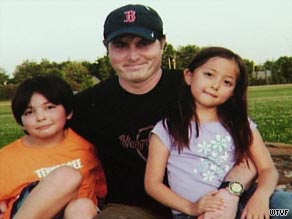
Query: Driver License schools now doing Immigration’s job too, checking NJ visas? (UPDATE: Also at Postal Savings)

mytest

Handbook for Newcomers, Migrants, and Immigrants to Japan\Foreign Residents and Naturalized Citizens Association forming NGO\「ジャパニーズ・オンリー 小樽入浴拒否問題と人種差別」(明石書店)JAPANESE ONLY:  The Otaru Hot Springs Case and Racial Discrimination in Japansourstrawberriesavatar
UPDATES ON TWITTER: arudoudebito

Hi Blog. I got this email on October 5, 2009 from a reader who asks if Driver License schools are requiring three items of proof of valid visas from NJ before letting them take their driver’s ed classes?   I said this is the first I’ve heard.  Anyone else out there hearing that?  Anyone even heard of the document called a “Kisai Jikou Shoumeisho”.  Read on:  Arudou Debito in Sapporo

UPDATE:  Passport checks also happening at Postal Savings too.

============================

XY writes:

Hi there Debito, I live in Aichi Prefecture and am married to a Japanese man. Recently we decided that I should get my Japanese drivers license as I have a 1 year old and live in an inaka, etc, etc. My [North American] license had expired some years ago so there was no switching (shoot). Rather than hyperventilating or having ill-timed road rage at the Police testing centre, we decided that I should go to driving school, even though they charge a small fortune (IMHO).

While I speak passable Japanese, the thought of sitting down in a typical classroom and being bewildered by kanji and terms that I know I’m not going to be familiar with really had me anxious so I was delighted when I heard about [a private driving school’s] new English program. Same as the Japanese program, except all lessons in English, books in English etc. Of course it was more expensive, but only about 2man more.

As I understand it, for a Japanese national, only a copy of your juminhyo is required to register for driving school. Under the new English program, NJ are required to submit THREE separate forms of identification. Your Alien registration card, your passport and a “Kisai Jikou Shoumeisho”. Now, I can understand one form of ID, with your address, etc on it, but three? The only thing I can figure is that they are triple checking that your visa is not expired, or that all three forms of ID have the same name and contact info. I dunno. As for the Kisai Jikou Shoumeisho, this is the first time I’ve even heard of this thing, same for my hubby, and in-laws. My father in law was so curious to see what it was that he drove me to City Hall himself so that he could look at it.

I guess my question for you is: Is this legal? Do I HAVE to submit this much ID? To register for a driving course? Are they somehow in co- hoots with the government to check for visa overstays? Have I been watching too many conspiracy movies? Sincerely, XY.

==========================

I replied:

On Tue, Oct 6, 2009 at 7:52 AM, Arudou Debito wrote:

Hi XY. Thanks for this. First I’ve heard of it too. Ask them why they’re asking for information only Immigration is entitled to, and where it says in writing (a GOJ directive?) that this is required. Get a copy of that if possible, and send it to me. I will anonymize and blog, to see if it’s helping elsewhere. Thanks! Debito

==========================

XY replied:

Hi there,  I’ll do my best. I don’t go back until next week and at least I’ll be going alone as whenever I ask questions like this with my husband around, he just wants me to, well for lack of a better term “shut up and give them the info, stop asking so many questions, this is Japan, it is different”. I’m seriously curious if this is some sort of trade off with the immigration office – let them run an English course, but triple check visa status of NJ. As we have a large population of NJ in Aichi due to the car manufacturing AND the fact that pretty much ALL of them have lost their jobs due to the economic downturn… just too many coincidences. Or maybe they’re just triple covering their behind. Either way, I`ll ask away next week. Thanks for the mail, XY

ends

YouTube: right-wing xenophobia: how the rightists will resort to intimidation and even violence to shut people up

mytest

Handbook for Newcomers, Migrants, and Immigrants to Japan\Foreign Residents and Naturalized Citizens Association forming NGO\「ジャパニーズ・オンリー 小樽入浴拒否問題と人種差別」(明石書店)JAPANESE ONLY:  The Otaru Hot Springs Case and Racial Discrimination in Japansourstrawberriesavatar
UPDATES ON TWITTER: arudoudebito

Hi Blog. One thing I’ve noticed in this modern day is how the Internet can get around the press and show you things that editors would rather you not see, as the modus operandi of certain elements within Japan’s debate arena is embarrassing and hypocritical (especially when you expect the image of perpetual calm and civility in Japan’s “safe society”).

Not when you take it to the streets. Demonstrators here are pretty nasty when they’re expressing xenophobic views.

For example, this demo against giving the Zainichis the vote in local elections.

All one person on the sidewalk had to do is hold up an A4-sized piece of paper offering a mild counter opinion, and the crowd attacked. And the police took their time intervening, to be sure.

Same thing happened in a scene in the movie YASUKUNI, which featured people (including Tokyo Gov) singing patriotic songs at Yasukuni Jinja about things that could be interpreted as wartime atrocities. When one demonstrator appeared and voiced his opinion (disruptively), the footage showed him being near-strangled and quite bloodied. The police intervened to take the demonstrator away, but not to arrest, detain, or even question the assailants. It’s as if the police considered demonstrator to be in the wrong for spoiling the party, and deserved to be bloodied for it. Briefly alluded to in the trailer:

Back to street demonstrations. Enjoy the invective in this one:

That invective stretches all the way up to the top levels of government, where Tokyo Gov Ishihara tries to deligitimize a point being made by saying it came from a foreigner. And more.

These things might not make headlines. But they continue to bubble under the surface in this society. It’s amazing how these people who use their right of free speech to express xenophobic views are all to eager to silence the other side — with violence if necessary. Arudou Debito in Sapporo

PS: Because this is getting overwhelmingly grim these days, here’s some humor. FLIGHT OF THE CONCHORDS (I’ve been told I look like one of the members of this comedy team; no comment) on racism:

ENDS

HOKKAIDO NIPPON HAM FIGHTERS TAKE PACIFIC LEAGUE PENNANT AGAIN!

mytest

Hi Blog.  Just something quick to say:

CONGRATULATIONS HOKKAIDO NIPPON HAM FIGHTERS!!

PACIFIC LEAGUE CHAMPIONS 2009

I watched as they took the Pacific League Pennant (their third time since moving up here, what was it, six years ago?) in a Fighters sports bar.  Extra innings, they took it 5 to 4 shortly after hearing that Rakuten just lost (giving them the pennant anyway).

We’ve got a marvelous team, fun to watch, cheery and fan-based (they win most of their home games), great last innings every game, and a number of stars.  It’s like the Fish that Saved Pittsburgh — rallies our island no matter how desperate the economics becomes.  Good show, all.

Arudou Debito in Fighters home base Sapporo

Japan Times JUST BE CAUSE on Savoie Child Abduction Case and Japan’s “Disappeared Dads”

mytest

Handbook for Newcomers, Migrants, and Immigrants to Japan\Foreign Residents and Naturalized Citizens Association forming NGO\「ジャパニーズ・オンリー 小樽入浴拒否問題と人種差別」(明石書店)JAPANESE ONLY:  The Otaru Hot Springs Case and Racial Discrimination in Japansourstrawberriesavatar
UPDATES ON TWITTER: arudoudebito

Hi Blog. Here’s the JT version of my column with links to sources. Arudou Debito in Sapporo
justbecauseicon.jpg
===================================
The Japan Times, Tuesday, Oct. 6, 2009
JUST BE CAUSE
Savoie case shines spotlight on Japan’s ‘disappeared dads’
By DEBITO ARUDOU

http://search.japantimes.co.jp/cgi-bin/fl20091006ad.html

Making international (and to a lesser extent, national) news recently has been the Savoie child abduction case. Briefly: After a couple divorced in America, ex-wife Noriko Savoie absconded with their children to Japan. Then ex-husband Christopher, who had been awarded custody in the U.S., came to Japan to take the kids back. On Sept. 28 he tried to get the children into the American Consulate in Fukuoka, but was barred entry and arrested by the Japanese police for kidnapping.

The case is messy (few divorces aren’t), and I haven’t space here to deal with the minutia (e.g. Christopher’s quick remarriage, Noriko’s $800,000 divorce award and ban on international travel, both parents’ dual U.S.-Japan citizenship , etc.). Please read up online.

So let’s go beyond that and focus on how this case highlights why Japan must make fundamental promises and reforms.

In Japan, divorce means that one side (usually the father) can lose all contact with the kids. Thanks to the koseki family registry system, Japan has no joint custody (because you can’t put a child on two people’s koseki). Meanwhile, visitation rights, even if mandated by family court, are unenforceable. This happens in Japan regardless of nationality. (I speak from personal experience: I too am divorced, and have zero contact with my children. I’ve seen one of my daughters only once over the past five years.)

Standard operating procedure is the three Ds: Divorced Daddy Disappears. Add an international dimension to the marriage and it’s stunningly difficult for a non-Japanese parent of either gender to gain child custody (as foreigners, by definition, don’t have a koseki). Add a transnational dimension and the kids are gone: Many left-behind parents overseas receive no communication whatsoever until the children become adults.

There is no recourse. Although Japan has ratified the United Nations Convention on the Rights of the Child (UNCRC), it has not signed the Hague Convention on Child Abductions (the only holdout among the G7 developed countries). If brought to trial in Japan, our judges do not honor overseas court orders granting custody to the non-Japanese parent. In fact, according to the documentary “From the Shadows,” an estimated 300 such children are abducted to or within Japan each year, and none has ever been returned by Japanese authorities to a foreign parent.

Until now this issue received scant media attention. However, with the Savoie case, Japan has earned a worldwide reputation as a safe haven for abductions. This is, given the inhuman North Korean kidnappings of Japanese, an ironic position to be in.

Before we get relativistic, be advised there is no comity here. Although few (I know of none) foreigners have ever won repatriation rights or even custody in Japanese courts, the converse is not true in, for example, American courts. The U.S. recognizes the Hague-mandated concept of “habitual residence,” even if that doesn’t mean America. The most famous abduction-then-repatriation case involved Elian Gonzalez from Cuba.

According to court transcripts, Noriko Savoie did have a fair hearing abroad. The judge heard her out, believed her sworn testimony that she would not abduct the kids, and lifted the restraining order against her. She and the kids could travel to Japan briefly to explore their Japanese heritage.

Then Noriko broke her oath. And Christopher boarded a plane.

The point: Regardless of any extenuating circumstances in this messy affair, the lack of a post-divorce legal framework to prevent abductions, secure joint custody and guarantee visitation rights forced Christopher to take the law into his own hands.

Needless to say it’s the children that get hurt the most in this tug of war. If Japan’s policymakers would secure the right of the child to know both their parents and heritages, this nonsense would cease.

But as with all social problems left to fester, things are only getting worse. U.S. Congressman Chris Smith announced Sept. 29 that reported child abductions have increased “60 percent in the last three years.” No doubt contributing to this rise is the grapevine effect among expat Japanese — a quick Web search shows that all a potential abductor needs do is board a plane to Japan and they’re scot-free.

Injustice breeds drastic actions. How long before a vigilante parent takes the law so far that somebody gets injured or killed?

Japan wants to avoid a demographic nightmare as its population drops. International marriage is one solution. But this threat of abduction is now a prime deterrent to marrying any Japanese. One domestic spat with a threat to kidnap the kids and conjugal trust is permanently destroyed.

But just signing the Hague convention won’t fix things. Japan has, after all, inked umpteen international treaties (like the above-mentioned UNCRC), and ignores them by not enacting enforceable domestic laws. I don’t anticipate any exception here: Japan giving more parental rights to non-Japanese through treaties than they would their own citizens? Inconceivable.

What’s necessary is more radical: Abolish the koseki system so that legal ties can extend to both parents regardless of nationality after divorce. In addition, our authorities must create more professional domestic-dispute enforcement and mediation mechanisms (consider the farcical chotei pre-divorce process).

Inevitable problems arise in that complicated institution called marriage. Anyone, including Japanese, must have recourse, remedy and redress. Without it people will take matters into their own hands.

There are plenty of times when adults just won’t act like adults. But their children should not have to suffer for it.

Reforms are necessary not just to prevent future cases like the Savoies’; Japan also needs more secure family laws for its own long-suffering, disappeared Japanese parents.

—————————–

Debito Arudou coauthored the “Handbook for Newcomers, Migrants and Immigrants.” Twitter arudoudebito. Just Be Cause appears on the first Community Page of the month.

BONUS STATISTICS, Courtesy of RedJoe the Lawyer:

In [Japan] divorces finalized in 2007, fathers got custody 15% of the time, while women got custody 81% of the time. So the system is clearly biased, but men win in a significant (if not fair) number of cases. Interestingly, men used to get custody more often than women. The sexes reached parity in the late 60s and women reached their current ~80% success rate around 2000. Stats are here: http://www.e-stat.go.jp/SG1/estat/List.do?lid=000001032162

US Census figures from 2004 (http://www.census.gov/prod/2008pubs/p70-114.pdf):
58.3% of kids live with both married parents
29.5% live with their mother but not their father

4.7% live with their father but not their mother

Granted, a lot of single-mother families in the US are not formed by a divorce, but rather by the father being incarcerated. Still, that doesn’t account for a 25 percentage point difference across the whole population.

ENDS

SOUR STRAWBERRIES Cinema Debut Oct 10th-30th every day, Cine Nouveau Osaka Kujo

mytest

Handbook for Newcomers, Migrants, and Immigrants to Japan\Foreign Residents and Naturalized Citizens Association forming NGO\「ジャパニーズ・オンリー 小樽入浴拒否問題と人種差別」(明石書店)JAPANESE ONLY:  The Otaru Hot Springs Case and Racial Discrimination in Japansourstrawberriesavatar
UPDATES ON TWITTER: arudoudebito

Passing on this info.  (日本語のアナウンスメントは英語の下です。)Arudou Debito in Sapporo

Dear Ladies and Gentlemen,

We are happy to announce that the critically acclaimed documentary “SOUR STRAWBERRIES – Japan’s hidden »guest workers«” will have its premier in a cinema in Japan at Osaka’s Ciné Nouveau in Kujo.

The first screening will be on Saturday, 10th October 2009 at 10:30 am. Director Tilman König will be present and happy to answer questions from 11:30 onwards.

The discussion will be held in Japanese. Questions in English and German will be answered as well.

“SOUR STRAWBERRIES – Japan’s hidden »Guest Workers«”, a movie by Tilman König and Daniel Kremers, G/J 2008, 56 min, color, 16:9. Original in German, Japanese, Chinese, English with English and Japanese Subtitles.

Everyday from October 10th to October 30th 2009

The film was supported by Stiftung “Menschenwürde und Arbeitswelt”, Berlin and CinemAbstruso, Leipzig.

Trailer: http://www.vimeo.com/2276295

http://www.cinemabstruso.de/strawberries/main.html

http://www.cinenouveau.com/

“‘Sour Strawberries’ spotlights the plight of non-Japanese ‘trainees'” — Japan Times Online

“A must see!” – Kansai Scene

>>>>>>>>>>>>>>>>>>>>>>>>>>>>>>>>>>>>>>>>>>>>>>>>>>>>>>>>>>>>>>>>>>>>>>>

『サワー・ストロベリーズ〜知られざる日本の外国人労働者〜』映画館上映のお知らせ

2009年10月10日(土)より、大阪九条のシネ・ヌーヴォXにて
『サワー・ストロベリーズ〜知られざる日本の外国人労働者〜』が
公開されることになりました。

初日の10月10日(土)は、監督のティルマン・ケーニヒによる舞台挨拶と
初回上映後にトークイベントを予定しております。
詳細は、映画館HPをご覧下さい。
http://www.cinenouveau.com/

『サワー・ストロベリーズ〜知られざる日本の外国人労働者〜』
2009年/ドイツ・日本/ドイツ語・日本語・英語・中国語(日本語/英語字幕)/58分
http://www.cinemabstruso.de/strawberries/main.html

上映期間:2009年10月10日(土)〜2009年10月30日(金)
時期によって上映時間が異なります。HPをご覧下さい。
皆さまのお越しを、お待ちいたしております。

ENDS

Terrie’s Take offers the best piece yet on the Savoie Child Abduction Case

mytest

Handbook for Newcomers, Migrants, and Immigrants to Japan\Foreign Residents and Naturalized Citizens Association forming NGO\「ジャパニーズ・オンリー 小樽入浴拒否問題と人種差別」(明石書店)JAPANESE ONLY:  The Otaru Hot Springs Case and Racial Discrimination in Japansourstrawberriesavatar
UPDATES ON TWITTER: arudoudebito

Hi Blog.  Just received this.  It’s good enough to quote in full.  It’s the best, most thorough, most balanced opinion yet on the case, in my view.  Let’s see if I can do better tomorrow in my Japan Times JUST BE CAUSE column.  Arudou Debito in Sapporo

=================================

* * * * * * * * * T E R R I E ‘S T A K E * * * * * * *
A weekly roundup of news & information from Terrie Lloyd.
(http://www.terrie.com)

General Edition Sunday, October 4, 2009 Issue No. 536

+++ WHAT’S NEW

On September 28th this last week, news starting emerging on CNN and several other media about an American dad who was arrested in Fukuoka for trying to abduct his kids back, after his Japanese ex-wife had first abducted them from him in the USA. The Dad, 38-year old Chris Savoie, is now in jail in Fukuoka for some indeterminate period, while the police try to extract a confession from him.

Well… at least we think this is what is going on, because as many readers will know, the police can keep a suspect in detention for months for questioning, with very limited access to a lawyer, until they think the case is ready to send to the courts. This process is partly the reason why Japan has a successful conviction rate (versus a relatively low prosecution rate) in the 99%+ range.

Chris Savoie is not a wet-behind-the-ears foreigner who knows nothing about Japan and its customs. Indeed, he has led a highly successful business career here, and amongst other things built a pharmaceutical business called GNI in Fukuoka that went on to do an IPO on the Mothers market in September 2007. He is a strong Japanese speaker, has a PhD, and according to press reports naturalized as a Japanese national several years ago. So his being in jail is both a surprise and then again it isn’t.

No one other than Savoie himself knows what was going through his mind when he had a friend drive a car along side his ex-wife and two children, aged 6 and 8, while they were walking to school. However, according to reports he jumped out of the vehicle, bundled the kids into the car and raced to the U.S. Consul’s compound in Fukuoka. This was a big mistake, because at the compound he was not allowed entry by the guards, and since his ex-wife had already alerted the police, they soon arrived on the scene and nabbed both him and the kids.

While we don’t know what Savoie was thinking, we do know the facts surrounding his decision to try to get his kids back:

1. His wife is on record in a U.S. divorce court as stating that she would not abduct the kids, despite Savoie’s fears that this might happen.

2. She did abduct the kids and she clearly didn’t expect to return them to the U.S. Indeed, she was taking them to school, meaning that they weren’t just on holiday.

3. As readers will know from our previous commentary on this subject (http://www.japaninc.com/child_abduction), there are NO recorded cases of U.S.-Japanese kids abducted from the U.S. being returned to the custodial parent in the U.S. by court action, and only 3 that were mutually resolved between the parties. This among 102 open cases of abduction known to the U.S. Embassy in Tokyo, and possibly several thousand unreported cases which have probably happened over the last ten years.

4. Previous cases we have heard of indicate that it is not a crime for a spouse to take the kids into hiding in Japan. The idea being that the abductor waits until the kids acclimate to them, before resurfacing. If the kids have been with that abducting spouse for more than a year, then typically judges will award that spouse custody on the basis that the kids should have a “stable home life” and better to have them not experience another major change. Until now that’s been the pattern of rulings, anyway.

5. While joint custody may be legally allowed in Japan, there has been no tradition nor legal enforcement of joint custody arrangements. So if a spouse, almost always the Japanese spouse, has possession of the kids and doesn’t want the other parent to see them, then the left-behind spouse can’t.

Given that Savoie has probably been aware of the legal situation, it is not so surprising that he attempted to get his kids back by taking preemptive action. He will have realized that the Family courts in Japan would pay no heed to his U.S. custodial rights (he has sole custody) and that Japan is well known globally as a destination for child abductors, not all of whom are Japanese. If he wanted to see his kids again, kidnapping them back again was about all he really could do. Otherwise he would have joined the ranks of hundreds of other left-behind parents who desperately miss their kids and can’t do anything about it. They are powerless in the face of a 19th century judicial values system.

But what is surprising is that he chose to get his kids back in a way that exposed him to many untested theories. One of these theories has been that it is OK to abduct your kids back. Indeed the police often do turn a blind eye to home disputes and will allow “mini-abductions” to happen. There was a case some years ago where Chinese American Samuel Lui tried, like Savoie, to abduct his child back on the streets of Osaka. Like Savoie, he also had sole custody rights awarded in the USA. Lui failed in his attempt, subsequently turning himself in to the Osaka police, who after questioning him for a day, rapped his knuckles and effectively said, “Don’t do it again.”

But in trying to regain possession of your kids, once trespass and violence or threat of violence are used, that is where a person steps over the line. Savoie must have known that the police here can pretty much arrest people whenever they want. If we’d been him, and were committed to such a drastic action, we would have used our local contacts to hide out for a while and figured out how to get the kids out of the country. As a Japanese, if he’d successfully kept off the police radar for more than 6 months, he might have even been able to apply to the courts for sole custody in Japan and have gotten away with it.

In the last couple of days, details surrounding Savoie’s divorce have emerged that paint him in a less than flattering light. In particular he seems to have been engaged in an affair with a person who has since become his new wife, and that this probably occurred around the same time he brought his ex-wife and kids to the USA. Comments of disgust about his possible manipulation of the ex-wife abound on U.S. comment boards of major news sites carrying stories about the case.

HOWEVER, again, we can only speculate about what really happened, and until the facts are made public, we can probably assume that Savoie was acting logically throughout — in that he was trying to get his soon-to-be ex-wife and kids into a jurisdiction (the U.S.) where the law protects BOTH parents rights and upholds the concept of joint custody. Whether his behavior is cruel or is manipulative is beside the point. Savoie would have known that if his divorce was contested in Japan, he would have been 100% guaranteed to have lost his kids, and would have been at the whim of his wife whether or not he would be able to see them ever again as children.

This situation is caused by the Japanese judiciary’s refusal to accept that divorced parents should have equal access to their children. The view of most judges (based on interviews with judges that we have done in the past) is that kids need to be insulated from the hurt between divorcing parents by giving them just one care-giver. But this is a traditional view and has no basis in fact. Child psychologists outside Japan generally agree that kids need the love and attention of both parents, even if they are divorced. Splitting the kids from one parent naturally causes them to side with the other (Parental Alienation Syndrome: PAS), which causes them to have complexes about the missing parent later in life.

PAS also works in reverse, because as the left-behind parent gets alienated, they simply stop paying child support, causing poverty and depression for the (typically) single-mother family. The fact is that if the Dads are not encouraged to feel a connection to their kids, and given that Japanese family law courts have little or no power to enforce child support judgments, then why would ex-Dads feel like paying for offspring who won’t even acknowledge them as a parent? Yes, the law says they should pay, but given the lack of legal enforcement, building a feeling of responsibility by the Dads is the only other way to get the money flowing again.

This situation is wrong and needs fixing.

Since there appears to be little will by the judiciary to change their ways or values, any change in the status quo needs to be a political one — using outside political pressure (“Gaiatsu”). This is a long-term project unfortunately, but it does give us a possible motive why an otherwise intelligent individual such as Savoie may have been driven to try kidnap his kids when such an undertaking would have such a high possibility for failure.

Finally, our take is that what he did is not right, but under the current legal system, it is understandable. We think similar incidents will happen again until things change.

ends

SUBSCRIBE to, UNSUBSCRIBE from Terrie’s Take at:
http://mailman.japaninc.com/mailman/listinfo/terrie

BACK ISSUES
http://www.japaninc.com/terries_take, or,
http://mailman.japaninc.com/pipermail/terrie/

CNN on the upcoming documentary FROM THE SHADOWS re Japan’s Child Abductions issue

mytest

Handbook for Newcomers, Migrants, and Immigrants to Japan\Foreign Residents and Naturalized Citizens Association forming NGO\「ジャパニーズ・オンリー 小樽入浴拒否問題と人種差別」(明石書店)JAPANESE ONLY:  The Otaru Hot Springs Case and Racial Discrimination in Japansourstrawberriesavatar
UPDATES ON TWITTER: arudoudebito

Hi Blog.  Just another quickie for today:

CNN did a feature on upcoming movie ‘From the shadows’ 2:05, September 30, 2009.
A new documentary follows children abducted by their parents. CNN’s Kareen Wynter reports.

http://edition.cnn.com/video/#/video/showbiz/2009/09/30/wynter.abductions.doc.cnn?iref=videosearch

Want to see more of this important movie (I’ve been a supporter of it for years)? Go to http://www.fromtheshadowsmovie.com/

Arudou Debito in Sapporo

Brett Weed on US State Dept Human Rights Bureau’s willful ignorance of Japan’s child abduction

mytest

Handbook for Newcomers, Migrants, and Immigrants to Japan\Foreign Residents and Naturalized Citizens Association forming NGO\「ジャパニーズ・オンリー 小樽入浴拒否問題と人種差別」(明石書店)JAPANESE ONLY:  The Otaru Hot Springs Case and Racial Discrimination in Japansourstrawberriesavatar
UPDATES ON TWITTER: arudoudebito

Hi Blog. The following letter received from the author, blogging here with permission. Part of the problem of any international issue (especially one involving the protection of the rights of its own citizens) is allies turning a blind eye to it. Friends must help friends break bad habits. And Japan as safe haven for child abductions is certainly a bad habit. Shame on Japan for letting it happen. And shame on the US for ignoring the issue for so long. Still no mention of it in the 2008 Country Reports on Human Rights Practices (the most recent, covering the previous year, coming out more than a year from the date of the letter below). Read on. The letter, BTW, went unanswered. Arudou Debito in Sapporo

=============================
Brett Weed
P.O. Box 1466
Clackamas, OR 97015
E-mail: bweed6@hotmail.com
Cell: [removed, available to media upon request to debito@debito.org]

January 14, 2008

Julie Turner
Section Head, Asia Section
Office of Asian and Western Hemisphere Affairs
Bureau of Democracy, Human Rights and Labor
U.S. Department of State
2201 C Street, NW,
Washington D.C. 20520

Via: E-mail & Facsimile

Re: Official reason international child abduction language is not being included in the next report on Japan

Dear Ms. Turner:

On 10/31/07 you wrote:
The Department of State prepares the annual Country Reports on Human Rights Practices in accordance with legislation passed by Congress. Specifically, Section 502(b) of the 1961 Foreign Assistance Act, which requires the Secretary of State to provide a report prepared by the Assistant Secretary of the Bureau of Democracy, Human Rights and Labor. The Country Reports cover internationally recognized individual, civil, political and worker rights, as set forth in the Universal Declaration of Human Rights of December 10, 1948. These rights include freedom from torture or other cruel, inhuman or degrading treatment or punishment, from prolonged detention without charges, from disappearance or clandestine detention, and from other flagrant violations of the right to life, liberty and the security of the person.”

I believe we are in agreement with regards to the Department of State preparing the annual Country Report on Human Rights Practices. Nevertheless the Department of State annual County Report is not complete according to legislation passed by Congress contained within Section 116(d) & 502(b) of the 1961 Foreign Assistance Act and the Universal Declaration of Human Rights of December 10, 1948. Section 502(b) states: [Such report shall also include, for each country with respect to which the report indicates that extrajudicial killings, torture, or other serious violations of human rights have occurred in the country, the extent to which the United States has taken or will take action to encourage an end to such practices in the country.]

Other omissions of the report are not in accordance with Section 502(b). I noted a few key words you omitted from your October 31st, 2007 Email reply such as: “abduction”. In fact, from the perspective of an internationally abducted child, left-behind parent and specifically by definition contained within Section 502(b), any participating country which allows the abduction of children is in gross violation of internationally recognized human rights. [the term ‘‘gross violations of internationally recognized human rights’’ includes torture or cruel, inhuman, or degrading treatment or punishment, prolonged detention without charges and trial, causing the disappearance of persons by the abduction and clandestine detention of those persons, and other flagrant denial of the right to life, liberty, or the security of person]. It also states: [Except under circumstances specified in this section, no security assistance may be provided to any country the government of which engages in a consistent pattern of gross violations of inter-nationally recognized human rights.]

Please explain what the applicable circumstances are, contained within Section 502(b), that allow security assistance to be provided to Japan, Russia, Saudi Arabia, Philippines, Taiwan and other countries which participate in child abduction in gross violation of internationally recognized human rights.

Participating child abducting countries/states are in contempt of multiple violations under the Universal Declaration of Human Rights of December 10, 1948, specifically:

Article 1 states: “All human beings are born free and equal in dignity and rights.”

Internationally abducted children have their freedom, dignity, rights and God-given inalienable rights restricted to approximately half of their respective cultures, family heritage, social interaction and exposure to their blood relatives.

Article 2. states: “Everyone is entitled to all the rights and freedoms set forth in this Declaration, without distinction of any kind, such as race, color, sex, language, religion, political or other opinion, national or social origin, property, birth or other status. Furthermore, no distinction shall be made on the basis of the political, jurisdictional or international status of the country or territory to which a person belongs, whether it be independent, trust, non-self-governing or under any other limitation of sovereignty.”

This speaks for itself in terms of “Everyone” including internationally abducted children and left-behind parents being entitled to rights and freedoms set forth in this Declaration.

Article 3. states: “ Everyone has the right to life, liberty and security of person.”

Abducted American children are in effect stripped of their constitutional and basic human rights by their abductors until such time as they come to the age of majority in the host country. They are denied liberty in terms of their right to choose without being constrained, freedom from mental and physical captivity and inherent basic rights given to all individuals. How can an abducted child be secure without access to both parents? They are not; in fact many suffer from parental alienation syndrome.

D.C. Rand, The Spectrum of the Parental Alienation Syndrome, 15 Amer. J. Forensics Psychology 3 (1997).

http://www.fact.on.ca/Info/pas/rand01.htm

An abducting parent views the child’s needs as secondary to the parental agenda which is to provoke, agitate, control, attack or psychologically torture the other parent.

—–

Symptoms of P.A.S.

http://www.parentalalienation.com/PASfound3.htm

Article 5. . states: “No one shall be subjected to torture or to cruel, inhuman or degrading treatment or punishment.”

Left-behind parents and internationally abducted children are subject to the most excruciating form of mental torture and cruel and inhuman treatment after having their flesh and blood taken from them. These children are forever scarred by their experience.

From “Child Abduction is Child Abuse” by Dr. Nancy Faulkner to United Nations Convention on Child Rights:

As an early leader in the relatively new field of parental child abduction issues, Dr. Dorothy Huntington wrote an article published in 1982, Parental Kidnapping: A New Form of Child Abuse. Huntington contends that from the point of view of the child, “child stealing is child abuse.” According to Huntington, “in child stealing the children are used as both objects and weapons in the struggle between the parents which leads to the brutalization of the children psychologically, specifically destroying their sense of trust in the world around them.” Because of the events surrounding parental child abduction, Huntington emphasizes that “we must reconceptualize child stealing as child abuse of the most flagrant sort” (Huntington, 1982, p. 7).

McKeon,”International Parental Kidnapping; A New Law, A New Solution,” 30 Fam. L.Q. 235, 244 (1996); see, Note, “Access Rights: A Necessary Corollary to Custody Rights Under the Hague Convention on the Civil Aspects of International Child Abduction,” 21 Fordham Int’l L.J. 308, 318 & n.64 (1997). The mere threat of child abduction is also a form of patent abuse. People v. Beach, 194 Cal. App. 3d 955, 240 Cal. Rptr. 50 (1987).

Article 6. states: “Everyone has the right to recognition everywhere as a person before the law.”

United States GAO Report, 1999 “Federal Response to International Parental Child Abductions”

There are a number of problems and issues related to the federal response to international parental child abduction. These problems have been identified by the key agencies involved—the State and Justice Departments and the National Center for Missing and Exploited Children—as well as left-behind parents and others. Together, they present obstacles to left-behind parents in their attempts to locate, gain access to, and return their children. Four problems and issues have received substantial attention. These are:

1) Gaps in federal services to left-behind parents, which make it difficult for parents to recover their abducted children;

2) Weaknesses within the existing State Department case-tracking process, which impair case and program coordination;

3) Lack of systematic and aggressive diplomatic efforts to improve international responses to parental child abductions; and

4) Limited use of the International Parental Kidnapping Crime Act of 1993 to pursue abducting parents and bring them to justice.

Article 7. states: “All are equal before the law and are entitled without any discrimination to equal protection of the law. All are entitled to equal protection against any discrimination in violation of this Declaration and against any incitement to such discrimination.”

http://www.ncjrs.gov/html/ojjdp/ojjdp_report_ip_kidnapping/section2.html

FROM: National Criminal Justice Reference System

BY: Office of Juvenile Justice and Delinquency Prevention program

“Section 2: Improving Federal Responses to International Parental Kidnapping”

There also is no central point of contact for information and guidance for parents, their advocates, other assisting organizations, or for State and local law enforcement, all of whom turn to the Federal Government for help in international abduction cases. Much more could be done to provide information to these interested parties about assistance that may be available and how to obtain it, and to facilitate coordination and communication among relevant agencies. In addition, there are significant gaps in services provided, for example, in the area of counseling and support to left-behind parents and to families and children even at the end of the ordeal.

Article 8. states: “Everyone has the right to an effective remedy by the competent national tribunals for acts violating the fundamental rights granted him by the constitution or by law.”

Parents enjoy a right to associate with their children. Mabra v Schmidt, 356 F. Supp. 620 (1973)

This right is guaranteed by the First Amendment as incorporated in the Fourteenth. Alternatively, this right is embodied in the concept of “liberty” as that word is used in the Due Process Clause of the Fourteenth Amendment. Whatever the constitutional provision or provisions by which it is protected, the right is fundamental.

Congress has also made attempts to recognize the protected right of parenting whether from the passages of court or in legislation. “The role of parents in the raising and rearing of their children is of inestimable value and is deserving of praise and protection by all levels of government.” Proposed Parental Rights and Responsibilities Act of 1995 H.R. 1946 104th Cong., 1st Sess §2(a)(2) (1995) (findings). “Congress finds that the Supreme Court has regarded the right of parents to direct the upbringing of their children as a fundamental right implicit in the concept of ordered liberty within the 14th Amendment of the Constitution of the United States, as specified in Meyer v Nebraska, 262 U.S. 390 (1923) and Pierce v Society of Sisters, 268 U.S. 510 (1925). Note: Meyer and Pierce have become the foundation cases by the U.S. Supreme Court in the process of constitutionalizing a wide range of parental powers.

Article 15. states: “(1) Everyone has the right to a nationality.”

Internationally Abducted Children are deprived of one half of their nationality.

It also states: “(2) No one shall be arbitrarily deprived of his nationality nor denied the right to change his nationality.”

Internationally abducted American children are greatly disadvantaged to choose the nationality of choice after exposure to one nationality is eliminated at an influential and vulnerable age.

Article 16. states: “(1) Men and women of full age, without any limitation due to race, nationality or religion, have the right to marry and to found a family. They are entitled to equal rights as to marriage, during marriage and at its dissolution.”

Left-behind parents of internationally abducted children have their dissolution rights violated if the dissolution of marriage includes a valid custody order that includes having any access to their children. According to Walter Benda (CRC Japan co-founder) “there is a clearly anti-foreigner bias in the Japanese system handling of foreign spouses’ rights in marriage matters.”

It also states: “(3) The family is the natural and fundamental group unit of society and is entitled to protection by society and the State.”

Both States involved in international cases of abduction are in violation of the Universal Declaration of Human Rights of December 10, 1948, if uncompromising efforts are not made in recovery efforts of an abducted child.

Article 18. states: “Everyone has the right to freedom of thought, conscience and religion; this right includes freedom to change his religion or belief, and freedom, either alone or in community with others and in public or private, to manifest his religion or belief in teaching, practice, worship and observance.”

If parents have differences in thought and belief, internationally abducted children are restricted in this right because they are not exposed to both parents at an influential and vulnerable age.

Article 19. states: “Everyone has the right to freedom of opinion and expression; this right includes freedom to hold opinions without interference and to seek, receive and impart information and ideas through any media and regardless of frontiers.”

If parents have differences in thought and belief, internationally abducted children are restricted in this right because they are not exposed to both parents at an influential and vulnerable age.

Article 20. states: “(1) Everyone has the right to freedom of peaceful assembly and association.”

Abducted children are limited in their past, present and future association choices.

Article 22. states: “Everyone, as a member of society, has the right to social security and is entitled to realization, through national effort and international co-operation and in accordance with the organization and resources of each State, of the economic, social and cultural rights indispensable for his dignity and the free development of his personality.”

If one’s government puts diplomatic and economic interest ahead of the security and well being of its most vulnerable citizens, its children, then the government is in violation of the article.

Article 25. states: “(1) Everyone has the right to a standard of living adequate for the health and well-being of himself and of his family, including food, clothing, housing and medical care and necessary social services, and the right to security in the event of unemployment, sickness, disability, widowhood, old age or other lack of livelihood in circumstances beyond his control.”

In many cases internationally abducted children are deprived or restrictive of their standard of living adequate for the health and well-being of themselves because left-behind parents are allocating limited resources toward recovery efforts without meaningful assistance from their respective government entities. Additionally, abducted children can inherently be cut off from support by a left-behind parent in an abduction situation.

It also states: “(2) Motherhood and childhood are entitled to special care and assistance. All children, whether born in or out of wedlock, shall enjoy the same social protection.”

If the Universal Declaration of Human Rights of December 10, 1948 were brought up to date, this would be worded as: “(2) Parenthood and childhood…” and parents and children in international abduction cases are entitled to special care and assistance.

Article 26. states: “ (2) Education shall be directed to the full development of the human personality and to the strengthening of respect for human rights and fundamental freedoms. It shall promote understanding, tolerance and friendship among all nations, racial or religious groups, and shall further the activities of the United Nations for the maintenance of peace.”

If the governments of internationally abducted children are allowed to break international human rights declarations and ignore valid custody orders by habitual resident countries of internationally abducted children, how can this Article be upheld?

It also states: “(3) Parents have a prior right to choose the kind of education that shall be given to their children.”

A left-behind parent does not have a say in choosing an internationally abducted child’s kind of education and an abducted child is limited in education options that would otherwise be available.

Article 27. states: “(1) Everyone has the right freely to participate in the cultural life of the community, to enjoy the arts and to share in scientific advancement and its benefits.”

Internationally abducted children are deprived of approximately half of their respective cultural life of the community and arts.

Article 28. states: “Everyone is entitled to a social and international order in which the rights and freedoms set forth in this Declaration can be fully realized.”

Internationally abducted children are deprived in this sense.

Article 29. state: “(1) Everyone has duties to the community in which alone the free and full development of his personality is possible.”

Internationally abducted children are restricted in this sense.

It also states: “(2) In the exercise of his rights and freedoms, everyone shall be subject only to such limitations as are determined by law solely for the purpose of securing due recognition and respect for the rights and freedoms of others and of meeting the just requirements of morality, public order and the general welfare in a democratic society.”

The Fourteenth Amendment’s Due Process Clause has a substantive component that “provides heightened protection against government interference with certain fundamental rights and liberty interests,” Washington v. Glucksberg, 521 U. S. 702, 720, including parents‘ fundamental right to make decisions concerning the care, custody, and control of their children, see, e.g., Stanley v. Illinois, 405 U. S. 645, 651.

It also states: “(3) These rights and freedoms may in no case be exercised contrary to the purposes and principles of the United Nations.”

Japan, Russia, Saudi Arabia, Philippines, Taiwan and other abduction countries do not uphold their treaty obligations of the UN Convention on the Rights of the Child.

Article 30. states: “Nothing in this Declaration may be interpreted as implying for any State, group or person any right to engage in any activity or to perform any act aimed at the destruction of any of the rights and freedoms set forth herein.” “It is the duty of courts to be watchful for the constitutional rights of the citizen, and against any stealthy encroachments thereon”. Boyd v. U.S., 116 U.S. 616, 635, (1885).

This speaks for itself with respect to internationally abducted American children.

“It has been repeatedly decided that these amendments should receive a liberal construction, so as to prevent stealthy encroachment upon or ‘gradual depreciation’ of the right secured by them, by imperceptible practice of courts or by well-intentioned, but mistakenly over zealous, executive officers.” Gouled v. United States, 255 U. S. 298, 304, 41 S.Ct. 261, 263 (1921).

Section 502(b) of the 1961 Foreign Assistance Act states: [The Secretary of State shall transmit to the Congress, as part of the presentation materials for security assistance programs pro-posed for each fiscal year, a full and complete report, prepared with the assistance of the Assistant Secretary of State for Democracy, Human Rights, and Labor and with the assistance of the Ambassador at Large for International Religious Freedom, with respect to practices regarding the observance of and respect for inter-nationally recognized human rights in each country proposed as a recipient of security assistance.] In accordance with this legislation passed by Congress and the Universal Declaration of Human Rights of December 10, 1948 and the statements above; I am respectfully requesting that a full and complete, accurate and comprehensive, international parental child abduction language be included in the next annual Country Reports on Human Rights Practices scheduled for release in February 2008 without further delay. This should be done for Japan, Russia, Saudi Arabia, Philippines, Taiwan and all applicable country reports with internationally abducted children.

Continuing to omit this information in Country Reports on Human Rights Practices for all applicable country’s for diplomatic, economic or any other reasons are in violation of U.S. law, and the Universal Declaration of Human Rights, this is completely and totally unacceptable. The inherent conflict of interest that exist between the Department of State OCI, CEOS, DRL, EAP and diplomatic interest intrinsic within the operation of the Department of State are apparently obvious to every left-behind parent. This conflict of diplomacy and lack of assistance to U.S. citizen children subject to human rights violation by way of parental abduction is no longer acceptable excuses for omission of this information. This policy is considered “Dangerous Diplomacy” as described by Joel Mowbray’s in his book on how the State Department Threatens America’s Security. I can’t imagine Congress would approve or take lightly their reports being “washed” in the name of diplomacy with respect to practices regarding the observance of and respect for internationally recognized human rights in each country proposed as a recipient of security assistance.

The United States shall stand as role model to promote the increased observance of internationally recognized human rights by all countries. These fundamental rights, reflected in the United Nations Universal Declaration of Human Rights, constitute what President Bush calls the “non-negotiable demands of human dignity.”

Sincerely,

Brett Weed

(Father of Takoda and Tiana abducted, held in Japan)

(V.P. Children’s Rights Council, Oregon Chapter)

C.C. Mr. Walter Benda

Mr. Paul Toland

Mr. Patrick Braden

Mr. Stephen Eisenbraun

Mr. Michael Orona

Ms. Victoria Middleton

Mr. Marshall Derks

Ms. Ann McGahuey

ENDS

Valentine Court Case re police brutality next hearing Tues Oct 6 2:30PM, Tokyo High Court Kasumigaseki

mytest

Handbook for Newcomers, Migrants, and Immigrants to Japan\Foreign Residents and Naturalized Citizens Association forming NGO\「ジャパニーズ・オンリー 小樽入浴拒否問題と人種差別」(明石書店)JAPANESE ONLY:  The Otaru Hot Springs Case and Racial Discrimination in Japansourstrawberriesavatar
UPDATES ON TWITTER: arudoudebito

Hi Blog.  I heard word from Plaintiff Valentine last week that the latest hearing on his lawsuit against the Japanese police (which has lasted four years now) for police brutality will be happening next Tuesday.  Do attend if you can.  Here’s why:

You may not remember, but I wrote about the Valentine Case for the Japan Times:

ABUSE, RACISM, LOST EVIDENCE DENY JUSTICE IN VALENTINE CASE: Nigerian’s ordeal shows that different standards apply for foreigners in court” (Japan Times Zeit Gist August 14, 2007).

where I did a bit of sleuthing and described how the police’s claim that Nigerian citizen Valentine smashed his knee on a sign while running from them is pretty much impossible.  Then their denying him medical treatment during interrogation has left him crippled for life.  This is one major case of how a man (who has not been convicted to this day of any crime) can be abused due to the lack of accountability in the police system of criminal investigation, and have it covered up by negligent Japanese courts.  The outcome of this case will speak volumes.

More background from his supporters group follows.  Arudou Debito in Sapporo

============================

WHO MAY BE THE NEXT VICTIM?   Mr. Valentine   who was beaten up  with a broken knee by the uncovered police officers  4 years ago,  is calling on the foreign  community living in Japan to  attend his next  high  court  trial on 6th. tuesday 2009.  By  2:30pm.  Venue: Tokyo  High court. Kasumigaseki.   8th  floor. Room   808.

Why?  This  Case is very  important   to attend is because some  thing strange is  going on with this case.  On 6th. tuesday,  a  DNA professor.   Prof  Ishiyama.  is coming to  give  his expert opinion   about   the  cause of the broken knee. on behalf of the  Tokyo Govt.

We need  Justice  to be done.   Your presence is highly needed.  This  matter has  being going on for 4 years  now.

APPEAL BACKGROUND:

1st appeal hearing (July 17th,2007) A statement of reasons for appeal. Requests the court to provide order to submit a document(s) ( the Shinjuku ward police would have some inhouse documents that recorded how his injury was). Also requested a record(s) of monitoring video camera at the scene at Shinjuku.

2nd appeal hearing(Sep.25th,2007) Metropolitan Government (the Police) says these two evidences that he requested have never existed. Conversely, they asked the appellant to submit a ground(s) why he asks so. Also asked to order to let a new doctor(s) give an expert opinion.(This was to withdraw by the appellant himself after that and re-submit a doctor’s expert opinion).

3rd appeal hearing(Nov.20th,2007) The court requests more detailed statement of eyewitness and the appellant to be prepared again. Also the court asked the appellant to appeal against his original doctor’s expert opinion(already submitted)

4th appeal hearing(Feb.12th, 2008) Every orders to submit documents sorted out. Reply of Metropolitan Gov.:1)Detention name list->exist, but no need to submit 2) A report(s) from a chief investigator to a chief of detention-> no exist 3) a detentions’ medical report->exist, but no need to submit. For 3), the chief judge urged the Metropolitan Gov. to submit “with painting in black at the non related ”, and Gov. under examination.

5th appeal hearing(May.22nd, 2008)The court didn’t make any approval or decision for testimony of new eyewitness & 2nd doctor. A detention name list and a detentions’ medical report have submitted before this time. The appellant pursuited to release internal regulations to the court, that concerning a report(s) when the Tokyo Metropolitan Police Department arrested him. However, Metropolitan Gov. refused it and requested “in-camera” proceeding*1).
*1)”In-Camera” proceeding:”It is not submitted to court where opens to the public, and no chance to read it is given even to the person concerned, only the judge receives the presentation of the document. “

6th appeal hearing(Jul.8th, 2008)The chief justice instruct to conclude the appeal. The most point is the reason of his injury whether it is advantageous accident or others disadvantageous accident. This time an inhouse documents has submitted by the Shinjuku police station that might concern about it. The court wait for counterarguement from Tokyo gov. side (if any), then the chief justice to judge.

7th appeal hearing(Oct.28th, 2008)At last hearing, Mr.Tsuzuki instructed to conclude new proofs and new states during last 6 hearings, and the appallant submitted concerned documents, then Tokyo Gov. side submitted counterarguements following after that. This time the court confirmed these documents again, and also no other request has confirmed. Also the court confirmed no other documents to be submitted, and a witness and a docter witness accepted after consultation at the backyard of the court. Two witness to be stand at next hearing.

8th appeal hearing(Jan.27th, 2009)From appalent side, a witness who stayed close at scene of the accident and, a doctor who declare the cause of his fracture and also explained 10 day detention affection, stood for the court.

9th appeal hearing(Apr.21st, 2009)Most of people believed that conclusion of the hearings to be announced. However, Tokyo Gov. side submit a “Ishiyama Opinion” more than after one week of the closing date. Appallent side pursuit not to accept it because it is clealy expired, however the chief justice Mr Tsuzuki accepted it (as document No. Otsu-18) by the reason he want to compete the expert opinions, and also he called Prof.Ishiyama to the witness stand.

10th appeal hearing(Jul.21st, 2009)The plaintiff side submit Ishiyama’s second opinion and pre-documents, and the chief justice decided to call Prof.Ishiyama as a witness. FYI: Mr.Ikuo ISHIYAMA, a honorary professor to the Teikyo University, is a famous expert opinion. The 6th professor to a legal medicine class of the Tokyo University. He is a suceeder of Professor Furuhata who generate a lot of false charge by his attempt judge. Mr.Ishiyama also close to Police side.

Copyright (c) Valentine Trial Support Group/バレンタイン裁判支援会 All Rights Reserved.

Again, background on the case at https://www.debito.org/japantimes081407.html

My final thoughts on Savoie Case in next Tues Oct 6 JUST BE CAUSE Japan Times column (plus more media: WSJ, NYT, CNN)

mytest

Handbook for Newcomers, Migrants, and Immigrants to Japan\Foreign Residents and Naturalized Citizens Association forming NGO\「ジャパニーズ・オンリー 小樽入浴拒否問題と人種差別」(明石書店)JAPANESE ONLY:  The Otaru Hot Springs Case and Racial Discrimination in Japansourstrawberriesavatar
UPDATES ON TWITTER: arudoudebito

Hi Blog. I said I would write my Apologia for the Savoie Child Abduction Case today. Well, I did. But not for public consumption yet, sorry. The Japan Times commissioned me to do it for my next JUST BE CAUSE column (out Tuesday Oct 6), so please wait a couple of days.

Thanks for reading Debito.org! I’ll do another blog post on something else in a few minutes. Arudou Debito in Sapporo

(Read on to Comments Section for more media from WSJ* NYT and CNN)

Surprised if true, from CNN Oct 4, see below:

Christopher Savoie and his first wife, Noriko Savoie, were married for 14 years before their divorce in January. The couple, both citizens of the United States and Japan, had lived in Japan but moved to the United States before the divorce.

WSJ, full article below or at http://online.wsj.com/article/SB125469778121862591.html:

U.S. officials say one parent too often absconds with a child or children to Japan, leaving the other parent no legal route to regain custody or visitation rights. U.S. authorities count 82 current cases, involving about 123 children, in which American parents have been denied access to children taken to Japan by the other parent.

More media on the Savoie Case (CNN, CBS, Stars&Stripes, AP, BBC, Japan Times, local TV). What a mess.

mytest

Handbook for Newcomers, Migrants, and Immigrants to Japan\Foreign Residents and Naturalized Citizens Association forming NGO\「ジャパニーズ・オンリー 小樽入浴拒否問題と人種差別」(明石書店)JAPANESE ONLY:  The Otaru Hot Springs Case and Racial Discrimination in Japansourstrawberriesavatar
UPDATES ON TWITTER: arudoudebito

Hi Blog.  As more information comes to light about the Savoie Case, I will admit for the record, in all intellectual honesty, that there are a number of circumstances that, as commenters point out, detract from supporting husband Christopher as a “poster child” for the push to get Japan to sign the Hague Convention.  But unfortunately divorces are messy things.  I’ll probably write an apologia (not an apology, look up the word) tomorrow on the case.  However, I’ve got to write a different article for the Japan Times tonight on Tokyo’s Olympic Bid (depending on which way it goes), so I’ll be diverting my attention from this issue shortly.

Meanwhile, here is more media, courtesy of the Children’s Rights Network Japan (www.crnjapan.net) and lots and lots of friends.  Thank you all very much.  Feel free to add more in the Comments section.  Arudou Debito in Sapporo

==========================
MEDIA BEGINS:
CNN’s Kyung Lah reports on her fifteen-minute interview with Christopher in jail (or, rather, the police incarceration center during investigation, of course).
http://edition.cnn.com/video/#/video/world/2009/10/01/lah.japan.jailed.father.speaks.cnn?iref=videosearch

Other video links on CNN, all visible from

http://search.cnn.com/search?query=savoie&type=video&sortBy=date&intl=true

  1. Kidnapping your own kids? 11:45 CNN.com’s Blogger Bunch discusses the dad who was arrested in Japan for kidnapping his own kids.
  2. Savoie Custody Battle 2:09  An American dad is jailed in Japan for trying to reclaim his children. CNN’s Kyung Lah reports. 2:09
  3. Dad Jailed in Japan.  5:37  Amy Savoie, whose husband is jailed in Japan over a custody dispute, speaks to CNN’s Kiran Chetry.
  4. Dad wants custody, gets jail 1:48 American Christopher Savoie is in jail in Japan because he tried to get his children back. CNN’s Kyung Lah reports.

============================
CBS News weighs in, citing CNN:
October 1, 2009 11:33 AM
Christopher Savoie, Dad Jailed in Japan for Child Rescue, Speaks from Prison

http://www.cbsnews.com/blogs/2009/09/30/crimesider/entry5353939.shtml

============================

It looks as though Christopher was ready to take a stand on this issue a priori, with a previous interview before he went to Japan and got arrested:

Nashville Tenn TV station NC5 Investigates:

Abducted to Japan, Oct 1, 2009

(excerpt) “If [Japan joins] the Hague Treaty, then it would also be good for Japanese people in this situation because we could come up with an amicable — or even unamicable — arrangement where legally both parents could be guaranteed some time with their kids,” Savoie said.

On Wednesday, the U.S. State Department renewed its calls for Japan to sign the agreement after Savoie found himself locked up in a Japanese jail, accused of snatching his own children and making a run to the nearest U.S. Consulate.

“On this particular issue, the issue of abduction, we have different points of view,” said Assistant Secretary of State P.J. Crowley.

It’s a plight shared by non-Japanese fathers around the globe.

“There are a lot of Japanese fathers who need the same treatment,” Savoie said, adding that it highlights how — in Japan — men in general are cut out of the parenting process in the case of divorce.

“I happen to have been brought up in this country and I can speak English and I can live here, but that’s not an option for all the other Japanese Dads — and they are in the same shoes as me,” he added. “They have no rights in their own country.”

Ironically, Savoie also holds Japanese citizenship — so he spoke as fellow countryman when he asked Japan to join the world in protecting families and signing the Hague Convention.

Plus video interview at http://www.newschannel5.com/Global/story.asp?S=11236448

===================================

Hostile article to Christopher reports a friend saying that Noriko felt abused by courts (even though the court transcript indicates to me that the judge acted civilly towards her, and gave her the benefit of the doubt when dissolving the restraining order against her) and financially dependent on Christopher, even though it also reports that she received more than three-quarters of a million dollars from him for the divorce:

AP:  Friend: Japanese woman who took kids felt trapped
By TRAVIS LOLLER and ERIK SCHELZIG, Associated Press Writers
October 1, 2009

http://news.yahoo.com/s/ap/20091001/ap_on_re_us/as_japan_us_custody_battle
excerpt:
FRANKLIN, Tenn. – A friend says Noriko Savoie felt trapped — she was a Japanese citizen new to the U.S. whose American husband had just served her divorce papers (snip)

Noriko Savoie did not have court permission to bring the children to the country where they had spent most of their lives, and Christopher Savoie says he didn’t do anything wrong when he tried to get them back.

Court records and conversations with a friend, Miiko Crafton, make it clear that Noriko Savoie was hurt and angry from the divorce and chafing at the cultural differences.

She had no income when she moved to the U.S. in June 2008, divorce court filings show, and appears to have been totally dependent on Christopher Savoie, who was still legally her husband but was involved with another woman.

Crafton, a native of Japan who befriended Noriko Savoie during her short time in Tennessee, said her friend tried to get a divorce while the couple still lived in Japan, but her husband had refused and later persuaded her to move to the U.S. with the children.

“Everything was provided so she could begin a new lifestyle, but right after that he gave her divorce papers,” Crafton said. “So basically she was trapped.”

Although financially stable — she was awarded close to $800,000 in cash as well as other support in the divorce — Noriko Savoie was not free to return to Japan. She was given primary custody of the children, but her ex-husband was also awarded time with them.

She felt mistreated by the courts and emotionally abused by her ex-husband, Crafton said…

===================================

However: From the U.S State Department note on International Child Abduction-Japan:

… U.S. consular officers are prohibited by law from providing legal advice, taking custody of a child, forcing a child to be returned to the United States, providing assistance or refuge to parents attempting to violate local law…

Full document at:
http://travel.state.gov/family/abduction/country/country_501.html

Others:

CNN’s Wolf Blitzer and Anderson Cooper have each separately done programs on the arrest and the Japan abduction issue. Their videos have apparently not been posted yet (links welcome).

Japan Times article Oct 1, 2009: http://search.japantimes.co.jp/cgi-bin/nn20091001a2.html

Stars & Stripes, the US military’s daily newspaper:
http://www.stripes.com/article.asp?section=104&article=65109
notable excerpt:

“[Savoie] took the step that none of us have taken, but one that we’ve all thought about,” Navy Cmdr. Paul Toland said Tuesday from his home in Bethesda, Md.

Toland’s wife absconded with his daughter, Erika, from their home in Yokohama, Japan, in 2003 while he was stationed at Yokosuka Naval Base. She was not charged with child abduction and was able to prevent Toland from even visiting his daughter.

The U.S. and the international community for years have lobbied the Japanese government to sign the Hague Convention on the Civil Aspects of International Child Abduction of 1980. The treaty, which includes 81 countries as signatories, prevents parents from fleeing with their children to or within those countries to circumvent standing custody orders or before a court can determine custody.

“The problem has gotten so big that Japan is becoming known as a destination country for international parental kidnapping, even when no one in the family is of Japanese descent,” Smith wrote in a Sept. 24 letter to Hatoyama obtained by Stars and Stripes.

The Savoie case demonstrates not only the desperate measures parents can resort to, but also the hypocrisy of Japanese law, contend Toland and Paul Wong, an American attorney based in Tokyo who continues to fight for access to his daughter, Kaya.

“Japanese law says that parental [child] abduction is not a crime,” said Toland, whose daughter was taken by his in-laws after his Japanese wife died in 2005. “So it’s asinine that he’s being charged because he’s the biological father and his rights have not been terminated by a Japanese court.” (snip)

A spokesman for the Japanese Ministry of Foreign Affairs on Wednesday said it is aware of the Savoie case and had not been asked by the U.S. to release Savoie.

Embassy officials in Tokyo and Fukuoka would not comment on whether those discussions would take place.

As of August, the State Department had identified 118 Japanese-American children who are living in Japan and cut off from their American parents.

UK’s BBC about Shane Clarke’s abduction case,
which coincides with Christopher’s arrest arrest:
http://news.bbc.co.uk/2/hi/uk_news/england/8283948.stm

All for now. Updates in real time at
http://www.crnjapan.net/The_Japan_Childrens_Rights_Network/Welcome.html

And lots more stories on the Children’s Rights Network Japan website to show you why Savoie’s case is hardly unusual, although the actions leading to his arrest might be deemed to be:

http://www.crnjapan.net/The_Japan_Childrens_Rights_Network/res-perstor.html

ENDS

Court Transcripts of Christopher vs. Noriko Savoie re child abduction

mytest

Handbook for Newcomers, Migrants, and Immigrants to Japan\Foreign Residents and Naturalized Citizens Association forming NGO\「ジャパニーズ・オンリー 小樽入浴拒否問題と人種差別」(明石書店)JAPANESE ONLY:  The Otaru Hot Springs Case and Racial Discrimination in Japansourstrawberriesavatar
UPDATES ON TWITTER: arudoudebito

Hi Blog.  Obviously since yesterday the Savoie Child Abduction Case has gotten a lot more complicated.  So let’s go to the primary source information:  the sworn testimonies of the parties to the case.

Now, divorces are generally nasty messy affairs with both sides at fault and deserving of criticism. But the fact is that wife Noriko Savoie negotiated in bad faith, broke her promises, abducted the children, and committed a criminal offense, and she should not be allowed to get away with it. Or else it just encourages other Japanese to take the kids and run (or threaten to) whenever there’s a domestic dispute. This situation as it stands will also remain a deterrent to people marrying Japanese, and is ultimately defeating of Japan’s intent to stem the demographic juggernaut that is Japan’s falling population.

Courtesy of David in yesterday’s comments (thanks), here are the last seventy pages of testimony in Tennessee court.

http://wtvf.images.worldnow.com/images/incoming/Investigates/savoie2.pdf

Highlights:

There was a restraining order against Noriko Savoie filed due to various threats from Noriko to abduct the children (page 94).

She promised in court under oath that she would not do that.

She obviously lied.

She came to the US willingly, knowing how things would turn out (i.e. divorce, not reconciliation):

(pg 121)
THE COURT: And she clearly understood that when she was
coming to the United States, she wasn’t coming
here to reconcile . And it was clear she came here knowing that
her husband was involved with another woman, and
she came here knowing that he wanted a divorce.
.

and a social worker testified that she was in fact acclimatizing to the US and would probably stay (pg 109).

Noriko even tried to use the allegation of husband Christopher’s Japanese citizenship (which looks like it may be true, although given the relatively amount of time Christopher was in Japan it was gleaned awfully quickly) against him to say that he had the same rights as a Japanese. Which he technically would (but not positively, when Japanese have so few rights between them regarding child custody and visitation following divorce anyway), but then again probably not (as the court admits, see below).

Court testimony excerpts follow, then further commentary from me:

http://wtvf.images.worldnow.com/images/incoming/Investigates/savoie2.pdf

NORIKO SAVOIE:
I don’t have any plans to
return to Japan or move to Japan, I haven’t had
any plans to move to Japan since I entered the
final decree
. (page 80)

(page 88-89)
CROSS EXAMINATION OF NORIKO:
… you put in writing to him
February 12th that “it is very hard to watch the kids
become American and losing their Japanese identity . I
have tremendous fear for my children and myself . I’m
overwhelmed without a problem . Therefore, please
cooperate with me in order for us to stay here”?

A. Correct.

Q. The only way I can read that is that was a threat
to him ; that if you don’t do what I want you to do, I’m
going to take your children and you will never see them
again . You understand his fear?

A I do understand his fear; however —

Q. Well, what can you do today to alleviate that
fear ; what can you do, what can you say to Judge Martin,
what can you say to their father that assures us that
when you get to Japan —

A. Yes.

Q. — you will not let your parents and your friends
and your — as you said, all the people that came to the
airport, influence you to just stay there ; what
assurance do we have?

A. Yes, actually that’s why I brought this here .
First of all, I have never thought about taking children
away from their father, never . And — but based on
that —

Q. Well, let me ask you this — and I’ll ask the
questions, if you would — do you have plans to take
your children and move to Japan?

A . No, I don’t .

(pg 96-97)
NORIKO: Yes, I actually want to say because if you
talking about based on he has no authority in Japan,
however, he is Japanese citizen ; he is not — Hague
Convention has nothing to do with him, because that is
between American citizen and Japanese citizen .

THE COURT : Ms . Savoie, let me just say that
this kind of discussion concerns the Court . I
really don’t care what his rights are in Japan .
What I care about is ensuring that you don’t take
these children permanently to Japan .

THE WITNESS : Right .

THE COURT : You’ll never convince this Court
that this gentleman has the same rights that you
have in Japan to freely enforce the terms of this
order, because every bit of the law that I’ve
ever seen as mediator — and this case was
presented – and this case, by the way, was
discussed in mediation, so that’s not anything
new either .So for you to try to convince the Court now
that Dr . Savoie has the full ability to enforce a
foreign decree in Japan, is not going to be very
productive . That causes me concern that you
might have some intent to move that you said you
do not have . See what I’m saying?

THE WITNESS : Yes, Sir, I understand .

THE COURT: They’re inconsistent positions .
On the one hand you say, “I’m not moving, I’ve
made no plans to move, I intend to go on vacation
and return here and bring the children back
here”; on the other hand you’re saying, “but he
has full rights to enforce the decree in Japan .”
Well, if you have no intent to move, why do you —

THE WITNESS : Yes, Sir .

THE COURT: — try to convince the Court
that he has the full rights to enforce a foreign
decree in Japan . There’s no reason to try to go
there . You see what I’m saying?

(skip to page 100)

THE WITNESS : Yes . However, he won’t see
them again that — that part is that concern
before me that from a long time ago, like I said
I’ve never split children and father . I know how
important father is for children, and I am not
going to do that . I keep telling him I’m not
going to do that .

(skip to page 119-120)
THE COURT, IN SUMMATION:
I think Ms . Savoie understands that if she
elects to go to Japan and not return, she’s going
to lose her alimony, because the Court’s going to
pay it into court ; she’s going to have problems
with her child support ; she’s going to have
problems with her education fund ; she’s going to
be fighting her husband in the courts of Japan ;
and it just — it’s going to be a terrible mess
for her and the children if she pursues that, and
the Court has no reason to believe that she
doesn’t understand that or that she intends to
pursue that .

But on the other hand, obviously Dr . Savoie
is not convinced that his former wife is acting
with him in good faith . Frankly, I don’t know
that he will ever be convinced until time passes
and she’s made trips to Japan and she’s returned
from Japan, and the children seem to be
acclimating to the notion that they have two
cultures that form them ; one is a Japanese
culture and the other is an American culture, and
they’re part Japanese, they’re part American,
they have part Japanese heritage, they have part
American heritage, and they’re entitled to know
both heritages, they’re entitled to know
grandparents from their Japanese heritage .

And what she will do when she gets to Japan
and she’s under the pressure of her family and
friends to stay there and not return, remains to
be seen.

(pg 121)
THE COURT: And she clearly understood that when she was
coming to the United States, she wasn’t coming
here to reconcile . And it was clear she came here knowing that
her husband was involved with another woman, and
she came here knowing that he wanted a divorce .
(snip, pg 122)
And it’s clear to this Court that it’s in
the best interest of these children that these
children–and I’ll say it again–have a
relationship with their father, and that they
also understand their Japanese culture and
heritage, and it’s part of their makeup, and that
they unde, and their American culture and
heritage as part of their makeup .
So based on the limited issue that’s before
me, the Court’s going to dissolve the restraining
order.

COMMENT FROM DEBITO:  So the retraining order gets dissolved and Noriko breaks her sworn promises.  That is the background to the case.  Her current extraterritoriality notwithstanding, she broke the law, and now there’s an arrest warrant out on her.  That’s what occasioned Christopher taking the drastic actions that he did.

Now, speaking as a left-behind parent myself might be coloring my attitude towards this issue. But divorces are nearly always messy and fault can be found with both sides in mediations. And the fact remains that Noriko did what so many Japanese will do in these situations — abduct the children and claim Japan as a safe haven. Then the children are NEVER returned, and usually contact is completely broken off with the left-behind parent for the remainder of the childhood.

This is an untenable situation. And it must stop. For the sake of the children. This in my mind is undisputable. The children must be returned to Dr Savoie in order to discourage this sort of thing happening again. Anything else is just more encouragement for Japanese to abduct their children.

More media up on the case later today.  Arudou Debito in Sapporo

Tokyo Shinbun and Mainichi weigh in on Savoie Abduction Case

mytest

Handbook for Newcomers, Migrants, and Immigrants to Japan\Foreign Residents and Naturalized Citizens Association forming NGO\「ジャパニーズ・オンリー 小樽入浴拒否問題と人種差別」(明石書店)JAPANESE ONLY:  The Otaru Hot Springs Case and Racial Discrimination in Japansourstrawberriesavatar
twitter: arudoudebito
Hi Blog. Domestic press is beginning to weigh in on this case. (It’s getting too big to ignore.)

I have the feeling the wagons are circling, and the “Japanese as perpetual victim no matter what” style of reporting is starting to emerge. Like we’ve seen before. Debito in Sapporo

Here are some domestic articles sent to me by KY. Interpretation is KY’s. (Feel free to send in more in the Comments section. Please be sure to include full text with the links.)

——————————-

The Japanese news’s take on things, at least as represented online:

Tokyo Shinbun presents a pretty matter-of-fact, if unsymathetic view

わが子『奪還』の米人元夫 略取容疑、日本で逮捕
2009年9月30日 夕刊
http://www.tokyo-np.co.jp/article/world/news/CK2009093002000225.html

【ニューヨーク=加藤美喜】日本人の元妻が連れ帰った二人の子どもを取り戻そうとして、米国人の元夫が日本で逮捕された事件が二十九日、米メディアで一斉に報じられ、論議を呼んでいる。元妻には米国で逮捕状が出ており、日米で“犯罪”が逆転した形。国際離婚の親権問題の難しさがあらためて浮き彫りになっている。
米CNNテレビなどによると、二十八日、福岡県警に未成年者略取の疑いで逮捕されたのは米南部テネシー州のクリストファー・サボイ容疑者(38)。同日、福岡市内で八歳の息子と六歳の娘を連れて米領事館に駆け込もうとしたところを、元妻の通報で警戒中の警察官に逮捕された。
テネシー州の地元テレビによれば、元妻は夏休みに子どもたちを連れて里帰りすることを求め、同州の裁判所は一時帰国に同意。しかし元妻は一度はテネシーに戻ったものの、再び子ども二人を連れて帰国し、日本に残留。裁判所はサボイ容疑者に二人の養育権を認め、地元警察は二人が誘拐されたとして元妻の逮捕状を取った。

国際離婚した親の片方が一方的に子どもを居住国から連れ出すことは、ハーグ条約(一九八三年発効、八十一カ国が締結)で不法とされているが、日本は締結していない。

==============================
Mainichi Shinbun basically condemns the father:
http://mainichi.jp/seibu/shakai/news/20090929ddp041040037000c.html
連れ去り:離婚した元妻から、通学の2人 容疑者逮捕‐‐福岡・柳川
毎日新聞 2009年9月29日 西部朝刊
福岡県警柳川署は28日、米国籍の自称会社経営、クリストファー・ジョン・サボイ容疑者(38)を未成年者略取容疑で逮捕した。

容疑は同日午前7時45分ごろ、同県柳川市内で、離婚した日本人の元妻と一緒に通学していた小学3年の男児(8)と同1年の女児(6)を無理やり抱きかかえて、自ら運転してきた乗用車に乗せ、連れ去ったとしている。

元妻が110番通報。同日午前9時40分ごろ、サボイ容疑者が子供を連れ福岡市中央区の米国領事館前に現れ、警戒中の警察官が職務質問し、子供2人を保護した。サボイ容疑者と元妻は3年前に、米国で協議離婚し、親権は元妻にあるという。サボイ容疑者は「子どもに会いたかった」と供述している。【井上秀人】

================================

The second article is absolutely horrible, it says that custody was with the mother
(which doesn’t seem true if all of the other articles are correct) and that Savoie
forced his kids into his car…. which may or may not be true, but doesn’t seem to
come from any real source. I’ve seen nothing so far that indicates whether or not
the kids wanted to go with their father or stay with their mother, and taking such a

biased article’s word for it doesn’t seem like a good idea.
And those are the only two official news stories I’ve been able to find in Japanese.

ends

Candlelight vigil re Christopher Savoie arrest Sat Oct 3 2PM outside Japanese Embassy to US in Wash DC (corrected)

mytest

Handbook for Newcomers, Migrants, and Immigrants to Japan\Foreign Residents and Naturalized Citizens Association forming NGO\「ジャパニーズ・オンリー 小樽入浴拒否問題と人種差別」(明石書店)JAPANESE ONLY:  The Otaru Hot Springs Case and Racial Discrimination in Japansourstrawberriesavatar
twitter: arudoudebito
FYI: (sorry, corrected)

“Rally and Candelight Vigil to Free Christopher Savoie” on Saturday, October 3 at 2:00pm.

Event: Rally and Candelight Vigil to Free Christopher Savoie
What: Rally
Start Time: Saturday, October 3 at 2:00pm
End Time: Saturday, October 3 at 5:00pm
Where: In front of the Japanese Embassy to the United States

More information:

http://www.facebook.com/n/?event.php&eid=156500396504&mid=12e0ee5G23e55442G2ddf02bG7

ends

CBS EARLY SHOW on the Savoie Child Abduction Case

mytest

Handbook for Newcomers, Migrants, and Immigrants to Japan\Foreign Residents and Naturalized Citizens Association forming NGO\「ジャパニーズ・オンリー 小樽入浴拒否問題と人種差別」(明石書店)JAPANESE ONLY:  The Otaru Hot Springs Case and Racial Discrimination in Japansourstrawberriesavatar
UPDATES ON TWITTER: arudoudebito

Quick Update.  CBS News’s EARLY SHOW on the Savoie Child Abduction Case, reenacting the US Consulate Fukuoka’s refusal to open the gates, guests Amy Savoie and Patrick Braden.

http://www.cbsnews.com/video/watch/?id=5352453n&tag=related;photovideo

Courtesy of Mark at Children’s Rights Network Japan.  More updates in real time at

http://www.crnjapan.net/The_Japan_Childrens_Rights_Network/Welcome.html

Arudou Debito in Sapporo

US Congressman Chris Smith (R-NJ) calls for action against Japan’s child abductions, introduces legislation to US Congress

mytest

Handbook for Newcomers, Migrants, and Immigrants to Japan\Foreign Residents and Naturalized Citizens Association forming NGO\「ジャパニーズ・オンリー 小樽入浴拒否問題と人種差別」(明石書店)JAPANESE ONLY:  The Otaru Hot Springs Case and Racial Discrimination in Japansourstrawberriesavatar
UPDATES ON TWITTER: arudoudebito

Courtesy Paul Toland.  Emphases in original.  Arudou Debito

chrissmithletterhead

FOR IMMEDIATE RELEASE Contact: Jeff Sagnip (609) 585-7878

Sept. 29, 2009                                                                             http://chrissmith.house.gov

Smith Legislation Sanctions Countries that Refuse to Help Left-Behind Parents

Father Arrested in Japan Underscores Need for Reforms

WASHINGTON, D.C. – The case of an American father who has been arrested in Japan for attempting to regain access to his children, taken to Japan by his ex-wife in violation of a U.S. court order, is helping to raise awareness of the increasing problem of international parental child abduction and the heartbreak and frustration suffered by the parents left behind.

“International child abduction violates the rights of the left behind parent and the rights of the child to know both parents,” said Rep. Chris Smith (NJ-04), a senior Member of the House Foreign Affairs Committee and a Congressional Representative to the United Nations.  “Sadly, international child abductions are on the increase.  In the last three years, reported international child abductions have increased 60 percent.”

Christopher Savoie of Tennessee was arrested earlier this week in Japan after he attempted to reclaim his two children who were taken to Japan by his ex-wife a month ago in direct violation of a U.S. court order. Savoie was taken into custody and is facing criminal charges.

Historically, parents left behind when their children are abducted to Japan have little hope and little recourse for justice because the Japanese government ignores U.S. family court rulings and will not honor the rights of American parents.  Even in “extreme cases” such as when the abducting parent passes away, the Japanese government has not returned the child to the left behind parent. In fact, there is no known case of Japan ever returning an abducted  Japanese-American child to the left behind parent.

“There is an opportunity here to turn a new page,” Smith said. “There is a glimmer of hope, and some encouraging signs that the new administration under the leadership of Prime Minister Yukio Hatoyama will approach the issue of international parental child abduction in a way that recognizes the right of the adult parent.  The case of Chris Savoie sheds light on the more than 100 open cases  of American parents who have been blocked from their rightful access to their children in Japan.

“I urge the Prime Minister to see this incident as a catalyst,” Smith said. He should form a task force and deal expeditiously, compassionately and judiciously to bring reconciliation and reunification to children abducted to Japan and their parents left behind.”

Smith has been working to push the U.S. Congress and the Obama Administration to better address international child abductions in Japan and elsewhere around the world. In July, he introduced the “International Child Abduction Prevention Act of 2009”, H.R. 3240, at a press conference alongside left behind parents from across the country whose children have been abducted to Japan and Brazil (bill summary). One case has garnered significant attention: David Goldman the father of abducted American-born Sean Goldman, now 9, has been fighting to bring Sean home from Brazil for more than five years. There are currently over 2,800 American children being held in foreign countries against the wishes of a left behind parent.

“My legislation, HR 3240 empowers the United States to more aggressively pursue the resolution of abduction cases,” Smith said.  “Our current system is not providing justice for left behind parents or for children whisked away from their mom or dad. Congress must act so that more children are not further traumatized by parental abduction.”

Key provisions of the Smith legislation include:

  • Requires the President to respond with a range of mutually reinforcing penalties, including sanctions against a country, when that country has shown a pattern of non-cooperation in resolving child abduction cases
  • Creates the position of Ambassador at Large for International Child Abduction within the State Department to advise the Secretary of State and raise the profile of the more than 2,800 children who have been abducted.
  • Empowers the Ambassador at Large to pursue additional legal frameworks abroad, including bilateral agreements with countries that have not yet acceded to the Hague Convention on the Civil Aspects of International Child Abduction.
  • Authorizes greater resources for a new office within the State Department to better assist left behind parents and expand the State Department’s ability to collect detailed information on abductions.

Child abduction is child abuse,” Smith said. “The kidnapped child is at risk for serious emotional and psychological problems. As adults, they may struggle with identity issues, their own personal relationships and parenting.

“We can and must do better to help children abducted by a parent and to assist the parents left behind.

ENDS

CNN and NBC TODAY Show: American attempts to recover his abducted kids, is turned away from Fukuoka Consulate, arrested for “kidnapping”

mytest

Handbook for Newcomers, Migrants, and Immigrants to Japan\Foreign Residents and Naturalized Citizens Association forming NGO\「ジャパニーズ・オンリー 小樽入浴拒否問題と人種差別」(明石書店)JAPANESE ONLY:  The Otaru Hot Springs Case and Racial Discrimination in Japansourstrawberriesavatar
UPDATES ON TWITTER: arudoudebito

Hi Blog. This has been big news all of yesterday. (I’m pretty strict about only doing one major blog post per day — otherwise I’d have floods and famines of news instead of dribs and drabs — so sorry for the delay on reporting this. And thanks to the dozens of people who sent articles.  Here goes:)

An American named Christopher Savoie faced a case of child abduction when his Japanese ex-wife Noriko did something that is increasingly coming to light (and has been featured prominently on Debito.org in the past):  abducted their children to Japan.

Japan has now become truly infamous as a haven for international child abductions, due not only to its non-signatory status vis-a-vis the Hague Treaty on International Child Abductions, but also because its problematic koseki Family Registry system enables one parent sole custody of the kids (and no visitation rights — I know:  I’m divorced, and despite Japanese citizenship, I’ve seen one of my daughters all of *once* over the past close to five years): abduction and lack of contact in Japan happens regardless of nationality, but it’s particularly disadvantageous for NJ because they don’t even have a koseki to put their children on (not to mention the difficulty of conducting an intercontinental custody battle).

This issue has been brought up numerous times internationally over the years, to a lot of handwringing (and some biased domestic media coverage) on the part of Japan. Consequently, no abducted child to Japan, according to a number of embassies and and the upcoming documentary FROM THE SHADOWS, has EVER been returned. Even though, in Mr Savoie’s case, he was awarded custody of his children by a Tennessee court, and there is an arrest warrant out for his wife in the US.

So Mr Savoie did something I consider very brave.  He came to Japan and tried to retrieve his children.  He put them in his car and did a runner for the Fukuoka US Consulate.  However, according to online and word-of-mouth sources familiar with this case, the American Consulate would not open the gate for him.  One left-behind father commented to a mailing list thusly:

It does not surprise me one bit. I met with the U.S. Embassy in Okinawa shortly after my daughter was abducted and I found her there [in Okinawa]. They told me flat out that is what they would do if I tried to bring her [to the Consulate], in spite of the U.S. Warrants for her mother’s arrest and the U.S. Court papers showing that I had full unconditional custody of my daughter.

I’ve known for quite some time that the USG is quite unhelpful towards its citizens, but this is getting ridiculous.  Especially since the children are also US citizens.

Mr Savoie was then arrested by Japanese police and charged with kidnapping — a charge that may incarcerate him for up to five years, and his outcome at this writing remains uncertain.

But it’s about time somebody took a stand like this, if you ask me, since no other channels are working (witness what happened in the very similar Murray Wood Case), and nothing short of this is probably going to draw the attention this situation needs.  Bravo Mr Savoie!

CNN has been the leader on reporting this case, and anchor Campbell Brown did an excellent report at 10:40 AM JST (I watched it intercontinentally over skype with a friend), with CNN’s legal counsel commenting agape at how Japan’s courts ignore overseas rulings and allow one family to capture the kids after divorce.  They also had an interview with Paul Toland, a commander in the US Navy, who similarly lost his child 6 years ago — and when his ex-wife died two years ago, the Japanese courts awarded custody to his Japanese mother-in-law!  Very, very sobering.

See that report here:

Download that report in mp4 format here:
https://www.debito.org/video/CNN093009.mp4

Anderson Cooper also took it up, guest-starring Christopher’s current wife Amy Savoie and international lawyer Jeremy Morley:

NBC’s TODAY Show took this up this morning US time, with special guests Jeremy Morley, FROM THE SHADOWS director Matt Antell, and Amy again (can’t embed, so click):
http://www.msnbc.msn.com/id/21134540/vp/33068613#33086474

CNNj’s Kyung Lah, however, did some pretty lackluster reporting, where they ended the show with relativities and how Noriko too is legally permitted the kids in Japan.  Aw shucks.  Don’t it just sting when people do these things to each other, don’tcha know?  Why can’t we just all get along?
http://edition.cnn.com/video/#/video/world/2009/09/29/lah.japan.custody.case.cnn?iref=videosearch

Local TV in Nashville, Tennessee did a much better job, reporting surprising negligence on the part of the local judge who granted Noriko the right to leave the country in the first place with the kids, despite advance evidence in writing that Noriko was threatening to abduct them (the judge declined to comment for the report).  Text and TV here:
http://www.newschannel5.com/global/story.asp?s=11171461

Finally, some more media courtesy of the assiduous coverage of Mark at the Children’s Rights Network Japan (CRN), your one-stop shopping for all information relating to international child abduction cases involving Japanese.  Recent news stories up at CRN about the issue here.  And just go here for the latest in real time:

http://www.crnjapan.net/The_Japan_Childrens_Rights_Network/Welcome.html

The latest: CNN reports the GOJ claiming Savoie is a naturalized Japanese citizen!  See article at very bottom as this story keeps mushrooming…

Arudou Debito in Sapporo

===================================

AMERICAN FATHER JAILED FOR TRYING TO RECOVER CHILDREN IN JAPAN

A Story that CRN Japan reported on just last week has taken a sorry turn!
http://crnjapan.net/The_Japan_Childrens_Rights_Network/itn-tktenn.html
http://crnjapan.net/The_Japan_Childrens_Rights_Network/itn-tktenn2.html
—————————
http://www.cnn.com/2009/WORLD/asiapcf/09/29/japan.father.abduction/

TOKYO, Japan (CNN September 29, 2009) — Had this parental abduction drama played out in the United States, Christopher Savoie might be considered a hero — snatching his two little children back from an ex-wife who defied the law and ran off with them.

A Tennessee court awarded Christopher Savoie custody of his son, Isaac, and daughter, Rebecca.

But this story unfolds 7,000 miles away in the Japanese city of Fukuoka, where the U.S. legal system holds no sway.

And here, Savoie sits in jail, charged with the abduction of minors. And his Japanese ex-wife — a fugitive in the United States for taking his children from Tennessee — is considered the victim.

“Japan is an important partner and friend of the U.S., but on this issue, our points of view differ,” the U.S. Embassy in Tokyo said Tuesday. “Our two nations approach divorce and child-rearing differently. Parental child abduction is not considered a crime in Japan.”

The story begins in Franklin, Tennessee, with the divorce of Savoie from his first wife, Noriko, a Japanese native.

The ex-wife had agreed to live in Franklin to be close to the children, taking them to Japan for summer vacations.

But in August — on the first day of classes for 8-year-old Isaac and 6-year-old Rebecca — the school called to say they hadn’t arrived.

Worried, Savoie called his ex-wife’s father in Japan, who told him not to worry.

“I said, ‘What do you mean — don’t worry? They weren’t at school.’ ‘Oh, don’t worry, they are here,’ ” Savoie recounted the conversation to CNN affiliate WTVF earlier this month. “I said, ‘They are what, they are what, they are in Japan?’ ”

After the abduction, a court in Williamson County, Tennessee, granted Savoie full custody of the children. And Franklin police issued an arrest warrant for his ex-wife, the television station reported.

But there was a major hitch: Japan is not a party to the 1980 Hague Convention on international child abduction.

The international agreement standardizes laws, but only among participating countries.

So while Japanese civil law stresses that courts resolve custody issues based on the best interest of the children without regard to the parent’s nationality, foreign parents have had little success in regaining custody.

Japanese family law follows a tradition of sole custody divorces. When a couple splits, one parent typically makes a complete and lifelong break from the children.

The International Association for Parent-Child Reunion, formed in Japan this year, claims to know of more than 100 cases of children abducted by noncustodial Japanese parents.

And the U.S. State Department says it is not aware of a single case in which a child taken from the United States to Japan has been ordered returned by Japanese courts — even when the left-behind parent has a U.S. custody decree.

Saddled with such statistics and the possibility of never seeing his kids again, Savoie took matters into his own hands.

He flew to Fukuoka. And as his ex-wife walked the two children to school Monday morning, Savoie drove alongside them.

He grabbed them, forced them into his car, and drove off, said police in Fukuoka.

He headed for the U.S. consulate in Fukuoka to try to obtain passports for Isaac and Rebecca.

But Japanese police, alerted by Savoie’s ex-wife, were waiting.

Consulate spokeswoman Tracy Taylor said she heard a scuffle outside the doors of the consulate. She ran up and saw a little girl and a man, whom police were trying to talk to.

Eventually, police took Savoie away, charging him with the abduction of minors — a crime that upon conviction carries a prison sentence of up to five years.

The consulate met with Savoie on Monday and Tuesday, Taylor said. It has provided him with a list of local lawyers and said it will continue to assist.

Meanwhile, the international diplomacy continues. During the first official talks between the United States and Japan’s new government, the issue of parental abductions was raised.

But it is anybody’s guess what happens next to Savoie, who sits in a jail cell.

ENDS

======================================

Father, kids in custody case Japanese citizens, officials say

http://edition.cnn.com/2009/WORLD/asiapcf/09/30/japan.savoie.children/index.html

TOKYO, Japan (CNN September 30, 2009) — The case of a Tennessee man jailed in Japan for trying to snatch back his children from his estranged wife is not as clear-cut as it’s been made out to be, authorities here said Wednesday.

The father, Christopher Savoie, apparently became a naturalized Japanese citizen four years ago, listing a permanent address in Tokyo, they said.

And while he and Noriko Savoie, a Japanese native, divorced in Tennessee, the two never annulled their marriage in Japan, Japanese officials said.

Also, the two children at the center of the case hold Japanese passports, they said.

“His chances of getting his children back home to the States, I think, are pretty slim right now,” Jeremy Morley, Savoie’s lawyer in the United States, told CNN’s “AC 360” on Tuesday night. Watch how dad landed in Japanese jail »

“We’re getting this in the hands of Interpol. We’re putting the pressure,” he added. “We want diplomatic pressure. We want the United States government to act strongly.”

Savoie was arrested Monday when he snatched his two children — 8-year-old Isaac and 6-year-old Rebecca — as Noriko Savoie was walking them to school in Fukuoka, about 680 miles (1,100 kilometers) southwest of the capital, Tokyo.

He headed for the U.S. consulate in that city to try to obtain passports for them, authorities said. But Japanese police, alerted by Noriko Savoie, arrested him.

Japanese authorities said Wednesday that Savoie was eating well and was staying in a jail cell by himself.

He will be held for 10 days while prosecutors sort out the details of the case. Watch a discussion of U.S.-Japan custody cases »

“I know he had to go to the hospital for blood pressure issues,” said Amy Savoie, whom Savoie married after divorcing Noriko Savoie in Tennessee in January. “The gentleman from the consulate was able to contact me this morning, and he confirmed that Christopher had gone to the hospital. The first night he needed medication for his high blood pressure.”

After their Tennessee divorce, Noriko Savoie agreed to live in Franklin, Tennessee, to be close to the children, taking them to Japan for summer vacations.

In March, Savoie requested a restraining order to prevent his wife from taking the children to Japan, fearing she would not return.

“I was on a speaker phone telephone call once when she proclaimed to him, ‘You have no idea what I’m capable of,” said Amy Savoie. “So, yes, he had the idea.”

Noriko Savoie could not be reached by CNN for comment.

On the day that the two children were to begin school in August, Savoie learned Noriko Savoie had fled with them to Japan.

After that, Savoie filed for and was granted full custody of the children by a Tennessee court. And Franklin police issued an arrest warrant for Noriko Savoie.

But Japan is not a party to a 1980 Hague Convention on international child abduction.

Foreign parents have had little luck in regaining custody, the U.S. State Department said.

“She has committed a felony, the mother,” Morley said. “It’s a very serious felony. She would go to jail for serious time if she were here.

“But Japan has a different legal system and a different set of customs and ideas about custody. And their idea is that somebody who is Japanese and the mother should be entitled to have the kids and have the kids alone. The fact that they were living here is kind of irrelevant, and the fact that there’s a court order here is irrelevant.”

So, Savoie flew to Fukuoka to try to get back his children — and landed himself in jail.

“These kids are the ones that are suffering,” Morley said. “These kids are without their father, and their father needs to be a part of their life. It’s not fair that he’s been taken away from them.”
ENDS

DEBITO.ORG NEWSLETTER SEPTEMBER 30, 2009

mytest

Handbook for Newcomers, Migrants, and Immigrants to Japan\Foreign Residents and Naturalized Citizens Association forming NGO\「ジャパニーズ・オンリー 小樽入浴拒否問題と人種差別」(明石書店)JAPANESE ONLY:  The Otaru Hot Springs Case and Racial Discrimination in Japansourstrawberriesavatar
UPDATES ON TWITTER: arudoudebito

Hi All. Arudou Debito here. Welcome to the first automated online Newsletter.  If you’d like to get this sooner and by email in your inbox (so you don’t have to come back to this site every day), please subscribe via the box in the top left-hand column on any page of this blog!

DEBITO.ORG NEWSLETTER SEPTEMBER 30, 2009
SPECIAL ON THE OTARU ONSENS LAWSUIT, TEN YEARS ON:

Yes, September 19 marked the tenth anniversary since a group of friends and I went to Otaru Onsen Yunohana and tried to take a bath. Time for a retrospective of what has and has not changed:

Table of Contents:
////////////////////////////////////////////////////////
1) INTRO ESSAY: What the case means even today, Article for Japonesia Review
2) Index of online study aids of media on the event
3) YouTubed: News Station Oct 12, 1999 on Ana Bortz Verdict YouTubed
4) YouTubed: HBC award-winning broadcast Mar 27, 2001 creates contentious dichotomies
5) YouTubed: “KokoGaHen” Feb 28 2001 and their critique of us plaintiffs
6) YouTubed: J Media reportage of the Feb 1, 2001 Lawsuit Filing in Sapporo District Court
7) YouTubed: How the J media whipped up fear of foreign crime from 2000 and linked it with lawsuit
8 ) CONCLUDING ESSAY: How the debate still rages on, article by TransPacific Radio

… and finally …
9) Sunday Tangent: SAPPORO SOURCE DEBITO Column on Zombie Movies

PS: See my next Japan Times JUST BE CAUSE Column October 6, 2009 on Tokyo’s Olympic Bid
(we’ll know Oct. 2 whether or not they get it).

////////////////////////////////////////////////////////

By Arudou Debito in Sapporo, Japan
debito@debito.org, www.debito.org
Invite others to subscribe by going to any blog page at debito.org
Back issues of the NEWSLETTER archived at https://www.debito.org/?cat=3

////////////////////////////////////////////////////////

1) INTRO ESSAY: What the case means even today, Article for Japonesia Review

Today is the tenth anniversary of our visit, on September 19, 1999, to “Japanese Only” Yunohana Onsen et al in Otaru, a life-changing event that to this day has not been fully resolved mainly because we still don’t have a law against racial discrimination in Japan. This situation remains more than 13 years after Japan effecting of the UN Convention on the Elimination of Racial Discrimination, where it promised to take “all measures, including legislation” to effectively eliminate all forms of RD. And it deserves comment and reflection after years of protests, two books, countless articles, and successful lawsuits against the onsen (albeit not against the negligent City of Otaru).

My thoughts on this day are bittersweet. I know we did the right thing (as Olaf noted, when I called him today, people are still talking about the case), and we had a good outcome in court. But I judge things like this based upon whether or not they could ever happen again. The answer is, unfortunately, yes. After all, all Yunohana Onsen has to do is put up another “Japanese Only” sign and we’d have to take them to court all over again just to get it down. There is no law to stop it, nothing for authorities to enforce. Ten years later, it feels more overdue now than in 1999.

TITLE: THE OTARU ONSENS LAWSUIT: TEN YEARS ON

What has and has not changed regarding human rights for Non-Japanese in Japan…

https://www.debito.org/?p=4428

////////////////////////////////////////////////////////

2) Index of online study aids of media on the event

This week I will continue a retrospective on the Otaru Onsens Case, with links to media I collected nearly a decade ago, charting the course of the debate, and how it went down a path that in fact ultimately encouraged people to discriminate. The full arc in my book JAPANESE ONLY, but here is a list of primary sources for your viewing pleasure.

If possible (my friend KM is also supposed to be on holiday, but he’s the one who has kindly converted my analog recordings into digital and YouTubed it), I will put up a link to each media every day, the first one this evening. There is also a DVD I can burn for those who wish to use this for an educational purpose (contact me at debito@debito.org).

Here’s an outline of the media I have when I first offered this as a study aid three years ago:

https://www.debito.org/?p=4462

////////////////////////////////////////////////////////

3) YouTubed: News Station Oct 12, 1999 on Ana Bortz Verdict YouTubed

OTARU ONSENS TAPE (1999-2003) PART ONE
CONTENTS WITH TEACHING NOTES
1) TV ASAHI NEWS STATION on ANA BORTZ DECISION
(Nationally broadcast October 12, 1999) (10 minutes). National broadcast. Describes the first court decision regarding racial discrimination in Japan, citing the UN Convention on the Elimination of Racial Discrimination, and the fact that Japan has no law against racial discrimination. Imbedded video and mp4 format for viewing on iPods available.

COMMENT: What’s remarkable about this broadcast is how thoroughly it describes the Bortz Case and the UN CERD. Also the videotape, from Sebido Jewelry Store security cameras in Hamamatsu, showing the owner refusing Ana quite forcefully. It is the most sympathetic broadcast to come out during the Otaru Onsens Case, and unfortunately it would come at the very beginning, before the media really lost the point.

The Ana Bortz Lawsuit would inject new energy into the Otaru Onsens Case (which first started in earnest on September 19, 1999, about a month before), offering positive legal precedent for the onsens to take their signs down. Shortly afterwards, one did (Onsen Panorama). The other two, Onsen Osupa, would take until March 2000 and a lot of beers and making friends with the owner. The last one (in Otaru, at least), Onsen Yunohana would take until January 2001, nearly fifteen months and a lot of events later, on the day that we announced that we would be suing them. Then, and only then, and Yunohana only replaced it with a new set of exclusionary rules. It would take several years to prove this, but these moves would be a losing formula for them in court. More in my book JAPANESE ONLY.

https://www.debito.org/?p=4460

////////////////////////////////////////////////////////

4) YouTubed: HBC award-winning broadcast Mar 27, 2001 creates contentious dichotomies

OTARU ONSENS TAPE (1999-2003) PART TWO
2) HBC TV award-winning documentary on OTARU ONSENS CASE
(Locally broadcast March 27, 2001). Gives the most thorough rundown of the issue and expresses the issue from a more “Japanese point of view” (i.e. the issue less in terms of racism, more in terms of cultural differences). 50 minutes, six parts on embedded YouTube or download one mp4 file from Debito.org to play on your iPod.

COMMENT: We have a decent establishment of the issue in part one, then in subsequent parts we have a whole bunch of pundits claiming this is a “cultural issue” (meaning misunderstandings of our unique J culture make refusals of NJ inevitable to some). Or that it’s a Hobson’s Choice between “human rights of the NJ” and “the survival rights of the business” (which was always a false dichotomy borne out in retrospect that none of the onsens have gone bankrupt since taking their signs down; quite the opposite in the case of Defendant Yunohana).

What happens is that the show becomes a”Japanese vs Non-Japanese” thing, where we get lots of old J men and women etc. saying how much they dislike NJ, vs NJ bleating about their rights despite having allegedly different and disruptive bathing rules. We even have Tarento Daniel Carr coming off all sycophantic blaming NJ for their plight and pointing out their foibles. Teeth begin to itch before long.

Nowhere in the show is there anyone J saying, “Look, all you have to do is kick out those who don’t follow the rules. It’s not a matter of nationality at all. Just a matter of ill-mannered people, which is an individual matter, not a cultural matter.” But no. That would remove the drama that TV news reports are such suckers for, alas.

https://www.debito.org/?p=4480

////////////////////////////////////////////////////////

5) YouTubed: “KokoGaHen” Feb 28 2001 and their critique of us plaintiffs

OTARU ONSENS TAPE (1999-2003) PART THREE
3) TV ASAHI tabloid show “KOKO GA HEN DA YO NIHONJIN”, on exclusionism in Wakkanai, Monbetsu, and Otaru
(Nationally broadcast Feb 28, 2001) (16 minutes). Complete with brickbats for the Plaintiffs for filing suit from the screaming foreign panelists.

If you would like to download and watch this broadcast in mp4 format on your iPod in one part, click here: There is also a complete transcript and English translation here:

COMMENT: I remember clearly three things about that evening:

1) That ALL the panelists (the half-baked comment from Terii Itoh notwithstanding) on the Japanese side of the fence were very supportive in fact, they wished us luck and success in the lawsuit.

2) That ALMOST ALL of the panelists on the NJ side did the same. In fact, it looked in danger of becoming a boring debate because it seemed so cut and dried. It was a tiny minority who stood up to offer brickbats.

https://www.debito.org/?p=4508

////////////////////////////////////////////////////////

6) YouTubed: J Media reportage of the Feb 1, 2001 Lawsuit Filing in Sapporo District Court

In Part Four of this retrospective on the Otaru Onsens Case a decade on, I talk about how the J media received and reported on our filing of the lawsuit against Otaru Onsen Yunohana on February 1, 2001. The answer: Not well. Comment from me follows embedded videos about the disingenuousness of Otaru Onsen Yunohana, the City of Otaru, and the very media itself.

4) HBC NEWS (Locally broadcast March 27, 2001) on the OTARU ONSENS LAWSUIT FIRST HEARING (3 minutes). Otaru City claims impunity from CERD responsibilities due to local govt. status, while Yunohana Onsen tries to claim it was the victim in this case.

5) VARIOUS NEWS AGENCIES (Dosanko Wide, Hokkaido News, STV, and HBC) with various angles on OTARU ONSENS LAWSUIT FILING (Locally broadcast February 1, 2001) (15 minutes total). NB: HBC contains the only public interview given by Defendant Yunohana Onsen owner Hashimoto Hiromitsu. This interview was given live (the only way Hashimoto would agree to be interviewed, so that his comments would not be edited, according to reporter sources), where he states that he has never met us (of course; he always refused to meet us; the only time we would ever cross paths would be November 11, 2002, in the courtroom, when the Sapporo District Court came down in Plaintiffs’ favor).

https://www.debito.org/?p=4516

////////////////////////////////////////////////////////

7) YouTubed: How the J media whipped up fear of foreign crime from 2000 and linked it with lawsuit

In Part Five of this retrospective on the Otaru Onsens Case a decade on, I talk about how the J media misinterpreted the issues revolving around the “JAPANESE ONLY” signs up at Otaru Onsen Yunohana et al., and how they wound up fanning the fires of exclusionism by spreading fear of foreigners (particularly vis-a-vis foreign crime).

As I chart in book “JAPANESE ONLY”, when we first started this case in September 1999, NJ were seen as “misunderstood outsiders”, impaired by “culture” as their monkey on their back. But following GOJ policy putsches by politicians like then-PM Koizumi and Tokyo Gov Ishihara (who in April 2000 famously called upon the Nerima SDF to prepare for “foreigner roundups” to prevent riots in the case of a natural disaster), NJ became a public threat to Japan’s safety and internal security (even though NJ crime was always less than J crime both as a proportion and of course in terms of absolute numbers). Then more doors slammed shut and more signs barring NJ from entry went up some of them direct copies of the signs in Otaru. Hey, as those onsens indicated, exclusionary signs are not illegal.

Thus, although we made progress in the first six months of the Otaru Onsens Case, getting signs down in two of Otaru’s three exclusionary onsen, we could not compete with the national government and media saturation, and lost all the ground we gained and then some. The media’s overfocus on NJ crime to this day affects the debate regarding assimilation.

Embedded videos of how the media could not escape linking NJ rights with foreign crime follow.

https://www.debito.org/?p=4539

////////////////////////////////////////////////////////

8 ) CONCLUDING ESSAY: How the debate still rages on, article by TransPacific Radio

TPR: In the ten years since the case, much has changed and debate over Arudou’s goal and tactics continues apace. As with any heated issue (and human rights issues are always heated), the disagreements range from perfectly legitimate concerns to objections that are, to put it nicely, based on misinformation or incorrect assumptions.

It is no secret that Arudou has many critics (in the interest of disclosure, it is worth it to point out that while we here at TPR pull no punches with the man and feel it necessary to play Devil’s Advocate at the least, we do know him sociably and will say that, politics aside, he’s a likable guy just exercise caution before bringing up the topic of Duran Duran.) It is also no secret that, for a variety of reasons, his most vocal critics are almost entirely non-Japanese.

Among the most high profile of those critics is Gregory Clark, whose column in the Japan Times gives him perhaps a wider audience than most other writers on the topic. On January 15th of this year, Clark wrote a risible and deeply disingenuous column for the paper headlined “Antiforeigner discrimination is a right for Japanese people”.

In the column, Clark tries to paint a picture of a contemptible rabble-rousing jerk that he very clearly hints is Arudou (it’s not. As far as we can tell, there is no such person as the one Clark is writing about.) Wondering at Clark’s vitriol and some of his more outlandish statements, this observer settled on the following paragraph: (…)

https://www.debito.org/?p=4535

////////////////////////////////////////////////////////

… and finally …

9) Sunday Tangent: SAPPORO SOURCE DEBITO Column on Zombie Movies

After a week of the Otaru Onsens Case (thanks to KMCheese for YouTubing all the videos on his channel), it’s time for something lighter. My most recent column for freepaper SAPPORO SOURCE.

On Zombie Movies. Yes, I’m a big fan. See why below. Download the entire issue of SAPPORO SOURCE here in pdf format. Cover, scanned page, and text of the article follows.

https://www.debito.org/?p=4545

////////////////////////////////////////////////////////

PS: See my next Japan Times JUST BE CAUSE Column October 6, 2009 on Tokyo’s Olympic Bid
(we’ll know Oct. 2 whether or not they get it).

////////////////////////////////////////////////////////

All for this Newsletter. Thanks for reading and resubscribing!
Arudou Debito in Sapporo, Japan
debito@debito.org, www.debito.org
Invite others to subscribe by going to any blog page at debito.org
Back issues of the NEWSLETTER archived at https://www.debito.org/?cat=3
DEBITO.ORG NEWSLETTER SEPTEMBER 30, 2009 ENDS

UN Refugee Film Festival Oct 1-8 in Tokyo Shibuya-ku

mytest

UNHCR Refugee Film Festival in Tokyo (October 1-8, 2009), bringing 20 feature and
documentary films from around the globe, including several Oscar-nominated movies
about refugees. More info to come on: http://unhcr.refugeefilm.org
Several international and Japanese filmmakers are attending the event.

Kirill Konin
Refugee Film Festival in Tokyo
Oct 1-8, 2009
http://unhcr.refugeefilm.org/index-e.php

UN Refugee Agency
Tokyo Office
6th floor, UN House
5-53-70 Jingumae, Shibuya-ku, Tokyo,
150-0001, Japan
Cell +81 (0)90-923-555-77
Tel: +81-3-3499-2308
Fax: +81-3-3499-2272
ENDS

General Union: City govt seizes assets of NJ worker whose employer refused to pay for Shakai Hoken (Terrie’s Take and Japan Times articles too)

mytest

Handbook for Newcomers, Migrants, and Immigrants to Japan\Foreign Residents and Naturalized Citizens Association forming NGO\「ジャパニーズ・オンリー 小樽入浴拒否問題と人種差別」(明石書店)JAPANESE ONLY:  The Otaru Hot Springs Case and Racial Discrimination in Japansourstrawberriesavatar
UPDATES ON TWITTER: arudoudebito

Hi Blog. Here we have a case of how NJ can be hurt by careless Immigration decisions. The upcoming requirement for all NJ to be enrolled in health insurance (shakai hoken), or else no visa granted, has been created without necessarily requiring negligent employers to pony up themselves. As usual it’s punishing the powerless. As I wrote on Debito.org last August:

Here’s a good article in the Japan Times describing issues of health insurance and pensions, and how recent revisions clarifying that every resident in Japan (including NJ) must be enrolled may expose the graft that employers have been indulging in (”opting out” of paying mandatory social security fees, encouraging NJ not to pay them, or just preying on their ignorance by not telling them at all) to save money. The problem is, instead of granting an amnesty for those employees who unwittingly did not pay into the system, they’re requiring back payments (for however many years) to enroll or else they get no visa renewal! Once again, it’s the NJ employee who gets punished for the vices of the employer.

Now, according to the FGU, we have a case where the GOJ is seizing a NJ’s assets (not the negligent employer’s) for non-back-payments that the employer should have handled. Read on.  A Japan Times article also substantiates this practice of employers fudging working hours to escape paying into NJ health insurance (click here).

A recent Terrie’s Take is also included below for more background information.

And yet another Japan Times Zeit Gist column came out on this only yesterday — describing how half-baked the policy process and probable implementation has been! (click here)

Arudou Debito in Sapporo

=================================

City seizes bank account to pay health insurance premiums
General Union.org, Undated, Downloaded early September 2009

http://www.generalunion.org/News/576

An ALT, after having received a letter from city hall demanding two years of back payments forKokumin Kenko Hoken (National Health Insurance), contacted the Fukuoka General Union (FGU).

What was troubling about this case was that until now, the teacher had never had any problems with insurance. His ex-employer, following the law, had enrolled him in Shakai Hoken (Employees Health and Pension Insurance).

The problem started with his new employer, who would not enroll him onto Shakai Hoken. Even though the teacher was required to be at work from 8:30 to 5:00 every day, the company told him that he did not work thirty hours per week and therefore was ineligible for Shakai Hoken. Now the story gets worse.

Not only was the city demanding back payments, but it seized 50,000yen from the teacher’s bank account. Why? Very simple. In Japan, all residents are required to be enrolled in health insurance. Since the employer failed to enroll in Shakai Hoken, the city’s position was that the teacher should be in the city run Kokumin Kenko Hoken system and therefore deducted the money that was owed to them.

The union’s position on payment was different because the union believes that the employer has a duty to enrol in Shakai Hoken. The union officer from FGU told the teacher to make sure that he cleared his bank account immediately after being paid each month. This should have prevented the seizure of more money from the account. But the story’s not over yet.

Finally, the teacher was called into his company’s head office and told that the city would be seizing 130,000yen from his pay. Sorry, the company couldn’t do anything to prevent it; the city has a right to the money. The employer couldn’t see that this could have been prevented if they had honoured the teacher’s right to Shakai Hokenenrolment.

The teacher now still has to pay all his back payments, and for the first time that the union has ever seen, the teacher will not be allowed Kokumin Kenko Hoken coverage until all his back payments are made.

A sign of things to come? Maybe. We wouldn’t recommend that you stick around to see if it’ll happen to you. Talk to your coworkers, join a union, and make sure that you get covered by Shakai Hoken.

ENDS

=================================

More on the issue from Terrie Lloyd:

* * * * * * * * * T E R R I E ‘S T A K E * * * * * * *
A weekly roundup of news & information from Terrie Lloyd.
(
http://www.terrie.com)

General Edition Sunday, September 20, 2009 Issue No. 534

+++ WHAT’S NEW

A revision to the immigration law passed in the Diet earlier this year has caused the Ministry of Justice to instruct the Immigration Bureau to start checking that foreigner residents in Japan are enrolled in one of the nation’s health insurance programs. Although not stated explicitly, the implication is that those without such enrollment may be denied a visa renewal. This will start happening from April 1st, 2010 and has a lot of foreigners concerned.

The reason for this concern is that although all residents of Japan, including foreigners, are supposed to be enrolled in one of the health insurance programs, and indeed, in one of the overall social insurance programs, the reality is that many people are not. Most such people are typically either self-employed, contractors, students, part-timers, unemployed people between jobs, or housewives (i.e., all outside the regular employee situation).

We have been following the various media and chat boards about the topic, and the conversations seem to follow three main threads: that the Japanese insurance program is unwanted and unfair to foreigners, that it is discriminatory vis-a-vis Japanese non-payers, and that come April 1st, what can people do about it?

We try to answer some of these questions below.

Most of us know the health insurance program through a collective social insurance package that most private companies are enrolled in, called Shakai Hoken. This refers to health (kenko hoken), pension (kosei nenkin), unemployment (koyo hoken), and nursing (kaigo hoken — for those over 40) insurances. Effectively for most of us, these insurances function as a 16% tax, and result in us getting that much less in our take-home pay packets every month. Our employers also pay out the same 16% to the government as their contribution.

Thus, for those of us on lower-to-medium salaries (say, JPY300,000 a month), while you may think you’re only paying out 20% or so for your payroll taxes (being 10%-12% average for national tax and 10% or so for your local inhabitance tax), in actual fact the real number is more like 38%. If you’re in the higher tax brackets, then this number goes much higher — into the 45%+ range.

As many readers will know, there are four main social insurance programs of which health insurance is part: the Shakai Hoken program which most private companies are subscribed to, the Kokumin Hoken program, which is for people not in regular employment or who are self-employed, private insurance programs which are run by a few major Japanese conglomerates, and a government employee program. For most of us, getting a visa renewal will mean being enrolled in either the Shakai Hoken or Kokumin Hoken programs.

Come April 1st next year, what can you do if you are not currently a contributor to social insurance? We contacted the Immigration Bureau to ask this question, and from what we can tell, they themselves have not yet settled on a policy of how to handle non-compliant people. They did say that they will only be checking for health insurance certificates, not pension and other insurances. So we suppose that the simplest answer is to go get yourself enrolled now in the Kokumin Kenko Hoken program. However, since there are a number of exemption categories for kenko hoken (working in a company of less than 5 people, for example), we suppose it might be possible to present yourself as being an exempt person, with, we think, some chance of being able to convince the interviewing officer that your visa should be renewed.

But is it really worth all the risk and hassle?

So how is it that people have been allowed to get away with not paying in health and other social welfare taxes until now? There doesn’t seem to be an official reason, however, we believe it is because the government for the longest time held that the social insurance package was NOT a tax but rather a benefit, which is why it has not been administrated by the National Tax Agency. This duality of positioning caused the Social Insurance Agency (SIA) to be run differently, and unlike the Tax Agency, has for many decades decided for itself whether to make people pay or not. As we all know, this has changed over the last 5 years, as it came to light that the SIA not only let people off having to pay, but also themselves lost 50MM or so contributor records.

It seems that the new government position is that the SIA once it has been reorganized into a new agency next year, will function more like the National Tax Agency. Indeed, we think that within 5-10 years, the two will be merged, and then the Japanese public will be faced with the reality that Social Insurance really is a tax, not just a pretend one.

So you’re stuck with having to pay at least something. The good news is that if you’re self-employed, a contractor, or a student, you can pay directly to the government, and the rates are not all that unreasonable — certainly the overall cost of social insurance is significantly cheaper than if you’re a regular salaryperson. As a general guide:

* Kokumin Nenkin (National Pension) — JPY14,660/month currently

* Kokumin Kenko Hoken (National Health Insurance) — roughly about 9%. Actual premium is based on your previous year’s taxable income and number of dependents. Annual premiums range up to JPY530,000/year (JPY44,166/month)

* Kaigo Hoken — only paid by those over 40. Levied as portion of previous year’s taxable income, up to JPY90,000/year

Lastly, is the threat of withholding a foreigner’s visa renewal if they don’t pay their social insurance fair? Our guess is that this point may eventually be taken to court by someone caught by the new rule. It is clear that Social Insurance is NOT a tax yet, and in June this year the Nikkei ran an article saying that the Social Insurance Agency had a contributor compliance rate for Japanese citizens for National Pension of just 62.1% (no word on the health rate) — so obviously there are plenty of Japanese not paying in to the system. Yet, we don’t hear of anyone being punished for that. In fact, just the opposite, the Agency allows people who are on low wages to only pay a portion of their obligations, and so the real non-full compliance rate for social insurance is just 45.6%!

Bad luck if you’re a foreigner… you don’t get to choose.

**************
SUBSCRIBE to, UNSUBSCRIBE from Terrie’s Take at:
http://mailman.japaninc.com/mailman/listinfo/terrie

BACK ISSUES
http://www.japaninc.com/terries_take, or,
http://mailman.japaninc.com/pipermail/terrie/
ENDS

Terrie’s Take on Tokyo’s 2016 Olympic bid, decision due Oct 2. Debito.org wa hantai.

mytest

Handbook for Newcomers, Migrants, and Immigrants to Japan\Foreign Residents and Naturalized Citizens Association forming NGO\「ジャパニーズ・オンリー 小樽入浴拒否問題と人種差別」(明石書店)JAPANESE ONLY:  The Otaru Hot Springs Case and Racial Discrimination in Japansourstrawberriesavatar
UPDATES ON TWITTER: arudoudebito

Hi Blog.  Something coming up next week of surprising interest to Debito.org:  Guv Ishihara’s pet project to bring the 2016 Olympic Games to Tokyo.  We’ll hear the decision on October 2.  Here’s where Debito.org stands:

While understandable a sentiment (what booster wouldn’t want to bring such a probable economic boon home?), Debito.org has been unflinching in its criticism both of Ishihara (for his xenophobic rantings over the years, start here) and of the Tokyo Police (keishicho), who will no doubt be given charge of the security at the event.  As history has shown repeatedly (G8 Summits, overt and unapologetic racial profiling — even public scapegoating of NJ, border fingerprinting justified on bigoted grounds, deliberate misconstruing of crime data to whip up public fear, even spoiling one of the last Beatles concerts!), you don’t want to hand over matters of public security to a police force without proper checks and balances — because as even Edward Seidensticker noted, Keishicho will convert Tokyo into a police city if the event is big enough.   The Olympics is just that, and it really complicates things by bringing in foreigners, for the police get particularly carrot-arsed when they feel the outside world is watching.  As I wrote for the Japan Times some months ago:

Point is, international events bring out bad habits in Japan. And now we have Tokyo bidding for the 2016 Olympics? Cue yet another orgiastic official fear and crackdown campaign foisted on the Japanese public, with the thick blue line of the nanny state the biggest profiteer.

Conclusion: I don’t think Japan as a polity is mature enough yet to host these events. Japan must develop suitable administrative checks and balances, not to mention a vetting media, to stop people scaring Japanese society about the rest of the world just because it’s coming for a visit. We need to rein in Japan’s mandarins converting Japan into a Police State, cracking down on its already stunted civil society. (Zeit Gist, SUMMIT WICKED THIS WAY COMES, Japan Times April 22, 2008).

Terrie below (understandably) hopes Tokyo gets the Olympics.  I, for the record, hope it doesn’t.  It’s not because I live in Sapporo (I would have mildly supported Fukuoka’s bid, even despite the NPA, simply because Fukuoka never had the chance — unlike Sapporo — to be an Olympic host).  But the fact remains, as Terrie alludes to below, this is just a vanity project for one mean old man, working through Japan’s elite society to get what he wants, who feels as though he’s got one good deed to redeem all his bad works and ill-will over the years.  Other rich elites in their twilight years, such as Andrew Carnegie, have historically felt the same impetus.  But this Olympic bid certainly seems far more half-baked and far less philanthropic than, say, Carnegie’s legacy attempts.

O IOC, don’t fall for Ishihara’s ego.  Spare Tokyo, its tourists, and its ever-more-policed international residents yet another fear and social-control media blitz.  Give the Olympics to somebody else.  Arudou Debito in Sapporo

* * * * * * * * * T E R R I E ‘S T A K E * * * * * * *
A weekly roundup of news & information from Terrie Lloyd.
(
http://www.terrie.com)

General Edition Sunday, September 27, 2009 Issue No. 535

+++ WHAT’S NEW

On October 2nd an important overseas decision will be made that will determine the future of Tokyo as a city of international standing. That decision will be made by the International Olympic Committee (IOC), whose members will convene in Copenhagen to decide which of Rio de Janeiro, Chicago, Tokyo, or Madrid will get to host the 2016 summer Olympic games. All the big wigs involved with trying to get the Games for Tokyo, from Tokyo Governor Shintaro Ishihara on down, flew out to Copenhagen on Saturday (Sep 26th) for their date with fate.

They won’t have to wait long.

Ishihara is trying his best to swing things Tokyo’s way, and reportedly has even asked newly elected PM Yukio Hatoyama and Seattle Mariners batter Ichiro Suzuki to attend the Copenhagen vote. However, he may have left his final run for the finish line too late. In its report released earlier this month (September), the IOC Evaluation Commission had some criticisms for Tokyo after their visit in April to examine the city’s facilities and planning. They particularly referred to a February poll that the IOC commissioned itself and which found that Tokyoites who “Support Strongly” the Games was just 25.2% — a surprisingly low number compared to any of the other three contenders. Strong support in Madrid, for example was 57.9%.

Indeed, as a result of the poll, the IOC Evaluation Commission specifically noted that Japan’s bid had the strong support of government but correspondingly lacked support by the public. Put another way, we have a classic case of those in charge of the local bid trying hard to get Japan’s “establishment” on board so as to provide sufficient financial support, which was indeed forthcoming, but they somehow forgot to involve the little people — the general public.

When the results of the February poll became public, we don’t know, but the Bid Committee finally “fixed” their PR problem a few days ago (in September, months too late), when a moving, talking 20-meter Gundam character robot was parked in Odaiba to pull in a reported 400,000 people who came to demonstrate their support for the Games bid. As a result, the public support in Tokyo for the Games is now supposed to be around 70%. The only trouble is that few members of the IOC can actually read Japanese newspapers or watch Japanese TV, and so these last minute efforts are unlikely to have much effect.

Indeed, this lack of reach by Japanese media to a world audience is frequently lost on Japanese politicians and governmental organizations, who think that because they can view the media, everyone can. This, in our opinion, is a good reason why Japan fails so frequently in its international bids for just about anything. A good example of this very domestic thinking can be found in the recent “Yokoso Japan” (Visit Japan) campaign. As far as we understand, almost all of the billions of yen allocated by the government to promote tourism were spent in Japan in the Japanese media.

It’s true that domestic tourism was also part of the agenda but foreign tourism was the main target, as proven by setting a high target for increased foreign visitor numbers. As it happened, luckily a short-lived economic boom in China and Korea in 2005-2007 helped pulled in several extra million Asian tourists, but despite some mutual back-patting this was largely accidental, and was certainly not the result of the almost non-existent overseas PR campaign.

Back to the local Bid Committee. In our view, not only did they forget to get buy-in from the man-in-the-street, but they seem have also bypassed 10% of those people who will be paying extra taxes to pay for the extravaganza (Minato-ku, Shibuya-ku, Chiyoda-ku, etc.). We refer, of course, to the invisible foreign community.

Yes, there is an English-language website, which from the dates of the photos and videos we presume was mainly put together for the benefit of the visiting IOC evaluation committee in April to show how cosmopolitan Tokyo is. But frankly it’s embarrassing to look at. Take the the section that carefully provides one and one-only restaurant (well, OK, there are two French establishments) representing 12 different national cuisines. Why couldn’t they make a proper effort to garner support of those hundreds of English-speaking venues that will actually be called upon to look after tens of thousands of non-Japanese speaking guests if we actually win the games?

You can see the Olympic bid English site at http://www.tokyo2016.or.jp/en/. You can see the IOC Evaluation Commission’s report, which includes the Tokyo bid at: http://multimedia.olympic.org/pdf/en_report_1469.pdf

As a further comment to the Bid Committee’s lack of awareness that the Olympics might actually be an international affair, if you go to the site’s organization chart, you will quickly notice that of the 19 officials named on the site, not one is a non-Japanese, and of the 56 “advisors” not one is a non-Japanese either. So we can only assume that foreigners will be asked to keep a low profile while Japan hosts the Games… and to pay their taxes on time.

OK, enough of the sour grapes. It’s not like Tokyo has no chance of winning, although with the Beijing Olympics only just done here in Asia, and there never having been a Games in South America before, the odds are apparently on Rio taking the honors for 2016. You won’t read that fact in the Japanese press, since they’re all saying Tokyo will win.

But it’s not a shoe-in for Rio. In their review, the IOC evaluation commission was concerned about the fact that Rio’s games facilities are spread out over hilly terrain, and the city will need an overhaul of its public transport systems to get guests around. There was also concern about violent crime.

Chicago also has a strong chance according to observers, but it has the problem of whether or not it can really afford the expense of the Games, given the poor shape the local economy after the meltdown of the U.S. auto industry. Also some of the Chicago venues are apparently a long way out of the city and not currently well serviced by public transport.

The other contender, Madrid, got a reasonably negative response that they may not fully appreciate the complexity of management required to host the Games.

Thinking positively, though, if we do win the right to host the Games, it will give the Tokyo metropolitan government a worthy project to focus on, and will cause them to finally do something with those ugly vacant lots built during the bubble era, that they are stuck with out at Odaiba. The venue plan for Tokyo calls for substantial planting of greenery in the area, as well as making the entire athlete’s village ecologically sound — with the latest solar, waste processing, and transport technologies being employed to give Japan a showcase to the world.

To wrap up, we do in fact hope that by some miracle Tokyo wins the 2016 Olympic Games. It would be a blast to be in the middle of all the buzz that will come with such an event. It will also significantly ramp up the world’s awareness of what a great place Tokyo is to live and visit — doing wonders for tourism.

But, in our heart of hearts, we fear that those handling the city’s bid may not have realized that to play a global game, you need to have a world-class team, not just money and government support. We’re not sure that such a team was brought to bear, and so we’re betting that Rio will probably win the hearts of IOC members — especially since South America is long overdue to host what should be a global event.

**************
SUBSCRIBE to, UNSUBSCRIBE from Terrie’s Take at:
http://mailman.japaninc.com/mailman/listinfo/terrie

BACK ISSUES
http://www.japaninc.com/terries_take, or,
http://mailman.japaninc.com/pipermail/terrie/
ENDS

The Corbett Report interview on the new RFID Gaijin Cards

mytest

Handbook for Newcomers, Migrants, and Immigrants to Japan\Foreign Residents and Naturalized Citizens Association forming NGO\「ジャパニーズ・オンリー 小樽入浴拒否問題と人種差別」(明石書店)JAPANESE ONLY:  The Otaru Hot Springs Case and Racial Discrimination in Japansourstrawberriesavatar
UPDATES ON TWITTER: arudoudebito

Hi Blog. Turning the keyboard over to James Corbett, with whom I interviewed on August 30, 2009.  Comment follows embedded video.  Arudou Debito in Sapporo

===============================

September 19, 2009 1:15:41 PM JST
Debito, thank you once again for taking time out of your day in Okayama to talk with me about the fingerprinting and IC card issues. The documentary itself is of course still in production, but I have extracted a few minutes from our interview and put it on YouTube. You can watch the video directly here:

http://www.youtube.com/watch?v=sybH5MrjmoQ

Also, I’ve written an article that incorporates that video and some of your comments on the IC chip-enabled ID issue. That article is available from the “Articles” tab of the corbettreport.com homepage and the direct link is:

http://www.corbettreport.com/articles/20090918_debito_electronic_surveillance.htm

Thank you again for sharing your insights on these issues. As far as the documentary goes, I have been trying to get an interview with someone from the Immigration Bureau regarding this practice, but have had no luck whatsoever getting anyone from the Ministry. If you could be of any assistance at all in this regard it would be very much appreciated, whether you can help to set up an interview or even provide some contacts or suggestions for getting in touch with someone who might be able to arrange something like that.

Regards,
James Corbett
corbettreport.com
corbett AT corbettreport DOT com

(NB follows embedded video below:)

NB:  I’m not as articulate about the issue in this interview as I would have liked to have been; I wasn’t sufficiently aware in advance what we would be talking about, so my facts and figures are coming off the top of my head.  For my points articulated more clearly, see:

The Japan Times May 19, 2009, Zeit Gist column:
“IC you: bugging the alien”

https://www.debito.org/?p=3334

Updates as RFID technology develops and police avail themselves of it. Debito.org, July 30, 2009
https://www.debito.org/?p=4008

ENDS

Sunday Tangent: SAPPORO SOURCE DEBITO Column on Zombie Movies

mytest

Handbook for Newcomers, Migrants, and Immigrants to Japan\Foreign Residents and Naturalized Citizens Association forming NGO\「ジャパニーズ・オンリー 小樽入浴拒否問題と人種差別」(明石書店)JAPANESE ONLY:  The Otaru Hot Springs Case and Racial Discrimination in Japansourstrawberriesavatar
UPDATES ON TWITTER: arudoudebito

Hi Blog.  After a week of the Otaru Onsens Case (thanks to KMCheese for YouTubing all the videos on his channel), it’s time for something lighter.  My most recent column for freepaper SAPPORO SOURCE.

Halloween special.  On Zombie Movies.  Yes, I’m a big fan.  See why below.  Download the entire issue of SAPPORO SOURCE here in pdf format.  Cover, scanned page, and text of the article follows.  Arudou Debito in Sapporo

(Click on images to expand in your browser)

sapporosourceoct09001

sapporosourceoct09002

Text:

DEBITO
A Halloween defense of the Zombie Movie
Column four for the SAPPORO SOURCE Debito Column
Submitted August 1, 2009, to be published in the October Issue
DRAFT FOUR

Although I am a fan of a good chilling book or movie, I wouldn’t call myself an aficionado of horror flicks. Most boil down to the same old thing: something off -camera stalks people we’ve gotten to know and inflicts shock-horror. Although sometimes interesting in execution, most horror shares something with one-note genres like porno — characters in a hurry to do the same thing over and over again.

But one segment of the genre enjoying a deserved revival is the Zombie Movie. It is far more chilling because it goes beyond the lurking lunatic in the shadows. It offers us a view of society itself.

Zombies as a concept did start off one-note. Combining the undead and reanimated elements of vampire and monster flicks, our first golems were shambolic — basically shuffling assistants with arms outstretched, commanded to absorb bullets and carry the fainted girl.

They were also limited in scope. Run fast enough, or just “don’t go into that dark place” (be it graveyard, haunted house, chamber of horrors, or room with creaky door), and you could escape the horror. The threat did not affect society in general.

That changed somewhat with the first prototype of modern zombies: Invasion of the Body Snatchers (1956). Famous for its allegory of infiltrating communism, people were being stealthily replaced by soulless copies. What made it scary was no one controlled them. All they had to do was keep increasing their ranks, and there would be no escape. (That is, until they were found out and were stopped; after all, this was Hollywood under the Hays Code.)

But then came the classic and groundbreaking Night of the Living Dead (1968), taking all the elements of hitherto horror (invulnerable male leads rescuing screaming girl at the last minute, resolved endings) and turning them on their head. All our characters made mistakes, followed the wrong advice, and met gruesome ends — with a lot of gore camouflaged by black and white photography. The most chilling thing: an ending where humanity might not be able to save itself.

The next notable was the full-color Dawn of the Dead (1978), giving us more of what we now expected (creative ways to blow up and rend body parts) with an actual plot: We hid in a safe haven of plenty (a mall) and waited for the storm to pass. Except that it doesn’t.

This is where the genre was brought full circle: The zombie movie as a vision of the Apocalypse. Human society was as fragile as the next panic, breaking down as easily as a person could revert to an animalistic state, dooming others with an infectious idea, or bite. It offered the vision of dystopia as clear as any threat or fear of nuclear annihilation.

I of course didn’t think this deeply about zombies as a teen. I was just there to hide my eyes through split fingers and hope to be put off my popcorn. But as the years passed, I realized that the Zombie Movie infiltrated my dreams like no other.

I found myself scoping out any living quarters for escape routes, in case of possible maniac attack. It was pretty simple: There were places you could hide from Michael Myers. You could wake up from Freddie. You could ward off a vampire with two pencils crossed, or even use garlic salt. In any case, as soon as the sun rose, you were safe from most monsters.

But not from zombies: the enemy was time, and sheer numbers of infected. And the more you thought about it, the more zombies chilled and inspired your imagination.

The next quantum leap in the zombie universe (after years of crappy copies) was 28 Days Later (2002). Here the new and improved zombies did not walk with their shoulders. They ran. At you. In broad daylight. And once infected, you didn’t take a while to wither and die: You joined their ranks in seconds and could decimate a safe haven in minutes.

That was ramped up even further in a (rare) worthy sequel: 28 Weeks Later (2007). Then we got a great remake with Dawn of the Dead (2004). All movies ended with the ultimate horror — the lack of hope.

Back to Halloween. If you want to give the genre a try and see how profoundly they creep into your nightmares, here’s Uncle Debito’s Guide to the Best Zombie Flicks:

Night of the Living Dead (1968 — avoid the 25th Anniversary version), Dawn of the Dead (1978), 28 Days Later (2002), 28 Weeks Later (2007), Dawn of the Dead (2004), Evil Dead (1981) and its silly splatstick remake Evil Dead II (1987).

Then watch the genre parody itself: Shaun of the Dead (2004), From Dusk ‘Til Dawn (1996, technically a vampire movie, but geeky about monster countermeasures), Fido (2006, aka Zombino in Japan), Lord of the Rings director Peter Jackson’s queasy Braindead (1992 aka Dead/Alive), and finally Re-Animator (1985). Then sink your teeth into the fiction book World War Z, a diary about the Zombie Wars that engulfed earth.

See them unflinchingly and uncompromisingly in this order. I dare ya.
855 words
ENDS

Otaru Onsens 10th Anniv #6: How the J media whipped up fear of foreign crime from 2000 and linked it with lawsuit

mytest

Handbook for Newcomers, Migrants, and Immigrants to Japan\Foreign Residents and Naturalized Citizens Association forming NGO\「ジャパニーズ・オンリー 小樽入浴拒否問題と人種差別」(明石書店)JAPANESE ONLY:  The Otaru Hot Springs Case and Racial Discrimination in Japansourstrawberriesavatar
UPDATES ON TWITTER: arudoudebito

Hi Blog.  In Part Six of this retrospective on the Otaru Onsens Case a decade on, I talk about how the J media misinterpreted the issues revolving around the “JAPANESE ONLY” signs up at Otaru Onsen Yunohana et al., and how they wound up fanning the fires of exclusionism by spreading fear of foreigners (particularly vis-a-vis foreign crime).

As I chart in book “JAPANESE ONLY“, when we first started this case in September 1999, NJ were seen as “misunderstood outsiders”, impaired by “culture” as their monkey on their back.  But following GOJ policy putsches by politicians like then-PM Koizumi and Tokyo Gov Ishihara (who in April 2000 famously called upon the Nerima SDF to prepare for “foreigner roundups” to prevent riots in the case of a natural disaster), NJ became a public threat to Japan’s safety and internal security (even though NJ crime was always less than J crime both as a proportion and of course in terms of absolute numbers).  Then more doors slammed shut and more signs barring NJ from entry went up — some of them direct copies of the signs in Otaru.  Hey, as those onsens indicated, exclusionary signs are not illegal.

Thus, although we made progress in the first six months of the Otaru Onsens Case, getting signs down in two of Otaru’s three exclusionary onsen, we could not compete with the national government and media saturation, and lost all the ground we gained and then some.  The media’s overfocus on NJ crime to this day affects the debate regarding assimilation.

Embedded videos of how the media could not escape linking NJ rights with foreign crime follow.  Arudou Debito in Sapporo.

===============================

OTARU ONSENS TAPE (1999-2003) PART FOUR

INDEX OF PREVIOUS PARTS HERE

By Arudou Debito (www.debito.org, debito@debito.org)

6) UHB SUPER NEWS Beginning of the new year special on THE YEAR 2001 (Locally broadcast January 3, 2002) (15 minutes).  Discourse on the nature of internationalization.  Also brings in the spectre of foreign crime and terrorism, first brought up from April 2000 with the “Ishihara Sangokujin Speech”, and later used to justify further exclusionism towards foreigners.  Part One of Two 

(Part Two features me trying to explain “kokusaika” in terms of immigration and tolerance; love how the commentators then struggle to square the circles:)

7) NHK CLOSE UP GENDAI on FOREIGN CRIME (Nationally broadcast November 7, 2003) (26 minutes).  The fix is in:  Foreigners and the crimes they bring is now publicly portrayable as fearful, with no comparison whatsoever made to stats of crimes by Japanese (except those connected again with foreigners).  A PSA posing as a news special, to warn Japanese about foreigners and their specific methods of crime.

Part One of Three:


ENDS

Otaru Onsens 10th Anniv #5: How the debate still rages on, article by TransPacific Radio

mytest

Handbook for Newcomers, Migrants, and Immigrants to Japan\Foreign Residents and Naturalized Citizens Association forming NGO\「ジャパニーズ・オンリー 小樽入浴拒否問題と人種差別」(明石書店)JAPANESE ONLY:  The Otaru Hot Springs Case and Racial Discrimination in Japansourstrawberriesavatar
UPDATES ON TWITTER: arudoudebito

Hi Blog.  In their own commemorative-edition article, TransPacific Radio last night came out with a synopsis of how the Otaru Onsens Case is very much alive and well today as an issue, at least in terms of the NJ community and a few NJ pundits in particular (one of whom obsesses over it to the point of distraction and inaccuracy).  Excerpting TPR:

In the ten years since the case, much has changed and debate over Arudou’s goal and tactics continues apace. As with any heated issue (and human rights issues are always heated), the disagreements range from perfectly legitimate concerns to objections that are, to put it nicely, based on misinformation or incorrect assumptions.

It is no secret that Arudou has many critics (in the interest of disclosure, it is worth it to point out that while we here at TPR pull no punches with the man and feel it necessary to play Devil’s Advocate at the least, we do know him sociably and will say that, politics aside, he’s a likable guy – just exercise caution before bringing up the topic of Duran Duran.) It is also no secret that, for a variety of reasons, his most vocal critics are almost entirely non-Japanese.

Among the most high profile of those critics is Gregory Clark, whose column in the Japan Times gives him perhaps a wider audience than most other writers on the topic. On January 15th of this year, Clark wrote a risible and deeply disingenuous column for the paper headlined “Antiforeigner discrimination is a right for Japanese people”.

In the column, Clark tries to paint a picture of a contemptible rabble-rousing jerk that he very clearly hints is Arudou (it’s not. As far as we can tell, there is no such person as the one Clark is writing about.) Wondering at Clark’s vitriol and some of his more outlandish statements, this observer settled on the following paragraph:

(…)

TPR article continues here:
http://www.transpacificradio.com/2009/09/24/otaru-10-years/
Have a read and a comment there if you like.  More TV media from the case blogged on Debito.org tomorrow.  Arudou Debito in Sapporo

Otaru Onsens Case 10th Anniv #4: J Media reportage of the Feb 1, 2001 Lawsuit Filing in Sapporo District Court

mytest

Handbook for Newcomers, Migrants, and Immigrants to Japan\Foreign Residents and Naturalized Citizens Association forming NGO\「ジャパニーズ・オンリー 小樽入浴拒否問題と人種差別」(明石書店)JAPANESE ONLY:  The Otaru Hot Springs Case and Racial Discrimination in Japansourstrawberriesavatar
UPDATES ON TWITTER: arudoudebito

Hi Blog.  In Part Four of this retrospective on the Otaru Onsens Case a decade on, I talk about how the J media received and reported on our filing of the lawsuit against Otaru Onsen Yunohana on February 1, 2001.  The answer:  Not well.  Comment from me follows embeds:

OTARU ONSENS TAPE (1999-2003) PART FOUR

INDEX OF PREVIOUS PARTS HERE

By Arudou Debito (www.debito.org, debito@debito.org)

4) HBC NEWS (Locally broadcast March 27, 2001) on the OTARU ONSENS LAWSUIT FIRST HEARING (3 minutes).  Otaru City claims impunity from CERD responsibilities due to local govt. status, while Yunohana Onsen tries to claim it was the victim in this case.

5) VARIOUS NEWS AGENCIES (Dosanko Wide, Hokkaido News, STV, and HBC) with various angles on OTARU ONSENS LAWSUIT FILING (Locally broadcast February 1, 2001) (15 minutes total).  NB:  HBC contains the only public interview given by Defendant Yunohana Onsen owner Hashimoto Hiromitsu.  This interview was given live (the only way Hashimoto would agree to be interviewed, so that his comments would not be edited, according to reporter sources), where he states that he has never met us (of course; he always refused to meet us; the only time we would ever cross paths would be November 11, 2002, in the courtroom, when the Sapporo District Court came down in Plaintiffs’ favor).

COMMENT:  By parroting the views of racists (such as the owner of Yunohana) and the completely negligent City of Otaru (which claimed on record, as you will see in the broadcasts above, that the UN Convention on Racial Discrimination does not apply to local governments; a complete lie obviated by a cursory reading of the CERD (Article 2 1(c))(*), they wound up perpetuating the dichotomy and convincing some that it’s perfectly okay to discriminate.  Hey, it’s not illegal, is it?

This is one more, less obvious, reason why we need a law against racial discrimination in Japan.  Because if this is not criminal activity, you wind up promoting the racist side as well for the sake of “balance”.  For example, when lynchings were not illegal in the US South, you’d get reporters having to “tell both sides”, as in, “that black man looked at that white woman funny” or “he was getting too uppity, had to make an example”.  And it becomes an example.  However, if it’s illegal, then it’s a crime, and you don’t have to “give the other side” when the other side is already criminalized.  Thus you nip promoting further racism in the bud.  This does not happen in the broadcasts above, alas. Arudou Debito in Sapporo

(*) Regarding Otaru City’s assertion of exemption under the CERD, they had a good reason to be confident:  Unbeknownst to us until April 15, 2002, during cross-examination in court, it turns out the City of Otaru had been coached by the Ministry of Justice, Bureau of Human Rights, Sapporo Branch, on November 29, 1999, that they need not take any measures to comply with the CERD.  See original document in JAPANESE ONLY page 347.  Why a GOJ agency entrusted with protecting human rights in Japan would coach a fellow government administration not to bother following the CERD remains one of the more disingenuous things I’ve ever seen in my life.

ENDS

Otaru Onsens Case 10th Anniv #3: “KokoGaHen” Feb 28 2001 and their critique of us plaintiffs

mytest

Handbook for Newcomers, Migrants, and Immigrants to Japan\Foreign Residents and Naturalized Citizens Association forming NGO\「ジャパニーズ・オンリー 小樽入浴拒否問題と人種差別」(明石書店)JAPANESE ONLY:  The Otaru Hot Springs Case and Racial Discrimination in Japansourstrawberriesavatar
UPDATES ON TWITTER: arudoudebito

OTARU ONSENS TAPE (1999-2003) PART THREE

By Arudou Debito (www.debito.org, debito@debito.org)

3) TV ASAHI tabloid show “KOKO GA HEN DA YO NIHONJIN”, on exclusionism in Wakkanai, Monbetsu, and Otaru (Nationally broadcast Feb 28, 2001) (16 minutes).  Complete with brickbats for the Plaintiffs for filing suit from the screaming foreign panelists.

If you would like to download and watch this broadcast in mp4 format on your iPod in one part, click here: https://www.debito.org/video/kokogahen022801.mp4. (NB: if you want it to download as a file, not open up in a different browser: right-click for Windows users, or Control + Click for Macs)

There is also a complete transcript and English translation at https://www.debito.org/KokoGaHen1.html
Comment follows video embed (part one):

COMMENT: I remember clearly three things about that evening:

1) That ALL the panelists (the half-baked comment from Terii Itoh notwithstanding) on the Japanese side of the fence were very supportive — in fact, they wished us luck and success in the lawsuit.

2) That ALMOST ALL of the panelists on the NJ side did the same. In fact, it looked in danger of becoming a boring debate because it seemed so cut and dried. It was a tiny minority who stood up to offer brickbats. They were there, at least two of the panelists told me later, because they were chosen precisely because they had strong views antipathetic towards the case. Hence the emphasis, on foreigners who would oppose the lawsuit, as it would make for better television.

3) That Konishiki, sitting next to me, was goddamn HUGE! His chair, custom-made, needed four people to carry it on stage. We had a few words. Nice guy.

Quite honestly, I miss the show. Nowhere else offers opinions from NJ, however raw and ill-conceived, in their own words on a regular basis. Arudou Debito in Sapporo

DEBITO.ORG NEWSLETTER SEPTEMBER 22, 2009

mytest

Handbook for Newcomers, Migrants, and Immigrants to Japan\Foreign Residents and Naturalized Citizens Association forming NGO\「ジャパニーズ・オンリー 小樽入浴拒否問題と人種差別」(明石書店)JAPANESE ONLY:  The Otaru Hot Springs Case and Racial Discrimination in Japansourstrawberriesavatar
UPDATES ON TWITTER: arudoudebito

DEBITO.ORG NEWSLETTER SEPTEMBER 22, 2009
LAST SUMMER INSTALLMENT: ODDS AND SODS

Table of Contents:
//////////////////////////////////////////////////////////////////////////
PROMISING DEVELOPMENTS
1) TransPacific Radio gives background on PM Hatoyama Cabinet members
2) Eikaiwa NOVA embezzler and former boss Saruhashi gets his: 3.5 years
3) Activism: New documentary “The Cove” on dolphin slaughters in Taiji, Wakayama Pref
4) Terrie’s Take on recent new rulings on tenants’ rights in Japan
5) Yomiuri: UN set to criticize Japan for lack of gender equality and flawed marriage law (read: child abductions after divorce)

LESS SO
6) Narita cops allegedly stopping newly-arrived “foreigners” for passport checks before boarding Narita Express trains
7) Another way of stealing children in J marriages: legal adoption
8 ) LA Times: “Charisma Man: An American geek is reborn in Japan”

DOING SOMETHING ABOUT IT
9) Community’s DMG on how he dealt with too much neighborhood construction noise
10) TheWorldGame.com on why Brazilian footballers in Japan are so footloose
11) Bumping into Ramos Rui, one of my heroes, by chance in Nagoya
12) Japan Times interviews Dave Spector on Japanese Media
13) Interview by JapanTechTalk on NJ rights, courtesy of Mondo Books Nagoya
14) Discussion: What do you think about offers of special discounts for NJ? (Blog poll included)

… and finally …
15) Sapporo Source DEBITO column Sept 09 on “albums” vs “tracks” culture (full text)
//////////////////////////////////////////////////////////////////////////

By Arudou Debito, Sapporo, Japan
debito@debito.org, Daily Blog updates at www.debito.org (long-time readers, please resubscribe your RSS)
Freely Forwardable

//////////////////////////////////////////////////////////////////////////

PROMISING DEVELOPMENTS

1) TransPacific Radio gives background on PM Hatoyama Cabinet members

Well done on TPR for getting this information out. Have a read. Get to know your government, because this one might be the one which is more attentive to the needs of the NJ communities. Regardless of bent, I myself have had the Cabinet and all their backgrounds posted on the wall of my loo, like I have had for every Cabinet since Koizumi 2003. Their writeup as follows:

===================================
Hatoyama Officially becomes PM, Names Cabinet
TransPacific Radio.com Filed under: Japan in the News, Politics
Posted by Garrett DeOrio at 11:18 am on Thursday, September 17, 2009

As expected, Yukio Hatoyama officially became Japan’s 93rd Prime Minister yesterday and just the second since the long-ruling Liberal Democratic Party was founded not to belong to it. Just as importantly, after roughly two weeks of managing to keep the press at bay and leaking little, if anything about the make-up of the new Cabinet, the new Prime Minister formed the first Cabinet since 1955 to contain no LDP members.

In fact, as promised, the new Cabinet is made up entirely of elected representatives. Every portfolio went to a DPJ member, with only two positions going to the DPJ’s partners: State Minister in Charge of Consumer Affairs and the Declining Birthrate to SDP head Mizuho Fukushima and State Minister in Charge of Financial and Postal Issues to People’s New Party chief Shizuka Kamei.

So, without further ado, the Cabinet:

Yukio Hatoyama, Prime Minister…

https://www.debito.org/?p=4457

//////////////////////////////////////////////////////////////////////////

2) Eikaiwa NOVA embezzler and former boss Saruhashi gets his: 3.5 years

Japan Times Aug 27: Former Nova President Nozomu Sahashi was sentenced Wednesday to 3 1/2 years in prison by the Osaka District Court for his role in skimming off employee funds in 2007, just before the foreign language school giant’s bankruptcy that October.

Presiding Judge Hiroaki Higuchi’s severe sentence took some in the courtroom by surprise. Prosecutors had sought five years for the former president of what was once the country’s largest foreign language school chain and employer of foreign nationals. Sahashi is expected to appeal the sentence.

Sahashi was charged with funneling nearly 320 million from employee benefit funds to a bank account belonging to a Nova affiliate in July 2007. He denied embezzling the funds, telling the court he used the money on behalf of his employees.

He tried to portray himself as only one of a group of senior Nova executives responsible for the decision. But the judge said that given the amount of money and his authority, Sahashi bore a heavy responsibility for the crime.

https://www.debito.org/?p=4364

//////////////////////////////////////////////////////////////////////////

3) Activism: New documentary “The Cove” on dolphin slaughters in Taiji, Wakayama Pref

Sunday Tangent: I heard on NPR Fresh Air July 30 (podcasts available here) a review and an interview on upcoming documentary “THE COVE”, regarding a town in Wakayama Prefecture named Taiji famous for its whale hunts. It’s also going to become famous for its periodic dolphin slaughter, the subject of this movie.

Ostensibly, the activists claim, for “pest control”, the slaughter of entire schools (if you consider the dolphin a fish, like the fishermen apparently do) of dolphins is apparently due to the dolphins having a taste for the fish that they catch (sorry, but dolphins gotta eat too). It’s a frequent event that takes place in a national park that is otherwise off limits to public eyes. The documentarians (one of whom trained Flipper — seriously — and realized the error of his ways) actually put cameras in rocks and other submersibles to capture first hand the footage of the slaughter the GOJ denies is happening. The movie comes out in spring. NPR gave it a good review.

https://www.debito.org/?p=4042

//////////////////////////////////////////////////////////////////////////

4) Terrie’s Take on recent new rulings on tenants’ rights in Japan

Terrie’s Take July 26, 2009: The Japan Times has been doing a good job recently of documenting consumer rights law cases and also foreigner- related issues that might be of use to its readers. Last week they reported on a landmark court ruling, whereby the Kyoto District Court said that a landlord’s insistence on contract renewal fees (“koshinryo”) may violate the rights of the tenant. This is the first time such a case has been ruled in favor of the tenant.

In the case, the tenant was apparently told that there would be a contract renewal fee, but not why. Presumably the agent thought that because the renewal fee is a traditional payment, dating back to post-war times when the government didn’t want returnee soldiers relocating en masse to the cities, they didn’t go into it in any detail. In any case, as a result of that oversight, when the plaintiff moved out several months after he’d paid the renewal and the landlord refused to refund the payment, the tenant took offense and took the landlord to court.

The basis for the lawsuit was the 2001 revised consumer protection law, which the court agreed had precedence over the tenancy law. In the ruling the judge apparently commented that, “The reasons for charging contract renewal fees must be clearly explained to tenants and agreed upon between the two sides.”

Now before everyone starts hooting from the roof tops that it’s time for landlords to get some of their own medicine, it’s worth remembering that this is the exact same Kyoto District Court that in January of last year dismissed a very similar lawsuit. In that earlier case, the tenant also based his claim on the 2001 consumer contract law, where he said that renewal fees in the way they are currently notified and imposed, constitute a contract that “Unilaterally causes damage to the interests of consumers.” We daresay that a lot of readers would agree with that statement!…

https://www.debito.org/?p=4426

//////////////////////////////////////////////////////////////////////////

5) Yomiuri: UN set to criticize Japan for lack of gender equality and flawed marriage law (read: child abductions after divorce)

Yomiuri describes the political business as usual regarding another facet of human rights in Japan:

A legislator-sponsored bill calling for a revision of the Civil Code in response to CEDAW recommendations has been repeatedly presented to the Diet. But the bill that would delete provisions that discriminate against women has been scrapped every time without in-depth deliberation.

Japan’s failure to ratify the Optional Protocol on the convention on the elimination of discrimination against women also is being questioned by the international community.

The protocol stipulates that a mechanism should be put in place that would allow individual women who have exhausted legal and other avenues available within Japan to report directly to CEDAW to ask them to inquire into alleged human rights violations against them.

As Japan has been repeatedly urged to ratify the protocol, government ministries and agencies concerned have been studying the wisdom of doing so.

However, with many politicians expressing wariness about signing a protocol they say might come into conflict with the principle of independence of the nation’s judiciary, no earnest discussions have yet to take place in the political arena.

https://www.debito.org/?p=4076

//////////////////////////////////////////////////////////////////////////

LESS SO

6) Narita cops allegedly stopping newly-arrived “foreigners” for passport checks before boarding Narita Express trains

September 16, 2009 11:26:32 AM JST
Don’t really want to open a can of worms here, and would prefer that this stay anonymous if blogged, but I was stopped by the police in Narita airport after returning from a two-week trip to the states yesterday.

There were many officers deployed in a couple of lines to catch anyone comming off the escalators to the trains out of the airport. They were carrying clipboards and stopping anyone who looked foreign for a “passport check.”

COMMENT: Anyone else experiencing this in Japan’s airports? Of course, I have on several occasions (one here and another here). Others, please pipe up. As the author says, this passport checkpoint coming so fast on the heels of Immigration checks is a bit much.

https://www.debito.org/?p=4411

//////////////////////////////////////////////////////////////////////////

7) Another way of stealing children in J marriages: legal adoption

For some reason the most popular article on the Japan Times website September 6 was one nearly a decade old, one about another loophole in Japanese marriage laws legal adoption of the children by the grandparents.

Not the first time I’ve heard of this (I had a friend whom this happened to as well), and it’s definitely not limited to J-NJ marriages, but it’s one more cautionary tale about how the lack of strong family law, coupled with the Koseki system and easy inkan fraud, leads to parents being denied access (or even legal ties to) to their kids in Japan.

What makes this an NJ issue is that many don’t know the system, or get taken advantage of more easily than native speakers. And then many spend years stringing along in Japan just trying to see their kids. The information is no less poignant today.

https://www.debito.org/?p=4332

//////////////////////////////////////////////////////////////////////////

8 ) LA Times: “Charisma Man: An American geek is reborn in Japan”

LA Times: From his window seat in the Roppongi bar district, Neil Garscadden eyes an exotic street parade: the reggae-styled hipsters, the Nigerian nightclub hawkers, the soft-stepping geishas, the secretaries in miniskirts and impossibly heavy eye shadow.

The nuances of the scene, Garscadden insists, would be lost on a mere tourist.

This, he says, is a job for Charisma Man.

With his blue eyes, tousled blond hair and foreign passport, Charisma Man is a sake-sipping man about town, suavely negotiating the intricacies of Japanese culture. Women adore him. Men respect, even fear, him. Life in the East bends to his every whim.

“It’s great to be a Western guy in Asia,” he says. “I’ve got lots of money, chicks dig me everybody respects me.”

Well, not everybody.

In this land of anime, Charisma Man is a comic strip character created in 1998 by Larry Rodney, a Canadian then teaching English in Nagoya, to lampoon what he saw as the absurd hubris of many Western men in Japan. Capitalizing on their novelty status, they prowled for cheap thrills, an easy paycheck and sex not necessarily in that order. Many were slackers posing as teachers (a job for which they were underqualified) to continue the charade of their low-wattage celebrity.

https://www.debito.org/?p=4368

//////////////////////////////////////////////////////////////////////////

DOING SOMETHING ABOUT IT

9) Community’s DMG on how he dealt with too much neighborhood construction noise

I have a series of letters here from DMG, writing for The Community, who tells us what he did (relatively successfully) to reduce construction noise in his neighborhood, which was affecting both his work and rest. If you have a similar situation of neighborhood meiwaku, take it to the authorities, talk to the neighbors, and open a dialog with the meiwaku-ers, is the lesson. In his case, it seems to have worked. Good for him. Passing this on as practical advice.

https://www.debito.org/?p=4417

//////////////////////////////////////////////////////////////////////////

10) TheWorldGame.com on why Brazilian footballers in Japan are so footloose

[Gamba Osaka striker Leandro’s] departure has the potential to unleash catcalls that Brazilian players are only in the J-League for the money.

Well, so what if they are?

In a country where xenophobia is a softly-spoken secret how’s this for McDonald’s latest Japanese ad campaign? can anyone really blame Leandro for hopping on the first available flight to Doha?

There are plenty of Brazilians in the J-League committed to the cause. Some, like the high-profile Zico, are afforded star status.

But others toil in relative anonymity, happy to ply their trade far from their homeland, struggling to overcome cultural and language barriers.

Often their contracts are terminated with no fanfare and little regard for their welfare

It’s a draining lifestyle one I can attest to and I don’t begrudge a single Brazilian player who chooses to make a living in Japan, or one who departs for pastures anew.

https://www.debito.org/?p=4335

//////////////////////////////////////////////////////////////////////////

11) Bumping into Ramos Rui, one of my heroes, by chance in Nagoya

I was in Nagoya two weeks ago finishing up one of my intensive courses on Media Professionalism, and at checkout from my hotel who should I bump into on the elevator but somebody I could have sworn looked just like one of my heroes.

Ramos Rui, a famous soccer player who has done a great deal in my opinion for assimilation of NJ (he even naturalized in 1989), toughing it out in what would become the J-League, then the Japan National Team, was standing right there. I asked him, he acknowledged, and we had a quick conversation in Japanese about things. Photo enclosed.

https://www.debito.org/?p=4381

//////////////////////////////////////////////////////////////////////////

12) Japan Times interviews Dave Spector on Japanese Media

We’ve been talking about the media quite a bit lately. Now let’s read an interview with someone on the other side, who is, according to the Japanese media polls, one of the, if not the, most trusted and popular commentators in Japanese TV. Dave Spector. Yes, Dave Spector, who has been a very kind supporter of Debito.org. Excerpt from JT article follows.

https://www.debito.org/?p=4078

//////////////////////////////////////////////////////////////////////////

13) Interview by JapanTechTalk on NJ rights, courtesy of Mondo Books Nagoya

My last night in Nagoya I had an immensely enjoyable interview with JapanTechTalk’s Robert Sanzalone over tebasaki.

Have a listen! http://twaud.io/tg

Amazing how six hours after an interview takes place it can be all over the Net.

Thanks to an introduction by Mike and Jose at Mondo Books Nagoya.

http://www.mondo-books.com/
on Facebook

http://www.facebook.com/pages/Nagoya-Japan/Mondo-Books-/218012530513

Two autographed signed copies of HANDBOOK FOR NEWCOMERS, MIGRANTS, AND IMMIGRANTS available at Mondo. First come, first purchased! How to get there at above links!

https://www.debito.org/?p=4375

//////////////////////////////////////////////////////////////////////////

14) Discussion: What do you think about offers of special discounts for NJ? (Blog poll included)

The Community yahoogroup has been having an interesting discussion about “positive discrimination”, where NJ actually get special treatment or discounts for being foreign. What do people here think about that?

Here are some posts from The Community developing the issue. Comments? Debito

Discussion begins: “Just wanted to pass along a very nice thing that happened today went out to a cafe here in Fukui with my family for lunch and was surprised to find a sign in English at the register reading “10% discount to all foreigners”. Although the discount is nice, it’s even nicer to see a shop going out of its way to open itself up to NJs, especially in a conservative prefecture like Fukui…”

https://www.debito.org/?p=4354

I also put up a blog poll, just in case you’d like to express your opinion:

=======================================
If you (personally) were offered a “foreigner discount” by a store in Japan, would you take it?

  • Yes, under just about any circumstances.
  • No, under just about any circumstances.
  • Depends on my mood.
  • Depends on the store.
  • Depends on the spirit under which it is offered.
  • Not sure, undecided, or indifferent.
  • None of the above.

=======================================

Vote at any Debito.org page, or at
https://www.debito.org/?page_id=1851

//////////////////////////////////////////////////////////////////////////

… and finally …

15) Sapporo Source DEBITO column Sept 09 on “albums” vs “tracks” culture (full text)

Keeping track of musical albums as an art form
Column three for the free newspaper SAPPORO SOURCE Debito Column
Submitted August 1, 2009, to be published in September Issue

DRAFT FIVE
Download entire magazine in pdf format at
http://www.sapporosource.com/

I turned 44 this year, but in terms of musical tastes I might as well be prehistoric. Music “generations” (as in, the life cycle of a genre that people identify with, like “Psychedelic”, “Heavy Metal”, “Funk”, “Punk”, “Disco”, “New Wave”, “80s Music” etc.) seem to be getting shorter, lasting four years or so.

When I was young and the earth’s crust was still forming, we’d listen to music that our parents couldn’t understand (Led Zeppelin or Black Sabbath usually did the trick). After all, it was “our” music, not theirs. The fogies would dismiss it as some kind of unsyncopated noise that we had better turn down before the Devil carried us off.

Nowadays, however, I’m the fogy who doesn’t get it. I flip on MTV and see scantily-clad line dancers working out to “rap music” (to me, an oxymoron). Or I listen nonplussed to “hip hop” or “house”. Somehow I missed whole genres. “Grunge”? “Trance”? “Techno”? Meanwhile tunes familiar to me have either been relegated to “Classic Rock”, or else are getting recycled by American Idol as “remakes” and “updates”. Sometimes I wonder if we’ve run out of ways to manipulate the 120 notes audible to the human ear.

Ah well. That’s the way generations of genres work. If kids they want to buy something new just because it’s new (and why wouldn’t they we did), then fine. But I will harrumph that you whipper-snappers have lost something. Due to the way your music is packaged.

Rest at https://www.debito.org/?p=4244

//////////////////////////////////////////////////////////////////////////

All for today! Thanks for reading!
Arudou Debito (debito@debito.org, www.debito.org)
Sapporo, Japan
DEBITO.ORG NEWSLETTER SEPTEMBER 22, 2009 ENDS

Otaru Onsens Case 10th Anniv #2: HBC award-winning broadcast Mar 27, 2001 creates contentious dichotomies

mytest

Handbook for Newcomers, Migrants, and Immigrants to Japan\Foreign Residents and Naturalized Citizens Association forming NGO\「ジャパニーズ・オンリー 小樽入浴拒否問題と人種差別」(明石書店)JAPANESE ONLY:  The Otaru Hot Springs Case and Racial Discrimination in Japansourstrawberriesavatar
UPDATES ON TWITTER: arudoudebito

OTARU ONSENS TAPE (1999-2003) PART TWO
All TV shows in Japanese (no subtitles or dubbing) with amateur editing
By Arudou Debito (www.debito.org, debito@debito.org)

CONTENTS WITH TEACHING NOTES

2) HBC TV award-winning documentary on OTARU ONSENS CASE (Locally broadcast March 27, 2001). Gives the most thorough rundown of the issue and expresses the issue from a more “Japanese point of view” (i.e. the issue less in terms of racism, more in terms of cultural differences).

Starts here, then has a playlist that goes to the next part. Six parts, runs about 50 minutes total.  If you would like to download and watch this broadcast in mp4 format on your iPod in one part, click here:  https://www.debito.org/video/HBC032701.mp4. (NB:  if you want it to download as a file, not open up in a different browser:  right-click for Windows users, or Control + Click for Macs)

Comment follows imbedded video:

COMMENT:  We have a decent establishment of the issue in part one, then in subsequent parts we have a whole bunch of pundits claiming this is a “cultural issue” (meaning misunderstandings of our unique J culture make refusals of NJ inevitable to some).  Or somehow that it’s a Hobson’s Choice between “human rights of the NJ” and “the survival rights of the business” (which was always a false dichotomy — borne out in retrospect that none of the onsens have gone bankrupt since taking their signs down; quite the opposite in the case of Defendant Onsen Yunohana).

What happens is that the show becomes a”Japanese vs Non-Japanese” thing, where we get lots of old J men and women etc. saying how much they dislike NJ, vs NJ bleating about their rights despite having allegedly different and disruptive bathing rules.  We even have Tarento Daniel Carr coming off all sycophantic — blaming NJ for their plight and pointing out their foibles.  Teeth begin to itch before long.

Nowhere in the show is there anyone J saying, “Look, all you have to do is kick out those who don’t follow the rules.  It’s not a matter of nationality at all.  Just a matter of ill-mannered people, which is an individual matter, not a cultural matter.”  But no.  That would remove the drama that TV news reports are such suckers for, alas.

Of course, HBC gave this a good, earnest try, the best of all the shows that would come out, but it still winds up convincing the viewer that “East is East” in the end.  I see this pattern constantly in J news reports — most resort to portraying Japanese as somehow victims, while few ever portray NJ as residents with as much right to life here in Japan as anyone else.  And never, but never, is the issue shown as something as simple as stubborn and bigoted people butting heads as individuals regardless of nationality.

Arudou Debito in Sapporo

Otaru Onsens Case 10th Anniv.#1: News Station Oct 12, 1999 on Ana Bortz Verdict YouTubed

mytest

Handbook for Newcomers, Migrants, and Immigrants to Japan\Foreign Residents and Naturalized Citizens Association forming NGO\「ジャパニーズ・オンリー 小樽入浴拒否問題と人種差別」(明石書店)JAPANESE ONLY:  The Otaru Hot Springs Case and Racial Discrimination in Japansourstrawberriesavatar
UPDATES ON TWITTER: arudoudebito

OTARU ONSENS TAPE (1999-2003) PART ONE

All TV shows in Japanese (no subtitles or dubbing) with amateur editing

By Arudou Debito (www.debito.org, debito@debito.org)

Total time:  2 hours 20 minutes.  Recorded on one VHS tape in 3X format.

CONTENTS WITH TEACHING NOTES

1) TV ASAHI NEWS STATION on ANA BORTZ DECISION (Nationally broadcast October 12, 1999) (10 minutes).  National broadcast.  Describes the first court decision regarding racial discrimination in Japan, citing the UN Convention on the Elimination of Racial Discrimination, and the fact that Japan has no law against racial discrimination.

Imbedded video follows.  If you would like to download and watch this broadcast in mp4 format on your iPod, click here:  https://www.debito.org/video/anabortz101299.mp4 (NB:  if you want it to download as a file, not open up in a different browser:  right-click for Windows users, or Control + Click for Macs)

COMMENT:  What’s remarkable about this broadcast is how thoroughly it describes the Bortz Case and the UN CERD.  Also the videotape, from Sebido Jewelry Store security cameras in Hamamatsu, showing the owner refusing Ana quite forcefully.  It is the most sympathetic broadcast to come out during the Otaru Onsens Case, and unfortunately it would come at the very beginning, before the media really lost the point.

(Shortly after being YouTubed, there was a complaint from a viewer in Japanese that this report wasn’t balanced because it didn’t give the store’s perspective.  Actually, the store refused to comment for this broadcast.)

The Ana Bortz Lawsuit would inject new energy into the Otaru Onsens Case (which first started in earnest on September 19, 1999, about a month before), offering positive legal precedent for the onsens to take their signs down.  Shortly afterwards, one did (Onsen Panorama).  The other two, Onsen Osupa, would take until March 2000 and a lot of beers and making friends with the owner.  The last one (in Otaru, at least), Onsen Yunohana would take until January 2001, nearly fifteen months and a lot of events later, on the day that we announced that we would be suing them.  Then, and only then, and Yunohana only replaced it with a new set of exclusionary rules.  It would take several years to prove this, but these moves would be a losing formula for them in court.  More in my book JAPANESE ONLY.

Next up, the broadcasts which painted this issue as a matter of “cultural misunderstandings” and lost the point — that this discrimination is a matter of race, not culture.

Arudou Debito in Sapporo

OTARU ONSENS 10th ANNIVERSARY SPECIAL: Index of online study aids of media on the event

mytest

Handbook for Newcomers, Migrants, and Immigrants to Japan\Foreign Residents and Naturalized Citizens Association forming NGO\「ジャパニーズ・オンリー 小樽入浴拒否問題と人種差別」(明石書店)JAPANESE ONLY:  The Otaru Hot Springs Case and Racial Discrimination in Japansourstrawberriesavatar
UPDATES ON TWITTER: arudoudebito

Good morning Blog, and happy holidays to readers in Japan. This week I will continue a retrospective on the Otaru Onsens Case, with links to media I collected nearly a decade ago, charting the course of the debate, and how it went down a path that in fact ultimately encouraged people to discriminate. The full arc in my book JAPANESE ONLY, but here is a list of primary sources for your viewing pleasure.

If possible (my friend KM is also supposed to be on holiday, but he’s the one who has kindly converted my analog recordings into digital and YouTubed it), I will put up a link to each media every day, the first one this evening. There is also a DVD I can burn for those who wish to use this for educational purposes (contact me at debito@debito.org).

Here’s an outline of the media I have when I first offered this as a study aid three years ago.  After that, the playlist, courtesy KM, on YouTube.  Arudou Debito in Sapporo

=============================================

OTARU ONSENS TAPE (1999-2003)

All TV shows in Japanese (no subtitles or dubbing) with amateur editing

By Arudou Debito (www.debito.org, debito@debito.org)

Total time:  2 hours 20 minutes.  Recorded on one VHS tape in 3X format.

CONTENTS WITH TEACHING NOTES

1) TV ASAHI NEWS STATION on ANA BORTZ DECISION (Nationally broadcast October 12, 1999) (10 minutes).  National broadcast.  Describes the first court decision regarding racial discrimination in Japan, citing the UN CERD Treaty, and the fact that Japan has no law against racial discrimination.

2) HBC TV award-winning documentary on OTARU ONSENS CASE (Locally broadcast March 27, 2001) (1 hour 2 minutes).  Gives the most thorough rundown of the issue and expresses the issue from a more Japanese point of view (i.e. the issue less in terms of racism, more in terms of cultural differences).

3) TV ASAHI tabloid show “KOKO GA HEN DA YO NIHONJIN”, on exclusionism in Wakkanai, Monbetsu, and Otaru (Nationally broadcast Feb 28, 2001) (16 minutes).  Complete with brickbats for the Plaintiffs for filing suit from the screaming foreign panelists.  NB:  Panelists were apparently chosen depending on whether they had strong views about the case.  A special emphasis, according to media sources, was given foreigners who would oppose the lawsuit, as it would make for better television.

4) HBC NEWS (Locally broadcast March 27, 2001) on the OTARU ONSENS LAWSUIT FIRST HEARING (3 minutes).  Otaru City claims impunity from CERD responsibilities due to local govt. status, while Yunohana Onsen tries to claim it was the victim in this case.

5) VARIOUS NEWS AGENCIES (Dosanko Wide, Hokkaido News, STV, and HBC) with various angles on OTARU ONSENS LAWSUIT FILING (Locally broadcast February 1, 2001) (15 minutes total).  NB:  HBC contains the only public interview given by Defendant Yunohana Onsen owner Hashimoto Hiromitsu.  This interview was given live (the only way Hashimoto would agree to be interviewed, so that his comments would not be edited, according to reporter sources), where he states that he has never met us (of course; he always refused to meet us; the only time we would ever cross paths would be November 11, 2002, in the courtroom, when the Sapporo District Court came down in Plaintiffs’ favor).

6) UHB SUPER NEWS Beginning of the new year special on THE YEAR 2001 (Locally broadcast January 3, 2002) (15 minutes).  Discourse on the nature of internationalization.  Also brings in the spectre of foreign crime and terrorism, first brought up from April 2000 with the “Ishihara Sangokujin Speech”, and later used to justify further exclusionism towards foreigners.

7) NHK CLOSE UP GENDAI on FOREIGN CRIME (Nationally broadcast November 7, 2003) (26 minutes).  The fix is in:  Foreigners and the crimes they bring is now publicly portrayable as fearful, with no comparison whatsoever made to stats of crimes by Japanese (except those connected again with foreigners).  A PSA posing as a news special, to warn Japanese about foreigners and their specific methods of crime.

Apologies that there is no footage of the actual District Court Decision of November 11, 2002.

All details and transcripts of many of these and other shows are available for students and scholars in books:

●   JAPANESE ONLY:  THE OTARU HOT SPRINGS CASE AND RACIAL DISCRIMINATION IN JAPAN (Akashi Shoten Revised 2006, ISBN 4-7503-9018-6)

●   ジャパニーズ・オンリー 小樽温泉入浴拒否問題と人種差別(単行本 明石書店2004年改訂版 ISBN: 4-7503-9011-9)

Ordering details at www.debito.org/japaneseonly.html

Original documentation and articles in English and Japanese at www.debito.org/otarulawsuit.html

Other bilingual interviews and radio broadcasts/podcasts available at

www.debito.org/publications.html#INTERVIEWS

More Japan Times articles on issues connected with rights of non-Japanese residents at

www.debito.org/publications.html#JOURNALISTIC

Thank you for your interest in this case and in this issue!  Arudou Debito in Sapporo, Japan

TransPacific Radio gives background on PM Hatoyama Cabinet members

mytest

Handbook for Newcomers, Migrants, and Immigrants to Japan\Foreign Residents and Naturalized Citizens Association forming NGO\「ジャパニーズ・オンリー 小樽入浴拒否問題と人種差別」(明石書店)JAPANESE ONLY:  The Otaru Hot Springs Case and Racial Discrimination in Japansourstrawberriesavatar
UPDATES ON TWITTER: arudoudebito

Hi Blog.  Well done on TPR for getting this information out.  Have a read.  Get to know your government, because this one might be the one which is more attentive to the needs of the NJ communities.  Regardless of bent, I myself have had the Cabinet and all their backgrounds posted on the wall of my loo, like I have had for every Cabinet since Koizumi 2003.  Arudou Debito in Sapporo

================================
Hatoyama Officially becomes PM, Names Cabinet
TransPacific Radio.com  Filed under: Japan in the News, Politics
Posted by Garrett DeOrio at 11:18 am on Thursday, September 17, 2009

As expected, Yukio Hatoyama officially became Japan’s 93rd Prime Minister yesterday and just the second since the long-ruling Liberal Democratic Party was founded not to belong to it. Just as importantly, after roughly two weeks of managing to keep the press at bay and leaking little, if anything about the make-up of the new Cabinet, the new Prime Minister formed the first Cabinet since 1955 to contain no LDP members.

In fact, as promised, the new Cabinet is made up entirely of elected representatives. Every portfolio went to a DPJ member, with only two positions going to the DPJ’s partners: State Minister in Charge of Consumer Affairs and the Declining Birthrate to SDP head Mizuho Fukushima and State Minister in Charge of Financial and Postal Issues to People’s New Party chief Shizuka Kamei.

So, without further ado, the Cabinet:

Yukio Hatoyama, Prime Minister…

Rest at
http://www.transpacificradio.com/2009/09/17/hatoyama-officially-becomes-pm-names-cabinet/

Tangent: Wash Post’s Mensa invitational on coining new words and meanings

mytest

Handbook for Newcomers, Migrants, and Immigrants to Japan\Foreign Residents and Naturalized Citizens Association forming NGO\「ジャパニーズ・オンリー 小樽入浴拒否問題と人種差別」(明石書店)JAPANESE ONLY:  The Otaru Hot Springs Case and Racial Discrimination in Japansourstrawberriesavatar
UPDATES ON TWITTER: arudoudebito

Hi Blog.  As a complete diversion on a Sunday, when it’s too nice to stay inside (and probably few are reading this due to the rare September 5-day weekend here in Japan), here is a tangent, sent me by James in Monbetsu. As an aficionado of words and word play (gotta be for my writing), I got a big kick. And I’m happy to say that due to years of blogging, I’ve come up with the word “sarchasm” on my own. Arudou Debito in Sapporo

=======================

Here are the winners of this year’s Washington Post’s Mensa Invitational which once again asked readers to take any word from the dictionary, alter it by adding, subtracting, or changing one letter, and supply a new definition:

1. *Cashtration* (n.): The act of buying a house, which renders the subject financially impotent for an indefinite period of time.

2. *Ignoranus*: A person who is both stupid and an asshole.

3. *Intaxication*: Euphoria at getting a tax refund, which lasts until you realize it was your money to start with.

4. *Reintarnation*: Coming back to life as a hillbilly.

5. *Bozone* (n.): The substance surrounding stupid people that stops bright ideas from penetrating.. The bozone layer unfortunately, shows little sign of breaking down in the near future.

6. *Foreploy*: Any misrepresentation about yourself for the purpose of getting laid.

7. *Giraffiti*: Vandalism spray-painted very, very high.

8. *Sarchasm*: The gulf between the author of sarcastic wit and the person who doesn’t get it.

9. *Inoculatte*: To take coffee intravenously when you are running late.

10. *Osteopornosis*: A degenerate disease. (This one got extra credit.)

11. *Karmageddon*: It’s like, when everybody is sending off all these really bad vibes, right? And then, like, the Earth explodes and it’s like, a serious bummer.

12.. *Decafalon* (n.): The gruelling event of getting through the day consuming only things that are good for you..

13. *Glibido*: All talk and no action.

14. *Dopeler Effect*: The tendency of stupid ideas to seem smarter when they come at you rapidly.

15. *Arachnoleptic Fit* (n.): The frantic dance performed just afteryou’ve accidentally walked through a spider web.

16. *Beelzebug* (n.): Satan in the form of a mosquito, that gets into your bedroom at three in the morning and cannot be cast out.

17. *Caterpallor* (n.): The colour you turn after finding half a worm in the fruit you’re eating.

==================

The Washington Post has also published the winning submissions to its yearly contest in which readers are asked to supply alternate meanings for common words. And the winners are:

1. *Coffee*, n. The person upon whom one coughs.

2. *Flabbergasted*, adj. Appalled by discovering how much weight one has gained.

3. *Abdicate*, v. To give up all hope of ever having a flat stomach.

4. *Esplanade*, v. To attempt an explanation while drunk.

5. *Willy-nilly*, adj. Impotent.

6. *Negligent*, adj. Absentmindedly answering the door when wearing only a nightgown.

7. *Lymph*, v. To walk with a lisp.

8. *Gargoyle*, n. Olive-flavoured mouthwash.

9. *Flatulence*, n. Emergency vehicle that picks up someone who has been run over by a steamroller.

10. *Balderdash*, n. A rapidly receding hairline.

11. *Testicle* n. A humorous question in an exam.

12. *Rectitude*, n. The formal, dignified bearing adopted by proctologists.

13. *Pokemon*, n. A Rastafarian proctologist.

14. *Oyster*, n. A person who sprinkles his conversation withyiddishisms.

15. *Frisbeetarianism*, n. The belief that, after death, the soul flies up onto the roof and gets stuck there..

16. *Circumvent*, n. An opening in the front of boxer shorts worn by Jewish men.
ENDS