



Japanese cartoon for kids depicting Fukushima nuclear issue as power plants with constipation!

mytest

Hi Blog.  Here’s a novel way to explain away the entire Fukushima debacle — as a problem of backed-up nuclear waste.  See video below for kids depicting Fukushima as a constipated patient who can be cured by “doctors” and “medicine”.  Note how radiation is depicted as “farts”, merely amounting to “a bad smell”.  English subtitles included.

If only the diagnosis and cure were so simple. Or the metaphor more accurate.

Anyway, this is part of the process of lulling the Japanese public into complacency (keeping public calm and order as people in the path of the disaster merely wait for it to play itself out).  How much more distortion and deception can an educated people take?

Courtesy of JapanSugoi. Arudou Debito

John Harris on how Coca Cola could help Japan save a nuclear power plant’s worth of power: Switch off their 5.5 million vending machines

mytest

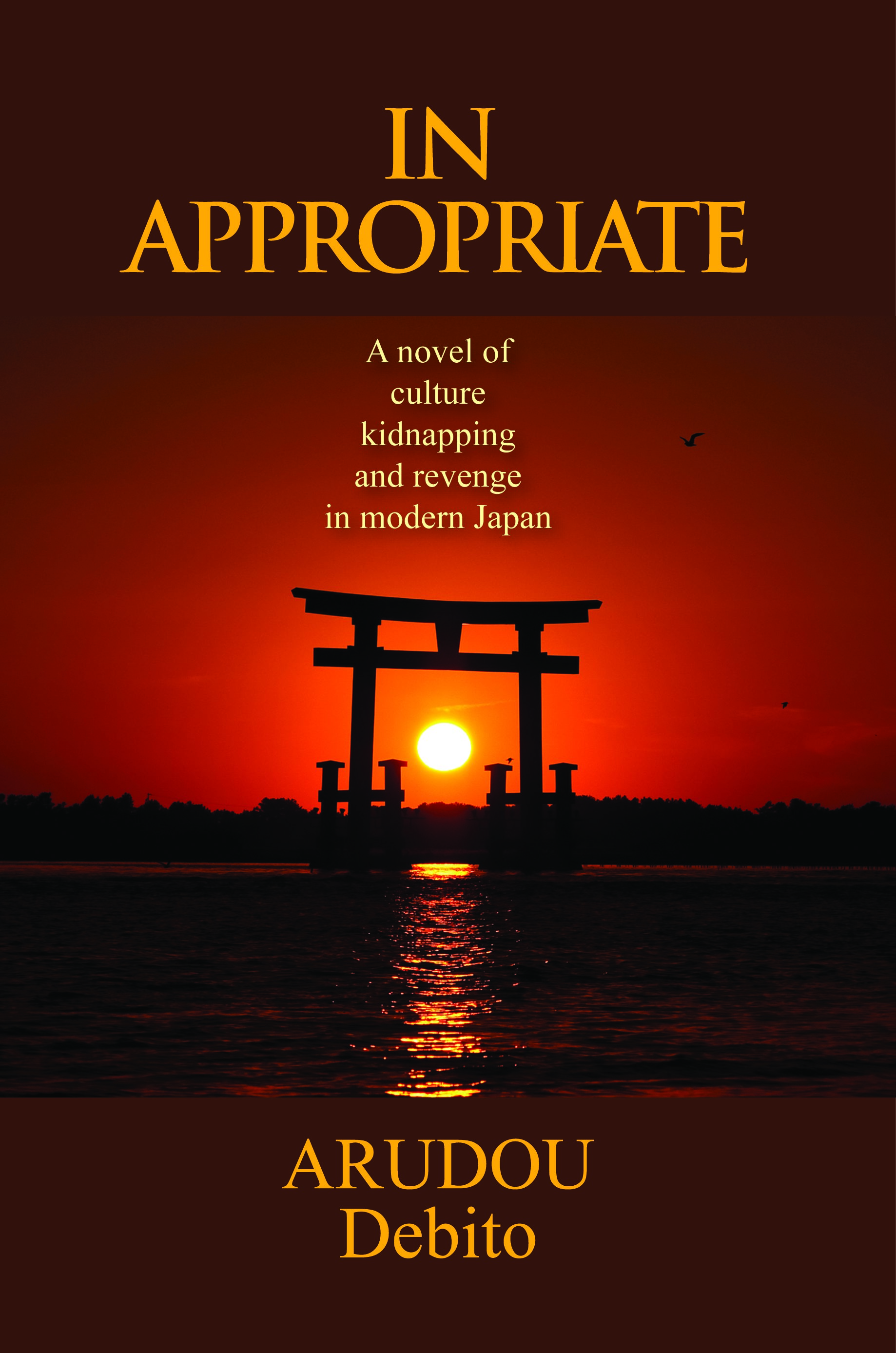
IN APPROPRIATE, A novel of culture, kidnapping, and revenge in modern Japan, By ARUDOU Debito
New novel IN APPROPRIATE by ARUDOU Debito

Handbook for Newcomers, Migrants, and Immigrants to JapanForeign Residents and Naturalized Citizens Association forming NGO\「ジャパニーズ・オンリー 小樽入浴拒否問題と人種差別」(明石書店)JAPANESE ONLY:  The Otaru Hot Springs Case and Racial Discrimination in Japansourstrawberriesavatardebitopodcastthumb
UPDATES ON TWITTER: arudoudebito
DEBITO.ORG PODCASTS on iTunes, subscribe free

John R. Harris of Chiba, Japan writes (sources at bottom):

March 16, 2011:

Friends, people around the world are emailing us in Japan, asking how they can help us cope with the disaster here. Here’s how YOU can help:

We need to unleash a tsunami of social media on Coca-Cola asking them to unplug their vending machines across Japan — NOW!

Across eastern Japan we are experiencing rolling power cuts and train service cuts to compensate for the nuclear plant outages. This interruption of normal life hugely ramps up public anxiety.

In the midst of all this, the 5,510,000 vending machines across Japan* are still operating. According to a report I read years ago, these machines require electricity equivalent to the output of an entire nuclear power plant.

The most power-hungry are the soft-drink machines that have both refrigeration and heating (for hot canned coffee). Coca-Cola has perhaps the largest network of beverage machines across Japan. Unlike domestic rivals, as a global company Coca-Cola must listen to consumers around the world. So if concerned Americans, Canadians, Europeans and everyone else speak up forcefully, Coke must act. And Japanese domestic operators will be forced to follow suit.

So, please, spread this message via email, Twitter and Facebook to everyone you know. And please email Coca-Cola’s CEO asking him to pull the plug on his vending machines in Japan.

Coca-Cola knows they have a problem, as you can tell by the message on their corporate website: “As challenges with power outages continue in many parts of the country, Coca-Cola Japan is supporting the government’s request to conserve energy by converting television and radio advertising to public service announcements to encourage energy conservation.”

We think that’s just not good enough. If you agree, please email:

Muhtar Kent, Chairman & CEO, The Coca-Cola Company
pressinquiries@na.ko.com

Or contact Coke on Twitter: @CocaCola
http://twitter.com/COCACOLA

See sources below

www.thecoca-colacompany.com/dynamic/press_center/2011/03/statement-on-the-japan-disaster.html
Statement on the Japan Disaster

March 14, 2011
Our thoughts and prayers are with all of the people who have been affected by the earthquake and tsunami in Japan.

The Coca-Cola system has pledged 600 million Japanese yen (US $7.3 million) in cash and product donations to the relief effort. That contribution includes more than 7 million bottles of needed beverages, such as water, tea and sports drinks. Coca-Cola Japan and its 12 bottling partners will provide the beverages to national and local government authorities and other community groups for distribution. The system has also activated free dispensing of products from selected vending machines.

As challenges with power outages continue in many parts of the country, Coca-Cola Japan is supporting the government’s request to conserve energy by converting television and radio advertising to public service announcements to encourage energy conservation.

The Coca-Cola system in Japan continues to focus on the safety and well-being of our employees, and we continue to assess the conditions of our facilities in the hardest hit regions.

Coca-Cola Japan has sent its deepest condolences to those people impacted by the devastating earthquake and tsunami.”

* “According to the Japan Vending Machine Manufacturers Association (JVMA), there are about 5.51 million vending machines in Japan.” (source: article by Anne Carter on articlesbase.com)
ENDS

Tokyo Gov Ishihara calls the tsunami “divine punishment” to wipe out the “egoism” of Japan. Need more evidence of his senility? Yet he’s running for election again.

mytest

IN APPROPRIATE, A novel of culture, kidnapping, and revenge in modern Japan, By ARUDOU Debito
New novel IN APPROPRIATE by ARUDOU Debito

Handbook for Newcomers, Migrants, and Immigrants to JapanForeign Residents and Naturalized Citizens Association forming NGO\「ジャパニーズ・オンリー 小樽入浴拒否問題と人種差別」(明石書店)JAPANESE ONLY:  The Otaru Hot Springs Case and Racial Discrimination in JapansourstrawberriesavatardebitopodcastthumbUPDATES ON TWITTER: arudoudebito
DEBITO.ORG PODCASTS on iTunes, subscribe free

Hi Blog.  If you needed further evidence of already preternaturally-bigoted Tokyo Governor Ishihara’s creeping senility, get a load of this:

////////////////////////////////////

The Japan Times Wednesday, March 16, 2011

Ishihara sorry for quake gaffe

Kyodo News

Tokyo Gov. Shintaro Ishihara apologized Tuesday for his remark that the devastating earthquake and subsequent tsunami last week represented “divine punishment” of the Japanese people who have been tainted with egoism.

“I will take back (the remark) and offer a deep apology,” Ishihara said, adding that he should have thought about the feelings of the victims.

Miyagi Gov. Yoshihiro Murai showed displeasure with Ishihara, telling reporters he hopes the Tokyo governor will consider the people affected by the disaster.

“Japanese politics is tainted with egoism and populism. We need to use tsunami to wipe out egoism, which has rusted onto the mentality of Japanese over a long period of time,” Ishihara, who is seeking re-election for a fourth term on April 10, told reporters Monday. “I think (the disaster) is ‘tembatsu’ (divine punishment), although I feel sorry for disaster victims.”

///////////////////////////////

石原知事「津波は天罰、我欲を洗い落とす必要」
http://www.yomiuri.co.jp/politics/news/20110314-OYT1T00740.htm?from=y10

東京都の石原慎太郎知事(78)は14日、東日本巨大地震に関連し、「津波をうまく利用して『我欲』を洗い落とす必要がある」「これはやっぱり天罰」などと述べた。

石原知事は同日午後、都内で「震災に対する日本国民の対応をどう見るか」と報道陣に問われ、「スーパーになだれ込んで強奪するとかそういうバカな現象は、日本人に限って起こらない」などとした。さらに親が亡くなったことを長年隠し年金を不正受給していた高齢者所在不明問題に言及し、「日本人のアイデンティティーは我欲になった。政治もポピュリズムでやっている。津波をうまく利用してだね、我欲を1回洗い落とす必要があるね。積年たまった日本人の心のアカをね。これはやっぱり天罰だと思う」と語り、「被災者の方々はかわいそうですよ」と続けた。

その後の記者会見で「『天罰』は不謹慎では」と質問が相次いだが、石原知事は「被災した方には非常に耳障りな言葉に聞こえるかもしれませんが、と言葉を添えている」とした。

(2011年3月15日06時18分  読売新聞)
///////////////////////////////////////


COMMENT: This from a man who claimed in public a decade ago that foreigners in Japan would riot in the event of a natural disaster (er, such as this one?) and that the SDF should be deployed to round them up — and also questioned the kokutai loyalties of citizens who have foreign roots.  It seems this time, by issuing an unusual retraction (you think he’ll ever retract the foreigner riots claim now that it hasn’t happened?), he realized that this particular Senior Moment was going too far.

But this old fool has long lost the mental software governing prudence befitting a person in high office.  For a milder (but concrete) example, check out this video, where Ishihara gets all snitty because he was trying to make another speech about how the world was not going the way he wants it (when asked to offer a few seconds of encouragement to runners in this year’s Tokyo Marathon on February 27). Watch to the very end where you hear him characteristically grumbling about being cut off mid-rant:

Ishihara2011tokyomarathon

(click on the link above to open video, courtesy Dave Spector)

Yet, as you read above, this 78-year-old is running once again for the Tokyo Governorship!

Some societies have a built-in conservative bent, but if the Tokyo electorate puts this decrepit bigoted coot back in office for yet another term, I will fear for the sanity of the Tokyo public.  We have mandatory retirement ages for Japanese bureaucrats.  We’ve even enforced them on some politicians (cf. former PMs Miyazawa and Nakasone, who were eliminated in 2003 despite re-election thanks to the LDP introducing an age limit of 73).  I think we should have them enforced in this case as well.  We need people who not only do not live in the past, but also live on this plane of existence.  Arudou Debito

Discussion: Is Japan in danger of a nuclear disaster or not? What source to trust?

mytest

Hi Blog.  I have to admit being thoroughly confused about what’s going on at Fukushima’s nuclear power plant.  Are we in danger of a nuclear meltdown or aren’t we?

I’m hearing from NHK and the connected authorities that there is no cause for concern and everything is under control (as roofs get blown off plant buildings).

I’m also hearing from overseas sources that there is little cause for alarm.  For example, here.

Yet I’m hearing from sources on the ground without an interest in the nuclear power industry making statements like these:

(Source is anonymized, but is a trustworthy on about matters dealing with U.S. military:)

========================

March 14, 2011:  You are absolutely right to have zero trust in Government of Japan (GOJ) or Japanese-controlled press on this.  The Japanese authorities simply won’t confirm the meltdown that is occurring.  Here are some of the facts from the western press:

1.  The USS Ronald Reagan, located 100 miles Northeast, had to relocate due to a radioactive plume cloud heading their way.
2.  17 members of the Reagan’s helicopter crews doing rescue missions have tested positive for radioactivity.  All helos are being decontaminated as they return to the Reagan.
3.  The Navy has tested positively for airborne radioactivity up to 100 miles away from the plant.
4.  The Japanese are pumping saltwater in to cool the rods.  This is only done as a last-ditch effort, since salt corrodes the reactors.  After that, they are out of options.
5.  Cesium has been detected by the Navy in the air.  The presence of this element in the air is an indication that the rods have actually started melting.
6.  The plant at Onagawa is also experiencing abnormally high radiation levels.  This plant is much closer to Tokyo.

Now, let’s remember how the GOJ is treating the casualty numbers.  They are reporting 1600 casualties right now.  That’s because they do not even consider a person “dead” until they are identified, so even though they have thousands of bodies piled up, they won’t report them yet as “dead”.  That is the way the GOJ operates.   They are simply not forthcoming with information.  The US Govt. was extremely frustrated at this way of operating during the Kobe earthquake.  The US Government could not get adequate situational awareness because the GOJ was simply not forthcoming.  This is no different.

Right now, the GOJ “officials have yet to confirm a meltdown because IT IS TOO HOT INSIDE THE TO CHECK.” (cnn.com) So, do they expect the reactor to cool down so they can check and confirm that the rods are actually melting?  Noriyuki Shikata, a spokesman for Japan’s prime minister, said Sunday the situation was “under control.” (cnn.com).   Under control? You can’t confirm if the rods are melting because it’s too hot to check, but everything is under control?

Stephanie Cooke, editor of Nuclear Intelligence Weekly for the atomic-energy community, said best summarized the GOJ on this issue by saying “The more they say they’re in control, the more I sense things may be out of control. (cnn.com)”

========================

So which is it?  Again, Debito.org is disinclined to trust official sources given their record regarding safety and forthcomingness (witness 1999’s nuclear accident at Tokai-mura and the consequent media debacle).  But I wish I knew what to believe.  Suggestions and links from Debito.org Readers welcome.  Arudou Debito

UPDATE MARCH 16: The thing that I don’t get about recent developments is that Japanese society tends to overcompensate in regards to safety issues.  Why don’t we see that happening whenever there’s a case of nuclear energy?  “Just stay indoors for the duration” is not what I would call adequate safety advice.

Thinking of donating blood in Japan? Mutantfrog translates the regulations on who can’t.

mytest

Hi Blog.  Just a quick one.  Roy Berman at Mutantfrog translates the Japanese Red Cross’s regulations on who cannot donate blood in Japan.  I can’t.  So if you want to help bloodwise, check here first to make sure you don’t get disqualified for your trouble.  Arudou Debito

http://www.mutantfrog.com/2011/03/13/who-can-and-can-not-donate-blood-in-japan/

ARUDOU Debito’s new book on sale: “IN APPROPRIATE: A novel of culture, kidnapping, and revenge in modern Japan”

mytest

INFORMATION SITE FOR ORDERING ARUDOU DEBITO’S FIRST NOVEL

“IN APPROPRIATE: A novel of culture, kidnapping, and revenge in modern Japan”

NOW ON SALE

PLOT SYNOPSIS

Gary Schmidt, a small-town American boy, meets a Japanese girl in college and follows her to Japan to start a family.  Little does he know that her conservative Japanese clan has hidden agendas and secret intentions. Gary eventually realizes that he must escape their clutches – and convince his family to do the same before it’s too late!

More plot synopsis for Debito.org Readers:

IN APPROPRIATE  is a book about child abductions in Japan, where after a divorce, a non-Japanese man comes back to Japan to retrieve his children back to America.  Although a work of fiction, it is an amalgam of several true stories of divorce and Left-Behind Parents in Japan.

Preview the first 11 pages of IN APPROPRIATE by clicking here.
Under book cover, click “Preview”.

ADVANCE PRAISE FOR NOVEL “IN APPROPRIATE”

  • “ARUDOU Debito’s depiction of how quickly life gets turned upside down by the crazy family rules in Japan will do more than just grab your attention.  It will make you cry at the strange and deplorable tale of love lost in Japan. IN APPROPRIATE sheds necessary light on the twisted norms and laws in Japan that not only allow, but also encourage parents to abduct their children from one another.  A must-read primer on the issue.” — Eric Kalmus, Children’s Rights Network Japan (www.crnjapan.net), and Left-Behind Parent.
  • “ARUDOU Debito, or David Aldwinckle as I know him, has written an unbelievable novel called IN APPROPRIATE. I say ‘unbelievable’ because if you haven’t experienced a divorce in Japan, you would simply not believe this sort of thing could happen.  Drawing on true stories, Debito has managed to weave together a heartbreaking tale around the injustice that sadly exists in modern Japan.  Perhaps this will be a legacy for those of us who lived through this experience, and for our children who suffered
    under this system.”
    John Evans, Left-Behind Parent

ORDERING OPTIONS FOR AMAZON PAPERBACK, EBOOK, AND ONLINE DOWNLOAD BELOW

BOOK SPECS

“IN APPROPRIATE:  A novel of culture, kidnapping, and revenge in Japan”

ISBN for paperback version: 978-1-257-02640-1

ISBN for ebook: 978-1-257-02648-7

Author: ARUDOU Debito

Language: English

Publisher: Lulu Enterprises Inc., New York

Date of Publication:  March 15, 2011

Length: 149 pages

Price: USD$10.00 (downloadable eBook), USD$14.00 (paperback, plus postage)

Anchor site at publisher:  http://www.lulu.com/spotlight/arudoudebito


ORDERING OPTIONS

(NB: The author suggests that readers who are not aesthetically wedded to paper-bound books consider downloading electronic versions online.  It’s far cheaper, more ecologically friendly, and you get a copy within minutes.  This is the future of publishing. Give it a try.)

If you would like to order a copy of IN APPROPRIATE, you have several options:

1) PAPERBACK VERSION FROM AMAZON and other online stores (at prices they assess)

You will soon be able to order a paperbound copy via Amazon.com or Amazon.co.uk. This may take a few weeks to come online.  I will have links to Amazon etc. here as they become available.

2) PAPERBACK VERSION FROM PUBLISHER (at USD$14.00 plus postage)

AVAILABLE NOW.
Lulu.com has a site devoted to this book, from which you can order immediately as a print-on-demand paperbound copy (more ecologically sound than traditional first-run printing systems, with no stocks to take care of).  Click below to purchase:

Support independent publishing: Buy this book on Lulu.

3) ELECTRONIC DOWNLOAD FROM PUBLISHER (at USD$10.00)

AVAILABLE NOW.
If you are not hidebound to actual paper books, you can download one as a pdf from Lulu.com and read it on your computer screen (information about reading platforms and Adobe Digital Editions software available here for free). Click below to purchase:

Support independent publishing: Buy this e-book on Lulu.

4) EBOOK (at USD$10.00)

This will be downloadable at Lulu.com soon, as soon as it is converted to epub format (it takes a while), as well as downloadable from Amazon and other iBookstores, for reading on your iPad, Kindle, etc.

5) REGULAR BOOKSTORES (at prices they assess).

The book has an ISBN (978-1-257-02640-1), so it can be ordered from any brick-and-mortar bookstore.  Take the number to the clerk and put it on order.


I hope you enjoy my novel IN APPROPRIATE.

I enjoyed writing my first fiction work.

If you like it, please consider recommending it to others.

Your support will enable me to write more novels and continue on in this direction.

ARUDOU Debito (debito@debito.org)

Read my other nonfiction books here.

also see

www.debito.org/inapproppriate.html

Foreign Minister Maehara resigns due to donations from a “foreigner” (a Zainichi, that is)

mytest

Hi Blog. Debito.org is currently on vacation while I am getting my next novel published, but this recent issue is germane enough to this blog that I’ll at least put the issue up and let people comment.

//////////////////////////////////////

From the Japan Times (excerpt):
Monday, March 7, 2011
Maehara quits Cabinet over donations
Foreign minister leaves Kan in lurch before Group of Eight meet
By Masami Ito

Foreign Minister Seiji Maehara announced his resignation Sunday to take responsibility for illegally accepting donations from a foreign national, further damaging the already shaky Cabinet of Prime Minister Naoto Kan…

Last Friday, Maehara admitted receiving ¥50,000 in donations from a South Korean permanent resident of Japan who lives in Kyoto. But according to the Liberal Democratic Party, which brought up the issue during a Diet committee last Friday, the donations total ¥200,000 over the past four years.

Maehara said at the press conference that total donations from the person came to at least ¥250,000 over five years.

The Political Funds Control Law stipulates that it is illegal for politicians to accept contributions from non-Japanese residents and foreign companies. If found guilty, the politician could potentially face up to three years imprisonment or a fine of up to ¥500,000, and also have his or her voting rights suspended.

According to Maehara, the donor owns a Korean barbecue restaurant in the neighborhood where he moved to while in junior high school in Yamashina, Kyoto Prefecture.
//////////////////////////////////////

Full article at http://search.japantimes.co.jp/cgi-bin/nn20110307a1.html
Other articles with new angles and information are welcome. Please enclose entire text in Comments Section for the record.

COMMENT: As we’ve discussed on The Community:

A writes: Does anyone else get the impression from the media coverage of (now ex-) foreign minister Maehara’s dealings that the crime was not accepting money, but accepting money from foreigners?

D writes: Don’t most countries forbid donations from foreigners to politicians and political campaigns? Which, on the surface, seems pretty reasonable, given the danger of having foreign countries influence internal politics. That the woman in question was probably zainichi(?) raises the usual criticisms of why Koreans born in Japan are still considered “foreign”. But that seems like a separate issue this time. Yes, maybe she should be Japanese. Whether she is or isn’t, though, a law forbidding foreign investment into local politics seems pretty bog standard.

M writes: As a comparison, it is *illegal* to do this in America:
http://www.fec.gov/pages/brochures/foreign.shtml

J writes: Not sure exactly what point you are trying to make, the page lists all sorts of activities, but specifically states that green card holders are exempt, which seems to be the closest analogue of the current case. FWIW, I think that in order for an individual to make a donation in the UK, they have to be on the electoral roll (which eg would rule me out, though I might also be ineligible due to non-residency).

B writes:  [to Debito] I know you’re busy with your book, but I would love to read your thoughts about the situation with Foreign Minister Maehara and this rule/law about not allowing politicians to receive foreigners (even a Zainichi Korean). For one, it clearly demonstrates that foreigners with special status are STILL considered foreigners regardless, and two should draw attention to the fact that this rule is meant to prevent foreigners living in Japan from gaining political power through an activity like political (and in Maehara’s case possibly even a personal) donations–something that every politician relies on, no matter the country. I hope you’ll put up something on your site.

There you go. Does not Mindan also financially contribute to Japan’s political process?  Arudou Debito

Japan Times JUST BE CAUSE column: “Charisma Men, unite against the identity enforcers”

mytest

Handbook for Newcomers, Migrants, and Immigrants to Japan\Foreign Residents and Naturalized Citizens Association forming NGO\「ジャパニーズ・オンリー 小樽入浴拒否問題と人種差別」(明石書店)JAPANESE ONLY:  The Otaru Hot Springs Case and Racial Discrimination in Japansourstrawberriesavatardebitopodcastthumb
UPDATES ON TWITTER: arudoudebito
DEBITO.ORG PODCASTS on iTunes, subscribe free
justbecauseicon.jpg

JUST BE  CAUSE

Charisma Men, unite against the identity enforcers

The Japan Times March 1, 2011

Courtesy http://search.japantimes.co.jp/cgi-bin/fl20110301ad.html

English teachers in Japan get a bum rap. Not always taken seriously as professionals, and often denied advancement opportunities in the workplace, they are seen as people over here on a lark. They get accused of taking advantage of Japanese society to earn easy money, canoodle with the locals, then go home. They even get blamed (JBC, Sept. 7, 2010) for the low level of English in Japan.

They are also often derided as “losers,” as evidenced by the comic strip “Charisma Man.”

First featured in a Nagoya newsmagazine and later collated into a book, “Charisma Man” tells the story of a scrawny Caucasian nebbish who escapes his job serving fast food in Canada, comes to Japan, and instantly transforms into a buff, lantern-jawed lothario, able to seduce Japanese women in a single bound.

He can defy all Japanese rules, coming out on top of any situation through charisma alone. His nemesis is Western Woman, who sees through the facade and reduces him back to nebbish status with a single glare.

To be sure, “Charisma Man” is a hilarious series, offering home truths for people frustrated by the lack of professionalism in their colleagues, or by the disparate ways in which men and women are treated in Japanese society.

The problem is, like many comic strips about an employment sector, it stereotypes dangerously: It makes anyone in eikaiwa look like frauds, as if they’re “faking it” as unqualified professionals. Unable to get a job “back home” in anything meaningful, they’re merely marking time in Japan. I know several professional educators who hate the strip, because their students read it and ignorantly point at them as an example.

But there is one aspect of the “Charisma Man” phenomenon that is little talked about: what I will call “Immigrant vs. Identity Police.” Let’s take Charisma Man’s side in this column, and suggest why he too might have been given a bum rap.

Charisma Man is initially a tragic figure. He’s stuck in a dead-end job “back home” and derided for being a dud. His predicament might be his fault (due to a lack of education or motivation) or might not be (due to a lack of economic opportunity in his neighborhood). But either way, he’s depicted as a loser.

So he comes to Japan and is again stuck in a dead-end job. But this time he winds up being a “winner” in some respects. He is finally getting something always denied: a modicum of respect. Earned or not, respect can be transformational in a person’s development. Charisma Man remakes his identity.

However, then come the Identity Police, be it the reader or the (rather offensive stereotype of) Western Woman. They’re trying to force Charisma Man back to the predestination of failure.

That’s unfortunate. One of the problems with the world is the lack of social mobility — the lack of opportunity for people to realize their potential, to decide their own fate, to redesign themselves as they please.

Either by bad luck or poor guidance, many people get slotted from an early age into social roles that are disadvantageous, e.g., “geek,” “loner,” “fat chick,” “spaz,” “slacker,” “weirdo,” “psycho” . . .

This leads to broken dreams and embittered souls. Witness the phenomenon of the hikikomori (social dropouts who can’t even leave their bedrooms), or the Akihabara knifings of 2008 (where the killer was expressly sick of being part of the make-gumi, or loser class). As some people disparagingly say, these people need to go out and get laid.

Well, that’s exactly what Charisma Man did. He got out of his “burger-flipping class” and found himself on the sweeter side of society here.

Point is, why should anyone be stuck somewhere they’re not able to make a better life for themselves?

That is the very essence of the immigrant: Someone who was dealt a bad hand in their birthplace emigrates and gets a fresh cut of the cards. If they move and provide a valued, profitable service to their new society, bully for them.

Now, of course, Charisma Man is not a template. He’s a humorous stereotype about someone who gets what he really doesn’t deserve.

But he must be viewed in the proper perspective — not as an indictment of English teaching or of teachers in general. Charisma Man is a bubble-era social parasite. He will probably not remain in Japan for good, because he has little incentive to learn about the society that is treating him so well.

So what I’m speaking out against here is the Identity Police. Why should they be given carte blanche to force people back into the inferior positions they managed to escape from?

Whenever somebody insinuates “You don’t really belong in Japan” or “You’re really a loser back home,” that person should be told: “Japan is my home and I belong here just fine. I’m not just coasting along on charisma.” A decent job and a secure income is sufficient proof of socially acceptable services rendered.

In other words, tell the Identity Police to go police somebody else’s identity. All you readers out there being derided as Charisma Men — unite. Be proud that you’re making a better way for yourself. Everyone should be so lucky as to have a second chance at life.

Arudou Debito has completed a new novel entitled “In Appropriate,” on child abductions in Japan. On sale in March. Twitter arudoudebito. Just Be Cause appears on the first Community Page of the month. Send comments on this issue to community@japantimes.co.jp

My next Japan Times JUST BE CAUSE column out tomorrow, March 1, on “Charisma Man and the Identity Police”

mytest

Handbook for Newcomers, Migrants, and Immigrants to Japan\Foreign Residents and Naturalized Citizens Association forming NGO\「ジャパニーズ・オンリー 小樽入浴拒否問題と人種差別」(明石書店)JAPANESE ONLY:  The Otaru Hot Springs Case and Racial Discrimination in Japansourstrawberriesavatardebitopodcastthumb
UPDATES ON TWITTER: arudoudebito
DEBITO.ORG PODCASTS on iTunes, subscribe free

Hi Blog.  My next Japan Times JUST BE CAUSE column comes out in a few hours.  It’s a lighter one this time, talking about the “Charisma Man” phenomenon (the hilarious comic book about the Caucasian loser who comes over to Japan to teach English, and transforms into a lantern-jawed lothario instantly) — and actually comes to the defense of those maligned by the stereotype.  I titled it “Charisma Man and the Identity Police”.

Have a read tomorrow, March 2, 2011!  Arudou Debito

UPDATE:  Here it is.  Text up for commentary tomorrow.

http://search.japantimes.co.jp/cgi-bin/fl20110301ad.html

DEBITO.ORG PODCAST MARCH 1, 2011

mytest

Handbook for Newcomers, Migrants, and Immigrants to Japan\Foreign Residents and Naturalized Citizens Association forming NGO\「ジャパニーズ・オンリー 小樽入浴拒否問題と人種差別」(明石書店)JAPANESE ONLY:  The Otaru Hot Springs Case and Racial Discrimination in Japansourstrawberriesavatardebitopodcastthumb
UPDATES ON TWITTER: arudoudebito
DEBITO.ORG PODCASTS on iTunes, subscribe free

debitopodcast

Hi Blog. As a quick break to the blog break, here is my latest DEBITO.ORG PODCAST. It is a speech in Japanese I made to the 48th Annual Hokkaido High School Research Convocation on Friday, January 7, 2011.

The speech is in Japanese. Two hours. No cuts. Includes the Q&A.  Follow along with the accompanying powerpoint presentation I’m reading from at https://www.debito.org/koukoutaikai010711.ppt

Fri January 7, 2011: 講演「情報化社会と人権問題について」。第48回 北海道高等学校教育研究大会 主催。研究主題:「未来を担う人を育む北海道高等学校の創造」。有道 出人 講演者

2時間でカットなし(質疑応答込み)。使用したパワーポイントはこちらからダウンロードできます。https://www.debito.org/koukoutaikai010711.ppt

UPDATE on my new novel: It’s done.

mytest

Handbook for Newcomers, Migrants, and Immigrants to Japan\Foreign Residents and Naturalized Citizens Association forming NGO\「ジャパニーズ・オンリー 小樽入浴拒否問題と人種差別」(明石書店)JAPANESE ONLY:  The Otaru Hot Springs Case and Racial Discrimination in Japansourstrawberriesavatardebitopodcastthumb
UPDATES ON TWITTER: arudoudebito
DEBITO.ORG PODCASTS on iTunes, subscribe free

Hi Blog.  This is just an update to tell you that after two weeks of intensive writing and revising, I have successfully written my first novel.

What’s it about?  Well, right now, about 141 pages.

Sorry, old joke zone.

No, actually it’s about child abductions in Japan.

I’ve already sent out a preliminary draft to several readers to for some feedback.  Once that’s back in, I think I should have the book on sale sometime in March.

More information as it comes available!  Thanks you for reading Debito.org!  Arudou Debito

Debito.org Blog will be on vacation until April. Writing my next book.

mytest

Handbook for Newcomers, Migrants, and Immigrants to Japan\Foreign Residents and Naturalized Citizens Association forming NGO\「ジャパニーズ・オンリー 小樽入浴拒否問題と人種差別」(明石書店)JAPANESE ONLY:  The Otaru Hot Springs Case and Racial Discrimination in Japansourstrawberriesavatardebitopodcastthumb
UPDATES ON TWITTER: arudoudebito
DEBITO.ORG PODCASTS on iTunes, subscribe free

Hi Blog.  This is just to tell you that I will be vacationing Debito.org until April 2011, so that I can concentrate on writing my next book.

Sorry about this, but the Blog takes about an hour or more out of my day every day and as such is a major time bandit.  Same with reading and approving every comment.  So let me just say ja shitakke ne for a little while.

I will of course still put up podcasts and my Japan Times JUST BE CAUSE columns the day after they come out.  But comments and the like will take a while to approved, as will answers to emails to me directly.

Please be patient.  As always, thanks for reading and commenting to Debito.org.  See you again in April.  Arudou Debito

DEBITO.ORG NEWSLETTER FEBRUARY 4, 2011

mytest

Handbook for Newcomers, Migrants, and Immigrants to Japan\Foreign Residents and Naturalized Citizens Association forming NGO\「ジャパニーズ・オンリー 小樽入浴拒否問題と人種差別」(明石書店)JAPANESE ONLY:  The Otaru Hot Springs Case and Racial Discrimination in Japansourstrawberriesavatardebitopodcastthumb
UPDATES ON TWITTER: arudoudebito
DEBITO.ORG PODCASTS on iTunes, subscribe free

Hi Debito.org Newsletter Readers. This Newsletter will tidy up some loose ends, I will be vacationing Debito.org (and the Newsletter) until April 2011, so that I can concentrate on writing my next book.

Sorry about this, but the Blog takes about an hour or more out of my day every day and as such is a major time bandit. Same with reading and approving every comment. So let me just say ja shitakke ne for a little while.

I will of course still put up podcasts and my Japan Times JUST BE CAUSE columns the day after they come out. But comments and the like will take a while to approved, as will answers to emails to me directly.

As always, thanks for reading and commenting to Debito.org. See you again in April.

DEBITO.ORG NEWSLETTER FEBRUARY 4, 2011

Table of Contents:
/////////////////////////////////////////////////////////////

1) JT’s Philip Brasor on BBC QI show and atomic-bombings and “victim ownership of historical narrative”
2) Kyodo: MOFA Survey shows divided views on GOJ signing of child custody pact
3) Japan Times on what needs to be deregulated for Japan’s future as an Asian business hub
4) NYT: Japan society puts up generational roadblocks, wastes potential of young
5) Weekend Tangent: Economist.com compares GDPs of US states with whole countries
6) DEBITO.ORG PODCAST FEBRUARY 1, 2011
7) Japan Times JUST BE CAUSE Column Feb 1, 2011: “Naturalized Japanese: foreigners no more”
8 ) Japan Times JBC/ZG Column Jan 4, 2010: “Arudou’s Alien Almanac 2000-2010”

/////////////////////////////////////////////////////////////

By Arudou Debito (debito@debito.org, www.debito.org)
Freely Forwardable

/////////////////////////////////////////////////////////////

1) JT’s Philip Brasor on BBC QI show and atomic-bombings and “victim ownership of historical narrative”

Here’s an excellent column on the recent “humor” segment on the BBC show QI, derided by officials and family as “insensitive” because it was connected to the Japan atomic bombings. The author then links it to the issue of DPRK abductions of Japanese, where deviation from the official line of “they’re still alive over there” is taboo, and comes up with an interesting conclusion: He who owns the “narrative” on this history (particularly as a victim) gets to dictate how it is represented in the media. Very insightful indeed. I can see how this analytical paradigm can be applied to the realm of human rights and racial discrimination in Japan — how NJ are often not allowed to “own” their own narratives in Japan. Worth a think about.

JT: Yamaguchi’s daughter told Kyodo News that her own family had joked about her father’s experience, but that doesn’t mean British people can do the same. The reason they can’t, she said, is that Great Britain is a “country that has nuclear weapons.” But it’s not within the purview of “QI” to make such distinctions. Britain may possess nukes, but the guests on the show certainly don’t; and for all we know they may be opposed to their country’s policy of deterrence. No, the real reason they don’t have a right to joke about Hiroshima, at least from the Japanese critics’ point of view, is that they aren’t atomic bomb victims themselves.

The same line of reasoning informs the suit that the parents of Keiko Arimoto, one of the Japanese people abducted by North Korean agents in the 1970s and ’80s, brought against veteran journalist Soichiro Tahara in July 2009. Earlier that year, Tahara speculated on a TV Asahi talk show that Arimoto and another abductee, Megumi Yokota, were dead and that the Foreign Ministry knew they were dead. Akihiro and Kayoko Arimoto believe that their daughter is still alive, and Tahara’s remarks caused them great “mental suffering,” so they sued him for damages.

On the program in question, Tahara was discussing Japan’s policy toward North Korea and questioned the wisdom of predicating any engagement with NK on the communist state’s first returning all remaining abductees to Japan. “But North Korea says they’re dead,” Tahara said, “and even the Foreign Ministry knows they’re not alive.” Unofficially, Tahara’s remark is taboo: One cannot publicly put forth the opinion that the abductees may be dead, because their families have stated that they believe they aren’t. In Japan, the families own the abductee narrative because they are victims, and owning the narrative means you get to control how it’s told…

https://www.debito.org/?p=8515

/////////////////////////////////////////////////////////////

2) Kyodo: MOFA Survey shows divided views on GOJ signing of child custody pact

Here’s some news on a MOFA survey that was skewed (by dint, for one thing, of it only being rendered in Japanese only, effectively shutting out many opinions of the NJ side of the marriage) linguistically to get results that were negative towards the signing of the Hague Convention on Child Abductions. Even then, MOFA got mixed results (as in, more people want the GOJ to sign the Hague than don’t, but it’s a pretty clean three-way split). Nice try, MOFA. Read the survey for yourself below and see what I mean.

In any case, the bureaucrats, according to Jiji Press of Feb 1 (see bottom of this blog post), seem to be gearing up to join the Hague only if there is a domestic law in place for Japan to NOT return the kids. I smell a loophole in the making.

NHK’s “Close Up Gendai” gave 28 minutes to the issue on February 2, 2011 (watch it here), in which they gave less airtime than anticipated to portraying Japanese as victims escaping to Japan from NJ DV, and more instead to the Japanese who want Japan to sign the Hague so they can get their kids back from overseas. Only one segment (shorter than all the others) gave any airtime to the NJ side of the marriage — but them getting any airtime at all is surprising; as we saw in yesterday’s blog entry, NJ don’t “own the narrative” of child abductions in Japan…

https://www.debito.org/?p=8524

/////////////////////////////////////////////////////////////

3) Japan Times on what needs to be deregulated for Japan’s future as an Asian business hub

Japan Times Community Page: What do those companies need from you in addition to a secure environment in which to develop intellectual property? They need locations in Japan that are convenient to airports that provide access to a broad swath of Chinese cities. They’d also like those locations to be relatively near to urban centers that offer employees attractive housing, dining and entertainment options.

They need those tax breaks you’ve offered, but they need greater assurance from your government that the deals they cut in establishing operations here will last longer than, well, your party’s likely tenure in power. The cost of setting up a regional research and development center makes the tax holiday you’re offering a very minor inducement, especially as your offer has an imminent expiration date.

They need immigration policies that will let them decide what employees are required to staff their facility, and if you run into your counterparts at the ministries of education and justice, you might let them know that English- and other foreign language-speakers may be required, which may disqualify many of the Japanese citizens you’d like to see get jobs. And of course, they’ll need a streamlined visa procedure for any foreign workers, even if those workers are brown-skinned Asians.

They need you to create a business environment that is quickly and easily navigable by foreigners, i.e. in English, and that is, above all, flexible. Businesses need to be able to do whatever they need to do to operate, survive and thrive, without stumbling over bureaucratic obstacles all the time.

What they don’t need, Minister, is a Japan “that can say ‘no.’ ” Business investors need to hear “yes” and “no problem” and “we can get that done for you yesterday.”

You can do it, I’m sure, and your efforts will pay large economic dividends for decades to come.

https://www.debito.org/?p=8485

/////////////////////////////////////////////////////////////

4) NYT: Japan society puts up generational roadblocks, wastes potential of young

Continuing with the theme of what reforms Japanese society needs to face the next century, here’s Martin Fackler from the NYT making the case about the structural barriers that waste the potential of youth in Japan. Bit of a tangent, but not really. Fresh ideas and entrepreneurial energy (regardless of nationality) should be welcomed as revitalizing, but as Fackler writes, the sclerotic is turning necrotic and people are seeking opportunities elsewhere.

NYT: An aging population is clogging the nation’s economy with the vested interests of older generations, young people and social experts warn, making an already hierarchical society even more rigid and conservative. The result is that Japan is holding back and marginalizing its youth at a time when it actually needs them to help create the new products, companies and industries that a mature economy requires to grow.

A nation that produced Sony, Toyota and Honda has failed in recent decades to nurture young entrepreneurs, and the game-changing companies that they can create, like Google or Apple — each started by entrepreneurs in their 20s.

Employment figures underscore the second-class status of many younger Japanese. While Japan’s decades of stagnation have increased the number of irregular jobs across all age groups, the young have been hit the hardest.

Last year, 45 percent of those ages 15 to 24 in the work force held irregular jobs, up from 17.2 percent in 1988 and as much as twice the rate among workers in older age groups, who cling tenaciously to the old ways. Japan’s news media are now filled with grim accounts of how university seniors face a second “ice age” in the job market, with just 56.7 percent receiving job offers before graduation as of October 2010 — an all-time low.

“Japan has the worst generational inequality in the world,” said Manabu Shimasawa, a professor of social policy at Akita University who has written extensively on such inequalities. “Japan has lost its vitality because the older generations don’t step aside, allowing the young generations a chance to take new challenges and grow.”…

https://www.debito.org/?p=8480

/////////////////////////////////////////////////////////////

5) Weekend Tangent: Economist.com compares GDPs of US states with whole countries

As a Weekend Tangent, here is The Economist with a fascinating chart comparing GDPs of US states with whole countries. Click on the Population button to do the same for country populations as well. Just thought I’d throw this up, as it is an interesting concept. Note that Japan (and China) are too big to included. Let’s hope Japan stays that way.

https://www.debito.org/?p=8442

/////////////////////////////////////////////////////////////

6) DEBITO.ORG PODCAST FEBRUARY 1, 2011

In this podcast, I read aloud:

Japan Times JUST BE CAUSE Column 18, “Unlike Humans, Swine Flu is Indiscriminate”, on the the lessons to be learned from Japan’s public panic due to the Swine Flu Pandemic, and how to avoid discrimination arising from it (August 4, 2009).

Japan Times ZEIT GIST Community Page Article 51/JUST BE CAUSE Column 19, ” McDonald’s Japan’s “Mr James” campaign: Why these stereotyping advertisements should be discontinued”. (September 1, 2009)

Plus interim excerpts from Tangerine Dream “White Eagle” and an excerpt of another song from Duran Duran’s most recent album, “All You Need is Now”. Title: “Being Followed”.

22 minutes. Enjoy!

https://www.debito.org/?p=8495

/////////////////////////////////////////////////////////////

7) Japan Times JUST BE CAUSE Column Feb 1, 2011: “Naturalized Japanese: foreigners no more” (full text)

JUST BE CAUSE
Naturalized Japanese: foreigners no more
Long-termers hit back after trailblazing Diet member Tsurunen utters the F-word

[NB: Not my title; too confrontational. I was trying to be respectful in tone in this article to my dai-senpai.]
By DEBITO ARUDOU
Courtesy http://search.japantimes.co.jp/cgi-bin/fl20110201ad.html
Debito.org discussion at https://www.debito.org/?p=8509

/////////////////////////////////////////////////////////////

8 ) Japan Times JBC/ZG Column Jan 4, 2010: “Arudou’s Alien Almanac 2000-2010”

THE TOP TENS FOR 2010 AND THE DECADE
ZEIT GIST 54 / JUST BE CAUSE COLUMN 35 FOR THE JAPAN TIMES
The Japan Times, Tuesday, January 4, 2011

DRAFT NINE, VERSION AS SUBMITTED TO EDITOR (Director’s Cut, including text cut out of published article)
WORD COUNT FOR DECADE COLUMN #5-#2: 988 WORDS
WORD COUNT FOR 2010 COLUMN #5-#2: 820 WORDS
Version with links to sources at https://www.debito.org/?p=8324

Download Top Ten for 2010 at http://search.japantimes.co.jp/cgi-bin/fl20110104ad.html
Download Top Ten for 2000-2010 at http://search.japantimes.co.jp/cgi-bin/fl20110104a1.html
Download entire newsprint page as PDF with excellent Chris Mackenzie illustrations (recommended) at
http://www.japantimes.co.jp/life/images/community/0104p13.PDF

/////////////////////////////////////////////////////////////

Again, thanks for reading and commenting to Debito.org. See you again in April.

Arudou Debito (debito@debito.org, www.debito.org)
DEBITO.ORG NEWSLETTER FEBRUARY 4, 2011 ENDS

Kyodo: MOFA Survey shows divided views on GOJ signing of child custody pact, despite best efforts to skew

mytest

Handbook for Newcomers, Migrants, and Immigrants to Japan\Foreign Residents and Naturalized Citizens Association forming NGO\「ジャパニーズ・オンリー 小樽入浴拒否問題と人種差別」(明石書店)JAPANESE ONLY:  The Otaru Hot Springs Case and Racial Discrimination in Japansourstrawberriesavatardebitopodcastthumb
UPDATES ON TWITTER: arudoudebito
DEBITO.ORG PODCASTS on iTunes, subscribe free

Hi Blog. Here’s some news on a MOFA survey that was skewed (by dint, for one thing, of it being rendered in Japanese only, effectively shutting out many opinions of the NJ side of the marriage) linguistically to get results that were negative towards the signing of the Hague Convention on Child Abductions. Even then, MOFA got mixed results (as in, more people want the GOJ to sign the Hague than don’t, but it’s a pretty clean three-way split). Nice try, MOFA. Read the survey for yourself below and see what I mean.

In any case, the bureaucrats, according to Jiji Press of Feb 1 (see bottom of this blog post), seem to be gearing up to join the Hague only if there is a domestic law in place for Japan to NOT return the kids.  I smell a loophole in the making.

NHK’s “Close Up Gendai” gave 28 minutes to the issue on February 2, 2011 (watch it here), in which they gave less airtime than anticipated to portraying Japanese as victims escaping to Japan from NJ DV, and more instead to the Japanese who want Japan to sign the Hague so they can get their kids back from overseas. Only one segment (shorter than all the others) gave any airtime to the NJ side of the marriage — but them getting any airtime at all is surprising; as we saw in yesterday’s blog entry, NJ don’t “own the narrative” of child abductions in Japan. Arudou Debito

////////////////////////////////////////////

Survey shows divided views on Japan’s signing of child custody pact
Kyodo News/Japan Today,  Thursday 3rd February 2011, courtesy AW

http://japantoday.com/category/national/view/survey-shows-divided-views-on-japans-signing-of-child-custody-pact

TOKYO — An online survey by the Foreign Ministry showed Wednesday that people who have directly been involved in the so-called parental ‘‘abductions’’ of children as a result of failed marriages were divided on Japan’s accession to an international treaty to deal with child custody disputes.

Of 64 respondents to the questionnaire posted on the website of the Foreign Ministry and its 121 diplomatic missions abroad between May and November last year, 22 were in favor of Japan joining the 1980 Hague Convention on the Civil Aspects of International Child Abduction, while 17 were against the idea.

The remaining 25 respondents did not make their stance clear, said Parliamentary Vice Foreign Minister Ikuo Yamahana at a press conference.

The convention provides a procedure for the prompt return of children to their habitual country of residence when they are wrongfully removed or retained in the case of an international divorce. It also protects parental access rights.

Those seeking Japan’s accession to the convention said Tokyo should no longer allow unilateral parental child abductions as the country is perceived overseas as an ‘‘abnormal’’ nation for defending such acts.

People opposed to Japan’s signing of the treaty said the convention ‘‘doesn’t fit with’’ Japanese culture, values and customs and urged the government to protect Japanese nationals fleeing from difficult circumstances such as abusive spouses and problems in foreign countries.

Some pointed to the disadvantages faced by Japanese parents seeking a local court settlement on child custody abroad, such as expensive legal fees and the language barrier.

Yamahana said the government led by the Democratic Party of Japan will further examine the possibility of joining the convention based on the results of the online survey. ‘‘We will discuss what we can do to ensure the welfare of children,’’ he said.

International pressure on Tokyo to act on the parental abduction issue has been growing, with legislative bodies in the United States and France recently adopting resolutions that call for Japan’s accession to the treaty.

At present, 84 countries and regions are parties to the Hague Convention. Of the Group of Seven major economies, only Japan has yet to ratify the pact.

Of the 64 respondents, 18 said they have abducted children and 19 said their children have been taken by their former spouses. A total of 27 said they have been slapped with restrictions on traveling with their children because Japan is not a party to the Hague Convention.

By country, 26 respondents were linked to parental abduction cases in the United States, followed by nine in Australia and seven in Canada.
ENDS

///////////////////////////////

Reprising a Debito.org Blog entry from May 27, 2010, when this survey first hit the news:

Debito:  The Ministry of Foreign Affairs has just started asking for opinions from the public regarding Japan’s ascension to the Hague Convention on the Civil Aspects of International Child Abduction (which provides guidelines for dealing with cases of children being taken across borders without the consent of both parents, as well as establishing custody and visitation; all past Debito.org articles on the issue here.).

Sounds good until you consider the contexts.  We’ve already had a lot of Japanese media portraying the Japanese side of an international marriage as victims, fleeing an abusive NJ.  Even the odd crackpot lawyer gets airtime saying that signing the Hague will only empower the wrong side of the divorce (i.e. the allegedly violent and-by-the-way foreign side), justifying Japan keeping its status as a safe haven.  Even the Kyodo article below shies away from calling this activity “abduction” by adding “so-called” inverted quotes (good thing the Convention says it plainly).

But now we have the MOFA officially asking for public opinions from the goldfish bowl.  Despite the issue being one of international marriage and abduction, the survey is in Japanese only.  Fine for those NJ who can read and comment in the language.  But it still gives an undeniable advantage to the GOJ basically hearing only the “Japanese side” of the divorce.  Let’s at least have it in English as well, shall we?

Kyodo article below, along with the text of the survey in Japanese and unofficial English translation.  Is it just me, or do the questions feel just a tad leading, asking you to give reasons why Japan shouldn’t sign?  In any case, I find it hard to imagine an aggrieved J parent holding all the aces (not to mention the kids) saying, “Sure, sign the Hague, eliminate our safe haven and take away my power of custody and revenge.”  That’s why we need both sides of the story, with I don’t believe this survey is earnestly trying to get.  Arudou Debito

/////////////////////////////////////////////////////////

Japan conducts online survey on parental child abductions
Kyodo News/Japan Today Wednesday 26th May, 06:29 AM JST

http://www.japantoday.com/category/national/view/japan-conducts-online-survey-on-parental-child-abductions

TOKYO — Japan began Tuesday soliciting views via the Internet on the possibility of the country ratifying an international convention to deal with problems that arise when failed international marriages result in children wrongfully being taken to Japan by one parent.

The online survey by the Foreign Ministry asks people who have been involved in the so-called parental ‘‘abductions’’ to Japan of children of failed marriages what they think about Japan’s accession to the 1980 Hague Convention on the Civil Aspects of International Child Abduction.

Complaints are growing over cases in which a Japanese parent, often a mother, brings a child to Japan without the consent of the foreign parent, or regardless of custody determination in other countries, and denies the other parent access to the child.

The convention provides a procedure for the prompt return of such ‘‘abducted’’ children to their habitual country of residence and protects parental access rights.

Prime Minister Yukio Hatoyama has suggested that he is considering positively Japan’s accession to the Hague Convention and ratifying it during the next year’s ordinary Diet session.

Foreign Minister Katsuya Okada said at a regular news conference Tuesday that the government will examine opinions collected through the online survey in studying the possibility of joining the convention. The questionnaire will be posted on the website of the Foreign Ministry and its 121 diplomatic missions abroad, he said.

At present, 82 countries are parties to the Hague Convention. Of the Group of Eight major powers, Japan and Russia have yet to ratify the treaty.
ENDS

//////////////////////////////////////////////////////////

TEXT OF THE MOFA SURVEY

Courtesy http://www.mofa.go.jp/mofaj/press/event/files/ko_haag.doc

「国際的な子の奪取の民事面に関する条約(ハーグ条約)」に関するアンケート

【問1】 国境を越えた子供の移動に関する問題の当事者となり、以下のような経験をしたことはありますか。なお、回答に当たり、個人名などは挙げていただく必要はありません。

●国境を越える形で子供を連れ去られたり、やむなく子供と一緒に移動せざるを得なかったこと (その事情も含めて教えてください。) (回答)

●外国で裁判をして、裁判所の命令等により国境を越える移動に制限が加えられたこと (回答)

●差し支えなければ、以下の事項についても教えてください。 -子供の年齢: -父母の別: -子供に対する親権の有無: -関係ある国の名前:

【問2】 ハーグ条約の存在やその内容をご存知でしたか。 (回答)

【問3】 これまで我が国がハーグ条約を締結していないことについてどのようなご意見をお持ちですか。 (回答)

【問4】 日本がハーグ条約を締結することになれば、ご自身又は類似の境遇に置かれている方々にどのような利益・不利益があると思いますか。 (回答)

【問5】 その他ハーグ条約や国際的な子の連れ去り問題についてご意見があれば、お書きください。 (回答)

お名前(       )

ご連絡先(      )

場合によって当方からさらに詳細についてお伺いするために連絡をとらせていただくことは,

(1)差し支えない (2)希望しない

ご協力に感謝申し上げます。

//////////////////////////////////////////

UNOFFICIAL ENGLISH TRANSLATION

SURVEY REGARDING THE HAGUE CONVENTION ON THE CIVIL ASPECTS OF INTERNATIONAL CHILD ABDUCTION

Question 1:  Have you ever had an experience like the ones below regarding the problem of children being moved across borders? You do not have to reveal anyone’s names in your answers:

— There was a child abducted across an international border / you had no choice but to move with your children (please give details):
— You had a court trial in a foreign country and your border movements were restricted by a court order. (Response space)

— If convenient, please tell us about the following conditions:  Age of the child: — Whether you are the mother or the father — Whether you had custody of the children / The name of the relevant country (Response space)

Question 2: Did you know the existence and the content of the Hague Convention? (Response space)
Question 3: Do you have an opinion about Japan not becoming a party to the Hague Convention so far? (Response space)
Question 4: If Japan were to sign the Hague Convention, you think there would be any advantages or disadvantages given to people in similar circumstances, or yourself? (Response space)
Question 5: If you have any comments about the issues – child abduction and the Hague Convention and other international issues, please state them below: (Response space)

Name

Contact details

There may be cases where we need to contact you to receive more details on your case.  Would contacting you be possible? (Yes/No)

Thank you for your cooperation.

ENDS
//////////////////////////////////////////////////

Jiji Press — the loophole in the making

子の返還拒否、法的に担保=ハーグ条約締結で検討―政府
時事通信 2011年2月1日(火) Courtesy of Chris Savoie
http://headlines.yahoo.co.jp/hl?a=20110201-00000065-jij-pol

政府は1日の閣議で、国際結婚が破綻した場合の親権争いの解決ルールを定めたハーグ条約について「締結の可能性を真剣に検討している」とする答弁書を決定した。締結する場合の対応に関しては「条約の規定を踏まえ、国内法で子の返還拒否事由を規定することを検討したい」との方針を示した。自民党の浜田和幸参院議員の質問主意書に答えた。
政府は1月25日の副大臣級会議で条約加盟の検討を始めたが、加盟すれば家庭内暴力から逃れて帰国した子どもを元の国に返還することになりかねないとの慎重論も強い。政府としては、こうした子どもの返還制限を法的に担保することで、懸念を取り除く狙いがあるとみられる。
最終更新:2月1日(火)12時53分
ends

JT’s Philip Brasor on BBC QI show and atomic-bombings and “victim ownership of historical narrative”

mytest

Handbook for Newcomers, Migrants, and Immigrants to Japan\Foreign Residents and Naturalized Citizens Association forming NGO\「ジャパニーズ・オンリー 小樽入浴拒否問題と人種差別」(明石書店)JAPANESE ONLY:  The Otaru Hot Springs Case and Racial Discrimination in Japansourstrawberriesavatardebitopodcastthumb
UPDATES ON TWITTER: arudoudebito
DEBITO.ORG PODCASTS on iTunes, subscribe free

Hi Blog.  Here’s an excellent column on the recent “humor” segment on the BBC show QI, derided by officials and family as “insensitive” because it was connected to the Japan atomic bombings.  The author then links it to the issue of DPRK abductions of Japanese, where deviation from the official line of “they’re still alive over there” is taboo, and comes up with an interesting conclusion:  He who owns the “narrative” on this history (particularly as a victim) gets to dictate how it is represented in the media.  Very insightful indeed.  I can see how this analytical paradigm can be applied to the realm of human rights and racial discrimination in Japan — how NJ are often not allowed to “own” their own narratives in Japan.  Worth a think about.  Arudou Debito

////////////////////////////////////////////////////////

MEDIA MIX
Cultural insensitivity no laughing matter
By PHILIP BRASOR

The Japan Times, Sunday, Jan. 30, 2011
http://search.japantimes.co.jp/cgi-bin/fd20110130pb.html

The tempest in a teapot whipped up by a segment on the British quiz-cum-comedy show “QI” has prompted debate on cross-cultural sensitivity. The BBC has apologized for the segment, which, contrary to a statement issued by Foreign Minister Seiji Maehara, did not make fun of its subject, the late Tsutomu Yamaguchi, who was a victim in both the Hiroshima and Nagasaki atomic bombings. If anything, it made fun of the British railway system, which was found wanting in comparison to Japan’s.

The main complaint is that any exploitation of the atomic bombings for the purposes of levity is hurtful to the survivors, their families and the Japanese people in general, regardless of the content or target of the joke. The laughs, in this instance, were evinced by the irony of the situation: A man who was burned in one atomic bombing was able to board a train to go to a city where he suffered — and survived — another. Depending on your threshold for humor, insult was added to injury when some of the guests on the show tried to make jokes (“He never got the train again, I tell you”), which is what they’re paid to do.

Just as there’s no accounting for taste, it’s difficult to make a case for comedy that may strike some as being in bad form, especially when the gag isn’t particularly funny; but the argument here is not really about whether Yamaguchi’s fateful journey qualifies as a cosmic joke. The point is: Who gets to say how people should react to it?

Yamaguchi’s daughter told Kyodo News that her own family had joked about her father’s experience, but that doesn’t mean British people can do the same. The reason they can’t, she said, is that Great Britain is a “country that has nuclear weapons.” But it’s not within the purview of “QI” to make such distinctions. Britain may possess nukes, but the guests on the show certainly don’t; and for all we know they may be opposed to their country’s policy of deterrence. No, the real reason they don’t have a right to joke about Hiroshima, at least from the Japanese critics’ point of view, is that they aren’t atomic bomb victims themselves.

Rest of the article at
http://search.japantimes.co.jp/cgi-bin/fd20110130pb.html
ENDS

Japan Times JUST BE CAUSE Column Feb 1, 2011: “Naturalized Japanese: foreigners no more”

mytest

Handbook for Newcomers, Migrants, and Immigrants to Japan\" width=Foreign Residents and Naturalized Citizens Association forming NGO\" width=「ジャパニーズ・オンリー 小樽入浴拒否問題と人種差別」(明石書店)JAPANESE ONLY:  The Otaru Hot Springs Case and Racial Discrimination in Japansourstrawberriesavatardebitopodcastthumb
UPDATES ON TWITTER: arudoudebito
DEBITO.ORG PODCASTS on iTunes, subscribe free

Hi Blog.  Now up for commentary before Debito.org vacations for February and March, here we have an article that was the #1-read article on The Japan Times Online all day yesterday.  Thanks everyone for reading!  Arudou Debito

justbecauseicon.jpg

The Japan Times, February 1, 2011

JUST BE CAUSE

Naturalized Japanese: foreigners no more
Long-termers hit back after trailblazing Diet member Tsurunen utters the F-word

[NB: Not my title; too confrontational.  I was trying to be respectful in tone in this article to my dai-senpai.]
By DEBITO ARUDOU
Courtesy http://search.japantimes.co.jp/cgi-bin/fl20110201ad.html

In Dec. 28’s Japan Times, Charles Lewis wrote a respectful Zeit Gist column asking three fellow wise men (sumo wrestler Konishiki, musicologist Peter Barakan and Diet member Marutei Tsurunen) about their successful lives as “foreigners” in Japan. Despite their combined century of experience here, the article pointed out how they are still addressed at times like outsiders fresh off the boat.

Their coping strategy? Essentially, accept that you are a foreigner in Japan and work with it.

That is fine advice for some. But not for us all. I talked to three other wise men, with Japanese citizenship and a combined tenure of more than 50 years here, who offered a significantly different take.

Takuma (who asked to be identified by only his first name), a university professor who was granted Japanese citizenship last year, felt “puzzled” by the attitudes — particularly Tsurunen’s quote, “We are foreigners and we can’t change the fact. . . . It’s no problem for me to be a foreigner . . . I always say I am a Finn-born Japanese.”

Takuma: “That’s a bit absurd. It’s as if he’s contradicting himself in the same breath. I would understand if he said something like, ‘I accept that I am often viewed as a foreigner, or that people mistakenly take me as a foreigner.’ It’s sad that he would refer to himself as a ‘foreigner’ — when in fact he isn’t.”

Kento Tanaka (a pseudonym), a corporate manager in Osaka, even felt a degree of indignation.

“Everyone is entitled to their opinion and lifestyle, and if you wish to see yourself as a foreigner in Japan no matter what, that’s fine. But it’s very strange for a naturalized Diet member to call himself a ‘foreigner,’ he said.

“Mr. Tsurunen in particular knows Japan’s Nationality Law, and has worked on committees dealing with it. It makes no sense for a legal representative of Japan to contradict the laws of the land like this. He made these statements in English, right?”

I confirmed with the author that yes, Mr. Tsurunen’s original quotes were rendered as is from the original English.

Kento: “Then I think he should consider clarifying or retracting. What’s the point of taking out Japanese citizenship if he undermines the status for us naturalized (citizens)? Like it or not, he represents us.”

Kaoru Miki, a technical writer in the video games industry, concurs.

“I agree Mr. Tsurunen should know better. I wouldn’t call myself a foreigner, no. Foreign-born, sure, or even ‘British’ when casually referring to my background. But not foreign. Ever. Just on general principle. Unfortunately, it’s an easy trap to fall into when the author of the JT article makes sweeping statements like: ‘It is still also a fact that no matter how long a foreigner lives in this country they will never shed their outsider status in the eyes of most native-born Japanese.’ “

“I often hear this kind of anecdotal hearsay bandied as fact, but it really doesn’t hold water. Exclusionary establishments exist, sure, but outside of guesting systems like the JET Programme or exchange students, it’s been my experience that people are for the most part accepted as is.

“Being asked for the 1011th time if you can use chopsticks may be tiresome, but it’s a far cry from being treated as an outsider, and to claim otherwise cheapens the experiences of those that face genuine discrimination,” argues Kaoru.

“Back to Mr. Tsurunen. The way I read his comments — and I’m assuming he meant ‘foreign-born,’ not ‘foreign’ — is that you don’t need to pretend to be something you’re not in order to fit in.

“Mr. Tsurunen’s being born and brought up outside of Japan is something that will never change (i.e. in that sense, always a foreigner), and he doesn’t feel he needs to take up kendo, learn to make sushi, and walk around the house in yukata while listening to enka all the time (i.e. pretend to be Japanese) just to be accepted here.

“It’s an extension of the ‘there is no single Japanese way’ concept that Debito has always been a proponent of. Given Mr. Tsurunen’s achievements, I’d be surprised if he hadn’t meant something along these lines,” Kaoru wrote in an e-mail.

That brings us to the point of this column: What might have been meant, and what comes across in the article, are the common misunderstandings that we long-termers should understand and avoid.

One issue to consider is what trail is being blazed, since Mr. Lewis offered his three wise men up as examples of “foreigners” who have “made it” in Japan.

Congratulations to them. Seriously. However, they are not really templates for others. Given the extraordinary hoops these gents had to jump through, they are the exceptions that prove the rule — that the barriers to success are too high for most non-Japanese to get over.

In fact, if they still feel that they are “foreigners” after a generation of life here and Japanese citizenship, then there’s something fundamentally wrong with the template.

The bigger issue, however, is the image these high-profile long-termers are projecting when they still refer to themselves publicly as “foreigners.” Not only are they avoiding the appropriate status (after a century here, they should be calling themselves “immigrants”), but it also has knock-on effects that go beyond them as individuals.

These attitudes imperil the ethnic identities of Japanese children of international marriages.

Our wise men and many international children are probably here for life. But there is a fundamental difference between them. Long-termer immigrants came over here by choice, and most arrived as fully formed adults — with the choice to keep or subsume their ethnic identity.

Children of international roots are not offered that same choice. Born and raised here, and often left to their own devices within the Japanese educational system, they have an ethnic identity thrust upon them at a more malleable age, often based upon their physical appearance. That’s why we have to be careful when using “foreigner” in a way that conflates nationality (a legal status) with ethnicity (a birth status).

It is accurate for Mr. Tsurunen to say, as he did, that he is a “Finn-born Japanese.” However, as Kento pointed out above, it is inaccurate to say that a naturalized person is still a “foreigner.”

Personal choice of identity, coping strategy, whatever — a high-profile immigrant should be careful never to condone, or miscommunicate that he condones, this conflation. Otherwise, we will have a lot of ethnic Japanese children who call Japan their native land, yet are labeled and treated as “foreigners” — because the famous adult “foreigners” do it.

Instead, we long-termers should be using our status to promote the freedom of choice of identity for international children — helping them learn about retaining their ethnic roots within Japan, and helping other people understand that it is possible to be “Japanese” yet retain non-Japanese ethnic roots.

Mr. Tsurunen declined to comment for this article. In responses to many e-mails about the original article, his office released the following comment in Japanese (my translation):

“I wish to thank everyone for their comments. As people have pointed out, my use of the English word ‘foreigner’ was inappropriate. I was trying to express that I am not a ‘Japan-born Japanese’ and used ‘foreigner,’ but strictly speaking I should have said ‘foreign-born person,’ or, as I said in the article, ‘Finn-born Japanese.’

“I regret using expressions that gave rise to misunderstandings, and would like to offer my apologies.”

Let’s give Takuma the last word on coping strategies for immigrants who are less famous, but also comfortable and successful in Japan:

“Personally, I don’t get angry — or even a little bit upset — when someone refers to me as a ‘foreigner.’ But I do calmly say, ‘Actually, I’m Japanese now,’ and explain if necessary.

“Regardless, I don’t think it’s necessary to fight or argue with everybody over this issue. Just calmly state your case, and leave it at that. There will always be close-minded people — and we have to admit there are a lot of Japanese who have a narrow view on the issue of nationality — but most Japanese are pretty accepting.

“The concept of ‘being accepted as a Japanese’ is very fuzzy and can be interpreted in many ways. I have found that most Japanese — much more so than my foreign colleagues, friends and family — are very accepting of my new nationality. Mostly, though, I just want to be accepted as me — an individual — not as a nationality.”

Words to the wise.

Debito Arudou coauthored the “Handbook for Newcomers, Migrants and Immigrants.” Twitter arudoudebito. Just Be Cause appears on the first Community Page of the month. Send comments on this issue to community@japantimes.co.jp

ENDS

DEBITO.ORG PODCAST FEBRUARY 1, 2011

mytest

Handbook for Newcomers, Migrants, and Immigrants to Japan\Foreign Residents and Naturalized Citizens Association forming NGO\「ジャパニーズ・オンリー 小樽入浴拒否問題と人種差別」(明石書店)JAPANESE ONLY:  The Otaru Hot Springs Case and Racial Discrimination in Japansourstrawberriesavatardebitopodcastthumb
UPDATES ON TWITTER: arudoudebito
DEBITO.ORG PODCASTS on iTunes, subscribe free

debitopodcast

In this podcast:

  1. Japan Times JUST BE CAUSE Column 18, “Unlike Humans, Swine Flu is Indiscriminate”, on the the lessons to be learned from Japan’s public panic due to the Swine Flu Pandemic, and how to avoid discrimination arising from it (August 4, 2009)
  2. Japan Times ZEIT GIST Community Page Article 51/JUST BE CAUSE Column 19, ” McDonald’s Japan’s “Mr James” campaign: Why these stereotyping advertisements should be discontinued”. (September 1, 2009)

Plus interim excerpts from Tangerine Dream “White Eagle” and an excerpt of another song from Duran Duran’s most recent album, “All You Need is Now”. Title: “Being Followed”.

22 minutes.  Enjoy!

[display_podcast]

My next Japan Times JUST BE CAUSE column out tomorrow Feb 1, questioning JT article portraying naturalized citizens as “foreigners” and suggesting they reconcile and work with outsider status

mytest

Handbook for Newcomers, Migrants, and Immigrants to Japan\Foreign Residents and Naturalized Citizens Association forming NGO\「ジャパニーズ・オンリー 小樽入浴拒否問題と人種差別」(明石書店)JAPANESE ONLY:  The Otaru Hot Springs Case and Racial Discrimination in Japansourstrawberriesavatardebitopodcastthumb
UPDATES ON TWITTER: arudoudebito
DEBITO.ORG PODCASTS on iTunes, subscribe free

justbecauseicon.jpg
ARE NATURALIZED CITIZENS STILL “FOREIGNERS”? (tentative title)
JAPAN TIMES “JUST BE CAUSE” COLUMN 36, to be published February 1, 2011
DRAFT THIRTEEN, SUBMITTED TO EDITOR

In Dec. 28’s Japan Times, Charles Lewis wrote a respectful Zeit Gist column asking three fellow wise men (sumo wrestler Konishiki, musicologist Peter Barakan and Diet member Marutei Tsurunen) about their successful lives as “foreigners” in Japan. Despite their combined century of experience here, the article pointed out how they are still addressed at times like outsiders fresh off the boat.

Their coping strategy? Essentially, accept that you are a foreigner in Japan and work with it.

That is fine advice for some. But not for us all. I talked to three other wise men, with Japanese citizenship and a combined tenure of more than 50 years here, who offered a significantly different take…

Read the rest tomorrow in The Japan Times!

UPDATE:  Here it is:  http://search.japantimes.co.jp/cgi-bin/fl20110201ad.html

NYT: Japan society puts up generational roadblocks, wastes potential of young

mytest

Handbook for Newcomers, Migrants, and Immigrants to Japan\Foreign Residents and Naturalized Citizens Association forming NGO\「ジャパニーズ・オンリー 小樽入浴拒否問題と人種差別」(明石書店)JAPANESE ONLY:  The Otaru Hot Springs Case and Racial Discrimination in Japansourstrawberriesavatardebitopodcastthumb
UPDATES ON TWITTER: arudoudebito
DEBITO.ORG PODCASTS on iTunes, subscribe free

Hi Blog.  Continuing with the recent theme of what reforms Japanese society needs to face the next century, here’s Martin Fackler from the NYT making the case about the structural barriers that waste the potential of youth in Japan.  Bit of a tangent, but not really.  Fresh ideas and entrepreneurial energy (regardless of nationality) should be welcomed as revitalizing, but as Fackler writes, the sclerotic is turning necrotic and people are seeking opportunities elsewhere. Arudou Debito

////////////////////////////////////////////////

THE GREAT DEFLATION
Generational Barriers
This series of articles examines the effects on Japanese society of two decades of economic stagnation and declining prices.

In Japan, Young Face Generational Roadblocks
By MARTIN FACKLER
The New York Times: January 27, 2011, courtesy lots of people

http://www.nytimes.com/2011/01/28/world/asia/28generation.html

TOKYO — Kenichi Horie was a promising auto engineer, exactly the sort of youthful talent Japan needs to maintain its edge over hungry Korean and Chinese rivals. As a worker in his early 30s at a major carmaker, Mr. Horie won praise for his design work on advanced biofuel systems.
The Great Deflation

But like many young Japanese, he was a so-called irregular worker, kept on a temporary staff contract with little of the job security and half the salary of the “regular” employees, most of them workers in their late 40s or older. After more than a decade of trying to gain regular status, Mr. Horie finally quit — not just the temporary jobs, but Japan altogether.

He moved to Taiwan two years ago to study Chinese.

“Japanese companies are wasting the young generations to protect older workers,” said Mr. Horie, now 36. “In Japan, they closed the doors on me. In Taiwan, they tell me I have a perfect résumé.”

As this fading economic superpower rapidly grays, it desperately needs to increase productivity and unleash the entrepreneurial energies of its shrinking number of younger people. But Japan seems to be doing just the opposite. This has contributed to weak growth and mounting pension obligations, major reasons Standard & Poor’s downgraded Japan’s sovereign debt rating on Thursday.

“There is a feeling among young generations that no matter how hard we try, we can’t get ahead,” said Shigeyuki Jo, 36, co-author of “The Truth of Generational Inequalities.” “Every avenue seems to be blocked, like we’re butting our heads against a wall.”

An aging population is clogging the nation’s economy with the vested interests of older generations, young people and social experts warn, making an already hierarchical society even more rigid and conservative. The result is that Japan is holding back and marginalizing its youth at a time when it actually needs them to help create the new products, companies and industries that a mature economy requires to grow.

A nation that produced Sony, Toyota and Honda has failed in recent decades to nurture young entrepreneurs, and the game-changing companies that they can create, like Google or Apple — each started by entrepreneurs in their 20s.

Employment figures underscore the second-class status of many younger Japanese. While Japan’s decades of stagnation have increased the number of irregular jobs across all age groups, the young have been hit the hardest.

Last year, 45 percent of those ages 15 to 24 in the work force held irregular jobs, up from 17.2 percent in 1988 and as much as twice the rate among workers in older age groups, who cling tenaciously to the old ways. Japan’s news media are now filled with grim accounts of how university seniors face a second “ice age” in the job market, with just 56.7 percent receiving job offers before graduation as of October 2010 — an all-time low.

“Japan has the worst generational inequality in the world,” said Manabu Shimasawa, a professor of social policy at Akita University who has written extensively on such inequalities. “Japan has lost its vitality because the older generations don’t step aside, allowing the young generations a chance to take new challenges and grow.”

Disparities and Dangers

While many nations have aging populations, Japan’s demographic crisis is truly dire, with forecasts showing that 40 percent of the population will be 65 and over by 2055. Some of the consequences have been long foreseen, like deflation: as more Japanese retire and live off their savings, they spend less, further depressing Japan’s anemic levels of domestic consumption. But a less anticipated outcome has been the appearance of generational inequalities.

These disparities manifest themselves in many ways. As Mr. Horie discovered, there are corporations that hire all too many young people for low-paying, dead-end jobs — in effect, forcing them to shoulder the costs of preserving cushier jobs for older employees. Others point to an underfinanced pension system so skewed in favor of older Japanese that many younger workers simply refuse to pay; a “silver democracy” that spends far more on the elderly than on education and child care — an issue that is familiar to Americans; and outdated hiring practices that have created a new “lost generation” of disenfranchised youth.

Nagisa Inoue, a senior at Tokyo’s Meiji University, said she was considering paying for a fifth year at her university rather than graduating without a job, an outcome that in Japan’s rigid job market might permanently taint her chances of ever getting a higher-paying corporate job. That is because Japanese companies, even when they do offer stable, regular jobs, prefer to give them only to new graduates, who are seen as the more malleable candidates for molding into Japan’s corporate culture.

And the irony, Ms. Inoue said, is that she does not even want to work at a big corporation. She would rather join a nonprofit environmental group, but that would also exclude her from getting a so-called regular job.

“I’d rather have the freedom to try different things,” said Ms. Inoue, 22. “But in Japan, the costs of doing something different are just too high.”

Many social experts say a grim economy has added to the pressures to conform to Japan’s outdated, one-size-fits-all employment system. An online survey by students at Meiji University of people across Japan ages 18 to 22 found that two-thirds felt that youths did not take risks or new challenges, and that they instead had become a generation of “introverts” who were content or at least resigned to living a life without ambition.

“There is a mismatch between the old system and the young generations,” said Yuki Honda, a professor of education at the University of Tokyo. “Many young Japanese don’t want the same work-dominated lifestyles of their parents’ generation, but they have no choices.”

Facing a rising public uproar, the Welfare Ministry responded late last year by advising employers to recognize someone as a new graduate for up to three years after graduation. It also offers subsidies of up to 1.8 million yen, or about $22,000 per person, to large companies that offer so-called regular jobs to new graduates.

But perhaps nowhere are the roadblocks to youthful enterprise so evident, and the consequences to the Japanese economy so dire, as in the failure of entrepreneurship.

The nation had just 19 initial public offerings in 2009, according to Tokyo-based Next Company, compared with 66 in the United States. More telling is that even Japan’s entrepreneurs are predominantly from older generations: according to the Trade Ministry, just 9.1 percent of Japanese entrepreneurs in 2002 were in their 20s, compared with 25 percent in the United States.

“Japan has become a zero-sum game,” said Yuichiro Itakura, a failed Internet entrepreneur who wrote a book about his experience. “Established interests are afraid a young newcomer will steal what they have, so they won’t do business with him.”

Many Japanese economists and policy makers have long talked of fostering entrepreneurship as the best remedy for Japan’s economic ills. And it is an idea that has a historical precedent here: as the nation rose from the ashes of World War II, young Japanese entrepreneurs produced a host of daring start-ups that overturned entire global industries.

Entrepreneur’s Rise and Fall

But many here say that Japan’s economy has ossified since its glory days, and that the nation now produces few if any such innovative companies. To understand why, many here point to the fate of one of the nation’s best-known Internet tycoons, Takafumi Horie.

When he burst onto the national scene early in the last decade, he was the most un-Japanese of business figures: an impish young man in his early 30s who wore T-shirts into boardrooms, brazenly flouted the rules by starting hostile takeovers and captured an era when a rejuvenated Japanese economy seemed to finally be rebounding. He was arrested five years ago and accused of securities fraud in what seemed a classic case of comeuppance, with the news media demonizing him as a symbol of an unsavory, freewheeling American-style capitalism.

In 2007, a court found him guilty of falsifying company records, a ruling that he is appealing. But in dozens of interviews, young Japanese brought him up again and again as a way of explaining their generation’s malaise. To them, he symbolized something very different: a youthful challenger who was crushed by a reactionary status quo. His arrest, they said, was a warning to all of them not to rock the boat.

“It was a message that it is better to quietly and obediently follow the established conservative order,” Mr. Horie, now 37, wrote in an e-mail.

He remains for many a popular, if almost subversive figure in Japan, where he is once again making waves by unrepentantly battling the charges in court, instead of meekly accepting the judgment, as do most of those arrested. He now has more than a half-million followers on Twitter, more than the prime minister, and publicly urges people to challenge the system.

“Horie has been the closest thing we had to a role model,” said Noritoshi Furuichi, a 25-year-old graduate student at the University of Tokyo who wrote a book about how young Japanese were able to remain happy while losing hope. “He represents a struggle between old Japan and new Japan.”

Mr. Furuichi and many other young Japanese say that young people here do not react with anger or protest, instead blaming themselves and dropping out, or with an almost cheerful resignation, trying to find contentment with horizons that are far more limited than their parents’.

In such an atmosphere, young politicians say it is hard to mobilize their generation to get interested in politics.

Ryohei Takahashi was a young city council member in the Tokyo suburb of Ichikawa who joined a group of other young politicians and activists in issuing a “Youth Manifesto,” which urged younger Japanese to stand up for their interests.

In late 2009, he made a bid to become the city’s mayor on a platform of shifting more spending toward young families and education. However, few younger people showed an interest in voting, and he ended up trying to cater to the city’s most powerful voting blocs: retirees and local industries like construction, all dominated by leaders in their 50s and 60s.

“Aging just further empowers older generations,” said Mr. Takahashi, 33. “In sheer numbers, they win hands down.”

He lost the election, which he called a painful lesson that Japan was becoming a “silver democracy,” where most budgets and spending heavily favored older generations.

Social experts say the need to cut soaring budget deficits means that younger Japanese will never receive the level of benefits enjoyed by retirees today. Calculations show that a child born today can expect to receive up to $1.2 million less in pensions, health care and other government spending over the course of his life than someone retired today; in the national pension system alone, this gap reaches into the hundreds of thousands of dollars.

Abandoning the System

The result is that young Japanese are fleeing the program in droves: half of workers below the age of 35 now fail to make their legally mandated payments, even though that means they must face the future with no pension at all. “In France, the young people take to the streets,” Mr. Takahashi said. “In Japan, they just don’t pay.”

Or they drop out, as did many in Japan’s first “lost generation” a decade ago.

One was Kyoko, who was afraid to give her last name for fear it would further damage her job prospects. Almost a decade ago, when she was a junior at Waseda University here, she was expected to follow postwar Japan’s well-trodden path to success by finding a job at a top corporation. She said she started off on the right foot, trying to appear enthusiastic at interviews without being strongly opinionated — the balance that appeals to Japanese employers, who seek hard-working conformists.

But after interviewing at 10 companies, she said she suffered a minor nervous breakdown, and stopped. She said she realized that she did not want to become an overworked corporate warrior like her father.

By failing to get such a job before graduating, Kyoko was forced to join the ranks of the “freeters” — an underclass of young people who hold transient, lower-paying irregular jobs. Since graduating in 2004 she has held six jobs, none of them paying unemployment insurance, pension or a monthly salary of more than 150,000 yen, or about $1,800.

“I realized that wasn’t who I wanted to be,” recalled Kyoko, now 29. “But why has being myself cost me so dearly?”

A version of this article appeared in print on January 28, 2011, on page A1 of the New York edition.

ENDS

Weekend Tangent: Economist.com compares GDPs of US states with whole countries

mytest

Handbook for Newcomers, Migrants, and Immigrants to Japan\Foreign Residents and Naturalized Citizens Association forming NGO\「ジャパニーズ・オンリー 小樽入浴拒否問題と人種差別」(明石書店)JAPANESE ONLY:  The Otaru Hot Springs Case and Racial Discrimination in Japansourstrawberriesavatardebitopodcastthumb
UPDATES ON TWITTER: arudoudebito
DEBITO.ORG PODCASTS on iTunes, subscribe free

Hi Blog.  As a Weekend Tangent, here is The Economist with a fascinating chart comparing GDPs of US states with whole countries.  Click on the Population button to do the same for country populations as well.  Just thought I’d throw this up, as it is an interesting concept.  Note that Japan (and China) are too big to included.  Let’s hope Japan stays that way.   Courtesy http://www.economist.com/blogs/dailychart/2011/01/comparing_us_states_countries Arudou Debito

Japan Times on what needs to be deregulated for Japan’s future as an Asian business hub

mytest

Handbook for Newcomers, Migrants, and Immigrants to Japan\Foreign Residents and Naturalized Citizens Association forming NGO\「ジャパニーズ・オンリー 小樽入浴拒否問題と人種差別」(明石書店)JAPANESE ONLY:  The Otaru Hot Springs Case and Racial Discrimination in Japansourstrawberriesavatardebitopodcastthumb
UPDATES ON TWITTER: arudoudebito
DEBITO.ORG PODCASTS now on iTunes, subscribe free

Hi Blog.  Sorry to veer away from the ghoulish debacle that is Ichihashi’s currying and publisher Gentosha Inc’s profiteering, but let me continue with something a bit more pragmatic — Japan’s need to open up as a regional business hub and how that’s not being allowed to happen properly.  Arudou Debito

////////////////////////////////////////////////////

The Japan Times, Tuesday, Jan. 25, 2011 (excerpt)
HOTLINE TO NAGATACHO
So you want Japan to be a true Asian business hub?
By ROBERTO DE VIDO, Yokosuka, Kanagawa, courtesy of DK

Full article at http://search.japantimes.co.jp/cgi-bin/fl20110125hn.html

Dear Economy, Trade and Industry Minister Banri Kaieda: Last month your ministry published “Current Policies to Make Japan Asia’s Center for Business.”

In the PowerPoint presentation available on your website, you note that from 2007 to 2009 Japan slipped badly as an Asian business investment destination for Western and Asian companies, while unsurprisingly, China made huge gains.

Now we all know there are three kinds of lies: lies, damned lies and statistics, but these are your statistics, so presumably you’ve had your people present these numbers in the best possible light.

As a possible location for an Asian headquarters, Japan slid from second among six countries to a tie with India for fourth. Only South Korea is viewed as less attractive….

What do those companies need from you in addition to a secure environment in which to develop intellectual property? They need locations in Japan that are convenient to airports that provide access to a broad swath of Chinese cities. They’d also like those locations to be relatively near to urban centers that offer employees attractive housing, dining and entertainment options.

They need those tax breaks you’ve offered, but they need greater assurance from your government that the deals they cut in establishing operations here will last longer than, well, your party’s likely tenure in power. The cost of setting up a regional research and development center makes the tax holiday you’re offering a very minor inducement, especially as your offer has an imminent expiration date.

They need immigration policies that will let them decide what employees are required to staff their facility, and if you run into your counterparts at the ministries of education and justice, you might let them know that English- and other foreign language-speakers may be required, which may disqualify many of the Japanese citizens you’d like to see get jobs. And of course, they’ll need a streamlined visa procedure for any foreign workers, even if those workers are brown-skinned Asians.

They need you to create a business environment that is quickly and easily navigable by foreigners, i.e. in English, and that is, above all, flexible. Businesses need to be able to do whatever they need to do to operate, survive and thrive, without stumbling over bureaucratic obstacles all the time.

What they don’t need, Minister, is a Japan “that can say ‘no.’ ” Business investors need to hear “yes” and “no problem” and “we can get that done for you yesterday.”

You can do it, I’m sure, and your efforts will pay large economic dividends for decades to come.

Roberto De Vido is a founder of Near Futures, which provides community development assessment and solutions services to communities and businesses in Japan. He can be reached at robertodevido@nearfutures.jp.

ENDS

//////////////////////////////////////////////////

Over here!
Japan’s government is trying to attract business investment. Really
Economist.com, Japanese business Jan 13th 2011 | TOKYO | from PRINT EDITION

http://www.economist.com/node/17909857?story_id=17909857

WHEN the Japanese government revealed a hefty “new growth strategy” in June, the response was sceptical. Yomiuri Shimbun, the country’s biggest newspaper, relished reporting the “21 key national strategy projects” and “about 330 policy items” up for change. They ranged from promoting clean energy and overseas infrastructure projects to attracting medical tourists and foreign firms.

Since then the ruling Democratic Party of Japan has continued to falter. The popularity of the prime minister, Naoto Kan, has sunk as low as 21%, curtailing his ability to push reforms. And the government has placed the most controversial ideas on hold, at least publicly. Yet substantial changes are quietly taking place, a few of which have already borne fruit.

The most prominent change is in tax policy. Politicians have talked for years about lowering the corporate tax rate, at 40% the highest in the rich world. Companies argue they cannot compete against rivals in countries like South Korea, where the tax is just 24%. Last month Mr Kan promised to slash five percentage points off the tax in the 2011 budget, which goes before parliament in March.

To encourage overseas companies to set up regional headquarters and research facilities, the trade ministry is also proposing to lower the combined national and local tax on foreign firms to between 20% and 29% for five years. Long accused of giving subtle, preferential treatment to domestic players, Japan is poised to discriminate openly in favour of foreigners.

The government has stepped up its economic diplomacy, too. Having lost two large nuclear-power contracts in 2009 and 2010 to Russian and South Korean bidders with strong government backing, Japan has put its politicians on the road. This month ministers have hawked high-speed trains in Florida and touted a water-treatment facility in Riyadh. A state-backed lender, the Japan Bank for International Co-operation (JBIC), has opened the financing spigot. Such efforts seem to be paying off. Vietnam has said it will turn to Japanese technology for the second phase of its nuclear programme, which is worth about ¥1 trillion ($12 billion). Turkey, heavily lobbied by Japan, is in talks to conclude a nuclear-power contract that had been expected to go to South Korea.

As an aged, technologically advanced country, Japan ought to be a global leader in medical care. On January 7th the government established a department within the Cabinet Office to enhance the competitiveness of Japan’s medical business, including research, devices and drugs. It has also created a new six-month medical visa for foreigners and their caregivers that is designed to draw health tourists.

Overall, the government wants to create 5m new jobs by 2020, rake in ¥118 trillion, and bump GDP growth up to more than 3% from its long-term average of 1%. That appears unrealistic. Even after cuts, Japan’s corporate taxes are still far higher than in other countries. And it is not clear that the government will have the clout to push through the toughest initiatives, such as joining a regional free-trade agreement.

Still, the fact that some action has taken place counts as a positive sign. It marks a remarkable maturation for the DPJ, which strode into office 16 months ago clutching a sheaf of anti-business policies such as reversing the privatisation of the post office (the world’s biggest bank by deposits), creating a three-year debt moratorium for small firms and introducing unwieldy targets for carbon-emission reduction. But crisis eventually concentrates minds.

from PRINT EDITION | Business

ENDS

DEBITO.ORG NEWSLETTER JANUARY 29, 2011

mytest

Handbook for Newcomers, Migrants, and Immigrants to Japan\Foreign Residents and Naturalized Citizens Association forming NGO\「ジャパニーズ・オンリー 小樽入浴拒否問題と人種差別」(明石書店)JAPANESE ONLY:  The Otaru Hot Springs Case and Racial Discrimination in Japansourstrawberriesavatardebitopodcastthumb
UPDATES ON TWITTER: arudoudebito
DEBITO.ORG PODCASTS on iTunes, subscribe free

Hello Readers. This will be my second-to-last Newsletter for a couple of months, as I will be vacationing Debito.org for a bit while I write another book (it’s nigh time).

But I’ll still put out another podcast on February 1, the same day my next Japan Times JUST BE CAUSE column comes out, examining how some long-termers (even naturalized) still call themselves “foreigners” in public and the damage this rubric does. Have a read. Meanwhile:

DEBITO.ORG NEWSLETTER JANUARY 29, 2011

Table of Contents:

////////////////////////////////////////////////////

ECCENTRIC

1) Japan Times Community Page on long-termer coping strategies in Japan,
where even Dietmember Tsurunen seems to advocate accepting your foreign status and working with it
2) Dietmember Tsurunen offers clarification and apology for calling himself a foreigner in Japan Times article
3) Japan Times publishes reactions to their Dec. 28 article on Old Japan Hands accepting their foreigner status
4) My next Japan Times JUST BE CAUSE Column Feb 1 critiques the “naturalized but still foreign” rubric
5) AP video: Sting talks to Ric O’Barry on “The Cove” and dolphin slaughters
6) Weekend Tangent: The future of Eikaiwa: AFP: Robots replace english teachers in SK

ODD AND STRANGE

7) QB House Tameike Sannou, Tokyo, requires Japanese language ability for a haircut (UPDATE: Sign has been replaced)
8 ) “To De-Sign or Not to De-Sign”: A debate about what to do re exclusionary signs
9) Tangent: End of an era: Asahi Evening News presses to close
10) TMC reports on TV Asahi “Super Morning” rupo re Shibuya Center Gai citizen patrols harassing buskers, NJ
11) AFP: Otemon Gakuin Univ finally apologizes for Indian student suicide in 2007, still refuses to comment if racially-motivated bullying
12) Tangent: BBC show QI gets scolded by J media and embassy for insensitivity re atomic bombings

SIMPLY WRONG-HEADED

13) Suspected murderer of Lindsay Ann Hawker, Ichihashi Tatsuya, publishes book about his experiences. Ick.
14) Caroline Pover on protesting Gentosha Inc’s publication of Ichihashi’s book after Lindsay Ann Hawker’s murder
15) DEBITO.ORG POLL: What’s your take on suspected murderer Ichihashi Tatsuya’s book on his experiences
evading arrest for the homicide of Lindsay Ann Hawker? (Multiple responses OK)
16) FCCJ No.1 Shimbun: A killing separation: Two French fathers suicide 2010 after marital separation and child abduction
17) Yomiuri on “Lehman Shock” and Japan’s foreign crime: Concludes with quote that “living in harmony with foreign residents might be just a dream”
18) AP: Japan population shrinks by record numbers in 2010. NYT: Its workers aging, Japan turns away immigrants.
19) NY Consulate Japan’s Kawamura Yasuhisa offers more rosy picture of immigration to Japan in NYT Letter to the Editor
20) Economist.com offers microcosm of Nagasaki as example of Japan’s urban decline

THIS IS MORE LIKE IT

21) Kyodo: Tourism to Japan hits new record high in 2010
22) Japan Times: Otaru Beer, with NJ braumeister, revolutionizing microbrews and beerdrinking styles in Japan
23) JT on Rita Taketsuru, Scottish mother of Japan’s whisky industry, and her connections to Nikka’s factory in Yoichi, Hokkaido
24) MOFA now requiring consent of both parents for their child’s J passport renewal
25) Hollywood Reporter: JT “Richard Cory” child abduction story optioned as possible movie/TV production
26) Tangent: Elderly J activists sue GOJ to allow different last names after marriage
27) Japan Times et.al: Suraj Case of death during deportation sent to prosecutors

////////////////////////////////////////////////////

By Arudou Debito (debito@debito.org, www.debito.org)
Freely Forwardable

////////////////////////////////////////////////////

ECCENTRIC

1) Japan Times Community Page on long-termer coping strategies in Japan,
where even Dietmember Tsurunen seems to advocate accepting your foreign status and working with it

Japan Times: The Japan Times talked to three well-known, popular foreigners who have made it to the top of their fields in Japan about their views on surviving and thriving as a foreigner in Japanese society.

Peter Barakan is a British musicologist and commentator who arrived in 1974. Konishiki is a Hawaiian former sumo great who has spent 27 years in Japan. Tsurunen Marutei is the first foreign-born member of the Diet’s House of Councilors of European descent. Originally from Finland, he has lived here for 42 years.

So how do these three Japan hands — who have racked up over a century in the country between them — stay sane under the barrage of compliments that can push even the greenest, most mild-mannered gaijin over the edge from time to time? What witty retorts do they have in their armory for when they are told they use chopsticks well?

Tsurunen: “I say thank you.”

It seems that while coming up against and confounding stereotypes — e.g. the awkward, Japanese-mangling foreigner — can make some foreigners feel they aren’t being taken seriously, seasoned veterans have learned to blow this off — or even revel in it….

https://www.debito.org/?p=8288

////////////////////////////////////////////////////

2) Dietmember Tsurunen offers clarification and apology for calling himself a foreigner in Japan Times article

In response to the feedback regarding his statements to the Japan Times last December 28, where in an article he calls himself a foreigner despite his Japanese citizenship, Dietmember Tsurunen Marutei sends this public statement through his office (not an official translation):

============================
“I wish to thank everyone for their comments. As people have pointed out, my use of the English word ‘foreigner’ was inappropriate. I was trying to express that I am not a ‘Japan-born Japanese’ and used ‘foreigner’, but strictly speaking I should have said ‘foreign-born person’, or as I said in the article ‘Finn-born Japanese’.

“I regret using expressions that gave rise to misunderstandings, and I would like to offer my apologies.”
============================

https://www.debito.org/?p=8407

////////////////////////////////////////////////////

3) Japan Times publishes reactions to their Dec. 28 article on Old Japan Hands accepting their foreigner status

The Japan Times yesterday published letters to the editor regarding Charles Lewis’s December 28 article in the Japan Times, on old Japan hands Konishiki, Peter Barakan, and Tsurunen Marutei, and their coping strategies for living in Japan long-term.

The letters remind me of the parable of the blind men feeling up the elephant and describing what it looks like: One feels the trunk and thinks an elephant is like a snake or a tree branch, one feels the legs and thinks an elephant is like a pillar, one feels the tail and think it’s like a rope, one feels the ears and thinks it’s like a fan, one feels the tusk and thinks it’s like a pipe, one feels the belly and thinks it’s like a wall, etc. It’s a great metaphor for not getting the big picture.

As for the letters, each author gives the article a feel and offers their take, and it’s a bit of a mess…

https://www.debito.org/?p=8411

////////////////////////////////////////////////////

4) My next Japan Times JUST BE CAUSE Column Feb 1 critiques the “naturalized but still foreign” rubric

In the Japan Times Community Page last December 28, long-termer Charles Lewis wrote a respectful column asking three fellow wise men (sumo wrestler Konishiki, musicologist Peter Barakan, and Diet member Marutei Tsurunen) about their lives as successful “outsiders” in Japan. Despite a combined century of experiences here, the article pointed out how they are still addressed at times as if they were still foreigners fresh off the boat.

Mr. Lewis’s article depicted these veterans’ coping strategy as, essentially: Accept that you are a foreigner in Japan and work with it.

That is fine advice for some. But not for us all. I asked three other wise men, also with Japanese citizenship and a combined tenure of more than 50 years in Japan, who offered a significantly different take.

Read the rest on February 1 in The Japan Times!

////////////////////////////////////////////////////

5) AP video: Sting talks to Ric O’Barry on “The Cove” and dolphin slaughters

For a Weekend Tangent, we have rock star Sting being asked for an opinion of documentary “The Cove” and dolphin slaughters by activist Ric O’Barry. Sting gives an intelligent opinion without alienating his Japanese market (something he’s had a history of doing in the past).

If you want to see Sting more in character vis-a-vis his outspokenness, have a listen to him playing “Murder By Numbers” with Frank Zappa some years ago.

https://www.debito.org/?p=8425

////////////////////////////////////////////////////

6) Tangent: The future of Eikaiwa: AFP: Robots replace english teachers in SK

AFP: Almost 30 robots have started teaching English to youngsters in a South Korean city, education officials said Tuesday, in a pilot project designed to nurture the nascent robot industry.

The machines can be an efficient tool to hone language skills for many people who feel nervous about conversing with flesh-and-blood foreigners, he said.

“Plus, they won’t complain about health insurance, sick leave and severance package, or leave in three months for a better-paying job in Japan… all you need is a repair and upgrade every once in a while.”

https://www.debito.org/?p=8245

////////////////////////////////////////////////////

ODD AND STRANGE

7) QB House Tameike Sannou, Tokyo, requires Japanese language ability for a haircut (UPDATE: Sign has been replaced)

Here is the latest permutation of the “Japanese Only” signs nationwide. Instead of saying they refuse all foreigners, QB House, an international bargain barbershop chain since 1995, has a sign up in one of their Tokyo outlets saying they may refuse anyone who doesn’t speak sufficient Japanese. While some may see this as an improvement (i.e. it’s not a blanket refusal of NJ), I just see it as another excuse to differentiate between customers by claiming a language barrier (which has been the SOP at exclusionary businesses in Japan for years now). Who’s to judge whether or not someone is “able to communicate” sufficiently? Some panicky manager? I’ve seen it in practice (in places like Wakkanai), where a barber sees any white face, assumes he cannot communicate, and reflexively arms the X-sign at you. This time, however, QB House has managed to make an exclusionary sign in perfect English in one of the more international areas of Tokyo. How about catering to the customers instead of finding ways of snippily enforcing a “culture of no”? Photo of the sign and note from submitter follows:

https://www.debito.org/?p=8336

////////////////////////////////////////////////////

8 ) “To De-Sign or Not to De-Sign”: A debate about what to do re exclusionary signs

There’s a debate going on between Debito.org Reader OG Steve and myself that is too good to leave buried in a Comments Section. It was occasioned by a recent blog entry about a sign, up at an outlet of bargain haircutter QB House in Tameike Sannou, Tokyo, requiring Japanese language ability for service. OG Steve made the point that he was happy to see an exclusionary sign up that proclaimed clear and present exclusionism (as opposed to the hedging wording of “we reserve the right to refuse service to anyone”), which in his view actually made discriminatory policies harder to stamp out. I disagreed, as in my view clear and present exclusionary policies, especially in the form of signs like these, encourages proliferation and copycatting, institutionalizes the discrimination, and further weakens civil society’s ability to take action against exclusionism. OG Steve replied that it makes the evidence and case clearer, and thus strengthens the hand of people who wish to take judicial action. I replied… well, read on. Then we’ll open the floor to discussion. It’s a worthy topic, so let’s have at it, and see if we can get some conclusive arguments from other Debito.org Readers as well.

https://www.debito.org/?p=8360

////////////////////////////////////////////////////

9) Tangent: End of an era: Asahi Evening News presses to close

It’s the end of an era: the demise of the Asahi Evening News. This means one less daily media outlet covering domestic Japanese news in English. And one less voice coming from and covering the NJ community in Japan.

Consider what happened to the alternatives this past decade: the Mainichi Daily News went the way of the dodo some time ago. The Daily Yomiuri still exists, but essentially offers translations of its articles of right-wing bent, mostly avoiding criticism of Japan — and they have severely cut back on their full-time NJ staff anyway (they have more translators than actual NJ reporters, and they are being steadily replaced by mere proofreaders).

Now it’s the Asahi’s turn. You might say that this is the natural outcome of the drop in print media revenues. But I think the Asahi had this in mind all along. Not only did they engage in union-busting activities this past decade (successfully — they axed lots of full-time NJ journalists), but they also isolated (I tried more than once to contact a few NJ reporters who had bylines in the paper through the Asahi switchboard; switchboard said they had no actual AEN division to connect to) and bled their English division so dry that someday there would be no other alternative but to get rid of it. And next month that’s what they’ll be doing.

Last man standing (in English) is the Japan Times. And Kyodo News (as if there’s any comparison, as they also have few, if any, full-time NJ reporters). Long may they run.

https://www.debito.org/?p=8334

////////////////////////////////////////////////////

10) TMC reports on TV Asahi “Super Morning” rupo re Shibuya Center Gai citizen patrols harassing buskers, NJ

TMC reports: I was watching television on Friday morning (January 7th) and caught a segment featured on TV Asahi’s Super Morning about a citizen patrol operating in Shibuya’s Center Gai district that acts in an aggressive and belligerent manner. First, this group is shown breaking up a live music performance by young Japanese. Unlike what you would expect from such patrols, their manner of enforcing ward bylaws was extremely rude and invited escalation of the situation. Instead of simply telling the musicians to discontinue and wait for their response, the oyaji in charge of this band of bullies screamed at the kids like a yakusa to stop playing and continued haranguing them as they were dispersing. In contrast, the young musicians were not shown being argumentative at all.

The other disturbing scene occurred when this gang spotted an African male leaning on a guard rail. From a fair distance away, the patrol (composed of about six Japanese males dressed in their citizens patrol jackets) immediately went over, surrounded the guy and demanded that he pick up some cans that were on the ground next to him. Despite the fact that the African was doing nothing but leaning against a guard rail, they started barking at him (given their close distance to the African, their posture, numbers and tone, it could be perceived as very threatening). The African quite rightly took umbrage at the unprovoked intrusion and got into an argument that escalated into some pushing and shoving, with the African kicking some objects in the street. Eventually the police were called in to settle the dispute. Had it been some oyaji doing the same thing, I highly doubt the patrol would have done anything. In addition, I have so far never seen the police get that aggressive right off the bat in public…

This use of aggressive vigilante groups that take liberties the cops generally don’t or can’t is disturbing. I think citizen patrols are great but strutting around like brownshirts targeting certain groups and causing trouble is definitely outside of their mandate.

https://www.debito.org/?p=8352

////////////////////////////////////////////////////

11) AFP: Otemon Gakuin Univ finally apologizes for Indian student suicide in 2007, still refuses to comment if racially-motivated bullying

Here’s another reason why people ought to think carefully before attending Japanese schools as a student of diversity, and it’s not just because funding to being them over without sufficient institutional support afterwards is being cut. Bullying. Here we have a Japanese university apologizing for the suicide of one of their ethnic students (raised in Japan with Japanese citizenship, no less). It only took them three years. And yet, like the recent Uemura Akiko suicide, the possibility of it being racially-motivated is not dealt with by the authorities. Thanks for the apology, I guess, but this will hardly fix the problem for others. Hence think carefully.

Hindustan Times: A Japanese university on Monday apologised to the family of an Indian student who committed suicide in 2007, after leaving a note saying he would kill himself because of bullying at school.

The male student, then aged 20, at Otemon Gakuin University in Osaka prefecture, jumped from a building three years ago, leaving a note saying: “The bullying I keep getting at school… Cannot take it any more.”…

The university refused to comment on whether the abuse was racially motivated saying the specific nature of the bullying was not known…

https://www.debito.org/?p=8310

////////////////////////////////////////////////////

12) Tangent: BBC show QI gets scolded by J media and embassy for insensitivity re atomic bombings

As a Weekend Tangent (for the record, I have no particular stance on this issue), here’s another bit following yesterday’s about official GOJ reactions to overseas media: The BBC One show QI and its segment on the “unluckiest (or luckiest, depending on how you look at it) man in the world”: a survivor of two atomic bombings who died recently at the age of 93. It has engendered much criticism from the J media and cyberspace. Here’s a comment from Debito.org Reader JS:

“For the record, QI is a general knowledge quiz show with liberal doses of humour (points are awarded not for being correct, but for being “quite interesting”). They were actually quite complimentary about Yamaguchi and the Japanese resolve in the face of adversity, but apparently it was enough to merit a formal complaint and prime-time news coverage. Oh, and apparently Yamaguchi used to call himself “the unluckiest man in the world”, and he and his family laughed about it. I would say, as a Brit, that they’re laughing at the irony of the situation, not at Yamaguchi personally.”

https://www.debito.org/?p=8427

Yet, as we shall see below. something offensive gets released in the media and puts the shoe on the other foot, and look what happens:

////////////////////////////////////////////////////

SIMPLY WRONG-HEADED

13) Suspected murderer of Lindsay Ann Hawker, Ichihashi Tatsuya, publishes book about his experiences. Ick.

Here’s the next installment in the circus that is the Ichihashi Tatsuya manhunt and arrest for homicide. First the police royally bungle their dragnet, enabling Ichihashi to live on the lam for years. Then now that he’s finally been arrested, he’s able to come out with a book about his hardships (with the apparently reassuring disclaimer that he’ll donate the proceeds elsewhere — what would he do with the money anyway?) without coming clean about why he allegedly did it. Why do I feel we’ve got the beginnings of hero worship, with pilgrimages following his path, and future fans harping on the adversities this man suffered while evading arrest? Hey, if Ichihashi had eaten his victim in another country, he might have become a writer and traveling gourmet celebrity in Japan. Reactions get weird when things get morbid — and that goes for anywhere (cf. Texas Chainsaw Massacre).

Again, I understand that the accused has the freedom to speak out about his case while in prison (a privilege you hear few people being granted while in Japanese incarceration), but somehow I get a sinking feeling about this. Deeply troubling. Let’s get a court verdict on this case, already. It’s been more than a year since his arrest.

https://www.debito.org/?p=8455

////////////////////////////////////////////////////

14) Caroline Pover on protesting Gentosha Inc’s publication of Ichihashi’s book after Lindsay Ann Hawker’s murder

Caroline Pover: For anyone inclined to contact Gentosha (the publishers of Ichihashi’s book), you can do so by using the following:
Phone from within Japan: 03-5411-6211
Phone from outside of Japan: +81-3-5411-6211
Email (general enquiries): keieikikaku@gentosha.co.jp
Email (comments on their books): comment@gentosha.co.jp

There is a woman there who speaks perfect English, and one of the men responsible for making the decision to approach Ichihashi’s representatives has been reachable, but both these people have refused to give their names. And yes, just to clarify, the publishing house initiated the publication of this book. Their website is http://www.gentosha.co.jp.

Now I understand that there is human interest in this “story” and this book. I understand that human nature means that we are often interested in the sinister and the macabre, often for reasons we cannot explain and perhaps in a way we may not be particularly comfortable with. I understand that people are fascinated by how Ichihashi escaped and how he survived for so long on the run. I fully expected there to be a book at some point, and I don’t really blame the general public for wanting to read it.

What I don’t understand is how this book has been allowed to be released now. BEFORE the trial. Only in the past few days have tentative dates for the trial even been set — surely the publishers must have approached Ichihashi’s representatives knowing that they could produce the book before the trial, and Ichihashi’s representatives possibly thought to seize the opportunity to gain public sympathy.

Ichihashi has several defence lawyers, all of whom are working pro bono. A book like this will become a bestseller (and it will, make no mistake — and some scumbag is probably already on the phone right now asking for the movie rights). The Hawker family has repeatedly refused to accept any money from an individual claiming to be an Ichihashi supporter, and the family also refuses to accept any monies from the publication of this book. Ichihashi and his defence team may or not receive any money themselves, but the publisher certainly will. Ichihashi has been given the opportunity to tell his story, but shouldn’t that story be told in court?

What will be told in court however is the REAL story of what happened to Lindsay Ann Hawker. The real story of what he did to her, with details that her parents and sisters will have to listen to and live with forever. And when THAT story is told, the Gentosha staff who worked on Until I was arrested: Record of a two-year and seven-month blank will feel utterly ashamed of themselves.

https://www.debito.org/?p=8477

////////////////////////////////////////////////////

15) DEBITO.ORG POLL: What’s your take on suspected murderer Ichihashi Tatsuya’s book on his experiences
evading arrest for the homicide of Lindsay Ann Hawker? (Multiple responses OK)

The available options, in no particular order:

It’s an attempt to make judges/a jury more sympathetic for his trial.
It will only encourage hero worship and make Japanese society look morbid.
It’s a cynical marketing ploy by the publisher.
It’s amazing he could get this published while in detention.
Like it or not, freedom of speech.
It’s the work of a monster and should not be on the market.
I want to read it and make a decision then.
I fear for the safety of other NJ women now.
It’s a useful piece of evidence — he’s owning up to the crime.
It’s a window into the mind of a killer for criminal science.
It’s a catharsis for all.
Something else.
Don’t know / Can’t say / Don’t care etc.

Vote as you like at any blog page at https://www.debito.org

////////////////////////////////////////////////////

16) FCCJ No.1 Shimbun: A killing separation: Two French fathers suicide 2010 after marital separation and child abduction

Amid rumblings that Japan will sign the Hague Convention on Child Abductions this year (the Yomiuri says it’s currently being “mulled”), here’s another reason why it should be signed — child abductions after separation or divorce are driving parents to suicide. Read on. The Yomiuri articles follow.

FCCJ: The life and career of Arnaud Simon once could have exemplified the excellent relationship between Japan and France. A young French historian teaching in Tokyo, Simon was preparing a thesis on the history of thought during the Edo Period. He was married to a Japanese woman. They had one son.

But on Nov. 20, Arnaud Simon took his own life. He hanged himself. He did not need to leave an explanatory note; his closest friends knew he had lost the appetite for living because his wife would not allow Simon to see his son after their marriage broke up. Simon apparently tried on multiple occasions to take his boy home from school, but the police blocked the young father each time.

“The lawyers he met were trying to appease him, not help him,” one of his former colleagues remembers.

Another Frenchman in the same situation, Christophe Guillermin, committed suicide in June. These two deaths are terrible reminders of the hell some foreign parents inhabit in Japan — and because of Japan. When a couple separates here, custody of any children is traditionally awarded to the mother. After that, the children rarely have contact with the “other side”; they are supposed to delete the losing parent from their lives…

https://www.debito.org/?p=8307

////////////////////////////////////////////////////

17) Yomiuri on “Lehman Shock” and Japan’s foreign crime: Concludes with quote that “living in harmony with foreign residents might be just a dream”

The Yomiuri is in full trumpet about foreign crime again — this time concluding (in an article that does develop the causes of some severe NJ suffering) with a quote from an elderly somebody about coexistence with foreigners being perhaps but a dream. A friend of mine offlist was quite critical of yesterday’s NYT article as an “anecdote-laden piece of fluff”. Okay, but check this one out: Nothing but anecdotes and nary a reliable stat in sight.

One thing I’m not quite getting is the connection between Lehman and foreign crime. Is Japan’s economy so fragile that one event could ruin it? Don’t businesses make their own decisions, or sovereign countries have responsibility over their own fiscal and monetary policies? Or is this another way of pinning Japan’s woes on foreigners?

https://www.debito.org/?p=8319

////////////////////////////////////////////////////

18) AP: Japan population shrinks by record numbers in 2010. NYT: Its workers aging, Japan turns away immigrants.

AP: Japan’s population fell by a record amount last year as the number of deaths climbed to an all-time high in the quickly aging country, the government said Saturday.

Japan faces a looming demographic squeeze. Baby boomers are moving toward retirement, with fewer workers and taxpayers to replace them. The Japanese boast among the highest life expectancies in the world but have extremely low birth rates.

Japan logged 1.19 million deaths in 2010 — the biggest number since 1947 when the health ministry’s annual records began. The number of births was nearly flat at 1.07 million.

As a result, Japan contracted by 123,000 people, which was the most ever and represents the fourth consecutive year of population decline. The top causes of death were cancer, heart disease and stroke, the ministry said…

Saturday’s report showed 706,000 marriages registered last year — the fewest since 1954 and a sign that birth rates are unlikely to jump dramatically anytime soon.

NYT: Despite facing an imminent labor shortage as its population ages, Japan has done little to open itself up to immigration. In fact, as Ms. Fransiska and many others have discovered, the government is doing the opposite, actively encouraging both foreign workers and foreign graduates of its universities and professional schools to return home while protecting tiny interest groups– in the case of Ms. Fransiska, a local nursing association afraid that an influx of foreign nurses would lower industry salaries.

In 2009, the number of registered foreigners here fell for the first time since the government started to track annual records almost a half-century ago, shrinking 1.4 percent from a year earlier to 2.19 million people — or just 1.71 percent of Japan’s overall population of 127.5 million.

Experts say increased immigration provides one obvious remedy to Japan’s two decades of lethargic economic growth. Instead of accepting young workers, however — and along with them, fresh ideas — Tokyo seems to have resigned itself to a demographic crisis that threatens to stunt the country’s economic growth, hamper efforts to deal with its chronic budget deficits and bankrupt its social security system…

https://www.debito.org/?p=8300

////////////////////////////////////////////////////

19) NY Consulate Japan’s Kawamura Yasuhisa offers more rosy picture of immigration to Japan in NYT Letter to the Editor

GOJ NY Consulate director Kawamura: “Despite Shortage, Japan Keeps a High Wall for Foreign Labor” (“The Great Deflation” series, front page, Jan. 3) oversimplifies a complex situation and seems to present foreign labor as a cure-all for Japan’s aging and declining population.

The article also appears to embrace cliches about Japanese homogeneity without pointing out recent policy changes. Japan is not walling itself off; quite the opposite is true.

In its new growth strategy, the Japanese government recognized the value of skilled foreign workers and their contributions to economic growth. Japan aims to double its skilled foreign work force by 2020 and to double the number of students from abroad that it welcomes, up to 300,000.

This policy reinforces the encouraging growth in the number of registered foreign residents. Despite a recent drop noted in your article, over the past 10 years registered foreigners in Japan have increased by almost 40 percent (from 1.6 million to 2.2 million). Japan faces tough economic and demographic challenges. But Japan will continue to find the policy mix that works best for our society and our economy.

COMMENT: Have a beer, Mr. Kawamura. You’ve discharged your duty well. As is good gaiatsu media policy, when we have somebody saying something discomfiting about Japan in overseas media, the GOJ’s Gaijin Handlers will step in to present the “Official View” (would be interesting if, say, the USG did more of that in Japan’s media). Here’s the Japan Consulate in New York doing just that…

https://www.debito.org/?p=8420

////////////////////////////////////////////////////

20) Economist.com offers microcosm of Nagasaki as example of Japan’s urban decline

The Economist last week had quite a bleak article about Nagasaki, and used it as an example of Japan’s urban decline. Of course, it hints at the possibility of urban renewal through influxes of people (using the oft-cited policy panacea of “foreign students”). But again, not immigration. As far as Debito.org is concerned, the best bit of the article is:

====================================
Can Nagasaki pull out of the spiral? Historically, after all, the city is Japan’s most open, allowing in Dutch and Chinese merchants in the 17th-19th centuries when foreign trade with the rest of the country was banned. Nagasaki is one of the closest cities to China and South Korea, with opportunities for tourism and trade. The museum to the atom bomb and its victims is world famous. Nagasaki is the birthplace of Japanese Christianity. It was a cradle of insurrection against the last shogunate, helping to shove Japan into the modern age with the Meiji Restoration of 1868.

To reverse the decline, Mr Sato has drawn up a plan with local officials that looks for overseas revenues to make up for falling domestic ones. That is hardly revolutionary. Among the goals are doubling numbers of foreign students, to 3,000; turning the shipyard into a tourist site; and bolstering sales of kamaboko, a rubbery fishcake. But asked about bolder measures such as encouraging foreign investment and skilled immigrants, Mr Sato says there is “not the right environment” for that yet.
====================================

Still wondering if the “yet” ever expires, even as things go down and down.

https://www.debito.org/?p=8438

////////////////////////////////////////////////////

THIS IS MORE LIKE IT

21) Kyodo: Tourism to Japan hits new record high in 2010

I’m busy working on my next Japan Times JUST BE CAUSE column (out February 1, addressing concerns I have, and other naturalized Japanese citizens have, when other long-term and naturalized residents called themselves “foreigners” in the Japan Times December 28). So for today, a short entry, and it’s good news. Record numbers of tourists coming in last year and pumping money into our economy:

Kyodo: “The number of foreign nationals arriving in Japan last year rose 24.6% from a year earlier to a record-high 9,443,671 due to the economic recovery in Asia and the relaxation by Tokyo of visa regulations for Chinese tourists, government data shows.”

I may have had some cross words here in the past about how NJ tourists are being treated once they get here, but why speak ill of this development? Bring them in and show them a good time — everyone wins. Let’s just hope that people will see sense and not decide to exclude NJ from their business just because there’s nothing legally stopping them from doing so.

https://www.debito.org/?p=8404

////////////////////////////////////////////////////

22) Japan Times: Otaru Beer, with NJ braumeister, revolutionizing microbrews and beerdrinking styles in Japan

An article of personal import to me. The Japan Times reports on Johannes Braun, braumeister of Otaru Beer, who has come here and made the German-style brewing process a success. I drink with friends at Otaru Beer in Sapporo at least once a month (three to four times a month in summer), and think this development is good both for us as a local economy and for Japan as a place to do business.

Japan Times: Otaru Beer in the port city of Otaru has continued to flourish since its inception 15 years ago, with output growing at an annual average of 10 percent. At its head is a man who hails from a village near Frankfurt with a population of just 500 people.

Braumeister Johannes Braun, one of just two German nationals residing in Otaru, attributes the microbrewery’s success to a surprisingly simple recipe. “I brew beer — real beer, using only natural ingredients,” he says. “Many breweries in Germany still abide by a law governing beer production that dates back almost 500 years. I follow that law to the letter.”…

“The taste gap (between ‘third sector’ beverages and mass-produced malt beers) has closed dramatically, to the degree that consumers can’t tell the difference and therefore naturally choose the cheaper option,” he says. “That’s the ideology of the big makers and that’s why the output of beer is dropping in recent years.”

This is not such a big issue for most consumers in Japan who, Braun says, see beer as “little more than something to clear the throat” before moving on to something else.

Indeed, “nodogoshi ga ii” — a phrase used to describe the smooth sensation of beer passing down the throat — is a quality that Japan’s major breweries frequently stress in promoting their products, while taste or body are given short shrift…

https://www.debito.org/?p=8445

////////////////////////////////////////////////////

23) JT on Rita Taketsuru, Scottish mother of Japan’s whisky industry, and her connections to Nikka’s factory in Yoichi, Hokkaido

What follows is a great story, of Rita Taketsuru nee Cowan, a NJ who comes to Japan, supports her husband on the quest for a great Japanese-made Scotch whisky, naturalizes, and lives out her life in a very different Hokkaido than I’ve ever experienced, gaining fans that salute her to this day. Have a read of the excerpt below. We should all be so lucky to leave a legacy such as this.

Japan Times: The men stood up and explained that this week was the 40th anniversary of Rita’s death and they were going to her grave to pay their respects. The owner of the locket opened his briefcase and showed me a foil-wrapped haggis he’d ordered especially from his butcher. Another of the men took out a packet of oatcakes and a jar of heather honey.

They invited me to join them but the wind had returned with a vengeance and their drink had pasted me squarely to my seat. As they climbed out of the train, I asked them who they were. The three seemed sheepish for the first time since we’d met. Finally, the owner of the flask spoke up, “We’re the Rita Taketsuru Fan Club.”

https://www.debito.org/?p=8448

////////////////////////////////////////////////////

24) MOFA now requiring consent of both parents for their child’s J passport renewal

It looks like the GOJ has pinched one of the essential avenues for Japanese overseas looking to abduct their children back to Japan after separation or divorce — the ability for a Japanese citizen to get their child’s J-passport renewed at any Japanese embassy or consulate without the consent of both parents. Somewhat good news, although commenter Getchan below points out that there are still loopholes in this development.

MOFA: To Parents with Children of Japanese Nationality:
Notice: Passport Application for Japanese Minors

Under Japanese civil law, those under the age of 20 are regarded as minors. When a Japanese minor applies for a Japanese passport, one parent/guardian must sign the “Legal Representative Signature” section on the back of the passport application. An application signed by one parent will be accepted under the assumption that the signature is a representation of consent from both parent(s)/guardian(s)…

https://www.debito.org/?p=8109

////////////////////////////////////////////////////

25) Hollywood Reporter: JT “Richard Cory” child abduction story optioned as possible movie/TV production

Hollywood Reporter said last month that the story of Richard Cory will be optioned for development into a media event (movie or TV). This is a pseudonymous story of a NJ father in an international marriage in Japan, who reported in a series of articles for the Japan Times Community Page about his hardships getting access to his children — after his wife went AWOL, then nuts. His case particularly highlights the systematic barriers that fathers and NJ face trying to get a fair shake in custody hearings, even when the J spouse is certifiable.

The optioning is good news, in the sense that the issue of “Left-Behind Parents” (LBP, to those of us who are) deserves plenty of exposure. Systematic Child Abduction and Parental Alienation after separation and divorce in Japan affects not only NJ, but LBPs who are Japanese as well.

A reality check at this juncture, however. Something being optioned does not necessarily mean something gets made. Especially when the market concerns the darker aspects of Japan: Robert Whiting’s best book, TOKYO UNDERWORLD, has languished for many years in production hell. SOUR STRAWBERRIES got made in part thanks to German government funding. FROM THE SHADOWS is still looking for investors. And even the goofy airy-fairy movies about NJ in Japan, such as Oguri Saori’s MY DARLING IS A FOREIGNER, was a flop — grossing less than $7 million bucks to become only the 71st-grossing movie in Japan last year. The more successful yet serious-in-tone movies about foreign treatment in Japan, like LOST IN TRANSLATION, are anomalous. Good luck to Richard Cory.

https://www.debito.org/?p=8121

////////////////////////////////////////////////////

26) Tangent: Elderly J activists sue GOJ to allow different last names after marriage

Reuters: Tsukamoto is one of five people planning to file a lawsuit against the government and local authorities as early as February, saying the civil code that requires married couples to register under the same surname violates equal rights among married couples, as well as personal rights.

Men are allowed to take their spouses’ name, but it is rare.

The group will seek compensation for what it says is the legislature’s failure to enact change, the first such case to be debated in open court in Japan, the only country in the Group of Eight major industrialised nations with such a surname rule.

Hopes grew that the government would submit a bill to amend the civil code after the Democratic Party of Japan, which has advocated letting married couples keep separate names if they wish, took power in 2009. But opposition from a coalition ally caused the plan to stall.

“There were expectations that it could be enacted but unfortunately this did not take place. They do not want to wait any longer,” said Fujiko Sakakibara, lead lawyer for the group.

Grauniad: The movement for change gathered pace in the 1980s when more women entered the workplace. Many complained that changing their names after marriage was detrimental to their career prospects and affected relationships with colleagues.

Yet the Japanese are divided over the issue: in a 2009 survey 49% said they supported a change in the law, while 48% were opposed.

Women still have to use their registered surnames on official documents such as passports and health insurance cards.

Many companies allow married women to retain their maiden names at work, but for Tsukamoto, who married in 1960, unofficial acceptance is not enough.

“Now I am 75, and I was shocked to realise that I can no longer do the things I was able to do even last year,” she said. “That’s when I thought, I am Kyoko Tsukamoto — and I want to die as Kyoko Tsukamoto.”

https://www.debito.org/?p=8367

////////////////////////////////////////////////////

27) Japan Times et.al: Suraj Case of death during deportation sent to prosecutors

Japan Times: Chiba police have turned over to prosecutors their case against 10 immigration officers suspected of being involved in the death of a Ghanaian deportee they had restrained and physically placed aboard a jetliner last March at Narita International Airport.

The action Monday came six months after the man’s Japanese widow and her lawyers filed a criminal complaint demanding that prosecutors take action against the airport immigration officers who overpowered Abubakar Awudu Suraj to get him on the jet, where he subsequently died of unknown causes while handcuffed in his seat.

The police turned their case against the 10 men, aged 24 to 48, who are still working, over to the Chiba District Public Prosecutor’s Office. They could face charges of violence and cruelty by special public officers resulting in death, a Chiba police officer said… Handcuffed and his mouth covered with a towel, Suraj was found unconscious in the aircraft and confirmed dead at a hospital, Yoshida had quoted the officer as saying. The police were unable to pinpoint the cause of death…

https://www.debito.org/?p=8239

////////////////////////////////////////////////////

That’s all for a few days. One more with a couple of Japan Times columns, and then I’ll be back after an extended hiatus. Enjoy the advent of spring!

Arudou Debito (debito@debito.org, www.debito.org)
DEBITO.ORG NEWSLETTER JANUARY 29, 2011 ENDS
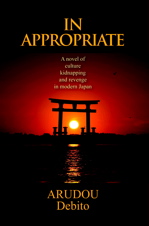
Caroline Pover on protesting Gentosha Inc’s publication of Ichihashi’s book after Lindsay Ann Hawker’s murder

mytest

Handbook for Newcomers, Migrants, and Immigrants to Japan\Foreign Residents and Naturalized Citizens Association forming NGO\「ジャパニーズ・オンリー 小樽入浴拒否問題と人種差別」(明石書店)JAPANESE ONLY:  The Otaru Hot Springs Case and Racial Discrimination in Japansourstrawberriesavatardebitopodcastthumb
UPDATES ON TWITTER: arudoudebito
DEBITO.ORG PODCASTS on iTunes, subscribe free

CONTACT INFORMATION FOR ICHIHASHI’S BOOK PUBLISHER
By Caroline Pover, Author, Being A Broad in Japan, courtesy of the author

http://www.carolinepover.info/2011/01/information-for-anyone-wanting-to-contact-the-publisher-of-ichihashis-book/

Posted in: Foreign women in Japan-Jan 28, 2011

For anyone inclined to contact Gentosha (the publishers of Ichihashi’s book), you can do so by using the following:
Phone from within Japan: 03-5411-6211
Phone from outside of Japan: +81-3-5411-6211
Email (general enquiries): keieikikaku@gentosha.co.jp
Email (comments on their books): comment@gentosha.co.jp

There is a woman there who speaks perfect English, and one of the men responsible for making the decision to approach Ichihashi’s representatives has been reachable, but both these people have refused to give their names. And yes, just to clarify, the publishing house initiated the publication of this book. Their website is http://www.gentosha.co.jp.

Now I understand that there is human interest in this “story” and this book. I understand that human nature means that we are often interested in the sinister and the macabre, often for reasons we cannot explain and perhaps in a way we may not be particularly comfortable with. I understand that people are fascinated by how Ichihashi escaped and how he survived for so long on the run. I fully expected there to be a book at some point, and I don’t really blame the general public for wanting to read it.

What I don’t understand is how this book has been allowed to be released now. BEFORE the trial. Only in the past few days have tentative dates for the trial even been set — surely the publishers must have approached Ichihashi’s representatives knowing that they could produce the book before the trial, and Ichihashi’s representatives possibly thought to seize the opportunity to gain public sympathy.

Ichihashi has several defence lawyers, all of whom are working pro bono. A book like this will become a bestseller (and it will, make no mistake — and some scumbag is probably already on the phone right now asking for the movie rights). The Hawker family has repeatedly refused to accept any money from an individual claiming to be an Ichihashi supporter, and the family also refuses to accept any monies from the publication of this book. Ichihashi and his defence team may or not receive any money themselves, but the publisher certainly will. Ichihashi has been given the opportunity to tell his story, but shouldn’t that story be told in court?

What will be told in court however is the REAL story of what happened to Lindsay Ann Hawker. The real story of what he did to her, with details that her parents and sisters will have to listen to and live with forever. And when THAT story is told, the Gentosha staff who worked on Until I was arrested: Record of a two-year and seven-month blank will feel utterly ashamed of themselves.

ENDS

Suspected murderer of Lindsay Ann Hawker, Ichihashi Tatsuya, publishes book about his experiences. Ick.

mytest

Handbook for Newcomers, Migrants, and Immigrants to Japan\Foreign Residents and Naturalized Citizens Association forming NGO\「ジャパニーズ・オンリー 小樽入浴拒否問題と人種差別」(明石書店)JAPANESE ONLY:  The Otaru Hot Springs Case and Racial Discrimination in Japansourstrawberriesavatardebitopodcastthumb
UPDATES ON TWITTER: arudoudebito
DEBITO.ORG PODCASTS on iTunes, subscribe free

Hi Blog. Here’s the next installment in the circus that is the Ichihashi Tatsuya manhunt and arrest for homicide. First the police royally bungle their dragnet, enabling Ichihashi to live on the lam for years. Then now that he’s finally been arrested, he’s able to come out with a book about his hardships (with the apparently reassuring disclaimer that he’ll donate the proceeds elsewhere — what would he do with the money anyway?) without coming clean about why he allegedly did it. Why do I feel we’ve got the beginnings of hero worship, with pilgrimages following his path, and future fans harping on the adversities this man suffered while evading arrest? Hey, if Ichihashi had eaten his victim in another country, he might have become a writer and traveling gourmet celebrity in Japan. Reactions get weird when things get morbid — and that goes for anywhere (cf. Texas Chainsaw Massacre).

Again, I understand that the accused has the freedom to speak out about his case while in prison (a privilege you hear few people being granted while in Japanese incarceration), but somehow I get a sinking feeling about this. Deeply troubling.  Let’s get a court verdict on this case, already.  It’s been more than a year since his arrest.  Arudou Debito

UPDATE:
The Japan Times reports (excerpt):

http://search.japantimes.co.jp/cgi-bin/nn20110126a2.html
The editor in charge of the book said she contacted Ichihashi’s lawyer last June to offer to publish the fugitive’s story, whereupon she received a positive response. At present there are no plans for an English translation, she told The Japan Times.

In other words, the publisher approached him for the story. I smell less attempt at contrition, more corporate profit motive. What ghouls.

////////////////////////////////////////

Tatsuya Ichihashi wishes murdered Briton Lindsay Ann Hawker would ‘come back to life’
The Japanese man accused of killing and raping British teacher Lindsay Hawker in 2007 has claimed in a book that he wished his victim “could come back to life.”

The Telegraph (UK) 7:00AM GMT 26 Jan 2011
http://www.telegraph.co.uk/news/worldnews/asia/japan/8282651/Tatsuya-Ichihashi-wishes-murdered-Briton-Lindsay-Ann-Hawker-would-come-back-to-life.html

Tatsuya Ichihashi, 32, wrote the book in the 14 months after he was apprehended after two years and seven months on the run.

Titled “Until I Was Arrested,” the book details his journeys by train and ferry the length and breadth of Japan, his repeated efforts to change his appearance by using knives and scissors on his face and his feelings of “contrition” for Hawker’s death.

The naked body of Hawker, 22, from the village of Brandon near Coventry, was found by police in March 2007 buried in sand in a bath tub on the balcony of Ichihashi’s apartment in the Gyotoku district of western Tokyo.

Barefoot, Mr Ichihashi managed to evade the eight officers searching the property. Immediately after making his escape, Mr Ichihashi’s 240-page book reveals that he spent some weeks in Tokyo while the police tried to trace him. He then travelled to the northerly prefecture of Aomori, where he lived rough during the summer, before deciding to go on a pilgrimage of some of the 88 temples that make up the sacred Buddhist route through the mountains of the island of Shikoku.

During this journey, Mr Ichihashi said he wished that Hawker could “come back to life.”

He subsequently spent time on the tiny island of Oha, which has a circumference of less than two miles and is home to just four families.

Mr Ichihashi wrote that he lived in a concrete bunker, living on wild fruit, fish that he was able to catch and cook over an open fire and even eating snakes.

Terrified that he was going to be identified he tried to change his looks by removing two distinctive moles from his cheek with a box cutter, slicing off part of his lower lip with a pair of scissors to make it appear thinner and changing the shape of his nose by sewing it with a needle and thread.

As his money ran short, he picked up labouring jobs on construction sites in Osaka and Kobe, but never staying at one place very long before moving on. He was, however, able to earn close to Y1 million (£7,705) over a period of two years, which he spent on cosmetic surgery.

Mr Ichihashi described the work he carried out, which was mostly the demolition of old buildings, as “tough,” but wrote “this is the price I have to pay. Hawker had to suffer more pain. I took Lindsay’s life and that fact does not change.”

The book reveals that Mr Ichihashi was careful to avoid closed-circuit security cameras in shops and would not look people in the eye. He also usually wore a hat and the white face masks that Japanese people frequently wear during the winter or at the height of the hay-fever season.

During his 31 months on the run, he read the Harry Potter series of books, “The Catcher in the Rye” and “Kafka on the Shore,” by Haruki Murakami.

He was eventually caught in Nov 2009 while waiting to board a ferry to return to Okinawa.

Mr Ichihashi does not comment on the killing of Hawker in the book or his motives, but it does include an apology.

He said the book was “a gesture of contrition for the crime I committed” and that royalties from the book would be given from Ms Hawker’s family.

Bill and Linda Hawker, in a statement issued through their legal representative in London, say they have no intention of accepting the money and only want to see justice for their daughter in a Japanese court.
ENDS
RELATED ARTICLES
Lindsay Hawker ‘killer’ wants to donate book proceeds to family 25 Jan 2011
Lindsay Hawker murder: timeline 25 Jan 2011

/////////////////////////////////////////////////

The Japan Times, Thursday, Jan. 27, 2011
Ichihashi recalls manhunt stress
By JUN HONGO Staff writer

Full article at http://search.japantimes.co.jp/cgi-bin/nn20110127a1.html

Accused killer Tatsuya Ichihashi’s book released Wednesday offers anecdotal accounts of his 31-month life on the run, from fears of being caught and listening to radio updates on the manhunt, to moments of awe over nature, to how he abstained from sex because of what he had done, and how it may feel to be hanged.

He writes about his determination to alter his appearance to keep one step ahead of the law, and how he even dared a visit to Tokyo Disneyland, but offers no insights into why Briton Lindsay Ann Hawker was slain in his Chiba apartment.

As reported earlier, Ichihashi said he wrote the 283-page book “as part of an act of contrition” for Hawker’s slaying and added he is “aware of the criticism it may bring on me.”…

Confessing he had “no courage to commit suicide,” he eventually decided to take shelter on Ohajima, a tiny island off Kumejima in Okinawa that he learned about in a library book.

There, he gathered fish, crabs, snakes and sea cucumbers for food but had a hard time finding fresh water. During the daytime he kept to a cavelike shelter on the island to avoid being spotted by locals and tourists, he wrote…

The book, “Taiho Sarerumade — Kuuhaku no Ninen Nanakagetsu no Kiroku” (“Before I Was Arrested — Records of the Blank Two Years and Seven Months”), published by Gentosha Inc., spans the time between Ichihashi’s flight from police at his Chiba apartment in March 2007 to the moment of his arrest at an Osaka terminal for an Okinawa-bound ferry in November 2009.

Ichihashi’s trial is expected to start later this year, and it may be one involving lay judges.
ENDS

/////////////////////////////////////////////////////

市橋被告、自分で下唇切る整形手術…ハサミで
(2011年1月26日12時40分 読売新聞)
http://www.yomiuri.co.jp/national/news/20110126-OYT1T00459.htm

千葉県市川市で2007年3月、英国人女性リンゼイ・アン・ホーカーさん(当時22歳)が遺体で見つかった事件で殺人などの罪で起訴された市橋達也被告(32)の逃亡中の行動が、26日に出版された市橋被告の手記で明らかになった。

手記「逮捕されるまで 空白の2年7カ月の記録」(幻冬舎)によると、市橋被告が市川市の自宅マンションから捜査員を振り切って裸足で逃げ、09年11月に逮捕されるまで、行動は青森から沖縄まで二十数都府県に及んだ。途中、大阪などで土木作業などで金を稼ぎ、身の危険を感じると、沖縄の離島に潜伏し、魚やヘビを取って食べるなどしたほか、「リンゼイさんが生き返ると思った」と四国で遍路道を歩いたことも。また、市橋被告が自らハサミで下唇を切るなどして整形を試みたことも記されている。

捜査関係者の話では、市橋被告は千葉県警の調べに対し、事件の詳細や逃亡生活についてほとんど語ることはなく、出版を知った県警が最近になって離島に捜査員を派遣するなどしたという。

手記では、印税をリンゼイさん遺族に渡すか公益のために使うとしているが、リンゼイさんの父ウィリアムさんは代理人を通じ、「まだ法廷に立ってもいない市橋被告が、手記の執筆、出版を許されたことに嫌悪感を感じる。手記は家族をさらに傷つけるだけで、私たちが望むのは公正な裁きだけだ」とコメントした。
ENDS

/////////////////////////////////////////////////////

市橋被告、離島の小屋でヘビ食べた 逃亡生活を手記に
朝日新聞 2011年1月26日3時1分
http://www.asahi.com/national/update/0125/TKY201101250487.html

千葉県市川市で2007年3月、英会話講師の英国人女性リンゼイ・アン・ホーカーさん(当時22)が遺体で見つかった事件で、殺人などの罪で起訴された住所不定、無職市橋達也被告(32)が、一昨年11月に大阪市内で逮捕されるまで、沖縄の離島に長期間潜伏するなどの逃亡生活を送っていたことがわかった。

市橋被告が26日に幻冬舎から発売する「逮捕されるまで 空白の2年7カ月の記録」で明らかにした。

手記などによると、潜伏先の一つは、沖縄本島から西に約100キロの久米島沖合にあるオーハ島。周囲約2.7キロの島は、4世帯6人が住民登録をしているだけだ。

島東部の密林地帯。沖縄に自生するヤシの木をかき分けて進むと、市橋被告が潜伏していたという小屋が姿を現した。コンクリートがむきだしの室内には、床に釣り具やペットボトルなどがあり、火をおこしたような跡もあった。

弁護士によると、市橋被告は逃走中にこの島を少なくとも3回は訪れた。持ち込んだ食料や海で釣った魚、捕獲したヘビなどを食べながら、1回の訪問につき数カ月間、この小屋に滞在したという。

手記では、事件発生直後から日本中を逃避行した足取りを記している。発生直後は東京・秋葉原から埼玉、静岡へ。新潟や青森にも行き、お遍路回りで四国全県を回った。大阪や兵庫、沖縄では、土木建築作業員として合計2年以上働いていたという。名古屋の病院で整形手術をしたことにも触れている。

千葉県警は、逃亡生活の実態は市橋被告が話さなかったため、把握していなかった。出版社側から発売の連絡を受けて、情報を確認するため、オーハ島に捜査員十数人を派遣。23日、市橋被告の潜伏先とされる小屋を確認した。

市橋被告が手記をまとめたのは昨年末。市橋被告の意向を受けて、弁護団が出版社と連絡を取ったという。弁護団は「被告が被害者のご遺族に対し、自分がなし得ることはないかと真摯(しんし)に考えてとった行動」と書面で説明しているが、現時点ではホーカーさんの遺族側と賠償金の交渉は行われていないという。
ENDS

JT on Rita Taketsuru, Scottish mother of Japan’s whisky industry, and her connections to Nikka’s factory in Yoichi, Hokkaido

mytest

Handbook for Newcomers, Migrants, and Immigrants to Japan\Foreign Residents and Naturalized Citizens Association forming NGO\「ジャパニーズ・オンリー 小樽入浴拒否問題と人種差別」(明石書店)JAPANESE ONLY:  The Otaru Hot Springs Case and Racial Discrimination in Japansourstrawberriesavatardebitopodcastthumb
UPDATES ON TWITTER: arudoudebito
DEBITO.ORG PODCASTS now on iTunes, subscribe free

Hi Blog. What follows is a great story, of Rita Taketsuru nee Cowan, a NJ who comes to Japan, supports her husband on the quest for a great Japanese-made Scotch whisky, naturalizes, and lives out her life in a very different Hokkaido than I’ve ever experienced, gaining fans that salute her to this day. Have a read of the excerpt below. We should all be so lucky to leave a legacy such as this. Arudou Debito

////////////////////////////////////////////

The Rita Taketsuru Fan Club
The romantic story of a woman still toasted by some as the Scottish mother of Japan’s whisky industry
By JON MITCHELL
The Japan Times Sunday, Nov. 28, 2010, courtesy of MMT

(conclusion:) As it turned out, she would never set foot again in the country of her birth. In January 1961, Rita Taketsuru passed away after a long struggle with liver disease. Masataka was devastated. He blamed her sickness on the war and Yoichi’s harsh winters, and he lamented the fact that they hadn’t chosen to stay in Britain. For two days after her death, he locked himself in his room and, on the day of her funeral, too heartbroken to visit the crematorium, he begged for her bones to be brought to him in a bowl so that he could lie next to his beloved forever.

Masataka outlived his wife by 18 years, and today the two are interred together on a hillside near the distillery. Walking through the town, I’m delighted to discover that the woman who’d once been ostracized as a potential enemy of the state has since left her indelible mark on the landscape — Yoichi’s main thoroughfare is named “Rita Road” and a kindergarten she helped to establish still bears her name.

After 15 minutes, I arrive at the Taketsurus’ grave. The gray lozenge of stone is lit pink by the setting sun, some fireflies flare brightly and the air smells of freshly-mown grass. In the valley below, I spot the red rooftop of the distillery.

In the years since his death, Masataka’s genius at Scotch whisky production has finally been recognized: In 2007, a bottle of “Taketsuru” was voted the world’s best blended malt; followed in 2008 by 20-year-old “Yoichi” winning the best single malt in the world award.

The “Yoichi” orbits out of my price range, so it’s a miniature bottle of the blended that I’ve brought for Masataka — and for Rita, a packet of Scottish shortbread. Clasping my hands together in a quiet prayer, I think about what I’ve learned during my trip here: About the Taketsurus’ love and loss, their determination and persecution, and the leap of faith it must have taken Rita to follow the man she married halfway around the world in pursuit of an improbable dream.

I wonder whether these qualities were what attracted those three men on that wintery train to her life story in the first place. I’m not sure. But as I lay my offerings on the grave, there’s one thing about which I am certain — the Rita Taketsuru Fan Club has a new member.

Full article at http://search.japantimes.co.jp/cgi-bin/fl20101128x1.html

Japan Times: Otaru Beer, with NJ braumeister, revolutionizing microbrews and beerdrinking styles in Japan

mytest

Handbook for Newcomers, Migrants, and Immigrants to Japan\Foreign Residents and Naturalized Citizens Association forming NGO\「ジャパニーズ・オンリー 小樽入浴拒否問題と人種差別」(明石書店)JAPANESE ONLY:  The Otaru Hot Springs Case and Racial Discrimination in Japansourstrawberriesavatardebitopodcastthumb
UPDATES ON TWITTER: arudoudebito
DEBITO.ORG PODCASTS now on iTunes, subscribe free

Hi Blog. An article of personal import to me. The Japan Times reports on Johannes Braun, braumeister of Otaru Beer, who has come here and made the German-style brewing process a success. I drink with friends at Otaru Beer in Sapporo at least once a month (three to four times a month in summer), and think this development is good both for us as a local economy and for Japan as a place to do business. Arudou Debito

///////////////////////////////////

German braumeister puts Otaru brewery on map
Specialized suds sell and speak of long pedigree, perfection
The Japan Times, Saturday, Jan. 22, 2011
By ROB GILHOOLY

http://search.japantimes.co.jp/cgi-bin/fl20110122a1.html

While Japan’s major breweries continue to report flat beer sales amid an ailing economy, there is one Hokkaido-based beer maker that’s brewing up a storm.

Otaru Beer in the port city of Otaru has continued to flourish since its inception 15 years ago, with output growing at an annual average of 10 percent. At its head is a man who hails from a village near Frankfurt with a population of just 500 people.

Braumeister Johannes Braun, one of just two German nationals residing in Otaru, attributes the microbrewery’s success to a surprisingly simple recipe. “I brew beer — real beer, using only natural ingredients,” he says. “Many breweries in Germany still abide by a law governing beer production that dates back almost 500 years. I follow that law to the letter.”…

“The taste gap (between ‘third sector’ beverages and mass-produced malt beers) has closed dramatically, to the degree that consumers can’t tell the difference and therefore naturally choose the cheaper option,” he says. “That’s the ideology of the big makers and that’s why the output of beer is dropping in recent years.”

This is not such a big issue for most consumers in Japan who, Braun says, see beer as “little more than something to clear the throat” before moving on to something else.

Indeed, “nodogoshi ga ii” — a phrase used to describe the smooth sensation of beer passing down the throat — is a quality that Japan’s major breweries frequently stress in promoting their products, while taste or body are given short shrift…

Yet, Braun says this shift toward nonmalt “nonbeers” poses little threat to his brewery. Japan’s major beer producers have each attempted to mimic the kind of craft ales produced by the country’s 222 microbreweries, but invariably fail due to the distribution difficulties posed by yeast-based products.

“Every year, Asahi Breweries sends staff here for research purposes and they often say they would like to do what we do, but couldn’t get it to the customer in decent enough shape,” says Braun. “Neither could I, and that’s why I don’t try. What’s important for microbreweries is not to expand to other areas, but to brew decent beer that will lure more customers and improve understanding of what real ale is all about. By doing this, I believe we can change the beer culture here.”

Full article at http://search.japantimes.co.jp/cgi-bin/fl20110122a1.html

Economist.com offers microcosm of Nagasaki as example of Japan’s urban decline

mytest

Handbook for Newcomers, Migrants, and Immigrants to Japan\Foreign Residents and Naturalized Citizens Association forming NGO\「ジャパニーズ・オンリー 小樽入浴拒否問題と人種差別」(明石書店)JAPANESE ONLY:  The Otaru Hot Springs Case and Racial Discrimination in Japansourstrawberriesavatardebitopodcastthumb
UPDATES ON TWITTER: arudoudebito
DEBITO.ORG PODCASTS on iTunes, subscribe free

Hi Blog. The Economist last week had quite a bleak article about Nagasaki, and used it as an example of Japan’s urban decline. Of course, it hints at the possibility of urban renewal through influxes of people (using the oft-cited policy panacea of “foreign students“). But again, not immigration. As far as Debito.org is concerned, the best bit of the article is:

====================================
Can Nagasaki pull out of the spiral? Historically, after all, the city is Japan’s most open, allowing in Dutch and Chinese merchants in the 17th-19th centuries when foreign trade with the rest of the country was banned. Nagasaki is one of the closest cities to China and South Korea, with opportunities for tourism and trade. The museum to the atom bomb and its victims is world famous. Nagasaki is the birthplace of Japanese Christianity. It was a cradle of insurrection against the last shogunate, helping to shove Japan into the modern age with the Meiji Restoration of 1868.

To reverse the decline, Mr Sato has drawn up a plan with local officials that looks for overseas revenues to make up for falling domestic ones. That is hardly revolutionary. Among the goals are doubling numbers of foreign students, to 3,000; turning the shipyard into a tourist site; and bolstering sales of kamaboko, a rubbery fishcake. But asked about bolder measures such as encouraging foreign investment and skilled immigrants, Mr Sato says there is “not the right environment” for that yet.
====================================

Still wondering if the “yet” ever expires, even as things go down and down. Arudou Debito

Full article follows:
////////////////////////////////////////////////

The alarm bells of Nagasaki
Japan’s “window on the world” is now a window on what ails the country
Urban decline in Japan
Economist.com Jan 13th 2011 | NAGASAKI | from PRINT EDITION

http://www.economist.com/node/17909982?story_id=17909982

AT 60, Hiroshi Ikeguchi wryly describes himself as one of the youngest in his district. He has lived his whole life in Irifune, just above the Mitsubishi Heavy Industries shipyard. But like his ageing neighbours, the Nagasaki suburb is collapsing around him. A dozen houses have been left to rot after their owners have died. Some are piles of timber; in others, katsura trees grow through the roofs. Outside one is a new year’s offering of fruit left by a neighbour who still laments how the death of the “kind old lady” who lived there went undiscovered for a week. Peer through the letterbox, and in the gloom you see a calendar pinned to the wall. The date is September 1988.

In Mr Ikeguchi’s youth, when Nagasaki was rebuilding itself after nuclear devastation in 1945, the streets near his house rang with the sound of shipwrights walking to the Mitsubishi yard each morning. Now Nagasaki’s economy has gone still. The port city’s fortunes show how three forces sapping Japan’s energies—depopulation, overcentralisation and foreign competition—are hurting not just rural backwaters but once-prosperous cities on Japan’s fringe. The phenomenon remains partly hidden. Residents of luxury apartments across the bay complain about Irifune’s shabby appearance. If only they knew, Mr Ikeguchi says, how bad it really is.

Nagasaki’s troubles are self-reinforcing, argues Takamitsu Sato, president of the Nagasaki Economic Research Institute. Since the 1960s a brain drain has sucked people towards Osaka and Tokyo. Young people who left to find jobs elsewhere never came back. Even now, seven in ten college students leave to study, and over half of young people find jobs elsewhere.

The brain drain reinforces a demographic trend. The prefecture’s working-age population has shrunk from over 1m in 1990 to 874,000 in 2008, a result both of the exodus and a declining birth rate. The prefecture of 1.45m is shrinking and ageing so fast that one of Nagasaki’s main department stores, Tamaya, has closed down its children’s department and stocked up on undergarments and hearing aids. With shrinking investment, and fewer jobs and young families, new house-building has fallen by half in the past ten years.

So now Nagasaki’s living standards are falling too, a shock in a country where economists said that individuals could be better off even if the overall economy shrank in size. Mr Sato’s institute reckons that if today’s trends continue, GDP per person will fall from ¥3.26m ($28,000) in 2007 to ¥3.14m by 2020. Everything, he says, is going downward.

Can Nagasaki pull out of the spiral? Historically, after all, the city is Japan’s most open, allowing in Dutch and Chinese merchants in the 17th-19th centuries when foreign trade with the rest of the country was banned. Nagasaki is one of the closest cities to China and South Korea, with opportunities for tourism and trade. The museum to the atom bomb and its victims is world famous. Nagasaki is the birthplace of Japanese Christianity. It was a cradle of insurrection against the last shogunate, helping to shove Japan into the modern age with the Meiji Restoration of 1868.

To reverse the decline, Mr Sato has drawn up a plan with local officials that looks for overseas revenues to make up for falling domestic ones. That is hardly revolutionary. Among the goals are doubling numbers of foreign students, to 3,000; turning the shipyard into a tourist site; and bolstering sales of kamaboko, a rubbery fishcake. But asked about bolder measures such as encouraging foreign investment and skilled immigrants, Mr Sato says there is “not the right environment” for that yet.

Meanwhile, Nagasaki’s once-mighty shipping industry has been keelhauled by South Korean and Chinese yards with lower costs and quicker thinking. And Mr Ikeguchi says that even modest government initiatives, like demolishing abandoned houses in Irifune to attract newcomers, take years to grind through city hall.

Like the elders of Nagasaki, the prime minister, Naoto Kan, realises that Japan must look abroad since its own markets are shrinking. At the start of 2011, he declared (143 years after the fact, some might say) that this was the “first year of opening Japan to the outside world” in the modern era. Nagasaki is a good example of why action needs to be swift and bold.

Correction: 1.45m people live in the prefecture of Nagasaki, not the city as we originally wrote. This was corrected on January 18th 2011.

ENDS

AP video: Sting talks to Ric O’Barry on “The Cove” and dolphin slaughters

mytest

Handbook for Newcomers, Migrants, and Immigrants to Japan\Foreign Residents and Naturalized Citizens Association forming NGO\「ジャパニーズ・オンリー 小樽入浴拒否問題と人種差別」(明石書店)JAPANESE ONLY:  The Otaru Hot Springs Case and Racial Discrimination in Japansourstrawberriesavatardebitopodcastthumb
UPDATES ON TWITTER: arudoudebito
DEBITO.ORG PODCASTS on iTunes, subscribe free

Hi Blog. For another Weekend Tangent, we have rock star Sting being asked for an opinion of documentary “The Cove” and dolphin slaughters by activist Ric O’Barry.  Sting gives an intelligent opinion without alienating his Japanese market (something he’s had a history of doing in the past):

If you want to see Sting more in character vis-a-vis his outspokenness, have a listen to him playing “Murder By Numbers” with Frank Zappa some years ago. Arudou Debito

Weekend Tangent: BBC show QI gets scolded by J media and embassy for insensitivity re atomic bombings

mytest

Handbook for Newcomers, Migrants, and Immigrants to Japan\Foreign Residents and Naturalized Citizens Association forming NGO\「ジャパニーズ・オンリー 小樽入浴拒否問題と人種差別」(明石書店)JAPANESE ONLY:  The Otaru Hot Springs Case and Racial Discrimination in Japansourstrawberriesavatardebitopodcastthumb
UPDATES ON TWITTER: arudoudebito
DEBITO.ORG PODCASTS on iTunes, subscribe free

Hi Blog.  As a Weekend Tangent (for the record, I have no particular stance on this issue), here’s another bit following yesterday’s blog entry about official GOJ reactions to overseas media:  The BBC One show QI and its segment on the “unluckiest (or luckiest, depending on how you look at it) man in the world”:  a survivor of two atomic bombings who died recently at the age of 93.  It has engendered much criticism from the J media and cyberspace.  Here’s a comment from Debito.org Reader JS:

///////////////////////////////////////////////

Hi, Dunno if you want to cover this, but NHK Newswatch 9 have just done a substantial piece on the coverage of a double A-bomb survivor on a BBC show called QI that involved the anchors lecturing us on the insensitivity, ending with “shame on them”. This is the offending clip:

http://www.youtube.com/watch?v=5dgzszWlG6c

And the coverage:

==========================================
Japan protests to BBC over treatment of ‘double A-bomb survivor’
(Mainichi Japan) January 21, 2011

http://mdn.mainichi.jp/mdnnews/news/20110121p2g00m0dm027000c.html

Tokyo (Kyodo) — The Japanese Embassy in London lodged a written protest against the BBC and a TV production agency, arguing that they insulted a deceased Japanese man who survived both the U.S. atomic bombings of Hiroshima and Nagasaki during World War II, embassy and other sources said Thursday.

In a comedy quiz show broadcasted by the BBC on Dec. 17, Tsutomu Yamaguchi, whose international profile has been raised as a double hibakusha and who died at age 93 last January, was introduced as “The Unluckiest Man in the World,” with pictures of his face and atomic clouds presented in the studio.

A producer of the popular quiz show, “QI,” has already apologized to people who sent protest e-mails, noting “we greatly regret it when we cause offence” and “it is apparent to me that I underestimated the potential sensitivity of this issue to Japanese viewers.”

But the producer added the program has often featured the tragic experiences of Americans and Europeans in a similar manner.

On the show in question, the host explained that Yamaguchi was badly burned by the atomic bomb when he was in Hiroshima on business and after returning to Nagasaki, he was atomic-bombed again.

One of the guests asked whether Yamaguchi got on a train to go to Nagasaki. The host said, “Even though the atom bomb fell, the trains were working. So he got on a train to Nagasaki and a bomb fell again,” drawing laughs from the show’s personalities and the audience.

According to the embassy, it sent the BBC and the production agency a letter on Jan. 7, saying it is inappropriate and “insensitive” to pick on Yamaguchi in that way.

In Japan, Toshiko Yamasaki, 62, Yamaguchi’s oldest daughter living in Nagasaki, expressed her anger about the issue, saying on Friday, “I cannot forgive (the quiz show) as it looked down on my father’s experiences when the world is moving toward nuclear disarmament.”

She added her family had laughingly talked about her father being unlucky, but “it is a different story when (my father) was treated in that way in Britain, a nuclear-capable nation.”

Such a problem happens due in part to “a lack of seriousness about nuclear reduction,” she said.

Born in Nagasaki, Yamaguchi suffered the A-bombing in Hiroshima on Aug. 6, 1945, and another bombing in Nagasaki after returning home three days later.

ENDS

////////////////////////////////////////////////////

BBC 被爆者をコメディーに
NHK 1月21日 21時15分
http://www3.nhk.or.jp/news/html/20110121/t10013559161000.html

イギリスの公共放送、BBCが先月放送したコメディー番組の中で、広島と長崎で2度、原爆の被害に遭った被爆者の男性を「世界一不運な男」などとして取り上げたことに対し、ロンドンの日本大使館は「不適切で配慮を欠く」とBBCに対して抗議しました。

この番組は、BBCの人気コメディー番組「QI」で、クイズ形式をとりながら出演者がジョークを交え、番組を進めていきます。この番組の先月17日の放送の中で、広島と長崎で2度、原爆の被害に遭い、去年1月に亡くなった長崎市の被爆者、山口彊さんが「世界一運の悪い男」として取り上げられました。番組の中で、司会者は、仕事で広島に出張していた山口さんが被爆してやけどを負い、列車で長崎まで帰った経緯を説明して、「そこでもう一度原爆が落ちたんだよ」と言うと、スタジオから大きな笑いが起きていました。ロンドンの日本大使館は、番組を視聴していたイギリスに住む日本人から指摘を受け、今月7日にBBCと番組の制作会社に対して、「こういった形で被爆者を取り上げるのはまったくもって不適切で、日本国民の感情への配慮を欠いている」とする抗議の書簡を送りました。これに対して、番組のプロデューサーから、書簡が21日、日本大使館に届きました。この中では、「決して日本の方の気分を害する意図はなく、不快な思いをさせたことは極めて遺憾に思います。山口さんをからかう意図ではなく、彼のあまりに驚くべき経験を正確に伝え、そういった状況でもめげない日本の方々に敬意を表する趣旨でした。この件について、日本の方々がいかに敏感かを私たちが過小に見ていたことは明らかです」などと遺憾の意を表明しているということです。広島で被爆し、日本被団協=日本原水爆被害者団体協議会の代表委員を務める坪井直さんは「核兵器による被害の恐ろしさを分かっておらず、被爆者のことを何だと思っているのかと腹立たしくなる。被爆者たちが世界各地で核兵器の廃絶を訴えているのだから、海外でも理解してもらえたと思っていたが、それは間違いだった」と話していました。長崎原爆被災者協議会の山田拓民事務局長は「イギリスにも核兵器廃絶のために活動している人たちがいることを知っているので、そういう国ではないと思っていたが、被爆者を笑いの番組の対象にするなど信じられない。被爆者をなんと思っているのかと感じる。放送内容を確認したうえで、必要であれば私たちもきちんと抗議しなければならない」と話しています。山口彊さんの長女で、長崎市の山崎年子さんは「核保有国のイギリスで被爆体験を笑われるのは許せない。原爆の恐ろしさが、まだ世界には伝わっていないということだと思う。みたび原爆が落とされることのないよう、訴えていきたい」と話していました。

===================================

Japan protests to BBC over treatment of ‘double A-bomb survivor’
Kyodo News/Japan Today Friday 21st January, 05:34 PM JST

http://japantoday.com/category/national/view/japan-protests-to-bbc-over-treatment-of-double-a-bomb-survivor

LONDON —The Japanese Embassy in London lodged a written protest against the BBC and a TV production agency, arguing that they insulted a deceased Japanese man who survived both the U.S. atomic bombings of Hiroshima and Nagasaki during World War II, embassy and other sources said Thursday.

The Japanese Embassy received on Friday a letter of apology from a producer of the popular quiz show, ‘‘QI,’’ dated Monday, after the producer had apologized to people who had sent protest e-mails.

The content of the letter to the embassy was similar to the producer’s e-mail response to the people who protested, and said that ‘‘we greatly regret it when we cause offence’’ and ‘‘it is apparent to me that I underestimated the potential sensitivity of this issue to Japanese viewers.’‘

In a comedy quiz show broadcast by the BBC on Dec 17, Tsutomu Yamaguchi, whose international profile has been raised as a double hibakusha and who died at age 93 last January, was introduced as ‘‘The Unluckiest Man in the World,’’ with pictures of his face and atomic clouds presented in the studio.

But the producer added in his message that “QI” is not the type of program that makes fun of featured subjects and it introduced Yamaguchi’s experience without misrepresenting it.

On the show in question, the host explained that Yamaguchi was badly burned by the atomic bomb when he was in Hiroshima on business and after returning to Nagasaki, he was atomic-bombed again.

One of the guests asked whether Yamaguchi got on a train to go to Nagasaki. The host said, ‘‘Even though the atom bomb fell, the trains were working. So he got on a train to Nagasaki and a bomb fell again,’’ drawing laughs from the show’s personalities and the audience.

The show prompted the Japanese Embassy to send the BBC and the production agency a letter on Jan 7, saying it is ‘‘inappropriate and insensitive’’ to present Yamaguchi in the way that it did, it said.

In Japan, Toshiko Yamasaki, 62, Yamaguchi’s oldest daughter living in Nagasaki, expressed her anger, saying on Friday, ‘‘I cannot forgive (the quiz show) as it looked down on my father’s experiences when the world is moving toward nuclear disarmament.’‘

She said her family had laughingly talked about her father being unlucky, but ‘‘it is a different story when (my father) was treated in that way in Britain, a nuclear-capable nation.’‘

This kind of problem occurs due in part to ‘‘a lack of seriousness about nuclear reduction,’’ she said.

Born in Nagasaki, Yamaguchi suffered the A-bombing of Hiroshima on Aug 6, 1945, and the bombing of Nagasaki three days later after returning home.
ENDS
=====================================

For the record, QI is a general knowledge quiz show with liberal doses of humour (points are awarded not for being correct, but for being “quite interesting”). They were actually quite complimentary about Yamaguchi and the Japanese resolve in the face of adversity, but apparently it was enough to merit a formal complaint and prime-time news coverage. Oh, and apparently Yamaguchi used to call himself “the unluckiest man in the world”, and he and his family laughed about it. I would say, as a Brit, that they’re laughing at the irony of the situation, not at Yamaguchi personally.

There are lots of warm, understanding comments on YouTube… JS

//////////////////////////////////////////////////////

The most interesting comment so far on Japan Today I think is this one:

=====================================

Frungy: QI is dark, intelligent and biting, typical English humour. Textbooks in Japan are dark, simple and tragic, typical Japanese stories. There’s a fundamental mismatch between their approach to sensitising an issue. When dealing with something tragic the English will make a joke of it, allowing people to dispel the tension by laughing. When dealing with something serious the Japanese will tell the story simply and tragically, and then cry inside.

Of the two I find the English approach more healthy. It allows them to move on and discuss the difficult issue having approached it head on, removed the sting, and made it possible to deal with without constant pain.

The Japanese on the other hand bottle up the feelings and they simmer inside. That’s why it’s impossible to really discuss the atomic bombings in Japan, the issue simply makes most Japanese people feel too sad and miserable for words. They’ve never really removed the sting.

=====================================

Conclusion for me: I think there is a strong case that can be made for nontransferability of humor, particularly irony, across cultures.  Arudou Debito

NY Consulate Japan’s Kawamura Yasuhisa offers more rosy picture of immigration to Japan in NYT Letter to the Editor

mytest

Handbook for Newcomers, Migrants, and Immigrants to Japan\Foreign Residents and Naturalized Citizens Association forming NGO\「ジャパニーズ・オンリー 小樽入浴拒否問題と人種差別」(明石書店)JAPANESE ONLY:  The Otaru Hot Springs Case and Racial Discrimination in Japansourstrawberriesavatardebitopodcastthumb
UPDATES ON TWITTER: arudoudebito
DEBITO.ORG PODCASTS now on iTunes, subscribe free

Hi Blog. As is good gaiatsu media policy, when we have somebody saying something discomfiting about Japan in overseas media, the GOJ’s Gaijin Handlers will step in to present the “Official View” (would be interesting if, say, the USG did more of that in Japan’s media).

Here’s the Japan Consulate in New York doing just that, with Mr. Kawamura earning his keep by presenting in the NYT the preferred image of Japan overseas — not of a country with policies that do not encourage NJ to stay and become immigrants, but rather of a country that seems more welcoming.

Even though he says in the opening and infers in the closing that foreign labor (not immigration, again) is of questionable suitability for “our” economy. And let’s neglect to mention the first drop in the NJ population for nearly a half-century in 2009. Besides, we have the “vaporware” policy of doubling some other numbers of temporary influx (students and foreign workers (not immigrants) — again, under policies no doubt that encourage people to give the best years of their working lives to us and then be sent “home” despite their investments). I think the concluding sentence offers the biggest lie: Japan will not “continue to find” the best policy mix, but will “continue to search for”.

(BTW, the original title of the article was, “Its Workers Aging, Japan Turns Away Immigrants”.  Yet within 48 hours it was was mysteriously softened to “Despite Shortage, Japan Keeps a High Wall for Foreign Labor”.  Seems the gaiatsu has made the word “immigration” a taboo topic for overseas newspapers too.)

Have a beer, Mr. Kawamura. You’ve discharged your duty well. Arudou Debito

///////////////////////////////////////////

LETTER TO THE EDITOR
Foreign Workers in Japan: An Official View
The New York Times, published January 18, 2011
Courtesy JLO

http://nyti.ms/hFNLJk

To the Editor:

Despite Shortage, Japan Keeps a High Wall for Foreign Labor” (“The Great Deflation” series, front page, Jan. 3) oversimplifies a complex situation and seems to present foreign labor as a cure-all for Japan’s aging and declining population.

The article also appears to embrace clichés about Japanese homogeneity without pointing out recent policy changes. Japan is not walling itself off; quite the opposite is true.

In its new growth strategy, the Japanese government recognized the value of skilled foreign workers and their contributions to economic growth. Japan aims to double its skilled foreign work force by 2020 and to double the number of students from abroad that it welcomes, up to 300,000.

This policy reinforces the encouraging growth in the number of registered foreign residents. Despite a recent drop noted in your article, over the past 10 years registered foreigners in Japan have increased by almost 40 percent (from 1.6 million to 2.2 million). Japan faces tough economic and demographic challenges. But Japan will continue to find the policy mix that works best for our society and our economy.

Yasuhisa Kawamura
Director, Japan Information Center
Consulate General of Japan
New York, Jan. 14, 2011

ENDS

Hollywood Reporter: JT “Richard Cory” child abduction story optioned as possible movie/TV production

mytest

Handbook for Newcomers, Migrants, and Immigrants to Japan\Foreign Residents and Naturalized Citizens Association forming NGO\「ジャパニーズ・オンリー 小樽入浴拒否問題と人種差別」(明石書店)JAPANESE ONLY:  The Otaru Hot Springs Case and Racial Discrimination in Japansourstrawberriesavatardebitopodcastthumb
UPDATES ON TWITTER: arudoudebito
DEBITO.ORG PODCASTS now on iTunes, subscribe free

Hi Blog.  Hollywood Reporter said last month that the story of Richard Cory will be optioned for development into a media event (movie or TV).  This is a pseudonymous story of a NJ father in an international marriage in Japan, who reported in a series of articles for the Japan Times Community Page about his hardships getting access to his children — after his wife went AWOL, then nuts.  His case particularly highlights the systematic barriers that fathers and NJ face trying to get a fair shake in custody hearings, even when the J spouse is certifiable.

The optioning is good news, in the sense that the issue of “Left-Behind Parents” (LBP, to those of us who are) deserves plenty of exposure.  Systematic Child Abduction and Parental Alienation after separation and divorce in Japan affects not only NJ, but LBPs who are Japanese as well.

A reality check at this juncture, however.  Something being optioned does not necessarily mean something gets made.  Especially when the market concerns the darker aspects of Japan:  Robert Whiting’s best book, TOKYO UNDERWORLD, has languished for many years in production hell.  SOUR STRAWBERRIES got made in part thanks to German government funding.  FROM THE SHADOWS is still looking for investors.  And even the goofy airy-fairy movies about NJ in Japan, such as Oguri Saori’s MY DARLING IS A FOREIGNER, was a flop — grossing  less than $7 million bucks to become only the 71st-grossing movie in Japan last year.  The more successful yet serious-in-tone movies about foreign treatment in Japan, like LOST IN TRANSLATION, are anomalous.  Good luck to Richard Cory.  Arudou Debito

/////////////////////////////////////////////////////

Winery Productions Prepares for 2011 Film, TV Vintage
6:29 AM 12/14/2010 by Gavin J. Blair
Optioned Two U.S.-oriented Japan Stories for Feature Production

http://www.hollywoodreporter.com/news/winery-prepares-2011-film-tv-59592
Courtesy Children’s Rights Network Japan

TOKYO – Entertainment consultancy Winery Productions is making moves into film and TV production in 2011.

After providing consultancy services to overseas entertainment companies since 1998, Winery is working on realizing a number of projects next year. The company is aiming to leverage its local knowledge and connections to produce Japan-related TV and film content for the domestic and international markets.

“We’ve gotten a lot of encouragement from our clients and friends and we’re all really excited about this. We’ve got a nice niche and we’re looking to leverage that niche to explore new opportunities,” Winery Productions president Daren Afshar told The Hollywood Reporter.

Winery has optioned the film rights to the story of Richard Cory, whose children were kidnapped by his Japanese wife – a topical tale about the lack of rights for foreign spouses in Japan.

The company has also secured the rights to Field of Spears: The Last Mission of the Jordan CrewGregory Hadley details what happened to the airmen after their capture and the subsequent cover-up of the events. the story of the fate of a B-29 crew shot down over rural Japan near the end of the war. The book by professor

Both movies are to be aimed at the U.S. market, though shot in Japan.

In addition, a celebrity talk show to feature Western talent being interviewed in the city of Nagoya, in central Japan, is under development.

Afshar said that he is currently talking to domestic TV networks about realizing the project, working title Q&A.
ENDS

Japan Times publishes reactions to their Dec. 28 article on Old Japan Hands accepting their foreigner status

mytest

Handbook for Newcomers, Migrants, and Immigrants to Japan\Foreign Residents and Naturalized Citizens Association forming NGO\「ジャパニーズ・オンリー 小樽入浴拒否問題と人種差別」(明石書店)JAPANESE ONLY:  The Otaru Hot Springs Case and Racial Discrimination in Japansourstrawberriesavatardebitopodcastthumb
UPDATES ON TWITTER: arudoudebito
DEBITO.ORG PODCASTS now on iTunes, subscribe free

Hi Blog. The Japan Times yesterday published letters to the editor regarding Charles Lewis’s December 28 article in the Japan Times, on old Japan hands Konishiki, Peter Barakan, and Tsurunen Marutei, and their coping strategies for living in Japan long-term.

See it at http://search.japantimes.co.jp/cgi-bin/fl20110118hs.html

The letters remind me of the parable of the blind men feeling up the elephant and describing what it looks like: One feels the trunk and thinks an elephant is like a snake or a tree branch, one feels the legs and thinks an elephant is like a pillar, one feels the tail and think it’s like a rope, one feels the ears and thinks it’s like a fan, one feels the tusk and thinks it’s like a pipe, one feels the belly and thinks it’s like a wall, etc. It’s a good metaphor for not getting the big picture.

As for the letters, each author gives the article a feel and offers their take: One talks about the patronizing attitude towards NJ and questions the presumption that they should just accept the bad treatment they receive. One talks about how everyone is a gaijin somewhere (as if we should drink anytime because it’s 5PM somewhere). Three others talk about the advantages of non-assimilation.  One simply agrees with the the sentiment that faint praise is merely small talk.  One talks about how he can never get friendly with Japanese men.   And one gets knotted up in the terminology of “gaijin”.

Agree or disagree, these points are all over the place, and nobody seems to be dealing with the real undercurrent running through the article:   Should a long-termer, immigrant, even naturalized person still consider himself or herself a foreigner, not a Japanese? Even Tsurunen-san, up until two days ago, seemed to have been advocating that.

We’ll see if I can offer up a more sizable chunk of the elephant in the room in my column on February 1.  Arudou Debito

Dietmember Tsurunen offers clarification and apology for calling himself a foreigner in Japan Times article

mytest

Handbook for Newcomers, Migrants, and Immigrants to Japan\Foreign Residents and Naturalized Citizens Association forming NGO\「ジャパニーズ・オンリー 小樽入浴拒否問題と人種差別」(明石書店)JAPANESE ONLY:  The Otaru Hot Springs Case and Racial Discrimination in Japansourstrawberriesavatardebitopodcastthumb
UPDATES ON TWITTER: arudoudebito
DEBITO.ORG PODCASTS now on iTunes, subscribe free

Hi Blog. In response to the feedback regarding his statements to the Japan Times last December 28, where in an article he calls himself a foreigner despite his Japanese citizenship, Dietmember Tsurunen Marutei sends this public statement through his office:

//////////////////////////////////////////////////

from: ツルネン マルテイ事務室
date: Mon, Jan 17, 2011 at 4:26 PM
subject: ツルネン事務所より

ツルネンマルテイの秘書の山本と申します。
先日はツルネンのインタビュー記事についてのご意見をいただき、ありがとうございました。

ご意見をいただいた件について、ツルネンから以下のような返事をことづかりました。

=====================================================================================
今回のご指摘、ありがたく受け止めます。
ご指摘の通り、私の発言した英単語「foreigner」は不適切な言葉であったと反省しています。
自分が「生まれながらの日本人」ではないことを表現するために「foreigner」と言いましたが、
厳密に表現するためには「foreign-born person」、または記事でも使用している
「finn-born Japanese」と表現すべきでした。
誤解を生む表現をしてしまったことを反省し、お詫び申し上げます。
=====================================================================================

なお、ツルネン事務所には毎日大変多くのご意見を頂戴します。
誠に残念ながら、それらすべてにツルネン本人がお返事することは時間的に難しい状況です。
秘書が代理でお返事することにご理解いただければ幸いです。

このたびは、貴重なご意見ありがとうございました。

参議院議員ツルネンマルテイ
秘書 山本綾子

****************************************
参議院議員 ツルネンマルテイ
秘書 山本綾子
Ayako Yamamoto
Secretary to Mr.Marutei Tsurunen,
Member, House of Councilors, Japan
Tel: +81-3-6550-0923
Fax: +81-3-6551-0923
E-mail: marutei_tsurunen01@sangiin.go.jp
****************************************

Pertinent section by Tsurunen translated by Arudou Debito (not an official translation):
============================
“I wish to thank everyone for their comments. As people have pointed out, my use of the English word ‘foreigner’ was inappropriate. I was trying to express that I am not a ‘Japan-born Japanese’ and used ‘foreigner’, but strictly speaking I should have said ‘foreign-born person’, or as I said in the article ‘Finn-born Japanese’.

“I regret using expressions that gave rise to misunderstandings, and I would like to offer my apologies.”
============================

ends

Kyodo: Tourism to Japan hits new record high in 2010

mytest

Handbook for Newcomers, Migrants, and Immigrants to Japan\Foreign Residents and Naturalized Citizens Association forming NGO\「ジャパニーズ・オンリー 小樽入浴拒否問題と人種差別」(明石書店)JAPANESE ONLY:  The Otaru Hot Springs Case and Racial Discrimination in Japansourstrawberriesavatardebitopodcastthumb
UPDATES ON TWITTER: arudoudebito
DEBITO.ORG PODCASTS now on iTunes, subscribe free

Hi Blog.  I’m busy working on my next Japan Times JUST BE CAUSE column (out February 1, addressing concerns I have, and other naturalized Japanese citizens have, when other long-term and naturalized residents called themselves “foreigners” in the Japan Times December 28).  So for today, a short entry:

It’s good news.  Record numbers of tourists coming in last year and pumping money into our economy.  I may have had some cross words here in the past about how NJ tourists are being treated once they get here, but why speak ill of this development?  Bring them in and show them a good time — everyone wins.  Let’s just hope that people will see sense and not decide to exclude NJ from their business just because there’s nothing legally stopping them from doing so.  Arudou Debito

////////////////////////////////

Foreign visitors to Japan hit record-high 9.44 mil in 2010
Kyodo News/Japan Today January 17, 2011

http://japantoday.com/category/travel/view/foreign-visitors-to-japan-hit-record-high-9-44-mil-in-2010

TOKYO — The number of foreign nationals arriving in Japan last year rose 24.6% from a year earlier to a record-high 9,443,671 due to the economic recovery in Asia and the relaxation by Tokyo of visa regulations for Chinese tourists, government data shows.

First-time travelers to Japan also reached an all-time high of 7,919,678, up 29.4% from 2009, the Immigration Bureau of the Justice Ministry said in a preliminary report.

The number of foreign visitors topped 9 million for the first time in 2007 at about 9.15 million, but dived to around 7.58 million in 2009 amid the global economic downturn triggered by the financial crisis from autumn 2008.

Among the 2010 total, South Korean visitors accounted for the highest number at around 2.69 million, up 46.4%, followed by Chinese at 1.66 million, up 34.4%, visitors from Taiwan at 1.31 million, up 22.9%, and Americans at 760,000, up 4%.

The monthly breakdown showed, however, that visitors from China and Hong Kong declined to between 110,000 to 160,000 in the final quarter of the year from about 190,000 in September, apparently reflecting political tension between Japan and China following collisions in early September involving a Chinese trawler and Japanese patrol vessels near the disputed Senkaku Islands in the East China Sea.

The number of Japanese traveling abroad increased 7.7% to 16,636,999 last year, the first rise in four years.

Japanese travelers departing from Haneda airport for foreign destinations exceeded 190,000 in both November and December, up from around 90,000 in October, as the airport resumed full-fledged international flight services in late October.

ends

Weekend Tangent: The future of Eikaiwa: AFP: Robots replace english teachers in SK

mytest

Handbook for Newcomers, Migrants, and Immigrants to Japan\Foreign Residents and Naturalized Citizens Association forming NGO\「ジャパニーズ・オンリー 小樽入浴拒否問題と人種差別」(明石書店)JAPANESE ONLY:  The Otaru Hot Springs Case and Racial Discrimination in Japansourstrawberriesavatardebitopodcastthumb
UPDATES ON TWITTER: arudoudebito
DEBITO.ORG PODCASTS on iTunes, subscribe free

Hi Blog. As a Weekend Tangent, here is what I see as a glimpse of the future: Robots teaching foreign languages. We already have tape recorders. Why not embody them. Robots are cool enough. Anthropomorphize them and who needs to import foreigners you have to feed, pay, respect, be polite to, or fret about them adversely affecting domestic culture through numbers and immigration? South Korea shows it’s possible.  Arudou Debito

//////////////////////////////////////////

South Korea schools get robot English teachers | Raw Story
By Agence France-Presse
Tuesday, December 28th, 2010, courtesy TS

http://www.rawstory.com/rs/2010/12/south-korea-schools-robot-english-teachers/

Almost 30 robots have started teaching English to youngsters in a South Korean city, education officials said Tuesday, in a pilot project designed to nurture the nascent robot industry.

Engkey, a white, egg-shaped robot developed by the Korea Institute of Science of Technology (KIST), began taking classes Monday at 21 elementary schools in the southeastern city of Daegu.

The 29 robots, about one metre (3.3 feet) high with a TV display panel for a face, wheeled around the classroom while speaking to the students, reading books to them and dancing to music by moving their head and arms.

The robots, which display an avatar face of a Caucasian woman, are controlled remotely by teachers of English in the Philippines — who can see and hear the children via a remote control system.

Cameras detect the Filipino teachers’ facial expressions and instantly reflect them on the avatar’s face, said Sagong Seong-Dae, a senior scientist at KIST.

“Well-educated, experienced Filipino teachers are far cheaper than their counterparts elsewhere, including South Korea,” he told AFP.

Apart from reading books, the robots use pre-programmed software to sing songs and play alphabet games with the children.

“The kids seemed to love it since the robots look, well, cute and interesting. But some adults also expressed interest, saying they may feel less nervous talking to robots than a real person,” said Kim Mi-Young, an official at Daegu city education office.

Kim said some may be sent to remote rural areas of South Korea shunned by foreign English teachers.

She said the robots are still being tested. But officials might consider hiring them full time if scientists upgrade them and make them easier to handle and more affordable.

“Having robots in the classroom makes the students more active in participating, especially shy ones afraid of speaking out to human teachers,” Kim said.

She stressed the experiment was not about replacing human teachers with robots. “We are helping upgrade a key, strategic industry and all the while giving children more interest in what they learn.”

The four-month pilot programme was sponsored by the government, which invested 1.58 billion won (1.37 million dollars).

Scientists have held pilot programmes in schools since 2009 to develop robots to teach English, maths, science and other subjects at different levels with a desired price tag of five to eight million won.

Sagong stressed that the robots, which currently cost 10 million won each, largely back up human teachers but would eventually have a bigger role.

The machines can be an efficient tool to hone language skills for many people who feel nervous about conversing with flesh-and-blood foreigners, he said.

“Plus, they won’t complain about health insurance, sick leave and severance package, or leave in three months for a better-paying job in Japan… all you need is a repair and upgrade every once in a while.”

ENDS

Weekend Tangent: Elderly J activists sue GOJ to allow different last names after marriage

mytest

Handbook for Newcomers, Migrants, and Immigrants to Japan\Foreign Residents and Naturalized Citizens Association forming NGO\「ジャパニーズ・オンリー 小樽入浴拒否問題と人種差別」(明石書店)JAPANESE ONLY:  The Otaru Hot Springs Case and Racial Discrimination in Japansourstrawberriesavatardebitopodcastthumb
UPDATES ON TWITTER: arudoudebito
DEBITO.ORG PODCASTS on iTunes, subscribe free

Hi Blog.  As a Weekend Tangent, let me direct your attention to an upcoming lawsuit (Japanese do sue too, as activists and awareness-raisers) regarding two issues that are dear to Debito.org:  1) issues of self-determination of personal identity, and 2) the evils of the Koseki system, which not only separate parent from child post-divorce, but also make a person’s name and family relationships and entitlements the domain of The State.  Other people find this objectionable too — enough to brave all the social opprobrium towards lawsuits in this society.  Good luck to them.  I hope they can stay alive long enough to outlast the slow machinations of the Japanese judiciary.  Arudou Debito

////////////////////////////////////////////////////////

Japan government to face first suit on surnames
Reuters, Tuesday, January 11 2011, By Yoko Kubota, courtesy SR

http://uk.news.yahoo.com/22/20110111/tsc-oukoe-uk-japan-surnames-011ccfa.html

After nearly fifty years of persevering with a life under her husband’s surname, 75-year-old Kyoko Tsukamoto is taking the Japanese government to court so that she can at least bear her own name when she dies.

“My husband and I still love each other, but this and the issue of Tsukamoto are different,” she said.

The former teacher uses her maiden name, but due to Japanese civil law requirements she had to take her husband’s name when she married to make the union legal.

But debate over the surname issue, long a sore point with some women, has heated up as more women stay in jobs after marriage and juggle two names — their maiden name at work and their registered name on legal documents.

“I thought that I would get used to my husband’s name, but I could not, and a sense of loss grew inside me,” Tsukamoto said.

“Now I am 75 and I was shocked to realise that I can’t do things anymore that I used to be able to do last year. That’s when I thought that I am Kyoko Tsukamoto and I want to die as Kyoko Tsukamoto.”

Tsukamoto is one of five people planning to file a lawsuit against the government and local authorities as early as February, saying the civil code that requires married couples to register under the same surname violates equal rights among married couples, as well as personal rights.

Men are allowed to take their spouses’ name, but it is rare.

The group will seek compensation for what it says is the legislature’s failure to enact change, the first such case to be debated in open court in Japan, the only country in the Group of Eight major industrialised nations with such a surname rule.

Hopes grew that the government would submit a bill to amend the civil code after the Democratic Party of Japan, which has advocated letting married couples keep separate names if they wish, took power in 2009. But opposition from a coalition ally caused the plan to stall.

“There were expectations that it could be enacted but unfortunately this did not take place. They do not want to wait any longer,” said Fujiko Sakakibara, lead lawyer for the group.

TRADITIONAL FAMILY

The rule is tied to Japan’s traditional concept of the family, which in the past ensured that property, businesses, and surnames were passed on to men within the family unit.

Some say it is outdated. In certain cases, couples repeat marriages and divorces between each other to avoid having to register their children as out of wedlock births, partly because the civil code limits inheritance rights for such children.

Tsukamoto, with her husband since 1960, is going through her second marriage with him after divorcing once in 1965 to get her maiden name back. They re-married when they had their third child but her husband has rejected requests for a second divorce.

Those against change say it’s a matter of family unity and are wary of the impact on children’s identities. They also warn of a possible increase in divorce.

Tsukamoto began studying women’s issues at the age of 63, after she was freed of duties to nurse her parents. She has since taken up an activist’s role.

“Others were getting by well in society and I have thought that perhaps I was stupid to insist on this … Now things are changing in a good direction, unimaginable in 1960,” she said.
ends

//////////////////////////////////////////////////

Japanese marital surname law faces legal challenge
A lawsuit against the government is being launched by five people who claim their constitutional rights are being violated
Justin McCurry in Tokyo, courtesy of the author’s Twitter feed
guardian.co.uk Tuesday 11 January 2011

http://www.guardian.co.uk/world/2011/jan/11/japan-marital-surname-law-challenge?CMP=twt_gu

Five people in Japan are poised to launch an unprecedented lawsuit against the government, claiming that a civil law forcing them to choose a single surname after marriage violates their constitutional rights.

If they succeed, married men and women will for the first time be able to retain their own surnames, dealing a blow to one of the few remaining legal obstacles to gender equality.

In the vast majority of cases, women are required to relinquish their maiden name after marriage, although a small number of men take their wife’s name.

Critics say the time has come to modernise the law in Japan, the only G8 nation with laws governing marital surnames.

The plaintiffs argue that the civil code’s requirement that a single surname be chosen contradicts articles of the constitution guaranteeing individual liberty and equal rights to husband and wife. The five are also seeking ¥1m (£7,727) each in compensation from the government.

Kyoko Tsukamoto, who changed her maiden name in the family registry after marrying in 1960 but retained it in daily life, said the law had contributed to a “strong loss of self” and caused psychological damage.

“My husband and I still love each other, but this and the issue of Tsukamoto are different,” said the 75-year-old former teacher. “I thought I would get used to my husband’s name, but I couldn’t. I felt a strong sense of loss growing inside me.”

Opposition from conservative politicians delayed previous attempts to change the law. In 1996 the justice ministry devised an amendment that would give married women the right to retain their maiden names, but the move was blocked by MPs who said it would undermine the family unit.

The current government, led by the centre-left Democratic party, supports a change in the law but has yet to act amid opposition from a minor coalition ally.

“There were expectations that it could be enacted, but unfortunately this did not happen. They do not want to wait any longer,” said the plaintiffs’ lawyer, Fujiko Sakakibara.

The law has forced some couples to take drastic action. Tsukamoto and her husband divorced in 1965 so that she could regain her maiden name, but remarried when she became pregnant because civil law can impinge on the inheritance rights of children born out of wedlock.

Critics say the civil code, enacted in 1896 and amended by the US occupation forces after the second world war, ignores dramatic postwar changes to the role of women in the home and workplace.

The movement for change gathered pace in the 1980s when more women entered the workplace. Many complained that changing their names after marriage was detrimental to their career prospects and affected relationships with colleagues.

Yet the Japanese are divided over the issue: in a 2009 survey 49% said they supported a change in the law, while 48% were opposed.

Women still have to use their registered surnames on official documents such as passports and health insurance cards.

Many companies allow married women to retain their maiden names at work, but for Tsukamoto, who married in 1960, unofficial acceptance is not enough.

“Now I am 75, and I was shocked to realise that I can no longer do the things I was able to do even last year,” she said. “That’s when I thought, I am Kyoko Tsukamoto … and I want to die as Kyoko Tsukamoto.”
ends

////////////////////////////////////////////////

Historical article on the issue (2004) showing how little the debate has changed in nearly a decade:

The Japan Times, Sunday, March 14, 2004, courtesy Justin McCurry
MEDIA MIX
The twisted terminology in Japan’s marriage system
By PHILIP BRASOR

…Marriage as a legal contract allows the state to regulate what goes on in the bedroom. This is basically the argument put forth by Sumiko Tanaka and Noboru Fukukita, a Japanese couple who live together without the state’s blessing and who have an 18-year-old daughter. Because Tanaka and Fukukita are not married, their daughter’s out-of-wedlock status was indicated in both their residence certificate (juminhyo) and family register (koseki). They have been fighting to have such designations changed since 1988, and while they’ve lost lawsuits in court, their efforts have moved the government to change these discriminatory terms. Justice Minister Daizo Nozawa announced last week that children born out-of-wedlock would be designated in family registers in the same way as children born to married couples, though nothing has really changed. Anyone who reads the family register will be able to tell if a child is born in or out of wedlock. The ministry has made the terms less discriminatory, but the register, which codifies parent-child relationships, is unchanged.

Because the United States sees itself as part of a Judeo-Christian heritage, it can couch the marriage debate in moral terms, even if it’s the authorities who decide who can marry. In Japan, the state is the only arbiter and the koseki the instrument of that arbitration. Immorality, therefore, is defined by the government, and has been since the Meiji Period, when the koseki was established for the purposes of census and tax collecting.

Many Japanese couples, therefore, bridle at the idea that they need the state’s permission to cohabit and have children. Some people may think that the controversy over separate names (bessei) is based on the same thing, but it isn’t. In 1996, the Justice Ministry proposed revisions to the Civil Code that would allow married partners to retain separate surnames. As it stands, a married couple must decide on one name (98 percent take the husband’s).

Conservative politicians have repeatedly shot down any effort to allow separate surnames, saying that bessei undermines the integrity of the family, even though it’s clear that the vast majority of Japanese couples will opt for one name even if they can have separate ones.

The irony is that more couples would get married if they were allowed separate names…

Rest of the article at:
http://search.japantimes.co.jp/cgi-bin/fd20040314pb.html

MOFA now requiring consent of both parents for their child’s J passport renewal

mytest

Handbook for Newcomers, Migrants, and Immigrants to Japan\Foreign Residents and Naturalized Citizens Association forming NGO\「ジャパニーズ・オンリー 小樽入浴拒否問題と人種差別」(明石書店)JAPANESE ONLY:  The Otaru Hot Springs Case and Racial Discrimination in Japansourstrawberriesavatardebitopodcastthumb
UPDATES ON TWITTER: arudoudebito
DEBITO.ORG PODCASTS now on iTunes, subscribe free

Hi Blog.  It looks like the GOJ has pinched off one of the essential avenues for Japanese overseas looking to abduct their children back to Japan after separation or divorce — the ability for a Japanese citizen to get their child’s J-passport renewed at any Japanese embassy or consulate without the consent of both parents.  Somewhat good news, although commenter Getchan below points out that there are still loopholes in this development.  Courtesy of SF.  Arudou Debito

/////////////////////////////////////////

To Parents with Children of Japanese Nationality:
Notice: Passport Application for Japanese Minors

http://www.mofa.go.jp/announce/info/pdfs/notice_for_parents.pdf

Under Japanese civil law, those under the age of 20 are regarded as minors. When a Japanese minor applies for a Japanese passport, one parent/guardian must sign the “Legal Representative Signature” section on the back of the passport application. An application signed by one parent will be accepted under the assumption that the signature is a representation of consent from both parent(s)/guardian(s).

However, if one parent/guardian submits a written refusal to passport offices in Japan or Japanese Embassies and Consulates-General abroad, a passport will be issued only after it has been confirmed that there is consent from both parents/guardians. (This refusal should be written, signed, and attached an identification document proving parental custody of the minor applicant.) The passport for the minor will be approved and issued once the parent/guardian that did not consent submits a letter of agreement to issue a passport for the minor applicant to a passport office in Japan or Japanese Embassy/Consulates-General abroad.

Please note that in some countries, when both parents/guardians have custody of the child, and the child is taken out of the country by one of the parents without consent of the other parent, it is punishable by criminal law. There have been cases where a parent taking a child was arrested and charged with child abduction when he/she reentered the country, or that parent was placed on the International Wanted List of International Criminal Police Organization (ICPO). To protect Japanese citizens residing in countries with the above laws, the Japanese Embassy and Consulates-General in these countries will verbally ask the parent (s)/guardian(s) submitting the application if both custodial parents/guardians have consented for passport issuance of the minor applicant, even if there is no expression of refusal from the other parent.

If you have any questions regarding this issue, please contact the Consular Section at your nearest Japanese Embassy, Consulate General, Passport Office in Japan, or the Passport Division at the Ministry of Foreign Affairs of Japan.

Passport Division, Consular Affairs Bureau
Ministry of Foreign Affairs, Japan
April, 2010

http://www.mofa.go.jp

//////////////////////////////////

日本国籍者である未成年の子を養育する親権者の方へ
お知らせ
未成年者の旅券発給申請における注意点

未成年の子に係る日本国旅券の発給申請の際には、親権者である両親のいずれか一方の申請書裏面の「法定代理人署名」欄への署名をもって、両親の同意を代表するものとみなして申請書を受け付けています。

ただし、旅券申請に際し、もう一方の親権者から子の旅券申請に同意しない旨の意思表示が、あらかじめ日本国内にある都道府県旅券事務所や海外にある日本国大使館、総領事館に対して提出されているときは、旅券の発給は、通常、当該申請が両親の合意によるものとなったことが確認されてから行うことになります(不同意の意思表示は、親権者であることを証明する書類(戸籍など)を添付の上、書面(自署)で行うことが原則になります。)。
その確認のため、都道府県旅券事務所や在外公館では、通常、子の旅券申請についてあらかじめ不同意の意思表示を行っていた側の親権者に対し、同人が作成(自署)した「旅券申請同意書」の提出意思をお尋ねし、同意書の提出が行われた後に旅券を発給しています。

また、国によっては、父母の双方が親権を有する場合に、一方の親権者が、子を他方の親権者の同意を得ずに国外に連れ出すことを刑罰の対象としていることがあります。実際に、居住していた国への再入国に際し、子を誘拐した犯罪被疑者として逮捕されたり、ICPO(国際刑事警察機構)を通じて国際手配される事案も生じており、そのように国内法で子の連れ去りを犯罪としている国に所在する在外公館では、在留邦人の皆様がこのような不利益を被ることを予防する観点から、子の旅券申請の際には、他方の親権者の不同意の意思表示がない場合であっても、旅券申請に関する両親権者の同意の有無を口頭にて確認させていただいておりますので、あらかじめご承知ください。

本件に関するご質問等については、最寄りの都道府県旅券事務所、日本国大使館、総領事館、又は外務省旅券課までお寄せください。

平成22年4月
外務省領事局旅券課
http://www.mofa.go.jp
ENDS

Alleged “mistranslation” at Kyodo News of AKB48 ingenue’s anti-crime activities: Asking nationality of perp SOP for 110 calls?

mytest

Handbook for Newcomers, Migrants, and Immigrants to Japan\Foreign Residents and Naturalized Citizens Association forming NGO\「ジャパニーズ・オンリー 小樽入浴拒否問題と人種差別」(明石書店)JAPANESE ONLY:  The Otaru Hot Springs Case and Racial Discrimination in Japansourstrawberriesavatardebitopodcastthumb
UPDATES ON TWITTER: arudoudebito
DEBITO.ORG PODCASTS on iTunes, subscribe free

Hi Blog.  Thanks everyone for the birthday wishes (46 today, won’t feel a milestone for another four years).  With no particular connection is today’s blog entry, regarding the possibility that that the NPA’s slip was showing.

We had AKB48 (yes, I know what the acronym stands for, but I can’t help but think of it, not inappropriately, as a serial number) ingenue Maeda Atsuko doing public service for the police the other day (and boy it got carpet-bomb coverage by the media, see print articles alone below).  But the original and revised articles had a significant omission between them.  Alert Debito.org Reader RY reports below:

======================================

From: RY
Subject: 110 Call center practices
Date: January 12, 2011

I stumbled across your website several years ago and began following you again recently. Thank you for your work.

I found this article on the Japan Today site. I read it to my husband who is Japanese and he replied “It must be in the manual”. Referring to the content in the second paragraph.

I personally find it cumbersome to try to remember the difference for when to call 110/119 but now we are supposed to determine the nationality of the perp as well!? Why not easier questions such as gender/height/build/hair color?

Ok I admit maybe those might be a little difficult to answer too with the herbivores running around and all the different hair die numbers. Just thought this article was interesting. RY

======================================

AKB48’s Atsuko Maeda mans police call center
Japan Today/Kyodo News Wednesday 12th January 2011, 01:08 AM JST

http://www.japantoday.com/category/entertainment/view/akb48s-atsuko-maeda-mans-police-call-center

TOKYO — Atsuko Maeda, 19, from popular idol group AKB48 this week visited a police emergency call center to publicize “110 day,” a day on which the public is reminded of the number to call in the event of an emergency. She took a mock emergency call from a witness to a robbery in order to experience the routine of a call center employee.

She calmly asked, “Is anybody injured? What nationality was the culprit?” to gauge the situation before passing the information on to a nearby patrol car.

When asked about her impressions of the experience, Maeda replied, “You’ve got to ask the right questions and get the information to officers as quickly as possible, and that it is not as easy as it sounds.”

//////////////////////////////////////////////////

Debito here again.  Seems the Standard Operating Procedure for the NPA’s checklist of questions given our dapper detective involved asking whether or not the perp is NJ or not (no easy task, unless you accept the rubric that anyone who doesn’t look Japanese is a gaijin, which hardly narrows the field anyway).  But since it seems the NPA (or Kyodo News) is getting a bit more sensitive about how things might play in Peoria (or at least how it will come off in media “not meant for domestic consumption”), we had the following “correction” made:

Er, “mistranslated”?  “What nationality was the culprit?” is a far cry from “How many suspects were there?”  My translation skills aren’t perfect, and I’ve been accused of liberally interpreting in the past, but sorry, I don’t buy it.  This doesn’t seem like a random string of letters that happened because the machine translator had a power surge or the proofreader had a stroke.

I note that all the Kyodo Feed media now share the same correction as well.  Below are all the articles I could find on the subject in Google News.  Anyone find the actual original preserved in 2-chan amber somewhere, let us know.

Kyodo News (as do all J media) have a habit of sweetening articles that may in fact portray their public-power subjects in a bad light.  Good example was Dietmember Etoh Takami back in 2003 claiming half the registered NJ population (as in a cool million) were all “murderers and thieves” (media kindly amended it to a mere ‘lots”, thanks for softening the blow apparently on our behalf).

NPA, your racial-profiling slip is showing.  Nice try keeping it out of the media.  Arudou Debito

///////////////////////////////////////

前田敦子、ビシッっと警察官
(2011年1月11日06時00分 スポーツ報知、と 47news.jp (共同通信フィード)
http://hochi.yomiuri.co.jp/entertainment/news/20110111-OHT1T00004.htm

AKB48の前田敦子(19)が、「110番の日」である10日、警視庁の一日通信指令本部長に就任し、本部の指令センターを訪問した。

強盗事件を想定した模擬110番の受理を体験した前田は「けが人はいませんか? 犯人は何人ですか?」と冷静に状況を判断しながら応答。現場の警察官に、無線で内容を報告した。「適切に聞き取って、素早く伝えないといけないのが、難しかったですね」。制服姿で表情を引き締めながら、正確な通報の重要性をかみしめている様子だった。

//////////////////////////////////////

AKB前田敦子、「110番の日」イベントに登場
(時事通信 2011/01/10)
http://www.jiji.com/jc/c?g=ent2_ent2&k=g110029

AKB48の前田敦子が、「110番の日」をPRするイベントに登場した。警視庁の一日通信指令本部長に任命された前田は、「本物の制服を着ているせいか、少し緊張しています」と照れ笑い。指令センターで模擬体験した110番通報の受理や無線指令の様子を紹介したほか、110番に関するクイズ、警視庁音楽隊による演奏など観客と一緒に楽しんだ前田は、「皆さんに110番と『♯9110』(警察相談ダイヤル)のことを、より理解していただけたらいいなと思います」と笑顔で話した。

///////////////////////////////////////

AKB48の前田敦子さん、「110番の日」で一日本部長
日本経済新聞 2011/1/10 18:55
http://www.nikkei.com/news/category/article/g=96958A9C93819695E3E2E2E2E18DE3E2E2E3E0E2E3E3E2E2E2E2E2E2;at=DGXZZO0195583008122009000000
「110番の日」の10日、人気アイドルグループ「AKB48」の前田敦子さん(19)が警視庁の110番通報を取り扱う通信指令本部の一日本部長を務め、「110番 守るこの街 地域の目」と標語を読み上げてPRした。

前田さんは警察官の制服姿で同庁の指令センターを訪れ、路上で起きた強盗事件を想定した模擬110番を体験。被害状況や犯人の特徴を聞き取った後、管轄する警察署に現場に急行するよう無線で指令を出した。

同庁によると、昨年の110番受理件数は前年より約7千件多い175万9804件だった。うち3割が緊急性の低い相談や問い合わせで、同庁は「急がない場合は相談ダイヤルの#9110に」と呼びかけている。

////////////////////////

AKB前田敦子さん、一日通信指令本部長 110番の日
朝日新聞 2011年1月11日
http://mytown.asahi.com/areanews/tokyo/TKY201101100343.html

110番通報の受理を模擬体験する前田敦子さん=千代田区霞が関2丁目の警視庁

「110番の日」の10日、人気女性アイドルグループ・AKB48の前田敦子さん(19)が警視庁で一日通信指令本部長を務め、110番通報の受理や無線指令を模擬体験した。

同庁によると、昨年1年間の都内の110番通報は、前年より7877件多い175万9804件。1日平均では約4800件に上り、18秒に1件受理している計算という。相談や問い合わせ、いたずらが全体の3割を占めており、同庁は緊急性のない場合は警察相談ダイヤル「#9110」の利用を呼びかけている。

/////////////////////////////////////////////

AKB前田敦子さん「通報の多さにびっくり」
(2011年1月10日22時14分 読売新聞)
http://www.yomiuri.co.jp/entertainment/news/20110110-OYT1T00625.htm

「110番の日」の10日、人気アイドルグループ「AKB48」の前田敦子さん(19)が、警察官の制服に身を包み、警視庁の「一日通信指令本部長」を務めた。

路上強盗事件を想定した模擬110番の受理と無線指令では、緊張した様子ながらも、「犯人の特徴は?」「現場に急行せよ」などと通報に対応したり、的確な指示を出したりしていた。

都内の昨年1年間の110番の受理件数は約176万件。18秒に1件の割合で、このうち約3割は事件事故とは無関係。前田さんは「通報の多さにびっくりした。110番は慌てず、相談や要望など緊急性の低い通報は『#9110』に」と呼びかけていた。

ends

///////////////////////////////////////////

UPDATE JANUARY 13, 2010 5:34PM JST:

Hi Blog. I had plenty of time to think about today’s blog entry during my snowbound Sapporo commute to university today (a 35-minute drive took more than three hours), and I’ve come to the following conclusion:

It was in all likelihood a translation mistake.

I came to this conclusion thusly:

1) I could find no evidence of an uncorrected Japanese version which mentioned nationality (there usually is one around the denizens of 2-Channel, but not this time).

2) I find the mistranslation of 何人 (which by the way does not come out as “nani-jin” when I hit the henkan button) as possibly “what kind of person” (a possibly oblique reference to nationality in this circumstance) plausible — although that’s certainly something the professionals should have picked up on before publishing the article.

So this time I think I got it wrong — I doubt Maeda actually asked about nationality when she read her script.

I of course still stand by my assertions that 1) the NPA’s SOP involves racial profiling (particularly in their use of the unsophisticated and misleading label “gaikokujin-fuu” to categorize anyone as not “Japanese-looking”), and that 2) the media significantly alters the factual content of their news stories for overseas — or even domestic — consumption. Those acts are perfectly within character, as per the examples I gave in this blog entry. I just don’t think that this case is an example.

Never mind. My style is to make the assertion first and capitulate when wrong. I find it brings out people who are willing to go the extra mile just to prove it wrong. I’m wrong this time. I capitulate.

Sorry for jumping to conclusions. Thanks for keeping it real. Arudou Debito

“To De-Sign or Not to De-Sign”: A debate about what to do re exclusionary signs

mytest

Handbook for Newcomers, Migrants, and Immigrants to Japan\Foreign Residents and Naturalized Citizens Association forming NGO\「ジャパニーズ・オンリー 小樽入浴拒否問題と人種差別」(明石書店)JAPANESE ONLY:  The Otaru Hot Springs Case and Racial Discrimination in Japansourstrawberriesavatardebitopodcastthumb
UPDATES ON TWITTER: arudoudebito
DEBITO.ORG PODCASTS now on iTunes, subscribe free

Hi Blog. There’s a debate going on between Debito.org Reader OG Steve and myself that is too good to leave buried in a Comments Section. It was occasioned by a recent blog entry about a sign, up at an outlet of bargain haircutter QB House in Tameike Sannou, Tokyo, requiring Japanese language ability for service. OG Steve made the point that he was happy to see an exclusionary sign up that proclaimed clear and present exclusionism (as opposed to the hedging wording of “we reserve the right to refuse service to anyone”), which in his view actually made discriminatory policies harder to stamp out. I disagreed, as in my view clear and present exclusionary policies, especially in the form of signs like these, encourages proliferation and copycatting, institutionalizes the discrimination, and further weakens civil society’s ability to take action against exclusionism. OG Steve replied that it makes the evidence and case clearer, and thus strengthens the hand of people who wish to take judicial action. I replied… well, read on. Then we’ll open the floor to discussion. It’s a worthy topic, so let’s have at it, and see if we can get some conclusive arguments from other Debito.org Readers as well.

///////////////////////////////////////////

OG STEVE WRITES:
2011/01/11 at 5:13 pm

Let’s remember that ironically, American businesses DO often have signs which say “We reserve the right to refuse service to anyone”. D’oh!

http://www.google.com/images?q=“We+reserve+the+right+to+refuse+service+to+anyone”

So when business owners write a sign which gives a reason they are going to refuse service to you (whether it be race, language, whatever) we of course, rightly, get upset about the fact the company is openly announcing their discriminatory practice, but… when business owners write a VAGUE sign which doesn’t give an exact reason they are going to refuse service to you (like “We reserve the right to refuse service to anyone”) we strangely DON’T complain about these vague signs.

Why don’t we complain about those vague signs? Are we so naive to believe that business owners who put up those vague signs are only going to use their self-proclaimed “right to refuse” strictly in “the appropriate, right, correct” situations?

Of course not, business owners who put up those vague “right to refuse” signs can and do successfully play the ugly game of discrimination like this:

“Yeah, Mr. Lawyer, I hear what you said, you’ve come here to ask me why I kicked your client out of my shop. Well as you can plainly read the sign on the wall says ‘We have the right to refuse service to ANYONE’, it doesn’t specifically say ‘Anyone who does something dangerous’ or ‘Anyone who does something bad’ (which is what you perhaps are naively assuming it to mean) nope, it simply says ‘ANYONE’.

“Now, it seems to me that you are trying to claim that I kicked out your client based on his race, now that’s a serious claim there partner, and furthermore you want me to admit this crime right now to you verbally, so that you can take me to court and easily win a discrimination lawsuit against me.

“Well, my answer is simple: our business never, ever, ever, would do anything illegal, we never have, never do, and never will. Whenever we utilize our god-given supreme-court-upheld Right to Refuse ANYONE from standing on our property and doing business with us, we always refuse for one of the LEGAL reasons, of course, whatever they may happen to be, and finally Mr. Lawyer: we don’t have to answer your questions about the DETAILS of what we we’re thinking during any particular refusal, neither to you nor to a police officer. And even if the police officer, without any admitting testimony from us, were somehow legally able to arrest us on the charge of suspected racial discrimination based on someone’s sob-story, when court time comes around we’ll simply answer “Not guilty”. We don’t have to prove our innocence. This isn’t some country with Napoleonic justice like Japan. This is America. (And worst case, if the judge really wanted to hear a denial, I can claim that the customer’s eyes were darting back and forth suspiciously like someone about to commit a crime or something, and that’s why we kicked him out.) Good luck PROVING that I was thinking racist thoughts, you don’t know what goes on in my mind. That’s why I chose this vague sign. That’s why clubs in America use bouncers who are given secret orders to discriminate about who gets in and who doesn’t get in. See, we have learned how to continue discrimination while simply pretending the discrimination doesn’t exist. You just need a vague sign, or a bouncer who will hide the owners orders about which races are allowed, and which races aren’t.

“Now Mr. Lawyer, you too, it’s your turn to see my utilize my Right to Refusal. Get off my property immediately. And have a nice day!” 🙂

OK, I’ll relate that rant back to the blog post in question by concluding as follows:

At least that branch manager is ADMITTING that he or she discriminates, and that the discrimination is specifically against non-speakers of Japanese.

That’s much more honest than the places in America with those vague refusal signs that DON’T admit the real reason they are going to kick you out, and that’s much more honest than the places who DON’T post the discrimination reality at all: by using Bouncers who refuse entry to certain races using phrases like “club capacity”, “guest list”, and “dress code”.

If the truth of the matter happens to be that that manager of that branch has decided to ban foreigners simply because he doesn’t like them, and the “language” reason on his sign is simply tatemae instead of honne, then forcing him to take down the sign isn’t going to solve the real problem, he’s simply going to throw up the “batsu” sign whenever a “whitey” or “darkey” tries to walk in.

Problem solved for him, he can simply take down the legally dangerous sign while covertly continuing the discriminatory practice. Great. We won, we stopped discrimination! Or will se simply take down the signs and make the discriminators become more covert as in America? 🙂

//////////////////////////////////////////////////////

DEBITO REPLIES:
2011/01/11 at 7:24 pm

— It’s not clear what you are advocating here.

Are you extolling the virtues of having clearly exclusionary signs up because the exclusionary attitudes are clearly more “honest”… therefore more honorable? And a therefore a good thing?

OR

Are you decrying the fundamental “dishonesty” of people who really have to work much harder in other societies (“we reserve the right… to refuse service … to anyone”) in order to discriminate — wording their signs or rules more carefully, so as to avoid the mechanisms of societies where anti-discrimination legislation and enforcement authorities are in place?

It’s not as easy as you make out in the second case (i.e. just put up a vague sign and presto, covert and unfettered discrimination). There are plenty of means to make sure the exclusionism is not for reasons related to race (“no shoes, no shirt, no service” — put those on and there’s no excuse; “not on the guest list” — if you can gather enough evidence to make the case that guests are being selected by race, then you’ve got a case for court or for local anti-discrimination authorities to investigate), not to mention entire societies sensitized to the issue to the degree where other extralegal means of applying pressure (boycotts, pickets, bad press, and anti-defamation leagues) are also present. There are plenty of means to investigate and tamp down on discrimination once alleged, and it’s not as much an uphill battle when society clearly frowns upon exclusionary activity — keeping a beady eye on potential transgressors.

But if you prefer the first case just because it’s somehow more “honest” (and you seem to be advocating that the exclusionary sign should stay up — for forcing it to come down merely drives discrimination underground and makes the rules covert), then all those knock-on anti-discrimination means go out the window, since inaction (or action by a tiny vocal minority) makes any protest seem ineffectual, and clear and present exclusionary signs become “the acceptable thing to do”. As history shows, discrimination left untouched merely grows, mutates, and ultimately assumes a self-justifying dynamic of “everyone else is doing it; hey, it’s so widespread that it’s a cultural thing now; it’s just how we do things, and what keeps our society running smoothly and orderly…”

So let’s be clear. You want exclusionary signs to stay up?

///////////////////////////////////////////////

OG STEVE REPLIES:
2011/01/12 at 1:12 am

I want the victims to be able to make the discriminators PAY, via successful lawsuits.

When a discriminator puts up a sign announcing that he is discriminating against “all foreigners”, a photo of this sign becomes easily admissible evidence of his discriminatory POLICY.

Of course, unfortunately, one needs to be a naturalized Japanese citizen to successfully sue (because the Japanese constitution translators changed “people” to “citizens”) but the main point is this: AT LEAST, with the signs up, a naturalized Japanese citizen can successfully make the discriminators pay, as you did.

If the bathhouse HADN’T stupidly post that sign stating their company policy, if they simply had quietly refused service one-by-one to “gaikoku-DNA-people” that tried to enter, by throwing up the “batsu” sign with their hands WITHOUT explaining why, it would have been MUCH harder for you to have received that 111 man yen.

WITHOUT the sign, if you took them to court, the company could reply, “No no, it’s not our company policy to discriminate against foreigners, not at all. There are a million and one legal reasons why one of our staff might have refused entry to you. And we don’t have to prove which one it was. Just for conversation, here are 2 examples: It’s company policy to follow fire safety rules, and on that day perhaps we simply might have been at capacity. Who knows. And no, we don’t have to prove that we were. Did you happen to collect any proof that we WEREN’T at capacity on that day? No? Then you don’t have proof of a discriminatory policy, you simply have a sob-story and speculation about our inner thoughts. Case closed. It’s also company policy to protect our staff from anyone who “appears” or “seems” to be possibly dangerous, regardless of race, gender, age, etc., and on that day perhaps one of our staff simply might have made a case-by-case judgment call, which is both his right as an employee, and our right as a company. (As they say in America, “We have the right to reserve service to ANYONE, we don’t have to prove the reason each time, we simply can no longer post those explicit ‘No Coloreds’ signs like we used to.) So, did you collect any proof that the staff member who refused you DIDN’T feel you looked dangerous? Of course not. To re-iterate, our company does NOT discriminate against foreigners, and we don’t have to prove our innocence, the onus is on YOU the PLAINTIFF to prove that we have a racially discriminatory policy, and without any sign on the wall… it’s going to be very hard for you to prove. And worst case, even if you prove that the staff member was racist, even if you recorded a verbal conversation with that staff member telling you to get out because you don’t look Japanese, you STILL can’t prove that it was company policy unless you have a photo of a sign or a company manual, so we’ll just quietly “fire” the isolated racist staff member for his “disobeying” our official company policy of “non-discrimination” (and perhaps we’ll rehire him a few months later, after he has been “counseled” and “reformed”, but the main point is, you lose the lawsuit, because you have no proof of a racially discriminatory COMPANY POLICY.”

Debito brother,

I want the naturalized Japanese citizens to take photos of signs which stupidly admit the policy of discrimination, so that the judges will be more likely to rule that the business with the policy of discrimination has to pay the plaintiff.

After we naturalized Japanese citizens get properly paid for the stress of these businesses with openly posted policies of discrimination (say, 7 successful lawsuits per naturalized Japanese citizen = 777 man yen, ka-ching), THEN those racist loser company owners will take down their stupidly-honest signs and start using the clever-hidden legally-unprovable discrimination-techniques: by putting up signs that say “ANYONE” without ever admitting the reason, or by foregoing the signs all together and simply refusing folks one-by-one, case-by-case, without ever admitting the reason.

PS – As I recall, the Japanese constitution doesn’t even forbid PRIVATE COMPANIES from discriminating against Japanese citizens, it simply forbids GOVERNMENTS from discriminating against Japanese citizens. Oops, thanks a lot for that limiting qualification, American writer of Japanese Constitution.

And as I recall, even the American constitution itself doesn’t forbid PRIVATE COMPANIES from discriminating against customers, there simply are STATUTES that forbid discriminatory HIRING practices, which is why companies throughout America openly post signs that say, “Right to refuse ANYONE.”

Final Re-cap:

If the sign says “We refuse Foreigners”, the racist policy is thus posted, it is easy for naturalized citizen victims to get compensation for feelings hurt due to being refused.

If there is no sign, if the racist policy is thus hidden, it becomes almost impossible for victims to get compensation for feelings hurt due to being refused.

And if the sign cleverly says “Right to refuse Anyone”, the racist policy is thus hidden, it becomes almost impossible for victims to get compensation for feelings hurt due to being refused.

I hope you feel me, I’m not trying to be argumentative at all, I’m simply pointing out some facts are ironic, embarrassing, surprising, unjust, often unnoticed, and painful to admit. 🙂

//////////////////////////////////////////

DEBITO REPLIES
January 12, 2010, 8AM JST

Thanks for the reply. Some answers:

1) You don’t need to be a naturalized citizen to win against these exclusionary establishments. Ana Bortz (a NJ) won against her exclusionary store without J citizenship. I believe we would have won against Otaru Onsen Yunohana even if I had not naturalized. My being a citizen closed one potential loophole, but it could go either way depending on the judge. And that leads me to my point:

2) Leaving it up to the Japanese judiciary to resolve this situation is extremely risky. We have had at least one other case (Steve McGowan) where we had the manager of a business saying on tape that he doesn’t like black people and he refused Steve because he is black. The judge still refused to rule in Steve’s favor, discovering a technicality he could exploit (which was later fortunately overturned in High Court). Build up enough of these precedents, and you’ll actually arm the defense. I’d prefer not to leave it up to Japanese judges, rather to law enforcement authorities and a clear legal code (hence my need for a law).

3) Leaving it up to naturalized citizens to play “Japanese Only Sign Whack-a-Mole” is untenable, since court cases take years, cost money and great amounts of mental energy, and incur great social opprobrium (given the general distaste for lawsuits in Japanese society). Clear and present evidence is one thing. Advocating that signs stay up as lawsuit bait or legal entrapment is a losing strategy.

4) As I said earlier, exclusionary signs beget more of the same, through copycatting and clear institutionalization of an action. Exclusionary signs must come down, and a legal framework of protections against racial discrimination must be enshrined. That’s asking for a lot at this juncture, so I’ll accept the half-measure having the signs forced down for now, even if that allegedly deprives people of evidence to sue (it doesn’t: you get refused, threaten to sue, the sign comes down and you still sue, you still win, since you were still refused regardless of the present circumstances; the damage is done, as this is what happened in the Otaru Onsens Case).

If you haven’t read book JAPANESE ONLY yet Steve, I really suggest you do. It’ll also ground you in the dynamic of why your suggestions won’t stop the discrimination. Nothing will, short of a law backed up by sanctions. That’s why the UN CERD strongly advises one.

I’ll let the legal scholars out there comment more authoritatively on the “kokumin” aspects of the constitution and law enforcement, but my lawyers have told me repeatedly that Japanese Constitutional protections apply to non-citizens too, despite the wording, if you’d dare to push the issue in official mediating bodies.

Now let’s open the floor up for discussion. Pile on. Arudou Debito

FCCJ No.1 Shimbun: A killing separation: Two French fathers suicide 2010 after marital separation and child abduction

mytest

Handbook for Newcomers, Migrants, and Immigrants to Japan\Foreign Residents and Naturalized Citizens Association forming NGO\「ジャパニーズ・オンリー 小樽入浴拒否問題と人種差別」(明石書店)JAPANESE ONLY:  The Otaru Hot Springs Case and Racial Discrimination in Japansourstrawberriesavatardebitopodcastthumb
UPDATES ON TWITTER: arudoudebito
DEBITO.ORG PODCASTS on iTunes, subscribe free

Hi Blog.  Amid rumblings that Japan will sign the Hague Convention on Child Abductions this year (the Yomiuri says it’s currently being “mulled”), here’s another reason why it should be signed — child abductions after separation or divorce are driving parents to suicide.  Read on.  The Yomiuri articles follow.  Arudou Debito

////////////////////////////////////////////

A Killing Separation
by Regis Arnaud, courtesy of PT
FCCJ No.1 Shimbun, Mon, 2010-12-20 13:20

http://www.fccj.or.jp/node/6293

The life and career of Arnaud Simon once could have exemplified the excellent relationship between Japan and France. A young French historian teaching in Tokyo, Simon was preparing a thesis on the history of thought during the Edo Period. He was married to a Japanese woman. They had one son.

But on Nov. 20, Arnaud Simon took his own life. He hanged himself. He did not need to leave an explanatory note; his closest friends knew he had lost the appetite for living because his wife would not allow Simon to see his son after their marriage broke up. Simon apparently tried on multiple occasions to take his boy home from school, but the police blocked the young father each time.

“The lawyers he met were trying to appease him, not help him,” one of his former colleagues remembers.

Another Frenchman in the same situation, Christophe Guillermin, committed suicide in June. These two deaths are terrible reminders of the hell some foreign parents inhabit in Japan – and because of Japan. When a couple separates here, custody of any children is traditionally awarded to the mother. After that, the children rarely have contact with the “other side”; they are supposed to delete the losing parent from their lives.

There is no tradition of visitation rights in Japan, and even when those rights are granted, the victory generally comes at the end of a long and costly judicial battle fought in Japanese courts. The visitation rights given are also typically very limited – sometimes just a couple of hours per month. Worse yet, the mother ultimately decides whether she wants to abide by the agreement. The police will not intervene if she refuses, on the grounds that this is a private matter. While there are exceptions, Japanese fathers seem to have basically accepted this practice. For foreign fathers, it is almost universally impossible and unbearable.

France is particularly touched by these tragedies. There have been many unions between Japanese women and French men, and many breakups. Simon’s death was shocking enough to the French community for the French ambassador to issue a stern and in many ways personal press release afterward: “Mr. Simon recently told the Consulate of the hardships he endured to meet his son, and it is most probable that to be cut off from his son was one of the main reasons (for his suicide). This reminds us, if necessary, of the pain of the 32 French fathers and of the 200 other (foreign cases involving) fathers known to foreign consulates as deprived of their parental rights.”

During a recent trip related to this subject in Japan, French judge and legal expert Mahrez Abassi said: “Japan has not ratified the Hague Convention on civil aspects of international children’s abductions. There is no bilateral convention on this topic, and our judicial decisions are not recognized in Japan.” Tokyo is in a precarious position on this issue, since one of the main topics of Japan’s diplomacy is the case of Japanese nationals abducted by North Korea, for which Japan requires international solidarity.

Japan’s Ministry of Foreign Affairs seems preoccupied by the problem, which only promises to grow because of the constant rise of international divorces in Japan – now at 6 percent – and of Japanese-foreign births (20,000). Various diplomatic delegations have visited Japan to discuss the issue. France and Japan set up a “consulting committee on the child at the center of a parental conflict” in December 2009. But the National Police Agency, the Justice Ministry, and Japanese civil society in general care little about the issue.

“There is no system better than another for the child after a breakup,” says a foreign psychiatrist who has followed cases of foreign fathers that have lost access to their children in Japan. “The French and American systems have deep flaws as well. But it is simply unbearable for a French father, for example, to be unable to meet his child.”

A French lawyer based in Tokyo, adds: “The principle of joint custody as it is known in France does not exist in Japan. To implement such a principle here, we would have to amend the Civil Code, which is very hard for family law matters in this country. If this change is enacted, the police should then compel Japanese families to hand over the ‘disputed’ child to the foreign father. This seems pretty hard to achieve.”

Regis Arnaud is the Japan correspondent of leading French daily Le Figaro and has been covering Japan since 1995. He is also a movie producer. His next project, called CUT, laments the decline of the Japanese movie industry.
ENDS

/////////////////////////////////////////

Govt to mull joining child custody pact

The Yomiuri Shimbun (Jan. 11, 2011)

http://www.yomiuri.co.jp/dy/national/T110110004062.htm

The government has decided to set up a council to weigh joining the Hague Convention on the Civil Aspects of International Child Abduction, which pertains to disputes over parents’ custodial rights to children born in international marriages, sources said.

The council of senior vice ministerial-level officials, to be set up by the end of this month, is to compile a report by the end of March.

That would allow Prime Minister Naoto Kan to make an announcement on joining the convention during his visit to the United States in spring.

The move comes as the government works to mend ties with the United States, which have been strained by the relocation of the U.S. Marine Corps’ Futenma Air Station in Okinawa Prefecture and other issues.

The U.S. government has repeatedly urged Japan to join the Hague convention.

Despite the fast-track timeline for the council’s report, some in the government and the Democratic Party of Japan remain cautious about joining the convention.

The convention stipulates that children born in international marriages should be returned to their original country of residence in cases where parental rights are in dispute.

The convention came into effect in 1983. As of December, 82 countries, including most Western nations, were party to the convention.

Among Group of Eight countries, only Japan and Russia have not joined the convention.

There have been many cases in which Japanese whose international marriages failed have brought their children to Japan without notifying their spouses or former spouses.

Non-Japanese parents in such cases who want to meet with their children are unable to take any legal action because Japan has not joined the convention.

Many such cases therefore become seriously problematic.

Western countries have urged Japan to join the convention as soon as possible.

The U.S. Congress in September last year adopted a resolution demanding Japan join the convention. The pressure from Washington has been mounting and the issue has become a point of tension between the two nations.

On Thursday, when Foreign Minister Seiji Maehara and U.S. Secretary of State Hillary Clinton met in Washington, Clinton asked for Japan to act expeditiously to join the convention. Maehara replied that the Japanese government would discuss it seriously.

In February last year, then Prime Minister Yukio Hatoyama instructed the Foreign Ministry and the Justice Ministry to examine joining the convention as quickly as possible, but a decision was put off due to resistance within the ministries.

Some voiced concern that joining the convention could mean Japanese wives who had escaped with their children from abusive husbands would be forced to return to an unhealthy or dangerous environment.

At the time, a senior Justice Ministry official said there was no public consensus on the issue.

A number of DPJ members have expressed reservations about Japan joining the convention.

ends
/////////////////////////////////////////////////

国際結婚の親権ルール、ハーグ条約加盟表明へ

(2011年1月10日03時02分  読売新聞)

http://www.yomiuri.co.jp/politics/news/20110110-OYT1T00003.htm
政府は9日、国際結婚で生まれた子供の親権争いの解決ルールを定めた「ハーグ条約」加盟に向け、月内にも関係省庁による副大臣級会議を設置する方針を固めた。

米国が再三求めてきた同条約の締結により、米軍普天間飛行場移設問題などで揺れた日米関係の立て直しの一助にする思惑があるとみられる。政府・民主党内にはなお、慎重論が根強くあるが、菅首相の春の訪米の際に加盟方針を表明することを視野に検討を進め、3月中に政府見解をまとめる予定だ。

同条約を巡っては、国際結婚が破綻した日本人の親が結婚相手に無断で子供を日本に連れ帰り、外国人の親が面会を求めても、日本は条約非加盟のために法的に対応できず、トラブルになる事例が相次いでいる。欧米諸国は日本の早期加盟を求め、とくに米国は昨年9月に下院が日本政府に加盟を求める決議を採択するなど圧力を強めていて、日米間の摩擦になっている。6日(日本時間7日)のワシントンでの日米外相会談でも、クリントン国務長官が前原外相に早期加盟を求め、前原氏は「真剣に検討する」と応じた。

日本では昨年2月、鳩山首相(当時)が外務、法務両省に早期加盟に向けた結論を出すよう指示。しかし、条約加盟により、DV(家庭内暴力)や虐待から逃れて子連れで帰国した日本人の妻を夫のもとに戻す事態なども想定され、「世論の合意ができていない」(法務省幹部)との慎重論、消極論も根強く、結論が先送りされてきた。民主党内でも、同条約加盟に関する小委員会が昨年11月にまとめた文書で、「『子の迅速な返還』が過度に強調され、利益にかなっていない事例がある」と問題点を指摘するなど、慎重な対応を求める声がある。

ends

TMC reports on TV Asahi “Super Morning” rupo re Shibuya Center Gai citizen patrols harassing buskers, NJ

mytest

Handbook for Newcomers, Migrants, and Immigrants to Japan\Foreign Residents and Naturalized Citizens Association forming NGO\「ジャパニーズ・オンリー 小樽入浴拒否問題と人種差別」(明石書店)JAPANESE ONLY:  The Otaru Hot Springs Case and Racial Discrimination in Japansourstrawberriesavatardebitopodcastthumb
UPDATES ON TWITTER: arudoudebito
DEBITO.ORG PODCASTS on iTunes, subscribe free

Hi Blog. I haven’t seen this program myself, but if the below is true, this is some pretty serious stuff: Officially-sanctioned and media-encouraged vigilanteism. Anyone else see the program in question or know about these citizen patrols and their haranguing ways? Arudou Debito

///////////////////////////////////////////

From: TMC
Subject: Discrimination in Shibuya’s Center Gai
Date: January 9, 2011

Dear Debito,

This is my first time contacting you but I have been reading your website for a long time. This may have already been brought to your attention but I thought I’d let you know anyway.

I was watching television on Friday morning (January 7th) and caught a segment featured on TV Asahi’s Super Morning about a citizen patrol operating in Shibuya’s Center Gai district that acts in an aggressive and belligerent manner. First, this group is shown breaking up a live music performance by young Japanese. Unlike what you would expect from such patrols, their manner of enforcing ward bylaws was extremely rude and invited escalation of the situation. Instead of simply telling the musicians to discontinue and wait for their response, the oyaji in charge of this band of bullies screamed at the kids like a yakusa to stop playing and continued haranguing them as they were dispersing. In contrast, the young musicians were not shown being argumentative at all.

The other disturbing scene occurred when this gang spotted an African male leaning on a guard rail. From a fair distance away, the patrol (composed of about six Japanese males dressed in their citizens patrol jackets) immediately went over, surrounded the guy and demanded that he pick up some cans that were on the ground next to him. Despite the fact that the African was doing nothing but leaning against a guard rail, they started barking at him (given their close distance to the African, their posture, numbers and tone, it could be perceived as very threatening). The African quite rightly took umbrage at the unprovoked intrusion and got into an argument that escalated into some pushing and shoving, with the African kicking some objects in the street. Eventually the police were called in to settle the dispute. Had it been some oyaji doing the same thing, I highly doubt the patrol would have done anything. In addition, I have so far never seen the police get that aggressive right off the bat in public.

From what I could tell the group was composed mainly of older men with a few younger ones included (two of which had lived in the US for a long time and were fairly fluent in English (as shown when they gave directions to some tourists) so it is ironic that they are spending their time hassling foreigners). Following the story, the panel (including Mr. Baseball’s son, Kazushige Nagashima) discussed how good it was that this group was cleaning up the area (complete with upbeat parade music playing in the background) and that more “ganko oyajis” like these were needed to make Tokyo neighborhoods safe for the elderly. There were no dissenting opinions of course. This use of aggressive vigilante groups that take liberties the cops generally don’t or can’t is disturbing. I think citizen patrols are great but strutting around like brownshirts targeting certain groups and causing trouble is definitely outside of their mandate. Sincerely, TMC

ENDS

Tangent: End of an era: Asahi Evening News presses to close

mytest

Handbook for Newcomers, Migrants, and Immigrants to Japan\Foreign Residents and Naturalized Citizens Association forming NGO\「ジャパニーズ・オンリー 小樽入浴拒否問題と人種差別」(明石書店)JAPANESE ONLY:  The Otaru Hot Springs Case and Racial Discrimination in Japansourstrawberriesavatardebitopodcastthumb

Hi Blog.  Weekend Tangent.  It’s the end of an era:  the demise of the Asahi Evening News.  This means one less daily media outlet covering domestic Japanese news in English.  And one less voice coming from and covering the NJ community in Japan.

Consider what happened to the alternatives this past decade:  the Mainichi Daily News went the way of the dodo some time ago.  The Daily Yomiuri still exists, but essentially offers translations of its articles of right-wing bent, mostly avoiding criticism of Japan — and they have severely cut back on their full-time NJ staff anyway (they have more translators than actual NJ reporters, and they are being steadily replaced by mere proofreaders).

Now it’s the Asahi’s turn.  You might say that this is the natural outcome of the drop in print media revenues.  But I think the Asahi had this in mind all along.  Not only did they engage in union-busting activities this past decade (successfully — they axed lots of full-time NJ journalists), but they also isolated (I tried more than once to contact a few NJ reporters who had bylines in the paper through the Asahi switchboard; switchboard said they had no actual AEN division to connect to) and bled their English division so dry that someday there would be no other alternative but to get rid of it.  And next month that’s what they’ll be doing.

Last man standing (in English) is the Japan Times.  And Kyodo News (as if there’s any comparison, as they also have few, if any, full-time NJ reporters).  Long may they run.

//////////////////////////////////////////

Japan Times, Wednesday, Dec. 8, 2010
Asahi to end English insert in IHT on Feb. 28
By MINORU MATSUTANI, Staff writer

http://search.japantimes.co.jp/cgi-bin/nn20101208a6.html

The Asahi Shimbun Co. will stop printing on Feb. 28 its English section that currently occupies the last four pages of the International Herald Tribune’s Japan edition.

The Asahi Shimbun’s English news will only be available on its website as well as on Apple Inc.’s iPad and Amazon.com Inc.’s Kindle services, the company said Tuesday. The IHT will be distributed without the Asahi section starting March 1…

The Asahi went on to say it doesn’t plan to stop providing news in English, but made the strategic decision to end the printed version to strengthen operations in delivering news to international readers.

Full article at http://search.japantimes.co.jp/cgi-bin/nn20101208a6.html

QB House Tameike Sannou, Tokyo, requires Japanese language ability for a haircut (UPDATE: Sign has been replaced)

mytest

Handbook for Newcomers, Migrants, and Immigrants to Japan\Foreign Residents and Naturalized Citizens Association forming NGO\「ジャパニーズ・オンリー 小樽入浴拒否問題と人種差別」(明石書店)JAPANESE ONLY:  The Otaru Hot Springs Case and Racial Discrimination in Japansourstrawberriesavatardebitopodcastthumb
UPDATES ON TWITTER: arudoudebito
DEBITO.ORG PODCASTS now on iTunes, subscribe free

Hi Blog.  Here is the latest permutation of the “Japanese Only” signs nationwide.  Instead of saying they refuse all foreigners, QB House, an international bargain barbershop chain since 1995, has a sign up in one of their Tokyo outlets saying they may refuse anyone who doesn’t speak sufficient Japanese.  While some may see this as an improvement (i.e. it’s not a blanket refusal of NJ), I just see it as another excuse to differentiate between customers by claiming a language barrier (which has been the SOP at exclusionary businesses in Japan for years now).  Who’s to judge whether or not someone is “able to communicate” sufficiently?  Some panicky manager?  I’ve seen it in practice (in places like Wakkanai), where a barber sees any white face, assumes he cannot communicate, and reflexively arms the X-sign at you.  This time, however, QB House has managed to make an exclusionary sign in perfect English in one of the more international areas of Tokyo.  How about catering to the customers instead of finding ways of snippily enforcing a “culture of no”?  Photo of the sign and note from submitter follows:

/////////////////////////////////////////////////////

January 6, 2011

Dear Debito, Happy New Year!  I’m sending you a picture taken yesterday of a new CAVEAT that the put on QBHOUSE of Tameike Sannou (http://www.qbhouse.co.jp/shop/detail.html?salon=detail&id=84)

It’s pretty self-explanatory.

It wasn’t there a couple of months ago. The non-Japanese population density is rather high in this area, especially north-American and European, I guess they had some understanding issues.

It’s not the way of doing things anyway, especially with their outspoken passion for 国際化 and theit willingness to open further the country to tourism.

Best regards, Alberto Estevez, Tokyo

ENDS

//////////////////////////////////////////

UPDATE JANUARY 14, 2011:

According to Japan Probe et.al, the above QC sign has been replaced with this, as of January 13:

AFP: Otemon Gakuin Univ finally apologizes for Indian student suicide in 2007, still refuses to comment if racially-motivated bullying

mytest

Handbook for Newcomers, Migrants, and Immigrants to Japan\Foreign Residents and Naturalized Citizens Association forming NGO\「ジャパニーズ・オンリー 小樽入浴拒否問題と人種差別」(明石書店)JAPANESE ONLY:  The Otaru Hot Springs Case and Racial Discrimination in Japansourstrawberriesavatardebitopodcastthumb
UPDATES ON TWITTER: arudoudebito
DEBITO.ORG PODCASTS on iTunes, subscribe free

Hi Blog.  Here’s another reason why people ought to think carefully before attending Japanese schools as a student of diversity, and it’s not just because funding to being them over without sufficient institutional support afterwards is being cut.  Bullying.  Here we have a Japanese university apologizing for the suicide of one of their ethnic students (raised in Japan with Japanese citizenship, no less).  It only took them three years.  And yet, like the recent Uemura Akiko suicide, the possibility of it being racially-motivated is not dealt with by the authorities.  Thanks for the apology, I guess, but this will hardly fix the problem for others.  Hence think carefully.  Arudou Debito

///////////////////////////////////////////////

Japan university sorry for death of bullied Indian student

Agence France-Presse
Tokyo, December 27, 2010
Hindustan Times (27/12/2010), courtesy of ADH

http://www.hindustantimes.com/Japan-university-sorry-for-death-of-bullied-Indian-student/Article1-643398.aspx

A Japanese university on Monday apologised to the family of an Indian student who committed suicide in 2007, after leaving a note saying he would kill himself because of bullying at school.

The male student, then aged 20, at Otemon Gakuin University in Osaka prefecture, jumped from a building three years ago, leaving a note saying: “The bullying I keep getting at school … Cannot take it any more.”

The student, who was born to Indian parents and grew up in Japan, had earned Japanese citizenship, a university official said.

Compounding the tragedy, his father, depressed about his son’s suicide, later jumped to his death from the same building, according to local reports.

“I would like to express my heartfelt apology to the bereaved family members,” said university dean Masayuki Ochiai at a press conference.

The university refused to comment on whether the abuse was racially motivated saying the specific nature of the bullying was not known.

Local media said he had been forced to take his trousers down in front of other people and that he had been nicknamed “bin Laden”.

An independent third party panel was created in October to probe the incident after the Sankei newspaper and public broadcaster NHK reported the case.

Japan, a country where more than 30,000 people commit suicide every year, often sees school children kill themselves, with many leaving notes referring to harsh bullying by their peers.

ends

Japan Times et.al: Suraj Case of death during deportation sent to prosecutors

mytest

Handbook for Newcomers, Migrants, and Immigrants to Japan\Foreign Residents and Naturalized Citizens Association forming NGO\「ジャパニーズ・オンリー 小樽入浴拒否問題と人種差別」(明石書店)JAPANESE ONLY:  The Otaru Hot Springs Case and Racial Discrimination in Japansourstrawberriesavatardebitopodcastthumb

Hi Blog. It’s taken nearly a year, but the Suraj Case has finally been sent to prosecutors, for what it’s worth. Somebody dies in your custody and you can’t determine the cause of death? Joudan ja nai. Let’s see if anyone is held accountable. (Suraj’s wife certainly was — she was fired from her job for making a fuss about her husband’s death!) More on the Suraj Case at Debito.org here. Arudou Debito

////////////////////////////////////

Japan Times Wednesday, Dec. 29, 2010
Prosecutors get case of deportee’s death
By MINORU MATSUTANI Staff writer

http://search.japantimes.co.jp/cgi-bin/nn20101229a3.html

Chiba police have turned over to prosecutors their case against 10 immigration officers suspected of being involved in the death of a Ghanaian deportee they had restrained and physically placed aboard a jetliner last March at Narita International Airport.

The action Monday came six months after the man’s Japanese widow and her lawyers filed a criminal complaint demanding that prosecutors take action against the airport immigration officers who overpowered Abubakar Awudu Suraj to get him on the jet, where he subsequently died of unknown causes while handcuffed in his seat.

The police turned their case against the 10 men, aged 24 to 48, who are still working, over to the Chiba District Public Prosecutor’s Office. They could face charges of violence and cruelty by special public officers resulting in death, a Chiba police officer said.

“This has taken way too long,” lawyer Koichi Kodama, who is representing Suraj’s widow, said Tuesday. “I just hope prosecutors handle the case appropriately.”

An official of the Immigration Bureau’s Immigration Control Division, to which the 10 officers belong, said, “We will continue to cooperate in the investigation, try to find out the truth and take appropriate action.”

Mayumi Yoshida, assistant general secretary of Asian People’s Friendship Society and a supporter of the widow, had quoted a Chiba police officer as saying the immigration officers carried Suraj, who was acting violently, aboard an Egypt Air jet on March 22. Handcuffed and his mouth covered with a towel, Suraj was found unconscious in the aircraft and confirmed dead at a hospital, Yoshida had quoted the officer as saying.

The police were unable to pinpoint the cause of death…

Rest of article at http://search.japantimes.co.jp/cgi-bin/nn20101229a3.html

///////////////////////////////////////////

Domestic articles:

送還のガーナ人死亡、入管職員10人書類送検
(2010年12月28日11時35分 読売新聞)
http://www.yomiuri.co.jp/national/news/20101228-OYT1T00303.htm

成田空港で今年3月、不法滞在で強制送還されることになったガーナ国籍の男性(当時45歳)が出発直前の航空機内で動かなくなり、搬送先の病院で死亡した問題で、千葉県警が、送還にかかわった東京入国管理局の職員10人を特別公務員暴行陵虐致死容疑で千葉地検に書類送検したことが28日、分かった。

県警によると、書類送検されたのは、24~48歳の男性職員。3月22日、男性を収容先の東京入管横浜支局から成田空港へ護送し、カイロ行きの航空機に乗せる際、暴れた男性を取り押さえるなどしたことで死亡させた疑いが持たれている。司法解剖の結果、死因は不明だった。

男性の妻が6月、男性が死亡したのは、職員がタオルでさるぐつわをするなどしたため窒息死した可能性が高く、特別公務員職権乱用等致死の疑いがあるとして千葉地検に告訴していた。

県警は書類送検について「告訴案件で、刑事手続きの一環」としている。東京入国管理局成田空港支局は「引き続き捜査には協力する」とコメントしている。

///////////////////////////////////////////

入管警備官10人書類送検 強制送還のガーナ人死亡
2010/12/28 11:56 【共同通信】
http://www.47news.jp/CN/201012/CN2010122801000293.html

成田空港から強制送還中のガーナ人男性、アブバカル・アウデゥ・スラジュさん=当時(45)=が3月、航空機内で東京入国管理局の警備官に取り押さえられた後に死亡した問題で、千葉県警は28日までに、特別公務員暴行陵虐致死容疑で警備官10人を書類送検した。

送検容疑は3月22日午後、成田発カイロ行きの航空機にスラジュさんを搭乗させた際、強制送還を拒否して暴れたため数人で制圧、死亡させた疑い。

県警によると、当時の司法解剖で外傷や骨折、内臓疾患などは見つからず、死因は不明だった。

スラジュさんの日本人妻(49)が6月、特別公務員職権乱用致死容疑で千葉地検に告訴した。

/////////////////////////////////////////////

成田で強制送還中にガーナ人男性急死で、取り押さえた入管職員10人を書類送検
産経ニュース 2010.12.28 11:17
http://sankei.jp.msn.com/affairs/crime/101228/crm1012281120006-n1.htm

成田空港で3月、不法滞在により強制送還中だったガーナ国籍の男性=当時(45)=が、入管職員に取り押さえられた直後に急死した問題で、千葉県警は特別公務員暴行陵虐致死の疑いで、護送にかかわった東京入国管理局の24~48歳の男性入国警備官計10人を千葉地検に書類送検した。

男性の日本人の妻(49)が6月、特別公務員職権乱用等致死の疑いで、氏名不詳のまま千葉地検に告訴していた。

送検容疑は3月22日午後、護送中に成田空港から航空機に搭乗させる際、男性が暴れたため、警備官ら数人で体を押さえるなどし、同日午後3時半ごろに死亡させたとしている。

県警によると、司法解剖の結果、目立った外傷や骨折、内臓疾患なども見つからず、死因は不明だった。県警は「暴行と死亡の因果関係についてコメントは差し控える」としている。

関係者によると、男性が護送中に暴れたため、入管職員が手錠とタオルを使って機内に搭乗させた後に意識を失い、搬送先の病院で死亡が確認されたという。

///////////////////////////////////////////////

ガーナ人の強制送還中死亡、入管職員10人を書類送検
朝日新聞 2010年12月28日11時13分
http://www.asahi.com/national/update/1228/TKY201012280141.html

ガーナ国籍のアブバカル・アウドゥ・スラジュさん(当時45)が今年3月、成田空港から強制送還される際、搭乗した機内で死亡した問題で、千葉県警が護送にかかわった東京入国管理局の男性入国警備官10人を、特別公務員暴行陵虐致死容疑で千葉地検に書類送検していたことが、捜査関係者への取材でわかった。

県警によると、警備官らは3月22日午後、スラジュさんを強制送還させるため、収容先の東京入国管理局横浜支局から護送し、成田空港でカイロ行きの航空機に搭乗させる際、スラジュさんが暴れたため、数人で体を押さえるなどして死亡させた疑いがある。

スラジュさんの妻が6月、千葉地検に告訴していた。

県警は「制圧と死亡との因果関係ははっきりしない」としており、書類送検については「告訴案件であり、刑事手続きの一環だ」と説明している。東京入国管理局は「今後も捜査に協力し、事実解明に努めるとともに、安全な護送業務を実施したい」と話している。

ends

Japan Times JBC/ZG Column Jan 4, 2010: “Arudou’s Alien Almanac 2000-2010” (Director’s Cut)

mytest

Handbook for Newcomers, Migrants, and Immigrants to Japan\Foreign Residents and Naturalized Citizens Association forming NGO\「ジャパニーズ・オンリー 小樽入浴拒否問題と人種差別」(明石書店)JAPANESE ONLY:  The Otaru Hot Springs Case and Racial Discrimination in Japansourstrawberriesavatardebitopodcastthumb
UPDATES ON TWITTER: arudoudebito
DEBITO.ORG PODCASTS on iTunes, subscribe free

THE TOP TENS FOR 2010 AND THE DECADE
ZEIT GIST 54 / JUST BE CAUSE COLUMN 35 FOR THE JAPAN TIMES

justbecauseicon.jpg

The Japan Times, Tuesday, January 4, 2011
DRAFT NINE, VERSION AS SUBMITTED TO EDITOR (Director’s Cut, including text cut out of published article)
WORD COUNT FOR DECADE COLUMN #5-#2: 988 WORDS
WORD COUNT FOR 2010 COLUMN #5-#2: 820 WORDS

Download Top Ten for 2010 at http://search.japantimes.co.jp/cgi-bin/fl20110104ad.html
Download Top Ten for 2000-2010 at http://www.japantimes.co.jp/community/2011/01/04/general/arudous-alien-almanac-2000-2010/
Download entire newsprint page as PDF with excellent Chris Mackenzie illustrations (recommended) at http://www.japantimes.co.jp/life/images/community/0104p13.PDF

It’s that time again, when the JUST BE CAUSE column ranks the notable events of last year that affected Non-Japanese (NJ) in Japan. This time it’s a double feature, also ranking the top events of the past decade.

A TOP TEN FOR THE DECADE 2000-2010

5) THE OTARU ONSENS CASE (1999-2005)

This lawsuit followed the landmark Ana Bortz case of 1999, where a Brazilian plaintiff sued and won against a jewelry store in Hamamatsu, Shizuoka Prefecture, that denied her entry for looking foreign. Since Japan has no national law against racial discrimination, the Bortz case found that United Nations Convention on Racial Discrimination (CERD), which Japan signed in 1995, has the force of law instead. The Otaru case (Just Be Cause, Jun. 3, 2008) (in which, full disclosure, your correspondent was one plaintiff) attempted to apply penalties not only to an exclusionary bathhouse in Otaru, Hokkaido, but also to the Otaru city government for negligence. Results: Sapporo’s district and high courts both ruled the bathhouse must pay damages to multiple excluded patrons. The city government, however, was exonerated.

WHY THIS MATTERS: Although our government has repeatedly said to the U.N. that “racial discrimination” does not exist in Japan (“discrimination against foreigners” exists, but bureaucrats insist this is not covered by the CERD (JBC, Jun. 2, 2009)), the Otaru case proved it does, establishing a cornerstone for any counterargument. However, the Supreme Court in 2005 ruled the Otaru case was “not a constitutional issue,” thereby exposing the judiciary’s unwillingness to penalize discrimination expressly forbidden by Japan’s Constitution. Regardless, the case built on the Bortz precedent, setting standards for NJ seeking court redress for discrimination (providing you don’t try to sue the government). It also helped stem a tide of “Japanese Only” signs spreading nationwide, put up by people who felt justified by events like:

4) ISHIHARA’S SANGOKUJIN RANT (April 9, 2000)

Tokyo Gov. Shintaro Ishihara set the tone this decade with a calamitous diatribe to the Nerima Ground Self Defense Forces (ZG, Dec. 18, 2007), claiming that NJ (including “sangokujin,” a derogatory term for former citizens of the Japanese Empire) were in Japan “repeatedly committing heinous crimes.” Ishihara called on the SDF to round foreigners up during natural disasters in case they rioted (something, incidentally, that has never happened).

WHY THIS MATTERS: A leader of a world city pinned a putative crime wave on NJ (even though most criminal activity in Japan, both numerically and proportionately, has been homegrown (ZG, Feb. 20, 2007)) and even offered discretionary policing power to the military, yet he has kept his office to this day. This speech made it undisputedly clear that Ishihara’s governorship would be a bully pulpit, and Tokyo would be his turf to campaign against crime — meaning against foreigners. This event emboldened other Japanese politicians to vilify NJ for votes, and influenced government policy at the highest levels with the mantra “heinous crimes by bad foreigners.” Case in point:

3) THE SECOND KOIZUMI CABINET (2003-2005)

Once re-elected to his second term, Prime Minister Junichiro Koizumi got right down to business targeting NJ. No fewer than three Cabinet members in their opening policy statements mentioned foreign crime, one stressing that his goal was “making Japan the world’s safest country again” — meaning, again, safe from foreigners (ZG, Oct. 7, 2003).

WHY THIS MATTERS: Despite being one of Japan’s most acclaimed prime ministers, Koizumi’s record toward NJ residents was dismal. Policies promulgated “for the recovery of public safety” explicitly increased the peace for kokumin (Japanese nationals) at the expense of NJ residents. In 2005, the “Action Plan for Pre-Empting Terrorism” (ZG, May 24, 2005) portrayed tero as an international phenomenon (ignoring homegrown examples), officially upgrading NJ from mere criminals to terrorists. Of course, the biggest beneficiaries of this bunker mentality were the police, who found their powers enhanced thusly:

2) THE POLICE CRACKDOWNS ON NJ (1999- present)

After May 1999, when their “Policy Committee Against Internationalization” (sic) was launched, the National Police Agency found ample funding for policies targeting NJ expressly as criminals, terrorists and “carriers of infectious diseases.” From NPA posters depicting NJ as illegal laborers, members of international criminal organizations and violent, heinous crooks, campaigns soon escalated to ID checks for cycling while foreign (ZG, Jun. 20, 2002), public “snitch sites” (where even today anyone can anonymously rat on any NJ for alleged visa violations (ZG, Mar. 30, 2004)), increased racial profiling on the street and on public transportation, security cameras in “hotbeds of foreign crime” and unscientific “foreigner indexes” applied to forensic crime scene evidence (ZG, Jan. 13, 2004).

Not only were crackdowns on visa overstayers (i.e., on crimes Japanese cannot by definition commit) officially linked to rises in overall crime, but also mandates reserved for the Immigration Bureau were privatized: Hotels were told by police to ignore the actual letter of the law (which required only tourists be checked) and review every NJ’s ID at check-in (ZG, Mar. 8, 2005). Employers were required to check their NJ employees’ visa status and declare their wages to government agencies (ZG, Nov. 13, 2007). SDF members with foreign spouses were “removed from sensitive posts” (ZG, Aug. 28, 2007). Muslims and their friends automatically became al-Qaida suspects, spied on and infiltrated by the Tokyo Metropolitan Police (ZG, Nov. 9).

There were also orgiastic spending frenzies in the name of international security, e.g., World Cup 2002 and the 2008 Toyako G-8 Summit (JBC, Jul. 1, 2008). Meanwhile, NJ fingerprinting, abolished by the government in 1999 as a “violation of human rights,” was reinstated with a vengeance at the border in 2007. Ultimately, however, the NPA found itself falsifying its data to keep its budgets justified — claiming increases even when NJ crime and overstaying went down (ZG, Feb. 20, 2007). Hence, power based upon fear of the foreigner had become an addiction for officialdom, and few Japanese were making a fuss because they thought it didn’t affect them. They were wrong.

WHY THIS MATTERS: The NPA already has strong powers of search, seizure, interrogation and incarceration granted them by established practice. However, denying human rights to a segment of the population has a habit of then affecting everyone else (ZG, Jul. 8, 2008). Japanese too are now being stopped for bicycle ID checks and bag searches under the same justifications proffered to NJ. Police security cameras — once limited to Tokyo “foreigner zones” suchas Kabukicho, Ikebukuro and Roppongi — are proliferating nationwide. Policing powers are growing stronger because human rights protections have been undermined by precedents set by anti-foreigner policies. Next up: Laws preventing NJ from owning certain kinds of properties for “security reasons,” further tracking of international money transfers, and IC-chipped “gaijin cards” readable from a distance (ZG, May 19, 2009).

1) THE DROP IN THE REGISTERED NJ POPULATION IN 2009

For the first time in 48 years, the number of foreigners living in Japan went down. This could be a temporary blip due to the Nikkei repatriation bribe of 2009-2010 (ZG, Apr. 7, 2009), when the government offered goodbye money only to foreigners with Japanese blood. Since 1990, more than a million Brazilians and Peruvians of Japanese ancestry have come here on special visas to help keep Japan’s industries humming cheaply. Now tens of thousands are pocketing the bribe and going back, giving up their pensions and becoming somebody else’s unemployment statistic.

WHY THIS MATTERS: NJ numbers will eventually rise again, but the fact that they are going down for the first time in generations is disastrous. For this doesn’t just affect NJ – it affects everyone in Japan. A decade ago, both the U.N. and Prime Minister Keizo Obuchi stated that Japan needs 600,000 NJ a year net influx just to maintain its taxpayer base and current standard of living. Yet a decade later, things are going in exactly the opposite way.

It should be no surprise: Japan has become markedly unfriendly these past ten years. Rampant and unbalanced NJ-bashing have shifted Japanese society’s image of foreigner from “misunderstood guest and outsider” to “social bane and criminal.” Why would anyone want to move here and make a life under these conditions?

Despite this, everyone knows that public debt is rising while the Japanese population is aging and dropping. Japan’s very economic vitality depends on demographics. Yet the only thing that can save Japan – a clear and fair policy towards immigration – is taboo for discussion (JBC, Nov. 3, 2009). Even after two decades of economic doldrums, it is still unclear whether Japan has either the sense or the mettle to pull itself up from its nosedive.

The facts of life: NJ will ultimately come to Japan, even if it means that all they find is an elderly society hanging on by its fingernails, or just an empty island. Let’s hope Japan next decade comes to its senses, figuring out not only how to make life here more attractive for NJ, but also how to make foreigners into Japanese.

ENDS

Bubbling under for the decade: U.N. Rapporteur Doudou Diene’s 2005 and 2006 visits to Japan, where he called discrimination in Japan “deep and profound” (ZG, Jun. 27, 2006); Japan’s unsuccessful 2006 bid for a U.N. Security Council seat—the only leverage the U.N. has over Japan to follow international treaty; the demise of the racist “Gaijin Hanzai” magazine and its publisher thanks to NJ grassroots protests (ZG, Mar. 20, 2007); the “Hamamatsu Sengen” and other statements by local governments calling for nicer policies towards NJ (ZG, Jun. 3, 2008); the domination of NJ wrestlers in sumo; the withering of fundamental employers of NJ, including Japan’s export factories and the eikaiwa industry (ZG, Dec. 11, 2007).

//////////////////////////////////////////////////

A TOP TEN FOR 2010

5) RENHO BECOMES FIRST MULTIETHNIC CABINET MEMBER (June 8 )

Japanese politicians with international roots are few but not unprecedented. But Taiwanese-Japanese Diet member Renho’s ascension to the Cabinet as minister for administrative reforms has been historic. Requiring the bureaucrats to justify their budgets (famously asking last January, “Why must we aim to develop the world’s number one supercomputer? What’s wrong with being number two?”), she has been Japan’s most vocal policy reformer.

WHY THIS MATTERS: Few reformers are brave enough to withstand the national sport of politician-bashing, especially when exceptionally cruel criticism began targeting Renho’s ethnic background. Far-rightist Diet member Takeo Hiranuma questioned her very loyalty by saying, “She’s not originally Japanese.” (Just Be Cause, Feb. 2) Tokyo Gov. Shintaro Ishihara expanded the focus by claiming people in the ruling coalition had foreign backgrounds, therefore were selling Japan out as a “duty to their ancestors” (JBC, May 4). Fortunately, it did not matter. In last July’s elections, Renho garnered a record 1.7 million votes in her constituency, and retained her Cabinet post regardless of her beliefs, or roots.

4) P.M. KAN APOLOGIZES TO KOREA FOR 1910 ANNEXATION (August 10)

After all the bad blood between these strikingly similar societies, Japan’s motion to be nice to South Korea was remarkably easy. No exploitable technicalities about the apology being unofficial, or merely the statements of an individual leader (as was seen in Prime Minister Tomiichi Murayama’s apologies for war misdeeds, or Cabinet Secretary Yohei Kono’s “statement” about “comfort women” – itself a euphemism for war crimes) — just a prime minister using the opportunity of a centennial to formally apologize for Japan’s colonial rule of Korea, backed up by a good-faith return of war spoils.

WHY THIS MATTERS: At a time when crime, terrorism and other social ills in Japan are hastily pinned on the outside world, these honest and earnest reckonings with history are essential for Japan to move on from a fascist past and strengthen ties with the neighbors. Every country has events in its history to be sorry for. Continuous downplaying — if not outright denial by nationalistic elites — of Japan’s conduct within its former empire will not foster improved relations and economic integration. This applies especially as Asia gets richer and needs Japan less, as witnessed through:

3) TOURIST VISAS EASED FOR CHINA (July 1)

Despite a year of bashing Chinese, the government brought in planeloads of them to revitalize our retail economy. Aiming for 10 million visitors this year, Japan lowered visa thresholds for individual Chinese to the point where they came in record numbers, spending, according to the People’s Daily, 160,000 yen per person in August.

WHY THIS MATTERS: Wealthy Chinese gadding about while Japan faced decreasing salaries caused some bellyaching. Our media (displaying amnesia about Bubble Japan’s behavior) kvetched that Chinese were patronizing Chinese businesses in Japan and keeping the money in-house (Yomiuri, May 25), Chinese weren’t spending enough on tourist destinations (Asahi, Jun. 16), Chinese were buying out Japanese companies and creating “Chapan” (Nikkei Business, Jun. 21), or that Chinese were snapping up land and threatening Japan’s security (The Japan Times, Dec. 18). The tone changed this autumn, however, when regional tensions flared, so along with the jingoism we had Japanese politicians and boosters flying to China to smooth things over and keep the consumers coming.

Let’s face it: Japan was once bigger than all the other Asian economies combined. But that was then — 2010 was also the year China surpassed Japan as the world’s second-largest economy. Japan can no longer ignore Asian investment. No nationalistic whining is going to change that. Next up: longer-duration visas for India.

2) NJ PR SUFFRAGE BILL GOES DOWN IN FLAMES (February 27)

The ruling coalition sponsored a bill last year granting suffrage in local elections to NJ with permanent residency (ZG, Feb. 23) — an uncharacteristically xenophilic move for Japan. True to form, however, nationalists came out of the rice paddies to deafen the public with scare tactics (e.g., Japan would be invaded by Chinese, who would migrate to sparsely-populated Japanese islands and vote to secede, etc.). They then linked NJ suffrage with other “fin-de-Japon” pet peeves, such as foreign crime, North Korean abductions of Japanese, dual nationality, separate surnames after marriage, and even sex education.

WHY THIS MATTERS: The campaign resonated. Months after PR suffrage was moribund, xenophobes were still getting city and prefectural governments to pass resolutions in opposition. Far-rightists used it as a political football in election campaigns to attract votes and portray the Democratic Party of Japan (DPJ) as inept.

They had a point: How could the DPJ sponsor such a controversial bill and not rally behind it as criticisms arose? Where were the potential supporters and spokespeople for the bill, such as naturalized Diet member Marutei Tsurunen? Why were the xenophobes basically the only voice heard during the debate, setting the agenda and talking points? This policy blunder will be a huge setback for future efforts to promote human rights for and integration of NJ residents.

Bubbling under for the year: Oita High Court rules that NJ have no automatic right to welfare benefits; international pressure builds on Japan to sign the Hague Convention on Child Abduction; Tokyo Metropolitan Police spy on Muslims and fumble their secret files to publishers; America’s geopolitical bullying of Japan over Okinawa’s Futenma military base undermines the Hatoyama administration (JBC, Jun. 1); Ibaraki Detention Center hunger strikers, and the Suraj Case of a person dying during deportation, raise questions about Immigration Bureau procedure and accountability.
ENDS

Yomiuri on “Lehman Shock” and Japan’s foreign crime: Concludes with quote that “living in harmony with foreign residents might be just a dream”

mytest

Handbook for Newcomers, Migrants, and Immigrants to Japan\Foreign Residents and Naturalized Citizens Association forming NGO\「ジャパニーズ・オンリー 小樽入浴拒否問題と人種差別」(明石書店)JAPANESE ONLY:  The Otaru Hot Springs Case and Racial Discrimination in Japansourstrawberriesavatardebitopodcastthumb
UPDATES ON TWITTER: arudoudebito
DEBITO.ORG PODCASTS on iTunes, subscribe free

Hi Blog.  The Yomiuri is in full trumpet about foreign crime again — this time concluding (in an article that does develop the causes of some severe NJ suffering) with a quote from an elderly somebody about coexistence with foreigners being perhaps but a dream.  A friend of mine offlist was quite critical of yesterday’s NYT article as an “anecdote-laden piece of fluff”. Okay, but check this one out:  Nothing but anecdotes and nary a reliable stat in sight.

One thing I’m not quite getting is the connection between Lehman and foreign crime.  Is Japan’s economy so fragile that one event could ruin it?  Don’t businesses make their own decisions, or sovereign countries have responsibility over their own fiscal and monetary policies?  Or is this another way of pinning Japan’s woes on foreigners?

As one submitter JK put it:  “I’d like to start off 2011 by taking a step back to 2008 where リーマ ン・ショック which has been the whipping boy for many of Japan’s ills. Add to the list another societal woe: Foreign crime. In a perverse way, I am surprised that this has taken so long to make it to press.”

Had a quick but unsuccessful look for the Japanese original online at the Yomiuri.  Anyone else find it, please send article and link?  Thanks.  Arudou Debito

//////////////////////////////////////////

Foreign crime hits local areas / ‘Lehman shock’ felt in surge of thefts by Japanese-Brazilian teens
The Yomiuri Shimbun (Jan. 4, 2011), courtesy of The Club and JK

http://www.yomiuri.co.jp/dy/national/T110103002561.htm

A dozen foreign workers were silently sorting out used motorbikes, bicycles, TVs and washing machines piled up in a secondhand store’s storage yard guarded by fences up to three meters high on the outskirts of a commuter town in central Kanagawa Prefecture.

About 10 kilometers from the yard, there is a district with a large number of people from Southeast Asian countries. One resident said that the secondhand shop would buy even stolen goods.

“Now we are doing our business properly, only with customers whose identification we have confirmed,” said the 53-year-old shop owner, a former Vietnamese refugee who acquired Japanese nationality 20 years ago.

“Last year, when the business slump severely hit us, many stolen items were brought in here–even a power shovel,” he said.

“Last year, many foreign temporary workers got fired due to the recession. As a result, many young foreign residents began to support themselves through crime because their parents could not earn any more,” the 24-year-old son of the shop owner said.

There are 55 districts in Shizuoka, Aichi, Gunma and a dozen other prefectures where many foreign factory workers and their families have settled since around 1990.

Many families in such communities do not send their children to school because of language barriers and different views toward education. As a result, young foreign residents who are not in school tend to flock together during the day and sometimes run wild in the area. They are seen as a major reason for the deterioration of public safety in such areas.

In a bid to solve this problem, the central government and local governments have dispatched interpreters and assistant language teachers to primary and middle schools to help the children of foreign residents study.

Such efforts helped decrease the incidence of juvenile delinquency and crime in Oizumimachi, Gunma Prefecture, which has about 6,400 non-Japanese residents, after such problems hit a peak in 2007.

However, the bankruptcy of the U.S. major brokerage house Lehman Brothers changed the situation in many other areas of Japan that have large numbers of foreign residents. It ignited a global recession, negatively affecting Japan’s firms and eventually depriving many foreign factory workers of their jobs.

In the Homigaoka district of Toyota, Aichi Prefecture, where nearly half of the 8,000 residents are Brazilians of Japanese descent, many boys can seen hanging around at night in front of convenience stores, even in the cold of winter.

“After Lehman Brothers’ bankruptcy, our shoplifting damage jumped to 100,000 yen per month–three times higher than before,” said the 58-year-old owner of one convenience store in the district.

Another convenience store owner, 30, said: “Most of the 30 shoplifters we caught in a month [at that time] were Japanese-Brazilian boys.”

Kazuto Sergio Matsuda, a 55-year-old company employee, who moved to the Homigaoka district about four years ago, reached the point at which he could not stand by and watch this situation any longer. So he became the first Japanese-Brazilian member of the regional anticrime patrol in April 2009.

Through the patrol activities, Matsuda saw many Japanese-Brazilian families falling apart when fathers who had lost their jobs did not come home for many days as they searched for work, prompting mothers to go to out to work for a living and driving their children to juvenile delinquency as a result.

“I think children also are victims of the global recession. But if we simply ignore this situation, they will become increasingly isolated from their community when they’ve grown up,” Matsuda said.

The 79-year-old leader of a community group says he also feels that relations between longtime Japanese residents and Japanese-Brazilians have become more distant and remote.

“We need efforts to compromise with each other. But it’s extremely difficult for us to communicate with them because there are so many delinquent children,” he said. “Living in harmony with foreign residents might be just a dream.”

ENDS

My next Japan Times JUST BE CAUSE column Jan 4: Ranks Top Ten issues affecting NJ in Japan for 2010 and 2000-2010. Probably my best yet.

mytest

Handbook for Newcomers, Migrants, and Immigrants to Japan\Foreign Residents and Naturalized Citizens Association forming NGO\「ジャパニーズ・オンリー 小樽入浴拒否問題と人種差別」(明石書店)JAPANESE ONLY:  The Otaru Hot Springs Case and Racial Discrimination in Japansourstrawberriesavatardebitopodcastthumb
UPDATES ON TWITTER: arudoudebito
DEBITO.ORG PODCASTS on iTunes, subscribe free

Hi Blog.  Just a quick word to let everyone know that my next Japan Times JUST BE CAUSE column will be coming out tomorrow, January 4, 2010.

For the third year since my JBC column started, I will once again be ranking the Top Ten human rights events that affected NJ in Japan for the year 2010.

Not only that, I’ll be ranking the Top Ten for the decade 2000-2010 as well.

I’m particularly proud of this one.  It ties together all that I have been researching and writing about for the JT this past decade (first article for them was in 2002).  I think it’s one of my best columns yet.

Particularly suggested is getting a hard copy.  The online version will get you the text, but we spent a long time laying out this page, and expert resident cartoonist Chris MacKenzie has been turned loose on the graphic design.  On newsstands tomorrow (Wednesday in the provinces).  I’m really looking forward to it.

Have a read in about twelve hours!  Arudou Debito

///////////////////////////////////////////////

UPDATE:  Here it is.  It’s gorgeous!  I think it’s our best yet.

Download entire page as PDF (recommended) at http://www.japantimes.co.jp/life/images/community/0104p13.PDF

Download Top Ten for 2010 at http://search.japantimes.co.jp/cgi-bin/fl20110104ad.html

Download Top Ten for 2000-2010 at http://search.japantimes.co.jp/cgi-bin/fl20110104a1.html

I will have it up here for commentary tomorrow.

AP: Japan population shrinks by record numbers in 2010. NYT: Its workers aging, Japan turns away immigrants.

mytest

Handbook for Newcomers, Migrants, and Immigrants to Japan\Foreign Residents and Naturalized Citizens Association forming NGO\「ジャパニーズ・オンリー 小樽入浴拒否問題と人種差別」(明石書店)JAPANESE ONLY:  The Otaru Hot Springs Case and Racial Discrimination in Japansourstrawberriesavatardebitopodcastthumb
UPDATES ON TWITTER: arudoudebito
DEBITO.ORG PODCASTS on iTunes, subscribe free

Hi Blog.  Double feature today.  First up, the cold hard statistics as Japan’s population drop accelerate.  Second, the New York Times with an excellent article on how and why immigration to Japan is not being allowed to fill the gap.

This will funnel into my Japan Times column coming out tomorrow, where I do my annual recount of the Top Ten events that influenced NJ in Japan not only for 2010, but also for 2000-2010.  These phenomena make my Top Ten for both lists.  See where tomorrow!  Arudou Debito

///////////////////////////////////////////////////////

Japan population shrinks by record in 2010
Associated Press Sat Jan 1, 2011, courtesy of TJL

http://news.yahoo.com/s/ap/20110101/ap_on_re_as/as_japan_population

TOKYO – Japan’s population fell by a record amount last year as the number of deaths climbed to an all-time high in the quickly aging country, the government said Saturday.

Japan faces a looming demographic squeeze. Baby boomers are moving toward retirement, with fewer workers and taxpayers to replace them. The Japanese boast among the highest life expectancies in the world but have extremely low birth rates.

Japan logged 1.19 million deaths in 2010 — the biggest number since 1947 when the health ministry’s annual records began. The number of births was nearly flat at 1.07 million.

As a result, Japan contracted by 123,000 people, which was the most ever and represents the fourth consecutive year of population decline. The top causes of death were cancer, heart disease and stroke, the ministry said.

Japanese aged 65 and older make up about a quarter of Japan’s current population. The government projects that by 2050, that figure will climb to 40 percent.

Like in other advanced countries, young people are waiting to get married and choosing to have fewer children because of careers and lifestyle issues.

Saturday’s report showed 706,000 marriages registered last year — the fewest since 1954 and a sign that birth rates are unlikely to jump dramatically anytime soon.

Japan’s total population stood at 125.77 million as of October, according to the ministry.
ENDS

//////////////////////////////////////////////

The Great Deflation
This series of articles examines the effects on Japanese society of two decades of economic stagnation and declining prices.

Its Workers Aging, Japan Turns Away Immigrants [original title]
[Current title: Despite Shortage, Japan Keeps a High Wall for Foreign Labor]
The New York Times
By HIROKO TABUCHI
Published: January 2, 2011, courtesy of The Club

http://www.nytimes.com/2011/01/03/world/asia/03japan.html

KASHIWA, Japan — Maria Fransiska, a young, hard-working nurse from Indonesia, is just the kind of worker Japan would seem to need to replenish its aging work force.

But Ms. Fransiska, 26, is having to fight to stay. To extend her three-year stint at a hospital outside Tokyo, she must pass a standardized nursing exam administered in Japanese, a test so difficult that only 3 of the 600 nurses brought here from Indonesia and the Philippines since 2007 have passed.

So Ms. Fransiska spends eight hours in Japanese language drills, on top of her day job at the hospital. Her dictionary is dog-eared from countless queries, but she is determined: her starting salary of $2,400 a month was 10 times what she could earn back home, and if she fails, she will never be allowed to return to Japan on the same program again.

“I think I have something to contribute here,” Ms. Fransiska said during a recent visit, spooning mouthfuls of rice and vegetables into the mouth of Heiichi Matsumaru, a 80-year-old patient recovering from a stroke. “If I could, I would stay here long-term, but it is not so easy.”

Despite facing an imminent labor shortage as its population ages, Japan has done little to open itself up to immigration. In fact, as Ms. Fransiska and many others have discovered, the government is doing the opposite, actively encouraging both foreign workers and foreign graduates of its universities and professional schools to return home while protecting tiny interest groups — in the case of Ms. Fransiska, a local nursing association afraid that an influx of foreign nurses would lower industry salaries.

In 2009, the number of registered foreigners here fell for the first time since the government started to track annual records almost a half-century ago, shrinking 1.4 percent from a year earlier to 2.19 million people — or just 1.71 percent of Japan’s overall population of 127.5 million.

Experts say increased immigration provides one obvious remedy to Japan’s two decades of lethargic economic growth. Instead of accepting young workers, however — and along with them, fresh ideas — Tokyo seems to have resigned itself to a demographic crisis that threatens to stunt the country’s economic growth, hamper efforts to deal with its chronic budget deficits and bankrupt its social security system.

“If you’re in the medical field, it’s obvious that Japan needs workers from overseas to survive. But there’s still resistance,” said Yukiyoshi Shintani, chairman of Aoikai Group, the medical services company that is sponsoring Ms. Fransiska and three other nurses to work at a hospital outside Tokyo. “The exam,” he said, “is to make sure the foreigners will fail.”

Tan Soon Keong, a student, speaks five languages — English, Japanese, Mandarin, Cantonese and Hokkien — has an engineering degree, and three years of work experience in his native Malaysia, a track record that would seem to be invaluable to Japanese companies seeking to globalize their business.

Still, he says he is not confident about landing a job in Japan when he completes his two-year technical program at a college in Tokyo’s suburbs next spring. For one, many companies here set an upper age limit for fresh graduate hires; at 26, most consider him too old to apply. Others have told him they are not hiring foreigners.

Mr. Tan is not alone. In 2008, only 11,000 of the 130,000 foreign students at Japan’s universities and technical colleges found jobs here, according to the recruitment firm, Mainichi Communications. While some Japanese companies have publicly said they will hire more foreigners in a bid to globalize their work forces, they remain a minority.

“I’m preparing for the possibility that I may have to return to Malaysia,” Mr. Tan said at a recent job fair for foreign students in Tokyo. “I’d ideally work at a company like Toyota,” he said. “But that’s looking very difficult.”

Japan is losing skilled talent across industries, experts say. Investment banks, for example, are moving more staff to hubs like Hong Kong and Singapore, which have more foreigner-friendly immigration and taxation regimes, lower costs of living and a local population that speaks better English.

Foreigners who submitted new applications for residential status — an important indicator of highly skilled labor because the status requires a specialized profession — slumped 49 percent in 2009 from a year earlier to just 8,905 people.

The barriers to more immigration to Japan are many. Restrictive immigration laws bar the country’s struggling farms or workshops from access to foreign labor, driving some to abuse trainee programs for workers from developing countries, or hire illegal immigrants. Stringent qualification requirements shut out skilled foreign professionals, while a web of complex rules and procedures discourages entrepreneurs from setting up in Japan.

Given the dim job prospects, universities here have been less than successful at raising foreign student enrollment numbers. And in the current harsh economic climate, as local incomes fall and new college graduates struggle to land jobs, there has been scant political will to broach what has been a delicate topic.

But Japan’s demographic time clock is ticking: its population will fall by almost a third to 90 million within 50 years, according to government forecasts. By 2055, more than one in three Japanese will be over 65, as the working-age population falls by over a third to 52 million.

Still, when a heavyweight of the defeated Liberal Democratic Party unveiled a plan in 2008 calling for Japan to accept at least 10 million immigrants, opinion polls showed that a majority of Japanese were opposed. A survey of roughly 2,400 voters earlier this year by the daily Asahi Shimbun showed that 65 percent of respondents opposed a more open immigration policy.

“The shrinking population is the biggest problem. The country is fighting for its survival,” said Hidenori Sakanaka, director of the Japan Immigration Policy Institute, an independent research organization. “Despite everything, America manages to stay vibrant because it attracts people from all over the world,” he said. “On the other hand, Japan is content to all but shut out people from overseas.”

Now, in a vicious cycle, Japan’s economic woes, coupled with a lack of progress in immigration policy and lack of support for immigrants, are sparking an exodus of the precious few immigrants who have settled here.

Akira Saito, 37, a Brazilian of Japanese descent who traveled to Toyota City 20 years ago from São Paolo, is one foreign worker ready to leave. The small auto maintenance outfit that Mr. Saito opened after a string of factory jobs is struggling, and the clothing store that employs his Brazilian wife, Tiemi, will soon close. Their three young children are among the local Brazilian school’s few remaining pupils.

For many of Mr. Saito’s compatriots who lost their jobs in the fallout from the global economic crisis, there has been scant government support. Some in the community have taken money from a controversial government-sponsored program designed to encourage jobless migrant workers to go home.

“I came to Japan for the opportunities,” Mr. Saito said. “Lately, I feel there will be more opportunity back home.”

Though Japan had experienced a significant amount of migration in the decades after World War II, it was not until the dawn of Japan’s “bubble economy” of the 1980s that real pressure built on the government to relax immigration restrictions as a way to supply workers to industries like manufacturing and construction.

What ensued was a revision of the immigration laws in a way that policy makers believed would keep the country’s ethnic homogeneity intact. In 1990, Japan started to issue visas to foreign citizens exclusively of Japanese descent, like the descendants of Japanese who immigrated to Brazil in search of opportunities in the last century. In the 1990s, the number of Japanese Brazilians who came to Japan in search of work, like Mr. Saito, surged.

But the government did little to integrate its migrant populations. Children of foreigners are exempt from compulsory education, for example, while local schools that accept non-Japanese speaking children receive almost no help in caring for their needs. Many immigrant children drop out, supporters say, and most foreign workers here in Homi say they plan to return to Brazil.

“Japan does not build strong links between immigrants and the local community,” said Hiroyuki Nomoto, who runs a school for immigrant children in Toyota.

The country is losing its allure even for wide-eyed fans of its cutting-edge technology, pop culture and the seemingly endless business opportunities its developed consumer society appears to offer.

“Visitors come to Tokyo and see such a high-tech, colorful city. They get this gleam in their eye, they say they want to move here,” said Takara Swoopes Bullock, an American entrepreneur who has lived in Japan since 2005. “But setting up shop here is a completely different thing. Often, it just doesn’t make sense, so people move on.”
ENDS