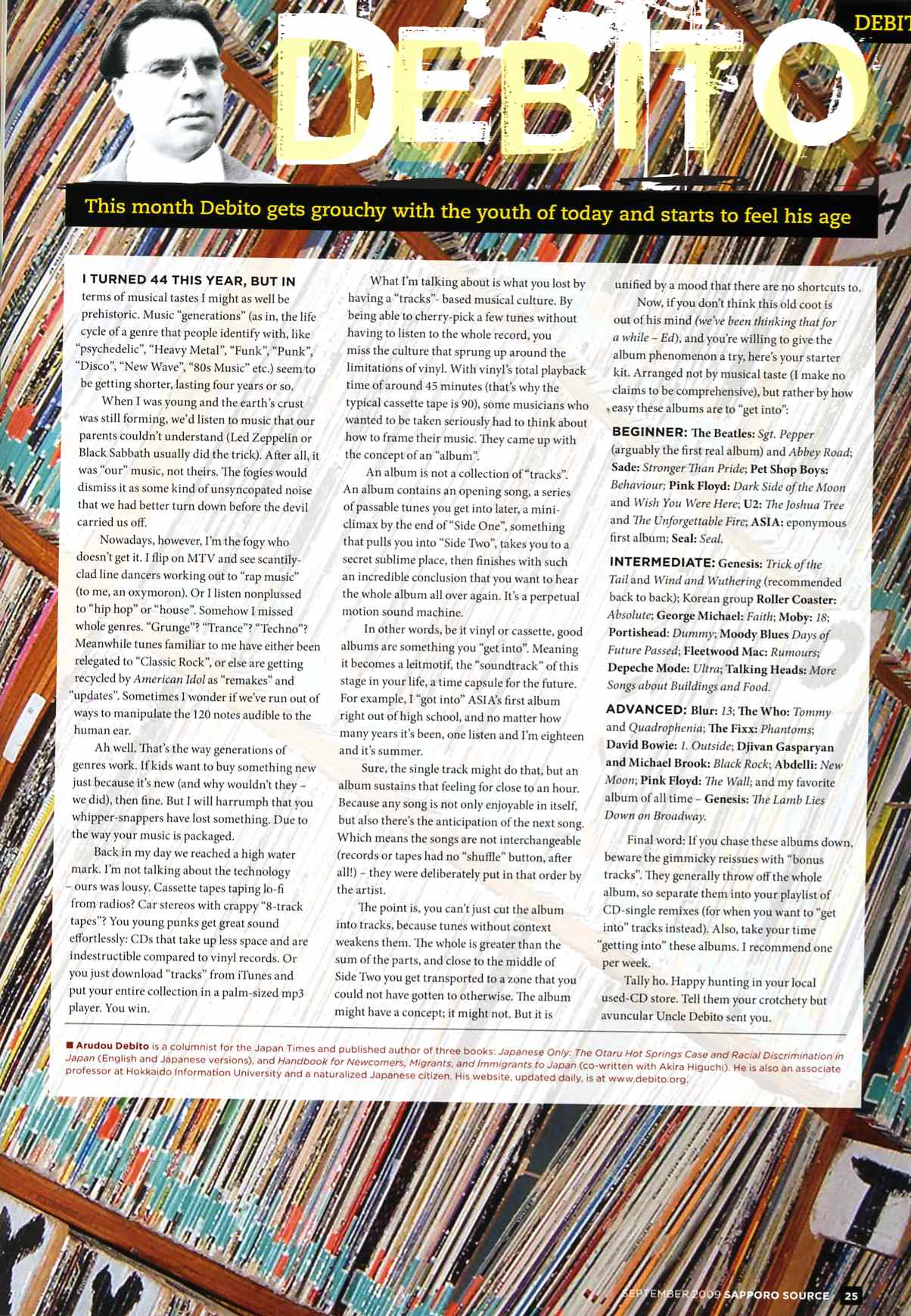




THE OTARU ONSENS LAWSUIT, TEN YEARS ON: Article for Japonesia Review

mytest

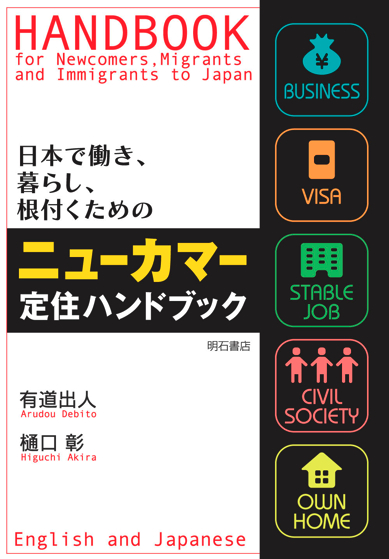
Handbook for Newcomers, Migrants, and Immigrants to Japan\Foreign Residents and Naturalized Citizens Association forming NGO\「ジャパニーズ・オンリー 小樽入浴拒否問題と人種差別」(明石書店)JAPANESE ONLY:  The Otaru Hot Springs Case and Racial Discrimination in Japansourstrawberriesavatar
UPDATES ON TWITTER: arudoudebito

Hi Blog.  Today is the tenth anniversary of our visit, on September 19, 1999,  to “Japanese Only” Yunohana Onsen et al in Otaru, a life-changing event that to this day has not been fully resolved — mainly because we still don’t have a law against racial discrimination in Japan.  This situation remains more than 13 years after Japan effecting of the UN Convention on the Elimination of Racial Discrimination, where it promised to take “all measures, including legislation” to effectively eliminate all forms of RD.  And it deserves comment and reflection after years of protests, two books, countless articles, and successful lawsuits against the onsen (albeit not against the negligent City of Otaru).

I wrote this article by invitation for the Japonesia Review last January and submitted it in February.  After more than seven months’ wait, I see no reason not to publish it here in advance on Debito.org on this auspicious occasion.  Written in a simpler style for a non-native audience, there are some anachronisms within (such as regarding FRANCA’s founding).  Enjoy.

My thoughts on this day are bittersweet.  I know we did the right thing (as Olaf noted, when I called him today, people are still talking about the case), and we had a good outcome in court.  But I judge things like this based upon whether or not they could ever happen again.  The answer is, unfortunately, yes.  After all, all Yunohana Onsen has to do is put up another “Japanese Only” sign and we’d have to take them to court all over again just to get it down.  There is no law to stop it, nothing for authorities to enforce.  Ten years later, it feels more overdue now than in 1999.

Arudou Debito in Sapporo

ARTICLE BEGINS:

======================================

THE OTARU ONSENS LAWSUIT:  TEN YEARS ON

What has and has not changed regarding human rights for Non-Japanese in Japan.

ARUDOU DEBITO
DebitoYunohana5

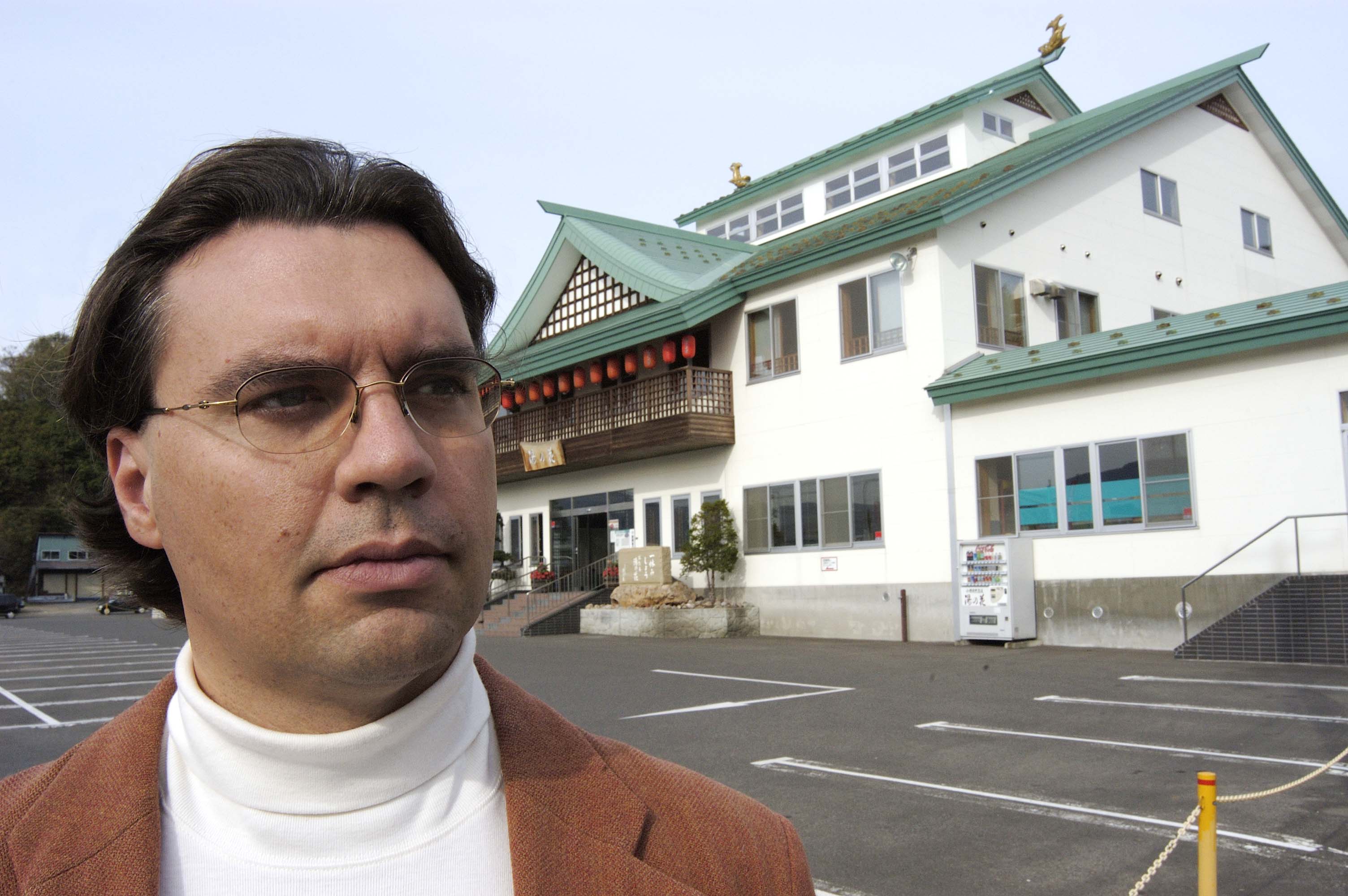
Photo Caption:  The author in front of Yunohana Onsen, Otaru.

(Photo courtesy Shouya Grigg of Kookan.com)

For publication in Japonesia Review 2009, Submitted February 3, 2009 and still not published.

DRAFT ONE

PREFACE:  BACKGROUND ON THE OTARU ONSENS CASE

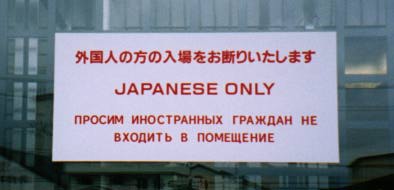
On September 19, 1999, a group of seventeen people went to take a bath at a “super sento” (public bathhouse) named Yunohana Onsen (www.yunohana.org) in Otaru, Hokkaido.  All seventeen were Japanese, except for three Caucasian males (including the author) from America and Germany, and one Chinese woman from Shanghai.  She, like the non-Japanese (NJ) men, was married to a Japanese and came to Yunohana as an international family.  We had heard over the Internet that Yunohana, Otaru’s largest bathhouse, was not only refusing entry to NJ, they were even openly displaying a “JAPANESE ONLY” sign on their front door in three languages (Japanese, English, and Russian).
onsenyunohanasign.jpg

Caption:  Yunohana Onsen’s exclusionary sign, 1999

As soon as everyone had entered and bought tickets, we were told that the three Caucasian males in our group (your author included) were not allowed inside.

Consulting with the manager on duty, we heard Yunohana’s justification:  Russian sailors (who at the time were frequent visitors to and traders with Otaru) had a history of not following bathhouse rules, therefore were not allowed in because they might cause trouble and inconvenience Japanese customers.  When we made it clear that we were neither Russian sailors nor troublemakers, Yunohana said it did not matter:  “Refusing only Russians would be discrimination.  So we refuse all foreigners equally.”

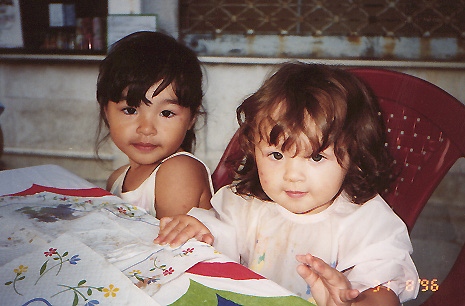
All foreigners?  All.  “How about our Chinese friend you allowed in?”  As soon as they realized their mistake, management showed her the door.  We asked them further about their criteria for determining who was “Japanese”, since it was clear by this example that it was whether somebody looked “Asian” enough.  So my wife at the time asked about our daughters, both of whom were born and raised in Japan, spoke Japanese as their first language, and have Japanese citizenship.
Amy

One looks more Asian, with black hair and brown eyes, while one looks more Western, with brown hair and bluish eyes.  How would they be treated under Yunohana’s rules?

“The Japanese-looking one can come in.  But the younger one who looks like a gaijin will be refused entry.”

This made it clear to everyone, nationwide, that “Japanese Only” signs and rules would affect Japanese citizens too.

TEN YEARS LATER:  WHAT HAS CHANGED?

If you want to know more about what happened next in the Otaru Case, please read (in English or Japanese) Arudou Debito, “JAPANESE ONLY” — The Otaru Hot Springs Case and Racial Discrimination in Japan[1] (Akashi Shoten Inc, 2003 and 2004, both books revised 2006).  The books describe the worldwide debate on the issue; the months of extralegal efforts made to get “Japanese Only” signs down at Yunohana, at other onsens, in other business sectors, and in other cities around Japan; and the successful lawsuit filed against Yunohana Onsen and the City of Otaru that went all the way up to the Supreme Court.

September 19, 2009 marks ten years since we visited Yunohana.  Here is a survey of how things have changed, or not changed, in the past decade regarding human rights for NJ in Japan:

1) A spread of “Japanese Only” signs and rules around Japan.[2]

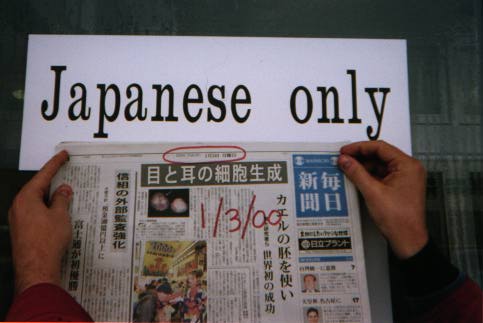
A website devoted to businesses with exclusionary signs and rules called “The Rogues’ Gallery” (www.debito.org/roguesgallery.html), coordinated by the author, has collected photographic evidence on over 150 places, in 29 cities and towns across Japan, with “Japanese Only” signs and rules.  Some places (such as Yuransen bathhouse in Wakkanai, Hokkaido, and bars in Misawa, Aomori Prefecture) directly copied the very substance and style of Otaru’s “Japanese Only” signs.
osupasign1300close

Bathhouse “Osupa”, Otaru, 2000.   Hands holding up newspaper substantiating the date are the author’s.

globesign

Bar “Globe”, Misawa, Aomori Prefecture, 2002.  Note capital “J”, small “o”, font style of “a”, and “y” with a tail.

The language of “Japanese Only” has clearly become established as a “meme” (learned cultural behavior), as a concise and comprehensive way of saying “stay out” to undesirable customers — who just happen to lack (or look like they lack) Japanese citizenship.[AD1]
tsubakuroesign072103

Hotel “Tsubakuro”, Hyakunincho, Shinjuku-ku, Tokyo, 2003.
dragonbozsign

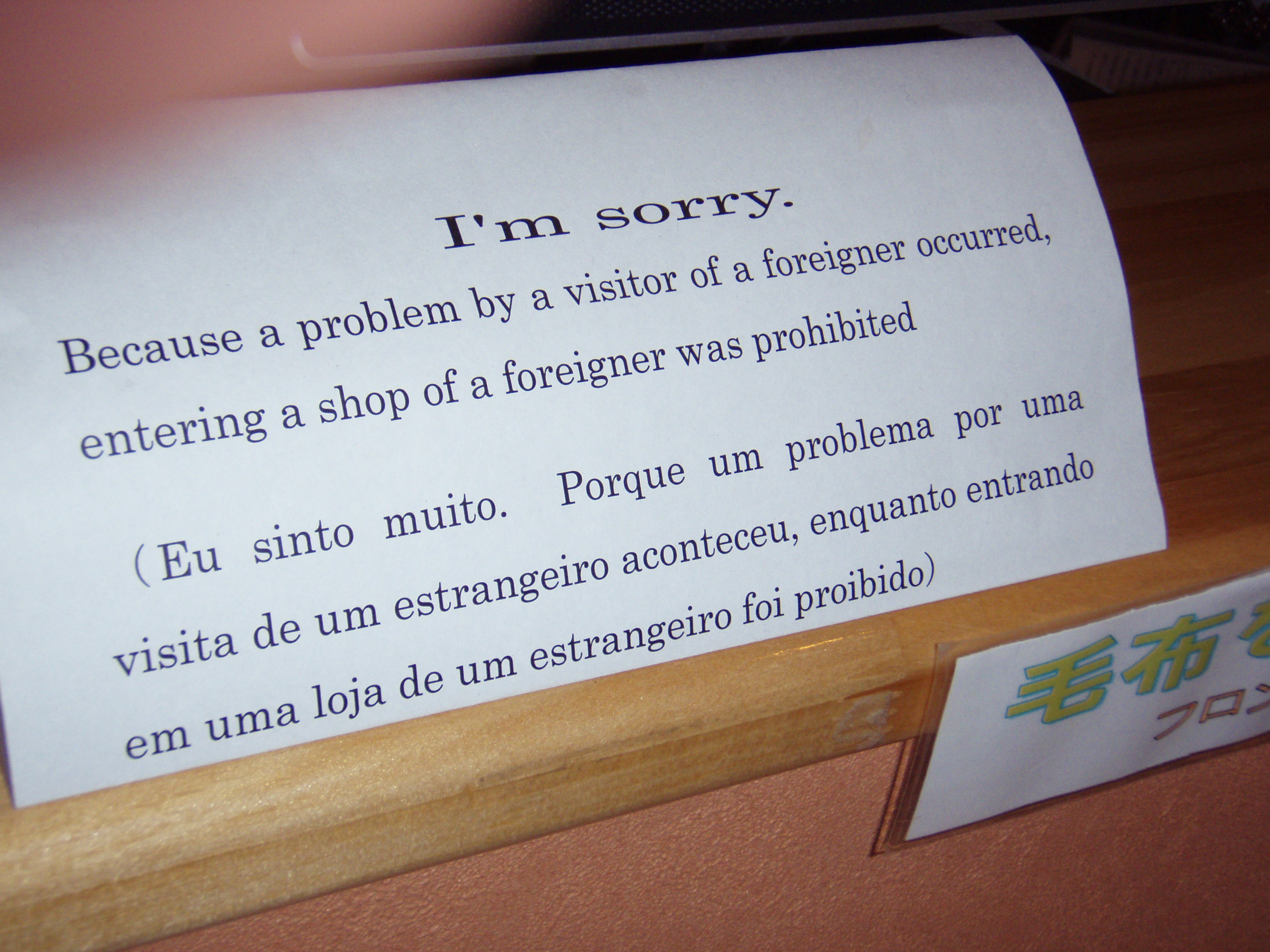
Internet café “Dragon BOZ”, Okazaki, Aichi Prefecture, 2006.
bballbilliardssign051306

B-Ball billiards hall, Uruma, Okinawa, 2006
santamonicarefusal

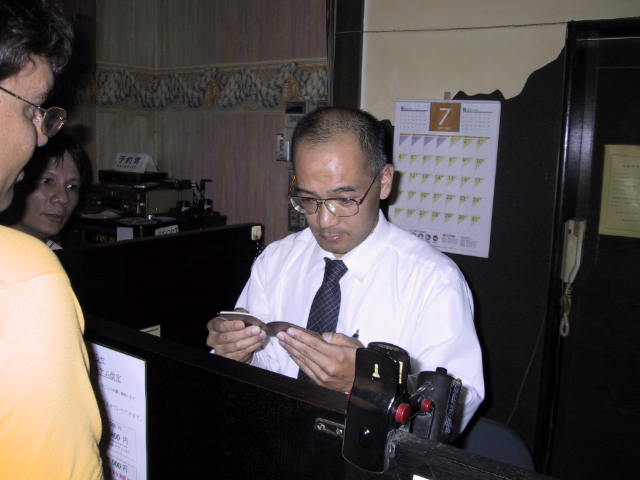
Bar “Santa Monica”, Kurashiki, Okayama Prefecture 2004.  Manager confirming author’s Japanese passport before telling him to leave the premises, as the bar is “Japanese Only”.

Cause:  Despite signing the United Nations (UN) Convention on the Elimination of Racial Discrimination (CERD) in 1995 (effected 1996), and despite Article 14 of the Japanese Constitution banning discrimination by “race, creed, sex, social status, or family origin”, Japan still has no law against discrimination by race.  This means that if a “Japanese Only” sign goes up, there is no law in the Civil or Criminal Code for police or authorities to enforce, demanding that signs come down and rules change.  To the present day, as in 1999, there are no legal means, outside of a courtroom, for people who are discriminated against to stop it.

Effect:  If there are no means to stop this kind of discrimination, it spreads, because it is a “quick fix”.  It is convenient for vigilantes (who dislike, fear, or do not want to be bothered with NJ) to put a sign barring them.  A “Japanese Only” sign up in public lends legitimacy to the exclusion, and encourages copycatting.  Numerous interviews carried out by the author of exclusionary establishments have demonstrated a theme of, “We’re not the only ones with the sign up, so why pick on us?”  Like any “tipping point”, enough occurrences can lead to a threshold where isolated instances become legitimized by numbers and precedent, leading to an established practice.  That is how discrimination spreads:  strength in numbers.

2) The rubric of “Japanese Only” is still based upon physical appearance.

The author of this essay is a naturalized Japanese citizen.  However, as the reader can see from his photo at the very beginning, a change of passport has not led to a change from Caucasian to Asian.  In the majority of interviews I have had with exclusionary businesses, they have said that even after seeing proof of my Japanese citizenship (my passport or driver license), I would still be excluded from the premises.  “You don’t look Japanese.  It’ll cause misunderstandings,” was the standard reason.

Cause:  Japan still makes a strong association with face/race and nationality, i.e. Japanese people look “Japanese”.  Indubitably part of the reason is that Japanese society and media have had limited exposure to “non-Asian Japanese”, such as soccer star Ramos Rui, tarento Konda Bobbi (ne Bobby Ologun), and Dietmember Tsurunen Marutei, to name but a few.  There has, however, been copious exposure to international Japanese children Miyazawa Rie, Umemiya Anna, Rebecca Eri RayVaughan (aka “Bekkii”), and also to naturalized citizens with more Asian faces like sumo wrestlers Konishiki and Akebono.  However, it is unclear that the public eye has done a complete connect between “Japanese citizenship through roots” and “Japanese citizenship by legal application”, which would mean that “Japaneseness is a legal status”, not a blood status.  Reinforcing this disconnect are Japan’s nationality laws, currently under consideration for revision, which explicitly say that Japanese status is something inherited.  The laws are jus sanguinis, meaning you must have a Japanese blood relative in order to automatically get Japanese citizenship.

Effect:  Many Japanese citizens who do not “look Japanese” will be treated as NJ — not only this author, but also many hundreds of thousands of children of international marriages.  Japan’s international marriages are currently about 40,000 per year, up substantially from about 30,000 in 2000, and the number of “mixed children” born annually to be about 21,000[3].  Like the “tipping point” mentioned above that encourages the spread of “Japanese Only” signs, I anticipate that there will be a similar “tipping point” where people realize that racial admixtures are still Japanese.  “Conditional Japanese” (as in “half”, “quarter”, “double”, “mix”) have been in the lexicon for quite some time.  I think the qualifiers will fade as the numbers increase.  Accepting naturalized “non-blood Japanese” will take longer.  However, without laws against racial discrimination, one’s face will still not save many “people of mixture” from capricious or ignorant treatment as apparent NJ.

3) “Monocultural, monoethnic Japan” is officially no longer.

Japan’s public policy is also surprisingly exclusionary.  Postwar Japan has had public speech at the highest levels (most famously former Prime Minister Nakasone in 1986) extolling “ethnic homogeneity” and “racial purity” as a strength.  The Japanese government has repeatedly reported to the UN that the CERD treaty was not applicable to Japan.  Japan apparently has no racial minorities (moreover that all people who were in fact racially different were not citizens, therefore also not covered)[4].  This is reinforced in public policymaking.  When one reads white papers and laws, the rubric is that the policy is for the benefit of “citizens” (kokumin)[5], as opposed to “taxpayers” (nouzeisha) or “residents” (juumin).  Thanks to the vagaries of the Residency Certificate (juuminhyou) system[6], NJ are still not officially listed or counted as “juumin“.  Local governments (such as Tokyo Nerima-ku[7]) also do not include NJ in their tally of “residents”.  Nor does the National Census (kokusei chousa) survey residents for ethnicity (minzoku) — only nationality (kokuseki).  Nor does the Ministry of Health always include NJ (or even newly-naturalized citizens) in its tally of population growth or shrinkage:  preferring to use a simple calculation of “births minus deaths”[8].

That said, in June 6, 2008, the Diet for the first time unanimously passed a resolution stating that the Ainu aboriginal people of Hokkaido were a “indigenous people with a distinct language, religion, and culture”.  For the first time, Japan’s government did not ignore an ethnic minority in its public policy, and in fact had set up a government panel to study remedial actions.

Cause:  It was good timing.  As was discussed in this forum (Ota Masakuni, Japonesia Review No. 5, 2008), both the confluence of a UN Human Rights Council Universal Periodic Review on Japan in May, and the Hokkaido G8 Summit (where Hokkaido minority issues were gaining attention and traction) in July that same year, contributed to a push the Fukuda Administration to offer this showcase for human rights.  A multi-partisan “Concerned Diet Members’ Group for the Rights of the Ainu” spearheaded the drive.

Effect:  On September 28, 2008, new Transport Minister Nakayama Nariaki resigned over various gaffes (including calling Nikkyouso schoolteacher union “a cancer”) that reflected older-school thinking:  Speaking on behalf of Japan’s new tourism agency, he mentioned that Japan was “ethnically homogeneous” and in general “Japanese don’t like foreigners”.  He was roundly criticized, notably by Social Democratic Party leader Fukushima Mizuho, who said, “Is he ignorant of a Diet resolution which all the members (of both houses of the Diet) supported?”[9] Thus began an ignominious start to the 2008 Aso Cabinet, which helped set the tone for the rest of his unpopular administration.  This is the first time a resignation has resulted from a “homogeneous” remark, a far cry from the days of Nakasone.

That said, Ota notes that without a supplemental change in historical perspective in the Japanese public, the consequences for Ainu and other (unrecognized) minority rights may be “inconclusive” (the abovementioned government panel, after all, only has one Ainu member).  Similarly, it is probably too early to draw conclusions or show undue pessimism at this time.  Wait and see.

4) Japan’s economics and demographics are making immigration inevitable.

Japan is still the second-largest economy by GDP and by most measures larger than all other Asian economies combined.  The current worldwide economic downturn notwithstanding, Japan has for three decades had a labor shortage.  The government recognized this in 1990 and, at the behest of the industrial lobby, inaugurated a backdoor “Trainee”, “Researcher”, and “Returnee” (teijuusha for overseas Nikkei) working visa program.  This regime brought over millions of cheap Asian and South American laborers, more than doubled the NJ population of 1990 from one million to two, and fundamentally shifted the top three NJ ethnicities from 1) Korea (North and South), 2) China, and 3) The Philippines[10] to 1) China, 2) Korea, and 3) Brazil.  Industrial towns in Shizuoka, Gifu, and Aichi Prefectures showed NJ population percentages in the double digits, and for the first time mayors of these towns were demanding the national government secure equal rights and enhanced access to social services for their NJ residents[11].  NJ were coming to Japan, being welcomed, and put to work.

They were filling a gap.  Thanks to the low birthrate and long life expectancies of the Japanese public, the UN and the Obuchi Administration in 2000 jointly recognized that the Japanese population was aging, and would decrease by the late 2000s if Japan did not import 600,000 NJ per annum[12].  Japan has, on average this decade, imported a net total of 50,000 NJ per annum.  Sure enough, by 2007, Japan’s population was first officially announced as dropping.  If trends continue, by 2050, according to Shuukan Ekonomisuto (January 15, 2008, pg 16), the percentage of Japanese over retirement age (65) is projected to be more than half of the entire population.  Who will man the factories, pay in taxes, and maintain social security pension payments?  NJ keep Japanese society young and the birthrate from falling further.  The government is currently deliberating scrapping the current backdoor-labor visa regime, and establishing an official immigration policy.

EPILOGUE:  TEN YEARS LATER, WHAT HAPPENED IN THE OTARU ONSENS CASE?

The author and two other plaintiffs sued both Yunohana Onsen and the City of Otaru for racial discrimination and negligence under the CERD.  Yunohana lost both in Sapporo District and High Court, and was ordered to pay plaintiffs one million yen each for “unrational discrimination”.  The City of Otaru won in Sapporo District Court, High Court, and the Supreme Court; the District and High Courts grounded their arguments in “separation of powers” arguments (as in, the judiciary cannot force a government body to pass laws against discrimination, and cannot hold one accountable for not doing so).  The Supreme Court ruled that this contravention of Article 14 was “not a Constitutional issue”[13].

Yunohana Onsen took their “Japanese Only” sign down shortly before the lawsuit began, but never apologized for its action.  It took advantage of the publicity from the lawsuit to open new branches.  Yunohana is now a chain with outlets in Otaru Temiya, Otaru Asari, Sapporo Jozankei, and Ebetsu.  Other places and business sectors around Hokkaido and Japan still have their “Japanese Only” signs up.

The Japanese government made it clear to the UN again in March 2008 that it has no intention of creating a law against racial discrimination, reiterating that it has an active judiciary for grievances, therefore no laws are necessary.  It stressed in the indicatively-named “Third, fourth, fifth, and sixth combined periodic report to the UN HRC”[14] that it had taken “every conceivable measure to fight against racial discrimination” (begging the question why passing a law is “inconceivable”).  Several draft bills have been submitted to the Diet and to the Otaru City Government, but all have died in deliberation.

Author and plaintiff Arudou Debito still works as a university educator at Hokkaido Information University in Ebetsu.  Author of two books on the Otaru Onsens Case, Arudou, 44, has recently co-authored another book to help NJ make more secure lives in Japan:  Handbook for Newcomers, Migrants, and Immigrants to Japan (Akashi Shoten Inc. 2008, English and Japanese).  He also is setting up an NPO called FRANCA[15] to better lobby for rights of NJ in the political sphere.  He sees the Ebetsu branch of Yunohana every day on his drive to work.

ENDS

2600 WORDS


[1] www.debito.org/japaneseonly.html

[2] More information on this in Japanese in「『外国人』入店禁止という人種差別」(有道 出人 著)、単行本『日本の民族差別 人種差別撤廃条約からみた課題)』p218ー229、岡本雅享先生監修・編著、明石書店(株)2005年6月出版

[3] “Japanese youth help compatriots embrace diversity”, Christian Science Monitor, January 18, 2008, www.debito.org/?p=933

[4] The text of the debate between Japan and the United Nations may be found at www.debito.org/japanvsun.html

[5] See example at “Forensic Science Fiction:  Bad science and racism underpin police policy.”  Japan Times, January 13, 2004, at www.debito.org/japantimes011304.html, particularly sidebar at bottom.

[6] www.debito.org/activistspage.html#juuminhyou

[7] www.debito.org/?p=1972

[8] “Japan sees biggest population fall”, Associated Press, printed in the Manchester Guardian, January 2, 2009, www.debito.org/?p=2117

[9] www.debito.org/index.php/?s=Ainu+resolution+June

[10] www.stat.go.jp/data/chouki/02.htm

[11] See for example the Hamamatsu Sengen at www.debito.org/hamamatsusengen.html

[12] Arudou, Debito, “The Coming Internationalization:  Can Japan assimilate its immigrants”.  Japan Focus, January 12, 2006, www.japanfocus.org/products/details/2078

[13] www.debito.org/otarulawsuit.html

[14] www.debito.org/?p=1927

[15] www.francajapan.org


[AD1]To Hikaru:  Play with the layout and put these signs around the article as you like.  More at www.debito.org/roguesgallery.html
DEBITO.ORG NEWSLETTER SEPTEMBER 18, 2009

mytest

Handbook for Newcomers, Migrants, and Immigrants to Japan\Foreign Residents and Naturalized Citizens Association forming NGO\「ジャパニーズ・オンリー 小樽入浴拒否問題と人種差別」(明石書店)JAPANESE ONLY:  The Otaru Hot Springs Case and Racial Discrimination in Japansourstrawberriesavatar
UPDATES ON TWITTER: arudoudebito

Quick note at the very top. Tomorrow, Sept. 19, is a very special day for Debito.org, as it marks ten years to the day since the Otaru Onsens Case began with our visit to Yunohana Onsen et al. (https://www.debito.org/otarulawsuit.html). I will offer a special retrospective article tomorrow on Debito.org to discuss what has and hasn’t changed. Go to www.debito.org tomorrow if you’d like to read it before the next Newsletter.

DEBITO.ORG NEWSLETTER SEPTEMBER 18, 2009
SPECIAL ON EXCLUSIONISM AND TARGETING

Table of Contents:

//////////////////////////////////////////////////////////////////////////
EXCLUSIONISM
1) Mainichi: Shizuoka bureaucrats force Brazilian woman to take “Repatriation Bribe”
2) American journalist banned from “Japanese Only” Toyota press conference in America!
3) Kyodo & JT: Osaka JH school reluctantly takes preteen NJ kid despite teacher opposition!
4) J population drops, Internal Ministry converts it into rise, excludes NJ from tally.
5) Interview with the Berlin Institute for Population and Development re Japan’s int’l future
6) BBC: British furniture store puts up “no foreign students” sign (parallels with Otaru Onsens Case)
7) Japan Times: NJ visas now contingent on enrollment in Japan’s health insurance program starting April 2010
8 ) Contrast: Naturalized Caucasian Korean becomes SK’s National Tourism Org leader

TARGETING
9) Collating update: upcoming IC Gaijin Cards, RFID hackability, next generation police walkie-talkie, and NPA access to TASPO information
10) Debito.org reader Brian reports on Shinjuku Police 9-day incarceration of 74-year-old tourist for pocket knife
11) SITYS: Japan Times confirms that 74-year-old tourist WAS indeed incarcerated for 10 days for carrying a pocket knife
12) Update: Ibaraki Police’s third new NJ-scare poster
13) Comparison: Open Society Institute report on police racial profiling in France
14) Yomiuri, Sankei, FNN: Sakai Noriko’s husband fingers NJ dealers as source of their drug habit
15) Japan Times: New “lay judge” court system sentences first NJ
16) Economist.com: Far higher proportion of NJ in Japanese prison than proportion of population
17) Freeman offers specific dialogs to deal with J police during Gaijin Card Check

… and finally…
18) Japan Times JUST BE CAUSE Column: “Unlike Humans, Swine Flu is Indiscriminate” (full text)
//////////////////////////////////////////////////////////////////////////

By Arudou Debito, Sapporo, Japan
debito@debito.org, Daily Blog updates at www.debito.org (long-time readers, please resubscribe your RSS)
Freely Forwardable

//////////////////////////////////////////////////////////////////////////

EXCLUSIONISM

1) Mainichi: Shizuoka bureaucrats force Brazilian woman to take “Repatriation Bribe”

Case number #4534 or so of why one does not allow untrained bureaucrats to make Immigration decisions: The potential for misunderstanding and abuse.

Last April, the GOJ decided to offer unemployed Nikkei workers (only this did not apply to Chinese etc. “Trainees and Researchers” because they did not have the correct blood) a 300,000 yen Repatriation Bribe for airplane tickets “back home”, not only asking them to void their visas and give up their paid-in pensions, but also to go elsewhere and just be somebody else’s problem.

Now, according to the Mainichi of Sept 14, 2009, a local government tried to make any possible welfare benefits to a NJ contingent upon promising to take the Bribe and go home — a Catch-22 if ever there was one.

Not too surprising. This is the same prefecture which around up to ten years ago restricted or denied NJ the right to sign up for the National Health Insurance (kokumin kenkou hoken) because they weren’t “kokumin” (citizens).

Fortunately, this case came out in the press. How many others have been duped here and elsewhere and forced to go home without it being reported? Shame on the GOJ for creating this policy avenue for abuse in the first place.

https://www.debito.org/?p=4397

//////////////////////////////////////////////////////////////////////////

2) American journalist banned from “Japanese Only” Toyota press conference — in America!

Here’s something discussed in Ivan Hall’s seminal CARTELS OF THE MIND and other sources, such as Laurie Freeman’s JPRI article on Japan’s Press Clubs (kisha kurabu, i.e. media cartels). It hasn’t changed since the publication of these works. Problem is, the case discussed below isn’t a Japan Press Club. It’s a Japanese company denying access to local-area journalists IN AMERICA, despite both local ethics and corporate promises to the contrary. In other words, it’s Japan’s Press Clubs exported. Read on:

https://www.debito.org/?p=4385

//////////////////////////////////////////////////////////////////////////

3) Kyodo & JT: Osaka JH school reluctantly takes preteen NJ kid despite teacher opposition!

Kyodo: A 12-year-old girl from a Southeast Asian nation ran into problems earlier this year in trying to attend a public junior high school in Osaka due to opposition from some teachers who resisted her enrollment, the Osaka municipal board of education said Tuesday. She was ultimately enrolled in the school’s first-year level on July 1, a month after she applied for admission.

The girl, accompanied by her parents, visited the school in the city of Osaka on June 1 to say she wanted to be enrolled, but the school, whose name has been withheld, advised the girl to attend the sixth grade in elementary school, citing her inability to speak Japanese, board officials said.

COMMENT: How nice. A NJ kid tries to get an education and these teachers try to fob her off on another school (as if that changes the circumstances), claiming well, let’s come up with something. Oh, I know. A language barrier! We all know how difficult Japanese is for foreigners, and it requires that we be somehow certified in Japanese language training from the MOE to teach them! (Even though kids, as we all know and gnash our teeth about, soak up languages like a sponge; she’ll adapt, wouldn’t you think?)

It’s times like these I wish we had a Hippocratic Oath for teachers too (not that it always binds Japanese doctors dealing with NJ patients). For don’t these teachers feel any obligation to teach children regardless of background? No, I guess not. Compulsory education is only compulsory for citizens. Not foreigners.

It’s not the first time I’ve heard about schools refusing NJ children, either. Check out this report I released April 13, 2000:

https://www.debito.org/?p=4020

//////////////////////////////////////////////////////////////////////////

4) J population drops, Internal Ministry converts it into rise, excludes NJ from tally.

Here’s one way to tip any undesirable downward trend in statistics: change the paradigms. In this case, the Internal Ministry considers “Japanese population” not only as births and deaths, but also inflows. That is, inflows of citizens only. Once again, inflows (or current residency) of foreigners are not considered part of the “population”, even though they pay taxes and contribute to Japanese society like any other living breathing soul.

Know of any other G8 country which refuses to include its foreign population as part of its total population? The fact is, given that we get plenty more than 45,914 foreigners per year coming in, the main thing keeping Japan’s population in the black is immigration. But again, that’s a taboo topic. We can’t act as if Japan actually needs foreigners, after all.

https://www.debito.org/?p=4132

//////////////////////////////////////////////////////////////////////////

5) Interview with the Berlin Institute for Population and Development re Japan’s int’l future

Excerpt: Q: But if Japan decides it does not want or need immigrants what is wrong with that?

ARUDOU: Because it doesn’t reflect reality. We have had a UN report that stated, at least one Prime Minister who acknowledged, and several important domestic organizations who admitted, that Japan needs immigration. Now. Our society is aging and our tax base is decreasing. We are on the cusp of a demographic nightmare, a future with a society that cannot pay or take care of itself. Either way, people will come here, even if it means they find an enfeebled or empty island to live in. Might as well do it now while we have more energy and choices.

The people who represent us or make decisions for us are not necessarily that receptive to understand that people who appear to be different are not a threat. We cannot expect them to lead us to a world they cannot envision. It’s our country, too…

https://www.debito.org/?p=4125

//////////////////////////////////////////////////////////////////////////

6) BBC: British furniture store puts up “no foreign students” sign (parallels with Otaru Onsens Case)

BBC: A furniture shop in a south coast town [of the UK] has banned foreign students who it says take their fast food into the store to eat on the sofas and coffee tables.

Chris Moffet, manager of Perfect Homes in Eastbourne, said he put up a sign barring foreign students after his stock was damaged.

Solicitor Paul Gilbert said the store could be leaving itself open to prosecution under race relations laws.

COMMENT: The parallels with the Otaru Exclusionary Onsens Case are pretty straight, so let’s keep an eye on this one. Will be interesting to see how the British authorities treat this case. I have a feeling the government will demand they take the sign down, and if not threaten with criminal procedure. That is, however, where the parallels end.

https://www.debito.org/?p=4085

//////////////////////////////////////////////////////////////////////////

7) Japan Times: NJ visas now contingent on enrollment in Japan’s health insurance program starting April 2010

Japan Times: “In your wallet or somewhere at home, do you have a blue or pink card showing that you are enrolled in one of Japan’s national health and pension programs? If not, and if you are thinking of extending your stay here, you may want to think about a recent revision to visa requirements for foreign residents. The changes, which the Justice Ministry says were made in order to “smooth out the administrative process,” may have major consequences for foreign residents and their future in Japan.”

The bottom line is that all residents of Japan have to be enrolled in one or other of the two systems. The revised visa laws, therefore, should pose no threat to anyone’s visa renewal, because every foreigner in Japan should already be enrolled. However, the reality is that most foreigners in Japan do not have either form of insurance…

https://www.debito.org/?p=4026

//////////////////////////////////////////////////////////////////////////

8 ) Contrast: Naturalized Caucasian Korean becomes SK’s National Tourism Org leader

Korea Herald: Media personality Lee Cham was named chief of the Korea National Tourism Organization Wednesday, the first naturalized Korean to take a top government post in Korea, according to Yonhap News.

Lee, 55, is the first German male ever to become a naturalized Korean citizen, and his appointment is anticipated to pave the way for others like him to assume government positions, a pledge by President Lee Myung-bak during the 2007 election.

“I became a Korean citizen to help the country in some way,”

https://www.debito.org/?p=4032

//////////////////////////////////////////////////////////////////////////

TARGETING

9) Collating update: upcoming IC Gaijin Cards, RFID hackability, next generation police walkie-talkie, and NPA access to TASPO information

Last May I put out an article in the Japan Times about the (now approved) IC Chips in revamped Gaijin Cards. How they would enable the police forces to remotely track foreigners in a crowd, and how data would be less secure from hackers.

Not unsurprisingly, I was told I was exaggerating. But it’s hard in this day to exaggerate the reach and rate of development of technological advances (who would have thought we would have this very medium to communicate through a little over ten years ago?). So here are some sources showing how 1) ID Chips and RFID technology is eminently hackable and remotely trackable, 2) how police already have IC scanning ability in their walkie-talkies, and 3) how the Japanese police in particular are using ID cards beyond their originally-intended purpose to track crime. I don’t think I was exaggerating at all.

https://www.debito.org/?p=4008

//////////////////////////////////////////////////////////////////////////

10) Debito.org reader Brian reports on Shinjuku Police 9-day incarceration of 74-year-old tourist for pocket knife

One of the nastiest debates ever to take place in the Comments Section of a Debito.org blog post started with a crie du coeur about tourist treatment in Japan.

Excerpt: I’m writing this email to all of you because I feel it’s in your best interest to understand how dangerous it is for tourists to visit Japan.

On July 2nd in Shinjuku, a 74-year-old American tourist walked into a koban to ask directions. Inside the koban was an older (senior) police officer and a younger (rookie?) police officer. The American asked where Kinokunia Book Store was and the police officer responded by asking the American if he had a pocket knife. The American being the law abiding citizen that he is said “Yes!” and handed it to the senior police officer. After a quick measurement of the knife, the police officer arrested the 74-year-old man for having a pocket knife 1 centimeter over the legal limit.

The most amazing parts to the story, a new law about pocket knives had just gone into effect one day before thisTOURIST was arrested, making this entire situation more ridiculous! Moreover, 2 other American tourists were arrested that same day at the same koban.
[He was held in police custody for nine days.]

UPDATE JULY 28, 2009: A version of this letter was published in the Japan Times.
UPDATE AUGUST 25, 2009: The Japan Times corroborates the story as true with an article.

https://www.debito.org/?p=3962

//////////////////////////////////////////////////////////////////////////

11) SITYS: Japan Times confirms that 74-year-old tourist WAS indeed incarcerated for 10 days for carrying a pocket knife

After a very nasty discussion on Debito.org last month, regarding the validity of a story by Brian Hedge that a 74-year-old tourist was incarcerated for more than a week just for holding a pocket knife, the Japan Times has come through (The only media to bother — subscribe to the paper, everyone! Who else you gonna call?) and confirmed that it actually did happen. The Japan Times Community Page also ran a series of responses on Tuesday from readers, many outraged, by this treatment. Here they are:

It sure would be nice for the anonymous nasties who raked people over the coals to capitulate now. How ’bout it? (Guess what: They didn’t.)

https://www.debito.org/?p=4257

//////////////////////////////////////////////////////////////////////////

12) Update: Ibaraki Police’s third new NJ-scare poster

The Ibaraki Police are at it again. JR Mito Station, July 18, 2009. Another one of those police posters up in a public place explicitly making the case that Japan’s shores have to be defended from foreigners, and calling for public assistance to help the armed police surround and subdue them.

It’s the third poster in as many years. Despite the addition of the spicy red background, it’s arguably more subdued than last year’s (click to expand in your browser), where they bore automatic weapons and did Normandy Beach maneuvers. Where’s the budget for these redesigns coming from? And why does Ibaraki think it’s specially prone to invasion? Not as if it’s facing the usual suspects (China and North Korea). More mysteries from our boys in blue.

https://www.debito.org/?p=3996

//////////////////////////////////////////////////////////////////////////

13) Comparison: Open Society Institute report on police racial profiling in France

Tangential, but germane to the current discussions happening here. This year the Open Society Institute in New York City released a report about the costs and effects of racial profiling in France. I think Japan and the NPA could learn something from this as well. Two recommendations:

a) Review the operational guidelines and procedures that regulate police stop and search activities to determine whether they provide adequate protections against discrimination and ethnic profiling, and to ensure that they conform to the principles of non-discrimination. Provide specific guidance and training for police officers on ethnic profiling issues, including permissible versus impermissible uses of appearance in targeting identity checks.

b) Require that officers explain the reason for identity check to all persons they stop, and provide all persons who are stopped with information on police and citizens’ rights and responsibilities.

https://www.debito.org/?p=3979

//////////////////////////////////////////////////////////////////////////

14) Yomiuri, Sankei, FNN: Sakai Noriko’s husband fingers NJ dealers as source of their drug habit

It’s all over the news these days, probably receiving more press than even when Michael Jackson died. Celebrity Sakai Noriko (and her husband)’s arrest for drug use. The word “junkie” has certainly entered the lexicon.

The latest: Despite Noriko’s yakuza connections, her husband is saying foreigners supplied their drug habits.

Turning the keyboard to some concerned NJ residents of Japan, who poignantly foresee not only hypocrisy, but a reinforced spate of NJ crackdowns for drugs…

https://www.debito.org/?p=4109

//////////////////////////////////////////////////////////////////////////

15) Japan Times: New “lay judge” court system sentences first NJ

Japan Times: The first foreign defendant to be tried in a lay judge trial was sentenced Friday to five years in prison at the Saitama District Court for two counts of robbery resulting in injury…

The lay judge system, which debuted in May, requires courtroom participants to make their arguments orally so trials are easier for people who are not legal professionals to follow, which in turn means more work for the interpreters in cases involving foreign nationals.

Much of the focus in the latest case was on whether the two Tagalog interpreters could accurately convey the tone of the remarks and how their interpretation might affect the decisions of the lay judges.

https://www.debito.org/?p=4387

//////////////////////////////////////////////////////////////////////////

16) Economist.com: Far higher proportion of NJ in Japanese prison than proportion of population

Here are some interesting stats: Proportions of foreigners within jail populations. Saudi Arabia has by far the highest. But Japan is well up there as well, and as a comparative proportion of the total domestic population significantly higher.

What we need now is a chart weighting the percentage of foreigners within a population compared to this proportion of foreigners within the prison population, to see the disparity in conviction rates. (I’ve done some preliminary searches: I can only seem to find comparative charts going up to 1997 for some reason; woefully out of date, so I’ve done a quick country-by-country search for a few select countries).

Speaking for Japan only, that visibly seven percent or so looks many multiples of the 1.7% of the NJ population (about 4x), meaning that roughly speaking you are four more times likely to be incarcerated if you are foreign than if you are Japanese. And with all the racial profiling and targeting that goes on by the Japanese police forces, this is a sad if not scary statistic.

https://www.debito.org/?p=4099

//////////////////////////////////////////////////////////////////////////

17) Freeman offers specific dialogs to deal with J police during Gaijin Card Check

Freeman: Dear Debito, I have read all of your great advice, thank you for kindly sharing. Please share this easy-to-remember summary with your readers.

Are you a human being here in Japan who appears to be Non-Japanese?
Do you want to avoid being coerced into interrogations by police officers?
Then here is how to respond when a police officer asks to speak with you:

#1 Silently show your Alien Registration Card.* **

#2 Say, “Ittemo ii desu ka?”
Repeat this exact sentence, without adding any other words, until the police officer admits, “Hai.”

#3 After hearing “Hai.” you are free to leave.

The police officer might try to fool you into speaking further… what to do in that event:

https://www.debito.org/?p=4062

//////////////////////////////////////////////////////////////////////////

… and finally…

18) Japan Times JUST BE CAUSE Column: “Unlike Humans, Swine Flu is Indiscriminate” (full text)

JUST BE CAUSE
Unlike humans, swine flu is indiscriminate
By DEBITO ARUDOU
The Japan Times: Tuesday, Aug. 4, 2009

http://search.japantimes.co.jp/cgi-bin/fl20090804ad.html
Version with links to sources at https://www.debito.org/?p=4074

The biggest news a few months ago, now affecting every prefecture in Japan, has blipped off our radar screens. For the time being.

I’m talking about the H1N1 swine flu virus that originated in Mexico, took wing across oceans and continents, and eventually settled down here despite our government’s panicky measures.

Time to learn some lessons. We need to prevent a public panic from once again causing discrimination against the ill.

rest at https://www.debito.org/?p=4074

//////////////////////////////////////////////////////////////////////////

All for today. Happy 10th Anniversary of the Otaru Onsens Case. It’s lessons are not forgotten. Not by Debito.org, at any rate.
Arudou Debito
Sapporo, Japan
debito@debito.org, https://www.debito.org
DEBITO.ORG NEWSLETTER SEPTEMBER 18, 2009 ENDS

Terrie’s Take on recent new rulings on tenants’ rights in Japan

mytest

Handbook for Newcomers, Migrants, and Immigrants to Japan\Foreign Residents and Naturalized Citizens Association forming NGO\「ジャパニーズ・オンリー 小樽入浴拒否問題と人種差別」(明石書店)JAPANESE ONLY:  The Otaru Hot Springs Case and Racial Discrimination in Japansourstrawberriesavatar
UPDATES ON TWITTER: arudoudebito

Hi Blog.  I think I’ll let Terrie do the talking today.  Important day tomorrow I’m currently preparing for.  You’ll see why it’s important… tomorrow!  Arudou Debito in Sapporo

* * * * * * * * * T E R R I E ‘S T A K E * * * * * * *
A weekly roundup of news & information from Terrie Lloyd.
(http://www.terrie.com)

General Edition Sunday, July 26, 2009 Issue No. 527

+++ WHAT’S NEW

The Japan Times has been doing a good job recently of documenting consumer rights law cases and also foreigner- related issues that might be of use to its readers. Last week they reported on a landmark court ruling, whereby the Kyoto District Court said that a landlord’s insistence on contract renewal fees (“koshinryo”) may violate the rights of the tenant. This is the first time such a case has been ruled in favor of the tenant.

In the case, the tenant was apparently told that there would be a contract renewal fee, but not why. Presumably the agent thought that because the renewal fee is a traditional payment, dating back to post-war times when the government didn’t want returnee soldiers relocating en masse to the cities, they didn’t go into it in any detail. In any case, as a result of that oversight, when the plaintiff moved out several months after he’d paid the renewal and the landlord refused to refund the payment, the tenant took offense and took the landlord to court.

The basis for the lawsuit was the 2001 revised consumer protection law, which the court agreed had precedence over the tenancy law. In the ruling the judge apparently commented that, “The reasons for charging contract renewal fees must be clearly explained to tenants and agreed upon between the two sides.”

Now before everyone starts hooting from the roof tops that it’s time for landlords to get some of their own medicine, it’s worth remembering that this is the exact same Kyoto District Court that in January of last year dismissed a very similar lawsuit. In that earlier case, the tenant also based his claim on the 2001 consumer contract law, where he said that renewal fees in the way they are currently notified and imposed, constitute a contract that “Unilaterally causes damage to the interests of consumers.” We daresay that a lot of readers would agree with that statement!

It seems that the point of legal consideration by the two different Kyoto law court judges wasn’t whether the renewal fees are allowed under consumer law or not — they are, so long as the landlord or the agent explains clearly that the fees are part of the contract and that the tenant knowingly and willingly signs the contract. Rather, the consideration was all about whether the fee’s purpose was clearly explained — thus allowing the tenant to claim that he wasn’t fully informed and therefore permitting him to invoke the consumer protection law.

So, the requirement to pay rent renewal fees, as onerous as they are, has not gone away. It’s just now that it’s possible to claim ignorance to the rules, and use that to get your money back. This is not a strong step forward for tenant’s rights, but at least it’s a start…

As most readers would be aware, the renewal fees are not the only sticking point when it comes to renting Japanese apartments. There is also the non-refundable deposit and the “cleaning fees” to be deducted from that deposit when you move out. Most people who have moved apartments more than once have learned that very little of their 2-3 months refundable deposit will actually come back — a good reason, of course, why people don’t move so often.

We’ve heard a variety of opinions about whether tenants can fight the imposition of cleaning fees — especially if you’ve cleaned the apartment thoroughly enough that it doesn’t need much more polishing. Certainly you CANNOT not pay them, since the fees are generally taken out of the deposit paid when you first moved in. The general guideline, apparently is for a cleaning fee of JPY1,000~JPY1,500 per sq. m. of apartment floor area — which for a JPY100K apartment might leave you with the grand total of just JPY50,000 from your original JPY200,000~JPY300,000 of refundable deposit being returned.

Talking to a certain large rental agent for foreigners, we have heard that the situation is quite different in the non-Japanese sector. Largely because expat apartments tend to be bigger and more expensive to keep vacant, and because there is also a dearth of tenants, landlords are being much more flexible and cooperative. They are cutting deals that strictly Japanese-facing landlords would never dream of. The deals include no-deposit contracts, 3-6 months free rent on a two-year lease (just like B- and C-grade offices), and large price cuts of up to 50% discount.

But as we’ve noted, one man’s cloud is another’s silver lining. Word is that there are plenty of local foreigners and Japanese moving into the more fashionable districts in Tokyo right now — because they’re trading up into the gaijin apartments, but not having to pay much difference for all the extra space, appliances, and convenience.

**************
ENDS

Free Japanese-language courses in Sapporo sponsored by GOJ (deadline for application Oct 2)

mytest

Handbook for Newcomers, Migrants, and Immigrants to Japan\Foreign Residents and Naturalized Citizens Association forming NGO\「ジャパニーズ・オンリー 小樽入浴拒否問題と人種差別」(明石書店)JAPANESE ONLY:  The Otaru Hot Springs Case and Racial Discrimination in Japansourstrawberriesavatar
UPDATES ON TWITTER: arudoudebito

From: Hokkaido Insider
Date: September 14, 2009 5:27:37 PM JST
To: Hokkaido Insider News
Subject: Free Japanese Course for International Parents

FREE JAPANESE COURSE for international parents.

This program is sponsored by the Japanese Agency for Cultural Affairs for FY 2009.

Please visit our site for more information: http://www.myiay.com/j/b_2e.html

A very detailed explanation and schedule of the classes being offered appear at the link posted above.
Here are some of the key points as to who they are looking to serve and the general requirements.

Target Participants:
Foreign residents currently raising children from toddlers through middle school students
Those who are able to attend at least 80% of the course.
*The 2nd and 3rd Periods teach entry-level Japanese.

Term: From Tuesday, October 13th 2009 through Tuesday, December 22nd (10 Days, 3 Periods / Day)
(As a general rule, all classes are held on Tuesdays, but exceptions may be made due to staffing circumstances.)

Location: IAY
060-0061 Sapporo-shi, Chuo-ku, S1W4 – Hinode Bldg. 6F (connected directly with Odori Subway Station, Exit #10)

Tuition: No charge

Participant Limit: 20 persons (participants will be selected randomly should the applicants exceed capacity)

Application form can be downloaded from the site. (Application deadline is October 2.)

Confirmed participants will receive information by Wednesday, October 7th.

Hokkaido Insider News is free for those who wish to receive the announcements.
Permission is granted to forward this on to others who may be interested.
If you wish to have your name removed, please send a request to me to do so.
If you wish to receive job information, advertise or post something to the list,
please visit http://www.ne.jp/asahi/hokkaido/kenhartmann/index.html for details.

Community’s DMG on how he dealt with too much neighborhood construction noise

mytest

Handbook for Newcomers, Migrants, and Immigrants to Japan\Foreign Residents and Naturalized Citizens Association forming NGO\「ジャパニーズ・オンリー 小樽入浴拒否問題と人種差別」(明石書店)JAPANESE ONLY:  The Otaru Hot Springs Case and Racial Discrimination in Japansourstrawberriesavatar
UPDATES ON TWITTER: arudoudebito

Hi Blog.  I have a series of letters here from DMG, writing for The Community, who tells us what he did (relatively successfully) to reduce construction noise in his neighborhood, which was affecting both his work and rest.  If you have a similar situation of neighborhood meiwaku, take it to the authorities, talk to the neighbors, and open a dialog with the meiwaku-ers, is the lesson.  In his case, it seems to have worked.  Good for him.  Passing this on as practical advice, Arudou Debito in Sapporo

=======================================

Date: June 20, 2009 11:49:30 AM JST

Community, got a question:

Currently, right beside my apartment, they are building a new community centre. By “right beside”, I could not mean that more literally. In fact, as I write this, they are working on a wall, for which the foundations go underneath my building.

I live in a small building, it is only two floors with two apartments. My door opens in the direction facing the construction site. I am practically living in the middle of this construction.

They have been constructing since February, first demolishing the old building. Currently they are building the foundations that go into the ground. They will continue to construct until the end of next year.

When I was first given a schedule, I knew there would be noise. I have lived near constructions before. But never this close, and to one of this scale.

I tried to just suck it up, but as months go on, it becomes increasingly difficult. Part of the problem is that I do computer related work by contract, which I do at home. So this isn’t just a matter of me not getting sleep on Saturday mornings (they work 6 days a week), this is me not being able to work.

Let me impress upon you that this is not just some knocking and buzzing of hammers and drills. That is what I had erroneously imagined. The noise of their back hoes and 3 story tall drills reaches deafening proportions and vibrates my whole apartment. Work, sleep, or anything involving thought is impossible for much of the week.

I spoke to the manager of the construction site, and, as much as he tried to promise to be considerate of my presence, there really isn’t anything that can be done. The construction will continue, they have tasks that need doing, and I can’t afford to simply pick up and move.

I spoke to some Japanese friends, and they said that they have heard about situations like this before, and in the situations they cited, immediate neighbours were given compensation for the inconvenience.

For some reason, I feel somewhat emotionally resistant to asking for compensation. It feels like I am trying to scam them for easy money or something.

But, on the other hand, it has reached a point where I am at wits end, and if nothing can be done to actually limit the noise, I can’t help but feel it is fair to get some kind of recompense for this massive intrusion into my life.

So, that is my story. The question I am coming to the group is if anyone has similar experience, or in any way can offer points on how I might negotiate the matter.

It is Shibuya Ku’s community centre, so I imagine the city is footing the bill. I don’t know if they have paid out to a company to handle all matters, or what. But I will ask around and ultimately find who is responsible.

Also, financial compensation is not the only option that would satisfy me. If they were to move me, I suppose, that might also work. I’m not really sure, but anyway, the point is that I’m not hell bent on getting money. If something tangible can be done to actually stop me from going insane from this noise, that would be good. The compensation merely represents the only realistic option given the fixed issues.

Any advice or help would be much appreciated.

====================================

UPDATE

Date: July 13, 2009 5:00:34 PM JST

Community,

I would laugh were it not for the knowledge of how much my life is going to suck for the next little while.

Today I finally got a chance to go down to the kuyakusho and talk to the person in charge of the construction happening beside my place. No promises were made, but there was talk about at least trying to rectify the problem. One possibility was putting a wall on one side of my apartment that would help cut down noise.

I came home feeling good about having at least started a dialogue. What, if anything, can be done remains to be seen, but at least I’ve got a channel of communication going.

And then, literally right as I arrived home, there was a guy on my doorstep placing something in my mailbox. It was a notice informing me that there will be *another* construction right beside me. There is another empty lot adjacent to where I am, and they will begin laying foundations at the end of this month. I talked to the guy a bit, and he was saying he was sorry for the noise that will happen, but I told him that being sorry for the noise is not good enough. Neither is the giri-gift-towel he wanted to give me.

I did find out something interesting though. The person I spoke to at the city office mentioned that there have been complaints from other neighbours, and she even told me which buildings they were in.

This new construction has raised the stakes a bit, but now I know I also have potential allies. I also have some real estate lawyers I’ve worked with before. So I think I’m going to talk to my neighbours a bit and see if we can’t do something about this.

======================================

UPDATE:

Date: July 31, 2009 2:35:43 PM JST

Community,

Just as an education in what happens when you negotiate with Japanese bureaucracies…

I’ve spoken to both the people building the community centre on one side, and the people building the apartment building on the other.

Both were very nice and not at all what I expected. I had expected somewhat gruff older men. The community centre person was a very professional woman about my age, and the apartment building representative was a young guy, about college age, in jeans and kind of hapless.

The city hall built sound proofing around my front entranceway. Of course, it doesn’t stop the noise, but, surprisingly, it helps cut out certain noises. Maybe more importantly, as the building rises, the construction workers are no longer looking directly into my front door.

The apartment building people agreed to constrain their working hours to be the same as the other construction, so at least I’m not facing any more hours of noise. And they also agreed to not have larger trucks pass in front of my building any earlier than 9 AM.

It makes a huge psychological difference to have spoken to someone, had my concerns heard, and at least some effort made to resolve the problem. In reality, the sound proofing is more of a gesture than a difference, but the gesture goes a long way.

In both cases I thanked them for their understanding, but also said we’ll see how it goes, to keep my options open.

The main lesson is one I learn over and over again. Dialogue helps. Assuming they would do nothing and be confrontational kept me at bay for too long. I should have spoken up earlier.

ENDS

Narita cops allegedly stopping newly-arrived “foreigners” for passport checks before boarding Narita Express trains

mytest

Handbook for Newcomers, Migrants, and Immigrants to Japan\Foreign Residents and Naturalized Citizens Association forming NGO\「ジャパニーズ・オンリー 小樽入浴拒否問題と人種差別」(明石書店)JAPANESE ONLY:  The Otaru Hot Springs Case and Racial Discrimination in JapansourstrawberriesavatarUPDATES ON TWITTER: arudoudebito

Hi Blog.  Just got this from someone who wishes to remain anonymous:  Cops in Narita are carding and passporting people trying to take trains into Tokyo after arriving and going through Immigration (i.e. not in any security zones).

Anyone else experiencing this in Japan’s airports?  Of course, I have on several occasions (one here and another here).  Others, please pipe up.  As the author says, this passport checkpoint coming so fast on the heels of Immigration checks is a bit much.  And if you want to do something about this, click here.  Arudou Debito in Sapporo

===============================

September 16, 2009 11:26:32 AM JST

Don’t really want to open a can of worms here, and would prefer that this stay anonymous if blogged, but I was stopped by the police in Narita airport after returning from a two-week trip to the states yesterday.

There were many officers deployed in a couple of lines to catch anyone comming off the escalators to the trains out of the airport.  They were carrying clipboards and stopping anyone who looked foreign for a “passport check.”

The officer stopped me also looked at my gaijin card and asked for my phone number.  I went along with it uncomplaining, not much I could have done, but I thought it was particularly egregious comming so shortly after immigration had checked my passport (and gotten my picture and fingerprints) not half an hour before.

I’ve lived in Japan for four years, gone abroad many times, always take the train to and from the airport, but this was the first police “passport check” I’ve ever had.

Saddened, Anonymous NJ Resident of Japan

===============================

ENDS

DEBITO.ORG NEWSLETTER SEPTEMBER 16, 2009

mytest

Handbook for Newcomers, Migrants, and Immigrants to Japan\Foreign Residents and Naturalized Citizens Association forming NGO\「ジャパニーズ・オンリー 小樽入浴拒否問題と人種差別」(明石書店)JAPANESE ONLY:  The Otaru Hot Springs Case and Racial Discrimination in JapansourstrawberriesavatarUPDATES ON TWITTER: arudoudebito

Hi All.  On this day when the new PM Hatoyama Cabinet first steps forward and takes the reins of power (bravo!), let’s get this out quickly before the information gets too stale…

DEBITO.ORG NEWSLETTER SEPTEMBER 16, 2009
SPECIAL ON JAPANESE ELECTIONS AND THE DPJ TSUNAMI

Table of Contents:
//////////////////////////////////////////////////////////////////////////
1) The gathering storm: Thoughts on DPJ Tokyo Election victory July 12, 2009
2) Japan Times on nuts and bolts of Japanese elections
3) Japan Times on upcoming national election #1: Rules regarding Campaigning
4) The Economist Banyan column on the LDP’s terminal decline
5) CSM’s Kambayashi on Japan’s “hereditary candidates” and new voter attitudes
6) Reuters THE GREAT DEBATE column on how this election in Japan just might change everything
7) DPJ changes its slogan from “Kokumin” to “Anata…”
8 ) Japan Times: Parties split on issues of NJ PR suffrage
9) Aso presides over sinking LDP ship, slams DPJ Hatoyama for being open to NJ suffrage
10) Quick update on Japan’s national election: WOW, what a landslide!
11) More quick thoughts on last night’s election: Looking at the numbers
12) Former PM Aso’s last email magazine: still a sore loser

… and finally…
13) Sunday Tangent: Fascinating DaiTouA WWII propaganda
//////////////////////////////////////////////////////////////////////////

By Arudou Debito, Sapporo, Japan
debito@debito.org, Daily Blog updates at www.debito.org (long-time readers, please resubscribe your RSS)
Freely Forwardable

//////////////////////////////////////////////////////////////////////////

1) The gathering storm: Thoughts on DPJ Tokyo Election victory July 12, 2009

As usual (I get all geeky looking at election results; dunno why), let me give you a quick set of thoughts on last July’s election in Tokyo. I’m not going to provide really deep politico analysis on Japanese politics (that can be found most fascinatingly here and here), just some common sense. Excerpt:

As my friend said last night, “The LDP have been taken to the woodshed.” The LDP dropped from 48 to 38 seats. Although KMT held on to their seats (23), the DPJ was the biggest gainer, rising from 35 seats to 54. Since the majority line is at 64, for the first time an LDP-fronted coalition is not in charge of the Tokyo Prefectural Assembly.

PM Aso has kept saying that the Tokyo Elections have no bearing on national politics, but it seems that he’s a minority of one in that belief. Even his own party is calling for his resignation. He refuses to leave the helm of the LDP. Good. That means this proud old fool will probably drive his party further into the ground than ever before. It’s hard to envision, but if he manages to cause the dissolution of the LDP itself, he could even go down as the worst PM ever (that honor I bestow unto former PM Murayama, who killed the Socialist Party during his Faustian bargain for the prime ministership in the 1990s).

The DPJ has decided to introduce a vote of “No Confidence”, and Aso decided today that the Diet would be dissolved on July 21, with elections on August 30. As a voter, I’m looking forward to that. The long hot summer has just gotten hotter. And we may emerge with a brand new polity and sweep out the long-entrenched and corrupt incumbents at last.

https://www.debito.org/?p=3837

//////////////////////////////////////////////////////////////////////////

2) Japan Times on nuts and bolts of Japanese elections

Japan Times: All signs seem to indicate Prime Minister Taro Aso and his Liberal Democratic Party-New Komeito ruling coalition face a tough battle in trying to hold onto their Lower House majority in the Aug. 30 election.

If the Democratic Party of Japan-led opposition camp wins a majority in the Lower House, it will be able to select the prime minister, most likely the current DPJ president, Yukio Hatoyama, ending more than five decades of almost uninterrupted LDP rule.

Following are questions and answers regarding how the Lower House election works:

https://www.debito.org/?p=4187

//////////////////////////////////////////////////////////////////////////

3) Japan Times on Rules regarding Campaigning

Got a good primer here on how campaigns are run in Japan, courtesy of the Japan Times. Excerpt:

What can candidates do as far as campaigning?

Soapbox speeches with loudspeakers are permitted between 8 a.m. and 8 p.m. if the candidate displays a special flag distributed by the Election Administration Commission.

Even without microphones, candidates can still give speeches. They are often found outside train stations or other areas with high pedestrian traffic. Candidates engage in “tsuji-dachi” (standing on street corners), picking strategic locations to hail passersby early in the morning or early evening during peak commute times…

https://www.debito.org/?p=4178

//////////////////////////////////////////////////////////////////////////

4) The Economist Banyan column on the LDP’s terminal decline

Thoughtful essay in The Economist (London) on the LDP’s primacy and corrupting effects on Japan, and why it deserves to fall from power. Excerpt:

“Thus developed Japan’s characteristic mix of anti-communist — even anti-civic –politics with state-directed development and policy set by bureaucrats. Yoshida founded the Ministry for International Trade and Industry, MITI, whose bureaucrats were famously powerful. Trust-busting efforts were quickly wound down after the second world war. Oligopolies—in the form of the former zaibatsu conglomerates—were supported, even if they had been implicated in Japanese aggression. A man accused of war crimes became a notable post-war prime minister and Yakuza gang bosses consorted with top politicians and helped put down left-wing protests. The political and bureaucratic system was solidly made and has lasted, like so many things in Japan. But its origins, and its effects on Japan, were ultimately rotten.”

https://www.debito.org/?p=4034

//////////////////////////////////////////////////////////////////////////

5) CSM’s Kambayashi on Japan’s “hereditary candidates” and new voter attitudes

Kambayashi: The political climate has changed since former Prime Minister Abe and his successor, Yasuo Fukuda (whose father also served as premier) abruptly stepped down under pressure. And their woes, analysts say, have contributed to growing skepticism about both the qualifications of hereditary politicians and the merits of giving certain families such a strong grip on power.

“This could mark the beginning of a permanent shift, and it is a shift that could ultimately help shake up Japanese politics,” says Akikazu Hashimoto, a political science professor at J. F. Oberlin University in Tokyo. “This is probably the first time we’ve seen the pendulum swing against them.”…

Tokura is running for office in one of Japan’s most conservative regions, a stronghold of the ruling Liberal Democratic Party (LDP) and the hometown of Mr. Abe and Yoshimasa Hayashi, a newly appointed minister of economic and fiscal policy and a fourth-generation lawmaker.

But even here, Tamotsu Tomoda, who is close to Abe, was defeated in the March race for Shimonoseki mayor, while, last month, in the nearby city of Ube, Kimiko Kubota, who rose from a citizen group leader, won the mayoral poll and will become the first woman mayor in Yamaguchi Prefecture…

https://www.debito.org/?p=4190

//////////////////////////////////////////////////////////////////////////

6) Reuters THE GREAT DEBATE column on how this election in Japan just might change everything

Debito writes for Reuters: I think, as do most people, that we will have a change of government, with the DPJ taking power in September. Will it change anything, however?

It just might. The DPJ Manifesto (They were the party that started this earlier this decade. How revolutionary! Making your policies clear to the voter!) is already out and it’s saying some pretty ambitious things. Paying families sizable amounts to support their children. Making schools up to junior high free. Making our toll highways free. Breaking the stranglehold the bureaucrats have over our policymaking levers. And quite a bit more that is ambitious if not a bit vague. (But that’s quite normal.) According to my backdoor channels, there’s even the promise of the DPJ facing up to the task of dealing with Japan’s decreasing population by broaching that taboo topic (until after the election) — loosening up the borders to let more immigration happen! That would mean EVERYTHING changes!

https://www.debito.org/?p=4231

//////////////////////////////////////////////////////////////////////////

7) DPJ changes its slogan from “Kokumin” to “Anata…”

I watched the LDP and the DPJ’s respective political advertisements on NHK yesterday, and had quite a surprise:

Well, two actually. First was I thought the LDP’s was better (the DPJ’s, despite the catchy song, was too corny). But never mind. I don’t think it’s going to make a huge difference, what with recent polls forecasting DPJ landslide victories.

The bigger surprise was the DPJ’s slogan in the TV spot. Their campaign slogan has been “kokumin no seikatsu ga daiichi” (the citizens’ livelihoods are the most important thing). It says as such on their Manifesto and their website.

However, in the TV spot (and on the back of the Manifesto) it was “ANATA no seikatsu ga daiichi” (your livelihoods are the most important thing).

For reasons I can’t elaborate upon at this juncture, I have been giving a lot of feedback and input to DPJ Hokkaido in recent months. One of my recommendations has been to remove the “kokumin” in favor of “shimin” or “juumin”, so that NJ are not excluded. But “anata” will do just as well. I’d like to believe my suggestions some impact.

https://www.debito.org/?p=4223

//////////////////////////////////////////////////////////////////////////

8 ) Japan Times: Parties split on issues of NJ PR suffrage

Japan Times: “(Foreigners’) right to vote is a big issue and we are not fully in agreement with those who are calling for granting suffrage (to foreigners) immediately,” Aso said, refusing to elaborate.

But Hatoyama said it is now time to consider granting foreigners voting rights at the local level.

“There are pros and cons and the DPJ is in the process of unifying its opinion right now,” Hatoyama said. “But considering the future, I think that the time has come to take a positive step.”

Whether to grant foreigners suffrage has become a contentious issue in the political world. While the conservative ranks of the LDP are strongly opposed, its coalition partner New Komeito is actively promoting this right.

https://www.debito.org/?p=4182

//////////////////////////////////////////////////////////////////////////

9) Aso presides over sinking LDP ship, slams DPJ Hatoyama for being open to NJ suffrage

Japan Times: Aso also expressed his disapproval of DPJ President Yukio Hatoyama’s willingness to give local-level suffrage to foreign nationals with permanent residency.

“Hatoyama says that Japan is not a country just for Japanese, but if that is the case, then whose country is it for?” Aso asked. “Honestly speaking, this isn’t something that will be resolved by just granting (foreigners) suffrage and it is likely that there will be many more difficult problems.”

While many lawmakers in the DPJ and New Komeito are for granting foreigners the right to vote in local elections, many conservative LDP members have expressed strong reluctance.

The prime minister added that the number of descendants of Koreans who lived in Japan before the war and were forced to take Japanese nationality at that time is declining and that “we must consider various things like whether (suffrage for foreigners) is even necessary.”

https://www.debito.org/?p=4165

//////////////////////////////////////////////////////////////////////////

10) Quick update on Japan’s national election: WOW, what a landslide!

Just a quick word from on the road (1AM Aug 31) on a remote computer:

Wow.

I thought the DPJ were going to win big. But not this big. Watching kingpin after kingpin fall in the LDP (not sure if they’ll be resurrected by the PR vote; results are not all in yet).

To say the least, I’m very cheered by the result. About bloody time. More than five decades of the same party is far too long for any electoral system.

And was anyone else watching former PM Aso as he was answering questions to the networks? Refusing to say hello to anyone or thanks when done, just pulling his earpiece out all surly. He really is a piece of work.

Will try to comment in more detail tomorrow when I have some numbers and newspapers in front of me…

https://www.debito.org/?p=4285

//////////////////////////////////////////////////////////////////////////

11) More quick thoughts on last night’s election: Looking at the numbers

THE RAW NUMBERS: According to two major newspapers (Asahi and Mainichi, the others had slightly different numbers when they went to press), opposition parties got a total of 322 seats including Proportional Representation (308 for elected seats), gaining 195. Incumbent ruling parties got 140 (119 elected seats), losing 192. This is a landslide for the opposition no matter how you slice it, and an absolute majority of the 480 total seats in the Lower House. In terms of PR (180 seats total), The LDP dropped from 77 to 55, while the DPJ rose from 61 to 86. It was a rout.

Topics for analysis:
THE AFTEREFFECTS:…
THE VOTERS REALLY DID SPEAK: …
KINGPINS OUT…
BUT SOME STILL VOTED THE PERSON NOT THE PARTY:…

https://www.debito.org/?p=4288

//////////////////////////////////////////////////////////////////////////

12) Former PM Aso’s last email magazine: still a sore loser

Aso says of the election, and I quote in excerpt:

“I am convinced that I have made the right decision to prioritize policy over politics.

“I am also confident that I have advanced the correct policies on the North Korean issue, the fight against terrorism, and measures to counter piracy, with an aim to safeguard the nation and the people.

“However, my inadequacy led to this result. I offer a frank apology and take sincere heed of the people’s voice, determined to make a fresh start. Safeguard what must be safeguarded. Reform to safeguard what must be safeguarded. Change what must be changed.

“This is the essence of conservative politics.”

COMMENT: Now there’s a capitulation, kinda. No gracious nods to the victors (perhaps because the LDP has never been so soundly the non-victor). Note how the major issue Aso mentions above, other than the usual fluff about serving the people, is his stance against North Korea. Maybe that in the end is not “the essence of conservative politics”, but of LDP politics: scare the electorate into accepting the status quo, since who know what lies ahead if you ever diverge from the precedented path? Fortunately, it didn’t sell this election.

https://www.debito.org/?p=4323

//////////////////////////////////////////////////////////////////////////

… and finally…

13) Sunday Tangent: Fascinating DaiTouA WWII propaganda

Nothing to do with the election per se, but I don’t know where else to put it. As nothing more meant to this than an interesting historical diversion on a rainy Sunday, here are some screen captures sent to me by friend Martin, who recently asked me to look over a screenplay for a movie about WWII Japanese pilots and the Pacific War. Interesting stuff.

Japanese WWII propaganda, from children’s textbooks explaining the purpose of the Greater East Asia Co-Prosperity Sphere (DaiTouA), and from psychological warfare leaflets to undermine the morale and sanity of the enemy.

https://www.debito.org/?p=3947

//////////////////////////////////////////////////////////////////////////

All for this Newsletter. There are a number of other posts backed up thanks to summer vacation (when Debito.org was still going strong), so you’ll get another two Newsletters in relatively quick succession. Enjoy!
Arudou Debito in Sapporo, Japan
debito@debito.org, www.debito.org
DEBITO.ORG NEWSLETTER SEPTEMBER 16, 2009 ENDS

DEBITO.ORG NEWSLETTER SEPT 8, 2009

mytest

Handbook for Newcomers, Migrants, and Immigrants to Japan\Foreign Residents and Naturalized Citizens Association forming NGO\「ジャパニーズ・オンリー 小樽入浴拒否問題と人種差別」(明石書店)JAPANESE ONLY:  The Otaru Hot Springs Case and Racial Discrimination in JapansourstrawberriesavatarUPDATES ON TWITTER: arudoudebito

(This newsletter comes out a week late because I had trouble sending stuff to my mailing lists while on the road.  Sorry.  Now back home, out it goes.  Debito in Sapporo)

Hi All.  It’s been more than a month since my last Newsletter (I’m down in Nagoya on business, typing from my hotel room), so a lot has built up.  Here is one thread you might find interesting:

DEBITO.ORG NEWSLETTER SEPT 8, 2009

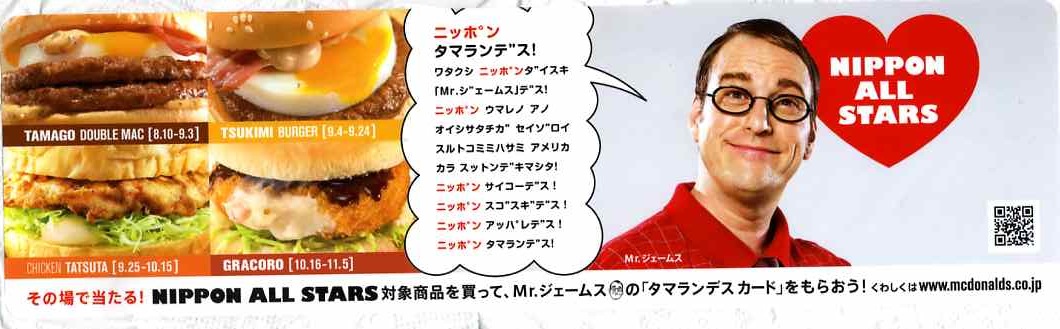
SPECIAL ON McDONALDS JAPAN’S BURGER-PROMOTING CHARACTER “MR JAMES”

Table of Contents:

===========================================

Intro to the issue:

1)  McDonalds Japan’s new creepy “Mr James” burger campaign, featuring katakana-speaking gaijin

2)  Japan Times JUST BE CAUSE column Sept 1 2009 on why “Mr James” is a problem

Protest begins:

3)  NPO FRANCA protest letter to McDonald’s USA HQ re “Mr James”

4)  NPO FRANCA’s downloadable protest letter in Japanese

5)  “I Hate ‘Mr James’ Facebook page created (not by me), now at 232 members

Reactions:

6)  South China Morning Post on “Mr James” , quotes FRANCA

7)  San Francisco Chronicle on McDonald’s Japan “Mr James” campaign, and similar ethnically-insensitive sales campaigns overseas

8 ) TIME Magazine on “Mr James”, misses point

9)  McDonald’s Japan CR Director Kawaminami Junichi responds to FRANCA, no apologies or retractions

Repercussions:

10) McDonald’s Japan “Mr James”: Reports of improvements

11) Sports drink uses katakana- and KANJI speaking alien:

Contrast with McDonald’s “Mr James” katakana-only character

12) Quick follow-up letter to McDonald’s USA “Contact us” website re “Mr James”:

Compare to Subway Sandwiches’ J-speaking NJ shills

===========================================

By Arudou Debito, Nagoya, Japan (debito@debito.org, www.debito.org)

Freely Forwardable

////////////////////////////////////////////////////

Intro to the issue:

1)  McDonalds Japan’s new creepy “Mr James” burger campaign, featuring katakana-speaking gaijin

Here’s a campaign by one of the world’s largest multinational corporations, McDonald’s, promoting stereotypes in a way quite untoward in this day and age (and no doubt would raise hackles with anti-defamation leagues if McD’s tried it in, say, its country of origin).

The new NIPPON ALL STARS campaign (which seems to have kicked off a few days ago, on August 10, with its Tamago Double Mac), features a bespectacled, somewhat nerdy, gaijin speaking in broken katakana (i.e. accented) Japanese. “Mr James” is his name (following the convention of forcing all Western foreigners to be called by their first names, as opposed to last name plus -san, proper etiquette). And boy is he happy with Japan, with life, with the taste of Japanese-variety burgers at McDonalds. Hell, they’re so good that even this nerdy-looking gaijin (full-body cardboard cutouts available at every McD’s) approves of them through his poor accented broken Japanese.

You even get a “James Tamaran (“it’s so good I can’t stand it!”) Card” and a chance to win from a million dollar pool if you succumb to his sales pitch. It’s more than a little creepy.

Here are some scans, taken of materials photographed and collected at McDonald’s Yodobashi Camera Sapporo August 13, 2009 (click on image to expand in browser):

https://www.debito.org/?p=4136

////////////////////////////////////////////////////

2)  Japan Times JUST BE CAUSE column Sept 1 2009 on why “Mr James” is a problem


Japan Times Tuesday, Sept. 1, 2009

JUST BE CAUSE

Meet Mr. James, gaijin clown

Not everyone is laughing at McDonald’s Japan’s latest wheeze, a hapless foreigner who’ll never fit in

http://search.japantimes.co.jp/cgi-bin/fl20090901ad.html

By DEBITO ARUDOU

“Director’s Cut” with links to sources at https://www.debito.org/?p=4303:

If you want to sell stuff, it helps to have a recognizable “mascot” representing your company.  Disney has Mickey Mouse, Sanrio Hello Kitty, Studio Ghibli Totoro.  These imaginary characters grace many a product and ad campaign.


However, McDonald’s Japan dropped a clanger on August 10 with its new burger meister:  “Mr. James”.


Fronting the “Nippon All Stars” campaign (American hamburgers with a Japanese twist) for three months is a bespectacled grinning Caucasian wearing mismatched red shirt and chinos.  Created by ad agency Dentsu, “Mr. James” is touring the burghers of Japan, offering money for photo ops.  His blog effuses perpetual wonderment at all things Japanese.  His obsession is McDonald’s:  he’s a burger nerd.


Not necessarily a problem so far.  But some non-Japanese residents have protested that this (human, not imaginary) character perpetuates Japanese stereotypes about other humans  foreigners.


“Mr. James” (defying standard etiquette of addressing adults with “last name plus -san”, reflecting how Japanese manners aren’t always applied to Caucasians) effuses in fluent katakana only.  Everything is in broken accented Japanese.  “Watakushi nippon daisuki” etc.


What’s the matter?  Put the shoe on the other foot:  Imagine McDonald’s, a multinational long promoting cultural diversity, launching a new “McAsia Menu” in America, featuring a deep-bowing grimacing Asian in a bathrobe and platform sandals saying, “Me likee McFlied Lice!”, or “So solly, prease skosh honorable teriyaki sandrich?”


This would of course occasion protest from minority groups and the Japanese embassy (as happened in Hungary in 2003, regarding a racist TV show).


And rightly so.  But so far the media reaction towards “Mr. James” has been mixed.  The Japanese press has ignored it.  The Western press has been nonplussed.  Respectable websites have quoted some Asian-Americans’ acidulous Schadenfreude:  “Karma’s a bitch.”  As in, Asians have suffered Western stereotyping long enough, so this is cosmic retribution towards Caucasians.


Others fail to see beyond the weird or exotic (of course; not everyone lives here or understands what straight katakana does to Japanese speech).  Still others think it’s just humor, so let it go:  Get a life, you humorless killjoys.


But this overlooks what activists are trying to do:  Give a point of view that goes against the mainstream  because Japanese media generally stereotypes foreigners in an unbalanced and unfair manner.  Mr. James is but the most recent incarnation, and an offensive one at that.


I personally have three tests for whether stereotyping is offensive or unfair:


1) Does it suit the purposes of humor and satire, or is it just mean-spirited?


2) Has it any redeeming social value?


3) Is there turnabout in fair play?


Regarding 1), yes, I grant that “Mr. James” is disarmingly funny.  However, it still takes mean cheap shots at foreigners for a purported lack of language ability.  Allow me to elaborate from decades of personal experience what this stereotype does:


When asked if the Japanese language is difficult, I say it isn’t.  What’s difficult is talking to Japanese people.  One has to overcome so much ingrained baggage  often instilled from childhood in approved textbooks  that foreigners, particularly the non-Asians, are “guests and outsiders”  illiterate, inscrutable, and incomprehensible.  Thanks to this, I daresay in the majority of random interactions, foreigners who do not “look Japanese” have to prove every day to new listeners that they speak Japanese just fine.


It’s like having to untangle your headphones before you listen to music.  Every.  Single.  Time.  And “Mr. James” just pulls the knots tighter.


Now 2) Redeeming social value.  For example, when we see stereotyped characters on TV show “The Simpsons”, fun is poked.  But eventually the characters become humanized, part of the neighborhood in The Simpsons’ universe.  Is “Mr. James” similarly humanized and included?


Well, “Mr. James” has a backstory, but it’s one of “bedazzled tourist and guest”.  It’s not one of inclusiveness:  no matter how hard he tries (especially since McDonald’s rendered his every utterance in katakana), he’ll never be Japanese.  He is the perpetual “other”.


Nothing new, since “othering foreigners” into a skin of differences is a national pastime.  But it’s not pleasant for Caucasians who actually live here, and now have to deal with the reconfirmed “Mister First-Name-Outsider-speaking-incomprehensibly” stereotype in public as far down as children (one of McDonald’s target customers).  Besides, how many will get the online backstory?  Most will only spot his banners and full-body cutouts and see him as a flat cartoon, not a potential neighbor.


Will McDonald’s ever wink to the audience that it’s “all in fun”, and let on that “Mr. James” is a member of this society after all his hard work fitting in and fawning?  Highly unlikely.  Because by design he doesn’t belong here.


That leads us to 3) “fair play”.  Is everyone “fair game” for stereotyping, and do the stereotyped have the chance to reply and balance views?  I would argue no.  The Japanese media very rarely gives a voice to non-Japanese residents, offering their perspective on life in Japan unadulterated.  In fact, the image most often transmitted is that Japan is that of the hackneyed “unique island society”  and foreigners, however long-established, even married to Japan, have enormous difficulty fitting in and expressing themselves.


To test “fair play”, imagine if roles were reversed, with a Caucasian in Japan unilaterally poking fun at Japanese?  I can, from experience.  Outrage, even cries of racism.  Domestic media isn’t fair, and most non-Japanese who try to balance their praise with critique or criticism get tossed aside as “Japan-haters”.  Only “Japan-lovers”, as “Mr. James” is to the core, need apply as foreign shills.


In sum, the “Mr. James” character is a “gaijin”  the embodiment of an epithet.  Something for Japanese to feel comfortable with, even if non-Japanese bear the brunt.  McDonald’s Japan is pandering to Japanese stereotypes without offering any sense of balance or inclusion.


You are welcome to disagree and see this as not worth protesting.  I’m just making the case for protest and beginning a discussion.  What I don’t quite get is why people, especially those affected by this campaign, snarl:  “I personally don’t find ‘Mr. James’ offensive, so shut up.”


That’s the thing about how one “takes offense”.  It’s not just subjective.  It’s subliminally contextual as well.  Read history.  Any number of media icons once seen as inoffensive now cause cringes:  The Yellow Kid.  Gollywogs.  Minstrel shows.  Jose Jimenez.  Aunt Jemima.  Little Black Sambo.  Stepin Fetchit.  Fu Manchu.  Charlie Chan.  Mr. Moto.  Plenty more.  You watch and wonder what people were thinking back then.


Yet these characters survived for decades as mainstream icons, regardless of how overgeneralizing or degrading they might be to the ethnicities they portrayed.  That’s because those ethnicities did not speak up, or were not heard when they did.  So apparently nobody “took offense”.


Times change.  Minorities assembled into pressure groups and shifted the very parameters of the debate.  Raising public awareness of how stereotyping affects them is precisely what made the stereotypes cringeworthy.  Even when there are lapses, such as Abercrombie and Fitch’s “two Wongs can make it white” Chinese-laundry shirts in 2002, minorities complain and product lines get discontinued.


Protesters want the same thing to happen to “Mr. James” in 2009.  That’s what’s so weird:  Did McDonald’s seriously think there are no Caucasian minorities in Japan who might be affected or bothered?  That a multinational company, with decades of experience selling goods to other societies, can show this degree of insensitivity?  That nobody would cringe at the very sight of “Mr. James”?


Let me quote Ben Shearon, one officer of the newly-registered lobbying group FRANCA (Foreign Residents and Naturalized Citizens Association; which, in the interests of full disclosure, your correspondent chairs):


“The people complaining about this ad live in Japan, pay taxes here, and in some cases have naturalized and become Japanese citizens.  We find this campaign reinforces unwelcome stereotypes that affect our lives here.  I have been denied housing, bank loans, and even entry to businesses specifically because of my race/nationality.


“By pandering to the ‘hapless foreigner’ stereotype, McDonald’s is reinforcing the idea that non-Japanese cannot speak Japanese or conduct themselves properly in Japan.  A multinational corporation like McDonald’s should be more careful about the subliminal messages they put out, and we are just trying to bring that to their attention.”


That’s it.  We’ve made our case.  Still think that “Mr. James” is not worth protesting?  That’s your prerogative.  But don’t tell people who feel adversely affected by media campaigns to just suck it up.  That’s not how minorities finally gain recognition and a voice as residents in a society.


McDonald’s Japan should have known better, and it is reacting to the pressure:  A letter in English (responding to FRANCA’s letter sent in Japanese, naturally) has Director of Corporate Relations Junichi Kawaminami claiming, “no offence was meant” (oh, so that’s okay then), but not apologizing or promising any changes.  Meanwhile, certain restaurants in areas with concentrations of non-Japanese don’t seem to be carrying the “Mr James” campaign.


And suddenly “Mr. James’s” blog has hiragana too.  Maybe after enough complaints he’ll be a quick study in kanji.  If he’s not cringed out of commission.  And rightly so.

ENDS

Links to sources at https://www.debito.org/?p=4303

////////////////////////////////////////////////////

Protest begins:

3)  NPO FRANCA protest letter to McDonald’s USA HQ re “Mr James”


To McDonald’s USA corporate headquarters:

To Whom It May Concern:


We write to you on behalf of FRANCA, a human rights group concerned with the rights of non-Japanese residents in Japan. Our goals are: 1) To eliminate negative public images and stereotypes of non-Japanese and multi-cultural Japanese; 2) To eliminate discrimination by race, nationality, ethnicity, and national origin; 3) To highlight the benefits of immigration and a multi-cultural society. FRANCA works to achieve these goals through sustainable and effective lobbying, networking and public relations campaigns aimed at educating the public. More about us at www.francajapan.org.


We wish to bring to your attention a sales campaign launched this month by McDonald’s Japan that we find extremely problematic.


The “Mr. James” character, representing the “Nippon All Stars” hamburger campaign, features a spectacled Caucasian narrating his love for Japan and Japan’s version of McDonald’s’ hamburgers. Our association finds the following things problematic:

https://www.debito.org/?p=4153

////////////////////////////////////////////////////

4)  NPO FRANCA’s downloadable protest letter in Japanese

Here is the Japanese translation for FRANCA letter protesting the “Mr James” burger campaign currently underway at McDonald’s Japan. You can see the original English here.

Please feel free to copy and send this letter to McDonald’s yourself via their feedback inlets on their website. Better yet, take it to your local McDonald’s doing this campaign, ask for the manager, and hand them this letter to express your disgruntlement. You can download the Word version of it here:

https://www.debito.org/FRANCAMrJamesJpublic.doc

Please also consider not buying food at McDonald’s for the duration of this (three-month) campaign. Maybe tell the manager that when you submit your letter.

Talked to the media yesterday. An article on this issue should be appearing in the South China Morning Post tomorrow (Friday). It’s already appeared on Consumerist.com…

https://www.debito.org/?p=4167

////////////////////////////////////////////////////

5)  “I Hate ‘Mr James'” Facebook page created (not by me), now at 232 members

http://www.facebook.com/group.php?gid=136293508102

Join if you like.

////////////////////////////////////////////////////

Reactions:

6)  South China Morning Post on “Mr James”, quotes FRANCA

“McDonald’s has obviously put a lot of money into this campaign as there are full-length posters and banners in every restaurant that I see as well as by the side of roads here, and the company is apparently not concerned that they are offending people and hope we continue to buy their burgers,” Franca chairman Debito Arudou, a naturalised Japanese born in the United States, said.


“This is untenable in a Japan with ethnic minority residents,” he said. “They are being ill-portrayed by this stereotype and their lives may be affected by this careless campaign by one of the world’s most influential multinational companies.”


McDonald’s Japan confirmed that it had received complaints about the campaign and said it was examining the matter. Similar complaints to its US headquarters have been referred back to the Japanese firm.


“What really angers me is that no one involved in the process here thought that anyone would take offence to see a caricature such as this advertising their company,” Mr Arudou said. “Can you imagine the outrage there would be in the US or any other country if a restaurant chain used an image of a Japanese man with big, round glasses, buck teeth, geta sandals and a kimono telling people to `buy flied lice, is velly good! “That’s the sort of thing that gets embassies and global human rights’ groups angry and involved,” he said.

https://www.debito.org/?p=4176

////////////////////////////////////////////////////

7)  San Francisco Chronicle on McDonald’s Japan “Mr James” campaign, and similar ethnically-insensitive sales campaigns overseas

SF Chronicle: “What’s the matter [with this depiction]? Put the shoe on the other foot,” wrote foreigner-rights advocate Debito Arudou (nee David Ardwinckle) [sic] in a column for The Japan Times. “Imagine McDonald’s, a multinational that has long promoted cultural diversity, launching a McAsia menu in America, featuring a deep-bowing, grimacing Asian in a bathrobe and platform sandals saying, ‘Me likee McFlied Lice!’ or, ‘So solly, prease skosh honorable teriyaki sandrich?'”

McHatin’ It


Of course, in the past, McDonald’s has essentially done just that. During last year’s Olympics, it unveiled a commercial featuring two Chinese kids engaged in high-flying wire-fu combat in an ancient temple, dueling it out with fists and feet and chopsticks over the last McNugget in the pack.


Seeing that ad brought back memories of McDonald’s limited-edition “Shanghai” Chicken McNuggets, which briefly appeared on menus back in 1986. Served in a red takeout box stamped with cartoon-Chinese lettering, they came with a fortune cookie, chopsticks and three absurdly non-Shanghainese dippings: “duck sauce,” hot mustard and  teriyaki sauce.


Worst of all, to complete the pseudo-Sino experience, the chain’s employees were forced to wear conical McCoolie hats  a bit of irony given their minimum-wage status  while commercials ended with mascot-clown Ronald McDonald throwing a karate chop to faux Asian music.


Lame, ignorant campaigns like this one may seem innocuous. But they give people license to mock and exclude people based on racial or cultural difference, which in turn can lead down a slippery slope to more troubling outcomes…

https://www.debito.org/?p=4319

////////////////////////////////////////////////////

8 ) TIME Magazine on “Mr James”, misses point

TIME Magazine: But elsewhere, Mr. James, dressed in his buttoned-up red polo shirt, tie and khakis, is seen as playing to Japan’s xenophobic tendencies. Annoyed expats have described the character as “white, dorky” and speaking “mangled Japanese.” The chair of The Foreign Residents and Naturalized Citizens’ Association of Japan, Arudo Debito  a naturalized Japanese citizen born David Aldwinckle  has officially protested the Mr. James campaign with a letter to McDonald’s Corporation headquarters in Illinois. Soon after the ads started to roll out, somebody set up an “I hate Mr. James” Facebook group, which now has 67 members.


Debito considers the characterization of “a clumsy sycophantic ‘nerd'” an embarrassment. “If this were in a different country, and we had a Japanese in a [summer kimono] and [wooden sandals] saying ‘Me like Mcflied lice, please eato,’ we’d have the same sort of anti-defamation league speaking out and saying this is disparaging to Asians or Japanese,” says Debito. He says the campaign’s portrayal of non-Japanese as “unquestioningly supportive and culturally ignorant” will only make life more difficult for foreigners in Japan.

https://www.debito.org/?p=4227

////////////////////////////////////////////////////

9)  McDonald’s Japan CR Director Kawaminami Junichi responds to FRANCA, no apologies or retractions

NPO FRANCA received this morning a response from McDonald’s Japan Director of Corporate Relations, a Mr Kawaminami Junichi, regarding our protest letters in English and Japanese on the “Mr James” sales campaign.

I appreciate him taking time to respond, but he toes the line he narrated to various world media stressing the lack of intention to offend, again without discussing any of the possible ill-effects to NJ residents from stereotyping.

He also only answered in English, which is a bit of a disappointment. I presume he doesn’t want the discussion to expand to the Japanese debate arenas. Letter follows below.

https://www.debito.org/?p=4243

////////////////////////////////////////////////////

Repercussions:


10) McDonald’s Japan “Mr James”: Reports of improvements

McDonald’s Japan seems to be tweaking the “Mr James” campaign in a more positive direction: 1) Losing the katakana tray inserts, 2) Giving him a more endearing backstory, 3) Having him speak in hiragana too, not just katakana, 4) Not featuring him in more international neighborhoods of Japan. Readers, confirm, deny, or expand?

These are all evidence that McDonald’s Japan is taking complaints about this campaign seriously. But I still say the campaign must be suspended entirely. They may be trying to make him a character with more redeeming characteristics. But he’s still, in my book, a gaijin  an epithet made flesh; that’s how he was designed, and now McDonald’s Japan, for better or worse, is saddled with him.

https://www.debito.org/?p=4192

////////////////////////////////////////////////////

11) Sports drink uses katakana- and KANJI speaking alien:

Contrast with McDonald’s “Mr James” katakana-only character

At a convenience store (Lawsons) in deep south Shikoku, we have a sports drink company which uses an alien character to promote its products. Visual:

Note that like McDonald’s Japan “Mr James” Character, he too speaks katakana.

But UNlike “Mr James”, even the space alien speaks kanji!

Somebody please explain to me again why space aliens but not Caucasians are allowed to speak in more natural Japanese? We can’t use the “island society” mentality against fellow humans, can we?

Either way, this helps to show just how alienating this “Mr James” campaign actually is.

https://www.debito.org/?p=4306

////////////////////////////////////////////////////

12) Quick follow-up letter to McDonald’s USA “Contact us” website re “Mr James”:

Compare to Subway Sandwiches’ J-speaking NJ shills

=========================

Hello McDonald’s USA (excerpt):


You might be interested to read my column in the Japan Times talking about what’s wrong with McDonald’s Japan’s “Mr James” Campaign. Also articles in SF Chronicle, TIME, SCMP, and more. Perhaps it’s time to consider pulling the plug on this campaign before it embarrasses your organization any further?

=========================

UPDATE: Even Subway Sandwiches lets their NJ character shills speak in proper Japanese. Why not McDonald’s Japan?

UPDATE 2: McDonald’s USA responded within 24 hours with another “Dear John” letter, the same one sent verbatim to all complainants, stressing the lack of intent to offend and that we should take it up with McD’s Japan. Taraimawashi.

https://www.debito.org/?p=4337

Guess I won’t be eating McDonald’s again.  Pity.  I grew up with the stuff.  They lost a longtime customer.

////////////////////////////////////////////////////

That’s all for this Newsletter.  More to come soon enough since we have more than a month’s backlog.  If you can’t wait, visit www.debito.org!

Thanks for reading!

Arudou Debito in Nagoya, Japan

DEBITO.ORG NEWSLETTER SEPT 8, 2009 ENDS

Mainichi: Shizuoka bureaucrats force Brazilian woman to take “Repatriation Bribe”

mytest

Handbook for Newcomers, Migrants, and Immigrants to Japan\Foreign Residents and Naturalized Citizens Association forming NGO\「ジャパニーズ・オンリー 小樽入浴拒否問題と人種差別」(明石書店)JAPANESE ONLY:  The Otaru Hot Springs Case and Racial Discrimination in Japansourstrawberriesavatartwitter: arudoudebito
Hi Blog. Case number #4534 of why one does not allow untrained bureaucrats to make Immigration decisions: The potential for misunderstanding and abuse.

Last April, the GOJ decided to offer unemployed Nikkei workers (only — this did not apply to Chinese etc. “Trainees and Researchers” because they did not have the correct blood) a 300,000 yen Repatriation Bribe for airplane tickets “back home”, not only asking them to void their visas and give up their paid-in pensions, but also to go elsewhere and just be somebody else’s problem.

Now, according to the Mainichi of Sept 14, 2009, a local government tried to make any possible welfare benefits to a NJ contingent upon promising to take the Bribe and go home — a Catch-22 if ever there was one.

Not too surprising. This is the same prefecture which around up to ten years ago restricted or denied NJ the right to sign up for the National Health Insurance (kokumin kenkou hoken) because they weren’t “kokumin” (citizens) .

Fortunately, this case came out in the press. How many others have been duped here and elsewhere and forced to go home without it being reported?

Shame on the GOJ for creating this policy avenue for abuse in the first place. Arudou Debito back in Sapporo

////////////////////////////////////////////////

National News
Local gov’t makes foreign welfare applicant sign up for cash to return to Brazil

(Mainichi Japan) September 14, 2009, Courtesy of David P

http://mdn.mainichi.jp/mdnnews/national/news/20090914p2a00m0na010000c.html?inb=rs

FUKUROI, Shizuoka — The Fukuroi Municipal Government has promised to apologize to a Brazilian woman of Japanese descent after forcing her to sign a pledge to use government assistance to return to her country when she applied for a welfare payment.

The assistance program provides government funds enabling jobless people of Japanese descent and their families to return to their countries when they decide to give up working in Japan.

When questioned by the Mainichi, a municipal government representative admitted the city’s error, saying, “The payment of welfare benefits and the support to return to one’s country are separate things. Our behavior disregarded the person’s wish to live in Japan.” The city has promised to annul the pledge and apologize to the woman.

The woman, a third-generation Japanese-Brazilian in her 20s, lives with her 5-year-old son. She came to Japan about 10 years ago. In mid-July, she was dismissed by the cell-phone parts manufacturer she had worked for, and she applied for livelihood protection payments on Aug. 31.

The woman and city officials said that when she applied, a worker told her, “Unless you promise to undergo procedures to apply for financial support to return to your country, we will not accept the application for livelihood protection.”

When the woman said that she wanted to continue to work in Japan, the worker reportedly told her, “You have no driver’s license and you can’t speak Japanese, so you can be 100 percent sure you won’t find work. It would be better for you to take the 300,000 yen (payment to return to Brazil), and go home.”

Along with the application for welfare payments, the woman was handed a blank A4-sized sheet of paper. On it she wrote a message in Portuguese saying that she would apply for assistance to return home. She reportedly signed it and marked it with a fingerprint.

Commenting on the incident, a city official initially said that the city had received a notice from the government saying that when livelihood protection benefits were provided, if there were other payments that could be made, such as pension payments or allowances, then those payments should take precedence. Accordingly, the city judged that assistance to return home fell into that category, the official said.

Later, however, a city representative said, “Livelihood protection is for people facing adversity while living in Japan, and making the support money to return home apply to the utilization of other laws and policies constituted a mistaken interpretation of the government notice.”

Commenting on the incident, the woman said, “In Brazil I have ageing parents and a sick younger sister. Even if I go back home I don’t have the freedom to work, and I can only work in Japan. To think that they went as far as to make me write a pledge …”

Original Japanese story:
http://mainichi.jp/select/seiji/archive/news/2009/09/14/20090914ddm041010047000c.html

生活保護:申請の日系人に帰国支援手続き強制 誤り認め謝罪へ‐‐静岡・袋井市

不景気で失業して生活保護費の支給を申請した静岡県袋井市の日系ブラジル人に対し、市が、国の帰国支援制度を利用するとの誓約書を書かせていたことが分かった。制度は、日系人失業者が国内での再就職を断念して帰国する場合、国が家族分も含め帰国支援金を支給しており、今回の市の対応は帰国を促す措置だ。毎日新聞の取材を受けた市は「生活保護の支給と帰国支援は別もの。日本で生活したいという本人の意思を踏みにじる行為」と誤りを認め、誓約書の撤回と本人への謝罪を約束した。【小玉沙織】

誓約書を書かされたのは、息子(5)と2人で暮らす日系ブラジル人3世の20代の女性。約10年前に来日し、7月中旬に携帯電話の組み立て工場を解雇され、8月31日に同市へ生活保護の支給を申請した。

女性や市によると、申請の際、女性は職員から「(日系人離職者に対する)帰国支援事業の手続きも行うと約束しなければ、生活保護の申請は受け付けられない」と言われた。女性は「まだ日本で仕事がしたい」と訴えたが、職員は「あなたは運転免許もないし、日本語も話せないので、100%仕事は見つからない。(帰国支援金の)30万円をもらって帰ったほうがいい」と主張した。女性は生活保護を申請するとともに、職員から渡されたA4判の白い紙に「帰国支援の手続きをする」などとポルトガル語で書いてサインしたうえ、右人さし指で指印を押したという。

取材に対し、市しあわせ推進課は当初、「生活保護の支給については、年金や諸手当など他の方法で受給できるものがあれば優先するという国からの通達(生活保護の「他法他施策の活用」)があり、帰国支援事業の利用はそれに該当する」と説明。その後、「生活保護は日本で困窮しながら暮らす人が対象で、帰国支援金を他法他施策の活用に当たるとするのは、通達の誤った解釈だった」と回答した。

女性は「ブラジルにいるのは、年老いた両親と病気の妹。帰っても働く余裕はなく、日本で働くしかないのに、誓約書まで書かされるとは」と話した。

==============

■ことば
◇日系人離職者に対する帰国支援事業

南米諸国に国籍がある日系人失業者のうち、日本での再就職をあきらめ、母国へ帰国する本人に30万円、扶養家族に1人20万円を国が支給する。不況を受けた緊急支援で4月から受け付けを始めた。当初、国は支援金の目的外使用を防ぐため、支援金受給者は「当分の間」再入国を認めないとしていたが、日系人らから「もう来るなということか」との批判を受け、政府は5月に「3年をめどとする」ことを明らかにした。

ENDS

American journo banned from “Japanese Only” Toyota press conference — in America!

mytest

Handbook for Newcomers, Migrants, and Immigrants to Japan\Foreign Residents and Naturalized Citizens Association forming NGO\「ジャパニーズ・オンリー 小樽入浴拒否問題と人種差別」(明石書店)JAPANESE ONLY:  The Otaru Hot Springs Case and Racial Discrimination in JapansourstrawberriesavatarUPDATES ON TWITTER: arudoudebito

Hi Blog.  Here’s something discussed in Ivan Hall’s seminal CARTELS OF THE MIND and other sources, such as Laurie Freeman’s JPRI article on Japan’s Press Clubs (kisha kurabu, i.e. media cartels).  It hasn’t changed since the publication of these works.  Problem is, the case discussed below isn’t a Japan Press Club.  It’s a Japanese company denying access to local-area journalists IN AMERICA, despite both local ethics and corporate promises to the contrary.  In other words, it’s Japan’s Press Clubs exported.  Read on.  Arudou Debito in Tokyo

=====================================

Toyota stops American from attending exec’s press conference in America

Former FCCJ President Jim Treece gets the cold shoulder from the PR department of Japan’s automotive giant.
by Jim Treece, courtesy of JCH.
Foreign Correspondents Club of Japan website, Sept 9, 2009

I thought my days of battling kisha clubs were over.

Nope. There I was, arguing that I, an American, should be allowed into a Japanese-only press conference. In Traverse City, Michigan, USA.

I was being excluded not by a kisha club, but by Toyota Motor’s PR staff.

The main speaker at an August automotive conference in Traverse City was Toyota
President Akio Toyoda. He did not meet the media. Instead, after Toyoda’s speech, Toyota Motor Sales USA boss Jim Lentz held a press briefing.

A large number of Japanese reporters showed up in Traverse City. I soon learned that Lentz’ boss, Yoshimi Inaba, would give a separate briefing for the Japanese press. I asked to attend, since I speak Japanese. They said no.

“This stinks,” I e-mailed Toyota USA’s top PR man, Irv Miller.

“I have attended sessions of the kisha club at the Ministry of Infrastructure, Land and Transportation. I have gone on overseas trips with Japanese media from the Jidosha Kisha Club where all events were conducted solely in Japanese. Why am I being kept out of an event in the United States where the only real restriction should be language, not nationality?”

His Blackberry reply: “You are not barred from Mr. Inaba’s press interview you ARE invited to Mr. Lentz’s press interview.”

Well, if I’m not barred, then I might as well walk into the room before it began, I decided. Toyota PR staffers double-teamed me to make sure I didn’t get past the doorway.

“You are not invited. It’s our press conference and we chose to invite only the Japanese media,” lead flack Hashimoto said.

Automotive News attended a media roundtable with Inaba in Detroit a week ago, an American staffer added. Yes, I said, but that was a week ago. There has been news since then. I want to hear what Inaba tells the Japanese media. The Q&A will be different from Lentz’s, I said.

They kept saying they wanted Japanese media only. “Who is ‘they?’” I asked. The Toyota PR department, they replied. Who? Finally, Mr. Hashimoto said, “Me.”

Why, I asked.

“You’re American media and I’m not in charge of American media,” he said. At the Detroit auto show, he argued, you have German media press conferences where the Swedish or Japanese media are not invited.

But those are based on language, I said. I’ve attended Japanese-language press conferences at the Detroit auto show, and at the Tokyo and Bangkok motor shows.

There’s not enough room, he said. They had a dozen chairs and a table in a room easily large enough for 40 people. I suggested they could fit in another chair.

But if you come in, all the American media will want to attend, he said. No, I said, just say it’s going to be done in Japanese with no translation. Only those who can handle that will come.

Hashimoto offered me a deal. He would let me come in, as long as I didn’t tell any other American media that I had attended. That was unacceptable. I would not be able to report anything. Then Miller stepped in.

He repeated the we-can’t-let-everyone-in line, then switched to the offensive. “I take exception to the fact that you do not value your invitation to Mr. Lentz’ press conference,” he said. Trying not to roll my eyes, I said I did value that invitation. I had assigned another reporter to cover that press conference.

He kept me cornered and talking in the hallway. Inaba passed by, and briefly paused and looked at us. I was about to greet him – I had interviewed him one-on-one two or three times in Japan – but Hashimoto hurried him along. With him in the room and the door shut, Miller left me for the room where Lentz would speak. Kicking myself for not just sitting in a chair and daring them to throw me out bodily – hey, it worked at the Prime Minister’s office – I headed back to the media room and wrote up a straightforward account of Toyoda’s speech.

Later, a Japanese reporter came up and asked for clarification about comments Ron Bloom had made. Bloom, head of President Obama’s autos task force, had originally been scheduled to hold a press briefing for a small group of reporters, but as word of the briefing leaked out, it was opened to all reporters at the conference. The Japanese reporters also attended.

Toyota’s PR staffers kept me out because they could not think outside of their organization-chart boxes. Hashimoto was Inaba’s handler, so he would only let in the reporters he deals with. Opening the briefing to all Japanese-speaking media would have required a willingness to rethink the way they worked. Akio Toyoda’s speech had urged the auto industry to do just that.

Too bad his PR staff wasn’t listening. ❶
ENDS

Japan Times: New “lay judge” court system sentences first NJ

mytest

Handbook for Newcomers, Migrants, and Immigrants to Japan\Foreign Residents and Naturalized Citizens Association forming NGO\「ジャパニーズ・オンリー 小樽入浴拒否問題と人種差別」(明石書店)JAPANESE ONLY:  The Otaru Hot Springs Case and Racial Discrimination in JapansourstrawberriesavatarUPDATES ON TWITTER: arudoudebito

Hi Blog.  Here’s an event worthy of mention on Debito.org:  Japan’s “Lay Judge” system (meaning jurors, kinda — see more here) pass their first ruling on an NJ defendant.

I am in support of jury systems (I’ve seen firsthand what aloof and removed judges can do even in the most commonsensical court cases), and they seem to have sped up the process for criminal cases (for better or worse).  It has also resulted, it seems according to the article below, in better court interpretation (one big problem with Japanese criminal procedure — there is no certification procedure for quality control).  Comments?  Arudou Debito in Tokyo

====================================

Lay judges hand prison term to first foreigner (Excerpt)
Saturday, Sept. 12, 2009

http://search.japantimes.co.jp/cgi-bin/nn20090912a9.html

SAITAMA (Kyodo) The first foreign defendant to be tried in a lay judge trial was sentenced Friday to five years in prison at the Saitama District Court for two counts of robbery resulting in injury.

The case involving the 20-year-old Filipino man was also the first in which interpreters were used in a lay judge trial.

The defendant, who cannot be named as he was a minor when he committed the crimes, was charged with assaulting two people, along with two other juvenile accomplices, on streets in Saitama Prefecture last December and taking a total of ¥37,000 in cash and other items in the two assaults…

The lay judge system, which debuted in May, requires courtroom participants to make their arguments orally so trials are easier for people who are not legal professionals to follow, which in turn means more work for the interpreters in cases involving foreign nationals.

Much of the focus in the latest case was on whether the two Tagalog interpreters could accurately convey the tone of the remarks and how their interpretation might affect the decisions of the lay judges.

As of April, there were some 4,000 courtroom interpreters covering 58 languages.
Full article at

http://search.japantimes.co.jp/cgi-bin/nn20090912a9.html

ENDS

Bumping into Ramos Rui, one of my heroes, by chance in Nagoya

mytest

Handbook for Newcomers, Migrants, and Immigrants to Japan\Foreign Residents and Naturalized Citizens Association forming NGO\「ジャパニーズ・オンリー 小樽入浴拒否問題と人種差別」(明石書店)JAPANESE ONLY:  The Otaru Hot Springs Case and Racial Discrimination in JapansourstrawberriesavatarUPDATES ON TWITTER: arudoudebito

Hi Blog.  Just a quick blog entry for today.  I was in Nagoya a few days ago finishing up one of my intensive courses on Media Professionalism, and at checkout from my hotel who should I bump into on the elevator but somebody I could have sworn looked just like one of my heroes.

Ramos Rui, a famous soccer player who has done a great deal in my opinion for assimilation of NJ (he even naturalized in 1989), toughing it out in what would become the J-League, then the Japan National Team, was standing right there.  I asked him, he acknowledged, and we had a quick conversation in Japanese about things.

I don’t think he knows as much about me as I do about him (of course — why should he?), but he was very cooperative when I asked if I could take a quick snap with my camera.  Here it is:

ramosruianddebito

Again, Ramos-san is one of my heroes:  I have a poster of him on my office wall from the GOJ, encouraging people to vote IIRC, captioned “nihonjin to shite”.  Bravo.  I think he should be leading the Japan Team, not Okada.  But again, what do I know about sport (and J soccer in particular), except that he’s one of the few who toughed it out — and succeeded in making a name for himself!  Good for him.  Arudou Debito in Yokohama

LA Times: “Charisma Man: An American geek is reborn in Japan”

mytest

Handbook for Newcomers, Migrants, and Immigrants to Japan\Foreign Residents and Naturalized Citizens Association forming NGO\「ジャパニーズ・オンリー 小樽入浴拒否問題と人種差別」(明石書店)JAPANESE ONLY:  The Otaru Hot Springs Case and Racial Discrimination in JapansourstrawberriesavatarUPDATES ON TWITTER: arudoudebito

Hi Blog.  One of the most controversial characters I’ve ever seen come out of the NJ (Eikaiwa) community has been the character of “Charisma Man”, as described in the LA Times below.  Compare and contrast him with McDonald’s “Mr James”.  I won’t right now, but readers feel free.  Arudou Debito in Tokyo

=======================================

latimes.com

FOREIGN EXCHANGE

Charisma Man: An American geek is reborn in Japan

The anime character is coming back from hiatus to his Calvin and Hobbes-type fantasy world in which he is super. But he has his own version of debilitating kryptonite.

By John M. Glionna September 1, 2009

Reporting from Tokyo

From his window seat in the Roppongi bar district, Neil Garscadden eyes an exotic street parade: the reggae-styled hipsters, the Nigerian nightclub hawkers, the soft-stepping geishas, the secretaries in miniskirts and impossibly heavy eye shadow.

The nuances of the scene, Garscadden insists, would be lost on a mere tourist.

This, he says, is a job for Charisma Man.

With his blue eyes, tousled blond hair and foreign passport, Charisma Man is a sake-sipping man about town, suavely negotiating the intricacies of Japanese culture. Women adore him. Men respect, even fear, him. Life in the East bends to his every whim.

“It’s great to be a Western guy in Asia,” he says. “I’ve got lots of money, chicks dig me — everybody respects me.”

Well, not everybody.

In this land of anime, Charisma Man is a comic strip character created in 1998 by Larry Rodney, a Canadian then teaching English in Nagoya, to lampoon what he saw as the absurd hubris of many Western men in Japan. Capitalizing on their novelty status, they prowled for cheap thrills, an easy paycheck and sex — not necessarily in that order. Many were slackers posing as teachers (a job for which they were underqualified) to continue the charade of their low-wattage celebrity.

Even with Charisma Man’s limited knowledge of Japanese language or culture, he nonetheless sees himself as a self-styled Superman — albeit with a debilitating kryptonite: Western Woman.

“She sees him as the loser he really is,” says Garscadden, who penned the comic strip after Rodney returned to Canada. “When she’s around, he reverts back into an average Joe Blow.”

After an eight-year run in an alternative expat magazine, the black-and-white five-panel monthly strip was discontinued in 2006.

But now Charisma Man is back.

Following their 2002 collection of the first four years of Charisma Man adventures, Rodney and Garscadden are teaming up to publish a book containing both old and new installments. And there’s even talk of a new monthly strip.

(They dismiss Charisma Man comics between 2002 and 2006, saying the writers took the character in an uncharismatic direction after Garscadden also left the picture.)

The reprise comes at a much different time than the 1990s heyday, when fewer Westerners living in Japan meant bigger egos for the ones who were there.

But Charisma Man still reigns supreme, the pair says.

“Part of his success comes from the fact that many Japanese women are frustrated by their choices — Japanese men who often are very conservative, old-fashioned and not very romantic,” says Rodney, 41, who now lives in Vancouver.

“And even after all these years, many still have a romanticized view of what Western men are all about.”

Stereotypical fantasy is a main theme of the comic strip. Charisma Man is like the boy in the Calvin and Hobbes comic whose stuffed tiger comes alive only when he’s alone.

In the presence of Japanese women, Our Hero is a muscular he-man. Readers only see his true loser self when Western Woman shares the frame. Likewise, the Japanese girls in Charisma Man’s arms are all Barbie-like — until someone else shows up. Then they’re often rather plump.

“I guess I spent too much time on trains without much else to think about,” Rodney says of his inspiration for Charisma Man. “Maybe I saw too many of these geeky social misfits living above their station in Japan. Something snapped.”

In the strip, Charisma Man hails from the planet Canada, where he works as a McDonald’s fry cook, scorned by the opposite sex.

In an early strip, he snags a job in Japan over a much more qualified Western Woman, leading his foil to seek revenge.

One favorite strip by Garscadden, a former editor at the now-defunct Alien magazine, which carried the series, features the character as Commander Charisma, a submarine captain who spots an approaching battleship just in time to save his crew.

The final frame shows Charisma Man at a bar with his cronies hiding from “the battleship”: Western Woman, who strides through the joint.

For years, Charisma Man ruled Tokyo, at least among expatriates.

“I found references to Charisma Man in academic journals dissecting cross-cultural aspects of Asian studies,” Rodney says. “Years after I moved back to Canada and forgot all about the character, I mentioned to some guy who used to live in Japan that I invented Charisma Man. He shook my hand like I was Mick Jagger.”

There were some critics. One reader of the 2002 collection complained that the entire strip was one joke repeated.

“I loved that,” Garscadden says, “because that’s exactly what Western Woman would say about Charisma Man.”

Garscadden, 43, from Dayton, Ohio, says he recently called Rodney about reviving the character: “I just said, it would be stupid to let this guy die.” Under the new arrangement, Rodney will write the strip and Garscadden will edit.

“I’m already thinking of new directions,” Rodney says. “There might be a new foil other than Western Woman — a new sexy Western Man who threatens to usurp Charisma Man’s powers.

“That would be his worst nightmare.”

john.glionna@latimes.com

ENDS

Interview by JapanTechTalk on NJ rights, courtesy of Mondo Books Nagoya

mytest

Handbook for Newcomers, Migrants, and Immigrants to Japan\Foreign Residents and Naturalized Citizens Association forming NGO\「ジャパニーズ・オンリー 小樽入浴拒否問題と人種差別」(明石書店)JAPANESE ONLY:  The Otaru Hot Springs Case and Racial Discrimination in JapansourstrawberriesavatarUPDATES ON TWITTER: arudoudebito

Hi Blog.  My last night in Nagoya (as in last night) I had an immensely enjoyable interview with JapanTechTalk’s Robert Sanzalone over tebasaki.

Have a listen! http://twaud.io/tg

Amazing how six hours after an interview takes place it can be all over the Net.

Thanks to an introduction by Mike and Jose at Mondo Books Nagoya. http://www.mondo-books.com/
on Facebook
http://www.facebook.com/pages/Nagoya-Japan/Mondo-Books-/218012530513

Two autographed signed copies of HANDBOOK FOR NEWCOMERS, MIGRANTS, AND IMMIGRANTS available at Mondo. First come, first purchased!  How to get there at above links!

Arudou Debito in Nagoya, off to Tokyo for a movie screening of SOUR STRAWBERRIES with Amnesty International tonight.

Reminder: Screenings of SOUR STRAWBERRIES Tokyo & Yokohama Sept 10-12

mytest

Handbook for Newcomers, Migrants, and Immigrants to Japan\Foreign Residents and Naturalized Citizens Association forming NGO\「ジャパニーズ・オンリー 小樽入浴拒否問題と人種差別」(明石書店)JAPANESE ONLY:  The Otaru Hot Springs Case and Racial Discrimination in Japansourstrawberriesavatartwitter: arudoudebito

Here’s the schedule.  Director Daniel Kremers will be in attendance as a special guest:

===================================
UPCOMING SPEECHES 2009
Hosting screenings of SOUR STRAWBERRIES: A documentary directed by Tilman Koenig and Daniel Kremers of Leipzig, Germany, anywhere in Japan in late August-Early September 2009. Please contact Debito at debito@debito.org to arrange a screening.

========= WHAT THE MOVIE IS ABOUT =========

The documentary “Sour Strawberries – Japan’s hidden guest workers” was shot in March 2008 by a German-Japanese film crew in Tokyo. The movie shows migrants fighting for their rights as workers and citizens. The persons concerned are always at the centre of interest. While describing their situation, they are the protagonists of the movie. Contains interviews with NJ workers on their treatment, with input from people like migration expert Dr Gabriele Vogt, Dietmember Kouno Taro, Keidanren policymaker Inoue Hiroshi, labor rights leader Torii Ippei, Dietmember Tsurunen Marutei, and activist Arudou Debito, who gives us an animated tour of “Japanese Only” signs in Kabukicho.

More information and stills from the movie at
https://www.debito.org/SOURSTRAWBERRIESpromo.pdf
A three-minute promo of the movie at
http://www.vimeo.com/2276295

If you can’t make the screenings but would like to order the movie directly from the directors, go to
http://www.cinemabstruso.de/strawberries/main.html

PLEASE NOTE THAT ALL SCREENINGS WILL HAVE A VOLUNTARY CONTRIBUTION OF 500 YEN PER PERSON. (The directors went to great time and expense to create this documentary; let’s do what we can to compensate them.) Debito will also have copies of the DVD available for purchase for 1500 yen.

SCHEDULE OF SCREENINGS:

  1. TOKYO SHIBUYA: Thursday September 10, 2009, 7PM (doors open at 6:30), The Pink Cow restaurant, for Amnesty International AITEN (CONFIRMED) SPECIAL GUEST: DIRECTOR DANIEL KREMERS
  2. TOKYO AKIHABARA: Friday September 11, 2009, 7PM, Second Harvest Japan (CONFIRMED) SPECIAL GUEST: DIRECTOR DANIEL KREMERS
  3. YOKOHAMA: Saturday September 12, 2009, 3-6PM for group “Drinking Liberally” at The Hub bar in Hiyoshi, Yokohama (CONFIRMED): Directions: Hiyoshi is on the Tokyu Toyoko line about 25 minutes out of Shibuya. Besides from Shibuya, Hiyoshi can also be reached from/connected to from Ebisu (Hibiya line), Meguro (Meguro line – continuation of the Namboku and Mita subway lines terminates at Hiyoshi) and Oimachi (Oimachi line connecting at Oookurayama to the Meguro line). The Hub is a 2 minute walk from the Hiyoshi station. Map here. Facebook entry here. SPECIAL GUEST: DIRECTOR DANIEL KREMERS

May I add that I have seen the movie, and it is excellent. We have sold out of three press runs of the DVD, and will be selling more at the venue.

If you can’t make the screenings but would like to order the movie directly from the directors, go to
http://www.cinemabstruso.de/strawberries/main.html

If you’d like to see my previous speeches, handouts, and powerpoints (so you can get an idea what I talk about), please click here.

ENDS

Eikaiwa NOVA embezzler and former boss Saruhashi gets his: 3.5 years

mytest

Hi Blog.  Sorry to be so late in reporting this, but some good news a couple of weeks ago:  Eikaiwa NOVA embezzler and former boss Saruhashi gets his:  sentenced to 3.5 years in the clink.  No word if the employees are going to get their money back, however.

More background details on this case here (plug in the word “sahashi”) into search engine.  More on Debito.org here.

Arudou Debito in Nagoya

==============================

Nova boss handed 3 1/2 years
By ERIC JOHNSTON
Staff writer
The Japan Times Thursday, Aug. 27, 2009

OSAKA — Former Nova President Nozomu Sahashi was sentenced Wednesday to 3 1/2 years in prison by the Osaka District Court for his role in skimming off employee funds in 2007, just before the foreign language school giant’s bankruptcy that October.


Presiding Judge Hiroaki Higuchi’s severe sentence took some in the courtroom by surprise. Prosecutors had sought five years for the former president of what was once the country’s largest foreign language school chain and employer of foreign nationals. Sahashi is expected to appeal the sentence.

Sahashi was charged with funneling nearly ¥320 million from employee benefit funds to a bank account belonging to a Nova affiliate in July 2007. He denied embezzling the funds, telling the court he used the money on behalf of his employees.

He tried to portray himself as only one of a group of senior Nova executives responsible for the decision. But the judge said that given the amount of money and his authority, Sahashi bore a heavy responsibility for the crime.

Rest of the article at

http://search.japantimes.co.jp/cgi-bin/nn20090827a1.html

Discussion: What do you think about special discounts for NJ?

mytest

Handbook for Newcomers, Migrants, and Immigrants to Japan\Foreign Residents and Naturalized Citizens Association forming NGO\「ジャパニーズ・オンリー 小樽入浴拒否問題と人種差別」(明石書店)JAPANESE ONLY:  The Otaru Hot Springs Case and Racial Discrimination in JapansourstrawberriesavatarUPDATES ON TWITTER: arudoudebito

Hi Blog.  The Community yahoogroup has been having an interesting discussion about “positive discrimination”, where NJ actually get special treatment or discounts for being foreign.  What do readers of Debito.org think about that?

Here are some posts from The Community developing the issue.  Comments?  Debito

Just wanted to pass along a very nice thing that happened today —
went out to a cafe here in Fukui with my family for lunch and was
surprised to find a sign in English at the register reading “10%
discount to all foreigners”.  Although the discount is nice, it’s even
nicer to see a shop going out of its way to open itself up to NJs,
especially in a conservative prefecture like Fukui.  It’s the first
time I’ve seen anything of the sort expressly written out as a sort of
store policy, so it was definitely a nice experience.  The food was
good, too.  😉

I doubt any other community members will ever get the chance to go
there, but just to give credit where it’s due, here is a link to the
shop:

http://r.tabelog.com/fukui/A1801/A180101/18000645/

Although the foreigner-friendly sentiment may be admirable, do people really approve of differential pricing depending on nationality?

That said, someone recently insisted on taking the tax off something I bought in a tourist-oriented shop in Kyoto, even though I was not taking it abroad. I didn’t complain too hard!

If I noticed a shop nearby that was giving discounts to foreigners and they had items I needed, I wouldn’t hesitate to go there.

It does however beg the question of how they define foreign and how
they determine foreignness. Would zainichi Koreans be included here,
and are they asking for ID or are they just basing it off appearances?
How about the likes of Debito and myself, [both naturalized citizens]?

I think your sympathy with the people who try to be foreigner friendly
is as well intentioned as the people who make those efforts.

To try and convey the feeling, instead of just the principle, of what
I’m talking about, I’d like to relate an anecdote.

There used to be a club in Roppongi called “Vanilla”. And they gave out
tickets that said:

“with this ticket, 1.000 yen/2d
Foreigners & Women use only”

As anyone who has gone clubbing in Roppongi, 1000 yen for two drinks and
admission is a pretty sweet deal.

So I showed up with some people, a mixed crowd of some Japanese, some
foreigners, some men, some women. Two of the men were non-Japanese Asians.

At first the women at the front counter would not accept the tickets
from the Asian men. But, as you suggested a person could do, they then
provided their “gaijin cards”.

And the women *still* checked with the managers to make sure it was all
okay.

The distinct feeling we got was that the idea of the foreigners discount
was that they had an image of what being a foreigner who goes to a club
is like. They wanted the kind of young and cool black American you might
see in a rap video, or a tragically hip white DJ-type you might see at a
rave in London.

In other words, yes, my friends could prove they were, in fact, foreign
and eligible for the discount.

But they sure didn’t feel great about having to confront the feeling
they got from the club, which could be described as “Oh… when we said
‘foreigners’, we didn’t mean *you*, but, I guess we have to let you in
anyway.”

I understand the sentiment here, but we accept ladies’ day at the cinema and
senior discounts or children’s discounts in a number of places.  I think any
effort to be foreigner-friendly (as opposed to foreigner-suspicious or
foreigner-hostile) should be accepted with the good will with which it was
offered.

If you are an Asian foreigner and want the good discount, you could flash
your alien registration card.  If you are a “foreign”-looking Japanese
national you could of course refuse the discount, but aren’t there times
when nice manners and accepting people’s attempts to be friendly trump
politics?  It might even be a funny teachable moment:  “I know I look
foreign, but I’m actually Japanese.  Can I still have the discount?  [LOL].”

I’m all for challenging rude and hostile treatment of foreigners (or
anyone), but I do fail to see what we gain by rejecting on “principle”
people’s attempts to reach out in kindness.

I think the reason senior and student discounts exist is because of the
general societal consensus that those people don’t have as much
disposable income as the working middle class. We respect that students
are working for future contribution, and seniors have given us past
contribution. So we cut them some slack.

With situations such as ladies night at clubs or movies, it’s marketing.
If the women come, the men will follow.

So the question then comes back to us as, do we want to be seen as
disadvantaged (like seniors with fixed incomes) or a marketing tool
(like women getting half price at a bar).

Personally, I think both of those perceptions keep us viewed as
separate. In the short term they are well intentioned and harmless in
any one specific case. But the more situations where foreigners get
privilege for being foreign will keep Japanese seeing us as some kind of
novelty.

Yes, very well stated. That is really almost precisely the way I felt in reading about this. I’m sort of torn between, on one way, a desire to applaud somebody’s attempt to be kind, but at the same time concerned about the very fact that people of a different nationality are seen as either objects of discrimination or privilege. I understand the sort of “duty free” treatment of tourists, because there it is very much a question of purpose of travel rather than nationality, but when the store also gives special treatment to foreigners who are basically members of the Japanese community (in general, I watch Japanese politics more closely than American politics), then I think it requires some thinking.

TheWorldGame.com on why Brazilian footballers in Japan are so footloose

mytest

Handbook for Newcomers, Migrants, and Immigrants to Japan\Foreign Residents and Naturalized Citizens Association forming NGO\「ジャパニーズ・オンリー 小樽入浴拒否問題と人種差別」(明石書店)JAPANESE ONLY:  The Otaru Hot Springs Case and Racial Discrimination in JapansourstrawberriesavatarUPDATES ON TWITTER: arudoudebito

Hi Blog.  I received this from the author yesterday for its mention of McDonald’s “Mr James”, but hell, I thought the article interesting enough (I know little about the subject) that I thought I’d bring it up here for comment.  Those more in the know, fire away.  Debito in Nagoya

==================================

Brazilians no mercenaries in dash for cash
By Mike Tuckerman | 6 September 2009 | 17:43

http://www.theworldgame.com.au/brazilians-no-mercenaries-in-dash-for-cash-232312
Courtesy of the author

SUBTITLE:  There was a monumental shift in Japan this week, and it wasn’t Leandro’s decision to up sticks to Al-Sadd.

After a near-unbroken half-century in power, the ruling Liberal Democratic Party was turfed out by an electorate simmering with anger.

The LDP had become synonymous with corruption – its 50-year stronghold leaving the Japanese economy teetering on the brink.

It was time for change, and the citizens of Japan duly delivered one.

Meanwhile, Gamba Osaka striker Leandro followed a well-beaten path when he cashed in his yen to join Qatari club Al-Sadd for a fee in excess of $12 million.

The powerful forward had been at the Kansai side for barely nine months, having joined at the start of the year from local rival Vissel Kobe.

His departure has the potential to unleash catcalls that Brazilian players are only in the J-League for the money.

Well, so what if they are?

In a country where xenophobia is a softly-spoken secret – how’s this for McDonald’s latest Japanese ad campaign?– can anyone really blame Leandro for hopping on the first available flight to Doha?

Brazilian migrants first started arriving in Japan in the early 1900s.

Brazilian footballers have been an ever-present in the J-League since it kicked off in 1993, with Japanese coaches quick to harness the selfishness of Brazilian strikers in front of goal.

But for every Leandro jetting off to the Gulf – or Emerson, or Magno Alves, or Baré – there’s a Zico, a Toninho, or a Fernandinho.

There are plenty of Brazilians in the J-League committed to the cause.

Some, like the high-profile Zico, are afforded star status.

But others toil in relative anonymity, happy to ply their trade far from their homeland, struggling to overcome cultural and language barriers.

Often their contracts are terminated with no fanfare and little regard for their welfare.

When diminutive midfielder Fernandinho requested a transfer from Shimizu S-Pulse in 2008, he was granted an immediate loan move to Kyoto Sanga.

His return to Nihondaira Stadium with Kyoto was greeted by a chorus of jeers from Shimizu fans, clueless as to the reasons for his departure.

Deeply religious, Fernandinho had actually moved back to the Kansai region to be closer to his congregation.

Every year, dozens of Brazilian players are summarily informed by J-League clubs that their services are no longer required.

Often the news means up-rooting home and family to look for a new club overseas.

It’s a draining lifestyle – one I can attest to – and I don’t begrudge a single Brazilian player who chooses to make a living in Japan, or one who departs for pastures anew.

Japan Times columnist Andrew McKirdy’s illuminating insight into the life of Croatian defender Mato Neretljak proves it’s not just Brazilians willing to make a fist of things in Japan.

Leandro will be replaced –Gamba signed Pedro Junior on the day of Leandro’s exit – and there are plenty more Brazilians to try their luck in the J-League.

In an ideal world we would judge them for their exploits on the pitch, and not on their cut of big-money intercontinental transfers.

Quick letter to McDonald’s USA “Contact us” website re “Mr James” (UPDATED: Compare to Subway Sandwiches’ J-speaking NJ shills)

mytest

Handbook for Newcomers, Migrants, and Immigrants to Japan\Foreign Residents and Naturalized Citizens Association forming NGO\「ジャパニーズ・オンリー 小樽入浴拒否問題と人種差別」(明石書店)JAPANESE ONLY:  The Otaru Hot Springs Case and Racial Discrimination in JapansourstrawberriesavatarUPDATES ON TWITTER: arudoudebito

Hi Blog.  Just sent this out this evening to McDonald’s USA’s “Contact Us” section on their website (since McDonald’s Japan is certainly giving the “Mr James” issue short shrift).  FYI.  Debito

Hello McDonald’s USA:

You might be interested to read my column in the Japan Times talking about what’s wrong with McDonald’s Japan’s “Mr James” Campaign:
http://search.japantimes.co.jp/cgi-bin/fl20090901ad.html

It has received similar attention in the San Francisco Chronicle:
http://www.sfgate.com/cgi-bin/article.cgi?f=/g/a/2009/09/02/apop090209.DTL

TIME Magazine:
http://www.time.com/time/world/article/0,8599,1918246,00.html

South China Morning Post (Hong Kong):
https://www.debito.org/?p=4176

and McDonald’s Japan CR Director Kawaminami’s rather embarrassing letter defending “Mr James”:
https://www.debito.org/?p=4243

Not to mention Facebook’s “I Hate Mr James” page (now at 223 members): http://www.facebook.com/group.php?gid=136293508102

Perhaps it’s time to consider pulling the plug on this campaign before it embarrasses your organization any further?

Thanks for your attention.

http://www.mcdonalds.com/contact/contact_us.html

ENDS

=================================

UPDATE:  Note how Subway Sandwiches handles NJ shills.  Courtesy of and commentary by Erich:

I spotted this the other day when buying lunch!  The two foreign characters in this ad by Subway are treated fairly!

The girl on the left speaks in katakana, but it is a logical necessity since she is just naming food and saying “set”, which is normally written in katakana anyway.  The man on the right speaks in proper japanese, using kanji instead of katakana for the word “vegetable”. I think the McDonald’s advertising agency should see this as an example of the right thing to do…

subwayNJshills2009
http://www.subway.co.jp/campaign/index.html

http://www.subway.co.jp/campaign/image/main1.jpg

ENDS

Another way of stealing children in J marriages: legal adoption

mytest

Handbook for Newcomers, Migrants, and Immigrants to Japan\Foreign Residents and Naturalized Citizens Association forming NGO\「ジャパニーズ・オンリー 小樽入浴拒否問題と人種差別」(明石書店)JAPANESE ONLY:  The Otaru Hot Springs Case and Racial Discrimination in JapansourstrawberriesavatarUPDATES ON TWITTER: arudoudebito

Hi Blog.  Let’s start inching back towards business as I stay in areas with better internet access. For some reason the most popular article on the JT this morning is one nearly a decade old, one about another loophole in Japanese marriage laws — legal adoption of the children by the grandparents.

Not the first time I’ve heard of this (I had a friend whom this happened to as well), and it’s definitely not limited to J-NJ marriages, but it’s one more cautionary tale about how the lack of strong family law, coupled with the Koseki system and easy inkan fraud, leads to parents being denied access (or even legal ties to) to their kids in Japan.

What makes this an NJ issue is that many don’t know the system, or get taken advantage of more easily than native speakers.  And then many spend years stringing along in Japan just trying to see their kids.  The information is no less poignant today.  Excerpt follows.  Arudou Debito in Nagoya

=============================
The Japan Times, Sunday, Feb. 6, 2000
http://search.japantimes.co.jp/cgi-bin/fl20000206a1.html
The best parents are both parents
By ANGELA JEFFS
Sunday, Feb. 6, 2000

… Then came the even more alarming matter of the “hanko.”

“My name seal — a present from my father-in-law after Graham’s birth — disappeared,” Thomas recalled. “When it reappeared on my desk, there was a stamped document alongside. My wife said it was a sample adoption paper; her parents had often talked about adopting Graham for tax inheritance purposes. In fact it was the real thing. Graham had been stolen from me behind my back.”

In November 1992, Thomas came home from work to find his wife had taken Graham and moved in with her sister. At a meeting with the family’s lawyer, the adoption certificate was proclaimed legally binding. “Under Japanese law, I no longer had a son.”

Thomas hired a lawyer, who worked out an access agreement. Initially this was honored, but returning one night (he was still living in the marital home), he found padlocks and barbed wire in place. Breaking in (“I was too angry to consider repercussions”), he discovered all his possessions had gone. Services were disconnected one by one. Eventually he was barred entry by a “heavy.”

Initially Thomas moved around Tokyo, sleeping on friends’ floors, spending savings and any income earned from teaching on fighting for justice…

Rest at http://search.japantimes.co.jp/cgi-bin/fl20000206a1.html

Japan Times interviews Dave Spector on Japanese Media

mytest

Handbook for Newcomers, Migrants, and Immigrants to Japan\Foreign Residents and Naturalized Citizens Association forming NGO\「ジャパニーズ・オンリー 小樽入浴拒否問題と人種差別」(明石書店)JAPANESE ONLY:  The Otaru Hot Springs Case and Racial Discrimination in JapansourstrawberriesavatarUPDATES ON TWITTER: arudoudebito

Hi Blog.  We’ve been talking about the media quite a bit lately.  Now let’s read an interview with someone on the other side, who is, according to the Japanese media polls, one of the, if not the, most trusted and popular commentators in Japanese TV.  Dave Spector.  Yes, Dave Spector, who incidentally has been a very kind supporter of Debito.org.  Excerpt from JT article follows.  Arudou Debito in Osaka

=======================

The Japan Times, Tuesday, Aug. 4, 2009

WHO’S WHO
Spontaneous Japanese TV keeps Dave Spector on his toes

By EDAN CORKILL By Staff writer

http://search.japantimes.co.jp/cgi-bin/fl20090804ww.html

Michael Jackson’s death meant a lot of different things to a lot of different people. For Japanese television celebrity Dave Spector, it meant being woken on the morning of June 26 at 6 a.m. and spending most of the next two weeks either studying or commenting on the performer for the benefit of Japanese television audiences.

“The extent of the interest has surprised me,” the 55-year-old Chicago-native said late last month. “But, you know, there are so many angles to the story, so many unanswered questions.”

And, as has become the norm whenever major news breaks in the English-speaking world, Spector has been busy appearing on dozens of programs, helping the Japanese viewers make sense of it all.

Article continues at:

http://search.japantimes.co.jp/cgi-bin/fl20090804ww.html

Dave Spector’s media ranking this year:  (pdf file, click to download)

spectorpoll2009

ENDS

Former PM Aso’s last mail magazine: still a sore loser

mytest

Handbook for Newcomers, Migrants, and Immigrants to Japan\Foreign Residents and Naturalized Citizens Association forming NGO\「ジャパニーズ・オンリー 小樽入浴拒否問題と人種差別」(明石書店)JAPANESE ONLY:  The Otaru Hot Springs Case and Racial Discrimination in JapansourstrawberriesavatarUPDATES ON TWITTER: arudoudebito

Hi Blog. Here’s Aso’s final email mag, with his capitulation, kinda.  No gracious nods to the victors (perhaps because the LDP has never been so soundly the non-victor).  Note how the major issue Aso mentions below, other than the usual fluff about serving the people, is his stance against North Korea. Maybe that in the end is not “the essence of conservative politics”, but of LDP politics:   scare the electorate into accepting the status quo, since who know what lies ahead if you ever diverge from the precedented path? Fortunately, it didn’t sell this election. Arudou Debito in Shikoku

//////////////////////////////////////////////////////

From: “Cabinet”
Date: September 3, 2009 14:32:38 GMT+09:00
Subject: [Aso Cabinet E-mail Magazine No.44] (September 3, 2009)
Reply-To: kantei@mmz.kantei.go.jp

===================================
Aso Cabinet E-mail Magazine No.44 (September 3, 2009)
===================================

Thank you very much for subscribing to the Aso Cabinet E-mail
Magazine.

*** Notification from the Cabinet Public Relations Office ***
Please be informed that the Cabinet Public Relations Office may
send you e-mails regarding the e-mail magazine.

===================================

“Politics will continue”
— Message from the Prime Minister (Provisional Translation)

In the recent general election of members of the House of
Representatives, we failed to meet the expectations of the people
with a regrettable result.

I accept with sincerity the people’s dissatisfaction with the
government and ruling parties and criticism toward them.

We must seriously reflect upon matters such as whether we responded
effectively to the people’s dissatisfaction over the various social
issues, including the disparity issue and the sense of helplessness
in the society, and whether we sent out a message on policies fully
and unfailingly.

I have boldly advanced policies, placing the foremost priority on
reviving the economy.

Japan was facing a historic global recession and experiencing
a downturn of its economy when I assumed the office of
Prime Minister on September 24 last year. At that time, I had given
priority to policy over politics, or economic and unemployment
countermeasures over a general election, in order to safeguard the
daily lives of the Japanese people.

Abnormal circumstances require extraordinary countermeasures;
we have passed four budgets in six months. This could not have been
realized were bureaucrats to take the rein. The result was a 3.7%
annualized real economic growth rate for April to June this year,
the highest rate among the developed nations. The economic
countermeasures have thus started to bring about their results.

Yet, we have only reached half-way. If we were to think of the
people’s daily lives, I am convinced that I have made the right
decision to prioritize policy over politics.

I am also confident that I have advanced the correct policies on
the North Korean issue, the fight against terrorism, and measures
to counter piracy, with an aim to safeguard the nation and the
people.

However, my inadequacy led to this result. I offer a frank apology
and take sincere heed of the people’s voice, determined to make
a fresh start. Safeguard what must be safeguarded. Reform to
safeguard what must be safeguarded. Change what must be changed.
This is the essence of conservative politics.

I would like to express my gratitude to all the readers of this
e-mail magazine for having taken the time to read it. The various
opinions for criticism and encouragement have all spurred me on and
given me the courage to drive forward policies. Thank you so very
much.

I pledge that I will continue to make my utmost efforts and achieve
politics that meets public expectations.

* Profile of the Prime Minister
http://www.kantei.go.jp/foreign/asoprofile/index_e.html

===================================
[What’s New in Government Internet TV]

<1ch>Prime Minister
[Prime Minister’s Week in Review]
– The Prime Minister Attends the Memorial Ceremony for the War Dead
and other topics (August 3 – 16, 2009)
http://nettv.gov-online.go.jp/eng/prg/prg1905.html

* Please click below to open “Japanese Government Internet TV”
in English.
http://nettv.gov-online.go.jp/eng/index.html

===================================
[What’s up around the Prime Minister]

– Consumer Committee (September 1, 2009) and other topics
http://www.kantei.go.jp/foreign/asophoto/index_e.html

* Please click below to open the online magazine
“Highlighting JAPAN,” which introduces the main policies of
the Japanese Government, as well as Japan’s arts, culture,
science and technology, among other topics.
http://www.gov-online.go.jp/eng/publicity/book/hlj/

===================================
[Aso Cabinet E-mail Magazine]

– Click below to make comments on this e-mail magazine
http://www.mmz.kantei.go.jp/enquetePcEn

– Subscription, cancellation, and backnumber of this e-mail
magazine
http://www.mmz.kantei.go.jp/foreign/m-magazine/

General Editor : Prime Minister Taro Aso
Chief Editor : Deputy Chief Cabinet Secretary Jun Matsumoto
Publication : Cabinet Public Relations Office
1-6-1 Nagata-cho, Chiyoda-ku, Tokyo 100-8968, Japan
ENDS

San Francisco Chronicle on McDonald’s Japan “Mr James” campaign, and similar ethnically-insensitive sales campaigns overseas

mytest

Handbook for Newcomers, Migrants, and Immigrants to Japan\Foreign Residents and Naturalized Citizens Association forming NGO\「ジャパニーズ・オンリー 小樽入浴拒否問題と人種差別」(明石書店)JAPANESE ONLY:  The Otaru Hot Springs Case and Racial Discrimination in JapansourstrawberriesavatarUPDATES ON TWITTER: arudoudebito

Hi Blog.  Here’s a column to bushwhack your way through.  I’m not sure whether the article is about the “Mr James” campaign or about me, but I appreciate the feedback.  I also stand corrected:  I thought McD’s in America would never try an Asian version character like “Mr James” in the US.  Seems McD’s is a serial stereotyper.  As I wrote on Tuesday in the Japan Times, protest media images if you don’t like them, wherever they occur.  A letter to the company may just kick off a constructive discussion.  Arudou Debito in Muroto, southern Shikoku

=================
McRacism in Japan?
By Jeff Yang, Special to SF Gate
Wednesday, September 2, 2009

http://sfgate.com/cgi-bin/article.cgi?f=/g/a/2009/09/02/apop090209.DTL

The blogosphere has been aflame over the last month as a group of marginalized and disenfranchised (and mostly Caucasian) individuals have fought back against a juggernaut that has, in their eyes, compromised their personal rights and cast aspersions upon them.

No, I’m not talking about health care reform protestors or tea party organizers. These angry activists are in Japan, not the U.S. — and the monolith they’re fighting against isn’t the federal government, but an entity whose worldwide influence is possibly even more potent: Global burgermeister McDonald’s.

Last month, Mickey D’s began an advertising campaign for four new Japan-only burgers it dubbed the “Nippon All-Stars.” These include the “Tamago Double Mac” (two all-beef patties, bacon, mushrooms, a fried egg and instant cardiac arrest), the “Tsukimi Burger” (a one-story version of the Tamago), the Chicken Tatsuya (battered chicken sandwich, heavy on the mayo) and the Gracoro (a cheesy, saucy deep-fried croquette on a bun).

But it’s not the taste or the health implications of the sandwiches that has led to this backlash — it’s the marketing.

That’s because the national face of the Nippon All-Stars campaign is a happy, dorky, bespectacled white tourist named “Mr. James.” Clad in regulation nerd uniform — red short-sleeved shirt, mismatched tie, rumpled khakis and a permanently stunned expression — Mr. James shouts about the deliciousness of the burgers in broken Japanese on commercials that have saturated TV, the Internet and print publications.

“What’s the matter [with this depiction]? Put the shoe on the other foot,” wrote foreigner-rights advocate Debito Arudou (nee David Ardwinckle) [sic] in a column for The Japan Times. “Imagine McDonald’s, a multinational that has long promoted cultural diversity, launching a McAsia menu in America, featuring a deep-bowing, grimacing Asian in a bathrobe and platform sandals saying, ‘Me likee McFlied Lice!’ or, ‘So solly, prease skosh honorable teriyaki sandrich?'”

McHatin’ It

Of course, in the past, McDonald’s has essentially done just that. During last year’s Olympics, it unveiled a commercial featuring two Chinese kids engaged in high-flying wire-fu combat in an ancient temple, dueling it out with fists and feet and chopsticks over the last McNugget in the pack.

Seeing that ad brought back memories of McDonald’s limited-edition “Shanghai” Chicken McNuggets, which briefly appeared on menus back in 1986. Served in a red takeout box stamped with cartoon-Chinese lettering, they came with a fortune cookie, chopsticks and three absurdly non-Shanghainese dippings: “duck sauce,” hot mustard and … teriyaki sauce.

Worst of all, to complete the pseudo-Sino experience, the chain’s employees were forced to wear conical McCoolie hats — a bit of irony given their minimum-wage status — while commercials ended with mascot-clown Ronald McDonald throwing a karate chop to faux Asian music.

Lame, ignorant campaigns like this one may seem innocuous. But they give people license to mock and exclude people based on racial or cultural difference, which in turn can lead down a slippery slope to more troubling outcomes.

(My own private Shanghai McNugget trauma came when I found myself pelted with them by a bunch of leering, gibberish-spouting fellow high schoolers while quietly eating a non-oriental menu item. Although I wouldn’t exactly assign the experience hate crime status, the pointier, vaguely Indiana-shaped nuggets could have put an eye out, and had things gone McBad escalation might have led to my getting a Quarter Pounding — or even a full-on Big Mac Attack.)

Given that, two decades later, offensive images of Asians are still common in American media, it’s understandable that some Asian Americans have reacted to the outcry against the Mr. James campaign with “turnabout is fair play” schaudenfreude rather than sympathy.

I’ll admit that my own initial reaction wasn’t far from that of the authors of the blog Disgrasian, whose gleeful post included the line “karma is a b*tch.” But upon further reflection, it’s not clear how the depiction of white stereotypes in Japan is appropriate payback for media abuses against Asians in the U.S.

Besides, asks James S., founder and editor-in-chief of the popular Japan-based blog Japan Probe, “Are we in some kind of race to win last place in the stereotyping Olympics? Foreign residents in Japan shouldn’t be held accountable for bad things other people in their country of origin are doing. Arguing about which countries have worse stereotyping accomplishes nothing.”

Here and There

Even if who-has-it-worse debates are unproductive, as James S. suggests, a comparison of cultural landscapes is an illuminating way of providing context around our own experiences. America’s diversity of race, origin and belief, and the standards that protect us against discrimination via those categories, are unique among nations. They’re at the core of our democracy, and they’re the foundation of our national identity.

Japan, meanwhile, is a largely homogenous society with certain factors that have contributed to a very strong “insider-outsider” sensibility.

“There’s undoubtedly a strong distinction between Japanese and non-Japanese in Japan, largely due to Japan’s history of isolation, its island geography, and the population itself, which is largely Japanese,” says Gen Kanai, a veteran blogger who writes about Japanese cultural and technological trends. “These aren’t factors that can or will change quickly, so I believe this distinction will stay with Japan for the foreseeable future.”

The insider-outsider distinction is integrated into Japan’s very language, as Kanai points out. “In Japanese, all non-Japanese words are put into their own writing system, katakana,” he says. “And the adjectives gai — outside — and nai — inside — are often used to indicate whether an idea or product is from Japan, or from elsewhere.”

Or, for that matter, a person: The term “gaijin,” a casual shortening of the more formal “gaikokujin,” is Japan’s default expression for foreigner — to the dismay of activists like Debito Arudou, who has publicly argued that gaijin is as offensive a term for non-Japanese as “n*gger” is for blacks.

Debito’s point is that the term reinforces a dismissive, permanent “alien” status that allows foreigners to be offhandedly discriminated against, by both institutions and individuals.

“Gaijin is not a nice word, and I have not modified my opinion that it is akin to ‘n*gger’ in application,” says Debito. “Is that stance confrontational? That’s a matter of opinion, but people are debating the issues and that’s what matters in the end.”

Debito has spent much of the quarter-century he’s lived in Japan pushing for such reactions. His most famous campaign remains his 2001 lawsuit against a hot spring resort in the small village of Otaru [sic], which displayed a “JAPANESE ONLY” sign at its entrance; the resort’s operators indicated that the policy against non-Japanese guests was due to previous problems with “drunken Russian sailors.” Debito and two co-plaintiffs won their anti-discrimination suit, each receiving $25,000 in damages.

His latest cause has been challenging the “gaijin cards” that foreigners in Japan must keep with them at all times, noting that the IC chips within the cards could be used to track non-Japanese “like the aliens in ‘Aliens 2.'” (He acknowledges that there’s a “tinfoil hat” aspect to his concerns, but as with most of his causes, he believes that doing something is always better than doing nothing.)

These flamboyant initiatives and contentious pronouncements in the pages of The Japan Times have not won him unalloyed support even among his fellow expatriates.

“I can’t really say I agree with the causes Debito chooses or many of the tactics he uses,” says Japan Probe’s James S. “His methods lead to the lumping of all foreign residents together, creating an ‘us versus them’ mentality for the Japanese. I think that any approach to fighting discriminatory practices needs to include the Japanese in the movement.”

As sympathetic as James S. is to Debito’s fight to win open access to hot springs resorts, he points to more serious concerns foreign residents in Japan face, such as housing discrimination. “It is common for landlords to absolutely refuse to rent apartments or houses to foreigners, regardless of employment status, language ability, or type of visa,” he says. “It is not a fun to have a real estate agent tell you that he or she must phone a landlord to ‘check if gaijin are okay’ before you can view an apartment.”

That’s a situation that might shock Americans, who’ve grown up with the expectation that all residents of our country have equal protection under law. And though it’s not always easy, much less automatic, anyone can become an American citizen, and once you’re a citizen, you’re an American, period.

At least, officially. One of the things that’s troubling about the state of political discourse in this country is that Americanness has become less and less absolute. Politicians of both parties, but especially the Right, have taken to reflexively invoking the concept of “real” Americans, with a greater degree of realness ascribed to those upholding their standards of religion (Christianity), residency (rural and smalltown Midwest and South), place of birth (the mainland U.S.), and class (blue-collar and working class). It’s a terrible trend, and its consequences are toxic.

Japan, driven by demographic imperatives, is slowly lowering its “outsider/insider” firewall. As its society ages and fewer children are born — Japan has one of the lowest birthrates in the world — welcoming foreigners in may be critical to maintaining a productive society. And with newly elected Yukio Hatayama poised to become the first Prime Minister from the reformist Democratic Party of Japan, which won a shocking landslide victory this week to break the conservative Liberal Democratic Party’s decades-long stranglehold on power — it’s thought that the new regime might be open to revisiting of Japan’s absurdly restrictive immigration policies.

“I’m hopeful for the future,” says James S. “I think that Japan will gradually become more open and diverse.”

Meanwhile, America seems headed in the opposite direction, with backlashes against immigrants, a return to isolationism and even questions about the legitimacy and birth status of the President becoming surprisingly mainstream. Red-meat issues for some — but for the idea of America, a recipe for disaster.

Jeff Yang forecasts global consumer trends for the market-research company Iconoculture (www.iconoculture.com). He is the author of “Once Upon a Time in China: A Guide to the Cinemas of Hong Kong, Taiwan and Mainland China,” co-author of “I Am Jackie Chan: My Life in Action” and “Eastern Standard Time,” and editor of the forthcoming “Secret Identities: The Asian American Superhero Anthology” (www.secretidentities.org). He lives in New York City. Go to http://altreviews.com/cgi-bin/dada/mail.cgi to join INSTANT YANG, Jeff Yang’s biweekly mailing list offering updates on this column and alerts about other breaking Asian / Asian American pop-culture news, or connect with him on Facebook: www.facebook.com/profile.php?id=1074720260, LinkedIn: www.linkedin.com/in/jeffcyang, or Twitter:http://twitter.com/originalspin.

http://sfgate.com/cgi-bin/article.cgi?f=/g/a/2009/09/02/apop090209.DTL

ENDS

Japan Times JUST BE CAUSE column Sept 1 2009 on McDonald’s “Mr James” campaign: Why it’s a problem

mytest

Handbook for Newcomers, Migrants, and Immigrants to Japan\Foreign Residents and Naturalized Citizens Association forming NGO\「ジャパニーズ・オンリー 小樽入浴拒否問題と人種差別」(明石書店)JAPANESE ONLY:  The Otaru Hot Springs Case and Racial Discrimination in JapansourstrawberriesavatarUPDATES ON TWITTER: arudoudebito

Japan Times Tuesday, Sept. 1, 2009
JUST BE CAUSE
Meet Mr. James, gaijin clown
Not everyone is laughing at McDonald’s Japan’s latest wheeze, a hapless foreigner who’ll never fit in
http://search.japantimes.co.jp/cgi-bin/fl20090901ad.html
By DEBITO ARUDOU
justbecauseicon.jpg

“Director’s Cut” with links to sources:

If you want to sell stuff, it helps to have a recognizable “mascot” representing your company.  Disney has Mickey Mouse, Sanrio Hello Kitty, Studio Ghibli Totoro.  These imaginary characters grace many a product and ad campaign.

However, McDonald’s Japan dropped a clanger on August 10 with its new burger meister:  “Mr. James”.

Fronting the “Nippon All Stars” campaign (American hamburgers with a Japanese twist) for three months is a bespectacled grinning Caucasian wearing mismatched red shirt and chinos.  Created by ad agency Dentsu, “Mr. James” is touring the burghers of Japan, offering money for photo ops.  His blog effuses perpetual wonderment at all things Japanese.  His obsession is McDonald’s:  he’s a burger nerd.

http://mcdonalds.dtmp.jp/blog/

http://www.time.com/time/world/article/0,8599,1918246,00.html

Not necessarily a problem so far.  But some non-Japanese residents have protested that this (human, not imaginary) character perpetuates Japanese stereotypes about other humans — foreigners.

“Mr. James” (defying standard etiquette of addressing adults with “last name plus -san”, reflecting how Japanese manners aren’t always applied to Caucasians) effuses in fluent katakana only.  Everything is in broken accented Japanese.  “Watakushi nippon daisuki” etc.

What’s the matter?  Put the shoe on the other foot:  Imagine McDonald’s, a multinational long promoting cultural diversity, launching a new “McAsia Menu” in America, featuring a deep-bowing grimacing Asian in a bathrobe and platform sandals saying, “Me likee McFlied Lice!”, or “So solly, prease skosh honorable teriyaki sandrich?”

This would of course occasion protest from minority groups and the Japanese embassy (as happened in Hungary in 2003, regarding a racist TV show).

http://search.japantimes.co.jp/cgi-bin/nn20030516b5.html

And rightly so.  But so far the media reaction towards “Mr. James” has been mixed.  The Japanese press has ignored it.  The Western press has been nonplussed.  Respectable websites have quoted some Asian-Americans’ acidulous Schadenfreude:  “Karma’s a bitch.”  As in, Asians have suffered Western stereotyping long enough, so this is cosmic retribution towards Caucasians.

http://www.huffingtonpost.com/disgrasian/in-mcdonalds-new-japanese_b_263770.html

Others fail to see beyond the weird or exotic (of course; not everyone lives here or understands what straight katakana does to Japanese speech).  Still others think it’s just humor, so let it go:  Get a life, you humorless killjoys.

http://consumerist.com/5340185/japanese-mcdonalds-campaign-makes-fun-of-white-people-foreigners

But this overlooks what activists are trying to do:  Give a point of view that goes against the mainstream — because Japanese media generally stereotypes foreigners in an unbalanced and unfair manner.  Mr. James is but the most recent incarnation, and an offensive one at that.

I personally have three tests for whether stereotyping is offensive or unfair:

1) Does it suit the purposes of humor and satire, or is it just mean-spirited?

2) Has it any redeeming social value?

3) Is there turnabout in fair play?

Regarding 1), yes, I grant that “Mr. James” is disarmingly funny.  However, it still takes mean cheap shots at foreigners for a purported lack of language ability.  Allow me to elaborate from decades of personal experience what this stereotype does:

When asked if the Japanese language is difficult, I say it isn’t.  What’s difficult is talking to Japanese people.  One has to overcome so much ingrained baggage — often instilled from childhood in approved textbooks — that foreigners, particularly the non-Asians, are “guests and outsiders” — illiterate, inscrutable, and incomprehensible.  Thanks to this, I daresay in the majority of random interactions, foreigners who do not “look Japanese” have to prove every day to new listeners that they speak Japanese just fine.

http://debito.org/TheCommunity/communityissues.html#gaijinimages

It’s like having to untangle your headphones before you listen to music.  Every.  Single.  Time.  And “Mr. James” just pulls the knots tighter.

Now 2) Redeeming social value.  For example, when we see stereotyped characters on TV show “The Simpsons”, fun is poked.  But eventually the characters become humanized, part of the neighborhood in The Simpsons’ universe.  Is “Mr. James” similarly humanized and included?

Well, “Mr. James” has a backstory, but it’s one of “bedazzled tourist and guest”.  It’s not one of inclusiveness:  no matter how hard he tries (especially since McDonald’s rendered his every utterance in katakana), he’ll never be Japanese.  He is the perpetual “other”.

Nothing new, since “othering foreigners” into a skin of differences is a national pastime.  But it’s not pleasant for Caucasians who actually live here, and now have to deal with the reconfirmed “Mister First-Name-Outsider-speaking-incomprehensibly” stereotype in public as far down as children (one of McDonald’s target customers).  Besides, how many will get the online backstory?  Most will only spot his banners and full-body cutouts and see him as a flat cartoon, not a potential neighbor.

Will McDonald’s ever wink to the audience that it’s “all in fun”, and let on that “Mr. James” is a member of this society after all his hard work fitting in and fawning?  Highly unlikely.  Because by design he doesn’t belong here.

That leads us to 3) “fair play”.  Is everyone “fair game” for stereotyping, and do the stereotyped have the chance to reply and balance views?  I would argue no.  The Japanese media very rarely gives a voice to non-Japanese residents, offering their perspective on life in Japan unadulterated.  In fact, the image most often transmitted is that Japan is that of the hackneyed “unique island society” — and foreigners, however long-established, even married to Japan, have enormous difficulty fitting in and expressing themselves.

To test “fair play”, imagine if roles were reversed, with a Caucasian in Japan unilaterally poking fun at Japanese?  I can, from experience.  Outrage, even cries of racism.  Domestic media isn’t fair, and most non-Japanese who try to balance their praise with critique or criticism get tossed aside as “Japan-haters”.  Only “Japan-lovers”, as “Mr. James” is to the core, need apply as foreign shills.

https://www.debito.org/chibikurosanbo.html

https://www.debito.org/chibikurosanbo.html#parody

In sum, the “Mr. James” character is a “gaijin” — the embodiment of an epithet.  Something for Japanese to feel comfortable with, even if non-Japanese bear the brunt.  McDonald’s Japan is pandering to Japanese stereotypes without offering any sense of balance or inclusion.

You are welcome to disagree and see this as not worth protesting.  I’m just making the case for protest and beginning a discussion.  What I don’t quite get is why people, especially those affected by this campaign, snarl:  “I personally don’t find ‘Mr. James’ offensive, so shut up.”

That’s the thing about how one “takes offense”.  It’s not just subjective.  It’s subliminally contextual as well.  Read history.  Any number of media icons once seen as inoffensive now cause cringes:  The Yellow Kid.  Gollywogs.  Minstrel shows.  Jose Jimenez.  Aunt Jemima.  Little Black Sambo.  Stepin Fetchit.  Fu Manchu.  Charlie Chan.  Mr. Moto.  Plenty more.  You watch and wonder what people were thinking back then.

http://en.wikipedia.org/wiki/José_Jiménez_(character)

http://en.wikipedia.org/wiki/Ethnic_stereotypes_in_comics

http://en.wikipedia.org/wiki/Aunt_Jemima

http://en.wikipedia.org/wiki/Charlie_Chan

http://en.wikipedia.org/wiki/Mr._Moto

Yet these characters survived for decades as mainstream icons, regardless of how overgeneralizing or degrading they might be to the ethnicities they portrayed.  That’s because those ethnicities did not speak up, or were not heard when they did.  So apparently nobody “took offense”.

Times change.  Minorities assembled into pressure groups and shifted the very parameters of the debate.  Raising public awareness of how stereotyping affects them is precisely what made the stereotypes cringeworthy.  Even when there are lapses, such as Abercrombie and Fitch’s “two Wongs can make it white” Chinese-laundry shirts in 2002, minorities complain and product lines get discontinued.

http://www.hawaiistories.com/archives/004641.shtml

http://www.geocities.com/tarorg/shirts.html

http://www.sfgate.com/cgi-bin/article.cgi?file=/c/a/2002/04/18/MN109646.DTL

Protesters want the same thing to happen to “Mr. James” in 2009.  That’s what’s so weird:  Did McDonald’s seriously think there are no Caucasian minorities in Japan who might be affected or bothered?  That a multinational company, with decades of experience selling goods to other societies, can show this degree of insensitivity?  That nobody would cringe at the very sight of “Mr. James”?

Let me quote Ben Shearon, one officer of the newly-registered lobbying group FRANCA (Foreign Residents and Naturalized Citizens Association; which, in the interests of full disclosure, your correspondent chairs):

“The people complaining about this ad live in Japan, pay taxes here, and in some cases have naturalized and become Japanese citizens.  We find this campaign reinforces unwelcome stereotypes that affect our lives here.  I have been denied housing, bank loans, and even entry to businesses specifically because of my race/nationality.

“By pandering to the ‘hapless foreigner’ stereotype, McDonald’s is reinforcing the idea that non-Japanese cannot speak Japanese or conduct themselves properly in Japan.  A multinational corporation like McDonald’s should be more careful about the subliminal messages they put out, and we are just trying to bring that to their attention.”

That’s it.  We’ve made our case.  Still think that “Mr. James” is not worth protesting?  That’s your prerogative.  But don’t tell people who feel adversely affected by media campaigns to just suck it up.  That’s not how minorities finally gain recognition and a voice as residents in a society.

McDonald’s Japan should have known better, and it is reacting to the pressure:  A letter in English (responding to FRANCA’s letter sent in Japanese, naturally) has Director of Corporate Relations Junichi Kawaminami claiming, “no offence was meant” (oh, so that’s okay then), but not apologizing or promising any changes.  Meanwhile, certain restaurants in areas with concentrations of non-Japanese don’t seem to be carrying the “Mr James” campaign.

https://www.debito.org/?p=4243

And suddenly “Mr. James’s” blog has hiragana too.  Maybe after enough complaints he’ll be a quick study in kanji.  If he’s not cringed out of commission.  And rightly so.

Debito Arudou coauthored the “Handbook for Newcomers, Migrants and Immigrants.” Twitter arudoudebito. Just Be Cause appears on the first Community Page of the month. Send comments on this issue and story ideas to community@japantimes.co.jp
ends

Sports drink uses katakana- and KANJI speaking alien: Contrast with McDonald’s “Mr James” katakana-only character

mytest

Handbook for Newcomers, Migrants, and Immigrants to Japan\Foreign Residents and Naturalized Citizens Association forming NGO\「ジャパニーズ・オンリー 小樽入浴拒否問題と人種差別」(明石書店)JAPANESE ONLY:  The Otaru Hot Springs Case and Racial Discrimination in JapansourstrawberriesavatarUPDATES ON TWITTER: arudoudebito

Hi Blog. Saw something surprising on the road down in southernmost Shikoku today:

At a convenience store (Lawsons), we have a sports drink company which uses an alien character to promote its products.  Visual:
alienkanji

(ad tab borrowed from Lawsons Shimanto City, Kochi-ken, September 1, 2009)

Note that like McDonald’s Japan “Mr James” Character, he too speaks katakana.

But UNlike “Mr James”, even the space alien speaks kanji!

Somebody please explain to me again why space aliens but not Caucasians are allowed to speak in more natural Japanese? We can’t use the “island society” mentality against fellow humans in favor of extraterrestrials, can we?

Is there a backstory where this space alien came here with his daughter many years ago, and enjoyed the space drinks to the degree where he returned to shill?

Or is it just anti-Caucasian “Karma”?

Either way, this helps to show just how alienating this “Mr James” campaign actually is.

Arudou Debito in Shikoku

Get Japan Times today: JUST BE CAUSE column on McDonald’s Japan “Mr James”

mytest

Hi Blog.  Take a look at my column today in the Japan Times, where I make the case with historical context that McDonald’s Japan’s “Mr James” campaign is something that should be discontinued.  I’ll have the full text up here for comment here hopefully tomorrow for comment. 

http://search.japantimes.co.jp/cgi-bin/fl20090901ad.html

Arudou Debito in southern Shikoku

More quick thoughts on last night’s election: Looking at the numbers

mytest

Hi Blog.  Again, remote computer, on the road, so this time just a few thoughts based upon what I read in all the major newspapers this morning (just looking at the matrix of data), nothing insider or anything:

THE RAW NUMBERS:  According to two major newspapers (Asahi and Mainichi, the others had slightly different numbers when they went to press), opposition parties got a total of 322 seats including Proportional Representation (308 for elected seats), gaining 195.  Incumbent ruling parties got 140 (119 elected seats), losing 192.  This is a landslide for the opposition no matter how you slice it, and an absolute majority of the 480 total seats in the Lower House.  In terms of PR (180 seats total), The LDP dropped from 77 to 55, while the DPJ rose from 61 to 86.  It was a rout.

THE AFTEREFFECTS:  Former PM Aso (get used to that moniker!) almost immediately announced his resignation as party leader.  But he showed just how much of an ungracious loser he is (as I mentioned in my last blog entry) when interviewed by being cold, abrupt, nasty, impolite, and pretty much impolitic when interviewed by all networks (let’s face it, Aso killed the LDP, and he’s gotta blame somebody else in his mind).  And as noted yesterday in a very insightful comment, punditry was advising caution and fear (Tahara Souichiro’s opening speech in his debate program was scare-mongering; maybe it’s time to get someone younger to lead these debates) and flinty-eyed expectations of the DPJ overnight, as if we can’t quite trust the public to have spoken properly.  People have just gotta get used to the LDP being clearly out of office for the first time, as the Yomiuri noted, for 55 years.

THE VOTERS REALLY DID SPEAK:  Voting went up in every prefecture except Oita.  The average was 69%, the highest since 1990.  In terms of individual elected seats, the DPJ won in most prefectures, except for LDP strongholds in outlying Honshu (Yamaguchi, Shimane, Tottori, Fukui, Toyama, and Aomori), Kyushu (Kumamoto, Kagoshima, and Miyazaki), and Shikoku (Kouchi and Ehime).  The DPJ kicked ass in the Nagoya area (all elected seats went DPJ), also seizing all seats in Shiga, Niigata, Nagano, Fukushima, and Iwate, then seizing almost all seats in Shizuoka, Tokyo, Kanagawa, Osaka, Hyougo, Mie, Hiroshima, Kanagawa, Chiba, Ibaraki, Miyagi, Akita, and Hokkaido.  And in all Proportional Representation blocs, even those with prefectures that had LDP wins, the DPJ won more PR seats than the LDP (breaking even with Koumeitou support only in Okayama).  Again, there’s no way for the LDP to put a bright face on all of this.

KINGPINS OUT.  We got rid of a number of old farts that have long overstayed their welcome.  Nakagawa the G8 Drunk.  Sexual harasser Yamasaki.  Controversial Kyuuma (from Nagasaki, who insinuated positive things about the atomic bombings), former PM Kaifu (former PMs don’t get kicked out; first time for decades), IIRC current cabinet member Fuyushiba, and a couple of others.  Biggest embarrassment of the election:  Koumeitou leader Ohta, who also lost his seat — and party leaders are supposed to be in safe seats; Koumeitou clearly paid a heavy price for not distancing themselves from Aso.   Drawing a close second in terms of embarrassment was the number of Aso cabinet members (current and previous) who lost their seats entirely (again, Nakagawa, and his replacement Yosano).  There may be more, don’t have the current cabinet list in front of me.

But with PR, many of the “zombie candidates” (who can run both in single-seat constituencies, and if they don’t get in they can stay in by PR) came out after midnight:  Former cabinet ministers Machimura, Noda, Koike, and Takebe, for example.   The oldest person I saw elected was 77 (Mr Fukui), the youngest 27 (a Mr Yokokume), both DPJ, both Minami Kanto Bloc.

BUT SOME STILL VOTED THE PERSON NOT THE PARTY:  Former PMs Aso and Abe (and narrowly Fukuda) all maintained their seats.  Former PM Mori, the kingpin with the “god’s country” remarks, just squeaked in, but in most cases when there was a close race with the LDP incumbent, the second-place opposition candidate got in with PR to balance it out.  Former PM Koizumi’s son did inherit his father’s seat (which has done more to deligitimize this “reformer” in my eyes).  But of the “Koizumi Children” (young LDP politicians riding K’s coattails to “reform the LDP”, and soon found themselves frozen out from this unsavable party), only two retained their seats; 65 lost.  Awful but apparently popular twice-convicted crook (his case is still on appeal in the Supreme Court; he’s stalling for time) Suzuki Muneo got in again with his own party on PR.

More LDP notables:  Nasty TV personality Hirasawa got back in his individual seat in Tokyo.  Even nastier right-wing exclusionary xenophobe Hiranuma got in comfortably in Okayama.  Daughter of former PM Obuchi (currently in the cabinet) was relected in Gunma in a landslide.  BTW, anyone want to count for me the number of women that got elected this time and compare to previous?  Heckuva lot!

In sum, a historic day.  And it may change everything.

That’s all I time I have for now.  More trends, please let the blog know, but I’m again on the road for awhile and may take a while to approve comments.  Please be patient.  Thanks for reading.  Debito in Kurashiki

Quick update on Japan’s national election: WOW

mytest

Hi Blog.  Just a quick word from on the road on a remote computer:

Wow.

I thought the DPJ were going to win big.  But not this big.  Watching kingpin after kingpin fall in the LDP (not sure if they’ll be resurrected by the PR vote; results are not all in yet).

To say the least, I’m very cheered by the result.  About bloody time.  More than five decades of the same party is far too long for any electoral system.

And was anyone else watching former PM Aso as he was answering questions to the networks?  Refusing to say hello to anyone or thanks when done, just pulling his earpiece out all surly.  He really is a piece of work.

Will try to comment in more detail tomorrow when I have some numbers and newspapers in front of me.  Arudou Debito in Kurashiki

Sapporo Source DEBITO column Sept 09 on “albums” vs “tracks” culture

mytest

Handbook for Newcomers, Migrants, and Immigrants to Japan\Foreign Residents and Naturalized Citizens Association forming NGO\「ジャパニーズ・オンリー 小樽入浴拒否問題と人種差別」(明石書店)JAPANESE ONLY:  The Otaru Hot Springs Case and Racial Discrimination in JapansourstrawberriesavatarUPDATES ON TWITTER: arudoudebito

Hi Blog.  On this very important day of an election that might change everything, let me offer you this tangent:

As I promised Sapporo’s monthly international magazine SAPPORO SOURCE, I would be creating columns off the beaten track and not human-rights related.  Take in September’s latest indulgence:  “Album” vs. “Tracks” culture, and how that has affected the way we listen to music.

Next month:  Zombie Movies, and why they are the ultimate in terror and horror.  Arudou Debito in Sapporo

The entire issue of SAPPORO SOURCE for September 2009 can be downloaded in pdf format here.  Click on the images below to expand.

sapporosourcesept09002

sapporosourcesept09cover001

ENDS

Text:

DEBITO

Keeping track of musical albums as an art form

Column three for the SAPPORO SOURCE Debito Column

Submitted August 1, 2009, to be published in September Issue

DRAFT FIVE

I turned 44 this year, but in terms of musical tastes I might as well be prehistoric.  Music
“generations” (as in, the life cycle of a genre that people identify with, like “Psychedelic”, “Heavy Metal”, “Funk”, “Punk”, “Disco”, “New Wave”, “80s Music” etc.) seem to be getting shorter, lasting four years or so.

When I was young and the earth’s crust was still forming, we’d listen to music that our parents couldn’t understand (Led Zeppelin or Black Sabbath usually did the trick).  After all, it was “our” music, not theirs.  The fogies would dismiss it as some kind of unsyncopated noise that we had better turn down before the Devil carried us off.

Nowadays, however, I’m the fogy who doesn’t get it.  I flip on MTV and see scantily-clad line dancers working out to “rap music” (to me, an oxymoron).  Or I listen nonplussed to “hip hop” or “house”.  Somehow I missed whole genres.  “Grunge”? “Trance”? “Techno”?  Meanwhile tunes familiar to me have either been relegated to “Classic Rock”, or else are getting recycled by American Idol as “remakes” and “updates”.  Sometimes I wonder if we’ve run out of ways to manipulate the 120 notes audible to the human ear.

Ah well.  That’s the way generations of genres work.  If kids they want to buy something new just because it’s new (and why wouldn’t they — we did), then fine.  But I will harrumph that you whipper-snappers have lost something.  Due to the way your music is packaged.

Back in my day we reached a high water mark.  I’m not talking about the technology — ours was lousy.  Cassette tapes taping lo-fi from radios?  Car stereos with crappy “8-track tapes”?  You young punks get great sound effortlessly:  CDs that take up less space and are indestructible compared to vinyl records.  Or you just download “Tracks” from iTunes and put your entire collection in a palm-sized mp3 player.  You win.

What I’m talking about is what you lost by having a “Tracks”-based musical culture.  By being able to cherry-pick a few tunes without having to listen to the whole record, you miss the culture that sprung up around the limitations of vinyl.  With vinyl’s total playback time of around 45 minutes (that’s why the typical cassette tape is 90), some musicians who wanted to be taken seriously had to think about how to frame their music.  They came up with the concept of an “Album”.

An Album is not a collection of “Tracks”.  An Album contains an opening song, a series of passable tunes you get into later, a mini-climax by the end of “Side One”, something that pulls you into “Side Two”, takes you to a secret sublime place, then finishes with such an incredible conclusion that you want to hear the whole Album all over again.  It’s a perpetual motion sound machine.

In other words, be it vinyl or cassette, good Albums are something you “get into”.  Meaning it becomes a leitmotif, the “soundtrack” of this stage in your life, a time capsule for the future.  For example, I “got into” ASIA’s first album right out of high school, and no matter how many years it’s been, one listen and I’m eighteen and it’s summer.

Sure, the single Track might do that, but an Album sustains that feeling for close to an hour.  Because any song is not only enjoyable in itself, but also there’s the anticipation of the next song.  Which means the songs are not interchangeable (records or tapes had no “shuffle” button, after all!) — they were deliberately put in that order by the artist.

The point is, you can’t just cut the Album into Tracks, because tunes without context weakens them.  The whole is greater than the sum of the parts, and close to the middle of Side Two you get transported to a zone that you could not have gotten to otherwise.  The Album might have a concept; it might not.  But it is unified by a mood that there are no shortcuts to.

Now, if you don’t think this old coot is out of his mind, and you’re willing to give The Album phenomenon a try, here’s your starter kit.  Arranged not by musical taste (I make no claims to be comprehensive), but rather by how easy these Albums are to “get into”:

============================

BEGINNER:  BEATLES “Sgt. Pepper” (arguably the first real Album) and “Abbey Road”.  SADE “Stronger Than Pride”.  PET SHOP BOYS “Behaviour”.  PINK FLOYD:  “Dark Side of the Moon” and “Wish You Were Here”.  U2 “Joshua Tree” and “Unforgettable Fire”.  ASIA eponymous first album.  SEAL “Seal”.

INTERMEDIATE:  GENESIS “Trick of the Tail” and “Wind and Wuthering” (recommend back to back).  Korean group ROLLER COASTER “Absolute”.  GEORGE MICHAEL “Faith”.  MOBY “18”.  PORTISHEAD “Dummy”.  MOODY BLUES “Days of Future Passed”.  FLEETWOOD MAC “Rumours”.  DEPECHE MODE “Ultra”.  TALKING HEADS “More Songs about Buildings and Food”.

ADVANCED:  BLUR “13”.  THE WHO “Tommy” and “Quadrophenia”.  THE FIXX “Phantoms”.  DAVID BOWIE “1. Outside”.  DJIVAN GASPARYAN AND MICHAEL BROOK “Black Rock”.  ABDELLI “New Moon”.  PINK FLOYD “The Wall”.  And my favorite Album of all time:  GENESIS “The Lamb Lies Down on Broadway”.

============================

Final word:  If you chase these Albums down, beware the gimmicky reissues with “bonus tracks”.  They generally throw off the whole Album, so separate them into your playlist of CD-single remixes (for when you want to “get into” Tracks instead).  Also, take your time “getting into” these Albums.  I recommend one per week.

Tally ho.  Happy hunting in your local used-CD store.  Tell them your crotchety but avuncular Uncle Debito sent you.

930 WORDS

ENDS

CSM’s Kambayashi on Japan’s “hereditary candidates” and new voter attitudes

mytest

Handbook for Newcomers, Migrants, and Immigrants to Japan\Foreign Residents and Naturalized Citizens Association forming NGO\「ジャパニーズ・オンリー 小樽入浴拒否問題と人種差別」(明石書店)JAPANESE ONLY:  The Otaru Hot Springs Case and Racial Discrimination in JapansourstrawberriesavatarUPDATES ON TWITTER: arudoudebito

Hi Blog.  On this election eve, I thought I’d just send one reporter’s opinion about how Japan is shaping up towards one important issue (that affects both the leaders of the LDP and DPJ):  inherited seats.  Courtesy of the author.  Moreover, keep an eye out tomorrow night for coverage of the old LDP gorillas who could very well lose their seats (according to the J media):  Former PM Mori in Ishikawa, Former PM Abe in Yamaguchi, Takebe in Hokkaido… Arudou Debito in Kurashiki

========================================
Christian Science Monitor July 09, 2009
http://www.csmonitor.com/2009/0709/p06s21-wogn.html
In election season, Japan’s voters more skeptical of ‘hereditary’ candidates
Amid recession woes, some politicians see an opening in a system long tipped toward political families.
By Takehiko Kambayashi | Correspondent of The Christian Science Monitor

Shimonoseki, Japan
Just a few years ago, it would have been unimaginable for a political neophyte like Takako Tokura to try to crack into politics.

But today, Ms. Tokura, a vivacious mother of three, is on the stump. Her goal: to represent Yamaguchi Prefecture’s 4th District in the House of Representatives in an election that is expected to be held in late August or in early September.

It’s a gutsy move for an unknown. For one thing, her audience in the venerable city of Shimonoseki, where she is contesting the seat, has a long tradition of supporting the next generation of well known political families. Indeed, her opponent is former prime minister Shinzo Abe, whose father, Shintaro, was a foreign minister, and grandfather, Nobusuke Kishi, also held the prime ministership.

But Tokura – whose candidacy is seen as a long shot – is convinced that the country is ready for fresh blood.

The political climate has changed since former Prime Minister Abe and his successor, Yasuo Fukuda (whose father also served as premier) abruptly stepped down under pressure. And their woes, analysts say, have contributed to growing skepticism about both the qualifications of hereditary politicians and the merits of giving certain families such a strong grip on power.

“This could mark the beginning of a permanent shift, and it is a shift that could ultimately help shake up Japanese politics,” says Akikazu Hashimoto, a political science professor at J. F. Oberlin University in Tokyo. “This is probably the first time we’ve seen the pendulum swing against them.”

The image of hereditary politicians has been further aggravated by policy flip-flops and weak leadership from Mr. Aso – himself the grandson of former Prime Minister Shigeru Yoshida, and the son-in-law of Zenko Suzuki, also a former premier. Major polls show 60 to 70 percent of those surveyed don’t support Aso’s cabinet.

Tokura is running for office in one of Japan’s most conservative regions, a stronghold of the ruling Liberal Democratic Party (LDP) and the hometown of Mr. Abe and Yoshimasa Hayashi, a newly appointed minister of economic and fiscal policy and a fourth-generation lawmaker.

But even here, Tamotsu Tomoda, who is close to Abe, was defeated in the March race for Shimonoseki mayor, while, last month, in the nearby city of Ube, Kimiko Kubota, who rose from a citizen group leader, won the mayoral poll and will become the first woman mayor in Yamaguchi Prefecture.

“Many people are asking us to change [Japanese politics],” says Tokura, a member of the major opposition Democratic Party of Japan (DPJ).

Ruling party’s hereditary tradition

While political dynasties have held sway in the United States – think the Kennedys and the Bushes – in Japan they exert more influence in the nation’s politics.

“If you include those whose grandfather was a local assembly member, the total number of hereditary politicians makes up about 50 percent of LDP lawmakers,” says Tomoaki Iwai, a political science professor at Nihon University in Tokyo.

Moreover, politicians invest in forming support groups. The koenkai, which are usually backed by local business leaders, connects the politicians to constituents.

The local organization provides votes and money, while, in return, politicians give them things like business licensing, regulatory approvals, and public works projects.

“The koenkai is an organization that keeps a patronage system,” says Mr. Iwai. “Given their money, name recognition, and organizational power, it is easier for hereditary politicians to win. But that prevents a capable person from running in that seat.”

I’m a reformer – but want my son to get my seat

The institution of a political dynasty is so entrenched that former Prime Minister Junichiro Koizumi, known as a top reformer, is now working to help his son Shinjiro “inherit” his seat after announcing his retirement from politics.

“The times have changed. But [politicians] still succeed using old ideas and old styles of politics. They cannot breathe new ideas into the political system,” argues Mr. Hashimoto of J. F. Oberlin University.

Even so, in Yokosuka, the hometown of Mr. Koizumi that lies just south of Tokyo, incumbent Ryoichi Kabaya lost to 33-year-old Yuto Yoshida in the June mayoral election – despite Koizumi’s endorsement.

The DPJ puts some limits on candidates whose parents or close relatives were lawmakers. The LDP tried, but could not.

In Yamaguchi, candidate Tokura, who helped her husband run a small business in Shunan, an industrial town 450 miles west of Tokyo, is critical of second- and third-generation politicians like Abe.

Tokura, whose father works as a fisherman, has witnessed a number of contractors going under, while more locals have been forced to shutter their businesses, she says.

She emphasizes that hereditary politicians like Abe, who grew up and went to a private school in Tokyo, are out of touch with local struggles. She is proud to say all her family members, including their three children, have attended local public schools.

“Many here are finding it hard to make ends meet,” says Tokura, who led a local team in plans to revitalize the area and also spearheaded the sales of blowfish – a local delicacy – at a nationwide exhibition. “The government budget proposal is just for the haves. We have to invest in education and social-security services.”

Hisatsugu Ishimori, a first-time DPJ candidate, also faces formidable challenges as he tries to defeat Hajime Funada, a third-generation LDP lawmaker in the Tochigi 1st District, about 60 miles north of Tokyo, which sits on the buckle of the nation’s conservative belt.

Mr. Ishimori, a burly brain surgeon and former champion rugby player, has witnessed the breakdown of the medical care system.

“Even though there’s an excessive burden being imposed on medical staff, the patients still aren’t getting adequate care,” he says.

Ishimori says he wants to get into politics to repair a damaged system. He’s already visited nearly 30,000 households in the district.

“Japan has a lot of potential,” he says. “We should invest in people.”


Takehiko Kambayashi
ENDS

TIME Magazine on McDonald’s “Mr James” Campaign

mytest

Handbook for Newcomers, Migrants, and Immigrants to Japan\Foreign Residents and Naturalized Citizens Association forming NGO\「ジャパニーズ・オンリー 小樽入浴拒否問題と人種差別」(明石書店)JAPANESE ONLY:  The Otaru Hot Springs Case and Racial Discrimination in JapansourstrawberriesavatarUPDATES ON TWITTER: arudoudebito

Hi Blog.  The “Mr James” issue even made TIME Magazine a few days ago.  Starts off fine, then skates into the territory of Straw Men and Silly Arguments (“unclean”?  Even I said this argument was silly when asked about it over the phone).  The last paragraph (“The “cute and unthreatening” American who eagerly returns to Japan with his daughter and is driven by a hunger to eat the same burger he ate in his youth … is as much an affirmation of Japanese food by McDonald’s Japan as it is unbelievable and unrealistic as a narrative. That’s why it’s a commercial campaign.” Really?) I just don’t get, no matter how many times I read it, sorry.  If someone could reinterpret that paragraph for me, I would appreciate it.

Anyway, thanks for covering the issue, Ms Masters.  Arudou Debito in Sapporo

========================================

Not Everyone Is Lovin’ Japan’s New McDonald’s Mascot
By COCO MASTERS / TOKYO

TIME Magazine, Monday, Aug. 24, 2009
http://www.time.com/time/world/article/0,8599,1918246,00.html

Mr. James is lovin’ being back in Japan. The exuberantly geeky American mascot of McDonald’s Japan latest ad campaign oohs and aahs over fireworks. His smile beams from his cardboard cutouts outside McDonald’s establishments across the country.

But a growing number of non-Japanese who live in Japan are decidedly not lovin’ Mr. James. In a country known for its small foreign-born population — only 1.5% of 127 million — and restrictive immigration and naturalization policies, the new envoy for McDonald’s Japan is creating a stir among non-Japanese residents.

A doppelganger of Steve Carell’s 40-Year-Old Virgin with glasses, Mr. James is a character invented by Japanese advertising behemoth Dentsu and McDonald’s Japan for its new burger line — the “Nippon All Stars” — campaign. The purpose of the campaign, running Aug. 10 to Nov. 5, is to promote four burgers available only in Japan. On his blog, found on the McDonald’s Japan website, Mr. James describes himself as a 43-year-old Japanophile born in Ohio with a penchant for travel, who, when particularly excited, generously treats people he doesn’t even know. (That seems to be a plug for the $1,000 cash prizes for 1,000 people who submit photos of Mr. James or people imitating Mr. James.)

But elsewhere, Mr. James, dressed in his buttoned-up red polo shirt, tie and khakis, is seen as playing to Japan’s xenophobic tendencies. Annoyed expats have described the character as “white, dorky” and speaking “mangled Japanese.” The chair of The Foreign Residents and Naturalized Citizens’ Association of Japan, Arudo Debito — a naturalized Japanese citizen born David Aldwinckle — has officially protested the Mr. James campaign with a letter to McDonald’s Corporation headquarters in Illinois. Soon after the ads started to roll out, somebody set up an “I hate Mr. James” Facebook group, which now has 67 members.

Debito considers the characterization of “a clumsy sycophantic ‘nerd'” an embarrassment. “If this were in a different country, and we had a Japanese in a [summer kimono] and [wooden sandals] saying ‘Me like Mcflied lice, please eato,’ we’d have the same sort of anti-defamation league speaking out and saying this is disparaging to Asians or Japanese,” says Debito. He says the campaign’s portrayal of non-Japanese as “unquestioningly supportive and culturally ignorant” will only make life more difficult for foreigners in Japan.

On his blog, Mr. James posts travel plans — to places, such as Kyushu, where he visits McDonald’s restaurants — and ruminates about his favorite burgers. He bungles his attempts at written Japanese, and mispronounces words with a staccato-like butchering of the language. One online video shows him talking to himself while practicing from a phrasebook, proclaiming “horenso” (spinach) with a gesture. Mr. James has appeared in two commercials since the campaign began, in which he also mistakes words, for instance, yelling “tamago” (egg) in Japanese instead of a similar sounding word “tamaya”, which is shouted during fireworks.

McDonalds Japan spokesman Junichi Kawaminami says that there is no official response to criticism of the Mr. James campaign [UPDATE:  READ OFFICIAL RESPONSE HERE]. He does, however, explain the story of the character, which appears in the first commercial. “Mr. James’s daughter was determined to go to Japan and study and so he looked at maps and got excited to go with her,” says Kawaminami. “Once he found out that McDonald’s was offering the Tamago Double Mac, it became the deciding factor.” Why? It was on the McDonald’s Japan menu years ago and became Mr. James’s favorite when he was a student in Japan. That, says Kawaminami, is when Mr. James became a great fan of Japanese culture and food.

Some of the Mr. James criticism, however, seems a little thin. One comment on Facebook says that because Mr. James wears the same clothes everyday in August might suggest that foreigners are “unclean.” If we’re going to look at the clothing choices of fast food icons, it seems fair to point out that Ronald McDonald and Col. Sanders have been wearing their famous uniforms for half a century. There’s no doubt that the spectacle of the foreigner in Japan is an everyday occurrence in media. A foreigner’s response that he or she can use chopsticks or enjoys raw fish is met with smiles and amazement because — in some ways — affirmation of Japanese culture is stronger when it comes from outside, or is a non-Japanese perspective. But there is certainly no shortage of elegant, articulate Japanese-speaking foreigners in local media, from morning television programs to magazine advertisements for Japanese products.

The “cute and unthreatening” American who eagerly returns to Japan with his daughter and is driven by a hunger to eat the same burger he ate in his youth — basically a double Big Mac with an egg on it — is as much an affirmation of Japanese food by McDonald’s Japan as it is unbelievable and unrealistic as a narrative. That’s why it’s a commercial campaign. To protest Mr. James as a stereotype of a minority population in Japan because the Ohio-native fails to speak or write Japanese fluently, dresses like a nerd and blogs about burgers only ends up underscoring the fact that there really aren’t a lot of foreigners who fit the bill running around Japan. For most foreigners in Japan who know no one like that — and who only see a burger mascot — it begs the question: Where’s the beef?

ENDS

Starting tour screening SOUR STRAWBERRIES (Okayama, Tokyo, Yokohama, perhaps Nagoya) Aug 30-Sept 14, blog updated less often

mytest

Handbook for Newcomers, Migrants, and Immigrants to Japan\Foreign Residents and Naturalized Citizens Association forming NGO\「ジャパニーズ・オンリー 小樽入浴拒否問題と人種差別」(明石書店)JAPANESE ONLY:  The Otaru Hot Springs Case and Racial Discrimination in Japansourstrawberriesavatartwitter: arudoudebito

Hi Blog.  Just to let you know, I’m leaving the keyboard starting August 28, heading south for a couple of weeks.  I’ll be touring movie SOUR STRAWBERRIES between Okayama, Yokohama, and Tokyo and giving speeches.  So I probably won’t be able to update the blog and approve comments more than once a day for the next couple of weeks.  FYI.  Debito

Here’s the schedule:

===================================
UPCOMING SPEECHES 2009
Hosting screenings of SOUR STRAWBERRIES: A documentary directed by Tilman Koenig and Daniel Kremers of Leipzig, Germany, anywhere in Japan in late August-Early September 2009. Please contact Debito at debito@debito.org to arrange a screening.

========= WHAT THE MOVIE IS ABOUT =========

The documentary “Sour Strawberries – Japan’s hidden guest workers” was shot in March 2008 by a German-Japanese film crew in Tokyo. The movie shows migrants fighting for their rights as workers and citizens. The persons concerned are always at the centre of interest. While describing their situation, they are the protagonists of the movie. Contains interviews with NJ workers on their treatment, with input from people like migration expert Dr Gabriele Vogt, Dietmember Kouno Taro, Keidanren policymaker Inoue Hiroshi, labor rights leader Torii Ippei, Dietmember Tsurunen Marutei, and activist Arudou Debito, who gives us an animated tour of “Japanese Only” signs in Kabukicho.

More information and stills from the movie at
https://www.debito.org/SOURSTRAWBERRIESpromo.pdf
A three-minute promo of the movie at
http://www.vimeo.com/2276295

If you can’t make the screenings but would like to order the movie directly from the directors, go to
http://www.cinemabstruso.de/strawberries/main.html

PLEASE NOTE THAT ALL SCREENINGS WILL HAVE A VOLUNTARY CONTRIBUTION OF 500 YEN PER PERSON. (The directors went to great time and expense to create this documentary; let’s do what we can to compensate them.) Debito will also have copies of the DVD available for purchase for 1500 yen.

SCHEDULE OF SCREENINGS:

  1. OKAYAMA: Sunday August 30, 2009, 1:30 PM to 4:30 PM, Okayama International Center (CONFIRMED)  SPECIAL GUEST:  DIRECTOR DANIEL KREMERS
  2. TOKYO SHIBUYA: Thursday September 10, 2009, evening, The Pink Cow restaurant, for Amnesty International AITEN (CONFIRMED)  SPECIAL GUEST:  DIRECTOR DANIEL KREMERS
  3. TOKYO AKIHABARA: Friday September 11, 2009, 7PM, Second Harvest Japan (CONFIRMED) SPECIAL GUEST:  DIRECTOR DANIEL KREMERS
  4. YOKOHAMA: Saturday September 12, 2009, 3-6PM for group “Drinking Liberally” at The Hub bar in Hiyoshi, Yokohama (CONFIRMED): Directions: Hiyoshi is on the Tokyu Toyoko line about 25 minutes out of Shibuya. Besides from Shibuya, Hiyoshi can also be reached from/connected to from Ebisu (Hibiya line), Meguro (Meguro line – continuation of the Namboku and Mita subway lines terminates at Hiyoshi) and Oimachi (Oimachi line connecting at Oookurayama to the Meguro line). The Hub is a 2 minute walk from the Hiyoshi station. Map here. Facebook entry here.  SPECIAL GUEST:  DIRECTOR DANIEL KREMERS

May I add that I have seen the movie, and it is excellent. We have sold out of three press runs of the DVD, and will be selling more at the venue.

If you can’t make the screenings but would like to order the movie directly from the directors, go to
http://www.cinemabstruso.de/strawberries/main.html

If you’d like to see my previous speeches, handouts, and powerpoints (so you can get an idea what I talk about), please click here.

ENDS

SITYS: Japan Times confirms that 74-year-old tourist WAS indeed incarcerated for 10 days for carrying a pocket knife

mytest

Handbook for Newcomers, Migrants, and Immigrants to Japan\" width=Foreign Residents and Naturalized Citizens Association forming NGO\" width=「ジャパニーズ・オンリー 小樽入浴拒否問題と人種差別」(明石書店)JAPANESE ONLY:  The Otaru Hot Springs Case and Racial Discrimination in JapansourstrawberriesavatarUPDATES ON TWITTER: arudoudebito

Hi Blog.  After a very nasty discussion on Debito.org last month, regarding the validity of a story by Brian Hedge that a 74-year-old tourist was incarcerated for more than a week just for holding a pocket knife, the Japan Times has come through (The only media to bother — subscribe to the paper, everyone!  Who else you gonna call?) and confirmed that it actually did happen.

It sure would be nice for the anonymous nasties who raked people over the coals to capitulate now.  How ’bout it?  Arudou Debito in Sapporo

==================================

The Japan Times Wednesday, Aug. 26, 2009
Tourist’s 10-day detention rapped
Lawyers say elderly American should never have been jailed for holding small pocketknife
By MINORU MATSUTANI Staff writer (excerpt)

http://search.japantimes.co.jp/cgi-bin/nn20090826a4.html

It all started when an American tourist asked a police officer for directions to the Kinokuniya bookstore in Shinjuku Ward, Tokyo.

The Californian, 74, could never have imagined the officer would reply to his question with: “Do you have a knife?”

He could never have dreamed, either, that his possession of a pocketknife, which he calls a “customary personal item,” would be illegal in Japan and lead to 10 nights in detention, the man told The Japan Times during a recent interview.

“It was unpleasant and disappointing,” he said.

The actions by police, including asking the man if he was carrying a knife, are questionable, lawyers said.

In particular, they say 10 days in detention is problematic — although unfortunately in Japan not uncommon.

“I seriously doubt the man needed to be detained at all,” said lawyer Kazuharu Suga, who has been assigned to defend the American.
“Police should have confiscated the knife and released him after getting answers for why he came to Japan, where and how long he plans to stay in Japan and how he got the knife,” Suga said.

“Unfortunately, in cases like this, 10 days of detention is not unusual,” he said, adding that a foreigner could be held longer if police have linguistic trouble communicating with the suspect…

Rest of the article at:
http://search.japantimes.co.jp/cgi-bin/nn20090826a4.html

The Japan Times Community Page ran a series of responses on Tuesday from readers, many outraged, by this treatment. Here they are:

============================
One pocket knife, nine days’ lockup
Following are a selection of readers’ responses to the July 28 Hotline to Nagatacho column headlined “Pocket knife lands tourist, 74, in lockup.”
The Japan Times Tuesday, Aug. 25, 2009


“Truly a horror story…”

Rest at http://search.japantimes.co.jp/cgi-bin/fl20090825hs.html

ENDS

McDonald’s Japan CR Director Kawaminami Junichi responds to FRANCA

mytest

Handbook for Newcomers, Migrants, and Immigrants to Japan\Foreign Residents and Naturalized Citizens Association forming NGO\「ジャパニーズ・オンリー 小樽入浴拒否問題と人種差別」(明石書店)JAPANESE ONLY:  The Otaru Hot Springs Case and Racial Discrimination in JapansourstrawberriesavatarUPDATES ON TWITTER: arudoudebito

Hi Blog.  NPO FRANCA received this morning a response from McDonald’s Japan Director of Corporate Relations, a Mr Kawaminami Junichi, regarding our protest letters in English and Japanese on the “Mr James” sales campaign.

I appreciate him taking time to respond, but he toes the line he narrated to various world media stressing the lack of intention to offend, again without discussing any of the possible ill-effects to NJ residents from stereotyping.

He also only answered in English, wish is a bit of a disappointment.  I presume he doesn’t want the discussion to expand to the Japanese debate arenas.  Letter follows below.

Meanwhile, I have devoted my next Japan Times JUST BE CAUSE column to the “Mr James” phenomenon and what it might mean, with a historical context.  Out Tuesday, September 1, get a copy!  Arudou Debito in Sapporo

mcdonaldsjapanresponse001

ENDS

Reuters THE GREAT DEBATE column on how this election in Japan just might change everything

mytest

Handbook for Newcomers, Migrants, and Immigrants to Japan\Foreign Residents and Naturalized Citizens Association forming NGO\「ジャパニーズ・オンリー 小樽入浴拒否問題と人種差別」(明石書店)JAPANESE ONLY:  The Otaru Hot Springs Case and Racial Discrimination in JapansourstrawberriesavatarUPDATES ON TWITTER: arudoudebito

Hi Blog. I was asked by Reuters to write a little something at the end of last month. This popped out in a little more than 45 minutes. Felt good, hope it reads well and rings true. Arudou Debito in Sapporo

===============================
THE GREAT DEBATE: REUTERS
06:58 August 25th, 2009

Japan: The election that might change everything
By: Arudou Debito

http://blogs.reuters.com/great-debate-uk/2009/08/25/japan-the-election-that-might-change-everything/
– Arudou Debito, is a columnist for the Japan Times, activist, blogger at debito.org, and Chair of the NPO Foreign Residents and Naturalized Citizens Association. The opinions expressed are his own –

Japan’s famous mantra is that things don’t change much or very quickly. But I have a feeling that this approaching Lower House parliamentary election on August 30 just might prove that wrong.

But first some background. Japan has been ruled essentially by one party since the end of World War II — the Liberal Democrats (LDP). That’s longer than in any other liberal democracy, competing with other countries that have no other parties to choose from.

There are many theories as to why that happened. Some might insist that risk-averse Japanese weren’t ready to tamper with the status quo, when economic growth was running so smoothly between 1950 and 1990, and everyone was feeling prosperous.

But that theory breaks down when you realize that Japan is the only developed economy which actually SHRANK on average over the past twenty years. If prosperity breeds contentment, two decades is enough time to voters make the elected feel their winter of discontent.

I believe there just hasn’t been a viable opposition party until now. The previous #2 party for most of the postwar era, the Socialists, were essentially a one-issue group, holding just enough seats to block any revisions to Japan’s “Peace Constitution”. They succeeded. Our peacetime constitution has never been amended.

But the Socialists imploded in 1995 when their leader made a Faustian bargain to take power briefly from the LDP. Ineptitude and three decades of opposition politics soon tripped them up, and the LDP was back in power within a year.

Arising from the ashes, eventually, was the Democratic Party of Japan (DPJ), which eventually convinced enough voters that it wasn’t going to similarly implode. It’s only taken 15 years and a lot of horse trading (and some years holding the basically powerless Upper House) before it proved itself a viable second party.

It really proved itself earlier this July, when it ambushed the LDP in the Tokyo Government elections. For the first time in 40 years, Japan’s largest city has the opposition in control. This is riding the wave of a shambolic LDP, with three disastrous (and unelected) prime ministers after the famously-charismatic Koizumi. The current PM, Aso, is essentially an oblivious political Brahmin, who has made it clear that his only claim to power is his personal sense of entitlement. Tellingly, he has refused to give up the LDP leadership even after the July ambush, and is driving his party into the ground.

It is now clear how deep the rot runs. A near-majority of people in the LDP hold “inherited seats”, meaning they are sons, daughters, or blood relatives of former Dietmembers — some for several unbroken generations. This degree of cosy entitlement has only encouraged more elitism, rot, and preservation of a status quo that is long run out of excuses for Japan’s relative lack of prosperity. The LDP are the party resisting change, and the only weapon they have left in their arsenal is that you can’t trust the opposition party because it’s never held the reins. But that fear by circular logic isn’t selling this time.

I think, as do most people, that we will have a change of government, with the DPJ taking power in September. Will it change anything, however?

It just might. The DPJ Manifesto (They were the party that started this earlier this decade. How revolutionary! Making your policies clear to the voter!) is already out and it’s saying some pretty ambitious things. Paying families sizable amounts to support their children. Making schools up to junior high free. Making our toll highways free. Breaking the stranglehold the bureaucrats have over our policymaking levers. And quite a bit more that is ambitious if not a bit vague. (But that’s quite normal.) According to my backdoor channels, there’s even the promise of the DPJ facing up to the task of dealing with Japan’s decreasing population by broaching that taboo topic (until after the election) — loosening up the borders to let more immigration happen! That would mean EVERYTHING changes!

Many of these may turn out to be merely political promises, of course. But they’re still better than anything the LDP has come up with, and the DPJ is setting the agenda for this election. Being in control of the debate is a good thing. And it has had the intended effect. Although a month is a long time in politics, I think at this time the attitude is, “Well, why not give the DPJ a try? Can they really do all that worse than the LDP are doing now?”

I am an American-born naturalized citizen of Japan. Have been for nearly a decade now. I’ve voted in several elections. This is the one I’m most looking forward to.
ENDS

DPJ changes its slogan from “Kokumin” to “Anata…”

mytest

Handbook for Newcomers, Migrants, and Immigrants to Japan\Foreign Residents and Naturalized Citizens Association forming NGO\「ジャパニーズ・オンリー 小樽入浴拒否問題と人種差別」(明石書店)JAPANESE ONLY:  The Otaru Hot Springs Case and Racial Discrimination in JapansourstrawberriesavatarUPDATES ON TWITTER: arudoudebito

Hi Blog.  I watched the LDP and the DPJ’s respective political advertisements on NHK yesterday, and had quite a surprise:

Well, two actually.  First was I thought the LDP’s was better (the DPJ’s, despite the catchy song, was too corny).  But never mind.  I don’t think it’s going to make a huge difference, what with recent polls forecasting DPJ landslide victories.

The bigger surprise was the DPJ’s slogan in the TV spot.  Their campaign slogan has been “kokumin no seikatsu ga daiichi” (the citizens’ livelihoods are the most important thing).  It says as such on their Manifesto and their website.

However, in the TV spot (and on the back of the Manifesto) it was “ANATA no seikatsu ga daiichi” (your livelihoods are the most important thing).

For reasons I can’t elaborate upon at this juncture, I have been giving a lot of feedback and input to DPJ Hokkaido in recent months.  One of my recommendations has been to remove the “kokumin” in favor of “shimin” or “juumin”, so that NJ are not excluded.  But “anata” will do just as well.   I’d like to believe my suggestions some impact.

Meanwhile, one policy issue I didn’t bring up, because I didn’t think it was tenable now, was the issue of suffrage for long-term NJ.  But as we’ve seen on Debito.org, DPJ Head Hatoyama has come out in favor of that when it really wasn’t necessary in this election.  That suggests some pretty nice potential changes on the drawing board after the DPJ more than likely wins.

After all, PM Aso just keeps on gaffing.  His latest?  Insinuating that people who don’t have enough money should not get married last Sunday.  I think the remaining LDP candidates are just facepalming their way through this election.

Arudou Debito in Sapporo

Japan Times on nuts and bolts of Japanese elections

mytest

Handbook for Newcomers, Migrants, and Immigrants to Japan\Foreign Residents and Naturalized Citizens Association forming NGO\「ジャパニーズ・オンリー 小樽入浴拒否問題と人種差別」(明石書店)JAPANESE ONLY:  The Otaru Hot Springs Case and Racial Discrimination in JapansourstrawberriesavatarUPDATES ON TWITTER: arudoudebito

Hi All.  More stuff from the JT to get you up to speed on how the numbers game works in Japan’s Diet.  Excerpted below.  Arudou Debito in Sapporo

==================================

The Japan Times Wednesday, Aug. 19, 2009
Q&A
Ultimately, it all comes down to numbers

http://search.japantimes.co.jp/cgi-bin/nn20090819f3.html
By ALEX MARTIN
Staff writer

All signs seem to indicate Prime Minister Taro Aso and his Liberal Democratic Party-New Komeito ruling coalition face a tough battle in trying to hold onto their Lower House majority in the Aug. 30 election.

If the Democratic Party of Japan-led opposition camp wins a majority in the Lower House, it will be able to select the prime minister, most likely the current DPJ president, Yukio Hatoyama, ending more than five decades of almost uninterrupted LDP rule.

Following are questions and answers regarding how the Lower House election works:

What are the terms of office, the chamber’s electoral breakdown and the length of the campaign period?

The Lower House has 480 members, elected for four-year terms. Of these, 180 are elected from 11 multimember districts via proportional representation, and 300 from single-seat districts.

But the Lower House can be dissolved by the prime minister at any time, as Aso did on July 21.

By contrast, the Upper House has 242 members who each serve six-year terms, with half standing for re-election every three years on fixed dates. The next Upper House election will be in 2010.

The Lower House is the more powerful chamber, able to override votes on bills imposed by the Upper House with a two-thirds majority. The LDP-New Komeito coalition currently controls the Lower House, while the opposition, with the DPJ the largest force, controls the Upper House…

More at http://search.japantimes.co.jp/cgi-bin/nn20090819f3.html

McDonald’s Japan “Mr James”: Reports of improvements

mytest

Handbook for Newcomers, Migrants, and Immigrants to Japan\Foreign Residents and Naturalized Citizens Association forming NGO\「ジャパニーズ・オンリー 小樽入浴拒否問題と人種差別」(明石書店)JAPANESE ONLY:  The Otaru Hot Springs Case and Racial Discrimination in JapansourstrawberriesavatarUPDATES ON TWITTER: arudoudebito

Hi Blog.  I am hearing of improvements in the infamous and controversial katakana-speaking “gaijin” character “Mr James”, advertising McDonald’s hamburgers.  Just wanted to confirm with Debito.org readers:

1) Peach reports the “katakana tray inserts” (meaning these):

mcdonaldsmrjames002

are not being used anymore.   Visited a McDonald’s in Tennouji, Osaka today and discovered this.

2) Justin commented to Debito.org:

Submitted on 2009/08/19 at 9:54pm
One interesting note about the “Mr. James” ads: There aren’t any in the McDonalds across from Kamiyacho Station, just down the hill from the Hotel Okura. This is a gaijin-heavy area, with lots of us staying in the hotel or working in the offices nearby. If the “Mr. James” ads are so inoffensive, why is McDonalds Japan keeping them out of its restaurants in foreigner-heavy neighborhoods?

3) As has been reported in the SCMP and other media outlets, the “backstory” of this character has become more sophisticated, depicting him as a tourist from Ohio, not a resident of Japan, burgering his way through Japan’s burghers (dare him to come to Hokkaido!) and blogging his experiences.  Although this doesn’t excuse his being rendered in katakana.  For those wishing to give McD’s the benefit of the doubt (I don’t), one could argue that this man is just a Japan otaku, not the typical gaijin.  But you still got the huge billboards outside the restaurant with Mr James — you don’t even have to go inside the restaurant to get “Jamesed”, let alone take the trouble to visit online and get the backstory.  Collateral effects.

4) Mr James has suddenly become a quick study in Japanese.  His blog posts are no longer exclusively in katakana, although his Japanese remains a bit on the broken side (all the nouns are gaijinized in katakana) with nary a kanji to be seen.

Are others seeing these improvements?  And are there any more adjustments to report?

These are all evidence that McDonald’s Japan is taking complaints about this campaign seriously.  But I still say the campaign must be suspended entirely.  They may be trying to make him a character with more redeeming characteristics.  But he’s still, in my book, a gaijin — an epithet made flesh; that’s how he was designed, and now McDonald’s Japan, for better or worse, is saddled with him.  Get rid of this albatross.

Arudou Debito in Sapporo

Japan Times: Parties split on issues of NJ PR suffrage

mytest

Handbook for Newcomers, Migrants, and Immigrants to Japan\Foreign Residents and Naturalized Citizens Association forming NGO\「ジャパニーズ・オンリー 小樽入浴拒否問題と人種差別」(明石書店)JAPANESE ONLY:  The Otaru Hot Springs Case and Racial Discrimination in JapansourstrawberriesavatarUPDATES ON TWITTER: arudoudebito

More good coverage on issues that matter to the NJ community by the Japan Times:  Where the parties stand on one of the most fundamental rights that can be granted to anyone:  the right to vote.  Including those NJ who were born and raised here.  This issue is quite unnecessary (given that even talking about immigration in public is taboo), yet Hatoyama is making an issue of it.  Good.  Again, this election could change everything.  Arudou Debito in Sapporo

=================================
The Japan Times Tuesday, Aug. 18, 2009
Parties split on foreigner suffrage
By MASAMI ITO Staff writer

http://search.japantimes.co.jp/cgi-bin/nn20090818a1.html

Prime Minister Taro Aso and Democratic Party of Japan President Yukio Hatoyama displayed clear differences Monday in their parties’ positions on whether to allow foreigners with permanent residency to vote in local races.

During an open debate hosted by the Japan National Press Club in Chiyoda Ward, Tokyo, Aso said his Liberal Democratic Party does not favor immediately giving foreigners local-level suffrage.

“(Foreigners’) right to vote is a big issue and we are not fully in agreement with those who are calling for granting suffrage (to foreigners) immediately,” Aso said, refusing to elaborate.

But Hatoyama said it is now time to consider granting foreigners voting rights at the local level.

“There are pros and cons and the DPJ is in the process of unifying its opinion right now,” Hatoyama said. “But considering the future, I think that the time has come to take a positive step.”

Whether to grant foreigners suffrage has become a contentious issue in the political world. While the conservative ranks of the LDP are strongly opposed, its coalition partner New Komeito is actively promoting this right.

Kokumin Shinto (People’s New Party), which is expected to join hands with the DPJ if the main opposition party ousts the LDP-New Komeito coalition Aug. 30, has sided with the LDP view on this issue.

“Giving foreigners local-level suffrage is a major issue that could shake the existence of the nation, and we are against it,” said Kokumin Shinto leader Tamisuke Watanuki, a veteran lawmaker who used to belong to the LDP.

Foreign nationals currently do not have the right to vote, and permanent foreign residents, especially Korean descendants of those who lived in Japan before and during the war and were forced to take Japanese citizenship at that time, have been fighting for local-level suffrage.

According to the Justice Ministry’s Immigration Bureau, there were more than 910,000 foreign nationals registered as permanent residents at the end of 2008.

ENDS

Japan Times on upcoming national election #1: Rules regarding Campaigning

mytest

Handbook for Newcomers, Migrants, and Immigrants to Japan\Foreign Residents and Naturalized Citizens Association forming NGO\「ジャパニーズ・オンリー 小樽入浴拒否問題と人種差別」(明石書店)JAPANESE ONLY:  The Otaru Hot Springs Case and Racial Discrimination in JapansourstrawberriesavatarUPDATES ON TWITTER: arudoudebito

Hi Blog. Let’s get back to other important matters: The general election coming up on August 30. Got a good primer here on how campaigns are run in Japan, courtesy of the Japan Times.

No doubt you’ve experienced some of the soundtruckery that causes some to plug their ears.  I actually like elections in Japan, see why here.  I’ve also experienced some of these campaigning restrictions (some I believe interfere with a normal democratic process of public debate) myself when I helped get my ex-wife elected some years ago (see here). Have a read. Arudou Debito in Sapporo

==============================

Japan Times Tuesday, Aug. 4, 2009
FYI
CAMPAIGNS
Strict rules in play to keep campaigning above board (excerpt)
By MASAMI ITO. Staff writer

http://search.japantimes.co.jp/cgi-bin/nn20090804i1.html

Since Prime Minister Taro Aso dissolved the Lower House last month and announced Aug. 18 would be the official start of campaigning for the Aug. 30 general election, hundreds of undeclared candidates have been making the rounds to attract voters.

But both before Aug. 18 and afterward, they will be subject to a raft of detailed campaign regulations. And all it takes is one slip, whether by a candidate or an aide, to jeopardize what could otherwise be a successful campaign….

What can candidates do as far as campaigning?

Soapbox speeches with loudspeakers are permitted between 8 a.m. and 8 p.m. if the candidate displays a special flag distributed by the Election Administration Commission.

Even without microphones, candidates can still give speeches. They are often found outside train stations or other areas with high pedestrian traffic. Candidates engage in “tsuji-dachi” (standing on street corners), picking strategic locations to hail passersby early in the morning or early evening during peak commute times.

A candidate may ply the streets of an electoral district between 8 a.m. and 8 p.m. in clearly identified campaign cars blaring speeches and loaded with waving supporters.

Naturally, politicians also turn out at local events like festivals where they can press the flesh to build name recognition.

What about the time before the official campaign kickoff?

By law, candidates are prohibited from engaging in campaigning except for the designated time before the election, but they have the right to freedom of political activities. The Public Offices Election Law separates election campaigning from political activities, saying the goal of the former is to get elected while the latter is a promotion of a general political objective or policy .

Most political activities before campaigning starts are unrestricted.

Posters to announce lectures or speeches bearing the potential candidate’s image can be put up as long as they don’t identify the person as a candidate for a specific election.

But these posters must be taken down six months before the end of the legislator’s term, which currently for the Lower House is Sept. 10, so those bearing individual photos should have been removed by now.

Then why are there still posters around with the faces of candidates?…

Rest of the article at http://search.japantimes.co.jp/cgi-bin/nn20090804i1.html

ENDS

South China Morning Post on McDonald’s Japan “Mr James” Campaign, quotes FRANCA

mytest

Handbook for Newcomers, Migrants, and Immigrants to Japan\Foreign Residents and Naturalized Citizens Association forming NGO\「ジャパニーズ・オンリー 小樽入浴拒否問題と人種差別」(明石書店)JAPANESE ONLY:  The Otaru Hot Springs Case and Racial Discrimination in JapansourstrawberriesavatarUPDATES ON TWITTER: arudoudebito

Hi Blog.  SCMP reports:

======================
Foreigners fail to see joke over McDonald’s dorky-white-guy ad
Julian Ryall in Tokyo
South China Morning Post, August 21, 2009

http://www.scmp.com/portal/site/SCMP/menuitem.2c913216495213d5df646910cba0a0a0/?vgnextoid=9dedf41d04833210VgnVCM100000360a0a0aRCRD&vgnextfmt=teaser&ss=Asia+%26+World&s=News (registration required)

He’s white, dorky and speaks mangled Japanese.

Meet Mr James, McDonald’s Japan’s fictitious white envoy, who has managed to outrage foreigners’ rights groups, which labelled him an offensive racial stereotype.

The chain began its “Nippon All Stars” campaign on August 10, fronted by what the Foreign Residents and Naturalised Citizens’ Association (Franca) said was an “oddball-looking Caucasian” praising a new line of burgers in pitifully broken Japanese.

With trousers worn high, Mr James’ thick-framed glasses and polo-shirt-and-tie combination is unmistakably nerdy. He is travelling around Japan and keeping a blog of the places that he visits. As part of the advertising campaign, people who see him are encouraged to take a photo and send it to McDonald’s, with the best one photo winning a 100,000 yen (HK$8,220) prize.

“The idea behind the campaign is that Mr James used to live in Japan as a student, heard about the new McDonald’s product and wanted to try it again, so he has come back to travel around the country,” spokesman Junichi Kawaminami said.

The actor playing Mr James, whom the company declined to identify or provide contact details for, was until recently in the southern city of Fukuoka.

“McDonald’s has obviously put a lot of money into this campaign as there are full-length posters and banners in every restaurant that I see as well as by the side of roads here, and the company is apparently not concerned that they are offending people and hope we continue to buy their burgers,” Franca chairman Debito Arudou, a naturalised Japanese born in the United States, said.

“This is untenable in a Japan with ethnic minority residents,” he said. “They are being ill-portrayed by this stereotype and their lives may be affected by this careless campaign by one of the world’s most influential multinational companies.”

McDonald’s Japan confirmed that it had received complaints about the campaign and said it was examining the matter. Similar complaints to its US headquarters have been referred back to the Japanese firm.

“What really angers me is that no one involved in the process here thought that anyone would take offence to see a caricature such as this advertising their company,” Mr Arudou said. “Can you imagine the outrage there would be in the US or any other country if a restaurant chain used an image of a Japanese man with big, round glasses, buck teeth, geta sandals and a kimono telling people to `buy flied lice, is velly good! “That’s the sort of thing that gets embassies and global human rights’ groups angry and involved,” he said.
ENDS

McDonald’s “Mr James” Campaign: FRANCA’s downloadable protest letter in Japanese

mytest

Handbook for Newcomers, Migrants, and Immigrants to Japan\Foreign Residents and Naturalized Citizens Association forming NGO\「ジャパニーズ・オンリー 小樽入浴拒否問題と人種差別」(明石書店)JAPANESE ONLY:  The Otaru Hot Springs Case and Racial Discrimination in JapansourstrawberriesavatarUPDATES ON TWITTER: arudoudebito

Hi Blog.  Here is the Japanese translation for the FRANCA letter protesting the “Mr James” burger campaign currently underway at McDonald’s Japan.  You can see the original English here.

Please feel free to copy and send this letter to McDonald’s yourself via their feedback inlets on their website.  (try here in particular)  Better yet, take it to your local McDonald’s doing this campaign, ask for the manager, and hand them this letter to express your disgruntlement.  You can download the Word version of it here:

https://www.debito.org/FRANCAMrJamesJpublic.doc

Please also consider not buying food at McDonald’s for the duration of this (three-month) campaign.  Maybe tell the manager that when you submit your letter.

Talked to the media yesterday.  An article on this issue should be appearing in the South China Morning Post tomorrow (Friday).  It’s already appeared on Consumerist.com.  Arudou Debito in Sapporo

================================

Foreign Residents and Naturalized Citizens Association forming NGONPO Foreign Residents and Naturalized Citizens Association

(一般社団法人)日本永住帰化移民住民協会

会社法人等番号 4300-05-005413  www.francajapan.org

〒163-1339. 本社住所, 東京都新宿区西新宿6-5-1 新宿アイランドタワー
日本マクドナルド株式会社 代表取締役会長 原田 泳幸 様  当店舗担当者 方

拝啓 ますますご繁栄の事をお喜び申し上げます。

突然の失礼をお許し下さい。在日外国人・帰化人のための非政府組織であり人権擁護団体「日本永住帰化移民住民協会」(FRANCA Japan)と申します。FRANCAは、下記の目標を達成するために努めております:1)外国人及び複数の文化背景を持つ日本人に対するマイナスイメージ及びステレオタイプの公の場からの除去に努めること。2)人種・国籍・民族・出身地などによる差別の除去に努めること。3)移民及び文化の多様性の利点に関する理解を広めるのに努めること。FRANCAは長期間にわたる効率的な陳情・情報交換・広報を通じて、日本国民の意識を高めることにより、上記の目標を達成することを目標としております。

今月、貴社が全国的に打ち上げた「Mr.ジェームス」のキャンペーンの件ですが、たいへん不快な気持ちを受けたことをお伝えしたいと思います。

白人のマスコットは日本流のマクドナルドハンバーガーを過剰に評価するキャラクター認識しておりますが、以降はたいへん遺憾な内容であることを申し上げます。

1)「ニッポンタマランデス」「ニッポンサイコーデス」「ワタシニッポンダイスキ」などの片言日本語、ましてはカタカナ日本語。日本に住んでいる外国人や外見が外国人みたいな人の過半数は日本語が堪能です。しかし、宣伝から「ガイジンは日本語ができないだろう」という印象は強まるでありましょう。このようなステレオタイプを助長してはいけません。

2)「Mr.ジェームス」という名称。なぜ「Mr.(下の名前)」にしましたか。言うまでもなく日本のマナーは「名字」+さんです。「ガイジン扱いをやめよう」と努めている弊団体にとっても、国際化を目指している日本にとっても、これは時代と逆行しているという宣伝にならないでしょうか。これから「ガイジンの場合はマナーを守らなくてもいい」と助長したいのでしょうか。

3)「Mr.ジェームズ」のイメージ。いくら「元気なオタク」というイメージでも、日本の白人住民にとって非常に恥ずかしいイメージであります。これからも永年にわたり、暮らす者の立場を考慮なさいましたでしょうか。

もっと分かりやすく例えると、海外のマクドナルドで新しいライスのメニューをキャンペーンしようとしたら、小柄で眼鏡をかけ少し前歯が出ている、アジア人と思われる男性が片言英語で「Ah so solly, prease to eeto honorable McLice!」を言うキャラなら抗議の対象になるでしょう。国内のマイノリティも「差別」と叫んで人権擁護団体もキャンペーンを取り止める要求もきて、不買運動もすることがよくあるパターンです。

同様に、この「Mr.ジェームス」キャンペーンをすぐに撤回することを要求します。このように日本国内のマイノリティに対するステレオタイプを助長することは一流企業としての良識とは思いがたいのです。こちらでも不買運動を検討しております。

ご返答をお待ちしております。宜しくお願いします。敬具
平成21年8月20日 有道 出人(あるどう でびと)FRANCA Japan 会長
ENDS

From the food tray inserts:

mcdonaldsmrjames001

From stickers on every table:

mcdonaldsmrjames002

At every restaurant, a full-size cutout of “Mr James”:

090813mrjamesfull

Close up of the cutout:

090813mrjamescloseup

Outdoors in Sapporo, so you don’t even have to go into the restaurant itself to see the image perpetuated (photo taken August 15, 2009, Sapporo Nakanosawa Branch):

mrjamesoutdoorssmall

ends

Aso presides over sinking LDP ship, slams DPJ Hatoyama for being open to NJ suffrage

mytest

Handbook for Newcomers, Migrants, and Immigrants to Japan\Foreign Residents and Naturalized Citizens Association forming NGO\「ジャパニーズ・オンリー 小樽入浴拒否問題と人種差別」(明石書店)JAPANESE ONLY:  The Otaru Hot Springs Case and Racial Discrimination in JapansourstrawberriesavatarUPDATES ON TWITTER: arudoudebito

Hi Blog.  Election season has officially kicked off, as of yesterday (whadda time for me to take a vacation!), and here we have the slow and steady disintegration of the LDP (Japan Times speculates not on whether opposition DPJ will win, but by how much).  Even former LDP independent Tanaka Makiko just joined the DPJ.

But where this dovetails with Debito.org is the long-standing issue of suffrage for Permanent Residents (particularly the Special PRs, who have lived here for generations as foreigners).  DPJ head Hatoyama is making liberalizing overtures, while PM Aso tries to claim Japan for the Japanese only.  This according to a Japan Times article courtesy of John I’ve excerpted below.

Personally, I’m glad Aso stayed on as LDP head after the disastrous Tokyo Prefectural elections last July.  He’s running the party into the ground.  And making it all that much easier for the DPJ to assume the reins.  One fear, however, a friend expressed to me this morning is that too much defection to the DPJ might make it the same party with a different name.  But I’m not going to go all that pessimistic yet.  A change of political party after five decades is good.

Eyes on the election, everyone.  And I should have a Japanese letter of protest for you to take to your local McDonald’s re the ludicrous “Mr James” Campaign up here by tomorrow.  Arudou Debito on holiday.  Kinda.

=========================================

The Japan Times Wednesday, Aug. 19, 2009
PARTY POWERS
Down in polls, Aso says only LDP can provide security (excerpt)
By MASAMI ITO

http://search.japantimes.co.jp/cgi-bin/nn20090819a6.html

… Aso also expressed his disapproval of DPJ President Yukio Hatoyama’s willingness to give local-level suffrage to foreign nationals with permanent residency.

“Hatoyama says that Japan is not a country just for Japanese, but if that is the case, then whose country is it for?” Aso asked. “Honestly speaking, this isn’t something that will be resolved by just granting (foreigners) suffrage and it is likely that there will be many more difficult problems.”

While many lawmakers in the DPJ and New Komeito are for granting foreigners the right to vote in local elections, many conservative LDP members have expressed strong reluctance.

The prime minister added that the number of descendants of Koreans who lived in Japan before the war and were forced to take Japanese nationality at that time is declining and that “we must consider various things like whether (suffrage for foreigners) is even necessary.”

ENDS

FRANCA protest letter to McDonald’s USA HQ re “Mr James” Campaign

mytest

Handbook for Newcomers, Migrants, and Immigrants to Japan\Foreign Residents and Naturalized Citizens Association forming NGO\「ジャパニーズ・オンリー 小樽入浴拒否問題と人種差別」(明石書店)JAPANESE ONLY:  The Otaru Hot Springs Case and Racial Discrimination in JapansourstrawberriesavatarUPDATES ON TWITTER: arudoudebito

Hi Blog.  Please feel free to adapt this letter to your needs and send it to any corporate outlets of McDonald’s you feel are appropriate.  Please continue to express your disgruntlement where it can be heard (there is even the suggestion that people walk in to restaurants with indelible ink pens and wrote “racist” across the face of the “Mr James'” full-size display figure).  Arudou Debito in Sapporo

============================================

Foreign Residents and Naturalized Citizens Association forming NGONPO Foreign Residents and Naturalized Citizens Association

(一般社団法人)日本永住帰化移民住民協会

[…], Sapporo, Japan

FRANCA is registered with the Japanese government as an NPO.

Registration number 4300-05-005413

McDonald’s Corporation Headquarters

2111 McDonald’s Dr, Oak Brook, IL 60523 USA

cc:
Walt Riker
Vice President, Corporate Media Relations
walt.riker@us.mcd.com
Heidi Barker
Sr. Director, Corporate Media Relations
heidi.barker@us.mcd.com
Louise Marcotte-Jervoe
Director, Corporate Media Relations
louise.marcotte@us.mcd.com
Tara Handy
Sr. Manager, Corporate Media Relations
tara.handy@us.mcd.com
Lisa McComb
Sr. Manager, Corporate Media Relations
lisa.mccomb@us.mcd.com
Lizzie Roscoe
Supervisor, Corporate Media Relations
lizzie.roscoe@us.mcd.com
Theresa Riley
Administrative Coordinator, Corporate Media Relations
theresa.riley@us.mcd.com
Sue Atzhorn
Administrative Coordinator, Corporate Media Relations
sue.atzhorn@us.mcd.com

To Whom It May Concern:

We write to you on behalf of FRANCA, a human rights group concerned with the rights of non-Japanese residents in Japan.  Our goals are:  1) To eliminate negative public images and stereotypes of non-Japanese and multi-cultural Japanese; 2) To eliminate discrimination by race, nationality, ethnicity, and national origin; 3) To highlight the benefits of immigration and a multi-cultural society.  FRANCA works to achieve these goals through sustainable and effective lobbying, networking and public relations campaigns aimed at educating the public.  More about us at www.francajapan.org.

We wish to bring to your attention a sales campaign launched this month by McDonald’s Japan that we find extremely problematic.

The “Mr. James” character, representing the “Nippon All Stars” hamburger campaign, features a spectacled Caucasian narrating his love for Japan and Japan’s version of McDonald’s’ hamburgers.  Our association finds the following things problematic:

  • 1) The character speaks broken accented Japanese (using the katakana script, one used for foreign loanwords).  The impression given is that Caucasians cannot speak Japanese properly, which is simply not true for the vast numbers of non-native (and Japanese-native) foreigners in Japan.
  • 2) The character is called “Mr. James” (again, in katakana), promoting the stereotype that foreigners must be called by their first names only (standard Japanese etiquette demands that adults be called “last name plus -san”), undoing progress we have made for equal treatment under Japanese societal rules.
  • 3) The image used, of a clumsy sycophantic “nerd” for this Caucasian customer, is embarrassing to Caucasians who will have to live in Japan under this image.

To illustrate the issue more clearly, would McDonald’s USA (or McDonald’s in any other country, for that matter) choose to promote, for example, a new rice dish with a “ching-chong Chinaman” saying, “Me likee McFlied Lice!”?  Of course not.

Likewise, we do not think these attitudes perpetuating stereotypes of ethnic minorities within their respective societies should be promoted anywhere by a multinational corporation with the influence of McDonald’s.  We ask that McDonald’s Headquarters review McDonald’s Japan’s “Mr James” Campaign and have it discontinued immediately.

We look forward to your favorable reply.

Sincerely yours,

ARUDOU Debito (Mr.)

Chair, FRANCA Japan.  debito@debito.org

Enclosures:  copies of relevant media materials regarding “Mr. James”

From the food tray inserts:

mcdonaldsmrjames001

From stickers on every table:

mcdonaldsmrjames002

At every restaurant, a full-size cutout of “Mr James”:

090813mrjamesfull

Close up of the cutout:

090813mrjamescloseup

Outdoors in Sapporo, so you don’t even have to go into the restaurant itself to see the image perpetuated (photo taken August 15, 2009, Sapporo Nakanosawa Branch):

mrjamesoutdoorssmall

ends

J population drops, Internal Ministry converts it into rise, excludes NJ from tally.

mytest

Handbook for Newcomers, Migrants, and Immigrants to Japan\Foreign Residents and Naturalized Citizens Association forming NGO\「ジャパニーズ・オンリー 小樽入浴拒否問題と人種差別」(明石書店)JAPANESE ONLY:  The Otaru Hot Springs Case and Racial Discrimination in JapansourstrawberriesavatarUPDATES ON TWITTER: arudoudebito

Hi Blog.  Here’s one way to tip any undesirable downward trend in statistics:  change the paradigms.  In this case, the Internal Ministry considers “Japanese population” not only as births and deaths, but also inflows.  That is, inflows of citizens only.  Once again, inflows (or current residency) of foreigners are not considered part of the “population”, even though they pay taxes and contribute to Japanese society like any other living breathing soul.

Know of any other G8 country which refuses to include its foreign population as part of its total population?  The fact is, given that we get plenty more than 45,914 foreigners per year coming in, the main thing keeping Japan’s population in the black is immigration.  But again, that’s a taboo topic in public.  We can’t act as if Japan actually needs foreigners, after all.  Arudou Debito in Sapporo

=======================================

Number of citizens residing in Japan rises for 2nd straight year
Wednesday 12th August, 03:08 AM JST

http://www.japantoday.com/category/national/view/number-of-citizens-residing-in-japan-rises-for-2nd-straight-year

TOKYO —

The number of Japanese citizens residing in the country rose for the second year to over 127 million as of the end of March, partly because more people returned to the country than left after Japanese companies pulled back from overseas operations, the Ministry of Internal Affairs and Communications said Tuesday.

The total number of citizens residing in Japan now stands at 127,076,183, up 10,005 from a year earlier, when calculated based on the number of citizens listed on basic resident registers nationwide, the ministry’s data showed. Japan saw more deaths than births, translating into a net drop of 45,914, but the decline was offset by factors including an increase in the number of Japanese people returning from overseas.

ENDS

McDonalds Japan’s new creepy “Mr James” burger campaign, featuring katakana-speaking gaijin

mytest

Handbook for Newcomers, Migrants, and Immigrants to Japan\Foreign Residents and Naturalized Citizens Association forming NGO\「ジャパニーズ・オンリー 小樽入浴拒否問題と人種差別」(明石書店)JAPANESE ONLY:  The Otaru Hot Springs Case and Racial Discrimination in JapansourstrawberriesavatarUPDATES ON TWITTER: arudoudebito

Hi Blog.  Here’s a campaign by one of the world’s largest multinational corporations, McDonald’s, promoting stereotypes in a way quite untoward in this day and age (and no doubt would raise hackles with anti-defamation leagues if McD’s tried it in, say, its country of origin).

The new NIPPON ALL STARS campaign (which seems to have kicked off a few days ago, on August 10, with its Tamago Double Mac), features a bespectacled, somewhat nerdy, gaijin speaking in broken katakana (i.e. accented) Japanese.  “Mr James” is his name (following the convention of forcing all Western foreigners to be called by their first names, as opposed to last name plus -san, proper etiquette).  And boy is he happy with Japan, with life, with the taste of Japanese-variety burgers at McDonalds.  Hell, they’re so good that even this nerdy-looking gaijin (full-body cardboard cutouts available at every McD’s) approves of them through his poor accented broken Japanese.

You even get a “James Tamaran Desu (“it’s so good I can’t stand it!”) Card” and a chance to win from a million dollar pool if you succumb to his sales pitch.  It’s more than a little creepy.

Here are some scans, taken of materials photographed and collected at McDonald’s Yodobashi Camera Sapporo August 13, 2009 (click on image to expand in browser):

From the food tray inserts:

mcdonaldsmrjames001

From stickers on every table:

mcdonaldsmrjames002

At every restaurant, a full-size cutout of “Mr James”:

090813mrjamesfull

Close up of the cutout:

090813mrjamescloseup

Outdoors in Sapporo, so you don’t even have to go into the restaurant itself to see the image perpetuated (photo taken August 15, 2009)

mrjamesoutdoorssmall

As Submitter AP put it:

================================

Subject: mcdonalds ads feature gaijin “MR. JAMES”


Hey, Debito, I often read your blog and bought your handguide as well. I really think living in Japan can be trying as a foreigner, and your efforts toward bringing overlooked issues to light and making things easier for all of us don’t go unnoticed!

I wanted to send you a picture I took…
I got hungry while wandering in BicCamera’s Osaka store, fell victim to a craving, and ended up eating at the McDonald’s there. On my tray I found this gem:

http://www.facebook.com/l/;www.flickr.com/photos/forkies/3813267914/

They were able to find some sucker to gaijin himself up (who ends up to, of course, be American), and the captions show so well how Japanese people often see foreigners.

First, his Japanese is all katakana, as if he’s not speaking properly. His sentences are all short and simply-constructed. and last, he is practically in love with Japan. Convenient they found such a fellow!

Not sure if you’ve seen this anywhere, as I first noticed it yesterday because I’ve been abroad on holiday until last Friday. On the subway ride home, I saw another small window sticker with the same MR. JAMES caricature. I’m just shocked how the ad group at a giant corporation such as McDonald’s thinks this is okay! What do you make this campaign?

Thanks for your time, and thanks again for the time you put into these kinds of issues, AP

=============================

I think a strongly-worded letter from registered NPO FRANCA to McDonald’s USA HQ regarding the issues of stereotyping here would be warranted.  Hell, you think McD USA would start putting up a full-body “ching-chong-chinaman” with funny glasses and protruding teeth, saying “Me likee McFlied Lice”.  You think that would fly over there?  If not, it shouldn’t be allowed over here.  And I think you should make your displeasure known if you are so inclined at every McDonald’s you patronize (or not).

Arudou Debito in Sapporo, wishing this was happening in September so he could enjoy the summer.

Interview with the Berlin Institute for Population and Development

mytest

Handbook for Newcomers, Migrants, and Immigrants to Japan\Foreign Residents and Naturalized Citizens Association forming NGO\「ジャパニーズ・オンリー 小樽入浴拒否問題と人種差別」(明石書店)JAPANESE ONLY:  The Otaru Hot Springs Case and Racial Discrimination in JapansourstrawberriesavatarUPDATES ON TWITTER: arudoudebito

(title deleted since I fundamentally disagree with it, and it sounds like a quote from me when it isn’t)
INTERVIEW WITH THE BERLIN INSTITUTE FOR POPULATION AND DEVELOPMENT
of Arudou Debito, Hokkaido Information University
http://www.berlin-institut.org/other-publications/as-a-foreigner-you-are-only-a-guest-in-japan.html
Interview by Sabine Sütterlin, August 3rd, 2009

Author and civil rights activist Debito Arudou was called David Christopher Aldwinckle originally and was born in 1965 as an American citizen. In 1991, he settled in Sapporo on Hokkaido Island. He regularly deals with xenophobia and exclusionism he finds in Japan. Since 1993, he has taught English and Debate at the private Hokkaido Information University. Since 2000, he is a Japanese citizen.

Only 1,7 per cent of Japan’s population – which in 2007 totalled 127,77 million people – are foreigners. This is one of the lowest percentages worldwide. Why are there so few? Where do they come from? And what has brought them to Japan?

After opening to the world now nearly 150 years ago, Japan has had a long history of bringing in foreigners. First as advisors to get Japan “caught up” technologically after centuries of isolation. Then as laborers from the Japanese empire at that time to man its war machine. Then as leftover former citizens of the empire, moreover educators, researchers, students and regular workers during its postwar reconstruction.

The most pronounced period of importing foreign labor began in 1990, when Japan inaugurated a new visa regime to bring in laborers from poorer countries, particularly China, South America, and South-East Asia. Japan had a huge labor shortage in the dirty, difficult, and dangerous industrial jobs which Japanese workers eschewed. Policymakers saw benefit in bringing in laborers who would be willing to work for less than those Japanese workers. Consequently, this visa regime has more than doubled the number of non-Japanese residents in Japan since 1990.

But why are there still so few?

Japan has no official immigration policy. In fact, its policy is for “revolving-door” employment. That means people have term-limited visas dependent on having a job in Japan, as in the factory “trainees” from China. Other example: Foreigners of Japanese ancestry can come here for as long as they like, work in factories and contribute to the national pension plans, but then have been offered bribes to go back home and forfeit all their investments as soon as economic conditions turn sour; this happened last April. There is little governmental preparation for assimilation or assistance in helping people settle in. And it is quite difficult to get Permanent Residency. The official attitude is: As a foreigner, you’re a guest. Enjoy your time here, make some money, then go back.

How did you manage to become a Japanese citizen?

It is a procedure like naturalization anywhere, with some arbitrary requirements about acculturation that I managed to overcome.

You reflect on some of these arbitrary requirements on your website: For example, you were asked to submit a form to indicate whether your relatives approved of your naturalization. According to other sources, officials would sometimes recommend applicants to change their names so that those sound more Japanese.

You have to show how Japanese you are, and that includes permission from family and neighbors. Other officials wanted to see how Japanese the contents of applicants’ refrigerators or their children’s toys were. These are basically means for inspectors to refuse you if they feel something “funny” about you, I guess. It didn’t happen to me, and I am pretty “funny”. And according to government naturalization statistics, they accept almost anyone who passes the initial screening interview and files the paperwork.

But if Japan decides it does not want or need immigrants – what is wrong with that?

Because it doesn’t reflect reality. We have had a UN report that stated, at least one Prime Minister who acknowledged, and several important domestic organizations who admitted, that Japan needs immigration. Now. Our society is aging and our tax base is decreasing. We are on the cusp of a demographic nightmare, a future with a society that cannot pay or take care of itself. Either way, people will come here, even if it means they find an enfeebled or empty island to live in. Might as well do it now while we have more energy and choices.

The people who represent us or make decisions for us are not necessarily that receptive to understand that people who appear to be different are not a threat. We cannot expect them to lead us to a world they cannot envision. It’s our country, too.

Japanese demographers emphasize that the shrinking of the population has also positive effects like having more space or more land for agriculture.

More land is great, but who will farm it? We are already seeing the depopulation of the countryside in Japan. Our farmers have so much trouble finding wives that many import them from abroad. Meanwhile, things are centralizing in the urban areas and becoming even more crowded. I do not think there is a move to “return to the garden” yet, like one sees when people retire to the country overseas. I think things will continue on the same steady decline for at least the next few years.

How does Japan manage to keep its productivity on the long term without enhancing its labor force with immigrants?

I do not think anyone knows. A society with the most elderly as a percentage of the population in modern history is an unprecedented development. Business federations and think tanks in Japan wanly talk about robotics and automation, employing women and old people more effectively. That is about all. But it seems that talking about “immigration” as a means to fixing the problem is taboo at the moment.

How do Japanese react when they hear about integration problems in Europe?

It is used to make the ramparts even firmer. Politicians here cite riots and intercultural strife overseas all the time. This stops our country from even considering an immigration policy. So we bring in unofficial labor force anyway and end up with much the same problems. Blinkered viewpoints and scare tactics all around. It is disappointing, and untoward for a society this educated and literate.

Interview by Sabine Sütterlin, August 3rd, 2009

The interview may be reprinted with indication of source (Sabine Sütterlin / Berlin-Institute).
ENDS

Summertime: Debito.org and comment updated less often

mytest

Handbook for Newcomers, Migrants, and Immigrants to Japan\Foreign Residents and Naturalized Citizens Association forming NGO\「ジャパニーズ・オンリー 小樽入浴拒否問題と人種差別」(明石書店)JAPANESE ONLY:  The Otaru Hot Springs Case and Racial Discrimination in JapansourstrawberriesavatarUPDATES ON TWITTER: arudoudebito

Hi Blog.  Just to let you know, with it being summertime I’m getting outside as much and as long as possible.  Meaning the blog will be updated less often (as in, not necessarily daily) and comments may take longer to approve.  Bear with me, and enjoy your own summers if you’re in the Northern Hemisphere!  Arudou Debito in Sapporo

The Economist Banyan column on the LDP’s terminal decline

mytest

Handbook for Newcomers, Migrants, and Immigrants to Japan\Foreign Residents and Naturalized Citizens Association forming NGO\「ジャパニーズ・オンリー 小樽入浴拒否問題と人種差別」(明石書店)JAPANESE ONLY:  The Otaru Hot Springs Case and Racial Discrimination in JapansourstrawberriesavatarUPDATES ON TWITTER: arudoudebito

Hi Blog.  The election is approaching, and it looks as though we really will get a change in government, which may change everything.  I’m surprisingly hopeful at this juncture.  To open this discussion, here’s a column from last month’s Economist, a very thought-provoking one on what one-party politics (in that, Japan has effectively had one political party in power longer than some countries with only one political party!) has done to Japan as a society.

The most eyebrow-raising claim within is that Aso isn’t giving up his leadership to somebody else because of a “family honour” thing — between him and another political Brahmin, even if he is in the opposition party:  “The man who will bring the LDP’s rule to an end this summer is Hatoyama’s grandson, Yukio Hatoyama, leader of the DPJ. Family honour is demanding its due: for Shigeru Yoshida’s grandson, it is nobler to fall to Ichiro Hatoyama’s descendant than to succumb to mere LDP hoplites.” Do readers agree?

Arudou Debito in Sapporo

======================

Banyan Column
End of the line for the LDP
Jul 16th 2009
From The Economist print edition

http://www.economist.com/world/asia/displaystory.cfm?story_id=14041696

Japan has long been changing faster than its Liberal Democratic Party, which is now in terminal decline

HIS distraught colleagues cannot forgive Taro Aso for calling a general election on August 30th, following a dismal stint as prime minister. They accuse him of setting up the opposition Democratic Party of Japan (DPJ) for a landslide victory, so bringing the long rule of the Liberal Democratic Party (LDP) to an abrupt and ignominious end.

Yet the question is not why the LDP’s rule looks about to end soon. Rather it is how on earth the party managed to cling on to power for so long. A once-invincible party failed to adapt to wholesale changes in the social and economic model that it was set up to manage. If its 54-year rule really does come to a halt, that fact alone will confront both party and country with wrenching change and unprecedented uncertainty.

Few things more powerfully demonstrate the inbred character of LDP-dominated politics than its family background. Mr Aso’s grandfather, Shigeru Yoshida, was the great statesman of shattered Japan’s post-war reconstruction. Yoshida’s rule came to an end in 1954 when he was unseated as prime minister by his nemesis, Ichiro Hatoyama. The next year the two men joined forces and the Liberal Party merged with the Japan Democratic Party to form the Liberal Democratic Party, which has dominated Japan’s politics ever since. The man who will bring the LDP’s rule to an end this summer is Hatoyama’s grandson, Yukio Hatoyama, leader of the DPJ. Family honour is demanding its due: for Shigeru Yoshida’s grandson, it is nobler to fall to Ichiro Hatoyama’s descendant than to succumb to mere LDP hoplites. In any case, Mr Aso knows no one can save his party now.

That is because its history runs so deep. Old Hatoyama and Yoshida formed the LDP as a bulwark against resurgent socialist parties and the political system they devised seems expressly designed to resist change. The American occupiers had anyway pushed Japan in a conservative direction as early as 1948, when the risk of communist revolution in Japan and China—to say nothing of the Soviet threat—had come to be seen as a greater peril than militarism. The Korean war reinforced these priorities, while adding an economic dimension: the United States needed Japan’s economy to be humming again to help the war effort.

Thus developed Japan’s characteristic mix of anti-communist—even anti-civic—politics with state-directed development and policy set by bureaucrats. Yoshida founded the Ministry for International Trade and Industry, MITI, whose bureaucrats were famously powerful. Trust-busting efforts were quickly wound down after the second world war. Oligopolies—in the form of the former zaibatsu conglomerates—were supported, even if they had been implicated in Japanese aggression. A man accused of war crimes became a notable post-war prime minister and Yakuza gang bosses consorted with top politicians and helped put down left-wing protests. The political and bureaucratic system was solidly made and has lasted, like so many things in Japan. But its origins, and its effects on Japan, were ultimately rotten.

In some countries—Italy, say—incestuous politics is resented, mocked or circumvented by the rest of the country. During Japan’s boom years, it seemed to be delivering the goods. Outside the radical left, most Japanese were bought off by a social contract in which politicians, bureaucrats and big business arranged the country’s economic affairs. Businesses won preferential finance and in return offered “salarymen” job guarantees and the dream of a middle-class life. But the contract could be honoured only with high rates of growth, and the oil shocks of the early 1970s put paid to these.

Perhaps this might have been the end of the LDP, but political competition had been so stifled that there was nothing to take the party’s place. Instead, the crisis of the 1970s led to a steep rise in corruption. Factional competition within the party increased. Fund-raising skills came to the fore (in Japan, like America, politicians mostly finance their own campaigns). So did the ability to fund public works in rural areas that were still the LDP’s base. Corruption cemented local baronies and for a good while won votes. Even today the late Kakuei Tanaka, an astonishingly corrupt prime minister, is more often praised than cursed.

The beginning of the end

A 19th-century Russian said that Europe’s democracies were moderated by corruption. Japan had corruption moderated by democracy. During the 1980s, the LDP managed to adapt itself somewhat to new political concerns, such as pollution and the success of issue-driven opposition figures in cities and prefectures. The party even lost power briefly in 1993 and, in 2001-06, a razzle-dazzle prime minister, Junichiro Koizumi, seemed to be giving it a new lease on life.

But by the time Mr Koizumi came along, the tension had become intolerable between the change-resisting features of politics on the one hand, and the reality of profound economic and social upheaval on the other. Companies could no longer keep lifetime promises to workers yet the government failed to take over social-welfare obligations. Women wanted better work prospects yet ministers would refer to them as “breeding machines”. The demands of civic groups for more consumer protection were met grudgingly and late.

Now, the LDP has abandoned nearly all pretence at reform. Though the party has plenty of modernisers, many—notably the so-called Koizumi’s children—will be the first to be swept out on August 30th while the old guard may survive better because they have their own sources of funding and support. That the LDP is still so mired in the past shows both why its fall would be such an historic moment and why it would also be only the start of real change. The party was the keystone of a political system that has long been crumbling. To effect change means not just replacing the keystone but painstakingly rebuilding the arch.

ENDS