mytest



UPDATES ON TWITTER: arudoudebito
DEBITO.ORG PODCASTS now on iTunes, subscribe free
Hi Blog. What follows is the full text of the GOJ’s meeting Feb 24-25, 2010, with the United Nations Committee on the Elimination of Racial Discrimination, something it faces for review every two years.
Media-digested highlights of this meeting already up on Debito.org here.
Although it was noteworthy for having 14 Japanese delegates from five different ministries (something the UN delegates remarked upon repeatedly), quite frankly, the 2010 session wasn’t much different from the previous two reviews. In that: The CERD Committee tells the GOJ to do something, and the GOJ gives reasons why things can’t change (or offers cosmetic changes as evidence that things are changing; it even cites numerous times the new Hatoyama Government as evidence of change, and as a reason why we can’t say anything conclusive yet about where human rights improvements will happen). The 2008 review was particularly laughable, as it said that Japan was making “every conceivable measure to fight against racial discrimination“. I guess an actual law against racial discrimination isn’t a conceivable measure. As the GOJ delegates say below, it still isn’t. But it is according to the CERD Committee below.
In sum, the biannual to-and-fro has become Grand Kabuki. And while things got bogged down in the standard “minority” questions (Ainu, Ryukyuans, Burakumin, and Zainichis — all worthy causes in themselves, of course), very little time was spent on “Newcomer” minorities (sometimes rendered as “foreign migrants”), as in, the NJ (or former-NJ) immigrants who are now here long-term. People like me, as in racially-diverse Japanese, aren’t seen as a minority yet, even though we very definitely are by any UN definition. Plus, hardly any time was devoted at all to discussing the “Japanese Only” signs extant throughout Japan for many UN sessions now, the most simple and glaring violation of the CERD yet.
I haven’t the time to critique the whole session text below, but you can look at the 2008 session here (which I did critique) and get much the same idea. I have put certain items of interest to Debito.org in boldface, and here are some pencil-dropping excerpted quotes:
UN: I listened attentively to the [Japanese] head of delegation’s speech, and I can’t remember whether he actually used the concept of racism or racial discrimination as such in his speech. [NB: He does not.] It seems that this is something that the state in question prefers to avoid as a term.
UN: [T]he law punishes attacks on the honor, intimidation, instigation, provocation and violence committed against anyone. While that is what we want too. That is what we are seeking, to punish perpetrators of such crimes and offenses under article 4. What is missing is the racial motivation. Otherwise, the crime is punished in the law. So would the government not be interested in knowing what is the motivation behind such a crime? Should the racial motivation not be taken account of by the Japanese judges? […] I’m really wondering about whether you really want to exclude racial motivation of crimes from all of the Japanese criminal justice system.
UN: [S]hould I take that Japan is uncomfortable in the international sphere, and it would like to have as little interaction as possible with the rest of the world? […] [D]o you just want to trade but not to interact with other people? That is my worry taken the way you have been dealing with international instruments.
UN: I’ve been struck by the fact that, and this is what Mr. Thornberry called “technical points,” but it seems that these technical points are still unchanged. There has been no real change between 2001 and today.
GOJ: With regard to the question of the establishment of a national human rights institution, […] there is no definite schedule in place.
GOJ: [T]o make a study for the possible punitive legislations for the dissemination of ideas of racial discrimination may unduly discourage legitimate discourse, […] we need to strike a balance between the effect of the punitive measures and the negative impact on freedom of expression. I don’t think that the situation in Japan right now has rampant dissemination of discriminatory ideas or incitement of discrimination. I don’t think that that warrants the study of such punitive measures right now. […] And if the present circumstances in Japan cannot effectively suppress the act of discrimination under the existing legal system, I don’t think that the current situation is as such therefore I do not see any necessity for legislating a law in particular for racial discrimination. [NB: The last sentence is practically verbatim from the 2008 session.]
GOJ: For those persons who would like to acquire Japanese nationality, there is no fact that they are being urged to change their names. For those people who have acquired the Japanese nationality on their own will they are able to change their name. But, as for the characters that can be used for the name, for the native Japanese as well as the naturalized Japanese, in order not to raise any inconveniences for their social life, it may be necessary for them to choose the easy to read and write characters used in common and Japanese society.
UN: I think it would be difficult to say that the views of CERD and of the Japanese government have converged in any substantial degree since the time when we last considered the Japanese periodic report that initial report. […] I would on behalf of CERD respectively urge that our suggestions and recommendations for changes in Japanese law and practice to bring it more into line with the international norms in this matter.
Full text of the session follows. Notable bits in boldface. Arudou Debito in Sapporo
//////////////////////////////////////////////
Transcription of the Japanese Government CERD Review (76th Session)
Transcribed by Ralph Hosoki, Solidary with Migrants Japan
First Day[1]
(February 24, 2010 (15:00~18:00): Japanese government presentation and CERD questions)
Mr. Kemal (Chairperson)
For that reason and this will be followed by interventions of members of the committee in the order that they request the floor. After they have spoken which I expect which would take us to six o’clock this evening and even then I suspect there won’t be enough time but in the next morning that is tomorrow we will have the first round of responses from your side and for that you will have another hour and 15 minutes to respond to the questions and what I anticipate is that there will be so many questions that you will have to have clusters and probably you will have to have a working dinner, your delegation, going late into the evening in my experience, which I think you’re members of your delegation can look forward to and after that once again, members of the committee will ask a second round of questions, and then we will again give you time to respond whatever you can within the time that is available so I think we look forward to an extremely productive interactive dialogue and without further ado sir, I should like to give you the floor to introduce your report.
Mr. Ueda (Japanese government delegation; Ministry of Foreign Affairs)
Thank you, thank you Mr. Chairperson, in order to save time, I think I will omit the introduction of my delegation who came from Tokyo from various ministries. I think you have a list of our delegation at your hand. So I will start from the beginning, my sort of opening remarks.
Mr. Chairperson and distinguished members of the committee on the International Convention on the Elimination of All Forms of Racial Discrimination, it’s great honor to be engaged in constructive dialogue today with the committee. I would like to extend opening remarks on behalf of the Japanese delegation at the beginning of the examination.
In September 2009, our Prime Minister Yukio Hatoyama shortly after he took office, addressed the 64th session of the United Nations General Assembly, and advocated the concept of “Yuuai” or fraternity as Japan’s new principle for dealing with domestic and diplomatic issues. This principle is a way of thinking that respects one’s own freedom and individual dignity while also respecting the freedom and individual dignity of others. The government of Japan will implement this convention based on this principle.
Furthermore Prime Minister Hatoyama in January this year, made a policy speech at the Diet under the main theme of protecting people’s lives. The Prime Minister stated as follows, “In order to prevent individuals from becoming isolated, and to create an environment in which everyone, the young, women, elderly, and those challenged by disabilities, can use their talents to play a full part in society with a sense of purpose and pride. We will work to obtain an accurate understanding of the employment situation and work to rectify the systems and practices that currently act as barriers.”
Japan believes that all human rights and fundamental freedoms are universal values and our legitimate concerns of the international community. It is with this belief that Japan is actively engaged in efforts to protect and promote human rights with the attitude of dialogue and cooperation. As part as part of such efforts in August of 2008, Japan compiled and submitted to the committee the third to sixth periodic reports on Japan’s achievement in efforts with regard to human rights guaranteed by ICERD. In addition to the periodic reports, we made maximum effort in compiling and submitting answers to the list of issues to the committee.
The ICERD is the main mechanism for dealing with racial discrimination and all other forms of discrimination. And the universal implementation of the convention is important for creating a society without racial discrimination. It is needless to say that after ratification of international conventions, it is important to see to what extent the rights stipulated in them are protected and promoted by each state party. In this respect, we are glad to have the opportunity to be examined by the committee through which we can review the status of Japan’s implementation of the convention from an international standpoint, and reflect the findings in our diplomatic policies. We are looking forward to listening to various views from the members of the committee in order to improve the human rights situation in Japan.
Mr. Chairperson and distinguished members of the committee, I would like to take this opportunity to explain some of the major steps the government of Japan has taken in relation to the convention. First, Japan is working actively to establish comprehensive policies for the respecting of the human rights of the Ainu people. Following the adoption of the Declaration on the Rights of Indigenous Peoples at the United Nations General Assembly in 2007, the Japanese Diet, our Parliament, unanimously adopted a resolution calling for the recognition of the Ainu people as an indigenous people in June 2008. In response to this resolution, the government of Japan recognized the Ainu people as an indigenous people who live in the Northern part of the Japanese islands, especially in Hokkaido, and established the Advisory Panel of Eminent Persons on Policies for the Ainu People with a representative of the Ainu people participating as a member. The panel members visited regions where many Ainu people reside and exchanged views with Ainu people. In 2009 the panel compiled a report and submitted it to the government of Japan. In this report, the panel expressed its views that the government of Japan should listened sincerely to the opinions of the Ainu people and make efforts to establish Ainu policy reflecting the situations of Japan as well as the Ainu people. This view is based on the recognition that Ainu people are an indigenous people and the government of Japan has a strong responsibility for the rehabilitation of their culture. The report identified three basic principles on implementing the Ainu related policies. That is one, respect for the Ainu people’s identities; Two, respect for diverse cultures and ethnic harmony; and three, nationwide implementation of Ainu related policy. The report also made recommendations on concrete policy measures including promoting education and public awareness about the history and culture of the Ainu. Constructing parks as a symbolic space for ethnic harmony and promoting the Ainu culture including the Ainu language. Furthermore, the report advised the Government of Japan to conduct research on the living conditions of the Ainu people outside of Hokkaido and to implement measures for improving their living conditions throughout Japan. In August 2009, the government of Japan established the Comprehensive Ainu Policy Department to develop an all encompassing Ainu policy. The first director of this department Mr. Akiyama is sitting next to me. And in December 2009, decided to set up the meeting for promotion of the Ainu policy with the participation of representatives of the Ainu people. The first session of the meeting took place last month followed by the first working group next month, and that meetings are scheduled to be held regularly. The government of Japan will materialize policies and also follow up on the implementation of policy. Mr. Chairperson and distinguished members of the committee, Prime Minister Hatoyama in his policy speech at the Diet in October last year, committed “to promote culture of diversity to enable everyone to live with dignity by respecting the history and culture of the Ainu people who are indigenous to Japan.” In this direction, the government of Japan will create an environment which will enable the Ainu people to be proud of their identities and inherit their culture.
Mr. Chairperson and distinguished members of the committee, secondly, let me explain our effort to promote human rights education and enlightenment. The government of Japan believes that everyone is entitled to human rights, should correctly understand other people’s human rights and respect each other. Under this belief, the government of Japan place importance on human rights education and enlightenment. In December 2000, the government of Japan enacted the Act for Promotion of Human Rights Education and Encouragement which led to the formation of the Basic Plan for Promotion of Human Rights Education and Encouragement in March 2002. According to the basic plan, the human rights organs of the Ministry of Justice expand and strengthen awareness raising activities to disseminate and enhance the idea of respect for human rights. Various activities are conducted by the organs, with a view to fostering human rights awareness as appropriate in age of globalization for eliminating prejudice and discrimination against foreigners as well as for promoting at an attitude of tolerance and respect for diverse cultures, religions, lifestyles, and customs of different origins. Human rights organs of the Ministry of Justice also have been endeavoring to protect human rights through other activities such as human rights counseling, investigation, and the disposition of human rights infringement cases. In particular, in April 2004, the government of Japan fully revised the regulations of human rights infringement incidents treatment to ensure quick, flexible, and appropriate enforcement of investigation and relief activities. Based on this revision, when the human rights organs recognize the fact of human rights abuse case, including acts of racial discrimination, they commence relief activities immediately and carry out the necessary investigation in cooperation with the administrative organs concerned. If it becomes clear as a result of the investigation, that human rights abuse including acts of racial discrimination has occurred, human rights organs take various steps to relieve individual victims. For instance, they admonish and order the perpetrator to stop such acts of racial discrimination, and request that those parties authorized to substantially respond to the case, take necessary measures for the relief of the victims and prevention of reoccurrence.
The human rights organs also endeavor to prevent reoccurrence of act of racial discrimination, by educating the persons concerned with regard to respect for human rights. Furthermore, from the perspective of remedying human rights issues, Japan is currently working on studies aimed at the establishment of a national human rights institution which independent of the government would deal with human rights infringements and remedy the situation as quickly as possible. The Human Rights Protection Bill which the government of Japan submitted to the Diet in 2002, provided that Human Rights Commission to be independent of the government take measures to remedy human rights infringements in a simple, quick, and flexible matter. However, the bill did not pass due to the dissolution of the House of Representatives in October 2003. Therefore, currently a new bill on a new human rights remedy system is under review under this new government of Japan.
Mr. Chairperson and distinguished members of the committee, I would like to avail myself on this occasion to announce Japan’s new initiatives with regard to refugee related policies. As part of its effort to make international contribution and provide humanitarian assistance, the government of Japan decided to start a pilot resettlement program and admit Myanmarnese refugees staying in the ____ Camp in Thailand. More specifically, Japan will admit 30 people once a year, for three consecutive years from this year. That means in total approximately 90 people. For this purpose, three weeks ago, we dispatched a mission to the camp to interview candidate refugees. Japan is proud that it will become the first Asian country to introduce a resettlement program. Japan will make the most effort in order to live up to the expectations from the international community. The government of Japan in cooperation with relevant organizations and NGOs will provide refugees substantial support for resettlement such as guidance for adjusting to Japanese society, Japanese language training, and improvement consultation and job referral. Mr. Chairperson and distinguished members of the committee, Japan, on the basis of that spirit declared in the Constitution and the preamble of the convention disallow any discrimination against race and ethnicity, and continue to make tireless efforts to improve the human rights situation in Japan. The Japanese delegation is ready to most sincerely provide answers on any matters of concern you may have during this important examination. So it’s my hope that we will have constructive discussions. Thank you very much Mr. Chairperson.
Mr. Kemal (Chairperson)
Thank you sir. Sir, would you like to give the floor to other members of his delegation at this stage or would you prefer to do that later? I thank you for your introduction and this gives us more time for the committee members to pose questions and I give the floor now to our distinguished rapporteur Mr. Thornberry.
Mr. Thornberry
Thank you Mr. Chairman, and again I would like to thank the delegation, the head of delegation very warmly for opening address and for the report and responding so promptly to the questions submitted by this rapporteur. It is a great privilege for me to act as country rapporteur on this occasion. This is the second occasion in which Japan has reported to this committee, and the first was in 2001 when I had just joined the committee. You ratified in 1995, you have not or not yet accepted the optional or____optional declaration in relation to the individual communications procedure of the committee nor indeed as I understand to the amendments to article 8. Both of which procedures I think in our previous meeting we commended or the article 14 procedure and the amendments to article 8. Nevertheless, you’ve consolidated many issues in your succinct report, and we are very grateful for that.
If I may start with perhaps a number of rather technical matters relating to the convention and the surrounding framework of human rights. 53 out of 173 states parties have accepted the individual communications procedure, and I note also that Japan has not yet accepted the optional protocol to the Covenant on Civil and Political Rights so it doesn’t engage with that system, but colleagues would commend article 14 to you as well as other procedures because it gets to the heart of issues about racial discrimination. Looking at your spectrum of human rights commitments there are in fact a number of cases in which instruments relevant to our convention perhaps would engage your further reflection, notably ILO Convention 111 on discrimination in employment, ILO Convention 169 on indigenous and tribal peoples, and the UNESCO Convention against Discrimination in Education. All of these are related in one way or the other to the issues that CERD deals with so it might be interesting for you to reflect upon widening the circle of human rights commitments. I also note that you didn’t ratify the Genocide Convention of 1948, but that you have I think accepted the statute of the International Criminal Court which is interesting because of course, part of the jurisdiction, the substantive jurisdiction of the statute is precisely the crime of genocide. Of course the decision to accede or not to accede to a particular convention is a sovereign prerogative and we respect that, but certainly, some of the conventions I’ve referred to do serve as benchmarks of good practice and can in fact be very very helpful I think for a state in elaborating its policy, and I’ve only singled out those which are relevant to the issue of racial discrimination, and they also enable the state to engage with certain supervision systems which again can be I think a positive experience.
Before passing on from this review, the general situation, CERD and other relevant conventions, I would like to recall one historical very positive fact and that was Japan’s pioneering effort in the time of the League of Nations to try to insert a provision in the League system on the equality of nations and peoples, and following that the world had to wait until the United Nations Charter before we had the major reflection of the principle of nondiscrimination; in this case on the grounds of race, sex, language, or religion, and our convention and all other conventions stem from that important architectural aspect of the human rights program.
If I may take some very specific matters on the report, supplemented by your questions, the report and your responses contain many statistics including figures disaggregated by citizenship, nationality, but paragraph 4 of the report says that ethnic breakdown for Japan is not readily available, Japan does not conduct population surveys from an ethnic viewpoint. I must say this has caused the rapporteur some heartache in the sense of trying to get a grip on relevant figures. For example, in relation to Koreans, you say that 600,000 approximately, that’s just round up those numbers, foreigners who are Koreans; 400,000 of which are special permanent residents, but there is also a figure of some 320,000 naturalizations that I have come across, and in recent years up to 2008, so we are actually talking about a million, something roughly around a million Koreans and Korean descent. The committee often asks for statistics; we understand the difficulties that states may have for various reasons including reasons to do with privacy and anonymity and so on, not wanting to pigeonhole people in certain ethnic categories, but it can be tremendously helpful I think and also in many cases necessary to get a grasp of the situation by understanding its dimensions and if an ethnic question can’t be asked in a direct way in a census, we often encourage states to find creative ways around this, including things like use of languages we recommended to other states from time to time; social surveys, etc., and a number of other methods that are…this is essentially designed not simply to help the committee – that’s not the point – but to help the state, I think to understand the dimensions of a particular question, and enable them to focus their policy more appropriately.
Your response to question 1 regarding people of Okinawa and Dowa Burakumin, simply recalls that they are Japanese nationals under the law, but of course that is a legal position and doesn’t directly respond to a question on statistics. I mean all countries have some provision or other on equality before the law, but this does not prevent statistics, ethnic or otherwise, being offered preferably on the basis of self definition. I would simply say that identity in this world is a more complex notion than perhaps than nationality in the legal sense – nationality or citizenship. On some of the key issues that are of interest to the committee and we had extensive NGO information and other information. We don’t for example have information on Okinawan people, because you reference that case equally be equality before the law. So the question of visibility of minorities arises significantly in Japan, and we don’t have information on ethnic minorities who have Japanese citizenship. We have information on foreigners of various kinds which you have kindly provided. But we don’t really have adequate information to make our own judgments on ethnic minorities with Japanese citizenship. We always have in some form or other a data question which we put to states and many different approaches to addressing this question are possible.
The second issue, rather technical one on the place of the convention in the law of Japan and the prohibition of racial discrimination, we have noted and it’s still the case that there is no general law in Japan prohibiting racial discrimination, and Japan has not regarded it as necessary to adopt specific legislation to outlaw racial discrimination, and the citation in defense of this position is article 14 of the Constitution whereby it talks about equality before the law and no discrimination on grounds of race, creed, sex, social status, or family origin. If I may just make a few brief points on this. In the first place, I think the list of grounds relevant to this convention in your constitution is narrower, and it doesn’t…we have five grounds, and it doesn’t cover them, of course there may be overlaps between the grounds – that is a possibility – but nevertheless, I think…it seems the Constitution is a more restrictive list than the convention.
The second, I’m not absolutely sure from responses and information we’ve received generally about the systematic application of this convention to private conduct in the situation of Japan. The convention directs itself in addition obviously to activities of the state, the state authorities and state organs, it directs itself to the activities of persons, groups, and organizations, and is a convention based on public life, which is more than the public administration of the state. We found some cases against actions against private persons they seem in some cases unsuccessful, but a comment would be welcome on this. I mean most cases, I would say these days, most states do not have direct discriminatory provisions it’s often the activities of private persons that the committee is dealt with as engaging responsibilities in gauging the obligations of the state under the convention. But following that, I’m also not absolutely clear if there is a prohibition on indirect discrimination in the law of Japan. The convention does not actually speak of indirect discrimination, it talks about intentional discrimination, discrimination in effect, but we have tended to translate that using contemporary language into the idea of indirect discrimination.
The other point on the question of how the convention reaches down into the law, it’s fairly clear that certain elements in the convention do require legislation. One may point out article 2, article 4, article 6 for example, clearly require legislation. Article 4 perhaps is in some ways the clearest. There’s an obligation to legislate under the convention in terms of racist speech and in terms of organizations. And we have elaborated that in general recommendation 15. We’ve talked about the convention in large measure being non-self executing; doesn’t apply to all of the convention, but certainly certain aspects of it do require legislation, so I would offer that thought for your reflection.
The other point is that there are cases we note where the convention has functioned as a criteria in the interpretation of laws, but only maybe as one criteria among others and perhaps that doesn’t have the same level of stability and predictability as a prospective law on racial discrimination. We would think it would guarantee a greater measure of legal certainty, and influence the conduct of potential perpetrators of racial discrimination and potential victims equally. And we note the various issues raised including today on the human rights protection bill; the one that lapsed and again we are always interested in current plans and projects to revive something similar, but I think…I can’t speak for the committee in advanced entirely, but the idea of a separate law I think does commend itself as very much the best way to implement the obligations under the convention.
On another technical matter, but one with a little more human content perhaps than I’ve been arguing so far. We asked you about one of the grounds of discrimination, namely the ground of descent, one of the five grounds for racial discrimination in article 1 with particular reference to people of the Dowa or Burakumin, and paragraph 8 of our previous observations made it clear that we felt that descent had its own meaning within the spectrum of grounds, and we’ve asked this again, and you’ve made a response – the response is a very interesting one. Since we asked this question last time, of course we’ve had General Recommendation number 29 on descent based discrimination. Your response seems to claim that descent has no really separate meeting and is subsumed by the other grounds referred to in article 1. On the contrary the committee’s view is that while it is, we would say “in pari materia” of the same kind of substance as the others it does have a separate meaning and adds something to the convention. You also referred to the travaux préparatoires [the official record of a negotiation] of the convention and argued that descent was introduced to cover up confusions about the term national origin and so on, but there are also if one looks at the travaux just more widely, there are many references to caste and descent based systems in those travaux, particularly in the context of discussions on special measures.
My other maybe technical point is that, of course examination of the travaux of a treaty is important, but in the scheme of interpretation of the Vienna Convention on the Law of Treaties for example, the travaux are supplementary means of interpretation, and the text and subsequent practice are the primary means of interpretation. We note with great interest that there was in fact for the Buraku Dowa program of special measures, for a long period of time, I think maybe 30 years, but they were terminated in 2002. But I think the groups concerned did hope that certain compensation as it were in legal terms in terms of policy and legislation would arise from that to make up for the termination of the special measures program. We issued a recommendation last August on special measures, and our view is that special measures may be terminated when sustainable equality has been achieved. So that they’ve done their job in a way that the community itself can sustain its position in society. But nevertheless, this again a rather technical discussion we welcome the embracing of the spirit of the convention as you put it in your response, and this is very welcome. But then again you have pointed that broad legal guarantees and so on and that legislation is there but of course legislation, as a committee says, always has to be implemented and not simply promulgated, so I think real action and continuing action in light of your good intentions would be much appreciated by the committee.
I would just ask one question perhaps, is there actually a government department or ministry that specifically addresses the Buraku question which is very specific to Japan but also has certain analogies with systems elsewhere, and if not special measures what kind of general measures, because we have quite a number of presentations to the effect that in the field of housing, education, gaps between Buraku and other members of the population of Japan have narrowed, but perhaps not necessarily sufficiently. I there are still issues to do with marriage and Buraku Lists, and also discriminatory acts of individuals and derogatory comments in the mass media, the Internet, and there are issues around housing and land values and so on, which I think do deserve attention. These are difficult matters and they reach down to the mores of society in a very deep sense, and the state clearly I think has good intentions, in this respect, there is also I think vigorous activity in civil society so that one hopes that action and cooperation will continue and intensify.
Sorry it is slightly back to technicalities again, but on the issue of reservations Japan has entered a reservation to articles 4a and 4b of the convention in the interest of freedom of expression. It does not cover article 4 paragraph c which is about public authorities and public institutions to promote or incite racial discrimination. So your reservation doesn’t in fact cover inflammatory statements by public officials, and NGOs have presented example of that. Article 4A and 4B are accepted only to the extent of the fulfillment of the obligations is compatible with the guarantee of the right to freedom of assembly, association, and expression and other rights in the Constitution of Japan. That was the reservation.
If I can just unpack the reservation very briefly it doesn’t refer to international standards on freedom of expression and therefore one has a problem with many of these reservations and there are analogies elsewhere that they tie the reservation to the text of a constitution so that in inverse situations through the principle of international law, if the constitution changes does that imply that the international obligations change? Which should really be the other way. It is also potentially a very wide reservation because it not only talks about specified rights but also other unspecified rights in the Constitution. We’re not always clear why reservations are maintained; perhaps you might have more to say on this. We are certainly not going to enter a legal struggle with the state party though we can and have often commended states and recommended states to either reduce the scope of reservations or to remove them or at least examined very seriously about whether there is a continuing necessity to maintain the reservation and the reasons therefore.
Your legislation or understanding of your principles on hate speech is that you have a fairly tolerant approach in that most of the legal action as it were takes place in the field of defamation against private individuals, but perhaps class defamation or derogatory marks about a group as a whole might not be so easily caught within your present structure and also for example article 4 a deals with racist propaganda which deals with group; it is clearly expressed in article 4 as well as individual dimensions. And CERD has always regarded article 4 as a high importance in combating racial discrimination and an essential reinforcement for the educational value of an educational program or the educational value of other provisions against racial discrimination. Anyway we know that in international law freedom of expression is not unlimited and there are dangers to a society in what one might call a coarsening of public debate, and we have been presented with evidence of rather gross unpleasant statements directed against groups in Japan. I won’t go into that further perhaps colleagues might want to take that one through.
Turning to particular groups, and going slightly away from the technicalities on the Ainu we note the welcome change to recognize the Ainu as an indigenous people and the support for the UN Declaration on the Rights of Indigenous Peoples, the Panel of Eminent Persons, the Consultation Forum, and the head of delegation has given us an update on these matters today. I suppose what we are interested in is the immediately proximate steps to be taken in conjunction with representatives of the Ainu to translate the good intentions of the government into practical programs, and indeed recognition as an indigenous group does bring with it in train quite a number of issues to do with identity, culture, language, land rights, sacred sites; there are a whole range and I’m sure you’re fully aware that any kind of legislative program based upon current standards of indigenous rights would in fact be a fairly extensive program, but anyway we note the positive change, welcome them greatly, and wish you well in your efforts to implement those good intentions.
On Okinawans, we note your response to question 18, and your reluctance to extend indigenous peoples term to natives of Okinawa. Okinawa, however has a fairly distinctive history – some of it I have to say from 1879 onwards was a very difficult history for the people of Okinawa who continue to be…live in a very heavily militarized part of Japan the with very small part of Japan’s total area but an enormous percentage of its military installations. They do seem to this member of this committee to be elements of a distinct culture, a distinct language, a distinct history, and certain prior presence in Okinawa, significant political and other presence before 1879. We note that Okinawan language, or Ryukyu, is not taught in public education in Japan nor in Okinawa, and again you mention the people of Okinawa are Japanese nationals, but again that seems to me to be a citizenship question. We note the visit of the special rapporteur on racism a few years ago to Okinawa alleging lack of consultation and other matters; perhaps, if you have further comments on that it would be interesting to hear them. But I also note that UNESCO has regarded the Okinawan language as a distinct language so I think in this situation many countries would accept the Okinawans, an analogous group, either as an ethnic minority or an indigenous people.
On the Korean question I think I have puzzled over these statistics long enough and I think I’ve explained where I think I have arrived on this question. We did have a question about – we put this last time as well – on change of names in order to get naturalization and you have responded to that. The very interesting category in some ways this special permanent resident because they were people who actually lost Japanese nationality, and I have to say, when this happened in 1952, the Japan Federation of Bar Associations put it rather dramatically and said that with the withdrawal of citizenship, 500,000 foreign people suddenly appeared in Japan overnight. They are governed by the alien registration act. I still puzzle over this term, special status; what exactly does it imply. It seems that there are significant differences between the special status residents from either of Korean or Chinese descent and the position of Japanese citizens. I mean, is there a special set of rules devoted to them that are different from Japanese citizens but also different from rules applying to other foreigners?
On the question of non-nationals generally, CERD has issued general recommendation number 30. All I can say on a whole is that on the whole we don’t see in the human rights field any great distinction should be made between nationals and foreigners. There is room in international…we relate that out to international law generally. There is room often in the sphere of political rights to make those distinctions but otherwise human rights are human rights and I think as broad of framework as possible of human rights is always the most appropriate policy when we’re dealing with non-nationals. I mean, even in the political field we find that many countries permit non-nationals – give them a right rather – to vote in local elections. I’m not sure whether that applies either in the case of the special permanent residents in Japan or indeed, other non-citizens, non-nationals. On the Korean issue, Koreans in general, I’m not particularly confining myself to the special permanent residents, there is still the issue of names. I think your response…you said that the limited list of Japanese characters and everybody else has to comply with that but I think that’s the problem – that situations of people of Korean and Chinese ethnicity applying for naturalization are not the same as position of ethnic Japanese, and that’s a situation perhaps that one could have a look at. I also noticed also in the figures, the fairly stable block in terms of numbers of special permanent residents, Korean, Chinese, and so on, who opt not to go for naturalization – not to become Japanese citizens, and I must say this rather set me puzzling a little bit as to why this is the case. First of all there is the names issue, but in a sense statistically and otherwise they appear if they do opt for Japanese citizenship, they open themselves a program of maybe effective assimilation in the education and other systems, because there’s not a great deal of recognition of ethnic minority rights in Japan as far as I can understand things, in terms of language, identity, culture, and so on. And it just occurred to me that if the gap, if there was a more open approach to the issue of ethnic minorities in Japan perhaps those who wish to conserve their identity might be more encouraged to opt for Japanese citizenship. It is simply a thought that I would actually commend for reflection.
The other point is on education. We had many presentations on education and in addition to issues like harassment of Korean and other non-ethnic Japanese in schools, there’s two things: Many Koreans and others opt for the, what I would call the regular school system or the public school system, it would be interesting to know in the public school system, how does the curriculum accommodate minorities and whether we are talking our Japanese citizens or noncitizens in terms of culture, history, background, language, and so on. What does it teach, the regular school system? In history classes for the regular school system, do they emphasize the contribution of various ethnicities to the construction of Japan? There is a double issue in the area of ethnic minorities here because the state on the one hand has the duty to equip the children with the ability to succeed in Japanese society, but secondly it also has the obligation to pay attention to history, culture, language, and it is a difficult balance to be attained. In addition to the public school system of course there are a number of non-accredited schools, in which it seems to us, and I can’t go through details now, that significant disadvantages compared with the public school system in terms of funding, in terms of treatment of taxation for taxation purposes, and other matters. So we would welcome perhaps a comment on this, and some of those schools do appear to be…particular reference is made to schools with people of Japanese descent from Brazil and Peru being in a particularly critical situation. There are all these many other issues related to minorities to do with identity, language, participation in national life, participation in decisions affecting them and so on, but in a way we haven’t been able to find, or haven’t been able to find out much about that because of the lack of data, this kind of screen of citizenship which really ends for all practical purposes ethnic data in the state party.
Two further issues very briefly. We have a lot of information on migrant woman. This is purely on the, I suppose, the noncitizen category. We welcome comment on that. Some hostile attitudes because of appearance, speech, dress. Particular criticism was referred to us on the revised immigration control act of 2009 and how it makes it rather difficult for women who are suffering domestic violence – they must continue as a spouse for more than six months, otherwise residence rights are revoked, and difficulties in accessing public services. Again, we don’t have real statistics on these matters and the committee doesn’t deal with gender issues directly, but when we feel there is an ethnic dimension to them using a principal we have called, and others too, “intersectionality,” we will deal with them. And finally, on this, there are some issues to do with refugee recognition, and in both cases there seem to be issues in and around lack of understanding, language questions, inhibiting access to services, and some kind of cultural disjuncture, lack of information in appropriate non-Japanese languages about procedures as mediated to the public, and so on. But anyway, we note positive remarks about a new program that you’ve made.
A couple of final comments, Chairman, and thank you for your indulgence, I think points have been made by a number of committees about a national human rights institution, and we note the positive approach expressed today by the head of delegation towards this development and welcome this very much. Your response actually, on this one was a rather interesting one because you said even in the response before today’s information, you would work towards a national human rights institution. You referred to a range of problems including Buraku, Ainu, Okinawa, and Korean issues which is I suppose precisely the issues that I’ve been trying to highlight today. So one hopes that the national human rights institution will enable a certain broadening of scope in relation to the human rights of these groups. I’m not aware, by the way, if there is any national plan in Japan or the plan of implementation of Durban Declaration in terms of elimination of racial discrimination, but I would be happy to be corrected on if that is incorrect.
Finally, a few brief comments, these are just my comments, the concluding observations are for the committee as a whole. On general social conditions, we have a certain focus on particular groups, but there’s also evidence of a widespread social difficulty in relations between Japanese and non-Japanese in both ethnic and citizenship terms. I mean, for example, we’ve had a number of evidences put forward to us about difficulties in discrimination in rights of access to places open to the public which is clearly referred to in article 5f of the convention. This is something that might be changed in due course by the adoption of the law, because I think the experience of many countries is that this kind of attitude, generalized attitude, can certainly be reduced in its scope and intensity by the passing a law which makes certain kinds of refusal of admission etc. clearly illegal and offers punishment or provides punishment for perpetrators and compensation for victims. It may also be that your approach towards hate speech is respectful of freedom of expression but perhaps over tolerant. CERD has mentioned many times that mass media and political class in general have special responsibilities here. And as I say in article 4 of the convention does require legislation, it is fairly clear in terms of racist discourse and racist organizations as to what must be done. I’ve made some suggestions on completing the network or widening the network of human rights obligation, including, I guess colleagues would also recommend adoption of our procedure under article 14.
Japan is a world-class economy and cultural power much admired for its goods for its cultural products and I think it’s important to match this prestige within arrangements in the human rights field because human rights arrangements influence the perception of countries. We construct our image of a society and people partly on that basis. And we’ve heard today much that is good and positive and perhaps there are more initiatives that will be referred to before the conclusion of our exchange, but I think a deepened engagement even on one’s first impression of reading the materials about Japan would be welcome and necessary, and I recall the very positive sentiments we’ve had related to us today by Prime Minister Hatoyama. So my observations are offered seriously and respectfully to the delegation to open a constructive dialogue with the state party even if the we do not eventually agree on all points, so again, many thanks for your information and apologies to the Chairman and my colleagues for overstaying, extending my speech, but I look forward to seeing what colleagues will comment, and I will try to draw the whole discussion to a brief conclusion at the end of tomorrow morning’s session. Thank you Mr. Chairman.
Mr. Kemal (Chairperson)
Thank you Mr. Thornberry. I appreciate very much the depth of information and the hard work that has gone in preparing your comments which I think will be most useful for the state party’s delegation as well as to other members. I am going to give the floor now to the speakers who have requested the floor in the order that they requested, but before I do so, in view of the very importance of this debate, and the fact that we have so many speakers and I anticipate more, I would request, therefore, as much as possible to focus on questions, specific questions, related to the state party’s report. With that, I will give the floor now to the first speaker on my list, Mr. Amir followed by Mr. Avtonomov.
Mr. Amir
Thank you Chairman. I wish to thank and also congratulate the delegation from Japan chaired by the distinguished ambassador and also I wish to congratulate the head of the delegation and all the members of the delegation on the quality of their report which is before the committee members. I also thank Mr. Patrick Thornberry who has covered everything. He has covered all of the articles of the convention. Chairman, if I took it upon myself to take the floor during this debate, it was firstly and foremost to highlight by way of a comment, the exceptional nature and character of Japan. The first reforms did not just start now, the first reforms started at the end of the Second World War. They started when, as a wheat importer, Japan managed to build terraces across very volcanic terrain. We know that Japan is a country which has experienced earthquakes unfortunately, on a regular basis. But Japan has managed to master this natural phenomenon, to master this natural phenomenon from which all of the Japanese people could potentially suffer. And we know as well, quite to what extent Japan has been at the forefront of technical and scientific and academic advances and in all spheres on research, research which of course has increased productivity, production across all sectors of economic activity.
Chairman, Japan has also made major efforts on a human level because the former land owners in rural areas has seen their land nationalized and this land, this farming land, has gone directly to the peasants to the people who could not buy the land because they had no money and some of the production has gone back to the peasants themselves so that they could make sure they could feed their cattle and also feed themselves; and then of course there is also a share which was sent to the former land owners because they had to provide compensation for the nationalization of this land and this went on for several years before the Japanese peasants became real farmers in their own right, so having said that, Chairman, racial discrimination as seen in the report that we’ve read, and as seen as well in the alternative report which have been submitted by nongovernmental organizations is a matter of some concern. It’s not because we believe one side or another, that is not what I’m saying when I look at the reports. I’m concerned because I thinking of the history of Japan going back to what Mr. Thornberry said on the issue of education and the issue of training at all levels; mainly education and training for future generations. Japan has a certain past, it has a certain present, and it has a certain future, and it’s the future that today I would like to focus on.
And these are my thoughts as to your future. Discrimination against indigenous minorities living in Japan who have lived in Japan historically, the ancestral populations, in the 17th, 18th, 19th century, if we look at the history of Japan we saw that this populations as well as other indigenous peoples were quite simply discriminated against because of the vertical hierarchy of values. Let me look at the peoples which come from outside of Japan itself and here I am thinking in particular of Koreans and Chinese and Thai and Filipinos. Here I’m thinking about all the different minorities represented in Japan who have their own identity from their own origins. So there are these different indigenous minorities and then there’s also these minorities from outside. We see globalized discrimination which historically may have some raison d’être, may have some foundation, but history is now being transformed and the Convention on the Elimination of Racial Discrimination is raising issues to overturn history to establish these minorities in their full rights as enshrined in the convention, this international convention. Education, teaching, training well what programs do you have there? What do you teach young Japanese children today, apart from science and technology, of course? What else do you teach them? Do you teach history as part of your core curriculum in Japan – in particular, the history of your relationship with these minorities and also with your neighbors?
You asked me to be brief today, Chairman, given the number of experts who are to take the floor during this debate, so I decided to say, for example, we have the example of Australia with the Aborigines, we have the example of New Zealand, and how they work with their minorities. These parts of their population who are original inhabitants of the country, and these countries have apologized to these minorities, indigenous peoples who have historically been discriminated against and we should pay tribute to New Zealand for this; it is a matter of honor for them, we should pay tribute to Australia for the fact that they have officially presented their apologies to these minorities of their own cultural traditional identity. And in the United States as well we have the situation of Martin Luther King who has become a symbol of the fight against racial discrimination. Two centuries of slavery, while today we have Martin Luther King as a symbol, he is a symbol of freedom, freedom of the United States of America, freedom in their fight against racial discrimination. So it is a matter of honor for these countries such as New Zealand and the others I mentioned to say, “Yes, it’s true, it happened, it’s in the past, now it’s over.”
So education, education is a bridge, a bridge to bring together all the children in Japan, all the citizens of Japan, and the fact that you teach how to learn lessons from history that would limit all forms of racial discrimination in the treaty sense of the term, because it would teach unity, unity not based on identity, cultural ethnic identity, but social economic unity based on equal rights, and this kind of unity would give Japan greater resources to move forward towards further modernization to create Japan for tomorrow, you should make similar progress as you have made in science and technology in the development of your human resources in a very sensitive area which is that of research into human and social sciences to make sure that the discrimination that we have learned about in particular through the alternative reports will slow down and disappear so that Japan can once again be a cultural and multicultural model as well as an economic model and a political model and a humanitarian model. And I am sure that we will see great progress from Japan in this field of human rights. Thank you Chairman.
Mr. Kemal (Chairperson)
Thank you for your intervention. Mr. Avtonomov, you have the floor, followed by Mr. Murillo Martinez.
Mr. Avtonomov
Thank you Chairman. Chairman, thank you for having given me the floor. I shall try to be as brief as possible but all the same before I start my comments I do wish to welcome the distinguished delegation from Japan; there are so many of you here, we do note that, we have an appreciation; it demonstrates your respect for the committee and demonstrates quite how important this dialogue is for you. And you know that this dialogue is really the most important part of our procedure for the examination of reports, it’s only through a dialogue that we can really identify the stance of a particular party to the convention. It’s only in this in this way we can really know what is happening in Japan, how matters are being settled to make sure that our recommendation are really targeted, they are concrete, and they are useful ones for you, And they’re not just general comments without the true knowledge of the country. And I’d also like to thank the distinguished country rapporteur Mr. Thornberry, as always, he has carried out an in-depth analysis, a broad ranging analysis of the situation in the country and of the report itself. Japan is a long way away from Europe so of course you have your specific country characteristics and it’s very important for us to learn more about this because our convention applies to all countries, but each country is different, and has its own characteristics, and so it is very important that this be underscored for us as members of the committee as the rapporteur has done. I would like to say that the report is highly informative. I was very interested indeed to read it and to read about the court decisions and so on contained in the report – not all countries provide such detailed information and in particular on the court decisions related to the fight against racism. All of this information is very useful indeed, so thank you. And it’s a very good thing that the report carries on from the initial and the second reports so there’s a clear progression here and we see here answers to specific comments made, so that’s very useful as well. Of course we are not always satisfied by the answers but they are there, that’s important. It is very important for us to see how the state is making progress, and I very much appreciate the introductory statement made by the distinguished ambassador. I have the greatest respect for all of the initiatives that you are implementing and your work with refugees, that new initiative from Japan, and the “Yuuai” concept as well that was mentioned and it was announced by the Prime Minister Hatoyama. I think these are very important initiatives; we see a new vision of Japan to cope with changing circumstances of the contemporary world and I think we need to take into account all of the information you have provided today when we analyze reports and prepare our concluding observations and recommendations. I’d like to thank you as well for your answers to the questions raised by the distinguished rapporteur, the questions, the list of issues that he sent prior to our meeting to the state party.
But having seen all this information, I do still have a few questions that I would like to put, and I won’t go into any detail right now because Mr. Thornberry has already covered most of the questions I had, I don’t need to go into any detail, but I do still have a few questions that I’d like to highlight. I have visited your wonderful country. I really do like your country, there’s a lot of things that we should learn from you I know, and I would say that we have special links I think between Russia and Japan, links that other countries might not have with your country, because there is a small Orthodox church in Japan; it was first founded by the Russian ministries in the beginning of the twentieth century, but it’s carried on, and it’s developed as a Japanese Orthodox church and so it has the Russian orthodox traditions and the Japanese culture as well, so it’s a very interesting example of cultural interaction, and I can see that our relationship is a very close one, and I hope that our peoples and our countries will become ever closer in the future.
Having said all that, I do have a few specific questions, and in particular on current developments in your country. Firstly, I draw your attention to the fact that there is a bill, a draft law on education, on ensuring education for children irrespective of their ethnic appurtenance. This is a draft law or bill which is currently being examined; it was initiated by the government before the parliaments now. I think it’s a very good initiative but all the same, I was wondering about the different ministers, who were saying that you should exclude the Koreans from the scope of this draft law given the diplomatic relations you have with North Korea. Well, the Koreans coming to study in Japan will be those who are resident in Japan; they won’t be those from outside. So I’d like to receive some further information from the distinguished delegation on this draft law, and to make sure that I have your reassurance that such discriminatory amendments will not be brought into the law, and irrespective of the relationship between the governments of Japan and North Korea here. I saw on the Internet, I think it was today, in the Asahi Shimbun, the editorial which criticized this kind of an approach to this draft, or this education bill. I understand a little bit of Japanese. I can speak a bit of Japanese and I can read a bit, so I was having a look at the newspaper website today. I can’t express myself that well in Japanese, I apologize for that, but I think I did pick up this issue, and Mr. Thornberry has raised the issue of the Koreans. I think that there is a long standing situation that some Koreans have remained foreigners; they have not acquired citizenship, and we can’t really understand that fully. If the Koreans have not taken on their citizenship of the Republic of Korea or of the Democratic People’s Republic of Korea, so South or North Korea, then can they then receive Japanese citizenship? I understand that sometimes they have decided, as Mr. Thornberry said, to do so, but what is stopping them from receiving citizenship now? So I’d like to ask the distinguished delegation what the situation is in citizenship laws in Japan on this matter. How can you acquire citizenship, are there any restrictions, limitations, are there any particular advantages for some or special fast-track procedures for some? I’d like to know about your laws on citizenship in the light of our convention, and sometimes there are traditions which are not in line with our convention – I’m not saying that’s the case with Japan – but I can’t really understand the situation fully here I’d like to note what legislation you have on citizenship in Japan which prevents these Koreans from receiving citizenship.
And Mr. Thornberry has already said that there are restrictions, there’s the different alphabet, and so on, so perhaps, there’s difficulties with the alphabet, I know that there are different alphabets, but there are the two different ways of writing; and what about Chinese language? They can read Japanese many of the same hieroglyphs are used; and so I’d like to understand what barriers there are for citizenship. I don’t know quite how to read all hieroglyphs, of course, but I do have to keep studying on this, but I think that it is something that is accessible to Koreans and to Chinese people living in Japan. So Chinese people live in Japan as well, and we know that there is a major part of Yokohama which is a Chinese district. It’s a real Chinese district, and I went there and I met with Chinese people, and I lived for some time in Ofuna City in Japan, and there are Chinese restaurants, and of course, there are Chinese people living and working for a long time in Japan, so why don’t we see this in the report? Does the Japanese government have a policy for Chinese people? Do they have special privileges? I don’t really see that reflected in the report, but I won’t go into any more detail on that right now.
And Mr. Thornberry mentioned these people living in Okinawa. They are from Ryukyu originally but now in Okinawa, and is there a position from the Japanese government on these people? I would be very grateful to receive further explanation on this situation. Is there a desire to recognize them as a distinct ethnicity, ethnic group, are there any particular measures for this ethnic group, for this group of persons; that are differences in culture and history, we know this. I won’t go into further detail now, you know the situation; there is linguistic and cultural issues. There was an independent state on those islands and so there is a certain culture and identity, so I would be very grateful indeed to the distinguished delegation to receive further explanation as to the state’s position on these parts of the population. I think it is very important indeed for us because they are in an indigenous people. I had a look at that in the report. I saw that the state party has moved away from using the word Utari to the Ainu to the name which they have decided they want to be called. That’s very important for us as a committee because it is very important for people to decide themselves what they want to call themselves. I think that is a basic right of any indigenous people to choose their own names, choose what they are called.
And then, my last question is on the Burakumin. We know that the Buraku people…we understand the position, well I know the position, let’s put it that way, I know the position of the state party, we’ve heard it, but all the same, in our convention we do talk about origins, and the Buraku are people of a certain family, and this is how they are defined, their origin is not just based on their social status. So I would be very grateful to the distinguished delegation for further explanation as to the situation with these people. I know that there is a long-standing tradition of family registration, so they register – people say well this is my family, this is where my family comes from, and everybody knows that in Japan, everybody knows where these Buraku people live, so if this information is accessible to third parties, that could be an issue. I’m not going to say whether this kind of family registration is right or not, but it could give rise to questions on whether all of this information should be shared or not – should this family registration be allowed or not, or with certain restrictions; this work is perhaps only just starting, but, maybe, of course every people has its own way of defining itself, and so it’s interesting to see further clarification on this, I’d be grateful indeed too, if you could give us more information on any work which might be underway to move on from this family-based registration or any other way in which you are creating the necessary conditions for the Burakumin be able to develop further, be further part of society.
Mr. Thornberry has already mentioned the special measures; we know that the special measures were in existence for 33 years, but I’d like to see more information about this. Did you achieve the objectives that you set when you introduced these special measures, and then what happened once these special measures were no longer in force. I won’t go into any more detail on this, you know that our committee adopted a general recommendation on special measures, but that was taken after you had done away with these special measures in Japan. But I’d like to know whether you achieved your objectives because we are concerned about special measures, so I’d like to receive further information to gain a deeper understanding of the issues. So thank you once again for all of your work, your introductory statements, your answers to the list of issues, thank you very much.
Mr. Kemal (Chairperson)
Thank you, Mr. Avtonomov. Obviously you’ve studied very hard and you are familiar with the issues, and I was pleased to hear also that you can speak a little Japanese. So anyway, distinguished members, I still have a long list of speakers, and being practical and giving equal opportunities to everybody, I would suggest you speak for eight minutes if possible. And of course, I won’t censor you, but I would like you to exercise self regulation rather than for me to interpose. I don’t wish to do so at all, so having said this, and this is a suggestion, I give the floor to Mr. Murillo Martinez, followed by Mr. Cali Tzay.
Mr. Martinez
Thank you Chairman, I will be brief. First of all, Chairman, I would like to join with other speakers, I would like to thank the distinguished delegation from Japan for their reports. This has been analyzed in detail by our rapporteur. Mr. Thornberry. Chairman, Japan certainly enjoys what I would call relative calm and tranquility. It’s true that there’s an awful lot of racial discrimination in the world; still, the committee has been very emphatic in highlighting, of course there is no country in the world that can escape from this phenomenon scourge of racism and intolerance. I listened attentively to the head of delegation’s speech, and I can’t remember whether he actually used the concept of racism or racial discrimination as such in his speech. [NB: He does not.] It seems that this is something that the state in question prefers to avoid as a term. There is a new government in Japan as we have heard. And recently, we’ve heard there is going to be a new vision adopted by this country. Perhaps the delegation could say a little bit about how this new view of your country is going to sort of tie in with the phenomena of racism – and I’m thinking particularly of the day to day life of the foreign population in your country, because we have heard that there are problems afflicting foreigners in your country.
For instance, the Koreans. It would also be useful to know a little bit more, and I’m thinking about this segment of the population. What is the impact of your educational policy? Do you have special support for instance, so that children from these groups or this population can be better integrated in the educational system in your country? And finally, Chairman, it would be useful if the Japanese delegation could say something about whether you have monitory mechanisms in your country monitoring the phenomena of racism and xenophobia in Japan. And I’m thinking here also of the Internet as well. Do you have any sort of observatory or monitoring center on racism and discrimination or any statistics that could give us a broader view of this phenomenon and how it has an impact on victims of racism and xenophobia? The rapporteur has referred to the human rights institution – again it would be useful to know how far you’re going in ensuring that this body is going to be in complete line with the Paris Principles. Thank you.
I thank you for your questions and your intervention. I give the floor to Mr. Cali Tzay, followed by Madame Dah.
Mr. Cali Tzay
Thank you Chairman. Thank you for giving me the floor. I would like to thank the distinguished delegation from Japan, and of course thank the head for the presentation. I would join with others in the committee for thanking Mr. Thornberry for this excellent in-depth report. I’ve also heard a lot from Mr. Avtonomov and learned a lot from him. I think, thanks to his intervention, he’s given me a better picture of Japanese culture as well. And to some extent, that’s taken words out of my mouth. I only have, therefore, one or two questions to make. First of all, I’d like to thank the delegation for your answers, the information you’ve provided in the report. I had many questions on the Ainu in your country, but you’ve provided a great deal of information in your report and also in your oral presentation this afternoon, and I’d like to thank you for that information on the Ainu. I would like to echo what’s been said by Mr. Thornberry on the Ainu, and I would like therefore to know a little bit more about the situation of the Ainu and how they are treated in Japan. In this Eminent Persons Panel, could you tell me first of all how many people are members of this panel related to the Ainu, and also, I’d like to quote here in English now, “An environment which will enable the Ainu people to be proud of their identity and inherit their culture.” Does this mean that the Ainu are not proud of their own identity?
And NGOs have also told us that a high level official made racist statements against immigrants, something which has whipped up discriminatory feelings in the country targeting certain individuals in the Japanese population. What measures therefore is Japan taking in line with article 2(1) indent a, and also article 4 of our convention? We welcome the government’s initiative to have a school quota covered for all children who are of school age, but as an expert, I’m worried about the attitude of some ministers; they seem to want to exclude students of Korean descent. Even today, in the editorial of one of the most renowned newspapers, it actually criticizes the attitude of the ministers and asks the Japanese government to look at this again, because this is something that is violating the right of education for these children. According to information we’ve got, only the Ainu have been recognized as an indigenous people, and naturally we’d like to congratulate you on that, and welcome that. The Okinawa as I understand it are also an indigenous peoples. As we’ve heard from Mr. Thornberry, in some areas there is discrimination and historic persecution of these peoples. I would therefore respectfully ask whether they can be recognized as an indigenous people – in other words, the Okinawa, they have their own history, their own culture, their own language. Precisely because of that, they were the subject of persecution. Many thanks Chairman.
Mr. Kemal (Chairperson)
I thank you Mr. Cali Tzay. I give the floor to Madame Dah, followed by Mr. De Gouttes.
Ms. Dah
Thank you Chairman. I would also like to welcome the Japanese delegation. I’d like to congratulate them on their presentation. Allow me also to thank Mr. Thornberry, really thank him for this very exhaustive analysis, and very precise analysis that he’s conducted, and as is his custom it is a brilliant analysis. Mr. Thornberry, I think, hasn’t left us really much to say because he has covered the ground so well, but I will try just to raise a few points if I may, Chairman. Also Chair, you have of course limited our speaking time, but I will do my best. It’s the second time that we’ve had Japan before this committee. They have come along this time with the very dense and informative report. It does raise a number of questions. The rapporteur has raised some issues already. We have others, but I don’t think we will have an opportunity to exhaust the subject. Since this is the second report from Japan it gave me an opportunity to re-read the initial report and also look at the analytical report and reports following that presentation.
I’ve been struck by the fact that, and this is what Mr. Thornberry called “technical points,” but it seems that these technical points are still unchanged. There has been no real change between 2001 and today. Now, when international commitments are made particularly in the area of human rights, it’s always difficult to change things and change them quickly, particularly when reservations have been entered, reservations entered to substantive provisions. I agree entirely with Mr. Thornberry as regards to the reservations in his particular analysis on the reservations and indeed his thinking on article 14. Having said that, I do think change can be brought about very cautiously if necessary but something that will make this convention and this convention is very dear to us and very close to our hearts, and which Japan also has studied very carefully before it acceded to this convention in 1995. We still believe that you would be in a position to remove that reservation. Japan has told us that you are still engaged in thinking on this particular point, and let’s hope that this thinking will eventually lead to a withdrawal of the reservation.
Chairman, in similar vein, there is no change in the ethnic composition in Japan and indeed as regards the definition of racial discrimination in this report. I’d like if I may to refer to some points, really just points for reflection as opposed to questions as such. First of all, on the Ainu, the Ainu people. They have been recognized as an indigenous people. You have started to take specific measures for the Ainu people. I have to agree with Mr. Thornberry that perhaps this needs to be taken further. We need to take these initiatives further so that you are also in conformity with all the international engagements and commitments you have signed up to, including the Declaration on the Rights of the Indigenous Peoples, the ILO Convention, and to make these operational, and as regards the rights of these peoples. I know that in Japan, you give a lot of leeway to your municipalities, but I think for such important issues, it’s terribly important that the central government, the central state takes commitments and lays down very clear and targeted guidelines.
On the Buraku, this refers…thinking back to this notion of descent, and it is certainly something that sparked our thoughts in my mind. I certainly don’t need to tell my colleagues or the Japanese delegation how and why this definition came in, but I have to say that as regards to the Buraku, I have been struck by just how similar their situation is to those who are affected by the caste situation in Africa. And that really is something that struck me. We must get beyond any form of stigma, stigmatization, and it’s up to the government to do this. Now, I understand that this takes a great deal of time and energy; it boils down to education, it boils down to consciousness raising. But I do believe that the Japanese government is able to do this work in other areas, and I think they can certainly do more in this particular area.
Let me now turn to everything that has to do with the foreigners in and outside Japan. Mr. Thornberry has talked about immigration problems, other colleagues have talked about the place of foreigners. Again, it struck me that increasingly Japan is opening up to the world. It’s increasingly an open country, of course is no longer an island, it’s many islands, but increasingly it is opening up to the world, you’re getting people from Brazil from the other Asian countries, and from other regions of the world as well. And some of these people choose to remain in your country, and that is something that is, if you like, pushing Japan to a certain position in the sense that they need to take initiatives to ensure these foreigners are integrated, at the same time, their specific identities are preserved and protected. Brazil, for instance, is apparently the third source of immigration in Japan. I was struck by that figure. I have some doubts on some measures that have been taken. We’ve heard about these attempts to change names. I mean, it may well be that there is going to be an African wave suddenly coming in to Japan. I just wonder what you are going to do when it comes to changing African names, if that wave ever arrives in Japan. We’ve heard that some people have been forced to change names, and here I’m being the devil’s advocate. I take the example of somebody coming from say my region. If, for instance, somebody came from my region to Japan and they had to change their names, they would be doubly frustrated in terms of their cultural identity, and let me explain what I mean by that. We have been colonized; now, I don’t like talking about colonization because at the end of the day colonization was a failure of humanity, but I feel duty bound to talk about colonization in certain conditions. Our family names were changed…if, for instance, an African hand to change their name or their surname was simply struck out, deleted, I see this as a double humiliation, and it’s certainly not something that’s desirable. Therefore, I hope that Japan will be in a position to review its policy in this area. And should something like this happen in the future, by then you would have found a satisfactory solution, satisfactory tool.
Chairman, I would conclude with the amendment to article 8 of our convention [on the establishment of a Committee on the Elimination of Racial Discrimination, with oversight powers]. I’m concerned at the fact that Japan to date has not yet accepted that amendment. Japan, and we’ve heard this so many times this afternoon, Japan is a great country, it is a great power indeed, and a major contributor to the United Nations. If there are any questions of principle which prevent your government from accepting this, you can certainly tell us why. If it is not a question of principle, well, the ideal for the committee would be for Japan to accept the amendment to article 8 to the convention, thereby ensuring funding for…it would not be a problem for the United Nations nor would it be a problem therefore for members of the committee. But Chairman, before I conclude, I would like to thank the Japanese delegation for their presentation, and I am keen and impatient to hear answers to my questions. Many thanks.
Mr. Kemal (Chairperson)
Thank you Madame Dah. I give the floor to Mr. De Gouttes, followed by Mr. Huang.
Mr. De Gouttes
Thank you Chairman. I’d like to thank the Japanese delegation, a very numerous delegation, I think 20 or so have come along this afternoon. I’d also like to thank the head of the delegation for his oral presentation. I naturally like to thank Mr. Thornberry for his very in-depth and very precise analysis. Again, we are used to that form of analysis; it was an extremely useful presentation from Mr. Thornberry as well. We’re all well aware of the wealth and also the complexity of the historical and cultural and sociological situation of this great country that is Japan. The sixth report which often refers back to the initial report which is was examined in 2001. The sixth report I have to say still leaves some issues pending. There is an awful lot of information that we’ve got. A lot of information I have to say has come from the NGOs who are here present in the room as well.
The first question on the different groups of the population in Japan. Para. 4 of your report talks about the Ainu living in Hokkaido. You say that we’re talking about 23,782. The head of delegation said this afternoon, that the government has now recognized the Ainu as an indigenous people in conformity with the UN Declaration on the Rights of Indigenous Peoples, following on from a resolution of the Japanese Diet. This is extremely positive and we acknowledge that. But, and this is my question, what about the other groups? What about the other minorities? This question was addressed as part of the compilation drawn up for that UPR, the universal periodic review, and also in the conclusions of the UPR, the universal periodic review, in the conclusions of 2008. This is also an issue that was examined very closely by the special rapporteur, the UN special rapporteur on contemporary forms of racism. This was back in 2005. The special rapporteur highlighted the situation of three minorities. The Ainu, but also the Buraku, and the inhabitants of Okinawa. Alongside these minorities, the special rapporteur also indicated the situation of the descendants of the former colonies, in other words Chinese, Koreans, and also the situation of foreigners and migrants in Japan from Asia or coming from other regions of the world.
Now, the question we all have in our minds, is what measures are being taken to protect the rights of other groups other than the Ainu? Because we’ve already heard there is recognition there. What is being done to protect their language, education, schooling, their identity more broadly? As to the Buraku community, the summary document – this again was part and parcel of the UPR – it highlights the need to protect this Buraku community. It said there, and this is what we have in this report, 3 million, 3 million peoples, in other words, one of the main minorities in Japan, descending from so-called pariah communities, if you like, a hangover from the feudal period. Because apparently, in the past, this population had professions linked to death or impurity, and this is a past that still weighs heavily, a taboo, although there has been an abolition of the caste since the 19th century. Mr. Thornberry quite rightly recall, and Madame Dah also pointed out that our convention in its first article, talks about descent-based discrimination and that our general recommendation 29 of 2002 has to do with descent-based discrimination or related to castes. We would like to know, therefore, what definition does the government intend to give of the Buraku people. How do you intend to define them? How do you intend to put an end to the discrimination of the Buraku? And also I would extend that comment to the Okinawan. So that’s my first question.
My second question is more specific. It has to do with the application of article 4 of the convention, and your penal legislation which criminalizes acts of racism. When I look at this report, it seems that there hasn’t been much by way of progress since the 2001 report. No new laws, no new legislation against racial discrimination, and in this jury system that you have in Japan, the convention therefore is not directly applicable. And this was said just now there has been no withdrawal of the reservation to article 4a and b. You also have problems with this idea of freedom of expression. This is something that is also highlighted in your report. Let me just recall however that the committee had clearly stated in its preceding concluding observations and in general recommendation 15 that provisions of article 4 are imperative and that there is compatibility between the prohibition of the dissemination of any idea based on racism and discriminatory…that is compatible still with freedom of expression.
My final question has to do with the implementation of article 6 of the convention – legal prosecutions when there is racial discrimination acts. 66 and 68 of your report give us some information on this. 71 also talks about complaints that have been dealt with by the Ministry of Justice human rights body. But out of the 12 rulings mentioned from 61 to 68, most of those were overturned, most of the complaints were rejected. Does this not illustrate therefore that you need to have more awareness, you need to better mobilize the police authorities, and broadly, the legal community on racism? I will leave my other questions to one side. Most of them have already been covered. They have to do with the importance of creating a national human rights institution which is independent in conformity with the so-called Paris Principles. Also the question of harassment of Korean children in Japanese schools, and also problems of non-nationals – foreigners – and according to information that we’ve received from NGOs, the fact that the Supreme Court refuses to accept the role of mediators for foreigners who had been specialized in settling and sorting out family disputes or other forms of disputes between foreigners, so I just wonder why the Supreme Court has rejected this idea of having a mediator for foreigners. I would like to thank the delegation, thank you Chairman, and again, I appreciate and look forward to the answers from the Japanese delegation. Thank you.
Mr. Kemal (Chairperson)
I thank you, Mr. De Gouttes. I give the floor now to Mr. Huang, followed by Mr. Diaconu.
Mr. Huang
Thank you Mr. Chairman. I express my warm welcome to the big Japanese delegation headed by the ambassador in charge of human rights and humanitarian affairs of the Foreign Ministry to have a dialogue with this committee. I would like to join my colleagues to commend his Excellency, Mr. Ambassador’s comprehensive remarks, and also thank Mr. Thornberry for his length, in-depth analysis and comments. Japan has acceded to the major international human rights instruments. We appreciate the Japanese government submit to the committee its third to sixth periodical reports which provide a good condition for our constructive discussion and dialogue. Mr. Chairman Japan is a very interesting Asian state. We all know that Japan is an industrialized developed country and is an economic power in the world. But the Japanese people keep living in their own way. In the Oriental people’s eyes, Japan is a quite westernized Asian country, but it is not difficult to see that there are a lot of good traditions have been well preserved and inherited by the Japanese people. Comparatively speaking, the Japanese national is not a complicated nationality like other Asian countries. In Japan, there are not many minorities and indigenous people, except as just mentioned, the Ainu; not like China. We have 55 national minorities. The major national minorities in Japan are the immigrants from the other countries, especially from the neighboring Asian countries and regions.
Mr. Chairman, beside what the other colleagues already mentioned, I would like to say something about this strengthening of education on the elimination of racial discrimination to the people carried out by the state party government according to article 4 and 7 of the convention of ICERD so that to protect the basic and the legal rights of the minorities as mentioned above. Mr. Chairman, it is my understanding, these kind of education through all means possible at least includes two aspects. That is, to make acknowledgment of the convention among the people of the state party; and through the education, to enhance the awareness of the state party’s citizens to fully implement the convention to act according to the regulations set by the convention. It is not deniable fact that there is racial discrimination phenomena still exists in the Japanese society. For instance, the attitude towards the people of the former colony origin is known to all, that due to historical reasons of the Second World War, there were a certain amount of people now live in Japan who came from the Japanese former colonies – mainly from the Korean peninsula and Taiwan and other Asian countries; although, most of these people have now become the Japanese citizens after 1952. Half a century has already passed. We found that these people, including their second and third generations, are still in difficulties to be integrated into the Japanese society. Some Japanese nationals, especially among some elder Japanese, still have the self feeling of superiority over these people of former colonies. These people are not equally treated as Japanese nationals, but being discriminated in the field of employment, education, and social life. I should say this is really unfair to these people because since these people resided in Japan, they have constantly made great contributions to Japan in its industrializing process. They should enjoy the same rights as of the other Japanese nationals. So I suggest that the state party government should enact a basic and comprehensive law to eliminate societal and administrative and legal discrimination against these people.
As stated in article 4 of the convention, I quote part of it. “States Parties condemn all propaganda and all organizations which are based on ideas or theories of superiority of one race or group of persons of one colour or ethnic origin, or which attempt to justify or promote racial hatred and discrimination in any form, and undertake to adopt immediate and positive measures designed to eradicate all incitement to, or acts of, such discrimination.” I noticed that Japan has made reservations on 4a and 4b, but I think that the concept and the spirit of this article should be accepted by the state party.
Mr. Chairman, another aspect, I should mention is that there were some reports about discriminatory incitements made by the Japanese officials. Some Japanese politicians and public officials and those Japanese extreme rightists, they use some occasions, stigmatize the foreign migrants as I quote, “a bunch of thieves” or “troublemakers” or “criminal factors” etc. Really, I was shocked when I heard this kind of ___ came out from the mouth of the public officials. This irresponsible nonsenses incite hatred of the Japanese national toward the foreign migrants. I believe that it is really necessary for the Japanese government to engage special human rights seminars for these politicians and public officials according to the article 4 of the convention. As cited in article 4 (this should be article 7), “States Parties undertake to adopt immediate and effective measures, particularly in the fields of teaching, education, culture and information, with a view to combating prejudices which lead to racial discrimination and to promoting understanding, tolerance and friendship among nations and racial or ethnical groups.” By doing so, to eradicate their feeling of hatred and xenophobia toward the foreign migrants in Japan, and to get rid of their deep rooted colonial thinking.
Finally, Mr. Chairman, once again, I highly comment the great efforts made by the Japanese government in the field of promotion of human rights, especially of the elimination of racial discrimination in Japan; include also, as just now as the ambassador mentioned, the Japanese government has already made some new measurement to eliminate the racial discrimination. So thank you Mr. Chairman.
Mr. Kemal (Chairperson)
Thank you for your comments, Mr. Huang. I give the floor now to Mr. Diaconu, followed by Mr. Peter.
Mr. Diaconu
Thank you Chairman. Chairman, the presentation of the report by the delegation of Japan and the presentation of his considerations by Mr. Thornberry have opened up the path for a very substantive in-depth dialogue with delegation and it is my feeling that such a dialogue is absolutely vital in the light of the report and in the light of the discussions we have been having up until now. We really do need this dialogue. Now, to turn to the indigenous populations…We see that the Ainu are recognized as an indigenous people, but there are still some problems that remain there. Nongovernmental resources tell us that there are still problems regarding access of the Ainu people to fishing in the coastal areas where formerly they had access. But other persons would have the right to access these fishing areas in the coastal waters, so I’d like to have some comments on this from the delegation please.
Then, on the Ryukyu Okinawan population. If this population speaks a different language whether it be a dialect or not, it needs to identify what is the difference between Japanese and this language. If they have distinctive traits, why are they not also recognized as being an indigenous people?
Then the Buraku. We have taken careful note of your position that this is not a problem of race. But our convention also refers to descent because the concept of the sentence exists in our convention and we can’t say that this is a mistake. We can’t say that this is a mistake to have this concept in the convention and there is no reservation to article 1 of the convention on the issue of descendance being contained in the convention. So 40 years later you can’t come to us and say it’s wrong. I don’t think that would be the right approach for us in this discussion, especially as regarding the Buraku, I have read in some document that there is still a system of family registration, so registration by family. Does this system still exist? Because this system really was used to demonstrate that these people are part of a caste, a separate caste, so that they would not be given access to certain roles and jobs in the civil service and public authority, and measures are taken until 2002, special measures were taken for the Buraku until 2002. Why were these special measures terminated? Are they not in the same situation? Are they not still in the same situation? Are they up to the same social, economic, cultural level as other Japanese citizens? We don’t see answers for these questions.
Then, another question I have for the delegation is on the United Nations Declaration on Indigenous Peoples. This declaration was adopted in 2007. What is the position of Japan on this declaration on indigenous peoples? And on Convention 169 of the International Labor Organization on indigenous peoples, does Japan intend to ratify Convention 169 of the ILO?
And now, on the Koreans. Well, there are many things to say on this subject. It would seem as though they have been resident in Japan since the Second World War; they had Japanese citizenship but they lost it following the application of the treaty, the San Francisco Treaty in 1952. Some of them have maintained citizenship, have kept Korean citizenship, some have not. These people have lived in Japan for all this time, they remain in Japan and they have no intention to leave Japan, so is it not possible for these Koreans individuals to receive Japanese citizenship that they lost during the war?
The present report refers us to the former report saying that this would be possible. So have these people, Koreans, asked to regain their Japanese citizenship or have they not asked to regain it? And if they have requested the return of their citizenship, what is the Japanese authority’s position on this? I am surprised that there are schools which deal with North Korean and those that deal with South Korean. I am reminded of the situation in the past with German schools which were East German or West German schools. Well, it seems strange to me. What happens at these Korean schools? We’re told that a measure has been adopted recognizing the studies carried out in Korean schools as being equivalent with those studies carried out in other schools so that these children can go to university. But then we read later on that it’s only the Tokyo School which has studies which are recognized as being equivalent. So what happens to the other Korean schools in other towns and cities around Japan? I don’t think it is acceptable that you allow such schools to exist, but then to say to the students, the pupils, you don’t have access to university. Yes, the state can establish curricula, criteria to make sure that the level of teaching is the same as in Japanese schools, but if the state doesn’t do this well then, it’s my feeling that it is absolutely unacceptable to punish the pupils at these schools, these pupils and students who come from a certain ethnic group.
We’ve taken note of the racist attacks against Korean schoolchildren and also the measures that the state has taken to counter such attacks and acts of aggression to prevent them and to punish them. This has to be done, you have to ensure better protection of these schools, but I am surprised that the poor relations between Japan and North Korea, and the missiles which were set off by North Korea have had an impact on the Korean children. What are they guilty of? What are these Korean children guilty of? So here, I really think is an issue of education for the general population. So that what happens in international relations is not reflected in everyday life of the population and in particular, the everyday life of the children studying at these schools.
We also read in the documents we have that the Korean language schools are not exempt from some taxes, whilst others schools are exempt from these taxes, including the international schools. Well that’s discrimination then. Why, is this distinction drawn? We need to have some answers on that subject too.
Then on refugees. We are told in the report that refugees are accepted from Vietnam, Laos, and Cambodia, and the ambassador has told us that refugees from Myanmar are also accepted. But what is the situation regarding refugees from other countries? Why not accept refugees from other countries? The 1951 Convention should be applied by Japan. Is it only applied for Asian countries? I don’t think so. So, I would like to see some answers on this from the delegation.
I’m coming to article 4, and of course I’d like to endorse what my colleagues have said. If we read about the Japanese reservation, well we see that Japan should ____ article 4 to the extent that this does not run counter to the obligations in its constitution. Well what does this mean? To what extent is article 4 actually applied in Japan? I’ve read through the report and the second report as well the former report, and I see that the law punishes attacks on the honor, intimidation, instigation, provocation and violence committed against anyone. While that is what we want too. That is what we are seeking, to punish perpetrators of such crimes and offenses under article 4. What is missing is the racial motivation. Otherwise, the crime is punished in the law. So would the government not be interested in knowing what is the motivation behind such a crime? Should the racial motivation not be taken account of by the Japanese judges? I’m really raising questions here. I’m really wondering about whether you really want to exclude racial motivation of crimes from all of the Japanese criminal justice system. I am wondering about this and I’ve really like to have some clarification on the subject. And if we note in the new report, the cases which have been examined by the judicial system in Japan, that judges have referred to racial discrimination in their judgments. They have referred to the racial connotations of such and such an act so that judges seem to feel the need to take account of racial discrimination as a motivation. Why does the state, the government itself, not want to take account of it when they are confronted with it in real life? So these are the immediate questions that I wanted to raise, and this is referred to others.
The report says that the Chinese have now come to Japan are more numerous than the Korean inhabitants. But we haven’t received much information about the Chinese population in this report. Are there Chinese language schools? What is their status if they exist? And the Chinese population, are they from Taiwan, are they from continental China, do they have separate schools? I’d like to know what their position is and what their position will be in the future in your country. But having of said all that, I would like to add to what Mr. Huang said, what is vital in a country is generalized education of the population to promote the elimination of racial discrimination. Thank you.
Mr. Kemal (Chairperson)
Thank you Mr. Diaconu, for your intervention, and I give the floor now to Mr. Peter, followed by Mr. Ewomsan.
Thank you very much Mr. Chairman. Mr. Chairman, I would also like to join my colleagues in welcoming the large delegation of Japan headed by his Excellency the ambassador in charge of human rights and humanitarian affairs. I would also like to thank most sincerely our colleague Professor Thornberry for his very thorough analysis of the report by Japan. Mr. Chairman, I would look at four issues very briefly. Some of which have been touched by my colleagues and also some of which have been touched by his Excellency the ambassador. The first issue, Mr. Chairman, relates to existence of a human rights commission in Japan. Mr. Chairman, as Madame Dah has said, Japan is a model in the world. It is looked at like other developed countries, and therefore it is a little bit unsettling to note that to date, we are speaking of not having a human rights commission in that great country, an institution where people can go for redress. We are told that the 2003 draft was shelved. There was a draft of 2005, but to date five years later, we do not have anything in place. Now, my worries, Mr. Chairman, is that whenever, from my reading, whenever there is a new change in government in Japan, there are also fundamental changes, changes relating to human rights, changes relating to military bases, and so on. Now, my question is that when can we expect, do we have a timeframe for when we can expect a human rights commission before another change comes in and then we don’t have a human rights commission. So I really want to hear a view and taking into account the importance of Japan in the world. And we thought that as a model, giving example, it should not only talk, but also walk the talk as well. Mr. Chairman, that is my first point.
My second point Mr. Chairman, leads to Japan and the international instruments relating to human rights. Let me say this and I may be wrong, I stand to be corrected by the delegation. Among the developed countries, Japan seems to have signed, ratified, and acceded to the least, and I am underlining the word, to the least international instruments if you combine conventions and protocols relating to human rights. Just take quick count gives a total of 13 conventions and protocols to which Japan…protocols and the conventions on human rights to which Japan is not a party to. And even where it is signed, there are several reservations including the reservation relating to our own convention, reservations relating to the International Covenant on Economic, Social, and Cultural Rights, reservations relating to the rights of the child, and so on. And of course sometimes, Mr. Chairman, and again here I wish to be corrected if I’m wrong, that even the pattern of signing and ratifying international instruments by Japan is also sometimes contradictory. Contradictory in the sense that if you look at the report, Mr. Chairman, on page 18 paragraph 56, it’s about abolition of apartheid. It says, apartheid does not exist in Japan, such a policy is prohibited in paragraph 1 of article 14 of the Constitution, and then it goes on. And yet, if you look at the ratifications, Japan has not signed, ratified, or not acceded to the International Convention on the Suppression and Punishment of the Crime of Apartheid. Japan has also not acceded to the International Convention against Apartheid in Sports and so on. So I think there is a contradiction between what is there in municipal law and the international pattern of Japan when it comes to ratifications. Now Mr. Chairman, my question here is that should I take that Japan is uncomfortable in the international sphere, and it would like to have as little interaction as possible with the rest of the world? Is that the picture that Japan would like to give us? Mr. Chairman, I’m saying that because that is the tendency in international interactions. But we see a different Japan when it comes to trade. Japan seems to be trading with everybody. Mr. Chairman, and Japanese products are household names. You talk of Sony, Honda, Toshiba, Suzuki, Yamaha, and so on. In my own country, every motorcycle whatever, where ever it is made is called a Honda, even if it is made in America, they would still call it a Honda. So, my question is, Japan do you just want to trade but not to interact with other people? That is my worry taken the way you have been dealing with international instruments.
Mr. Chairman, my third issue relates to application of international law in Japan. Mr. Chairman, Japan follows the monist school as opposed to the dualist school in appreciation of international law. That means that once Japan signs and ratifies an international legal instrument, that instrument becomes part and parcel of Japanese municipal law straightforward without the need of special legislation for domestication. Now, Mr. Chairman, what is strange is that individuals in Japan are not allowed to invoke these international instruments when they are pursuing their rights. It is alleged that ratification of instrument is a state-state issue which does not concern the individual. Now, Mr. Chairman I wanted to get a comment from the delegation, headed by his Excellency the ambassador, why can’t individuals invoke international legal instruments to which Japan is a party, in pursuit of their rights.
Mr. Chairman, the last point relates to article 14 of ICERD. Now that we don’t have a human rights commission in Japan, the way for the individual is narrow. I just wanted to know from the delegation are there any initiatives within the government sectors in Japan to make the necessary declaration relating to article 14 of ICERD so that individuals can have access to the committee, or should I take this to be a no-go-area when it comes to the government of Japan? Mr. Chairman, those were my worries which I believe the delegation will assist me in clearing them, but again I really want to take this opportunity to thank the delegation of Japan, headed by his Excellency the ambassador, for coming for this dialogue. Thank you very much Mr. Chairman.
Mr. Kemal (Chairperson)
Thank you very much for your intervention, and I give the floor now to Mr. Ewomsan, followed by Mr. Lindgren.
Mr. Ewomsan
Thank you Chairman. Similar to my colleagues, I’d like to welcome and congratulate the Japanese delegation on their report. I am not usually long, but I have to say that I very much admire Japan as a country. Japan is a country that has managed to make so much progress in the area of its economic development without losing its soul. And I know that Japan also is able to make the very most of its culture, the strength of its culture and its traditions. Having said that, I am very much struck by the consequences of social stratification and how that has an impact on the Buraku. Therefore, it would be useful to have more information on the situation of this community. I’d also like to know about the measures that the government intends to take to improve the situation of these people and to eradicate any discrimination against them. I’d like to congratulate Mr. Thornberry for his excellent analysis and I share his thinking. I’ve also taken note of what Madame Dah had to say as well. Let me say that I have a great deal of admiration for Japan, and it would be excellent if Africa could learn from such an example. I’ve tried myself to write some haiku, proof of my admiration for Japan, in fact haiku in my language means a, like a bean, the seed of a bean, literally. And of course if I went to Japan myself I would probably have to change my name. I wouldn’t be as lucky as Madame Dah, because I already have two first names which are apparently Japanese. Thank you.
Mr. Kemal (Chairperson)
Thank you Mr. Ewomsan, and I give the floor now to Mr. Lindgren.
Mr. Lindgren
Thank you Mr. Chairman. Mr. Chairman, as you are aware, I am here today thanks to the strike of Lufthansa, which did not allow me to go back to my country. It is nothing against Japan, it’s because I had to go back to Brazil. So I am telling this in order to explain to the Japanese delegation that I really hesitated to ask for the floor because I don’t consider myself well prepared to comment in detail your report. I can easily join my colleagues and thank you for the report and for the amount of people that you brought to present their report and to defend its content and give explanations to us to the doubts that we have. But I decided after all to take the floor for two reasons.
One is a point of clarification, which was motivated by the statements by some colleagues including Mrs. Dah, because it’s true that the report refers several times to the large number of Brazilians who are immigrants in Japan. And I would like to tell to my colleagues because they probably are not aware of this, that in the end of the 19th century, Brazil received millions of Japanese immigrants and they were, and they are, a fundamental part of the Brazilian population. They are all Brazilians, they were essential for the establishment of the Brazilian nationality, and whatever positive development we have, we owe to a certain extent to the contribution of the Japanese. In the second half of the 20th century, mostly in the years in the 70s and from the 80s on, Brazil came into a crisis and then there was the reverse movement. The Brazilians went to Japan in large numbers and they are still in large numbers. They do not constitute what some countries call, even Mr. Thornberry and I myself don’t like the term, but they do not constitute a visible minority. They look very much like this delegation physically, so certainly they speak a kind of Japanese that by now must be at best laughable; Portuguese Brazilian slang and the very limited contribution from the original Japanese of their ancestors. They are as close to the original Japanese as I am myself Lindgren am to the Swede who was at the origin of my name, so I have nothing to do with them. When the Brazilians went to Japan at first, and because of the excellent opportunities they found there in the factories of Japan, even if their wages were smaller than those of the Japanese, they never complained, they lived quite well. They suffered – and this is not a complaint Mr. Ambassador because this is being resolved already, is already resolved by consular relations between our countries – but when there was this crisis which led several enterprises to dismiss people, of course the Brazilians as foreigners were among those who were the first to lose their jobs, and then there were planes that were chartered by Japan to send them back to Brazil. It was something strange, but please I repeat, it is no complaint, I do not envisage this from the point of view of racism, nothing like this. This is just an explanation that I wanted to give to my colleagues.
Now, I come to the point that I really would like to stress to the Japanese delegation, even though I didn’t prepare myself well for this interview with you. I remember that for the…since I first attended a meeting of this committee, it was eight years ago, there was a special session on the question of the pariahs, or the_____and so on. It was soon after the Durban conference, and there we learned, I learned for the first time about the Buraku people. And I noticed even though superficially, I noticed that your report speak about, for instance the Hokkaido Ainu people. It speaks about foreigners from other areas, Korean residents in Japan, and so on. But what I learned about the Buraku people in front of my eyes, is specifically from the Mission to Japan by the special rapporteur on contemporary forms of racism, at that time it was Mr. Doudou Diene in 2006. I would like you to explain to us what are these Buraku people? Why are there remnants of discrimination against these people? Even what is told here in this report by Mr. Doudou Diene is not so terrible, so you can speak freely about it so that we understand from the source instead of learning it from other people. Thank you very much.
Mr. Kemal (Chairperson)
I thank you Mr. Lindgren. It is our good fortune in a way that you were unable to return to your country so you have lightened our debate this afternoon and I certainly personally am very happy to see you here although it may be inconvenient for you and one trusts that you will be homeward bound in the not too distant future. And of course, I presume you will return thereafter. You won’t just say goodbye to us for good. Well, distinguished members and distinguished members of the delegation of Japan I have exhausted the list of speakers, and I think somebody else wants again to…Mr. Diaconu, did you want to say something?
Mr. Diaconu
No, no.
Mr. Kemal (Chairperson)
We have exhausted the list of speakers for this afternoon. As you can see, it was a very rich debate on rather very rich commentary by members of the committee. So have about 10 minutes left, and we always like to utilize our time well, so if you would feel like responding to some of the questions now, I would request you to end your intervention about two or three minutes before the hour so we can conclude the session in an orderly way. You have the floor sir.
Mr. Ueda (Japanese government delegation; Ministry of Foreign Affairs)
Thank you Mr. Chairperson. First of all, I would like to express my sincere appreciation to the special rapporteur, Mr. or Thornberry, and other members of the committee. We received very inside depth and very positive comments from you. I appreciate first of all. And then of course we received your comments or your questions which I think we can answer after we sort of sort out question. Since I listened, there are many questions sort of shared by most members, so I think we can sort of sort out, and then make questions, I mean, the answer is clear, tomorrow, by our delegation members. And then, especially I was impressed by comment made by Mr. Thornberry referring to Japan’s first contribution to this question of discrimination against racism when the League of Nations was established, while we sort of___try to include the principle of nondiscrimination into the League of Nations’ major principles. But later on, this was achieved by the United Nations. That was exactly what I was thinking when coming back to this room in the Palais de Wilson, of course. Thank you very much.
That reminded us furthermore, one more time, that we, Japanese, have to be a sort of vanguard or sort of a forerunner to implement this convention and further sort of cooperate with you and other nations to promote the principles and spirit of this convention. As you saw our delegation, big numbers, we have 14 members from five different ministries and agencies. Despite of the difficulty, for example I faced yesterday, of the some labor difficulties by Air France and Lufthansa and so forth, you see our delegation composed of those young, prominent, future public servants of Japan. Since we experienced the almost first ever real change of government or change of government in 50 years time, now, so the questions relating to the…some aspect of your questions are indeed sincere sort of review on the new government. So some points, I think our delegation can give you a little bit more detailed explanation tomorrow. What kind of consideration, what kind of review are now taking place – although some of them are not yet materialized by parliamentary actions. But we are doing. So on specific issues of personal question, I think my deputy, Ms. Shino, can answer in broad sense. May I?
Mr. Kemal (Chairperson)
Yes.
Ms. Shino (Japanese government delegation; Ministry of Foreign Affairs)
Mr. Chairman and rapporteur, Mr. Thornberry, and the distinguished members of the committee, thank you very much for listening to us and giving us valuable comments. Since the remaining time is not that long, I would like to give you my overview comments. If I do remember correctly, from Mr. Thornberry, Madame Dah, as well as Mr. Peter, there was a question about what is the situation right now on the individual communication. Now, as Mr. Thornberry has pointed out, not only article 14 of the ICERD but also the ___ ICCPR, we have not adopted the amendment for the individual communications, and we have not yet accepted at all the individual communications for the other instruments, either. Now, at the present status of our study is, as the members have said, the individual communications, in order to ensure the effect implementation of the instruments, we are aware that this may be a significant means to ensure ____, but in order to accept it, and in order to make it a useful system for Japan, in what form would be the best form and way to accept this, there are many things that we need to further consider. So on this point, as Ambassador Ueda has mentioned, under the new government, this has been given a priority. We have been instructed from the new government that we should give priority to this issue. So we are making a very sincere study into this matter right now. But as of yet we have not arrived at a conclusion. That is the present status. So that was very briefly my comment on the individual communications. Thank you.
Mr. Ueda (Japanese government delegation; Ministry of Foreign Affairs)
The typical sort of situation now in Japan. So, tomorrow I think we can explain to you more in detail on some of your questions. So today, I repeat our sincere appreciation to those, all those members of the committee for such a constructive, very constructive exchange of views. I thank you very much Mr. Chairperson.
Mr. Kemal (Chairperson)
It thank you Mr. Ambassador Ueda, and this actually shows how important we consider your country, and the interest that your country has aroused in members of our committee, which also reflects the interest of the international community. So with this, distinguished members, I will now conclude this meeting, and tomorrow morning we will take up Japan at 10 o’clock sharp.
/////////////////////////////////////////////
Second Day
(February 25, 2010 (10:00~13:00): Japanese government response and interactive dialogue session)
Mr. Ueda (Japanese government delegation; Ministry of Foreign Affairs)
…Of course it would be better to answer questions raised by members one by one but because of the time constraints I think I will ask my delegation members to answer in sort of a compiled way to similar questions from several members of the committee. So first, I think I would like to ask my colleague Mr. Akiyama, the director of the newly established department for Ainu policy, to answer on the questions of the Ainu people. I will ask my colleague Mr. Akiyama to answer. Thank you.
Mr. Akiyama (Japanese government delegation; Cabinet Secretariat)
Good morning distinguished members of the committee as I have been kindly introduced, my name is Mr. Akiyama. I’m the counselor of the comprehensive Ainu policy department. There has been a major interest shown by the distinguished members and I am truly appreciative of that. Let me now provide answers to your questions. First of all, to Madame Dah as well as Mr. Diaconu, for your questions. For the United Nations Declaration on the Rights of Indigenous Peoples, as well as the international covenants to do with the indigenous peoples in line with these incidents it is necessary to reinforce as well as expand the rights of the Ainu people. At the Diet of June of 2008 unanimously the resolution on the recognition of the Ainu people as an indigenous people has been adopted. And with the Ainu, the member also participating under the chief cabinet secretary, the Advisory Panel of Eminent Persons on policies for the Ainu people was established. And in July the report of the panel was submitted to the government and in August of last year,_____the government to take the initiative in administering the Ainu policy under the cabinet secretariat, the new office was established which is the Comprehensive Ainu Policy Department. And in a comprehensive manner Ainu policies are being promoted and coordination and adjustments are being made with the other ministries. Based upon the report being submitted in July 2009 by the advisory panel on the United Nations Declaration on the Rights of Indigenous Peoples to which we have participated in the consensus adoption, it is taken for granted that it should be based upon the Constitution which is the supreme law for Japan and also___as to the significance of the general international guideline for the policy of the indigenous peoples and also taking into consideration article 2 paragraph 2 of the International Convention on the Elimination of All Forms of Racial Discrimination. We are able to take special measures in order to guarantee the equal human rights for certain people. In December of last year we have newly established the Council for the Promotion of the Ainu Policy headed by the chief cabinet secretary and we are trying to proceed with the Ainu policy in a comprehensive manner.
Let me now turn to the question from Mr. Cali Tzay. How will we be able to ensure the adequate participation of the Ainu people in the policy making? And there was also a question with regard to the proactive involvement by the central government in this issue as I mentioned earlier, the Advisory Panel of Eminent Persons of Ainu policy which was established in July 2008, this advisory panel is made up of seven persons, and out of those seven, the Ainu representative was one. And in this advisory panel, the panel members made on site visits for three times into the areas where Ainu people are living in large numbers. And we also listen to the voices of Ainu people so that we could come up with discussions on how to promote Ainu policy in the future. Therefore, in this way, in the policy forming process, the government has paid much attention to the involvement of Ainu people themselves and last August the comprehensive Ainu policy______ cabinet and in December as well we set up the meeting for the promotion of Ainu policy which was headed by the chief cabinet secretary last December. Therefore, in this way, the government, the central government is taking the initiative in order to plan and promote Ainu policies. There were 14 members that participated in this meeting for the promotion of Ainu policies. Out of those 15, Ainu who represented themselves were numbered five. Mr. Abe vice president of Hokkaido Ainu Association who is observing the session is one of those representatives and members. And aside from those five Ainu members, the government of Hokkaido, the mayor of Sapporo, and the local community leaders and also experts on Constitution and experts on history in addition to Professor Yozo Yokota, a former member of the working group on indigenous populations, and Mr. ____ Ando, a former member of the UN Human Rights Committee. And this meeting for the promotion of Ainu people, the first meeting was organized and held last month. And in the following month we are going to start the working group under this meeting and in this working group we are going to look into the possibility of setting up a park as the ethnic harmony space and we are also considering the possibility of conducting a survey with regard to the living conditions of Ainu people.
And this survey at this point in time, the policies relating to the improvement of living standards of Ainu people are only located and practice in Hokkaido but the central government is trying to expand these measures nationwide, therefore aside from Hokkaido, how many Ainu people are located in what places, and what are their living conditions; we have not, we have no clear information about such status and situations. Therefore, as a preconditioned of the nationwide implementation of the policies we have to look into the status of those people living outside of Hokkaido, but in conducting such a survey there is going to be an issue relating to the protection of privacy, therefore with regard to the methodology, as I mentioned earlier, at this working group of the meeting of the promotion of Hokkaido (?) is going to take care of that. And Mr. Abe, who I mentioned, is also involved in this working group. Therefore, we try to listen to the views and voices of the Ainu people in conducting a national survey.
Therefore, in this way as far as the central government is concerned, it is always sensitive to listening to the views of the Ainu people. And on top of that, the government is already going to encourage Ainu people to be proud of their own identity and encourage them to be the bearers of their own culture, and such vision and concept has been captured in the address that was given by the Prime Minister at the Diet.
Next, I would like to turn to the points that were made by Mr. Cali Tzay and Mr. ____that Ainu people may not be proud of their identity and what may be the reason why the name has been changed from Utari to Ainu. On these points, Japan as the government policy modernization has been preceded with…as a consequence there has been serious damages had been imposed on the Ainu culture which has led to the discrimination as well as prejudice over the Ainu people that may have prevented the Ainu people to choose the life with pride as Ainu. Even though the intrinsic culture may have been significantly damaged, without losing the identity and thereby reviving its identity and maintaining such identity is still present in Japan as Ainu people is something very meaningful and the United Nations Declaration says that diversity in culture should be respected as common asset for mankind. We are fairly aware that we should take due note of that aspect. So government would like to create society whereby the Ainu people will be able to say with pride that they are of Ainu.
Next, the name for the Ainu people has been changed from Utari to Ainu. Let me explain the process. The Association of Ainu People which is the Hokkaido Ainu Association, in the past because of the discrimination as well as prejudice over Ainu people they did not use the name of Ainu. Instead, they used the name Utari which meant the compatriots in Ainu language. But in April last year, the name of the association was changed from Hokkaido Utari Association to Hokkaido Ainu Association. So it indicates, I believe, that social environment is gradually changing whereby the people of Ainu are able to say with pride that they are of Ainu.
The next question is from Mr. Diaconu, the access to fisheries is limited for Ainu people and that was the question, and we would like have an update on this question, and in a related question any special measures or any measures relating to the utilization of the land and natural resources for Ainu people. Ainu’s access to fisheries is limited, while it is not limited for other people, there was such a statement or a comment was made by the member. But I think this comment was relating to catching of salmon in inland waters, but the catching of salmon in the inland waters is prohibited against all people based on the domestic law. So it is not the fact that it is only limited to…it is not the fact that the access is only limited for Ainu people.
Now with regard to the capture of salmon in the inland waters by Ainu people in so far____part of a traditional ritual,_______ special admission is applied in some rivers and with regard to the utilization of land as well as natural resources as part of the comprehensive measures for the rehabilitation of Ainu culture, in the advisory panel there was an extensive discussion involving Ainu people themselves. The traditional living environments for Ainu people which is now being regenerated at two locations in Hokkaido and that there are some actions taken in order to gather resources in nature in the national parks and also some exchange programs are also carried out according to the report by the advisory panel that says that because of the lack of sufficient utilization of the land and natural resources there are some hindrance in this regard for the continuation and the development of Ainu culture. There were such arguments that were made by Ainu people.
Therefore, we have decided to listen to Ainu people and the things are supposed…should be reviewed from the public policy viewpoint and going forward, we consider it very important to allow the necessary utilization of land and natural resources for the continuation of Ainu culture. As for specific policies in particular with regard to the regeneration and re-creation of Ainu traditional living environment we are going to consider the possibility of expansion of such areas based on the views from Ainu people. And also, necessary adjustment has to be carried out and put in place so that those national parks that could be used for that purpose, and this way we are considering a gradual realization of the continuation of Ainu culture by the utilization of land and natural resources and we are going to continue to listen to Ainu people’s views at such venues as Ainu policy promotion _____.
Lastly, as Mr. Thornberry has mentioned that legislation may be necessary in order to reinforce the rights of the Ainu people. As for the legislative measures, in the process of the policies that are to be formulated and implemented we would be looking at how the policies will be progressing and also based upon the results of the actual livelihood survey to be made of the Ainu people living outside of Hokkaido and also listening to the views of Ainu not only from the philosophical point of view, we also need to look at diverse viewpoints including the content of policies to be legally positioned. Now, as for the legislative measures in the report coming from the Advisory Panel of Eminent Persons the resolve and the stance of the national government must be indicated specifically in the form of law. The legislative measures may have significant relevance in promoting in a secure manner Ainu policies going forward. So the government would like to duly base ourselves on such recommendations and study about the possible legislations. Thank you for the comments.
Mr. Ueda (Japanese government delegation; Ministry of Foreign Affairs)
Next, the Foreign Office and Ministry of Justice staff will answer on the questions of people of Okinawa and Buraku. Please…
Ms. Shino (Japanese government delegation; Ministry of Foreign Affairs)
Good morning. My name is Shino with the Foreign Ministry. Now, there are a series of questions and comments with regard to Okinawa people suggested by Professor Thornberry and others. Now, we are not professionals of ethnology and linguistics and so it is rather difficult for me to give you a clear statement on that the ethnicity of the Okinawan people and I hope that you will understand that position. As part of the government position, those people living in Okinawan islands have nurtured a unique and rich culture and tradition. And we can acknowledge the fact and at the same time it is the view of the government that there is no indigenous people other than Ainu in Japan.
However, ___we have to think in accordance with the spirit of ICERD is that to find out if there is any discrimination against Okinawan people and if it does exist, then what kind of measures, countermeasures should be put into place. And in this regard, what I would like to answer is in fact Okinawan people are also Japanese nationals, and they enjoy the equal rights as Japanese nationals and they can also rely on the same____which is available to Japanese nationals. At the same time, in Japan everybody is allowed to enjoy their own culture and they can practice their own religion and there is no prohibition with regard to the rights of using their own language. Therefore, based on this regard we are promoting Okinawan development plan in order to promote the traditional culture and lifestyle of the Okinawan people.
Now, on the interpretation that Japan had on the term descent, there have been several comments and questions have been asked. For the descent as included in the convention, the interpretation of Japan, it has been clearly had been given in the last review as well as in the periodic report submitted by the government of Japan as well as in our answers to the list of questions. Rather than having the exchange of views with the distinguished members on the interpretation of the term descent at this dialogue today, as I have already mentioned in the case of the Okinawan people whether any discrimination exist for the Dowa people and if there is discrimination what are the responses taken. It would be more befitting with the spirit of the ICERD in having such exchange of views. We have all been respecting to the maximum the principle of equity under the law which is being ensured in article 14 paragraph 1 to try to realize a society without any discrimination.
Ms. Aono (Japanese government delegation; Ministry of Justice)
My name is Aono with the Ministry of Justice. Thank you very much for insightful views expressed in the last session. Mr. Avtonomov and Mr. Diaconu there was a question about the family register system, with regard to the current family register system, it is a system, a rational system which we can see the family relations. Therefore, with regard to any possibility of revising the method of organizing family relationship information or data we have no such idea at this point in time. Now there was also a question with regard to access to the family register database. And from the viewpoint of the protection of individual information, in 2008, on May 1 revised family register law was forced and as a result, the identification of the_____is to be made as part of efforts to prevent any wrongdoings and such measures have been in place.
Next, many members of the committee have asked the question but in particular from Mr. Diaconu, whether the specials measures law on the Dowa policies have met with success for its purpose. Because we deemed it necessary to take special measures for the Dowa issue, the law regarding the special fiscal measures of the government for regional improvement, the projects, and the other special measures law were established. However, the national government as well as local governments and other parties had been making efforts for more than three decades. The poor livelihood environments begetting discrimination again and again have been significantly improved and we have seen the promotion of education and enlightenment in eliminating the consciousness for discrimination. And based upon the major changes that are happening in the environment surrounding the Dowa district, special measures law was terminated at the end of March in 2002.
And also on the Dowa issue, the Ministry of Justice human rights organ is making the appropriate advice for the human rights consultations, and when there is a suspicious case for infringement of human rights investigation will be made as a case for the human rights investigation, and if we do find such facts of infringement then the appropriate measures will be taken to remove such infringements, and if the case is being found where messages and information is written on the Internet which is harmful then we will ask the Internet service provider to delete such messages. We are also conducting educational programs to resolve any discriminatory ideas.
Mr. Ueda (Japanese government delegation; Ministry of Foreign Affairs)
Next, Ministry of Education and Science staff will answer on the question of the education related, school education related matters of minorities.
Ms. Konishi (Japanese government delegation: Ministry of Education, Culture, Sports, Science and Technology)
My name is Konishi with the Ministry of Education. Now I would like to take the floor and talk about educational measures relating to minorities. There are two major questions. The first one, was raised by Professor Thornberry and Mr. Amir, the elimination of discriminatory attitudes in Japan and for that to be achieved education on the history with the neighboring countries, and what kind of education programs are being offered for that purpose at public schools. At elementary and junior high schools, in the subject of social studies, when the students learn about the history of our country, they are taught in connection with the history of neighboring countries. And at senior high schools history of the world is a compulsory subject, and the neighboring countries’ situations are also taught in connection with the global history. And in the history of Japan subject, the political relations with neighboring countries and also exchanges and contacts at the economic and cultural level have been provided as part of the education program. And aside from that, in the subject of geography, under the title of the research into the neighboring countries, that the relations have been established with the cultures and lifestyles have been intermingled. And in politics and economics study at senior high school, that there is also a wording that is contained in the course of the study that is aimed at promoting international law understanding including human rights.
Next, for the foreign children on education of the children there was a question that was raised. Allowed me to answer. From Mr. Martinez, especially in the educational area for foreign children what are the measures taken for their education and the recent situation needs to be informed. Now, for the foreign children, if they wish to enroll in the public compulsory schools, based upon the article 13 of ICESCR, as well as article 28 of the Convention on the Rights of the Child. We do accept them on free of charge basis. If such children wish to enroll in school for foreigners, of course they can choose to do so. The Ministry of Education, in order that the foreign children will not miss the opportunity to enroll in the public compulsory educational schools, we are providing the school enrollment guidebook in seven languages which give the procedures for enrollment as well as educational system in Japan and we are disseminating such brochures at the educational board and others. Furthermore, for the projects promoting the acceptance of foreign schoolchildren, bilingual counselor is being located at the educational board to provide counseling and information and enrollment. We also have been allocating supporters who can speak the mother tongue of such foreigner children in order to assist them for the Japanese language education. We are thus assisting the enrollment of the foreign children into public schools and we would like to make further efforts to facilitate the acceptance of such children in the public schools.
Next, this is a question raised by Professor Thornberry. Education programs are offered to Peruvians of Japanese descent and Brazilians of Japanese descent. Currently, the number of Brazilian schools in Japan is 84. Out of that number, there are three schools were Peruvians. And out of that number 53 schools are accepted or approved by the government of Brazil. So in those schools, they are guaranteed to smooth the advance into higher schools for those Brazilian children in Brazil. In these schools services are provided to those Brazilian children and parents who are going to stay a short period of time in Japan and those schools are offering education programs and curriculums based on the Brazilian course of study. And the local governments are offering the special allowances subsidies in order to reduce the level of tuition and free medical check. And aside from that, in order to make improvements to the education status and the management of administration of the Brazilian schools, we are also conducting a research and survey on the immediate issues that face Brazilian children.
Next, the economic support provided to the schools for foreigners. Especially, economic assistance as well as for the tax incentives, Mr. Thornberry has asked us to inform him on those measures. And also from Mr. Diaconu, some international schools are allowed tax benefits that may lead to discrimination amongst the schools for foreigners. So let me answer those questions in one segment. First of all, for the schools for the foreigners, those miscellaneous schools which are authorized by the prefectural governors based on the school education law article 134, and the entities are in the form of school corporations or quasi-school corporations. Necessary support are given from the local governments and such. On the other hand, as for the tax measures, those schools for foreigners which are being authorized as miscellaneous schools, under the certain conditions, the consumption tax on tuition are being exempted. Furthermore, on the entity for establishing the school is in the form of school corporations or quasi-school corporations, income tax, corporation tax, local resident tax, enterprise tax, and others are being exempted. As for corporation tax and income tax benefits for further benefits offered these schools for foreigners for those corporations which are establishing miscellaneous schools which accept the foreign children which are in Japan only for the short stay, it has been approved to be given tax benefits from the point of view of policy____to promote inward foreign direct investment. So I don’t think that’s what constitutes an undue discrimination to the other foreign schools. Having said that, in order to expand the scope of schools for foreigners which are covered by the tax benefit measures, we need to consider new policy goals as well as to study the criteria for institutional systems in order to achieve the goal in an effective manner so we would like to continue to make study.
Mr. Ueda (Japanese government delegation; Ministry of Foreign Affairs)
Next, there are so many questions about Koreans living in Japan. So, about their working conditions and improvement matters, that sort of things, Ministry of Welfare and Labor staff will answer and then harassment and that sort of thing will be answered from staff from the Ministry of Justice, and then about educational aspects the Ministry of Education staff will answer, so please, first about improvement of labor conditions. Please…
Mr. Hoshida (Japanese government delegation; Ministry of Health, Labour and Welfare)
My name Hoshida with the Ministry of Health. There was a question raised by Mr. Huang. There was an____improvement in the area of education and employment and living conditions. And with regard to education, with regard to accepting Korean residents and other foreigners of other nationalities, so if they wish to enter a compulsory education in public school, they can be admitted without any charge, and if they would like to enroll in foreign school this option is also left to them. With regard to employment, for the purpose of elimination of discrimination, we are providing guidance and awareness raising programs targeting employers so that they can introduce a fair screening system and recruitment system. As far as those workers that are employed in Japan despite their nationalities, the labor related laws will be universally applied. With regard to the social security programs, not only those Korean residents, but also all those foreigners residing in Japan legally, the same rule and system is applied to them. Thank you.
Mr. Ehara (Japanese government delegation; Ministry of Justice)
My name is Ehara from the Human Rights Promotion Division of the Ministry of Justice. Mr. Diaconu, Mr. De Gouttes, and Mr. Thornberry have asked on the question of the harassments for the students of the Korean schools. For the children enrolled in Korean schools, and the question of harassment for such children, Ministry of Justice human rights organ has been engaged in a campaign to educate the___people. We have a slogan of respecting the human rights of foreigners as the major item for such annual campaigns. Throughout the year we have education activities on a nationwide basis. We also have established human rights counseling centers so that the children enrolled in Korean schools as well as the related people will be able to consult on the different questions and if we do find some suspicious cases of human rights infringements, we will expeditiously make investigations and take appropriate measures. In particular, when there is intermittent nuclear testing as well as launching of missiles, incidents by North Korea may trigger harassments to children enrolled in Korean schools. We will make the utmost efforts to continue our promotion and education activities and we tried to gather relevant information and if we do suspect that there may be infringement of human rights we will expeditiously investigate as to the case of human rights investment to take very strict measures and we will reinforce the human rights protection measures and provide guidance to the relevant departments. Recently, in April of 2009, North Korea launched a flying object and also in the same year in May, North Korea conducted underground nuclear testing. And the Ministry of Justice human rights organ provided necessary guidance on those occasions. Thank you.
Next, the question about Korean schools and what kind of curriculum programs are being offered. This was a question raised by Mr. Diaconu. First of all, there are schools for Korean residents, they are the ones the schools where they can learn their own culture. As for those schools that accommodate Koreans with North Korean nationality those schools are admitted as miscellaneous schools and they are relieved of the fixed asset tax and the corporation tax and the business tax except taxation on donations.
As for those schools for Korean residents with South Korean nationality, they offer learning and study about the Korean language and the Korean culture and there are some schools that are admitted or approved as formal school that is stipulated by article 1 of the School Education Law. And the course of study is applied to those schools when it comes to their teaching programs. Many of those schools for Korean residents, they have already been admitted or approved by local governments and there are many schools as such that receive subsidies from local governments. There was another question raised, out of those schools for Korean residents there are_____located in Tokyo that are eligible for the admittance into university. And there was also a comment made that the unfair treatment was applied to those schools because their eligibility was not admitted. Now with regard to the eligibility to be admitted into university in Japan, regardless of the Japanese nationality, anyone who has graduated from a senior high school or the students with the academic skill that is equivalent to a graduate they are admitted or they can be eligible. Therefore, it is not the fact that those graduates of the Korean schools for Korean residents are located in Tokyo, that there are five schools in Shizuoka Prefecture and eight schools and Aichi Prefecture which is famous for Toyota and there are two other schools in the prefecture and their eligibility is admitted. And we also softened the regulations relating to the eligibility to be admitted to university in September 2003 for those graduates of foreign schools located in Japan if those schools are admitted as equivalent to the academic achievement of the schools in their home countries. And those graduates of foreign schools that are accredited by international accreditation organizations, also those persons are judged eligible by each university, so those conditions were added to this regulation, therefore, the foreign nationals are widely admitted to be eligible to be admitted to university.
Now, let me answer to the question raised by Mr. Avtonomov which is on the bill to make free of charge the tuition for the senior high school that North Korean schools are to be excluded. There has been a newspaper report to that effect and what are the facts was the point of the question. As you may know the bill to make tuition free of charge for the senior high schools to not collect tuition for public senior high schools and to provide assistance the money for enrollment into senior high schools have been adopted by the Cabinet in January this year and the bill was submitted to the Diet. We are aware of the content of the newspaper report which was pointed out. In the bill for the miscellaneous schools including the schools for foreigners, the coverage would be for those____in the senior high schools which are similar to the senior high schools as stipulated under the ministerial ordinance. So we would like to make the appropriate decision based upon the deliberation to be done by the Diet.
Sorry for my long answer. This is going to be my last answer. Mr. Thornberry and Mr. Amir raised the following question relating to human rights education and awareness raising. This is going to be my last answer. Programs for human rights education and awareness raising targeting_____population more detailed information is needed and targeting in particular the younger generation in particular in public schools, what kind of human rights education programs have been offered in the curriculum. Now, I would like to put them together in my answer. First, human rights education and awareness raising programs, in March 2002, the Basic Plan for Human Rights Education and Encouragement, and based on that, the human rights, the respect for human rights and awareness raising should be pursued through school education and social education, elimination of prejudice and discriminatory attitudes and awareness raising activities in order to realize_____solution for discrimination related problems. And based on the Constitution and the Basic Law on Education, in school education and depending on the development level of the children, throughout school education, the government paid much attention to programs and educational programs that are aimed at raising human rights protection. And at the Ministry, from the viewpoint of the protection and the respect for basic human rights and together with the Board of Education, we have been promoting the comprehensive human rights education promotion_____designated to promote human rights education research that are focused on school functions to look into what kind of teaching instructions and methodologies should be employed for promoting human rights education. And we have been promoting those____programs and projects. With regard to human rights organs of the Ministry of Justice, they have identified Dowa problems, Ainu people, and foreign nationals. Those minority groups are picked up and selected as priority items throughout the year and they have been engaged in organized lectures and symposia and training sessions nationwide.
Mr. Ueda (Japanese government delegation; Ministry of Foreign Affairs)
Next, Ministry of Justice staff will answer on the question of the monitoring mechanism and statistics on the cases of racial discrimination or xenophobia, and also the question on the establishment of the human rights institute in Japan.
Mr. Ogawa (Japanese government delegation; Ministry of Justice)
My name is Ogawa from the Human Rights Bureau of the Ministry of Justice. First of all, from Mr. Murillo Martinez, there was the question on the monitoring mechanism and whether such a mechanism is in place for xenophobia. And in particular, what may be the situation for the xenophobic information as being placed in the Internet. Now, the Ministry of Justice human rights organs are dealing with various issues to do with human rights including discrimination on foreigners. We are providing through the human rights counseling, to provide appropriate advice as well as introducing the relevant institutions and the legal of affairs bureau and local legal affairs bureau on a nationwide basis. And when we find that there are some suspicions of infringement of human rights we will make investigation as to the case of human rights infringement. And when we acknowledge that there is a fact of infringement, we will take necessary measures to eliminate such infringements and also to take preventive measures for recurrence. As for cases of human rights infringement of foreigners, the cases opened up newly within 2008, the number was 121, of which the cases to do with discriminatory treatment number 97, and 16 cases for assault and abuse. Now, let me refer to the Internet situation. Ministry of Justice human rights organ have been put forth to stop human rights infringement abusing the Internet as the campaign slogan. For encouragement and promotion activities throughout the year we have encouragement activities on a nationwide basis for those malicious sorts of cases which infringe on human rights including the honor as well as privacy of others. When we can identify the senders of such information or message, through education and encouragement of those persons, try to eliminate such infringements. When we cannot identify the senders we will ask the Internet service providers to delete such information. We are always taking appropriate measures.
With regard to the question of the establishment of a national human rights institution, there were four members who asked this question. The government considers necessary to set up an independent national human rights institution in order to achieve effective remedy of human rights victims. Currently, with regard to the organizational structure, we have been looking into the issues relating to the establishment in earnest. This national human rights institution which will be newly established, will be set up in accordance with the Paris Principles. At this point in time, there is no definite schedule in place, but we would like to try and make efforts so that the draft, the bill, related bill will be presented to the Diet at the soonest possible date. Thank you.
Mr. Ueda (Japanese government delegation; Ministry of Foreign Affairs)
Next, the Ministry of Foreign Affairs will answer on the question of article 4 a b of this Convention and the question of the political right of the foreigners.
(?) (Japanese government delegation; Ministry of Foreign Affairs)
Now, the number of conventions as ratified by Japan may be different depending on how you count it, but we try as much as possible to ratify those conventions. As Mr. Peter that has rightly said for ICESCR as well as the Convention on the Rights of the Child, Japan attaches reservations, and I also agree with Mr. Peter that reservations to be attached in ratifying the convention should be minimal as possible. But, in making precise study for the guarantee____required by the convention ____condition and method for ensuring the guarantee____in Japan of the need to clarify by attaching reservations. Now, as to specific question, the concept of what is being provided by article 4___of the convention includes the broad aspects for various situations and various types of conduct. For example, dissemination of ideas of racial discrimination and for all of such situations to try to apply punitive laws. For example, in view of freedom of expression where necessity and____of constraints should be strictly circumscribed as well as principle of legality of crime and punishment____specificity and clarity of scope and punishment____require may not be compatible with guarantees prescribed in the Japanese constitution and thereby we have attached a reservation for article 4 a and b. To withdraw the reservation, as to say to make a study for the possible punitive legislations for the dissemination of ideas of racial discrimination may unduly discourage legitimate discourse, so we need to strike a balance between the effect of the punitive measures and the negative impact on freedom of expression. I don’t think that the situation in Japan right now has rampant dissemination of discriminatory ideas or incitement of discrimination. I don’t think that that warrants the study of such punitive measures right now.
There was a question with regard to the voting rights, suffrage, that at the local government level, there was a ______ that argued for the suffrage right should be admitted in local governments, and since October 1998, as many as 15 bills were submitted to the Diet, in this regard. And the government would like to monitor what kind of actions will be taken at the Diet level.
Mr. Ueda (Japanese government delegation; Ministry of Foreign Affairs)
Next, I ask the staff from the Ministry of Justice to answer questions on nationality or citizenship and refugee related matters.
(?) (Japanese government delegation; Ministry of Justice)
Please let me give answers to the questions from Mr. Thornberry as well as Mr. Diaconu, for the special permanent residents. Special permanent residents in accordance with article 2a and b of the treaty of peace with Japan, the Korean Peninsula and Taiwan have been separated from the territories of Japan from the day of entry of force of this treaty. In accordance with that, notwithstanding the will of the person those who had to leave Japanese nationality, but those people who continually reside in Japan before the ending of the second world war as well as their descendants. For these sorts of people, the special law, the name is, Special Law on the Immigration Control of Those Who have Lost Japanese Nationality and Others on the Basis of the Treaty of Peace with Japan, that has been promulgated. So compared to the other foreigners, by the provision of the law for the reasons for deportation is extremely limited and also the ceiling for the reentry permit is three years for the general foreigners but for the special permanent residents it is four years. So there are special considerations given to these people because of the historical developments as well as the fact that they have been long settled in Japan. Special permanent residents are able to acquire Japanese nationality through naturalization. For those people who have special territorial as well as blood relations with Japan, the conditions for naturalization are being relaxed.
Next, there was a question raised by Mr. Avtonomov. What are the advantages and disadvantages for those Korean residents who do not ask for naturalization? Now, basically naturalization obligation is based on individual will and so when it comes to their reasons for not applying for naturalization or for applying for naturalization, it is very difficult for us to make specific comments on those individual feelings. Now for those who have special territorial relations and bloodline relations the naturalization conditions have been relaxed in which I have already mentioned.
Next, I would like to give answers to the questions raised by many members including Mr. Thornberry whether the name needs to be changed at the time of naturalization. For those persons who would like to acquire Japanese nationality, there is no fact that they are being urged to change their names. For those people who have acquired the Japanese nationality on their own will they are able to change their name. But, as for the characters that can be used for the name, for the native Japanese as well as the naturalized Japanese, in order not to raise any inconveniences for their social life, it may be necessary for them to choose the easy to read and write characters used in common and Japanese society. Now, the name to be adopted upon the naturalization, it is not that you should use just the Chinese characters; you can also use phonetic characters like hiragana and katakana as well.
Next, there was a question raised by Mr. Diaconu, with regard to the acceptance of Indochinese refugees. Now, regardless of the nationality of those refugees, based on the Convention on the Status of Refugees and so forth they seek refuge in Japan escaping from political persecution, they are supposed to be recognized as refugees and in consideration of ______ situation facing those refugees, we will offer humanitarian considerations and services, and so it is not the fact that our refugee related policy is only limited or restricted to those from Vietnam, Indochina, and Myanmar.
Now, as to the procedures of recognition of refugees, there was a question raised by Mr. Thornberry as to the language and as to the lack of information. The application for recognition of refugees are being prepared in 24 languages as for brochures to inform the procedures for refugee recognition is being prepared in 14 languages and such documents are available in the local immigration control offices on a nationwide basis as well as through the Internet. Whenever an interview was conducted, for the application to be recognized as refugees, as a principle, we go through the interpreter in the language as required by the applicant. And in the interview, we would confirm whether the applicant adequately understands the languages by the interpreter. The procedure is always being a very careful procedure in selecting the interpreters as well. As for the translation of the document in order to make expeditious decisions the government pays for the cost of the translation.
Next, this is a question raised by Mr. Thornberry with regard to migrant woman exposed to domestic violence and Mr. Thornberry was paying attention to the revised immigration law which took place last February. And if there is no substantive marriage status for over six months, their status is to be revoked and there is a______. It is true, but this is for the purpose of targeting disguised marriage or false acquisition of the status of residence, and this is the purpose of the revised law. And as you raised in your statement when the migrant worker or migrant women in the process of divorce mediation and who is also exposed to domestic violence, and so she is not in the substantive marriage status, but with the justifiable reason, the revocation clause is not going to be applied. And under the revised immigration control law, if the revocation is to be applied to a certain person, that person who is subject to the possibility of revocation has to be presented with the alternative status of residence. And that kind of consideration should be given by the government and which is also stipulated in the law. And that ends my answer.
Mr. Ueda (Japanese government delegation; Ministry of Foreign Affairs)
Thank you. Again, from the Ministry of Justice staff will answer on the question of the specific… from the Ministry of Foreign affairs specific law or legislation on nondiscrimination and the question of the discrimination amongst private citizens.
(?) (Japanese government delegation; Ministry of Foreign Affairs)
Now, whether there is a necessity to adopt the law on racial discrimination, and implementing article 4 of the ICERD in Japan, article 14 paragraph 1 of the Constitution includes the equality under the law for which includes the forbidding the racial discrimination has the members____very well. For expression as well as dissemination of the ideas for discrimination if it is in the content of damaging the honor and credit of the specific individuals as well as groups, there are some punitive laws for instance, collective intimidation as well as habitual____these are the crimes which are punishable under the law concerning punishment of physical violence and others. And if the present circumstances in Japan cannot effectively suppress the act of discrimination under the existing legal system, I don’t think that the current situation is as such therefore I do not see any necessity for legislating a law in particular for racial discrimination. Furthermore, from Mr. Diaconu, raised the question on the relationship between the discriminatory motive and the criminal justice procedures. In the criminal justice trials in Japan, the malicious intent is an important element to be considered by the judge in sentencing. Therefore, whether the motivation is based upon racial discrimination or not it is being appropriately being considered under the criminal justice in Japan in the degree of sentencing.
Now, I take the floor. This is a question by Professor Thornberry. The question was relating to the prohibition of racial discrimination between private persons. Now article 14 of the Constitution is not directly applying to the behavior and acts between private persons, but it is covered and controlled by the civil code, and the implementation of the civil code, the objective of article 14 is supposed to be taken into consideration. To be more specific, in the private law any racial discriminatory acts that infringe on the basic human rights may be judged as invalid. And in relation to that, if there is any damage inflicted on others as a result of racially discriminatory acts, total responsibility should be borne by that person in the form of the payment of damages in certain conditions. Therefore, a fair and just compensation has to be made. And in addition to that, the Constitution stipulates that anyone is guaranteed the right to court and so any victim subject to racial discriminatory acts can apply for relief based on the abovementioned laws. Therefore, the provisions of the Constitution can be appropriately applied onto acts between private persons.
Next will be the last comment from the Ministry of Justice. Mr. De Gouttes has raised the point why did the Supreme Court refuse the appointment of a foreigner to the family court mediator. As a premise for this, to be engaged in an act of exercise of public power, or to participate in public decision-making for important measures, and also for the civil servants given the task to participate in such processes, we suppose that the persons having Japanese nationality are to be appointed. So under such a premise the family court mediators who are part-time staff of the court, will be engaged in the process of participating in the mediation committee. And they will be engaged in acts of exercise of public power. And also, may participate in the public decision-making, they would fall under the category of civil servants getting the task to participate in the public decision-making. So in order to be appointed it requires Japanese nationality. So we recognize that the Supreme Court has refused the appointment of foreigners to the family court mediators because such reason.
Mr. Ueda (Japanese government delegation; Ministry of Foreign Affairs)
Finally, questions concerning on the amendment of the convention, and also questions relating to the ILO related treaties, the Ministry of Foreign Affairs and the Ministry of Welfare and Labor will answer.
(?) (Japanese government delegation; Ministry of Foreign Affairs and Ministry of Health, Labour and Welfare)
First of all, the effectiveness of the treaty there was a question raised by Mr. Peter. As Mr. Peter mentioned, there are conventions that have been ratified by our government have the same effect as the domestic law, but if there is any misunderstanding on the part of Mr. Peter I just would like to make a correction. When an individual lodges a complaint, it is possible for him or her to invoke the international treaty. And there were such court cases and the specific example is contained in paragraph 66 of the periodic report.
Now we understand that for the amendment of article 8 of the ICERD is to have the contribution to become the main source of finance from the countries including the non-parties to the convention. That’s to say to be funded through the ordinary budget of the United Nations. On the other hand, we are of the position that the duties of the convention will bind, as a principle, only the parties so there is no plan for us to accept such an amendment because it should be the parties who should bear the expenses for the ICERD Convention.
Mr. Hoshida (Japanese government delegation; Ministry of Health, Labour and Welfare)
I am Hoshida with the Ministry of Health. There was a question raised by Thornberry and Diaconu. Now with regard to ILO Convention 111, is aimed_____eliminating discrimination in wide scope in the areas of employment and occupation. And in concluding or ratifying the Convention, I should say that there should be scrutinization of the Convention and domestic laws and their compatibility between the two. So we would like to continue this study, but under the article of the Constitution basically in general terms, all people are treated equal under the law and in the areas of employment and occupation related labor laws are in place in order to carry out measures against discrimination. Now, next, ILO convention 169, this is relating to the indigenous peoples customary practice relating to punishment that should be respected and also that the measures in place of detention will take precedence over the punishment the detention____for indigenous peoples. But this should be reviewed from the viewpoint of the principle of legality of crime and punishment and the quality and fairness of punishment, I consider it involves a lot of problems before we can actually conclude this convention.
Next, there was a question raised on the International Convention on the Suppression and Punishment of the Crime of Apartheid and the International Convention against Apartheid in Sports. For the International Convention on the Suppression and Punishment of the Crime of Apartheid as well as the International Convention against Apartheid in Sports, Japan has not ratified those conventions. But consistently from the past Japan has not condoned apartheid because it oppresses racial equality as well as respect of basic human rights.
The last question, the Genocide Convention was not ratified by Japan. There was a question as such. The genocide crime for instance is a heinous crime that is committed in the international community and we should not stand idle on those issues. The reason why we joined ICC was exactly from that viewpoint and understanding. But when it comes to the Genocide Convention, the domestic law should be stipulated in order to punish them, and the punishable acts are quite wide in scope and so in our government actions we have to consider the necessity of the Genocide Treaty and also the domestic laws that should be put in place so we have to continue with careful consideration of the possibility.
Mr. Ueda (Japanese government delegation; Ministry of Foreign Affairs)
This concludes our answers.
Mr. Kemal (Chairperson)
Excellency, I am most grateful to you and your delegation for the replies you have given and the fact also that your delegation has done it with discipline and we have adhered to our time constraints so now what I propose doing is I’d explained I’d give the floor to speakers in the order that they have requested the floor and this will be followed by further responses from your delegation. May I request distinguished members to be direct in their questions and observations so that our dialogue is truly an interactive dialogue. I give the floor to Mr. Diaconu followed by Mr. Lahiri.
Mr. Diaconu
Thank you very much Mr. Chairman, I would like to welcome the answers, as you said disciplined and well organized and to all our questions. Now, I noted very interesting developments concerning the Ainu people. Consultations have taken place, measures have been taken concerning the access to resources of land to fishing and the preservation of their culture. And I think this is a very important opening to any other measures concerning the implementation of our convention. Many things which were not clear for us resulting from the formulations in the report like for instance that concerning the Tokyo School or the refugees. Now, we have a clear picture on these issues from the answers given by the delegation. There are still issues on which we would like the delegation and the government to make efforts to make progress.
The issue of other indigenous peoples, I think that remains a permanent problem a permanent issue to be considered by the state party. And I would submit that the State party should organize consultations with the representatives of these people. As you have consultations with the Ainu representatives why don’t Japanese state bodies have consultations with the representatives of the Buraku or Ryukyu people to see what is and what do they want, what is their problem. And also why don’t you initiate studies on their culture, on their language to see what are the differences. Are these people different from the Japanese majority do they have a different culture and language because if they have one that is a minority with the meaning of culture and language and it should be taken care of if this is a people who were there for centuries then these are an indigenous people which is different from the Japanese majority. So one has to find out, but for this, dialogue is necessary talk to their representatives please.
As to the issue of descent, descent based discrimination, I looked at the answer given by the delegation to this issue, in the answers given to questions of the country rapporteur. And I can tell you that I am not convinced by this answer. I’m not convinced. So the issue of descent has to be placed somewhere but under our convention. Not outside. Some of the countries of the region consider that this is a social problem not an ethnic one. You don’t consider it even as a social one. And you don’t consider it as an ethnic one. Then what it is for you? It is in the convention. Find the place for it in the convention. And if it is considered to be a national or ethnic origin okay, but let’s deal with it under the convention. Look again at the situation of these people because this is the most important issue. Are they treated as people on the basis of social stratification as a group which is considered under social stratification as a caste according to a caste system. Then it is a people which is discriminated on the basis of descent.
As to schools, we received some answers and some of them are complete and good. I think this question should be given more attention in order to avoid any discrimination in terms of tax exemptions and in terms of recognizing studies in different schools and recognizing access to children of these schools to higher education.
As for the article 4, as I noticed already there is legislation in the country to punish these acts for everybody. What one could call a general criminal law. These acts are punished from the smallest let’s say the less difficult offenses to the violence. But what is missing is that racial motivation, there is no legislation which is asking the judge to take into account the racial motivation. And this is about racial discrimination. No country could tell us that there is no racial motivation in the country when such acts are committed. There is racial motivation in some cases not in all. It is up to the judge to find it, but give it the possibility to find it. And that is why I think that under malicious intent as it was said today here, discrimination and racial discrimination may come very well under malicious intent. But the judges have to be given the possibility under a piece of law for interpretation to take into account the racial motivation as a malicious intent among other malicious intents.
So these are my comments and thank you very much. Thank you again. I think this is a good dialogue we had and we are making progress, we are understanding better each other, and we see what are the issues to be dealt with. Thank you.
Mr. Kemal (Chairperson)
I thank you for your comments Mr. Diaconu, and I hand the floor to Mr. Lahiri followed by Mr. De Gouttes.
Mr. Lahiri
Thank you Mr. Chairman. Since I did not take the floor yesterday I would like to, like all the others, my colleagues, welcome the Japanese delegation of an impressive size and with young and bright faces and I’m sure you’ll do well in public service. I listened with great interest, or very closely to the long exchange that we had yesterday.
And while of course our exchange was informative and taken in very good spirit, I think it would be difficult to say that the views of CERD and of the Japanese government have converged in any substantial degree since the time when we last considered the Japanese periodic report that initial report.
The one issue that on which there is a clear indication of change and progress is the recognition by the Japanese government that an independent national human rights institution in accord with the Paris Principles would be helpful and desirable, and that it is working on it.
However, since 2001, I may be wrong but from what I can see, there has been little change in the absence of legal provisions which would allow the effective implementation of this convention in the way that we are used to dealing with it.
On information relating to the minority groups, the continued disadvantages of people of Korean stock and Chinese also to an extent and overall the absence of meaningful implementation of the recommendations and suggestions and CERD’s last report.
Mr. Chairman, Japan is a very unique country unlike much larger Asian countries like India which came under the thrall of British colonialism or China which easily lost or quickly lost the Opium War. Japan has had an entirely different trajectory. Within 50 years of the arrival of Commodore Matthew Perry and his black ships, Japan had developed into a modern and industrially advanced nation and had militarily defeated in much larger country like Russia – a Western country. My Japanese friends sometimes tell me that this is due in some measure to a spirit of__[sonnou jouhi?]__I don’t know if I’m pronouncing it correctly____translated loosely as “throw out the barbarians” which swept Japan during the Edo period; it’s a spirit based on chauvinistic ethnic pride, but it stood Japan in a very good state not just recently, but apparently also in the seventh century in its confrontation against the ____ Kingdom in Korea or the Tang Dynasty. More recently, this spirit of____to use a shorthand for it, allowed and you know which went on changed slightly during the Meiji Restoration. It allowed Japan to preserve its independence, to prevent the kind of national catastrophes which many other countries in Asia suffered, and in that sense it has been important in the Japanese nation’s, the way it has achieved its position which is widely admired in Asia.
However, times have now changed and Japan perhaps doesn’t face such threats. I think for a committee like CERD, I would on behalf of CERD respectively urge that our suggestions and recommendations for changes in Japanese law and practice to bring it more into line with the international norms in this matter. Are not rejected in the spirit of____but it is clear that we are both on the same side. There is no contradiction and we hope that our suggestions in this matter in terms of the various points that have been raised by my colleagues yesterday and today are given due consideration and perhaps we can express the hope that by the time we meet next time for an exchange there will be greater convergence not on the overall issue of racial discrimination I mean those that we have already but on the mechanisms for implementing the convention on which I suspect we still have some divergences. Thank you Mr. Chairman.
Mr. Kemal (Chairperson)
Thank you for your interesting remarks, and Mr. De Gouttes you have the floor followed by Mr. Peter and then Mr. Murillo Martinez. Sorry Mr. Prosper. After Mr. De Gouttes, it’s Mr. Prosper followed by Mr. Murillo Martinez. But perhaps Mr. Peter will also speak later.
Mr. De Gouttes
Thank you Chairman. My comments will go along the same lines to a great extent to what Mr. Diaconu has said. I’d like to thank the delegation for the replies given this morning which were very complete. Particularly the ____the Ainu people, the progress made and the consultations with that population group in Japan.
But there are other groups other than the Ainu which also seek respect for their cultures and languages and their rights. This is particularly true of the Burakumin. Once again then, I’d like to refer to the summary produced by the Office of the High Commissioner during the UPR in May 2008 in the report of the special rapporteur for contemporary forms of racism in 2005. According to those documents, the Burakumin are apparently very numerous apparently some 3 million people. These reports also state that they are descended from communities considered as being pariah during the feudal period. The report again states that it’s because they had they did work related to death for example, they had jobs which were considered impure, so it’s a difficult past for this population, although the castes have been abolished for a long time. Inevitably then there is the criteria of descent in terms of where they come from. And you’ve already said and Mr. Diaconu has noted that article 1 of the Convention deals with racism based on race but also descent and we have a general recommendation number 29 which refers to this concerning discrimination based on descent or caste origin. Now, I think there’s been a good opening up to the Ainu people so the question is whether you can also envisage consultations with other groups seeking promotion of their rights including the Burakumin who also live in Okinawa (this is incorrect). So I’d be very interested in continuing this discussion on the notion of descent and possible openings we could expect from your government on what seems to be a difference between the committee and yourselves on the criteria of discrimination based on descent. That’s what I wanted to add to the discussion. Thank you Chairman.
Mr. Kemal (Chairperson)
Thank you Mr. De Gouttes. Mr. Prosper, you have the floor followed by a Mr. Murillo Martinez.
Mr. Prosper
Thank you Mr. Chairman. First, I want to thank the delegation for its presentation the information in the report provided both yesterday and today. I did not speak yesterday but I have to say that listening to the conversation and the dialogue we definitely learned a lot and received greater insights as to not only the situation in Japan but also your policies and your rationale for what you do and what you are doing. I would also like to thank the rapporteur for his thorough assessment yesterday really, for me it removed the need to intervene yesterday on many of the issues and I was able to have the luxury of listening to my colleagues ask the questions.
Today an interesting issue was raised which is relevant to the committee but it’s something that’s of personal interest to me and I just wanted to explore it a little bit more and that is the issue of the Genocide Convention as well as the issue related to the ICC the International Criminal Court. I remember I was involved in the negotiations from the beginning and I remember at the time in the late 90s when the United States was trying to assess and determine its position both under President Clinton which I was involved with and then later with President Bush we were looking to what Japan was doing and considering as you know there were conversations on the margins let’s put it, and you finally decided to join the ICC which the United States has not and there are reasons for that. But what I found interesting is that you felt comfortable enough to join the ICC but not comfortable enough to become a party for the Genocide Convention. In fact I would have found it to be the opposite such as we are, the United States is. I’m still struggling to understand why is it that you are able to be in that position or you feel comfortable in that position particularly because with the ICC as you are well aware of there is the principle of complementarity which obviously would grant you as well as other states parties the first bite of the apple if one of your nationals were accused of a crime under the ICC genocide crimes against humanity and war crimes. And part of the principle of complementarity is that state parties will enact legislation that would allow for them to punish those crimes found within the ICC so I’m just trying to understand the consistency because it is an apparent inconsistency and I’m sure you have an explanation for it whereby signing the ICC you’re basically saying that you are in a position to prosecute the crime of genocide yet you are not a state party to the Genocide Convention. If you could either now or we don’t need to take up the time just later or in the future reports just explain that a little bit more for our understanding because obviously the crime of genocide are acts which is as you said are reprehensible and it’s a fundamental protection that is consistent with the convention we are discussing here today, but again I would like to thank you for the dialogue, the information that you provided. Thank you Mr. Chairman.
Mr. Kemal (Chairperson)
Thank you Mr. Prosper. I give the floor to Mr. Murillo Martinez, followed by Mr. Cali Tzay.
Mr. Martinez
Thank you Chairman. I too would like to thank the distinguished delegation of Japan for the very detailed replies they’ve given today. I’m pleased to hear that you have very detailed statistics on acts of xenophobia managed by the Ministry of Justice and it’s also very encouraging to know that you are making efforts to adopt a human rights institution in accordance with the Paris Principles.
Now, this is not so much a question, but yesterday we heard about Japan’s role, major contributions in international cooperation to promote human rights. And I am sure the delegation knows that last December, the General Assembly by acclamation, declared 2011 to be international year for persons of African origin. I’d like to take advantage of this opportunity then, just to note the importance of that commemoration and to express my optimistic hope that Japan like other countries will be very committed to that process and will make a very positive contribution to achieving the objectives which I’m sure will mean implementation of mechanisms for voluntary contributions. Thank you very much, Chairman, I do apologize to the delegation for taking advantage of this excellent opportunity for making that little speech.
Mr. Kemal (Chairperson)
I thank you for the intervention Mr. Murillo Martinez. I give the floor to Mr. Cali Tzay followed by Mr. Avtonomov.
Mr. Cali Tzay
Thank you Chairman. I too would like to join my colleagues in thanking you the distinguished delegation of Japan for the replies and the reply to my question about seven members of the panel discussing the policy for the Ainu. This reply will help me to understand the situation.
Since there are seven might it not be more feasible for an Ainu delegation on a parity basis so that this panel could really discuss the policy needed by all of the Ainu people; of course reflecting the willingness of the Prime Minister. Of course we’ve heard they’re going to listen to the Ainu but perhaps then the panel should have a parity representation of the Ainu people.
With regard to Okinawa, I greatly respect the opinion of the delegation but I note the study by the Ecuadorian expert Mr. Jose Martinez_____on the situation of indigenous peoples in the world. He noted that one of the forms whereby an indigenous population can define itself as such is self definition. But he also said that indigenous peoples are those which existed which were in place before colonialization or the formation of current states. As far as I understand, the Okinawan has its own culture and language and idiosyncrasies. So the opinion of that expert would be that since Japan gave its support to the Declaration on Indigenous Peoples it would be of course recommendable, and I respectfully I say this, that the Okinawa people also be recognized as an indigenous people. I repeat, I believe they have a different language, a language which is different from Japanese.
And I’d also like to say that I’ve received information concerning the policy of retirement. There is a law specifically referring to this we were told that in the legislation there is a particular gap because Korean citizens because of their nationality are not taken account of in this policy that is neither elderly nor disabled.
I recall an expression I learned in the US “a crack in the law can be small that nobody can notice, but also can be so big that a caterpillar tractor can pass through.” So I think these gaps in legislation may be not be noted by some people or anybody, but also may result in a large group not receiving the necessary benefits so I think that the government of Japan could probably resolve this gap in the legislation with regard to this particular issue. Thank you, Mr. Chairman and I thank once again the distinguished delegation of Japan.
Mr. Kemal (Chairperson)
Thank you Mr. Cali Tzay for your remarks, and Mr. Avtonomov you have the floor now.
Mr. Avtonomov
Thank you for giving me the floor. Firstly, I’d like to apologize for not being here for the whole process of replies to questions because I have responsibilities as rapporteur on another country so I do apologize for this. I just wanted once again to welcome the delegation and I wanted to say good morning and say that in Japanese as well. I listened to the replies to questions, I heard them in Japanese, of course that doesn’t happen very often in this room, it was very interesting, and there were replies to questions that I raised yesterday. And I did hear some replies to those. I just wanted to make a few details clearer.
Of course we know the position with respect to the Burakumin group, nevertheless there was a partial answer to what I asked about registration of families. We know that there are difficult problems here. Because overcoming traditional stereotypes will be complicated in any country and Japan is no exception. No country is an exception. And we are well aware that basically this is related to the origin of such peoples not only their parents but their grandparents and so on,___these groups, and that’s what the discrimination arises from. Now I heard the answer about registration of families. I wasn’t actually asking for a change in the procedure on registration of families because I know that this is a rather long established system and has its advantages. The question of registration is not a question that we have to discuss here. Registration is not something that we are seeking to change. It has great significance for ensuring that people’s rights are enforced. But I did listen with interest to the fact that the new legislation on personal data and of course you shouldn’t close off access, somehow reduces access of all people universally to such data.
I therefore would like to ask whether there’s any…if there is a change in access to personal data, whether this has affected the Burakumin people, and whether discrimination with respect to these people is related let’s say to certain prejudices and stereotypes with employers. I would like to have more information about this, and it may not of course, not be conscious, sometimes people are not aware when they discriminate against someone, so as I say it may not be conscious. So I would like to know whether the situation of these people, the Burakumin, has changed following the change in legislation concerning access to personal data and if there are any positive moves forward with regard to reducing these problems. I think possibly, there needs to be further consideration as to how the access to data be arranged. It would be very interesting to hear whether then there is any additional information on this. If there isn’t any information available right now, perhaps it would be interesting to have that in the next periodic report. Thank you very much.
Mr. Kemal (Chairperson)
Thank you Mr. Avtonomov. I would just like to interject a comment here. This arises from our discussions this morning, and that concerns indigenous people. You have stated that the Ainu people are the only one whom you recognize as the indigenous people. My understanding, my strict understanding of the situation would be that the Japanese people themselves are an indigenous people because ((Mr. Ueda: “Yes, of course.”)) I think they were there for as long as the Ainu but perhaps because of special circumstances they were isolated and underprivileged so we have of course Mr. Thornberry is our expert on the indigenous people and Mr. Cali Tzay, so this is I suppose the Japanese people are as indigenous as the Ainu and…because if you think in terms of time and continuity. So this is the only comment that I wish to make.
Mr. Ueda (Japanese government delegation; Ministry of Foreign Affairs)
Thank you very much, Mr. Chairperson. There are additional questions raised by members of the Committee and while our staffs are preparing sort of answers, possible answers to you, I will make a sort of general comment.
Of course there is no clear definition of indigenous people even in the UN Declaration or the UN resolution, so it’s difficult for us to identify or how can I say, define indigenous people as Mr. Chairperson stated. Different from the situation in Australia and New Zealand and the United States where indigenous people used to be there and then outsider came later. Our history is different, our history is different. That is true. I mean whether our ancestors come from southern China or from Siberia or from Polynesia we don’t know. From Africa maybe, we don’t know. There might be a sort of first wave arriving, and then second wave arriving, and then third wave arriving, all mixed and we now, we are Japanese. The Ainu, we recognized as an indigenous people because definitely they have their own culture, history, different from our, I mean so-called Japanese nationals.
But Okinawan people are Japanese. I mean, it’s difficult to identify, it’s difficult for you to identify say the people from Provence and the people from Ile-de-France. How do you identify themselves? The Okinawan people have a very of course a rich unique culture but their language of course, strong, how can I say, very probably a group of Japanese language, in broad sense they are Japanese language, I mean in comparison with say, Chinese or Korean or Taiwanese, they are Japanese language. Maybe, there are of course many many different, how can I say, theories and academic studies, but broadly speaking, people living in Okinawa are Japanese, in broad sense, so that’s the reason why are not identify them as indigenous people. Of course they have a sort of sometimes different history from mainland parts, and they had suffered heavily during World War II, they need economic development, so central government and prefectural government provided a great deal of assistance to Okinawa people to raise up their living standards, that sort of things, yes, we nurture the Okinawan culture, for example when the G8 summit was held in Okinawa, G8 leaders all enjoyed very beautiful culture of Okinawa as you know. Now, I’ll ask my deputy and other staff to answer as much as possible to your additional questions. Thank you.
(?) (Japanese government delegation; ?)
Well, there were some questions with regard to having consultations. Well, several or some members raised a question with regard to the possibility of having consultations with other groups, groups other than Ainu people. Now I’d like to respond to that. In formulating this the periodic report, in February 2006, through the website of the Ministry we asked for the submission of comments in written form, and in March 2006 targeting NGO groups we had an formal hearing, and in July 2006 and August 2007, we invited members of the community to organize a meeting to exchange views. In March 2006 there was an informal hearing as I mentioned. 16 NGO groups were represented and seven ministries were represented. And we had the opportunity of free discussion and exchange of views on the formulation of the periodic report. And in the first meeting in July 2007, about 60 people came to this meeting and also the seven ministries that were represented, and in the second meeting about 40 people attended and six government agencies were represented in that second meeting, therefore, through the website we asked for comments to be presented to us.
[DEBITO HERE: I ATTENDED ONE OF THESE MOFA MEETINGS IN AUGUST 2007. AS USUAL, IT WAS NOT AS THEY SAY TO THE UN. SEE MY REPORT HERE.]
(?) (Japanese government delegation; Cabinet Secretariat)
The Cabinet Secretariat will respond. On the Ainu question, first of all, as to the membership of the Council for promoting the Ainu policy there are 14 members in total of which there are five Ainu people. Of the 14 of which two are the chief cabinet secretary and assistant to the prime minister so these two are politicians. So apart from those two politicians there’ll be 12, and of the 12, five are Ainu people. Now, under this Council there are two working groups. Of the six members, for both three are of Ainu people or representatives of the Ainu Association, so for the Council for the Promotion of Ainu Policy the 5 out of 12 – so there is not exactly parity – but we have five Ainu people participating. And the other members other than Ainu are academics who are well-versed on Ainu policies as well as representatives of the local governments in the districts where the Ainu people are residing. So____in fact, we will be able to duly hear the views of the Ainu people and the related persons. Next, on the indigenous people. Ainu people have been recognized as indigenous people. One thing is in Hokkaido in the Northern areas they are residing from the old times. The other factor is that Ainu language included there are distinct cultures and the traditions had been preserved and maintained by the Ainu people. So those are the factors in determining that they are to be recognized as indigenous people. Thank you.
(?) (Japanese government delegation; Ministry of Health, Labour and Welfare)
Next, the Korean residents. The pension issues involving Korean residents. The Ministry of Health will respond. First of all, with regard to the pension scheme, there is no nationality clause, therefore, the ___ program covers foreign nationals as well. However, in the past, before 1981 there was a nationality clause in place, and in 1982 and nationality clause was terminated, and on that occasion this regulation is to be applied in the future. Therefore at that point in time, the foreign nationals or the Koreans with the age of 84 and those handicapped people at the age of 48, they were not covered in the national pension scheme. As a result of that, they are taking a hard time and that is____, therefore welfare services should be applied, provided to that population and based on the discussion at the Diet level we would like to continue to look into this matter.
Next, on Buraku people, and the interpretation of descent. As for the interpretation of descent, in relation to the interpretation of the language as to the content of the government periodic report some of the members have said that it is not necessarily a satisfactory answer being given. But what we would like to say is, in the review of the periodic report from the Japanese government on the Dowa__question, this is not a question of descent, or this is not the question to be handled by the ICERD. If we are taken that position that we would not be reporting because of the positions, but that is not our position. For the specific aspects during the review, we have been always trying to engage in a constructive manner for dialogue, and this is more important, so I hope that we can continue with such a dialogue going forward. In any case, for ICERD based upon the spirit as mentioned in the preamble of the ICERD for the Dowa question, any kind of discrimination including the Dowa discrimination should never happen; that is always our position. In relation to this the Ministry of Justice would like to respond to the question of the family register and the general measures vis-à-vis the Dowa people. Please.
Ms. Aono (Japanese government delegation; Ministry of Justice)
My name Aono with the Ministry of Justice. And there was a reference to the revised family register law in my comment, and I skip the background information. Therefore I just would like to make an additional comment that may overlap what I have just mentioned. In 2007, before the revision of the family register law, the professional organizations transferred the documents they received onto third parties and there were some illegal acts involved in such illegal actions were reported. And in order to prevent such_____application and a request and for the protection of individual and personal information, and in order to respond to such a situation, the family registration law was revised. And the requirement for making requests was made stricter. Identification of the person requesting a person, and the stricter punishment was put into the law against those who violate the law. And in practice as well, the actions are taken so that this law can be carried out properly. And my colleague will make an additional comment.
Mr. Ogawa (Japanese government delegation; Ministry of Justice)
My name is Ogawa from the Ministry of Justice. Mr. Diaconu and Mr. De Gouttes, I believe the intent of your questions are on the Dowa question that not necessarily the present measures may not be satisfactory or adequate enough that may be included in your questions so allow me to give some supplementary explanation. Earlier on, Ms. Shino from the Ministry of Foreign Affairs has already explained. Under the Ministry of Justice human rights organs for the human rights issues including the Dowa question for the human rights counseling as well as human rights encouragement we have taken remedial measures, relief measures. With that said, however, as for the measures of the government is not limited to these alone. In the list of questions paragraph 4, the government of Japan has given a response which alludes to the following. The Ministry of Education, the Ministry of Health, Labor, and Welfare, and other relevant ministries are competent in the different categories of administration and under their own competence various measures are undertaken. For example, earlier, Mr. Avtonomov has pointed out that for the employers, awareness of the Dowa question may be problematic. Now, at the Ministry of Health, Labor, and Welfare, for employment, in the employment screening done by the business corporations, the basic human rights of the applicants are being respected. And to prevent any discrimination over employment, the ability of the applicants are to be ____and the fair screening should be made for employment. And guidance and education are given to employers to make this a reality. Based upon the spirit as given in the preamble of the ICERD, for any discrimination including the Dowa question, in order to create a society without any discrimination is something that we are always striving to aim for. Thank you.
Mr. Otani (Japanese government delegation; Ministry of Justice)
Next, the criminal procedure in relation to racially motivated acts. My name is Otani with the Ministry of Justice. Article 4 of the ICERD in relation to that racially motivated action there was some reference in the comments. With regard to that, as the official of the Ministry of Foreign Affairs I mentioned, I just would like to make an additional comment for clarification from the viewpoint of the Ministry of Justice. As was captured in a statement given by the Ministry of Foreign Affairs, if the prime objective was motivated racially and the motive is considered malicious, therefore in the legal process, and if it is proved, in that case the judge, in the process of sentencing, will take that into consideration as an important factor. And such appropriate treatment is given in that regard. Thank you.
Lastly, to the question from Mr. Prosper, on the relationship with ICC and the genocide convention, unfortunately, we have come for the review of the ICERD, so we were not anticipating a satisfactory answer which would be fitting to such questions coming from their profound knowledge as held by the distinguished member, so I have to say that we have no knowledge over and above what we have already mentioned earlier. Thank you.
Mr. Ueda (Japanese government delegation; Ministry of Foreign Affairs)
As you know, my predecessor for ambassador for human rights was Mrs. Saiga, who became an ICC judge later on, but unfortunately she passed away, and succeeding her, a new lady judge from Japan is now in ICC…Ozaki-san, Ms. Ozaki is now in ICC. You know, of course our sincere approach to this question. Mr. Chairperson, thank you very much. I think our side tried to answer questions raised by the members of the Committee so far as much as possible. So this is…if I have something to say…I think I said so far, enough.
Mr. Kemal (Chairperson)
I thank you very much for your responses and the fact that we have a little time is indicative of the to the point responses that the delegation gave us and I saw no evidence of filibustering or trying to drag the answers. So members had the opportunity to ask as many questions as they wished, and does somebody wish to speak, Madame Dah or Mr. De Gouttes? Mr. Lindgren, would you like to say something before I give the floor to our rapporteur for his preliminary summing up?
Mr. Lindgren
Thank you Mr. Chairman it’s just a point of clarification. Of course I appreciate very much all the replies that were given to us by the Japanese delegation. But my original doubt concerning the Burakumin still remains. What are the Burakumin. If they speak the same language, if they speak Japanese, if they don’t have religious origins, what makes them different from the average Japanese? This is just a question that I want to make. Thank you.
Mr. Ueda (Japanese government delegation; Ministry of Foreign Affairs)
There are no difference at all. No difference at all. They are us. Like us. I mean, we. We are the same. No difference at all. So you can’t identify. Unless you say I’m from Ile-de-France, I’m from Provence. And this he says.
Ms. Shino (Japanese government delegation; Ministry of Foreign Affairs)
I think this is something we mentioned in the previous examination that the Dowa policy, the council, came out with a report in 1965, and in that report the Dowa problems was the outcome of the class system that was borne out of the feudal system and it is a social problem. However, in recent years, with regard to the origin of the Buraku problems, there was a review of these problems being dated back to the Edo period, so it is rather difficult for us why the Buraku problem emerged, and who should be considered as a Burakumin or Buraku people. So the situation is very complicated, therefore, that was the comment that we made in the previous examination session, that we did not have more information that___provided to you at this point in time.
Mr. Kemal (Chairperson)
I thank you for your responses. And I have two more requests from the floor. Mr. Diaconu, followed by Mr. De Gouttes.
Mr. Diaconu
Thank you Mr. Chairman. And I am sorry for taking the floor for the third time. I’m interested to know as much as possible and to see as much as possible progress from the part of the state party because Japan is a big country, is a developed country, and we are waiting from Japan a lot of positive developments in the Asian space and in the world as such. Now, our preoccupation in this committee and according to our convention is that each and every person is protected against racial discrimination. And each and every group is protected. And this is let’s say these are the words of our Convention.
Now, you are telling us that there are no difference between the Buraku and the others, but they say that there is a difference. They say to us and according to sources we have they say that they have a different culture and a different language. Let’s clarify this issue and the way to clarify this issue is through consultations with them, with their representatives. Mr. Ambassador, you are telling us that there is no difference between you and them. Looking at them you, cannot distinguish them, but it happens in many countries. You cannot distinguish them according to physical features to the way they look but when you look more precisely into their culture, into their language, into their traditions, you will find distinctions. We don’t want to create groups where there are no groups. We don’t want to defend dead cultures or dead languages. No. But we want to preserve whatever is of interest for a group for a significant group of people. And it seems there is a significant group of people which wants to preserve their culture and their traditions and their language. So this is important this is important for us, I think it should be important also for the country. It is your richness, it is part of your richness, as tradition, as culture, as history. This is our preoccupation, and I think that the lady from the Ministry of Foreign Affairs started giving us an interesting answer. She says the Buraku issue is a social problem. It comes from the feudal times. Okay. But that is what we want to hear about. It comes from the feudal times. Now, we want to know how much this social problem, coming from the caste system, has developed into an ethnic issue, into a differential group, culturally different group. How much remnants of that system of caste system are still in the Japanese society because if they are then you have to deal with them. And Japan has to deal with them under our convention. If this group is different you have to include it either as a minority group, either as an ethic group, or an indigenous group. You cannot say they do not exist. No, they are there. They are there, and they are citizens of Japan. So this is a comment that I wanted to make on this issue. This remains, I understand this remains an issue to be considered by the government and by ourselves, taking into account answers we could receive from the government on this issue, from all points of view, not only just, let’s see an interpretation of the text of article 1 and the travaux préparatoires, no. We want some data from the inside, from this group about this group of population. Thank you very much.
Mr. Kemal (Chairperson)
Mr. De Gouttes (mistake?), I’d just like to mention there is a distinction between caste and ethnicity. You have one ethnicity and in that ethnicity there may be several castes. Mr. De Gouttes, you have…
Mr. De Gouttes
Thank you Chairman. I am a French expert but not of Provence origin. And I think the delegation did remind us that all countries have problems, specific issues affecting their populations, and that’s quite clear. I don’t think any country is exempt from questions and problems about its population. And I think that’s what’s so valuable in having this sort of forum, having an open direct dialogue which shows differences in approach between one delegation and our committee. But we are not judges. We’ve said this often. We’re a cooperation and dialogue body. What we hope to do through considering states parties reports is to see evolution, to see changes, progress made, with a view to ensuring full compliance with our convention, and I think that’s the benefit of a committee such as ours to have a dialogue to ensure compliance with our convention. Thank you.
Mr. Kemal (Chairperson)
My understanding of his Excellency’s intervention was that ethnically this group is Japanese, and this is the way I understood him, and in that spirit I took his intervention. So at this stage I would like to give the floor to our distinguished rapporteur who happens also to be… who has a very rich experience, he’s a scholar on indigenous people, so we can benefit from his summing up.
Mr. Thornberry
Thank you for kind words, chairman, and again I thank the delegation warmly for a generally interactive dialogue that you’ve provided a detailed account of your position in response to our many questions. And a large delegation came to visit the committee on this occasion which we are very grateful for. The remarks are personal. These are not necessarily shared by the whole committee though I will try to recall some of the consensus committee position on some matters. There was a huge range of issues raised.
And also in your responses today beginning with the question of the Ainu as an indigenous people which I think I said yesterday that recognition is the first step, there are many steps that must follow and certainly one of the key things in all of this process of engagement with indigenous rights and indeed with other groups is the question of participation and consultation.
The Okinawa situation was also raised and you’ve made your position very clear but nevertheless colleagues have proposed and urged a wider degree of consultation perhaps on this question without necessarily getting into technical arguments on description of status but certainly consultation with representatives would be welcome.
We had a lot of discussion on issues like education of minority groups and many issues were clarified, and discussions____of public schools and private schools. I must say that the public schools maybe we didn’t develop this point today, possibly demonstrate an insufficiently flexible curriculum in terms of ethnic diversity including for Japanese citizens, and this may of course encourage others to maintain systems outside the public school system. That’s just an impression that I have. But anyway, I think I’ve heard references today on the need for policy study and welcome this.
We’ve had discussions on education, Internet questions, article 4, the names issue, refugees, the question of the law on racial discrimination, and issues to deal with our convention including article 14 and amendment article 8. Those are just some of the issues.
And also the very interesting question raised by Mr. Prosper on the relationship between the Genocide Convention and the statute of the International Criminal Court. I did flag that one up yesterday but did not develop it as Mr. Prosper has done so very interestingly today.
These are the kind of things that will figure, I can’t speak for the committee in advance, but we will have to draw up our concluding observations on the basis of issues raised.
We have a certain broad agreement in some respects, including the importance of eliminating racial discrimination as far as humanly possible, and the importance of education against discrimination in this. We’ve had agreement also on the status of the Ainu, on the spirit of the convention, and I noticed a certain direction of movement as regards national human rights institution.
But certainly there are areas that the committee would probably recommend for further reflection. On the Buraku question, for example, we note your willingness to transcend the rather technical argument about the interpretation of the term descent in light of the spirit of the convention. We may not be in a position to agree on the interpretative matter, but we have our own position on that which has been developed in the committee over many years and is indeed acceptable to most states.
The nature of human rights education is something that perhaps we welcome the importance you give to education. We wonder sometimes and certainly I wonder if it has an adequate diversity component to what extent it includes the rights of specific groups. I’m not raising a whole lot of new questions now it’s just something that occurred to me.
It looks like we’re going to maintain respective differences on reservations, though the committee always invites states to seriously examine whether a reservation is needed and if possible minimize its scope or eliminate it. We note nevertheless that on issues like voting rights for foreigners, that certain matters are in progress. We disagree on this business about a law on racial discrimination, basically I think because you do not see a current necessity here, I’ll come to that in a moment, so we diverge I think even on issues to do with the names question and registration registers, we diverge on many issues.
But nevertheless, on some of the broader matters, there is at least a convergence of spirit if not necessarily in all of the details. In the committee’s view, the convention is something that has a fairly long reach, it reaches down, and this makes it difficult for states parties as I said yesterday it’s not simply about the state administration. It goes down to responsibility for the acts of persons, groups, and organizations and reaches deep down into social mores, including the conduct of private persons, and the committee has always insisted strongly that laws as such are not enough and there must be implementation to fulfill the obligations properly under the convention.
As colleagues have intimated I think very clearly there has always been care and concern for particular vulnerable groups, and although the convention does not use the term minority or indigenous people, inevitably, these are the groups that we have been concerned with a great deal because they are the natural focus of oppression. Majority populations or mainstream populations don’t necessarily have the need for the kinds of protection that minorities have, although in some cases there are issues about a majorities which have come before the committee.
And I think we always hope to unblock situations, to assist the state party to open thinking a little on these matters and discourage too much rigidity of positions based perhaps on legal considerations which might regard any intrusion of international standards as a kind of intrusion into domestic affairs. I think that kind of position, it is an exercise of sovereignty to ratify a convention like this, and it is not in any way a diminution of sovereignty and one would always hope state-by-state for a greater and broader embracing of letter and spirit of international norms bearing in mind the duty of this committee also which in a sense acts as a kind of ____of states and always has done to avoid the situation where states themselves get into mutual criticism so that is how I see the function of a committee like this.
The committee has taken very clear positions over the years I think I can at least say that on structural and substantial questions on respectful diversity of situations. Sometimes we are presented with a rather homogenizing approach for example to the idea of equality, but if there are different situations being treated by the same norm as it were, that’s not equality that’s inequality. One always has to have respect for history, tradition, culture, vulnerability, which makes a simple uniform application of norms not always appropriate, though of course we should always be aware of our commonalities as well as issues of diversity. We deal a lot with groups, and we privilege the notion of self definition. We argue for the need for laws against racial discrimination. We argue for control within the parameters of the convention of hate speech, we argue the need for remedies, and we argue the need for education which I think the state party clearly shares.
Education of groups including cultural and linguistic dimensions. Education, I think as Mr. Diaconu said yesterday, of the general population in matters to do with racial discrimination and tolerance and education of officials including those in this case perhaps in most regular contact in one way or another with non-Japanese. Now this is a large program for states, and of course we will look at evidence of responses when we come to your next report we will shorten the time lag I think by suggesting three or four issues for rather immediate follow-up.
If I can just give a couple of very broad points to conclude with, in the drafting of the convention, it was fairly clear and I have studied the travaux of the convention fairly extensively, there was a widespread feeling that racial discrimination applied only in a few places in the world. That it was not in fact a global phenomenon and truthfully it may also be the case that many states signed up to it on the supposition that it was never really going to affect them domestically. It would always be a matter of foreign policy. But I think the committee has demonstrated over the years that it is a global issue. It affects all states, of course in its details it has nuances of difference, but I think one of the functions of this committee and the convention is to see the commonalities so that we can actually see in what way the issues relate to the international norms and make appropriate recommendations on that basis.
Going back to what I said yesterday, and your response, I feel sometimes that if the international community had accepted the Japanese__at the time of the League of Nations we might have got to this realization a little bit earlier than we did… it’s a fairly recent understanding.
And in responding to the convention, just to conclude, that a number of steps, first of all, I think that awareness raising is very very important.
And a number of your responses today make the point that law is not needed in current circumstances. I think my immediate worry about that is that your information and statistical base in particular may not be entirely adequate to support that proposition. And I certainly think that the civil society will make its point clear, but that more study is required.
Education is also important and you have stressed education greatly, but again, if I may go back to the drafting of the convention, a number of countries insisted very strongly that education was the way forward. Others were equally determined to show that education itself was excellent but not enough and that the passing of laws itself has an educative value for the population. So following awareness raising then we get to re-organization in some cases quite drastic and basic legal structures and then to implementation in good faith of the convention.
All we can do a conclusion as to hope that the convention and the committee can assist in consolidation of process and direction and be a channel through which the good intentions of the state can flow. Thank you very much Mr. Chairman.
Mr. Kemal (Chairperson)
Thank you Mr. Thornberry. We have come to the end of our discussion, a most interesting discussion it was, on Japan, and I think we have learned from each other and the future generation is here with us and I’m sure that under their leadership in the years to come, we will make greater progress in understanding each other and this exchange will lead all of you to reflect on the great diversity in our world and yet the similarity that we are all humans and we all originated, they now tell us – the scientists – we originated from a very small region of Africa and spread all over the world, I found it difficult to believe but after I read about it in depth, I realized this is a fact, a scientific fact, so thank you very much, and Excellency, and thank you Mr. Rapporteur of course for your excellent summing up, and distinguished members for your rich questions. Excellency, I think if you would like to say something at this stage, I would like to give you the floor.
Mr. Ueda (Japanese government delegation; Ministry of Foreign Affairs)
Thank you Mr. Chairperson and distinguished members of the committee, on behalf of the Japanese delegation I express sincere appreciation to your support and your very constructive comments. We will try to of course wait your final comment but in the meantime we will of course study and learn what you have said this occasion and of course if possible, we will try to take up your recommendations and try to sort of proceed farther to the future.
Taking this opportunity also, I’d like to express our appreciation to our NGO groups who attended, I mean who are present here, from Japan, together with as was explained by Ms. Shino, government side also of course appreciate their contribution, and we had a constructive consultations back home and we will have also continue this kind of consultations, exchange of views back home for the better implementation of this convention.
Once again, I’d like to express our sincere appreciation to all members of the committee and also the Secretariat staff who helped us very much.
And of course the interpreters who did a great job and also there are Japanese press present, and I think they will cover our activity to Japan and not only to Japan, but to all over the world, how we are working rigorously and how we are sort of effectively exchanged views.
In conclusion, I personally had a very good sort of a learning during this session. Thank you very much.
Mr. Kemal (Chairperson)
Thank you, Excellency Ueda, and that brings us to the conclusion of the session. Thank you very much, and to the delegation of Japan, those of you who are going across the ocean, I wish you a safe and happy journey and maybe we will see you at some later session. This meeting is concluded.
Mr. Ueda (Japanese government delegation; Ministry of Foreign Affairs)
Thank you very much.
[1]
Committee members:
Nourredine Amir (Algeria); Alexei Avtonomov (Russian Federation); Jose Francisco Cali Tzay (Guatemala); Anastasia Crickley (Ireland); Fatima-Binta Victoire Dah (Burkina Faso); Régis de Gouttes (France); Ion Diaconu (Romania); Kokou Mawuena Ika Kana (Dieudonné) Ewomsan (Togo); Huang Yong’an (China); Anwar Kemal (Pakistan) (Chairperson); Dilip Lahiri (India); Gün Kut (Turkey); José Augusto Lindgren Alves (Brazil); Pastor Elias Murillo Martinez (Colombia); Chris Maina Peter (Tanzania); Pierre-Richard Prosper (United States); Walilakoye Saidou (Niger); and Patrick Thornberry (United Kingdom)
Japanese government delegation members:
Hideaki Ueda (Ambassador in charge of Human Rights and Humanitarian Affairs, MOFA); Kenichi Suganuma (Ambassador, Permanent Mission to Japan to the United Nations and Other International Organizations in Geneva); Kazumi Akiyama (Councilor, Comprehensive Ainu Policy Department, Cabinet Secretariat); Akira Honda (Official, Comprehensive Ainu Policy Department, Cabinet Secretariat); Yumi Aono (Director, Office of International Affiars, Secretarial Division, MOJ); Junichiro Otani (Attorney, Criminal Affairs Bureau, MOF); Akira Ogawa (Human Rights Bureau, MOJ); Yukinori Ehara (Assistant to the Director, Human Rights Promotion Division, Human Rights Bureau, MOJ); Naomi Hirota (Section Chief, Office of International Affairs, Secretarial Division, MOJ); Yuki Yamaguchi (Official, International Affairs Division, Criminal Affairs Bureau, MOJ); Mitsuko Shino (Director, Human Rights and Humanitarian Affairs Division, Foreign Policy Bureau, MOFA); Junko Irie (Attorney, Human Rights and Humanitarian Affairs Division, Foreign Policy Bureau, MOFA); Shiho Yoshioka (Researcher, Human Rights and Humanitarian Affairs Division, Foreign Policy Bureau, MOFA); Kanako Konishi (Official, International Affairs Division, MEXT); Junya Hoshida (Deputy Director, International Affairs Division, Minister’s Secretariat, MHLW); Akio Isomata (Minister, Permanent Mission of Japan to the United Nations and Other International Organizations in Geneva); Yuji Yamamoto (Counsellor, Permanent Mission of Japan to the United Nations and Other International Organizations in Geneva); Akira Matsumoto (First Secretary, Permanent Mission of Japan to the United Nations and Other International Organizations in Geneva); Mirai Maruo (Attache, Permanent Mission of Japan to the United Nations and Other International Organizations in Geneva)


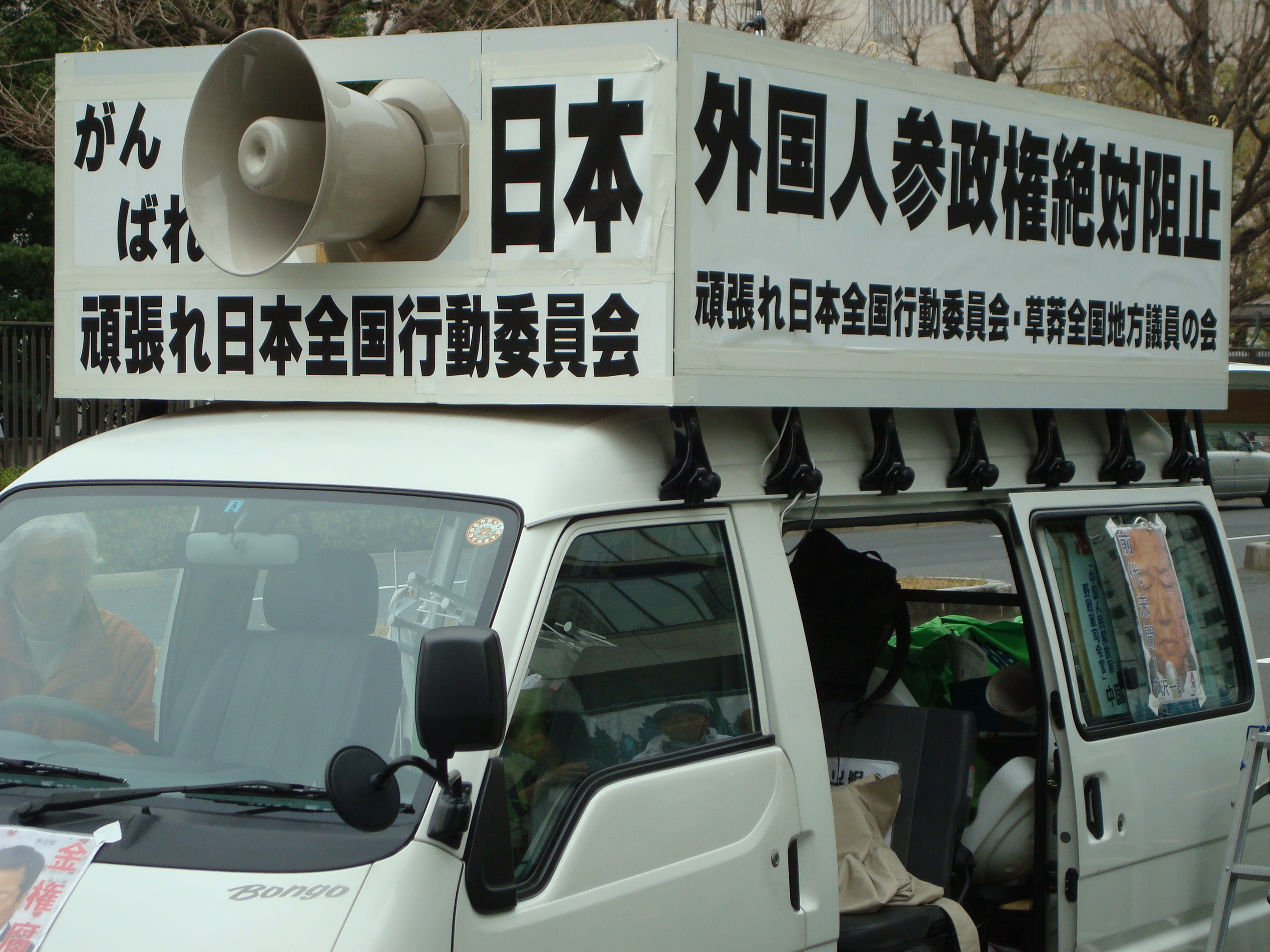




 for local elections.